Yerevan
Last updated: June 11, 2026
Yerevan is Armenia’s capital and largest city, with a population of approximately 1.1 million in the metropolitan area. Founded in 782 BCE, it is one of the world’s oldest continuously inhabited cities. Located in the Ararat Valley roughly 44 kilometers west of the Azerbaijan border, Yerevan is home to Republic Square, the Armenian National Museum, Etchmiadzin Cathedral, and numerous universities, theaters, and cultural institutions. The city serves as Armenia’s economic engine, housing the country’s major businesses, media outlets, and educational centers. Key government institutions—the National Assembly (parliament), presidential residence, and government ministries—are located in central Yerevan, making it the seat of state power and the venue where major policy decisions affecting Armenia’s relationship with Azerbaijan , Russia , the United States , Iran , and Turkey are formulated and announced.
Yerevan’s Republic Square remains a symbolic center of Armenian national life, and the surrounding neighborhoods host universities, cultural institutions, and media outlets that shape public discourse on war, peace, and Armenia’s geopolitical alignment.
Yerevan has been the epicenter of Armenia’s major political upheavals since independence in 1991. The so-called Velvet Revolution in 2018 centered on mass protests in Yerevan’s streets against Robert Kocharyan and resulted in Nikol Pashinyan ascending to power. Since then, the city has witnessed successive cycles of protest and state crackdown: street demonstrations against the 2020 ceasefire agreement following the 44-Day War , opposition rallies during Pashinyan’s tenure, and most recently, state pressure on the Armenian Church and arrests of opposition figures ahead of the June 7, 2026 parliamentary elections. Yerevan’s geography and political institutions make it the arena where Armenia’s foreign policy commitments, including negotiations over the Armenia-Azerbaijan Peace Process , commitments to TRIPP (Trump Route for International Peace and Prosperity), and Armenia’s shifting relationship with CSTO membership are debated, contested, and implemented.
The city’s role in Armenia’s current geopolitical predicament is direct and unavoidable. Yerevan’s proximity to the Azerbaijani border and its status as Armenia’s sole major urban center mean that security threats, blockade pressure, and territorial demands all converge on decisions made within the capital’s government buildings. During the Iran War beginning in early 2026, Yerevan became a site of intense diplomatic activity as foreign officials visited to signal American intentions regarding the TRIPP corridor, regional alignment, and Armenia’s relationship with Washington. The city’s parliament elected in June 2026 will determine whether Armenia continues Pashinyan’s course of concessions to Azerbaijan and the West, or whether opposition forces can halt further territorial or sovereignty losses. As such, developments in Yerevan invariably reflect and shape the choices available to Armenia as a state caught between Russia , an increasingly assertive Azerbaijan, a destabilized Iran, and a United States pursuing its own strategic interests in the South Caucasus.
Groong episodes that include this tag
Below are all Groong episodes tagged with Yerevan.
ANN/Groong Week in Review - (Ep #11) - 08/30/2020 [EP11]
Posted on Sunday, Aug 30, 2020 | Category: Armenia, Politics, Geopolitics, Azerbaijan, Russia, Syria, Artsakh, Lebanon, USA, Middle East, Turkey, Nagorno Karabakh, European Union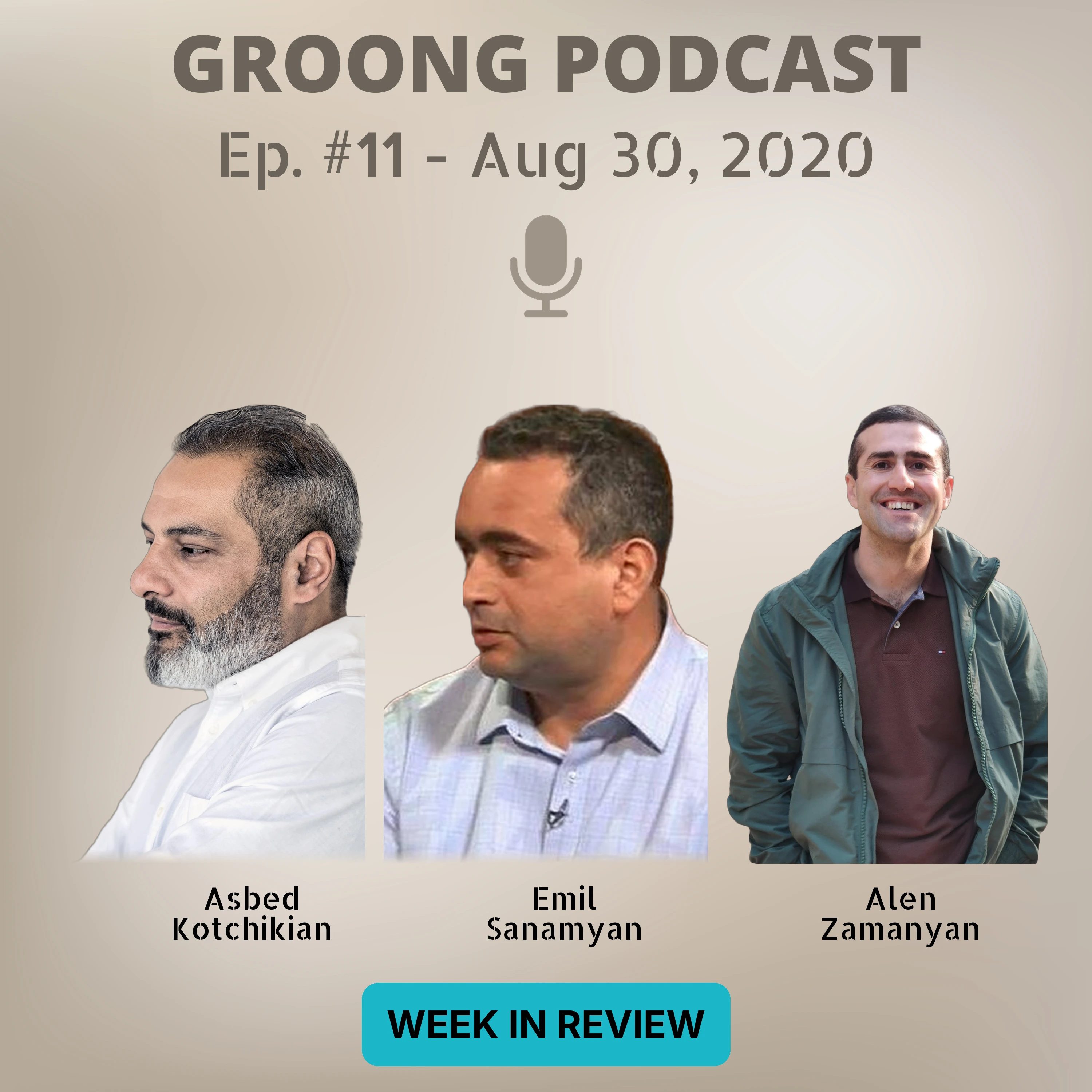
ANN/Groong Week in Review - 08/30/2020
Topics:
- Armenian POW Gurgen Alaverdyan
- Armeniaâs Humanitarian Aid to Aleppo
- Serge Sargsyanâs Interview and the Four-Day War Deliberations
- National Awards
- Vagharshak Harutyunyanâs Appointment as Chief Advisor to Pashinyan
Guests:
- Asbed Kotchikian
- Emil Sanamyan
- Alen Zamanyan
Guest(s):
Hosts:
- Hovik Manucharyan
- Asbed Bedrossian
Website: https://groong.org/podcasts/WiR-20200830.html Episode 11 | Recorded on August 30 2020
Education Reform in Armenia - (Ep #7) - 08/10/2020 [EP7]
Posted on Sunday, Aug 30, 2020 | Category: Armenia, Russia, Iran, Georgia, India, Lebanon, Turkey, Armenian Church, Nagorno Karabakh | Series: cog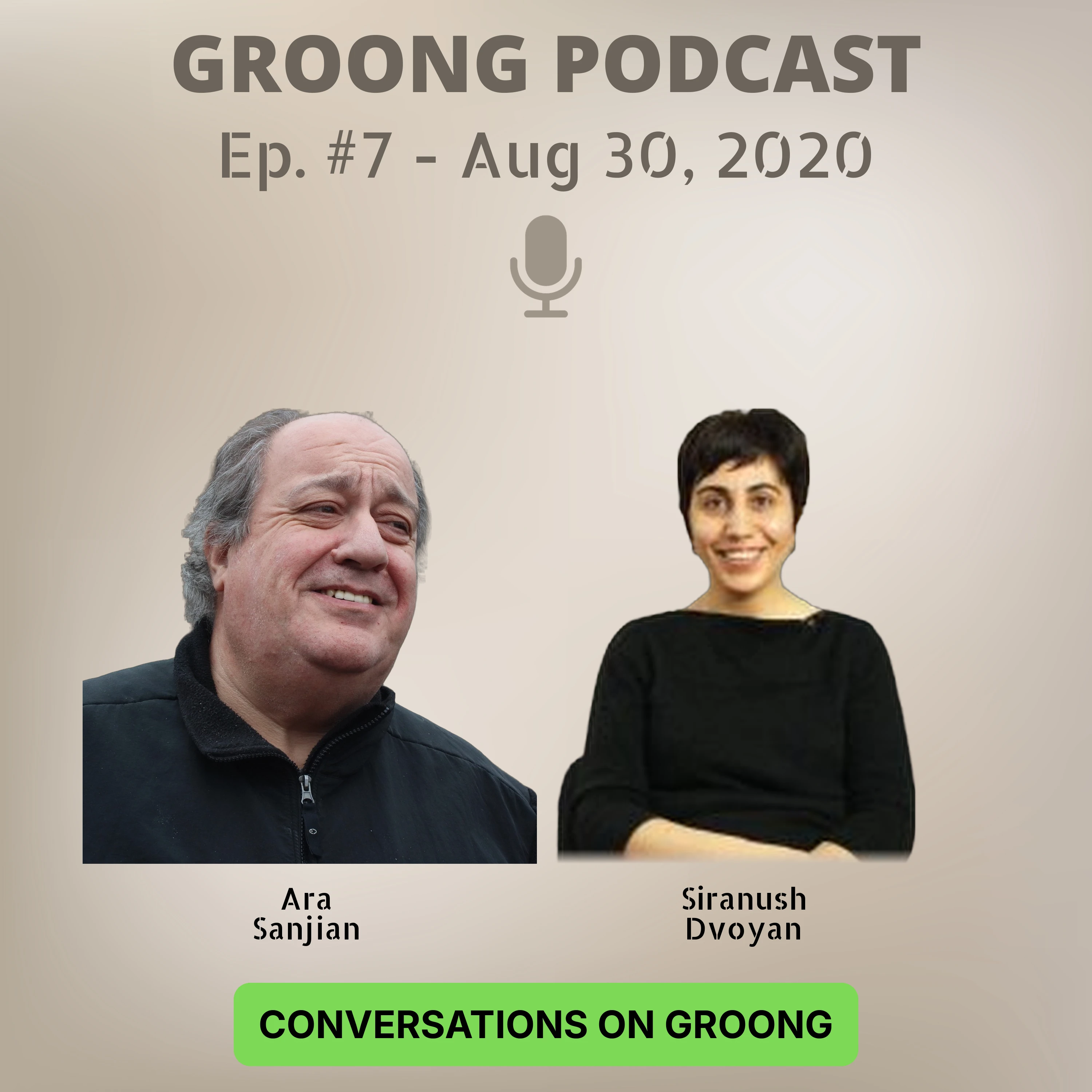
Guest(s):
Education Reform in Armenia - 08/10/2020 Conversations on Groong Asbed Kotchikian talks with Ara Sanjian & Siranush Dvoyan
Topics:
Background of education reform(s) in Armenia In depth analysis of the content, standards & measurable outcomes of the proposed curriculumâs history & literature segments. Challenges of implementing the proposed curriculum
In recent months, Armeniaâs government has published its proposal for K-12 curriculum reform in Armenian schools. The new curriculum, which includes education standards and learning
Read MoreEducation Reform in Armenia - (Ep #7) - 08/10/2020 [EP7]
Posted on Sunday, Aug 30, 2020 | Category: Armenia, Russia, Iran, Georgia, India, Lebanon, Turkey, Armenian Church, Nagorno KarabakhGuest(s):
Education Reform in Armenia - 08/10/2020 Conversations on Groong Asbed Kotchikian talks with Ara Sanjian & Siranush Dvoyan
Topics:
Background of education reform(s) in Armenia In depth analysis of the content, standards & measurable outcomes of the proposed curriculumâs history & literature segments. Challenges of implementing the proposed curriculum
In recent months, Armeniaâs government has published its proposal for K-12 curriculum reform in Armenian schools. The new curriculum, which includes education standards and learning
Read MoreTurkey - Part 1 - Transformation and Continuity | Ep. 9 - Aug 24, 2020 [EP9]
Posted on Tuesday, Aug 25, 2020 | Category: Turkey, Armenia, Genocide, Middle East, Syria, Azerbaijan, Iran, Israel, Lebanon, Economy, NATO, Russia | Series: cog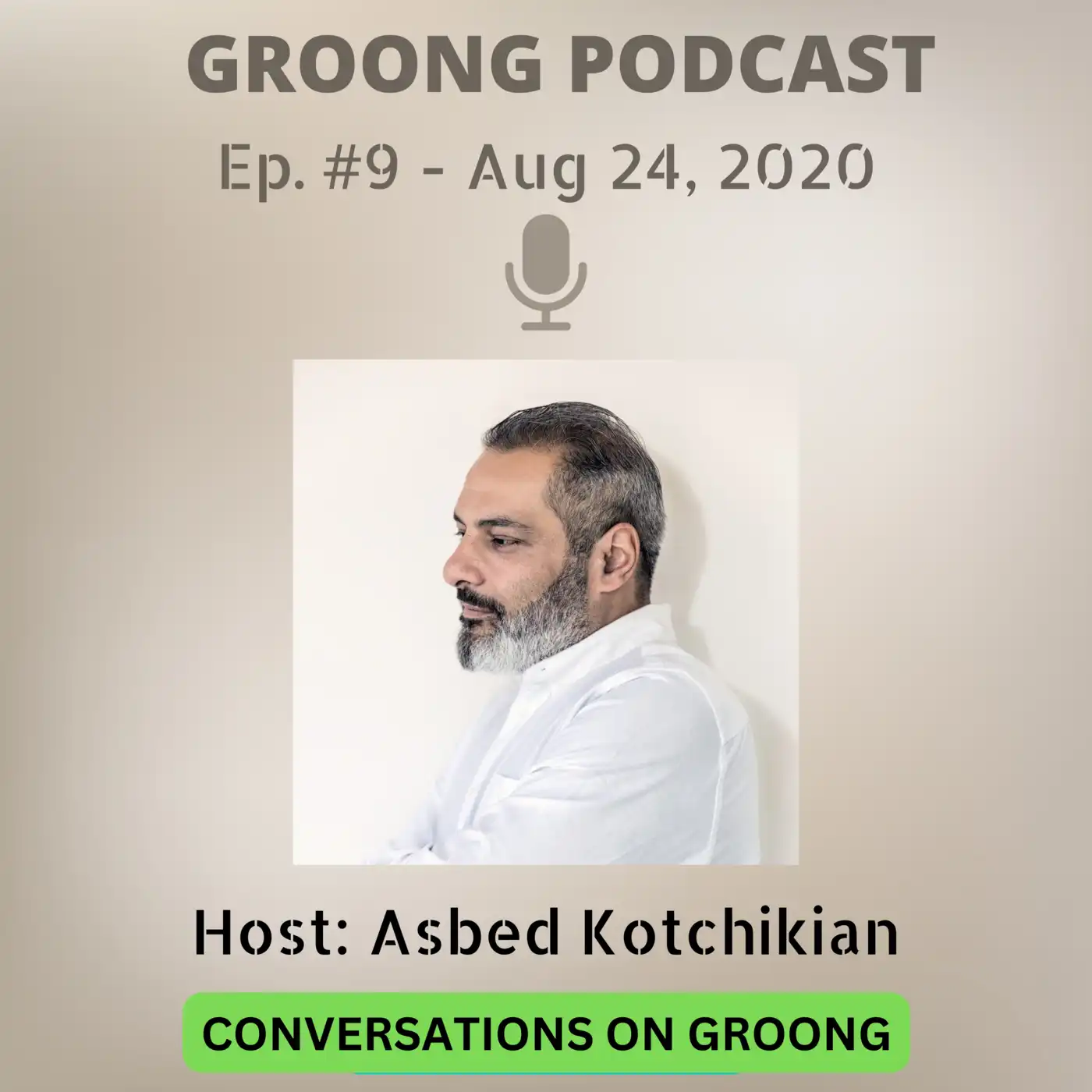
Topics:
- Turkeyâs Transformation in Historical Perspective
- Change and Continuity of Turkish Political Culture
- Turkeyâs Foreign Policy
Guests:
Host:
Episode 9 | Recorded: August 2020
Turkey - Part 1 - Transformation and Continuity | Ep. 9 - Aug 24, 2020 [EP9]
Posted on Tuesday, Aug 25, 2020 | Category: Turkey, Armenia, Genocide, Middle East, Syria, Azerbaijan, Iran, Israel, Lebanon, Economy, NATO, RussiaTopics:
- Turkeyâs Transformation in Historical Perspective
- Change and Continuity of Turkish Political Culture
- Turkeyâs Foreign Policy
Guests:
Host:
Episode 9 | Recorded: August 2020
ANN/Groong Week in Review - (Ep #8) - 08/16/2020 [EP8]
Posted on Monday, Aug 17, 2020 | Category: Armenia, Russia, Economy, Azerbaijan, Georgia, Ukraine, Iran, Human Rights, Genocide, Israel, China, Turkey, Middle East, Nagorno Karabakh, European Union, NATO | Series: wir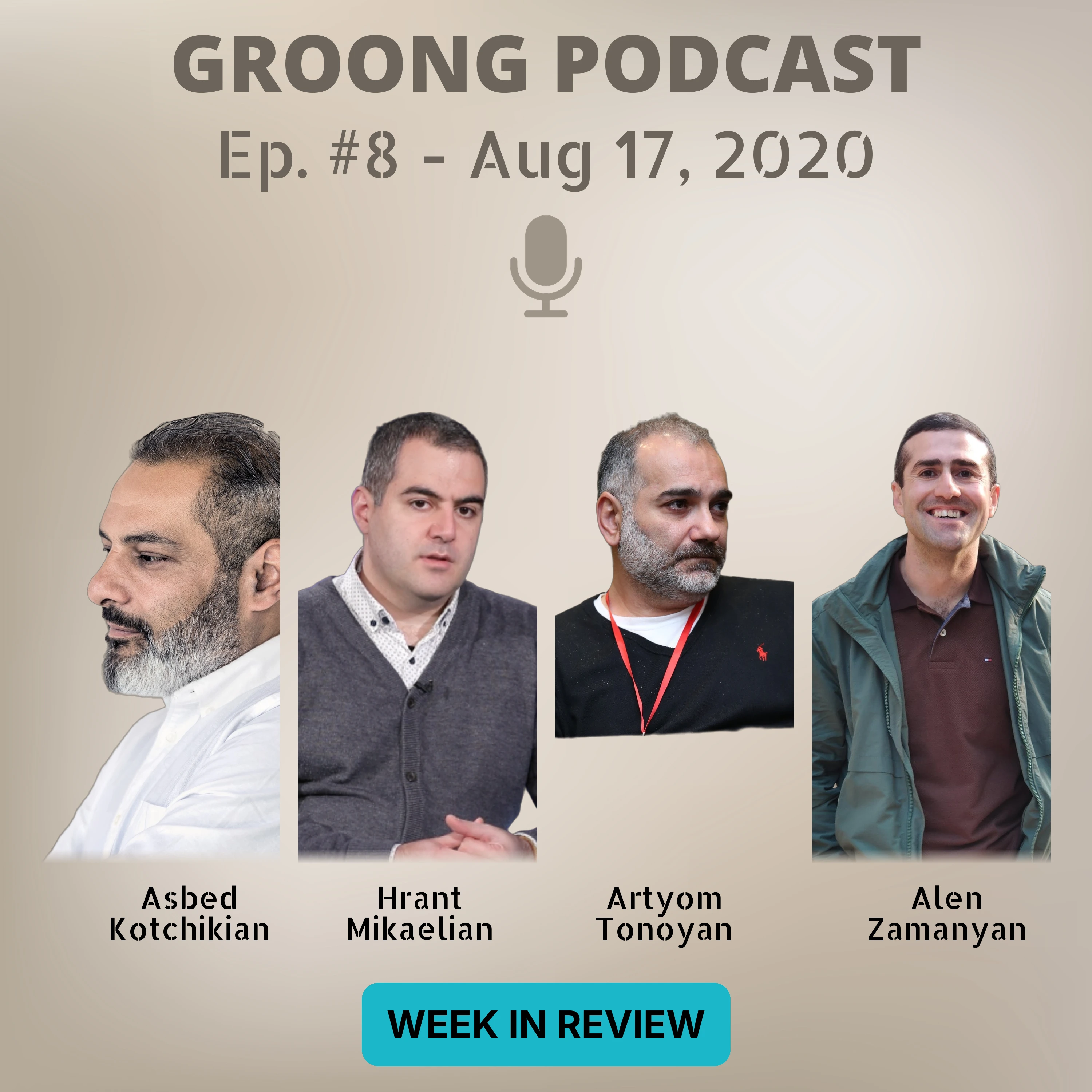
Guest(s):
ANN/Groong Week in Review - 08/16/2020
This Week in Review we talk with Hrant Mikaelian to discuss important issues and developments around Armenia, such as the Coronavirus Pandemic, and its economic effect; Armenia’s membership in EurAsian Economic Union and the economic effect of that organization on Armenia; and some of the trends affecting Russia and its economy.
Hrant will then join us in our weekly lightning round of questions from the past weekâs headlines, to analyze Prime Minister Pashinyanâs
Read MoreANN/Groong Week in Review - (Ep #8) - 08/16/2020 [EP8]
Posted on Monday, Aug 17, 2020 | Category: Armenia, Russia, Economy, Azerbaijan, Georgia, Ukraine, Iran, Human Rights, Genocide, Israel, China, Turkey, Middle East, Nagorno Karabakh, European Union, NATOGuest(s):
ANN/Groong Week in Review - 08/16/2020
This Week in Review we talk with Hrant Mikaelian to discuss important issues and developments around Armenia, such as the Coronavirus Pandemic, and its economic effect; Armenia’s membership in EurAsian Economic Union and the economic effect of that organization on Armenia; and some of the trends affecting Russia and its economy.
Hrant will then join us in our weekly lightning round of questions from the past weekâs headlines, to analyze Prime Minister Pashinyanâs
Read More#WordsNotSwords | Kocharyan Interview | SIS Charges Arthur Danielyan | Constitutional Court Nominees | State of Covid | Changes in Diaspora High Commissioner Office | Headlines | People | Ep 8 - Aug 2, 2020 [EP5]
Posted on Monday, Aug 3, 2020 | Category: Armenia, Azerbaijan, Economy, Artsakh, Georgia, Iran, Russia, Turkey, Armenian Church, China, Genocide, Human Rights, Israel, Ukraine, Nagorno Karabakh, NATO, European Union | Series: wir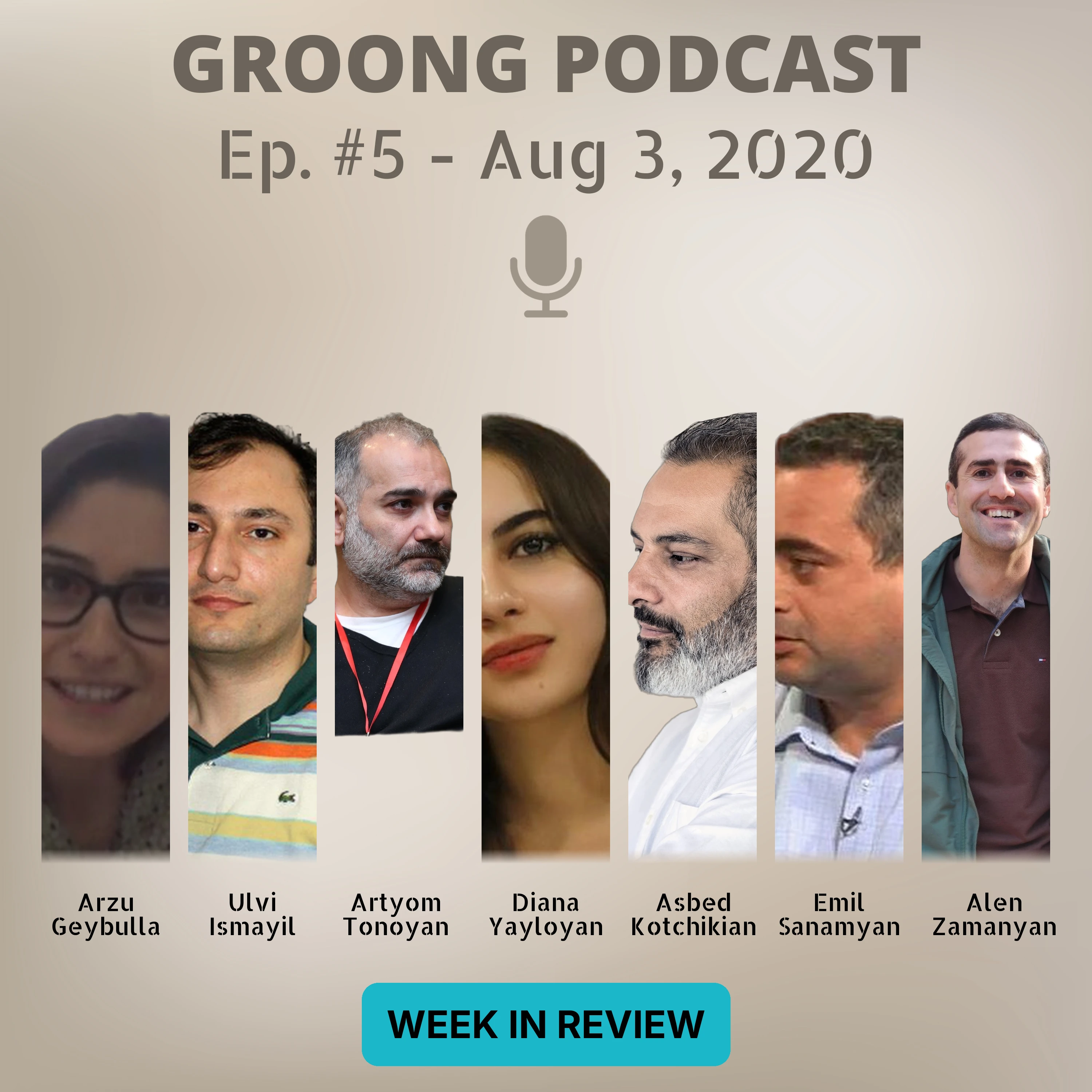
ANN Groong Week in Review - 08/02/2020
Topics:
- Living With Conflict #WordsNotSwords
- Panel Discussion on Robert Kocharyanâs Interview
- Lightning Round
- The SIS Charges Arthur Danielyan
- Nominees for the Constitutional Court
- The PMâs Outlook on the State of the Pandemic
- Staff Changes in the Diaspora High Commissionerâs Office
Guests
Resident panelists:
Episode 5 | Recorded ob August 2, 2020
#WordsNotSwords | Kocharyan Interview | SIS Charges Arthur Danielyan | Constitutional Court Nominees | State of Covid | Changes in Diaspora High Commissioner Office | Headlines | People | Ep 8 - Aug 2, 2020 [EP5]
Posted on Monday, Aug 3, 2020 | Category: Armenia, Azerbaijan, Economy, Artsakh, Georgia, Iran, Russia, Turkey, Armenian Church, China, Genocide, Human Rights, Israel, Ukraine, Nagorno Karabakh, NATO, European UnionANN Groong Week in Review - 08/02/2020
Topics:
- Living With Conflict #WordsNotSwords
- Panel Discussion on Robert Kocharyanâs Interview
- Lightning Round
- The SIS Charges Arthur Danielyan
- Nominees for the Constitutional Court
- The PMâs Outlook on the State of the Pandemic
- Staff Changes in the Diaspora High Commissionerâs Office
Guests
Resident panelists:
Episode 5 | Recorded ob August 2, 2020