Vladimir Putin
Last updated: May 29, 2026
Vladimir Putin has been the central figure in Russia’s management of the South Caucasus for over two decades. His administration brokered the November 9, 2020 ceasefire that ended the 44-Day War, deployed Russian peacekeepers to Nagorno Karabakh (Artsakh), and positioned Russia as the indispensable mediator between Armenia and Azerbaijan. That architecture has since collapsed: Russia failed to prevent the Lachin Corridor blockade , took no action during Azerbaijan’s September 2023 offensive that resulted in the ethnic cleansing of Artsakh’s entire Armenian population, and watched as Armenia systematically withdrew from Russian-led security and economic structures.
The Ukraine War , which Putin launched in February 2022, fundamentally altered Russia’s capacity and willingness to act in the South Caucasus. With military resources committed to Ukraine and diplomatic isolation from the West deepening, Moscow’s ability to enforce its South Caucasus commitments diminished sharply. Putin’s personal relationships with Aliyev and Pashinyan — and his apparent willingness to tolerate Azerbaijan’s territorial advances — have become a template for how great-power guarantees can unravel when the guarantor’s interests diverge from the guaranteed party’s needs.
Groong covers Putin’s role in South Caucasus affairs through direct analysis of Russian policy, tracking of the peace process mediation formats, and assessment of what Russian withdrawal from its traditional mediating role means for the durability of any future Armenia-Azerbaijan settlement.
Groong episodes that include this tag
Below are all Groong episodes tagged with Vladimir Putin.
Does Armenia Still Need the Russian Base? [EP590]
Posted on Friday, Sep 25, 2026 | Category: Politics, Russia, ArmeniaAghajanian says Russia’s 102nd base in Gyumri still matters to Armenia, keeping Turkey at bay, and warns removing it would leave the country totally alone.
The Second Front Plan: Jermuk Was Orchestrated [EP590]
Posted on Friday, Sep 25, 2026 | Category: Politics, Russia, ArmeniaAghajanian argues the September 2022 Jermuk fighting was orchestrated by Western actors, Azerbaijan, and Pashinyan to draw Russia into a second front.
Warwick Powell - From BRICS to AI: The Infrastructure Multipolarity | Ep 587, Sep 20, 2026 [EP587]
Posted on Sunday, Sep 20, 2026 | Category: Armenia, China, Geopolitics | Series: cog, video
Groong Links:
Guest(s):
Topics:
- SCO and BRICS summit outcomes
- BRICS financial architecture and currencies
- AI safety and strategic competition
- AI sovereignty for smaller states
Episode 587 | Recorded: September 17, 2026
#BRICS #China #SCO #Multipolarity #Artificial0Intelligence #AISafety #DigitalSovereignty #TRIPP
Warwick Powell - From BRICS to AI: The Infrastructure Multipolarity | Ep 587, Sep 20, 2026 [EP587]
Posted on Sunday, Sep 20, 2026 | Category: Armenia, China, GeopoliticsGroong Links:
Guest(s):
Topics:
- SCO and BRICS summit outcomes
- BRICS financial architecture and currencies
- AI safety and strategic competition
- AI sovereignty for smaller states
Episode 587 | Recorded: September 17, 2026
#BRICS #China #SCO #Multipolarity #Artificial0Intelligence #AISafety #DigitalSovereignty #TRIPP
Transcript: Warwick Powell - From BRICS to AI: The Infrastructure Multipolarity | Ep 587, Sep 20, 2026 [EP587]
Posted on Sunday, Sep 20, 2026 | Category: Armenia, China, Geopolitics, TranscriptIn this episode of Conversations on Groong, we speak with Professor Warwick Powell about multipolarity, infrastructure, and the strategic implications of emerging power blocs. We discuss tangible outcomes from the SCO and BRICS summits, the shift toward local-currency settlement and financial alternatives to Western institutions, China’s role as an enabling power, and how countries like Armenia navigate the infrastructure competition between TRIPP and competing regional corridors. We also examine AI safety and digital sovereignty in a multipolar world, where both Washington and Beijing view artificial intelligence as a decisive strategic contest.
Artsakh Remembered, SCO Theater, Russian Signals, and the Cucumber Paradox | Ep 584, Sep 6, 2026 [EP584]
Posted on Monday, Sep 7, 2026 | Series: wir, video
Groong Links:
Topics:
- Artsakh remembered, its cause unresolved
- Putin puts Russia’s military base on the table
- Church prosecutions begin to unravel
- EU trade headlines look better than the deal
- Army indiscipline fuels mounting non-combat deaths
- New political pressures before local elections
Episode 584 | Recorded: Sep 6, 2026
#Artsakh #Armenia #NagornoKarabakh #SouthCaucasus #SCO #Russia #EuropeanUnion #ArmenianPolitics
Artsakh Remembered, SCO Theater, Russian Signals, and the Cucumber Paradox | Ep 584, Sep 6, 2026 [EP584]
Posted on Monday, Sep 7, 2026Groong Links:
Topics:
- Artsakh remembered, its cause unresolved
- Putin puts Russia’s military base on the table
- Church prosecutions begin to unravel
- EU trade headlines look better than the deal
- Army indiscipline fuels mounting non-combat deaths
- New political pressures before local elections
Episode 584 | Recorded: Sep 6, 2026
#Artsakh #Armenia #NagornoKarabakh #SouthCaucasus #SCO #Russia #EuropeanUnion #ArmenianPolitics
Transcript: Artsakh Remembered, SCO Theater, Russian Signals, and the Cucumber Paradox | Ep 584, Sep 6, 2026 [EP584]
Posted on Monday, Sep 7, 2026 | Category: TranscriptIn this week’s Groong episode, Hovik and Asbed review September 2026 developments across Armenia and the South Caucasus. We examine Artsakh’s remembered independence declaration on September 2, 1991, and its unresolved cause following the 2023 ethnic cleansing; Putin’s signaling on Russia’s military base presence; ongoing Armenian Church prosecutions; EU trade negotiations; mounting non-combat military deaths; and political pressures ahead of local elections. We also analyze U.S. envoy Witkoff and Kushner’s diplomatic shuttle through Moscow and Kyiv.
Why Putin and Pashinyan Both Avoid Deciding on Russian Military Base [EP583]
Posted on Saturday, Sep 5, 2026 | Category: Geopolitics, Politics, Armenia, RussiaSuren Sargsyan analyzes why both Putin and Pashinyan publicly defer the decision on the 102nd Russian military base in Gyumri, avoiding responsibility while maintaining the status quo.
Armenia at the SCO Summit as Ukraine and Iran Wars Intensify | Ep 582, Aug 30, 2026 [EP582]
Posted on Wednesday, Sep 2, 2026 | Series: wir, video
Groong Links:
Topics:
- Russia Escalates War Against Ukraine
- Unprecedented Western Visits to Moscow
- US-Iran War Flares Again
- All Artsakh Presidents Behind Bars
- Armenia at the SCO Summit
- Pashinyan Meets Aliyev, Putin, Modi
- Political Persecutions and Selective Justice
Episode 582 | Recorded: September 1, 2026
#Armenia #Artsakh #UkraineWar #IranWar #SCO #Pashinyan #SouthCaucasus #ArmenianPolitics
Armenia at the SCO Summit as Ukraine and Iran Wars Intensify | Ep 582, Aug 30, 2026 [EP582]
Posted on Wednesday, Sep 2, 2026Groong Links:
Topics:
- Russia Escalates War Against Ukraine
- Unprecedented Western Visits to Moscow
- US-Iran War Flares Again
- All Artsakh Presidents Behind Bars
- Armenia at the SCO Summit
- Pashinyan Meets Aliyev, Putin, Modi
- Political Persecutions and Selective Justice
Episode 582 | Recorded: September 1, 2026
#Armenia #Artsakh #UkraineWar #IranWar #SCO #Pashinyan #SouthCaucasus #ArmenianPolitics
Putin's Birthday Message to Kocharyan: A Subtle Rebuke to Pashinyan [EP582]
Posted on Wednesday, Sep 2, 2026 | Category: Politics, Geopolitics, Russia, ArmeniaPutin congratulates imprisoned Robert Kocharyan on his birthday while ignoring Pashinyan’s reelection. The hosts decode the geopolitical message behind this selective honor.
Transcript: Armenia at the SCO Summit as Ukraine and Iran Wars Intensify | Ep 582, Aug 30, 2026 [EP582]
Posted on Wednesday, Sep 2, 2026 | Category: TranscriptIn this week’s Groong news roundup, Hovik and Asbed examine Armenia’s position at the SCO Summit amid intensifying global conflicts. We discuss Russia’s escalation in Ukraine, unprecedented Western diplomatic visits to Moscow, the renewed US-Iran War, and Pashinyan’s meetings with regional and global leaders including Aliyev and Putin. We also address the ongoing persecution of former Artsakh leaders and the selective justice targeting Armenia’s political landscape.
Pashinyan’s Church War, the Russia-EU Choice, and TRIPP | Ep 576, Aug 9, 2026 [EP576]
Posted on Wednesday, Aug 12, 2026 | Category: Armenia, Politics | Series: wir, video
Groong Links:
Topics:
- Turkey-Pakistan-Saudi Alliance
- Iran War Update
- Catholicos on Trial
- EAEU Meeting in Cholpon-Ata
- Corruption & Persecutions
Episode 576 | Recorded: August 10, 2026
#Armenia #ArmenianPolitics #ArmenianChurch #GareginII #TRIPP #ArmeniaRussia #SouthCaucasus #Groong
Pashinyan’s Church War, the Russia-EU Choice, and TRIPP | Ep 576, Aug 9, 2026 [EP576]
Posted on Wednesday, Aug 12, 2026 | Category: Armenia, PoliticsGroong Links:
Topics:
- Turkey-Pakistan-Saudi Alliance
- Iran War Update
- Catholicos on Trial
- EAEU Meeting in Cholpon-Ata
- Corruption & Persecutions
Episode 576 | Recorded: August 10, 2026
#Armenia #ArmenianPolitics #ArmenianChurch #GareginII #TRIPP #ArmeniaRussia #SouthCaucasus #Groong
Transcript: Pashinyan’s Church War, the Russia-EU Choice, and TRIPP | Ep 576, Aug 9, 2026 [EP576]
Posted on Wednesday, Aug 12, 2026 | Category: Armenia, Politics, TranscriptIn this week’s Groong episode, the hosts examine Pashinyan’s confrontation with the Armenian Church, Armenia’s strategic positioning between Russia and the EU, and the geopolitical implications of TRIPP. We discuss the trial of Catholicos Garegin II, Iran’s military leadership realignment, the Turkey-Pakistan-Saudi Arabia defense pact, and how these shifts reshape Armenia’s role in the South Caucasus.
Groong Links:
Topics:
- Ukraine expands its war into the Caspian
- Iran warns of a wider regional response
- Russia and the West test stalled diplomacy
- Aliyev positions Baku as a geopolitical hub
- Armenia faces pressure over EU alignment
- Baku POW abuse and their deteriorating health
- Housing policy expose domestic failures
Episode 571 | Recorded: July 27, 2026
#Armenia #UkraineWar #Iran #CaspianSea #SouthCaucasus #MiddleCorridor #ArmenianPOWs #Geopolitics
From Caspian Drones to Armenia’s Cold Winter | Ep 571, Jul 26, 2026 [EP571]
Posted on Tuesday, Jul 28, 2026 | Category: Armenia, Iran, PoliticsGroong Links:
Topics:
- Ukraine expands its war into the Caspian
- Iran warns of a wider regional response
- Russia and the West test stalled diplomacy
- Aliyev positions Baku as a geopolitical hub
- Armenia faces pressure over EU alignment
- Baku POW abuse and their deteriorating health
- Housing policy expose domestic failures
Episode 571 | Recorded: July 27, 2026
#Armenia #UkraineWar #Iran #CaspianSea #SouthCaucasus #MiddleCorridor #ArmenianPOWs #Geopolitics
Russia's Trade War on Armenia: Pashinyan Calls Putin Over Sanctions [EP571]
Posted on Tuesday, Jul 28, 2026 | Category: Politics, Geopolitics, Economy, ArmeniaHovik explains the strategic pressure Russia is placing on Armenia through trade restrictions, including a dairy embargo, as Pashinyan is forced to call Putin to negotiate while Armenia seeks alternative energy sources from Iran.
Transcript: From Caspian Drones to Armenia’s Cold Winter | Ep 571, Jul 26, 2026 [EP571]
Posted on Tuesday, Jul 28, 2026 | Category: Armenia, Iran, Politics, TranscriptIn this week’s edition of the Armenian News podcast, Hovik and Asbed analyze escalating regional tensions as Ukraine expands operations into the Caspian Sea, striking Iranian and Russian assets. We examine how this merger of the Northern and Southern conflicts affects Armenia, Kazakhstan’s energy security, and Pashinyan’s diplomatic positioning amid new pressure from Western capitals following Aliyev’s recent visits to Germany and Berlin.
Sergey Markedonov - Ukraine, TRIPP, and Armenia’s Western Pivot | Ep 565, Jul 10, 2026 [EP565]
Posted on Friday, Jul 10, 2026 | Series: cog, video
Groong Links:
Guest(s):
Topics:
- Ukraine’s war of attrition
- Russia’s strategic bandwidth problem
- TRIPP and Iran’s red lines
- Israel’s Armenian Genocide move
- Armenia’s Western pivot after elections
Episode 565 | Recorded: July 8, 2026
#ArmenianNews #SouthCaucasus #UkraineWar #Russia #Armenia #EAEU #TRIPP #Geopolitics
Sergey Markedonov - Ukraine, TRIPP, and Armenia’s Western Pivot | Ep 565, Jul 10, 2026 [EP565]
Posted on Friday, Jul 10, 2026Groong Links:
Guest(s):
Topics:
- Ukraine’s war of attrition
- Russia’s strategic bandwidth problem
- TRIPP and Iran’s red lines
- Israel’s Armenian Genocide move
- Armenia’s Western pivot after elections
Episode 565 | Recorded: July 8, 2026
#ArmenianNews #SouthCaucasus #UkraineWar #Russia #Armenia #EAEU #TRIPP #Geopolitics
Transcript: Sergey Markedonov - Ukraine, TRIPP, and Armenia’s Western Pivot | Ep 565, Jul 10, 2026 [EP565]
Posted on Friday, Jul 10, 2026 | Category: TranscriptIn this episode of Conversations on Groong, we speak with Dr. Sergey Markedonov about Russia’s strategic position amid the Ukraine War and its implications for Armenia. We discuss why Moscow remains bogged down in Ukraine despite its military superiority, how the war of attrition shapes Russian bandwidth for the South Caucasus, the geopolitical role of the Trump Route for International Peace and Prosperity, and Pashinyan’s Western pivot following the June 2026 Armenian Parliamentary Election.
Groong Links:
Guest(s):
Topics:
- Election aftermath and disputed legitimacy
- Threats against opposition parties
- Armenia-Russia tensions after vote
- EU lifeline for Armenian exports
- Polling failures and hidden votes
Episode 559 | Recorded: June 18, 2026
#Armenia #ArmenianElections #HrantMikaelian #NikolPashinyan #CivilContract #ArmeniaRussia #Polling
Hrant Mikaelian - Election Aftermath and Polls in Armenia | Ep 559, Jun 20, 2026 [EP559]
Posted on Saturday, Jun 20, 2026 | Category: Armenia, Politics, PollGroong Links:
Guest(s):
Topics:
- Election aftermath and disputed legitimacy
- Threats against opposition parties
- Armenia-Russia tensions after vote
- EU lifeline for Armenian exports
- Polling failures and hidden votes
Episode 559 | Recorded: June 18, 2026
#Armenia #ArmenianElections #HrantMikaelian #NikolPashinyan #CivilContract #ArmeniaRussia #Polling
Transcript: Hrant Mikaelian - Election Aftermath and Polls in Armenia | Ep 559, Jun 20, 2026 [EP559]
Posted on Saturday, Jun 20, 2026 | Category: Armenia, Politics, Poll, TranscriptIn this episode of Conversations on Groong, we speak with Hrant Mikaelian about the disputed aftermath of Armenia’s June 7, 2026 parliamentary election. We discuss allegations of electoral fraud, threats against opposition parties, the Anti-Corruption Committee’s proposed ban on opposition groups, Armenia-Russia tensions following the vote, and the EU’s financial support for Armenian agricultural exports amid Russian sanctions.
Sergey Markedonov - Russia-Armenia Relations Before the Vote | Ep 552, June 1, 2026 [EP552]
Posted on Monday, Jun 1, 2026 | Category: Armenia, Politics, Russia, Armenian Church, Nagorno Karabakh, Azerbaijan, Artsakh, Turkey, Iran, Georgia | Series: cog
Groong Links:
Guest(s):
Topics:
- TRIPP and Regional Balance
- Armenia’s Geopolitical Election
- Pashinyan’s “Real Armenia”
- Russia’s Economic Pressure
Episode 552 | Recorded: May 31, 2026
#RussiaArmenia #SergeyMarkedonov #ArmeniaElections #Pashinyan #TRIPP #SouthCaucasus #RealArmenia #EAEU
Sergey Markedonov - Russia-Armenia Relations Before the Vote | Ep 552, June 1, 2026 [EP552]
Posted on Monday, Jun 1, 2026 | Category: Armenia, Politics, Russia, Armenian Church, Nagorno Karabakh, Azerbaijan, Artsakh, Turkey, Iran, GeorgiaGroong Links:
Guest(s):
Topics:
- TRIPP and Regional Balance
- Armenia’s Geopolitical Election
- Pashinyan’s “Real Armenia”
- Russia’s Economic Pressure
Episode 552 | Recorded: May 31, 2026
#RussiaArmenia #SergeyMarkedonov #ArmeniaElections #Pashinyan #TRIPP #SouthCaucasus #RealArmenia #EAEU
Transcript: Sergey Markedonov - Russia-Armenia Relations Before the Vote | Ep 552, June 1, 2026 [EP552]
Posted on Monday, Jun 1, 2026 | Category: Armenia, Politics, Russia, Armenian Church, Nagorno Karabakh, Azerbaijan, Artsakh, Turkey, Iran, Georgia, TranscriptIn this episode of Conversations on Groong, we speak with Dr. Sergey Markedonov about Russia-Armenia relations and Armenia’s geopolitical position ahead of the June 7, 2026 Armenian parliamentary elections. We discuss the Trump Route for International Peace and Prosperity (TRIPP), Russian concerns about regional balance, Pashinyan’s westward orientation, economic pressure from Moscow, and how Armenia’s strategic partnerships will shape its future in the South Caucasus.
Rubio Visit, New MPG and IRI Polls, Hidden Votes and Why Are You Alive? | Ep 550, May 24, 2026 [EP550]
Posted on Wednesday, May 27, 2026 | Category: Armenia, Politics, Poll, Armenian Church, Nagorno Karabakh, Armenian Genocide, Azerbaijan, Russia, China | Series: wir, video
Groong Links:
Topics:
- Rubio’s sudden Armenia visit
- Polls diverge before election
- Hidden vote raises questions
- TRIPP remains deeply polarizing
- “Western Azerbaijan” pressure grows
- Opposition faces arrests, threats
- “Why are you alive?” campaign rhetoric
Episode 550 | Recorded: May 25, 2026
#ArmeniaElections #Armenia #NikolPashinyan #TRIPP #ZangezurCorridor #WesternAzerbaijan #ArmenianOpposition
Rubio Visit, New MPG and IRI Polls, Hidden Votes and Why Are You Alive? | Ep 550, May 24, 2026 [EP550]
Posted on Wednesday, May 27, 2026 | Category: Armenia, Politics, Poll, Armenian Church, Nagorno Karabakh, Armenian Genocide, Azerbaijan, Russia, ChinaGroong Links:
Topics:
- Rubio’s sudden Armenia visit
- Polls diverge before election
- Hidden vote raises questions
- TRIPP remains deeply polarizing
- “Western Azerbaijan” pressure grows
- Opposition faces arrests, threats
- “Why are you alive?” campaign rhetoric
Episode 550 | Recorded: May 25, 2026
#ArmeniaElections #Armenia #NikolPashinyan #TRIPP #ZangezurCorridor #WesternAzerbaijan #ArmenianOpposition
Transcript: Rubio Visit, New MPG and IRI Polls, Hidden Votes and Why Are You Alive? | Ep 550, May 24, 2026 [EP550]
Posted on Wednesday, May 27, 2026 | Category: Armenia, Politics, Poll, Armenian Church, Nagorno Karabakh, Armenian Genocide, Azerbaijan, Russia, China, TranscriptThis Week in Review examines the tightening political climate in Armenia ahead of the June 2026 parliamentary elections. Asbed and Hovik discuss Marco Rubio’s sudden Armenia visit, new polling from IRI, MPG, and CAEAC, and what the wide gaps in voter disclosure may reveal about hidden opposition support. The episode also covers TRIPP, “Western Azerbaijan” rhetoric, public trust in the Armenian Apostolic Church, and the growing use of arrests, threats, and state pressure against opposition figures. The discussion centers on Pashinyan’s escalating campaign rhetoric, including his “Why are you alive?” outburst, and what it signals about the stakes of the coming election.
Pashinyan's Hate Speech, Threats, and the June 7 Election Climate | Ep 547, May 17, 2026 [EP547]
Posted on Tuesday, May 19, 2026 | Category: Armenia, Politics, Election, Armenian Church, Nagorno Karabakh, Artsakh Blockade, Russia, China, Azerbaijan, Georgia, Iran, NATO | Series: wir, video
Groong Links:
Topics:
- Trump, China, and Iran
- Armenia-Russia “soft divorce”
- Pashinyan’s violent campaign rhetoric
- State resources and election pressure
- Javakhk church vandalism concerns
Episode 547 | Recorded: May 18, 2026
#Pashinyan #ArmeniaElections #ArmenianPolitics #PoliticalViolence #HateSpeech #ArmeniaRussia #IranWar #SouthCaucasus
Pashinyan's Hate Speech, Threats, and the June 7 Election Climate | Ep 547, May 17, 2026 [EP547]
Posted on Tuesday, May 19, 2026 | Category: Armenia, Politics, Election, Armenian Church, Nagorno Karabakh, Artsakh Blockade, Russia, China, Azerbaijan, Georgia, Iran, NATOGroong Links:
Topics:
- Trump, China, and Iran
- Armenia-Russia “soft divorce”
- Pashinyan’s violent campaign rhetoric
- State resources and election pressure
- Javakhk church vandalism concerns
Episode 547 | Recorded: May 18, 2026
#Pashinyan #ArmeniaElections #ArmenianPolitics #PoliticalViolence #HateSpeech #ArmeniaRussia #IranWar #SouthCaucasus
Transcript: Pashinyan's Hate Speech, Threats, and the June 7 Election Climate | Ep 547, May 17, 2026 [EP547]
Posted on Tuesday, May 19, 2026 | Category: Armenia, Politics, Election, Armenian Church, Nagorno Karabakh, Artsakh Blockade, Russia, China, Azerbaijan, Georgia, Iran, NATO, TranscriptThis Week in Review covers a tense mix of global and Armenian political crises, from Trump’s summit with Xi Jinping and the deepening Iran war, to Armenia’s worsening relations with Russia and the risks to trade, energy, and security ties. Hovik and Asbed also examine Armenia’s heated election climate, including allegations of state pressure, abuse of administrative resources, selective law enforcement, Pashinyan’s violent campaign rhetoric against opposition leaders, and the muted response of international observers. The episode also looks at Robert Kocharyan’s call for major-power guarantees for peace with Azerbaijan, and the vandalism of the Sourp Nshan Armenian Church in Javakhk.
Arman Grigoryan - Revolutionary Recklessness: Armenia After the War | Ep 546, May 15, 2026 [EP546]
Posted on Friday, May 15, 2026 | Category: Armenia, Politics, Geopolitics, Nagorno Karabakh, Artsakh Blockade, Russia, Iran, Israel, Azerbaijan, Turkey, Ukraine, NATO | Series: cog
Groong Links:
Guest(s):
Topics:
- Revolutionary recklessness after 2020
- Armenia’s pivot away from Russia
- Artsakh’s surrender and strategic reorientation
- TRIPP, Syunik, and security guarantees
- Western backing, Armenian risk
Episode 546 | Recorded: May 13, 2026
#ArmanGrigoryan #Armenia #Russia #Pashinyan #Artsakh #TRIPP #SouthCaucasus #Geopolitics
Arman Grigoryan - Revolutionary Recklessness: Armenia After the War | Ep 546, May 15, 2026 [EP546]
Posted on Friday, May 15, 2026 | Category: Armenia, Politics, Geopolitics, Nagorno Karabakh, Artsakh Blockade, Russia, Iran, Israel, Azerbaijan, Turkey, Ukraine, NATOGroong Links:
Guest(s):
Topics:
- Revolutionary recklessness after 2020
- Armenia’s pivot away from Russia
- Artsakh’s surrender and strategic reorientation
- TRIPP, Syunik, and security guarantees
- Western backing, Armenian risk
Episode 546 | Recorded: May 13, 2026
#ArmanGrigoryan #Armenia #Russia #Pashinyan #Artsakh #TRIPP #SouthCaucasus #Geopolitics
Transcript: Arman Grigoryan - Revolutionary Recklessness: Armenia After the War | Ep 546, May 15, 2026 [EP546]
Posted on Friday, May 15, 2026 | Category: Armenia, Politics, Geopolitics, Nagorno Karabakh, Artsakh Blockade, Russia, Iran, Israel, Azerbaijan, Turkey, Ukraine, NATO, TranscriptDr. Arman Grigoryan joins Groong to discuss Armenia’s post-2020 foreign policy and his argument that Pashinyan’s government has replaced one failed project, maximalist claims over Artsakh, with another: a risky strategic pivot away from Russia and toward the West. The conversation examines “revolutionary recklessness,” the roots of the 2020 war, Armenia’s worsening ties with Russia, the surrender of Artsakh, TRIPP and Syunik, Western encouragement, and the absence of firm security guarantees. Grigoryan also considers whether Armenia is gaining real sovereignty or exposing itself to greater pressure from Azerbaijan, Turkey, and Russia.
Week in Review - EPC in Armenia, Russia, Parliamentary Election, Swiss Peace Initiative | Ep 545, May 10, 2026 [EP545]
Posted on Wednesday, May 13, 2026 | Category: Armenia, Politics, Nagorno Karabakh, Artsakh Blockade, Azerbaijan, Russia, Ukraine, NATO, European Union, Human Rights | Series: wir
Groong Links:
Topics:
- EPC fallout and Russia response
- Armenia-EU declaration controversies
- Pashinyan’s Artsakh campaign narrative
- Aliyev-Pashinyan tag-team messaging
- Swiss Peace Initiative
- Pollsters diverge on election forecasts
Episode 545 | Recorded: May 12, 2026
#WeekInReview #Armenia #SwissPeaceInitiative #NagornoKarabakh #Artsakh
Week in Review - EPC in Armenia, Russia, Parliamentary Election, Swiss Peace Initiative | Ep 545, May 10, 2026 [EP545]
Posted on Wednesday, May 13, 2026 | Category: Armenia, Politics, Nagorno Karabakh, Artsakh Blockade, Azerbaijan, Russia, Ukraine, NATO, European Union, Human RightsGroong Links:
Topics:
- EPC fallout and Russia response
- Armenia-EU declaration controversies
- Pashinyan’s Artsakh campaign narrative
- Aliyev-Pashinyan tag-team messaging
- Swiss Peace Initiative
- Pollsters diverge on election forecasts
Episode 545 | Recorded: May 12, 2026
#WeekInReview #Armenia #SwissPeaceInitiative #NagornoKarabakh #Artsakh
Transcript: Week in Review - EPC in Armenia, Russia, Parliamentary Election, Swiss Peace Initiative | Ep 545, May 10, 2026 [EP545]
Posted on Wednesday, May 13, 2026 | Category: Armenia, Politics, Nagorno Karabakh, Artsakh Blockade, Azerbaijan, Russia, Ukraine, NATO, European Union, Human Rights, TranscriptIn this Week in Review, Asbed and Hovik discuss the fallout from the EPC summit in Yerevan, Armenia’s role as a platform for anti-Russian messaging, and Putin’s warning about a possible “separation” if Armenia moves toward the EU. They examine the Armenia-EU declaration, focusing on TRIPP, Ukraine, hybrid threats, security cooperation, visa liberalization, and the Armenian Nuclear Power Plant. The episode then turns to Armenia’s election campaign, Pashinyan’s claim that Artsakh was “never ours,” Aliyev’s parallel messaging from occupied Artsakh, pressure on opposition figures, the Swiss Peace Initiative, and sharp divergence between election polls.
Anna Grigoryan - Armenia Alliance in the 2026 Armenian Parliamentary Election | Ep 544, May 11, 2026 [EP544]
Posted on Monday, May 11, 2026 | Category: Nagorno Karabakh, Armenia, Azerbaijan, Russia, Iran, European Union, Economy, NATO, Human Rights | Series: cog
Groong Links:
Guest(s):
Topics:
- Election campaign and opposition strategy
- EPC, EU-Armenia summit, and foreign influence
- Foreign policy, security, and regional risks
- Domestic priorities and election integrity
Episode 544 | Recorded: May 9, 2026
#AnnaGrigoryan #Armenia #ArmenianPolitics #ArmeniaElections #HayastanDashinq #EPCSummit #TRIPP #Artsakh
Anna Grigoryan - Armenia Alliance in the 2026 Armenian Parliamentary Election | Ep 544, May 11, 2026 [EP544]
Posted on Monday, May 11, 2026 | Category: Nagorno Karabakh, Armenia, Azerbaijan, Russia, Iran, European Union, Economy, NATO, Human RightsGroong Links:
Guest(s):
Topics:
- Election campaign and opposition strategy
- EPC, EU-Armenia summit, and foreign influence
- Foreign policy, security, and regional risks
- Domestic priorities and election integrity
Episode 544 | Recorded: May 9, 2026
#AnnaGrigoryan #Armenia #ArmenianPolitics #ArmeniaElections #HayastanDashinq #EPCSummit #TRIPP #Artsakh
EU Interference and Armenia's 2026 Elections | Ep 543, May 10, 2026 [EP543]
Posted on Sunday, May 10, 2026 | Category: Armenia, Politics, Armenian Church, Nagorno Karabakh, Artsakh Blockade, Russia, Azerbaijan, Iran, Turkey, Georgia, Human Rights, NATO, European Union | Series: cog, video
Groong Links:
Guest(s):
Topics:
- EU role in Armenia’s elections
- Fact-checkers and political bias
- Dissent labeled as disinformation
- Lawsuits, pressure, and intimidation
- Censorship and social media control
Episode 543 | Recorded: May 7, 2026
#Armenia #ArmenianElections #EU #Disinformation #FactChecking #Censorship #CivilSociety #FreeSpeech
EU Interference and Armenia's 2026 Elections | Ep 543, May 10, 2026 [EP543]
Posted on Sunday, May 10, 2026 | Category: Armenia, Politics, Armenian Church, Nagorno Karabakh, Artsakh Blockade, Russia, Azerbaijan, Iran, Turkey, Georgia, Human Rights, NATO, European UnionGroong Links:
Guest(s):
Topics:
- EU role in Armenia’s elections
- Fact-checkers and political bias
- Dissent labeled as disinformation
- Lawsuits, pressure, and intimidation
- Censorship and social media control
Episode 543 | Recorded: May 7, 2026
#Armenia #ArmenianElections #EU #Disinformation #FactChecking #Censorship #CivilSociety #FreeSpeech
Transcript: Anna Grigoryan - Armenia Alliance in the 2026 Armenian Parliamentary Election | Ep 544, May 11, 2026 [EP544]
Posted on Monday, May 11, 2026 | Category: Nagorno Karabakh, Armenia, Azerbaijan, Russia, Iran, European Union, Economy, NATO, Human Rights, TranscriptAnna Grigoryan of Hayastan Dashinq (Armenia Alliance) joins Groong to discuss Armenia’s June 7 parliamentary election and the start of the official campaign. The conversation examines the EPC and Armenia-EU summits in Yerevan, EU political and financial support for Pashinyan, Aliyev’s remote demarche, and opposition protests around Artsakh rights, Armenian prisoners, and democratic backsliding. The episode also covers opposition coalition math, Hayastan Dashinq’s 8% bloc threshold, Strong Armenia’s lead among opposition forces, possible post-election governing formulas, Read More
Transcript: EU Interference and Armenia's 2026 Elections | Ep 543, May 10, 2026 [EP543]
Posted on Sunday, May 10, 2026 | Category: Armenia, Politics, Armenian Church, Nagorno Karabakh, Artsakh Blockade, Russia, Azerbaijan, Iran, Turkey, Georgia, Human Rights, NATO, European Union, TranscriptHovhannes Ishkhanyan and Nare Navasardyan discuss the growing role of the EU, fact-checking networks, and counter-disinformation programs in Armenia’s 2026 election environment. The conversation examines claims of foreign interference, the use of “hybrid threats” and “disinformation” labels against domestic dissent, and the political bias of Armenia’s fact-checking ecosystem. The guests also share personal experiences with lawsuits, public confrontation, protest, and censorship, raising broader questions about free speech, election fairness, and the management of Armenia’s information space.
Anatol Lieven - Russia, Iran, Europe, and the Remaking of World Order | Ep 541, May 8, 2026 [EP541]
Posted on Friday, May 8, 2026 | Category: Armenia, Ukraine, Russia, European Union, Iran, Israel, China, Azerbaijan, Turkey | Series: cog
Groong Links:
Guest(s):
Topics:
- Russia, Iran, Europe, multipolar order
- Ukraine war and Russia-West tensions
- Iran war and diplomatic offramps
- Armenia, TRIPP, South Caucasus
Episode 541 | Recorded: May 5, 2026
#AnatolLieven #Russia #Iran #Europe #UkraineWar #SouthCaucasus
Anatol Lieven - Russia, Iran, Europe, and the Remaking of World Order | Ep 541, May 8, 2026 [EP541]
Posted on Friday, May 8, 2026 | Category: Armenia, Ukraine, Russia, European Union, Iran, Israel, China, Azerbaijan, TurkeyGroong Links:
Guest(s):
Topics:
- Russia, Iran, Europe, multipolar order
- Ukraine war and Russia-West tensions
- Iran war and diplomatic offramps
- Armenia, TRIPP, South Caucasus
Episode 541 | Recorded: May 5, 2026
#AnatolLieven #Russia #Iran #Europe #UkraineWar #SouthCaucasus
Transcript: Anatol Lieven - Russia, Iran, Europe, and the Remaking of World Order | Ep 541, May 8, 2026 [EP541]
Posted on Friday, May 8, 2026 | Category: Armenia, Ukraine, Russia, European Union, Iran, Israel, China, Azerbaijan, Turkey, TranscriptIn this episode of Conversations on Groong, Dr. Anatol Lieven joins us to examine Russia’s place in a rapidly shifting global order. The discussion looks at the war in Ukraine, the state of Russia-EU relations after Viktor Orbán’s political defeat, and the uncertain trajectory of the war on Iran, including whether any real diplomatic offramp still exists. They also explore whether Russia’s relationship with Iran is truly strategic or mainly transactional, how China fits into the wider balance of power, and what all of this means for the South Caucasus, Armenia’s current path under Pashinyan, and Azerbaijan’s ambitions to turn wartime leverage into lasting regional influence.
Transcript: Arthur Martirosyan - Iran War, Effect on Armenia, June Parliamentary | Ep 536, Apr 26, 2026 [EP536]
Posted on Tuesday, Apr 28, 2026 | Category: Armenia, Politics, Armenian Church, Ukraine, Iran, Azerbaijan, Israel, USA, Turkey, Russia, Artsakh, Nagorno Karabakh, Armenian Genocide, Armenian News, Artsakh Blockade, Genocide, Georgia, European Union, TranscriptWe examine how the Iran war fallout and the extension of the ceasefire are reshaping Armenia’s geopolitical position. We break down the push for the TRIPP or Zangezur Corridor and the claims of Armenia-Azerbaijan normalization, and assess how they tie to regional power dynamics involving Iran, Russia, Turkey, and the United States. The episode also covers Armenia’s 2026 elections and rising elite tensions. In addition, we discuss the global commemoration of the Armenian Genocide, contrasting international messaging with domestic narratives and linking it to ongoing debates around Artsakh and historical continuity.
Arthur Martirosyan - Iran War, Effect on Armenia, June Parliamentary | Ep 536, Apr 26, 2026 [EP536]
Posted on Tuesday, Apr 28, 2026 | Category: Armenia, Politics, Armenian Church, Ukraine, Iran, Azerbaijan, Israel, USA, Turkey, Russia, Artsakh, Nagorno Karabakh, Armenian Genocide, Armenian News, Artsakh Blockade, Genocide, Georgia, European Union | Series: wir, video
Groong Links:
Guest:
Topics:
- Iran War and TRIPP
- Armenian Genocide commemoration
- Peace narrative vs corridor reality
- Parliamentary election
Episode 536 | Recorded: April 27, 2026
Arthur Martirosyan - Iran War, Effect on Armenia, June Parliamentary | Ep 536, Apr 26, 2026 [EP536]
Posted on Tuesday, Apr 28, 2026 | Category: Armenia, Politics, Armenian Church, Ukraine, Iran, Azerbaijan, Israel, USA, Turkey, Russia, Artsakh, Nagorno Karabakh, Armenian Genocide, Armenian News, Artsakh Blockade, Genocide, Georgia, European UnionGroong Links:
Guest:
Topics:
- Iran War and TRIPP
- Armenian Genocide commemoration
- Peace narrative vs corridor reality
- Parliamentary election
Episode 536 | Recorded: April 27, 2026
Hovik & Asbed - Iran War, April 2016 War, Armenia & Russia, Politics & Election | Ep 530, Apr 5, 2026 [EP530]
Posted on Wednesday, Apr 8, 2026 | Category: Iran, Armenia, Politics, Election, Artsakh, Nagorno Karabakh, Azerbaijan, Armenian Church, European Union, Russia, Georgia, Turkey | Series: cog, video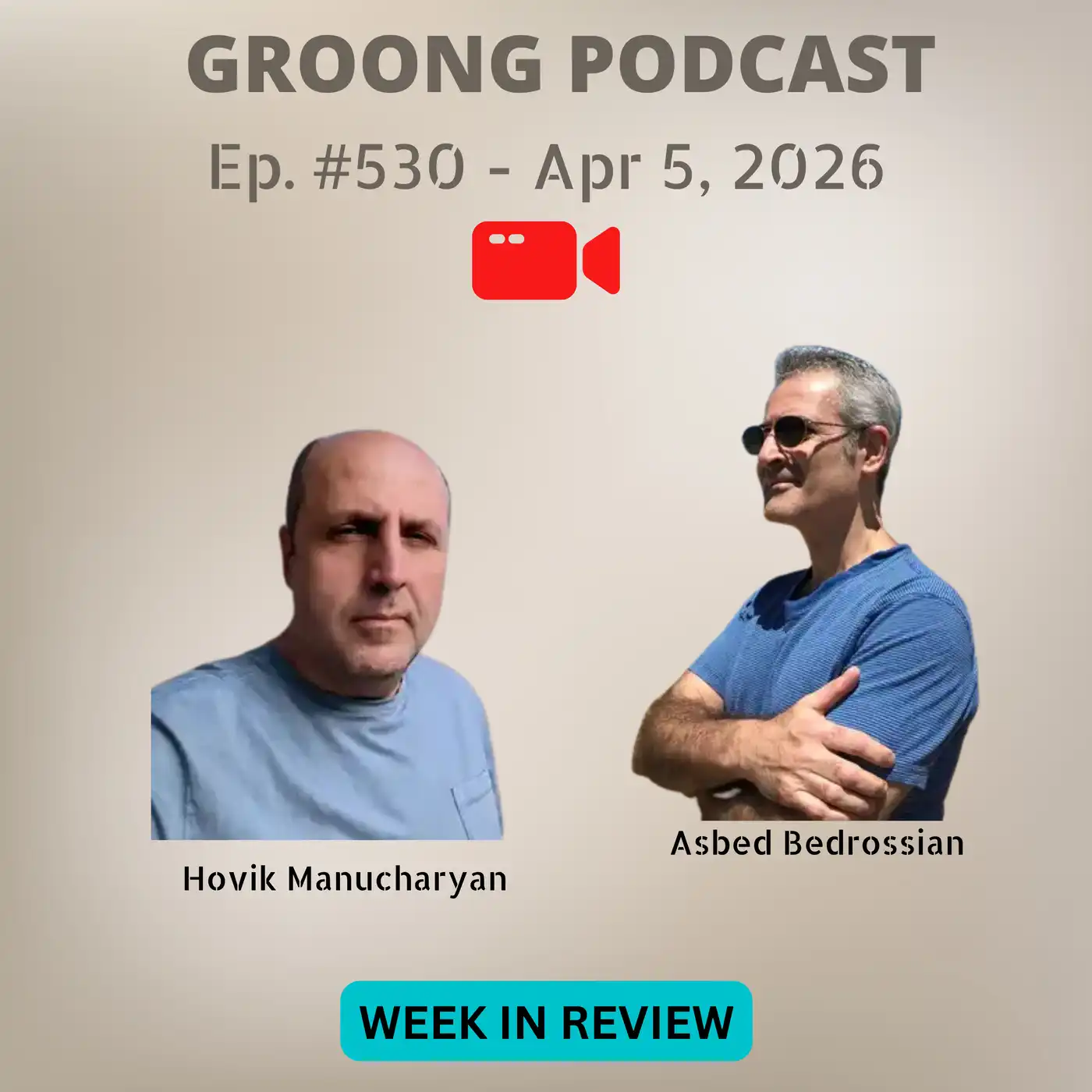
Groong Links:
Topics:
- Iran War Update
- 2016 April War
- Aftermath of Pashinyan in Moscow
- Domestic Politics & Election
Episode 530 | Recorded: April 7, 2026
#Groong #Armenia
Hovik & Asbed - Iran War, April 2016 War, Armenia & Russia, Politics & Election | Ep 530, Apr 5, 2026 [EP530]
Posted on Wednesday, Apr 8, 2026 | Category: Iran, Armenia, Politics, Election, Artsakh, Nagorno Karabakh, Azerbaijan, Armenian Church, European Union, Russia, Georgia, TurkeyGroong Links:
Topics:
- Iran War Update
- 2016 April War
- Aftermath of Pashinyan in Moscow
- Domestic Politics & Election
Episode 530 | Recorded: April 7, 2026
#Groong #Armenia
Transcript: Hovik & Asbed - Iran War, April 2016 War, Armenia & Russia, Politics & Election | Ep 530, Apr 5, 2026 [EP530]
Posted on Wednesday, Apr 8, 2026 | Category: Iran, Armenia, Politics, Election, Artsakh, Nagorno Karabakh, Azerbaijan, Armenian Church, European Union, Russia, Georgia, Turkey, TranscriptIn this Week in Review, Hovik and Asbed discussed the escalating US-Israeli war on Iran and the danger of a wider regional catastrophe; we reflected on the tenth anniversary of the April 2016 Four-Day War and what it revealed about Armenia’s military and diplomatic posture; we examined the fallout from Pashinyan’s Moscow visit and the increasingly blunt Russian response, and reviewed the fast-moving Armenian election campaign, including pressure on the opposition, EU involvement, and the emerging strategies of major the various alliances.
Pietro Shakarian - Iran War, Armenia and Russia, June Parliamentary Elections | Ep 529, Apr 4, 2026 [EP529]
Posted on Saturday, Apr 4, 2026 | Category: Armenia, Iran, Russia, Azerbaijan, Turkey, Israel, Nagorno Karabakh, BRICS, European Union, Ukraine, NATO | Series: cog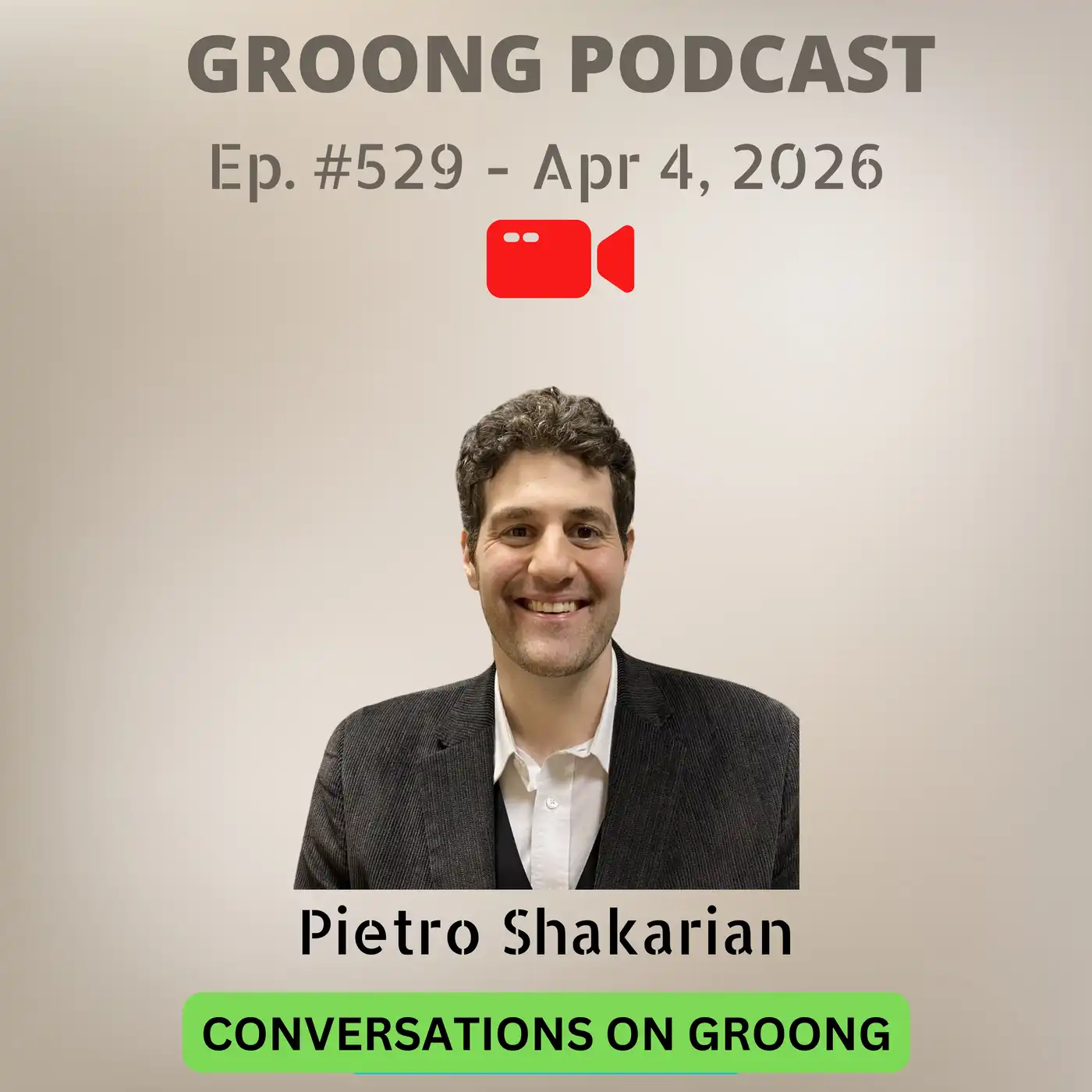
Groong Links:
Guest:
Topics:
- The Iran War and Its Global Impacts
- Armenia-Russia Relations
- Parliamentary Elections in Armenia
Episode 529 | Recorded on April 3, 2026
#IranIsraelWar #IsraelIranConflict #IsraelConflict #Armenia #MiddleEastCrisis #ArmeniaElections #PietroShakarian #TRIPP
Pietro Shakarian - Iran War, Armenia and Russia, June Parliamentary Elections | Ep 529, Apr 4, 2026 [EP529]
Posted on Saturday, Apr 4, 2026 | Category: Armenia, Iran, Russia, Azerbaijan, Turkey, Israel, Nagorno Karabakh, BRICS, European Union, Ukraine, NATOGroong Links:
Guest:
Topics:
- The Iran War and Its Global Impacts
- Armenia-Russia Relations
- Parliamentary Elections in Armenia
Episode 529 | Recorded on April 3, 2026
#IranIsraelWar #IsraelIranConflict #IsraelConflict #Armenia #MiddleEastCrisis #ArmeniaElections #PietroShakarian #TRIPP
Transcript: Pietro Shakarian - Iran War, Armenia and Russia, June Parliamentary Elections | Ep 529, Apr 4, 2026 [EP529]
Posted on Saturday, Apr 4, 2026 | Category: Armenia, Iran, Russia, Azerbaijan, Turkey, Israel, Nagorno Karabakh, BRICS, European Union, Ukraine, NATO, TranscriptDr. Pietro Shakarian joined us to discuss the state of the U.S.-Israel war on Iran, the shrinking chances for a diplomatic off-ramp, and how the conflict is shifting wider Eurasian politics. The conversation then turned to Armenia, including the likely freezing of TRIPP amid the Iran war, Pashinyan’s contentious visit to Moscow, and the deeper low point in Armenia-Russia relations. The final section focused on Armenia’s June parliamentary elections, public sentiment toward Pashinyan, fears over election integrity, and the evolving opposition landscape.
Scott Horton - Why Are We at War with Iran? | Ep 523, Mar 20, 2026 [EP523]
Posted on Friday, Mar 20, 2026 | Category: Politics, US, Iran, Israel, Syria, Lebanon, Turkey, Azerbaijan, Nagorno Karabakh, China, NATO | Series: cog, video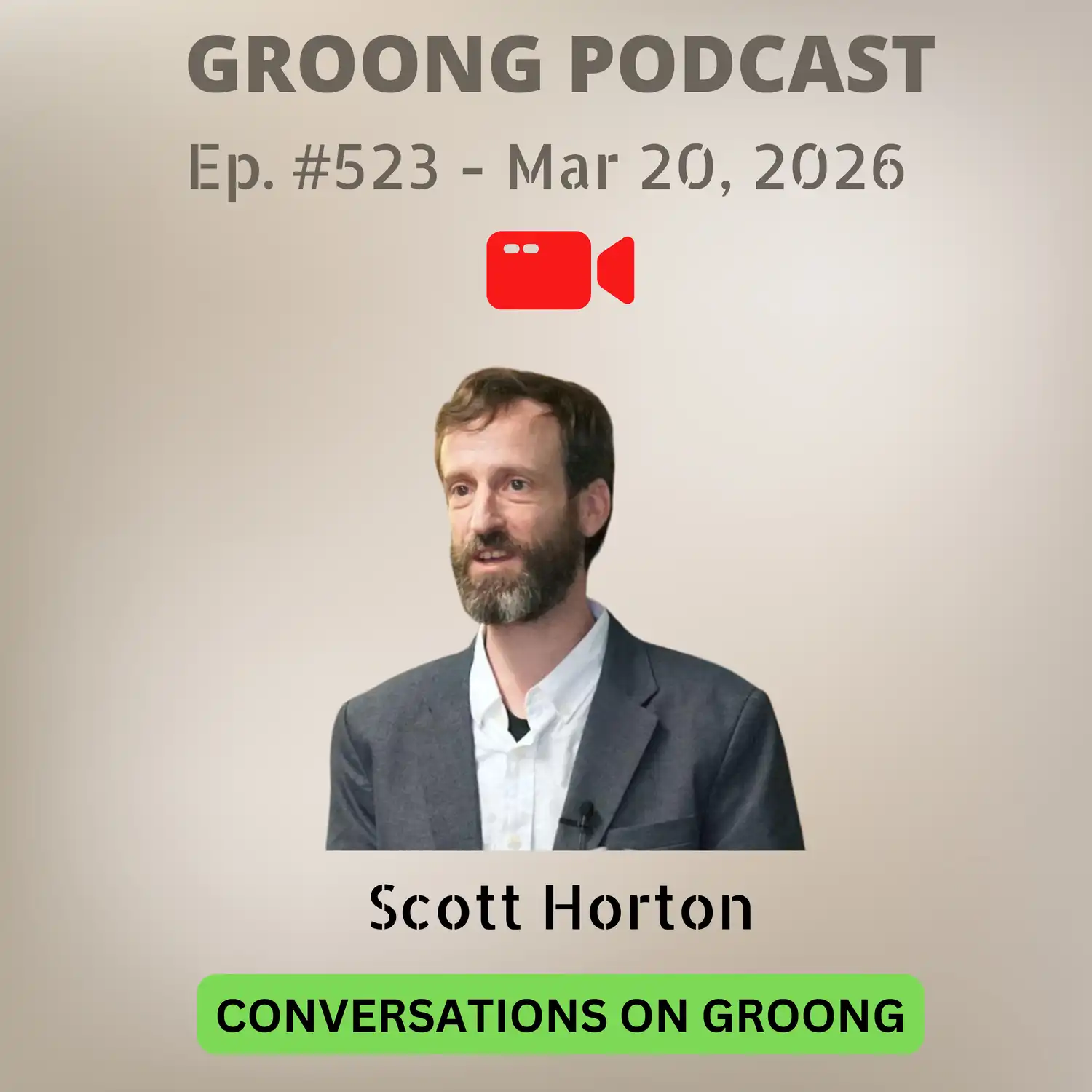
Groong Links:
Guest:
Topics:
- Why this war began
- U.S. fallout and political costs
- Paths to wider regional escalation
Episode 523 | Recorded: March 19, 2026
#IranWar #ScottHorton #USIsrael #MiddleEastWar #Geopolitics