Vahagn Hovakimyan
Last updated: June 11, 2026
Vahagn Hovakimyan serves as Chair of Armenia’s Central Electoral Commission (CEC) , the state body responsible for administering national elections. His appointment as CEC head has drawn intense scrutiny because of his long-standing personal and political ties to Nikol Pashinyan , raising fundamental questions about whether he can function as an independent arbiter in elections where Civil Contract seeks to consolidate power.
Hovakimyan’s relationship with Pashinyan spans decades. During Pashinyan’s journalism career, Pashinyan hired Hovakimyan to work for his newspaper. When Pashinyan entered politics and served as an MP, Hovakimyan worked as his assistant. When Civil Contract entered parliament in 2018 following the so-called Velvet Revolution, Hovakimyan also became an MP. This pattern—from journalism to Pashinyan’s personal staff to parliamentary colleague—illustrates Hovakimyan’s status as a trusted insider rather than an independent administrator.
The controversy deepened with Hovakimyan’s appointment as CEC Chair. In a move that crystallized concerns about institutional capture under Pashinyan’s government, Hovakimyan was elected CEC Chair through a parliamentary vote. In a controversial procedure, Hovakimyan himself cast the tie-breaker vote for his own nomination—a self-dealing act that symbolized how far the subordination of institutions had progressed. An independent, impartial CEC chair would have recused himself from voting on his own election. That Hovakimyan participated in the vote that elevated him to power illustrated the degree to which institutional independence had eroded.
His role in administering the June 2026 elections is thus fraught with conflict of interest. Hovakimyan oversees voter registration, candidate registration, ballot procedures, vote counting, and dispute resolution—all decisions that could benefit Civil Contract or disadvantage opposition parties. Groong coverage has raised repeated concerns about the use of administrative resources (state coercion of voters), whether candidate registration is weaponized against opposition, whether vote counting occurs transparently, and whether the CEC resists government pressure. With Hovakimyan as chair, there is little confidence that such pressures would be meaningfully resisted. His appointment and the manner of his election exemplify a broader pattern under Pashinyan: the systematic subordination of once-independent institutions—the Constitutional Court , the judiciary, security services, and now the electoral commission—to executive control and the interests of ruling party loyalists.
Whether the 2026 elections will be trusted as expressions of popular will depends substantially on the CEC’s independence. The appointment of a Pashinyan crony with a history of self-dealing to administer them has already undermined that trust, regardless of what procedures the CEC implements.
Groong episodes that include this tag
Below are all Groong episodes tagged with Vahagn Hovakimyan.
Arthur Martirosyan - After the Anger, What Next? | Ep 557, Jun 10, 2026 [EP557]
Posted on Thursday, Jun 11, 2026 | Category: Armenia, Politics | Series: cog, video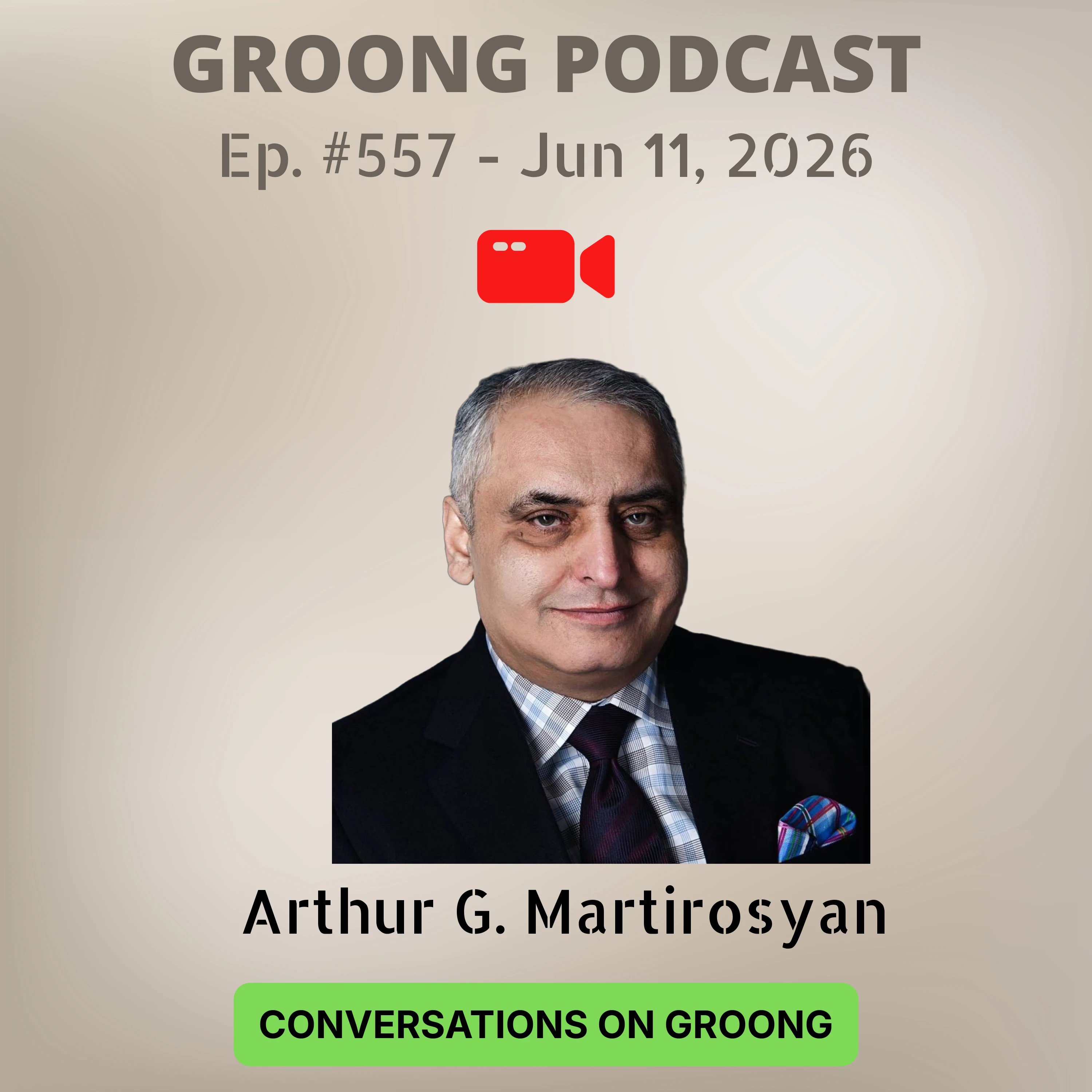
Groong Links:
Guest(s):
Topics:
- Contested results and thresholds
- Pashinyan’s post-election crackdown
- Western backing and interference
- Russia’s delayed pressure campaign
- Opposition choices after the vote
Episode 557 | Recorded: June 9, 2026
#ArmenianElections #Armenia #NikolPashinyan #CivilContract #StrongArmenia #ArmenianOpposition
Arthur Martirosyan - After the Anger, What Next? | Ep 557, Jun 10, 2026 [EP557]
Posted on Thursday, Jun 11, 2026 | Category: Armenia, PoliticsGroong Links:
Guest(s):
Topics:
- Contested results and thresholds
- Pashinyan’s post-election crackdown
- Western backing and interference
- Russia’s delayed pressure campaign
- Opposition choices after the vote
Episode 557 | Recorded: June 9, 2026
#ArmenianElections #Armenia #NikolPashinyan #CivilContract #StrongArmenia #ArmenianOpposition
Transcript: Arthur Martirosyan - After the Anger, What Next? | Ep 557, Jun 10, 2026 [EP557]
Posted on Thursday, Jun 11, 2026 | Category: Armenia, Politics, TranscriptIn this episode of Conversations on Groong, we speak with Arthur G. Martirosyan about Armenia’s contested 2026 Armenian Parliamentary Election and Pashinyan’s path to a third term. We discuss whether the vote was free and fair, how state pressure and Western backing shaped the outcome, the razor-thin thresholds that determine parliamentary representation, Pashinyan’s post-election crackdown against the Established Opposition, and what a Civil Contract supermajority would mean for Armenia’s governance and the Armenia-Azerbaijan Peace Process.
Parties and Alliances in the 2026 Armenian Parliamentary Election | Ep 548, May 22, 2026 [EP548]
Posted on Saturday, May 23, 2026 | Category: Armenia, Politics, Armenian Church, Nagorno Karabakh, Artsakh Blockade, BRICS, Russia, Iran, Azerbaijan, European Union | Series: cog, video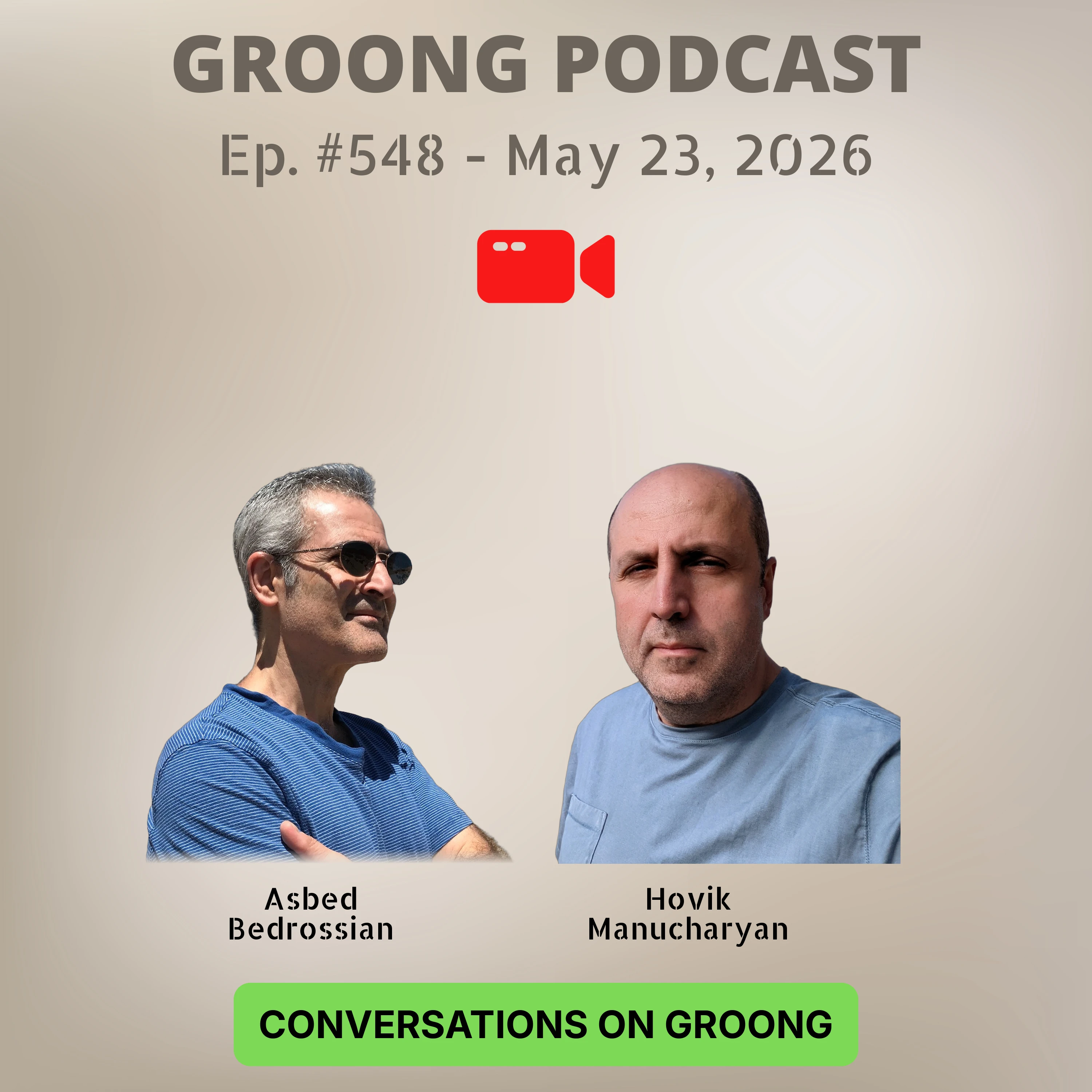
Groong Links:
Topics:
- Armenia’s election rules
- Parties and alliances competing
- MPG polling and thresholds
- Opposition challenges and turnout
- Geopolitical positions heatmap
Episode 548 | Recorded: May 22, 2026
#Armenia #ArmenianElections #ArmenianPolitics #Artsakh #SouthCaucasus #CivilContract #StrongArmenia #HayastanDashinq
Parties and Alliances in the 2026 Armenian Parliamentary Election | Ep 548, May 22, 2026 [EP548]
Posted on Saturday, May 23, 2026 | Category: Armenia, Politics, Armenian Church, Nagorno Karabakh, Artsakh Blockade, BRICS, Russia, Iran, Azerbaijan, European UnionGroong Links:
Topics:
- Armenia’s election rules
- Parties and alliances competing
- MPG polling and thresholds
- Opposition challenges and turnout
- Geopolitical positions heatmap
Episode 548 | Recorded: May 22, 2026
#Armenia #ArmenianElections #ArmenianPolitics #Artsakh #SouthCaucasus #CivilContract #StrongArmenia #HayastanDashinq
Transcript: Parties and Alliances in the 2026 Armenian Parliamentary Election | Ep 548, May 22, 2026 [EP548]
Posted on Saturday, May 23, 2026 | Category: Armenia, Politics, Armenian Church, Nagorno Karabakh, Artsakh Blockade, BRICS, Russia, Iran, Azerbaijan, European Union, TranscriptThis Conversations on Groong episode provides a primer on Armenia’s June 7, 2026 parliamentary elections, reviewing the 17 parties and 2 alliances registered to compete. The discussion explains the election rules, thresholds, coalition process, and the “stable majority” mechanism, while stressing the uneven political environment facing opposition forces. The episode then walks through each participant, including Civil Contract, Strong Armenia, Armenia Alliance, Prosperous Armenia, Wings of Unity, Bright Armenia, ANC, Bever, Republic, DOK, Democratic Consolidation, and smaller parties with Read More
Pashinyan's Hate Speech, Threats, and the June 7 Election Climate | Ep 547, May 17, 2026 [EP547]
Posted on Tuesday, May 19, 2026 | Category: Armenia, Politics, Election, Armenian Church, Nagorno Karabakh, Artsakh Blockade, Russia, China, Azerbaijan, Georgia, Iran, NATO | Series: wir, video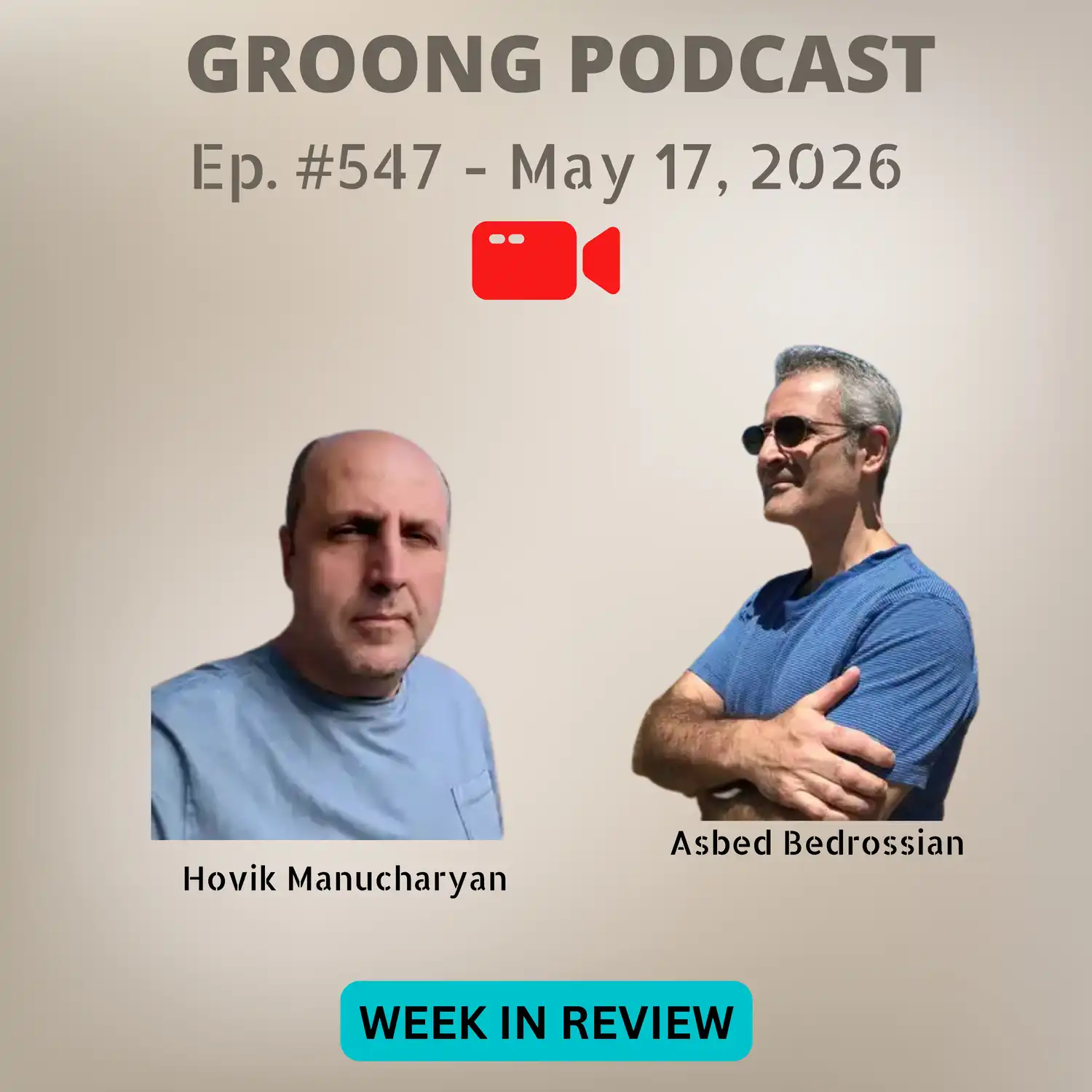
Groong Links:
Topics:
- Trump, China, and Iran
- Armenia-Russia “soft divorce”
- Pashinyan’s violent campaign rhetoric
- State resources and election pressure
- Javakhk church vandalism concerns
Episode 547 | Recorded: May 18, 2026
#Pashinyan #ArmeniaElections #ArmenianPolitics #PoliticalViolence #HateSpeech #ArmeniaRussia #IranWar #SouthCaucasus
Pashinyan's Hate Speech, Threats, and the June 7 Election Climate | Ep 547, May 17, 2026 [EP547]
Posted on Tuesday, May 19, 2026 | Category: Armenia, Politics, Election, Armenian Church, Nagorno Karabakh, Artsakh Blockade, Russia, China, Azerbaijan, Georgia, Iran, NATOGroong Links:
Topics:
- Trump, China, and Iran
- Armenia-Russia “soft divorce”
- Pashinyan’s violent campaign rhetoric
- State resources and election pressure
- Javakhk church vandalism concerns
Episode 547 | Recorded: May 18, 2026
#Pashinyan #ArmeniaElections #ArmenianPolitics #PoliticalViolence #HateSpeech #ArmeniaRussia #IranWar #SouthCaucasus
Transcript: Pashinyan's Hate Speech, Threats, and the June 7 Election Climate | Ep 547, May 17, 2026 [EP547]
Posted on Tuesday, May 19, 2026 | Category: Armenia, Politics, Election, Armenian Church, Nagorno Karabakh, Artsakh Blockade, Russia, China, Azerbaijan, Georgia, Iran, NATO, TranscriptThis Week in Review covers a tense mix of global and Armenian political crises, from Trump’s summit with Xi Jinping and the deepening Iran war, to Armenia’s worsening relations with Russia and the risks to trade, energy, and security ties. Hovik and Asbed also examine Armenia’s heated election climate, including allegations of state pressure, abuse of administrative resources, selective law enforcement, Pashinyan’s violent campaign rhetoric against opposition leaders, and the muted response of international observers. The episode also looks at Robert Kocharyan’s call for major-power guarantees for peace with Azerbaijan, and the vandalism of the Sourp Nshan Armenian Church in Javakhk.