South Caucasus
Last updated: May 29, 2026
The South Caucasus sits at the crossroads of Russia, Turkey, Iran, and the broader Middle East — a small region whose internal conflicts have consistently attracted the attention of great powers. The three states of Armenia, Azerbaijan, and Georgia each navigate overlapping and often contradictory security relationships with Moscow, Washington, and Brussels, while managing unresolved territorial disputes and competing integration ambitions.
The 2020 Nagorno Karabakh war and Azerbaijan’s September 2023 offensive — which resulted in the ethnic cleansing of the entire Armenian population of Artsakh from Nagorno Karabakh — reshaped the regional order, accelerating Armenia’s pivot away from Russian security structures, deepening Azerbaijan’s strategic confidence, and leaving Georgia’s own geopolitical direction in flux following disputed elections and mass protests. The region has become a live testing ground for the limits of Russian influence, the reach of Western soft power, and the emerging role of powers like Turkey, Iran, India , and China.
Groong covers the South Caucasus comprehensively — not just Armenia’s domestic politics and security situation, but the regional dynamics that define the constraints and opportunities facing every state in the area. Episodes in this category examine bilateral relationships, multilateral formats, infrastructure corridors, and the geopolitical competition that makes the South Caucasus one of the most consequential small regions in Eurasian politics.
Groong episodes that include this tag
Below are all Groong episodes tagged with South Caucasus.
Transcript: Christine Arakelian - Forever Wars, NATO 3.0, Armenia's High-Stakes Western Pivot | Ep 572, Jul 31, 2026 [EP572]
Posted on Saturday, Aug 1, 2026 | Category: Armenia, USA, European Union, Politics, Geopolitics, Diaspora, TranscriptIn this episode of Conversations on Groong, we speak with Christine Arakelian about American foreign policy fractures, Iran war risks, and Armenia’s pivot to the West. We discuss whether the United States has coherent foreign policy, the collapse of the MAGA coalition over Forever Wars, NATO 3.0 and Europe’s militarization, and how Pashinyan’s post-2026 Armenian Parliamentary Election government is navigating TRIPP amid global instability.
Groong Links:
Topics:
- Ukraine expands its war into the Caspian
- Iran warns of a wider regional response
- Russia and the West test stalled diplomacy
- Aliyev positions Baku as a geopolitical hub
- Armenia faces pressure over EU alignment
- Baku POW abuse and their deteriorating health
- Housing policy expose domestic failures
Episode 571 | Recorded: July 27, 2026
#Armenia #UkraineWar #Iran #CaspianSea #SouthCaucasus #MiddleCorridor #ArmenianPOWs #Geopolitics
From Caspian Drones to Armenia’s Cold Winter | Ep 571, Jul 26, 2026 [EP571]
Posted on Tuesday, Jul 28, 2026 | Category: Armenia, Iran, PoliticsGroong Links:
Topics:
- Ukraine expands its war into the Caspian
- Iran warns of a wider regional response
- Russia and the West test stalled diplomacy
- Aliyev positions Baku as a geopolitical hub
- Armenia faces pressure over EU alignment
- Baku POW abuse and their deteriorating health
- Housing policy expose domestic failures
Episode 571 | Recorded: July 27, 2026
#Armenia #UkraineWar #Iran #CaspianSea #SouthCaucasus #MiddleCorridor #ArmenianPOWs #Geopolitics
Ukraine's Caspian Drone Attack: How Did Drones Fly Undetected? [EP571]
Posted on Tuesday, Jul 28, 2026 | Category: Geopolitics, UkraineAsbed and Hovik dissect how Ukrainian drones reached the Caspian Sea undetected, exploring launch routes, NATO intelligence support, and the strategic implications for the region.
Archil Sikharulidze - Armenia and Georgia Between Russia and Europe | Ep 570, Jul 26, 2026 [EP570]
Posted on Monday, Jul 27, 2026 | Category: Armenia, Georgia, Geopolitics, Politics | Series: cog, video
Groong Links:
Guest(s):
Topics:
- Russia’s changing South Caucasus strategy
- Georgia’s widening dispute with Europe
- Armenia’s shift away from Russia
- Georgia’s role in regional transit
- Armenia-Georgia ties under pressure
Episode 570 | Recorded: July 24, 2026
#Armenia #Georgia #Russia #EuropeanUnion #SouthCaucasus #GeorgianDream #NikolPashinyan #MiddleCorridor
Archil Sikharulidze - Armenia and Georgia Between Russia and Europe | Ep 570, Jul 26, 2026 [EP570]
Posted on Monday, Jul 27, 2026 | Category: Armenia, Georgia, Geopolitics, PoliticsGroong Links:
Guest(s):
Topics:
- Russia’s changing South Caucasus strategy
- Georgia’s widening dispute with Europe
- Armenia’s shift away from Russia
- Georgia’s role in regional transit
- Armenia-Georgia ties under pressure
Episode 570 | Recorded: July 24, 2026
#Armenia #Georgia #Russia #EuropeanUnion #SouthCaucasus #GeorgianDream #NikolPashinyan #MiddleCorridor
Georgia's Path from Anti-Russian to Pragmatic: A Regional Model [EP570]
Posted on Monday, Jul 27, 2026 | Category: Georgia, Russia, GeopoliticsArchil Sikharulidze explains how Georgia evolved from radical anti-Russian stance to pragmatic balanced policy without abandoning European aspirations.
Ukraine's Pragmatic Reset with Georgia: Abandoning Regime Change [EP570]
Posted on Monday, Jul 27, 2026 | Category: Ukraine, Georgia, GeopoliticsArchil Sikharulidze analyzes why Kyiv suddenly reversed course and engaged Georgian Dream after attempting to isolate it, revealing Kyiv’s shrinking alliance options.
Transcript: From Caspian Drones to Armenia’s Cold Winter | Ep 571, Jul 26, 2026 [EP571]
Posted on Tuesday, Jul 28, 2026 | Category: Armenia, Iran, Politics, TranscriptIn this week’s edition of the Armenian News podcast, Hovik and Asbed analyze escalating regional tensions as Ukraine expands operations into the Caspian Sea, striking Iranian and Russian assets. We examine how this merger of the Northern and Southern conflicts affects Armenia, Kazakhstan’s energy security, and Pashinyan’s diplomatic positioning amid new pressure from Western capitals following Aliyev’s recent visits to Germany and Berlin.
Transcript: Archil Sikharulidze - Armenia and Georgia Between Russia and Europe | Ep 570, Jul 26, 2026 [EP570]
Posted on Monday, Jul 27, 2026 | Category: Armenia, Georgia, Geopolitics, Politics, TranscriptIn this episode of Conversations on Groong, we speak with Dr. Archil Sikharulidze about Russia’s shifting strategy in the South Caucasus and Armenia and Georgia’s diverging paths. We discuss Moscow’s assessment of Armenia-Azerbaijan Peace Process developments, Georgia’s widening dispute with Europe, Armenia’s shift away from Russia, and how regional transit corridors reshape geopolitical competition between Moscow, Brussels, and Washington.
Groong Links:
Guest(s):
Topics:
- Armenian-American advocacy and its next phase
- Genocide recognition, justice, and reparations
- Church-state conflict and national unity
Episode 569 | Recorded: July 21, 2026
#ArmenianDiaspora #AnthonyBarsamian #ArmenianGenocide #ArmenianChurch #ArmeniaDiaspora #SouthCaucasus
Anthony Barsamian - Armenia-Diaspora checkpoint | Ep 569, Jul 25, 2026 [EP569]
Posted on Saturday, Jul 25, 2026 | Category: Armenia, Diaspora, PoliticsGroong Links:
Guest(s):
Topics:
- Armenian-American advocacy and its next phase
- Genocide recognition, justice, and reparations
- Church-state conflict and national unity
Episode 569 | Recorded: July 21, 2026
#ArmenianDiaspora #AnthonyBarsamian #ArmenianGenocide #ArmenianChurch #ArmeniaDiaspora #SouthCaucasus
Complementarity vs. Exclusivity: Armenia's Dangerous Western Pivot [EP569]
Posted on Saturday, Jul 25, 2026 | Category: Geopolitics, ArmeniaBarsamian weighs Armenia’s foreign policy pivot to the West against the persistent threat from unrepentant neighbors: can true security come without Turkey’s acknowledgment and commitment?
Transcript: Anthony Barsamian - Armenia-Diaspora checkpoint | Ep 569, Jul 25, 2026 [EP569]
Posted on Saturday, Jul 25, 2026 | Category: Armenia, Diaspora, Politics, TranscriptIn this episode of Conversations on Groong, we speak with Anthony Barsamian about Armenian Diaspora advocacy, Armenia-Diaspora relations, and the next phase of Armenian-American activism. We discuss decades of work securing U.S.-Armenia relations and aid packages, the achievement of U.S. Armenian Genocide recognition and what comes next, and the role of the Armenian Republic in promoting international genocide recognition—including recent developments with Israeli recognition efforts.
Iran War, TRIPP Money, and Armenia’s Political Purgatory | Ep 561, Jul 19, 2026 [EP568]
Posted on Wednesday, Jul 22, 2026 | Category: Armenia, Politics | Series: wir, video
Groong Links:
Topics:
- US-Iran War Continues
- Summer Lull in Yerevan Politics
- Konstantin Sokolov: Master of TRIPP & Teghut
- UN: Abp. Galstanyan Charges Unjustified
- Armenian POW Slams Pashinyan from Baku
Episode 568 | Recorded: July 20, 2026
#IranWar #TRIPP #Teghut #Armenia #PoliticalPrisoners #ArmenianPOWs #KonstantinSokolov
Iran War, TRIPP Money, and Armenia’s Political Purgatory | Ep 561, Jul 19, 2026 [EP568]
Posted on Wednesday, Jul 22, 2026 | Category: Armenia, PoliticsGroong Links:
Topics:
- US-Iran War Continues
- Summer Lull in Yerevan Politics
- Konstantin Sokolov: Master of TRIPP & Teghut
- UN: Abp. Galstanyan Charges Unjustified
- Armenian POW Slams Pashinyan from Baku
Episode 568 | Recorded: July 20, 2026
#IranWar #TRIPP #Teghut #Armenia #PoliticalPrisoners #ArmenianPOWs #KonstantinSokolov
Transcript: Iran War, TRIPP Money, and Armenia’s Political Purgatory | Ep 561, Jul 19, 2026 [EP568]
Posted on Wednesday, Jul 22, 2026 | Category: Armenia, Politics, TranscriptIn this week’s Groong Week in Review, Hovik and Asbed break down escalating tensions across the Middle East as the US-Iran war intensifies following the collapse of the June ceasefire. We examine the strategic implications for Armenia and the South Caucasus, the role of TRIPP advocates like Konstantin Sokolov, and how regional instability intersects with Pashinyan’s political vulnerabilities at home, including charges against Archbishop Galstanyan and ongoing Armenian POW cases.
Iran's Legitimate Security Concerns About TRIPP-Pashinyan's Tone-Deaf Response [EP567]
Posted on Wednesday, Jul 15, 2026 | Category: Geopolitics, Iran, PoliticsHovik details Iran’s formal request for TRIPP safeguards and Pashinyan’s dismissal, illustrating Armenia’s strategic pivot away from its longtime partner toward NATO.
Missing Maps in Border Delimitation: How Pashinyan Negotiates Without Showing the Armenians [EP567]
Posted on Wednesday, Jul 15, 2026 | Category: Politics, Armenia, AzerbaijanAsbed and Hovik expose the absence of transparent maps in Armenia’s border delimitation process, questioning what territorial figure the government is actually negotiating.
NATO in Ankara, War in Iran, and the Scissors Over Armenia | Ep 567, Jul 12, 2026 [EP567]
Posted on Wednesday, Jul 15, 2026 | Category: Armenia, Politics | Series: wir, video
Groong Links:
Topics:
- NATO summit in Ankara
- Iran War Update
- Taking Scissors to Armenia
- Shaping the Parliament
- OSCE vs. Garegin II
Episode 567 | Recorded: July 13, 2026
#ArmenianNews #NATOSummit #IranWar #TRIPP #ArmeniaAzerbaijan #ArmenianParliament #GareginII #OSCE
NATO in Ankara, War in Iran, and the Scissors Over Armenia | Ep 567, Jul 12, 2026 [EP567]
Posted on Wednesday, Jul 15, 2026 | Category: Armenia, PoliticsGroong Links:
Topics:
- NATO summit in Ankara
- Iran War Update
- Taking Scissors to Armenia
- Shaping the Parliament
- OSCE vs. Garegin II
Episode 567 | Recorded: July 13, 2026
#ArmenianNews #NATOSummit #IranWar #TRIPP #ArmeniaAzerbaijan #ArmenianParliament #GareginII #OSCE
Pashinyan's 'Scissors' Metaphor: Setting Up Territorial Concessions [EP567]
Posted on Wednesday, Jul 15, 2026 | Category: Politics, Armenia, AzerbaijanAsbed breaks down Pashinyan’s dangerous ‘scissors’ metaphor on border delimitation, which treats Azerbaijani military occupation as a negotiating position rather than an illegal invasion.
Transcript: NATO in Ankara, War in Iran, and the Scissors Over Armenia | Ep 567, Jul 12, 2026 [EP567]
Posted on Wednesday, Jul 15, 2026 | Category: Armenia, Politics, TranscriptIn this Groong Week in Review episode, Hovik and Asbed cover the 36th NATO summit in Ankara, escalating Iran war developments, and Armenia’s removal of murals honoring fallen soldiers. We discuss NATO’s defense spending surge, Trump’s shift on Turkey and F-35 access, Ukraine aid commitments, and what these geopolitical shifts mean for Armenia and the South Caucasus amid ongoing Armenia-Azerbaijan peace negotiations.
Armenia's Impossible Balancing Act: Can the EU Really Replace Russia? [EP566]
Posted on Saturday, Jul 11, 2026 | Category: Armenia, Economy, Geopolitics, European Union, RussiaSuslov argues the EU cannot replace Russia as Armenia’s economic partner due to protectionism, geography, and the failure of similar EU integration models in Georgia and Ukraine.
Groong Links:
Guest(s):
Topics:
- Ukraine’s long war and endgame
- Novorossiya and a landlocked Ukraine?
- Europe rearms against Russia
- NATO 3.0 and containment
- Armenia’s post-election Western pivot
- EU promises versus EAEU dependence
- TRIPP, Syunik, and Russian red lines
Episode 566 | Recorded: July 9, 2026
#Russia #UkraineWar #NATO #Europe #Armenia #SouthCaucasus #TRIPP #Syunik #EAEU
Dmitry Suslov - Ukraine’s Endgame, Armenia’s Crossroads | Ep 566, Jul 11, 2026 [EP566]
Posted on Saturday, Jul 11, 2026 | Category: Armenia, Russia, Ukraine, PoliticsGroong Links:
Guest(s):
Topics:
- Ukraine’s long war and endgame
- Novorossiya and a landlocked Ukraine?
- Europe rearms against Russia
- NATO 3.0 and containment
- Armenia’s post-election Western pivot
- EU promises versus EAEU dependence
- TRIPP, Syunik, and Russian red lines
Episode 566 | Recorded: July 9, 2026
#Russia #UkraineWar #NATO #Europe #Armenia #SouthCaucasus #TRIPP #Syunik #EAEU
If Russia Wins Ukraine But Loses Armenia: Is That a Strategic Victory? [EP566]
Posted on Saturday, Jul 11, 2026 | Category: GeopoliticsSuslov argues that Russian military victory in Ukraine could be hollow if coupled with loss of influence in Armenia, Moldova, and the South Caucasus-but emphasizes that nothing is permanent.
Pashinyan's Western Pivot: Maidanization of Armenia or Armenian Choice? [EP566]
Posted on Saturday, Jul 11, 2026 | Category: Armenia, Politics, Geopolitics, RussiaSuslov compares Pashinyan’s regime to Georgia’s Saakashvili, arguing Armenia is being systematically repurposed as a Western pawn against Russia.
Russia's South Caucasus Dilemma: TRIPP as Strategic Containment or Negotiable Asset? [EP566]
Posted on Saturday, Jul 11, 2026 | Category: Geopolitics, Russia, ArmeniaSuslov explains Russia’s conflicted view of TRIPP: a strategic threat violating the 2020 agreement, but potentially negotiable as a way to preserve Russian influence.
Russia's Ultimatum to Armenia: Referendum or Pivot Away [EP566]
Posted on Saturday, Jul 11, 2026 | Category: Geopolitics, Politics, ArmeniaSuslov explains Russia’s demand that Armenia hold a referendum to legitimize its choice between Eurasian integration and Western alignment, rejecting Pashinyan’s pivot as undemocratic.
Turkey as Both Partner and Rival: Russia's No-Illusions Approach [EP566]
Posted on Saturday, Jul 11, 2026 | Category: GeopoliticsSuslov explains the paradox of Russian-Turkish relations: Moscow views Ankara as a regional rival across multiple fronts, yet maintains an official partnership framework.
Transcript: Dmitry Suslov - Ukraine’s Endgame, Armenia’s Crossroads | Ep 566, Jul 11, 2026 [EP566]
Posted on Saturday, Jul 11, 2026 | Category: Armenia, Russia, Ukraine, Politics, TranscriptIn this episode of Conversations on Groong, we speak with Dr. Dmitry Suslov about Russia’s strategic position across multiple fronts: the Ukraine War, Armenia’s post-election Western pivot, TRIPP and Syunik, and Europe’s rearmament against Russia. We discuss the long-term confrontation between Russia and NATO, Pashinyan’s Western alignment after the June 2026 Armenian Parliamentary Election, and how transport corridors in the South Caucasus may reshape regional containment lines.
Russia's Red Line in the South Caucasus: Who Controls TRIPP? [EP565]
Posted on Friday, Jul 10, 2026 | Category: Russia, USA, Geopolitics, ArmeniaMarkedonov reveals Russia’s actual red lines in the South Caucasus, explaining why TRIPP matters beyond transportation logistics and what military escalation would mean for the region.
Sergey Markedonov - Ukraine, TRIPP, and Armenia’s Western Pivot | Ep 565, Jul 10, 2026 [EP565]
Posted on Friday, Jul 10, 2026 | Series: cog, video
Groong Links:
Guest(s):
Topics:
- Ukraine’s war of attrition
- Russia’s strategic bandwidth problem
- TRIPP and Iran’s red lines
- Israel’s Armenian Genocide move
- Armenia’s Western pivot after elections
Episode 565 | Recorded: July 8, 2026
#ArmenianNews #SouthCaucasus #UkraineWar #Russia #Armenia #EAEU #TRIPP #Geopolitics
Sergey Markedonov - Ukraine, TRIPP, and Armenia’s Western Pivot | Ep 565, Jul 10, 2026 [EP565]
Posted on Friday, Jul 10, 2026Groong Links:
Guest(s):
Topics:
- Ukraine’s war of attrition
- Russia’s strategic bandwidth problem
- TRIPP and Iran’s red lines
- Israel’s Armenian Genocide move
- Armenia’s Western pivot after elections
Episode 565 | Recorded: July 8, 2026
#ArmenianNews #SouthCaucasus #UkraineWar #Russia #Armenia #EAEU #TRIPP #Geopolitics
Transcript: Sergey Markedonov - Ukraine, TRIPP, and Armenia’s Western Pivot | Ep 565, Jul 10, 2026 [EP565]
Posted on Friday, Jul 10, 2026 | Category: TranscriptIn this episode of Conversations on Groong, we speak with Dr. Sergey Markedonov about Russia’s strategic position amid the Ukraine War and its implications for Armenia. We discuss why Moscow remains bogged down in Ukraine despite its military superiority, how the war of attrition shapes Russian bandwidth for the South Caucasus, the geopolitical role of the Trump Route for International Peace and Prosperity, and Pashinyan’s Western pivot following the June 2026 Armenian Parliamentary Election.
The Constitutional Court has ruled, now what? | Ep 564, Jul 5, 2026 [EP564]
Posted on Wednesday, Jul 8, 2026 | Category: Armenia, Politics | Series: wir, video
Groong Links:
Topics:
- Court rubber stamps stolen elections
- Von der Leyen in the South Caucasus
- EU connectivity push in Caucasus
- Rubinyan vs. Simonyan
- Post-election opposition raids begin
- IMEI or IMEI not
Episode 564 | Recorded: July 6, 2026
#Armenia #ArmenianNews #Pashinyan #ArmenianPolitics #SouthCaucasus #ConstitutionalCourt #SurveillanceState
The Constitutional Court has ruled, now what? | Ep 564, Jul 5, 2026 [EP564]
Posted on Wednesday, Jul 8, 2026 | Category: Armenia, PoliticsGroong Links:
Topics:
- Court rubber stamps stolen elections
- Von der Leyen in the South Caucasus
- EU connectivity push in Caucasus
- Rubinyan vs. Simonyan
- Post-election opposition raids begin
- IMEI or IMEI not
Episode 564 | Recorded: July 6, 2026
#Armenia #ArmenianNews #Pashinyan #ArmenianPolitics #SouthCaucasus #ConstitutionalCourt #SurveillanceState
Transcript: The Constitutional Court has ruled, now what? | Ep 564, Jul 5, 2026 [EP564]
Posted on Wednesday, Jul 8, 2026 | Category: Armenia, Politics, TranscriptIn this episode of Groong Week in Review for July 5, 2026, Hovik and Asbed analyze Armenia’s Constitutional Court ruling upholding the disputed 2026 Armenian Parliamentary Election results. We examine the disqualification of Prosperous Armenia votes, Civil Contract’s three-fifths majority, the opposition’s parliamentary leverage, and what these outcomes mean for Armenian sovereignty amid ongoing Armenia-Azerbaijan Peace Process negotiations and regional pressures.
Dziunik Aghajanian - Iran War, Election Aftermath, Russian Warnings, Israeli Recognition | Ep 563, Jul 2, 2026 [EP563]
Posted on Friday, Jul 3, 2026 | Category: Armenia, Politics | Series: cog, video
Groong Links:
Guest(s):
Topics:
- US-Iran MoU
- Election Aftermath
- Russian Warnings to Armenia
- Israeli Recognizes the Armenian Genocide
Episode 563 | Recorded: July 1, 2026
#ArmenianNews #IranWar #DziunikAghajanian #ArmenianElections #RussiaArmenia #SouthCaucasus #ArmenianGenocide
Dziunik Aghajanian - Iran War, Election Aftermath, Russian Warnings, Israeli Recognition | Ep 563, Jul 2, 2026 [EP563]
Posted on Friday, Jul 3, 2026 | Category: Armenia, PoliticsGroong Links:
Guest(s):
Topics:
- US-Iran MoU
- Election Aftermath
- Russian Warnings to Armenia
- Israeli Recognizes the Armenian Genocide
Episode 563 | Recorded: July 1, 2026
#ArmenianNews #IranWar #DziunikAghajanian #ArmenianElections #RussiaArmenia #SouthCaucasus #ArmenianGenocide
Transcript: Dziunik Aghajanian - Iran War, Election Aftermath, Russian Warnings, Israeli Recognition | Ep 563, Jul 2, 2026 [EP563]
Posted on Friday, Jul 3, 2026 | Category: Armenia, Politics, TranscriptIn this episode of Conversations on Groong, we speak with Amb. Dziunik Aghajanian about the Iran-Israel conflict, Armenia’s 2026 Armenian Parliamentary Election aftermath, and Israeli recognition of the Armenian Genocide. We discuss whether the US-Iran MOU represents genuine de-escalation or a tactical pause before renewed confrontation, the Constitutional Court’s review of election fraud allegations against the Civil Contract regime, and Russia’s warnings to Armenia amid regional instability.
Armen Grigoryan in Gdańsk: Russia Reads Ukraine Conference Attendance as Frozen Asset Threat [EP562]
Posted on Wednesday, Jul 1, 2026 | Category: Geopolitics, ArmeniaArmen Grigoryan’s participation in a Ukraine reconstruction conference in Gdańsk signals to Russia that Armenia may be considering freezing Russian assets, escalating tensions.
Russia's Remittance Threat: $3-4 Billion That Keeps Armenia's Economy Afloat [EP562]
Posted on Wednesday, Jul 1, 2026 | Category: Economy, Russia, ArmeniaAsbed reveals that remittances from Armenians working in Russia, totaling $3-4 billion annually, are the hidden pillar keeping Armenia’s currency and economy stable.
When Israel Recognizes and Yerevan Dodges | Ep 562, Apr 25, 2026 [EP562]
Posted on Wednesday, Jul 1, 2026 | Category: Armenia, Politics | Series: wir, video
Groong Links:
Topics:
- Israel Recognizes the Armenian Genocide
- Russian Warnings Continue
- Post Election Limbo
Episode 562 | Recorded: June 29, 2026
#ArmenianGenocide #Armenia #Israel #Pashinyan #RussiaArmenia #SouthCaucasus
When Israel Recognizes and Yerevan Dodges | Ep 562, Apr 25, 2026 [EP562]
Posted on Wednesday, Jul 1, 2026 | Category: Armenia, PoliticsGroong Links:
Topics:
- Israel Recognizes the Armenian Genocide
- Russian Warnings Continue
- Post Election Limbo
Episode 562 | Recorded: June 29, 2026
#ArmenianGenocide #Armenia #Israel #Pashinyan #RussiaArmenia #SouthCaucasus
Transcript: When Israel Recognizes and Yerevan Dodges | Ep 562, Apr 25, 2026 [EP562]
Posted on Wednesday, Jul 1, 2026 | Category: Armenia, Politics, TranscriptIn this week’s Groong Week in Review, Hovik and Asbed discuss Israel’s historic recognition of the Armenian Genocide, Russia’s ongoing warnings toward Armenia, and the political uncertainty following the 2026 Armenian Parliamentary Election. We examine the geopolitical context behind Israel’s decision, Pashinyan’s measured response, and what these developments signal about Armenia’s regional position amid shifting US-Turkey relations and broader Middle East tensions.
Groong News Digest — Week of June 22–28, 2026
Posted on Sunday, Jun 28, 2026 | Category: Digest, News DigestArmenia’s June 7 parliamentary elections dominate the week as opposition parties challenge results in Constitutional Court, while post-election crackdowns intensify and the Israeli Cabinet voted to recognize the Armenian Genocide despite Turkish objections.
Groong Podcast Digest — Week of June 22–28, 2026
Posted on Sunday, Jun 28, 2026 | Category: Digest, Podcast DigestArman Grigoryan discusses US-Iran negotiations and their implications for TRIPP, regional power dynamics, and Armenia’s contested 2026 parliamentary election aftermath. We examine the fallout from Armenia’s 2026 Armenian Parliamentary Elections, including six opposition parties challenging results at the Constitutional Court, escalating political persecutions targeting opposition figures, Russia’s continued economic pressure on Pashinyan’s government, US-Iran ceasefire negotiations and their regional implications, and a new Armenia-Azerbaijan telecommunications agreement that raises cybersecurity and strategic dependency concerns.
Iran Talks, Election Challenges, and Political Retaliation | Ep 561, Jun 21, 2026 [EP561]
Posted on Wednesday, Jun 24, 2026 | Category: Armenia, Politics | Series: wir, video
Groong Links:
Topics:
- US-Iran Negotiations
- Russian Embargo
- Election Aftermath
- Persecutions Continue
- Armenia-Azerbaijan Telco Agreement
Episode 561 | Recorded: June 22, 2026
#ArmenianNews #Armenia #Iran #USIranTalks #ArmenianElections #SouthCaucasus #NikolPashinyan #TRIPP
Iran Talks, Election Challenges, and Political Retaliation | Ep 561, Jun 21, 2026 [EP561]
Posted on Wednesday, Jun 24, 2026 | Category: Armenia, PoliticsGroong Links:
Topics:
- US-Iran Negotiations
- Russian Embargo
- Election Aftermath
- Persecutions Continue
- Armenia-Azerbaijan Telco Agreement
Episode 561 | Recorded: June 22, 2026
#ArmenianNews #Armenia #Iran #USIranTalks #ArmenianElections #SouthCaucasus #NikolPashinyan #TRIPP
Transcript: Iran Talks, Election Challenges, and Political Retaliation | Ep 561, Jun 21, 2026 [EP561]
Posted on Wednesday, Jun 24, 2026 | Category: Armenia, Politics, TranscriptIn this Groong Week in Review episode, Hovik and Asbed examine the fallout from Armenia’s 2026 Armenian Parliamentary Elections, the ongoing US-Iran War ceasefire negotiations and their regional implications, and escalating political persecutions following the vote. We discuss how six opposition parties—including Strong Armenia, Armenia Alliance, Prosperous Armenia, and others—have challenged the election results at the Constitutional Court, Russia’s continued criticism of Pashinyan’s government amid an economic embargo, and Armenia-Azerbaijan telecommunications developments amid broader geopolitical uncertainty in the South Caucasus.
Groong Links:
Guest(s):
Topics:
- US-Iran negotiations and regional risks
- TRIPP and shifting regional power
- Armenia’s contested post-election landscape
- Opposition failures and future strategy
- Risks of another parliamentary election
Episode 560 | Recorded: June 22, 2026
#ArmeniaElections #USIranNegotiations #SouthCaucasus #TRIPP #Iran #ArmanGrigoryan
Arman Grigoryan - US-Iran Negotiations, Post-Election Armenian Politics | Ep 560, Jun 23, 2026 [EP560]
Posted on Tuesday, Jun 23, 2026 | Category: Armenia, Politics, IranGroong Links:
Guest(s):
Topics:
- US-Iran negotiations and regional risks
- TRIPP and shifting regional power
- Armenia’s contested post-election landscape
- Opposition failures and future strategy
- Risks of another parliamentary election
Episode 560 | Recorded: June 22, 2026
#ArmeniaElections #USIranNegotiations #SouthCaucasus #TRIPP #Iran #ArmanGrigoryan
Transcript: Arman Grigoryan - US-Iran Negotiations, Post-Election Armenian Politics | Ep 560, Jun 23, 2026 [EP560]
Posted on Tuesday, Jun 23, 2026 | Category: Armenia, Politics, Iran, TranscriptIn this episode of Conversations on Groong, we speak with Dr. Arman Grigoryan about US-Iran negotiations and Armenia’s contested post-election landscape. We discuss the prospects for a US-Iran agreement, its implications for TRIPP and Iran-Russia relations, the aftermath of the 2026 Armenian Parliamentary Election, and how shifting great-power dynamics reshape the South Caucasus.
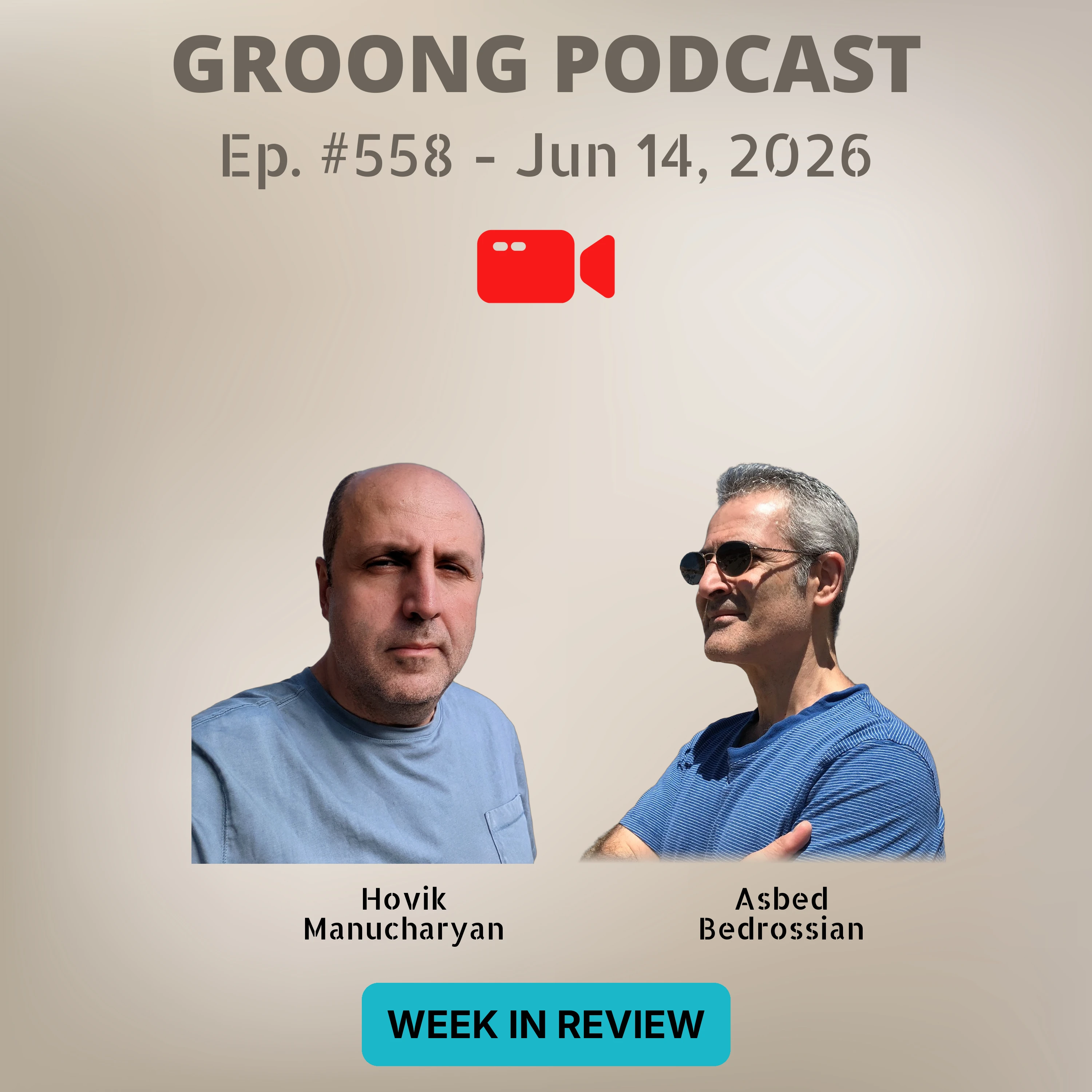
Groong Links:
Topics:
- Armenian Election Aftermath
- Armenia-Georgia Relations
- US-Iran Interim Agreement
Episode 558 | Recorded: June 15, 2026
#Armenia #ArmenianNews #ArmenianElections #CivilContract #Pashinyan #ArmenianConstitution #Referendum #ProsperousArmenia #SouthCaucasus #CEC
Armenian Parliamentary Election, US-Iran Agreement | Ep 558, Jun 14, 2026 [EP558]
Posted on Tuesday, Jun 16, 2026 | Category: Armenia, Politics, IranGroong Links:
Topics:
- Armenian Election Aftermath
- Armenia-Georgia Relations
- US-Iran Interim Agreement
Episode 558 | Recorded: June 15, 2026
#Armenia #ArmenianNews #ArmenianElections #CivilContract #Pashinyan #ArmenianConstitution #Referendum #ProsperousArmenia #SouthCaucasus #CEC
Why Armenia and Georgia Must Stay United or Face Azerbaijan Hegemony [EP558]
Posted on Tuesday, Jun 16, 2026 | Category: Geopolitics, ArmeniaHovik warns that Armenia and Georgia must maintain strong partnership to resist external pressures. Without unity, Azerbaijan will emerge as the regional hegemon, benefiting from competition between its neighbors.
Transcript: Armenian Parliamentary Election, US-Iran Agreement | Ep 558, Jun 14, 2026 [EP558]
Posted on Tuesday, Jun 16, 2026 | Category: Armenia, Politics, Iran, TranscriptIn this episode of Groong Week in Review for June 14, 2026, hosts Hovik Manucharyan and Asbed Bedrossian analyze the aftermath of Armenia’s 2026 Armenian Parliamentary Election, shifting Armenia-Georgia relations, and a landmark interim US-Iran agreement that reshapes regional stability. We discuss the ceasefire framework, sanctions relief, and how the Iran war’s resolution affects Armenian security, energy markets, and the broader South Caucasus landscape.
Arthur Martirosyan - After the Anger, What Next? | Ep 557, Jun 10, 2026 [EP557]
Posted on Thursday, Jun 11, 2026 | Category: Armenia, Politics | Series: cog, video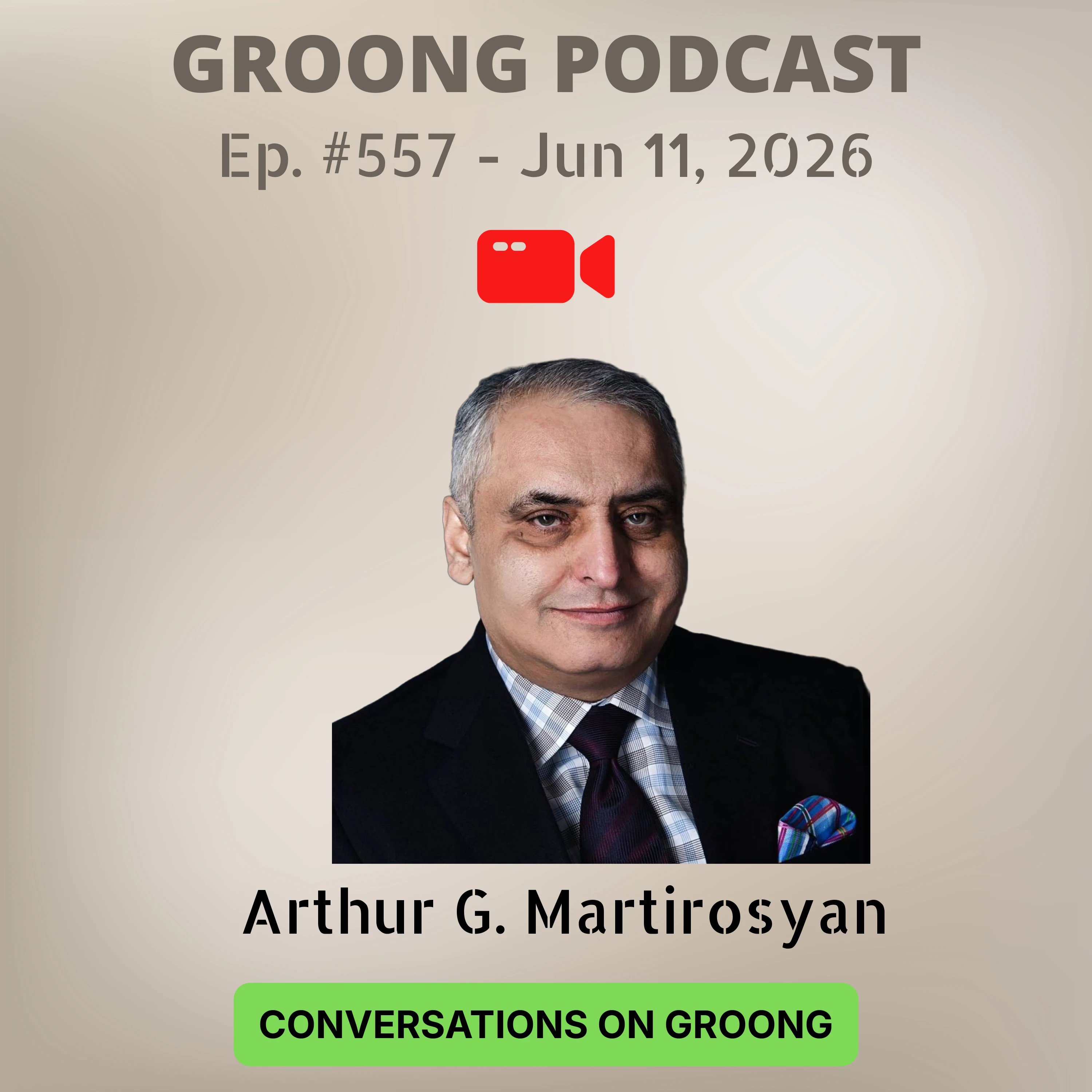
Groong Links:
Guest(s):
Topics:
- Contested results and thresholds
- Pashinyan’s post-election crackdown
- Western backing and interference
- Russia’s delayed pressure campaign
- Opposition choices after the vote
Episode 557 | Recorded: June 9, 2026
#ArmenianElections #Armenia #NikolPashinyan #CivilContract #StrongArmenia #ArmenianOpposition