Recep Tayyip Erdogan
Last updated: May 29, 2026
Recep Tayyip Erdogan’s Turkey has been a decisive actor in the South Caucasus conflicts at the center of Groong’s coverage. Turkish military support for Azerbaijan — including the supply of Bayraktar drones and facilitation of Syrian fighters — was a significant factor in Azerbaijan’s victory in the 2020 Nagorno Karabakh war. Erdogan publicly celebrated the outcome, framing it as a pan-Turkic triumph and deepening the strategic partnership between Ankara and Baku that has shaped regional dynamics ever since.
Groong’s coverage of Erdogan addresses several interlocking themes. On Armenia-Turkey relations, the normalization process that began in 2021 with the appointment of special envoys has remained stalled over Erdogan’s conditions linking progress to concessions in the Armenia-Azerbaijan peace process — a linkage Armenia has resisted. On Pan-Turkism , Erdogan’s rhetoric and the Zangezur Corridor project reflect a vision of unbroken Turkish-Azerbaijani territorial continuity that analysts on Groong have described as strategically threatening to Armenian sovereignty over southern Armenia.
On broader geopolitics, Erdogan occupies a complicated position: a NATO member who has maintained working relations with Putin through the Ukraine war, a mediator in the Russia-Ukraine grain deal, a purchaser of Russian S-400 air defense systems, and a leader whose democratic backsliding and Kurdish policy have put him in frequent tension with Western partners. Groong episodes examine how these contradictions shape Turkey’s room for maneuver in the South Caucasus and what they mean for Armenia’s security calculus.
Episodes covering Erdogan address the Turkey-Azerbaijan-Armenia triangle, Turkey’s NATO role, and the implications of Ankara’s pan-Turkic ambitions for the long-term viability of an Armenian state on its historical territory.
Groong episodes that include this tag
Below are all Groong episodes tagged with Recep Tayyip Erdogan.
Dziunik Aghajanian - Trump, Aliyev, Pashinyan Oval Office Meeting and Reactions | Ep 459, Aug 10, 2025 [EP459]
Posted on Tuesday, Aug 12, 2025 | Category: Armenia, Politics, Iran, Nagorno Karabakh, Azerbaijan, Turkey, USA, Russia, BRICS, Genocide, China, Economy, Israel, Ukraine, Human Rights, Lebanon, Middle East, Syria | Series: wir, video
Groong Links:
Guest:
Topics:
- Trump, Aliyev, Pashinyan Meeting
- Iranian Reaction
- Russian Reaction
Episode 459 | Recorded: August 11, 2025
Dziunik Aghajanian - Trump, Aliyev, Pashinyan Oval Office Meeting and Reactions | Ep 459, Aug 10, 2025 [EP459]
Posted on Tuesday, Aug 12, 2025 | Category: Armenia, Politics, Iran, Nagorno Karabakh, Azerbaijan, Turkey, USA, Russia, BRICS, Genocide, China, Economy, Israel, Ukraine, Human Rights, Lebanon, Middle East, SyriaGroong Links:
Guest:
Topics:
- Trump, Aliyev, Pashinyan Meeting
- Iranian Reaction
- Russian Reaction
Episode 459 | Recorded: August 11, 2025
Summary In this episode, Christine Arakelian and Col. Douglas MacGregor join the hosts to analyze U.S. foreign policy moves from Gaza to the South Caucasus. They discuss Israel’s ongoing campaign in Gaza, the recent U.S. and Israeli strikes on Iran, and the likely resumption of hostilities. The conversation examines the Trump–Pashinyan–Aliyev White House summit, the strategic “Trump Corridor” across Armenia, and its impact on Russia, Iran, and India. The guests explore India–Armenia relations, U.S. economic vulnerabilities, and the challenges of sustaining a long-term American role in the Read More
Stanislav Krapivnik - The Evolving World Order, Russia, and the South Caucasus | Ep 458, Aug 9, 2025 [EP458]
Posted on Sunday, Aug 10, 2025 | Category: Georgia, Politics, Ukraine, Artsakh, Nagorno Karabakh, Armenia, Azerbaijan, Armenian Church, Russia, Iran, NATO, Turkey, Economy, Israel | Series: cog, video
Groong Links:
Guest:
Topics:
- Trump, Pashinyan, Aliyev DC Summit
- Ukraine War and the Shifting World Order
- Russia and the South Caucasus
Episode 458 | Recorded: August 9, 2025
Stanislav Krapivnik - The Evolving World Order, Russia, and the South Caucasus | Ep 458, Aug 9, 2025 [EP458]
Posted on Sunday, Aug 10, 2025 | Category: Georgia, Politics, Ukraine, Artsakh, Nagorno Karabakh, Armenia, Azerbaijan, Armenian Church, Russia, Iran, NATO, Turkey, Economy, IsraelGroong Links:
Guest:
Topics:
- Trump, Pashinyan, Aliyev DC Summit
- Ukraine War and the Shifting World Order
- Russia and the South Caucasus
Episode 458 | Recorded: August 9, 2025
Transcript: Stanislav Krapivnik - The Evolving World Order, Russia, and the South Caucasus | Ep 458, Aug 9, 2025 [EP458]
Posted on Sunday, Aug 10, 2025 | Category: Georgia, Politics, Ukraine, Artsakh, Nagorno Karabakh, Armenia, Azerbaijan, Armenian Church, Russia, Iran, NATO, Turkey, Economy, Israel, TranscriptIn this episode, former U.S. Army officer and military-political analyst Stanislav Krapivnik discusses the geopolitical fallout from the Trump-Pashinyan-Aliyev summit in Washington, which saw the announcement of a “peace” framework, the dissolution of the OSCE Minsk Group, U.S. plans for a 99-year “Trump Corridor” across Armenia, and the dropping of Section 907 to allow arms sales to Azerbaijan. He examines Russia’s heavy focus on the Ukraine war at the expense of the South Caucasus, the loss of Russian leverage over Armenia and Azerbaijan, and the growing role of Turkey. Krapivnik warns of Read More
Benyamin Poghosyan - Public Trust in Freefall, Church on the Rise, and Corridor Pressures Mount | Ep 456, Jul 27, 2025 [EP456]
Posted on Tuesday, Jul 29, 2025 | Category: Armenia, Politics, Poll, Russia, Iran, Georgia, Azerbaijan, Turkey, Ukraine, Middle East, Israel, China, India, Geopolitics, Artsakh, Armenian Church, Nagorno Karabakh, European Union, Economy, Syria | Series: wir, video
Groong Links:
Guest:
Topics:
- Corridor Logic
- Crackdown Logic
- IRI Poll
- Russian-Azerbaijani Relations
Episode 456 | Recorded: July 28, 2025
Benyamin Poghosyan - Public Trust in Freefall, Church on the Rise, and Corridor Pressures Mount | Ep 456, Jul 27, 2025 [EP456]
Posted on Tuesday, Jul 29, 2025 | Category: Armenia, Politics, Poll, Russia, Iran, Georgia, Azerbaijan, Turkey, Ukraine, Middle East, Israel, China, India, Geopolitics, Artsakh, Armenian Church, Nagorno Karabakh, European Union, Economy, SyriaGroong Links:
Guest:
Topics:
- Corridor Logic
- Crackdown Logic
- IRI Poll
- Russian-Azerbaijani Relations
Episode 456 | Recorded: July 28, 2025
Arthur Khachatryan - Artsakh Negotiations, Armenian Domestic Politics | Ep 455, Jul 27, 2025 [EP455]
Posted on Sunday, Jul 27, 2025 | Category: Georgia, Politics, Artsakh, Nagorno Karabakh, Azerbaijan, Armenian Church, Armenia, Russia, Turkey, Human Rights, Ukraine, Genocide | Series: cog
Groong Links:
Guest:
- Arthur Khachatryan , MP
Topics:
- Artsakh Negotiations
- Armenian Domestic Politics
Episode 455 | Recorded: July 25, 2025
Arthur Khachatryan - Artsakh Negotiations, Armenian Domestic Politics | Ep 455, Jul 27, 2025 [EP455]
Posted on Sunday, Jul 27, 2025 | Category: Georgia, Politics, Artsakh, Nagorno Karabakh, Azerbaijan, Armenian Church, Armenia, Russia, Turkey, Human Rights, Ukraine, GenocideGroong Links:
Guest:
- Arthur Khachatryan , MP
Topics:
- Artsakh Negotiations
- Armenian Domestic Politics
Episode 455 | Recorded: July 25, 2025
Pashinyan Meets Aliyev as Armenia Cracks Down on Opposition and Church | Ep 453, Jul 13, 2025 [EP453]
Posted on Sunday, Jul 13, 2025 | Category: Armenia, Politics, Artsakh, Nagorno Karabakh, Azerbaijan, Turkey, Russia, Armenian Church, Iran, Economy, Israel, NATO, Middle East, Ukraine | Series: wir, video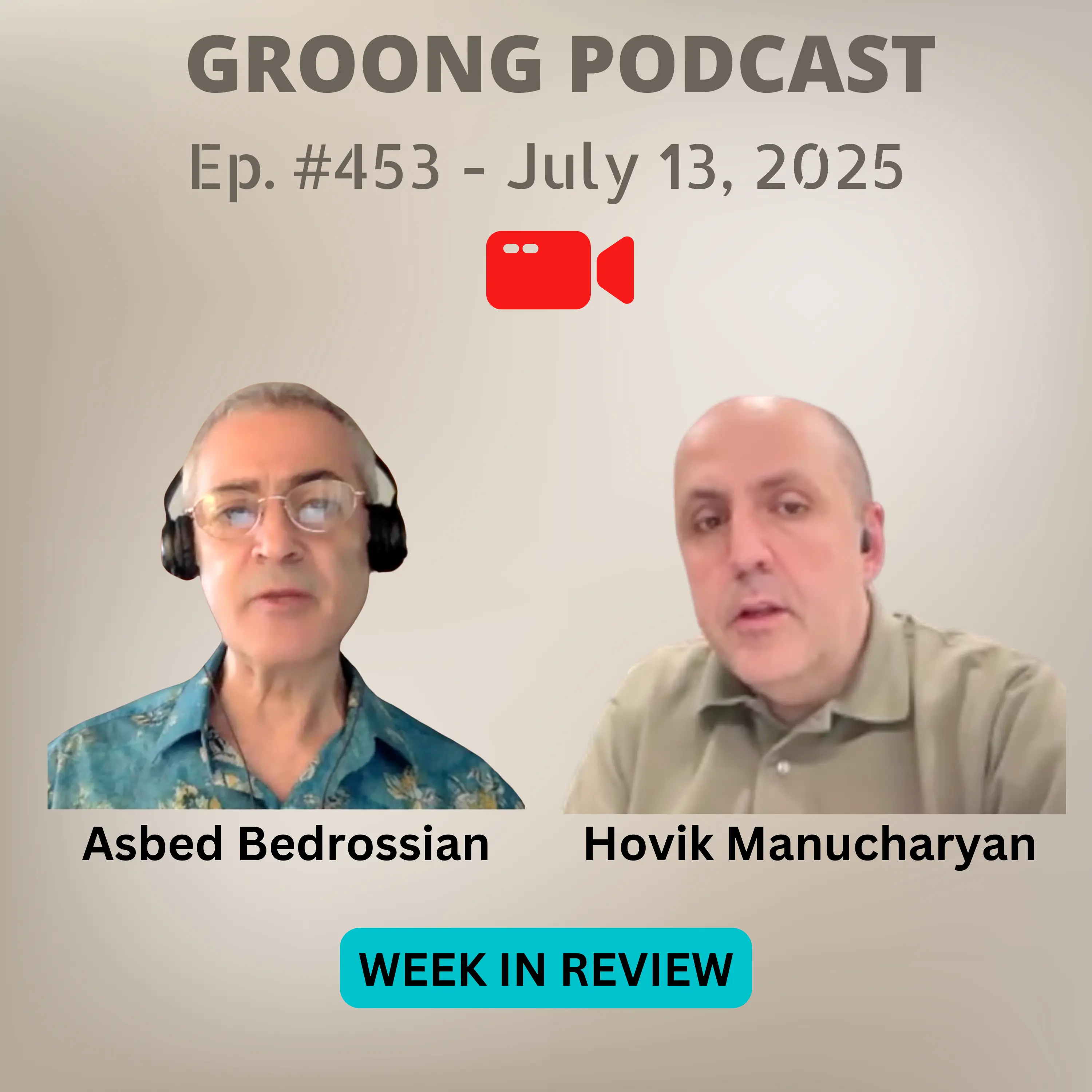
Groong Links:
Topics:
- Pashinyan meets Aliyev in Abu Dhabi
- Continued Persecution of Church and Opposition
Episode 453 | Recorded: July 13, 2025
Pashinyan Meets Aliyev as Armenia Cracks Down on Opposition and Church | Ep 453, Jul 13, 2025 [EP453]
Posted on Sunday, Jul 13, 2025 | Category: Armenia, Politics, Artsakh, Nagorno Karabakh, Azerbaijan, Turkey, Russia, Armenian Church, Iran, Economy, Israel, NATO, Middle East, UkraineGroong Links:
Topics:
- Pashinyan meets Aliyev in Abu Dhabi
- Continued Persecution of Church and Opposition
Episode 453 | Recorded: July 13, 2025
Arthur Martirosyan - Constitution, Western Controlled Syunik, Church Crackdown | Ep 452, Jul 6, 2025 [EP452]
Posted on Tuesday, Jul 8, 2025 | Category: Armenia, Politics, Turkey, Azerbaijan, Russia, Iran, Armenian Church, Artsakh, Nagorno Karabakh, Ukraine, NATO, China, Economy, Genocide | Series: wir, video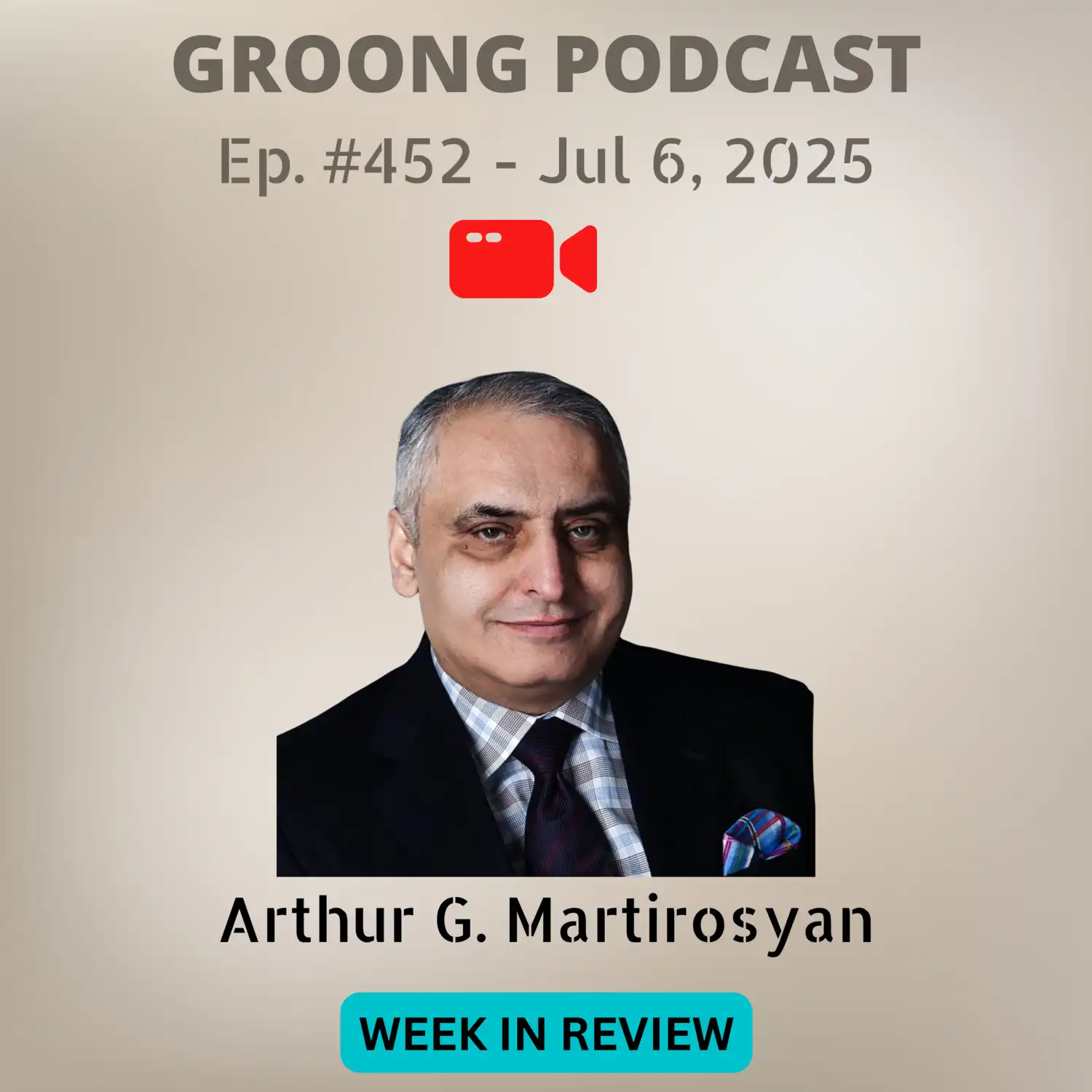
Groong Links:
Guest:
Topics:
- Constitution Day
- Western Controlled Syunik?
- What was Kallas Doing in Yerevan?
- Russian-Azerbaijani Relations
- Coup dâEtat? Or Coup dâÃglise?
- The Kitchen Sink
Episode 452 | Recorded: July 7, 2025
Arthur Martirosyan - Constitution, Western Controlled Syunik, Church Crackdown | Ep 452, Jul 6, 2025 [EP452]
Posted on Tuesday, Jul 8, 2025 | Category: Armenia, Politics, Turkey, Azerbaijan, Russia, Iran, Armenian Church, Artsakh, Nagorno Karabakh, Ukraine, NATO, China, Economy, GenocideGroong Links:
Guest:
Topics:
- Constitution Day
- Western Controlled Syunik?
- What was Kallas Doing in Yerevan?
- Russian-Azerbaijani Relations
- Coup dâEtat? Or Coup dâÃglise?
- The Kitchen Sink
Episode 452 | Recorded: July 7, 2025
Dziunik Aghajanian – Fallout from Israel’s War on Iran, Azerbaijan’s Confrontation with Russia, Pashinyan’s Persecution of the Armenian Church, while he courts the EU | Ep 451 [EP451]
Posted on Tuesday, Jul 1, 2025 | Category: Armenia, Politics, Iran, Nagorno Karabakh, Azerbaijan, Turkey, USA, Israel, Armenian Church, Artsakh, Georgia, Russia, Economy | Series: wir, video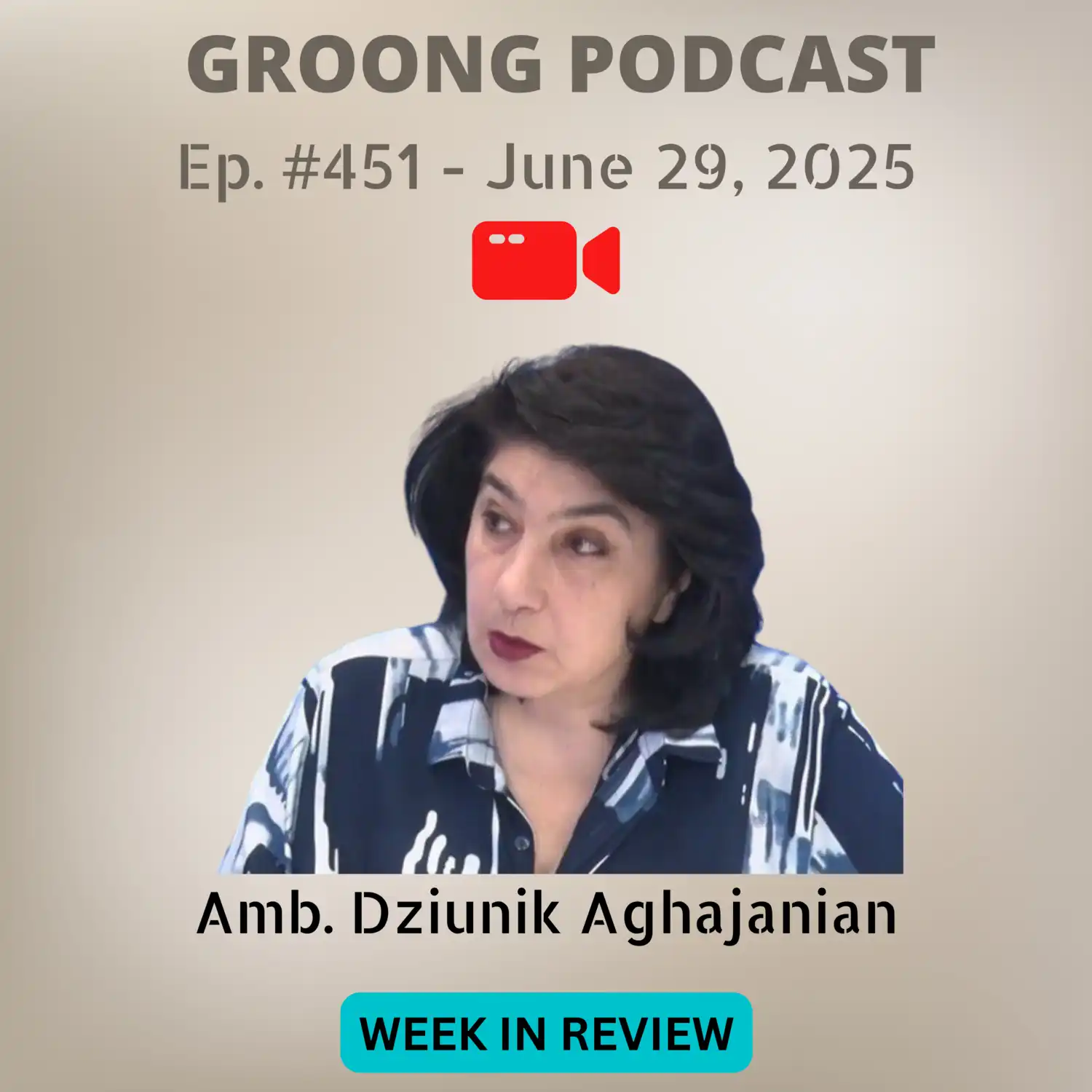
Groong Links:
Guest:
Topics:
- Iran War
- Iran-Azerbaijan Relations
- Russian-Azerbaijani Tensions
- Russian-Armenian Relations
- Persecution of The Church Continues
- Kaja Kallas in Armenia
- OIC Declaration
Episode 451 | Recorded: June 30, 2025
Dziunik Aghajanian – Fallout from Israel’s War on Iran, Azerbaijan’s Confrontation with Russia, Pashinyan’s Persecution of the Armenian Church, while he courts the EU | Ep 451 [EP451]
Posted on Tuesday, Jul 1, 2025 | Category: Armenia, Politics, Iran, Nagorno Karabakh, Azerbaijan, Turkey, USA, Israel, Armenian Church, Artsakh, Georgia, Russia, EconomyGroong Links:
Guest:
Topics:
- Iran War
- Iran-Azerbaijan Relations
- Russian-Azerbaijani Tensions
- Russian-Armenian Relations
- Persecution of The Church Continues
- Kaja Kallas in Armenia
- OIC Declaration
Episode 451 | Recorded: June 30, 2025
Sergei Melkonian - Israel & Iran, Opposition Crackdown, Pashinyan in Istanbul | Ep 449, Jun 22, 2025 [EP449]
Posted on Thursday, Jun 26, 2025 | Category: Armenia, Politics, Iran, Israel, Azerbaijan, Turkey, Russia, Artsakh, Nagorno Karabakh, Armenian Church, Economy, China, Middle East | Series: wir, video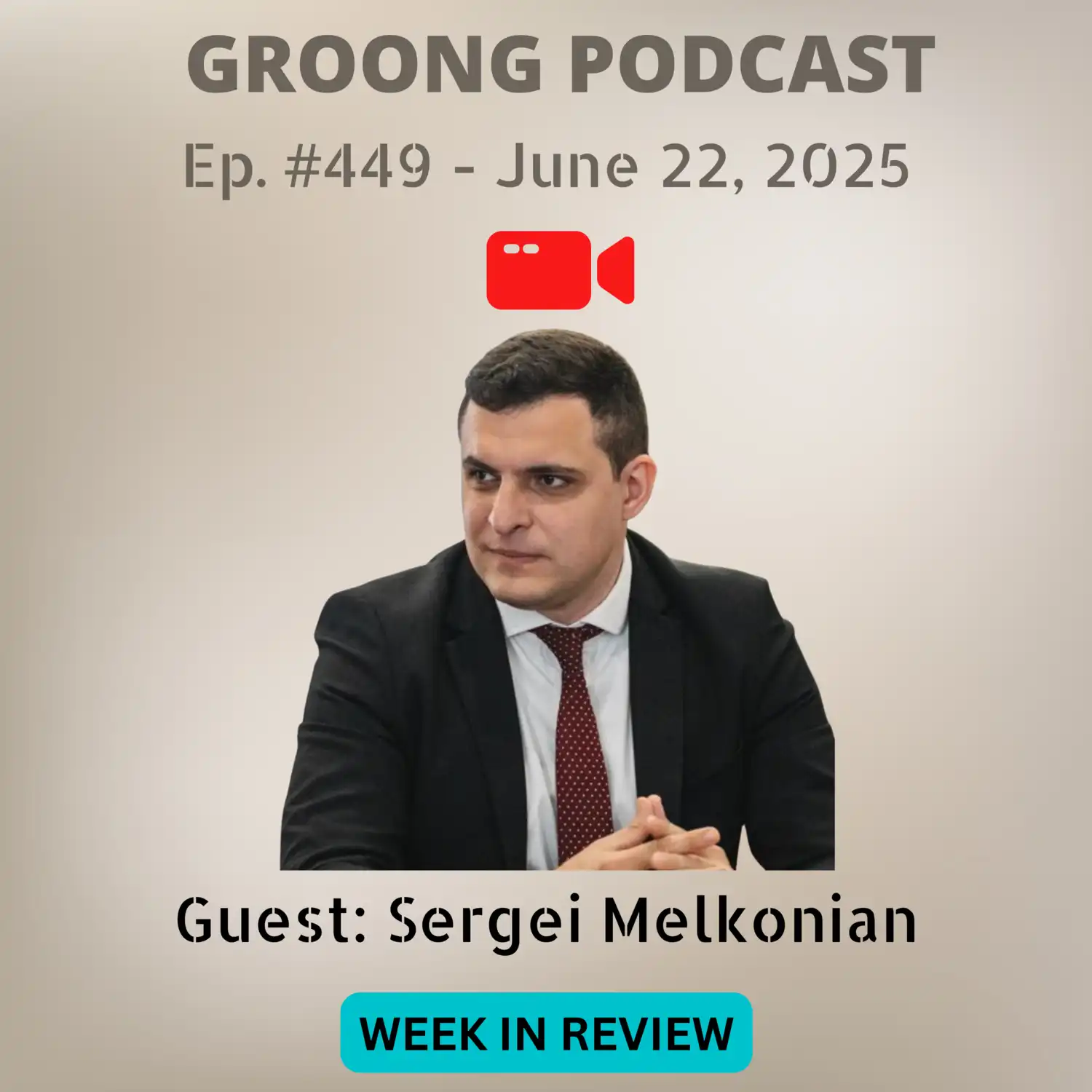
Groong Links:
Guest:
Topics:
- Israel and Iran
- Crackdown on the Opposition
- Pashinyan in Istanbul
- The Kitchen Sink
Episode 449 | Recorded: June 25, 2025
Sergei Melkonian - Israel & Iran, Opposition Crackdown, Pashinyan in Istanbul | Ep 449, Jun 22, 2025 [EP449]
Posted on Thursday, Jun 26, 2025 | Category: Armenia, Politics, Iran, Israel, Azerbaijan, Turkey, Russia, Artsakh, Nagorno Karabakh, Armenian Church, Economy, China, Middle EastGroong Links:
Guest:
Topics:
- Israel and Iran
- Crackdown on the Opposition
- Pashinyan in Istanbul
- The Kitchen Sink
Episode 449 | Recorded: June 25, 2025
Arman Grigoryan - Iran and US vs Iran, Strategic Dangers to Armenia | Ep 448, Jun 23, 2025 [EP448]
Posted on Monday, Jun 23, 2025 | Category: Iran, Russia, Armenia, Israel, Politics, Syria, China, USA, Azerbaijan, European Union, Turkey, Ukraine, Middle East, Georgia | Series: cog, video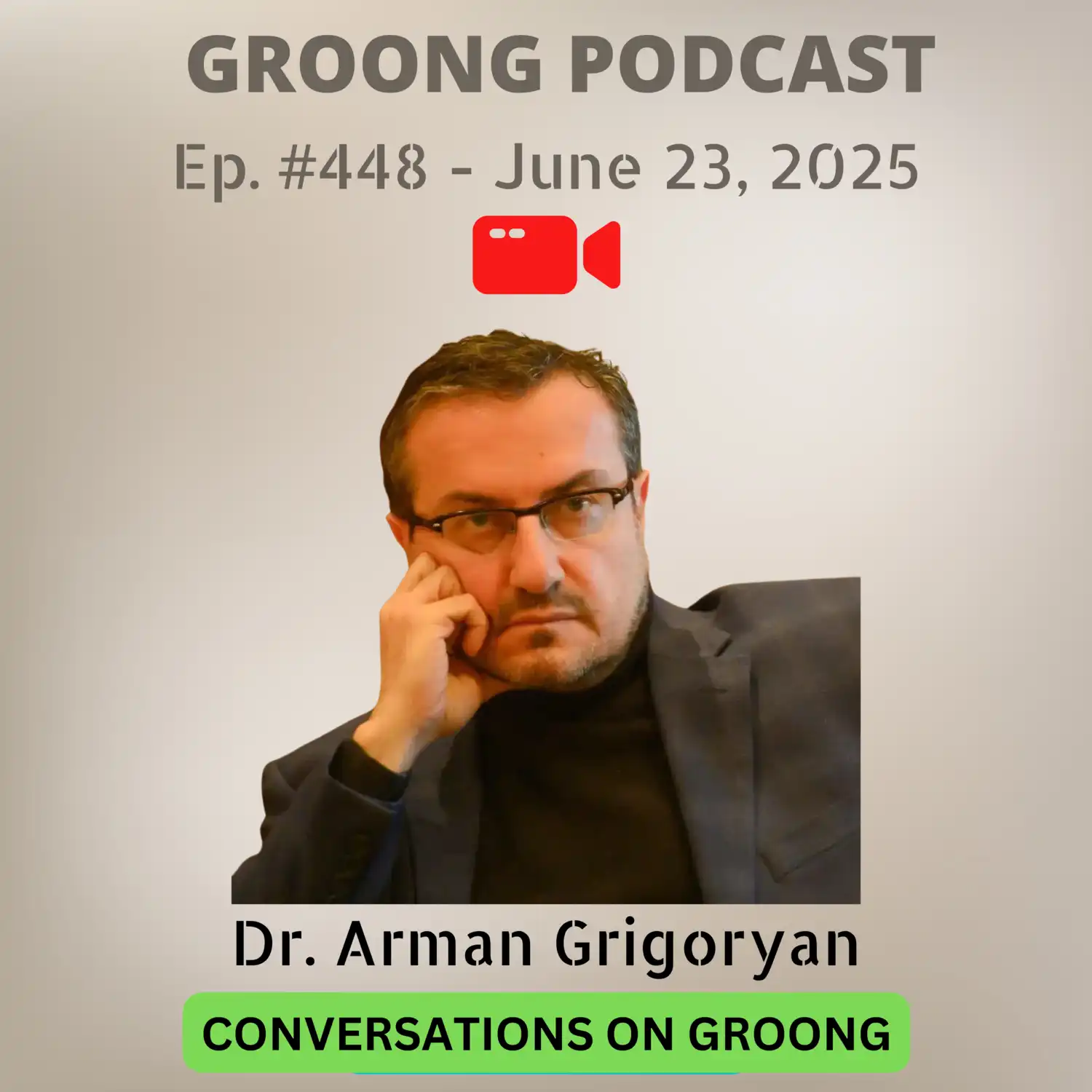
Groong Links:
Guest:
Topics:
- Israelâs war on Iran and U.S. involvement
- Risks of Iranian regime change or partition
- Strategic dangers to Armenia
Episode 448 | Recorded: June 21, 2025
Arman Grigoryan - Iran and US vs Iran, Strategic Dangers to Armenia | Ep 448, Jun 23, 2025 [EP448]
Posted on Monday, Jun 23, 2025 | Category: Iran, Russia, Armenia, Israel, Politics, Syria, China, USA, Azerbaijan, European Union, Turkey, Ukraine, Middle East, GeorgiaGroong Links:
Guest:
Topics:
- Israelâs war on Iran and U.S. involvement
- Risks of Iranian regime change or partition
- Strategic dangers to Armenia
Episode 448 | Recorded: June 21, 2025
Rananjay Anand – Will India Turn to Armenia Amid Turkey-Azerbaijan Fallout? | Ep 445, June 12, 2025 [EP445]
Posted on Thursday, Jun 12, 2025 | Category: Armenia, Geopolitics, India, Turkey, Azerbaijan, Nagorno Karabakh, Economy, China, Genocide | Series: cog, video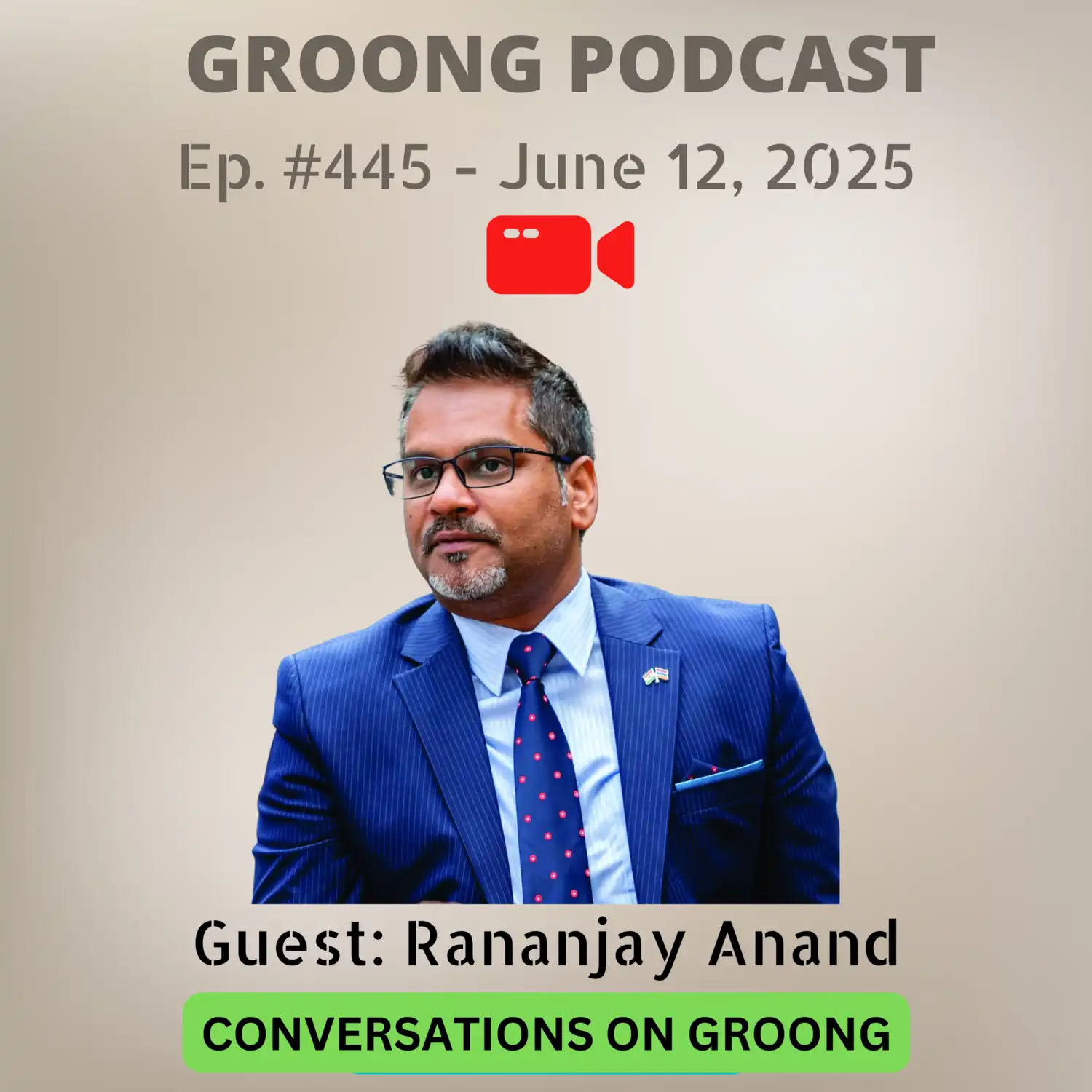
Groong Links:
Guest:
- Rananjay Anand , Co-Founder & President of the Indo-Armenian Friendship NGO.
Topics:
- Operation Sindoor
- Indians Boycott Turkey & Azerbaijan
- Armenia as a Robus Partner
Episode 445 | Recorded: June 9, 2025
Rananjay Anand – Will India Turn to Armenia Amid Turkey-Azerbaijan Fallout? | Ep 445, June 12, 2025 [EP445]
Posted on Thursday, Jun 12, 2025 | Category: Armenia, Geopolitics, India, Turkey, Azerbaijan, Nagorno Karabakh, Economy, China, GenocideGroong Links:
Guest:
- Rananjay Anand , Co-Founder & President of the Indo-Armenian Friendship NGO.
Topics:
- Operation Sindoor
- Indians Boycott Turkey & Azerbaijan
- Armenia as a Robus Partner
Episode 445 | Recorded: June 9, 2025
Abhinav Pandya - From Sindoor to Syunik: India’s New Geopolitical Frontline | Ep 443, June 5, 2025 [EP443]
Posted on Friday, Jun 6, 2025 | Category: Armenia, Geopolitics, India, Azerbaijan, Turkey, Israel, Iran, Artsakh, Nagorno Karabakh, Syria, China, Russia, BRICS, Economy | Series: cog, video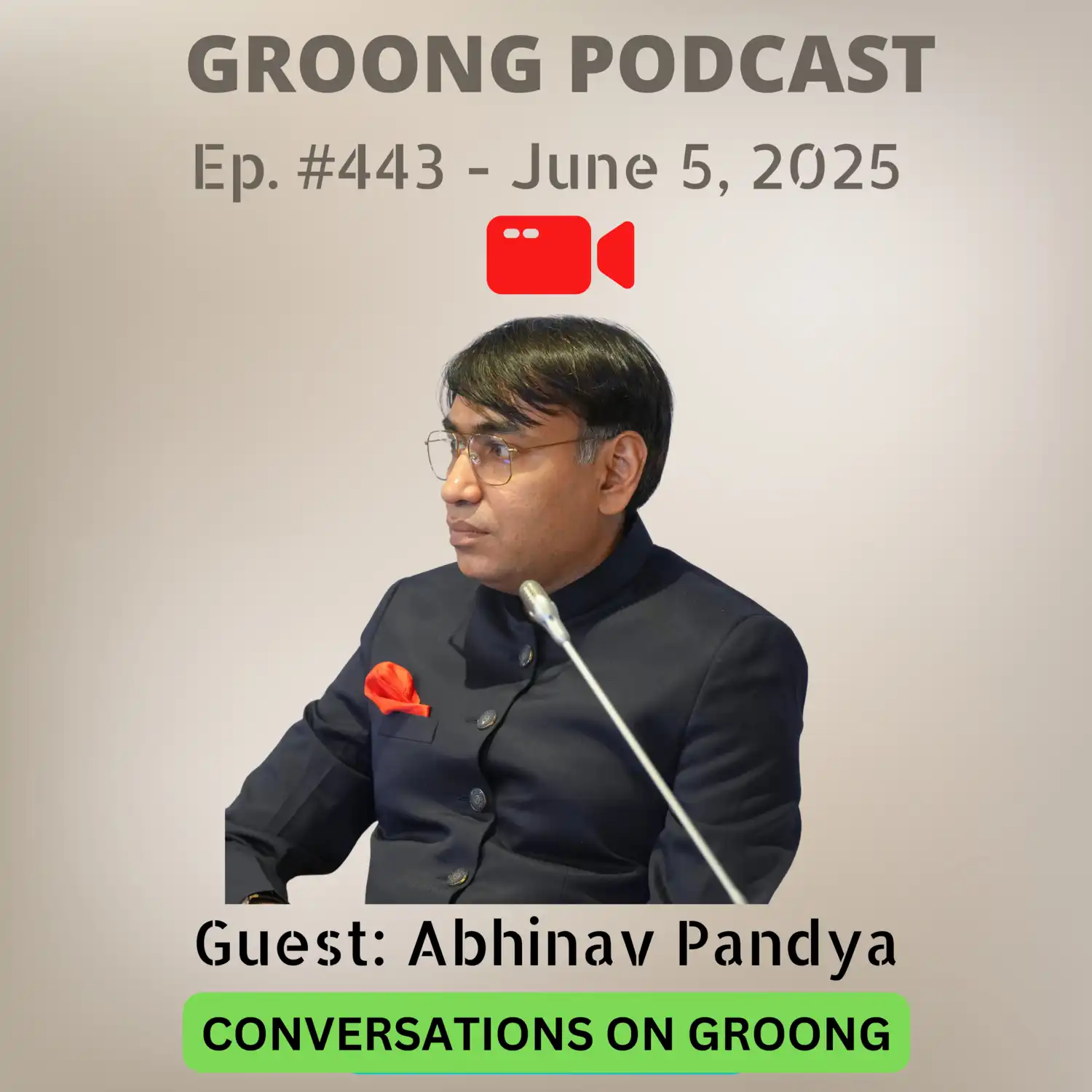
Groong Links:
Guest:
- Dr. Abhinav Pandya , Founder, President and CEO of Usanas Foundation Think Tank.
Topics:
- Turkey-Pakistan-Azerbaijan Axis
- Operation Sindoor
- Armenia As a Strategic Partner
- West Asia and Eurasia Context
- Future Outlook
Episode 443 | Recorded: June 3, 2025
Abhinav Pandya - From Sindoor to Syunik: India’s New Geopolitical Frontline | Ep 443, June 5, 2025 [EP443]
Posted on Friday, Jun 6, 2025 | Category: Armenia, Geopolitics, India, Azerbaijan, Turkey, Israel, Iran, Artsakh, Nagorno Karabakh, Syria, China, Russia, BRICS, EconomyGroong Links:
Guest:
- Dr. Abhinav Pandya , Founder, President and CEO of Usanas Foundation Think Tank.
Topics:
- Turkey-Pakistan-Azerbaijan Axis
- Operation Sindoor
- Armenia As a Strategic Partner
- West Asia and Eurasia Context
- Future Outlook
Episode 443 | Recorded: June 3, 2025
Benyamin Poghosyan - Ukraine and US-Iran, Fidan in Moscow, Lachin, Azerbaijan and Pashinyan attack Armenian Church, Impeachment vs. Elections | Ep 442, June 1, 2025 [EP442]
Posted on Tuesday, Jun 3, 2025 | Category: Armenia, Politics, Iran, Geopolitics, Artsakh, Nagorno Karabakh, Azerbaijan, Georgia, Turkey, Russia, Armenian Church, Ukraine, India, Israel, China, Syria, Economy, European Union | Series: wir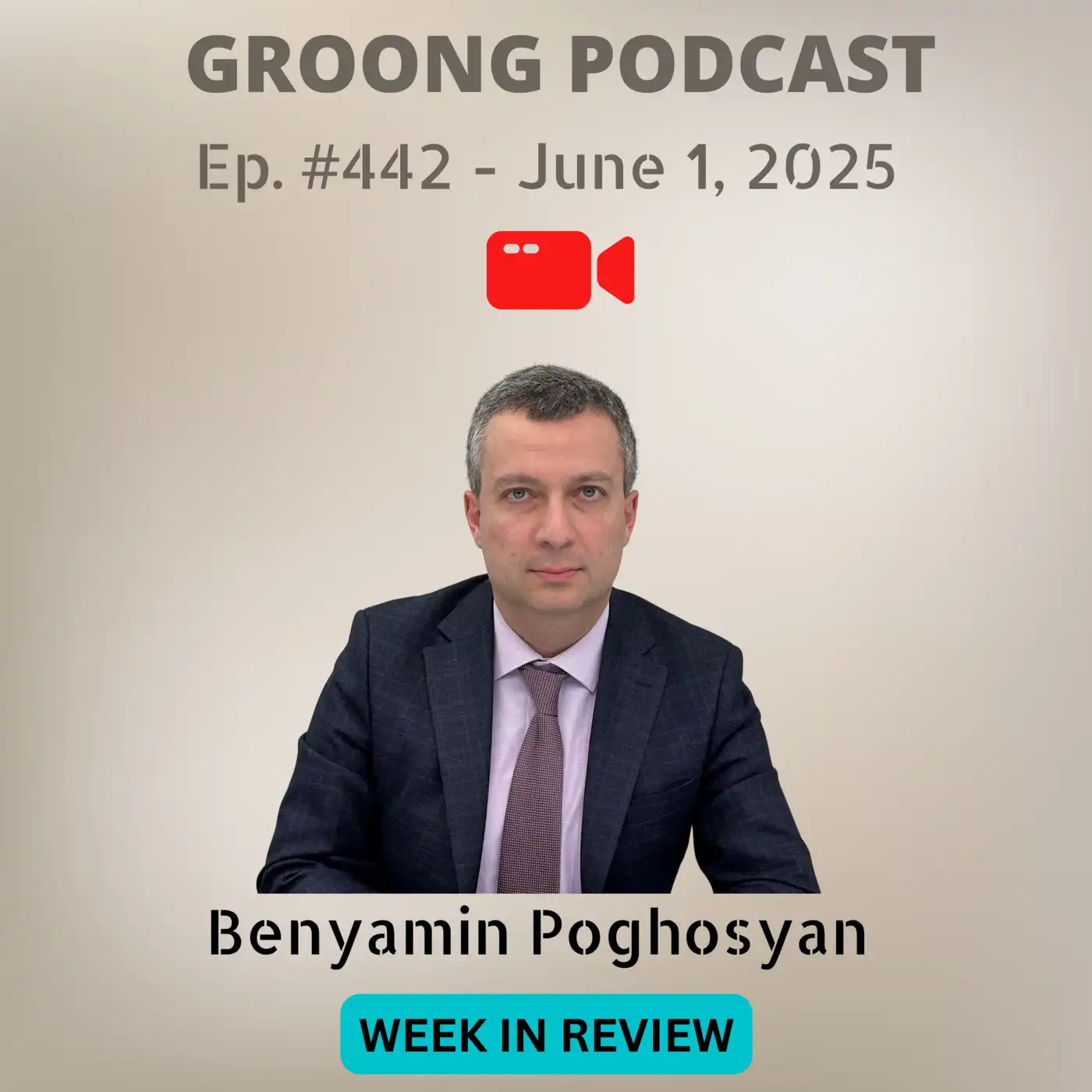
Groong Links:
Guest:
Topics:
- Status of Ukraine and US-Iran Crises
- Hakan Fidan in Moscow
- Erdogan, Aliyev, Sharif in Lachin
- Azerbaijan and Pashinyan Attack the Armenian Church
- Impeachment vs. Elections
- The Kitchen Sink
Episode 442 | Recorded: June 2, 2025
Benyamin Poghosyan - Ukraine and US-Iran, Fidan in Moscow, Lachin, Azerbaijan and Pashinyan attack Armenian Church, Impeachment vs. Elections | Ep 442, June 1, 2025 [EP442]
Posted on Tuesday, Jun 3, 2025 | Category: Armenia, Politics, Iran, Geopolitics, Artsakh, Nagorno Karabakh, Azerbaijan, Georgia, Turkey, Russia, Armenian Church, Ukraine, India, Israel, China, Syria, Economy, European UnionGroong Links:
Guest:
Topics:
- Status of Ukraine and US-Iran Crises
- Hakan Fidan in Moscow
- Erdogan, Aliyev, Sharif in Lachin
- Azerbaijan and Pashinyan Attack the Armenian Church
- Impeachment vs. Elections
- The Kitchen Sink
Episode 442 | Recorded: June 2, 2025
Levon Zourabian - US-Iran, Russia-Ukraine, Armenia-Azerbaijan, 2026 Campaigns | Ep 439, May 26, 2025 [EP439]
Posted on Tuesday, May 27, 2025 | Category: Armenia, Geopolitics, Iran, Russia, Ukraine, Israel, Azerbaijan, Economy, Turkey, Middle East, European Union, Genocide | Series: cog, video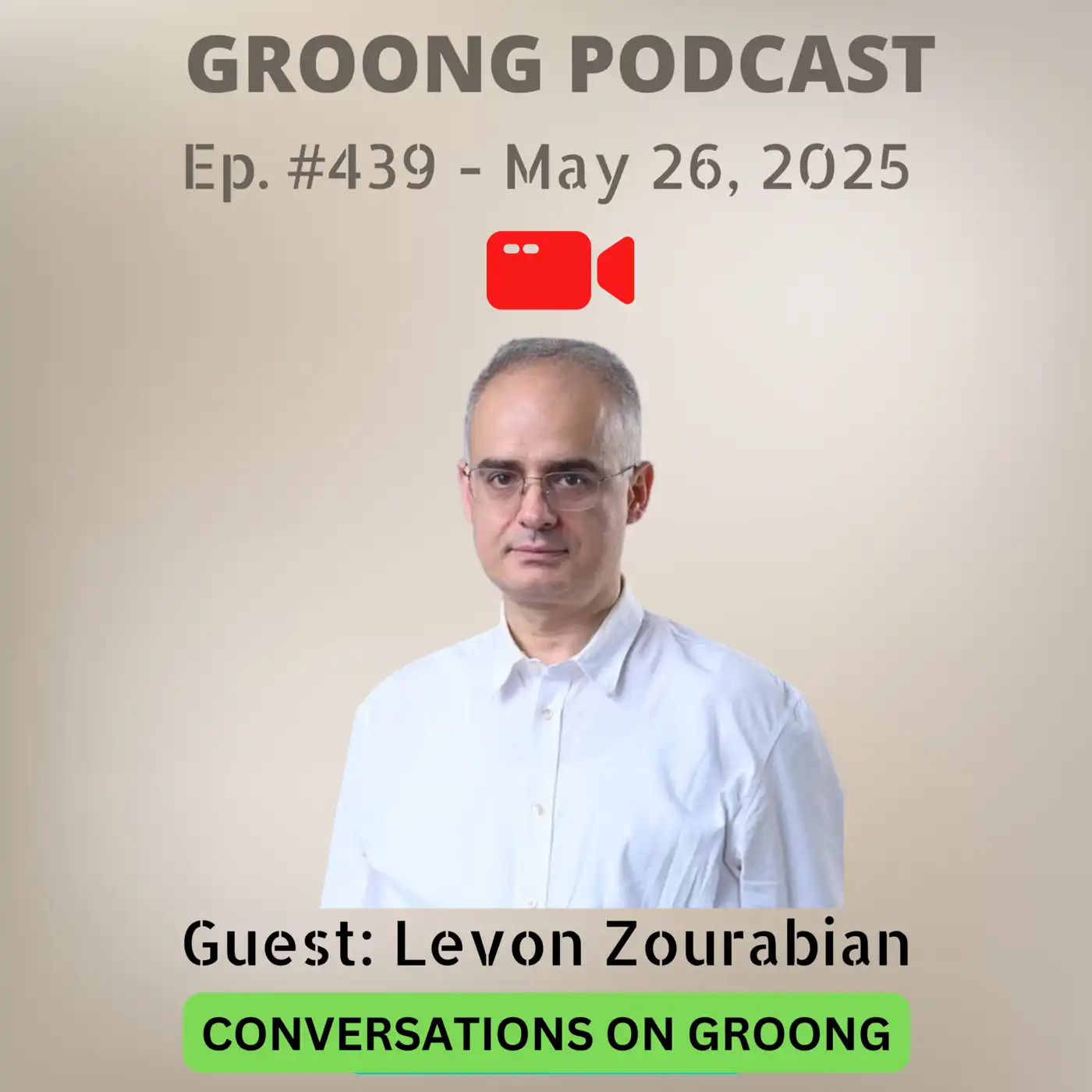
Groong Links:
Guest:
- Levon Zourabian , Vice-President of the Armenian National Congress (ANC) party of Armenia.
Topics:
- US-Iran Nuclear Talks
- Russia and Ukraine
- Armenia Azerbaijan Talks
- Armenian Elections in 2026
Episode 439 | Recorded: May 23, 2025
Levon Zourabian - US-Iran, Russia-Ukraine, Armenia-Azerbaijan, 2026 Campaigns | Ep 439, May 26, 2025 [EP439]
Posted on Tuesday, May 27, 2025 | Category: Armenia, Geopolitics, Iran, Russia, Ukraine, Israel, Azerbaijan, Economy, Turkey, Middle East, European Union, GenocideGroong Links:
Guest:
- Levon Zourabian , Vice-President of the Armenian National Congress (ANC) party of Armenia.
Topics:
- US-Iran Nuclear Talks
- Russia and Ukraine
- Armenia Azerbaijan Talks
- Armenian Elections in 2026
Episode 439 | Recorded: May 23, 2025
Hrant Mikaelian - Tirana, Lavrov, Armenian Un-Democracy, Demilitarization, and More | Ep 438, May 18, 2025 [EP438]
Posted on Friday, May 23, 2025 | Category: Armenia, Politics, Vatican, Artsakh, Nagorno Karabakh, Azerbaijan, Turkey, Russia, Iran, Ukraine, India, European Union, Israel, Genocide, Georgia | Series: wir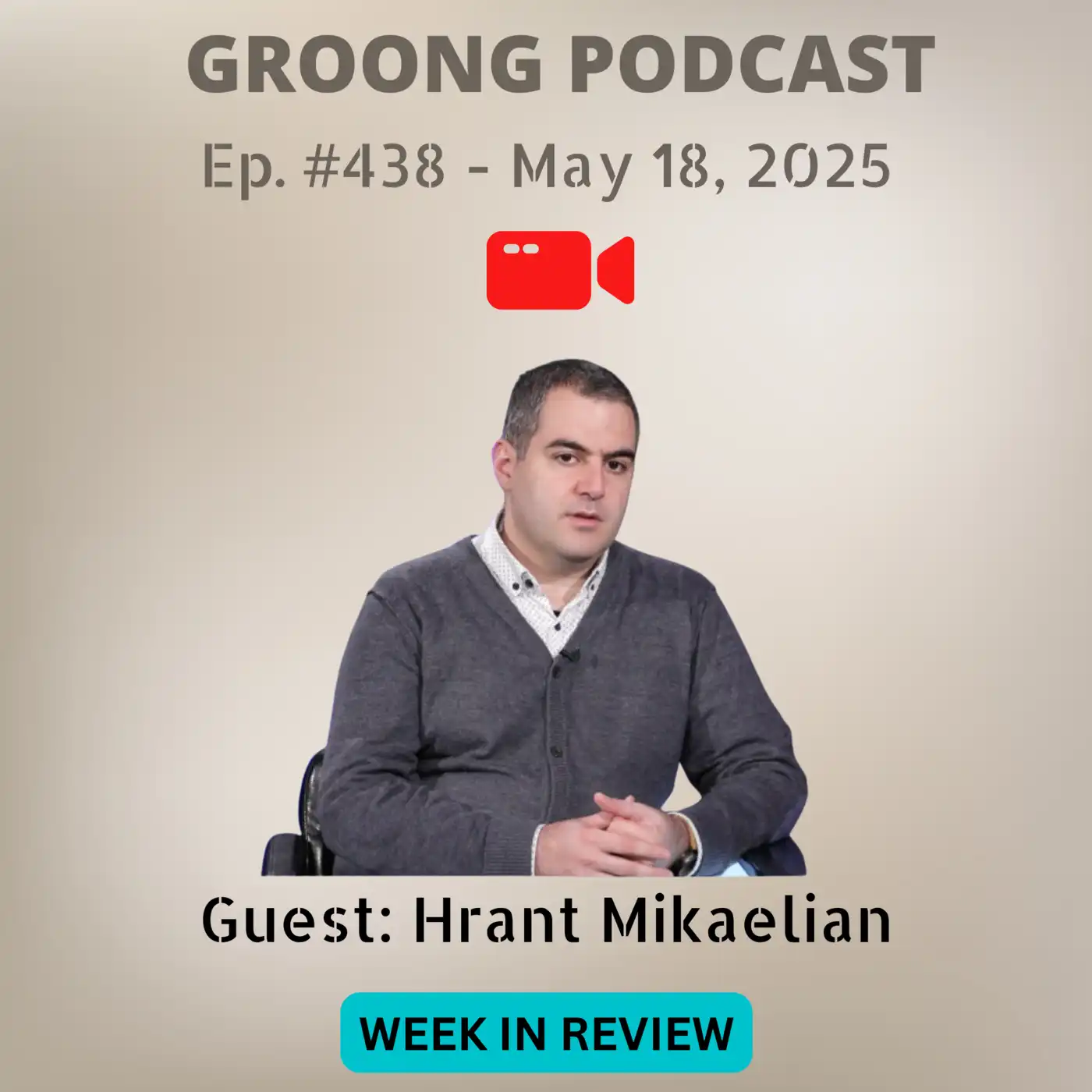
Groong Links:
Guest:
Topics:
- Pashinyan in Tirana
- Russiaâs Lavrov in Yerevan
- Democracy in Jeopardy
- Armeniaâs Demilitarization by Any Other Name
- The Kitchen Sink
Episode 438 | Recorded: May 21, 2025
Hrant Mikaelian - Tirana, Lavrov, Armenian Un-Democracy, Demilitarization, and More | Ep 438, May 18, 2025 [EP438]
Posted on Friday, May 23, 2025 | Category: Armenia, Politics, Vatican, Artsakh, Nagorno Karabakh, Azerbaijan, Turkey, Russia, Iran, Ukraine, India, European Union, Israel, Genocide, GeorgiaGroong Links:
Guest:
Topics:
- Pashinyan in Tirana
- Russiaâs Lavrov in Yerevan
- Democracy in Jeopardy
- Armeniaâs Demilitarization by Any Other Name
- The Kitchen Sink
Episode 438 | Recorded: May 21, 2025
Benyamin Poghosyan - US-Iran Tensions, Armenia-Azerbaijan, Victory Day, Journalist Assaulted | Ep 434, May 4, 2025 [EP434]
Posted on Wednesday, May 7, 2025 | Category: Armenia, Politics, Iran, Geopolitics, Artsakh, Nagorno Karabakh, Azerbaijan, Georgia, Turkey, Russia, Israel, China, Ukraine, Syria | Series: wir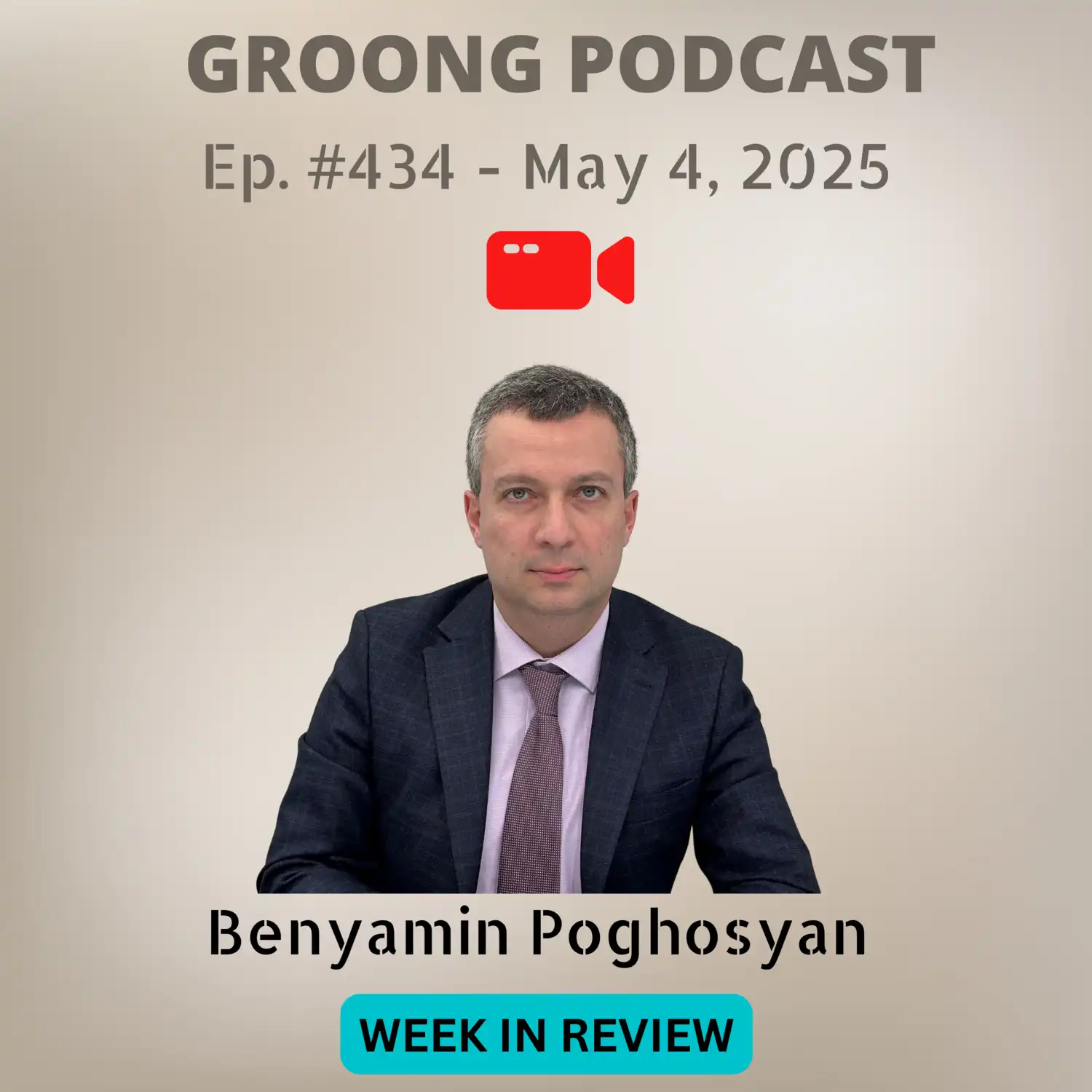
Groong Links:
Guest:
Topics:
- Iran Sanctions Escalate Amid Tensions
- Journalist Beaten Inside Yerevan Office
- Moscow Celebrates Victory Day Parade
- Armenia Caught Between EU and Russia
Episode 434 | Recorded: May 6, 2025
Benyamin Poghosyan - US-Iran Tensions, Armenia-Azerbaijan, Victory Day, Journalist Assaulted | Ep 434, May 4, 2025 [EP434]
Posted on Wednesday, May 7, 2025 | Category: Armenia, Politics, Iran, Geopolitics, Artsakh, Nagorno Karabakh, Azerbaijan, Georgia, Turkey, Russia, Israel, China, Ukraine, SyriaGroong Links:
Guest:
Topics:
- Iran Sanctions Escalate Amid Tensions
- Journalist Beaten Inside Yerevan Office
- Moscow Celebrates Victory Day Parade
- Armenia Caught Between EU and Russia
Episode 434 | Recorded: May 6, 2025
Dziunik Aghajanian - Armenian State Genocide Denial, Politics of Silence, Pezeshkian in Baku, Bandar Abbas | Ep 432, Apr 27, 2025 [EP432]
Posted on Wednesday, Apr 30, 2025 | Category: Armenia, Politics, Iran, Artsakh, Nagorno Karabakh, Turkey, Azerbaijan, Russia, China, India, Geopolitics, Diaspora, Armenian Genocide, Artsakh Blockade, BRICS, Genocide, European Union, Middle East, Economy, Lebanon, Georgia, Human Rights, Israel | Series: wir, video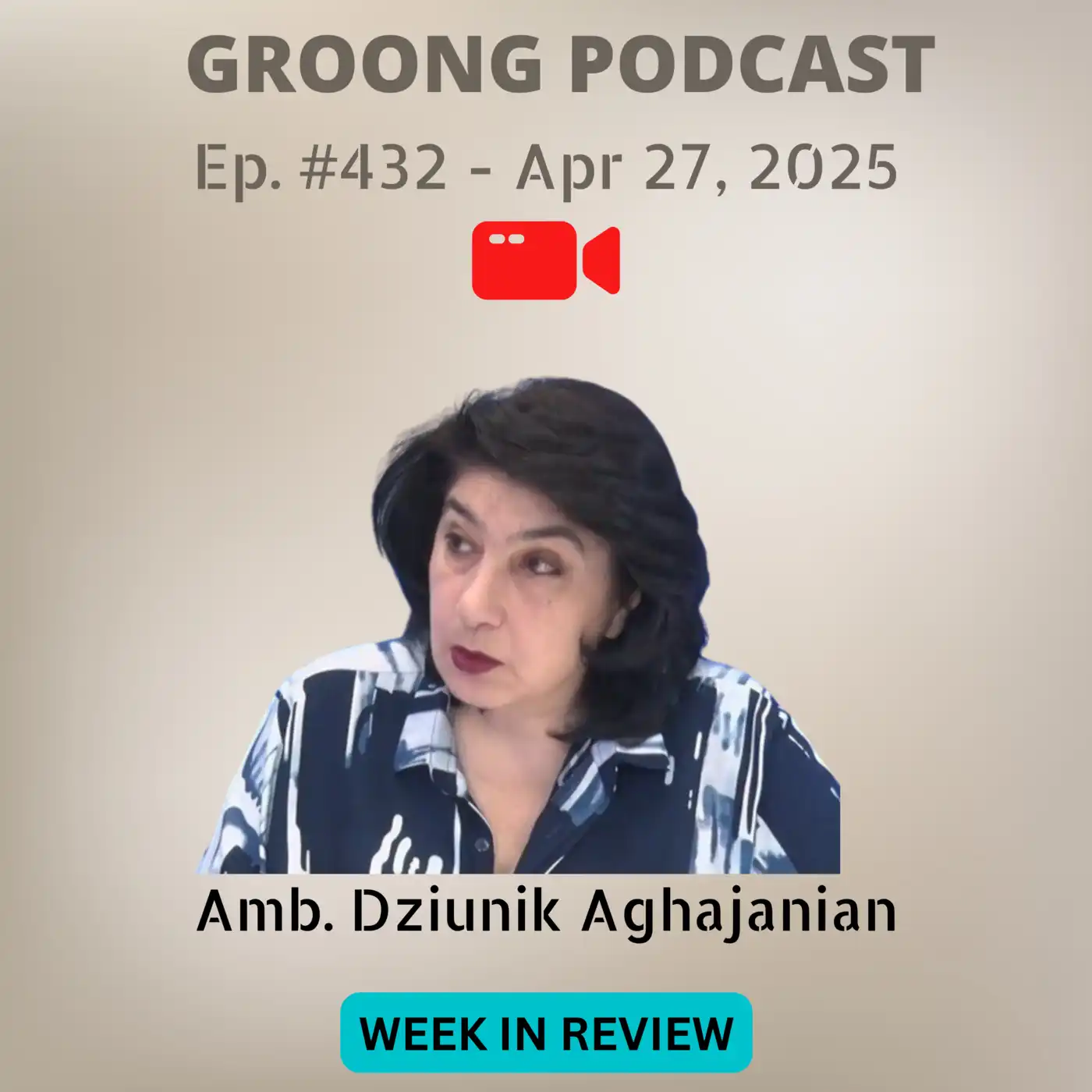
Groong Links:
Guest:
Topics:
- Genocide Recognition and State Silence
- Iran-Azerbaijan Talks & Geopolitical Shifts
- Bandar Abbas: Explosion, or Warning?
Episode 432 | Recorded: April 29, 2025
Dziunik Aghajanian - Armenian State Genocide Denial, Politics of Silence, Pezeshkian in Baku, Bandar Abbas | Ep 432, Apr 27, 2025 [EP432]
Posted on Wednesday, Apr 30, 2025 | Category: Armenia, Politics, Iran, Artsakh, Nagorno Karabakh, Turkey, Azerbaijan, Russia, China, India, Geopolitics, Diaspora, Armenian Genocide, Artsakh Blockade, BRICS, Genocide, European Union, Middle East, Economy, Lebanon, Georgia, Human Rights, IsraelGroong Links:
Guest:
Topics:
- Genocide Recognition and State Silence
- Iran-Azerbaijan Talks & Geopolitical Shifts
- Bandar Abbas: Explosion, or Warning?
Episode 432 | Recorded: April 29, 2025
Alberto M. Fernandez – Vatican-Baku Partnership & Erosion of Moral Authority | Ep 431, Apr 29, 2025 [EP431]
Posted on Tuesday, Apr 29, 2025 | Category: Armenia, World, Vatican, Azerbaijan, Artsakh, Nagorno Karabakh, Armenian Church, Iran, Armenian Genocide, Artsakh Blockade, Syria, Genocide, Turkey, Russia, Middle East, Lebanon, Human Rights, Georgia, Israel, China, India, NATO, Ukraine | Series: cog, video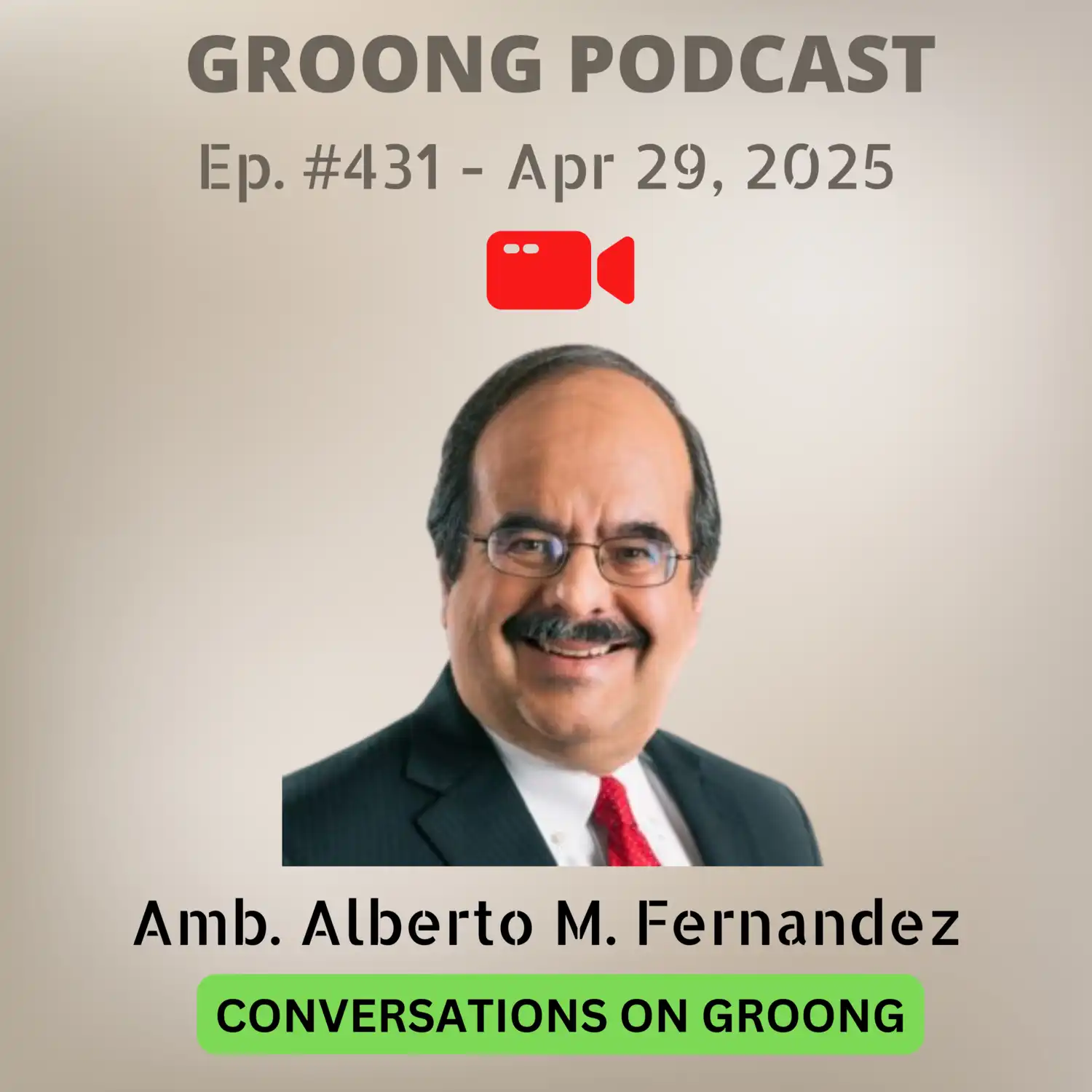
Groong Links:
Guest:
Topics:
- Vaticanâs alliance with Azerbaijan
- Whitewashing of Artsakhâs ethnic cleansing
- Global silence on Armenian Genocide
- U.S. policy under Trump and risks to Armenia
Episode 431 | Recorded: April 29, 2025
Alberto M. Fernandez – Vatican-Baku Partnership & Erosion of Moral Authority | Ep 431, Apr 29, 2025 [EP431]
Posted on Tuesday, Apr 29, 2025 | Category: Armenia, World, Vatican, Azerbaijan, Artsakh, Nagorno Karabakh, Armenian Church, Iran, Armenian Genocide, Artsakh Blockade, Syria, Genocide, Turkey, Russia, Middle East, Lebanon, Human Rights, Georgia, Israel, China, India, NATO, UkraineGroong Links:
Guest:
Topics:
- Vaticanâs alliance with Azerbaijan
- Whitewashing of Artsakhâs ethnic cleansing
- Global silence on Armenian Genocide
- U.S. policy under Trump and risks to Armenia
Episode 431 | Recorded: April 29, 2025
Hrant Mikaelian - Iran, EXIM and Azerbaijan, Gyumri, Artsakh Refugees in Armenia | Ep 429, Apr 20, 2025 [EP429]
Posted on Wednesday, Apr 23, 2025 | Category: Armenia, Politics, Vatican, Artsakh, Nagorno Karabakh, Azerbaijan, Genocide, Armenian Church, Armenian Genocide, Iran, Russia, Israel, Turkey, Ukraine, Middle East, China, European Union, Economy, Georgia, NATO, Geopolitics, Human Rights | Series: wir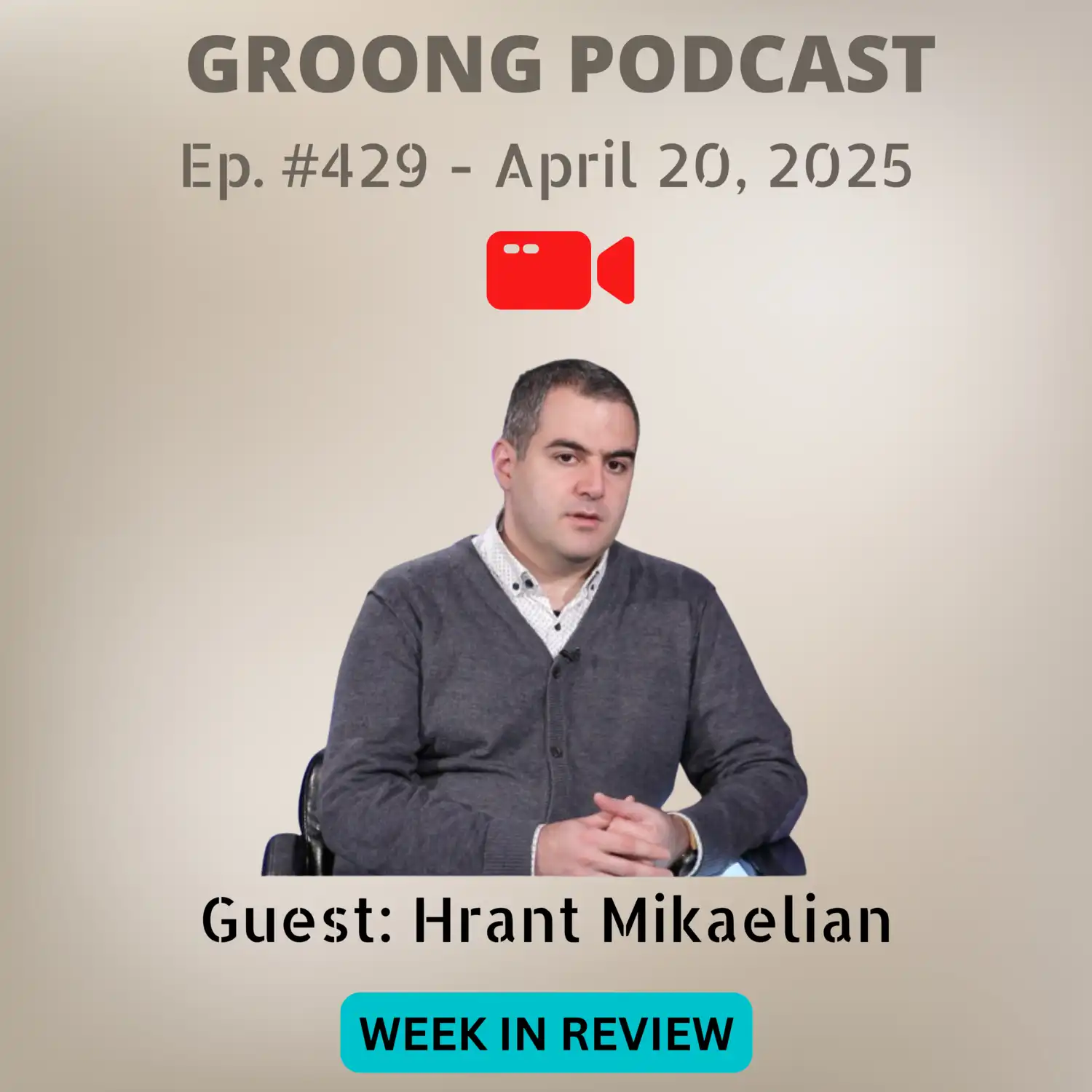
Groong Links:
Guest:
Topics:
- US-Iran Talks & Israeli Threats
- Trump Administration Support for Azerbaijan
- Iran-Azerbaijan Relations & Corridor Demands
- Vatican Controversy & Global Anti-Armenian Propaganda
- Local Elections in Gyumri and Parakar
- Government-Fueled Hate Against Artsakh Refugees
Episode 429 | Recorded: April 22, 2025
Hrant Mikaelian - Iran, EXIM and Azerbaijan, Gyumri, Artsakh Refugees in Armenia | Ep 429, Apr 20, 2025 [EP429]
Posted on Wednesday, Apr 23, 2025 | Category: Armenia, Politics, Vatican, Artsakh, Nagorno Karabakh, Azerbaijan, Genocide, Armenian Church, Armenian Genocide, Iran, Russia, Israel, Turkey, Ukraine, Middle East, China, European Union, Economy, Georgia, NATO, Geopolitics, Human RightsGroong Links:
Guest:
Topics:
- US-Iran Talks & Israeli Threats
- Trump Administration Support for Azerbaijan
- Iran-Azerbaijan Relations & Corridor Demands
- Vatican Controversy & Global Anti-Armenian Propaganda
- Local Elections in Gyumri and Parakar
- Government-Fueled Hate Against Artsakh Refugees
Episode 429 | Recorded: April 22, 2025
Anna Karapetyan - Iran-Armenia Military Exercises, Azerbaijan Border Shootings, Mirzoyan at Antalya Diplomatic Forum, Genocide Denial by the Armenian Government | Ep 428, Apr 13, 2025 [EP428]
Posted on Tuesday, Apr 15, 2025 | Category: Armenia, Azerbaijan, Artsakh, Iran, Genocide, Nagorno Karabakh, Turkey, Armenian Genocide, Israel, Georgia, India, Middle East, Russia, Syria | Series: wir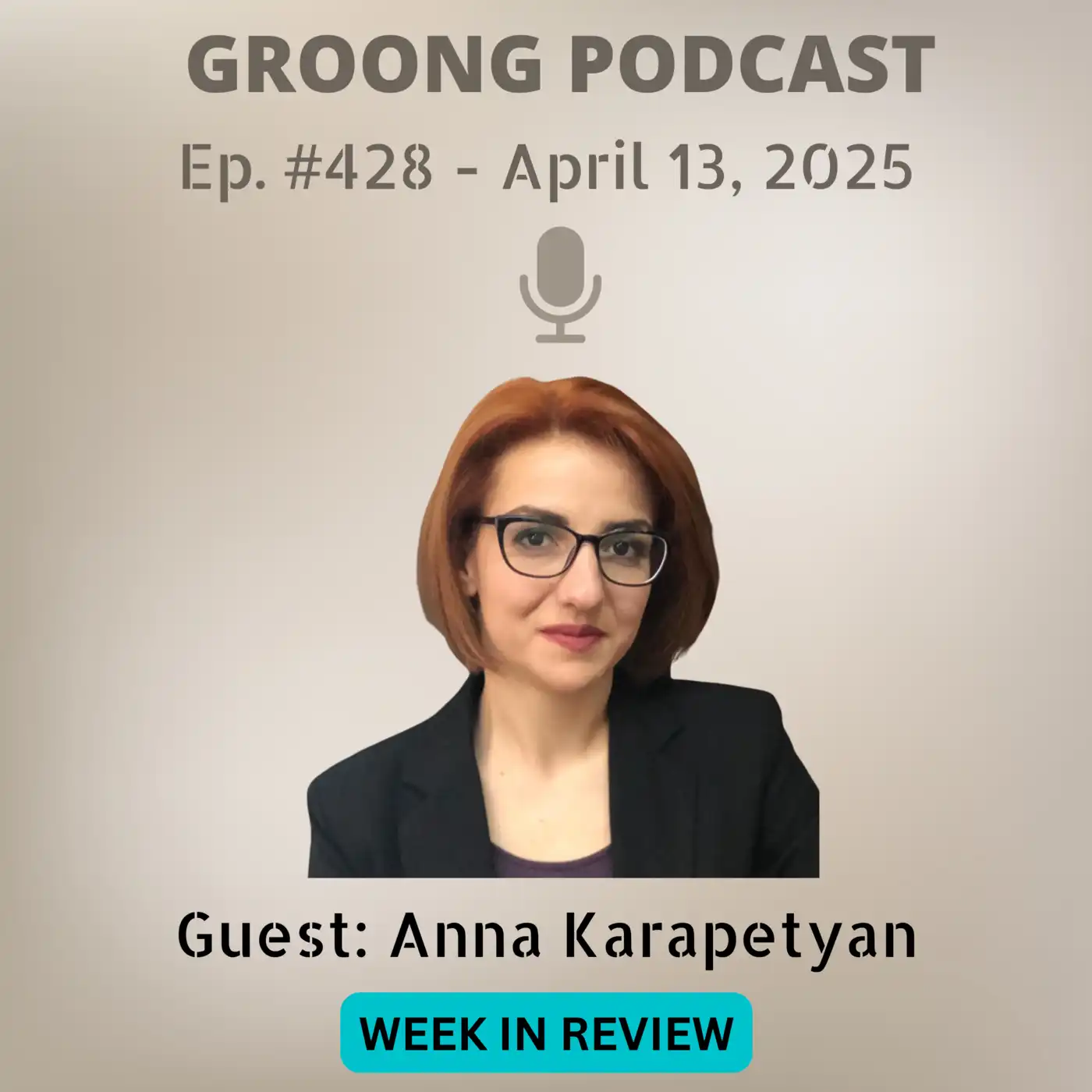
Groong Links:
Guest:
- Anna Karapetyan Director of the Insight Analytical Center for Applied Policy and Research.
Topics:
- Iran-Armenia Military Exercises
- Armenian Villages Terrorized by Azerbaijan
- Mirzoyan in Antalya
- Armeniaâs Genocide Denial
Episode 428 | Recorded: April 14, 2025
Anna Karapetyan - Iran-Armenia Military Exercises, Azerbaijan Border Shootings, Mirzoyan at Antalya Diplomatic Forum, Genocide Denial by the Armenian Government | Ep 428, Apr 13, 2025 [EP428]
Posted on Tuesday, Apr 15, 2025 | Category: Armenia, Azerbaijan, Artsakh, Iran, Genocide, Nagorno Karabakh, Turkey, Armenian Genocide, Israel, Georgia, India, Middle East, Russia, SyriaGroong Links:
Guest:
- Anna Karapetyan Director of the Insight Analytical Center for Applied Policy and Research.
Topics:
- Iran-Armenia Military Exercises
- Armenian Villages Terrorized by Azerbaijan
- Mirzoyan in Antalya
- Armeniaâs Genocide Denial
Episode 428 | Recorded: April 14, 2025
Dziunik Aghajanian - Illusions of Peace and Geopolitical Games | Ep 424 - Mar 23, 2025 [EP424]
Posted on Wednesday, Mar 26, 2025 | Category: Armenia, Politics, Iran, Artsakh, Nagorno Karabakh, Azerbaijan, Middle East, Israel, Geopolitics, Russia, Syria, Turkey, Lebanon, Ukraine, China | Series: wir, video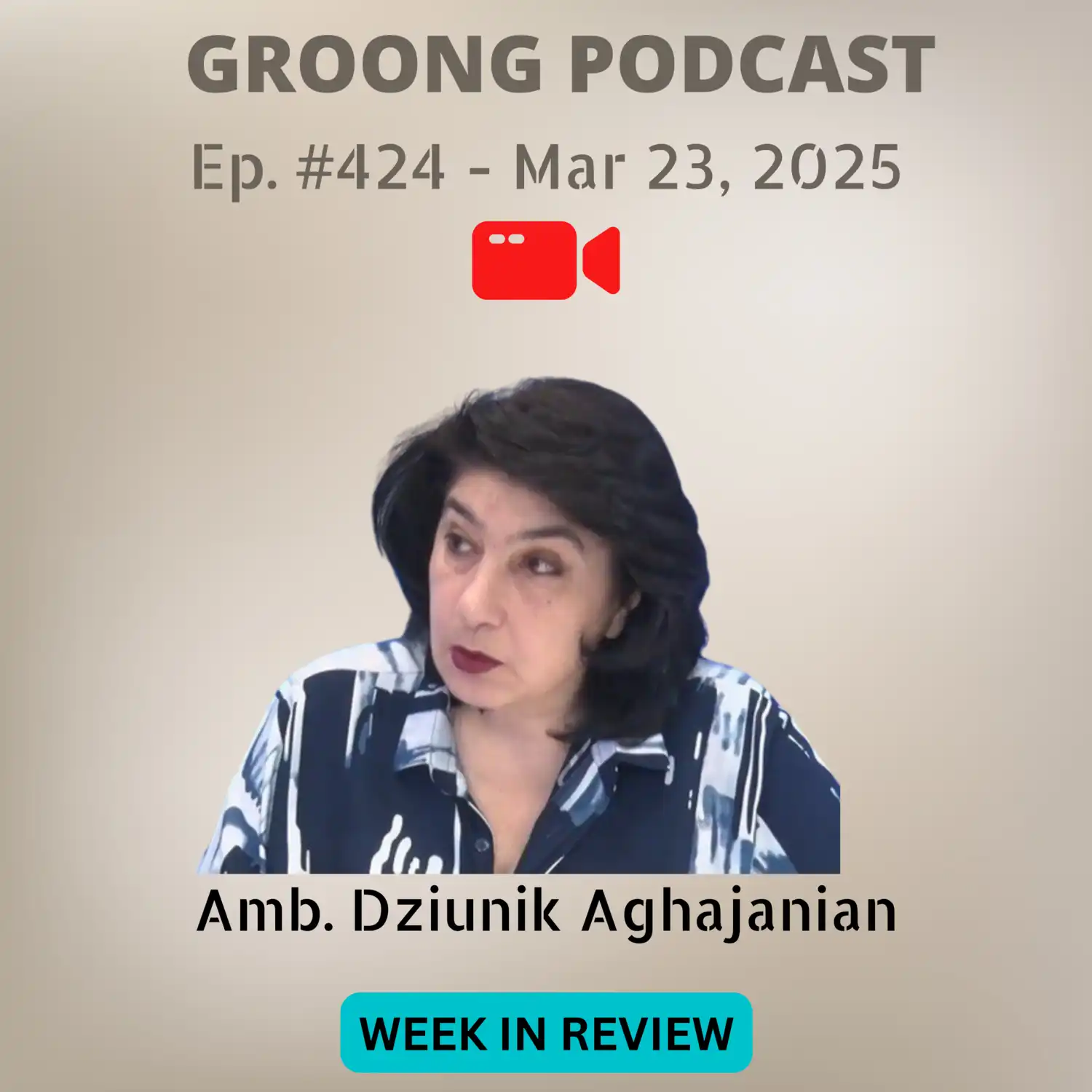
Groong Links:
Guest:
Topics:
- Trumpâs Iran ultimatum explored
- Turkeyâs protests seen as strategic
- Azerbaijanâs peace deal as smokescreen
- Armeniaâs Westward drift analyzed
- Gyumri elections stir controversy
Episode 424 | Recorded: March 25, 2025
Dziunik Aghajanian - Illusions of Peace and Geopolitical Games | Ep 424 - Mar 23, 2025 [EP424]
Posted on Wednesday, Mar 26, 2025 | Category: Armenia, Politics, Iran, Artsakh, Nagorno Karabakh, Azerbaijan, Middle East, Israel, Geopolitics, Russia, Syria, Turkey, Lebanon, Ukraine, ChinaGroong Links:
Guest:
Topics:
- Trumpâs Iran ultimatum explored
- Turkeyâs protests seen as strategic
- Azerbaijanâs peace deal as smokescreen
- Armeniaâs Westward drift analyzed
- Gyumri elections stir controversy
Episode 424 | Recorded: March 25, 2025
Jean-Daniel Ruch - Geopolitics, Justice and the Future World Order | Ep 419, Mar 1, 2025 [EP419]
Posted on Sunday, Mar 2, 2025 | Category: Armenia, Russia, Ukraine, Artsakh, Nagorno Karabakh, Geopolitics, Azerbaijan, Turkey, NATO, Israel, Georgia, Human Rights, China, Syria, Economy, Iran, Middle East | Series: cog, video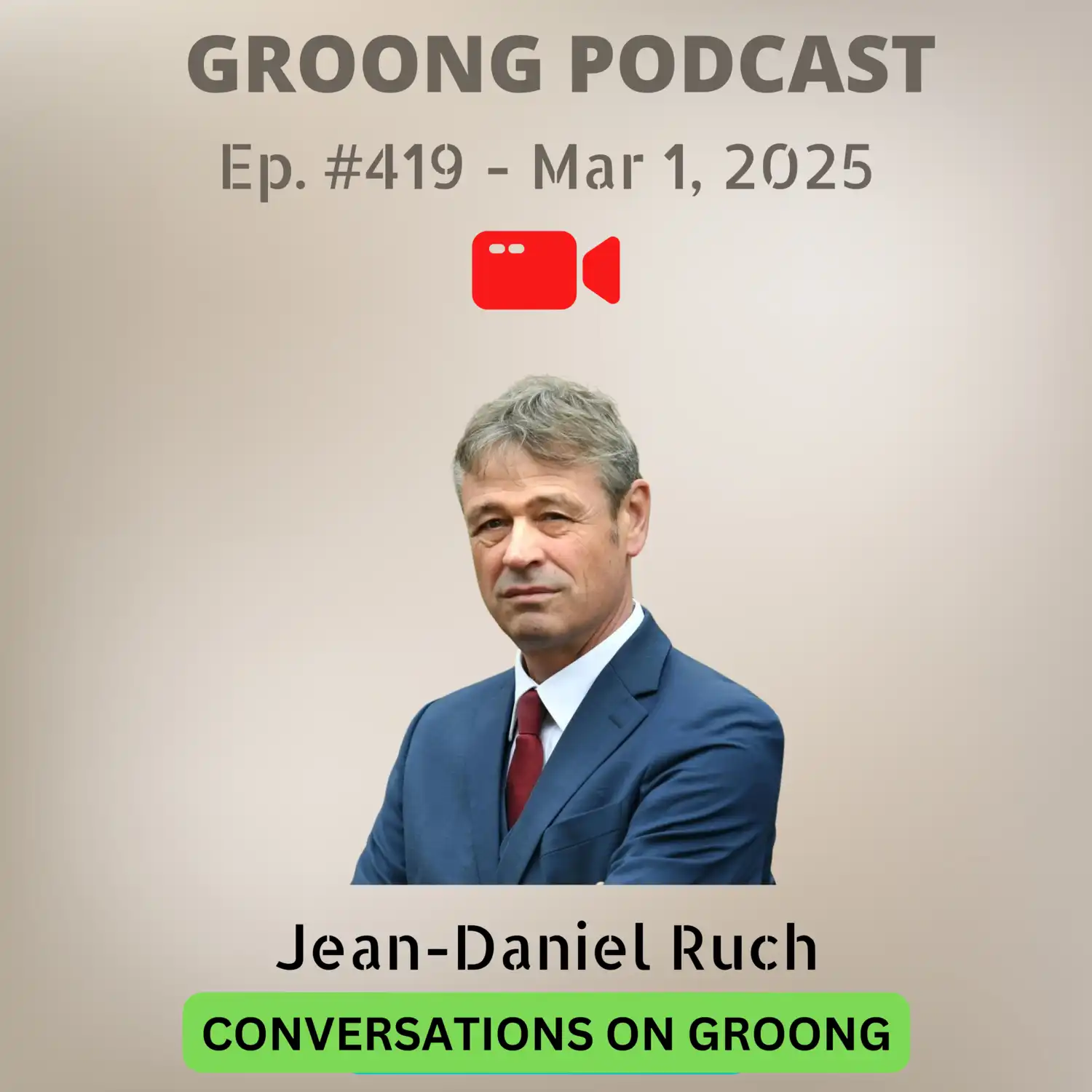
Groong Links:
Guest:
Topics:
- Jean-Daniel Ruchâs Career & Background
- The Role of Diplomacy in Conflict Resolution
- Western Democracy Promotion & Geopolitical Power Plays
- The War in Ukraine & Failed Peace Efforts
- US & European Geopolitical Strategies
- The International Criminal Court & Selective Justice
- The Artsakh Conflict & Armenian Displacement
Episode 419 | Recorded: February 27, 2025
Jean-Daniel Ruch - Geopolitics, Justice and the Future World Order | Ep 419, Mar 1, 2025 [EP419]
Posted on Sunday, Mar 2, 2025 | Category: Armenia, Russia, Ukraine, Artsakh, Nagorno Karabakh, Geopolitics, Azerbaijan, Turkey, NATO, Israel, Georgia, Human Rights, China, Syria, Economy, Iran, Middle EastGroong Links:
Guest:
Topics:
- Jean-Daniel Ruchâs Career & Background
- The Role of Diplomacy in Conflict Resolution
- Western Democracy Promotion & Geopolitical Power Plays
- The War in Ukraine & Failed Peace Efforts
- US & European Geopolitical Strategies
- The International Criminal Court & Selective Justice
- The Artsakh Conflict & Armenian Displacement
Episode 419 | Recorded: February 27, 2025
Arthur G Martirosyan - Ukraine, Edgar Ghazaryan, Robert Kocharyan, Yerevan Bus Fares | Ep 418, Feb 23, 2025 [EP418]
Posted on Tuesday, Feb 25, 2025 | Category: Armenia, Politics, Artsakh, Nagorno Karabakh, Georgia, Turkey, Russia, Azerbaijan, Ukraine, China, Iran, NATO, Israel, European Union, Syria | Series: wir, video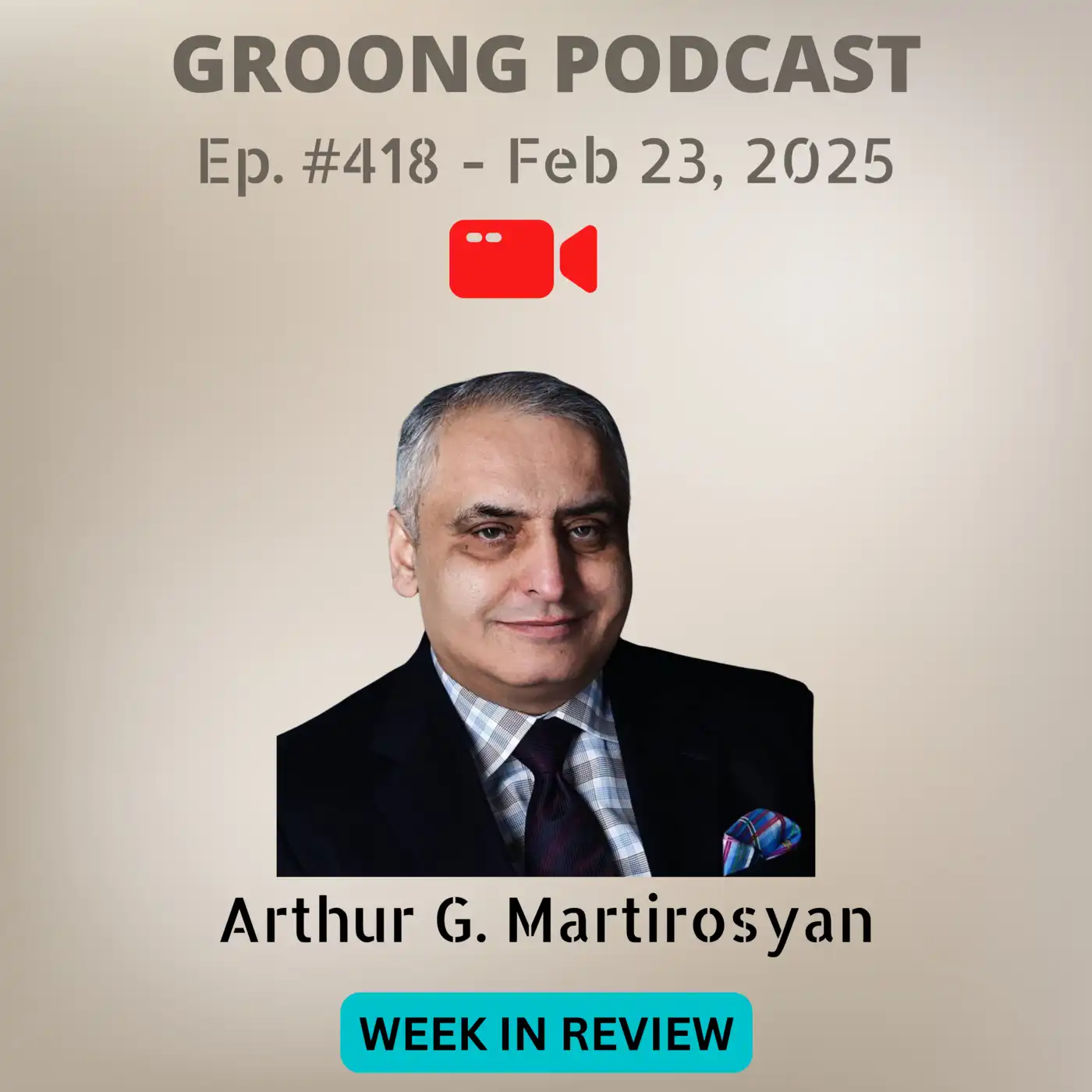
Groong Links:
Guest:
Topics:
- Ukraine Negotiations in Riyadh
- Edgar Ghazayan Bullied by the Government
- Robert Kocharyan Press Conference
- Yerevan Bus Fares
Episode 418 | Recorded: February 24, 2025
Arthur G Martirosyan - Ukraine, Edgar Ghazaryan, Robert Kocharyan, Yerevan Bus Fares | Ep 418, Feb 23, 2025 [EP418]
Posted on Tuesday, Feb 25, 2025 | Category: Armenia, Politics, Artsakh, Nagorno Karabakh, Georgia, Turkey, Russia, Azerbaijan, Ukraine, China, Iran, NATO, Israel, European Union, SyriaGroong Links:
Guest:
Topics:
- Ukraine Negotiations in Riyadh
- Edgar Ghazayan Bullied by the Government
- Robert Kocharyan Press Conference
- Yerevan Bus Fares
Episode 418 | Recorded: February 24, 2025
Anna Karapetyan - Pashinyan in DC, Trump Sanctions ICC, Azerbaijani Diplomacy, Workers Strike at ZCMC | Ep 413, Feb 9, 2025 [EP413]
Posted on Thursday, Feb 13, 2025 | Category: Armenia, Azerbaijan, Artsakh, Nagorno Karabakh, Iran, Artsakh Blockade, Armenian Genocide, Russia, Genocide, Turkey, Geopolitics, Human Rights, NATO | Series: wir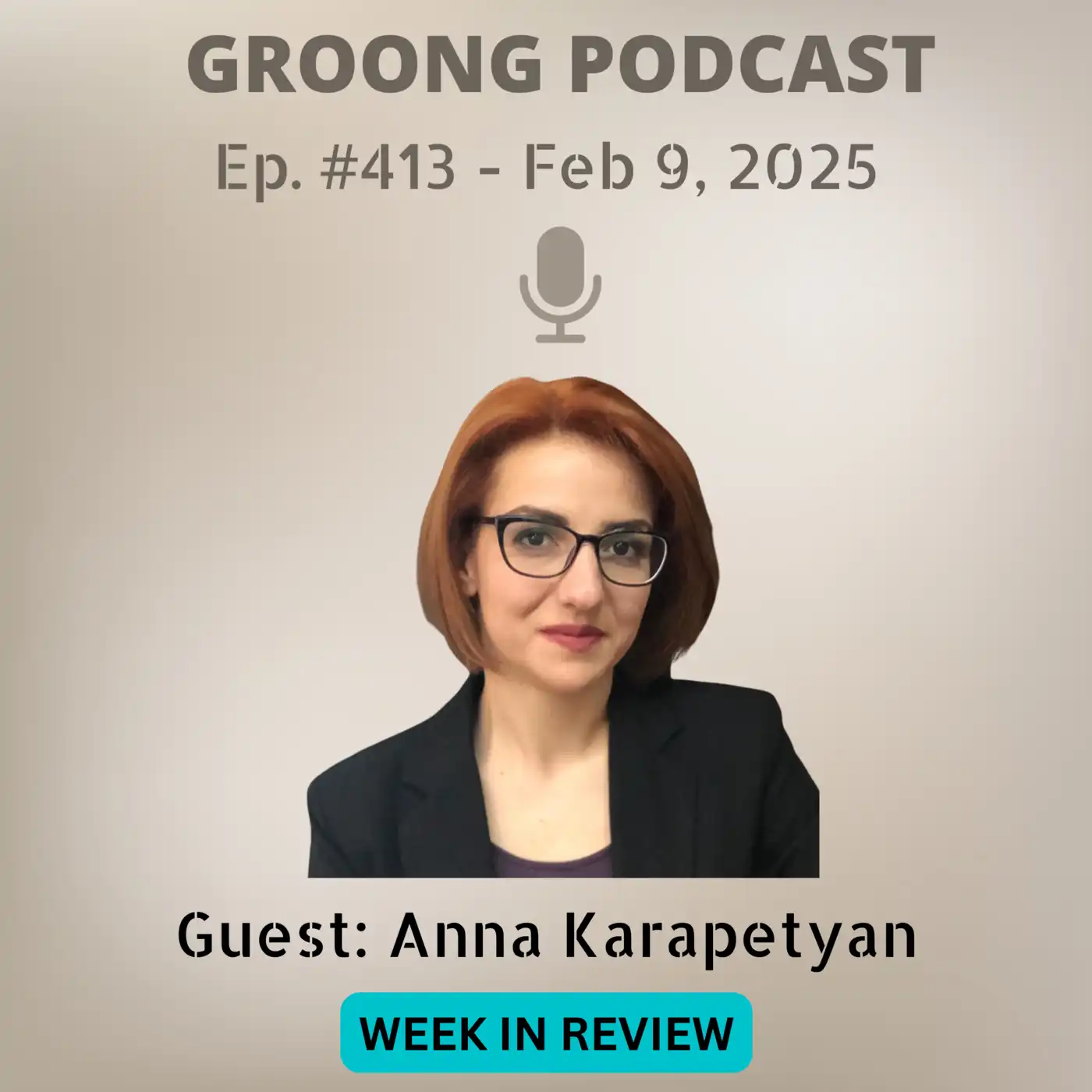
Groong Links:
Guest:
- Anna Karapetyan Director of the Insight Analytical Center for Applied Policy and Research.
Topics:
- Pashinyan in DC
- Trump Sanctions the ICC
- Azerbaijani Diplomacy in Action
- Workers Strike at Zangezur Mining Co.
Episode 413 | Recorded: February 11, 2025
Anna Karapetyan - Pashinyan in DC, Trump Sanctions ICC, Azerbaijani Diplomacy, Workers Strike at ZCMC | Ep 413, Feb 9, 2025 [EP413]
Posted on Thursday, Feb 13, 2025 | Category: Armenia, Azerbaijan, Artsakh, Nagorno Karabakh, Iran, Artsakh Blockade, Armenian Genocide, Russia, Genocide, Turkey, Geopolitics, Human Rights, NATOGroong Links:
Guest:
- Anna Karapetyan Director of the Insight Analytical Center for Applied Policy and Research.
Topics:
- Pashinyan in DC
- Trump Sanctions the ICC
- Azerbaijani Diplomacy in Action
- Workers Strike at Zangezur Mining Co.
Episode 413 | Recorded: February 11, 2025
Archil Sikharulidze - The Estrangement of Georgia and the West | Ep 412, Feb 10, 2025 [EP412]
Posted on Tuesday, Feb 11, 2025 | Category: Georgia, Politics, Armenia, Russia, European Union, NATO, Ukraine, Turkey, Azerbaijan, Human Rights, Iran, Economy, Geopolitics | Series: cog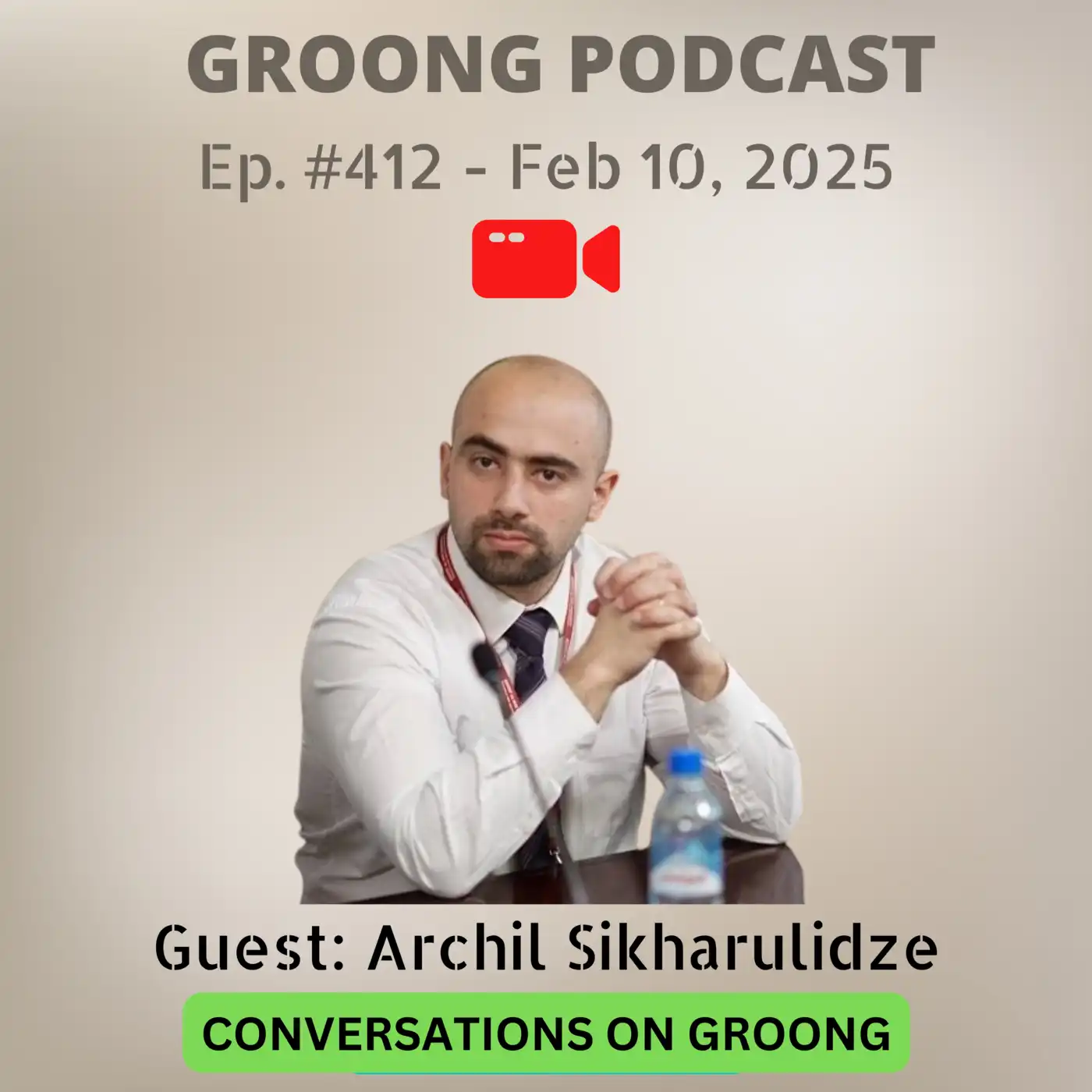
Groong Links:
Guest:
Topics:
- Effects of the Shutdown of USAID
- Georgia and the EU
- Georgia and the South Caucasus
Episode 412 | Recorded: February 9, 2025
Archil Sikharulidze - The Estrangement of Georgia and the West | Ep 412, Feb 10, 2025 [EP412]
Posted on Tuesday, Feb 11, 2025 | Category: Georgia, Politics, Armenia, Russia, European Union, NATO, Ukraine, Turkey, Azerbaijan, Human Rights, Iran, Economy, GeopoliticsGroong Links:
Guest:
Topics:
- Effects of the Shutdown of USAID
- Georgia and the EU
- Georgia and the South Caucasus
Episode 412 | Recorded: February 9, 2025
Benyamin Poghosyan - MPG Poll, Russia-Azerbaijan Relations Deteriorate, Armenian Strategic Geopolitical Balancing, Azerbaijan and the ‘Zangezur Corridor’ | Ep 410, Feb 2, 2025 [EP410]
Posted on Tuesday, Feb 4, 2025 | Category: Armenia, Azerbaijan, Poll, Artsakh, Nagorno Karabakh, Turkey, Russia, Iran, Ukraine, Geopolitics, Georgia, China, Economy, European Union, Israel | Series: wir
Groong Links:
Guest:
Topics:
- MPG Poll: Pashinyanâs Rating Tanks
- Russia Azerbaijan Relations Deteriorating
- Armeniaâs Strategic Geopolitical Balancing
- Azerbaijan and the âZangezur Corridorâ
Episode 410 | Recorded: February 3, 2025
Benyamin Poghosyan - MPG Poll, Russia-Azerbaijan Relations Deteriorate, Armenian Strategic Geopolitical Balancing, Azerbaijan and the ‘Zangezur Corridor’ | Ep 410, Feb 2, 2025 [EP410]
Posted on Tuesday, Feb 4, 2025 | Category: Armenia, Azerbaijan, Poll, Artsakh, Nagorno Karabakh, Turkey, Russia, Iran, Ukraine, Geopolitics, Georgia, China, Economy, European Union, IsraelGroong Links:
Guest:
Topics:
- MPG Poll: Pashinyanâs Rating Tanks
- Russia Azerbaijan Relations Deteriorating
- Armeniaâs Strategic Geopolitical Balancing
- Azerbaijan and the âZangezur Corridorâ
Episode 410 | Recorded: February 3, 2025
Yeghia Tashjian - New Leadership in Lebanon - New President, New Prime Minister | Ep 405, Jan 21, 2025 [EP405]
Posted on Monday, Jan 20, 2025 | Category: Lebanon, Middle East, Israel, Iran, Turkey, USA, Syria, Armenia, Russia, China, Geopolitics, NATO | Series: cog
Groong Links:
Guest:
Topics:
- President Joseph Aoun
- Prime Minister-designate Nawaf Salam
- The Changing Face of the Middle East
- Armenian Communityâs and Joseph Aoun
Episode 405 | Recorded: Januaqry 19, 2025
Yeghia Tashjian - New Leadership in Lebanon - New President, New Prime Minister | Ep 405, Jan 21, 2025 [EP405]
Posted on Monday, Jan 20, 2025 | Category: Lebanon, Middle East, Israel, Iran, Turkey, USA, Syria, Armenia, Russia, China, Geopolitics, NATOGroong Links:
Guest:
Topics:
- President Joseph Aoun
- Prime Minister-designate Nawaf Salam
- The Changing Face of the Middle East
- Armenian Communityâs and Joseph Aoun
Episode 405 | Recorded: Januaqry 19, 2025
Tevan Poghosyan - Incoming Trump, Armenia Azerbaijan Talks, Iran Visit, Pro-West Signals | Ep 404, Jan 12, 2025 [EP404]
Posted on Wednesday, Jan 15, 2025 | Category: Armenia, Artsakh, Nagorno Karabakh, Azerbaijan, USA, Russia, Iran, Ukraine, Turkey, Israel, Syria, China, Georgia, Middle East, NATO, Economy, Genocide, Lebanon, European Union | Series: wir
Groong Links:
Guest:
Topics:
- Incoming Trump Admin
- Armenia Azerbaijan Talks Stalled
- Iran Security Chief Visit
- Armeniaâs Pro-West Signals
Episode 404 | Recorded: January 14, 2025
Tevan Poghosyan - Incoming Trump, Armenia Azerbaijan Talks, Iran Visit, Pro-West Signals | Ep 404, Jan 12, 2025 [EP404]
Posted on Wednesday, Jan 15, 2025 | Category: Armenia, Artsakh, Nagorno Karabakh, Azerbaijan, USA, Russia, Iran, Ukraine, Turkey, Israel, Syria, China, Georgia, Middle East, NATO, Economy, Genocide, Lebanon, European UnionGroong Links:
Guest:
Topics:
- Incoming Trump Admin
- Armenia Azerbaijan Talks Stalled
- Iran Security Chief Visit
- Armeniaâs Pro-West Signals
Episode 404 | Recorded: January 14, 2025
Benyamin Poghosyan - Pashinyan Lies on Decades of Negotiations, 17 Points to an Agreement, 2024 Review and 2025 Outlook | Ep 403 - Dec 29, 2024 [EP403]
Posted on Wednesday, Jan 1, 2025 | Category: Armenia, Azerbaijan, Artsakh, Nagorno Karabakh, Middle East, Israel, Lebanon, Syria, Iran, Turkey, Russia, Armenian Church, Ukraine, Genocide, Geopolitics, China, Georgia, European Union | Series: wir
Groong Links:
Guest:
Topics:
- Pashinyanâs Lies on Decades of Negotiations
- 17 Points to an Agreement
- 2024 Review and 2025 Outlook
Episode 403 | Recorded: December 31, 2024
Benyamin Poghosyan - Pashinyan Lies on Decades of Negotiations, 17 Points to an Agreement, 2024 Review and 2025 Outlook | Ep 403 - Dec 29, 2024 [EP403]
Posted on Wednesday, Jan 1, 2025 | Category: Armenia, Azerbaijan, Artsakh, Nagorno Karabakh, Middle East, Israel, Lebanon, Syria, Iran, Turkey, Russia, Armenian Church, Ukraine, Genocide, Geopolitics, China, Georgia, European UnionGroong Links:
Guest:
Topics:
- Pashinyanâs Lies on Decades of Negotiations
- 17 Points to an Agreement
- 2024 Review and 2025 Outlook
Episode 403 | Recorded: December 31, 2024
The Political Persecution of Narek Malyan | Ep 402 - Dec 27, 2024 [EP402]
Posted on Friday, Dec 27, 2024 | Category: Armenia, Political Prisoners, Artsakh, Nagorno Karabakh, Human Rights | Series: cog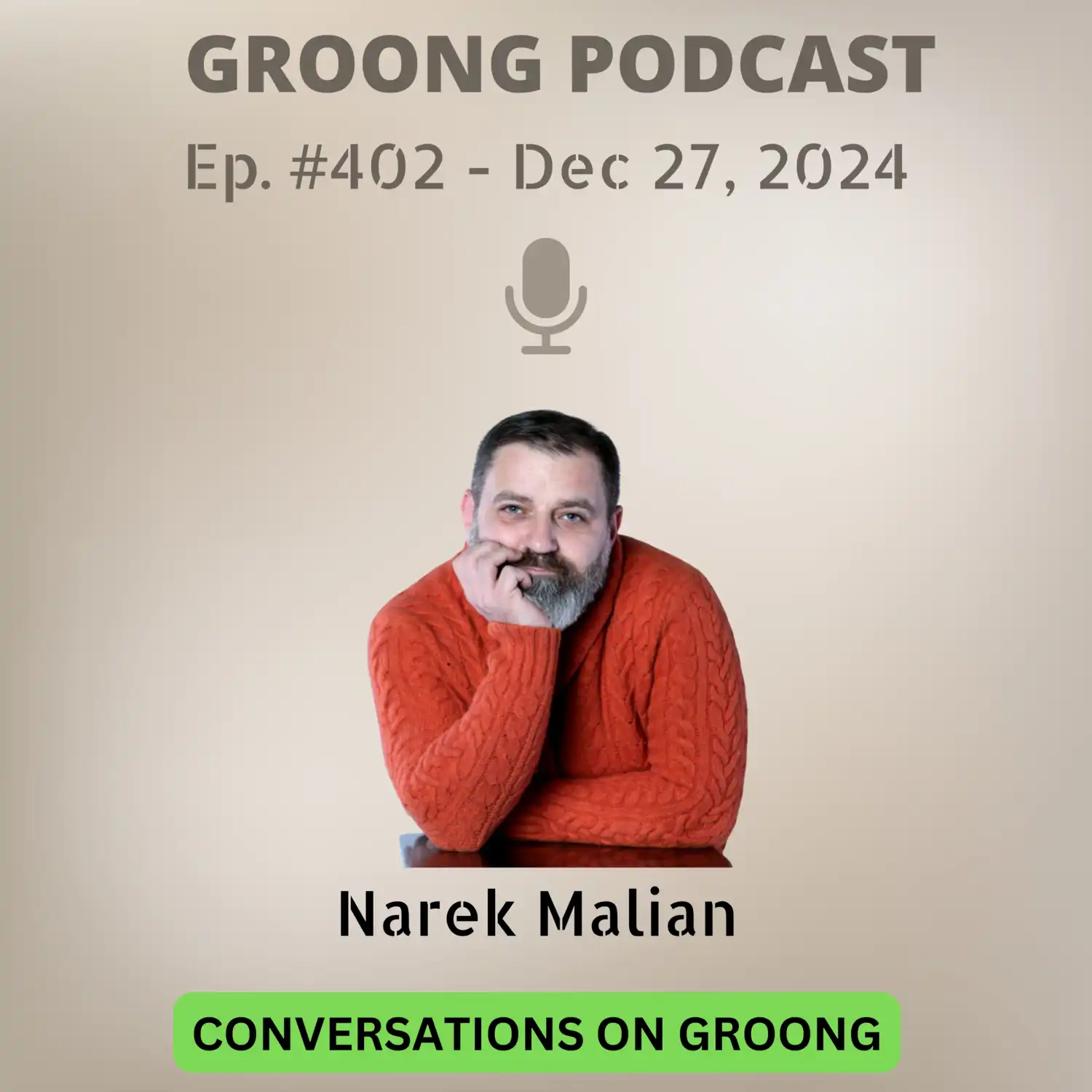
Groong Links:
Guest:
Topics:
- Arrest, one year in prison
- Pre-trial detention as punishment
- Selective “justice” against opposition members
- The silence of the West
Episode 402 | Recorded: November 7, 2024
The Political Persecution of Narek Malyan | Ep 402 - Dec 27, 2024 [EP402]
Posted on Friday, Dec 27, 2024 | Category: Armenia, Political Prisoners, Artsakh, Nagorno Karabakh, Human RightsGroong Links:
Guest:
Topics:
- Arrest, one year in prison
- Pre-trial detention as punishment
- Selective “justice” against opposition members
- The silence of the West
Episode 402 | Recorded: November 7, 2024