Nikol Pashinyan
Last updated: May 29, 2026
Nikol Pashinyan has been a central figure in Groong’s coverage since the podcast launched in 2020. He rose to power in 2018 through a street movement that its proponents called the Velvet Revolution — though a substantial segment of Armenian political opinion views the events as a color revolution or externally influenced regime change operation rather than a spontaneous civic uprising. Under Pashinyan, Armenia has undergone one of the most turbulent periods in its post-independence history.
The most consequential event of Pashinyan’s tenure was Armenia’s defeat in the 44-Day War of 2020, which ended with the loss of most of Nagorno Karabakh (Artsakh) under a Russian-brokered ceasefire. Pashinyan survived political pressure to resign and consolidated power through snap elections in 2021. The September 2023 Azerbaijani offensive that caused the ethnic cleansing of the entire Armenian population of Artsakh deepened the crisis of legitimacy — both internationally and domestically — as critics argue his concessions to Aliyev made the outcome inevitable.
Since 2022, Pashinyan has undertaken a significant reorientation of Armenian foreign policy: suspending participation in the CSTO , deepening ties with France, the EU, and the United States, and accepting Western security assistance including an EU monitoring mission on the Armenian border. This pivot away from Russia has defined Armenian geopolitics in the post-Artsakh period. Groong has covered every major step of this reorientation, including what it means for Armenia’s relationship with Iran, India, and other partners.
Domestically, Groong’s coverage of Pashinyan addresses his government’s confrontation with the Armenian Church , the arrest of opposition figures and political prisoners , the Tavush border delimitation controversy, and Civil Contract’s campaign in the June 2026 parliamentary elections . Critics covered extensively on Groong argue that Pashinyan has used his parliamentary supermajority to weaken democratic institutions and neutralize political opposition under the guise of reform.
Groong episodes that include this tag
Below are all Groong episodes tagged with Nikol Pashinyan.
Opposition Talks: Edmon Marukyan of Bright Armenia Party (Ep. 36) [EP36]
Posted on Wednesday, Dec 23, 2020 | Category: Armenia, Russia, Turkey, Economy, Genocide, Human Rights, NATO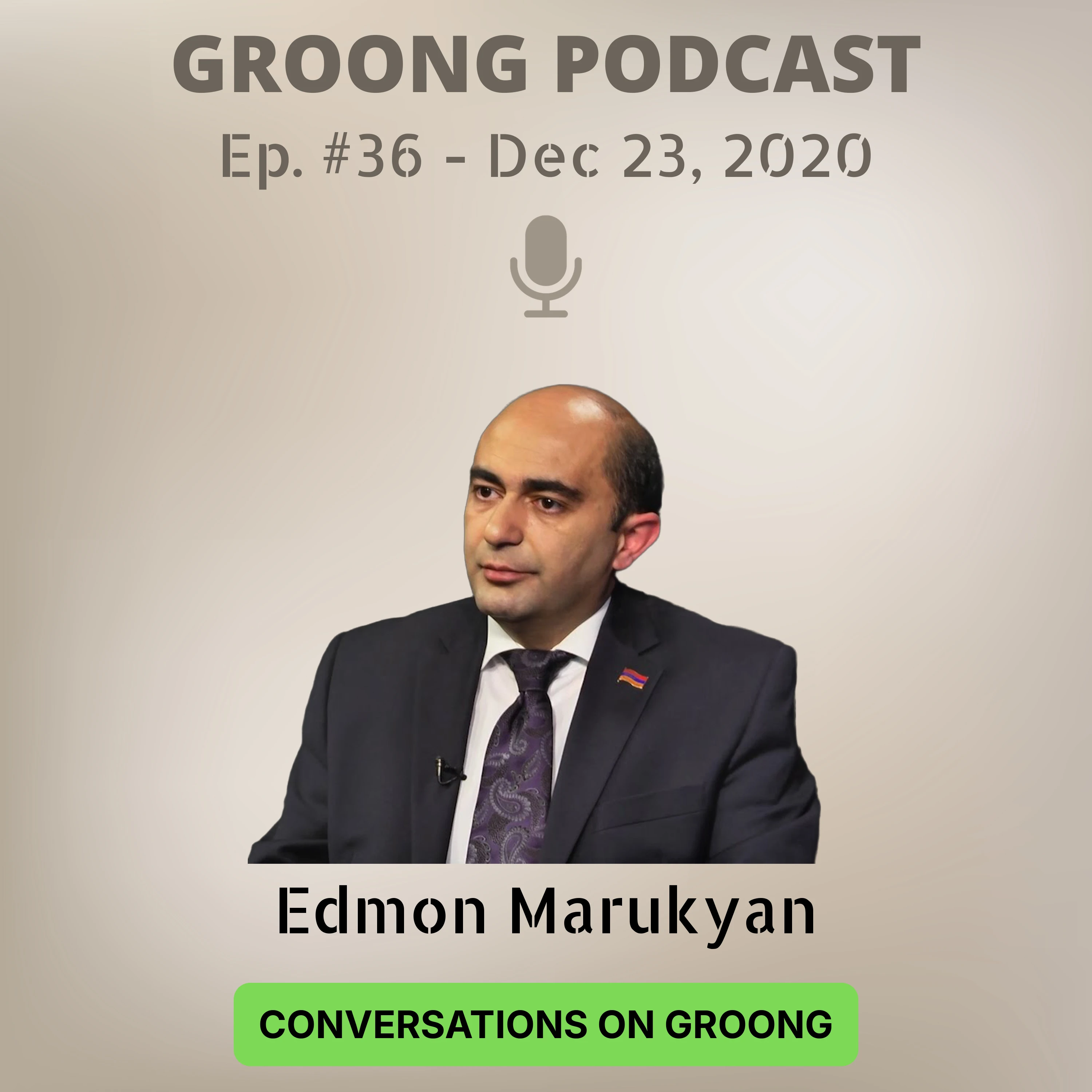
Guest(s):
Conversation with Bright Armenia’s Edmon Marukyan
Following the trilateral Karabakh ceasefire of Nov 9, all major political forces in Armenia (except for the ruling party) condemned Nikol Pashinyanâs agreement to the deal. While the dissatisfaction with the agreement is widespread, the opposition is not entirely unified on what to do next.
Weâll talk with the leader of one of the 2 parliamentary opposition factions, Bright Armenia about his, and his partyâs vision and subsequent actions to be taken by Armenia.
What is Bright Armeniaâs vision for post
Read More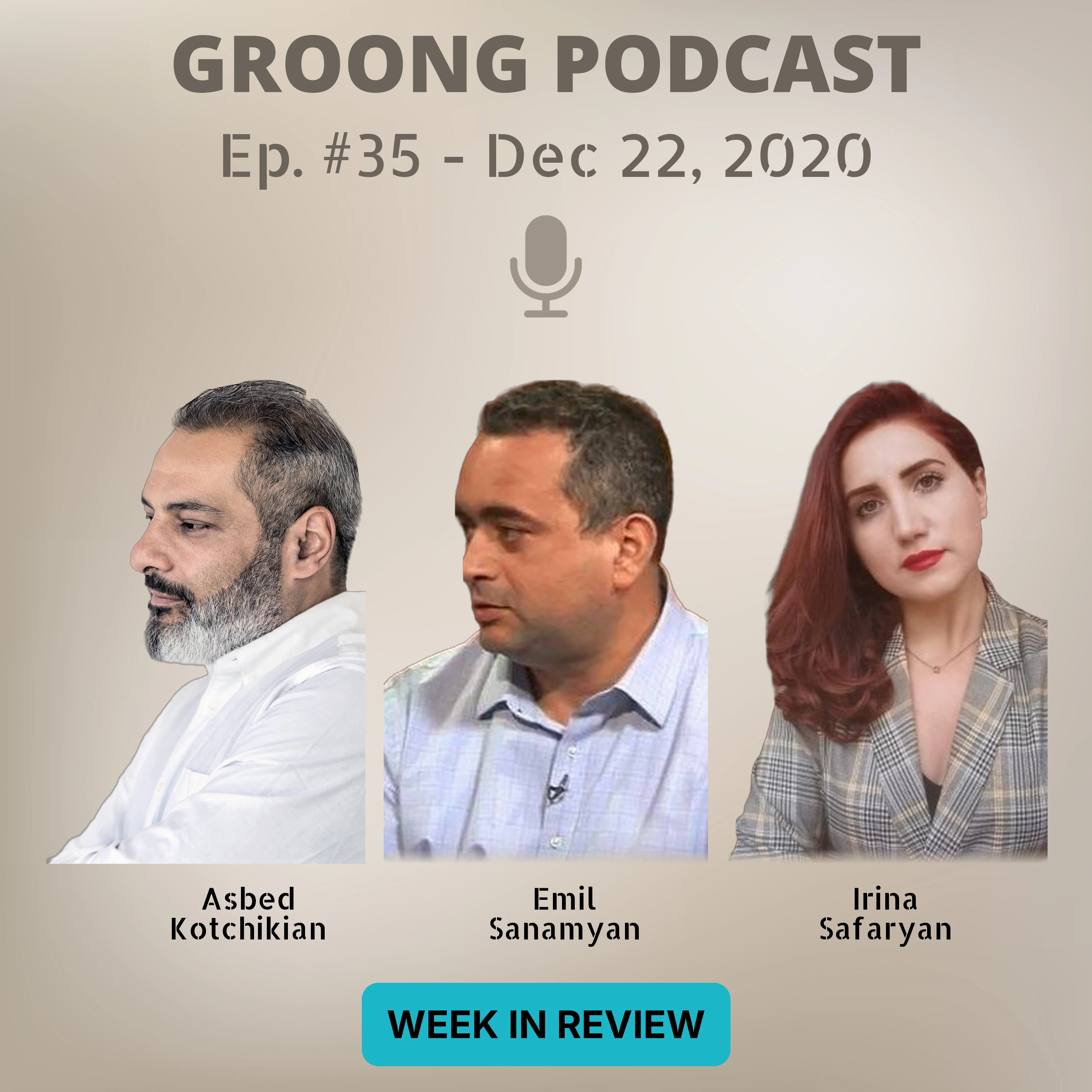
Guest(s):
ANN/Groong Week in Review Episode 35 - Dec 20, 2020
Topics Covered:
- Life in Artsakh
- Update on Hin Tagher & Khtsaberd
- Internal Political Situation in Yerevan
- Kapan Border Tension
Guests
- Asbed Kotchikian
- Irina Safaryan
- Emil Sanamyan
Your Hosts:
- Asbed Bedrossian
- Hovik Manucharyan
Website: https://groong.org/podcasts/WiR-20201220.html Recorded: Dec 20, 2020
Guest(s):
ANN/Groong Week in Review Episode 35 - Dec 20, 2020
Topics Covered:
- Life in Artsakh
- Update on Hin Tagher & Khtsaberd
- Internal Political Situation in Yerevan
- Kapan Border Tension
Guests
- Asbed Kotchikian
- Irina Safaryan
- Emil Sanamyan
Your Hosts:
- Asbed Bedrossian
- Hovik Manucharyan
Website: https://groong.org/podcasts/WiR-20201220.html Recorded: Dec 20, 2020
Opposition Talks: Arthur Khachatryan - ARF Dashnaktsutyun (Ep. 34) [EP34]
Posted on Saturday, Dec 19, 2020 | Category: Armenia, Russia, Armenian Genocide, Economy, Genocide, Turkey | Series: cog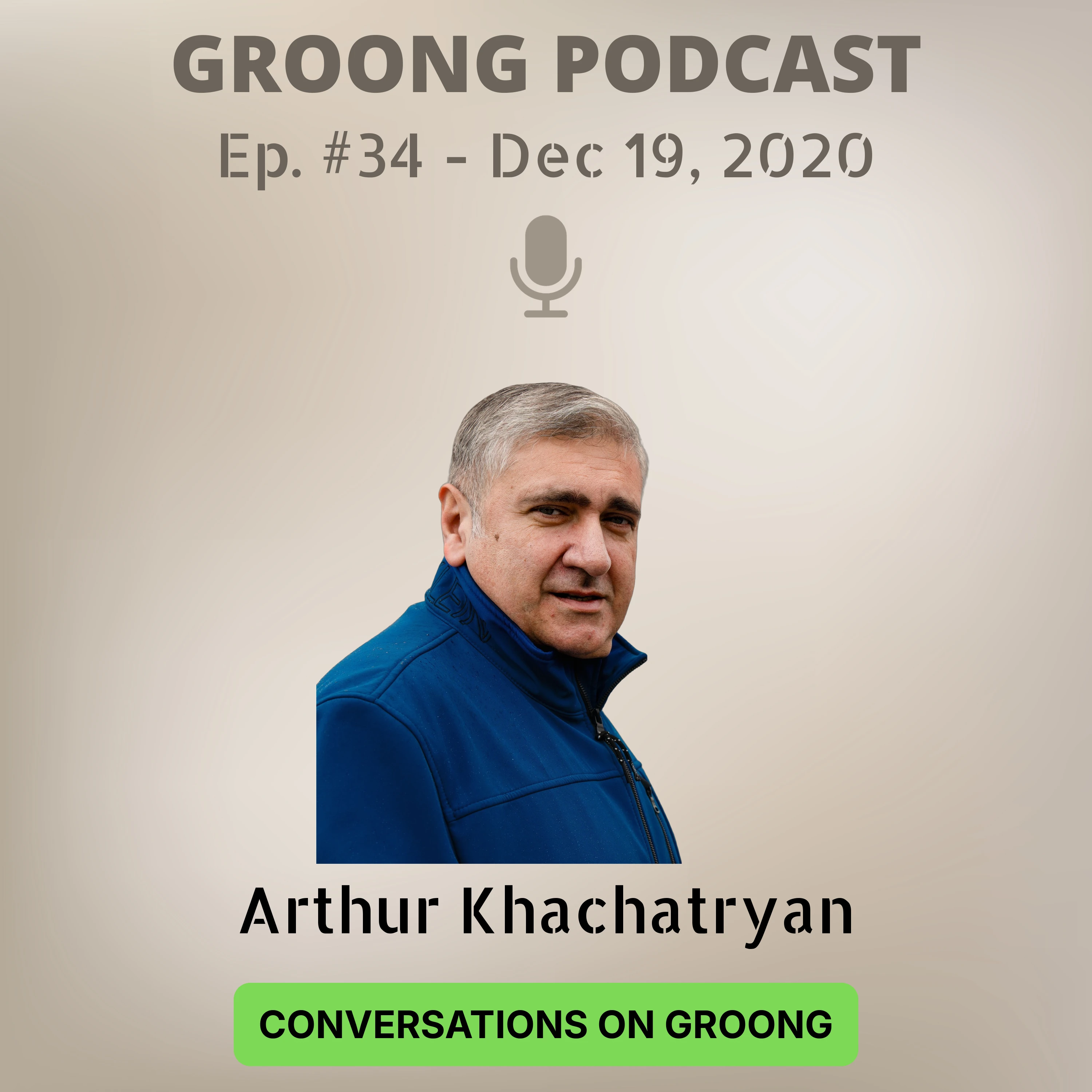
Guest(s):
Conversation with ARF’s Arthur Khachatryan
Following the trilateral Karabakh ceasefire of Nov 9, the Armenian opposition has nearly universally condemned Nikol Pashinyanâs agreement to the deal. The largest opposition grouping, called Movement of the Salvation of the Homeland (ÕÕ¡ÕµÖÕ¥Õ¶Õ«ÖÕ« ÖÖÕ¯Õ¸ÖÕ©ÕµÕ¡Õ¶ Õ·Õ¡ÕªÕ¸ÖÕ´ in Armenian), composed of 17 political parties including the Armenian Revolutionary Federation (ARF), Prosperous Armenia, and the Republican Party, are demanding Pashinyanâs immediate resignation and the appointment of their
Read MoreOpposition Talks: Arthur Khachatryan - ARF Dashnaktsutyun (Ep. 34) [EP34]
Posted on Saturday, Dec 19, 2020 | Category: Armenia, Russia, Armenian Genocide, Economy, Genocide, TurkeyGuest(s):
Conversation with ARF’s Arthur Khachatryan
Following the trilateral Karabakh ceasefire of Nov 9, the Armenian opposition has nearly universally condemned Nikol Pashinyanâs agreement to the deal. The largest opposition grouping, called Movement of the Salvation of the Homeland (ÕÕ¡ÕµÖÕ¥Õ¶Õ«ÖÕ« ÖÖÕ¯Õ¸ÖÕ©ÕµÕ¡Õ¶ Õ·Õ¡ÕªÕ¸ÖÕ´ in Armenian), composed of 17 political parties including the Armenian Revolutionary Federation (ARF), Prosperous Armenia, and the Republican Party, are demanding Pashinyanâs immediate resignation and the appointment of their
Read More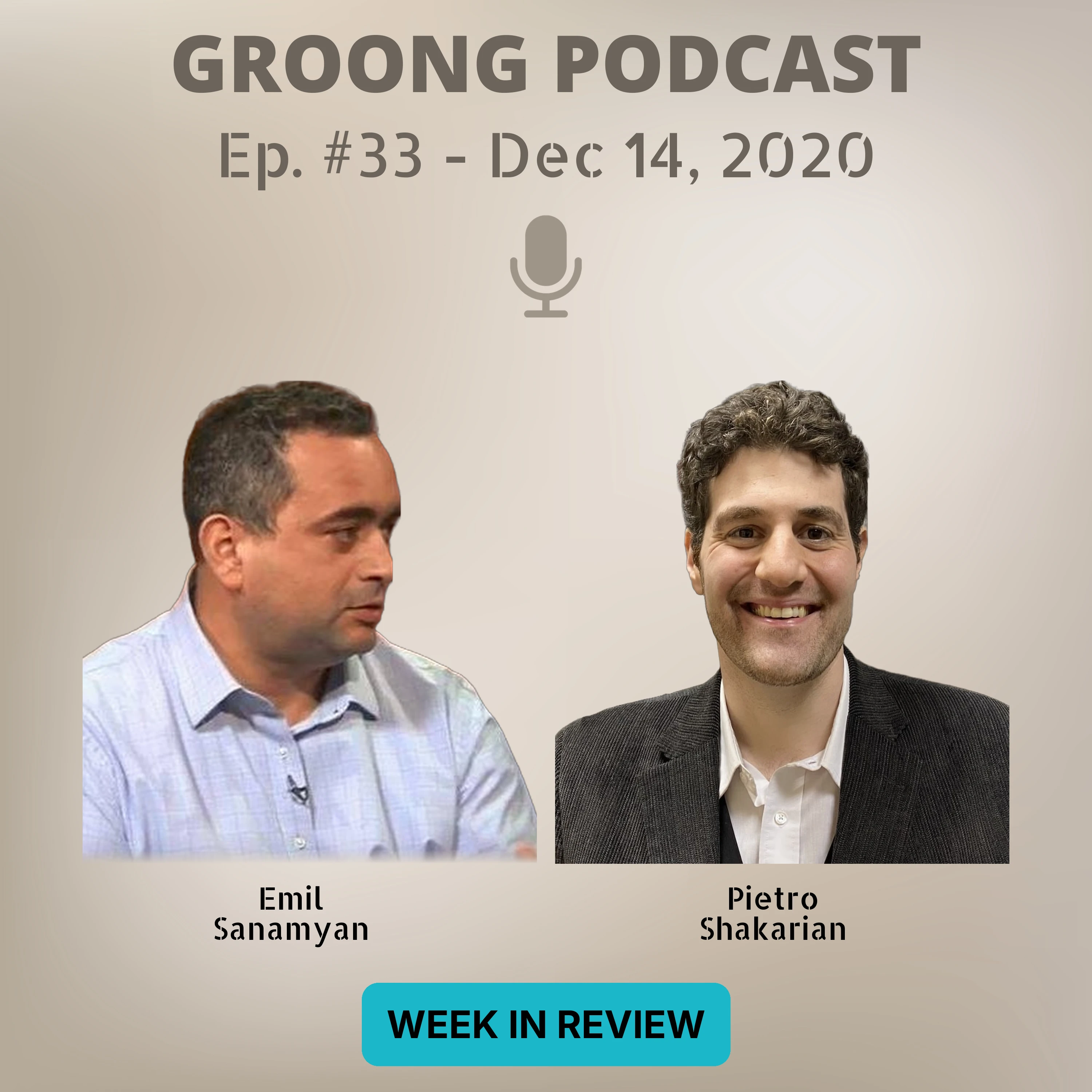
Guest(s):
ANN/Groong Week in Review Episode 33 - Dec 13, 2020
Topics Covered:
- Renewed Fighting & the OSCE MG visit
- Expedited Border Demarcation?
- What will happen to Sotq?
- Diplomatic Relations with Azerbaijan?
Your Hosts:
- Asbed Bedrossian
- Hovik Manucharyan
Resident Panelists:
- Emil Sanamyan
- Pietro Shakarian
Recorded: Dec 13, 2020
Guest(s):
ANN/Groong Week in Review Episode 33 - Dec 13, 2020
Topics Covered:
- Renewed Fighting & the OSCE MG visit
- Expedited Border Demarcation?
- What will happen to Sotq?
- Diplomatic Relations with Azerbaijan?
Your Hosts:
- Asbed Bedrossian
- Hovik Manucharyan
Resident Panelists:
- Emil Sanamyan
- Pietro Shakarian
Recorded: Dec 13, 2020
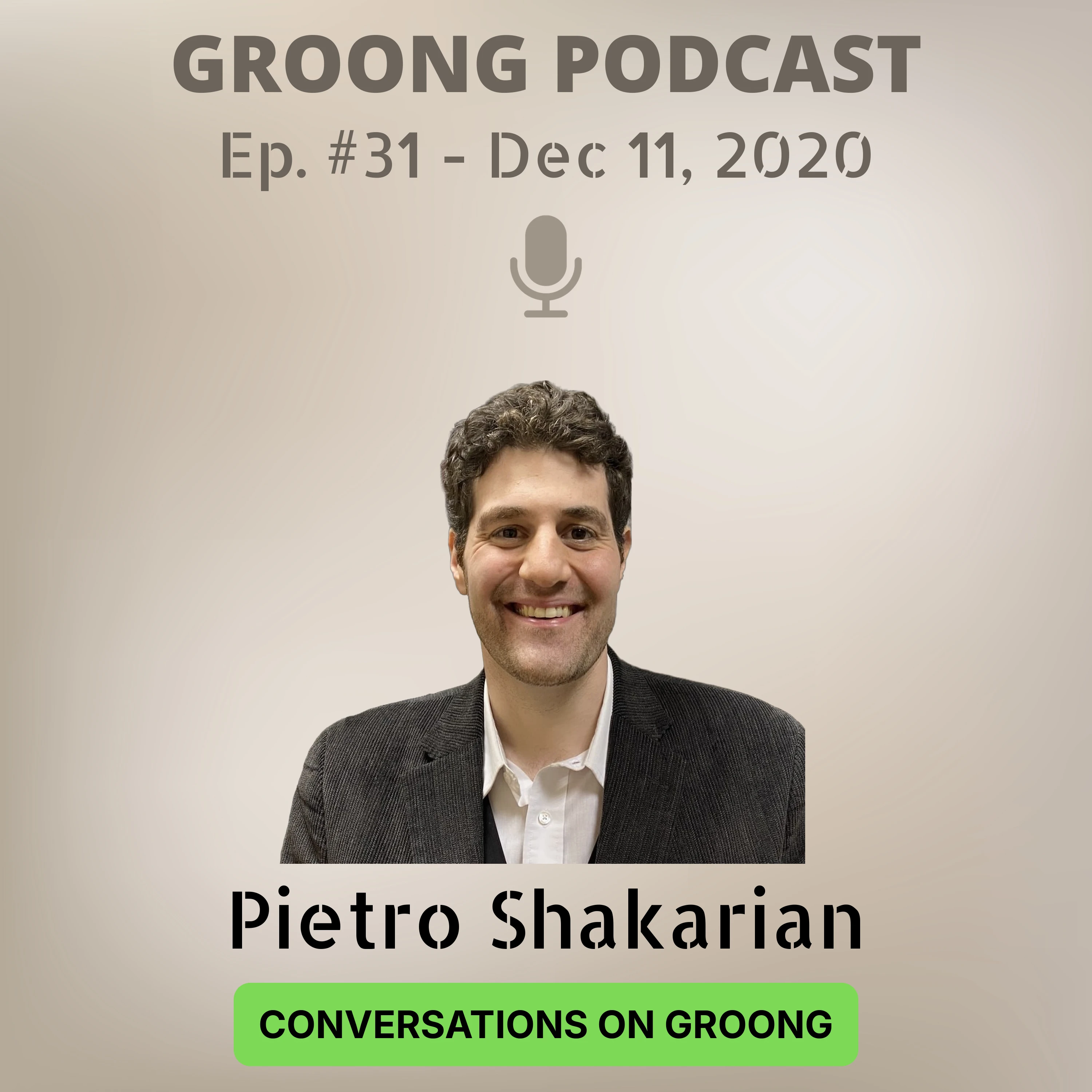
On November 9, Armenia, Azerbaijan and Russia signed The Statement ending the war in Artsakh, known more commonly as Nagorno-Karabakh. Russia emerged as a major winner, by ending the violence, introducing peacekeepers, and upholding its historical role as the regional referee in the Caucasus. What are Russiaâs interests in the region, and in this agreement?
Pietro Shakarian helps us explore. He is a historian and a Ph.D. candidate in Russian History at the Ohio State University. His analyses on Russia, Armenia, and the post-Soviet space have appeared in several publications, including The
Read MoreOn November 9, Armenia, Azerbaijan and Russia signed The Statement ending the war in Artsakh, known more commonly as Nagorno-Karabakh. Russia emerged as a major winner, by ending the violence, introducing peacekeepers, and upholding its historical role as the regional referee in the Caucasus. What are Russiaâs interests in the region, and in this agreement?
Pietro Shakarian helps us explore. He is a historian and a Ph.D. candidate in Russian History at the Ohio State University. His analyses on Russia, Armenia, and the post-Soviet space have appeared in several publications, including The
Read More