Nikol Pashinyan
Last updated: May 29, 2026
Nikol Pashinyan has been a central figure in Groong’s coverage since the podcast launched in 2020. He rose to power in 2018 through a street movement that its proponents called the Velvet Revolution — though a substantial segment of Armenian political opinion views the events as a color revolution or externally influenced regime change operation rather than a spontaneous civic uprising. Under Pashinyan, Armenia has undergone one of the most turbulent periods in its post-independence history.
The most consequential event of Pashinyan’s tenure was Armenia’s defeat in the 44-Day War of 2020, which ended with the loss of most of Nagorno Karabakh (Artsakh) under a Russian-brokered ceasefire. Pashinyan survived political pressure to resign and consolidated power through snap elections in 2021. The September 2023 Azerbaijani offensive that caused the ethnic cleansing of the entire Armenian population of Artsakh deepened the crisis of legitimacy — both internationally and domestically — as critics argue his concessions to Aliyev made the outcome inevitable.
Since 2022, Pashinyan has undertaken a significant reorientation of Armenian foreign policy: suspending participation in the CSTO , deepening ties with France, the EU, and the United States, and accepting Western security assistance including an EU monitoring mission on the Armenian border. This pivot away from Russia has defined Armenian geopolitics in the post-Artsakh period. Groong has covered every major step of this reorientation, including what it means for Armenia’s relationship with Iran, India, and other partners.
Domestically, Groong’s coverage of Pashinyan addresses his government’s confrontation with the Armenian Church , the arrest of opposition figures and political prisoners , the Tavush border delimitation controversy, and Civil Contract’s campaign in the June 2026 parliamentary elections . Critics covered extensively on Groong argue that Pashinyan has used his parliamentary supermajority to weaken democratic institutions and neutralize political opposition under the guise of reform.
Groong episodes that include this tag
Below are all Groong episodes tagged with Nikol Pashinyan.
Armenian Elections Recap | Protests in Artsakh | (Ep #76) - June 27, 2021 [EP76]
Posted on Tuesday, Jun 29, 2021 | Category: Armenia, Russia, Artsakh, Azerbaijan, China, Iran, Economy, Turkey, Nagorno Karabakh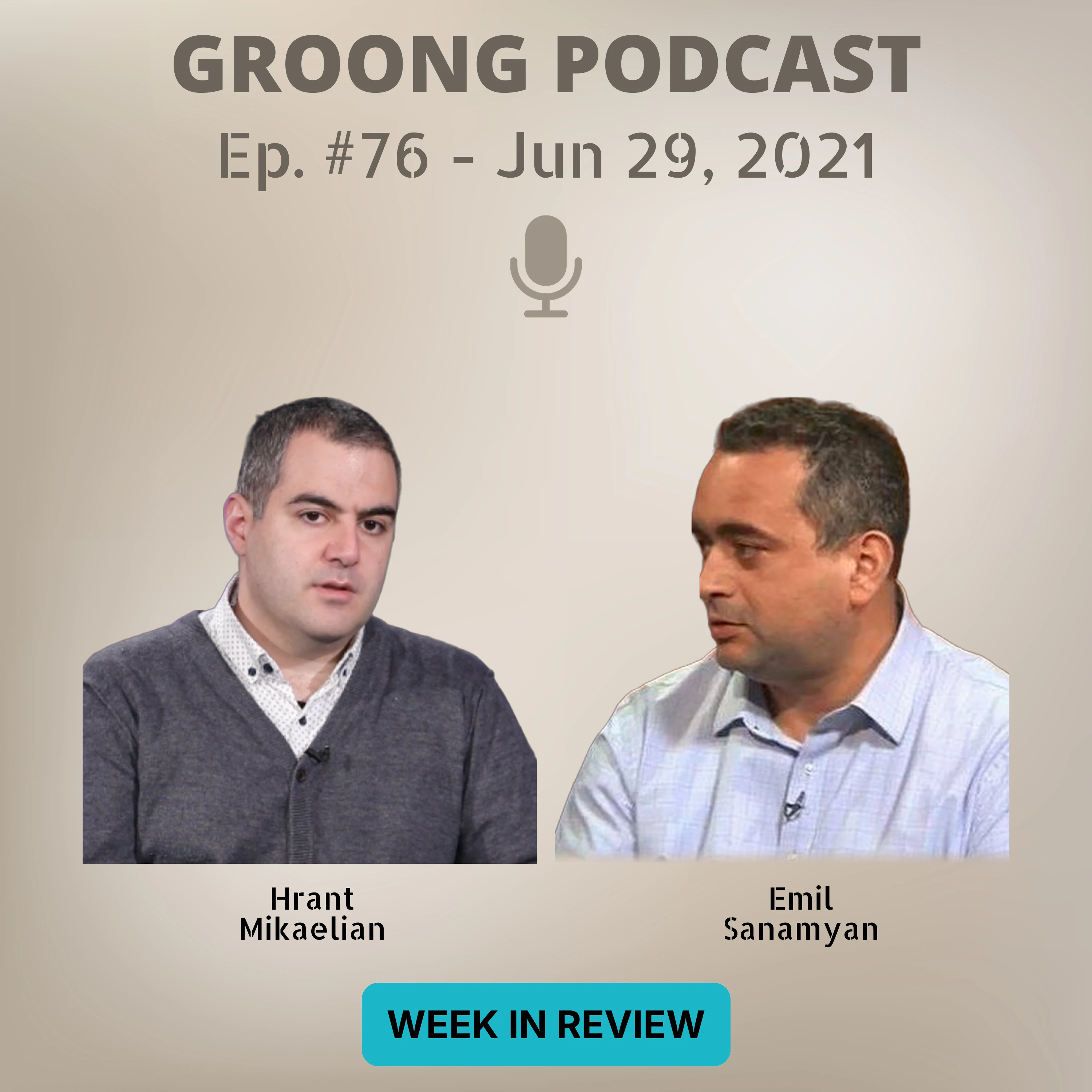
ANN/Groong Week in Review - June 27, 2021 Topics:
- Armenian Elections Recap
- Protests in Artsakh
Guests:
- Hrant Mikaelian
- Emil Sanamyan
Guest(s):
Hosts:
- Hovik Manucharyan
- Asbed Bedrossian
Episode 76 | Recorded: June 27, 2021 https://groong.org/podcasts/WiR-20210627.html
ArmVote21 | Am/Az Negotiations | Erdogan in Az | Biden Meets Erdogan & Putin| Ep #74 - June 20, 2021 [EP74]
Posted on Monday, Jun 21, 2021 | Category: Armenia, Russia, Azerbaijan, Iran, Turkey, China, Middle East, Armenian Genocide, Genocide, Georgia, Syria, Ukraine, Nagorno Karabakh, NATO | Series: wir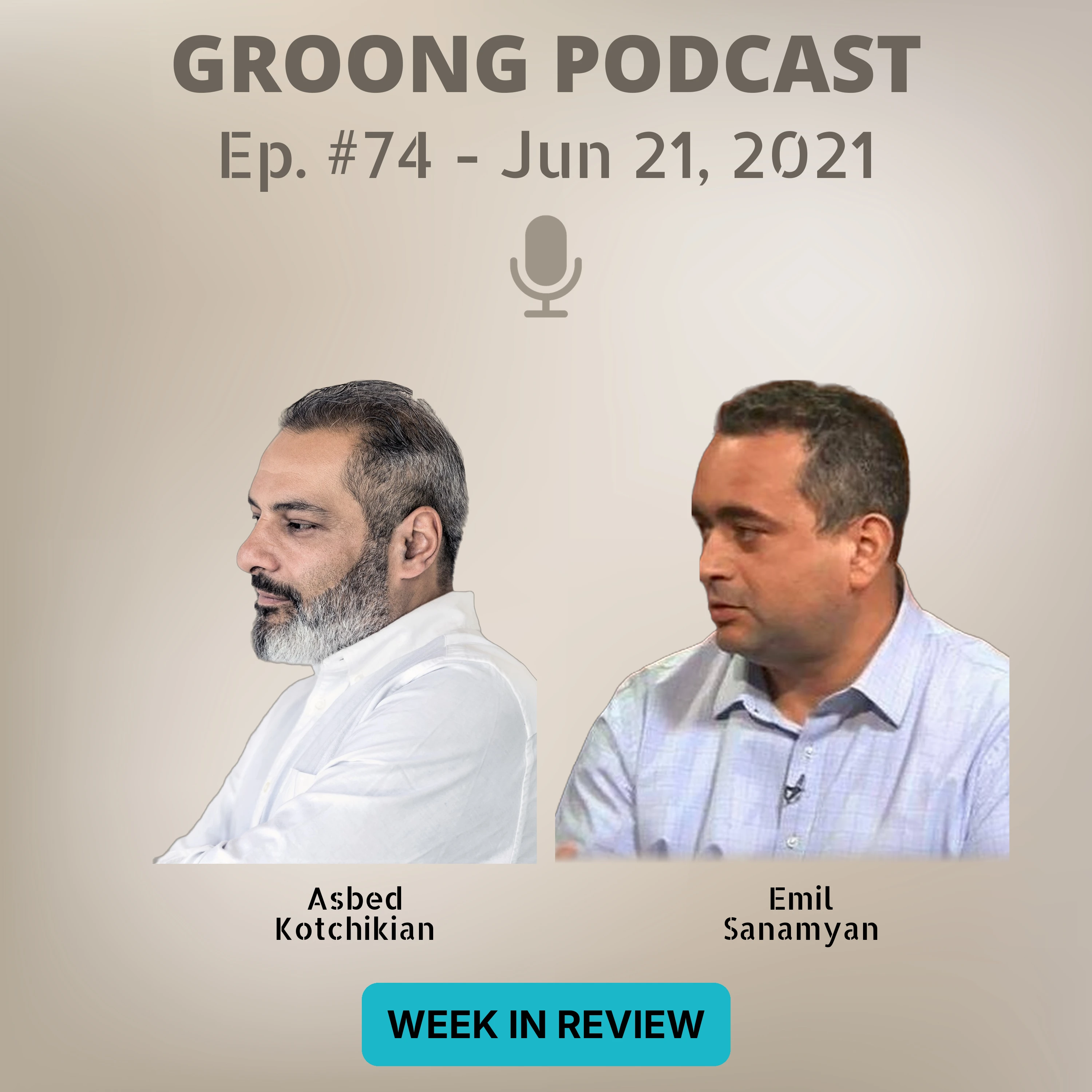
ANN/Groong Week in Review - June 20, 2021 Topics:
- Armeniaâs Elections
- Behind The Scenes with Armenia and Azerbaijan
- Erdogan in Azerbaijan
- Biden Meets Erdogan, then Putin
Guests:
- Asbed Kotchikian
- @Emil_Sanamyan
Guest(s):
Hosts:
- Hovik Manucharyan
- Asbed Bedrossian
Episode 74 | Recorded: June 20, 2021 Website: https://groong.org/podcasts/WiR-20210620.html
ArmVote21 | Am/Az Negotiations | Erdogan in Az | Biden Meets Erdogan & Putin| Ep #74 - June 20, 2021 [EP74]
Posted on Monday, Jun 21, 2021 | Category: Armenia, Russia, Azerbaijan, Iran, Turkey, China, Middle East, Armenian Genocide, Genocide, Georgia, Syria, Ukraine, Nagorno Karabakh, NATOANN/Groong Week in Review - June 20, 2021 Topics:
- Armeniaâs Elections
- Behind The Scenes with Armenia and Azerbaijan
- Erdogan in Azerbaijan
- Biden Meets Erdogan, then Putin
Guests:
- Asbed Kotchikian
- @Emil_Sanamyan
Guest(s):
Hosts:
- Hovik Manucharyan
- Asbed Bedrossian
Episode 74 | Recorded: June 20, 2021 Website: https://groong.org/podcasts/WiR-20210620.html
Meltdown at the MFA | Philip Reeker Visit | 15 POWs Return | Latest Polls | (Ep #70) - June 13, 2021 [EP70]
Posted on Wednesday, Jun 16, 2021 | Category: Armenia, Azerbaijan, Georgia, Russia, Turkey, Artsakh, Iran, Ukraine, China, Economy, Nagorno Karabakh, European Union, NATO | Series: wir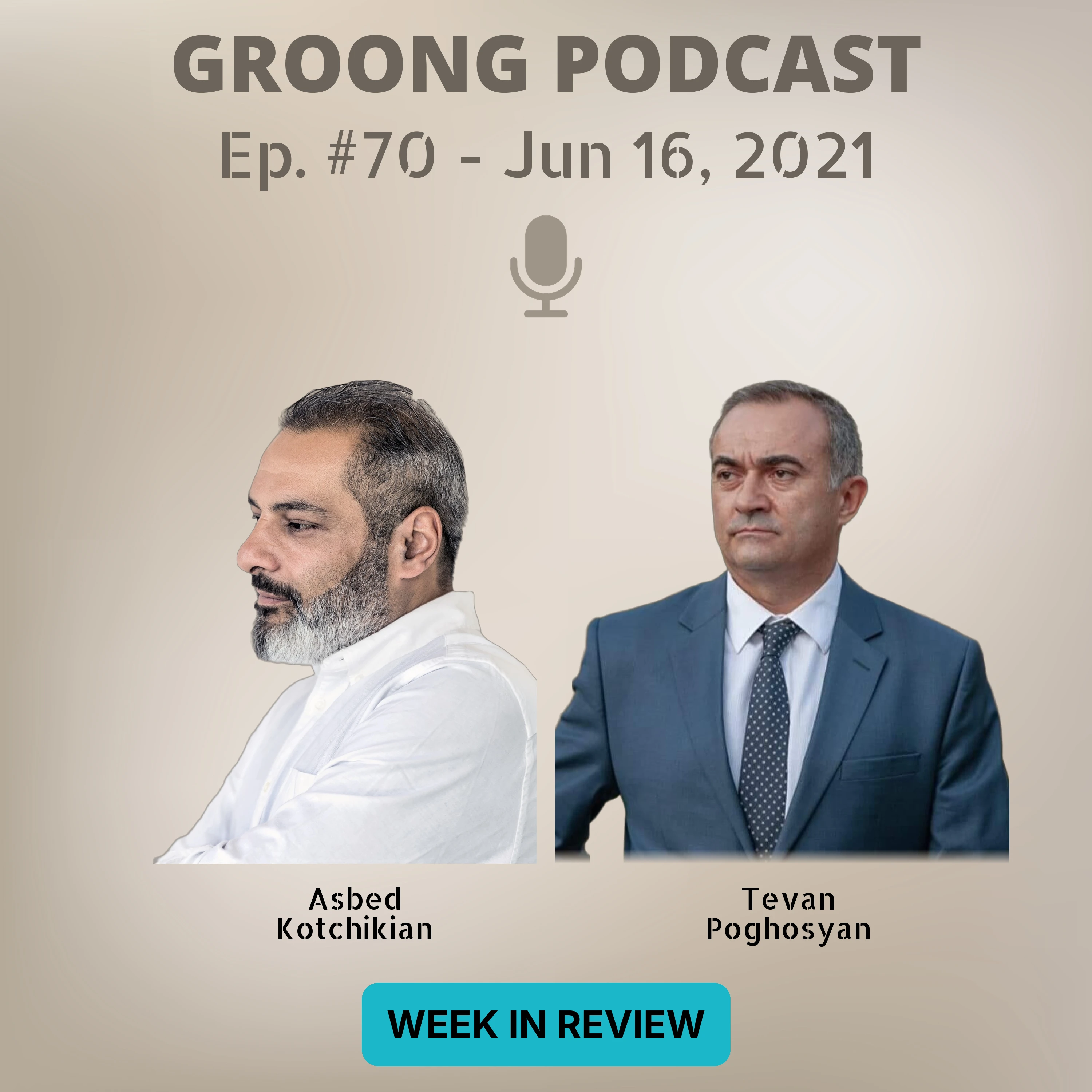
ANN/Groong Week in Review - June 13, 2021 Topics:
- Meltdown at the Ministry of Foreign Affairs
- Philip Reekerâs Visit to the Region
- 15 POWs Return Home
- Latest Election Poll Results
Guests:
- Asbed Kotchikian
- Tevan Poghosyan
Guest(s):
Hosts:
- Hovik Manucharyan
- Asbed Bedrossian
Episode 70 | Recorded: June 13, 2021 https://groong.org/podcasts/WiR-20210613.html
Meltdown at the MFA | Philip Reeker Visit | 15 POWs Return | Latest Polls | (Ep #70) - June 13, 2021 [EP70]
Posted on Wednesday, Jun 16, 2021 | Category: Armenia, Azerbaijan, Georgia, Russia, Turkey, Artsakh, Iran, Ukraine, China, Economy, Nagorno Karabakh, European Union, NATOANN/Groong Week in Review - June 13, 2021 Topics:
- Meltdown at the Ministry of Foreign Affairs
- Philip Reekerâs Visit to the Region
- 15 POWs Return Home
- Latest Election Poll Results
Guests:
- Asbed Kotchikian
- Tevan Poghosyan
Guest(s):
Hosts:
- Hovik Manucharyan
- Asbed Bedrossian
Episode 70 | Recorded: June 13, 2021 https://groong.org/podcasts/WiR-20210613.html
ARF-Dashnaktsutyun: Roadmap & Challenges - Conversation with Giro Manoyan | (Ep #69) - June 11, 2021 [EP69]
Posted on Friday, Jun 11, 2021 | Category: Armenia, Azerbaijan, Artsakh, Russia, Turkey, Armenian Church, Economy, Iran, Lebanon, Middle East, Nagorno Karabakh, NATO | Series: cog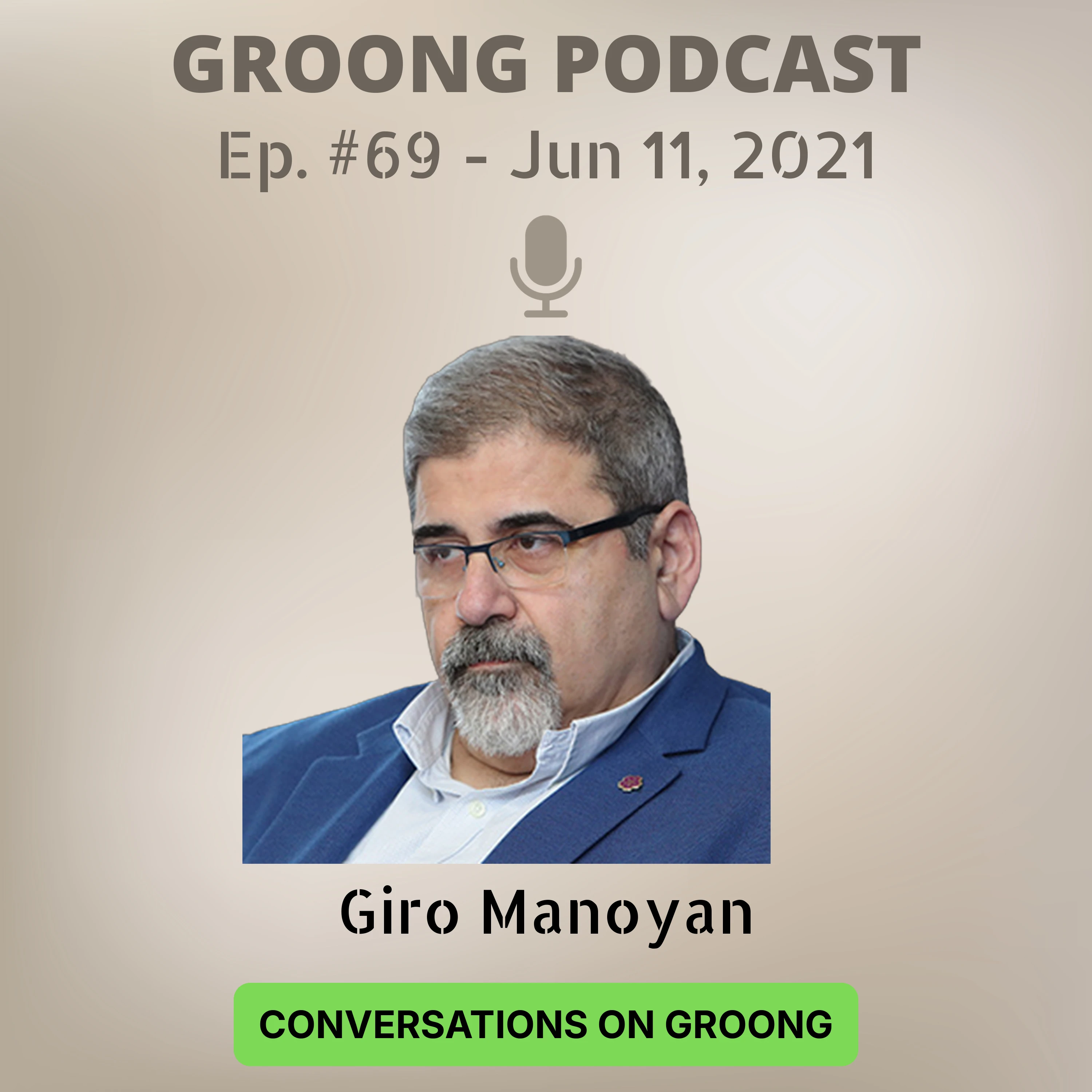
ARF-Dashnaktsutyun: Roadmap and Challenges
Guest
- Giro Manoyan has been a member of the ARF-D Bureau since 2015. Originally from Beirut, Lebanon, he moved to Montreal, Canada in 1976. He has served as the Executive Secretary of the Armenian National Committee of Canada, as well as the Editor in Chief of the Horizon Armenian Weekly. In 1999 he moved to Yerevan and has served as the Executive Director of the Bureau of the ARF-D, in charge of the Armenian Cause, Hai Tahd Central Committee.
Topics
- The ARF in the Politics of Armenia
- On the War in 2020
- On the Upcoming Elections in 2021
- On the
ARF-Dashnaktsutyun: Roadmap & Challenges - Conversation with Giro Manoyan | (Ep #69) - June 11, 2021 [EP69]
Posted on Friday, Jun 11, 2021 | Category: Armenia, Azerbaijan, Artsakh, Russia, Turkey, Armenian Church, Economy, Iran, Lebanon, Middle East, Nagorno Karabakh, NATOARF-Dashnaktsutyun: Roadmap and Challenges
Guest
- Giro Manoyan has been a member of the ARF-D Bureau since 2015. Originally from Beirut, Lebanon, he moved to Montreal, Canada in 1976. He has served as the Executive Secretary of the Armenian National Committee of Canada, as well as the Editor in Chief of the Horizon Armenian Weekly. In 1999 he moved to Yerevan and has served as the Executive Director of the Bureau of the ARF-D, in charge of the Armenian Cause, Hai Tahd Central Committee.
Topics
- The ARF in the Politics of Armenia
- On the War in 2020
- On the Upcoming Elections in 2021
- On the
Iran: Foreign Relations, Upcoming Elections (Ep. 67) - 06/07/2021 [EP67]
Posted on Monday, Jun 7, 2021 | Category: Iran, Armenia, Azerbaijan, Russia, China, Israel, Middle East, Syria, Artsakh, Georgia, Turkey, Nagorno Karabakh | Series: cog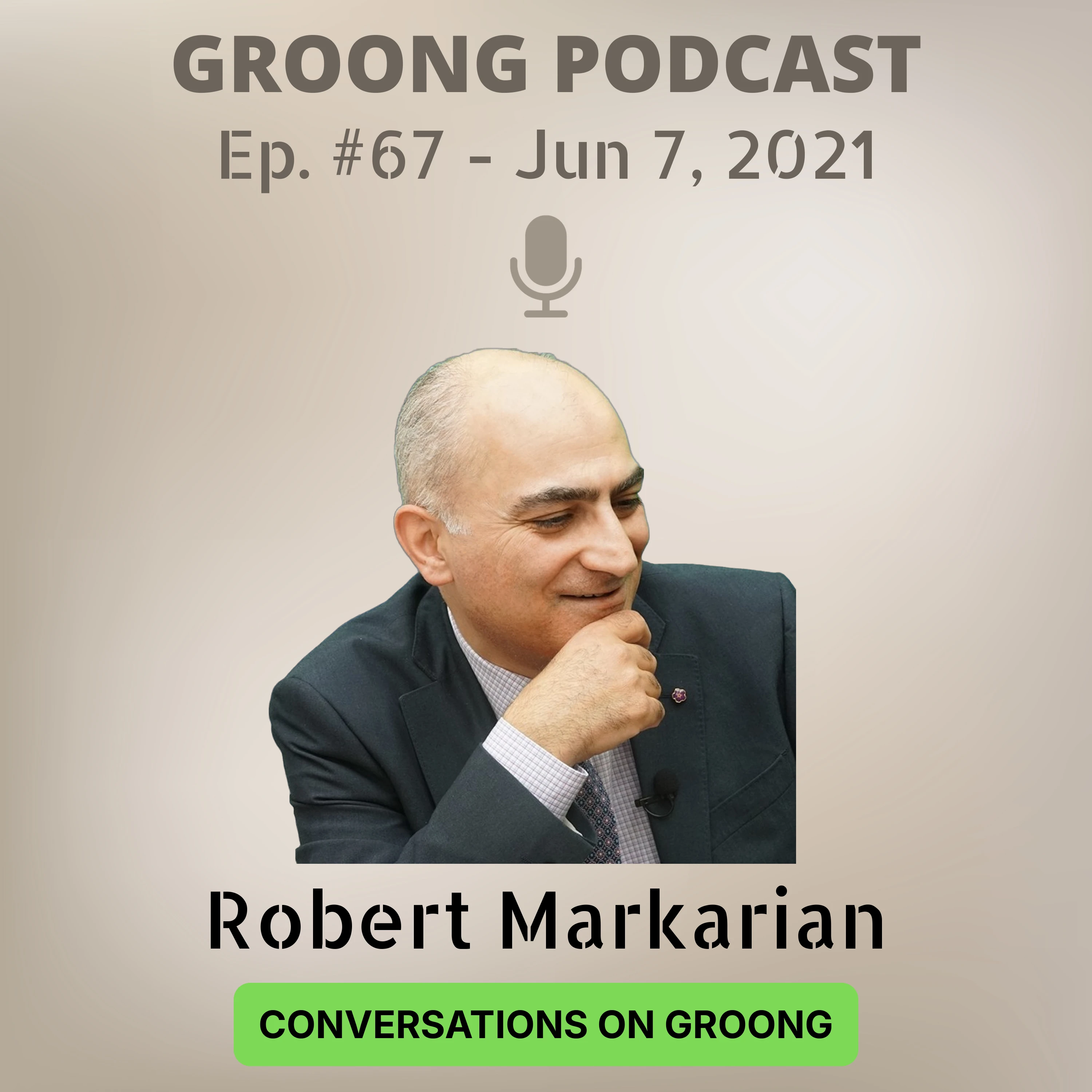
Guest(s):
Iran: Foreign Relations and Upcoming Elections A Conversation with Robert Markarian
The South Caucasus comprises Armenia, Azerbaijan, and Georgia. The three regional powers surrounding them are Russia to the north, Turkey to the west, and Iran in the south.
Iran has been largely quiet about events on its northern border with Armenia and Azerbaijan, due largely to its marginalization on the world stage because of the Western economic sanctions but also because Iran is home to millions of ethnic Azeris and any perceived support for Armenia could result in additional
Read MoreIran: Foreign Relations, Upcoming Elections (Ep. 67) - 06/07/2021 [EP67]
Posted on Monday, Jun 7, 2021 | Category: Iran, Armenia, Azerbaijan, Russia, China, Israel, Middle East, Syria, Artsakh, Georgia, Turkey, Nagorno KarabakhGuest(s):
Iran: Foreign Relations and Upcoming Elections A Conversation with Robert Markarian
The South Caucasus comprises Armenia, Azerbaijan, and Georgia. The three regional powers surrounding them are Russia to the north, Turkey to the west, and Iran in the south.
Iran has been largely quiet about events on its northern border with Armenia and Azerbaijan, due largely to its marginalization on the world stage because of the Western economic sanctions but also because Iran is home to millions of ethnic Azeris and any perceived support for Armenia could result in additional
Read More