Iran War
Last updated: June 3, 2026
The Iran War is Groong’s umbrella tag for the ongoing Israel-Iran conflict — a wider war that expanded well beyond the initial 12-Day War of June 2025 into a broader, more destructive confrontation in 2026 involving additional regional actors, ground operations, and a transformed Middle Eastern order. While the 12-Day War marked the opening phase of direct military exchanges, the Iran War covers the full arc: from the roots of the Israel-Iran conflict, through the ceasefire and its collapse, to the escalation into the wider 2026 conflict and the regional fallout that continues to reverberate.
From the 12-Day War to the wider conflict. The 12-Day War — Israel’s June 2025 strikes on Iranian nuclear infrastructure at Natanz, Isfahan, and Fordow, and Iran’s retaliatory missile campaign — ended with a US-brokered ceasefire. That ceasefire, however, proved fragile. The underlying drivers of the Iran-Israel war remained unresolved: Iran’s nuclear program, the status of its proxy networks, and the question of deterrence. As the ceasefire frayed and the war with Iran resumed at larger scale in 2026, the conflict drew in more actors and expanded beyond the air and missile exchanges that characterized the initial phase. The Iran-Israel conflict 2026 became a different kind of war — one with consequences that no regional power could insulate itself from.
Iran War ceasefire and collapse. The Iran War ceasefire negotiations of mid-2025 were driven primarily by American pressure and the exhaustion of both sides after the intense 12-day exchange. But the ceasefire papered over unresolved disputes and left Iran’s strategic capacity degraded but not destroyed. Groong’s coverage of the post-ceasefire period tracks the political dynamics inside Iran — where the IRGC and Supreme Leader Khamenei held effective power throughout, regardless of President Masoud Pezeshkian ’s reformist posture — and the decisions that led back to escalation and the broader Iran War update that followed in 2026.
The wider 2026 conflict. Iran War news in 2026 shifted markedly in character from the air campaign of the year before. The war expanded in geographic scope and in the number of parties drawn into direct or proxy involvement. Groong episodes on the Iran War 2025-2026 arc examine how the conflict reshaped the regional balance: the role of Hezbollah and other Iranian proxies, the position of Gulf states, Russian calculations in the context of Ukraine, and how a protracted Iran-Israel war altered the assumptions that had governed Middle Eastern security for decades. For listeners seeking an Iran War explained in strategic terms — not just day-to-day Iran War update coverage — Groong’s analysis provides context anchored in the region’s longer history.
Iran War and the South Caucasus. The Iran War South Caucasus dimension is central to Groong’s coverage and distinguishes it from mainstream Western outlets. Iran shares a land border with Armenia, has long served as a counterweight to the Turkey-Pakistan-Azerbaijan axis, and plays an irreplaceable role in Armenia’s energy and transit routing. The Iran War Armenia implications are direct: a weakened or destabilized Iran removes one of the few structural constraints on Azerbaijani and Turkish pressure on Yerevan. Groong episodes examine how the expanded war affects the Zangezur corridor dispute, whether Azerbaijan exploited Iran’s distraction to press new demands, how the INSTC corridor through Iranian territory was disrupted, and what the longer arc of the conflict means for Armenian security and sovereignty.
Browse all Groong episodes tagged Iran War below.
Groong episodes that include this tag
Below are all Groong episodes tagged with Iran War.
Trump's Weakness on Israel Is Reshaping US Politics [EP560]
Posted on Tuesday, Jun 23, 2026 | Category: Geopolitics, USA, Israel, Middle EastGrigoryan argues that US-Israel tensions are becoming public and dangerous, with officials like J.D. Vance openly questioning Israeli policy in unprecedented ways.
Transcript: Arman Grigoryan - US-Iran Negotiations, Post-Election Armenian Politics | Ep 560, Jun 23, 2026 [EP560]
Posted on Tuesday, Jun 23, 2026 | Category: Armenia, Politics, Iran, TranscriptIn this episode of Conversations on Groong, we speak with Dr. Arman Grigoryan about US-Iran negotiations and Armenia’s contested post-election landscape. We discuss the prospects for a US-Iran agreement, its implications for TRIPP and Iran-Russia relations, the aftermath of the 2026 Armenian Parliamentary Election, and how shifting great-power dynamics reshape the South Caucasus.
Groong Links:
Topics:
- Armenian Election Aftermath
- Armenia-Georgia Relations
- US-Iran Interim Agreement
Episode 558 | Recorded: June 15, 2026
#Armenia #ArmenianNews #ArmenianElections #CivilContract #Pashinyan #ArmenianConstitution #Referendum #ProsperousArmenia #SouthCaucasus #CEC
Armenian Parliamentary Election, US-Iran Agreement | Ep 558, Jun 14, 2026 [EP558]
Posted on Tuesday, Jun 16, 2026 | Category: Armenia, Politics, IranGroong Links:
Topics:
- Armenian Election Aftermath
- Armenia-Georgia Relations
- US-Iran Interim Agreement
Episode 558 | Recorded: June 15, 2026
#Armenia #ArmenianNews #ArmenianElections #CivilContract #Pashinyan #ArmenianConstitution #Referendum #ProsperousArmenia #SouthCaucasus #CEC
Israel Won't Commit to the U.S.-Iran Deal, Which Could Destroy the Whole Agreement [EP558]
Posted on Tuesday, Jun 16, 2026 | Category: Geopolitics, Middle EastHovik explains why Israel’s refusal to commit to the U.S.-Iran interim agreement creates a fatal flaw: Iran insisted fighting stop on all fronts including Lebanon, but Israel has no intention of withdrawing.
Transcript: Armenian Parliamentary Election, US-Iran Agreement | Ep 558, Jun 14, 2026 [EP558]
Posted on Tuesday, Jun 16, 2026 | Category: Armenia, Politics, Iran, TranscriptIn this episode of Groong Week in Review for June 14, 2026, hosts Hovik Manucharyan and Asbed Bedrossian analyze the aftermath of Armenia’s 2026 Armenian Parliamentary Election, shifting Armenia-Georgia relations, and a landmark interim US-Iran agreement that reshapes regional stability. We discuss the ceasefire framework, sanctions relief, and how the Iran war’s resolution affects Armenian security, energy markets, and the broader South Caucasus landscape.
Pashinyan's Hate Speech, Threats, and the June 7 Election Climate | Ep 547, May 17, 2026 [EP547]
Posted on Tuesday, May 19, 2026 | Category: Armenia, Politics, Election, Armenian Church, Nagorno Karabakh, Artsakh Blockade, Russia, China, Azerbaijan, Georgia, Iran, NATO | Series: wir, video
Groong Links:
Topics:
- Trump, China, and Iran
- Armenia-Russia “soft divorce”
- Pashinyan’s violent campaign rhetoric
- State resources and election pressure
- Javakhk church vandalism concerns
Episode 547 | Recorded: May 18, 2026
#Pashinyan #ArmeniaElections #ArmenianPolitics #PoliticalViolence #HateSpeech #ArmeniaRussia #IranWar #SouthCaucasus
Pashinyan's Hate Speech, Threats, and the June 7 Election Climate | Ep 547, May 17, 2026 [EP547]
Posted on Tuesday, May 19, 2026 | Category: Armenia, Politics, Election, Armenian Church, Nagorno Karabakh, Artsakh Blockade, Russia, China, Azerbaijan, Georgia, Iran, NATOGroong Links:
Topics:
- Trump, China, and Iran
- Armenia-Russia “soft divorce”
- Pashinyan’s violent campaign rhetoric
- State resources and election pressure
- Javakhk church vandalism concerns
Episode 547 | Recorded: May 18, 2026
#Pashinyan #ArmeniaElections #ArmenianPolitics #PoliticalViolence #HateSpeech #ArmeniaRussia #IranWar #SouthCaucasus
Transcript: Pashinyan's Hate Speech, Threats, and the June 7 Election Climate | Ep 547, May 17, 2026 [EP547]
Posted on Tuesday, May 19, 2026 | Category: Armenia, Politics, Election, Armenian Church, Nagorno Karabakh, Artsakh Blockade, Russia, China, Azerbaijan, Georgia, Iran, NATO, TranscriptThis Week in Review covers a tense mix of global and Armenian political crises, from Trump’s summit with Xi Jinping and the deepening Iran war, to Armenia’s worsening relations with Russia and the risks to trade, energy, and security ties. Hovik and Asbed also examine Armenia’s heated election climate, including allegations of state pressure, abuse of administrative resources, selective law enforcement, Pashinyan’s violent campaign rhetoric against opposition leaders, and the muted response of international observers. The episode also looks at Robert Kocharyan’s call for major-power guarantees for peace with Azerbaijan, and the vandalism of the Sourp Nshan Armenian Church in Javakhk.
Arman Grigoryan - Revolutionary Recklessness: Armenia After the War | Ep 546, May 15, 2026 [EP546]
Posted on Friday, May 15, 2026 | Category: Armenia, Politics, Geopolitics, Nagorno Karabakh, Artsakh Blockade, Russia, Iran, Israel, Azerbaijan, Turkey, Ukraine, NATO | Series: cog
Groong Links:
Guest(s):
Topics:
- Revolutionary recklessness after 2020
- Armenia’s pivot away from Russia
- Artsakh’s surrender and strategic reorientation
- TRIPP, Syunik, and security guarantees
- Western backing, Armenian risk
Episode 546 | Recorded: May 13, 2026
#ArmanGrigoryan #Armenia #Russia #Pashinyan #Artsakh #TRIPP #SouthCaucasus #Geopolitics
Arman Grigoryan - Revolutionary Recklessness: Armenia After the War | Ep 546, May 15, 2026 [EP546]
Posted on Friday, May 15, 2026 | Category: Armenia, Politics, Geopolitics, Nagorno Karabakh, Artsakh Blockade, Russia, Iran, Israel, Azerbaijan, Turkey, Ukraine, NATOGroong Links:
Guest(s):
Topics:
- Revolutionary recklessness after 2020
- Armenia’s pivot away from Russia
- Artsakh’s surrender and strategic reorientation
- TRIPP, Syunik, and security guarantees
- Western backing, Armenian risk
Episode 546 | Recorded: May 13, 2026
#ArmanGrigoryan #Armenia #Russia #Pashinyan #Artsakh #TRIPP #SouthCaucasus #Geopolitics
Transcript: Arman Grigoryan - Revolutionary Recklessness: Armenia After the War | Ep 546, May 15, 2026 [EP546]
Posted on Friday, May 15, 2026 | Category: Armenia, Politics, Geopolitics, Nagorno Karabakh, Artsakh Blockade, Russia, Iran, Israel, Azerbaijan, Turkey, Ukraine, NATO, TranscriptDr. Arman Grigoryan joins Groong to discuss Armenia’s post-2020 foreign policy and his argument that Pashinyan’s government has replaced one failed project, maximalist claims over Artsakh, with another: a risky strategic pivot away from Russia and toward the West. The conversation examines “revolutionary recklessness,” the roots of the 2020 war, Armenia’s worsening ties with Russia, the surrender of Artsakh, TRIPP and Syunik, Western encouragement, and the absence of firm security guarantees. Grigoryan also considers whether Armenia is gaining real sovereignty or exposing itself to greater pressure from Azerbaijan, Turkey, and Russia.
Anatol Lieven - Russia, Iran, Europe, and the Remaking of World Order | Ep 541, May 8, 2026 [EP541]
Posted on Friday, May 8, 2026 | Category: Armenia, Ukraine, Russia, European Union, Iran, Israel, China, Azerbaijan, Turkey | Series: cog
Groong Links:
Guest(s):
Topics:
- Russia, Iran, Europe, multipolar order
- Ukraine war and Russia-West tensions
- Iran war and diplomatic offramps
- Armenia, TRIPP, South Caucasus
Episode 541 | Recorded: May 5, 2026
#AnatolLieven #Russia #Iran #Europe #UkraineWar #SouthCaucasus
Anatol Lieven - Russia, Iran, Europe, and the Remaking of World Order | Ep 541, May 8, 2026 [EP541]
Posted on Friday, May 8, 2026 | Category: Armenia, Ukraine, Russia, European Union, Iran, Israel, China, Azerbaijan, TurkeyGroong Links:
Guest(s):
Topics:
- Russia, Iran, Europe, multipolar order
- Ukraine war and Russia-West tensions
- Iran war and diplomatic offramps
- Armenia, TRIPP, South Caucasus
Episode 541 | Recorded: May 5, 2026
#AnatolLieven #Russia #Iran #Europe #UkraineWar #SouthCaucasus
Transcript: Anatol Lieven - Russia, Iran, Europe, and the Remaking of World Order | Ep 541, May 8, 2026 [EP541]
Posted on Friday, May 8, 2026 | Category: Armenia, Ukraine, Russia, European Union, Iran, Israel, China, Azerbaijan, Turkey, TranscriptIn this episode of Conversations on Groong, Dr. Anatol Lieven joins us to examine Russia’s place in a rapidly shifting global order. The discussion looks at the war in Ukraine, the state of Russia-EU relations after Viktor Orbán’s political defeat, and the uncertain trajectory of the war on Iran, including whether any real diplomatic offramp still exists. They also explore whether Russia’s relationship with Iran is truly strategic or mainly transactional, how China fits into the wider balance of power, and what all of this means for the South Caucasus, Armenia’s current path under Pashinyan, and Azerbaijan’s ambitions to turn wartime leverage into lasting regional influence.
Mikael Darbinian - Armenia’s Borders, TRIPP, and the Price of Weakness | Ep 540, May 6, 2026 [EP540]
Posted on Wednesday, May 6, 2026 | Category: Armenia, Politics, Geopolitics, Armenian News, Azerbaijan, Russia, Turkey, NATO, Iran, Georgia, Artsakh, Nagorno Karabakh, European Union | Series: cog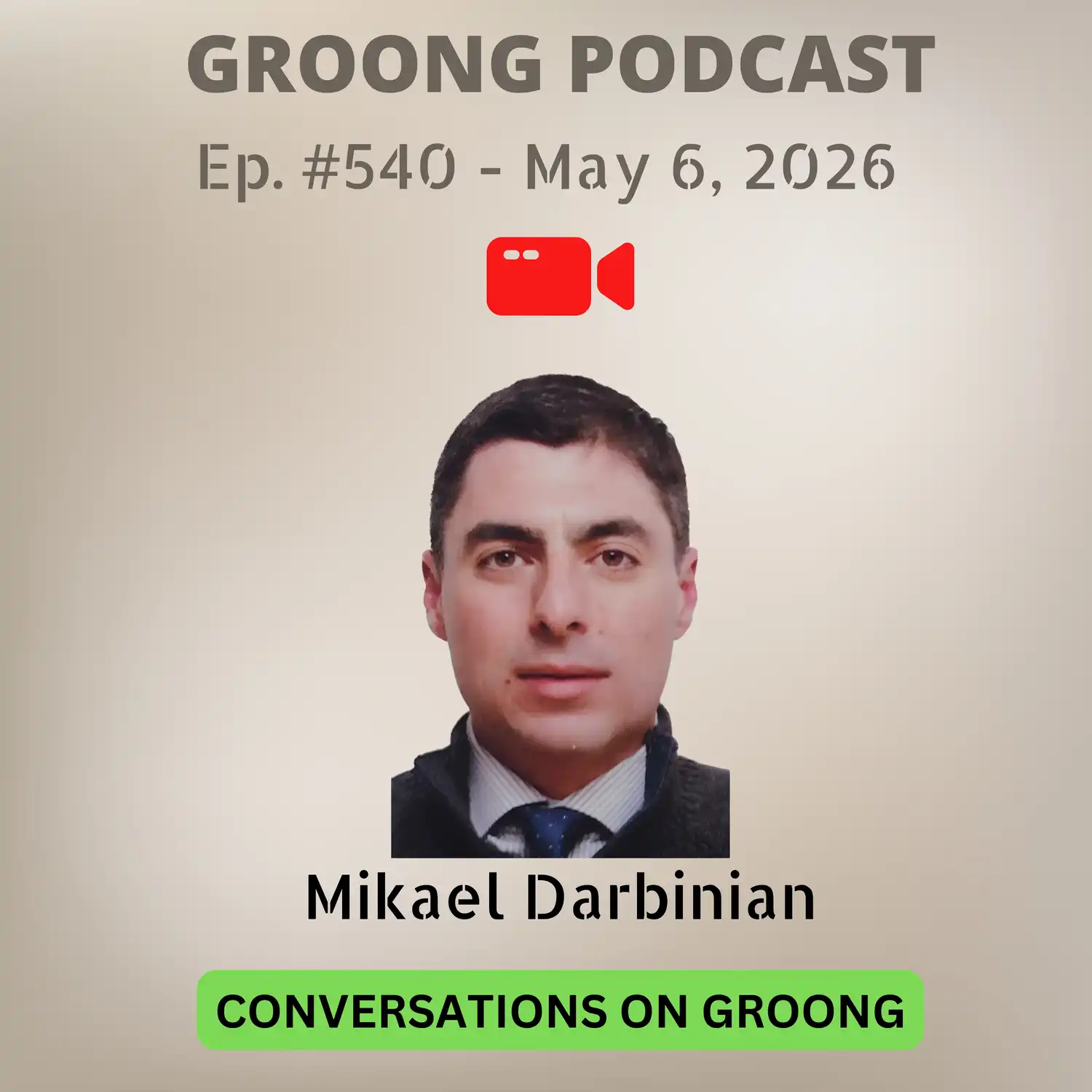
Groong Links:
Guest:
Topics:
- Strong Armenia security doctrine
- Azerbaijani occupation of Armenian territory
- TRIPP and Zangezur Corridor risks
- Diplomacy from a position of strength
- EPC optics and national insecurity
Episode 540 | Recorded: May 5, 2026
#Armenia #Artsakh #StrongArmenia #MikaelDarbinian #TRIPP #ZangezurCorridor #ArmenianSecurity #SouthCaucasus
Mikael Darbinian - Armenia’s Borders, TRIPP, and the Price of Weakness | Ep 540, May 6, 2026 [EP540]
Posted on Wednesday, May 6, 2026 | Category: Armenia, Politics, Geopolitics, Armenian News, Azerbaijan, Russia, Turkey, NATO, Iran, Georgia, Artsakh, Nagorno Karabakh, European UnionGroong Links:
Guest:
Topics:
- Strong Armenia security doctrine
- Azerbaijani occupation of Armenian territory
- TRIPP and Zangezur Corridor risks
- Diplomacy from a position of strength
- EPC optics and national insecurity
Episode 540 | Recorded: May 5, 2026
#Armenia #Artsakh #StrongArmenia #MikaelDarbinian #TRIPP #ZangezurCorridor #ArmenianSecurity #SouthCaucasus
Transcript: Mikael Darbinian - Armenia’s Borders, TRIPP, and the Price of Weakness | Ep 540, May 6, 2026 [EP540]
Posted on Wednesday, May 6, 2026 | Category: Armenia, Politics, Geopolitics, Armenian News, Azerbaijan, Russia, Turkey, NATO, Iran, Georgia, Artsakh, Nagorno Karabakh, European Union, TranscriptThis Conversations on Groong episode with Mikael Darbinian examines Armenia’s security crisis through the lens of the Strong Armenia doctrine. The discussion focuses on deterrence, diplomacy from a position of strength, Azerbaijani positions inside Armenia’s sovereign territory, the risks around TRIPP and the Zangezur Corridor, the rights of Artsakh Armenians, regional war scenarios involving Iran, and the gap between international political theater and Armenia’s unresolved national security threats.
Trump’s Iran Ceasefire, Operation Kochari, and Armenia’s Election Fog | Ep 539, May 3, 2026 [EP539]
Posted on Tuesday, May 5, 2026 | Category: Armenia, Politics, Poll, Armenian News, Israel, Artsakh, Nagorno Karabakh, Azerbaijan, USA, Armenian Church, Artsakh Blockade, Armenian Genocide, Iran, Russia, Georgia, Genocide, Human Rights | Series: wir, video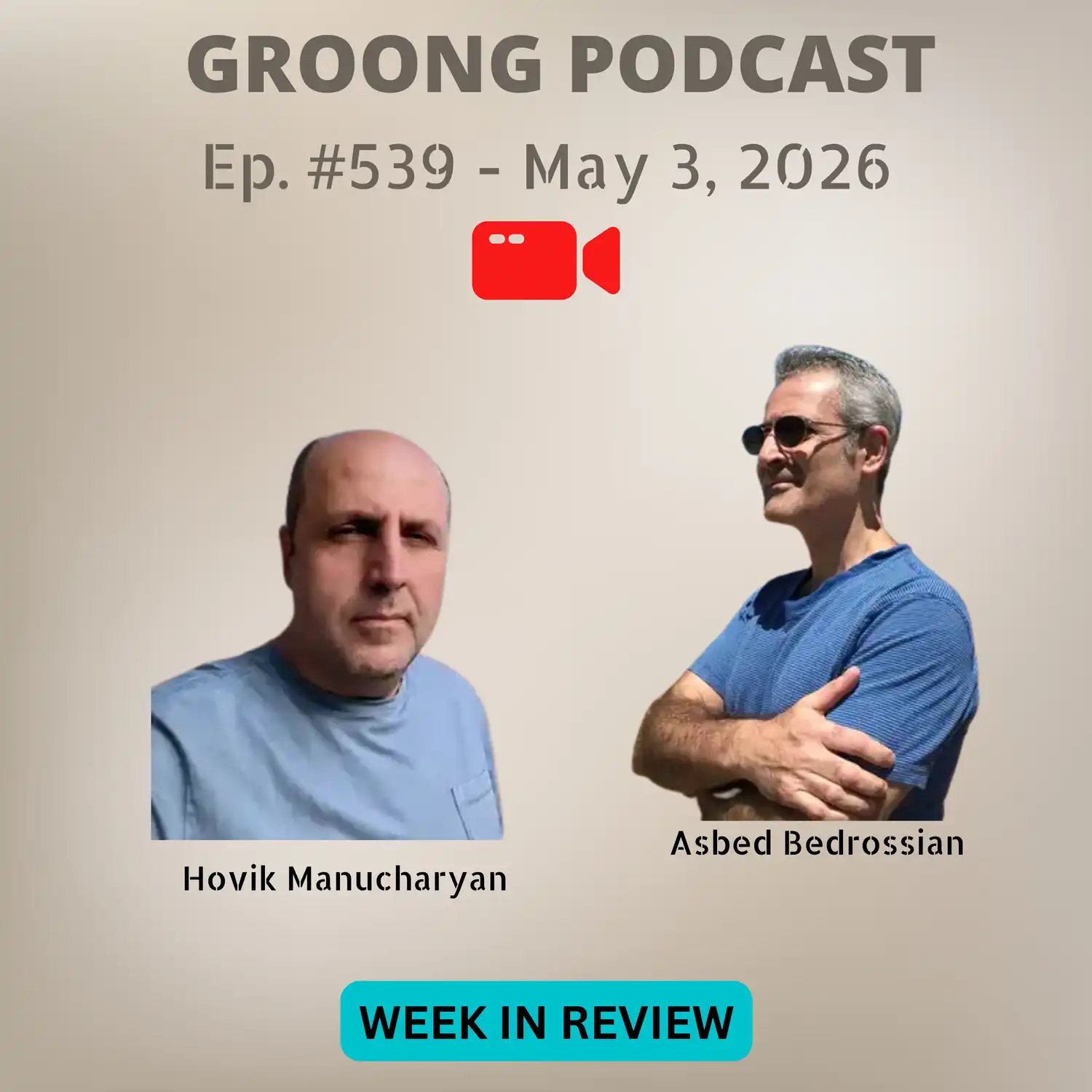
Groong Links:
Topics:
- Iran War
- Mustafayev in Armenia
- Destruction of the Stepanakert cathedral by Azerbaijan
- Election politics
Episode 539 | Recorded: May 3, 2026
#Armenia #Azerbaijan #IranWar #TRIPP #Artsakh #Stepanakert #ArmenianElections #Groong
Trump’s Iran Ceasefire, Operation Kochari, and Armenia’s Election Fog | Ep 539, May 3, 2026 [EP539]
Posted on Tuesday, May 5, 2026 | Category: Armenia, Politics, Poll, Armenian News, Israel, Artsakh, Nagorno Karabakh, Azerbaijan, USA, Armenian Church, Artsakh Blockade, Armenian Genocide, Iran, Russia, Georgia, Genocide, Human RightsGroong Links:
Topics:
- Iran War
- Mustafayev in Armenia
- Destruction of the Stepanakert cathedral by Azerbaijan
- Election politics
Episode 539 | Recorded: May 3, 2026
#Armenia #Azerbaijan #IranWar #TRIPP #Artsakh #Stepanakert #ArmenianElections #Groong
Transcript: Trump’s Iran Ceasefire, Operation Kochari, and Armenia’s Election Fog | Ep 539, May 3, 2026 [EP539]
Posted on Tuesday, May 5, 2026 | Category: Armenia, Politics, Poll, Armenian News, Israel, Artsakh, Nagorno Karabakh, Azerbaijan, USA, Armenian Church, Artsakh Blockade, Armenian Genocide, Iran, Russia, Georgia, Genocide, Human Rights, TranscriptThis Groong Week in Review covers Trump’s Iran ceasefire, failed US-Iran talks in Islamabad, the naval blockade, and Washington’s war politics. Asbed and Hovik also examine “Operation Kochari,” Shahin Mustafayev’s secret visit to Armenia, TRIPP, border demarcation, Armenia-Azerbaijan trade, Azerbaijan’s destruction of the Stepanakert cathedral, Pashinyan’s response, the MPG poll, opposition coalition math, election fraud risks, the EPC meeting, legal pressure, mass surveillance, and Armenia’s falling press freedom ranking.
Transcript: Arthur Martirosyan - Iran War, Effect on Armenia, June Parliamentary | Ep 536, Apr 26, 2026 [EP536]
Posted on Tuesday, Apr 28, 2026 | Category: Armenia, Politics, Armenian Church, Ukraine, Iran, Azerbaijan, Israel, USA, Turkey, Russia, Artsakh, Nagorno Karabakh, Armenian Genocide, Armenian News, Artsakh Blockade, Genocide, Georgia, European Union, TranscriptWe examine how the Iran war fallout and the extension of the ceasefire are reshaping Armenia’s geopolitical position. We break down the push for the TRIPP or Zangezur Corridor and the claims of Armenia-Azerbaijan normalization, and assess how they tie to regional power dynamics involving Iran, Russia, Turkey, and the United States. The episode also covers Armenia’s 2026 elections and rising elite tensions. In addition, we discuss the global commemoration of the Armenian Genocide, contrasting international messaging with domestic narratives and linking it to ongoing debates around Artsakh and historical continuity.
Arthur Martirosyan - Iran War, Effect on Armenia, June Parliamentary | Ep 536, Apr 26, 2026 [EP536]
Posted on Tuesday, Apr 28, 2026 | Category: Armenia, Politics, Armenian Church, Ukraine, Iran, Azerbaijan, Israel, USA, Turkey, Russia, Artsakh, Nagorno Karabakh, Armenian Genocide, Armenian News, Artsakh Blockade, Genocide, Georgia, European Union | Series: wir, video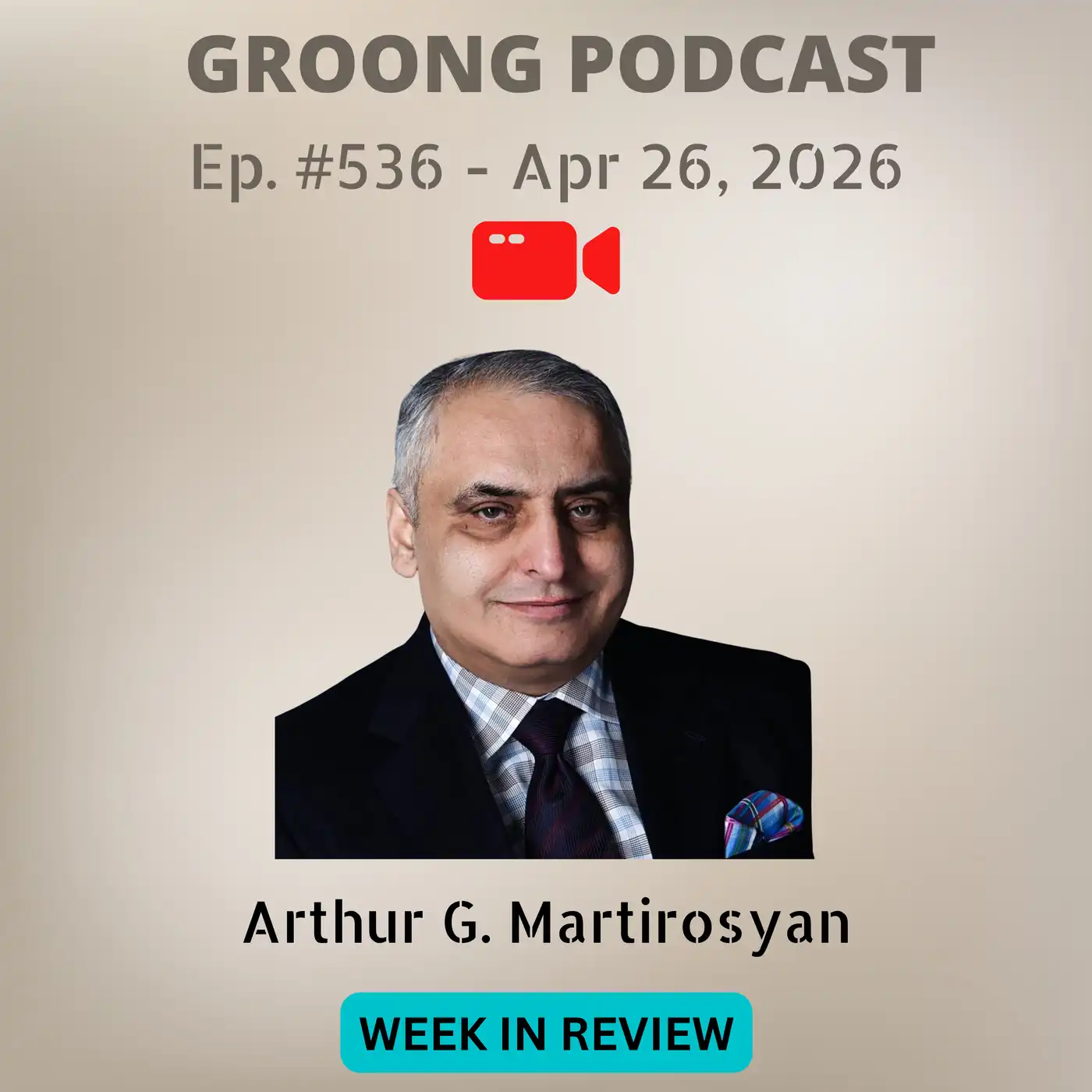
Groong Links:
Guest:
Topics:
- Iran War and TRIPP
- Armenian Genocide commemoration
- Peace narrative vs corridor reality
- Parliamentary election
Episode 536 | Recorded: April 27, 2026
Arthur Martirosyan - Iran War, Effect on Armenia, June Parliamentary | Ep 536, Apr 26, 2026 [EP536]
Posted on Tuesday, Apr 28, 2026 | Category: Armenia, Politics, Armenian Church, Ukraine, Iran, Azerbaijan, Israel, USA, Turkey, Russia, Artsakh, Nagorno Karabakh, Armenian Genocide, Armenian News, Artsakh Blockade, Genocide, Georgia, European UnionGroong Links:
Guest:
Topics:
- Iran War and TRIPP
- Armenian Genocide commemoration
- Peace narrative vs corridor reality
- Parliamentary election
Episode 536 | Recorded: April 27, 2026
Dmitry Suslov - War, Leverage, and Corridors, Russia’s View from All Fronts | Ep 534, Apr 25, 2026 [EP534]
Posted on Saturday, Apr 25, 2026 | Category: Geopolitics, Iran, World, Economy, Armenia, USA, China, Russia, Nagorno Karabakh, Artsakh Blockade, BRICS, Azerbaijan, Ukraine, European Union, Turkey | Series: cog, video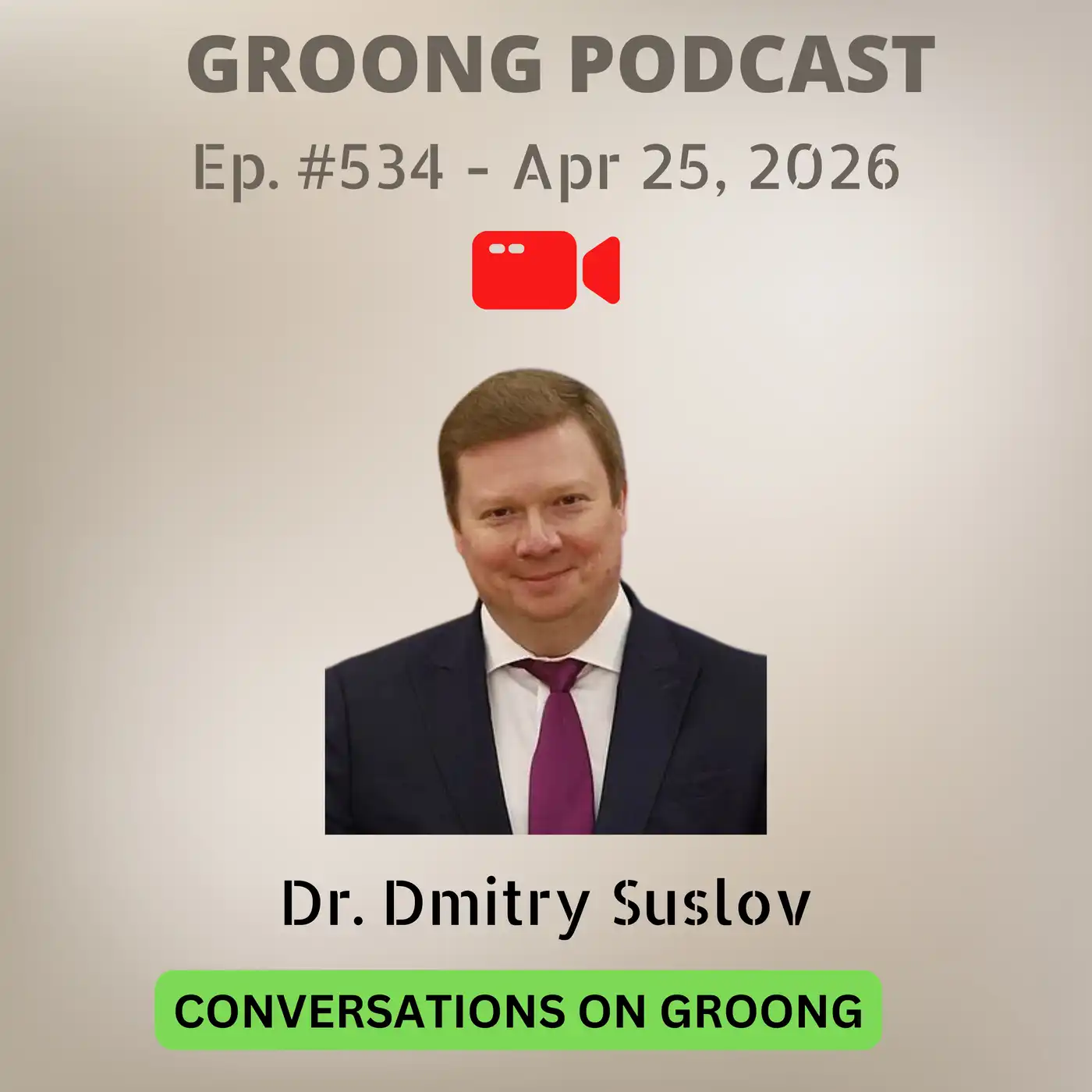
Groong Links:
Guest:
Topics:
- Iran war dynamics and Russiaâs role
- Ukraine war and Europeâs militarization
- Armeniaâs pivot and Russiaâs response
- Regional power balance
Episode 534 | Recorded: April 21, 2026
Dmitry Suslov - War, Leverage, and Corridors, Russia’s View from All Fronts | Ep 534, Apr 25, 2026 [EP534]
Posted on Saturday, Apr 25, 2026 | Category: Geopolitics, Iran, World, Economy, Armenia, USA, China, Russia, Nagorno Karabakh, Artsakh Blockade, BRICS, Azerbaijan, Ukraine, European Union, TurkeyGroong Links:
Guest:
Topics:
- Iran war dynamics and Russiaâs role
- Ukraine war and Europeâs militarization
- Armeniaâs pivot and Russiaâs response
- Regional power balance
Episode 534 | Recorded: April 21, 2026
Transcript: Dmitry Suslov - War, Leverage, and Corridors, Russia’s View from All Fronts | Ep 534, Apr 25, 2026 [EP534]
Posted on Saturday, Apr 25, 2026 | Category: Geopolitics, Iran, World, Economy, Armenia, USA, China, Russia, Nagorno Karabakh, Artsakh Blockade, BRICS, Azerbaijan, Ukraine, European Union, Turkey, TranscriptIn this episode of the Groong podcast, we speak with Dr. Dmitry Suslov about the shifting geopolitical landscape across the Iran war, the Ukraine conflict, and the South Caucasus. We examine the fragile state of the Iran war and its impact on global trade and regional escalation, Russia’s strategic positioning, and the potential for a broader conflict involving Azerbaijan and Turkey. The discussion then turns to the Ukraine war, focusing on attrition, Europe’s growing militarization, and the prospects for a long-term Russia–Europe confrontation. Finally, we explore Russia’s policy in the South Read More
Warwick Powell - ThermoEconomics, Iran, and the New Geopolitical Economy | Ep 533, Apr 23, 2026 [EP533]
Posted on Thursday, Apr 23, 2026 | Category: Geopolitics, Iran, World, Economy, Armenia, USA, China, Russia, BRICS, Israel, Middle East, NATO | Series: cog, video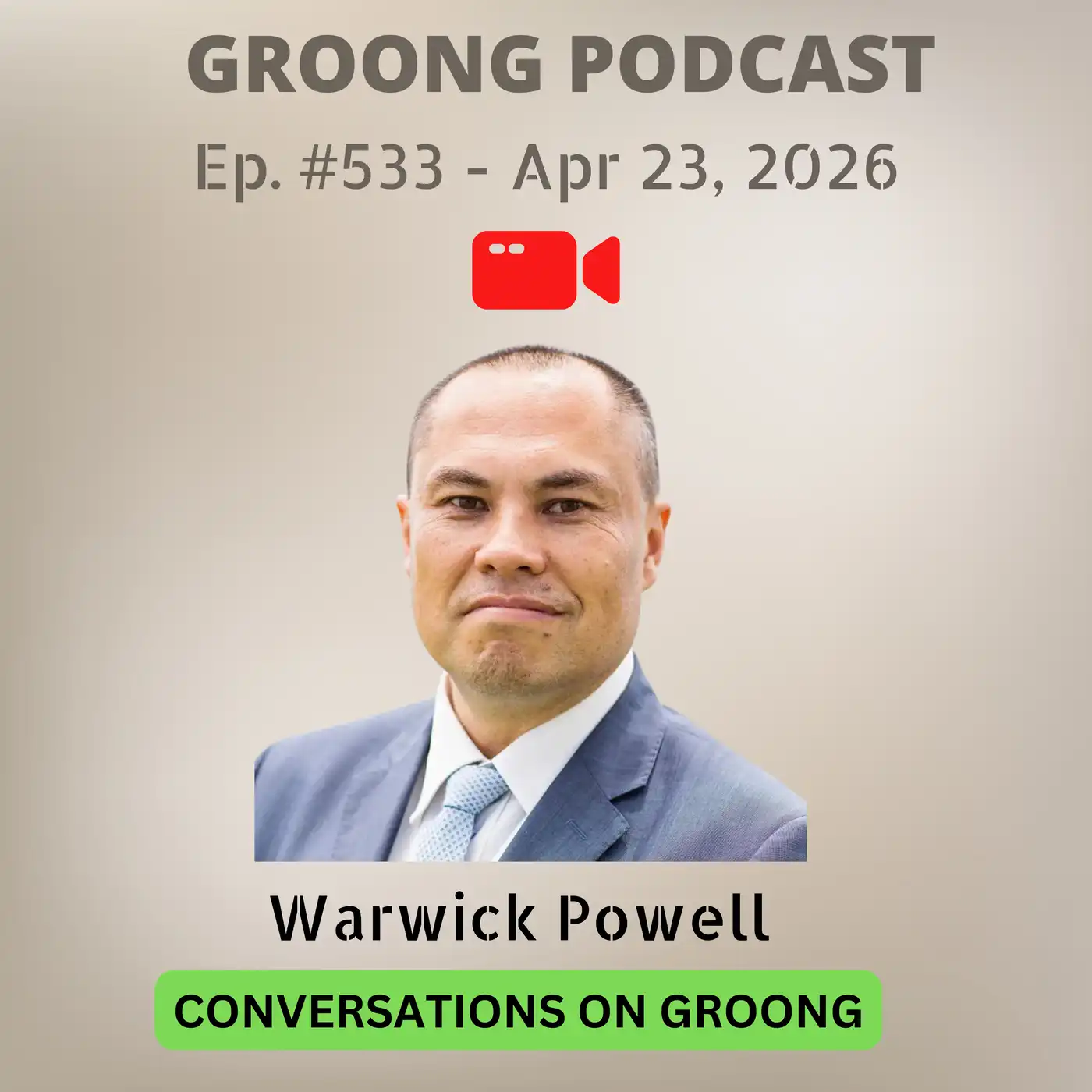
Groong Links:
Guest:
Topics:
- ThermoEconomics and global power
- Iran war and energy
- De-dollarization and sovereignty
- Armenia: AI data centers, SMRs, and imperialism
Episode 533 | Recorded: April 21, 2026
Warwick Powell - ThermoEconomics, Iran, and the New Geopolitical Economy | Ep 533, Apr 23, 2026 [EP533]
Posted on Thursday, Apr 23, 2026 | Category: Geopolitics, Iran, World, Economy, Armenia, USA, China, Russia, BRICS, Israel, Middle East, NATOGroong Links:
Guest:
Topics:
- ThermoEconomics and global power
- Iran war and energy
- De-dollarization and sovereignty
- Armenia: AI data centers, SMRs, and imperialism
Episode 533 | Recorded: April 21, 2026
Transcript: Warwick Powell - ThermoEconomics, Iran, and the New Geopolitical Economy | Ep 533, Apr 23, 2026 [EP533]
Posted on Thursday, Apr 23, 2026 | Category: Geopolitics, Iran, World, Economy, Armenia, USA, China, Russia, BRICS, Israel, Middle East, NATO, TranscriptProf. Warwick Powell discusses his thermoeconomic view of world politics, where energy, money, and information form a single system. We connect the war on Iran to declining U.S. energy efficiency, the limits of airpower, de-dollarization, and the rise of alternative financial and information architectures. We also bring the conversation back to Armenia, asking what TRIPP, SMRs, and large AI data centers could mean for a small state trying to protect its energy and information sovereignty. We close by reflecting on considerations for Armenia in implementing centralized data infrastructure, more Read More
Dziunik Aghajanian - Iran War, Antalya Diplomatic Forum, Armenian Parliamentary Elections | Ep 532, Apr 19, 2026 [EP532]
Posted on Tuesday, Apr 21, 2026 | Category: Iran, Armenia, Politics, USA, Israel, Azerbaijan, Turkey, Russia, Artsakh, Nagorno Karabakh, Georgia, Armenian Church, Artsakh Blockade, China, NATO | Series: wir, video
Groong Links:
Guest:
- Amb. Dziunik Aghajanian
Topics:
- Iran War Fears
- June Parliamentary Elections
- Attacks on the Armenian Church
Episode 532 | Recorded: April 20, 2026
#Armenia #Iran #IranWar #Hormuz #ArmeniaElections #SouthCaucasus
Dziunik Aghajanian - Iran War, Antalya Diplomatic Forum, Armenian Parliamentary Elections | Ep 532, Apr 19, 2026 [EP532]
Posted on Tuesday, Apr 21, 2026 | Category: Iran, Armenia, Politics, USA, Israel, Azerbaijan, Turkey, Russia, Artsakh, Nagorno Karabakh, Georgia, Armenian Church, Artsakh Blockade, China, NATOGroong Links:
Guest:
- Amb. Dziunik Aghajanian
Topics:
- Iran War Fears
- June Parliamentary Elections
- Attacks on the Armenian Church
Episode 532 | Recorded: April 20, 2026
#Armenia #Iran #IranWar #Hormuz #ArmeniaElections #SouthCaucasus
Transcript: Dziunik Aghajanian - Iran War, Antalya Diplomatic Forum, Armenian Parliamentary Elections | Ep 532, Apr 19, 2026 [EP532]
Posted on Tuesday, Apr 21, 2026 | Category: Iran, Armenia, Politics, USA, Israel, Azerbaijan, Turkey, Russia, Artsakh, Nagorno Karabakh, Georgia, Armenian Church, Artsakh Blockade, China, NATO, TranscriptIn this Week in Review episode, Ambassador Dziunik Aghajanian discusses the stalled Iran negotiations after the Islamabad talks, the renewed pressure around Hormuz and the naval blockade, Turkey’s posture toward Israel and the region; Armenia’s lower-profile participation in the Antalya Diplomatic Forum; Russia’s shifting rhetoric on TRIPP and the South Caucasus; and the June 7 parliamentary election in Armenia, including constitutional changes, border concessions, the gas pipeline rerouting issue, and the use of surveillance and arrests against opposition figures.
Hrant Mikaelian - US-Iran Talks, Orban Loses, Armenian Parliamentary Elections, MPG Polls | Ep 531, Apr 12, 2026 [EP531]
Posted on Thursday, Apr 16, 2026 | Category: Iran, Armenia, Election, Poll, Iran, Armenia, USA, Israel, Georgia, Russia, Azerbaijan, Turkey, Artsakh, Nagorno Karabakh, European Union | Series: wir, video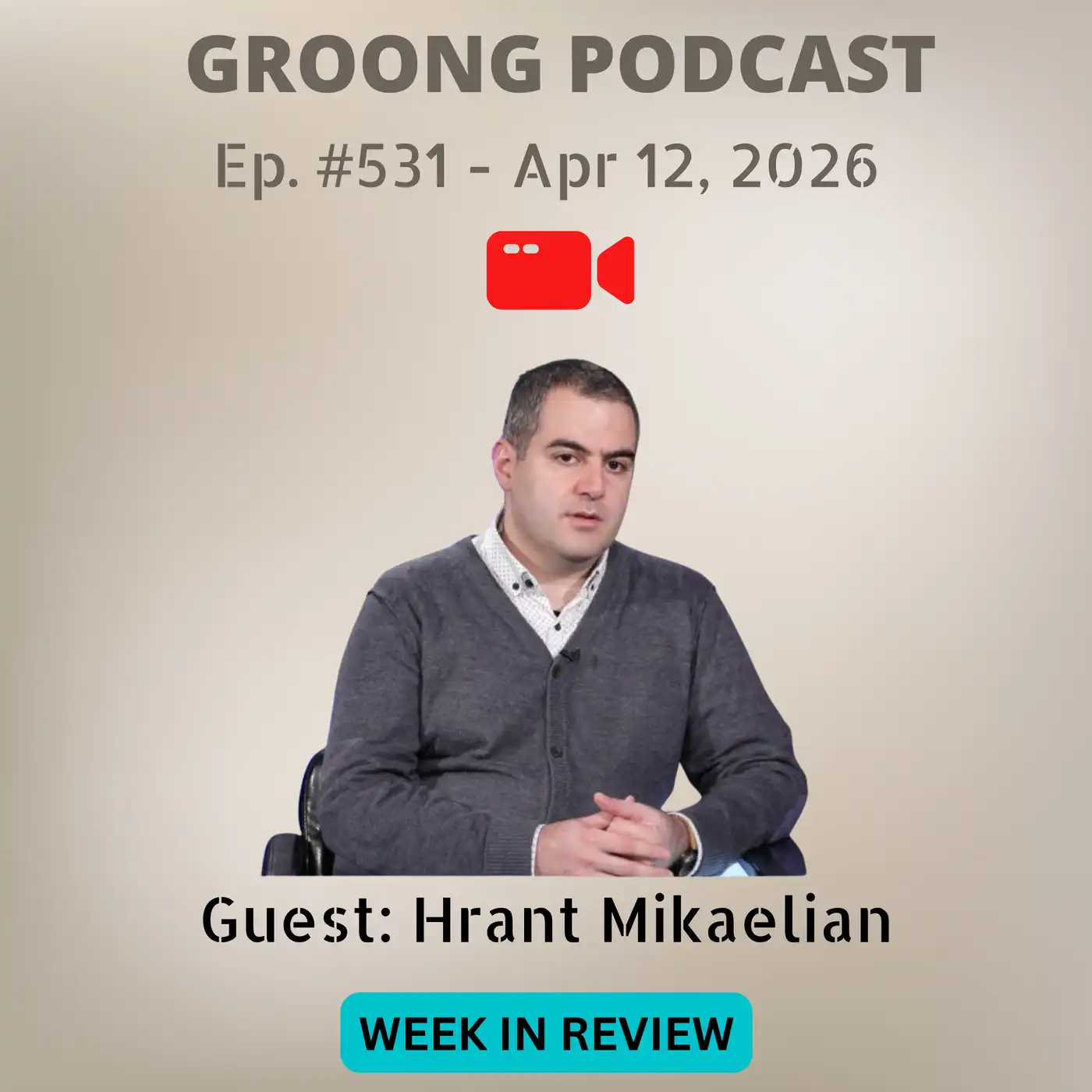
Groong Links:
Guest:
Topics:
- US-Iran Talks in Pakistan
- Orban Loses Hungary Elections
- Armenian Parliamentary Elections
- Polls: MPG, IRI, ARAR, EVN
Episode 531 | Recorded: April 14, 2026
#Armenia #IranWar #ArmenianPolitics #HungaryElections #ArmeniaPolls
Hrant Mikaelian - US-Iran Talks, Orban Loses, Armenian Parliamentary Elections, MPG Polls | Ep 531, Apr 12, 2026 [EP531]
Posted on Thursday, Apr 16, 2026 | Category: Iran, Armenia, Election, Poll, Iran, Armenia, USA, Israel, Georgia, Russia, Azerbaijan, Turkey, Artsakh, Nagorno Karabakh, European UnionGroong Links:
Guest:
Topics:
- US-Iran Talks in Pakistan
- Orban Loses Hungary Elections
- Armenian Parliamentary Elections
- Polls: MPG, IRI, ARAR, EVN
Episode 531 | Recorded: April 14, 2026
#Armenia #IranWar #ArmenianPolitics #HungaryElections #ArmeniaPolls
Transcript: Hrant Mikaelian - US-Iran Talks, Orban Loses, Armenian Parliamentary Elections, MPG Polls | Ep 531, Apr 12, 2026 [EP531]
Posted on Thursday, Apr 16, 2026 | Category: Iran, Armenia, Election, Poll, Iran, Armenia, USA, Israel, Georgia, Russia, Azerbaijan, Turkey, Artsakh, Nagorno Karabakh, European Union, TranscriptThis Week in Review examines how foreign shocks and internal political pressures are converging for Armenia. We look at the breakdown of US-Iran talks and the threat of a new naval blockade, Viktor Orban’s defeat in Hungary and what it may mean for the region, and fresh polling in Armenia on security, war, free speech, voter participation, and party support ahead of the 2026 elections. The episode also explores whether the Abkhaz railway could offer Armenia a real alternative to routes that deepen dependence on Azerbaijan and Turkey, and what the latest polling says about the opposition’s position.
Hovik & Asbed - Iran War, April 2016 War, Armenia & Russia, Politics & Election | Ep 530, Apr 5, 2026 [EP530]
Posted on Wednesday, Apr 8, 2026 | Category: Iran, Armenia, Politics, Election, Artsakh, Nagorno Karabakh, Azerbaijan, Armenian Church, European Union, Russia, Georgia, Turkey | Series: cog, video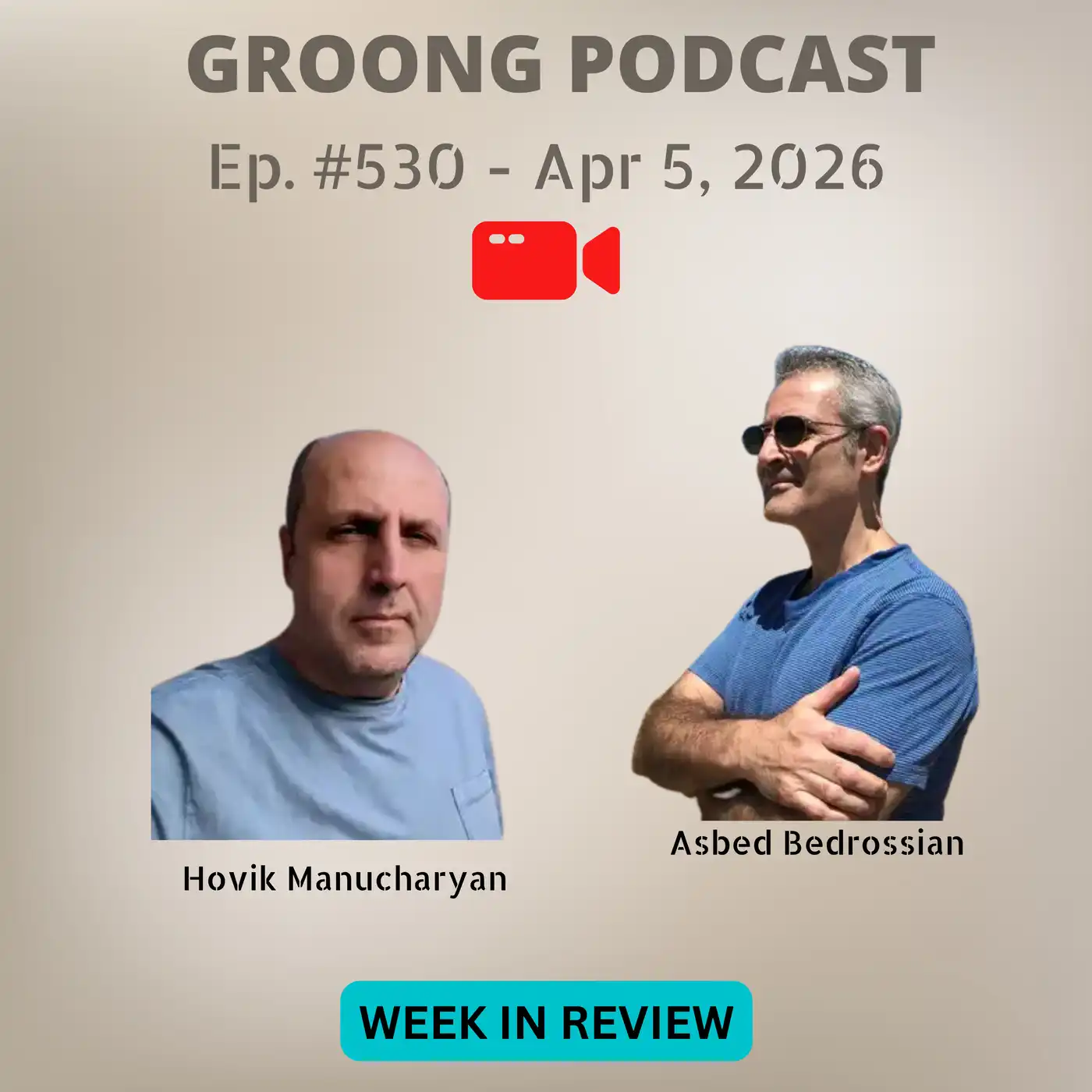
Groong Links:
Topics:
- Iran War Update
- 2016 April War
- Aftermath of Pashinyan in Moscow
- Domestic Politics & Election
Episode 530 | Recorded: April 7, 2026
#Groong #Armenia
Hovik & Asbed - Iran War, April 2016 War, Armenia & Russia, Politics & Election | Ep 530, Apr 5, 2026 [EP530]
Posted on Wednesday, Apr 8, 2026 | Category: Iran, Armenia, Politics, Election, Artsakh, Nagorno Karabakh, Azerbaijan, Armenian Church, European Union, Russia, Georgia, TurkeyGroong Links:
Topics:
- Iran War Update
- 2016 April War
- Aftermath of Pashinyan in Moscow
- Domestic Politics & Election
Episode 530 | Recorded: April 7, 2026
#Groong #Armenia
Transcript: Hovik & Asbed - Iran War, April 2016 War, Armenia & Russia, Politics & Election | Ep 530, Apr 5, 2026 [EP530]
Posted on Wednesday, Apr 8, 2026 | Category: Iran, Armenia, Politics, Election, Artsakh, Nagorno Karabakh, Azerbaijan, Armenian Church, European Union, Russia, Georgia, Turkey, TranscriptIn this Week in Review, Hovik and Asbed discussed the escalating US-Israeli war on Iran and the danger of a wider regional catastrophe; we reflected on the tenth anniversary of the April 2016 Four-Day War and what it revealed about Armenia’s military and diplomatic posture; we examined the fallout from Pashinyan’s Moscow visit and the increasingly blunt Russian response, and reviewed the fast-moving Armenian election campaign, including pressure on the opposition, EU involvement, and the emerging strategies of major the various alliances.
Anna Karapetyan - Iran War, Pashinyan Fake Narratives, Fear-mongering, Silencing Talk of Artsakh | Ep 528, Mar 29, 2026 [EP528]
Posted on Tuesday, Mar 31, 2026 | Category: Iran, Armenia, Artsakh, Election, Nagorno Karabakh, USA, Azerbaijan, Armenian Genocide | Series: wir, video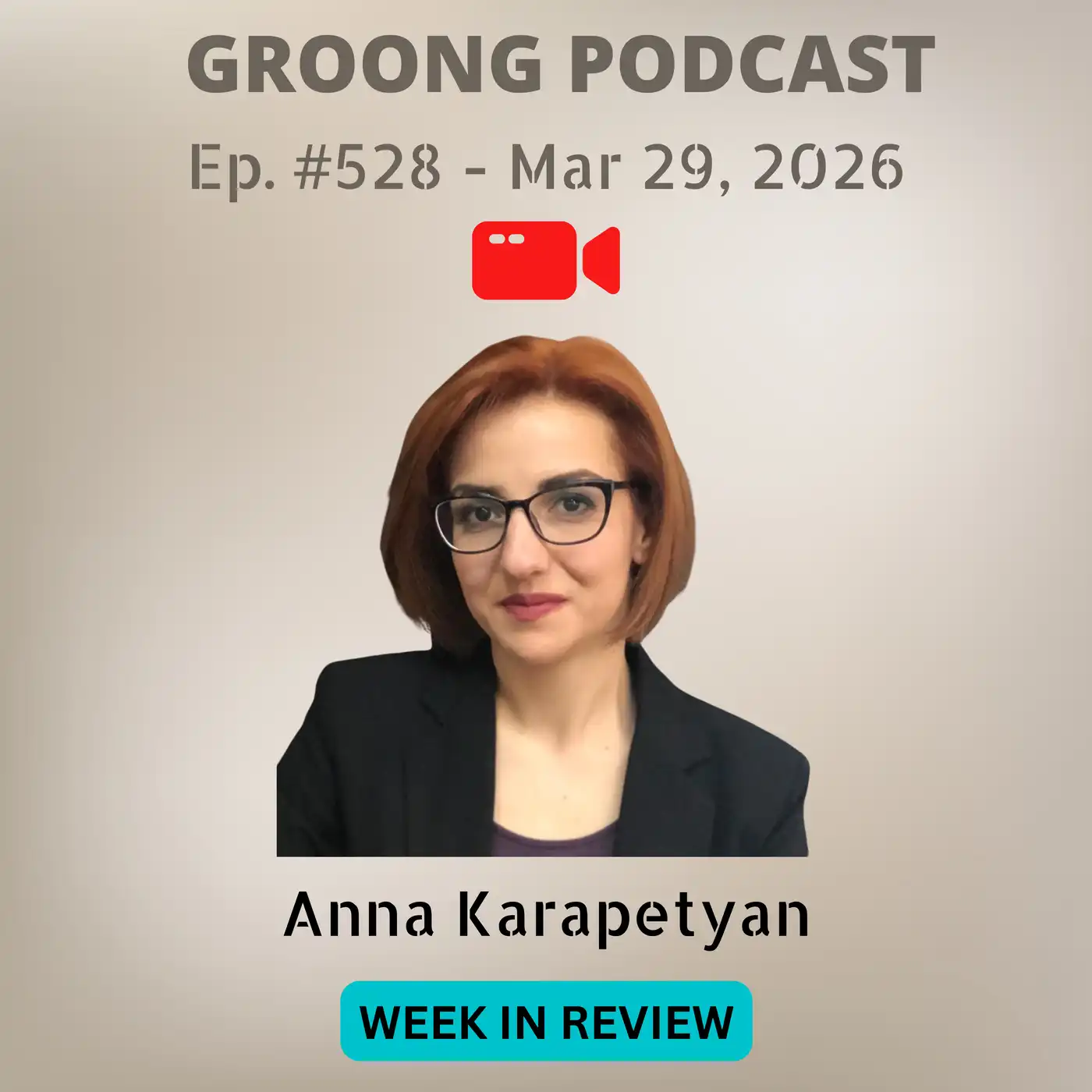
Groong Links:
Guest:
- Anna Karapetyan Director of the Insight Analytical Center for Applied Policy and Research.
Topics:
- Iran war escalation and spillover
- Pashinyanâs Fake âpeaceâ narrative
- Elections built on fear-mongering
- Silencing talk of Artsakh
Episode 528 | Recorded: March 30, 2026
Anna Karapetyan - Iran War, Pashinyan Fake Narratives, Fear-mongering, Silencing Talk of Artsakh | Ep 528, Mar 29, 2026 [EP528]
Posted on Tuesday, Mar 31, 2026 | Category: Iran, Armenia, Artsakh, Election, Nagorno Karabakh, USA, Azerbaijan, Armenian GenocideGroong Links:
Guest:
- Anna Karapetyan Director of the Insight Analytical Center for Applied Policy and Research.
Topics:
- Iran war escalation and spillover
- Pashinyanâs Fake âpeaceâ narrative
- Elections built on fear-mongering
- Silencing talk of Artsakh
Episode 528 | Recorded: March 30, 2026
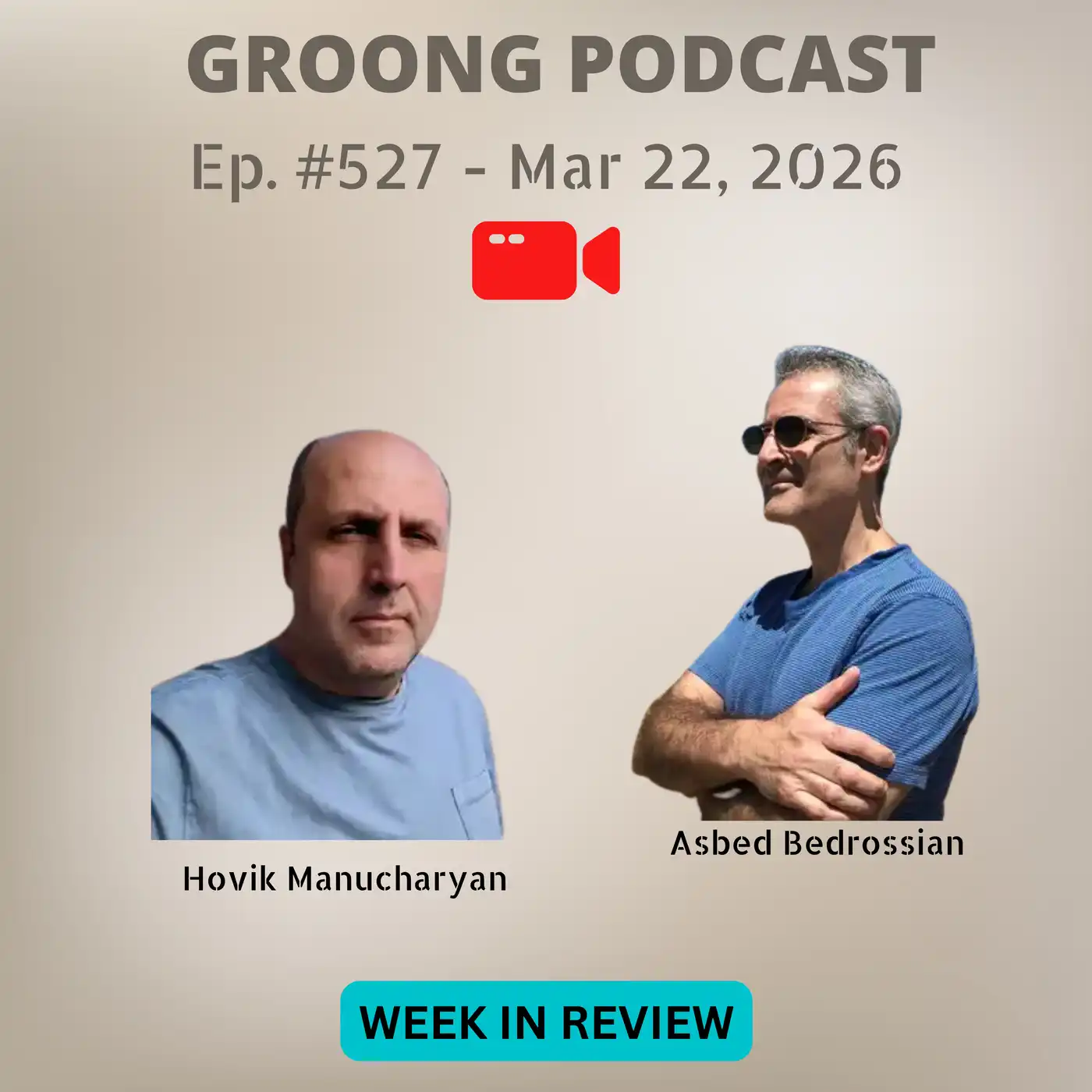
Groong Links:
Topics:
- Georgian Patriarch Ilia II passes away
- Karekin II travel banned from funeral
- Iran war update
- June election in Armenia
Episode 527 | Recorded: March 23, 2026
#Groong #Armenia
Hovik & Asbed - Karekin II & Ilia II Funeral, Iran War, Armenia Elections | Ep 527, Mar 22, 2026 [EP527]
Posted on Tuesday, Mar 24, 2026 | Category: Iran, Armenia, Politics, Israel, USA, Turkey, Russia, China, Artsakh, Nagorno Karabakh, Azerbaijan, Georgia, Economy, LebanonGroong Links:
Topics:
- Georgian Patriarch Ilia II passes away
- Karekin II travel banned from funeral
- Iran war update
- June election in Armenia
Episode 527 | Recorded: March 23, 2026
#Groong #Armenia
Eldar Mamedov - Iran War: The Northern Front | Ep 525, Mar 22, 2026 [EP525]
Posted on Sunday, Mar 22, 2026 | Category: Iran, Politics, Armenia, Israel, USA, Turkey, Azerbaijan, Artsakh, Nagorno Karabakh, Syria, Economy, Genocide, NATO, Russia, Georgia, Middle East | Series: cog, video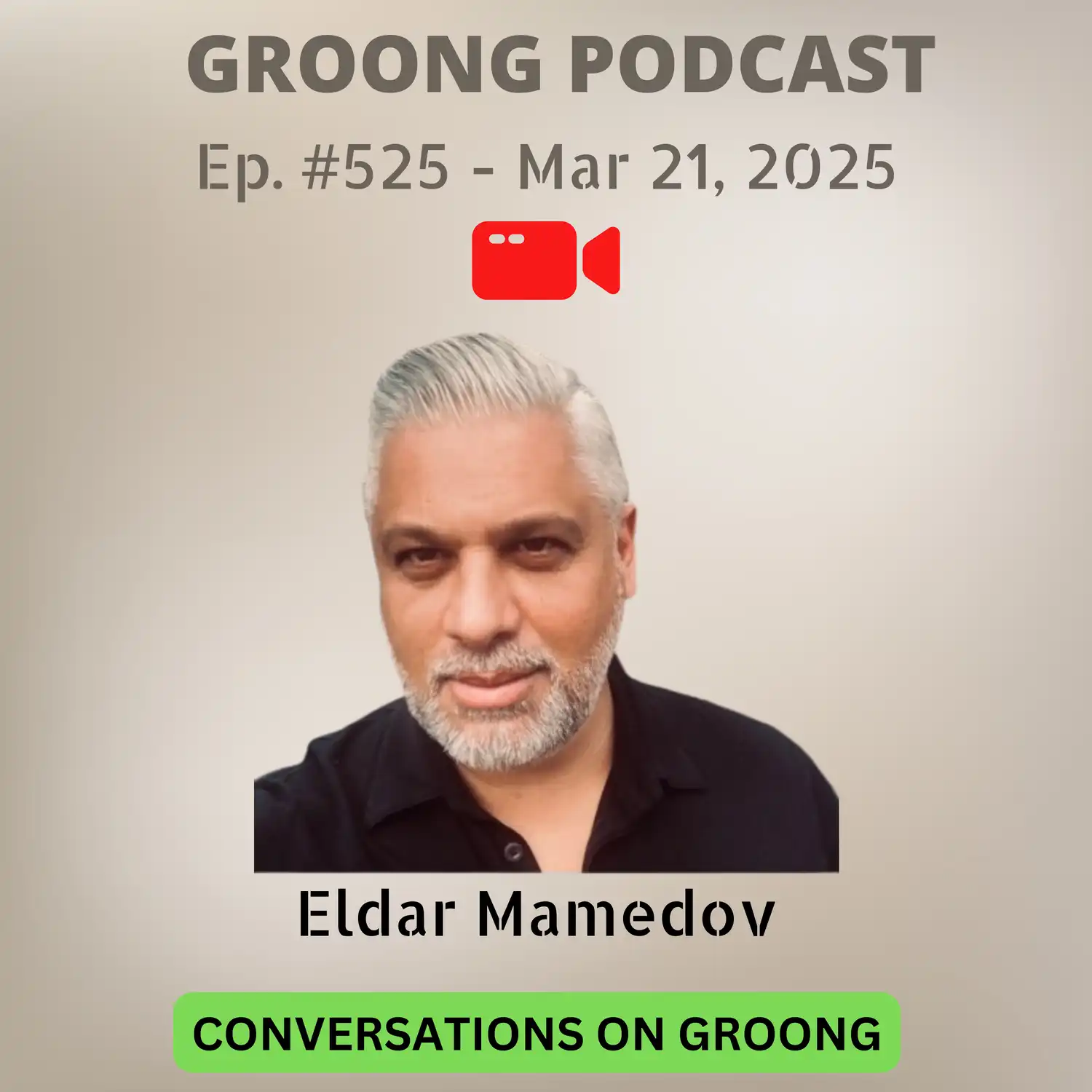
Groong Links:
Guest:
Topics:
- Iran at War
- The Northern Front: Turkey & Azerbaijan
- Changing Nakhijevanâs Constitution
Episode 525 | Recorded: March 20, 2026
#GroongPodcast #EldarMamedov #IranWar #Azerbaijan #SouthCaucasus
Eldar Mamedov - Iran War: The Northern Front | Ep 525, Mar 22, 2026 [EP525]
Posted on Sunday, Mar 22, 2026 | Category: Iran, Politics, Armenia, Israel, USA, Turkey, Azerbaijan, Artsakh, Nagorno Karabakh, Syria, Economy, Genocide, NATO, Russia, Georgia, Middle EastGroong Links:
Guest:
Topics:
- Iran at War
- The Northern Front: Turkey & Azerbaijan
- Changing Nakhijevanâs Constitution
Episode 525 | Recorded: March 20, 2026
#GroongPodcast #EldarMamedov #IranWar #Azerbaijan #SouthCaucasus
Varuzhan Geghamyan - Iran War, Zangezur Corridor, Nakhijevan Constitution | Ep 524, Mar 20, 2026 [EP524]
Posted on Friday, Mar 20, 2026 | Category: Politics, Iran, Armenia, Israel, Azerbaijan, USA, Turkey, Artsakh, Geopolitics, Middle East, Nagorno Karabakh, Russia, Syria, China, Economy, Georgia, Ukraine | Series: cog, video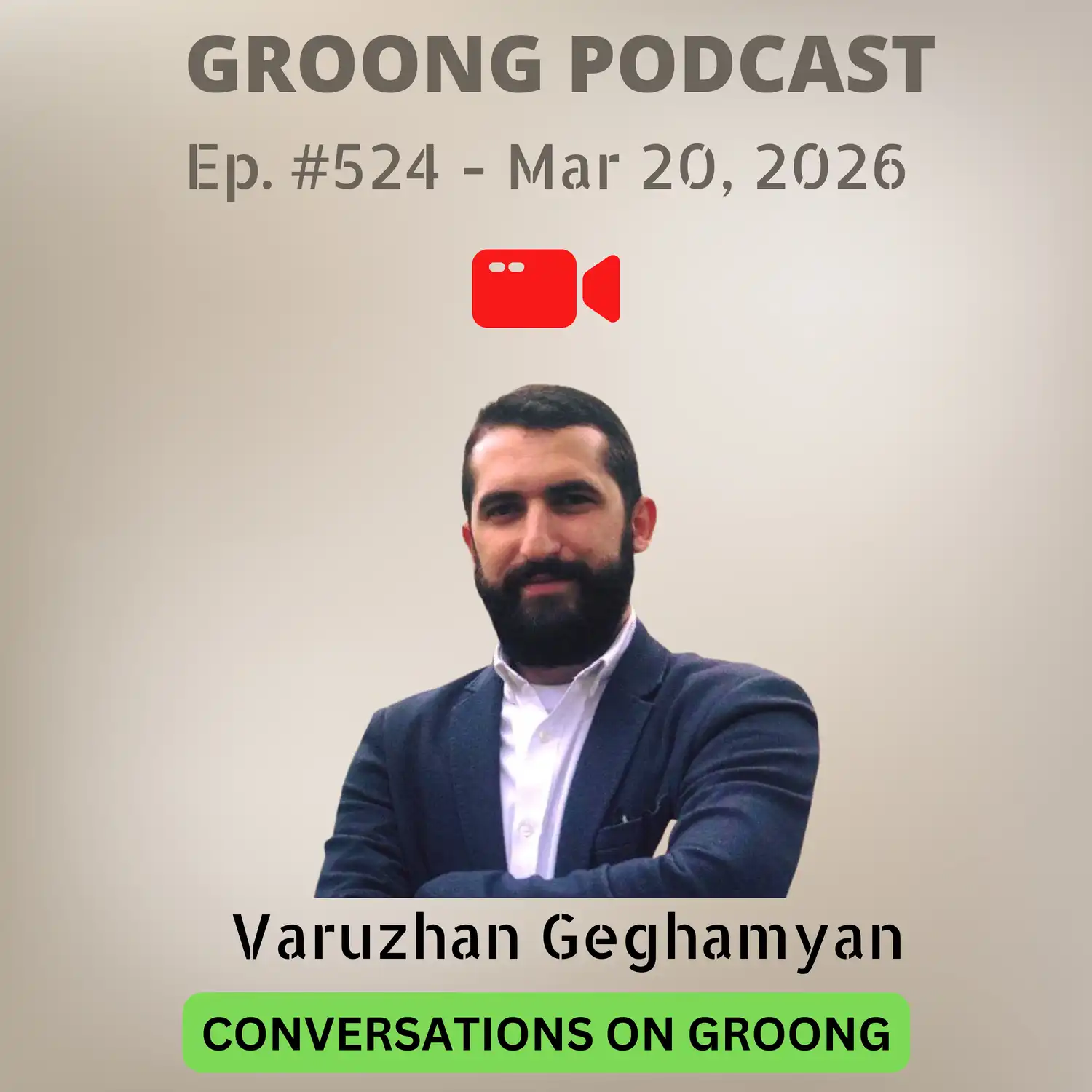
Groong Links:
Guest:
Topics:
- Iran at War
- The Northern Front: Turkey & Azerbaijan
- Changing Nakhichevanâs Constitution
Episode 524 | Recorded: March 19, 2026
#IranWar #VaruzhanGeghamyan #ZangezurCorridor #Syunik #ArmeniaGeopolitics
Varuzhan Geghamyan - Iran War, Zangezur Corridor, Nakhijevan Constitution | Ep 524, Mar 20, 2026 [EP524]
Posted on Friday, Mar 20, 2026 | Category: Politics, Iran, Armenia, Israel, Azerbaijan, USA, Turkey, Artsakh, Geopolitics, Middle East, Nagorno Karabakh, Russia, Syria, China, Economy, Georgia, UkraineGroong Links:
Guest:
Topics:
- Iran at War
- The Northern Front: Turkey & Azerbaijan
- Changing Nakhichevanâs Constitution
Episode 524 | Recorded: March 19, 2026
#IranWar #VaruzhanGeghamyan #ZangezurCorridor #Syunik #ArmeniaGeopolitics
Scott Horton - Why Are We at War with Iran? | Ep 523, Mar 20, 2026 [EP523]
Posted on Friday, Mar 20, 2026 | Category: Politics, US, Iran, Israel, Syria, Lebanon, Turkey, Azerbaijan, Nagorno Karabakh, China, NATO | Series: cog, video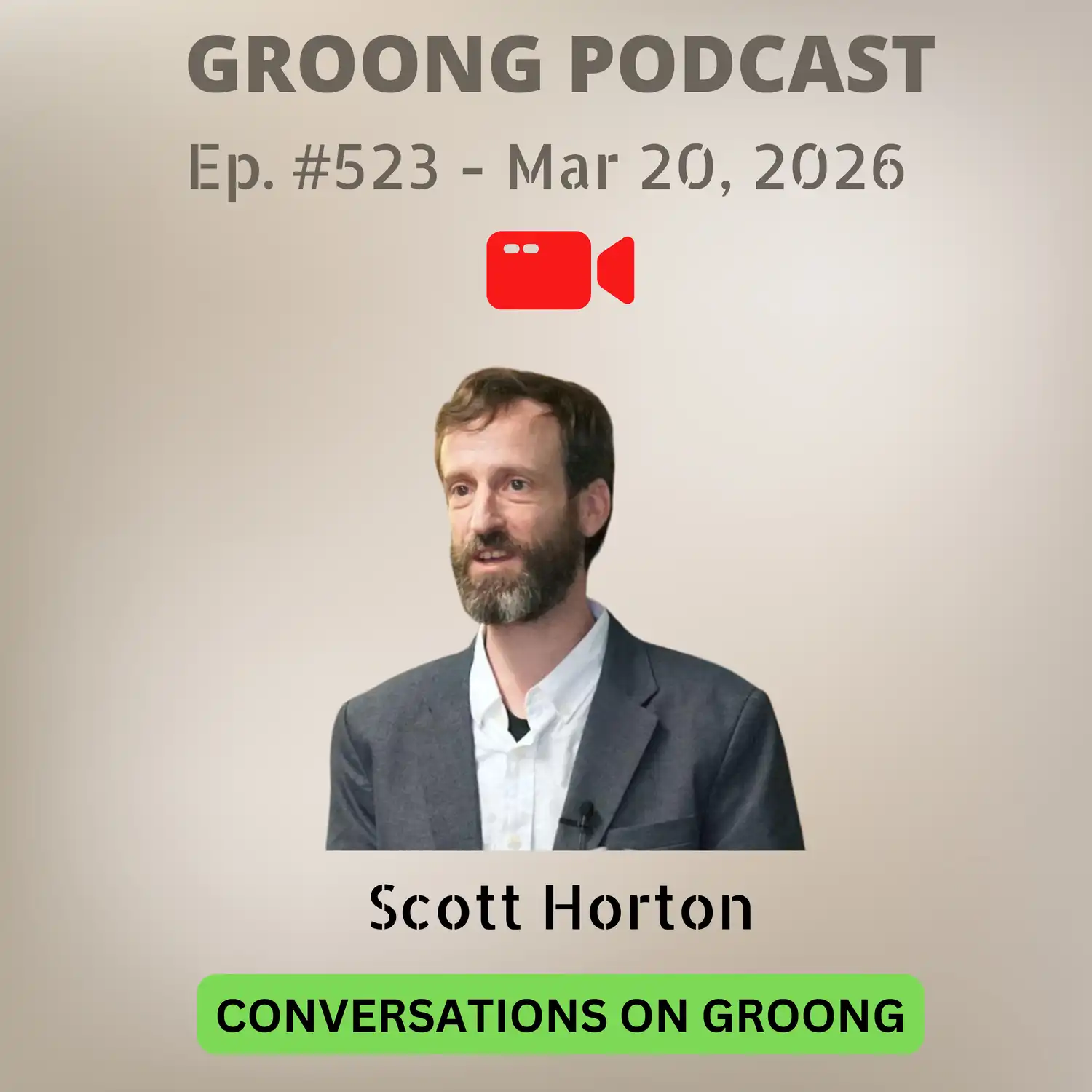
Groong Links:
Guest:
Topics:
- Why this war began
- U.S. fallout and political costs
- Paths to wider regional escalation
Episode 523 | Recorded: March 19, 2026
#IranWar #ScottHorton #USIsrael #MiddleEastWar #Geopolitics
Scott Horton - Why Are We at War with Iran? | Ep 523, Mar 20, 2026 [EP523]
Posted on Friday, Mar 20, 2026 | Category: Politics, US, Iran, Israel, Syria, Lebanon, Turkey, Azerbaijan, Nagorno Karabakh, China, NATOGroong Links:
Guest:
Topics:
- Why this war began
- U.S. fallout and political costs
- Paths to wider regional escalation
Episode 523 | Recorded: March 19, 2026
#IranWar #ScottHorton #USIsrael #MiddleEastWar #Geopolitics
Transcript: Scott Horton - Why Are We at War with Iran? | Ep 523, Mar 20, 2026 [EP523]
Posted on Friday, Mar 20, 2026 | Category: Politics, US, Iran, Israel, Syria, Lebanon, Turkey, Azerbaijan, Nagorno Karabakh, China, NATO, TranscriptScott Horton joins us to examine the U.S.-Israeli war on Iran, asking how this war began, what strategic goals are driving it, and where it could lead next. We discuss the limits of air power, the risk of a wider or ground war, the longer arc of U.S. and Israeli policy toward Iran and Syria, Turkey’s role in the region, and the domestic political consequences inside the United States as Trump presses ahead without broad public or congressional support.
Arthur Martirosyan - Iran War, Effect on Armenia, June Parliamentary | Ep 522, Mar 15, 2026 [EP522]
Posted on Monday, Mar 16, 2026 | Category: Armenia, Politics, Armenian Church, Ukraine, Iran, Azerbaijan, Israel, USA, Turkey, Russia, Artsakh, Nagorno Karabakh, Armenian Genocide, Genocide, Georgia, Middle East | Series: wir, video
Groong Links:
Guest:
Topics:
- Iran War
- Effect on Armenia
- June Parliamentary Elections
Episode 522 | Recorded: March 16, 2026
Arthur Martirosyan - Iran War, Effect on Armenia, June Parliamentary | Ep 522, Mar 15, 2026 [EP522]
Posted on Monday, Mar 16, 2026 | Category: Armenia, Politics, Armenian Church, Ukraine, Iran, Azerbaijan, Israel, USA, Turkey, Russia, Artsakh, Nagorno Karabakh, Armenian Genocide, Genocide, Georgia, Middle EastGroong Links:
Guest:
Topics:
- Iran War
- Effect on Armenia
- June Parliamentary Elections
Episode 522 | Recorded: March 16, 2026
Groong Links:
Guest:
Topics:
- Iran War Update
- IRI Poll Review
- Political Landscape
Episode 521 | Recorded: March 10, 2026
#IranWar #EpicFury #MiddleEastWar #ArmeniaForeignPolicy #Sumgait1988 #IranIsraelConflict
Groong Links:
Guest:
Topics:
- Iran War Update
- IRI Poll Review
- Political Landscape
Episode 521 | Recorded: March 10, 2026
#IranWar #EpicFury #MiddleEastWar #ArmeniaForeignPolicy #Sumgait1988 #IranIsraelConflict
Hrant Mikaelian - Iran War, Effect on Armenia, Sumgait Pogroms | Ep 520, Mar 1, 2026 [EP520]
Posted on Wednesday, Mar 4, 2026 | Category: Iran, Armenia, Artsakh, Nagorno Karabakh, Iran, USA, Israel, Armenia, Azerbaijan, Turkey, Russia, China, BRICS, Ukraine, Middle East, Geopolitics, NATO, Syria | Series: wir, video
Groong Links:
Guest:
Topics:
- US and Israel launch war against Iran
- Decapitation strikes, mass civilian casualties
- Iran retaliates region-wide, war expands
- Armenia leadership silent
- Sumgait remembered
Episode 520 | Recorded: March 3, 2026
#IranWar #EpicFury #MiddleEastWar #ArmeniaForeignPolicy #Sumgait1988 #IranIsraelConflict
Hrant Mikaelian - Iran War, Effect on Armenia, Sumgait Pogroms | Ep 520, Mar 1, 2026 [EP520]
Posted on Wednesday, Mar 4, 2026 | Category: Iran, Armenia, Artsakh, Nagorno Karabakh, Iran, USA, Israel, Armenia, Azerbaijan, Turkey, Russia, China, BRICS, Ukraine, Middle East, Geopolitics, NATO, SyriaGroong Links:
Guest:
Topics:
- US and Israel launch war against Iran
- Decapitation strikes, mass civilian casualties
- Iran retaliates region-wide, war expands
- Armenia leadership silent
- Sumgait remembered
Episode 520 | Recorded: March 3, 2026
#IranWar #EpicFury #MiddleEastWar #ArmeniaForeignPolicy #Sumgait1988 #IranIsraelConflict
Dziunik Aghajanian - Iran War Fears, June Vote Rules, State-Church Clash | Ep 519, Feb 22, 2026 [EP519]
Posted on Thursday, Feb 26, 2026 | Category: Armenia, Politics, Artsakh, Nagorno Karabakh, Azerbaijan, Turkey, Russia, Israel, Genocide, Armenian Church, Iran, Middle East, NATO, Syria | Series: wir, video
Groong Links:
Guest:
Topics:
- Iran War Fears
- June Parliamentary Elections
- Attacks on the Armenian Church
Episode 519 | Recorded: February 25, 2026
#Armenia #Iran #ArmeniaElections #ArmenianChurch #SouthCaucasus
Dziunik Aghajanian - Iran War Fears, June Vote Rules, State-Church Clash | Ep 519, Feb 22, 2026 [EP519]
Posted on Thursday, Feb 26, 2026 | Category: Armenia, Politics, Artsakh, Nagorno Karabakh, Azerbaijan, Turkey, Russia, Israel, Genocide, Armenian Church, Iran, Middle East, NATO, SyriaGroong Links:
Guest:
Topics:
- Iran War Fears
- June Parliamentary Elections
- Attacks on the Armenian Church
Episode 519 | Recorded: February 25, 2026
#Armenia #Iran #ArmeniaElections #ArmenianChurch #SouthCaucasus
Asbed & Hovik - Iran, Varchaband, War on Church, Mehmet Oz, Strong Armenia, Noragyugh | Ep 512, Feb 1, 2026 [EP512]
Posted on Tuesday, Feb 3, 2026 | Category: Armenia, Politics, Artsakh, Nagorno Karabakh, Iran, Israel, Azerbaijan, Armenian Church, BRICS, Russia, Turkey, China, India, Ukraine | Series: wir, video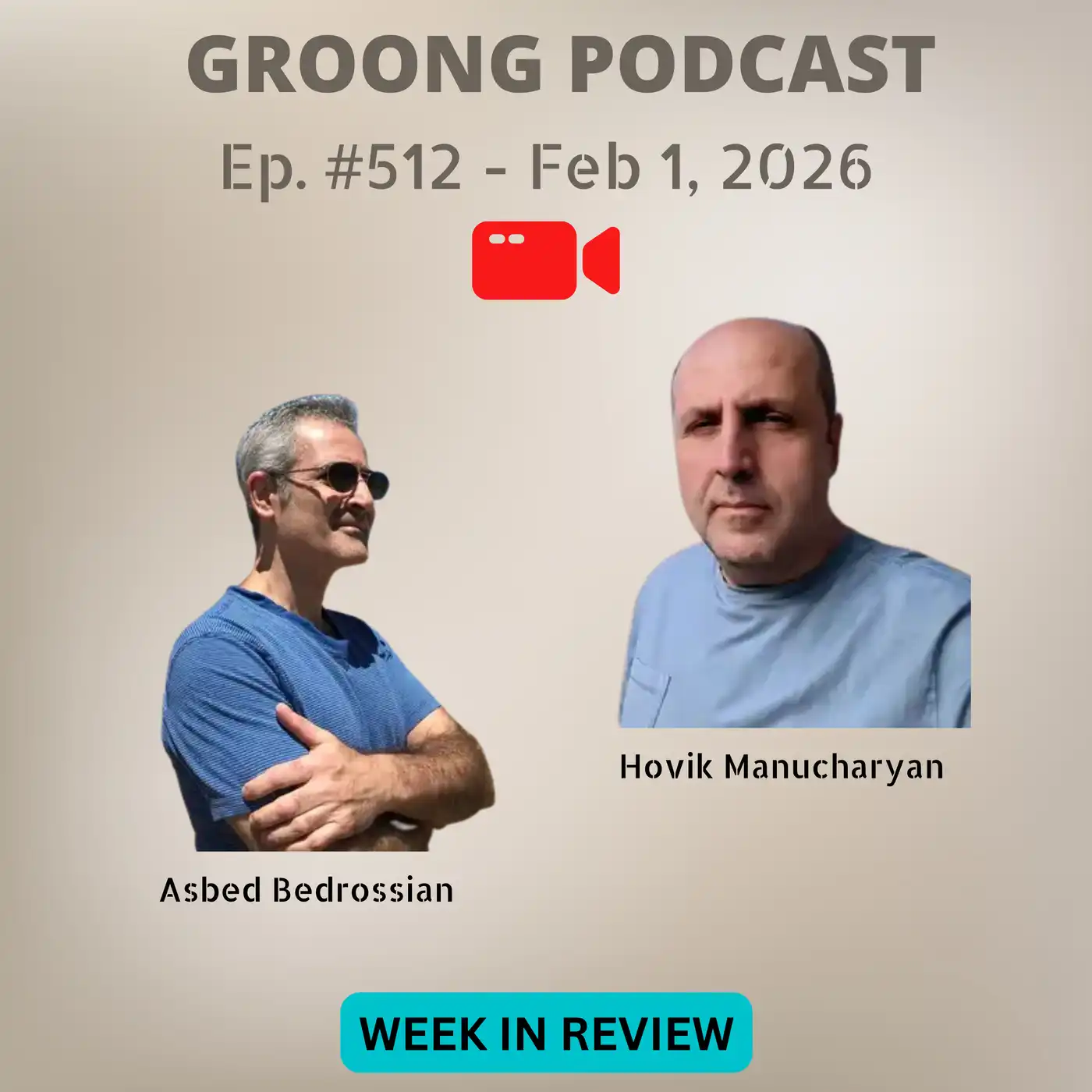
Groong Links:
Topics:
- Iran Conflict
- Varchaband
- War on Armenian Church
- Mehmet Oz vs Armenian Americans
- Narek Karapetyan and Strong Armenia
- A Big Beautiful Noragyugh
Episode 512 | Recorded: February 2, 2026
#IranIsraelWar #TrumpArmada #ArmenianChurch #Pashinyan #ArmenianDiaspora
Asbed & Hovik - Iran, Varchaband, War on Church, Mehmet Oz, Strong Armenia, Noragyugh | Ep 512, Feb 1, 2026 [EP512]
Posted on Tuesday, Feb 3, 2026 | Category: Armenia, Politics, Artsakh, Nagorno Karabakh, Iran, Israel, Azerbaijan, Armenian Church, BRICS, Russia, Turkey, China, India, UkraineGroong Links:
Topics:
- Iran Conflict
- Varchaband
- War on Armenian Church
- Mehmet Oz vs Armenian Americans
- Narek Karapetyan and Strong Armenia
- A Big Beautiful Noragyugh
Episode 512 | Recorded: February 2, 2026
#IranIsraelWar #TrumpArmada #ArmenianChurch #Pashinyan #ArmenianDiaspora