Iran War
Last updated: June 3, 2026
The Iran War is Groong’s umbrella tag for the ongoing Israel-Iran conflict — a wider war that expanded well beyond the initial 12-Day War of June 2025 into a broader, more destructive confrontation in 2026 involving additional regional actors, ground operations, and a transformed Middle Eastern order. While the 12-Day War marked the opening phase of direct military exchanges, the Iran War covers the full arc: from the roots of the Israel-Iran conflict, through the ceasefire and its collapse, to the escalation into the wider 2026 conflict and the regional fallout that continues to reverberate.
From the 12-Day War to the wider conflict. The 12-Day War — Israel’s June 2025 strikes on Iranian nuclear infrastructure at Natanz, Isfahan, and Fordow, and Iran’s retaliatory missile campaign — ended with a US-brokered ceasefire. That ceasefire, however, proved fragile. The underlying drivers of the Iran-Israel war remained unresolved: Iran’s nuclear program, the status of its proxy networks, and the question of deterrence. As the ceasefire frayed and the war with Iran resumed at larger scale in 2026, the conflict drew in more actors and expanded beyond the air and missile exchanges that characterized the initial phase. The Iran-Israel conflict 2026 became a different kind of war — one with consequences that no regional power could insulate itself from.
Iran War ceasefire and collapse. The Iran War ceasefire negotiations of mid-2025 were driven primarily by American pressure and the exhaustion of both sides after the intense 12-day exchange. But the ceasefire papered over unresolved disputes and left Iran’s strategic capacity degraded but not destroyed. Groong’s coverage of the post-ceasefire period tracks the political dynamics inside Iran — where the IRGC and Supreme Leader Khamenei held effective power throughout, regardless of President Masoud Pezeshkian ’s reformist posture — and the decisions that led back to escalation and the broader Iran War update that followed in 2026.
The wider 2026 conflict. Iran War news in 2026 shifted markedly in character from the air campaign of the year before. The war expanded in geographic scope and in the number of parties drawn into direct or proxy involvement. Groong episodes on the Iran War 2025-2026 arc examine how the conflict reshaped the regional balance: the role of Hezbollah and other Iranian proxies, the position of Gulf states, Russian calculations in the context of Ukraine, and how a protracted Iran-Israel war altered the assumptions that had governed Middle Eastern security for decades. For listeners seeking an Iran War explained in strategic terms — not just day-to-day Iran War update coverage — Groong’s analysis provides context anchored in the region’s longer history.
Iran War and the South Caucasus. The Iran War South Caucasus dimension is central to Groong’s coverage and distinguishes it from mainstream Western outlets. Iran shares a land border with Armenia, has long served as a counterweight to the Turkey-Pakistan-Azerbaijan axis, and plays an irreplaceable role in Armenia’s energy and transit routing. The Iran War Armenia implications are direct: a weakened or destabilized Iran removes one of the few structural constraints on Azerbaijani and Turkish pressure on Yerevan. Groong episodes examine how the expanded war affects the Zangezur corridor dispute, whether Azerbaijan exploited Iran’s distraction to press new demands, how the INSTC corridor through Iranian territory was disrupted, and what the longer arc of the conflict means for Armenian security and sovereignty.
Browse all Groong episodes tagged Iran War below.
Groong episodes that include this tag
Below are all Groong episodes tagged with Iran War.
Dziunik Aghajanian - From Moscow to Riyadh: New Fault Lines Around Armenia | Ep 590, Sep 25, 2026 [EP590]
Posted on Friday, Sep 25, 2026 | Category: Armenia, Politics, Geopolitics | Series: cog, video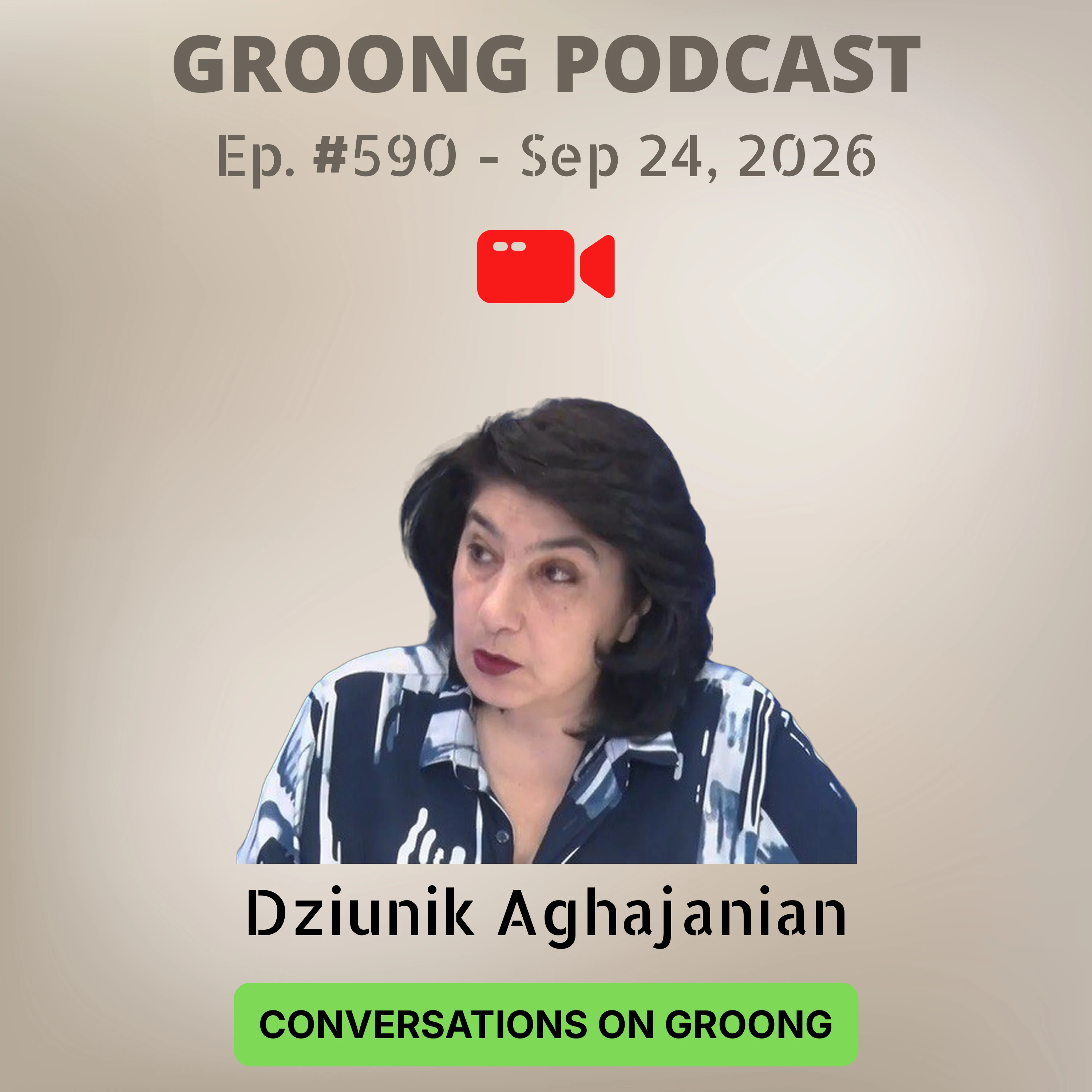
Groong Links:
Guest(s):
Topics:
- Russian parliamentary election outcome
- Middle East escalation and the Houthis
- Armenia-Russia confrontation, including the 102nd base
- Asset confiscation, anti-corruption, and Russian interests
- Azerbaijan-Armenia “durable peace” tensions
- Armenian opposition strategy
Episode 590 | Recorded: September 23, 2026
#Armenia #Russia #SouthCaucasus #Azerbaijan #MiddleEast #UkraineWar #ArmenianPolitics #Geopolitics
Dziunik Aghajanian - From Moscow to Riyadh: New Fault Lines Around Armenia | Ep 590, Sep 25, 2026 [EP590]
Posted on Friday, Sep 25, 2026 | Category: Armenia, Politics, GeopoliticsGroong Links:
Guest(s):
Topics:
- Russian parliamentary election outcome
- Middle East escalation and the Houthis
- Armenia-Russia confrontation, including the 102nd base
- Asset confiscation, anti-corruption, and Russian interests
- Azerbaijan-Armenia “durable peace” tensions
- Armenian opposition strategy
Episode 590 | Recorded: September 23, 2026
#Armenia #Russia #SouthCaucasus #Azerbaijan #MiddleEast #UkraineWar #ArmenianPolitics #Geopolitics
Transcript: Dziunik Aghajanian - From Moscow to Riyadh: New Fault Lines Around Armenia | Ep 590, Sep 25, 2026 [EP590]
Posted on Friday, Sep 25, 2026 | Category: Armenia, Politics, Geopolitics, TranscriptIn this episode of Conversations on Groong, we speak with Dziunik Aghajanian about shifting geopolitical pressures on Armenia following Russia’s September 2026 parliamentary elections. We discuss Putin’s strengthened domestic position, the Armenia-Russia confrontation over the 102nd base, asset confiscation and anti-corruption efforts targeting Russian interests, and how Middle East escalation and the Iran War reshape Armenia’s strategic environment amid ongoing Armenia-Azerbaijan Peace Process tensions.
Hrant Mikaelian - Chips for TRIPP, Education Crisis, and Economic Risks | Ep 586, Sep 17, 2026 [EP586]
Posted on Friday, Sep 18, 2026 | Category: Armenia, Politics, Geopolitics | Series: cog, video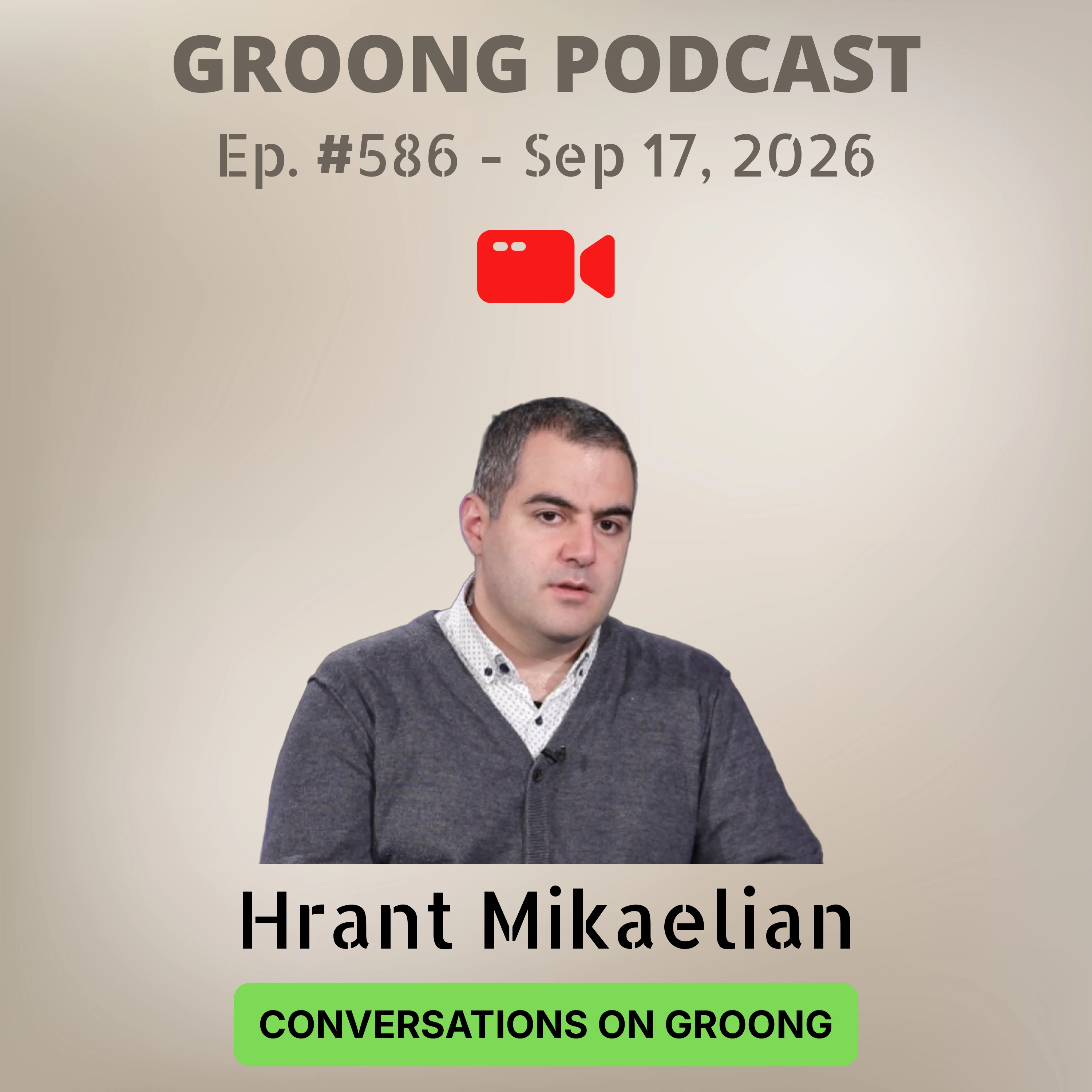
Groong Links:
Guest(s):
Topics:
- AI chips tied to TRIPP diplomacy
- Data centers raise major energy questions
- Armenia faces severe education outcomes
- Government reforms versus poor student performance
- Azerbaijan targets Armenian heritage in Artsakh
- Gas dependence exposes Armenia to shocks
Episode 586 | Recorded: September 16, 2026
#Armenia #TRIPP #ArtificialIntelligence #EducationCrisis #Artsakh #EnergySecurity #SouthCaucasus #HrantMikaelian
Hrant Mikaelian - Chips for TRIPP, Education Crisis, and Economic Risks | Ep 586, Sep 17, 2026 [EP586]
Posted on Friday, Sep 18, 2026 | Category: Armenia, Politics, GeopoliticsGroong Links:
Guest(s):
Topics:
- AI chips tied to TRIPP diplomacy
- Data centers raise major energy questions
- Armenia faces severe education outcomes
- Government reforms versus poor student performance
- Azerbaijan targets Armenian heritage in Artsakh
- Gas dependence exposes Armenia to shocks
Episode 586 | Recorded: September 16, 2026
#Armenia #TRIPP #ArtificialIntelligence #EducationCrisis #Artsakh #EnergySecurity #SouthCaucasus #HrantMikaelian
Transcript: Hrant Mikaelian - Chips for TRIPP, Education Crisis, and Economic Risks | Ep 586, Sep 17, 2026 [EP586]
Posted on Friday, Sep 18, 2026 | Category: Armenia, Politics, Geopolitics, TranscriptIn this episode of Conversations on Groong, we speak with Hrant Mikaelian about chip diplomacy, the TRIPP framework, and Armenia’s structural economic vulnerabilities. We discuss how the U.S. fast-tracked advanced AI exports to secure the Armenia-Azerbaijan Peace Process agreement, the massive energy demands of the planned Firebird data center, Armenia’s deepening education crisis, and the risks of energy dependence as the Armenian Nuclear Power Plant approaches shutdown.
Suren Sargsyan - Central Asia, TRIPP, Iran, and Armenia in the New Great Game | Ep 583, Sep 5, 2026 [EP583]
Posted on Saturday, Sep 5, 2026 | Category: Armenia, Geopolitics | Series: cog, video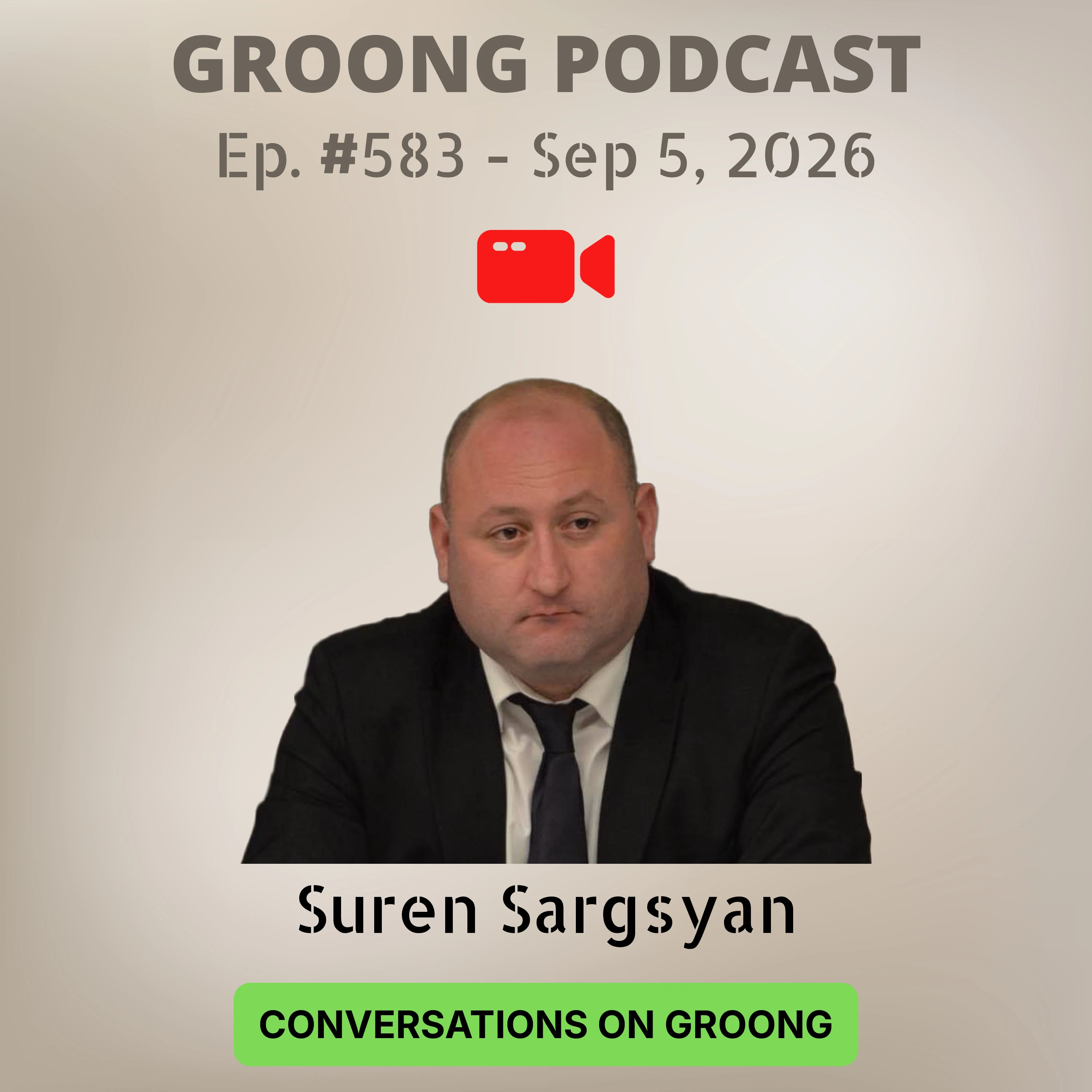
Groong Links:
Guest(s):
Topics:
- U.S. objectives in the Iran war
- Russia’s 102nd base in Armenia
- Pashinyan’s sovereignty policy contradictions
- Great-power rivalry across Central Asia
- U.S. and EU interests in TRIPP
- Armenia’s place in Eurasian competition
Episode 583 | Recorded: Sep 4, 2026
#Armenia #IranWar #TRIPP #CentralAsia #Russia #UnitedStates #Geopolitics #SouthCaucasus
Suren Sargsyan - Central Asia, TRIPP, Iran, and Armenia in the New Great Game | Ep 583, Sep 5, 2026 [EP583]
Posted on Saturday, Sep 5, 2026 | Category: Armenia, GeopoliticsGroong Links:
Guest(s):
Topics:
- U.S. objectives in the Iran war
- Russia’s 102nd base in Armenia
- Pashinyan’s sovereignty policy contradictions
- Great-power rivalry across Central Asia
- U.S. and EU interests in TRIPP
- Armenia’s place in Eurasian competition
Episode 583 | Recorded: Sep 4, 2026
#Armenia #IranWar #TRIPP #CentralAsia #Russia #UnitedStates #Geopolitics #SouthCaucasus
Trump Has No Exit Strategy in Iran War [EP583]
Posted on Saturday, Sep 5, 2026 | Category: Geopolitics, Iran, USA, Middle EastSuren Sargsyan argues the Trump administration lacks a clear exit strategy in its escalating war with Iran, creating deeper policy problems.
Transcript: Suren Sargsyan - Central Asia, TRIPP, Iran, and Armenia in the New Great Game | Ep 583, Sep 5, 2026 [EP583]
Posted on Saturday, Sep 5, 2026 | Category: Armenia, Geopolitics, TranscriptIn this episode of Conversations on Groong, we speak with Suren Sargsyan about the Iran War and great power competition for Armenia’s strategic position. We discuss Washington’s unclear endgame in the conflict with Iran, the future of Russia’s military presence in Armenia and CSTO membership, and competing U.S. and European interests in new east-west transit routes through Armenia and Central Asia amid broader geopolitical rivalries.
Armenia at the SCO Summit as Ukraine and Iran Wars Intensify | Ep 582, Aug 30, 2026 [EP582]
Posted on Wednesday, Sep 2, 2026 | Series: wir, video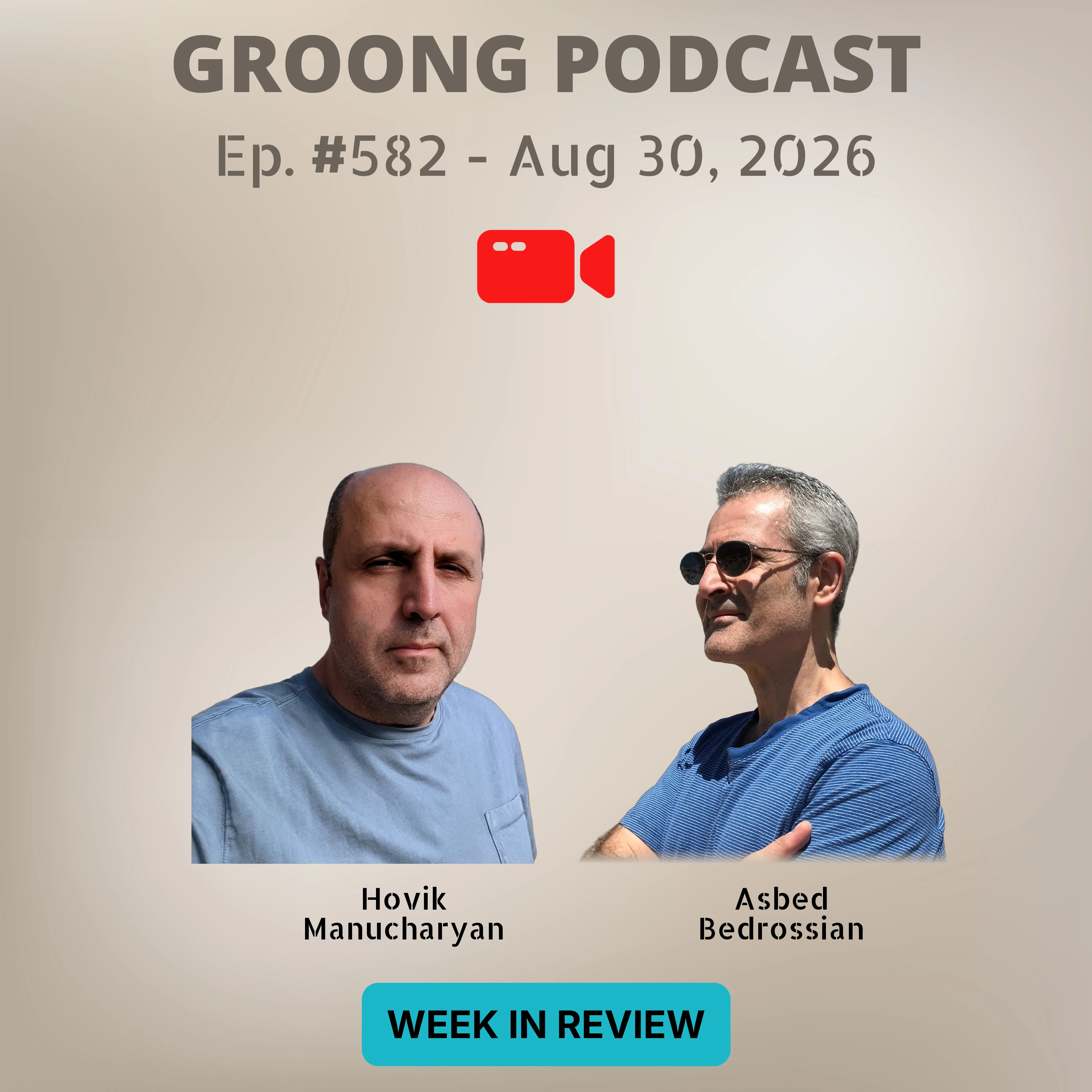
Groong Links:
Topics:
- Russia Escalates War Against Ukraine
- Unprecedented Western Visits to Moscow
- US-Iran War Flares Again
- All Artsakh Presidents Behind Bars
- Armenia at the SCO Summit
- Pashinyan Meets Aliyev, Putin, Modi
- Political Persecutions and Selective Justice
Episode 582 | Recorded: September 1, 2026
#Armenia #Artsakh #UkraineWar #IranWar #SCO #Pashinyan #SouthCaucasus #ArmenianPolitics
Armenia at the SCO Summit as Ukraine and Iran Wars Intensify | Ep 582, Aug 30, 2026 [EP582]
Posted on Wednesday, Sep 2, 2026Groong Links:
Topics:
- Russia Escalates War Against Ukraine
- Unprecedented Western Visits to Moscow
- US-Iran War Flares Again
- All Artsakh Presidents Behind Bars
- Armenia at the SCO Summit
- Pashinyan Meets Aliyev, Putin, Modi
- Political Persecutions and Selective Justice
Episode 582 | Recorded: September 1, 2026
#Armenia #Artsakh #UkraineWar #IranWar #SCO #Pashinyan #SouthCaucasus #ArmenianPolitics
Transcript: Armenia at the SCO Summit as Ukraine and Iran Wars Intensify | Ep 582, Aug 30, 2026 [EP582]
Posted on Wednesday, Sep 2, 2026 | Category: TranscriptIn this week’s Groong news roundup, Hovik and Asbed examine Armenia’s position at the SCO Summit amid intensifying global conflicts. We discuss Russia’s escalation in Ukraine, unprecedented Western diplomatic visits to Moscow, the renewed US-Iran War, and Pashinyan’s meetings with regional and global leaders including Aliyev and Putin. We also address the ongoing persecution of former Artsakh leaders and the selective justice targeting Armenia’s political landscape.
Groong Podcast Digest — Week of August 17–23, 2026
Posted on Sunday, Aug 23, 2026 | Category: Digest, Podcast DigestHovik and Asbed examine Armenia’s exposure to an expanding Iran War, Russia’s December ultimatum on EAEU membership, and how TRIPP infrastructure through Syunik deepens security and energy vulnerabilities. Dziunik Aghajanian examines Armenia’s precarious position between Iran, Russia, and emerging Middle East power shifts, analyzing the Mecca joint defense pact, Iran’s objections to TRIPP, Aliyev’s militarization of Nakhijevan, Armenia’s energy dependence, Russian ultimatums, and the Established Opposition’s parliamentary strategy ahead of the 2026 Armenian Parliamentary Election.
Dziunik Aghajanian - Armenia Between Iran, Russia & the New Middle East Order | Ep 579, Aug 22, 2026 [EP579]
Posted on Saturday, Aug 22, 2026 | Category: Armenia, Politics, Geopolitics | Series: cog, video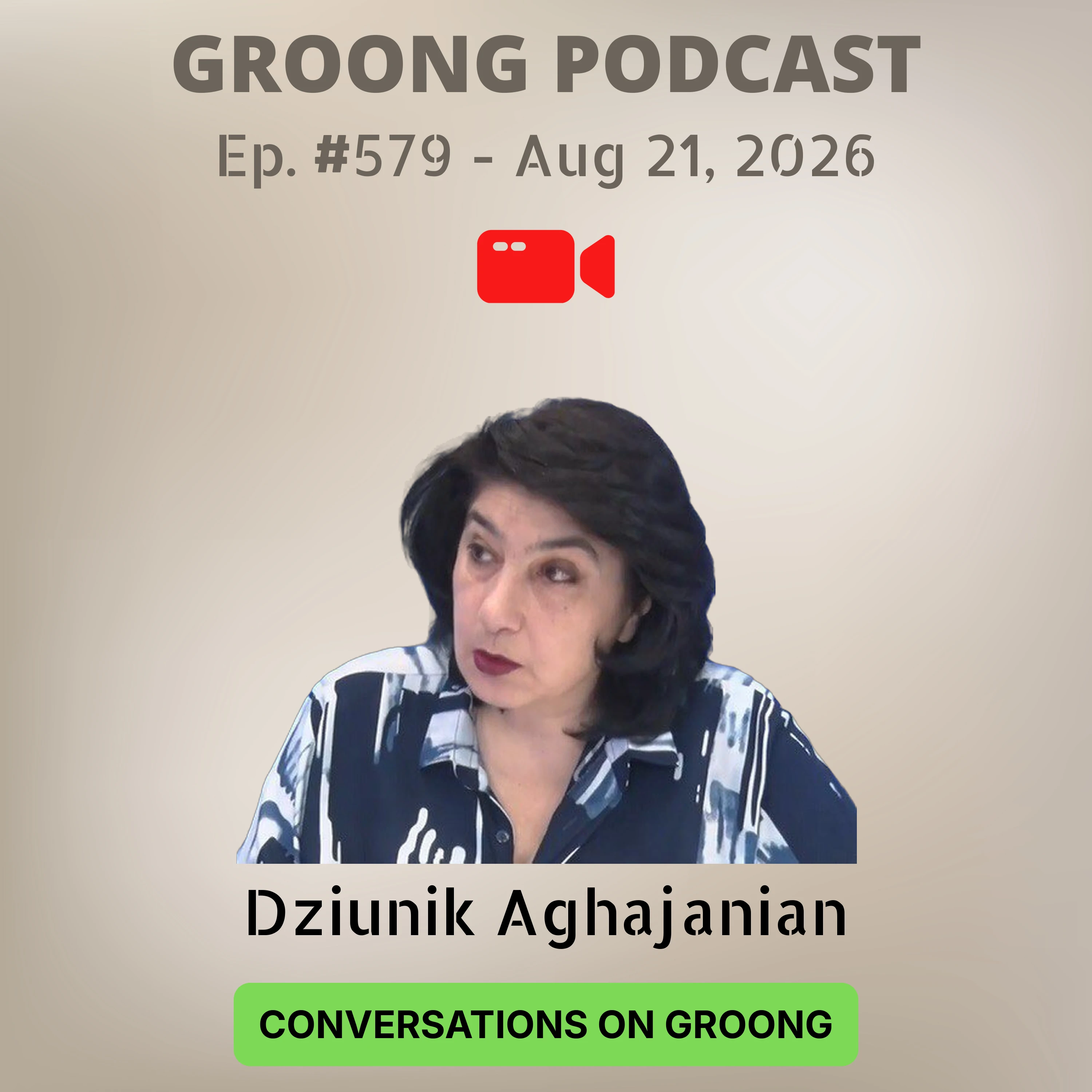
Groong Links:
Guest(s):
Topics:
- Significance of the Mecca joint defense pact
- Iran warns Armenia over TRIPP
- Aliyev advances plans through Syunik
- Armenia faces growing energy dependence
- Russia sets deadlines for Yerevan
- Opposition tests its parliamentary strategy
Episode 579 | Recorded: August 18, 2026
#Armenia #SouthCaucasus #Mecca #TRIPP #Iran #Russia #Azerbaijan #EAEU #CSTO
Dziunik Aghajanian - Armenia Between Iran, Russia & the New Middle East Order | Ep 579, Aug 22, 2026 [EP579]
Posted on Saturday, Aug 22, 2026 | Category: Armenia, Politics, GeopoliticsGroong Links:
Guest(s):
Topics:
- Significance of the Mecca joint defense pact
- Iran warns Armenia over TRIPP
- Aliyev advances plans through Syunik
- Armenia faces growing energy dependence
- Russia sets deadlines for Yerevan
- Opposition tests its parliamentary strategy
Episode 579 | Recorded: August 18, 2026
#Armenia #SouthCaucasus #Mecca #TRIPP #Iran #Russia #Azerbaijan #EAEU #CSTO
The Mecca Pact: U.S. Building Anti-Iran Alliance with Turkey, Pakistan, Saudi Arabia [EP579]
Posted on Saturday, Aug 22, 2026 | Category: Geopolitics, Middle East, Iran, USAAmbassador Aghajanian breaks down the Mecca Joint Defense Agreement as a U.S.-orchestrated strategy to isolate Iran and position Turkey, Pakistan, and Saudi Arabia for potential ground operations against Iranian interests.
TRIPP is a Ground Operation Against Iran, Ambassador Says [EP579]
Posted on Saturday, Aug 22, 2026 | Category: Geopolitics, Iran, Armenia, PoliticsFormer Ambassador Aghajanian argues TRIPP is designed as part of a U.S.-led ground operation strategy against Iran, putting Armenia in an extremely vulnerable position.
Transcript: Dziunik Aghajanian - Armenia Between Iran, Russia & the New Middle East Order | Ep 579, Aug 22, 2026 [EP579]
Posted on Saturday, Aug 22, 2026 | Category: Armenia, Politics, Geopolitics, TranscriptIn this episode of Conversations on Groong, we speak with Dziunik Aghajanian about Armenia’s precarious position between Iran, Russia, and emerging Middle East power shifts. We discuss the Mecca joint defense pact signed by Turkey, Pakistan, and Saudi Arabia, Iran’s warnings over TRIPP, Ilham Aliyev’s militarization plans in Nakhijevan, Armenia’s growing energy dependence, Russian deadlines for Yerevan, and how the Established Opposition is testing its parliamentary strategy ahead of the 2026 Armenian Parliamentary Election.
Aliyev’s TRIPP, Russia’s Deadline, Iran’s Warning | Ep 578, Aug 16, 2026 [EP578]
Posted on Wednesday, Aug 19, 2026 | Category: Armenia, Politics | Series: wir, video
Groong Links:
Topics:
- US-Iran War Risks Return
- Armenia Faces Regional Spillover Risks
- Russia Pressures Armenia Over Western Pivot
- TRIPP Deepens Security and Energy Risks
- Domestic Politics Grow More Confrontational
- Arrests and Prosecutions Fuel Repression Claims
Episode 578 | Recorded: August 17, 2026
#Armenia #IranWar #TRIPP #Syunik #SouthCaucasus #RussiaArmenia #Nakhichevan #ArmenianPolitics
Aliyev’s TRIPP, Russia’s Deadline, Iran’s Warning | Ep 578, Aug 16, 2026 [EP578]
Posted on Wednesday, Aug 19, 2026 | Category: Armenia, PoliticsGroong Links:
Topics:
- US-Iran War Risks Return
- Armenia Faces Regional Spillover Risks
- Russia Pressures Armenia Over Western Pivot
- TRIPP Deepens Security and Energy Risks
- Domestic Politics Grow More Confrontational
- Arrests and Prosecutions Fuel Repression Claims
Episode 578 | Recorded: August 17, 2026
#Armenia #IranWar #TRIPP #Syunik #SouthCaucasus #RussiaArmenia #Nakhichevan #ArmenianPolitics
Iran's Warning to Armenia: TRIPP Could Mean War [EP578]
Posted on Wednesday, Aug 19, 2026 | Category: Iran, Geopolitics, ArmeniaA senior Iranian military advisor warns that Armenia will face the same treatment as US bases in the Middle East if TRIPP becomes a problem for Iran.
Transcript: Aliyev’s TRIPP, Russia’s Deadline, Iran’s Warning | Ep 578, Aug 16, 2026 [EP578]
Posted on Wednesday, Aug 19, 2026 | Category: Armenia, Politics, TranscriptIn this episode of Groong Week in Review, Hovik and Asbed discuss Armenia’s precarious position amid escalating Iran War risks, Russia’s December ultimatum on the Eurasian Economic Union, and deepening security threats from TRIPP. We examine how a broader US-Iran conflict could devastate Armenia through refugee flows and logistics collapse, why Pashinyan’s EAEU defiance has triggered Russian pressure, and what frozen CSTO membership actually means for Armenian security.
Richard Campbell - The AI Infrastructure Race and Armenia’s High-Stakes Bet | Ep 577, Aug 16, 2026 [EP577]
Posted on Sunday, Aug 16, 2026 | Category: Armenia, Geopolitics, Technology | Series: cog, video
Groong Links:
Guest(s):
Topics:
- Global AI race and hype
- Economics of AI data centers
- Energy limits and infrastructure demands
- Armenia’s Firebird AI project
- Jobs, innovation, and local benefits
- AI sovereignty and export controls
- Military value and security risks
Episode 577 | Recorded: August 11, 2026
#ArtificialIntelligence #Armenia #FirebirdAI #AIDataCenters #SovereignAI #EnergySecurity #TechGeopolitics #NationalSecurity
Richard Campbell - The AI Infrastructure Race and Armenia’s High-Stakes Bet | Ep 577, Aug 16, 2026 [EP577]
Posted on Sunday, Aug 16, 2026 | Category: Armenia, Geopolitics, TechnologyGroong Links:
Guest(s):
Topics:
- Global AI race and hype
- Economics of AI data centers
- Energy limits and infrastructure demands
- Armenia’s Firebird AI project
- Jobs, innovation, and local benefits
- AI sovereignty and export controls
- Military value and security risks
Episode 577 | Recorded: August 11, 2026
#ArtificialIntelligence #Armenia #FirebirdAI #AIDataCenters #SovereignAI #EnergySecurity #TechGeopolitics #NationalSecurity
Transcript: Richard Campbell - The AI Infrastructure Race and Armenia’s High-Stakes Bet | Ep 577, Aug 16, 2026 [EP577]
Posted on Sunday, Aug 16, 2026 | Category: Armenia, Geopolitics, Technology, TranscriptIn this episode of Conversations on Groong, we speak with Richard Campbell about artificial intelligence infrastructure and Armenia’s Firebird project. We discuss the global AI race, the economics and energy demands of data centers, whether current AI valuations align with physical and economic realities, and what sovereign AI capacity means for Armenia’s strategic positioning.
Turkey, Pakistan, Saudi Arabia Form Anti-American Alliance-What It Means for Armenia [EP576]
Posted on Wednesday, Aug 12, 2026 | Category: Geopolitics, Turkey, Iran, Middle East, AzerbaijanHovik and Asbed discuss the Mecca Joint Deterrence Agreement between Turkey, Pakistan, and Saudi Arabia-a major geopolitical realignment with serious implications for Armenia and the region.
Christine Arakelian - Forever Wars, NATO 3.0, Armenia's High-Stakes Western Pivot | Ep 572, Jul 31, 2026 [EP572]
Posted on Saturday, Aug 1, 2026 | Category: Armenia, USA, European Union, Politics, Geopolitics, Diaspora | Series: cog, video
Groong Links:
Guest(s):
Topics:
- US Foreign Policy & the Fracture of MAGA
- Iran and the Risk of Forever Wars
- NATO 3.0 and Europe’s Militarization
- Post-2026 Election Armenia
- TRIPP and Pashinyan’s Pivot to the West
Episode 572 | Recorded: July 29, 2026
#ForeverWars #NATO #IranWar #Armenia #TRIPP #MAGA #USForeignPolicy #SouthCaucasus
Christine Arakelian - Forever Wars, NATO 3.0, Armenia's High-Stakes Western Pivot | Ep 572, Jul 31, 2026 [EP572]
Posted on Saturday, Aug 1, 2026 | Category: Armenia, USA, European Union, Politics, Geopolitics, DiasporaGroong Links:
Guest(s):
Topics:
- US Foreign Policy & the Fracture of MAGA
- Iran and the Risk of Forever Wars
- NATO 3.0 and Europe’s Militarization
- Post-2026 Election Armenia
- TRIPP and Pashinyan’s Pivot to the West
Episode 572 | Recorded: July 29, 2026
#ForeverWars #NATO #IranWar #Armenia #TRIPP #MAGA #USForeignPolicy #SouthCaucasus
Gaza, Lebanon, Iran: How Wars Shattered MAGA Coalition [EP572]
Posted on Saturday, Aug 1, 2026 | Category: Geopolitics, Politics, USAChristine Arakelian explains how the Gaza, Lebanon, and Iran wars have permanently fractured Trump’s coalition among Muslim Americans, Orthodox Christians, and diaspora populations who now see themselves as used.
Why America Can't Get Out of Wars [EP572]
Posted on Saturday, Aug 1, 2026 | Category: Geopolitics, USAChristine Arakelian explains why the US consistently enters wars easily but struggles to end them, citing institutional inertia, echo chambers, and human psychology rather than strategic necessity.
Transcript: Christine Arakelian - Forever Wars, NATO 3.0, Armenia's High-Stakes Western Pivot | Ep 572, Jul 31, 2026 [EP572]
Posted on Saturday, Aug 1, 2026 | Category: Armenia, USA, European Union, Politics, Geopolitics, Diaspora, TranscriptIn this episode of Conversations on Groong, we speak with Christine Arakelian about American foreign policy fractures, Iran war risks, and Armenia’s pivot to the West. We discuss whether the United States has coherent foreign policy, the collapse of the MAGA coalition over Forever Wars, NATO 3.0 and Europe’s militarization, and how Pashinyan’s post-2026 Armenian Parliamentary Election government is navigating TRIPP amid global instability.
Groong Links:
Topics:
- Ukraine expands its war into the Caspian
- Iran warns of a wider regional response
- Russia and the West test stalled diplomacy
- Aliyev positions Baku as a geopolitical hub
- Armenia faces pressure over EU alignment
- Baku POW abuse and their deteriorating health
- Housing policy expose domestic failures
Episode 571 | Recorded: July 27, 2026
#Armenia #UkraineWar #Iran #CaspianSea #SouthCaucasus #MiddleCorridor #ArmenianPOWs #Geopolitics
From Caspian Drones to Armenia’s Cold Winter | Ep 571, Jul 26, 2026 [EP571]
Posted on Tuesday, Jul 28, 2026 | Category: Armenia, Iran, PoliticsGroong Links:
Topics:
- Ukraine expands its war into the Caspian
- Iran warns of a wider regional response
- Russia and the West test stalled diplomacy
- Aliyev positions Baku as a geopolitical hub
- Armenia faces pressure over EU alignment
- Baku POW abuse and their deteriorating health
- Housing policy expose domestic failures
Episode 571 | Recorded: July 27, 2026
#Armenia #UkraineWar #Iran #CaspianSea #SouthCaucasus #MiddleCorridor #ArmenianPOWs #Geopolitics
Ukraine's Caspian Drone Attack: How Did Drones Fly Undetected? [EP571]
Posted on Tuesday, Jul 28, 2026 | Category: Geopolitics, UkraineAsbed and Hovik dissect how Ukrainian drones reached the Caspian Sea undetected, exploring launch routes, NATO intelligence support, and the strategic implications for the region.
Transcript: From Caspian Drones to Armenia’s Cold Winter | Ep 571, Jul 26, 2026 [EP571]
Posted on Tuesday, Jul 28, 2026 | Category: Armenia, Iran, Politics, TranscriptIn this week’s edition of the Armenian News podcast, Hovik and Asbed analyze escalating regional tensions as Ukraine expands operations into the Caspian Sea, striking Iranian and Russian assets. We examine how this merger of the Northern and Southern conflicts affects Armenia, Kazakhstan’s energy security, and Pashinyan’s diplomatic positioning amid new pressure from Western capitals following Aliyev’s recent visits to Germany and Berlin.
Iran War, TRIPP Money, and Armenia’s Political Purgatory | Ep 561, Jul 19, 2026 [EP568]
Posted on Wednesday, Jul 22, 2026 | Category: Armenia, Politics | Series: wir, video
Groong Links:
Topics:
- US-Iran War Continues
- Summer Lull in Yerevan Politics
- Konstantin Sokolov: Master of TRIPP & Teghut
- UN: Abp. Galstanyan Charges Unjustified
- Armenian POW Slams Pashinyan from Baku
Episode 568 | Recorded: July 20, 2026
#IranWar #TRIPP #Teghut #Armenia #PoliticalPrisoners #ArmenianPOWs #KonstantinSokolov
Iran War, TRIPP Money, and Armenia’s Political Purgatory | Ep 561, Jul 19, 2026 [EP568]
Posted on Wednesday, Jul 22, 2026 | Category: Armenia, PoliticsGroong Links:
Topics:
- US-Iran War Continues
- Summer Lull in Yerevan Politics
- Konstantin Sokolov: Master of TRIPP & Teghut
- UN: Abp. Galstanyan Charges Unjustified
- Armenian POW Slams Pashinyan from Baku
Episode 568 | Recorded: July 20, 2026
#IranWar #TRIPP #Teghut #Armenia #PoliticalPrisoners #ArmenianPOWs #KonstantinSokolov
Iran's Coercive Leverage: The Desalination Plant Gambit [EP568]
Posted on Wednesday, Jul 22, 2026 | Category: Iran, USA, Middle East, GeopoliticsHovik explains Iran’s economic coercive leverage: by threatening the Strait of Hormuz and Gulf desalination plants, Tehran can pressure Washington into negotiations more effectively than military tactics alone.
The U.S. Has No Theory of Victory in Iran [EP568]
Posted on Wednesday, Jul 22, 2026 | Category: Iran, USA, Middle East, GeopoliticsHovik argues the U.S. lacks a coherent strategy in the escalating Iran conflict, citing John Mearsheimer’s assessment that Washington is flailing without a clear path to victory.
Transcript: Iran War, TRIPP Money, and Armenia’s Political Purgatory | Ep 561, Jul 19, 2026 [EP568]
Posted on Wednesday, Jul 22, 2026 | Category: Armenia, Politics, TranscriptIn this week’s Groong Week in Review, Hovik and Asbed break down escalating tensions across the Middle East as the US-Iran war intensifies following the collapse of the June ceasefire. We examine the strategic implications for Armenia and the South Caucasus, the role of TRIPP advocates like Konstantin Sokolov, and how regional instability intersects with Pashinyan’s political vulnerabilities at home, including charges against Archbishop Galstanyan and ongoing Armenian POW cases.
NATO in Ankara, War in Iran, and the Scissors Over Armenia | Ep 567, Jul 12, 2026 [EP567]
Posted on Wednesday, Jul 15, 2026 | Category: Armenia, Politics | Series: wir, video
Groong Links:
Topics:
- NATO summit in Ankara
- Iran War Update
- Taking Scissors to Armenia
- Shaping the Parliament
- OSCE vs. Garegin II
Episode 567 | Recorded: July 13, 2026
#ArmenianNews #NATOSummit #IranWar #TRIPP #ArmeniaAzerbaijan #ArmenianParliament #GareginII #OSCE
NATO in Ankara, War in Iran, and the Scissors Over Armenia | Ep 567, Jul 12, 2026 [EP567]
Posted on Wednesday, Jul 15, 2026 | Category: Armenia, PoliticsGroong Links:
Topics:
- NATO summit in Ankara
- Iran War Update
- Taking Scissors to Armenia
- Shaping the Parliament
- OSCE vs. Garegin II
Episode 567 | Recorded: July 13, 2026
#ArmenianNews #NATOSummit #IranWar #TRIPP #ArmeniaAzerbaijan #ArmenianParliament #GareginII #OSCE
Transcript: NATO in Ankara, War in Iran, and the Scissors Over Armenia | Ep 567, Jul 12, 2026 [EP567]
Posted on Wednesday, Jul 15, 2026 | Category: Armenia, Politics, TranscriptIn this Groong Week in Review episode, Hovik and Asbed cover the 36th NATO summit in Ankara, escalating Iran war developments, and Armenia’s removal of murals honoring fallen soldiers. We discuss NATO’s defense spending surge, Trump’s shift on Turkey and F-35 access, Ukraine aid commitments, and what these geopolitical shifts mean for Armenia and the South Caucasus amid ongoing Armenia-Azerbaijan peace negotiations.
Groong Links:
Guest(s):
Topics:
- Ukraine’s long war and endgame
- Novorossiya and a landlocked Ukraine?
- Europe rearms against Russia
- NATO 3.0 and containment
- Armenia’s post-election Western pivot
- EU promises versus EAEU dependence
- TRIPP, Syunik, and Russian red lines
Episode 566 | Recorded: July 9, 2026
#Russia #UkraineWar #NATO #Europe #Armenia #SouthCaucasus #TRIPP #Syunik #EAEU
Dmitry Suslov - Ukraine’s Endgame, Armenia’s Crossroads | Ep 566, Jul 11, 2026 [EP566]
Posted on Saturday, Jul 11, 2026 | Category: Armenia, Russia, Ukraine, PoliticsGroong Links:
Guest(s):
Topics:
- Ukraine’s long war and endgame
- Novorossiya and a landlocked Ukraine?
- Europe rearms against Russia
- NATO 3.0 and containment
- Armenia’s post-election Western pivot
- EU promises versus EAEU dependence
- TRIPP, Syunik, and Russian red lines
Episode 566 | Recorded: July 9, 2026
#Russia #UkraineWar #NATO #Europe #Armenia #SouthCaucasus #TRIPP #Syunik #EAEU
Transcript: Dmitry Suslov - Ukraine’s Endgame, Armenia’s Crossroads | Ep 566, Jul 11, 2026 [EP566]
Posted on Saturday, Jul 11, 2026 | Category: Armenia, Russia, Ukraine, Politics, TranscriptIn this episode of Conversations on Groong, we speak with Dr. Dmitry Suslov about Russia’s strategic position across multiple fronts: the Ukraine War, Armenia’s post-election Western pivot, TRIPP and Syunik, and Europe’s rearmament against Russia. We discuss the long-term confrontation between Russia and NATO, Pashinyan’s Western alignment after the June 2026 Armenian Parliamentary Election, and how transport corridors in the South Caucasus may reshape regional containment lines.
Dziunik Aghajanian - Iran War, Election Aftermath, Russian Warnings, Israeli Recognition | Ep 563, Jul 2, 2026 [EP563]
Posted on Friday, Jul 3, 2026 | Category: Armenia, Politics | Series: cog, video
Groong Links:
Guest(s):
Topics:
- US-Iran MoU
- Election Aftermath
- Russian Warnings to Armenia
- Israeli Recognizes the Armenian Genocide
Episode 563 | Recorded: July 1, 2026
#ArmenianNews #IranWar #DziunikAghajanian #ArmenianElections #RussiaArmenia #SouthCaucasus #ArmenianGenocide
Dziunik Aghajanian - Iran War, Election Aftermath, Russian Warnings, Israeli Recognition | Ep 563, Jul 2, 2026 [EP563]
Posted on Friday, Jul 3, 2026 | Category: Armenia, PoliticsGroong Links:
Guest(s):
Topics:
- US-Iran MoU
- Election Aftermath
- Russian Warnings to Armenia
- Israeli Recognizes the Armenian Genocide
Episode 563 | Recorded: July 1, 2026
#ArmenianNews #IranWar #DziunikAghajanian #ArmenianElections #RussiaArmenia #SouthCaucasus #ArmenianGenocide
Iran Preparing for Phase 3 War Against Israel and the US [EP563]
Posted on Friday, Jul 3, 2026 | Category: Iran, Middle East, GeopoliticsAmbassador Dziunik Aghajanian explains how Iran is militarily, politically, and economically preparing for an anticipated third phase of conflict with Israel and the US, including reconstruction efforts and logistics planning.
Israel's Armenian Genocide Recognition Is a Bargaining Chip Against Turkey [EP563]
Posted on Friday, Jul 3, 2026 | Category: Armenian Genocide, Israel, Turkey, GeopoliticsAmbassador Aghajanian argues that Israel’s cabinet vote to recognize the Armenian Genocide is not a moral act but a geopolitical pressure tool against Turkey regarding participation in planned military operations against Iran.
Transcript: Dziunik Aghajanian - Iran War, Election Aftermath, Russian Warnings, Israeli Recognition | Ep 563, Jul 2, 2026 [EP563]
Posted on Friday, Jul 3, 2026 | Category: Armenia, Politics, TranscriptIn this episode of Conversations on Groong, we speak with Amb. Dziunik Aghajanian about the Iran-Israel conflict, Armenia’s 2026 Armenian Parliamentary Election aftermath, and Israeli recognition of the Armenian Genocide. We discuss whether the US-Iran MOU represents genuine de-escalation or a tactical pause before renewed confrontation, the Constitutional Court’s review of election fraud allegations against the Civil Contract regime, and Russia’s warnings to Armenia amid regional instability.
Israel's Genocide Recognition: A Geopolitical Signal Against Turkey, Not a Moral Awakening [EP562]
Posted on Wednesday, Jul 1, 2026 | Category: Geopolitics, Armenian Genocide, IsraelHovik argues Israel’s Armenian Genocide recognition is a geopolitical move against Turkey, not a moral awakening, rooted in the Iran-US Memorandum and Trump’s regional realignment.
Iran Talks, Election Challenges, and Political Retaliation | Ep 561, Jun 21, 2026 [EP561]
Posted on Wednesday, Jun 24, 2026 | Category: Armenia, Politics | Series: wir, video
Groong Links:
Topics:
- US-Iran Negotiations
- Russian Embargo
- Election Aftermath
- Persecutions Continue
- Armenia-Azerbaijan Telco Agreement
Episode 561 | Recorded: June 22, 2026
#ArmenianNews #Armenia #Iran #USIranTalks #ArmenianElections #SouthCaucasus #NikolPashinyan #TRIPP
Iran Talks, Election Challenges, and Political Retaliation | Ep 561, Jun 21, 2026 [EP561]
Posted on Wednesday, Jun 24, 2026 | Category: Armenia, PoliticsGroong Links:
Topics:
- US-Iran Negotiations
- Russian Embargo
- Election Aftermath
- Persecutions Continue
- Armenia-Azerbaijan Telco Agreement
Episode 561 | Recorded: June 22, 2026
#ArmenianNews #Armenia #Iran #USIranTalks #ArmenianElections #SouthCaucasus #NikolPashinyan #TRIPP
The Minsk Trap: Why Iran Should Fear the US Ceasefire Deal [EP561]
Posted on Wednesday, Jun 24, 2026 | Category: Geopolitics, Iran, USA, Middle EastHovik warns that the US-Iran ceasefire could mirror the failed Minsk agreements, where the West negotiated peace while secretly rearming for a stronger offensive.
Transcript: Iran Talks, Election Challenges, and Political Retaliation | Ep 561, Jun 21, 2026 [EP561]
Posted on Wednesday, Jun 24, 2026 | Category: Armenia, Politics, TranscriptIn this Groong Week in Review episode, Hovik and Asbed examine the fallout from Armenia’s 2026 Armenian Parliamentary Elections, the ongoing US-Iran War ceasefire negotiations and their regional implications, and escalating political persecutions following the vote. We discuss how six opposition parties—including Strong Armenia, Armenia Alliance, Prosperous Armenia, and others—have challenged the election results at the Constitutional Court, Russia’s continued criticism of Pashinyan’s government amid an economic embargo, and Armenia-Azerbaijan telecommunications developments amid broader geopolitical uncertainty in the South Caucasus.
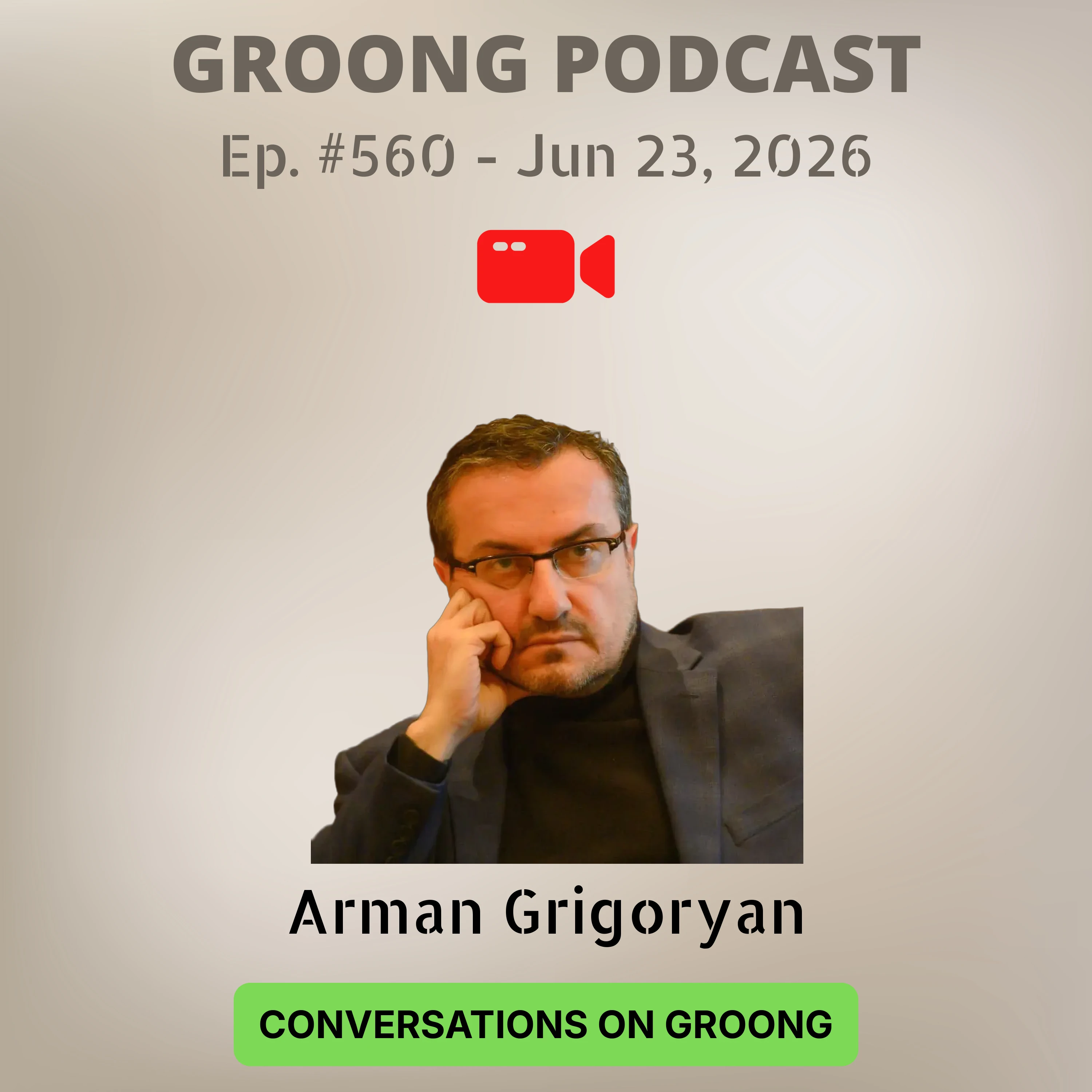
Groong Links:
Guest(s):
Topics:
- US-Iran negotiations and regional risks
- TRIPP and shifting regional power
- Armenia’s contested post-election landscape
- Opposition failures and future strategy
- Risks of another parliamentary election
Episode 560 | Recorded: June 22, 2026
#ArmeniaElections #USIranNegotiations #SouthCaucasus #TRIPP #Iran #ArmanGrigoryan
Arman Grigoryan - US-Iran Negotiations, Post-Election Armenian Politics | Ep 560, Jun 23, 2026 [EP560]
Posted on Tuesday, Jun 23, 2026 | Category: Armenia, Politics, IranGroong Links:
Guest(s):
Topics:
- US-Iran negotiations and regional risks
- TRIPP and shifting regional power
- Armenia’s contested post-election landscape
- Opposition failures and future strategy
- Risks of another parliamentary election
Episode 560 | Recorded: June 22, 2026
#ArmeniaElections #USIranNegotiations #SouthCaucasus #TRIPP #Iran #ArmanGrigoryan
Israel's Veto Power Over US-Iran Talks [EP560]
Posted on Tuesday, Jun 23, 2026 | Category: Geopolitics, Iran, Israel, USA, Middle EastDr. Grigoryan explains how Israel’s veto power threatens the US-Iran negotiations in Switzerland, and why Netanyahu has incentives to sabotage any agreement.