Ilham Aliyev
Last updated: May 29, 2026
Ilham Aliyev has led Azerbaijan since succeeding his father Heydar Aliyev in 2003, consolidating an authoritarian system built on hydrocarbon wealth and a foreign policy defined by strategic patience and the eventual use of force in the Nagorno Karabakh (Artsakh) conflict. Aliyev is one of the most frequently discussed figures in Groong’s coverage, appearing across more than 200 episodes.
The two defining events of Aliyev’s tenure in Groong’s coverage are the 44-Day War of 2020 and Azerbaijan’s military offensive of September 2023. The 2020 war — launched with Turkish military support — ended with Armenia’s defeat and the Russian-brokered ceasefire of November 9. Aliyev then used the three-year interregnum to progressively squeeze the remaining Armenian population of Nagorno-Karabakh through the Lachin Corridor blockade before the September 2023 offensive that expelled the entire Armenian population of Artsakh — what international human rights organizations have characterized as ethnic cleansing.
In Groong’s analysis, Aliyev’s post-2023 posture has continued to pressure Armenia on multiple fronts: demanding constitutional changes, pursuing the Zangezur Corridor through Syunik , and keeping Armenian prisoners of war — including former Artsakh leaders — in Azerbaijani detention. Episodes also examine Aliyev’s foreign policy relationships: his alliance with Turkey, Azerbaijan’s growing ties with Israel and other arms suppliers, his use of energy leverage over Europe, Azerbaijan’s hosting of COP29 in Baku in 2024, and Baku’s uneasy balance between Russia and the West.
Groong episodes covering Aliyev address the state of the Armenia-Azerbaijan peace process , the human rights situation inside Azerbaijan, and the broader implications of Azerbaijani regional ambitions for Armenian security.
Groong episodes that include this tag
Below are all Groong episodes tagged with Ilham Aliyev.
Arthur Khachatryan - Opposition Strategy, TRIPP, and the Russian Base | Ep 589, Sep 23, 2026 [EP589]
Posted on Wednesday, Sep 23, 2026 | Series: cog, video
Groong Links:
Guest(s):
Topics:
- Reflections on Independence Day
- Post-election opposition strategy
- Tigranashen and other territorial concessions
- Azerbaijani attacks on Armenian heritage
- Azerbaijani control over TRIPP access
- Future of Russia’s 102nd base
- Asset confiscation and Russia tensions
- Attacks and threats against the ARF
Episode 589 | Recorded: September 22, 2026
#Armenia #ArthurKhachatryan #ArmeniaAlliance #TRIPP #Tigranashen #Artsakh #SouthCaucasus #ArmenianPolitics
Read MoreArthur Khachatryan - Opposition Strategy, TRIPP, and the Russian Base | Ep 589, Sep 23, 2026 [EP589]
Posted on Wednesday, Sep 23, 2026Groong Links:
Guest(s):
Topics:
- Reflections on Independence Day
- Post-election opposition strategy
- Tigranashen and other territorial concessions
- Azerbaijani attacks on Armenian heritage
- Azerbaijani control over TRIPP access
- Future of Russia’s 102nd base
- Asset confiscation and Russia tensions
- Attacks and threats against the ARF
Episode 589 | Recorded: September 22, 2026
#Armenia #ArthurKhachatryan #ArmeniaAlliance #TRIPP #Tigranashen #Artsakh #SouthCaucasus #ArmenianPolitics
Read MoreCan an Armenian Even Use TRIPP [EP589]
Posted on Wednesday, Sep 23, 2026 | Category: Geopolitics, Armenia, AzerbaijanHovik asks a simple question about TRIPP that no one will answer: can an Armenian board a train in one village and get off in the next?
Armenia at 35: Independence, Loss, and Unfinished Wars | Ep 588, Sep 20, 2026 [EP588]
Posted on Wednesday, Sep 23, 2026 | Category: Armenia, Politics, Geopolitics | Series: wir, video
Groong Links:
Topics:
- Armenia marks 35 years independent
- Artsakh remembered three years later
- Armenian POWs remain in Baku
- Ukraine strikes deep inside Russia
- Turkey-Azerbaijan deepen strategic coordination
- Citizenship costs rise sharply
- Government opacity over war casualties
Episode 588 | Recorded: September 22, 2026
#Armenia #Artsakh #UkraineWar #ArmenianPOWs #Azerbaijan #Turkey #SouthCaucasus #ArmenianPolitics
Armenia at 35: Independence, Loss, and Unfinished Wars | Ep 588, Sep 20, 2026 [EP588]
Posted on Wednesday, Sep 23, 2026 | Category: Armenia, Politics, GeopoliticsGroong Links:
Topics:
- Armenia marks 35 years independent
- Artsakh remembered three years later
- Armenian POWs remain in Baku
- Ukraine strikes deep inside Russia
- Turkey-Azerbaijan deepen strategic coordination
- Citizenship costs rise sharply
- Government opacity over war casualties
Episode 588 | Recorded: September 22, 2026
#Armenia #Artsakh #UkraineWar #ArmenianPOWs #Azerbaijan #Turkey #SouthCaucasus #ArmenianPolitics
The Turkey-Azerbaijan Alliance Armenia Held Off for 26 Years [EP588]
Posted on Wednesday, Sep 23, 2026 | Category: Geopolitics, Turkey, AzerbaijanHovik argues the Turkey-Azerbaijan bond is uniquely strong and that Armenia kept Turkey out of the conflict for 26 years until Pashinyan.
Transcript: Armenia at 35: Independence, Loss, and Unfinished Wars | Ep 588, Sep 20, 2026 [EP588]
Posted on Wednesday, Sep 23, 2026 | Category: Armenia, Politics, Geopolitics, TranscriptIn this week’s Groong podcast episode, Hovik and Asbed reflect on Armenia’s 35th independence anniversary amid ongoing regional tensions and unresolved conflicts. We discuss the state of Armenian statehood three years after the ethnic cleansing of Artsakh, Armenian prisoners of war still held in Baku, rising citizenship costs, government opacity over war casualties, and deepening Turkey-Azerbaijan strategic coordination.
Transcript: Arthur Khachatryan - Opposition Strategy, TRIPP, and the Russian Base | Ep 589, Sep 23, 2026 [EP589]
Posted on Wednesday, Sep 23, 2026 | Category: TranscriptIn this episode of Conversations on Groong, we speak with Arthur Khachatryan, MP from Armenia Alliance, about opposition strategy following the June 2026 Armenian Parliamentary Election. We discuss the Established Opposition’s plans to counter Pashinyan’s agenda, territorial concessions including Tigranashen, Azerbaijani attacks on Armenian heritage, the role of TRIPP and Azerbaijan’s control over transit corridors, the future of Russia’s 102nd military base, and escalating threats against opposition parties.
Azerbaijan Mocks Armenian Manuscript With Blank Pages [EP585]
Posted on Wednesday, Sep 16, 2026 | Category: Artsakh, Culture, AzerbaijanAt Gandzasar, an Azerbaijani official held up a blank-paged replica of an Armenian manuscript and called it empty, as European diplomats smiled.
France Launched Azerbaijan's Satellites, Used Against Armenia [EP585]
Posted on Wednesday, Sep 16, 2026 | Category: Politics, Technology, AzerbaijanAs Pashinyan attends a Paris space summit, Hovik notes France helped build and launch Azerbaijan’s satellites, later used against Armenia in war.
The EU's 'Diverging Narratives' Is Both-Sides-ism [EP585]
Posted on Wednesday, Sep 16, 2026 | Category: Artsakh, Politics, European UnionEU Special Representative Magdalena Grono called the Gandzasar dispute a matter of “deeply diverging views and narratives.” The hosts call it false equivalence.
Artsakh Remembered, SCO Theater, Russian Signals, and the Cucumber Paradox | Ep 584, Sep 6, 2026 [EP584]
Posted on Monday, Sep 7, 2026 | Series: wir, video
Groong Links:
Topics:
- Artsakh remembered, its cause unresolved
- Putin puts Russia’s military base on the table
- Church prosecutions begin to unravel
- EU trade headlines look better than the deal
- Army indiscipline fuels mounting non-combat deaths
- New political pressures before local elections
Episode 584 | Recorded: Sep 6, 2026
#Artsakh #Armenia #NagornoKarabakh #SouthCaucasus #SCO #Russia #EuropeanUnion #ArmenianPolitics
Artsakh Remembered, SCO Theater, Russian Signals, and the Cucumber Paradox | Ep 584, Sep 6, 2026 [EP584]
Posted on Monday, Sep 7, 2026Groong Links:
Topics:
- Artsakh remembered, its cause unresolved
- Putin puts Russia’s military base on the table
- Church prosecutions begin to unravel
- EU trade headlines look better than the deal
- Army indiscipline fuels mounting non-combat deaths
- New political pressures before local elections
Episode 584 | Recorded: Sep 6, 2026
#Artsakh #Armenia #NagornoKarabakh #SouthCaucasus #SCO #Russia #EuropeanUnion #ArmenianPolitics
The NSC Chief Who Once Called Concessions 'Betrayal' [EP584]
Posted on Monday, Sep 7, 2026 | Category: Politics, Nagorno Karabakh, ArmeniaThe hosts read Arman Grigoryan’s 2012 words calling concessions to Azerbaijan a betrayal, then reveal he was born in Martuni, Artsakh.
Transcript: Artsakh Remembered, SCO Theater, Russian Signals, and the Cucumber Paradox | Ep 584, Sep 6, 2026 [EP584]
Posted on Monday, Sep 7, 2026 | Category: TranscriptIn this week’s Groong episode, Hovik and Asbed review September 2026 developments across Armenia and the South Caucasus. We examine Artsakh’s remembered independence declaration on September 2, 1991, and its unresolved cause following the 2023 ethnic cleansing; Putin’s signaling on Russia’s military base presence; ongoing Armenian Church prosecutions; EU trade negotiations; mounting non-combat military deaths; and political pressures ahead of local elections. We also analyze U.S. envoy Witkoff and Kushner’s diplomatic shuttle through Moscow and Kyiv.
Armenia at the SCO Summit as Ukraine and Iran Wars Intensify | Ep 582, Aug 30, 2026 [EP582]
Posted on Wednesday, Sep 2, 2026 | Series: wir, video
Groong Links:
Topics:
- Russia Escalates War Against Ukraine
- Unprecedented Western Visits to Moscow
- US-Iran War Flares Again
- All Artsakh Presidents Behind Bars
- Armenia at the SCO Summit
- Pashinyan Meets Aliyev, Putin, Modi
- Political Persecutions and Selective Justice
Episode 582 | Recorded: September 1, 2026
#Armenia #Artsakh #UkraineWar #IranWar #SCO #Pashinyan #SouthCaucasus #ArmenianPolitics
Armenia at the SCO Summit as Ukraine and Iran Wars Intensify | Ep 582, Aug 30, 2026 [EP582]
Posted on Wednesday, Sep 2, 2026Groong Links:
Topics:
- Russia Escalates War Against Ukraine
- Unprecedented Western Visits to Moscow
- US-Iran War Flares Again
- All Artsakh Presidents Behind Bars
- Armenia at the SCO Summit
- Pashinyan Meets Aliyev, Putin, Modi
- Political Persecutions and Selective Justice
Episode 582 | Recorded: September 1, 2026
#Armenia #Artsakh #UkraineWar #IranWar #SCO #Pashinyan #SouthCaucasus #ArmenianPolitics
Transcript: Armenia at the SCO Summit as Ukraine and Iran Wars Intensify | Ep 582, Aug 30, 2026 [EP582]
Posted on Wednesday, Sep 2, 2026 | Category: TranscriptIn this week’s Groong news roundup, Hovik and Asbed examine Armenia’s position at the SCO Summit amid intensifying global conflicts. We discuss Russia’s escalation in Ukraine, unprecedented Western diplomatic visits to Moscow, the renewed US-Iran War, and Pashinyan’s meetings with regional and global leaders including Aliyev and Putin. We also address the ongoing persecution of former Artsakh leaders and the selective justice targeting Armenia’s political landscape.
Arthur Martirosyan - The Fourth Republic and the Politics of Erasure | Ep 581, Aug 29, 2026 [EP581]
Posted on Saturday, Aug 29, 2026 | Category: Armenia, Politics | Series: cog, video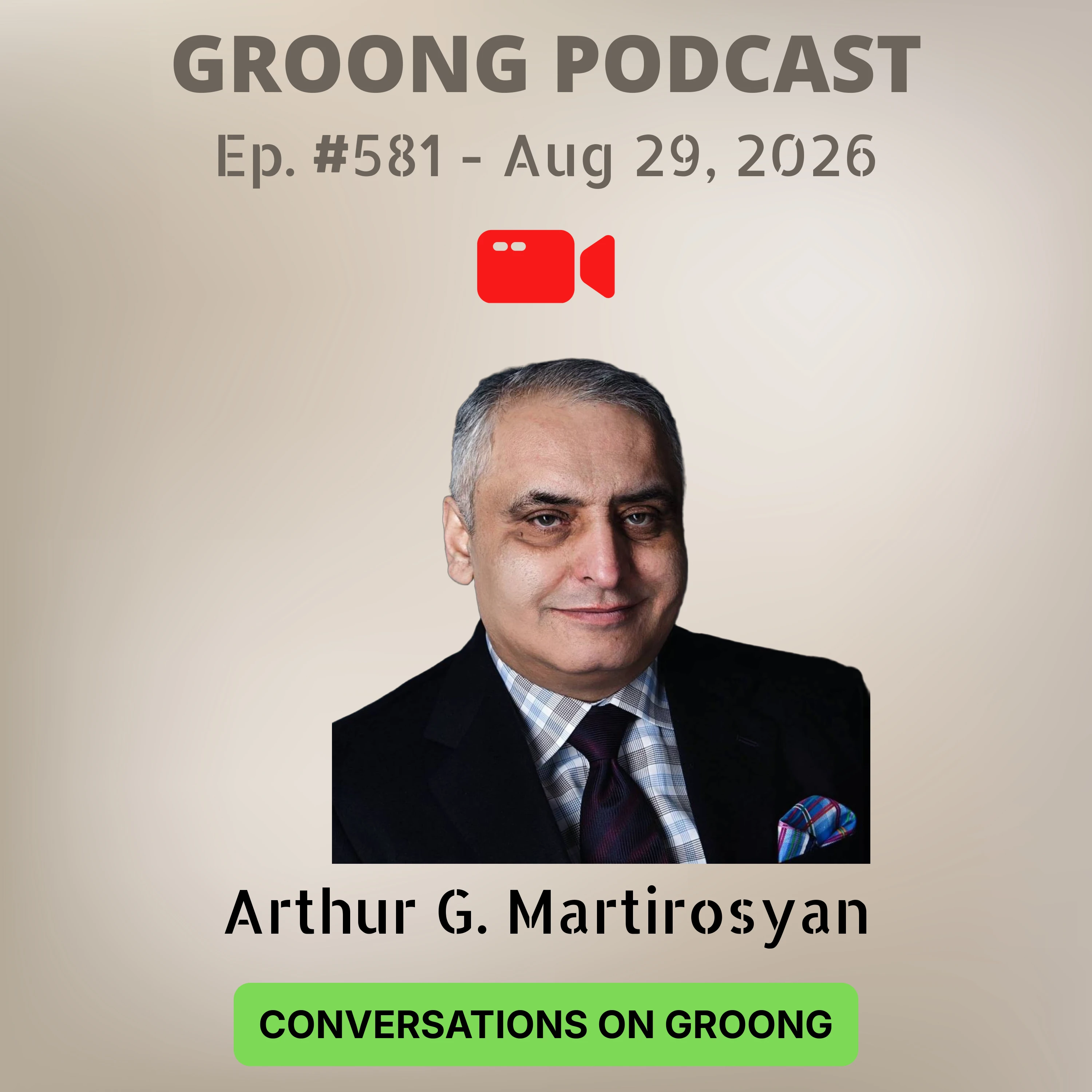
Groong Links:
Guest(s):
Topics:
- Pashinyan’s Revenge Against Opposition
- Kocharyan Arrested, Family Under State Pressure
- Opposition Strategy Under Repression
- Pashinyan’s Five-Year Transformation Agenda
- Government Assault on Armenian Church
- Tigranashen and Border Concessions
- TRIPP, Turan, and Central Asia
Episode 581 | Recorded: August 28, 2026
#ArmenianElections #Armenia #NikolPashinyan #CivilContract #StrongArmenia #ArmenianOpposition
Arthur Martirosyan - The Fourth Republic and the Politics of Erasure | Ep 581, Aug 29, 2026 [EP581]
Posted on Saturday, Aug 29, 2026 | Category: Armenia, PoliticsGroong Links:
Guest(s):
Topics:
- Pashinyan’s Revenge Against Opposition
- Kocharyan Arrested, Family Under State Pressure
- Opposition Strategy Under Repression
- Pashinyan’s Five-Year Transformation Agenda
- Government Assault on Armenian Church
- Tigranashen and Border Concessions
- TRIPP, Turan, and Central Asia
Episode 581 | Recorded: August 28, 2026
#ArmenianElections #Armenia #NikolPashinyan #CivilContract #StrongArmenia #ArmenianOpposition
Transcript: Arthur Martirosyan - The Fourth Republic and the Politics of Erasure | Ep 581, Aug 29, 2026 [EP581]
Posted on Saturday, Aug 29, 2026 | Category: Armenia, Politics, TranscriptIn this episode of Conversations on Groong, we speak with Arthur G. Martirosyan about Armenia’s post-election political crisis and Pashinyan’s governance agenda. We discuss the arrest of opposition leaders including Robert Kocharyan, attacks on the Armenian Church, border concessions including Tigranashen, the TRIPP corridor, and how the Established Opposition is strategizing under state repression in the Fourth Republic.
Dziunik Aghajanian - Armenia Between Iran, Russia & the New Middle East Order | Ep 579, Aug 22, 2026 [EP579]
Posted on Saturday, Aug 22, 2026 | Category: Armenia, Politics, Geopolitics | Series: cog, video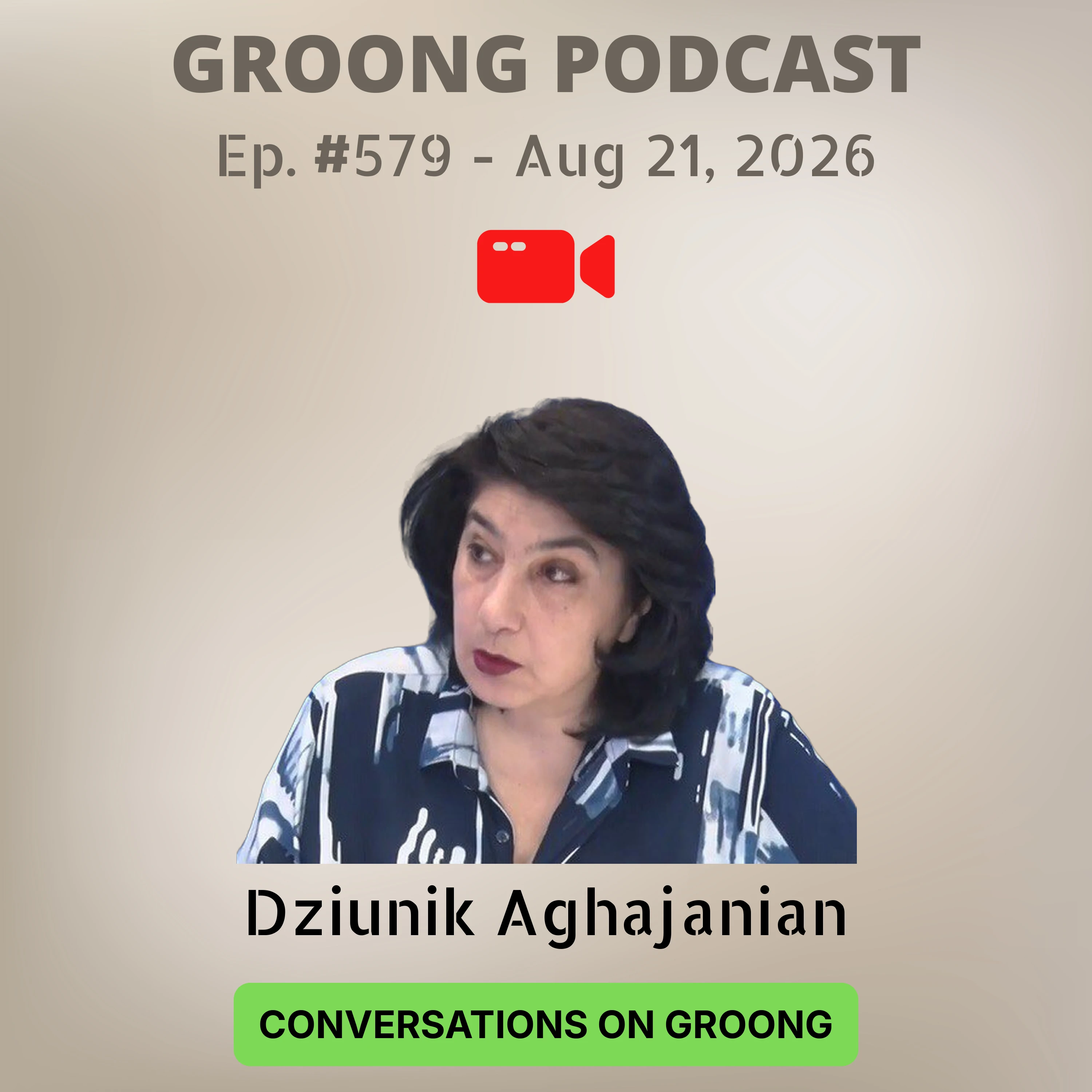
Groong Links:
Guest(s):
Topics:
- Significance of the Mecca joint defense pact
- Iran warns Armenia over TRIPP
- Aliyev advances plans through Syunik
- Armenia faces growing energy dependence
- Russia sets deadlines for Yerevan
- Opposition tests its parliamentary strategy
Episode 579 | Recorded: August 18, 2026
#Armenia #SouthCaucasus #Mecca #TRIPP #Iran #Russia #Azerbaijan #EAEU #CSTO
Dziunik Aghajanian - Armenia Between Iran, Russia & the New Middle East Order | Ep 579, Aug 22, 2026 [EP579]
Posted on Saturday, Aug 22, 2026 | Category: Armenia, Politics, GeopoliticsGroong Links:
Guest(s):
Topics:
- Significance of the Mecca joint defense pact
- Iran warns Armenia over TRIPP
- Aliyev advances plans through Syunik
- Armenia faces growing energy dependence
- Russia sets deadlines for Yerevan
- Opposition tests its parliamentary strategy
Episode 579 | Recorded: August 18, 2026
#Armenia #SouthCaucasus #Mecca #TRIPP #Iran #Russia #Azerbaijan #EAEU #CSTO
Transcript: Dziunik Aghajanian - Armenia Between Iran, Russia & the New Middle East Order | Ep 579, Aug 22, 2026 [EP579]
Posted on Saturday, Aug 22, 2026 | Category: Armenia, Politics, Geopolitics, TranscriptIn this episode of Conversations on Groong, we speak with Dziunik Aghajanian about Armenia’s precarious position between Iran, Russia, and emerging Middle East power shifts. We discuss the Mecca joint defense pact signed by Turkey, Pakistan, and Saudi Arabia, Iran’s warnings over TRIPP, Ilham Aliyev’s militarization plans in Nakhijevan, Armenia’s growing energy dependence, Russian deadlines for Yerevan, and how the Established Opposition is testing its parliamentary strategy ahead of the 2026 Armenian Parliamentary Election.
Aliyev's TRIPP Play: Azerbaijani Teams Scoping Syunik, Threatening Armenian Nuclear Power [EP578]
Posted on Wednesday, Aug 19, 2026 | Category: Azerbaijan, Geopolitics, ArmeniaAliyev revealed that Azerbaijani technical teams have surveyed transmission line routes through Syunik for TRIPP, and he is now signaling that Armenia’s nuclear power plant could become a future demand.
Aliyev’s TRIPP, Russia’s Deadline, Iran’s Warning | Ep 578, Aug 16, 2026 [EP578]
Posted on Wednesday, Aug 19, 2026 | Category: Armenia, Politics | Series: wir, video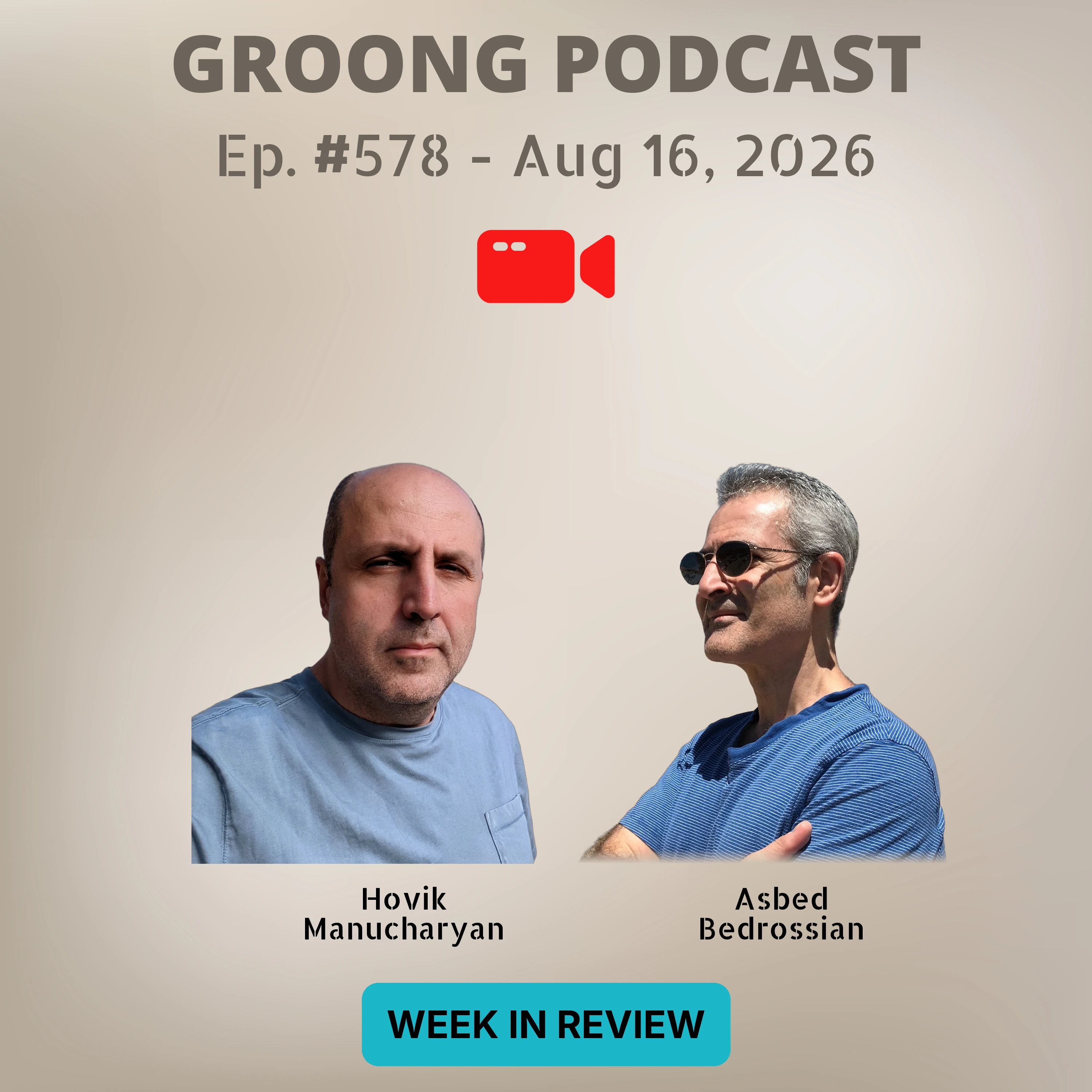
Groong Links:
Topics:
- US-Iran War Risks Return
- Armenia Faces Regional Spillover Risks
- Russia Pressures Armenia Over Western Pivot
- TRIPP Deepens Security and Energy Risks
- Domestic Politics Grow More Confrontational
- Arrests and Prosecutions Fuel Repression Claims
Episode 578 | Recorded: August 17, 2026
#Armenia #IranWar #TRIPP #Syunik #SouthCaucasus #RussiaArmenia #Nakhichevan #ArmenianPolitics
Aliyev’s TRIPP, Russia’s Deadline, Iran’s Warning | Ep 578, Aug 16, 2026 [EP578]
Posted on Wednesday, Aug 19, 2026 | Category: Armenia, PoliticsGroong Links:
Topics:
- US-Iran War Risks Return
- Armenia Faces Regional Spillover Risks
- Russia Pressures Armenia Over Western Pivot
- TRIPP Deepens Security and Energy Risks
- Domestic Politics Grow More Confrontational
- Arrests and Prosecutions Fuel Repression Claims
Episode 578 | Recorded: August 17, 2026
#Armenia #IranWar #TRIPP #Syunik #SouthCaucasus #RussiaArmenia #Nakhichevan #ArmenianPolitics
Transcript: Aliyev’s TRIPP, Russia’s Deadline, Iran’s Warning | Ep 578, Aug 16, 2026 [EP578]
Posted on Wednesday, Aug 19, 2026 | Category: Armenia, Politics, TranscriptIn this episode of Groong Week in Review, Hovik and Asbed discuss Armenia’s precarious position amid escalating Iran War risks, Russia’s December ultimatum on the Eurasian Economic Union, and deepening security threats from TRIPP. We examine how a broader US-Iran conflict could devastate Armenia through refugee flows and logistics collapse, why Pashinyan’s EAEU defiance has triggered Russian pressure, and what frozen CSTO membership actually means for Armenian security.
Hovik on Tigranashen Handover: Clear as Day [EP574]
Posted on Tuesday, Aug 4, 2026 | Category: Politics, Armenia, GeopoliticsHovik Manucharyan argues that Pashinyan has already agreed to hand over Tigranashen and is executing a piecemeal territorial surrender strategy, bypassing Soviet-era border protocols.
Groong Links:
Guest(s):
Topics:
- Erasing memory across Yerevan
- Great Purge in Soviet Armenia
- Khanjyan’s assassination and Beria
- Repression of Armenia’s national institutions
- Remembering Stalinist repression
- Historical parallels with modern Armenia
- Attacks on memory and Church
- Opposition strategy after the election
Episode 573 | Recorded: July 31, 2026
#Armenia #GreatPurge #AghasiKhanjyan #PietroShakarian #Artsakh #ArmenianChurch #PoliticalRepression #MemoryUnderSiege #Authoritarianism #SovietArmenia
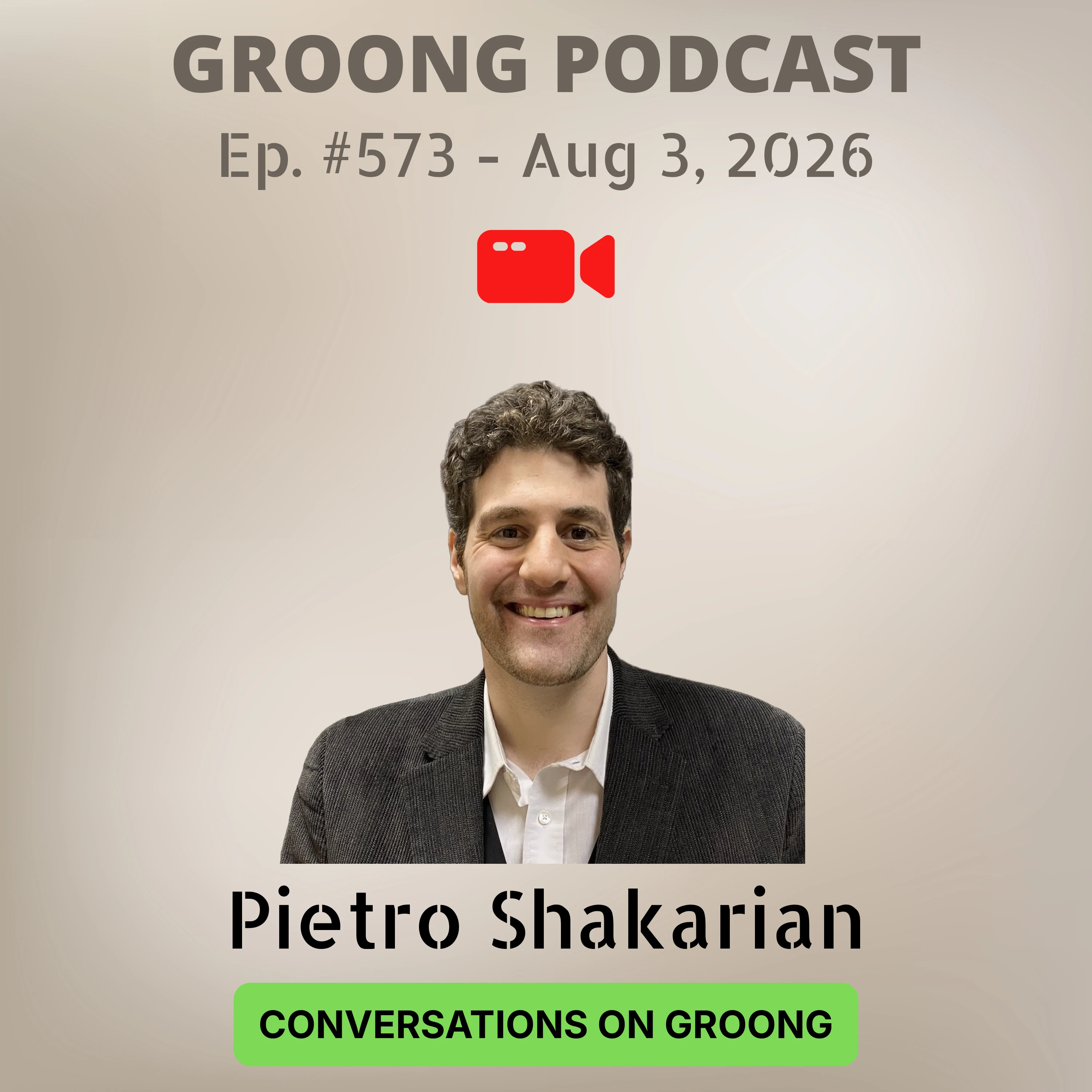
Read MorePietro Shakarian - Memory Under Siege: From Stalin to Pashinyan | Ep 573, Aug 3, 2026 [EP573]
Posted on Monday, Aug 3, 2026 | Category: Armenia, Politics, HistoryGroong Links:
Guest(s):
Topics:
- Erasing memory across Yerevan
- Great Purge in Soviet Armenia
- Khanjyan’s assassination and Beria
- Repression of Armenia’s national institutions
- Remembering Stalinist repression
- Historical parallels with modern Armenia
- Attacks on memory and Church
- Opposition strategy after the election
Episode 573 | Recorded: July 31, 2026
#Armenia #GreatPurge #AghasiKhanjyan #PietroShakarian #Artsakh #ArmenianChurch #PoliticalRepression #MemoryUnderSiege #Authoritarianism #SovietArmenia
Read MoreTranscript: Pietro Shakarian - Memory Under Siege: From Stalin to Pashinyan | Ep 573, Aug 3, 2026 [EP573]
Posted on Monday, Aug 3, 2026 | Category: Armenia, Politics, History, TranscriptIn this episode of Conversations on Groong, we speak with Dr. Pietro Shakarian about memory, repression, and state power in Armenia across Soviet and contemporary periods. We discuss the Great Purge in Soviet Armenia, the assassination of Aghasi Khanjyan, the suppression of Armenian national institutions under Stalin and Beria, and the parallels between Stalinist erasure and current efforts to control public memory, symbols, and mourning in post-Artsakh Armenia under the Civil Contract regime.
Groong Links:
Topics:
- Ukraine expands its war into the Caspian
- Iran warns of a wider regional response
- Russia and the West test stalled diplomacy
- Aliyev positions Baku as a geopolitical hub
- Armenia faces pressure over EU alignment
- Baku POW abuse and their deteriorating health
- Housing policy expose domestic failures
Episode 571 | Recorded: July 27, 2026
#Armenia #UkraineWar #Iran #CaspianSea #SouthCaucasus #MiddleCorridor #ArmenianPOWs #Geopolitics
From Caspian Drones to Armenia’s Cold Winter | Ep 571, Jul 26, 2026 [EP571]
Posted on Tuesday, Jul 28, 2026 | Category: Armenia, Iran, PoliticsGroong Links:
Topics:
- Ukraine expands its war into the Caspian
- Iran warns of a wider regional response
- Russia and the West test stalled diplomacy
- Aliyev positions Baku as a geopolitical hub
- Armenia faces pressure over EU alignment
- Baku POW abuse and their deteriorating health
- Housing policy expose domestic failures
Episode 571 | Recorded: July 27, 2026
#Armenia #UkraineWar #Iran #CaspianSea #SouthCaucasus #MiddleCorridor #ArmenianPOWs #Geopolitics
Transcript: From Caspian Drones to Armenia’s Cold Winter | Ep 571, Jul 26, 2026 [EP571]
Posted on Tuesday, Jul 28, 2026 | Category: Armenia, Iran, Politics, TranscriptIn this week’s edition of the Armenian News podcast, Hovik and Asbed analyze escalating regional tensions as Ukraine expands operations into the Caspian Sea, striking Iranian and Russian assets. We examine how this merger of the Northern and Southern conflicts affects Armenia, Kazakhstan’s energy security, and Pashinyan’s diplomatic positioning amid new pressure from Western capitals following Aliyev’s recent visits to Germany and Berlin.
Arthur Martirosyan - After the Anger, What Next? | Ep 557, Jun 10, 2026 [EP557]
Posted on Thursday, Jun 11, 2026 | Category: Armenia, Politics | Series: cog, video
Groong Links:
Guest(s):
Topics:
- Contested results and thresholds
- Pashinyan’s post-election crackdown
- Western backing and interference
- Russia’s delayed pressure campaign
- Opposition choices after the vote
Episode 557 | Recorded: June 9, 2026
#ArmenianElections #Armenia #NikolPashinyan #CivilContract #StrongArmenia #ArmenianOpposition
Arthur Martirosyan - After the Anger, What Next? | Ep 557, Jun 10, 2026 [EP557]
Posted on Thursday, Jun 11, 2026 | Category: Armenia, PoliticsGroong Links:
Guest(s):
Topics:
- Contested results and thresholds
- Pashinyan’s post-election crackdown
- Western backing and interference
- Russia’s delayed pressure campaign
- Opposition choices after the vote
Episode 557 | Recorded: June 9, 2026
#ArmenianElections #Armenia #NikolPashinyan #CivilContract #StrongArmenia #ArmenianOpposition
Transcript: Arthur Martirosyan - After the Anger, What Next? | Ep 557, Jun 10, 2026 [EP557]
Posted on Thursday, Jun 11, 2026 | Category: Armenia, Politics, TranscriptIn this episode of Conversations on Groong, we speak with Arthur G. Martirosyan about Armenia’s contested 2026 Armenian Parliamentary Election and Pashinyan’s path to a third term. We discuss whether the vote was free and fair, how state pressure and Western backing shaped the outcome, the razor-thin thresholds that determine parliamentary representation, Pashinyan’s post-election crackdown against the Established Opposition, and what a Civil Contract supermajority would mean for Armenia’s governance and the Armenia-Azerbaijan Peace Process.
2026 Elections: A Mandate Under Dispute | Ep 556, June 7, 2026 [EP556]
Posted on Wednesday, Jun 10, 2026 | Category: Armenia, Politics | Series: wir, video
Groong Links:
Topics:
- Disputed mandate, unresolved majority
- Election-day irregularities in plain sight
- ODIHR’s mixed preliminary verdict
- Bribery replaced by state spending
- Opposition’s next steps uncertain
Episode 556 | Recorded: Jun 9, 2026 #ArmenianElections #ArmenianNews #CivilContract #Pashinyan #Election2026 #SouthCaucasus
2026 Elections: A Mandate Under Dispute | Ep 556, June 7, 2026 [EP556]
Posted on Wednesday, Jun 10, 2026 | Category: Armenia, PoliticsGroong Links:
Topics:
- Disputed mandate, unresolved majority
- Election-day irregularities in plain sight
- ODIHR’s mixed preliminary verdict
- Bribery replaced by state spending
- Opposition’s next steps uncertain
Episode 556 | Recorded: Jun 9, 2026 #ArmenianElections #ArmenianNews #CivilContract #Pashinyan #Election2026 #SouthCaucasus
Transcript: 2026 Elections: A Mandate Under Dispute | Ep 556, June 7, 2026 [EP556]
Posted on Wednesday, Jun 10, 2026 | Category: Armenia, Politics, TranscriptIn this episode of Groong Week in Review, we analyze the disputed results of Armenia’s June 7, 2026 Armenian Parliamentary Election. We examine Civil Contract’s contested majority, alleged irregularities and invalid ballots, the OSCE/ODIHR preliminary report, the last-minute exclusion of Prosperous Armenia, opposition arrests and pressure, and what a three-fifths majority could mean for Armenia’s courts, institutions, and foreign policy.
Arthur Khachatryan - Armenia Alliance in the 2026 Armenian Parliamentary Election | Ep 551, May 31, 2026 [EP551]
Posted on Sunday, May 31, 2026 | Category: Armenia, Politics, Nagorno Karabakh | Series: cog, video
Groong Links:
Guest(s):
Topics:
- Free and fair elections
- Polls and opposition unity
- Hayastan Dashinq platform
- TRIPP and foreign policy
- Economy and Russian pressure
Episode 551 | Recorded: May 30, 2026
#ArmeniaElections #ArthurKhachatryan #HayastanDashinq #ArmenianOpposition #Pashinyan #TRIPP #SouthCaucasus #Groong
Arthur Khachatryan - Armenia Alliance in the 2026 Armenian Parliamentary Election | Ep 551, May 31, 2026 [EP551]
Posted on Sunday, May 31, 2026 | Category: Armenia, Politics, Nagorno KarabakhGroong Links:
Guest(s):
Topics:
- Free and fair elections
- Polls and opposition unity
- Hayastan Dashinq platform
- TRIPP and foreign policy
- Economy and Russian pressure
Episode 551 | Recorded: May 30, 2026
#ArmeniaElections #ArthurKhachatryan #HayastanDashinq #ArmenianOpposition #Pashinyan #TRIPP #SouthCaucasus #Groong
Transcript: Arthur Khachatryan - Armenia Alliance in the 2026 Armenian Parliamentary Election | Ep 551, May 31, 2026 [EP551]
Posted on Sunday, May 31, 2026 | Category: Armenia, Politics, Nagorno Karabakh, TranscriptIn this episode of Conversations on Groong, we speak with Arthur Khachatryan of the Hayastan Dashinq, Armenia Alliance about the 2026 Armenian Parliamentary Election scheduled for June 7. We discuss whether free and fair elections are possible given foreign interference from the West, abuse of administrative resources by the ruling Civil Contract party, media control, and competing pressures from the United States, EU, Russia, and regional actors including Turkey and Azerbaijan.
Rubio Visit, New MPG and IRI Polls, Hidden Votes and Why Are You Alive? | Ep 550, May 24, 2026 [EP550]
Posted on Wednesday, May 27, 2026 | Category: Armenia, Politics, Poll, Armenian Church, Nagorno Karabakh, Armenian Genocide, Azerbaijan, Russia, China | Series: wir, video
Groong Links:
Topics:
- Rubio’s sudden Armenia visit
- Polls diverge before election
- Hidden vote raises questions
- TRIPP remains deeply polarizing
- “Western Azerbaijan” pressure grows
- Opposition faces arrests, threats
- “Why are you alive?” campaign rhetoric
Episode 550 | Recorded: May 25, 2026
#ArmeniaElections #Armenia #NikolPashinyan #TRIPP #ZangezurCorridor #WesternAzerbaijan #ArmenianOpposition
Rubio Visit, New MPG and IRI Polls, Hidden Votes and Why Are You Alive? | Ep 550, May 24, 2026 [EP550]
Posted on Wednesday, May 27, 2026 | Category: Armenia, Politics, Poll, Armenian Church, Nagorno Karabakh, Armenian Genocide, Azerbaijan, Russia, ChinaGroong Links:
Topics:
- Rubio’s sudden Armenia visit
- Polls diverge before election
- Hidden vote raises questions
- TRIPP remains deeply polarizing
- “Western Azerbaijan” pressure grows
- Opposition faces arrests, threats
- “Why are you alive?” campaign rhetoric
Episode 550 | Recorded: May 25, 2026
#ArmeniaElections #Armenia #NikolPashinyan #TRIPP #ZangezurCorridor #WesternAzerbaijan #ArmenianOpposition
Transcript: Rubio Visit, New MPG and IRI Polls, Hidden Votes and Why Are You Alive? | Ep 550, May 24, 2026 [EP550]
Posted on Wednesday, May 27, 2026 | Category: Armenia, Politics, Poll, Armenian Church, Nagorno Karabakh, Armenian Genocide, Azerbaijan, Russia, China, TranscriptThis Week in Review examines the tightening political climate in Armenia ahead of the June 2026 parliamentary elections. Asbed and Hovik discuss Marco Rubio’s sudden Armenia visit, new polling from IRI, MPG, and CAEAC, and what the wide gaps in voter disclosure may reveal about hidden opposition support. The episode also covers TRIPP, “Western Azerbaijan” rhetoric, public trust in the Armenian Apostolic Church, and the growing use of arrests, threats, and state pressure against opposition figures. The discussion centers on Pashinyan’s escalating campaign rhetoric, including his “Why are you alive?” outburst, and what it signals about the stakes of the coming election.
Edgar Elbakyan - The Battle for Armenia’s Political Future | Ep 549, May 24, 2026 [EP549]
Posted on Sunday, May 24, 2026 | Category: Armenia, Politics, Armenian Church, Nagorno Karabakh, Azerbaijan | Series: cog, video
Groong Links:
Guest:
Topics:
- Armenia’s existential election
- Polling under fear
- Divergent polling results
- Church and state conflict
- Post-election street pressure
Episode 549 | Recorded: May 22, 2026
#Armenia #ArmenianPolitics #EdgarElbakyan #StrongArmenia #ArmeniaAlliance #ArmeniaElections
Edgar Elbakyan - The Battle for Armenia’s Political Future | Ep 549, May 24, 2026 [EP549]
Posted on Sunday, May 24, 2026 | Category: Armenia, Politics, Armenian Church, Nagorno Karabakh, AzerbaijanGroong Links:
Guest:
Topics:
- Armenia’s existential election
- Polling under fear
- Divergent polling results
- Church and state conflict
- Post-election street pressure
Episode 549 | Recorded: May 22, 2026
#Armenia #ArmenianPolitics #EdgarElbakyan #StrongArmenia #ArmeniaAlliance #ArmeniaElections
Groong News Digest — Week of May 18–24, 2026
Posted on Sunday, May 24, 2026 | Category: Digest, News DigestArmenia’s June 7 parliamentary campaign turned sharply confrontational as security forces raided opposition offices, Russia escalated economic pressure through export bans, and Pashinyan announced new railway connectivity through Turkey while signaling further territorial concessions to Azerbaijan.
Transcript: Edgar Elbakyan - The Battle for Armenia’s Political Future | Ep 549, May 24, 2026 [EP549]
Posted on Sunday, May 24, 2026 | Category: Armenia, Politics, Armenian Church, Nagorno Karabakh, Azerbaijan, TranscriptThis Conversations on Groong episode features Edgar Elbakyan in a discussion of Armenia’s upcoming election and the wider struggle over the country’s political future. The conversation examines whether the vote should be viewed as an existential election, how fear and pressure shape public opinion, why polling results differ so sharply, and which political forces may be positioned to enter parliament. The episode also looks at whether the opposition is focused on the issues that matter most, including statehood, security, public trust, and the possibility that the election may not end at the ballot box.
Pashinyan's Hate Speech, Threats, and the June 7 Election Climate | Ep 547, May 17, 2026 [EP547]
Posted on Tuesday, May 19, 2026 | Category: Armenia, Politics, Election, Armenian Church, Nagorno Karabakh, Artsakh Blockade, Russia, China, Azerbaijan, Georgia, Iran, NATO | Series: wir, video
Groong Links:
Topics:
- Trump, China, and Iran
- Armenia-Russia “soft divorce”
- Pashinyan’s violent campaign rhetoric
- State resources and election pressure
- Javakhk church vandalism concerns
Episode 547 | Recorded: May 18, 2026
#Pashinyan #ArmeniaElections #ArmenianPolitics #PoliticalViolence #HateSpeech #ArmeniaRussia #IranWar #SouthCaucasus
Pashinyan's Hate Speech, Threats, and the June 7 Election Climate | Ep 547, May 17, 2026 [EP547]
Posted on Tuesday, May 19, 2026 | Category: Armenia, Politics, Election, Armenian Church, Nagorno Karabakh, Artsakh Blockade, Russia, China, Azerbaijan, Georgia, Iran, NATOGroong Links:
Topics:
- Trump, China, and Iran
- Armenia-Russia “soft divorce”
- Pashinyan’s violent campaign rhetoric
- State resources and election pressure
- Javakhk church vandalism concerns
Episode 547 | Recorded: May 18, 2026
#Pashinyan #ArmeniaElections #ArmenianPolitics #PoliticalViolence #HateSpeech #ArmeniaRussia #IranWar #SouthCaucasus
Transcript: Pashinyan's Hate Speech, Threats, and the June 7 Election Climate | Ep 547, May 17, 2026 [EP547]
Posted on Tuesday, May 19, 2026 | Category: Armenia, Politics, Election, Armenian Church, Nagorno Karabakh, Artsakh Blockade, Russia, China, Azerbaijan, Georgia, Iran, NATO, TranscriptThis Week in Review covers a tense mix of global and Armenian political crises, from Trump’s summit with Xi Jinping and the deepening Iran war, to Armenia’s worsening relations with Russia and the risks to trade, energy, and security ties. Hovik and Asbed also examine Armenia’s heated election climate, including allegations of state pressure, abuse of administrative resources, selective law enforcement, Pashinyan’s violent campaign rhetoric against opposition leaders, and the muted response of international observers. The episode also looks at Robert Kocharyan’s call for major-power guarantees for peace with Azerbaijan, and the vandalism of the Sourp Nshan Armenian Church in Javakhk.
Arman Grigoryan - Revolutionary Recklessness: Armenia After the War | Ep 546, May 15, 2026 [EP546]
Posted on Friday, May 15, 2026 | Category: Armenia, Politics, Geopolitics, Nagorno Karabakh, Artsakh Blockade, Russia, Iran, Israel, Azerbaijan, Turkey, Ukraine, NATO | Series: cog
Groong Links:
Guest(s):
Topics:
- Revolutionary recklessness after 2020
- Armenia’s pivot away from Russia
- Artsakh’s surrender and strategic reorientation
- TRIPP, Syunik, and security guarantees
- Western backing, Armenian risk
Episode 546 | Recorded: May 13, 2026
#ArmanGrigoryan #Armenia #Russia #Pashinyan #Artsakh #TRIPP #SouthCaucasus #Geopolitics
Arman Grigoryan - Revolutionary Recklessness: Armenia After the War | Ep 546, May 15, 2026 [EP546]
Posted on Friday, May 15, 2026 | Category: Armenia, Politics, Geopolitics, Nagorno Karabakh, Artsakh Blockade, Russia, Iran, Israel, Azerbaijan, Turkey, Ukraine, NATOGroong Links:
Guest(s):
Topics:
- Revolutionary recklessness after 2020
- Armenia’s pivot away from Russia
- Artsakh’s surrender and strategic reorientation
- TRIPP, Syunik, and security guarantees
- Western backing, Armenian risk
Episode 546 | Recorded: May 13, 2026
#ArmanGrigoryan #Armenia #Russia #Pashinyan #Artsakh #TRIPP #SouthCaucasus #Geopolitics
Transcript: Arman Grigoryan - Revolutionary Recklessness: Armenia After the War | Ep 546, May 15, 2026 [EP546]
Posted on Friday, May 15, 2026 | Category: Armenia, Politics, Geopolitics, Nagorno Karabakh, Artsakh Blockade, Russia, Iran, Israel, Azerbaijan, Turkey, Ukraine, NATO, TranscriptDr. Arman Grigoryan joins Groong to discuss Armenia’s post-2020 foreign policy and his argument that Pashinyan’s government has replaced one failed project, maximalist claims over Artsakh, with another: a risky strategic pivot away from Russia and toward the West. The conversation examines “revolutionary recklessness,” the roots of the 2020 war, Armenia’s worsening ties with Russia, the surrender of Artsakh, TRIPP and Syunik, Western encouragement, and the absence of firm security guarantees. Grigoryan also considers whether Armenia is gaining real sovereignty or exposing itself to greater pressure from Azerbaijan, Turkey, and Russia.
Week in Review - EPC in Armenia, Russia, Parliamentary Election, Swiss Peace Initiative | Ep 545, May 10, 2026 [EP545]
Posted on Wednesday, May 13, 2026 | Category: Armenia, Politics, Nagorno Karabakh, Artsakh Blockade, Azerbaijan, Russia, Ukraine, NATO, European Union, Human Rights | Series: wir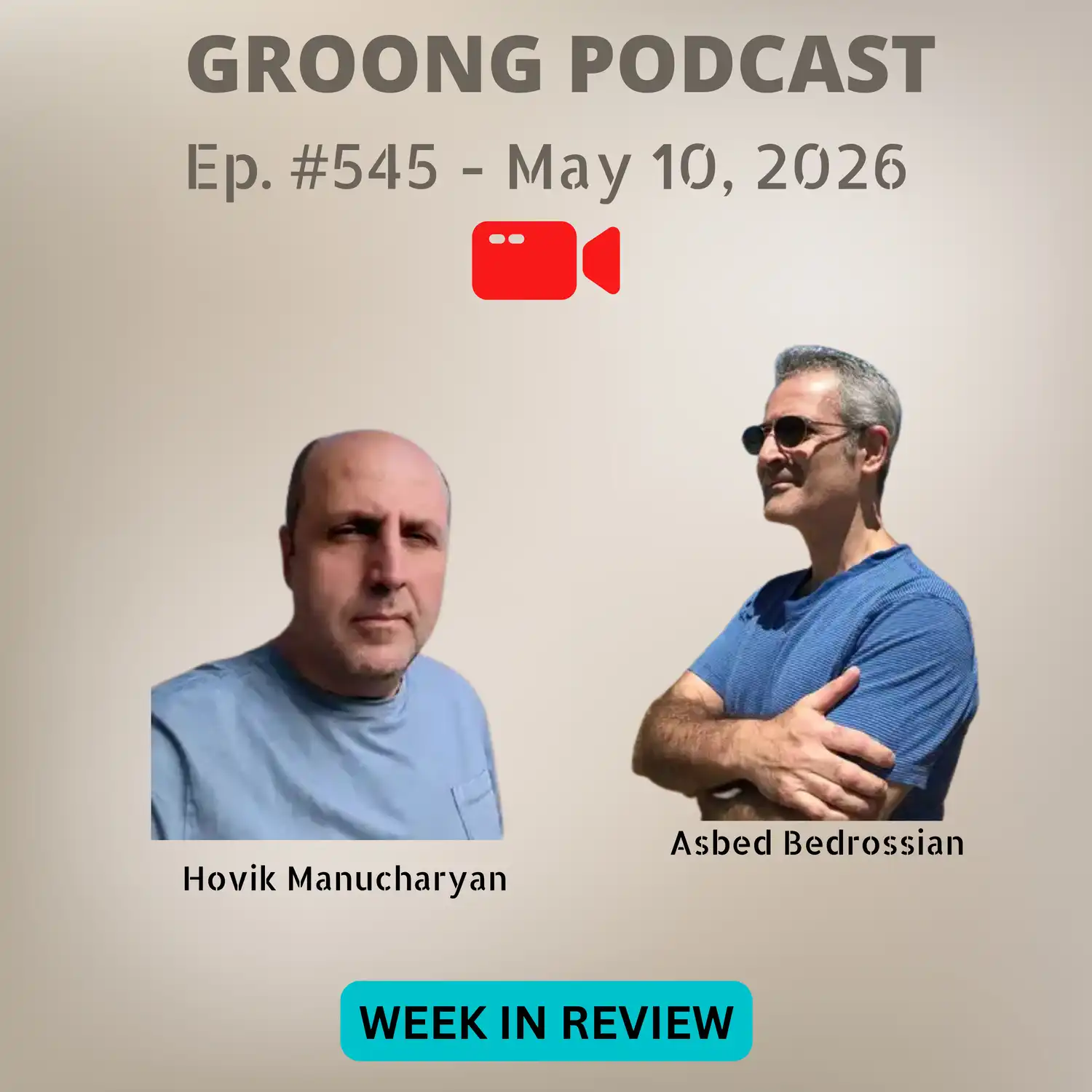
Groong Links:
Topics:
- EPC fallout and Russia response
- Armenia-EU declaration controversies
- Pashinyan’s Artsakh campaign narrative
- Aliyev-Pashinyan tag-team messaging
- Swiss Peace Initiative
- Pollsters diverge on election forecasts
Episode 545 | Recorded: May 12, 2026
#WeekInReview #Armenia #SwissPeaceInitiative #NagornoKarabakh #Artsakh
Week in Review - EPC in Armenia, Russia, Parliamentary Election, Swiss Peace Initiative | Ep 545, May 10, 2026 [EP545]
Posted on Wednesday, May 13, 2026 | Category: Armenia, Politics, Nagorno Karabakh, Artsakh Blockade, Azerbaijan, Russia, Ukraine, NATO, European Union, Human RightsGroong Links:
Topics:
- EPC fallout and Russia response
- Armenia-EU declaration controversies
- Pashinyan’s Artsakh campaign narrative
- Aliyev-Pashinyan tag-team messaging
- Swiss Peace Initiative
- Pollsters diverge on election forecasts
Episode 545 | Recorded: May 12, 2026
#WeekInReview #Armenia #SwissPeaceInitiative #NagornoKarabakh #Artsakh
Transcript: Week in Review - EPC in Armenia, Russia, Parliamentary Election, Swiss Peace Initiative | Ep 545, May 10, 2026 [EP545]
Posted on Wednesday, May 13, 2026 | Category: Armenia, Politics, Nagorno Karabakh, Artsakh Blockade, Azerbaijan, Russia, Ukraine, NATO, European Union, Human Rights, TranscriptIn this Week in Review, Asbed and Hovik discuss the fallout from the EPC summit in Yerevan, Armenia’s role as a platform for anti-Russian messaging, and Putin’s warning about a possible “separation” if Armenia moves toward the EU. They examine the Armenia-EU declaration, focusing on TRIPP, Ukraine, hybrid threats, security cooperation, visa liberalization, and the Armenian Nuclear Power Plant. The episode then turns to Armenia’s election campaign, Pashinyan’s claim that Artsakh was “never ours,” Aliyev’s parallel messaging from occupied Artsakh, pressure on opposition figures, the Swiss Peace Initiative, and sharp divergence between election polls.