Genocide
Last updated: June 11, 2026
The Armenian Genocide of 1915 represents one of history’s first systematic mass killings of a civilian population, in which Ottoman Turkish forces and local militias killed approximately 1.5 million Armenians and displaced hundreds of thousands more from their ancestral homelands in Anatolia. Perpetrators used massacres, deportations into desert conditions, and starvation as deliberate instruments of elimination. Survivors scattered across the globe, establishing diaspora communities in the Middle East, Europe, North America, and beyond. Turkey has denied the genocide for over a century, refusing to acknowledge the Ottoman state’s intent to destroy the Armenian people, a position that shapes contemporary Turkish-Armenian relations and regional politics. Genocide denial remains an official Turkish state policy backed by legal penalties in Turkey itself for those who acknowledge the historical record, complicating efforts toward Turkish-Armenian normalization and historical justice.
The ethnic cleansing of Artsakh (Nagorno Karabakh) in September 2023 displaced more than 150,000 Armenian inhabitants from the enclave in a matter of hours, following Azerbaijan’s 24-hour military offensive on September 19–20, 2023. Unlike the 44-Day War of 2020, which ended in a ceasefire with Russian peacekeepers deployed, the 2023 operation resulted in complete displacement of the Armenian population and the effective erasure of Armenian self-governance in a territory that had been ethnically Armenian for centuries. Azerbaijan’s destruction of Christian heritage sites, including damage to the Stepanakert Cathedral documented in early 2026, compounds the physical and cultural dimension of the cleansing. The international community, including Western governments and human rights organizations, provided minimal diplomatic pressure or consequences for the displacement, contrasting sharply with rhetoric regarding other contemporary conflicts. Through works like photographer Erhan Arik’s Horovel project and the documentary Ojakh: On the Other Side of Silence, artists and documentarians have recorded the personal stakes of Armenian memory and continuity—capturing testimony from elderly Armenians whose families originated from historic Armenian regions and reflecting on how identity and community persist despite rupture and loss.
The concept of genocide denial has become inseparable from Armenian political consciousness. Turkey’s refusal to acknowledge the 1915 genocide shapes the terms on which Armenia negotiates peace with Azerbaijan and Turkey, as recognition remains a precondition for many Armenians and diaspora organizations seeking justice and historical truth. The speed and completeness of the 2023 displacement from Artsakh has prompted scholars and Armenian analysts to assess whether the term genocide applies to the 2023 events, a question with legal, moral, and political dimensions. Arthur Martirosyan examined in January 2026 the long-term consequences of the Baku pogroms, connecting historical violence to ongoing patterns of threat and displacement. Whether international law will address either the 1915 genocide or the 2023 cleansing through accountability mechanisms remains uncertain, leaving Armenia in a position where historical memory and contemporary survival are bound to geopolitical outcomes beyond Armenian control.
Groong episodes that include this tag
Below are all Groong episodes tagged with Genocide.
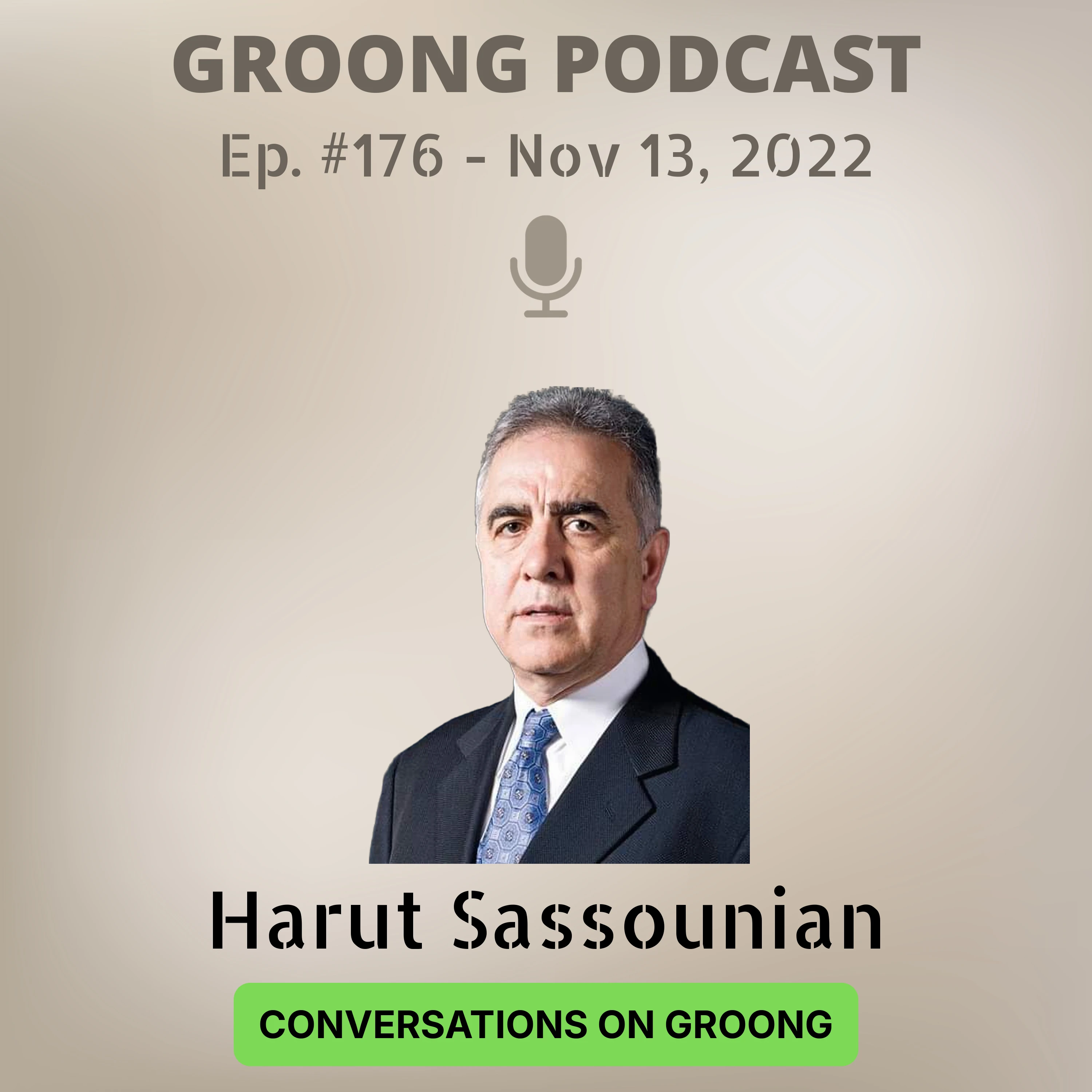
Guest:
Topics:
- What is HyeID , what problems is it trying to address?
- Organizations and models for Diaspora representation
- Funding and operations
- Outreach to the Diaspora and the Armenian government
- Current State of the project
Episode 176 | Recorded: November 12, 2022
Guest:
Topics:
- What is HyeID , what problems is it trying to address?
- Organizations and models for Diaspora representation
- Funding and operations
- Outreach to the Diaspora and the Armenian government
- Current State of the project
Episode 176 | Recorded: November 12, 2022
Rally in Stepanakert | Sullivan Plan | CSTO Security Council Convened | Trilateral in Sochi | Pashinyan in Tehran [EP173]
Posted on Wednesday, Nov 2, 2022 | Category: Politics, Artsakh, Armenia, Nagorno Karabakh, Azerbaijan, USA, European Union, Russia, Iran, Turkey, Georgia, Israel, Syria, Genocide, China, Human Rights, Ukraine | Series: cog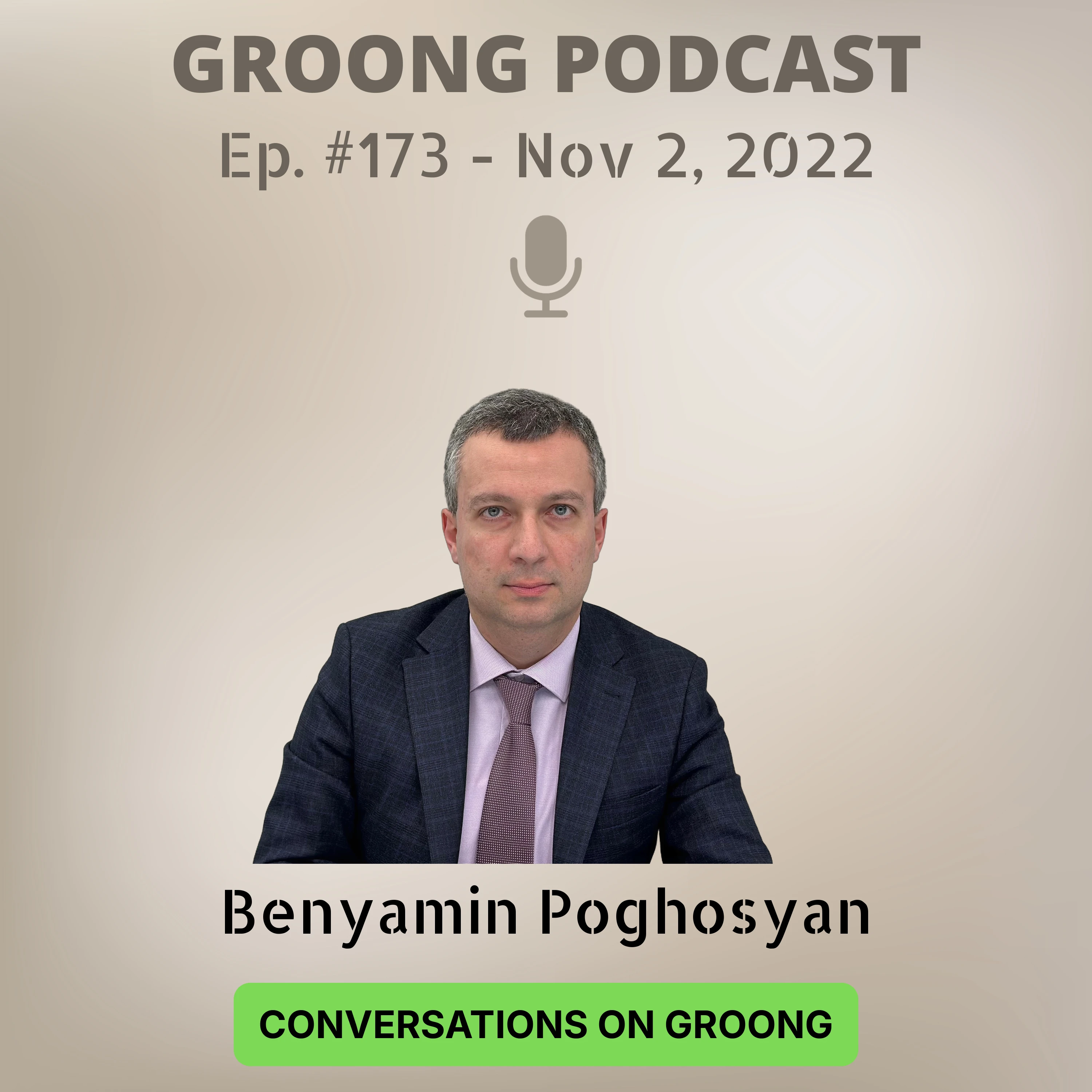
Guest:
Topics:
- Massive Stepanakert Rally
- The Sullivan Plan
- CSTO Security Council Convened
- Trilateral Summit in Sochi
- From Sochi to Tehran
Episode 173 | Recorded: November 1, 2022
Rally in Stepanakert | Sullivan Plan | CSTO Security Council Convened | Trilateral in Sochi | Pashinyan in Tehran [EP173]
Posted on Wednesday, Nov 2, 2022 | Category: Politics, Artsakh, Armenia, Nagorno Karabakh, Azerbaijan, USA, European Union, Russia, Iran, Turkey, Georgia, Israel, Syria, Genocide, China, Human Rights, UkraineGuest:
Topics:
- Massive Stepanakert Rally
- The Sullivan Plan
- CSTO Security Council Convened
- Trilateral Summit in Sochi
- From Sochi to Tehran
Episode 173 | Recorded: November 1, 2022
Monitors in Armenia | Russia-West Rivalry in South Caucasus | Armenia-Iran Relations | Israel-Lebanon Maritime Agreement | Lebanon Presidential Elections [EP171]
Posted on Sunday, Oct 23, 2022 | Category: Politics, Artsakh, Diaspora, Armenia, Azerbaijan, Iran, India, Lebanon, Turkey, Russia, Israel, Ukraine, Nagorno Karabakh, Genocide, NATO, China, Syria, Human Rights, Middle East, Georgia | Series: wir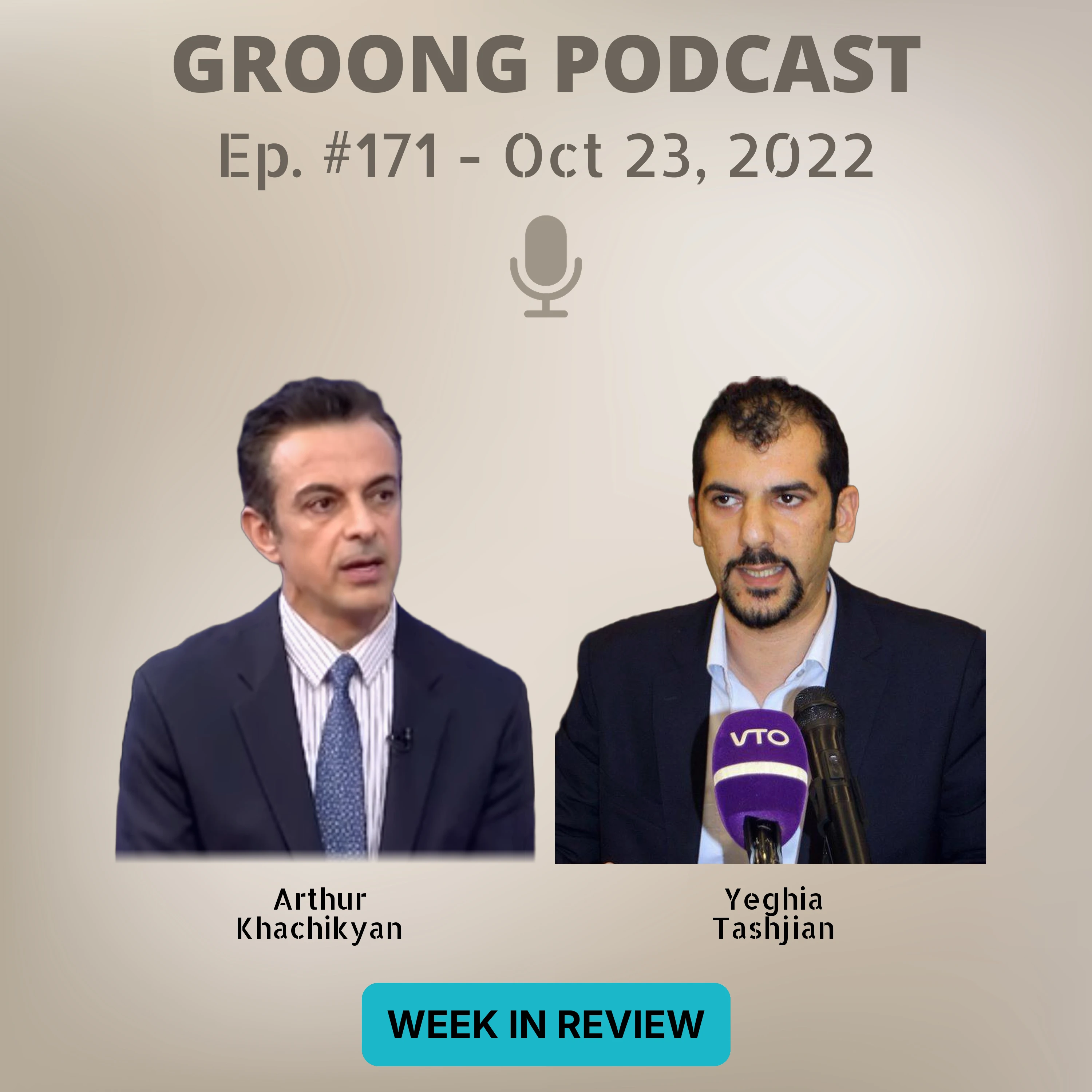
Guests:
Topics:
- Monitors in Armenia
- Russia-West Rivalry in the South Caucasus
- Armenian-Iranian Relations
- Maritime Agreement between Israel and Lebanon
- State of Lebanonâs Presidential Election
Monitors in Armenia | Russia-West Rivalry in South Caucasus | Armenia-Iran Relations | Israel-Lebanon Maritime Agreement | Lebanon Presidential Elections [EP171]
Posted on Sunday, Oct 23, 2022 | Category: Politics, Artsakh, Diaspora, Armenia, Azerbaijan, Iran, India, Lebanon, Turkey, Russia, Israel, Ukraine, Nagorno Karabakh, Genocide, NATO, China, Syria, Human Rights, Middle East, GeorgiaGuests:
Topics:
- Monitors in Armenia
- Russia-West Rivalry in the South Caucasus
- Armenian-Iranian Relations
- Maritime Agreement between Israel and Lebanon
- State of Lebanonâs Presidential Election
Ardy Kassakhian and Adrin Nazarian: The LA City Council Scandal [EP170]
Posted on Friday, Oct 21, 2022 | Category: US Politics, Diaspora, Artsakh, Armenia, Azerbaijan, Turkey, Russia, Human Rights, Genocide, Iran, Middle East, Syria, Ukraine, European Union | Series: cog
Guests:
- Ardashes âArdyâ Kassakhian is a Glendale City Councilman, and the current mayor of Glendale
- Adrin Nazarian is the California State Assemblymember from the 46th District, representing the San Fernando Valley
Topics:
- On the LA City Council scandal and how to move forward
- On Paul Krekorian, elected LA City Council president
- On redistricting in the aftermath of the scandal
- On the effect of the scandal on the LA mayoral race
- On Armeniaâs Situation in the South Caucasus
- On Armeniaâs Negotiations with Azerbaijan
- On Turkish-Armenian âNormalizationâ
Episode 170 | Recorded: October 19 & 20, 2022
Ardy Kassakhian and Adrin Nazarian: The LA City Council Scandal [EP170]
Posted on Friday, Oct 21, 2022 | Category: US Politics, Diaspora, Artsakh, Armenia, Azerbaijan, Turkey, Russia, Human Rights, Genocide, Iran, Middle East, Syria, Ukraine, European UnionGuests:
- Ardashes âArdyâ Kassakhian is a Glendale City Councilman, and the current mayor of Glendale
- Adrin Nazarian is the California State Assemblymember from the 46th District, representing the San Fernando Valley
Topics:
- On the LA City Council scandal and how to move forward
- On Paul Krekorian, elected LA City Council president
- On redistricting in the aftermath of the scandal
- On the effect of the scandal on the LA mayoral race
- On Armeniaâs Situation in the South Caucasus
- On Armeniaâs Negotiations with Azerbaijan
- On Turkish-Armenian âNormalizationâ
Episode 170 | Recorded: October 19 & 20, 2022
Meetings in Prague | Pashinyan Consolidating Power | Personal Rants | Ep 167 - Oct 9, 2022 [EP167]
Posted on Tuesday, Oct 11, 2022 | Category: Armenia, Azerbaijan, Russia, Turkey, Ukraine, Genocide, India, Armenian Genocide, Georgia, Iran, Nagorno Karabakh, European Union, NATO | Series: wir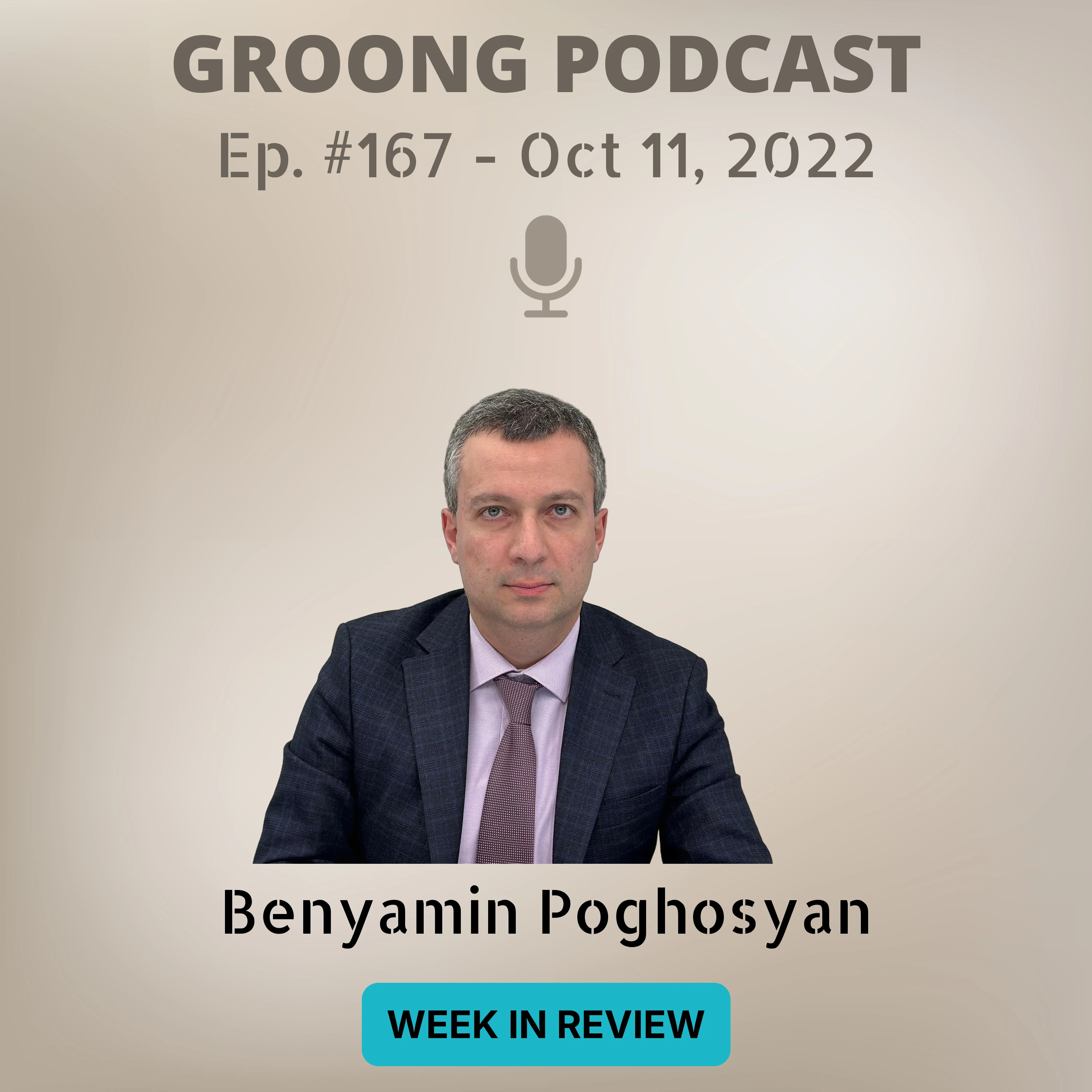
Guest:
Topics:
- Meetings in Prague
- Pashinyan Consolidating Power
- Personal Rants
Episode 167 | Recorded: October 10, 2022