Genocide
Last updated: June 11, 2026
The Armenian Genocide of 1915 represents one of history’s first systematic mass killings of a civilian population, in which Ottoman Turkish forces and local militias killed approximately 1.5 million Armenians and displaced hundreds of thousands more from their ancestral homelands in Anatolia. Perpetrators used massacres, deportations into desert conditions, and starvation as deliberate instruments of elimination. Survivors scattered across the globe, establishing diaspora communities in the Middle East, Europe, North America, and beyond. Turkey has denied the genocide for over a century, refusing to acknowledge the Ottoman state’s intent to destroy the Armenian people, a position that shapes contemporary Turkish-Armenian relations and regional politics. Genocide denial remains an official Turkish state policy backed by legal penalties in Turkey itself for those who acknowledge the historical record, complicating efforts toward Turkish-Armenian normalization and historical justice.
The ethnic cleansing of Artsakh (Nagorno Karabakh) in September 2023 displaced more than 150,000 Armenian inhabitants from the enclave in a matter of hours, following Azerbaijan’s 24-hour military offensive on September 19–20, 2023. Unlike the 44-Day War of 2020, which ended in a ceasefire with Russian peacekeepers deployed, the 2023 operation resulted in complete displacement of the Armenian population and the effective erasure of Armenian self-governance in a territory that had been ethnically Armenian for centuries. Azerbaijan’s destruction of Christian heritage sites, including damage to the Stepanakert Cathedral documented in early 2026, compounds the physical and cultural dimension of the cleansing. The international community, including Western governments and human rights organizations, provided minimal diplomatic pressure or consequences for the displacement, contrasting sharply with rhetoric regarding other contemporary conflicts. Through works like photographer Erhan Arik’s Horovel project and the documentary Ojakh: On the Other Side of Silence, artists and documentarians have recorded the personal stakes of Armenian memory and continuity—capturing testimony from elderly Armenians whose families originated from historic Armenian regions and reflecting on how identity and community persist despite rupture and loss.
The concept of genocide denial has become inseparable from Armenian political consciousness. Turkey’s refusal to acknowledge the 1915 genocide shapes the terms on which Armenia negotiates peace with Azerbaijan and Turkey, as recognition remains a precondition for many Armenians and diaspora organizations seeking justice and historical truth. The speed and completeness of the 2023 displacement from Artsakh has prompted scholars and Armenian analysts to assess whether the term genocide applies to the 2023 events, a question with legal, moral, and political dimensions. Arthur Martirosyan examined in January 2026 the long-term consequences of the Baku pogroms, connecting historical violence to ongoing patterns of threat and displacement. Whether international law will address either the 1915 genocide or the 2023 cleansing through accountability mechanisms remains uncertain, leaving Armenia in a position where historical memory and contemporary survival are bound to geopolitical outcomes beyond Armenian control.
Groong episodes that include this tag
Below are all Groong episodes tagged with Genocide.
Aram Orbelyan: Artsakh Under Blockade - Day 33 [EP202]
Posted on Friday, Jan 13, 2023 | Category: Artsakh, Politics, Armenia, Azerbaijan, Russia, Turkey, Artsakh Blockade, Nagorno Karabakh, Genocide, Ukraine, Human Rights, Georgia, NATO, Iran, Syria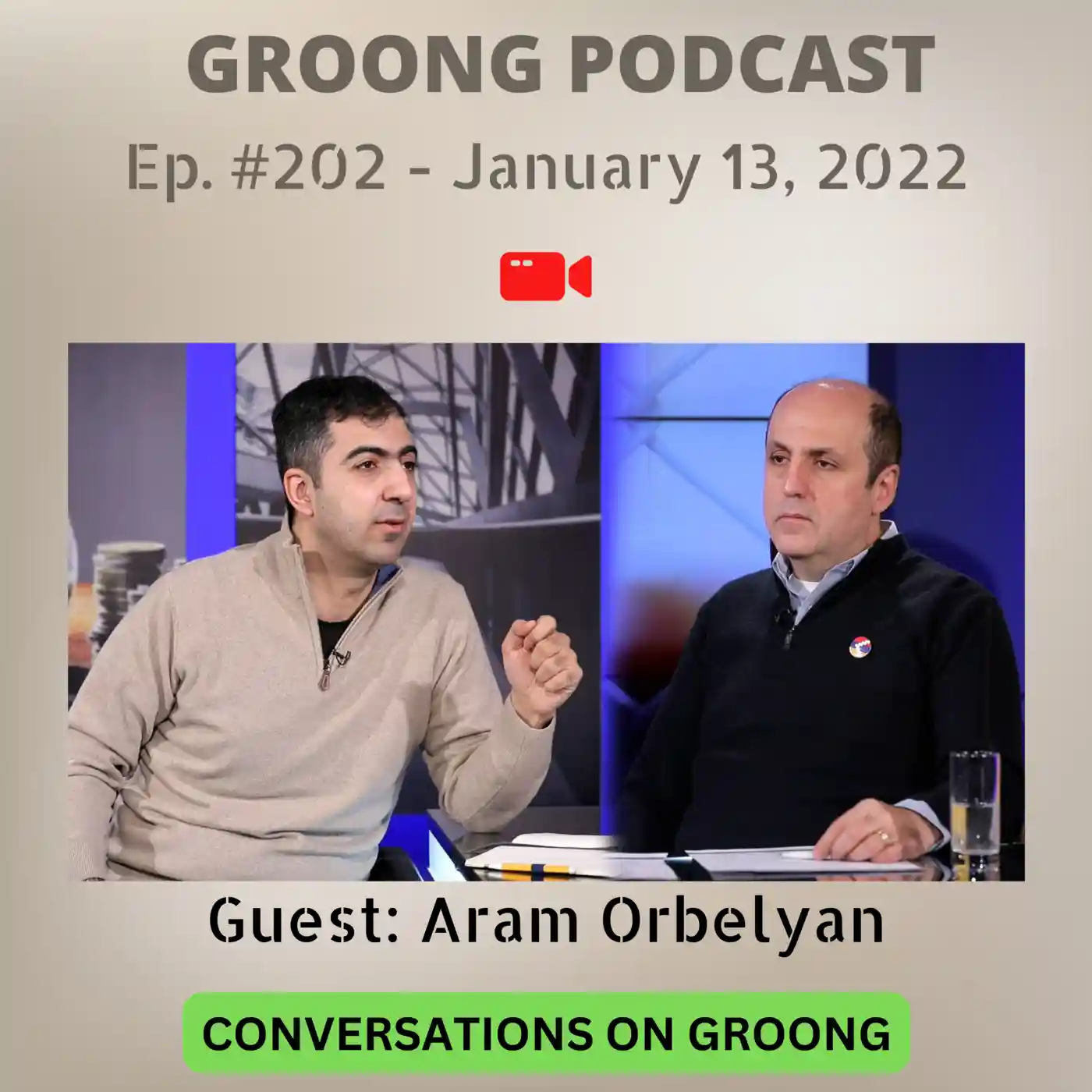
Guests:
- Aram Orbelyan , international law specialist, who is an attorney and managing partner at Concern Dialog law firm, and PhD in Public international law. Mr. Orbelyan lectures at the Academy of Advocates of the Republic of Armenia, and lectured public international law at French University of Armenia. Mr. Orbelyan was Deputy Minister of Justice of Armenia between 2011 and 2014.
“The Armenian government, under its legislation, is obliged to protect the independence of Artsakh” - Aram Orbelyan
Topic:
As of earlier this week, Artsakh has introduced coupons to ration food. Other
Read MoreArtsakh Blockade Flash Update with Gev Iskajyan - Ep 203, Jan 13, 2023 [EP203]
Posted on Friday, Jan 13, 2023 | Category: Politics, Artsakh, Nagorno Karabakh, Azerbaijan, Armenia, Artsakh Blockade, Genocide | Series: artsakhblockade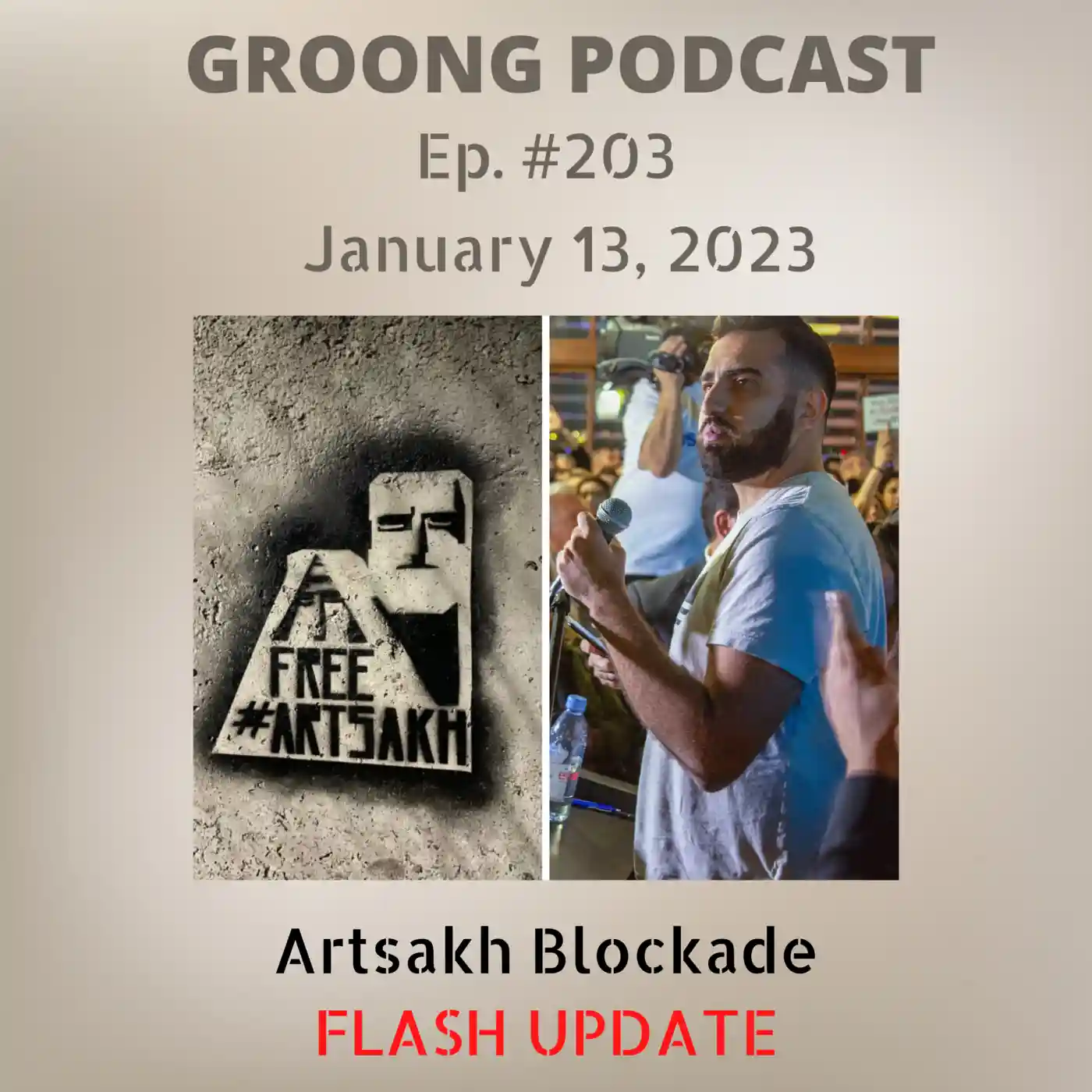
Artsakh Blockade Flash Update with Gev Iskajyan - Ep 203, Jan 13, 2023
Armenian News Network Groong - Jan 13, 2023
Guest:
Topics:
- Internet Restored
- Rolling Blackouts Continue
- 33rd Day of #ArtsakhBlockade, and 33rd Anniversary of Baku & Sumgait Pogroms in Azerbaijan
Episode 203 | Recorded: January 13, 2023
Artsakh Blockade Flash Update with Gev Iskajyan - Ep 203, Jan 13, 2023 [EP203]
Posted on Friday, Jan 13, 2023 | Category: Politics, Artsakh, Nagorno Karabakh, Azerbaijan, Armenia, Artsakh Blockade, GenocideArtsakh Blockade Flash Update with Gev Iskajyan - Ep 203, Jan 13, 2023
Armenian News Network Groong - Jan 13, 2023
Guest:
Topics:
- Internet Restored
- Rolling Blackouts Continue
- 33rd Day of #ArtsakhBlockade, and 33rd Anniversary of Baku & Sumgait Pogroms in Azerbaijan
Episode 203 | Recorded: January 13, 2023
William Bairamian, Arthur Khachikyan: Artsakh Under Blockade - Day 31 [EP199]
Posted on Wednesday, Jan 11, 2023 | Category: Artsakh, Politics, Armenia, Nagorno Karabakh, Russia, Diaspora, Artsakh Blockade, Turkey, Azerbaijan, NATO, Ukraine, Georgia, Economy, European Union, China, Genocide, Middle East | Series: cog, video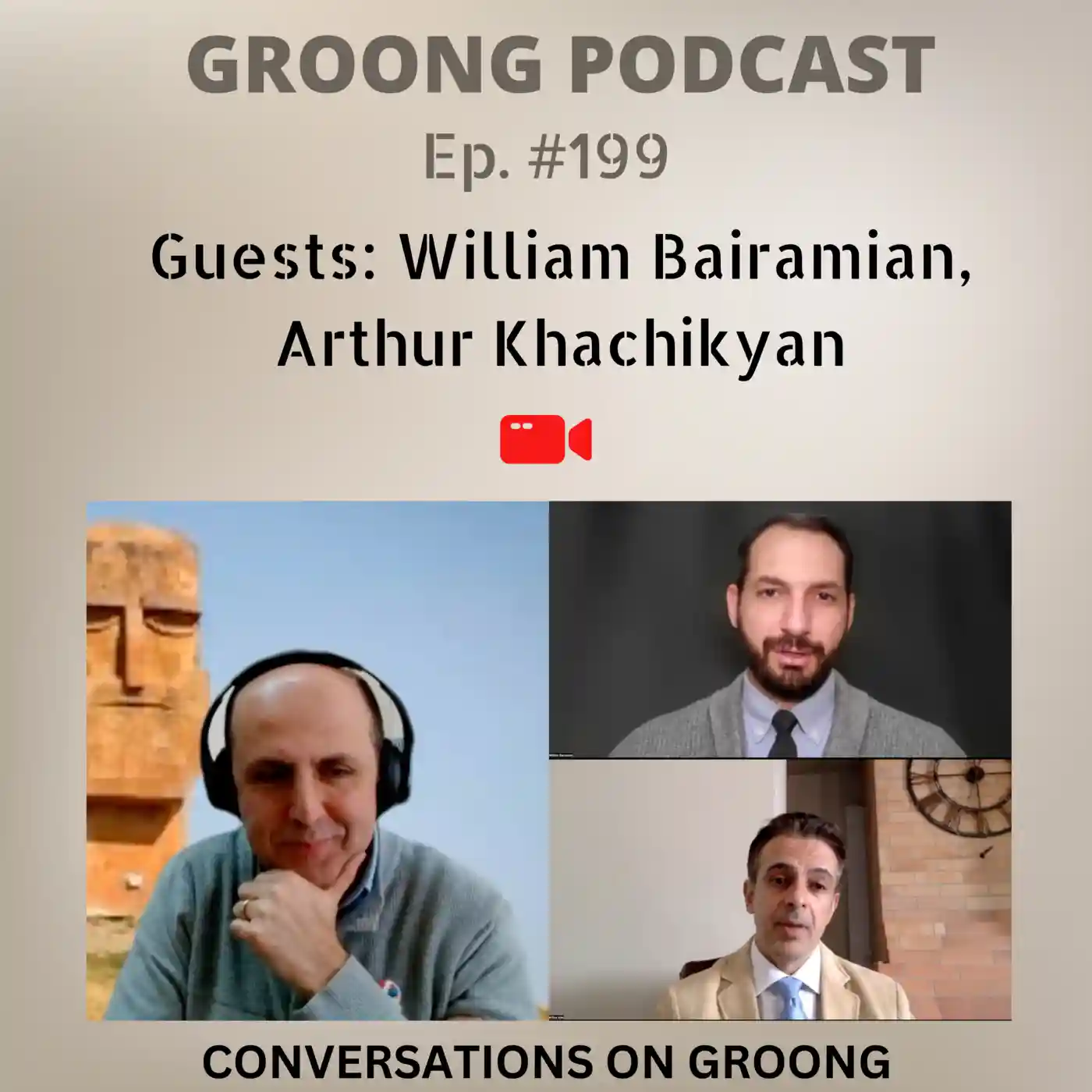
Guests:
- William Bairamian , founder and editor of The Armenite. He has written extensively on Armenian politics, culture, and society. He received degrees in international affairs from Columbia University and UCLA.
- Arthur Khachikyan , International Relations expert from Stanford University, specializing in Intervention. He currently teaches at the Russian Armenian University in Yerevan.
âThis is a repeat of Srebrenica. To gradually strangle and force the people to leave.â -Arthur Khachikyan
Topic:
More than 120,000 people remain trapped in the Republic of Artsakh (or Nagorno-Karabakh)
Read MoreWilliam Bairamian, Arthur Khachikyan: Artsakh Under Blockade - Day 31 [EP199]
Posted on Wednesday, Jan 11, 2023 | Category: Artsakh, Politics, Armenia, Nagorno Karabakh, Russia, Diaspora, Artsakh Blockade, Turkey, Azerbaijan, NATO, Ukraine, Georgia, Economy, European Union, China, Genocide, Middle EastGuests:
- William Bairamian , founder and editor of The Armenite. He has written extensively on Armenian politics, culture, and society. He received degrees in international affairs from Columbia University and UCLA.
- Arthur Khachikyan , International Relations expert from Stanford University, specializing in Intervention. He currently teaches at the Russian Armenian University in Yerevan.
âThis is a repeat of Srebrenica. To gradually strangle and force the people to leave.â -Arthur Khachikyan
Topic:
More than 120,000 people remain trapped in the Republic of Artsakh (or Nagorno-Karabakh)
Read MoreHovhannes Ishkanyan: Artsakh Under Blockade - Day 25 [EP198]
Posted on Thursday, Jan 5, 2023 | Category: Artsakh, Politics, Armenia, Azerbaijan, Russia, Turkey, Artsakh Blockade, Nagorno Karabakh, Armenian Genocide, Human Rights, Genocide, Ukraine, China, Georgia, NATO, Syria, European Union, Iran, Israel | Series: cog, video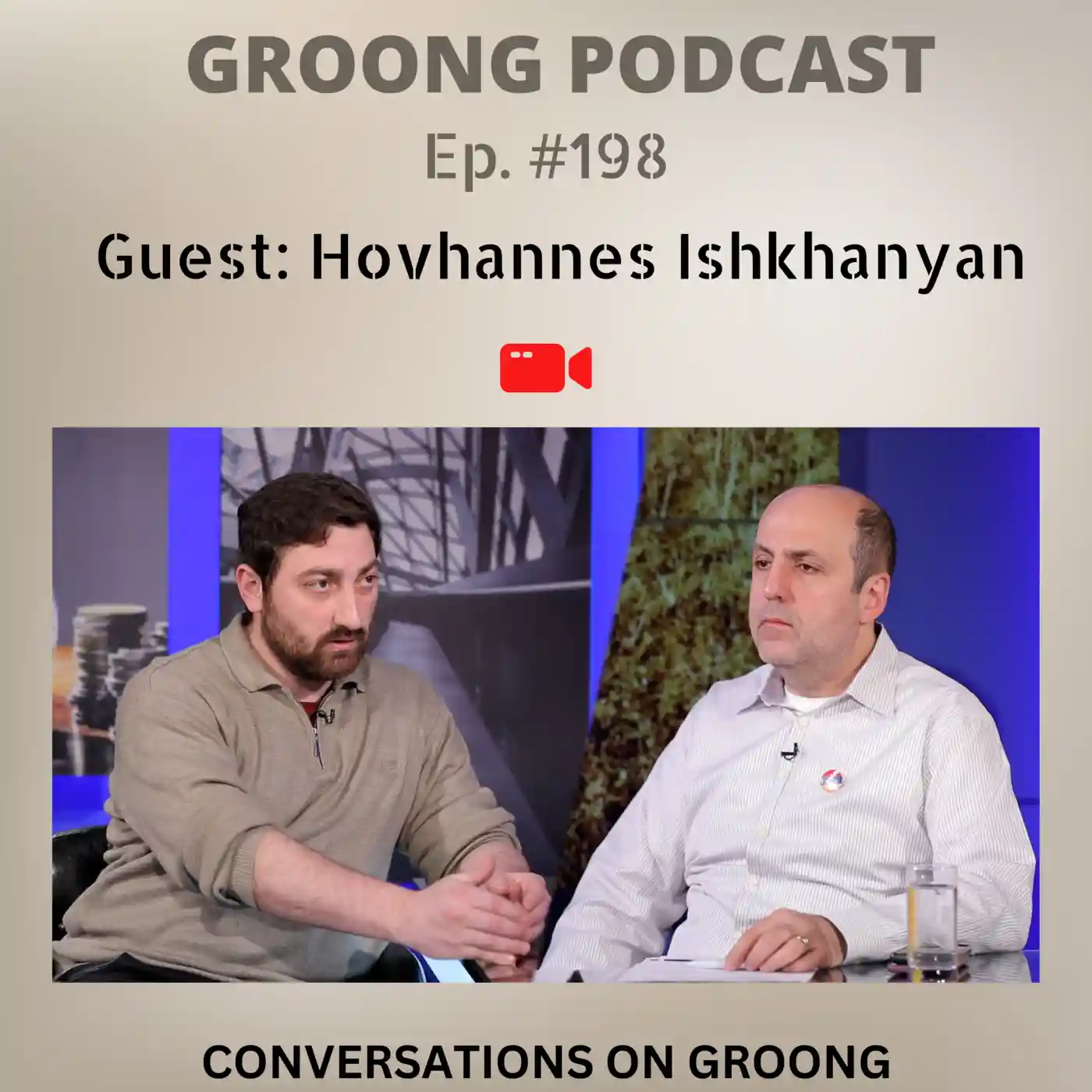
Guest:
- Hovhannes Ishkhanyan , writer, documentary filmmaker, publicist, co-founder of Eye for an Eye (Akn Und Akan), a community of documentarians. Hovhannes has a Master’s in journalism from the Georgian Institute of Public Affairs.
Using art to prevent catastrophes instead of reacting to them
Ishkhanyan’s documentary “Sleep art”: https://www.youtube.com/watch?v=rzqzPpVsK-g
Topic:
More than 120,000 people remain trapped in the Republic of Artsakh (or Nagorno-Karabakh) due to Azerbaijanâs blockade of the Lachin (Berdzor) corridor, as this crisis enters its 25th
Read MoreHovhannes Ishkanyan: Artsakh Under Blockade - Day 25 [EP198]
Posted on Thursday, Jan 5, 2023 | Category: Artsakh, Politics, Armenia, Azerbaijan, Russia, Turkey, Artsakh Blockade, Nagorno Karabakh, Armenian Genocide, Human Rights, Genocide, Ukraine, China, Georgia, NATO, Syria, European Union, Iran, IsraelGuest:
- Hovhannes Ishkhanyan , writer, documentary filmmaker, publicist, co-founder of Eye for an Eye (Akn Und Akan), a community of documentarians. Hovhannes has a Master’s in journalism from the Georgian Institute of Public Affairs.
Using art to prevent catastrophes instead of reacting to them
Ishkhanyan’s documentary “Sleep art”: https://www.youtube.com/watch?v=rzqzPpVsK-g
Topic:
More than 120,000 people remain trapped in the Republic of Artsakh (or Nagorno-Karabakh) due to Azerbaijanâs blockade of the Lachin (Berdzor) corridor, as this crisis enters its 25th
Read MoreReflections on Artsakh Blockade | Is Russia Pressuring Armenia to join Union State | Bill to Control Internet during Martial Law | Highlights and Lowlights of 2022 | Predictions for 2023 [EP197]
Posted on Tuesday, Jan 3, 2023 | Category: Armenia, Politics, Artsakh, Nagorno Karabakh, Azerbaijan, Russia, Ukraine, Artsakh Blockade, Lebanon, Syria, Turkey, European Union, Genocide, Israel, Economy, Georgia, Human Rights | Series: wir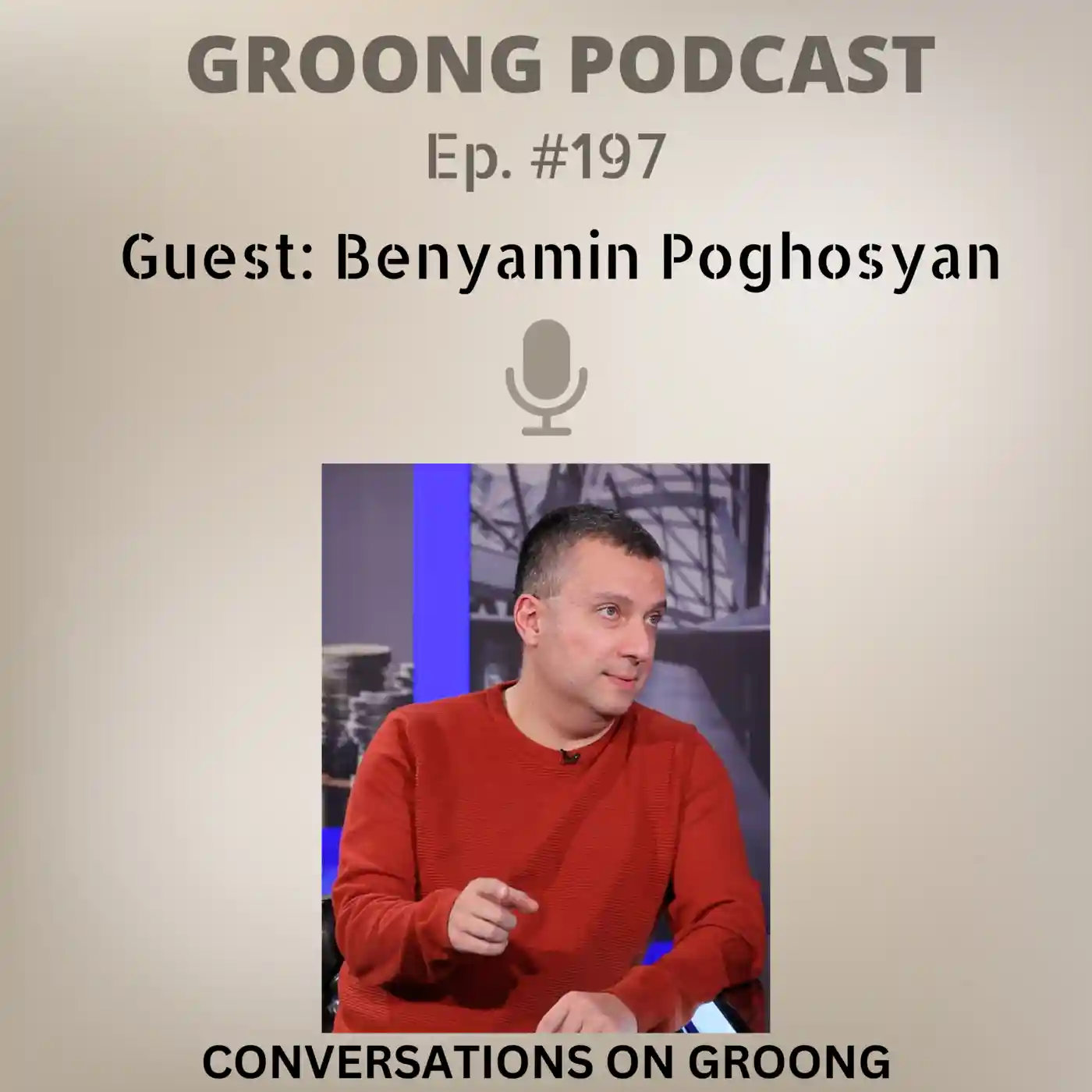
Guest:
Topic:
- Hovikâs Reflections from the Artsakh Blockade Interviews
- Is Russia Pressuring Armenia to join a âUnion Stateâ?
- Government Bill to Control the Internet During Martial Law
- Highlights and Lowlights from Armenian News in 2022
- Predictions for 2023
Episode 197 | Recorded: January 3, 2023
Reflections on Artsakh Blockade | Is Russia Pressuring Armenia to join Union State | Bill to Control Internet during Martial Law | Highlights and Lowlights of 2022 | Predictions for 2023 [EP197]
Posted on Tuesday, Jan 3, 2023 | Category: Armenia, Politics, Artsakh, Nagorno Karabakh, Azerbaijan, Russia, Ukraine, Artsakh Blockade, Lebanon, Syria, Turkey, European Union, Genocide, Israel, Economy, Georgia, Human RightsGuest:
Topic:
- Hovikâs Reflections from the Artsakh Blockade Interviews
- Is Russia Pressuring Armenia to join a âUnion Stateâ?
- Government Bill to Control the Internet During Martial Law
- Highlights and Lowlights from Armenian News in 2022
- Predictions for 2023
Episode 197 | Recorded: January 3, 2023