Genocide
Last updated: June 11, 2026
The Armenian Genocide of 1915 represents one of history’s first systematic mass killings of a civilian population, in which Ottoman Turkish forces and local militias killed approximately 1.5 million Armenians and displaced hundreds of thousands more from their ancestral homelands in Anatolia. Perpetrators used massacres, deportations into desert conditions, and starvation as deliberate instruments of elimination. Survivors scattered across the globe, establishing diaspora communities in the Middle East, Europe, North America, and beyond. Turkey has denied the genocide for over a century, refusing to acknowledge the Ottoman state’s intent to destroy the Armenian people, a position that shapes contemporary Turkish-Armenian relations and regional politics. Genocide denial remains an official Turkish state policy backed by legal penalties in Turkey itself for those who acknowledge the historical record, complicating efforts toward Turkish-Armenian normalization and historical justice.
The ethnic cleansing of Artsakh (Nagorno Karabakh) in September 2023 displaced more than 150,000 Armenian inhabitants from the enclave in a matter of hours, following Azerbaijan’s 24-hour military offensive on September 19–20, 2023. Unlike the 44-Day War of 2020, which ended in a ceasefire with Russian peacekeepers deployed, the 2023 operation resulted in complete displacement of the Armenian population and the effective erasure of Armenian self-governance in a territory that had been ethnically Armenian for centuries. Azerbaijan’s destruction of Christian heritage sites, including damage to the Stepanakert Cathedral documented in early 2026, compounds the physical and cultural dimension of the cleansing. The international community, including Western governments and human rights organizations, provided minimal diplomatic pressure or consequences for the displacement, contrasting sharply with rhetoric regarding other contemporary conflicts. Through works like photographer Erhan Arik’s Horovel project and the documentary Ojakh: On the Other Side of Silence, artists and documentarians have recorded the personal stakes of Armenian memory and continuity—capturing testimony from elderly Armenians whose families originated from historic Armenian regions and reflecting on how identity and community persist despite rupture and loss.
The concept of genocide denial has become inseparable from Armenian political consciousness. Turkey’s refusal to acknowledge the 1915 genocide shapes the terms on which Armenia negotiates peace with Azerbaijan and Turkey, as recognition remains a precondition for many Armenians and diaspora organizations seeking justice and historical truth. The speed and completeness of the 2023 displacement from Artsakh has prompted scholars and Armenian analysts to assess whether the term genocide applies to the 2023 events, a question with legal, moral, and political dimensions. Arthur Martirosyan examined in January 2026 the long-term consequences of the Baku pogroms, connecting historical violence to ongoing patterns of threat and displacement. Whether international law will address either the 1915 genocide or the 2023 cleansing through accountability mechanisms remains uncertain, leaving Armenia in a position where historical memory and contemporary survival are bound to geopolitical outcomes beyond Armenian control.
Groong episodes that include this tag
Below are all Groong episodes tagged with Genocide.
If Aliyev Kills 99% of Armenians, EU Will Thank Him for the Museum [EP564]
Posted on Wednesday, Jul 8, 2026 | Category: Human Rights, Geopolitics, ArmeniaHovik’s stark warning that EU priorities have shifted so radically toward Azerbaijan that even large-scale ethnic cleansing would likely be reframed as regional stability and economic progress.
Trump’s Iran Ceasefire, Operation Kochari, and Armenia’s Election Fog | Ep 539, May 3, 2026 [EP539]
Posted on Tuesday, May 5, 2026 | Category: Armenia, Politics, Poll, Armenian News, Israel, Artsakh, Nagorno Karabakh, Azerbaijan, USA, Armenian Church, Artsakh Blockade, Armenian Genocide, Iran, Russia, Georgia, Genocide, Human Rights | Series: wir, video
Groong Links:
Topics:
- Iran War
- Mustafayev in Armenia
- Destruction of the Stepanakert cathedral by Azerbaijan
- Election politics
Episode 539 | Recorded: May 3, 2026
#Armenia #Azerbaijan #IranWar #TRIPP #Artsakh #Stepanakert #ArmenianElections #Groong
Trump’s Iran Ceasefire, Operation Kochari, and Armenia’s Election Fog | Ep 539, May 3, 2026 [EP539]
Posted on Tuesday, May 5, 2026 | Category: Armenia, Politics, Poll, Armenian News, Israel, Artsakh, Nagorno Karabakh, Azerbaijan, USA, Armenian Church, Artsakh Blockade, Armenian Genocide, Iran, Russia, Georgia, Genocide, Human RightsGroong Links:
Topics:
- Iran War
- Mustafayev in Armenia
- Destruction of the Stepanakert cathedral by Azerbaijan
- Election politics
Episode 539 | Recorded: May 3, 2026
#Armenia #Azerbaijan #IranWar #TRIPP #Artsakh #Stepanakert #ArmenianElections #Groong
Transcript: Trump’s Iran Ceasefire, Operation Kochari, and Armenia’s Election Fog | Ep 539, May 3, 2026 [EP539]
Posted on Tuesday, May 5, 2026 | Category: Armenia, Politics, Poll, Armenian News, Israel, Artsakh, Nagorno Karabakh, Azerbaijan, USA, Armenian Church, Artsakh Blockade, Armenian Genocide, Iran, Russia, Georgia, Genocide, Human Rights, TranscriptThis Groong Week in Review covers Trump’s Iran ceasefire, failed US-Iran talks in Islamabad, the naval blockade, and Washington’s war politics. Asbed and Hovik also examine “Operation Kochari,” Shahin Mustafayev’s secret visit to Armenia, TRIPP, border demarcation, Armenia-Azerbaijan trade, Azerbaijan’s destruction of the Stepanakert cathedral, Pashinyan’s response, the MPG poll, opposition coalition math, election fraud risks, the EPC meeting, legal pressure, mass surveillance, and Armenia’s falling press freedom ranking.
Transcript: Arthur Martirosyan - Iran War, Effect on Armenia, June Parliamentary | Ep 536, Apr 26, 2026 [EP536]
Posted on Tuesday, Apr 28, 2026 | Category: Armenia, Politics, Armenian Church, Ukraine, Iran, Azerbaijan, Israel, USA, Turkey, Russia, Artsakh, Nagorno Karabakh, Armenian Genocide, Armenian News, Artsakh Blockade, Genocide, Georgia, European Union, TranscriptWe examine how the Iran war fallout and the extension of the ceasefire are reshaping Armenia’s geopolitical position. We break down the push for the TRIPP or Zangezur Corridor and the claims of Armenia-Azerbaijan normalization, and assess how they tie to regional power dynamics involving Iran, Russia, Turkey, and the United States. The episode also covers Armenia’s 2026 elections and rising elite tensions. In addition, we discuss the global commemoration of the Armenian Genocide, contrasting international messaging with domestic narratives and linking it to ongoing debates around Artsakh and historical continuity.
Arthur Martirosyan - Iran War, Effect on Armenia, June Parliamentary | Ep 536, Apr 26, 2026 [EP536]
Posted on Tuesday, Apr 28, 2026 | Category: Armenia, Politics, Armenian Church, Ukraine, Iran, Azerbaijan, Israel, USA, Turkey, Russia, Artsakh, Nagorno Karabakh, Armenian Genocide, Armenian News, Artsakh Blockade, Genocide, Georgia, European Union | Series: wir, video
Groong Links:
Guest:
Topics:
- Iran War and TRIPP
- Armenian Genocide commemoration
- Peace narrative vs corridor reality
- Parliamentary election
Episode 536 | Recorded: April 27, 2026
Arthur Martirosyan - Iran War, Effect on Armenia, June Parliamentary | Ep 536, Apr 26, 2026 [EP536]
Posted on Tuesday, Apr 28, 2026 | Category: Armenia, Politics, Armenian Church, Ukraine, Iran, Azerbaijan, Israel, USA, Turkey, Russia, Artsakh, Nagorno Karabakh, Armenian Genocide, Armenian News, Artsakh Blockade, Genocide, Georgia, European UnionGroong Links:
Guest:
Topics:
- Iran War and TRIPP
- Armenian Genocide commemoration
- Peace narrative vs corridor reality
- Parliamentary election
Episode 536 | Recorded: April 27, 2026
Eldar Mamedov - Iran War: The Northern Front | Ep 525, Mar 22, 2026 [EP525]
Posted on Sunday, Mar 22, 2026 | Category: Iran, Politics, Armenia, Israel, USA, Turkey, Azerbaijan, Artsakh, Nagorno Karabakh, Syria, Economy, Genocide, NATO, Russia, Georgia, Middle East | Series: cog, video
Groong Links:
Guest:
Topics:
- Iran at War
- The Northern Front: Turkey & Azerbaijan
- Changing Nakhijevanâs Constitution
Episode 525 | Recorded: March 20, 2026
#GroongPodcast #EldarMamedov #IranWar #Azerbaijan #SouthCaucasus
Eldar Mamedov - Iran War: The Northern Front | Ep 525, Mar 22, 2026 [EP525]
Posted on Sunday, Mar 22, 2026 | Category: Iran, Politics, Armenia, Israel, USA, Turkey, Azerbaijan, Artsakh, Nagorno Karabakh, Syria, Economy, Genocide, NATO, Russia, Georgia, Middle EastGroong Links:
Guest:
Topics:
- Iran at War
- The Northern Front: Turkey & Azerbaijan
- Changing Nakhijevanâs Constitution
Episode 525 | Recorded: March 20, 2026
#GroongPodcast #EldarMamedov #IranWar #Azerbaijan #SouthCaucasus
Arthur Martirosyan - Iran War, Effect on Armenia, June Parliamentary | Ep 522, Mar 15, 2026 [EP522]
Posted on Monday, Mar 16, 2026 | Category: Armenia, Politics, Armenian Church, Ukraine, Iran, Azerbaijan, Israel, USA, Turkey, Russia, Artsakh, Nagorno Karabakh, Armenian Genocide, Genocide, Georgia, Middle East | Series: wir, video
Groong Links:
Guest:
Topics:
- Iran War
- Effect on Armenia
- June Parliamentary Elections
Episode 522 | Recorded: March 16, 2026
Arthur Martirosyan - Iran War, Effect on Armenia, June Parliamentary | Ep 522, Mar 15, 2026 [EP522]
Posted on Monday, Mar 16, 2026 | Category: Armenia, Politics, Armenian Church, Ukraine, Iran, Azerbaijan, Israel, USA, Turkey, Russia, Artsakh, Nagorno Karabakh, Armenian Genocide, Genocide, Georgia, Middle EastGroong Links:
Guest:
Topics:
- Iran War
- Effect on Armenia
- June Parliamentary Elections
Episode 522 | Recorded: March 16, 2026
Dziunik Aghajanian - Iran War Fears, June Vote Rules, State-Church Clash | Ep 519, Feb 22, 2026 [EP519]
Posted on Thursday, Feb 26, 2026 | Category: Armenia, Politics, Artsakh, Nagorno Karabakh, Azerbaijan, Turkey, Russia, Israel, Genocide, Armenian Church, Iran, Middle East, NATO, Syria | Series: wir, video
Groong Links:
Guest:
Topics:
- Iran War Fears
- June Parliamentary Elections
- Attacks on the Armenian Church
Episode 519 | Recorded: February 25, 2026
#Armenia #Iran #ArmeniaElections #ArmenianChurch #SouthCaucasus
Dziunik Aghajanian - Iran War Fears, June Vote Rules, State-Church Clash | Ep 519, Feb 22, 2026 [EP519]
Posted on Thursday, Feb 26, 2026 | Category: Armenia, Politics, Artsakh, Nagorno Karabakh, Azerbaijan, Turkey, Russia, Israel, Genocide, Armenian Church, Iran, Middle East, NATO, SyriaGroong Links:
Guest:
Topics:
- Iran War Fears
- June Parliamentary Elections
- Attacks on the Armenian Church
Episode 519 | Recorded: February 25, 2026
#Armenia #Iran #ArmeniaElections #ArmenianChurch #SouthCaucasus
JD Vance in Armenia and Azerbaijan | Ep 517, Feb 15, 2026 [EP517]
Posted on Sunday, Feb 15, 2026 | Category: Armenia, Politics, Turkey, Azerbaijan, Armenian Church, Armenian Genocide, Iran, Russia, Genocide, Georgia, Israel, China, Ukraine | Series: cog, video
Groong Links:
Topics:
- Vance visit, protocol and optics
- Tsitsernakaberd tweet, âautocorrect diplomacyâ
- TRIPP corridor stake and sovereignty risks
- Nuclear SMR deal, costs and dependency
- Firebird AI project, power and value
- Drones, church silence, Baku charter and prisoners
Episode 517 | Recorded: February 13, 2026
#Groong #Armenia #JDVance #Tsitsernakaberd #TRIPP
JD Vance in Armenia and Azerbaijan | Ep 517, Feb 15, 2026 [EP517]
Posted on Sunday, Feb 15, 2026 | Category: Armenia, Politics, Turkey, Azerbaijan, Armenian Church, Armenian Genocide, Iran, Russia, Genocide, Georgia, Israel, China, UkraineGroong Links:
Topics:
- Vance visit, protocol and optics
- Tsitsernakaberd tweet, âautocorrect diplomacyâ
- TRIPP corridor stake and sovereignty risks
- Nuclear SMR deal, costs and dependency
- Firebird AI project, power and value
- Drones, church silence, Baku charter and prisoners
Episode 517 | Recorded: February 13, 2026
#Groong #Armenia #JDVance #Tsitsernakaberd #TRIPP
Philippe Raffi Kalfayan - Europe and America, JD Vance in Armenia, Pashinyan vs. Church | Ep 516, Feb 8, 2026 [EP516]
Posted on Wednesday, Feb 11, 2026 | Category: Armenia, Politics, Artsakh, Nagorno Karabakh, USA, Azerbaijan, Turkey, Russia, Syria, Armenian Church, European Union, Iran, China, Ukraine, Human Rights, Georgia, Israel, Genocide, Economy, Geopolitics, India, NATO | Series: wir, video
Groong Links:
Guest:
Topics:
- A European View of America
- JD Vance in Armenia
- Pashinyan vs. The Armenian Church
- Europe and Armenia
Episode 516 | Recorded: February 9, 2026
Philippe Raffi Kalfayan - Europe and America, JD Vance in Armenia, Pashinyan vs. Church | Ep 516, Feb 8, 2026 [EP516]
Posted on Wednesday, Feb 11, 2026 | Category: Armenia, Politics, Artsakh, Nagorno Karabakh, USA, Azerbaijan, Turkey, Russia, Syria, Armenian Church, European Union, Iran, China, Ukraine, Human Rights, Georgia, Israel, Genocide, Economy, Geopolitics, India, NATOGroong Links:
Guest:
Topics:
- A European View of America
- JD Vance in Armenia
- Pashinyan vs. The Armenian Church
- Europe and Armenia
Episode 516 | Recorded: February 9, 2026
David Davidian - Armenia’s Foreign Intel Service Annual Report | Ep 511, Jan 31, 2026 [EP511]
Posted on Saturday, Jan 31, 2026 | Category: Armenia, Politics, Armenian Genocide, Nagorno Karabakh, Russia, Iran, Azerbaijan, Georgia, Genocide, India, Israel | Series: cog, video
Groong Links:
Guest:
Topics:
- Return of Four Hostages
- Pashinyan vs. Church
- TRIPP
- Armenia Parliamentary Election
Episode 511 | Recorded: January 28, 2026
David Davidian - Armenia’s Foreign Intel Service Annual Report | Ep 511, Jan 31, 2026 [EP511]
Posted on Saturday, Jan 31, 2026 | Category: Armenia, Politics, Armenian Genocide, Nagorno Karabakh, Russia, Iran, Azerbaijan, Georgia, Genocide, India, IsraelGroong Links:
Guest:
Topics:
- Return of Four Hostages
- Pashinyan vs. Church
- TRIPP
- Armenia Parliamentary Election
Episode 511 | Recorded: January 28, 2026
Erhan Arik - Horovel and The Armenian Genocide | Ep 509, Jan 22, 2026 [EP509]
Posted on Thursday, Jan 22, 2026 | Category: Arts, Armenia, Artsakh, Nagorno Karabakh, Armenian Genocide, Turkey, Genocide, Iran, Russia, Middle East, Lebanon, Georgia, India, NATO, Azerbaijan | Series: tcc
Groong Links:
Guest Host:
Guest:
- Erhan Arik ,Photojournalist
Topics:
- Horovel, a cross-border memory project
- Ojakh, a second trip down memory lane
- Gayan, a wider regional lens
- Our Seeds, continuity across generations
Episode 509 | Recorded: January 18, 2026
Erhan Arik - Horovel and The Armenian Genocide | Ep 509, Jan 22, 2026 [EP509]
Posted on Thursday, Jan 22, 2026 | Category: Arts, Armenia, Artsakh, Nagorno Karabakh, Armenian Genocide, Turkey, Genocide, Iran, Russia, Middle East, Lebanon, Georgia, India, NATO, AzerbaijanGroong Links:
Guest Host:
Guest:
- Erhan Arik ,Photojournalist
Topics:
- Horovel, a cross-border memory project
- Ojakh, a second trip down memory lane
- Gayan, a wider regional lens
- Our Seeds, continuity across generations
Episode 509 | Recorded: January 18, 2026
Pietro Shakarian - Iran, Russia, and the Geopolitics of Post-Soviet Eurasia | Ep 506, Jan 16, 2026 [EP506]
Posted on Friday, Jan 16, 2026 | Category: Armenia, History, Iran, Russia, Azerbaijan, Turkey, Israel, Nagorno Karabakh, BRICS, European Union, Syria, China, Ukraine, Genocide, India, NATO, Georgia, Middle East, Human Rights | Series: cog
Groong Links:
Guest:
Topics:
- Unrest in Iran
- Russia-Iran Partnership
- Solovyovâs Statements
- Trumpâs âTRIPP Wireâ in the Caucasus
- Release of Armenian hostages
Episode 506 | Recorded on January 14, 2026
Pietro Shakarian - Iran, Russia, and the Geopolitics of Post-Soviet Eurasia | Ep 506, Jan 16, 2026 [EP506]
Posted on Friday, Jan 16, 2026 | Category: Armenia, History, Iran, Russia, Azerbaijan, Turkey, Israel, Nagorno Karabakh, BRICS, European Union, Syria, China, Ukraine, Genocide, India, NATO, Georgia, Middle East, Human RightsGroong Links:
Guest:
Topics:
- Unrest in Iran
- Russia-Iran Partnership
- Solovyovâs Statements
- Trumpâs âTRIPP Wireâ in the Caucasus
- Release of Armenian hostages
Episode 506 | Recorded on January 14, 2026
Arthur Martirosyan - Ukraine, Iran, Baku Pogroms, Church Clash | Ep 505, Jan 11, 2026 [EP505]
Posted on Wednesday, Jan 14, 2026 | Category: Armenia, Politics, Armenian Church, Ukraine, Artsakh, Nagorno Karabakh, Azerbaijan, Turkey, Russia, USA, Armenian Genocide, Artsakh Blockade, European Union, Iran, Israel, Economy, Georgia, Middle East, Syria, China, Genocide | Series: wir, video
Groong Links:
Guest:
Topics:
- Ukraine warâs global cost to Russia
- Iran unrest and war risk
- Remembering the Baku pogroms
- Russia-Armenia tensions and media threats
- Pashinyanâs clash with Armenian Church
Episode 505 | Recorded: January 13, 2026
Arthur Martirosyan - Ukraine, Iran, Baku Pogroms, Church Clash | Ep 505, Jan 11, 2026 [EP505]
Posted on Wednesday, Jan 14, 2026 | Category: Armenia, Politics, Armenian Church, Ukraine, Artsakh, Nagorno Karabakh, Azerbaijan, Turkey, Russia, USA, Armenian Genocide, Artsakh Blockade, European Union, Iran, Israel, Economy, Georgia, Middle East, Syria, China, GenocideGroong Links:
Guest:
Topics:
- Ukraine warâs global cost to Russia
- Iran unrest and war risk
- Remembering the Baku pogroms
- Russia-Armenia tensions and media threats
- Pashinyanâs clash with Armenian Church
Episode 505 | Recorded: January 13, 2026
Fr. Serop Azarian - Armenian Church Under Attack | Ep 503, Jan 11, 2026 [EP503]
Posted on Sunday, Jan 11, 2026 | Category: Armenia, Armenian Church, Politics, Artsakh, Nagorno Karabakh, Artsakh Blockade, Armenian Genocide, Georgia, Turkey, Genocide, Azerbaijan, Russia, Iran, Syria, Ukraine, Israel, NATO, India | Series: cog, video
Groong Links:
Guest:
Topics:
- Pashinyan Attacks: Geopolitics or Vendetta?
- Renegade Bishops: Demands and Narratives
- Stolen Church Property
- From Christmas to Easter
Episode 503 | Recorded: January 9, 2026
#ArmenianApostolicChurch #ArmenianChurch #Garegin #Catholicos #NikolPashinyan #ArmenianDiaspora
Fr. Serop Azarian - Armenian Church Under Attack | Ep 503, Jan 11, 2026 [EP503]
Posted on Sunday, Jan 11, 2026 | Category: Armenia, Armenian Church, Politics, Artsakh, Nagorno Karabakh, Artsakh Blockade, Armenian Genocide, Georgia, Turkey, Genocide, Azerbaijan, Russia, Iran, Syria, Ukraine, Israel, NATO, IndiaGroong Links:
Guest:
Topics:
- Pashinyan Attacks: Geopolitics or Vendetta?
- Renegade Bishops: Demands and Narratives
- Stolen Church Property
- From Christmas to Easter
Episode 503 | Recorded: January 9, 2026
#ArmenianApostolicChurch #ArmenianChurch #Garegin #Catholicos #NikolPashinyan #ArmenianDiaspora
Benyamin Poghosyan - Ukraine, Iran, Armenia, Azerbaijan, Russia, TRIPP, Review & Outlook | Ep 500, Dec 28, 2025 [EP500]
Posted on Wednesday, Dec 31, 2025 | Category: Armenia, Geopolitics, Artsakh, Nagorno Karabakh, Azerbaijan, Turkey, Russia, Israel, Iran, Armenian Church, Ukraine, Georgia, China, NATO, Economy, European Union, Syria, India, Middle East, Genocide, Lebanon | Series: video, wir
Groong Links:
Guest:
Topics:
- Foreign Crises Affecting Armenia
- Armenia-Azerbaijan Saga
- Russia and TRIPP
- Change of US Ambassador
- Year-End Review & Outlook
Episode 500 | Recorded: December 31, 2025
Benyamin Poghosyan - Ukraine, Iran, Armenia, Azerbaijan, Russia, TRIPP, Review & Outlook | Ep 500, Dec 28, 2025 [EP500]
Posted on Wednesday, Dec 31, 2025 | Category: Armenia, Geopolitics, Artsakh, Nagorno Karabakh, Azerbaijan, Turkey, Russia, Israel, Iran, Armenian Church, Ukraine, Georgia, China, NATO, Economy, European Union, Syria, India, Middle East, Genocide, LebanonGroong Links:
Guest:
Topics:
- Foreign Crises Affecting Armenia
- Armenia-Azerbaijan Saga
- Russia and TRIPP
- Change of US Ambassador
- Year-End Review & Outlook
Episode 500 | Recorded: December 31, 2025
Diana Mkrtchyan - Ojakh, the Other Side of Silence - a Marvel to Behold | Ep 499, Dec 30, 2025 [EP499]
Posted on Tuesday, Dec 30, 2025 | Category: Arts, Armenia, Artsakh, Nagorno Karabakh, Artsakh Blockade, Armenian Genocide, Genocide, Russia, Iran, Turkey, Georgia, Israel, Syria | Series: tcc
Groong Links:
Guest Host:
Guest:
Topics:
- Diana Mkrtchyanâs personal and artistic journey
- The origins of Ojakh in Erhan Arikâs photographic work
- Filming the final testimonies of Armenian Genocide survivors
- Ethical and technical challenges of documenting trauma
- The erasure of Ojakh from official cultural promotion in Armenia
- Cinema as historical record and moral witness
- Mkrtchyanâs Artsakh footage during the blockade
Episode 499 | Recorded: December 27, 2025
Diana Mkrtchyan - Ojakh, the Other Side of Silence - a Marvel to Behold | Ep 499, Dec 30, 2025 [EP499]
Posted on Tuesday, Dec 30, 2025 | Category: Arts, Armenia, Artsakh, Nagorno Karabakh, Artsakh Blockade, Armenian Genocide, Genocide, Russia, Iran, Turkey, Georgia, Israel, SyriaGroong Links:
Guest Host:
Guest:
Topics:
- Diana Mkrtchyanâs personal and artistic journey
- The origins of Ojakh in Erhan Arikâs photographic work
- Filming the final testimonies of Armenian Genocide survivors
- Ethical and technical challenges of documenting trauma
- The erasure of Ojakh from official cultural promotion in Armenia
- Cinema as historical record and moral witness
- Mkrtchyanâs Artsakh footage during the blockade
Episode 499 | Recorded: December 27, 2025
Arthur Khachatryan - Foreign Pressure, Attack on Church, Artsakh Repression | Ep 496, Dec 14, 2025 [EP496]
Posted on Tuesday, Dec 16, 2025 | Category: Armenia, Politics, Azerbaijan, Russia, Georgia, Armenian Church, Artsakh, Nagorno Karabakh, Armenian Genocide, European Union, Genocide, Ukraine, Turkey, Iran, Economy, India, NATO | Series: wir, video
Groong Links:
Guest:
Topics:
- Armenia between EU and Russia
- Churchâstate confrontation in Armenia
- Artsakh concessions and return debate
- Economy, debt, and governance
- NSS raids Artsakh offices
Episode 496 | Recorded: December 15, 2025
#ArmeniaPolitics #EUvsRussia #ArmenianChurch #Artsakh #Geopolitics
Arthur Khachatryan - Foreign Pressure, Attack on Church, Artsakh Repression | Ep 496, Dec 14, 2025 [EP496]
Posted on Tuesday, Dec 16, 2025 | Category: Armenia, Politics, Azerbaijan, Russia, Georgia, Armenian Church, Artsakh, Nagorno Karabakh, Armenian Genocide, European Union, Genocide, Ukraine, Turkey, Iran, Economy, India, NATOGroong Links:
Guest:
Topics:
- Armenia between EU and Russia
- Churchâstate confrontation in Armenia
- Artsakh concessions and return debate
- Economy, debt, and governance
- NSS raids Artsakh offices
Episode 496 | Recorded: December 15, 2025
#ArmeniaPolitics #EUvsRussia #ArmenianChurch #Artsakh #Geopolitics
Arthur Khachikyan - OSCE MG Dissolved, Libaridian on Submission, New Constitution, Armenian Church, Prayer Breakfast, Border Commissions meet in Baku | Ep 493, Nov 30, 2025 [EP493]
Posted on Wednesday, Dec 3, 2025 | Category: Armenia, Politics, Nagorno Karabakh, Artsakh, Azerbaijan, Armenian Genocide, Armenian Church, Turkey, Russia, Genocide, Iran, Israel, Middle East, China, NATO | Series: wir, video
Groong Links:
Guest:
Topics:
- OSCE MG Dissolved
- Libaridian on Submitting to Turkey and Azerbaijan
- News Constitution to be Drafted by March 2026
- Archbishops, Letters, Attacks on the Church
- Border Commissions Meet in Baku
- Comments from Jacob Pursley
Episode 493 | Recorded: December 2, 2025
Arthur Khachikyan - OSCE MG Dissolved, Libaridian on Submission, New Constitution, Armenian Church, Prayer Breakfast, Border Commissions meet in Baku | Ep 493, Nov 30, 2025 [EP493]
Posted on Wednesday, Dec 3, 2025 | Category: Armenia, Politics, Nagorno Karabakh, Artsakh, Azerbaijan, Armenian Genocide, Armenian Church, Turkey, Russia, Genocide, Iran, Israel, Middle East, China, NATOGroong Links:
Guest:
Topics:
- OSCE MG Dissolved
- Libaridian on Submitting to Turkey and Azerbaijan
- News Constitution to be Drafted by March 2026
- Archbishops, Letters, Attacks on the Church
- Border Commissions Meet in Baku
- Comments from Jacob Pursley
Episode 493 | Recorded: December 2, 2025
Matt Hoh - What Happened to America First, Ukraine, Gaza, TRIPP in Armenia and other US Adventures | Ep 491 - Nov 30, 2025 [EP491]
Posted on Sunday, Nov 30, 2025 | Category: USA, World Order, TRIPP, Ukraine, Israel, Russia, China, Turkey, Azerbaijan, Artsakh, Nagorno Karabakh, Artsakh Blockade, Armenia, Iran, Middle East, Economy, NATO, Genocide, Geopolitics, Human Rights | Series: cog, video
Groong Links:
Guest:
Topics:
- Venezuela
- Ukraine War
- Gaza
- TRIPP in Armenia
Episode 491 | Recorded: November 29, 2025
#Venezuela #AmericaFirst #USForeignPolicy #TRIPP #UkraineWar
Matt Hoh - What Happened to America First, Ukraine, Gaza, TRIPP in Armenia and other US Adventures | Ep 491 - Nov 30, 2025 [EP491]
Posted on Sunday, Nov 30, 2025 | Category: USA, World Order, TRIPP, Ukraine, Israel, Russia, China, Turkey, Azerbaijan, Artsakh, Nagorno Karabakh, Artsakh Blockade, Armenia, Iran, Middle East, Economy, NATO, Genocide, Geopolitics, Human RightsGroong Links:
Guest:
Topics:
- Venezuela
- Ukraine War
- Gaza
- TRIPP in Armenia
Episode 491 | Recorded: November 29, 2025
#Venezuela #AmericaFirst #USForeignPolicy #TRIPP #UkraineWar
Joel Veldkamp - Armenia’s Prayer Breakfast and the Crackdown on the Church | Ep 490, Nov 27, 2025 [EP490]
Posted on Thursday, Nov 27, 2025 | Category: Armenia, Politics, Armenian Church, Artsakh, Nagorno Karabakh, Human Rights, Artsakh Blockade, Russia, Azerbaijan, China, Genocide | Series: cog, video
Groong Links:
Guest:
Topics:
- Clergy Arrests in Armenia
- Church Under Pressure
- Prayer Breakfast Controversy
- Western Silence on Repression
- CSIâs Findings in Yerevan
Episode 490 | Recorded: November 25, 2025
#ArmenianChurch #ReligiousFreedom #ClergyArrests #ChristianSolidarityInternational #HumanRightsInArmenia
Joel Veldkamp - Armenia’s Prayer Breakfast and the Crackdown on the Church | Ep 490, Nov 27, 2025 [EP490]
Posted on Thursday, Nov 27, 2025 | Category: Armenia, Politics, Armenian Church, Artsakh, Nagorno Karabakh, Human Rights, Artsakh Blockade, Russia, Azerbaijan, China, GenocideGroong Links:
Guest:
Topics:
- Clergy Arrests in Armenia
- Church Under Pressure
- Prayer Breakfast Controversy
- Western Silence on Repression
- CSIâs Findings in Yerevan
Episode 490 | Recorded: November 25, 2025
#ArmenianChurch #ReligiousFreedom #ClergyArrests #ChristianSolidarityInternational #HumanRightsInArmenia
Garen Jinbachian - OSCE Human Dimension Conf, Armenia, Azerbaijan, and The West | Ep 489, Nov 26, 2025 [EP489]
Posted on Wednesday, Nov 26, 2025 | Category: Armenia, Artsakh, Political Prisoners, Artsakh, Nagorno Karabakh, Human Rights, Azerbaijan, Armenian Church, Georgia, Genocide, Turkey, Iran, Lebanon | Series: cog
Groong Links:
Guest:
Topics:
- Azerbaijanâs war crimes and impunity
- Sham trials of Artsakh leaders
- Silence of the OSCE and the West
- Armeniaâs growing political repression
- Attacks on the Armenian Church
Episode 489 | Recorded: November 23, 2025
Garen Jinbachian - OSCE Human Dimension Conf, Armenia, Azerbaijan, and The West | Ep 489, Nov 26, 2025 [EP489]
Posted on Wednesday, Nov 26, 2025 | Category: Armenia, Artsakh, Political Prisoners, Artsakh, Nagorno Karabakh, Human Rights, Azerbaijan, Armenian Church, Georgia, Genocide, Turkey, Iran, LebanonGroong Links:
Guest:
Topics:
- Azerbaijanâs war crimes and impunity
- Sham trials of Artsakh leaders
- Silence of the OSCE and the West
- Armeniaâs growing political repression
- Attacks on the Armenian Church
Episode 489 | Recorded: November 23, 2025
Hrant Mikaelian - Ukraine Talks, Armenia’s Crackdowns, and Rising Tensions | Ep 488, Nov 23, 2025 [EP488]
Posted on Wednesday, Nov 26, 2025 | Category: Armenia, Politics, Russia, Ukraine, Turkey, Georgia, Azerbaijan, Armenian Church, China, Economy, Iran, Middle East, Artsakh, Human Rights, Genocide, Nagorno Karabakh, European Union, NATO | Series: wir, video
Groong Links:
Guest:
Topics:
- High-Stakes Ukraine Talks
- Armeniaâs Growing Political Detentions
- Pashinyan Honored In Kazakhstan
- Rising Pressure On The Church
- Impeachment vs. Elections
- Pashinyan Seizes Power Grid
Episode 488 | Recorded: November 24, 2025
Hrant Mikaelian - Ukraine Talks, Armenia’s Crackdowns, and Rising Tensions | Ep 488, Nov 23, 2025 [EP488]
Posted on Wednesday, Nov 26, 2025 | Category: Armenia, Politics, Russia, Ukraine, Turkey, Georgia, Azerbaijan, Armenian Church, China, Economy, Iran, Middle East, Artsakh, Human Rights, Genocide, Nagorno Karabakh, European Union, NATOGroong Links:
Guest:
Topics:
- High-Stakes Ukraine Talks
- Armeniaâs Growing Political Detentions
- Pashinyan Honored In Kazakhstan
- Rising Pressure On The Church
- Impeachment vs. Elections
- Pashinyan Seizes Power Grid
Episode 488 | Recorded: November 24, 2025
Benyamin Poghosyan - Ukraine War update, Pashinyan’s Persecution of Church and Opposition intensifies | Ep 483, Nov 2, 2025 [EP483]
Posted on Tuesday, Nov 4, 2025 | Category: Armenia, Politics, Ukraine, Russia, Azerbaijan, Georgia, Turkey, Artsakh, Nagorno Karabakh, USA, Armenian Church, Artsakh Blockade, China, Economy, Genocide, India, Iran, Middle East, NATO | Series: video, wir
Groong Links:
Guest:
Topics:
- Ukraine war status and U.S.âRussia dynamics
- Churchâstate tensions and religious prosecutions
- Opposition arrests, trials, and civil liberties
- Border demarcation, enclaves
Episode 483 | Recorded: November 3, 2025
Benyamin Poghosyan - Ukraine War update, Pashinyan’s Persecution of Church and Opposition intensifies | Ep 483, Nov 2, 2025 [EP483]
Posted on Tuesday, Nov 4, 2025 | Category: Armenia, Politics, Ukraine, Russia, Azerbaijan, Georgia, Turkey, Artsakh, Nagorno Karabakh, USA, Armenian Church, Artsakh Blockade, China, Economy, Genocide, India, Iran, Middle East, NATOGroong Links:
Guest:
Topics:
- Ukraine war status and U.S.âRussia dynamics
- Churchâstate tensions and religious prosecutions
- Opposition arrests, trials, and civil liberties
- Border demarcation, enclaves
Episode 483 | Recorded: November 3, 2025
Pietro Shakarian - Anastas Mikoyan, An Armenian Reformer in Khrushchev's Kremlin| Ep 480, Oct 22, 2025 [EP480]
Posted on Wednesday, Oct 22, 2025 | Category: Armenia, History, Artsakh, Nagorno Karabakh, History, Armenian Genocide, USSR, Armenian Church, Russia, Genocide, China, Georgia, Turkey, Economy, NATO, Iran, Lebanon, Middle East, Ukraine, India, Soviet Armenia, Modern Armenia | Series: cog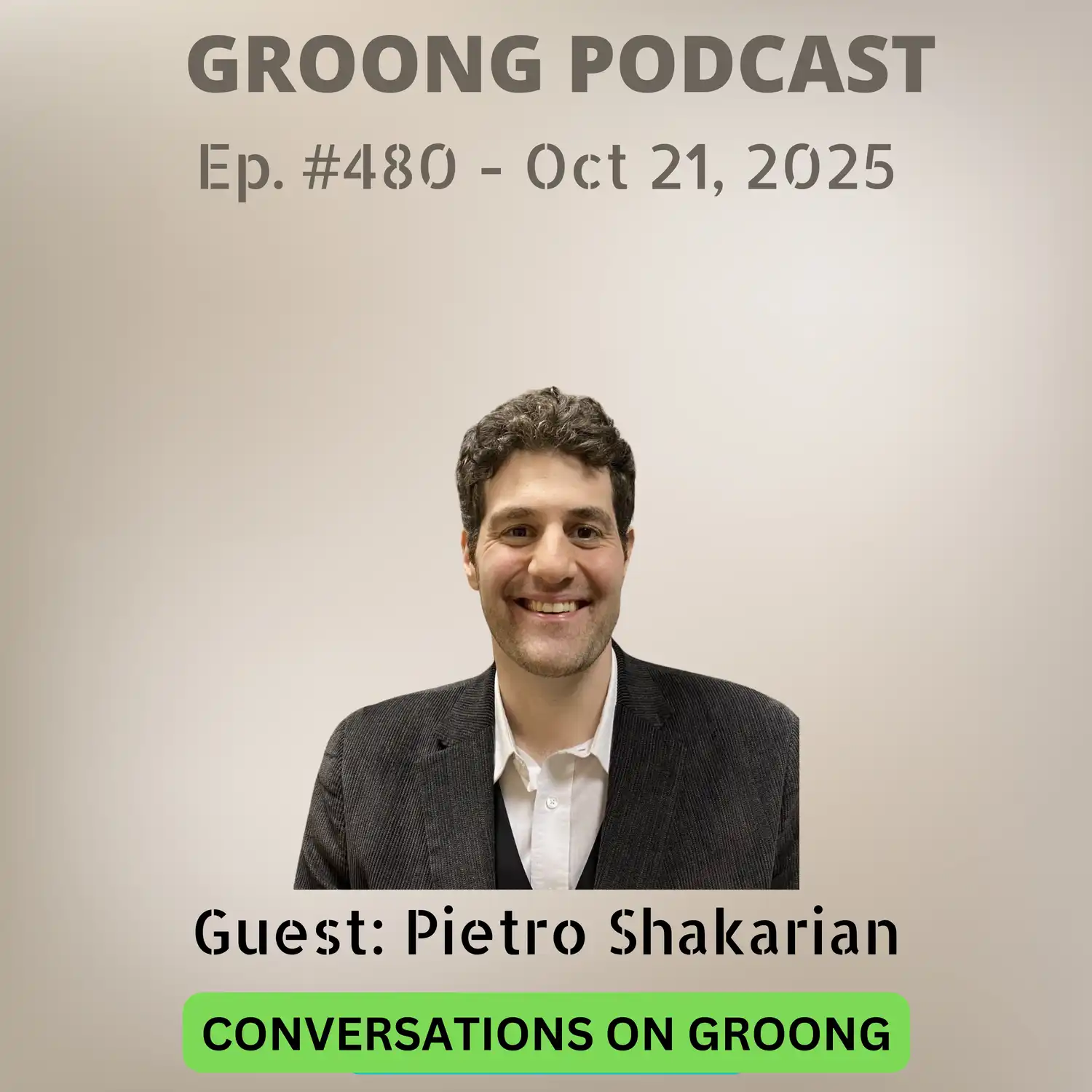
Groong Links:
Guest:
Topics:
- Research journey, archives Moscow and Yerevan
- Mikoyanâs vision of confederation for the USSR
- Artsakhâs status within Soviet constraints
- De-Stalinization and Armeniaâs cultural thaw
- Mikoyanâs stance toward the Armenian Church
Episode 480 | Recorded on October 18, 2025
Pietro Shakarian - Anastas Mikoyan, An Armenian Reformer in Khrushchev's Kremlin| Ep 480, Oct 22, 2025 [EP480]
Posted on Wednesday, Oct 22, 2025 | Category: Armenia, History, Artsakh, Nagorno Karabakh, History, Armenian Genocide, USSR, Armenian Church, Russia, Genocide, China, Georgia, Turkey, Economy, NATO, Iran, Lebanon, Middle East, Ukraine, India, Soviet Armenia, Modern ArmeniaGroong Links:
Guest:
Topics:
- Research journey, archives Moscow and Yerevan
- Mikoyanâs vision of confederation for the USSR
- Artsakhâs status within Soviet constraints
- De-Stalinization and Armeniaâs cultural thaw
- Mikoyanâs stance toward the Armenian Church
Episode 480 | Recorded on October 18, 2025
Dziunik Aghajanian - Ukraine, Israel-Gaza, Armenian Government Repressions | Ep 479, Oct 19, 2025 [EP479]
Posted on Tuesday, Oct 21, 2025 | Category: Armenia, Politics, Artsakh, Nagorno Karabakh, Azerbaijan, Ukraine, Turkey, Russia, Israel, Iran, Armenian Church, Middle East, NATO, Syria, Genocide, European Union, China, Human Rights, Lebanon, India | Series: wir, video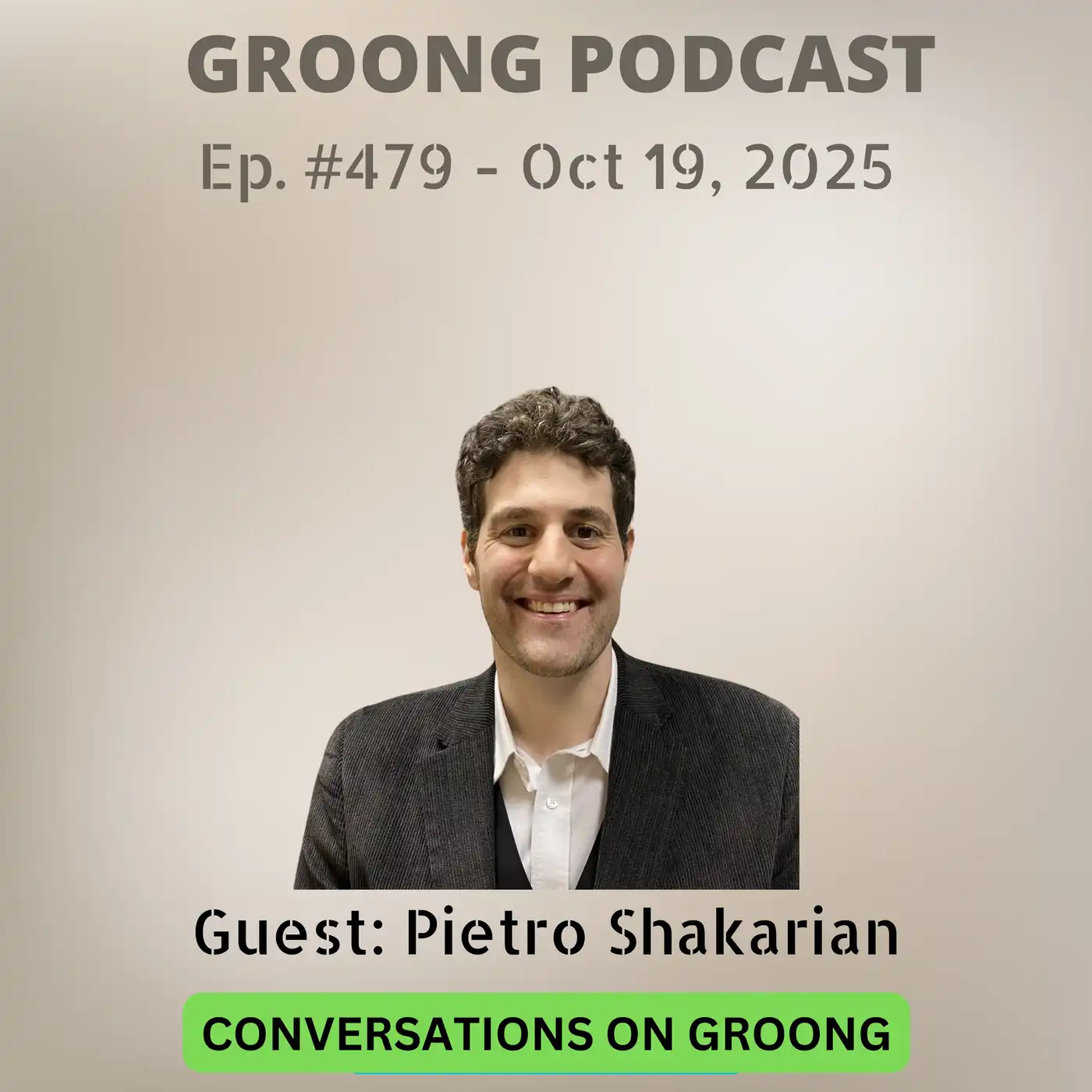
Groong Links:
Guest:
Topics:
- Ukraine War, Trump - Putin Upcoming Summit
- Israel-Gaza âCease Fireâ
- Armenian Government Repressions Accelerate
Episode 479 | Recorded: October 20, 2025
Dziunik Aghajanian - Ukraine, Israel-Gaza, Armenian Government Repressions | Ep 479, Oct 19, 2025 [EP479]
Posted on Tuesday, Oct 21, 2025 | Category: Armenia, Politics, Artsakh, Nagorno Karabakh, Azerbaijan, Ukraine, Turkey, Russia, Israel, Iran, Armenian Church, Middle East, NATO, Syria, Genocide, European Union, China, Human Rights, Lebanon, IndiaGroong Links:
Guest:
Topics:
- Ukraine War, Trump - Putin Upcoming Summit
- Israel-Gaza âCease Fireâ
- Armenian Government Repressions Accelerate
Episode 479 | Recorded: October 20, 2025
Groong Links:
Topics:
- Pashinyan’s rise and Western backing
- Breakdown of talks and secret meetings
- Failures and propaganda during the war
- Aftermath, revisionism, and political responsibility
Episode 476 | Recorded: September 28, 2025
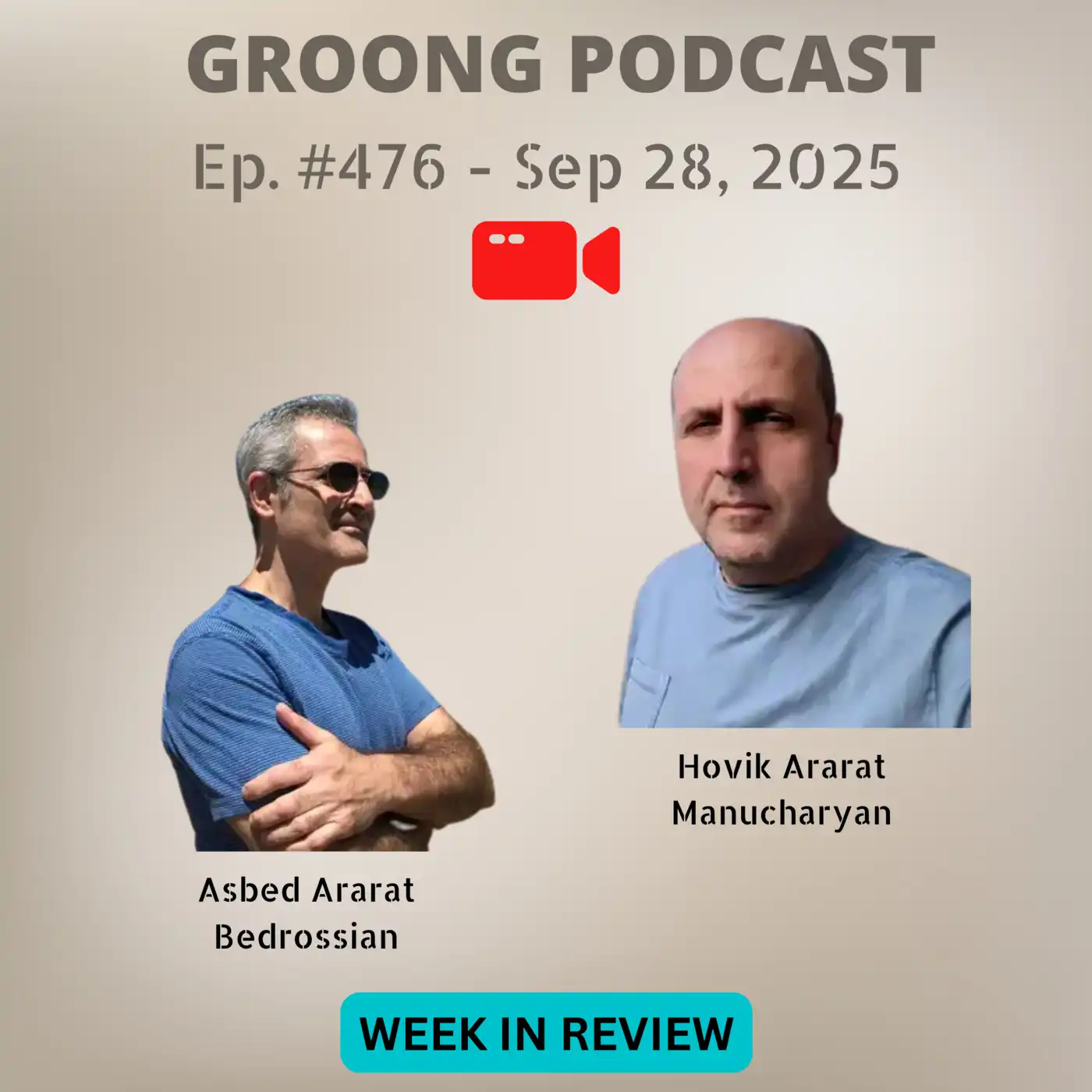
44-Day War, A Tale of Betrayal | Ep 476, Sep 28, 2025 [EP476]
Posted on Wednesday, Oct 1, 2025 | Category: Armenia, Politics, Artsakh, Nagorno Karabakh, Azerbaijan, Turkey, Russia, Genocide, NATO, Ukraine, Georgia, Iran, ChinaGroong Links:
Topics:
- Pashinyan’s rise and Western backing
- Breakdown of talks and secret meetings
- Failures and propaganda during the war
- Aftermath, revisionism, and political responsibility
Episode 476 | Recorded: September 28, 2025
Arthur Martirosyan - Sep 19, Civil Contract, Opposition Inaction, Electric Network | Ep 474, Sep 21, 2025 [EP474]
Posted on Tuesday, Sep 23, 2025 | Category: Armenia, Politics, Artsakh, Nagorno Karabakh, Azerbaijan, Turkey, Russia, Genocide, Artsakh Blockade, European Union, China, Georgia, Israel, Middle East | Series: wir, video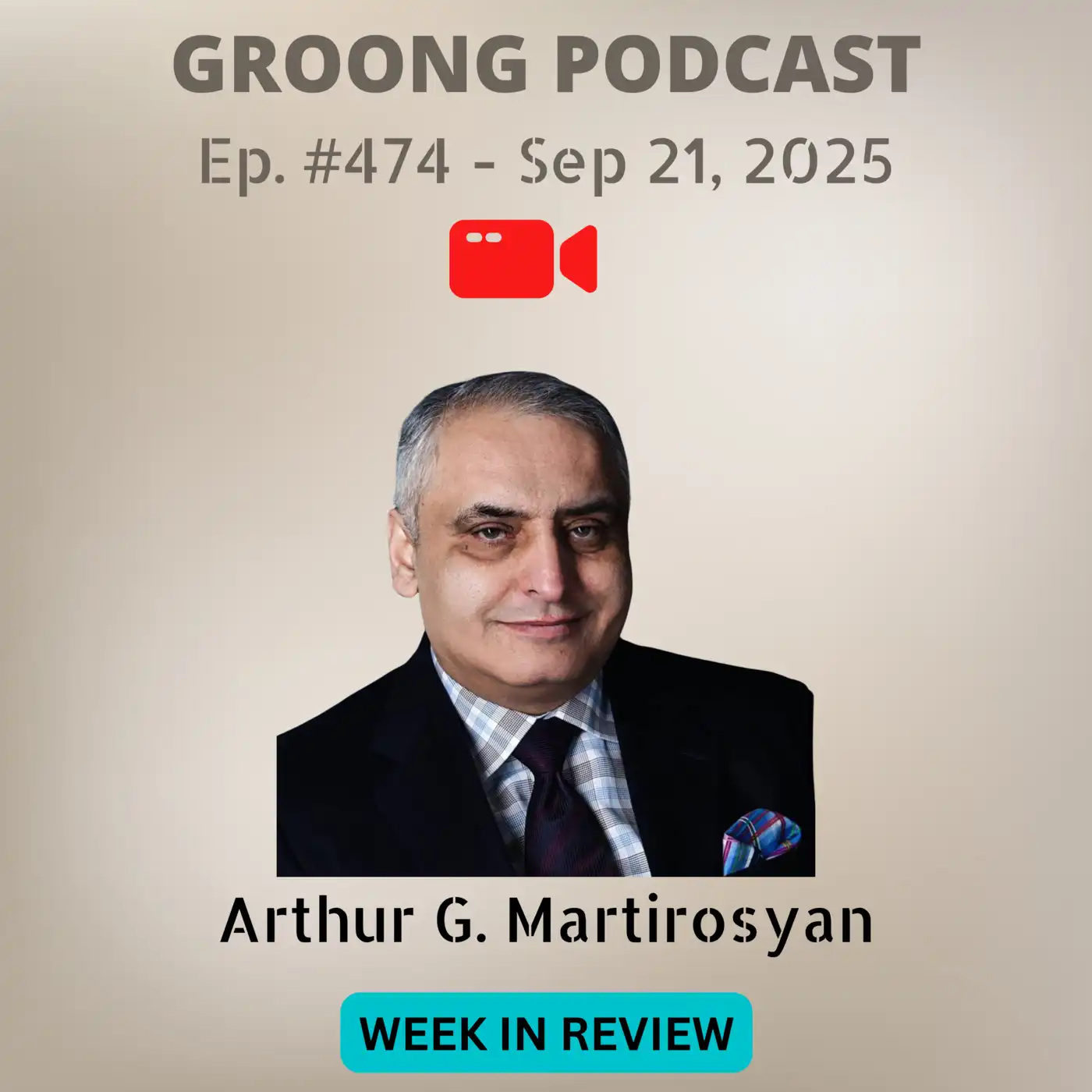
Groong Links:
Guest:
Topics:
- Sep. 19: Day of Artsakhâs Ethnic Cleansing
- Civil Contractâs 7th Congress
- Opposition (In)Action
- Electric Network of Armenia
Episode 474 | Recorded: September 22, 2025
Arthur Martirosyan - Sep 19, Civil Contract, Opposition Inaction, Electric Network | Ep 474, Sep 21, 2025 [EP474]
Posted on Tuesday, Sep 23, 2025 | Category: Armenia, Politics, Artsakh, Nagorno Karabakh, Azerbaijan, Turkey, Russia, Genocide, Artsakh Blockade, European Union, China, Georgia, Israel, Middle EastGroong Links:
Guest:
Topics:
- Sep. 19: Day of Artsakhâs Ethnic Cleansing
- Civil Contractâs 7th Congress
- Opposition (In)Action
- Electric Network of Armenia
Episode 474 | Recorded: September 22, 2025
Hrant Mikaelian - War on Iran, Russia on TRIPP, New MPG Poll in Armenia, Economy | Ep 471, Sep 7, 2025 [EP471]
Posted on Tuesday, Sep 9, 2025 | Category: Armenia, Politics, Iran, Poll, Azerbaijan, Turkey, Russia, Iran, Armenian Church, Nagorno Karabakh, Armenian Genocide, Economy, Georgia, Israel, Genocide, China, Ukraine, India | Series: wir, video
Groong Links:
Guest:
Topics:
- War in Iran, Chapter 2?
- Russiaâs Stance on TRIPP
- New MPG Poll in Armenia
- Armenian Economy in H1/2025
Episode 471 | Recorded: September 8, 2025
Hrant Mikaelian - War on Iran, Russia on TRIPP, New MPG Poll in Armenia, Economy | Ep 471, Sep 7, 2025 [EP471]
Posted on Tuesday, Sep 9, 2025 | Category: Armenia, Politics, Iran, Poll, Azerbaijan, Turkey, Russia, Iran, Armenian Church, Nagorno Karabakh, Armenian Genocide, Economy, Georgia, Israel, Genocide, China, Ukraine, IndiaGroong Links:
Guest:
Topics:
- War in Iran, Chapter 2?
- Russiaâs Stance on TRIPP
- New MPG Poll in Armenia
- Armenian Economy in H1/2025
Episode 471 | Recorded: September 8, 2025
Lenna Hovanessian – White House Meeting Fallout, Artsakh Erasure, Genocide Dismissal, Azerbaijan Playbook in the US | Ep 470, Sep 7, 2025 [EP470]
Posted on Sunday, Sep 7, 2025 | Category: Armenia, Politics, Artsakh, Nagorno Karabakh, Genocide, Azerbaijan, Armenian Church, Israel, Artsakh Blockade | Series: cog, video
Groong Links:
Guest:
Topics:
- Reflections on August 8 White House Meeting
- Tensions in Diaspora-Armenia Relations
- Azerbaijani Lobbying, Caviar Diplomacy, and the Cuellar Bribery Case
Episode 470 | Recorded: September 5, 2025
Lenna Hovanessian – White House Meeting Fallout, Artsakh Erasure, Genocide Dismissal, Azerbaijan Playbook in the US | Ep 470, Sep 7, 2025 [EP470]
Posted on Sunday, Sep 7, 2025 | Category: Armenia, Politics, Artsakh, Nagorno Karabakh, Genocide, Azerbaijan, Armenian Church, Israel, Artsakh BlockadeGroong Links:
Guest:
Topics:
- Reflections on August 8 White House Meeting
- Tensions in Diaspora-Armenia Relations
- Azerbaijani Lobbying, Caviar Diplomacy, and the Cuellar Bribery Case
Episode 470 | Recorded: September 5, 2025
Benyamin Poghosyan - SCO Summit, TRIPP Corridor, RU - AZ Rift, UK Ties | Ep 467, Aug 31, 2025 [EP467]
Posted on Tuesday, Sep 2, 2025 | Category: Armenia, Politics, Artsakh, Nagorno Karabakh, Azerbaijan, China, India, Russia, USA, Georgia, Armenian Genocide, NATO, Iran, Turkey, Genocide, Israel, European Union | Series: video, wir
Groong Links:
Guest:
Topics:
- SCO Summit in China
- The UK in Armenia
- TRIPP / Zangezur Corridor
- Russian Azerbaijani Relations
Episode 467 | Recorded: September 1, 2025
Benyamin Poghosyan - SCO Summit, TRIPP Corridor, RU - AZ Rift, UK Ties | Ep 467, Aug 31, 2025 [EP467]
Posted on Tuesday, Sep 2, 2025 | Category: Armenia, Politics, Artsakh, Nagorno Karabakh, Azerbaijan, China, India, Russia, USA, Georgia, Armenian Genocide, NATO, Iran, Turkey, Genocide, Israel, European UnionGroong Links:
Guest:
Topics:
- SCO Summit in China
- The UK in Armenia
- TRIPP / Zangezur Corridor
- Russian Azerbaijani Relations
Episode 467 | Recorded: September 1, 2025
Tevan Poghosyan - State Sovereignty Day, TRIPP Trap, Reactions, Kitchen Sink | Ep 464, Aug 24, 2025 [EP464]
Posted on Tuesday, Aug 26, 2025 | Category: Armenia, Geopolitics, Artsakh, Nagorno Karabakh, Azerbaijan, Iran, Turkey, Russia, Israel, Genocide, China, Ukraine | Series: wir, video
Groong Links:
Guest:
- Tevan Poghosyan , Former MP, Heritage Party
Topics:
- August 23: Armeniaâs declaration of State Sovereignty
- The TRIPP Trap
- Iran - Pezeshkianâs Visit
- Russia - Overchukâs visit
- The Kitchen Sink
Episode 464 | Recorded: August 25, 2025