Four-Day War
Last updated: May 31, 2026
On April 1, 2016, Azerbaijani forces launched coordinated attacks along the line of contact in Artsakh (Nagorno Karabakh), using tanks, artillery, drones, and ground troops. The fighting lasted four days before a Russian-brokered ceasefire was reached in Moscow on April 5. Both sides claimed victory. Azerbaijan asserted it had captured around two thousand hectares, including the Lele Tepe heights in the southern sector; Armenian and Artsakh officials disputed the scale of the losses while acknowledging that some positions had changed hands. It was the most intense fighting since the 1994 ceasefire that had ended the first Nagorno-Karabakh war, and the first confirmed shift in the line of contact.
The conduct of the fighting drew international condemnation. Evidence emerged of Azerbaijani soldiers beheading Armenian soldiers and elderly civilians in captured villages, and of the use of cluster munitions in populated areas. Ilham Aliyev presented the offensive as a legitimate military operation to reclaim Azerbaijani territory; Armenia and Artsakh accused Baku of deliberate war crimes. The OSCE Minsk Group, the designated mediation framework for the Nagorno Karabakh conflict, was effectively sidelined during the ceasefire brokering, with Moscow handling the process bilaterally.
The April War unsettled Armenian domestic politics. The government of Serzh Sargsyan dismissed several senior military commanders in the aftermath. That summer, a group of armed men seized a Yerevan police station and took hostages, citing the territorial losses and demanding the release of opposition figures. The episode, carried out by a group called Sasna Tsrer , reflected a current of public anger over the perception that the military and political leadership had failed. A parliamentary investigation was launched in 2019. The war’s lessons about Azerbaijani military modernization, Turkish drone support, and the vulnerability of Armenian defensive positions were perceived to be be largely unaddressed, setting the conditions for the 44-Day War in September 2020.
Groong episodes that include this tag
Below are all Groong episodes tagged with Four-Day War.
Ambassador Jack Matlock - Did the West Fumble the Post-Cold War Peace? | Ep 580, Aug 28, 2026 [EP580]
Posted on Friday, Aug 28, 2026 | Category: Armenia, US, Russia, Geopolitics, History, Soviet Armenia, USSR | Series: cog, video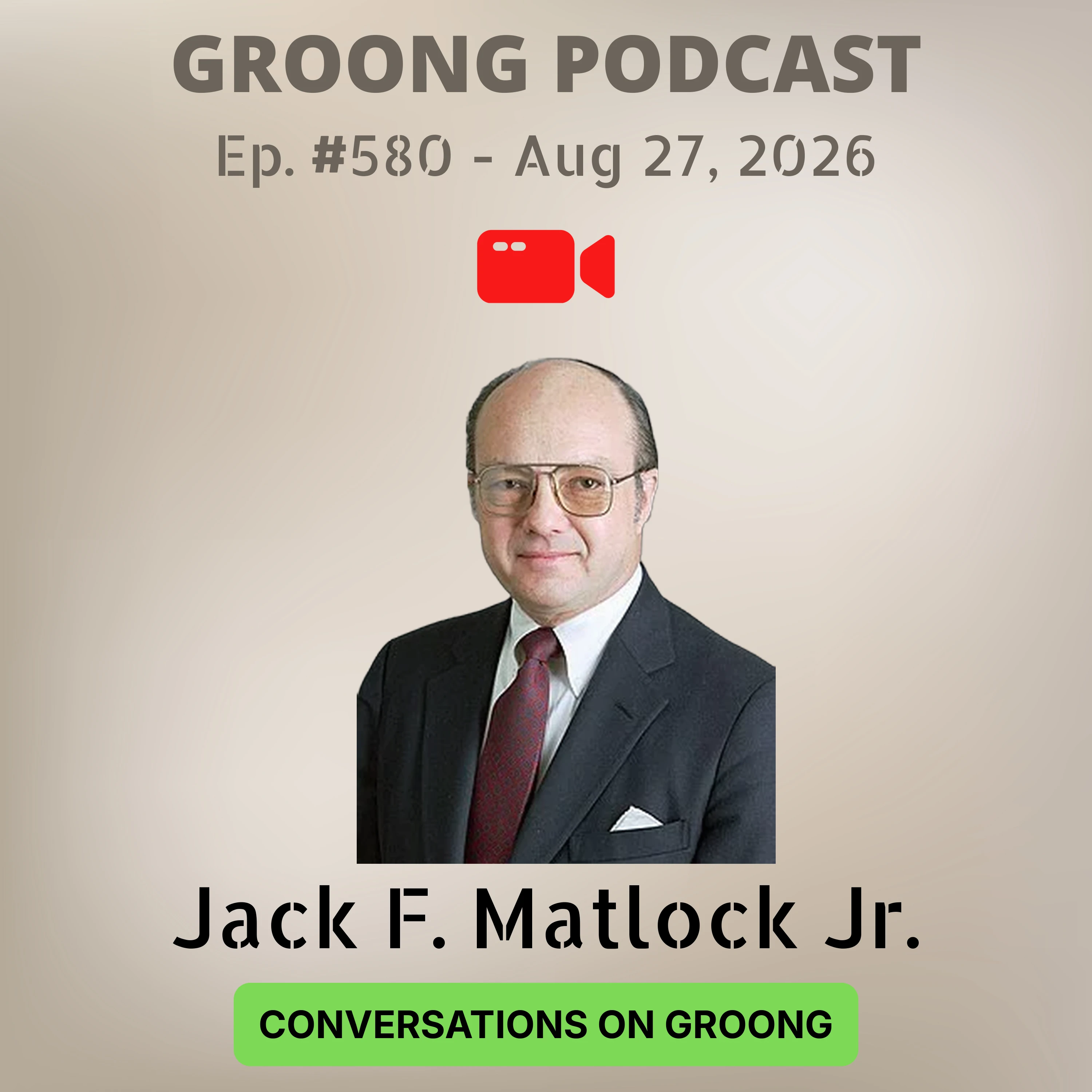
Groong Links:
Guest(s):
Topics:
- Recollections from Soviet South Caucasus
- Why the Soviet Union collapsed
- How the Cold War ended
- Reagan and Gorbachev’s diplomacy
- America’s post-Cold War triumphalism
- NATO expansion and Russian backlash
- Great-power rivalry in the Caucasus
- Armenia’s geopolitical choices today
Episode 580 | Recorded: Aug 27, 2026
#JackMatlock #ColdWar #SovietUnion #Reagan #Gorbachev #NATO #Russia #SouthCaucasus #Armenia
Ambassador Jack Matlock - Did the West Fumble the Post-Cold War Peace? | Ep 580, Aug 28, 2026 [EP580]
Posted on Friday, Aug 28, 2026 | Category: Armenia, US, Russia, Geopolitics, History, Soviet Armenia, USSRGroong Links:
Guest(s):
Topics:
- Recollections from Soviet South Caucasus
- Why the Soviet Union collapsed
- How the Cold War ended
- Reagan and Gorbachev’s diplomacy
- America’s post-Cold War triumphalism
- NATO expansion and Russian backlash
- Great-power rivalry in the Caucasus
- Armenia’s geopolitical choices today
Episode 580 | Recorded: Aug 27, 2026
#JackMatlock #ColdWar #SovietUnion #Reagan #Gorbachev #NATO #Russia #SouthCaucasus #Armenia
Transcript: Ambassador Jack Matlock - Did the West Fumble the Post-Cold War Peace? | Ep 580, Aug 28, 2026 [EP580]
Posted on Friday, Aug 28, 2026 | Category: Armenia, US, Russia, Geopolitics, History, Soviet Armenia, USSR, TranscriptIn this episode of Conversations on Groong, we speak with Ambassador Jack Matlock, the last US Ambassador to the Soviet Union, about whether the West missed a historic opportunity to integrate Russia into Western security architecture after the Cold War. We discuss the internal collapse of the Soviet Union, Reagan-Gorbachev diplomacy, NATO expansion and Russian backlash, and how Cold War-era decisions shape Armenia’s geopolitical choices today, including Matlock’s firsthand observations of Soviet Armenia during glasnost and the Nagorno Karabakh movement.
Hovik & Asbed - Iran War, April 2016 War, Armenia & Russia, Politics & Election | Ep 530, Apr 5, 2026 [EP530]
Posted on Wednesday, Apr 8, 2026 | Category: Iran, Armenia, Politics, Election, Artsakh, Nagorno Karabakh, Azerbaijan, Armenian Church, European Union, Russia, Georgia, Turkey | Series: cog, video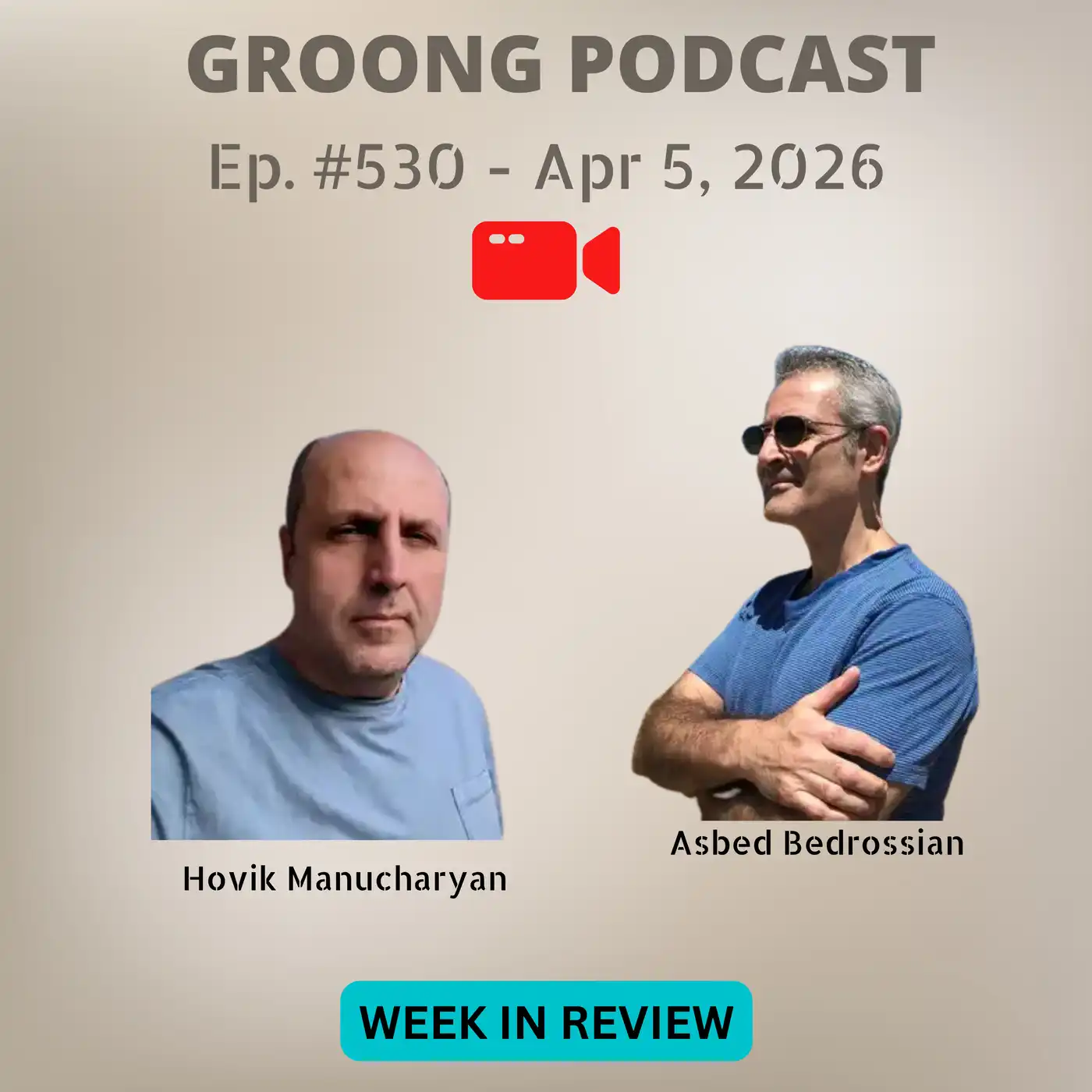
Groong Links:
Topics:
- Iran War Update
- 2016 April War
- Aftermath of Pashinyan in Moscow
- Domestic Politics & Election
Episode 530 | Recorded: April 7, 2026
#Groong #Armenia
Hovik & Asbed - Iran War, April 2016 War, Armenia & Russia, Politics & Election | Ep 530, Apr 5, 2026 [EP530]
Posted on Wednesday, Apr 8, 2026 | Category: Iran, Armenia, Politics, Election, Artsakh, Nagorno Karabakh, Azerbaijan, Armenian Church, European Union, Russia, Georgia, TurkeyGroong Links:
Topics:
- Iran War Update
- 2016 April War
- Aftermath of Pashinyan in Moscow
- Domestic Politics & Election
Episode 530 | Recorded: April 7, 2026
#Groong #Armenia
Transcript: Hovik & Asbed - Iran War, April 2016 War, Armenia & Russia, Politics & Election | Ep 530, Apr 5, 2026 [EP530]
Posted on Wednesday, Apr 8, 2026 | Category: Iran, Armenia, Politics, Election, Artsakh, Nagorno Karabakh, Azerbaijan, Armenian Church, European Union, Russia, Georgia, Turkey, TranscriptIn this Week in Review, Hovik and Asbed discussed the escalating US-Israeli war on Iran and the danger of a wider regional catastrophe; we reflected on the tenth anniversary of the April 2016 Four-Day War and what it revealed about Armenia’s military and diplomatic posture; we examined the fallout from Pashinyan’s Moscow visit and the increasingly blunt Russian response, and reviewed the fast-moving Armenian election campaign, including pressure on the opposition, EU involvement, and the emerging strategies of major the various alliances.
ANN/Groong Week in Review - (Ep #11) - 08/30/2020 [EP11]
Posted on Sunday, Aug 30, 2020 | Category: Armenia, Politics, Geopolitics, Azerbaijan, Russia, Syria, Artsakh, Lebanon, USA, Middle East, Turkey, Nagorno Karabakh, European Union | Series: wir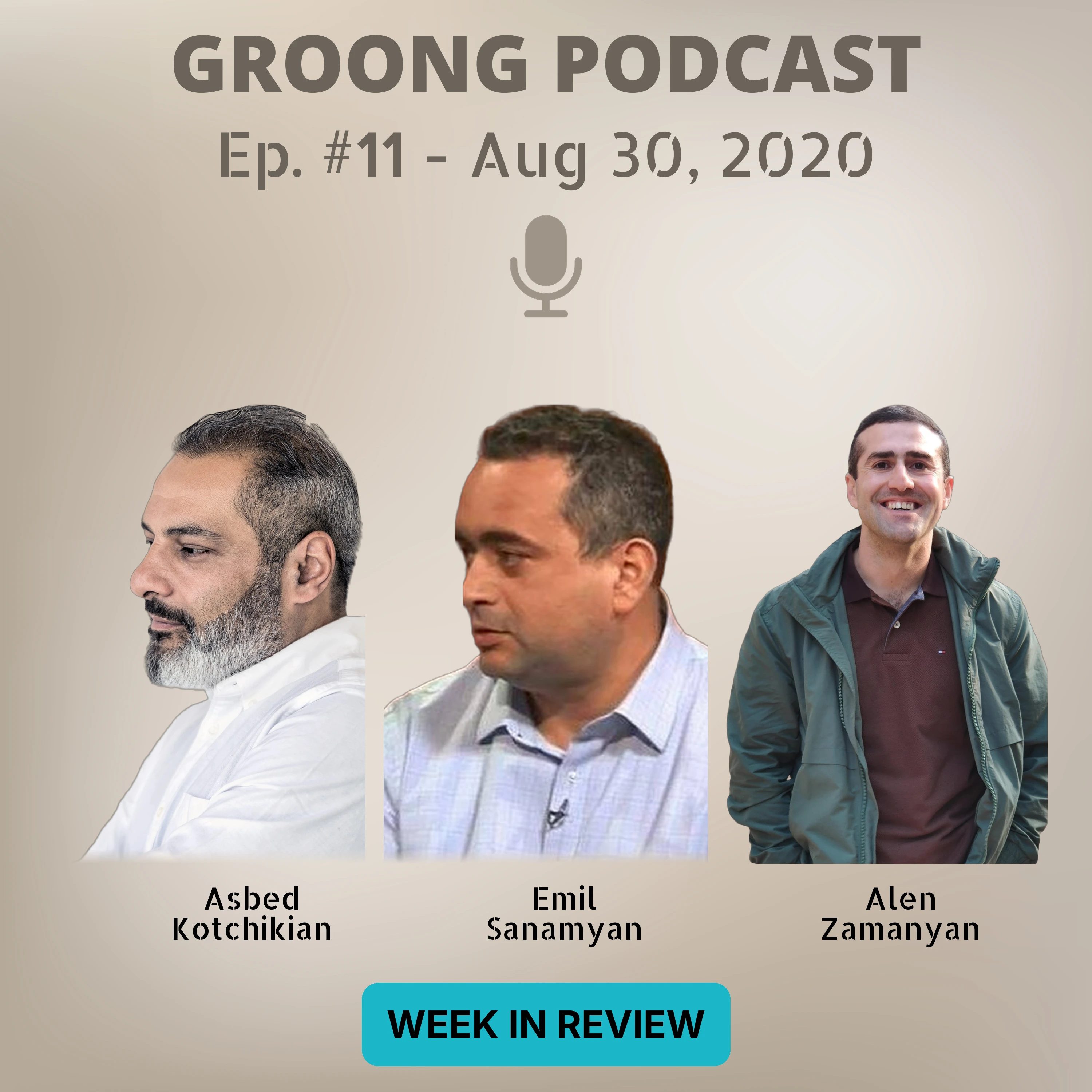
ANN/Groong Week in Review - 08/30/2020
Topics:
- Armenian POW Gurgen Alaverdyan
- Armeniaâs Humanitarian Aid to Aleppo
- Serge Sargsyanâs Interview and the Four-Day War Deliberations
- National Awards
- Vagharshak Harutyunyanâs Appointment as Chief Advisor to Pashinyan
Guests:
- Asbed Kotchikian
- Emil Sanamyan
- Alen Zamanyan
Guest(s):
Hosts:
- Hovik Manucharyan
- Asbed Bedrossian
Website: https://groong.org/podcasts/WiR-20200830.html Episode 11 | Recorded on August 30 2020
ANN/Groong Week in Review - (Ep #11) - 08/30/2020 [EP11]
Posted on Sunday, Aug 30, 2020 | Category: Armenia, Politics, Geopolitics, Azerbaijan, Russia, Syria, Artsakh, Lebanon, USA, Middle East, Turkey, Nagorno Karabakh, European UnionANN/Groong Week in Review - 08/30/2020
Topics:
- Armenian POW Gurgen Alaverdyan
- Armeniaâs Humanitarian Aid to Aleppo
- Serge Sargsyanâs Interview and the Four-Day War Deliberations
- National Awards
- Vagharshak Harutyunyanâs Appointment as Chief Advisor to Pashinyan
Guests:
- Asbed Kotchikian
- Emil Sanamyan
- Alen Zamanyan
Guest(s):
Hosts:
- Hovik Manucharyan
- Asbed Bedrossian
Website: https://groong.org/podcasts/WiR-20200830.html Episode 11 | Recorded on August 30 2020