Ethnic Cleansing
Last updated: June 11, 2026
In September 2023, Azerbaijan completed the ethnic cleansing of Artsakh (Nagorno Karabakh) through a 24-hour military offensive that expelled the entire Armenian population of the enclave. More than 150,000 Armenians fled or were forced to leave, ending Armenian habitation of Artsakh and marking the culmination of a process that began with the 44-Day War in 2020 and accelerated through border incursions, blockades, and military threats over the subsequent three years. The operation left Armenian towns and villages emptied and subject to Azerbaijani control, cultural erasure, and redevelopment under a new administration. Arayik Harutyunyan , the last Armenian administrator of Artsakh, oversaw the evacuation and subsequently resigned, acknowledging the catastrophic loss of Armenian territorial and political presence in the region.
The displacement created an immediate humanitarian and political crisis for Armenia. Tens of thousands of Artsakhtsis arrived in Armenia without homes, employment, or documentation recognizing their displaced status. Questions of property rights, compensation, and the right of return remained unresolved as Pashinyan pursued negotiations framed as “peace” but which involved accepting Armenian territorial loss without securing guarantees for displaced populations or their future repatriation. Arega Hovsepyan of Strong Armenia emphasized in February 2026 that displaced Artsakhtsis faced voting rights complications, documentation barriers, and inadequate government support, while cultural heritage sites throughout Artsakh were destroyed or repurposed under Azerbaijani administration. The ethnic cleansing also raised accountability questions: no international investigation was launched, and the responsibility of outside powers, particularly Russia , for failing to prevent the displacement remained contested even as Russian peacekeeping forces withdrew in September 2023.
Travel blogger YoungMin visited Artsakh after the ethnic cleansing and documented the controlled nature of access, the selective tourism permitted by Azerbaijani authorities, and the emotional reality of witnessing emptied Armenian towns undergoing redevelopment. The cleansing represents a finality that earlier ceasefire agreements had not guaranteed: the total removal of an Armenian population from a historically Armenian territory, accomplished through military force in the absence of international intervention.
Institutional Erasure and Memory Suppression
Beyond the physical displacement, the Pashinyan administration has committed to an institutional erasure of Artsakh from Armenian historical and political discourse. Under pressure from Azerbaijan’s capitulative demands—including constitutional amendments removing references to Artsakh—the government has vowed to suppress memory of Artsakh and to punish those who attempt to resurrect or commemorate it. This represents a second phase of erasure: first the expulsion of the Armenian population, then the suppression of Armenian claims to historical memory. Individuals and organizations that continue to advocate for Artsakh’s Armenian identity or the rights of displaced Artsakhtsis face legal and administrative consequences, effectively criminalizing historical memory and political dissent.
The Armenian Church , historically the keeper of Armenian identity and memory, has emerged as one of the few institutions willing to advocate publicly for Artsakh Armenians and their rights. The Catholicos (Primate) of the Armenian Apostolic Church participated in a Bern meeting in 2024 where the issue of Karabakh was discussed, affirming the Church’s continued commitment to Artsakh Armenians. In response, Pashinyan’s government intensified its attacks against the Church, viewing it as a threat to the institutional erasure project. The state has targeted Church leadership with arrests and accusations, sought to restrict the Church’s autonomy, and pressured the Church to abandon its advocacy for displaced Artsakhtsis. These attacks represent the government’s determination to eliminate all institutional voices capable of preserving Armenian memory and historical claims to Artsakh.
Continuity with the Armenian Genocide
Some scholars and Armenian analysts view the ethnic cleansing of Artsakh as a continuation of the Armenian Genocide of 1915, arguing that the dispossession, displacement, and cultural erasure reflect a persistent pattern of territorial and demographic elimination spanning more than a century. The 2023 operation completed what Ottoman forces began in 1915: the removal of Armenians from territories they had inhabited for millennia. This perspective emphasizes that the international community’s failure to recognize or prevent the Artsakh cleansing perpetuates a historical pattern of impunity for crimes against the Armenian people, allowing successive regimes to complete the work of erasure—both physical and institutional—without facing accountability or consequences.
Whether Armenia will ever achieve a right of return for displaced Artsakhtsis, whether the international community will recognize the cleansing as such, and whether Armenia can maintain Armenian identity and claims to Artsakh absent an Armenian population remain open questions shaping Armenia’s political discourse and its negotiations with Azerbaijan as of 2026.
Groong episodes that include this tag
Below are all Groong episodes tagged with Ethnic Cleansing.
Artsakh Blockade Flash Update with Gev Iskajyan - Ep 215, Jan 22, 2023 [EP215]
Posted on Sunday, Jan 22, 2023 | Category: Politics, Artsakh, Nagorno Karabakh, Azerbaijan, Artsakh Blockade, Armenia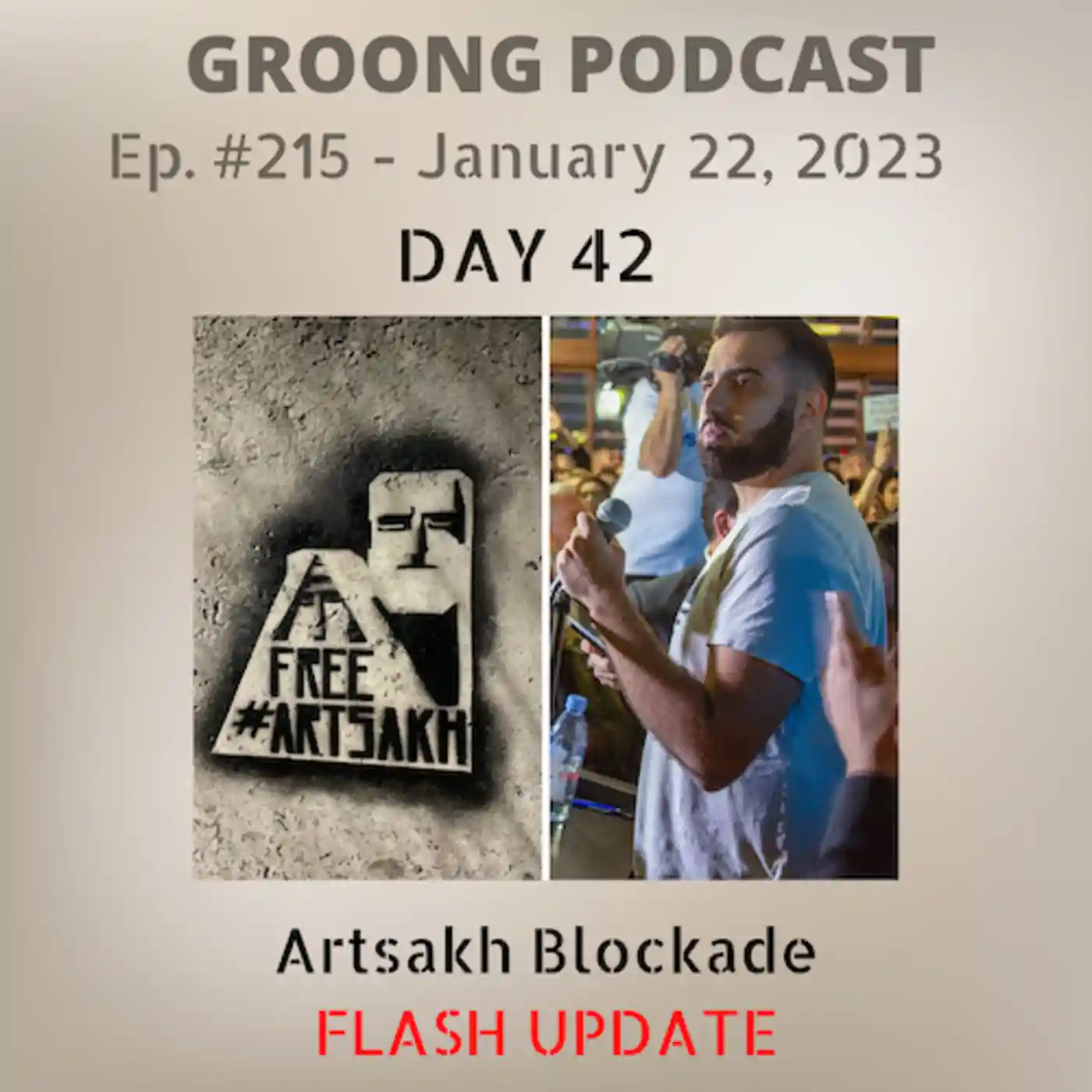
Artsakh Blockade Flash Update with Gev Iskajyan - Ep 215, Jan 22, 2023
Armenian News Network Groong - Jan 22, 2023
Guest:
Topics:
- Gas Cutoff AGAIN
- Azerbaijanâs Psychological and Political Games
- Effect on the Electricity Grid
- Pattern of Increasing Blackouts
- Impressions from Askeran Region
- Urban vs Rural Aspects of the Blockade
- Risk of Normalizing the Pain of Artsakh
- MP Metaxe Hakobyanâs concerns
Episode 215 | Recorded: January 22, 2023
Artsakh Blockade Flash Update with Gev Iskajyan - Ep 208, Jan 17, 2023 [EP208]
Posted on Tuesday, Jan 17, 2023 | Category: Politics, Artsakh, Nagorno Karabakh, Azerbaijan, Artsakh Blockade, Armenia | Series: artsakhblockade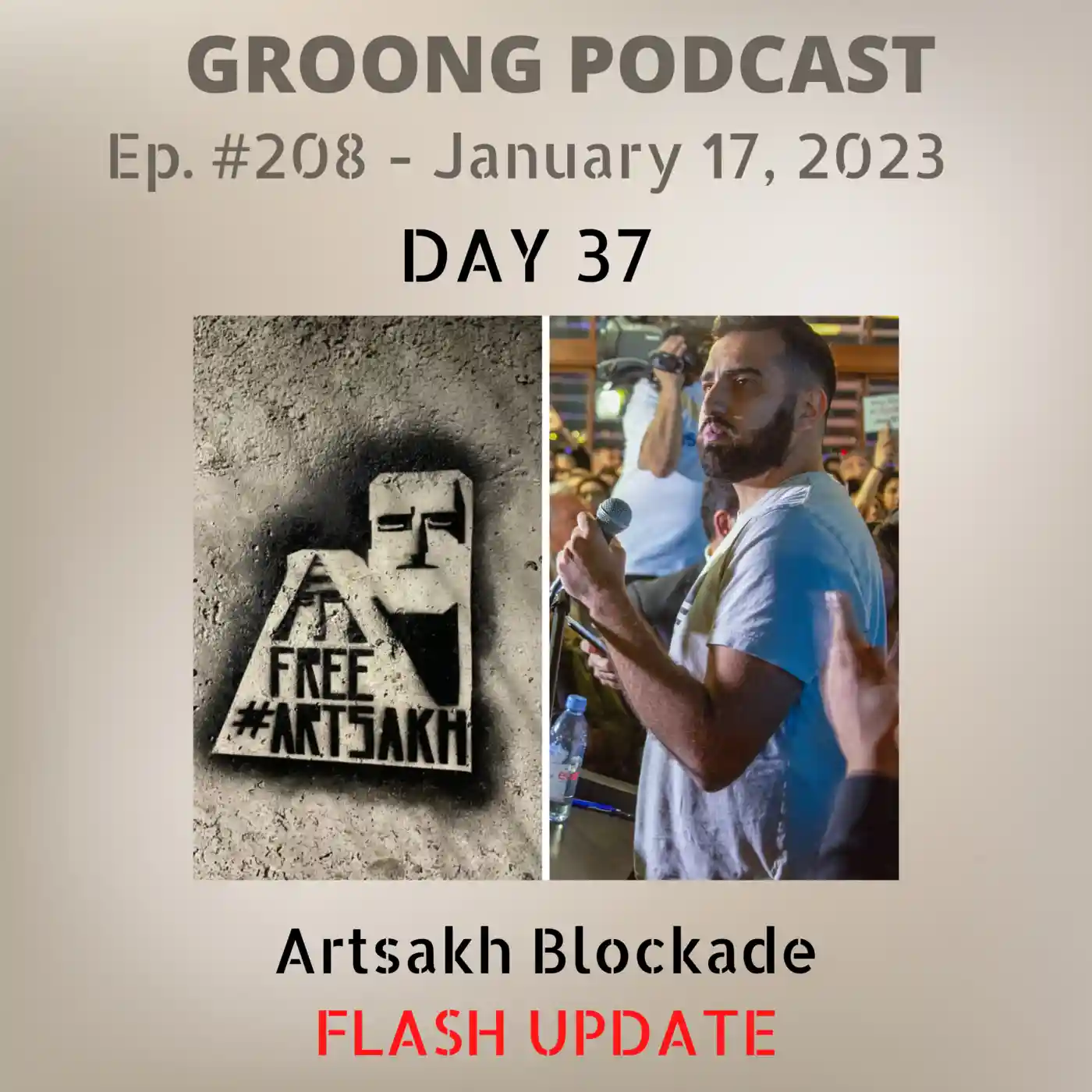
Artsakh Blockade Flash Update with Gev Iskajyan - Ep 208, Jan 17, 2023
Armenian News Network Groong - Jan 17, 2023
Guest:
Topics:
- Gas Cutoff and Restoral
- Increasing Rolling Blackouts of Electricity
- Effects of Political Uncertainty
Episode 208 | Recorded: January 17, 2023
Artsakh Blockade Flash Update with Gev Iskajyan - Ep 208, Jan 17, 2023 [EP208]
Posted on Tuesday, Jan 17, 2023 | Category: Politics, Artsakh, Nagorno Karabakh, Azerbaijan, Artsakh Blockade, ArmeniaArtsakh Blockade Flash Update with Gev Iskajyan - Ep 208, Jan 17, 2023
Armenian News Network Groong - Jan 17, 2023
Guest:
Topics:
- Gas Cutoff and Restoral
- Increasing Rolling Blackouts of Electricity
- Effects of Political Uncertainty
Episode 208 | Recorded: January 17, 2023
Artsakh Blockade Flash Update with Gev Iskajyan - Ep 203, Jan 13, 2023 [EP203]
Posted on Friday, Jan 13, 2023 | Category: Politics, Artsakh, Nagorno Karabakh, Azerbaijan, Armenia, Artsakh Blockade, Genocide | Series: artsakhblockade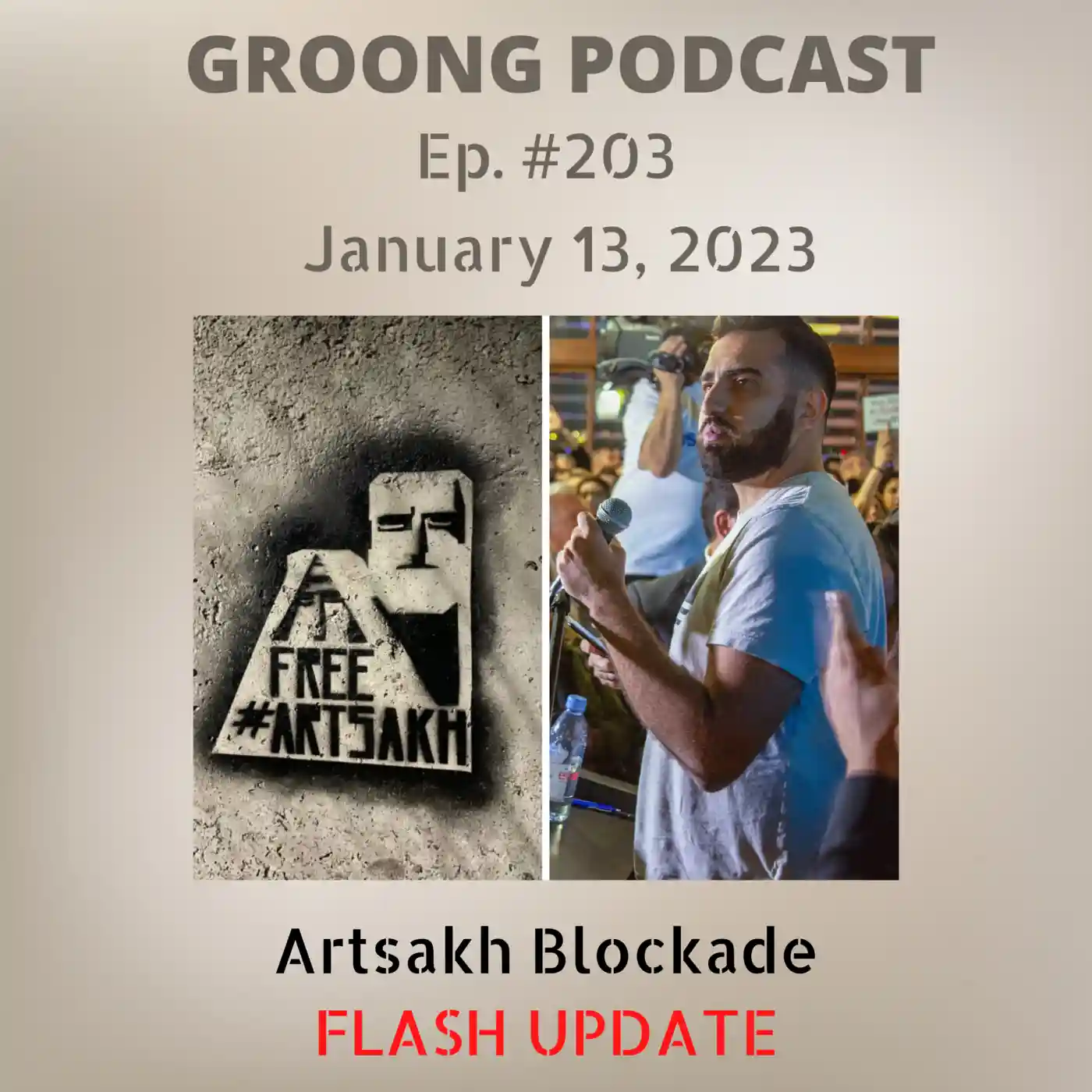
Artsakh Blockade Flash Update with Gev Iskajyan - Ep 203, Jan 13, 2023
Armenian News Network Groong - Jan 13, 2023
Guest:
Topics:
- Internet Restored
- Rolling Blackouts Continue
- 33rd Day of #ArtsakhBlockade, and 33rd Anniversary of Baku & Sumgait Pogroms in Azerbaijan
Episode 203 | Recorded: January 13, 2023
Artsakh Blockade Flash Update with Gev Iskajyan - Ep 203, Jan 13, 2023 [EP203]
Posted on Friday, Jan 13, 2023 | Category: Politics, Artsakh, Nagorno Karabakh, Azerbaijan, Armenia, Artsakh Blockade, GenocideArtsakh Blockade Flash Update with Gev Iskajyan - Ep 203, Jan 13, 2023
Armenian News Network Groong - Jan 13, 2023
Guest:
Topics:
- Internet Restored
- Rolling Blackouts Continue
- 33rd Day of #ArtsakhBlockade, and 33rd Anniversary of Baku & Sumgait Pogroms in Azerbaijan
Episode 203 | Recorded: January 13, 2023
William Bairamian, Arthur Khachikyan: Artsakh Under Blockade - Day 31 [EP199]
Posted on Wednesday, Jan 11, 2023 | Category: Artsakh, Politics, Armenia, Nagorno Karabakh, Russia, Diaspora, Artsakh Blockade, Turkey, Azerbaijan, NATO, Ukraine, Georgia, Economy, European Union, China, Genocide, Middle East | Series: cog, video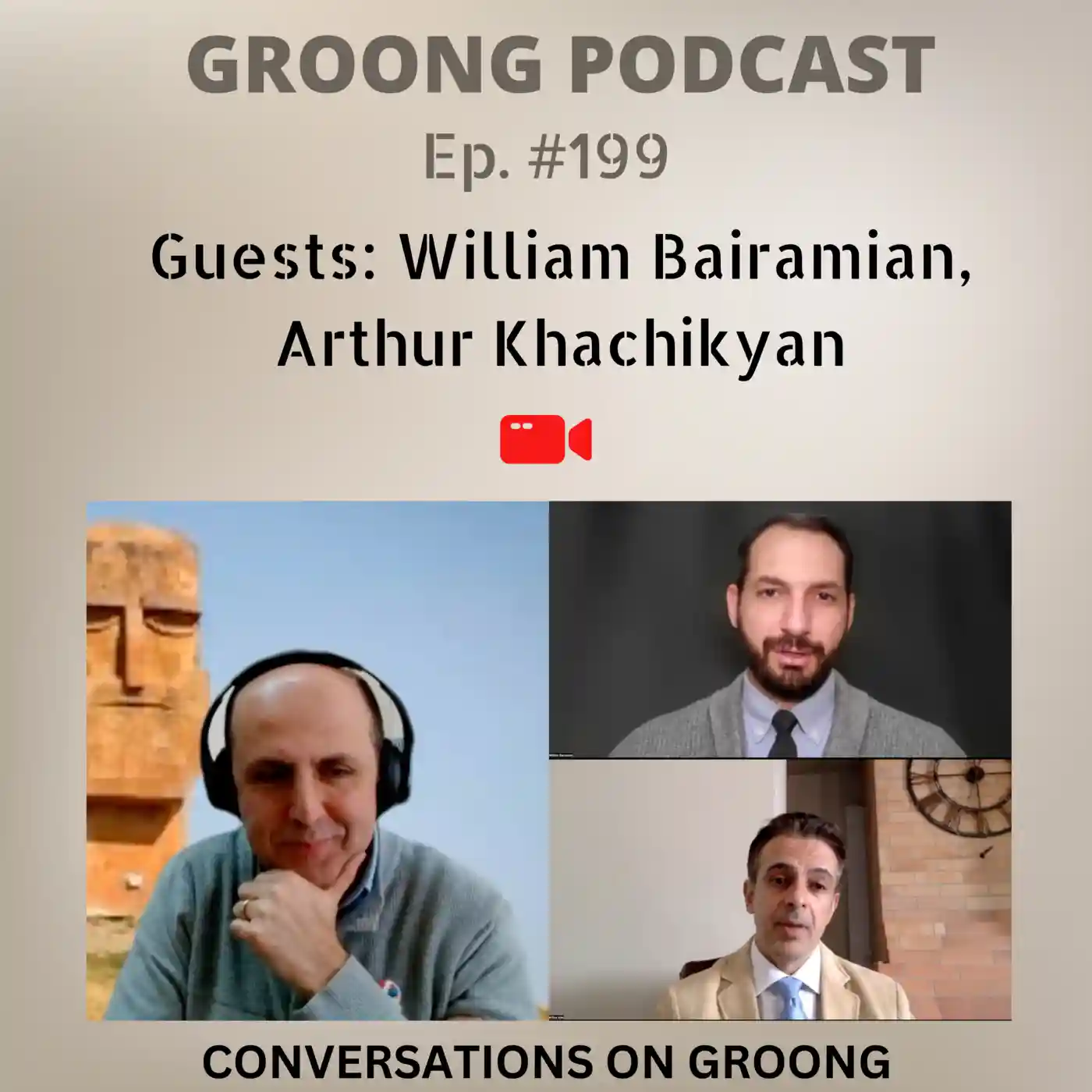
Guests:
- William Bairamian , founder and editor of The Armenite. He has written extensively on Armenian politics, culture, and society. He received degrees in international affairs from Columbia University and UCLA.
- Arthur Khachikyan , International Relations expert from Stanford University, specializing in Intervention. He currently teaches at the Russian Armenian University in Yerevan.
âThis is a repeat of Srebrenica. To gradually strangle and force the people to leave.â -Arthur Khachikyan
Topic:
More than 120,000 people remain trapped in the Republic of Artsakh (or Nagorno-Karabakh)
Read MoreWilliam Bairamian, Arthur Khachikyan: Artsakh Under Blockade - Day 31 [EP199]
Posted on Wednesday, Jan 11, 2023 | Category: Artsakh, Politics, Armenia, Nagorno Karabakh, Russia, Diaspora, Artsakh Blockade, Turkey, Azerbaijan, NATO, Ukraine, Georgia, Economy, European Union, China, Genocide, Middle EastGuests:
- William Bairamian , founder and editor of The Armenite. He has written extensively on Armenian politics, culture, and society. He received degrees in international affairs from Columbia University and UCLA.
- Arthur Khachikyan , International Relations expert from Stanford University, specializing in Intervention. He currently teaches at the Russian Armenian University in Yerevan.
âThis is a repeat of Srebrenica. To gradually strangle and force the people to leave.â -Arthur Khachikyan
Topic:
More than 120,000 people remain trapped in the Republic of Artsakh (or Nagorno-Karabakh)
Read MoreHovhannes Ishkanyan: Artsakh Under Blockade - Day 25 [EP198]
Posted on Thursday, Jan 5, 2023 | Category: Artsakh, Politics, Armenia, Azerbaijan, Russia, Turkey, Artsakh Blockade, Nagorno Karabakh, Armenian Genocide, Human Rights, Genocide, Ukraine, China, Georgia, NATO, Syria, European Union, Iran, Israel | Series: cog, video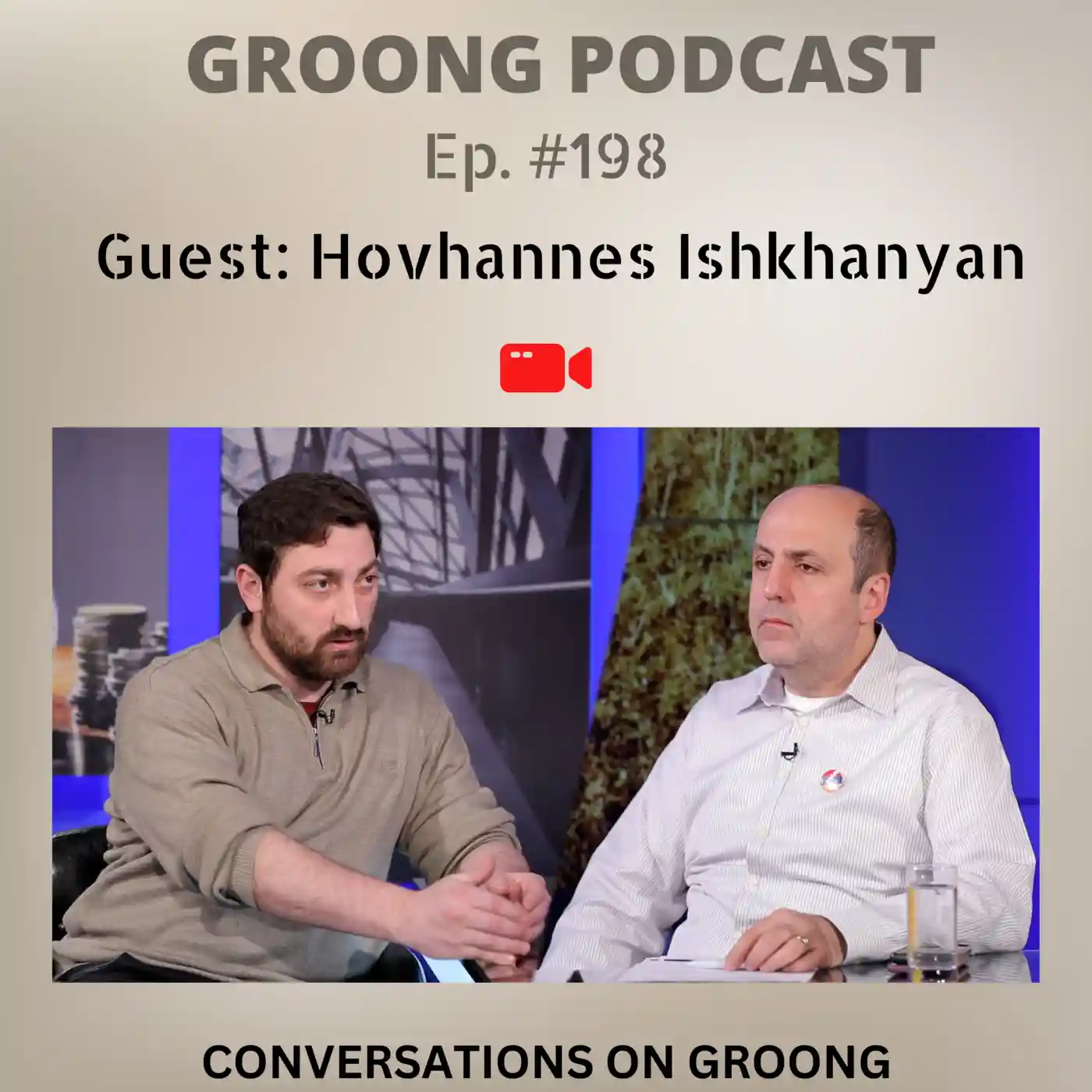
Guest:
- Hovhannes Ishkhanyan , writer, documentary filmmaker, publicist, co-founder of Eye for an Eye (Akn Und Akan), a community of documentarians. Hovhannes has a Master’s in journalism from the Georgian Institute of Public Affairs.
Using art to prevent catastrophes instead of reacting to them
Ishkhanyan’s documentary “Sleep art”: https://www.youtube.com/watch?v=rzqzPpVsK-g
Topic:
More than 120,000 people remain trapped in the Republic of Artsakh (or Nagorno-Karabakh) due to Azerbaijanâs blockade of the Lachin (Berdzor) corridor, as this crisis enters its 25th
Read MoreHovhannes Ishkanyan: Artsakh Under Blockade - Day 25 [EP198]
Posted on Thursday, Jan 5, 2023 | Category: Artsakh, Politics, Armenia, Azerbaijan, Russia, Turkey, Artsakh Blockade, Nagorno Karabakh, Armenian Genocide, Human Rights, Genocide, Ukraine, China, Georgia, NATO, Syria, European Union, Iran, IsraelGuest:
- Hovhannes Ishkhanyan , writer, documentary filmmaker, publicist, co-founder of Eye for an Eye (Akn Und Akan), a community of documentarians. Hovhannes has a Master’s in journalism from the Georgian Institute of Public Affairs.
Using art to prevent catastrophes instead of reacting to them
Ishkhanyan’s documentary “Sleep art”: https://www.youtube.com/watch?v=rzqzPpVsK-g
Topic:
More than 120,000 people remain trapped in the Republic of Artsakh (or Nagorno-Karabakh) due to Azerbaijanâs blockade of the Lachin (Berdzor) corridor, as this crisis enters its 25th
Read More