Ethnic Cleansing
Last updated: June 11, 2026
In September 2023, Azerbaijan completed the ethnic cleansing of Artsakh (Nagorno Karabakh) through a 24-hour military offensive that expelled the entire Armenian population of the enclave. More than 150,000 Armenians fled or were forced to leave, ending Armenian habitation of Artsakh and marking the culmination of a process that began with the 44-Day War in 2020 and accelerated through border incursions, blockades, and military threats over the subsequent three years. The operation left Armenian towns and villages emptied and subject to Azerbaijani control, cultural erasure, and redevelopment under a new administration. Arayik Harutyunyan , the last Armenian administrator of Artsakh, oversaw the evacuation and subsequently resigned, acknowledging the catastrophic loss of Armenian territorial and political presence in the region.
The displacement created an immediate humanitarian and political crisis for Armenia. Tens of thousands of Artsakhtsis arrived in Armenia without homes, employment, or documentation recognizing their displaced status. Questions of property rights, compensation, and the right of return remained unresolved as Pashinyan pursued negotiations framed as “peace” but which involved accepting Armenian territorial loss without securing guarantees for displaced populations or their future repatriation. Arega Hovsepyan of Strong Armenia emphasized in February 2026 that displaced Artsakhtsis faced voting rights complications, documentation barriers, and inadequate government support, while cultural heritage sites throughout Artsakh were destroyed or repurposed under Azerbaijani administration. The ethnic cleansing also raised accountability questions: no international investigation was launched, and the responsibility of outside powers, particularly Russia , for failing to prevent the displacement remained contested even as Russian peacekeeping forces withdrew in September 2023.
Travel blogger YoungMin visited Artsakh after the ethnic cleansing and documented the controlled nature of access, the selective tourism permitted by Azerbaijani authorities, and the emotional reality of witnessing emptied Armenian towns undergoing redevelopment. The cleansing represents a finality that earlier ceasefire agreements had not guaranteed: the total removal of an Armenian population from a historically Armenian territory, accomplished through military force in the absence of international intervention.
Institutional Erasure and Memory Suppression
Beyond the physical displacement, the Pashinyan administration has committed to an institutional erasure of Artsakh from Armenian historical and political discourse. Under pressure from Azerbaijan’s capitulative demands—including constitutional amendments removing references to Artsakh—the government has vowed to suppress memory of Artsakh and to punish those who attempt to resurrect or commemorate it. This represents a second phase of erasure: first the expulsion of the Armenian population, then the suppression of Armenian claims to historical memory. Individuals and organizations that continue to advocate for Artsakh’s Armenian identity or the rights of displaced Artsakhtsis face legal and administrative consequences, effectively criminalizing historical memory and political dissent.
The Armenian Church , historically the keeper of Armenian identity and memory, has emerged as one of the few institutions willing to advocate publicly for Artsakh Armenians and their rights. The Catholicos (Primate) of the Armenian Apostolic Church participated in a Bern meeting in 2024 where the issue of Karabakh was discussed, affirming the Church’s continued commitment to Artsakh Armenians. In response, Pashinyan’s government intensified its attacks against the Church, viewing it as a threat to the institutional erasure project. The state has targeted Church leadership with arrests and accusations, sought to restrict the Church’s autonomy, and pressured the Church to abandon its advocacy for displaced Artsakhtsis. These attacks represent the government’s determination to eliminate all institutional voices capable of preserving Armenian memory and historical claims to Artsakh.
Continuity with the Armenian Genocide
Some scholars and Armenian analysts view the ethnic cleansing of Artsakh as a continuation of the Armenian Genocide of 1915, arguing that the dispossession, displacement, and cultural erasure reflect a persistent pattern of territorial and demographic elimination spanning more than a century. The 2023 operation completed what Ottoman forces began in 1915: the removal of Armenians from territories they had inhabited for millennia. This perspective emphasizes that the international community’s failure to recognize or prevent the Artsakh cleansing perpetuates a historical pattern of impunity for crimes against the Armenian people, allowing successive regimes to complete the work of erasure—both physical and institutional—without facing accountability or consequences.
Whether Armenia will ever achieve a right of return for displaced Artsakhtsis, whether the international community will recognize the cleansing as such, and whether Armenia can maintain Armenian identity and claims to Artsakh absent an Armenian population remain open questions shaping Armenia’s political discourse and its negotiations with Azerbaijan as of 2026.
Groong episodes that include this tag
Below are all Groong episodes tagged with Ethnic Cleansing.
Arthur G Martirosyan - Next POTUS | Turkish-Armenian Talks | US-Armenian Defense Coop | Armenia Azerbaijan Talks | Ep 347 - July 28, 2024 [EP348]
Posted on Wednesday, Jul 31, 2024 | Category: Armenia, Politics, Turkey, USA, Azerbaijan, Russia, Ukraine, Israel, Middle East, European Union, Human Rights, Lebanon, NATO, Syria, China, Genocide, Iran, India | Series: wir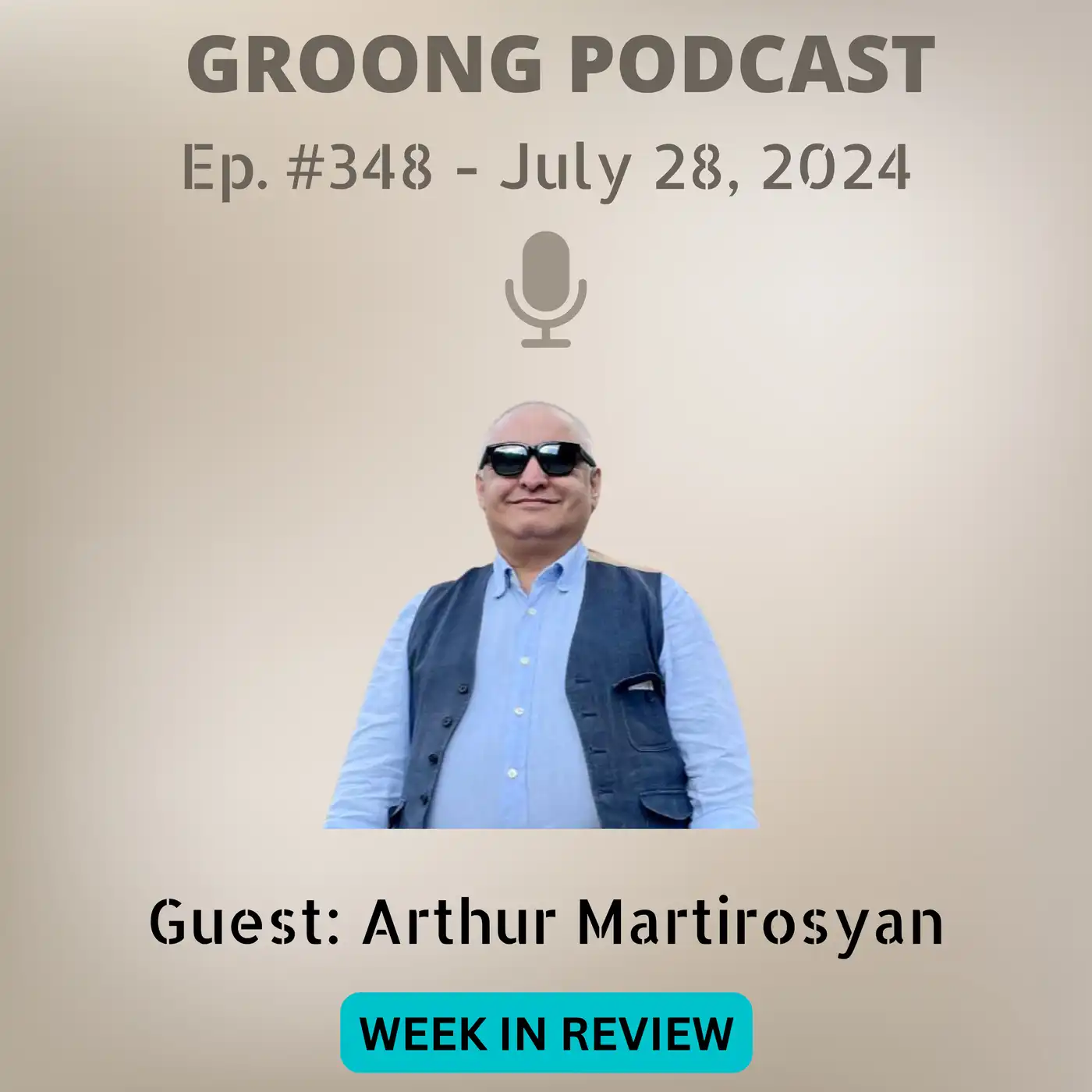
Groong Links:
Guest:
Topics:
- Who Will be the Next Leader of the US?
- Turkish-Armenian Talks
- US-Armenian Defense Coop
- Armenia Azerbaijan Talks
Episode 348 | Recorded: July 30, 2024
Arthur G Martirosyan - Next POTUS | Turkish-Armenian Talks | US-Armenian Defense Coop | Armenia Azerbaijan Talks | Ep 347 - July 28, 2024 [EP348]
Posted on Wednesday, Jul 31, 2024 | Category: Armenia, Politics, Turkey, USA, Azerbaijan, Russia, Ukraine, Israel, Middle East, European Union, Human Rights, Lebanon, NATO, Syria, China, Genocide, Iran, IndiaGroong Links:
Guest:
Topics:
- Who Will be the Next Leader of the US?
- Turkish-Armenian Talks
- US-Armenian Defense Coop
- Armenia Azerbaijan Talks
Episode 348 | Recorded: July 30, 2024
Benyamin Poghosyan - New Leaderships, Armenian Azerbaijani Negotiations, US Defense Attache to Armenia, Midyear Review of 2024 | Ep 347 - July 21, 2024 [EP347]
Posted on Tuesday, Jul 23, 2024 | Category: Armenia, Artsakh, Nagorno Karabakh, Azerbaijan, Artsakh Blockade, Georgia, Russia, Turkey, Iran, Ukraine, China, European Union, Israel, NATO, Genocide, Geopolitics, Lebanon | Series: wir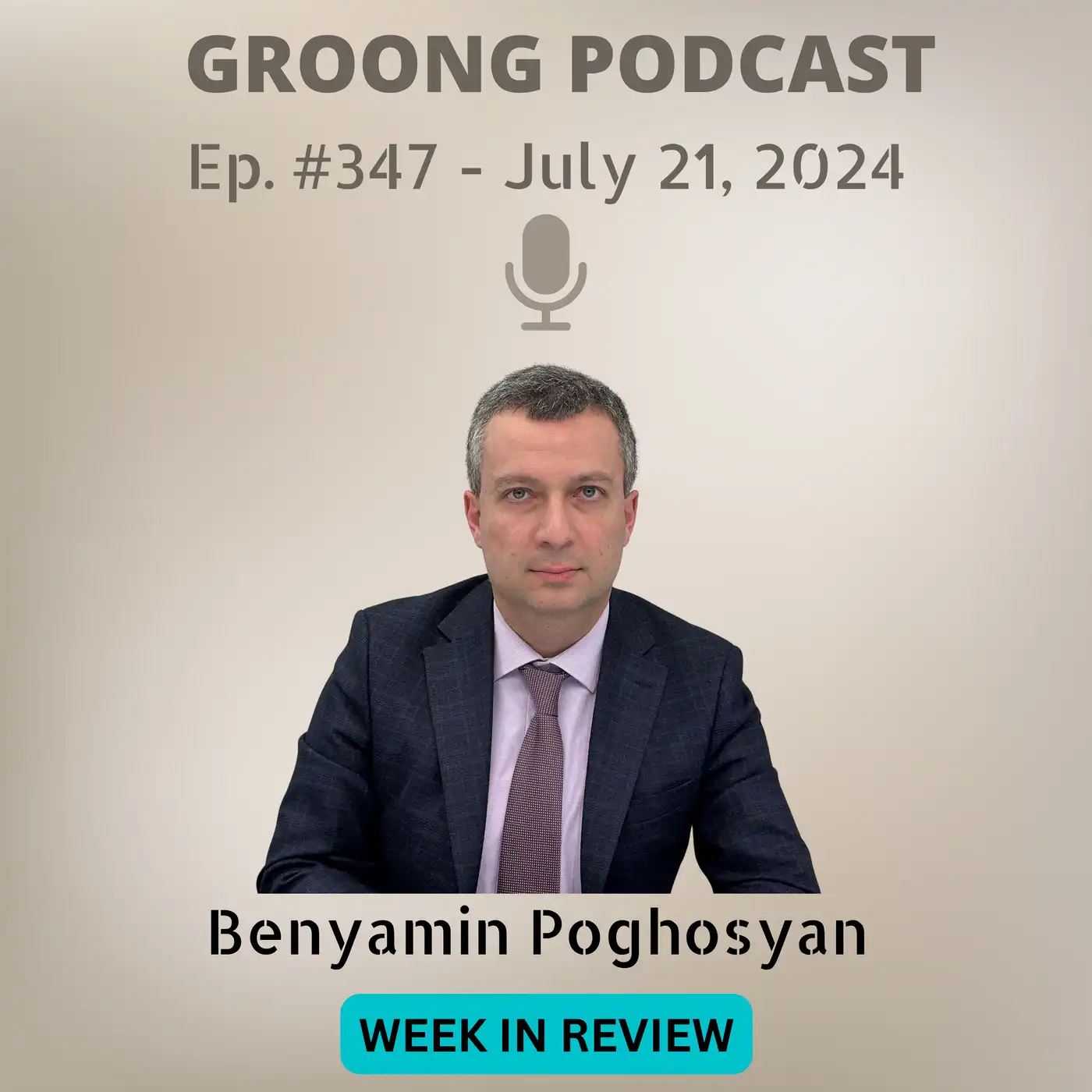
Groong Links:
Guest:
Topics:
- New Leadership Coming to Many Countries
- Aliyev Continues to Thumb the Nose of The West
- Permanent US Defense Attaché to Armenia
- Mid-year Review of our 2024 Predictions
Episode 347 | Recorded: July 22, 2024
Benyamin Poghosyan - New Leaderships, Armenian Azerbaijani Negotiations, US Defense Attache to Armenia, Midyear Review of 2024 | Ep 347 - July 21, 2024 [EP347]
Posted on Tuesday, Jul 23, 2024 | Category: Armenia, Artsakh, Nagorno Karabakh, Azerbaijan, Artsakh Blockade, Georgia, Russia, Turkey, Iran, Ukraine, China, European Union, Israel, NATO, Genocide, Geopolitics, LebanonGroong Links:
Guest:
Topics:
- New Leadership Coming to Many Countries
- Aliyev Continues to Thumb the Nose of The West
- Permanent US Defense Attaché to Armenia
- Mid-year Review of our 2024 Predictions
Episode 347 | Recorded: July 22, 2024
Hrant Mikaelian - Prospect of Trump Presidency on the South Caucasus, Mirzoyan at NATO, Parade of US Officials in Armenia, MPG Poll Review | Ep 345 - July 14, 2024 [EP345]
Posted on Thursday, Jul 18, 2024 | Category: Armenia, Politics, Poll, Azerbaijan, Russia, Turkey, Israel, Iran, NATO, Ukraine, European Union, Middle East, Georgia | Series: wir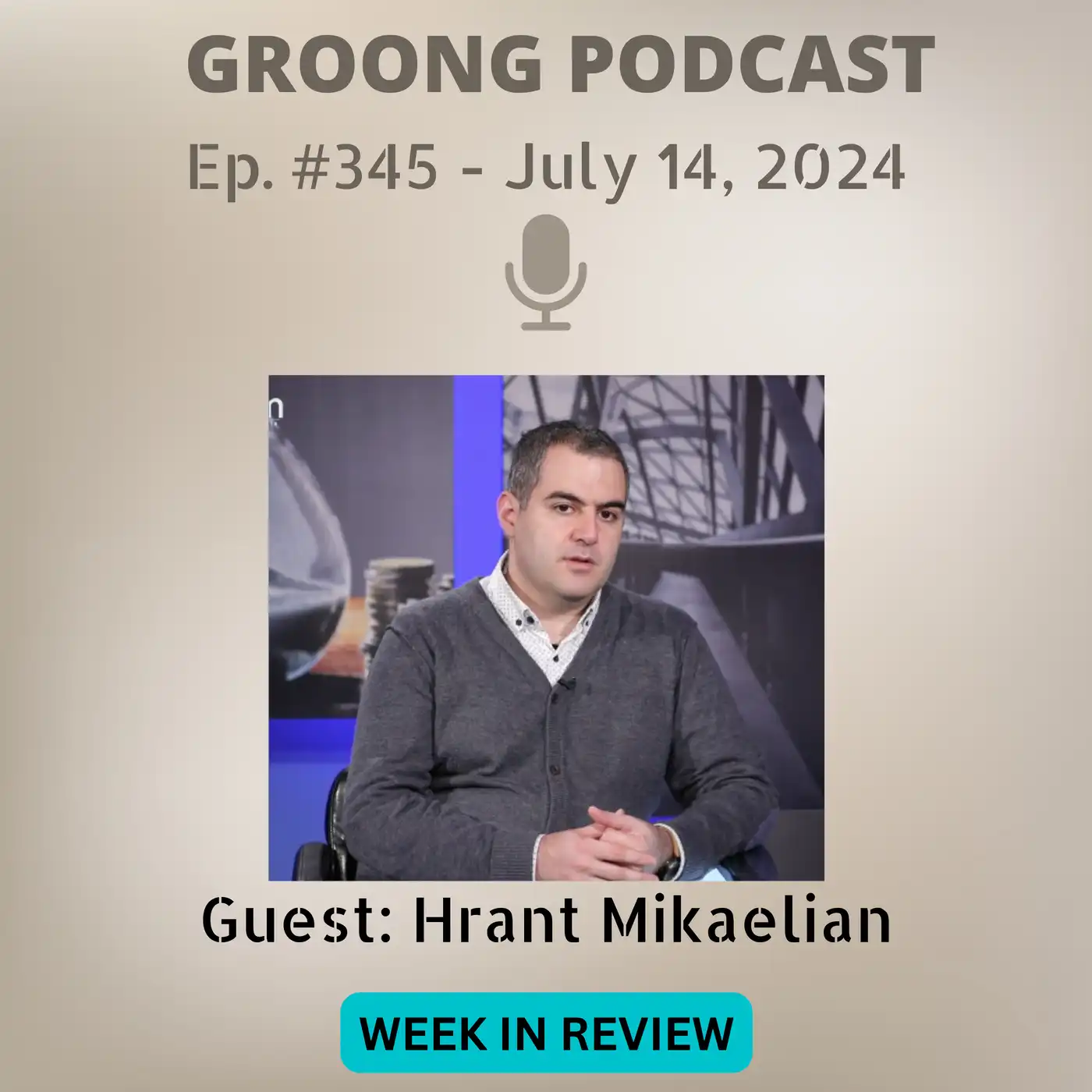
Groong Links:
Guest:
Topics:
- Prospect of Trump Presidency on the Caucasus
- Mirzoyan at NATO Summit in DC
- Parade of US Officials in Armenia
- MPG Poll
Episode 345 | Recorded: July 16, 2024
Hrant Mikaelian - Prospect of Trump Presidency on the South Caucasus, Mirzoyan at NATO, Parade of US Officials in Armenia, MPG Poll Review | Ep 345 - July 14, 2024 [EP345]
Posted on Thursday, Jul 18, 2024 | Category: Armenia, Politics, Poll, Azerbaijan, Russia, Turkey, Israel, Iran, NATO, Ukraine, European Union, Middle East, GeorgiaGroong Links:
Guest:
Topics:
- Prospect of Trump Presidency on the Caucasus
- Mirzoyan at NATO Summit in DC
- Parade of US Officials in Armenia
- MPG Poll
Episode 345 | Recorded: July 16, 2024
Karen Vrtanesyan - Armenia, Azerbaijan at NATO, Border Talks, Srbazan Movement, Arms or Alms for Rearming | Ep 342 - July 7, 2024 [EP342]
Posted on Wednesday, Jul 10, 2024 | Category: Armenia, Artsakh, Politics, Azerbaijan, Georgia, Iran, Russia, NATO, Ukraine, Turkey, Genocide, Israel, European Union, India | Series: wir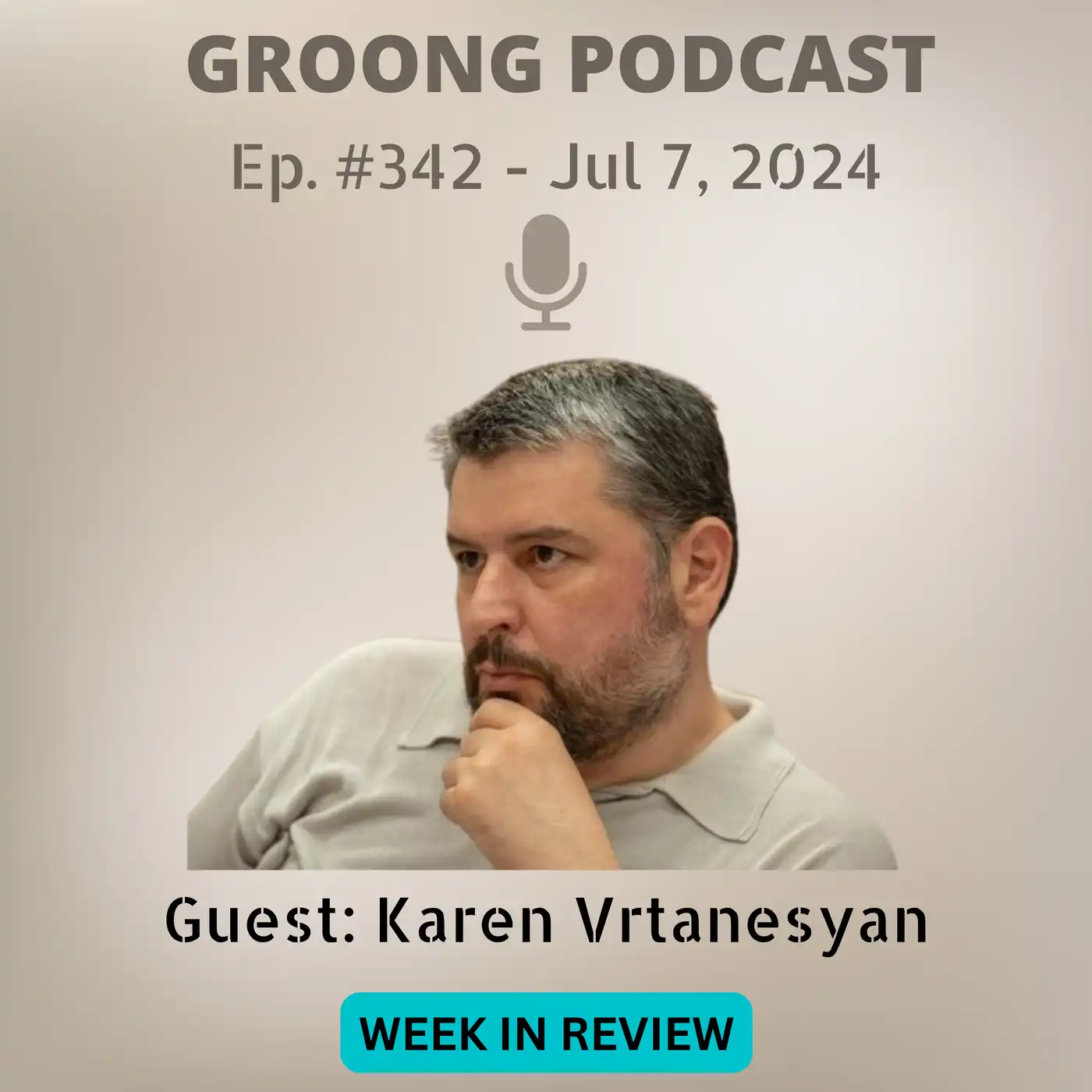
Groong Links:
Guest:
Topics:
- Armenia, Azerbaijan, at NATO Summit
- Border Talks Still in Chaos
- Srbazan in Syunik
- Pashinyan in Syunik
- Srbazan Movement
- Arms, or Alms for Armenia?
- Orban, Aliyevâs Man inside the EU
- Eagle Partner 2024 in Armenia
Episode 342 | Recorded: July 8, 2024
Karen Vrtanesyan - Armenia, Azerbaijan at NATO, Border Talks, Srbazan Movement, Arms or Alms for Rearming | Ep 342 - July 7, 2024 [EP342]
Posted on Wednesday, Jul 10, 2024 | Category: Armenia, Artsakh, Politics, Azerbaijan, Georgia, Iran, Russia, NATO, Ukraine, Turkey, Genocide, Israel, European Union, IndiaGroong Links:
Guest:
Topics:
- Armenia, Azerbaijan, at NATO Summit
- Border Talks Still in Chaos
- Srbazan in Syunik
- Pashinyan in Syunik
- Srbazan Movement
- Arms, or Alms for Armenia?
- Orban, Aliyevâs Man inside the EU
- Eagle Partner 2024 in Armenia
Episode 342 | Recorded: July 8, 2024
Elisa von Joeden-Forgey - Lemkin Inst, Genocide in Artsakh, Pashinyan Genocide Denial, Gaza, other | Ep 341 - June 28, 2024 [EP341]
Posted on Friday, Jun 28, 2024 | Category: Genocide, Armenia, Artsakh, Nagorno Karabakh, Human Rights, Armenian Genocide, Israel, Turkey, Russia, China, Economy, Middle East, Ukraine, India | Series: cog
Groong Links:
Guest:
Topics:
- Background on the Lemkin Institute
- Genocide in Artsakh
- Armenian Governmentâs Genocide Denial
- Gaza and other Genocides
Episode 341 | Recorded: June 25, 2024