Emmanuel Macron
Last updated: May 29, 2026
Emmanuel Macron has been the most prominent Western leader to publicly align with Armenia’s position in the conflict with Azerbaijan. Following the September 2023 Azerbaijani offensive and the ethnic cleansing of the Armenian population of Nagorno Karabakh (Artsakh), France strengthened its security cooperation with Armenia, approved arms sales including radar systems and armored vehicles, and supported Armenia’s engagement with European security structures. Macron’s public statements have been among the sharpest Western criticisms of Azerbaijani conduct.
France’s motivations are debated. The French-Armenian diaspora — one of the largest in the world, with deep roots in communities that survived the 1915 Genocide — gives Armenian issues political salience in France that few other conflicts enjoy. But the diaspora alone does not fully explain the depth of French state engagement. Some analysts argue that France sees Armenia as a potential strategic foothold against Russian influence in the South Caucasus — a western-oriented “bastion” that, if successfully anchored to European structures, would extend EU and NATO-adjacent reach into a region where Moscow has long held sway. In this reading, France’s Armenia policy is as much about containing Russia and countering Turkish influence as it is about solidarity with a small Christian nation.
Groong has covered Macron’s role in Armenian affairs from his early mediation efforts in the OSCE Minsk Group co-chair format through the post-2023 security partnership. Episodes in this category address France’s arms transfers, the political dynamics driving French engagement, the debate over France’s true strategic calculus, and the limits of what a bilateral Franco-Armenian security relationship can realistically provide.
Groong episodes that include this tag
Below are all Groong episodes tagged with Emmanuel Macron.
Tevan Poghosyan: CIA in EVN | Armen Grigoryan | Papazian Banned | FMs Meet | Ep #148 - July 17, 2022 [EP148]
Posted on Wednesday, Jul 20, 2022 | Category: Armenia, Azerbaijan, Russia, Iran, Turkey, Human Rights, Syria, Genocide, Middle East, Ukraine, Nagorno Karabakh, NATO, European Union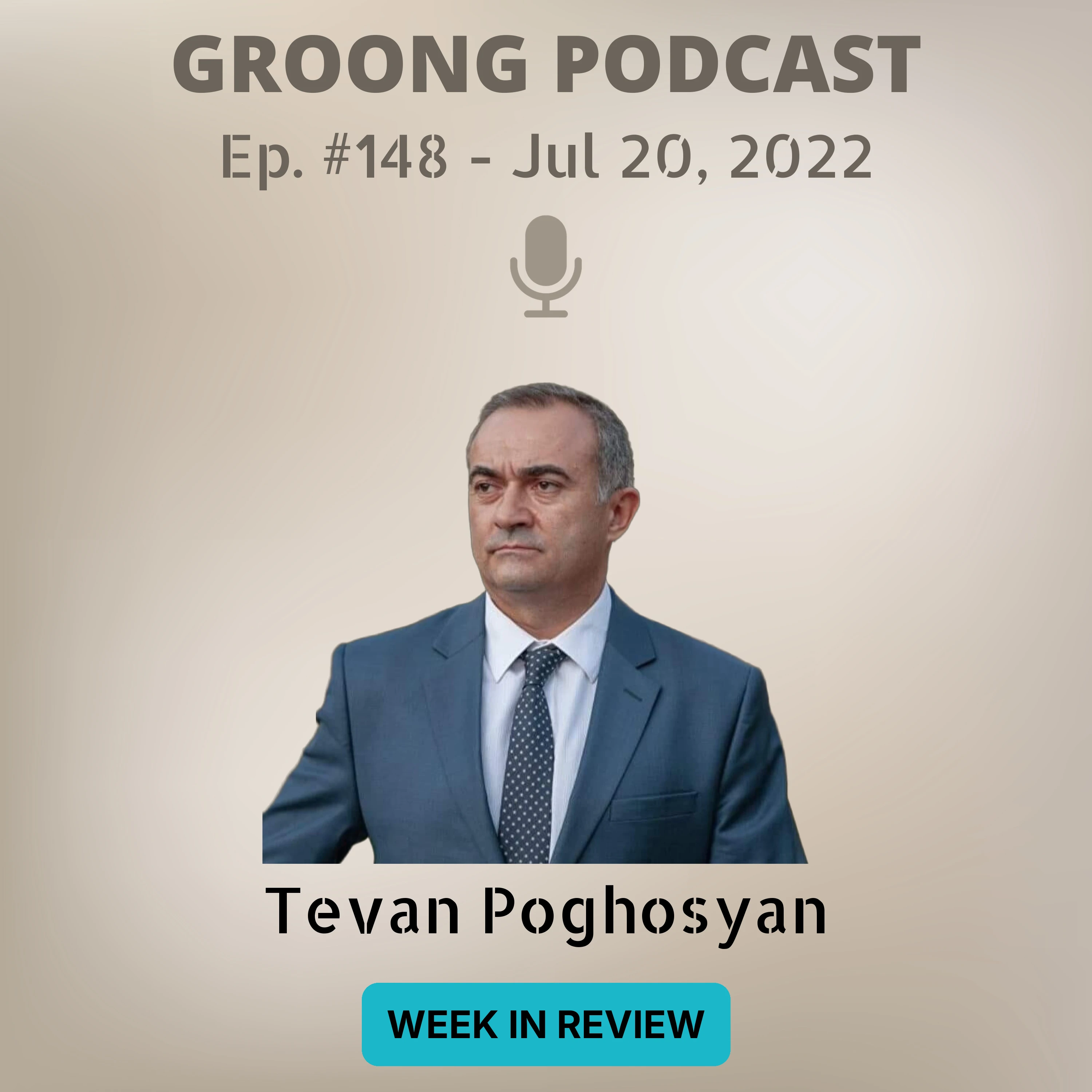
Guest(s):
Armenian News Network/Groong Week in Review - July 17, 2022
Topics:
- 00:00:00 Introduction
- 00:02:30 CIA Chief in Armenia
- 00:18:26 Army Chief Appointed
- 00:30:41 Armen Grigoryan Dies in Court
- 00:45:14 Mourad Papazian is Denied Entry in Armenia
- 00:57:04 Bayramov and Mirzoyan in Tbilisi
- 01:06:11 Rants
Guests:
- Tevan Poghosyan - TW/@TevanPoghosyan
Host:
- Hovik Manucharyan TW/@HovikYerevan
- Asbed Bedrossian TW/@qubriq
Episode 148 | Recorded: Monday, July 19, 2022 Website: https://groong.org/podcasts/WiR-20220717.html
Armenian News: "Peace" Deal | Artsakh Gas | Ukraine Protests | Vardenis | Ep #129 - Mar 20, 2022 [EP129]
Posted on Monday, Mar 21, 2022 | Category: Armenia, Russia, Azerbaijan, Ukraine, Turkey, Artsakh, China, Economy, Georgia, India, Nagorno Karabakh, NATO, European Union | Series: wir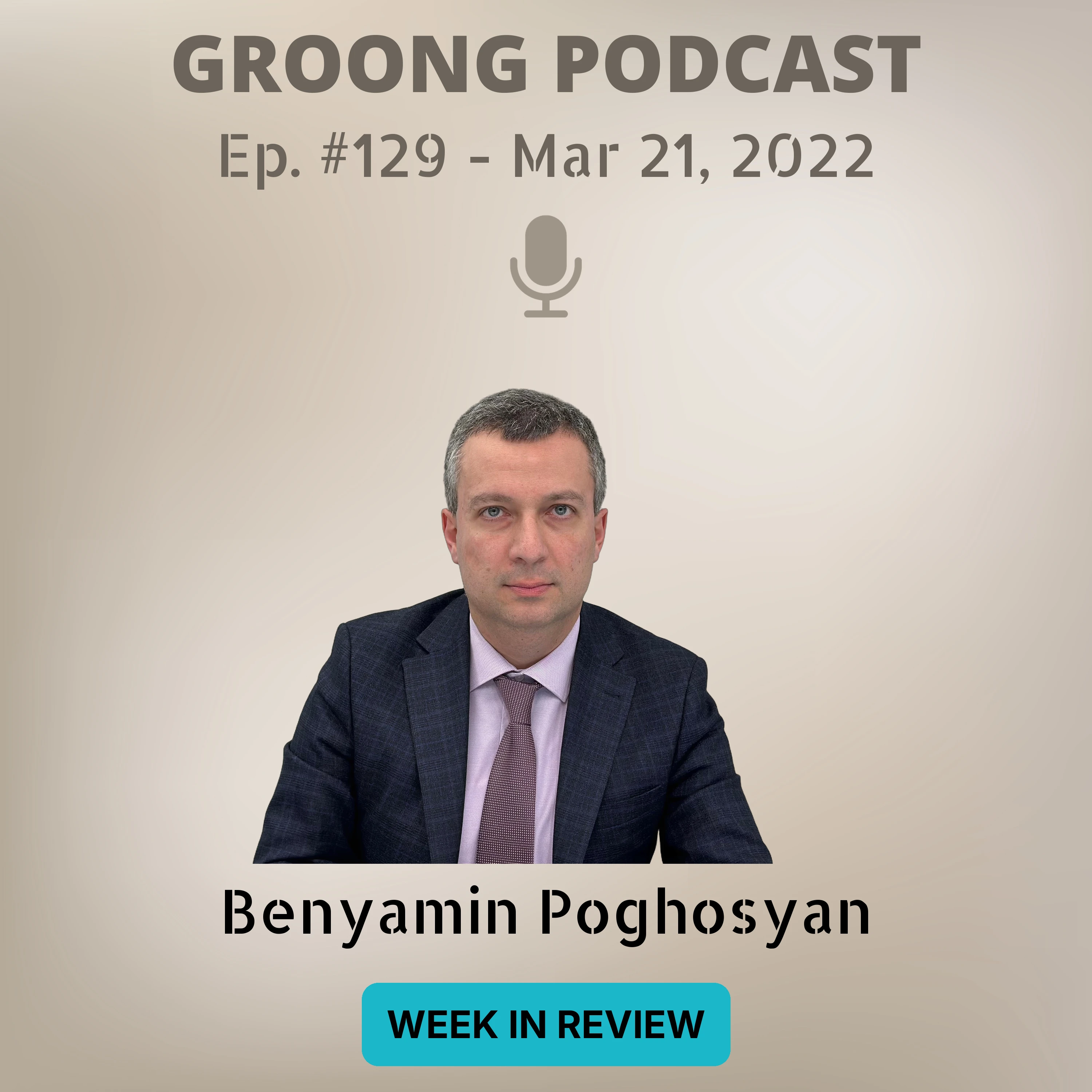
Guest(s):
Armenian News Network/Groong Week in Review - March 20, 2022
Topics:
- 00:00 Introduction
- 00:47 Azerbaijan’s “Peace” Deal
- 13:34 Artsakh Without Natural Gas in Winter
- 28:07 Ukraine Protests in Yerevan
- 43:29 Vardenis Mayoral Issue Resolved
- 47:17 Rants
Guest:
- Benyamin Poghosyan https://twitter.com/Benyamin_Poghos
Host:
- Hovik Manucharyan https://twitter.com/HovikYerevan
- Asbed Bedrossian https://twitter.com/qubriq
Episode 129 | Recorded: Sunday, March 21, 2022 Website: https://groong.org/podcasts/WiR-20220320.html
Armenian News: "Peace" Deal | Artsakh Gas | Ukraine Protests | Vardenis | Ep #129 - Mar 20, 2022 [EP129]
Posted on Monday, Mar 21, 2022 | Category: Armenia, Russia, Azerbaijan, Ukraine, Turkey, Artsakh, China, Economy, Georgia, India, Nagorno Karabakh, NATO, European UnionGuest(s):
Armenian News Network/Groong Week in Review - March 20, 2022
Topics:
- 00:00 Introduction
- 00:47 Azerbaijan’s “Peace” Deal
- 13:34 Artsakh Without Natural Gas in Winter
- 28:07 Ukraine Protests in Yerevan
- 43:29 Vardenis Mayoral Issue Resolved
- 47:17 Rants
Guest:
- Benyamin Poghosyan https://twitter.com/Benyamin_Poghos
Host:
- Hovik Manucharyan https://twitter.com/HovikYerevan
- Asbed Bedrossian https://twitter.com/qubriq
Episode 129 | Recorded: Sunday, March 21, 2022 Website: https://groong.org/podcasts/WiR-20220320.html
Armenia’s Regional Challenges with Tatev Hayrapetyan | Ep #124 - Feb 26, 2022 [EP124]
Posted on Saturday, Feb 26, 2022 | Category: Armenia, Azerbaijan, Russia, Turkey, Iran, Ukraine, Artsakh, China, India, Nagorno Karabakh | Series: cog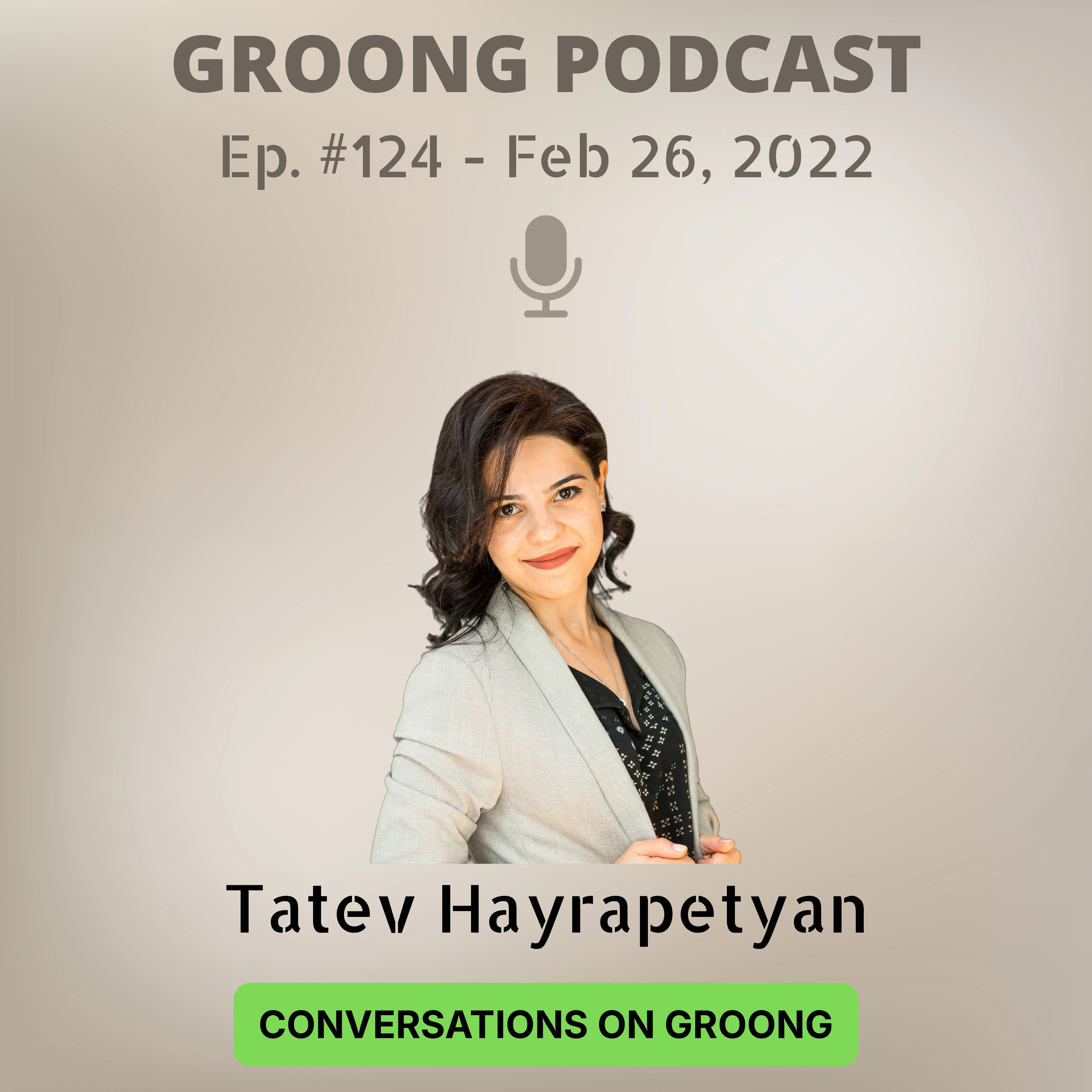
Armeniaâs Regional Challenges - February 26, 2022 A Conversation with Tatev Hayrapetyan
Topics:
- Tatevâs Background and Entrance into Politics
- Armenia Going in the Wrong Direction?
- Aliyev and his Regime after the 44-Day War
- The Shushi and Moscow Agreements
- Armeniaâs Foreign Affairs Establishment
Guest:
- Tatev Hayrapetyan is an expert in Azerbaijani studies and holds a PhD in History. She was an MP at the 7th convocation of Armenia’s National Assembly, a member of the Standing Committee on Foreign Affairs and the Armenian Delegation at the PACE. She is mainly focused on domestic
Armenia’s Regional Challenges with Tatev Hayrapetyan | Ep #124 - Feb 26, 2022 [EP124]
Posted on Saturday, Feb 26, 2022 | Category: Armenia, Azerbaijan, Russia, Turkey, Iran, Ukraine, Artsakh, China, India, Nagorno KarabakhArmeniaâs Regional Challenges - February 26, 2022 A Conversation with Tatev Hayrapetyan
Topics:
- Tatevâs Background and Entrance into Politics
- Armenia Going in the Wrong Direction?
- Aliyev and his Regime after the 44-Day War
- The Shushi and Moscow Agreements
- Armeniaâs Foreign Affairs Establishment
Guest:
- Tatev Hayrapetyan is an expert in Azerbaijani studies and holds a PhD in History. She was an MP at the 7th convocation of Armenia’s National Assembly, a member of the Standing Committee on Foreign Affairs and the Armenian Delegation at the PACE. She is mainly focused on domestic
POWs | War Commission | Degrading Democracy | Lukashenko | MPG poll | Ep #119 - Feb 13, 2022 [EP119]
Posted on Tuesday, Feb 15, 2022 | Category: Artsakh, Armenia, Politics, Poll, Russia, Azerbaijan, Iran, Turkey, China, Ukraine, Georgia, Israel, USA, Economy, Human Rights, Nagorno Karabakh, European Union, Geopolitics, Lebanon, NATO, Syria | Series: wir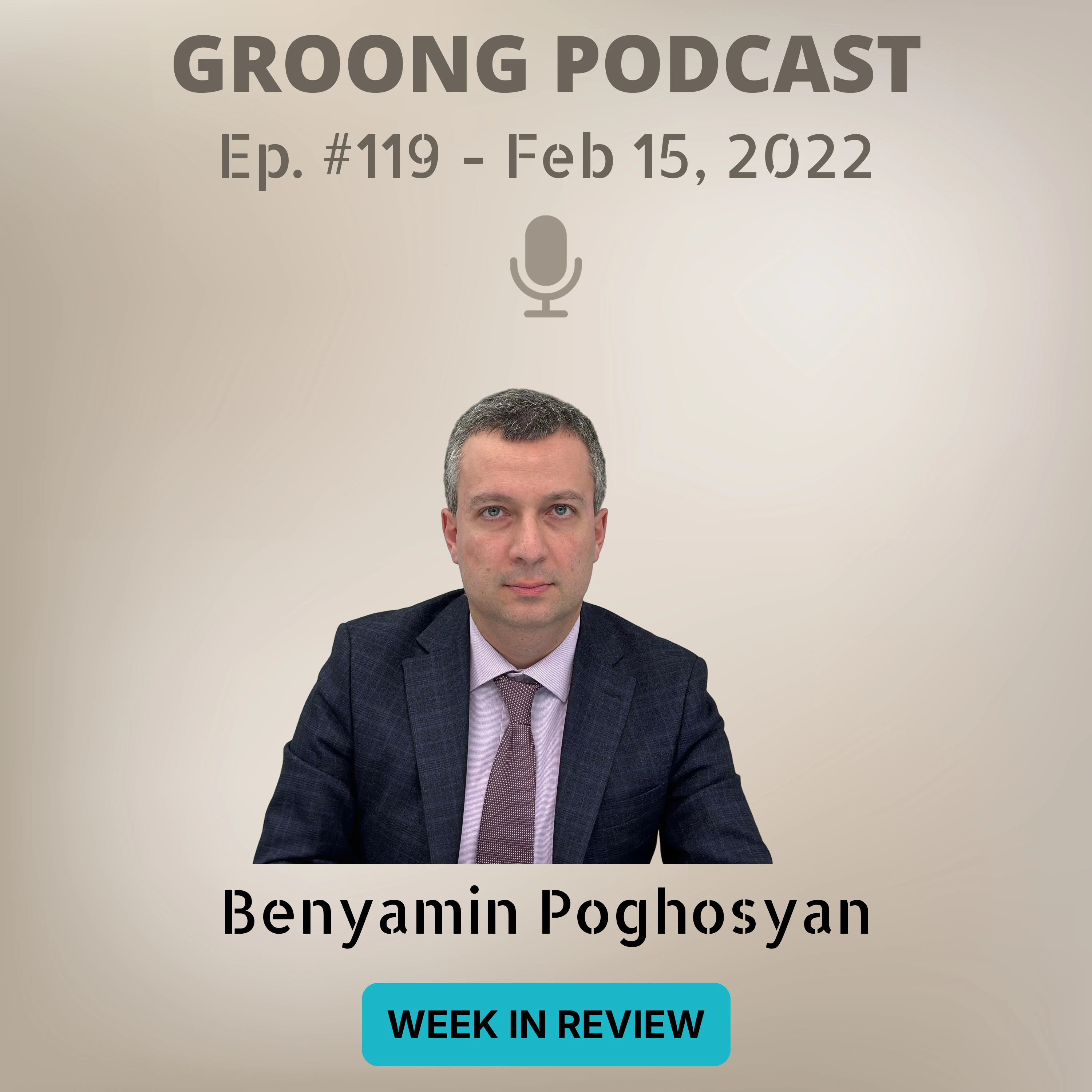
ANN/Groong Week in Review - February 13, 2022
Topics:
- 00:00:00 Introduction
- 00:02:43 8 More POWs Released, But What At What Cost?
- 00:20:40 Parliamentary Commission on the 44-Day War Established
- 00:33:42 The Degrading Norms of Democracy in Armenia
- 00:46:42 Who Needs Armenia?
- 01:06:32 Latest MPG Poll Results in Yerevan
- 01:18:51 Rants
Guest:
- Benyamin Poghosyan
Guest(s):
Hosts:
- Hovik Manucharyan TW/@HovikYerevan
- Asbed Bedrossian TW/@qubriq
Episode 119 | Recorded: Sunday, February 14, 2022 Website: https://groong.org/podcasts/WiR-20220213.html
POWs | War Commission | Degrading Democracy | Lukashenko | MPG poll | Ep #119 - Feb 13, 2022 [EP119]
Posted on Tuesday, Feb 15, 2022 | Category: Artsakh, Armenia, Politics, Poll, Russia, Azerbaijan, Iran, Turkey, China, Ukraine, Georgia, Israel, USA, Economy, Human Rights, Nagorno Karabakh, European Union, Geopolitics, Lebanon, NATO, SyriaANN/Groong Week in Review - February 13, 2022
Topics:
- 00:00:00 Introduction
- 00:02:43 8 More POWs Released, But What At What Cost?
- 00:20:40 Parliamentary Commission on the 44-Day War Established
- 00:33:42 The Degrading Norms of Democracy in Armenia
- 00:46:42 Who Needs Armenia?
- 01:06:32 Latest MPG Poll Results in Yerevan
- 01:18:51 Rants
Guest:
- Benyamin Poghosyan
Guest(s):
Hosts:
- Hovik Manucharyan TW/@HovikYerevan
- Asbed Bedrossian TW/@qubriq
Episode 119 | Recorded: Sunday, February 14, 2022 Website: https://groong.org/podcasts/WiR-20220213.html
Turkish Armenian Normalization - Conversation with Harut Sassounian | Ep #111 - Jan 9, 2022 [EP111]
Posted on Sunday, Jan 9, 2022 | Category: Armenia, Turkey, Azerbaijan, Genocide, Russia, Israel, Artsakh, Economy, Armenian Genocide, Human Rights, Armenian Church, Georgia, Syria, Nagorno Karabakh, Artsakh Blockade, European Union, NATO | Series: cog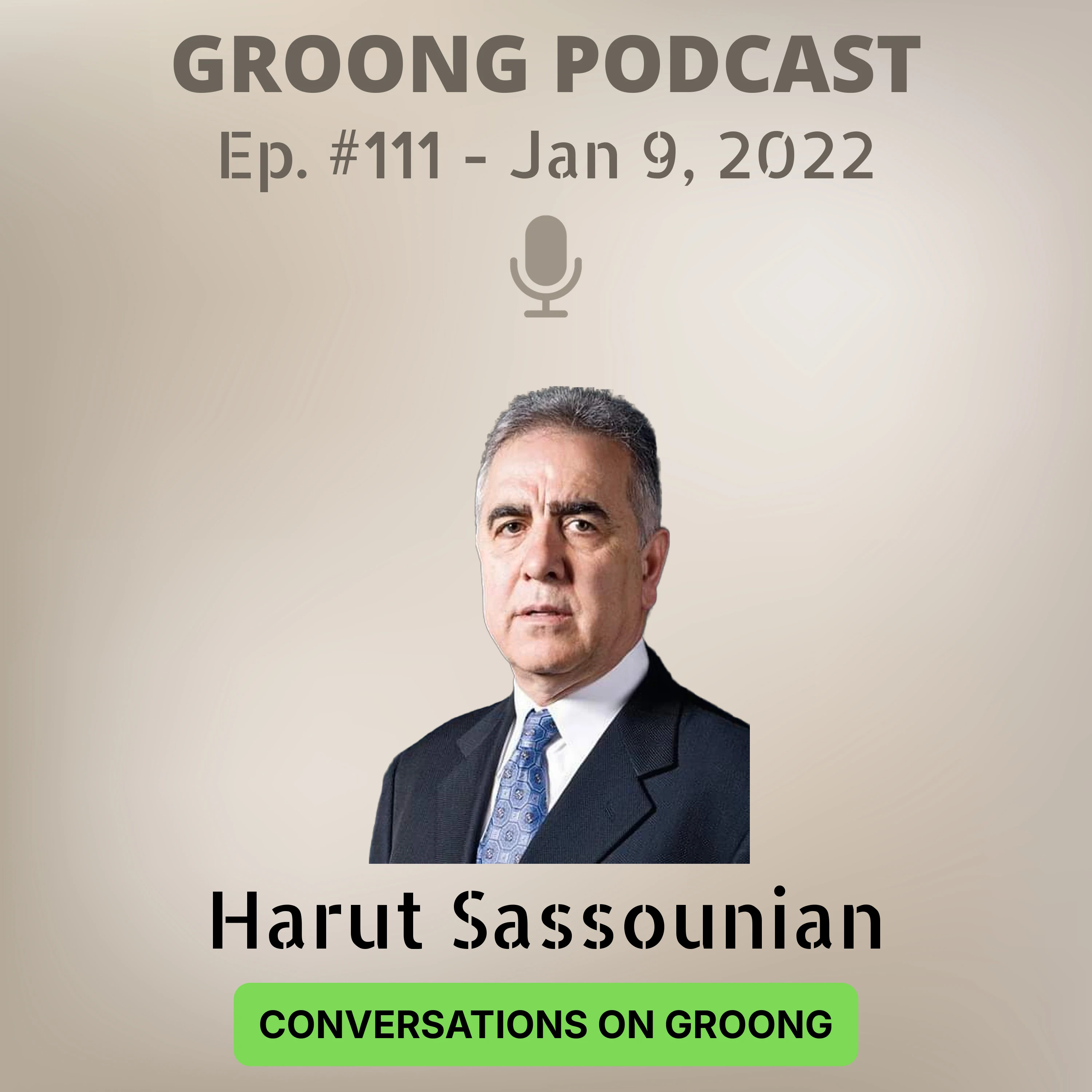
Turkish-Armenian Normalization Negotiations A Conversation with Harut Sassounian
- Harut Sassounian has been the publisher of The California Courier newspaper since 1983. He is also the President of the Armenia Artsakh Fund, a non-profit organization which has delivered to Armenia and Artsakh $947 million of humanitarian assistance since 1989. He is currently engaged in forming the Diaspora Armenian Parliament through local elections.
Topics:
- History of Turkish-Armenian Attempts at Negotiations
- Who are The Players?
- Why Now? What’s on the Agenda?
- What are the Pitfalls and Opportunities?
Turkish Armenian Normalization - Conversation with Harut Sassounian | Ep #111 - Jan 9, 2022 [EP111]
Posted on Sunday, Jan 9, 2022 | Category: Armenia, Turkey, Azerbaijan, Genocide, Russia, Israel, Artsakh, Economy, Armenian Genocide, Human Rights, Armenian Church, Georgia, Syria, Nagorno Karabakh, Artsakh Blockade, European Union, NATOTurkish-Armenian Normalization Negotiations A Conversation with Harut Sassounian
- Harut Sassounian has been the publisher of The California Courier newspaper since 1983. He is also the President of the Armenia Artsakh Fund, a non-profit organization which has delivered to Armenia and Artsakh $947 million of humanitarian assistance since 1989. He is currently engaged in forming the Diaspora Armenian Parliament through local elections.
Topics:
- History of Turkish-Armenian Attempts at Negotiations
- Who are The Players?
- Why Now? What’s on the Agenda?
- What are the Pitfalls and Opportunities?
Normalization | Brussels Sprouts | NSC Chair in DC | Armenia Project Tour | Ep. 108 - Dec 19, 2021 [EP108]
Posted on Tuesday, Dec 21, 2021 | Category: Armenia, Artsakh, Azerbaijan, Turkey, Russia, Nagorno Karabakh, Artsakh Blockade, Armenian Genocide, European Union, Genocide, Georgia, Iran, Ukraine, NATO, Economy, Middle East | Series: wir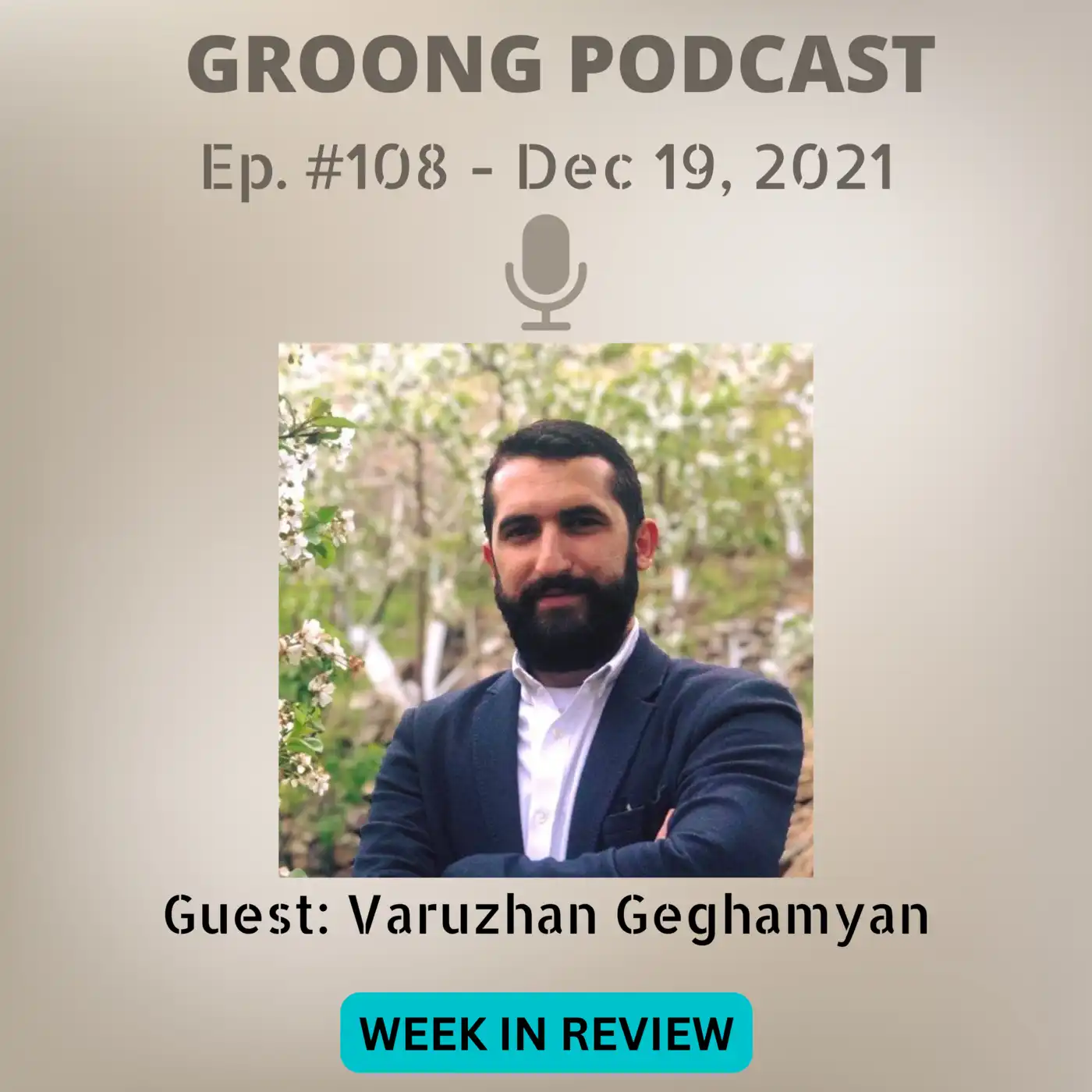
ANN/Groong Week in Review - December 19, 2021
Topics:
- Turkish-Armenian normalization
- Brussels Sprouts
- Armen Grigoryan in Washington DC
- The Armenian Project - US Tour
- Analyst Rants
Guest:
Episode 108 | Recorded: December 20, 2021
Normalization | Brussels Sprouts | NSC Chair in DC | Armenia Project Tour | Ep. 108 - Dec 19, 2021 [EP108]
Posted on Tuesday, Dec 21, 2021 | Category: Armenia, Artsakh, Azerbaijan, Turkey, Russia, Nagorno Karabakh, Artsakh Blockade, Armenian Genocide, European Union, Genocide, Georgia, Iran, Ukraine, NATO, Economy, Middle EastANN/Groong Week in Review - December 19, 2021
Topics:
- Turkish-Armenian normalization
- Brussels Sprouts
- Armen Grigoryan in Washington DC
- The Armenian Project - US Tour
- Analyst Rants
Guest:
Episode 108 | Recorded: December 20, 2021
State of Affairs in Lebanon & the Armenians a Year After the Beirut Explosion | Ep #98 - Nov 8, 2021 [EP98]
Posted on Monday, Nov 8, 2021 | Category: Armenia, Lebanon, Iran, Turkey, Economy, Syria, Armenian Genocide, Artsakh, China, Genocide, Israel, Middle East, Russia, Nagorno Karabakh, European Union | Series: cog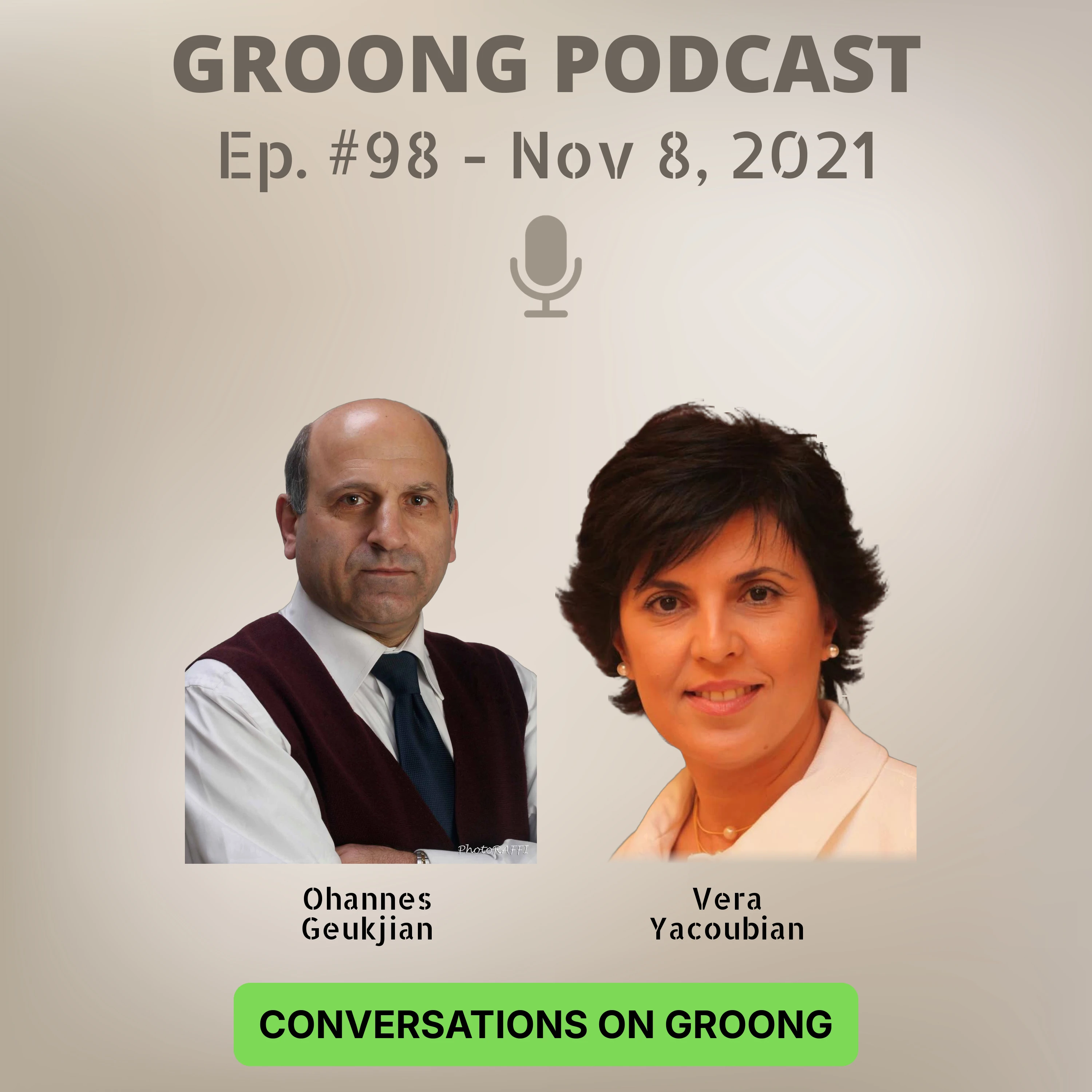
The State of Affairs in Lebanon A Conversation with Dr. Ohannes Geukjian and Vera Yacoubian
Topics:
- A year after the Beirut Explosion, whatâs the state of investigations?
- Has Anyone been held Accountable?
- Who are the Internal and External Players in Lebanon?
- Whatâs the State and Future of the Armenian Community in Lebanon?
Guests:
- Dr. Ohannes Geukjian
- Vera Yacoubian
Guest(s):
Hosts:
- Asbed Bedrossian TW/@qubriq
- Katia Peltekian TW/@KatiaPeltekian
Episode 98: Recorded on Saturday, November 6, 2021 Show notes: https://groong.org/podcasts/CoG-20211108.html
State of Affairs in Lebanon & the Armenians a Year After the Beirut Explosion | Ep #98 - Nov 8, 2021 [EP98]
Posted on Monday, Nov 8, 2021 | Category: Armenia, Lebanon, Iran, Turkey, Economy, Syria, Armenian Genocide, Artsakh, China, Genocide, Israel, Middle East, Russia, Nagorno Karabakh, European UnionThe State of Affairs in Lebanon A Conversation with Dr. Ohannes Geukjian and Vera Yacoubian
Topics:
- A year after the Beirut Explosion, whatâs the state of investigations?
- Has Anyone been held Accountable?
- Who are the Internal and External Players in Lebanon?
- Whatâs the State and Future of the Armenian Community in Lebanon?
Guests:
- Dr. Ohannes Geukjian
- Vera Yacoubian
Guest(s):
Hosts:
- Asbed Bedrossian TW/@qubriq
- Katia Peltekian TW/@KatiaPeltekian
Episode 98: Recorded on Saturday, November 6, 2021 Show notes: https://groong.org/podcasts/CoG-20211108.html
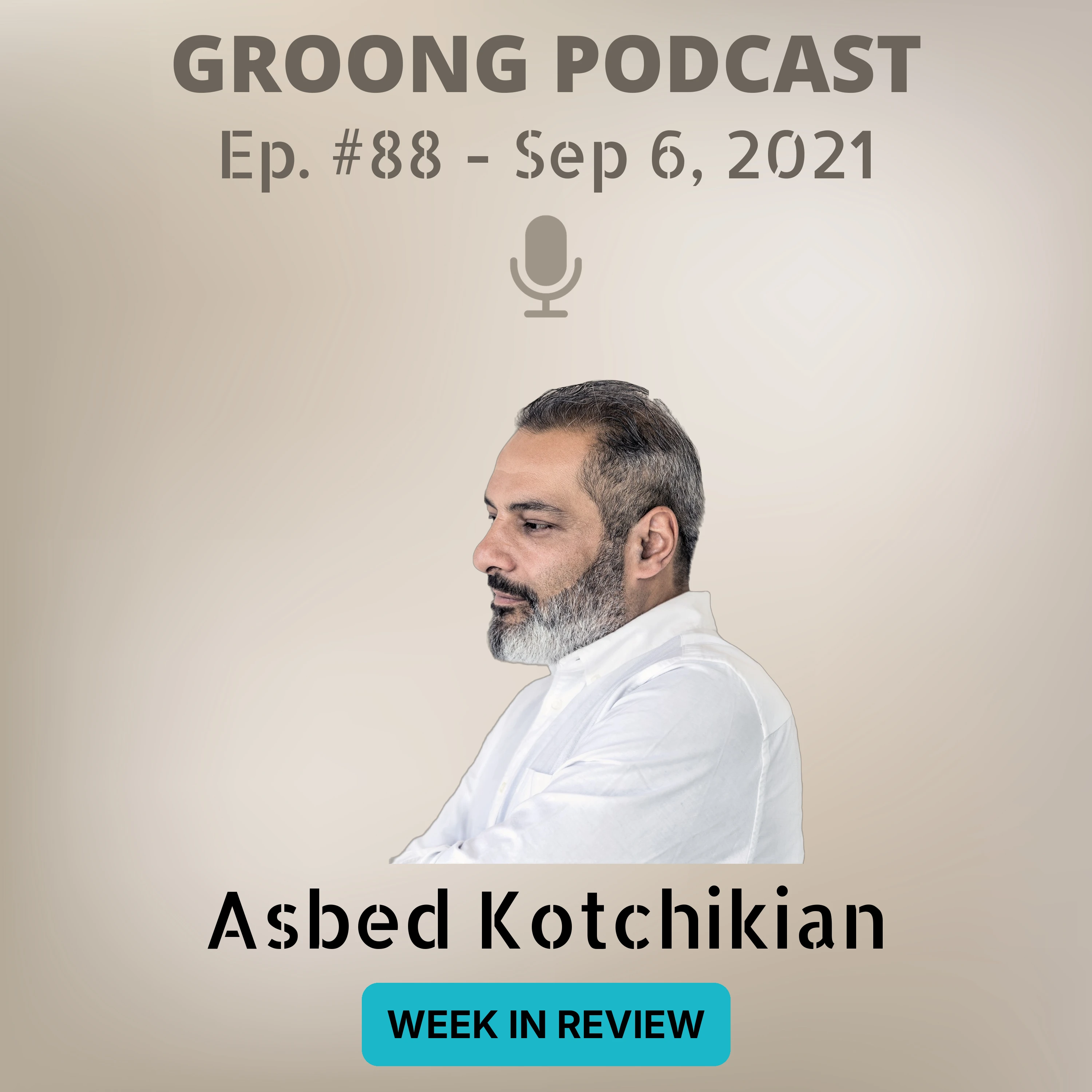
ANN/Groong Week in Review - September 5, 2021
Topics:
- Pashinyan & Co. Shun Artsakh Independence
- Turkey-Armenia Reconciliation Reconstituted?
- Afghanistan: Taliban 2.0?
- State of World Affairs
- State of Political Analysis
Guests:
- Asbed Kotchikian TW/@AsbedK
Guest(s):
Hosts:
- Asbed Bedrossian TW/@qubriq
Episode #88 | Recorded: September 3, 2021 https://groong.org/podcasts/WiR-20210905.html
Pashinyan Shuns NK | TARC 2.0 | Taliban 2.0 | World Affairs & Pol Analysis | Ep #88 - Sep 5, 2021 [EP88]
Posted on Monday, Sep 6, 2021 | Category: Armenia, Turkey, Russia, Georgia, Economy, Iran, Azerbaijan, China, Ukraine, Genocide, Syria, Israel, Armenian Genocide, NATOANN/Groong Week in Review - September 5, 2021
Topics:
- Pashinyan & Co. Shun Artsakh Independence
- Turkey-Armenia Reconciliation Reconstituted?
- Afghanistan: Taliban 2.0?
- State of World Affairs
- State of Political Analysis
Guests:
- Asbed Kotchikian TW/@AsbedK
Guest(s):
Hosts:
- Asbed Bedrossian TW/@qubriq
Episode #88 | Recorded: September 3, 2021 https://groong.org/podcasts/WiR-20210905.html
ARF-Dashnaktsutyun: Roadmap & Challenges - Conversation with Giro Manoyan | (Ep #69) - June 11, 2021 [EP69]
Posted on Friday, Jun 11, 2021 | Category: Armenia, Azerbaijan, Artsakh, Russia, Turkey, Armenian Church, Economy, Iran, Lebanon, Middle East, Nagorno Karabakh, NATO | Series: cog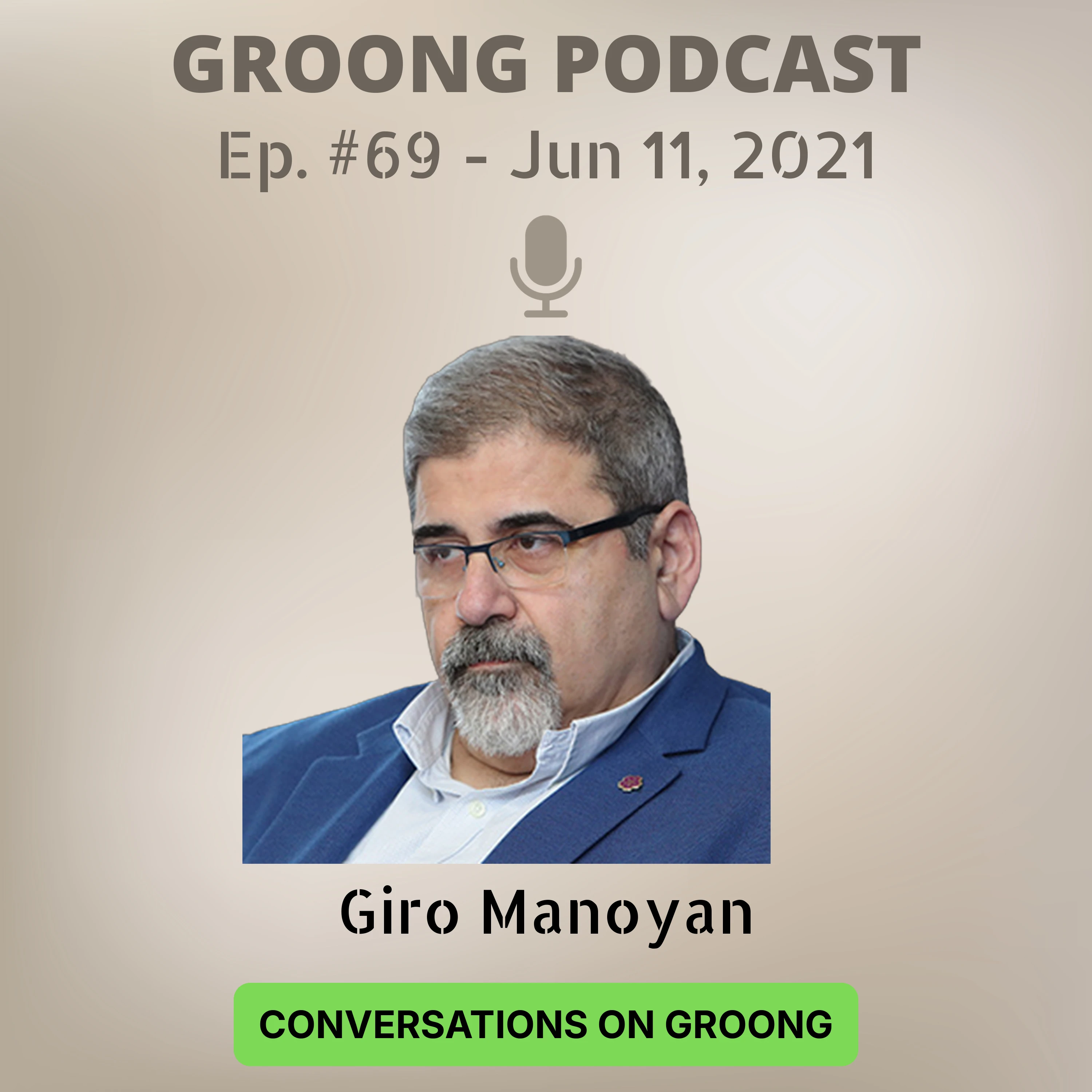
ARF-Dashnaktsutyun: Roadmap and Challenges
Guest
- Giro Manoyan has been a member of the ARF-D Bureau since 2015. Originally from Beirut, Lebanon, he moved to Montreal, Canada in 1976. He has served as the Executive Secretary of the Armenian National Committee of Canada, as well as the Editor in Chief of the Horizon Armenian Weekly. In 1999 he moved to Yerevan and has served as the Executive Director of the Bureau of the ARF-D, in charge of the Armenian Cause, Hai Tahd Central Committee.
Topics
- The ARF in the Politics of Armenia
- On the War in 2020
- On the Upcoming Elections in 2021
- On the
ARF-Dashnaktsutyun: Roadmap & Challenges - Conversation with Giro Manoyan | (Ep #69) - June 11, 2021 [EP69]
Posted on Friday, Jun 11, 2021 | Category: Armenia, Azerbaijan, Artsakh, Russia, Turkey, Armenian Church, Economy, Iran, Lebanon, Middle East, Nagorno Karabakh, NATOARF-Dashnaktsutyun: Roadmap and Challenges
Guest
- Giro Manoyan has been a member of the ARF-D Bureau since 2015. Originally from Beirut, Lebanon, he moved to Montreal, Canada in 1976. He has served as the Executive Secretary of the Armenian National Committee of Canada, as well as the Editor in Chief of the Horizon Armenian Weekly. In 1999 he moved to Yerevan and has served as the Executive Director of the Bureau of the ARF-D, in charge of the Armenian Cause, Hai Tahd Central Committee.
Topics
- The ARF in the Politics of Armenia
- On the War in 2020
- On the Upcoming Elections in 2021
- On the
Kocharyan Closes In on Pashinyan’s Lead | Pashinyan Visits Europe | (Ep #66) - June 6, 2021 [EP66]
Posted on Sunday, Jun 6, 2021 | Category: Armenia, Russia, Iran, Azerbaijan, Georgia, Artsakh, Syria, Nagorno Karabakh | Series: wir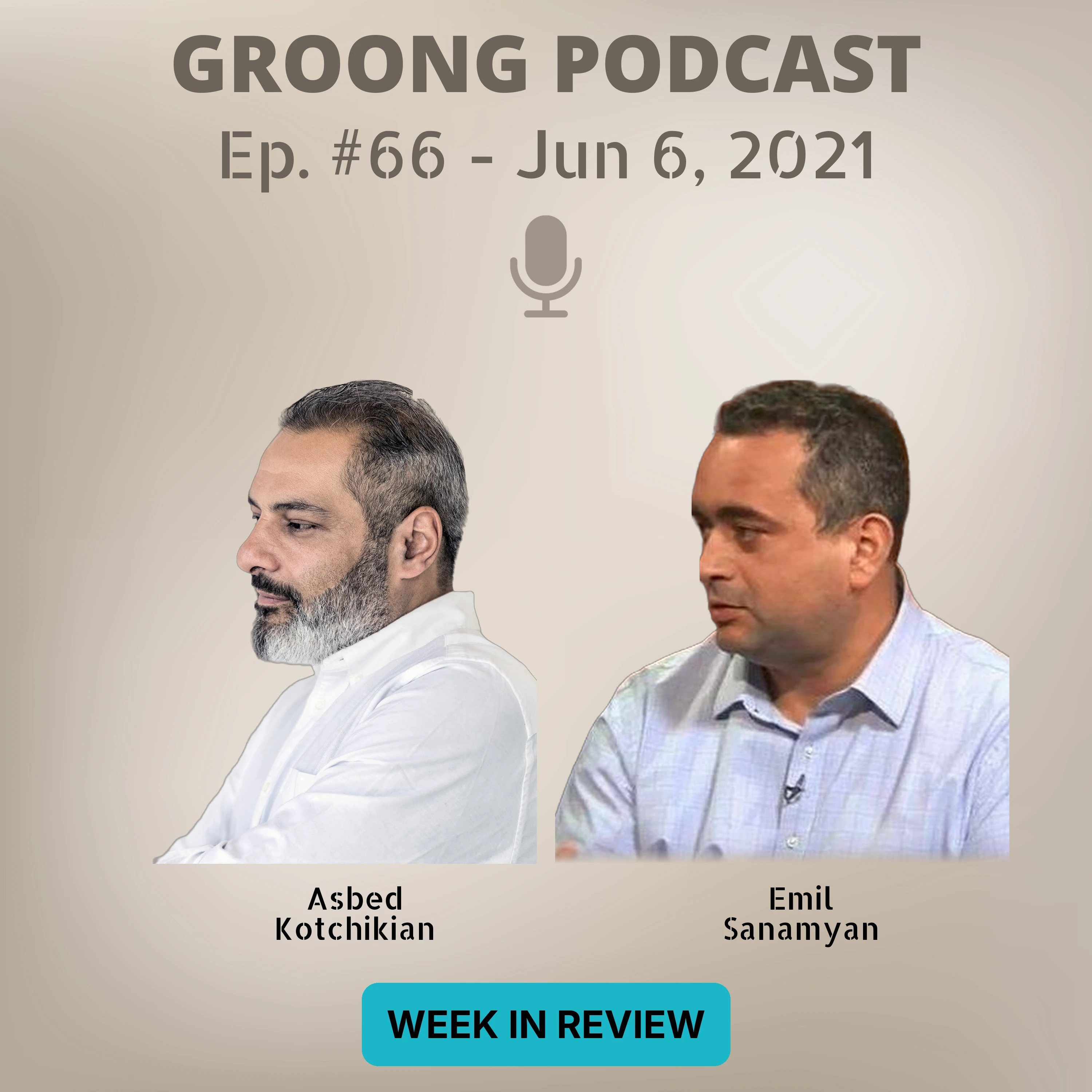
ANN/Groong Week in Review - June 6, 2021
Topics:
- Kocharyan Closes in on Pashinyan in Election Polls
- Pashinyan Visits Europe
Guests:
- Asbed Kotchikian
- Emil Sanamyan
Guest(s):
Hosts:
- Asbed Bedrossian
- Hovik Manucharyan
Website: https://groong.org/podcasts/WiR-20210606.html
Episode 66 | Recorded: June 6, 2021
Kocharyan Closes In on Pashinyan’s Lead | Pashinyan Visits Europe | (Ep #66) - June 6, 2021 [EP66]
Posted on Sunday, Jun 6, 2021 | Category: Armenia, Russia, Iran, Azerbaijan, Georgia, Artsakh, Syria, Nagorno KarabakhANN/Groong Week in Review - June 6, 2021
Topics:
- Kocharyan Closes in on Pashinyan in Election Polls
- Pashinyan Visits Europe
Guests:
- Asbed Kotchikian
- Emil Sanamyan
Guest(s):
Hosts:
- Asbed Bedrossian
- Hovik Manucharyan
Website: https://groong.org/podcasts/WiR-20210606.html
Episode 66 | Recorded: June 6, 2021
Guest(s):
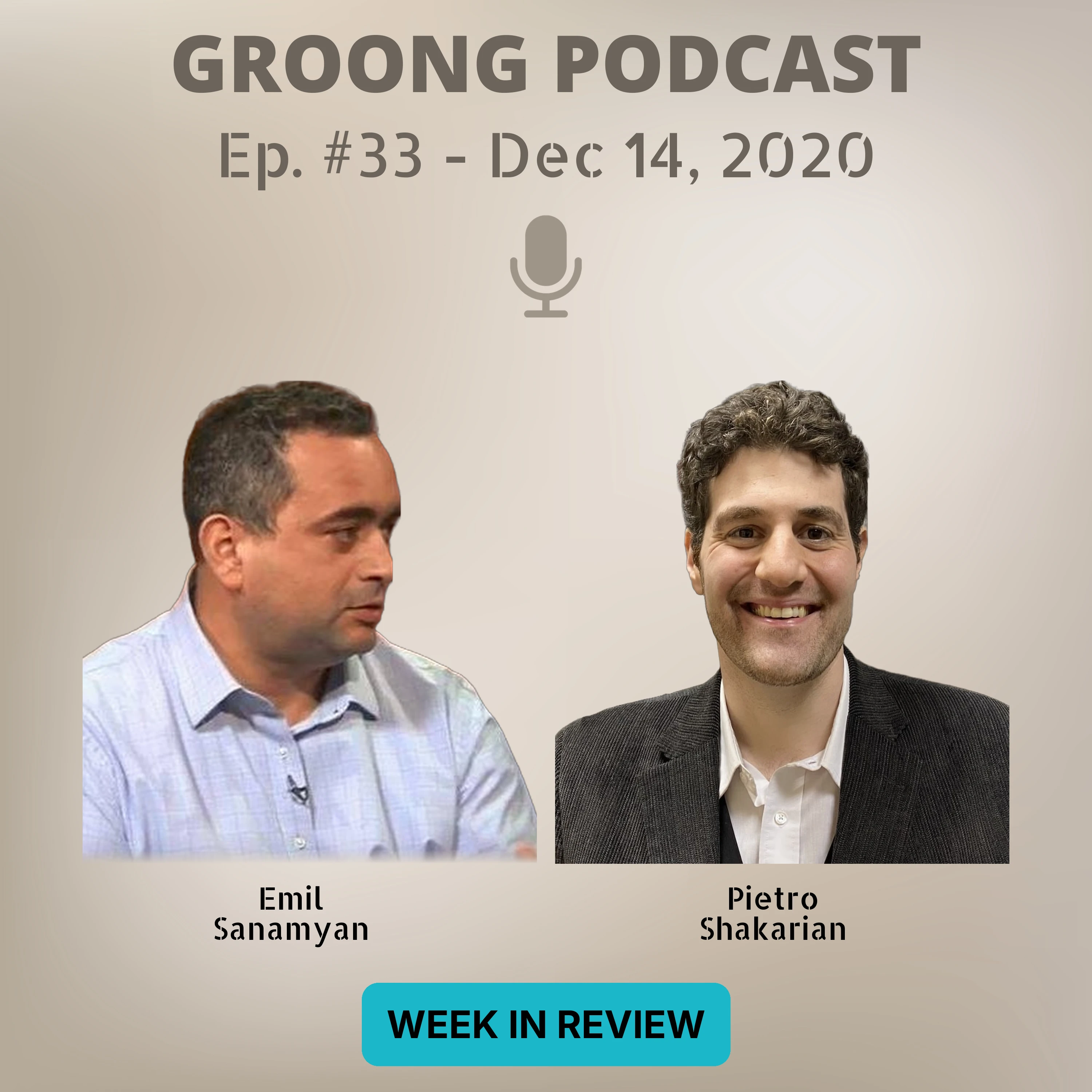
ANN/Groong Week in Review Episode 33 - Dec 13, 2020
Topics Covered:
- Renewed Fighting & the OSCE MG visit
- Expedited Border Demarcation?
- What will happen to Sotq?
- Diplomatic Relations with Azerbaijan?
Your Hosts:
- Asbed Bedrossian
- Hovik Manucharyan
Resident Panelists:
- Emil Sanamyan
- Pietro Shakarian
Recorded: Dec 13, 2020
Guest(s):
ANN/Groong Week in Review Episode 33 - Dec 13, 2020
Topics Covered:
- Renewed Fighting & the OSCE MG visit
- Expedited Border Demarcation?
- What will happen to Sotq?
- Diplomatic Relations with Azerbaijan?
Your Hosts:
- Asbed Bedrossian
- Hovik Manucharyan
Resident Panelists:
- Emil Sanamyan
- Pietro Shakarian
Recorded: Dec 13, 2020
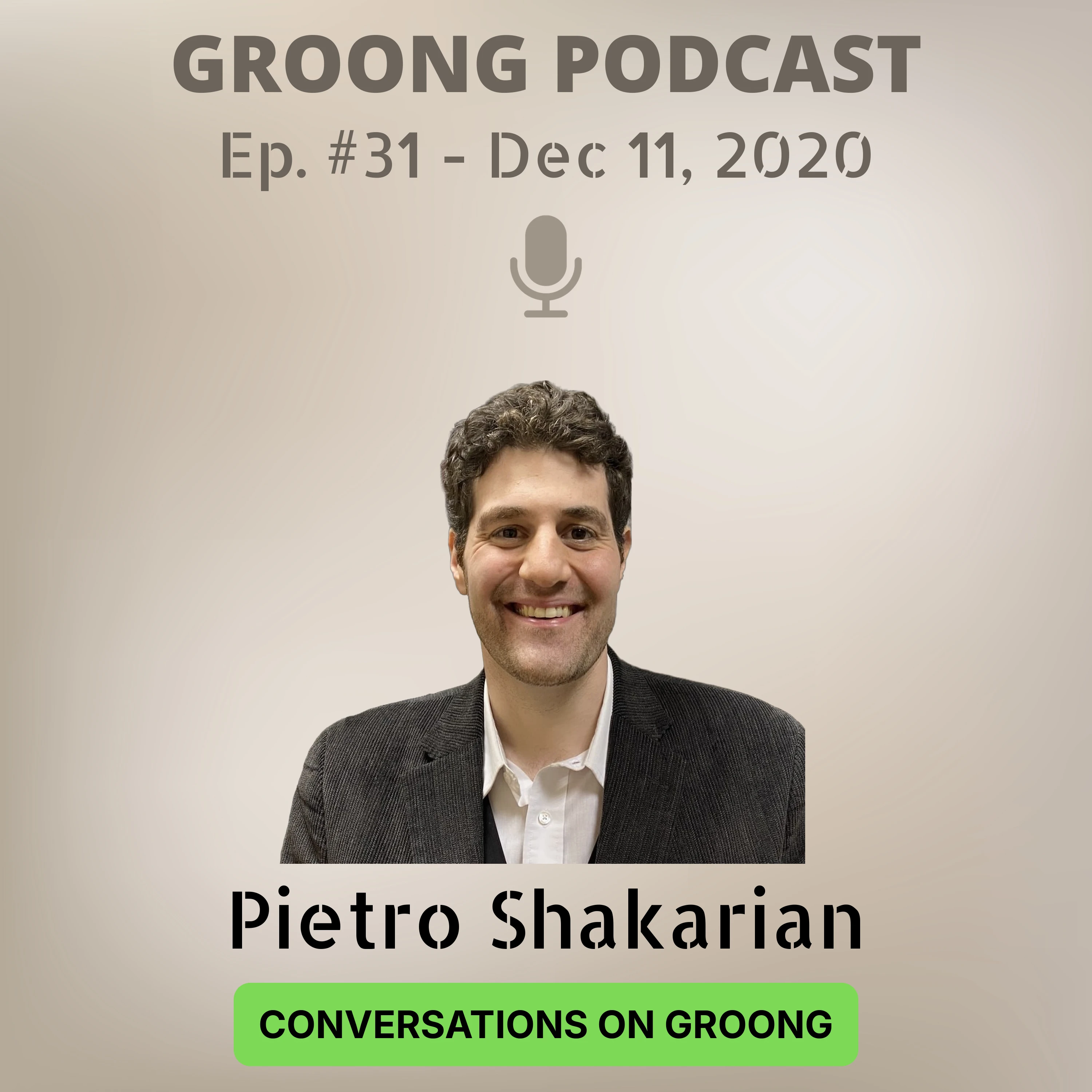
On November 9, Armenia, Azerbaijan and Russia signed The Statement ending the war in Artsakh, known more commonly as Nagorno-Karabakh. Russia emerged as a major winner, by ending the violence, introducing peacekeepers, and upholding its historical role as the regional referee in the Caucasus. What are Russiaâs interests in the region, and in this agreement?
Pietro Shakarian helps us explore. He is a historian and a Ph.D. candidate in Russian History at the Ohio State University. His analyses on Russia, Armenia, and the post-Soviet space have appeared in several publications, including The
Read MoreOn November 9, Armenia, Azerbaijan and Russia signed The Statement ending the war in Artsakh, known more commonly as Nagorno-Karabakh. Russia emerged as a major winner, by ending the violence, introducing peacekeepers, and upholding its historical role as the regional referee in the Caucasus. What are Russiaâs interests in the region, and in this agreement?
Pietro Shakarian helps us explore. He is a historian and a Ph.D. candidate in Russian History at the Ohio State University. His analyses on Russia, Armenia, and the post-Soviet space have appeared in several publications, including The
Read More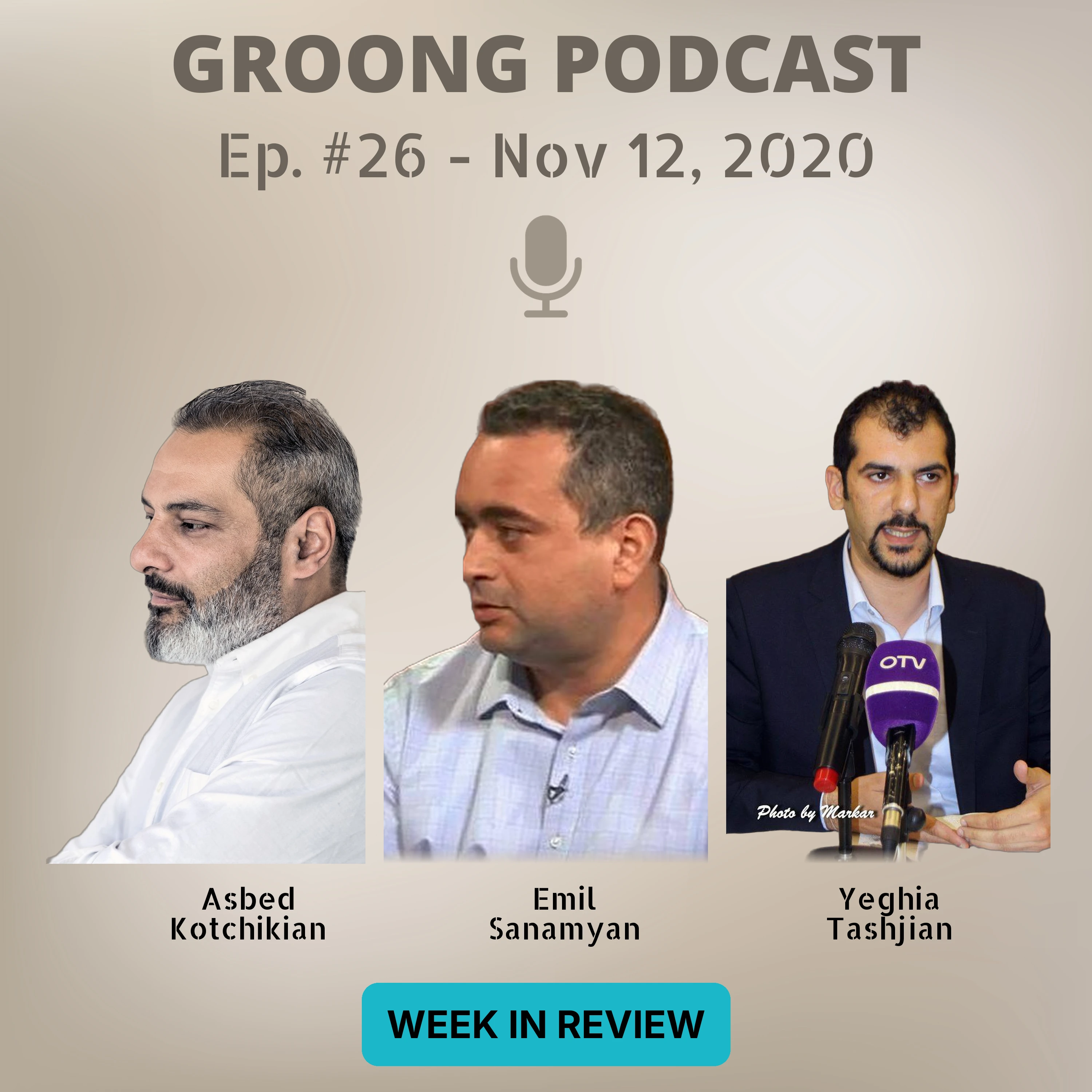
Guest(s):
ANN/Groong Week in Review Episode 26 - Nov 8, 2020
Topics Covered:
- Six weeks of war, what to do next.
- What is Russia thinking?
- To recognize or not to recognize.
Your Hosts:
- Asbed Bedrossian
- Hovik Manucharyan
Resident Panelists:
- Asbed Kotchikian
- Emil Sanamyan
- Yeghia Tashjian
Recorded: Nov 7, 2020
Guest(s):
ANN/Groong Week in Review Episode 26 - Nov 8, 2020
Topics Covered:
- Six weeks of war, what to do next.
- What is Russia thinking?
- To recognize or not to recognize.
Your Hosts:
- Asbed Bedrossian
- Hovik Manucharyan
Resident Panelists:
- Asbed Kotchikian
- Emil Sanamyan
- Yeghia Tashjian
Recorded: Nov 7, 2020
Artsakh War - Back to 9/27 | War Council proposal | Diaspora mobilization (Ep. 22) [EP22]
Posted on Wednesday, Oct 21, 2020 | Category: Armenia, Russia, Azerbaijan, Turkey, Iran, Artsakh, China, Georgia, India, Lebanon, Nagorno Karabakh, NATO | Series: wir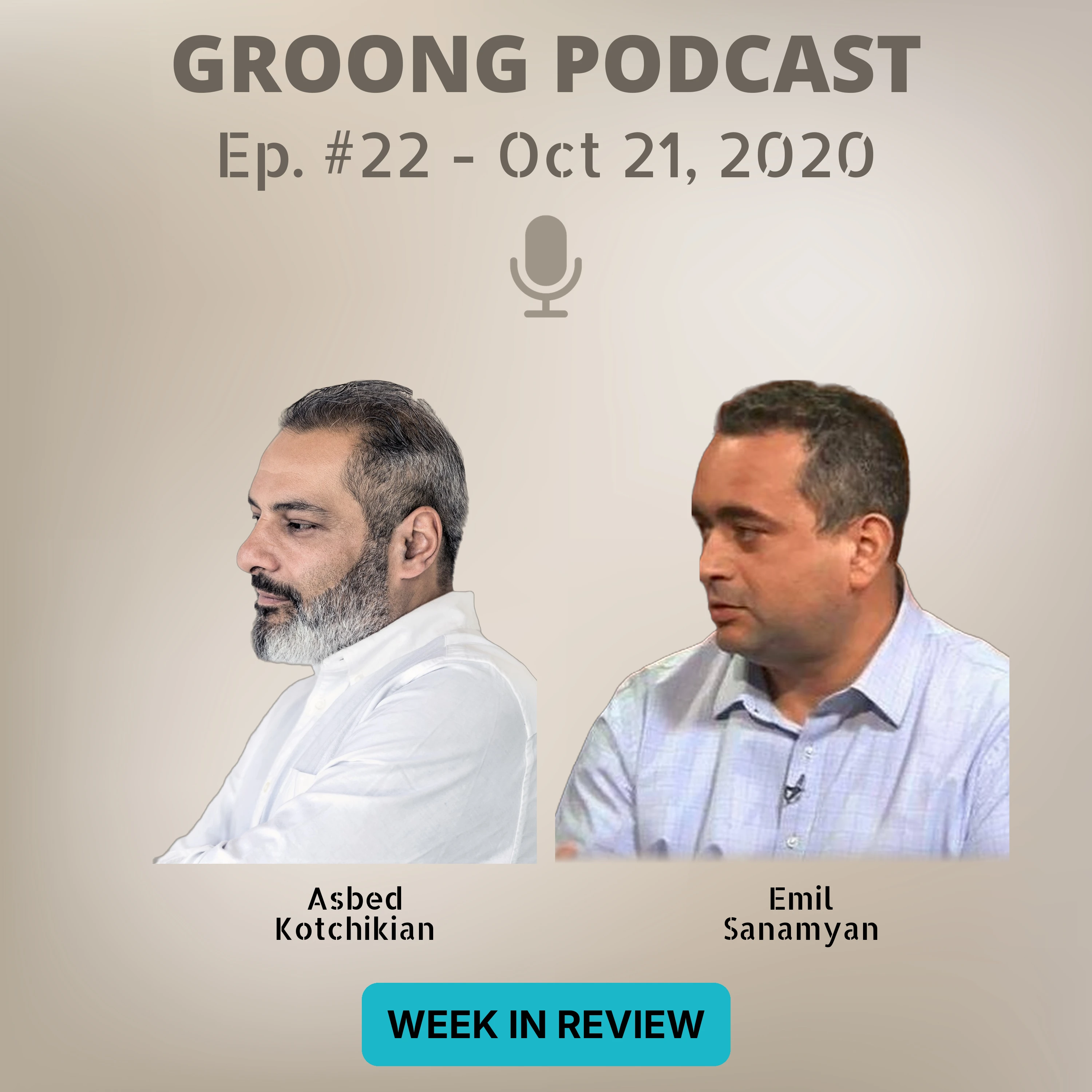
Guest(s):
ANN/Groong Week in Review - October 18, 2020
Topics Covered:
- In retrospect: Tracing our steps back to Sep. 27
- Call from extra-parliamentary opposition for a War Council
- Mobilization of the Armenian diaspora
Your Hosts:
- Asbed Bedrossian
- Hovik Manucharyan
Resident Panelists:
- Asbed Kotchikian
- Emil Sanamyan
Episode 22. Recorded: October18, 2020 Playlist: WiR (Week in Review)
Artsakh War - Back to 9/27 | War Council proposal | Diaspora mobilization (Ep. 22) [EP22]
Posted on Wednesday, Oct 21, 2020 | Category: Armenia, Russia, Azerbaijan, Turkey, Iran, Artsakh, China, Georgia, India, Lebanon, Nagorno Karabakh, NATOGuest(s):
ANN/Groong Week in Review - October 18, 2020
Topics Covered:
- In retrospect: Tracing our steps back to Sep. 27
- Call from extra-parliamentary opposition for a War Council
- Mobilization of the Armenian diaspora
Your Hosts:
- Asbed Bedrossian
- Hovik Manucharyan
Resident Panelists:
- Asbed Kotchikian
- Emil Sanamyan
Episode 22. Recorded: October18, 2020 Playlist: WiR (Week in Review)
ANN/Groong Week in Review - (Ep #6) - 08/09/2020 [EP6]
Posted on Monday, Aug 10, 2020 | Category: Armenia, Azerbaijan, Lebanon, Russia, Turkey, Israel, Iran, Syria, China, Economy, Ukraine, Middle East, Georgia | Series: wir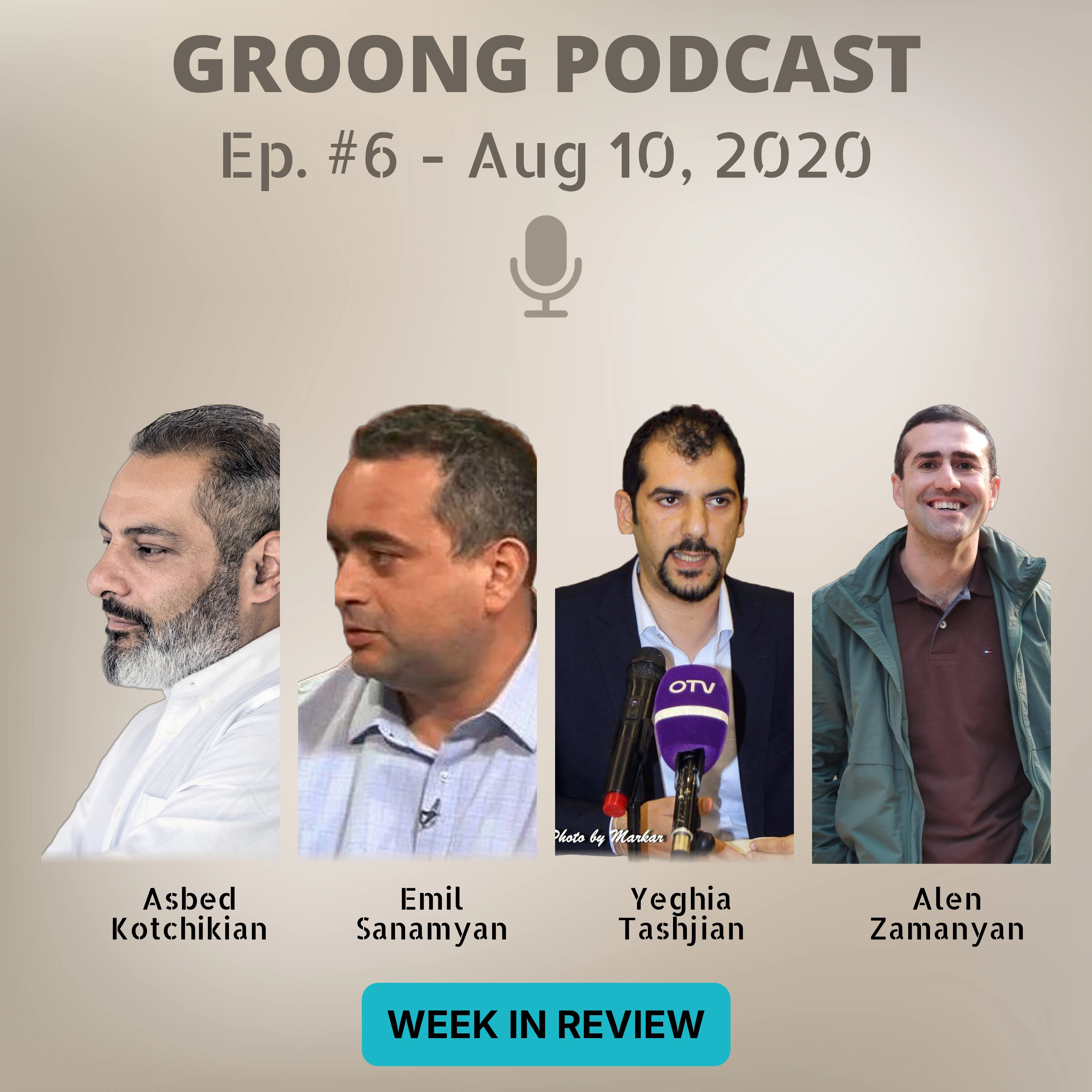
Guest(s):
ANN/Groong Week in Review - 08/09/2020
Topics:
- The Massive Explosion in Beirut
- Lightning Round
- Turkey-Azerbaijan Military Exercises
- Mashtots Park
- Cyber Security Intrusion
- Law on Media Regulation
- Beirut Explosion
Guests
- Asbed Kotchikian
- Emil Sanamyan
- Yeghia Tashjian
- Alen Zamanyan
Hosts
- Hovik Manucharyan
- Asbed Bedrossian
Website: https://groong.org/podcasts/WiR-20200809.html Episode 6 | Recorded on August 9, 2020
ANN/Groong Week in Review - (Ep #6) - 08/09/2020 [EP6]
Posted on Monday, Aug 10, 2020 | Category: Armenia, Azerbaijan, Lebanon, Russia, Turkey, Israel, Iran, Syria, China, Economy, Ukraine, Middle East, GeorgiaGuest(s):
ANN/Groong Week in Review - 08/09/2020
Topics:
- The Massive Explosion in Beirut
- Lightning Round
- Turkey-Azerbaijan Military Exercises
- Mashtots Park
- Cyber Security Intrusion
- Law on Media Regulation
- Beirut Explosion
Guests
- Asbed Kotchikian
- Emil Sanamyan
- Yeghia Tashjian
- Alen Zamanyan
Hosts
- Hovik Manucharyan
- Asbed Bedrossian
Website: https://groong.org/podcasts/WiR-20200809.html Episode 6 | Recorded on August 9, 2020