Economy
Last updated: June 11, 2026
Armenia’s economy is a small, open system dependent on remittances, foreign direct investment, and trade relationships that have contracted dramatically since the loss of Artsakh (Nagorno Karabakh) in September 2023. With a population of approximately 2.9 million and a nominal GDP of roughly $15–16 billion, Armenia ranks among the lower-middle-income economies of the South Caucasus. The country’s fiscal performance deteriorated sharply following the 2020 war and the complete displacement of Artsakh’s more than 150,000 Armenian inhabitants, which severed economic ties and forced military expenditure increases that strained public finances. National debt has risen substantially, and growth has remained volatile as economic activity contracted in 2022–2023 before modest recovery in 2025. Remittances from the Armenian diaspora and from Armenians working in Russia historically cushioned economic shocks, but geopolitical instability and demographic decline have reduced their reliability as a growth engine. The Armenian economy also depends on energy imports, particularly Russian natural gas, and electricity generation from the Metsamor nuclear power plant, making Armenia vulnerable to both supply disruptions and price shocks in regional energy markets.
Armenia’s integration into regional and global trade remains constrained by geography, blockade threats, and the absence of direct transit access to major markets outside the Caucasus. The proposed TRIPP (Trump Route for International Peace and Prosperity) corridor through Syunik province would theoretically connect Azerbaijan to Turkey via Armenian territory, marketed by Washington as a vehicle for regional economic integration and reduced U.S. dependence on Russian and Iranian routes. However, the corridor’s implementation hinges on Armenian territorial concessions, security guarantees Armenia cannot independently verify, and Azerbaijan’s willingness to honor transit commitments—none of which are assured. Jeffrey Sachs argued in August 2025 that Armenia should pursue pragmatic economic cooperation with immediate neighbors, particularly Iran and Russia, rather than relying on distant powers or contested corridor schemes. The Eurasian Economic Union membership provides some preferential trade access to Russia and Kazakhstan, but this integration also locks Armenia into a sphere of influence that offers limited growth prospects and exposes it to Western sanctions targeting Russian-aligned states.
Fiscal sustainability represents an acute challenge as Pashinyan ’s government has increased public spending to meet defense needs and maintain social stability while tax revenues have stagnated. Hrant Mikaelian noted in early 2026 that Armenia’s national debt has risen sharply, raising questions about long-term solvency and the government’s ability to fund both military buildups and public services without external borrowing at unfavorable rates. Prof. Warwick Powell examined in April 2026 the thermoeconomic dimensions of Armenia’s energy and information infrastructure, arguing that decisions about centralized AI data centers, small modular reactors, and large nuclear power plants were inseparable from Armenia’s energy sovereignty and its capacity to participate in emerging digital economies. The concentration of state control over the energy sector, combined with limited private sector dynamism and weak governance indicators, constrains Armenia’s attractiveness to foreign investors beyond extractive industries and diaspora-backed remittances. Whether Armenia can diversify its economy, secure reliable transit access without surrendering sovereignty, and maintain macroeconomic stability amid regional conflict remains unresolved and contingent on geopolitical shifts beyond Armenian control.
Groong episodes that include this tag
Below are all Groong episodes tagged with Economy.
Lebanon | Afghanistan | Armenian Parliament | Artsakh | Ep #85 - Aug 15, 2021 [EP85]
Posted on Tuesday, Aug 17, 2021 | Category: Armenia, Iran, Turkey, Azerbaijan, Lebanon, Russia, China, Syria, Artsakh, Middle East, Economy, Genocide, Human Rights, India, Israel, Nagorno Karabakh, NATO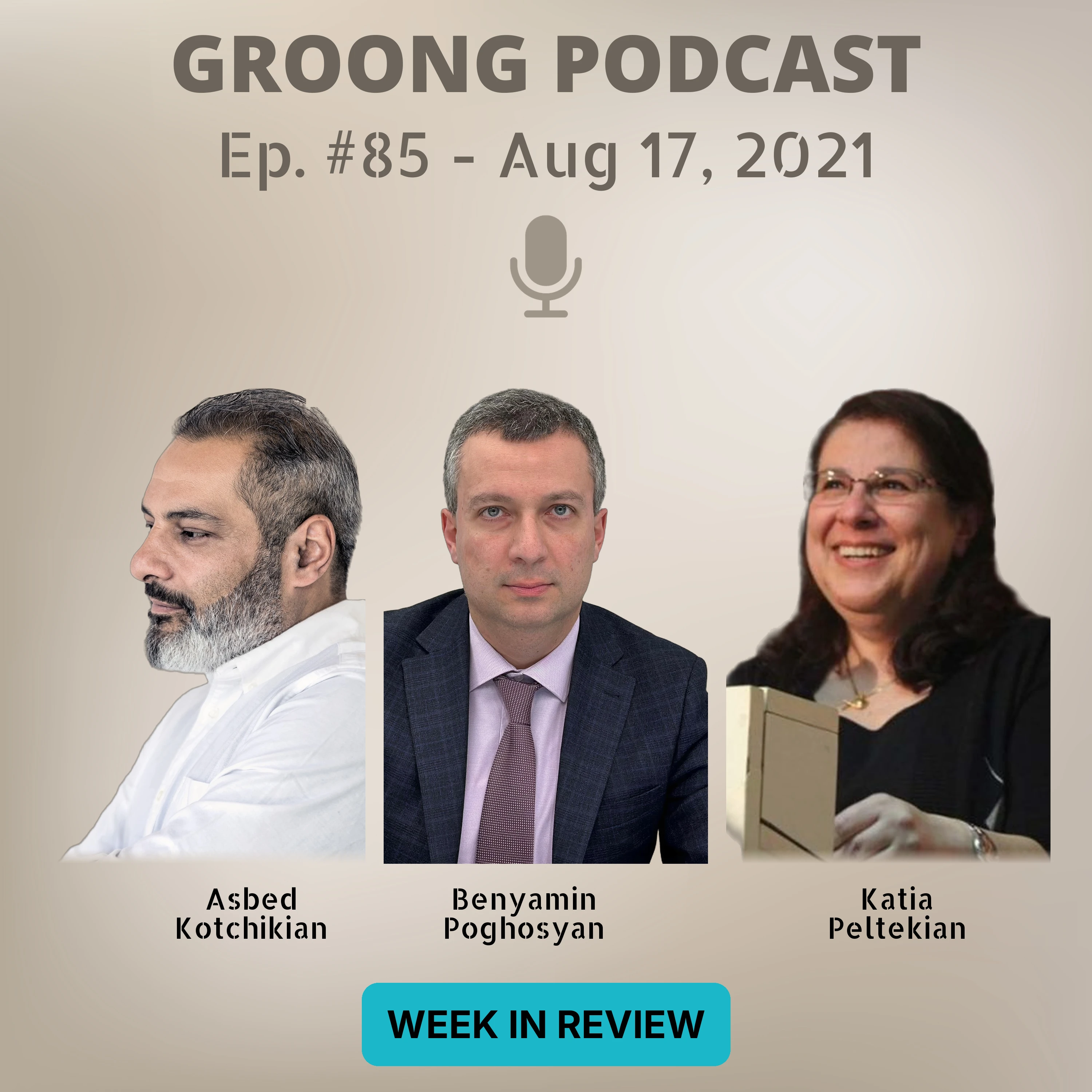
ANN/Groong Week in Review - August 15, 2021
Topics:
- Lebanon in Crisis
- Taliban Takes Over Afghanistan
- 8th Convocation of the Parliament
- Developments around Artsakh
Guests:
- Asbed Kotchikian - https://twitter.com/AsbedK
- Katia Peltekian - https://twitter.com/KatiaPeltekian
- Benyamin Poghosyan - https://twitter.com/BeniaminPoghosyan
Asbed Kotchikian is an Associate Professor of political science and international relations at the American University of Armenia.
Benyamin Poghosyan is the chairman of the Center For Political and Economic Strategic Studies, a Yerevan based think tank. He was
Read MoreInstability on Am-Az Borders | Commission on War | 1st Sess of New Parliament | Ep #84 - Aug 1, 2021 [EP84]
Posted on Monday, Aug 2, 2021 | Category: Armenia, Azerbaijan, Russia, Turkey, Georgia, Economy, Iran, Artsakh, Human Rights, India, Syria, Nagorno Karabakh, European Union | Series: wir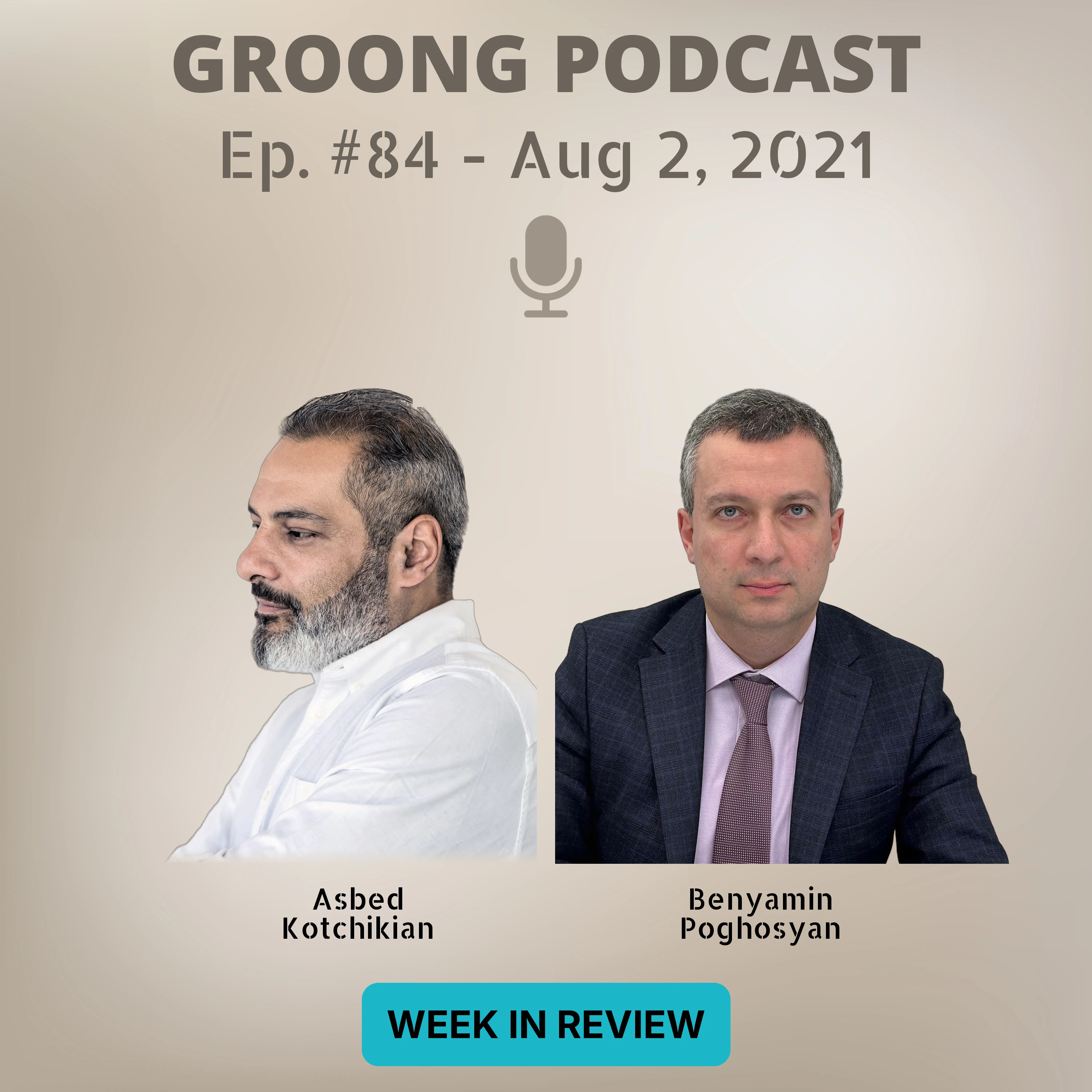
ANN/Groong Week in Review - August 1, 2021
Topics:
- Continued Instability along Armenia-Azerbaijan Borders
- National Assembly Commission on the 44-Day War
- First Session of the 8th Session of the Armenian Parliament
Guests:
- Asbed Kotchikian
- Benyamin Poghosyan
Guest(s):
Hosts:
- Hovik Manucharyan
- Asbed Bedrossian
Episode 84 | Recorded: August 2, 2021 https://groong.org/podcasts/WiR-20210801.html
Instability on Am-Az Borders | Commission on War | 1st Sess of New Parliament | Ep #84 - Aug 1, 2021 [EP84]
Posted on Monday, Aug 2, 2021 | Category: Armenia, Azerbaijan, Russia, Turkey, Georgia, Economy, Iran, Artsakh, Human Rights, India, Syria, Nagorno Karabakh, European UnionANN/Groong Week in Review - August 1, 2021
Topics:
- Continued Instability along Armenia-Azerbaijan Borders
- National Assembly Commission on the 44-Day War
- First Session of the 8th Session of the Armenian Parliament
Guests:
- Asbed Kotchikian
- Benyamin Poghosyan
Guest(s):
Hosts:
- Hovik Manucharyan
- Asbed Bedrossian
Episode 84 | Recorded: August 2, 2021 https://groong.org/podcasts/WiR-20210801.html
Calls for a Commission to Analyze the Defeat in the 2020 Artsakh War | Ep. #82 - July 31, 2021 [EP82]
Posted on Saturday, Jul 31, 2021 | Category: Armenia, Azerbaijan, Russia, Israel, Artsakh, Turkey, Economy, Geopolitics, Nagorno Karabakh, NATO | Series: cog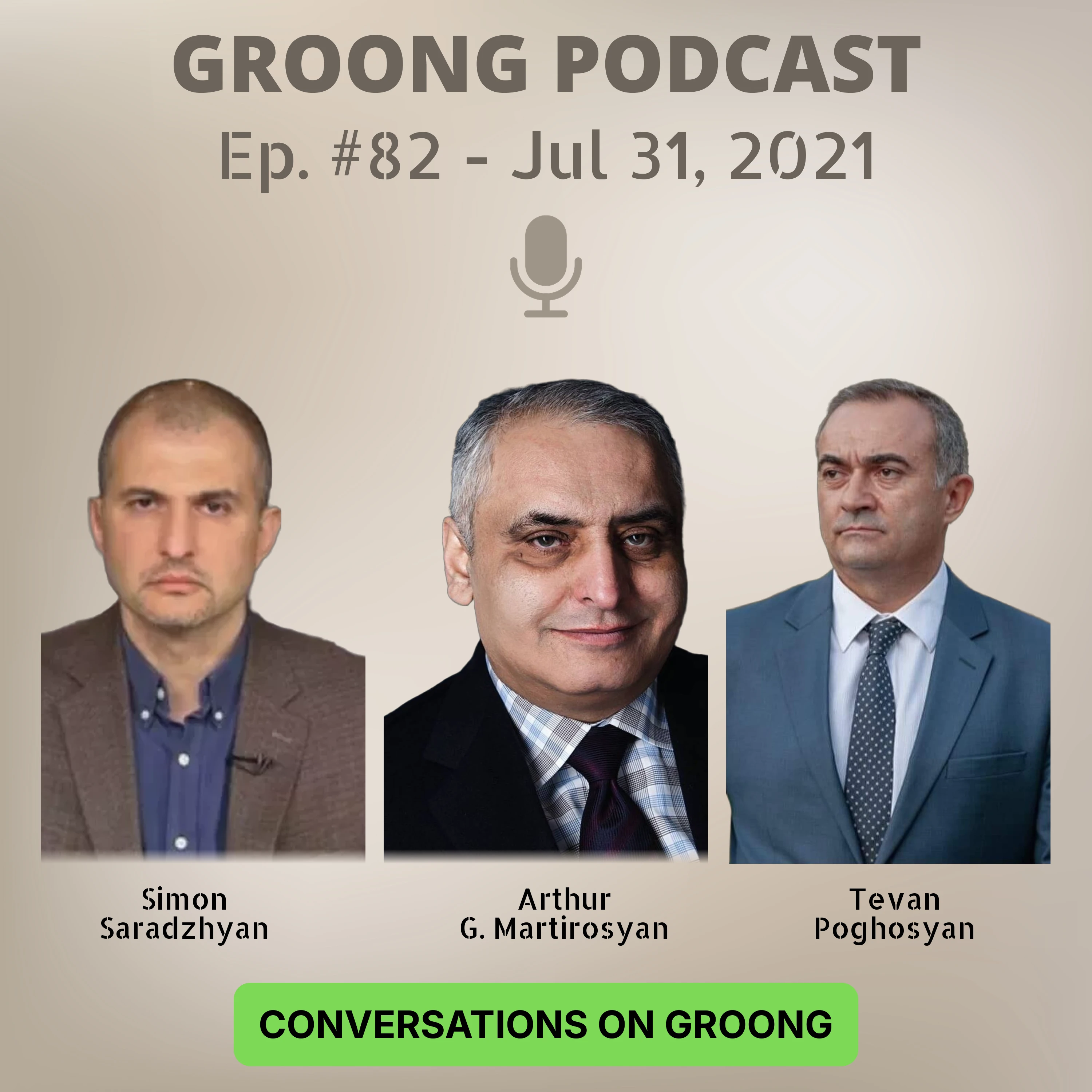
Calls for a Commission to Analyze the Defeat in the 2020 Artsakh War
A Conversation with Dr. Simon Saradzhyan, Arthur G. Martirosyan, and Tevan Poghosyan
The disastrous outcome of the 2020 War in Artsakh has left Armenians in Armenia and around the world with many unanswered questions. Many long-time held beliefs about the capability of Armenia to defend Artsakh, and Armenia itself, were shattered on November 9, with the signing of the trilateral ceasefire statement.
A group of more than 10 academics and researchers recently published a lengthy set of questions that are proposed as a basis for
Read MoreCalls for a Commission to Analyze the Defeat in the 2020 Artsakh War | Ep. #82 - July 31, 2021 [EP82]
Posted on Saturday, Jul 31, 2021 | Category: Armenia, Azerbaijan, Russia, Israel, Artsakh, Turkey, Economy, Geopolitics, Nagorno Karabakh, NATOCalls for a Commission to Analyze the Defeat in the 2020 Artsakh War
A Conversation with Dr. Simon Saradzhyan, Arthur G. Martirosyan, and Tevan Poghosyan
The disastrous outcome of the 2020 War in Artsakh has left Armenians in Armenia and around the world with many unanswered questions. Many long-time held beliefs about the capability of Armenia to defend Artsakh, and Armenia itself, were shattered on November 9, with the signing of the trilateral ceasefire statement.
A group of more than 10 academics and researchers recently published a lengthy set of questions that are proposed as a basis for
Read MoreEscalation in Yeraskh | Gunpoint Diplomacy | Emigration | Guest Trip Report | Ep. 81 - July 25, 2021 [EP81]
Posted on Tuesday, Jul 27, 2021 | Category: Armenia, Politics, Geopolitics, Russia, Azerbaijan, Turkey, Artsakh, Iran, Middle East, Economy, China, Georgia, Lebanon, Ukraine, Nagorno Karabakh | Series: wir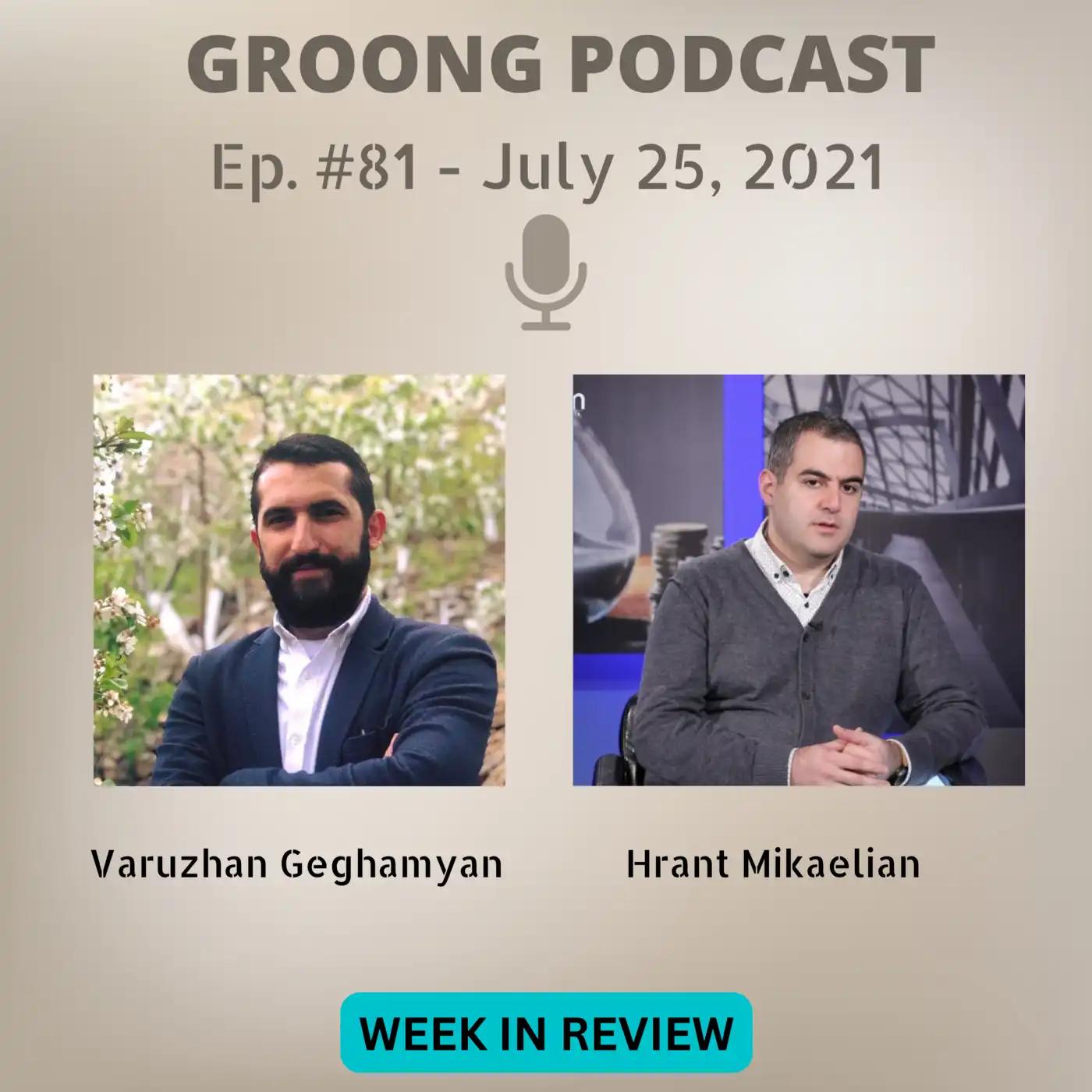
ANN/Groong Week in Review - July 25, 2021
Topics:
- Escalation in Yeraskh
- âPeace Treatyâ at Gunpoint
- Emigration out of Armenia
- Trip Report from Our Guests
Guests:
Episode 81 | Recorded: July 26, 2021
Escalation in Yeraskh | Gunpoint Diplomacy | Emigration | Guest Trip Report | Ep. 81 - July 25, 2021 [EP81]
Posted on Tuesday, Jul 27, 2021 | Category: Armenia, Politics, Geopolitics, Russia, Azerbaijan, Turkey, Artsakh, Iran, Middle East, Economy, China, Georgia, Lebanon, Ukraine, Nagorno KarabakhANN/Groong Week in Review - July 25, 2021
Topics:
- Escalation in Yeraskh
- âPeace Treatyâ at Gunpoint
- Emigration out of Armenia
- Trip Report from Our Guests
Guests:
Episode 81 | Recorded: July 26, 2021
Armenian Foreign policy Between War and Peace | Ep #80 - July 22, 2021 [EP80]
Posted on Thursday, Jul 22, 2021 | Category: Armenia, Russia, Turkey, Azerbaijan, Iran, Artsakh, Ukraine, Georgia, China, India, Syria, Economy, Middle East, Nagorno Karabakh, NATO, European Union | Series: cog
Armenian Foreign policy Between War and Peace A Conversation with Dr. Pietro Shakarian and Yeghia Tashjian
Topics:
- Sparring Partners: Moscow and Ankara
- Yerevanâs Diplomatic Dilemmas
- Aliyevâs Appetite and Ambitions
Guests
- Dr. Pietro Shakarian
- Yeghia Tashjian
Guest(s):
Hosts:
- Hovik Manucharyan
- Asbed Bedrossian
Episode 80 | Recorded: July 21, 2021 Website: https://groong.org/podcasts/CoG-20210722.html
Armenian Foreign policy Between War and Peace | Ep #80 - July 22, 2021 [EP80]
Posted on Thursday, Jul 22, 2021 | Category: Armenia, Russia, Turkey, Azerbaijan, Iran, Artsakh, Ukraine, Georgia, China, India, Syria, Economy, Middle East, Nagorno Karabakh, NATO, European UnionArmenian Foreign policy Between War and Peace A Conversation with Dr. Pietro Shakarian and Yeghia Tashjian
Topics:
- Sparring Partners: Moscow and Ankara
- Yerevanâs Diplomatic Dilemmas
- Aliyevâs Appetite and Ambitions
Guests
- Dr. Pietro Shakarian
- Yeghia Tashjian
Guest(s):
Hosts:
- Hovik Manucharyan
- Asbed Bedrossian
Episode 80 | Recorded: July 21, 2021 Website: https://groong.org/podcasts/CoG-20210722.html