Tag: Donald Trump
Last updated: May 29, 2026
Donald Trump’s return to the presidency in January 2025 brought a distinct set of priorities to US engagement in the South Caucasus. The Trump administration’s signature regional initiative has been the Trump Route for International Peace and Prosperity (TRIPP), a connectivity proposal centered on opening the Zangezur Corridor through Armenia to link Turkey and Azerbaijan — and potentially extending to regional economic integration. The proposal has been controversial in Armenia, where many view it as pressure to make territorial concessions to Azerbaijan under the banner of economic development.
More broadly, the Trump administration’s approach to the South Caucasus reflects its transactional foreign policy: prioritizing deal-making, reducing emphasis on democracy and human rights conditions, and recalibrating relationships with traditional allies and adversaries alike. For Armenia, this has meant navigating a US posture that is simultaneously a potential counterweight to Russia and a source of pressure on the peace process.
Groong has covered Trump’s impact on Armenian affairs extensively, from the TRIPP proposal and its reception in Yerevan to US-Armenia security cooperation, Congressional dynamics, and how Trump-era US foreign policy compares with the Biden approach to the South Caucasus.
Pashinyan in Moscow | Azerbaijan's Geo-politics | Baku Domestic Politics | Baku's Losses (Ep. 43) [EP43]
Posted on Monday, Jan 18, 2021 | Category: Azerbaijan, Armenia, Russia, Turkey, Syria, Georgia, Iran, Artsakh, Economy, Israel, Human Rights | Series: WIR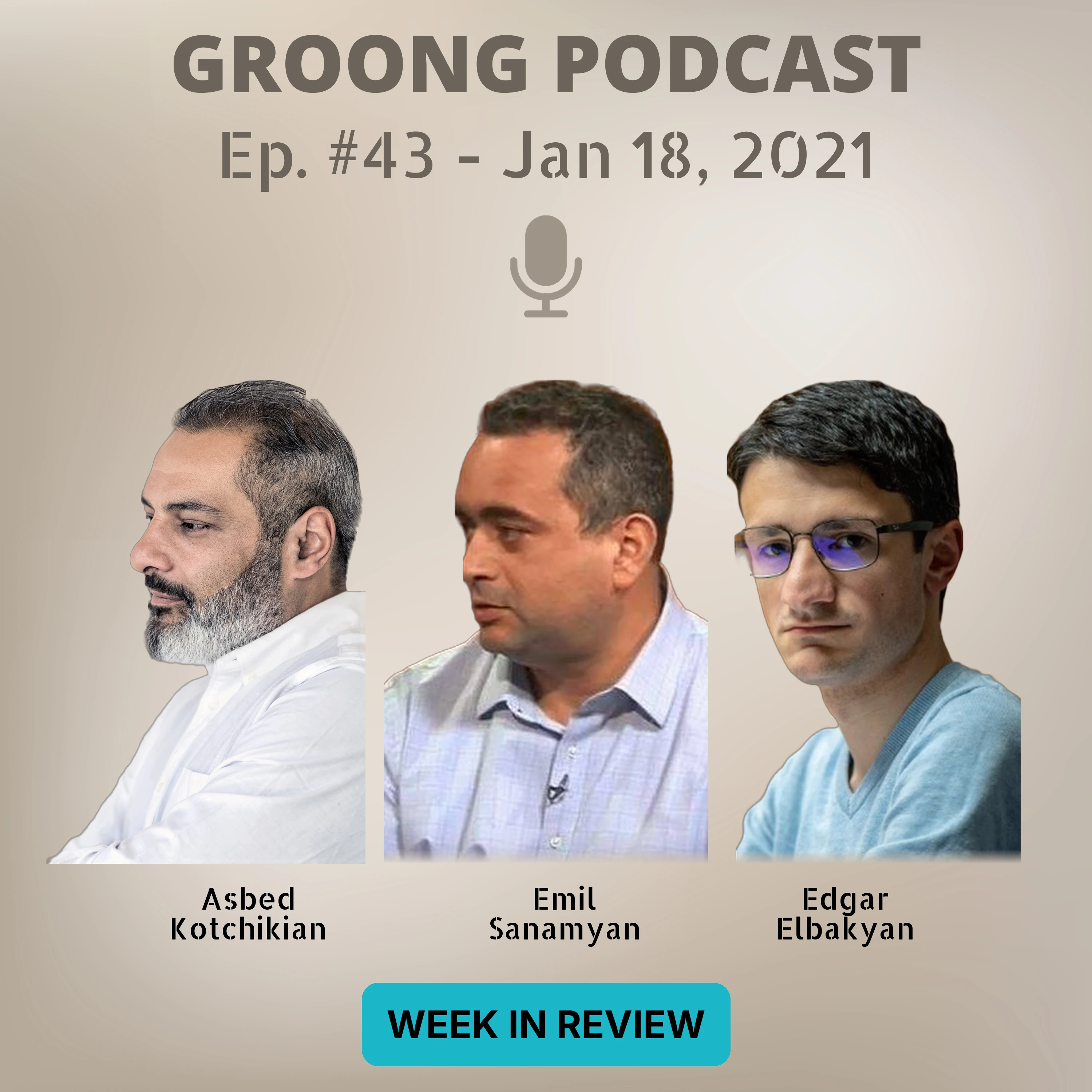
ANN/Groong Week in Review - Jan 17, 2021
Topics Covered:
- Outcomes from Nikol Pashinyanâs trip to Moscow
- What is Azerbaijanâs geo-political situation after the war?
- Domestic politics in Baku
- Azerbaijanâs losses from the second war in Artsakh
Guests
- Edgar Elbakyan
- Asbed Kotchikian
- Emil Sanamyan
Your Hosts:
- Asbed Bedrossian
- Hovik Manucharyan
Website: https://groong.org/podcasts/WiR-20210117.html Recorded: January 17, 2021
Pashinyan in Moscow | Azerbaijan's Geo-politics | Baku Domestic Politics | Baku's Losses (Ep. 43) [EP43]
Posted on Monday, Jan 18, 2021 | Category: Azerbaijan, Armenia, Russia, Turkey, Syria, Georgia, Iran, Artsakh, Economy, Israel, Human RightsANN/Groong Week in Review - Jan 17, 2021
Topics Covered:
- Outcomes from Nikol Pashinyanâs trip to Moscow
- What is Azerbaijanâs geo-political situation after the war?
- Domestic politics in Baku
- Azerbaijanâs losses from the second war in Artsakh
Guests
- Edgar Elbakyan
- Asbed Kotchikian
- Emil Sanamyan
Your Hosts:
- Asbed Bedrossian
- Hovik Manucharyan
Website: https://groong.org/podcasts/WiR-20210117.html Recorded: January 17, 2021
Conversation with Aram Vardevanyan (Ep #41) - 01/13/2021 [EP41]
Posted on Wednesday, Jan 13, 2021 | Category: Armenia, Human Rights, Azerbaijan, Artsakh, Israel, Russia | Series: COG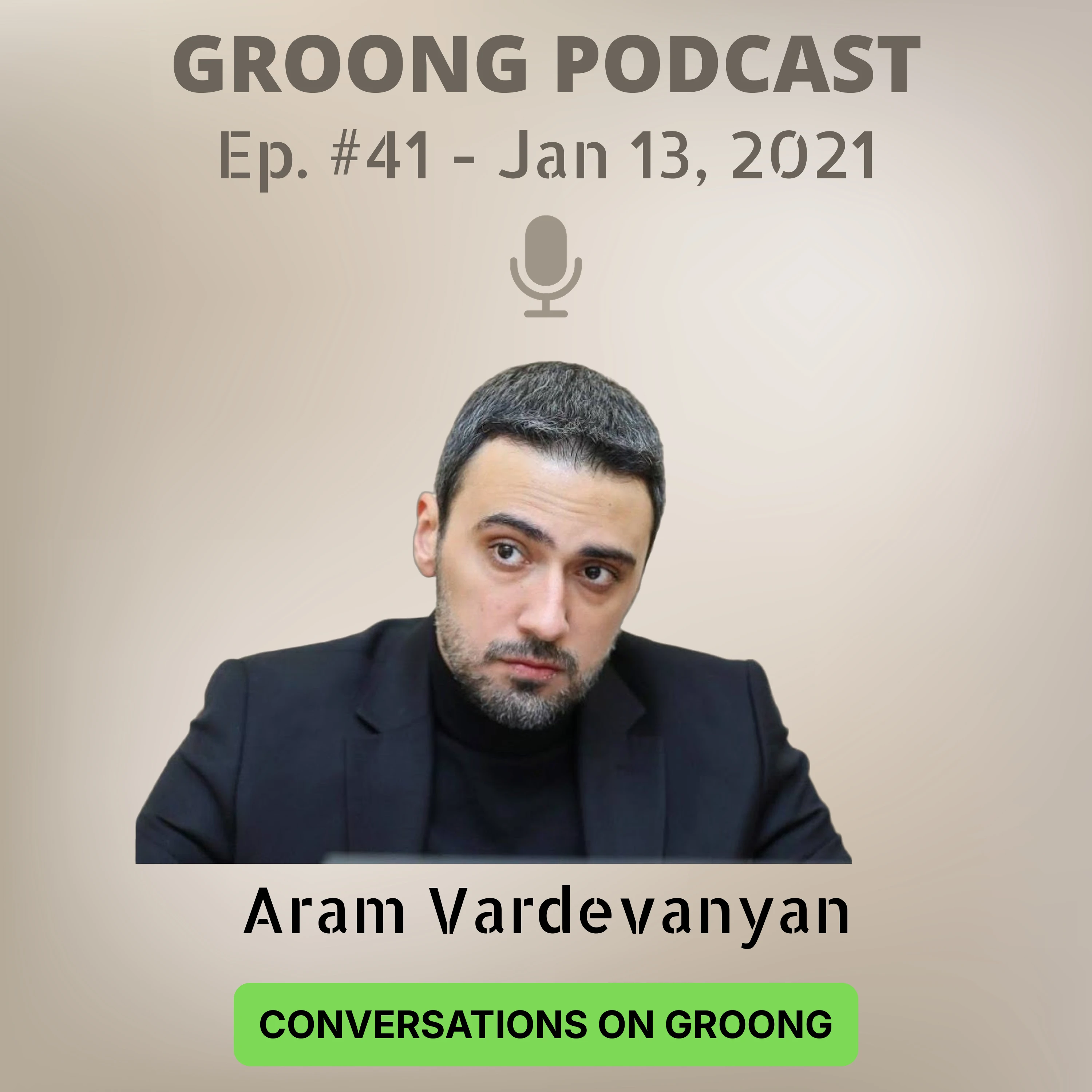
Conversation with Aram Vardevanyan - 01/13/2021
Since Nikol Pashinyan came to power in 2018, and prior to the Artsakh war of 2020, issues around the Armenian constitution and constitutional court have been in the center of public attention. These issues have been partly fueled by one of the most prominent legal cases in recent Armenian history, the March 1 trial against Armenian president Robert Kocharyan and military leadership at the time. We’ll explore issues surrounding the March 1 case, as well as legal and specifically constitutional questions related to the Nov. 9 ceasefire
Read MoreConversation with Aram Vardevanyan (Ep #41) - 01/13/2021 [EP41]
Posted on Wednesday, Jan 13, 2021 | Category: Armenia, Human Rights, Azerbaijan, Artsakh, Israel, RussiaConversation with Aram Vardevanyan - 01/13/2021
Since Nikol Pashinyan came to power in 2018, and prior to the Artsakh war of 2020, issues around the Armenian constitution and constitutional court have been in the center of public attention. These issues have been partly fueled by one of the most prominent legal cases in recent Armenian history, the March 1 trial against Armenian president Robert Kocharyan and military leadership at the time. We’ll explore issues surrounding the March 1 case, as well as legal and specifically constitutional questions related to the Nov. 9 ceasefire
Read More
Since the end of the first Nagorno-Karabakh war in 1994 and for over quarter of a century, Armenia has engaged in diplomatic activity with Azerbaijan, Turkey, Russia and the West. The aim of those diplomatic initiatives was to find a solution to the conflict by engaging in direct diplomatic negotiations as well as track two diplomacy.
In September 2020, diplomatic initiatives gave way to a military one resulting in a war that reversed Armeniaâs military successes and led to the signing of a cease-fire agreement which completely undermined Armeniaâs position vis-a-vis Azerbaijan and Turkey.
Read MoreSince the end of the first Nagorno-Karabakh war in 1994 and for over quarter of a century, Armenia has engaged in diplomatic activity with Azerbaijan, Turkey, Russia and the West. The aim of those diplomatic initiatives was to find a solution to the conflict by engaging in direct diplomatic negotiations as well as track two diplomacy.
In September 2020, diplomatic initiatives gave way to a military one resulting in a war that reversed Armeniaâs military successes and led to the signing of a cease-fire agreement which completely undermined Armeniaâs position vis-a-vis Azerbaijan and Turkey.
Read MoreOpposition Talks: Arthur Khachatryan - ARF Dashnaktsutyun (Ep. 34) [EP34]
Posted on Saturday, Dec 19, 2020 | Category: Armenia, Russia, Armenian Genocide, Economy, Genocide, Turkey | Series: COG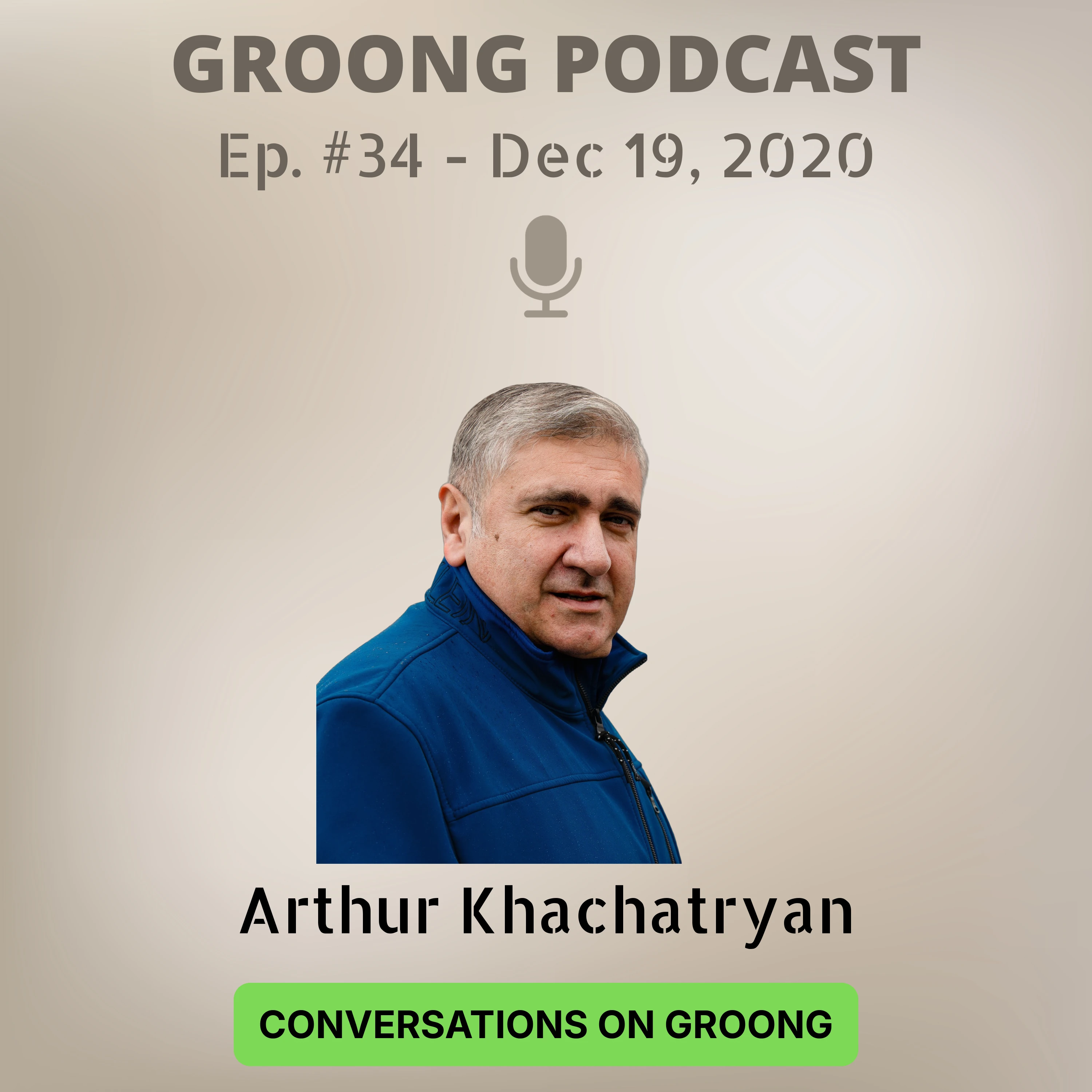
Conversation with ARF’s Arthur Khachatryan
Following the trilateral Karabakh ceasefire of Nov 9, the Armenian opposition has nearly universally condemned Nikol Pashinyanâs agreement to the deal. The largest opposition grouping, called Movement of the Salvation of the Homeland (ÕÕ¡ÕµÖÕ¥Õ¶Õ«ÖÕ« ÖÖÕ¯Õ¸ÖÕ©ÕµÕ¡Õ¶ Õ·Õ¡ÕªÕ¸ÖÕ´ in Armenian), composed of 17 political parties including the Armenian Revolutionary Federation (ARF), Prosperous Armenia, and the Republican Party, are demanding Pashinyanâs immediate resignation and the appointment of their unified candidate, Vazgen Manukyan
Read MoreOpposition Talks: Arthur Khachatryan - ARF Dashnaktsutyun (Ep. 34) [EP34]
Posted on Saturday, Dec 19, 2020 | Category: Armenia, Russia, Armenian Genocide, Economy, Genocide, TurkeyConversation with ARF’s Arthur Khachatryan
Following the trilateral Karabakh ceasefire of Nov 9, the Armenian opposition has nearly universally condemned Nikol Pashinyanâs agreement to the deal. The largest opposition grouping, called Movement of the Salvation of the Homeland (ÕÕ¡ÕµÖÕ¥Õ¶Õ«ÖÕ« ÖÖÕ¯Õ¸ÖÕ©ÕµÕ¡Õ¶ Õ·Õ¡ÕªÕ¸ÖÕ´ in Armenian), composed of 17 political parties including the Armenian Revolutionary Federation (ARF), Prosperous Armenia, and the Republican Party, are demanding Pashinyanâs immediate resignation and the appointment of their unified candidate, Vazgen Manukyan
Read More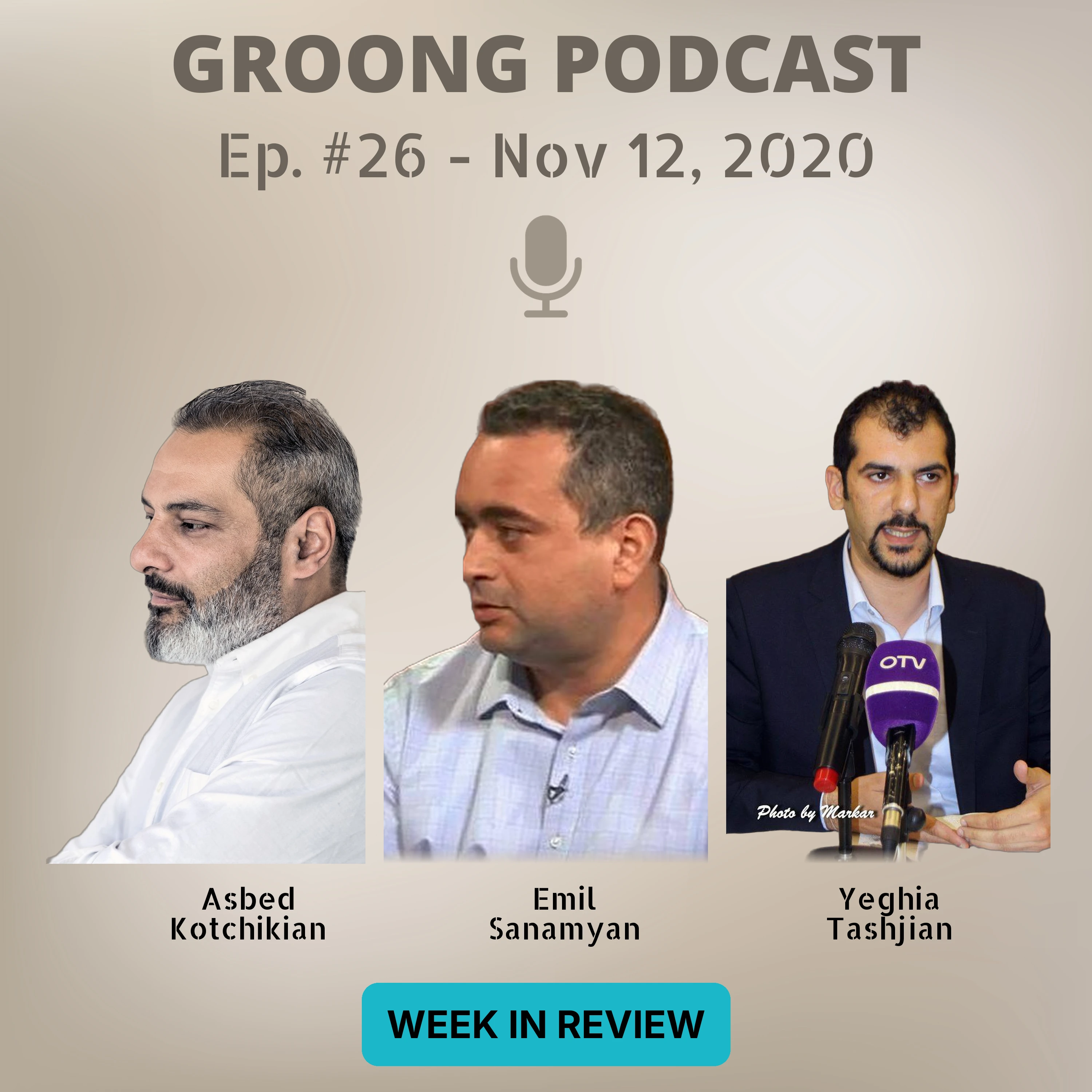
ANN/Groong Week in Review Episode 26 - Nov 8, 2020
Topics Covered:
- Six weeks of war, what to do next.
- What is Russia thinking?
- To recognize or not to recognize.
Your Hosts:
- Asbed Bedrossian
- Hovik Manucharyan
Resident Panelists:
- Asbed Kotchikian
- Emil Sanamyan
- Yeghia Tashjian
Recorded: Nov 7, 2020