Corridors
Last updated: June 11, 2026
Transit corridors through Armenian territory have become central to regional geopolitics and Armenia’s precarious position between competing powers. Following the 44-Day War in 2020 and the complete loss of Artsakh (Nagorno Karabakh) in September 2023, Azerbaijan and Turkey intensified demands for “unblocking” transit routes through Armenia’s Syunik province. Azerbaijan frames this as the “Zangezur Corridor,” a pan-Turanic concept implying Turkish-Azerbaijani integration and regional domination. Washington, by contrast, has branded the same route as TRIPP (Trump Route for International Peace and Prosperity), framing it as infrastructure that would connect Asia to Europe while limiting Russian and Iranian influence and providing access to critical minerals. These competing narratives obscure the same underlying reality: Armenia has been asked to grant transit rights across its sovereign territory under conditions that threaten its independence and create new vulnerabilities to Turkish and Azerbaijani pressure.
Pashinyan has navigated corridor demands through a series of concessions and rhetorical maneuvers designed to preserve Armenian sovereignty while avoiding outright capitulation. In August 2025, following a White House meeting with Donald Trump and Ilham Aliyev , Armenia agreed in principle to corridor development, with discussions centering on whether control would rest with Azerbaijan, Turkey, a neutral third party, or a U.S.-based company. Dr. Benyamin Poghosyan and others have noted that Pashinyan’s strategy involves outsourcing corridor administration to reduce direct Turkish-Azerbaijani leverage, yet the underlying exposure remains: any corridor through Syunik creates a physical dependency on transit arrangements and exposes Armenia to blockade threats if negotiations falter. Iran , recognizing that TRIPP would bypass and encircle Iranian territory, has signaled opposition, creating diplomatic pressure that complicates Armenia’s position further. Hamid Bahrami emphasized in February 2025 that Iran views the corridor as part of a wider U.S.-Israeli strategy to isolate Tehran, raising the prospect that Armenia could become entangled in a broader conflict if regional tensions escalate.
The corridor debate reveals the structural trap facing Armenia in a multipolar order: without Western security guarantees equivalent to NATO membership, Pashinyan cannot refuse U.S. pressure; without Russian military support as robust as it was before 2023, he cannot resist Azerbaijani encroachment; and without leverage over Turkey or regional economic alternatives, Armenia cannot negotiate from strength. Arman Grigoryan and Fyodor Lukyanov have both suggested that small states in a multipolar world must choose which great power or coalition to align with, and that Armenia’s current strategy of attempting to balance multiple suitors simultaneously may prove unsustainable. Whether TRIPP becomes a vehicle for Armenian integration into a Western-led Eurasian network, or whether it becomes a corridor of control through which Turkey and Azerbaijan extract security and political concessions, will depend on outcomes largely beyond Armenian decision-making authority.
Groong episodes that include this tag
Below are all Groong episodes tagged with Corridors.
James Carden & Pietro Shakarian - Global Affairs in the Age of Trump 2.0 | Ep 515, Feb 7, 2026 [EP515]
Posted on Saturday, Feb 7, 2026 | Category: USA, TRIPP, Iran, Armenia, Israel, Azerbaijan, Armenian Church, Nagorno Karabakh, BRICS, Russia, China, Economy, Syria, Turkey, Ukraine, Human Rights, India, Middle East, NATO | Series: cog, video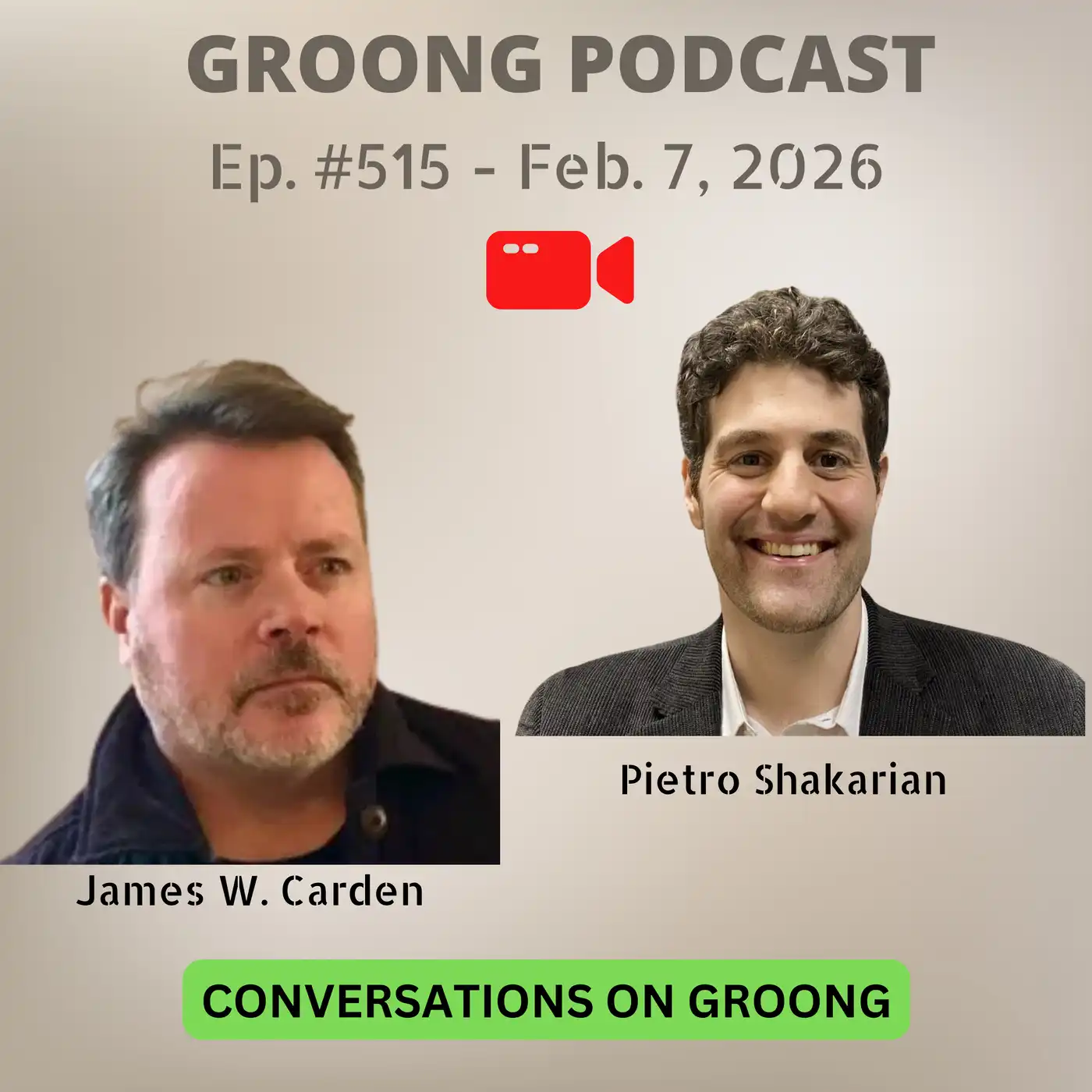
Groong Links:
Guest:
Topics:
- Trump 2.0 and the âDonroe Doctrineâ
- Rules-Based Disorder?
- Iran vs. the âBig, Beautiful Armadaâ
- US Cohesion and Midterms
- JD Vance in the South Caucasus
Episode 515 | Recorded: February 6, 2026
James Carden & Pietro Shakarian - Global Affairs in the Age of Trump 2.0 | Ep 515, Feb 7, 2026 [EP515]
Posted on Saturday, Feb 7, 2026 | Category: USA, TRIPP, Iran, Armenia, Israel, Azerbaijan, Armenian Church, Nagorno Karabakh, BRICS, Russia, China, Economy, Syria, Turkey, Ukraine, Human Rights, India, Middle East, NATOGroong Links:
Guest:
Topics:
- Trump 2.0 and the âDonroe Doctrineâ
- Rules-Based Disorder?
- Iran vs. the âBig, Beautiful Armadaâ
- US Cohesion and Midterms
- JD Vance in the South Caucasus
Episode 515 | Recorded: February 6, 2026
Arthur Khachatryan - Army Day, JD Vance to Armenia, TRIPP, Church, Strong Armenia Political Party | Ep 510, Jan 27, 2026 [EP510]
Posted on Wednesday, Jan 28, 2026 | Category: Armenia, Politics, Artsakh, Nagorno Karabakh, Azerbaijan, Turkey, Russia, Armenian Church, Artsakh Blockade, Iran, Economy, Georgia, Human Rights, Syria | Series: wir, video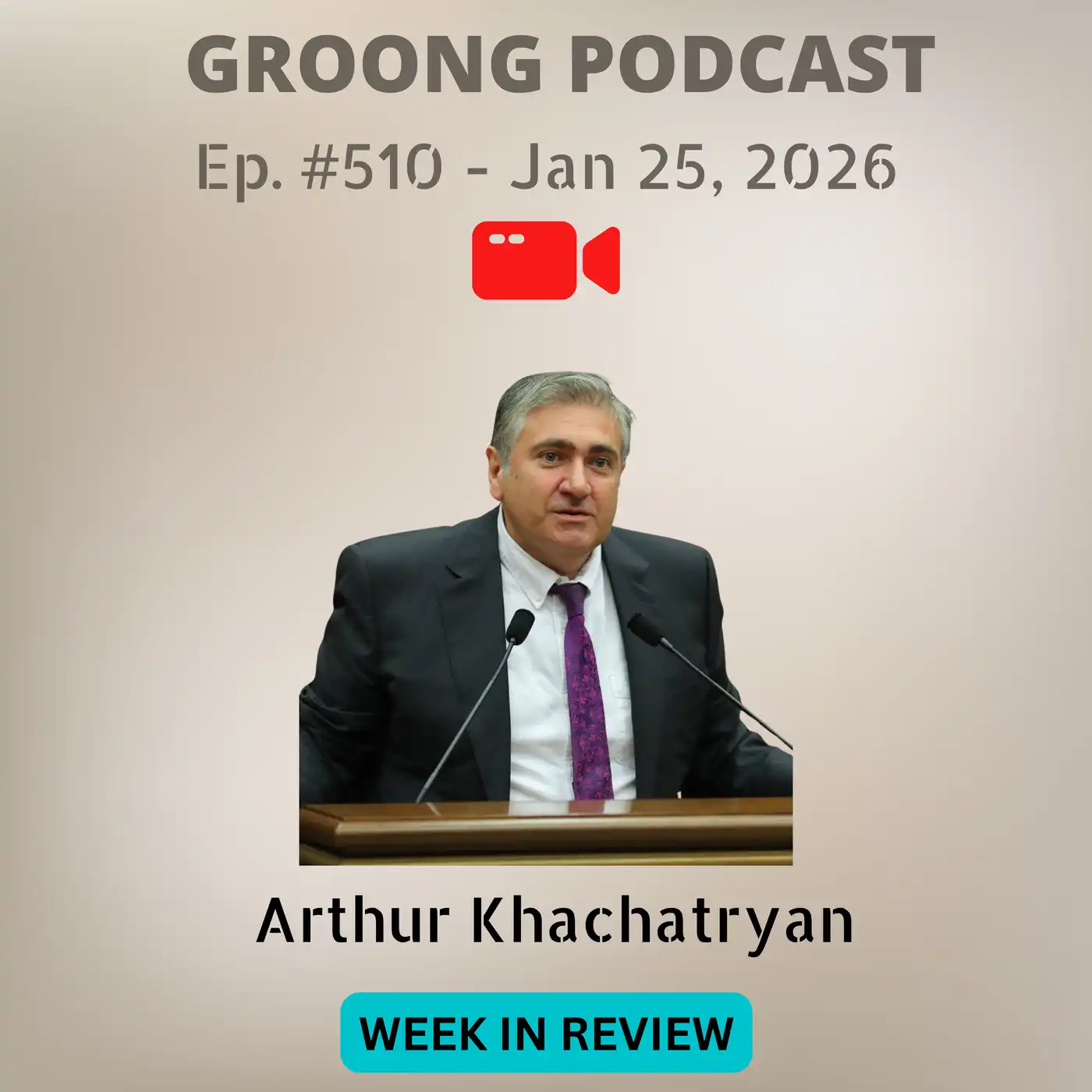
Groong Links:
Guest:
Topics:
- Memorial Day vs. Army Day
- JD Vance to Armenia and Azerbaijan
- Armenian Church Developments
- Strong Armenia - New Political Party
Episode 510 | Recorded: Jnauary 27, 2026
Arthur Khachatryan - Army Day, JD Vance to Armenia, TRIPP, Church, Strong Armenia Political Party | Ep 510, Jan 27, 2026 [EP510]
Posted on Wednesday, Jan 28, 2026 | Category: Armenia, Politics, Artsakh, Nagorno Karabakh, Azerbaijan, Turkey, Russia, Armenian Church, Artsakh Blockade, Iran, Economy, Georgia, Human Rights, SyriaGroong Links:
Guest:
Topics:
- Memorial Day vs. Army Day
- JD Vance to Armenia and Azerbaijan
- Armenian Church Developments
- Strong Armenia - New Political Party
Episode 510 | Recorded: Jnauary 27, 2026
Sergei Melkonian - Syria, Iran Unrest, TRIPP, Armenian Parliamentary Elections | Ep 508, Jan 18, 2026 [EP508]
Posted on Tuesday, Jan 20, 2026 | Category: Armenia, Politics, Artsakh, Nagorno Karabakh, Azerbaijan, Turkey, Russia, Syria, Iran, Israel, China, Geopolitics, Middle East, Georgia, Ukraine, Economy, India, European Union | Series: wir, video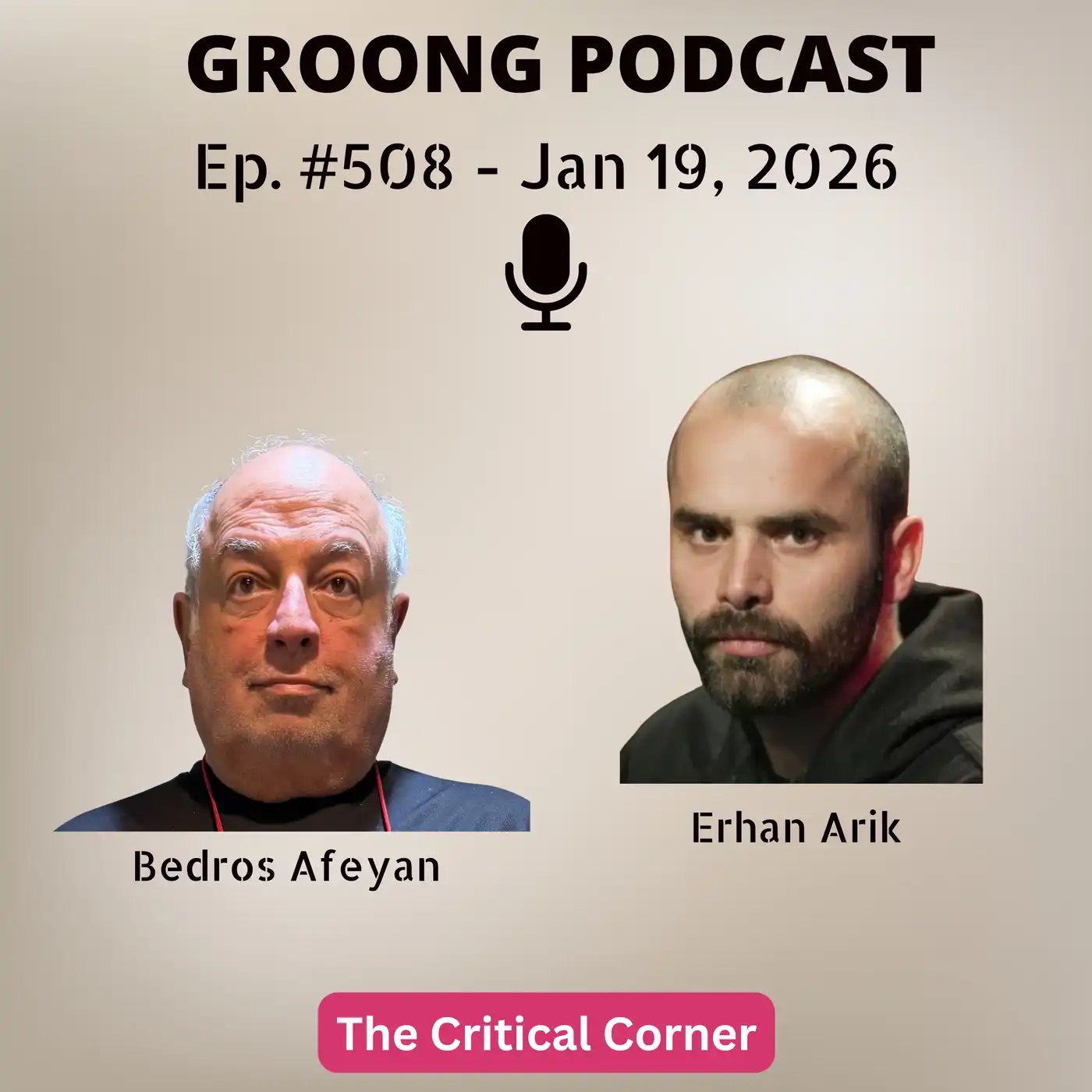
Groong Links:
Guest:
Topics:
- Syria, Kurds, Turkish advance
- Iran Unrest, War Postponed
- TRIPP and sovereignty dispute
- 2026 Elections and Foreign Influence
Episode 508 | Recorded: January 19, 2026
#ArmenianNews #Syria #Iran #ZangezurCorridor #TRIPP #Geopolitics
Sergei Melkonian - Syria, Iran Unrest, TRIPP, Armenian Parliamentary Elections | Ep 508, Jan 18, 2026 [EP508]
Posted on Tuesday, Jan 20, 2026 | Category: Armenia, Politics, Artsakh, Nagorno Karabakh, Azerbaijan, Turkey, Russia, Syria, Iran, Israel, China, Geopolitics, Middle East, Georgia, Ukraine, Economy, India, European UnionGroong Links:
Guest:
Topics:
- Syria, Kurds, Turkish advance
- Iran Unrest, War Postponed
- TRIPP and sovereignty dispute
- 2026 Elections and Foreign Influence
Episode 508 | Recorded: January 19, 2026
#ArmenianNews #Syria #Iran #ZangezurCorridor #TRIPP #Geopolitics
Arthur Martirosyan - Ukraine, Iran, Baku Pogroms, Church Clash | Ep 505, Jan 11, 2026 [EP505]
Posted on Wednesday, Jan 14, 2026 | Category: Armenia, Politics, Armenian Church, Ukraine, Artsakh, Nagorno Karabakh, Azerbaijan, Turkey, Russia, USA, Armenian Genocide, Artsakh Blockade, European Union, Iran, Israel, Economy, Georgia, Middle East, Syria, China, Genocide | Series: wir, video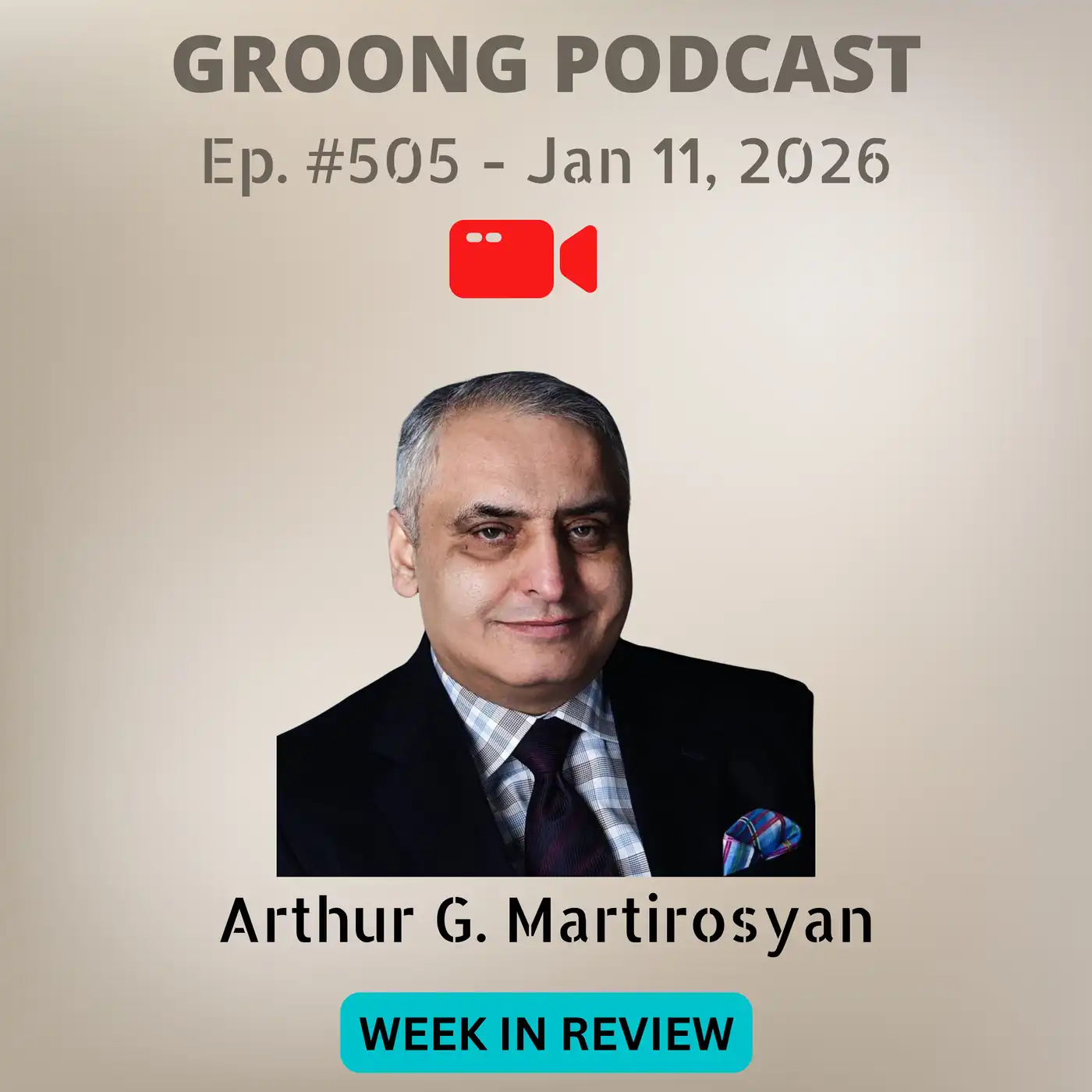
Groong Links:
Guest:
Topics:
- Ukraine warâs global cost to Russia
- Iran unrest and war risk
- Remembering the Baku pogroms
- Russia-Armenia tensions and media threats
- Pashinyanâs clash with Armenian Church
Episode 505 | Recorded: January 13, 2026
Arthur Martirosyan - Ukraine, Iran, Baku Pogroms, Church Clash | Ep 505, Jan 11, 2026 [EP505]
Posted on Wednesday, Jan 14, 2026 | Category: Armenia, Politics, Armenian Church, Ukraine, Artsakh, Nagorno Karabakh, Azerbaijan, Turkey, Russia, USA, Armenian Genocide, Artsakh Blockade, European Union, Iran, Israel, Economy, Georgia, Middle East, Syria, China, GenocideGroong Links:
Guest:
Topics:
- Ukraine warâs global cost to Russia
- Iran unrest and war risk
- Remembering the Baku pogroms
- Russia-Armenia tensions and media threats
- Pashinyanâs clash with Armenian Church
Episode 505 | Recorded: January 13, 2026
Arthur Khachatryan - Foreign Pressure, Attack on Church, Artsakh Repression | Ep 496, Dec 14, 2025 [EP496]
Posted on Tuesday, Dec 16, 2025 | Category: Armenia, Politics, Azerbaijan, Russia, Georgia, Armenian Church, Artsakh, Nagorno Karabakh, Armenian Genocide, European Union, Genocide, Ukraine, Turkey, Iran, Economy, India, NATO | Series: wir, video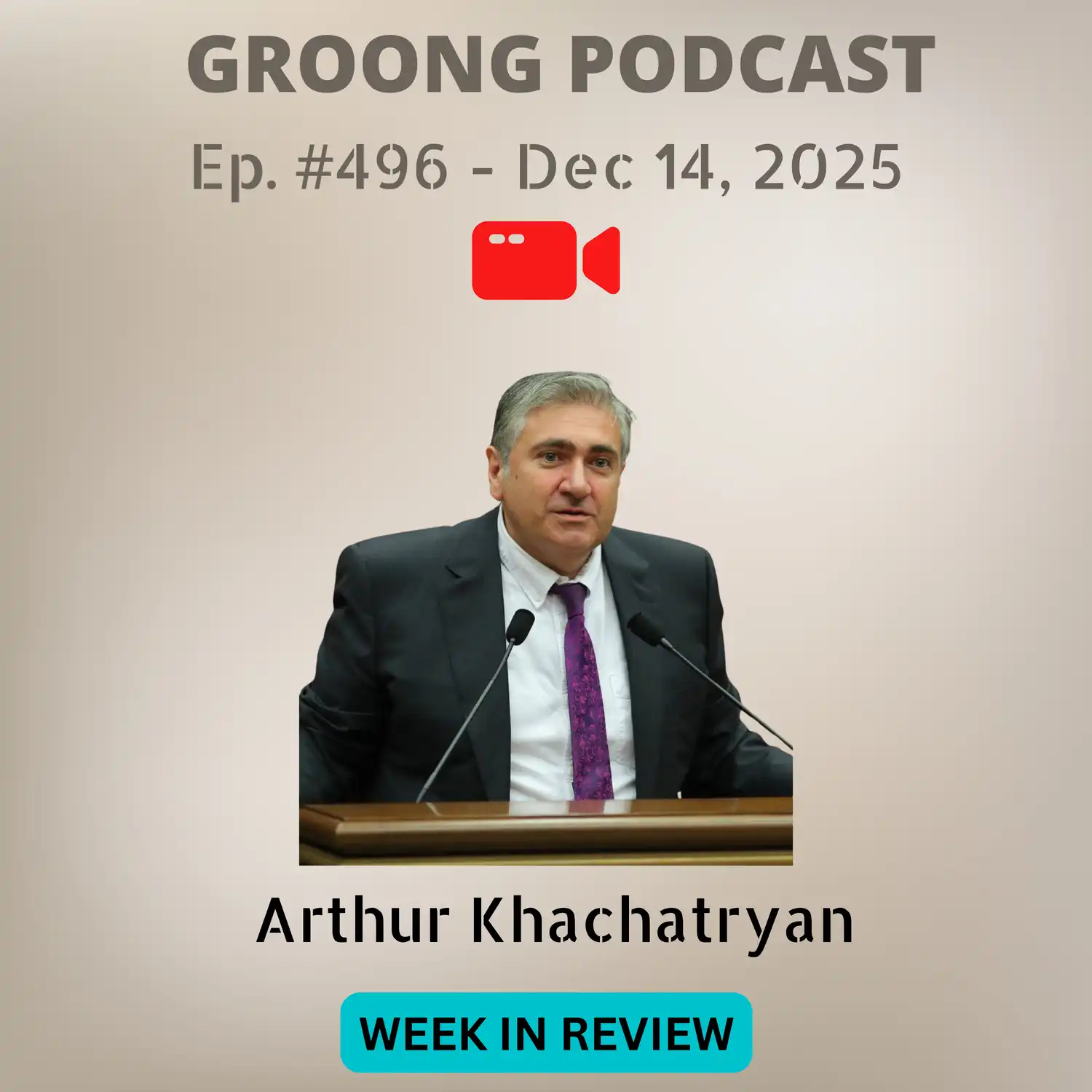
Groong Links:
Guest:
Topics:
- Armenia between EU and Russia
- Churchâstate confrontation in Armenia
- Artsakh concessions and return debate
- Economy, debt, and governance
- NSS raids Artsakh offices
Episode 496 | Recorded: December 15, 2025
#ArmeniaPolitics #EUvsRussia #ArmenianChurch #Artsakh #Geopolitics
Arthur Khachatryan - Foreign Pressure, Attack on Church, Artsakh Repression | Ep 496, Dec 14, 2025 [EP496]
Posted on Tuesday, Dec 16, 2025 | Category: Armenia, Politics, Azerbaijan, Russia, Georgia, Armenian Church, Artsakh, Nagorno Karabakh, Armenian Genocide, European Union, Genocide, Ukraine, Turkey, Iran, Economy, India, NATOGroong Links:
Guest:
Topics:
- Armenia between EU and Russia
- Churchâstate confrontation in Armenia
- Artsakh concessions and return debate
- Economy, debt, and governance
- NSS raids Artsakh offices
Episode 496 | Recorded: December 15, 2025
#ArmeniaPolitics #EUvsRussia #ArmenianChurch #Artsakh #Geopolitics
Eldar Mamedov - The Global Geopolitics Surrounding the South Caucasus | Ep 492, Dec 1, 2025 [EP492]
Posted on Monday, Dec 1, 2025 | Category: World Order, TRIPP, Armenia, USA, Iran, Israel, Azerbaijan, Turkey, Russia, Ukraine, NATO, European Union, Middle East, Syria, Geopolitics, China, Lebanon | Series: cog, video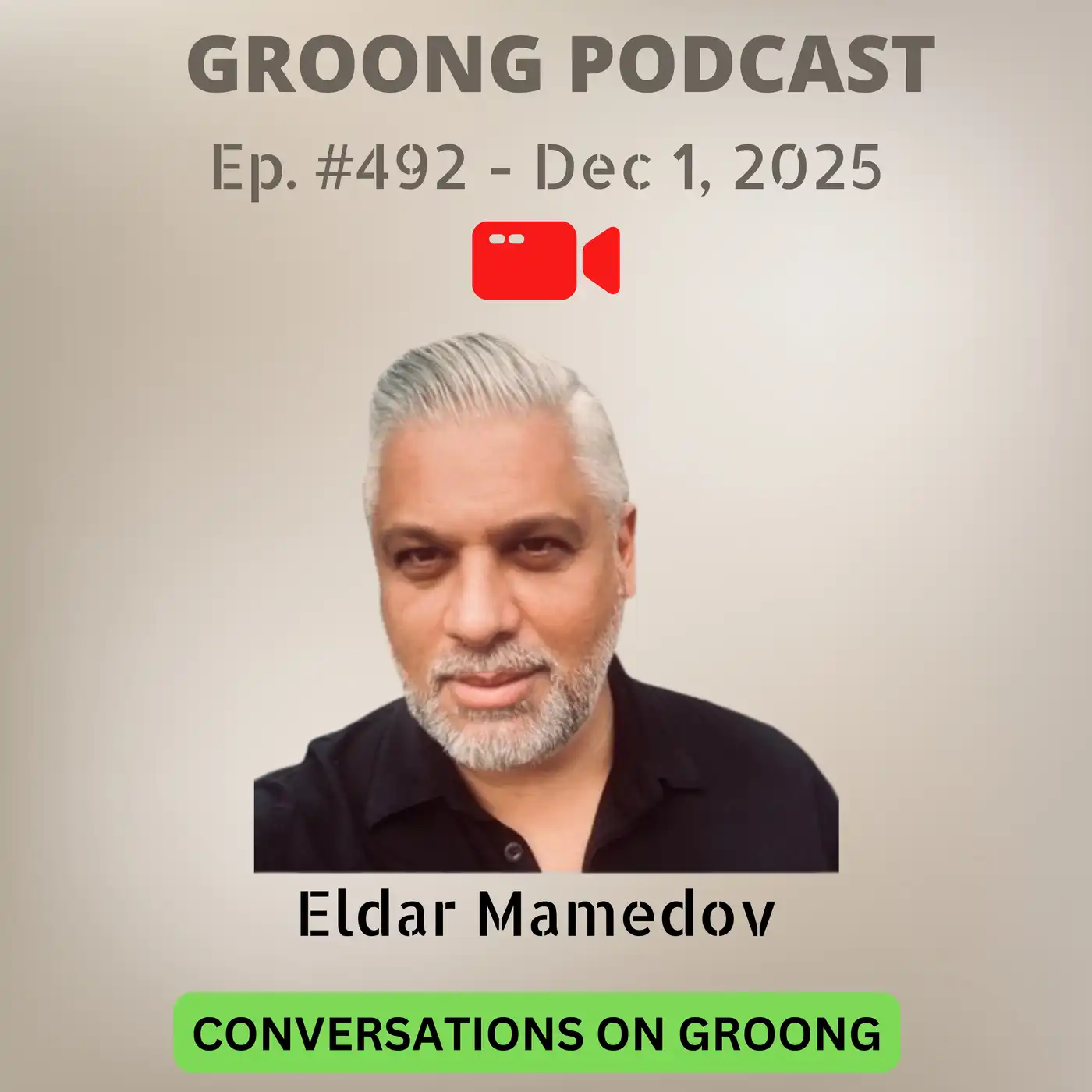
Groong Links:
Guest:
Topics:
- US and Venezuela
- Potential for New War on Iran
- Is Azerbaijan a âMiddle Powerâ?
- Europeâs Confused Geopolitical Identity
- Armeniaâs Confused Geopolitics
Episode 492 | Recorded: November 29, 2025
#IranCrisis #AzerbaijanPolitics #EuropeanGeopolitics #ArmeniaSecurity #SouthCaucasus #GlobalPowerPolitics
Eldar Mamedov - The Global Geopolitics Surrounding the South Caucasus | Ep 492, Dec 1, 2025 [EP492]
Posted on Monday, Dec 1, 2025 | Category: World Order, TRIPP, Armenia, USA, Iran, Israel, Azerbaijan, Turkey, Russia, Ukraine, NATO, European Union, Middle East, Syria, Geopolitics, China, LebanonGroong Links:
Guest:
Topics:
- US and Venezuela
- Potential for New War on Iran
- Is Azerbaijan a âMiddle Powerâ?
- Europeâs Confused Geopolitical Identity
- Armeniaâs Confused Geopolitics
Episode 492 | Recorded: November 29, 2025
#IranCrisis #AzerbaijanPolitics #EuropeanGeopolitics #ArmeniaSecurity #SouthCaucasus #GlobalPowerPolitics
Benyamin Poghosyan - Ukraine War update, Pashinyan’s Persecution of Church and Opposition intensifies | Ep 483, Nov 2, 2025 [EP483]
Posted on Tuesday, Nov 4, 2025 | Category: Armenia, Politics, Ukraine, Russia, Azerbaijan, Georgia, Turkey, Artsakh, Nagorno Karabakh, USA, Armenian Church, Artsakh Blockade, China, Economy, Genocide, India, Iran, Middle East, NATO | Series: video, wir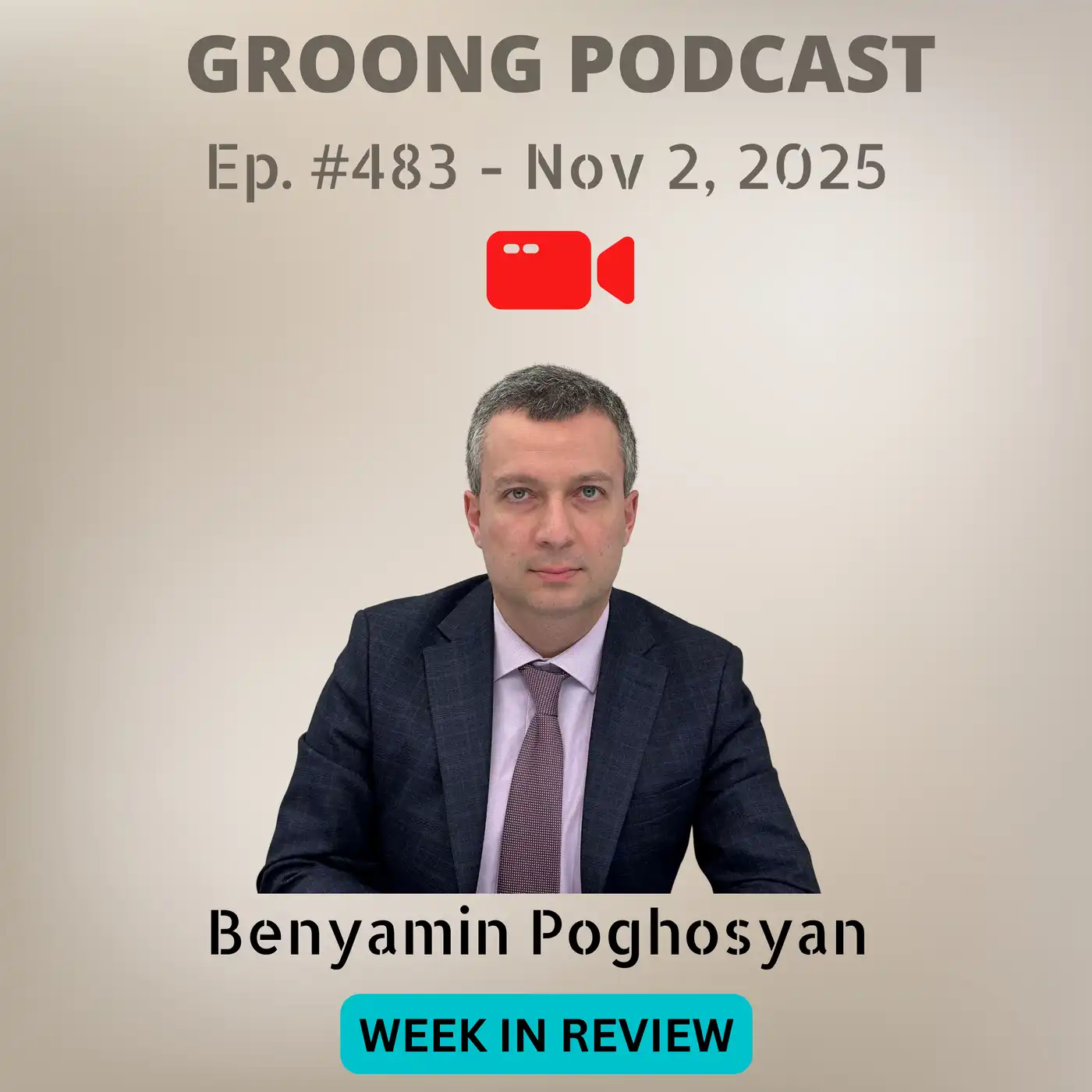
Groong Links:
Guest:
Topics:
- Ukraine war status and U.S.âRussia dynamics
- Churchâstate tensions and religious prosecutions
- Opposition arrests, trials, and civil liberties
- Border demarcation, enclaves
Episode 483 | Recorded: November 3, 2025
Benyamin Poghosyan - Ukraine War update, Pashinyan’s Persecution of Church and Opposition intensifies | Ep 483, Nov 2, 2025 [EP483]
Posted on Tuesday, Nov 4, 2025 | Category: Armenia, Politics, Ukraine, Russia, Azerbaijan, Georgia, Turkey, Artsakh, Nagorno Karabakh, USA, Armenian Church, Artsakh Blockade, China, Economy, Genocide, India, Iran, Middle East, NATOGroong Links:
Guest:
Topics:
- Ukraine war status and U.S.âRussia dynamics
- Churchâstate tensions and religious prosecutions
- Opposition arrests, trials, and civil liberties
- Border demarcation, enclaves
Episode 483 | Recorded: November 3, 2025
Arthur Khachatryan - September 13 War, Kiliç in Armenia, US $145M for TRIPP, Shorter Military Service | Ep 472, Sep 14, 2025 [EP472]
Posted on Wednesday, Sep 17, 2025 | Category: Armenia, Politics, Artsakh, Nagorno Karabakh, Azerbaijan, Turkey, Artsakh Blockade, Economy, Russia, Georgia, Iran, China | Series: cog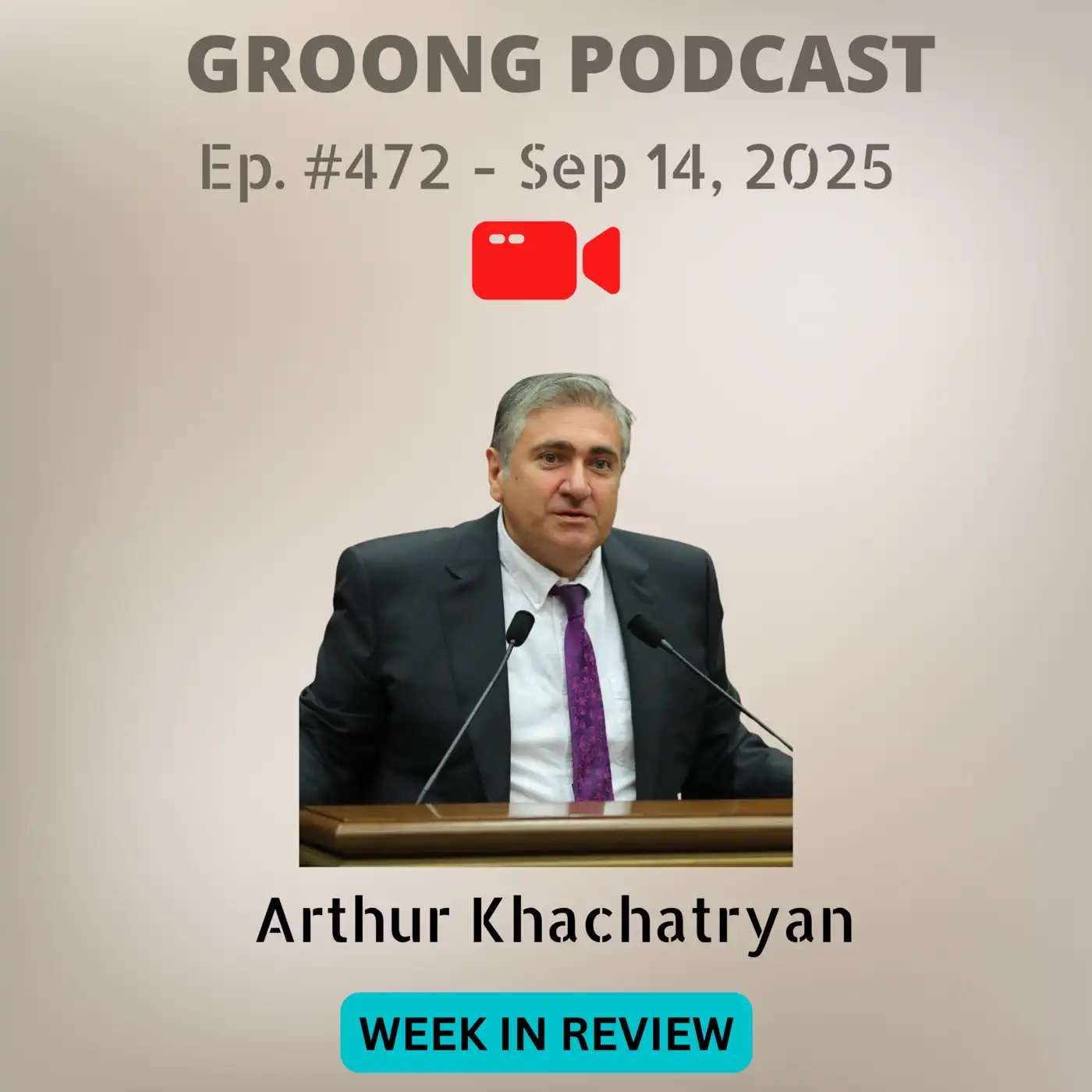
Groong Links:
Guest:
- Arthur Khachatryan , MP
Topics:
- September 13, 2022 War anniversary
- Serdar Kiliç in Armenia for Normalization
- U.S. State Dept. $145M for TRIPP
Episode 472 | Recorded: September 15, 2025
Arthur Khachatryan - September 13 War, Kiliç in Armenia, US $145M for TRIPP, Shorter Military Service | Ep 472, Sep 14, 2025 [EP472]
Posted on Wednesday, Sep 17, 2025 | Category: Armenia, Politics, Artsakh, Nagorno Karabakh, Azerbaijan, Turkey, Artsakh Blockade, Economy, Russia, Georgia, Iran, ChinaGroong Links:
Guest:
- Arthur Khachatryan , MP
Topics:
- September 13, 2022 War anniversary
- Serdar Kiliç in Armenia for Normalization
- U.S. State Dept. $145M for TRIPP
Episode 472 | Recorded: September 15, 2025
Hrant Mikaelian - War on Iran, Russia on TRIPP, New MPG Poll in Armenia, Economy | Ep 471, Sep 7, 2025 [EP471]
Posted on Tuesday, Sep 9, 2025 | Category: Armenia, Politics, Iran, Poll, Azerbaijan, Turkey, Russia, Iran, Armenian Church, Nagorno Karabakh, Armenian Genocide, Economy, Georgia, Israel, Genocide, China, Ukraine, India | Series: wir, video
Groong Links:
Guest:
Topics:
- War in Iran, Chapter 2?
- Russiaâs Stance on TRIPP
- New MPG Poll in Armenia
- Armenian Economy in H1/2025
Episode 471 | Recorded: September 8, 2025
Hrant Mikaelian - War on Iran, Russia on TRIPP, New MPG Poll in Armenia, Economy | Ep 471, Sep 7, 2025 [EP471]
Posted on Tuesday, Sep 9, 2025 | Category: Armenia, Politics, Iran, Poll, Azerbaijan, Turkey, Russia, Iran, Armenian Church, Nagorno Karabakh, Armenian Genocide, Economy, Georgia, Israel, Genocide, China, Ukraine, IndiaGroong Links:
Guest:
Topics:
- War in Iran, Chapter 2?
- Russiaâs Stance on TRIPP
- New MPG Poll in Armenia
- Armenian Economy in H1/2025
Episode 471 | Recorded: September 8, 2025
Benyamin Poghosyan - SCO Summit, TRIPP Corridor, RU - AZ Rift, UK Ties | Ep 467, Aug 31, 2025 [EP467]
Posted on Tuesday, Sep 2, 2025 | Category: Armenia, Politics, Artsakh, Nagorno Karabakh, Azerbaijan, China, India, Russia, USA, Georgia, Armenian Genocide, NATO, Iran, Turkey, Genocide, Israel, European Union | Series: video, wir
Groong Links:
Guest:
Topics:
- SCO Summit in China
- The UK in Armenia
- TRIPP / Zangezur Corridor
- Russian Azerbaijani Relations
Episode 467 | Recorded: September 1, 2025
Benyamin Poghosyan - SCO Summit, TRIPP Corridor, RU - AZ Rift, UK Ties | Ep 467, Aug 31, 2025 [EP467]
Posted on Tuesday, Sep 2, 2025 | Category: Armenia, Politics, Artsakh, Nagorno Karabakh, Azerbaijan, China, India, Russia, USA, Georgia, Armenian Genocide, NATO, Iran, Turkey, Genocide, Israel, European UnionGroong Links:
Guest:
Topics:
- SCO Summit in China
- The UK in Armenia
- TRIPP / Zangezur Corridor
- Russian Azerbaijani Relations
Episode 467 | Recorded: September 1, 2025
Hamid Bahrami - Iran and the corridor through Syunik, Armenia | Ep 461, Aug 16, 2025 [EP461]
Posted on Saturday, Aug 16, 2025 | Category: Iran, Geopolitics, Armenia, Azerbaijan, Russia, China, Turkey, Israel, Nagorno Karabakh, NATO, Ukraine, Syria, Middle East, Georgia | Series: cog, video
Groong Links:
Guest:
Topics:
- TRIPP Corridor & US Involvement
- US-Israel Strategy & War Risks
- Iranâs Missed Opportunities & Shifts
- Future of IranâArmenia Relations
Episode 461 | Recorded: August 13, 2025
Hamid Bahrami - Iran and the corridor through Syunik, Armenia | Ep 461, Aug 16, 2025 [EP461]
Posted on Saturday, Aug 16, 2025 | Category: Iran, Geopolitics, Armenia, Azerbaijan, Russia, China, Turkey, Israel, Nagorno Karabakh, NATO, Ukraine, Syria, Middle East, GeorgiaGroong Links:
Guest:
Topics:
- TRIPP Corridor & US Involvement
- US-Israel Strategy & War Risks
- Iranâs Missed Opportunities & Shifts
- Future of IranâArmenia Relations
Episode 461 | Recorded: August 13, 2025
Benyamin Poghosyan - Public Trust in Freefall, Church on the Rise, and Corridor Pressures Mount | Ep 456, Jul 27, 2025 [EP456]
Posted on Tuesday, Jul 29, 2025 | Category: Armenia, Politics, Poll, Russia, Iran, Georgia, Azerbaijan, Turkey, Ukraine, Middle East, Israel, China, India, Geopolitics, Artsakh, Armenian Church, Nagorno Karabakh, European Union, Economy, Syria | Series: wir, video
Groong Links:
Guest:
Topics:
- Corridor Logic
- Crackdown Logic
- IRI Poll
- Russian-Azerbaijani Relations
Episode 456 | Recorded: July 28, 2025
Benyamin Poghosyan - Public Trust in Freefall, Church on the Rise, and Corridor Pressures Mount | Ep 456, Jul 27, 2025 [EP456]
Posted on Tuesday, Jul 29, 2025 | Category: Armenia, Politics, Poll, Russia, Iran, Georgia, Azerbaijan, Turkey, Ukraine, Middle East, Israel, China, India, Geopolitics, Artsakh, Armenian Church, Nagorno Karabakh, European Union, Economy, SyriaGroong Links:
Guest:
Topics:
- Corridor Logic
- Crackdown Logic
- IRI Poll
- Russian-Azerbaijani Relations
Episode 456 | Recorded: July 28, 2025
Arthur Khachatryan - Artsakh Negotiations, Armenian Domestic Politics | Ep 455, Jul 27, 2025 [EP455]
Posted on Sunday, Jul 27, 2025 | Category: Georgia, Politics, Artsakh, Nagorno Karabakh, Azerbaijan, Armenian Church, Armenia, Russia, Turkey, Human Rights, Ukraine, Genocide | Series: cog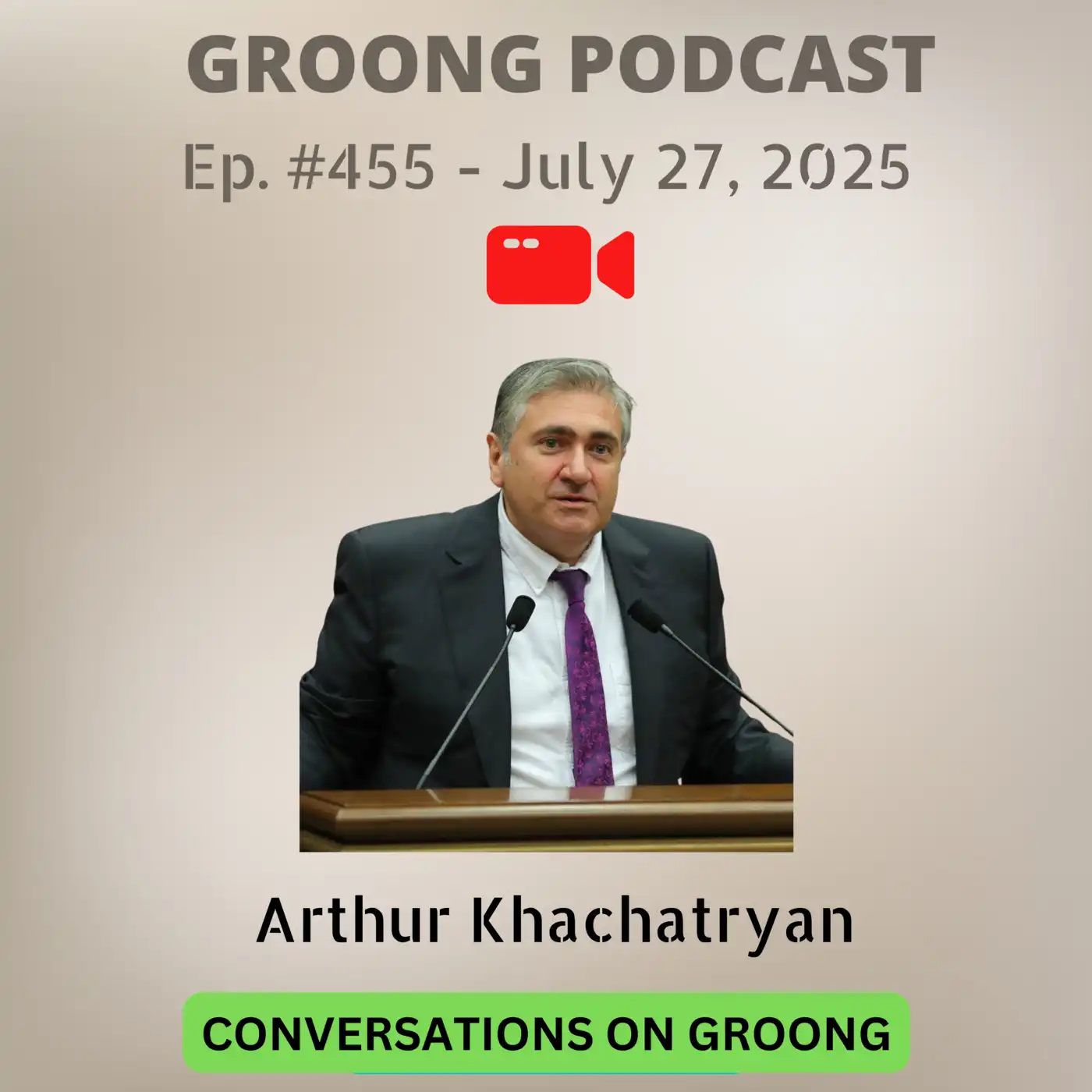
Groong Links:
Guest:
- Arthur Khachatryan , MP
Topics:
- Artsakh Negotiations
- Armenian Domestic Politics
Episode 455 | Recorded: July 25, 2025
Arthur Khachatryan - Artsakh Negotiations, Armenian Domestic Politics | Ep 455, Jul 27, 2025 [EP455]
Posted on Sunday, Jul 27, 2025 | Category: Georgia, Politics, Artsakh, Nagorno Karabakh, Azerbaijan, Armenian Church, Armenia, Russia, Turkey, Human Rights, Ukraine, GenocideGroong Links:
Guest:
- Arthur Khachatryan , MP
Topics:
- Artsakh Negotiations
- Armenian Domestic Politics
Episode 455 | Recorded: July 25, 2025
Archil Sikharulidze - Why does Georgia matter for the EU | Ep 454, Jul 24, 2025 [EP454]
Posted on Thursday, Jul 24, 2025 | Category: Georgia, Politics, Armenia, Azerbaijan, Russia, USA, Armenian Church, Nagorno Karabakh, European Union, Iran, China, Turkey, Ukraine, NATO, Economy, Human Rights, India, Israel | Series: cog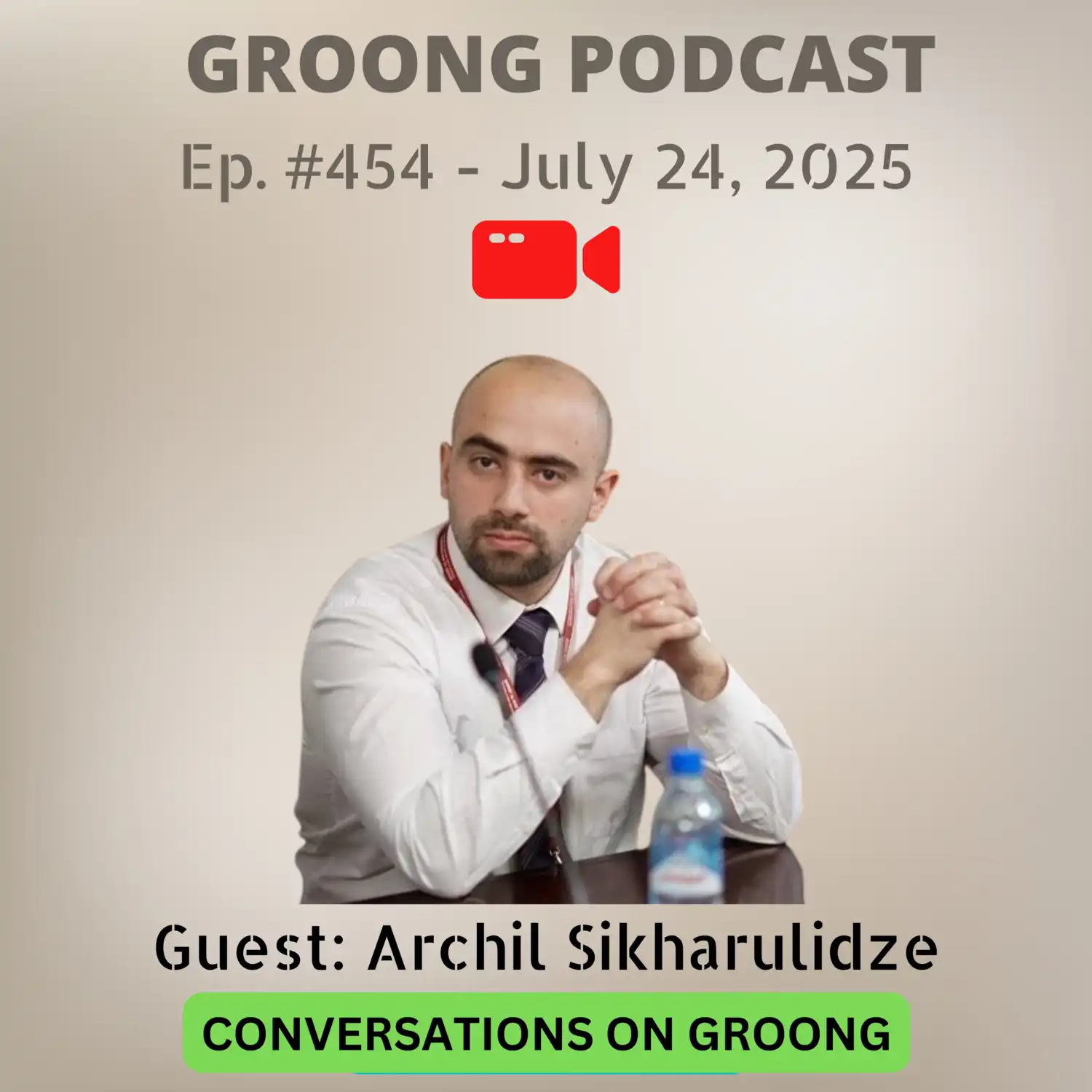
Groong Links:
Guest:
Topics:
- EU Strategy in the South Caucasus
- Attacks on the National Church
- 2025 Local Election Politics
Episode 454 | Recorded: July 22, 2025
Archil Sikharulidze - Why does Georgia matter for the EU | Ep 454, Jul 24, 2025 [EP454]
Posted on Thursday, Jul 24, 2025 | Category: Georgia, Politics, Armenia, Azerbaijan, Russia, USA, Armenian Church, Nagorno Karabakh, European Union, Iran, China, Turkey, Ukraine, NATO, Economy, Human Rights, India, IsraelGroong Links:
Guest:
Topics:
- EU Strategy in the South Caucasus
- Attacks on the National Church
- 2025 Local Election Politics
Episode 454 | Recorded: July 22, 2025
Pashinyan Meets Aliyev as Armenia Cracks Down on Opposition and Church | Ep 453, Jul 13, 2025 [EP453]
Posted on Sunday, Jul 13, 2025 | Category: Armenia, Politics, Artsakh, Nagorno Karabakh, Azerbaijan, Turkey, Russia, Armenian Church, Iran, Economy, Israel, NATO, Middle East, Ukraine | Series: wir, video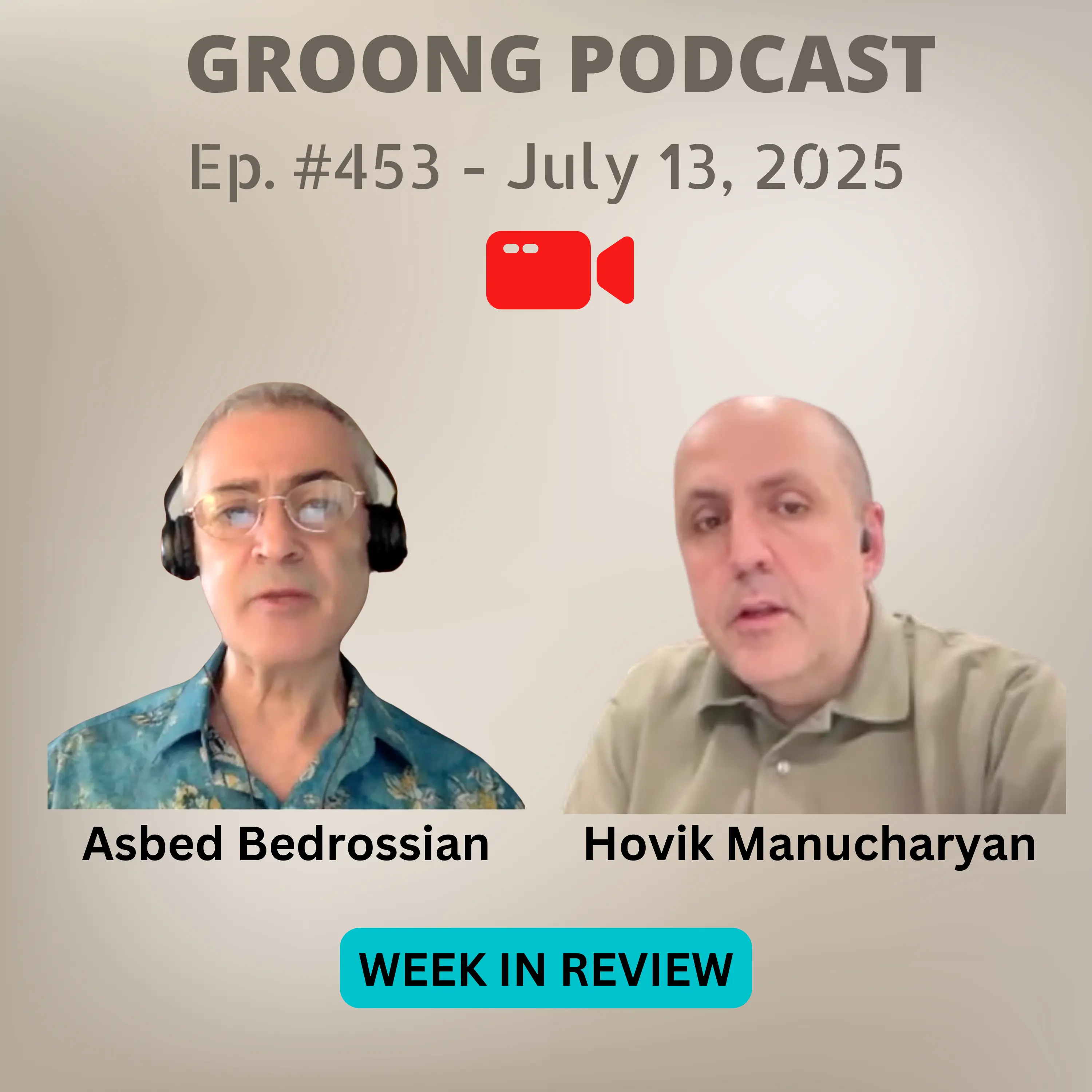
Groong Links:
Topics:
- Pashinyan meets Aliyev in Abu Dhabi
- Continued Persecution of Church and Opposition
Episode 453 | Recorded: July 13, 2025
Pashinyan Meets Aliyev as Armenia Cracks Down on Opposition and Church | Ep 453, Jul 13, 2025 [EP453]
Posted on Sunday, Jul 13, 2025 | Category: Armenia, Politics, Artsakh, Nagorno Karabakh, Azerbaijan, Turkey, Russia, Armenian Church, Iran, Economy, Israel, NATO, Middle East, UkraineGroong Links:
Topics:
- Pashinyan meets Aliyev in Abu Dhabi
- Continued Persecution of Church and Opposition
Episode 453 | Recorded: July 13, 2025
Benyamin Poghosyan - Ukraine and US-Iran, Fidan in Moscow, Lachin, Azerbaijan and Pashinyan attack Armenian Church, Impeachment vs. Elections | Ep 442, June 1, 2025 [EP442]
Posted on Tuesday, Jun 3, 2025 | Category: Armenia, Politics, Iran, Geopolitics, Artsakh, Nagorno Karabakh, Azerbaijan, Georgia, Turkey, Russia, Armenian Church, Ukraine, India, Israel, China, Syria, Economy, European Union | Series: wir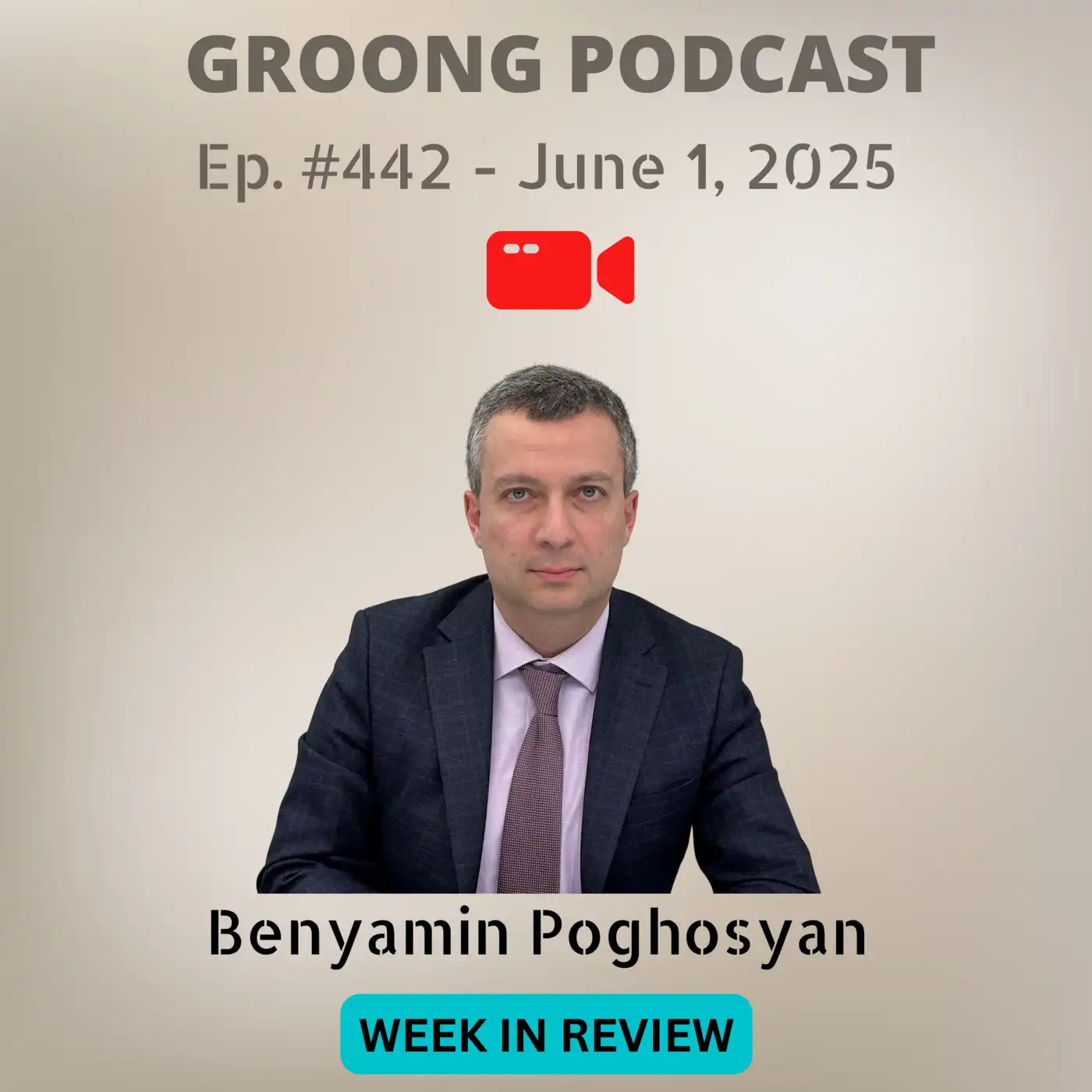
Groong Links:
Guest:
Topics:
- Status of Ukraine and US-Iran Crises
- Hakan Fidan in Moscow
- Erdogan, Aliyev, Sharif in Lachin
- Azerbaijan and Pashinyan Attack the Armenian Church
- Impeachment vs. Elections
- The Kitchen Sink
Episode 442 | Recorded: June 2, 2025
Benyamin Poghosyan - Ukraine and US-Iran, Fidan in Moscow, Lachin, Azerbaijan and Pashinyan attack Armenian Church, Impeachment vs. Elections | Ep 442, June 1, 2025 [EP442]
Posted on Tuesday, Jun 3, 2025 | Category: Armenia, Politics, Iran, Geopolitics, Artsakh, Nagorno Karabakh, Azerbaijan, Georgia, Turkey, Russia, Armenian Church, Ukraine, India, Israel, China, Syria, Economy, European UnionGroong Links:
Guest:
Topics:
- Status of Ukraine and US-Iran Crises
- Hakan Fidan in Moscow
- Erdogan, Aliyev, Sharif in Lachin
- Azerbaijan and Pashinyan Attack the Armenian Church
- Impeachment vs. Elections
- The Kitchen Sink
Episode 442 | Recorded: June 2, 2025
Hrant Mikaelian - Tirana, Lavrov, Armenian Un-Democracy, Demilitarization, and More | Ep 438, May 18, 2025 [EP438]
Posted on Friday, May 23, 2025 | Category: Armenia, Politics, Vatican, Artsakh, Nagorno Karabakh, Azerbaijan, Turkey, Russia, Iran, Ukraine, India, European Union, Israel, Genocide, Georgia | Series: wir
Groong Links:
Guest:
Topics:
- Pashinyan in Tirana
- Russiaâs Lavrov in Yerevan
- Democracy in Jeopardy
- Armeniaâs Demilitarization by Any Other Name
- The Kitchen Sink
Episode 438 | Recorded: May 21, 2025
Hrant Mikaelian - Tirana, Lavrov, Armenian Un-Democracy, Demilitarization, and More | Ep 438, May 18, 2025 [EP438]
Posted on Friday, May 23, 2025 | Category: Armenia, Politics, Vatican, Artsakh, Nagorno Karabakh, Azerbaijan, Turkey, Russia, Iran, Ukraine, India, European Union, Israel, Genocide, GeorgiaGroong Links:
Guest:
Topics:
- Pashinyan in Tirana
- Russiaâs Lavrov in Yerevan
- Democracy in Jeopardy
- Armeniaâs Demilitarization by Any Other Name
- The Kitchen Sink
Episode 438 | Recorded: May 21, 2025
Benyamin Poghosyan - US-Iran Tensions, Armenia-Azerbaijan, Victory Day, Journalist Assaulted | Ep 434, May 4, 2025 [EP434]
Posted on Wednesday, May 7, 2025 | Category: Armenia, Politics, Iran, Geopolitics, Artsakh, Nagorno Karabakh, Azerbaijan, Georgia, Turkey, Russia, Israel, China, Ukraine, Syria | Series: wir
Groong Links:
Guest:
Topics:
- Iran Sanctions Escalate Amid Tensions
- Journalist Beaten Inside Yerevan Office
- Moscow Celebrates Victory Day Parade
- Armenia Caught Between EU and Russia
Episode 434 | Recorded: May 6, 2025
Benyamin Poghosyan - US-Iran Tensions, Armenia-Azerbaijan, Victory Day, Journalist Assaulted | Ep 434, May 4, 2025 [EP434]
Posted on Wednesday, May 7, 2025 | Category: Armenia, Politics, Iran, Geopolitics, Artsakh, Nagorno Karabakh, Azerbaijan, Georgia, Turkey, Russia, Israel, China, Ukraine, SyriaGroong Links:
Guest:
Topics:
- Iran Sanctions Escalate Amid Tensions
- Journalist Beaten Inside Yerevan Office
- Moscow Celebrates Victory Day Parade
- Armenia Caught Between EU and Russia
Episode 434 | Recorded: May 6, 2025
Hrant Mikaelian - Iran, EXIM and Azerbaijan, Gyumri, Artsakh Refugees in Armenia | Ep 429, Apr 20, 2025 [EP429]
Posted on Wednesday, Apr 23, 2025 | Category: Armenia, Politics, Vatican, Artsakh, Nagorno Karabakh, Azerbaijan, Genocide, Armenian Church, Armenian Genocide, Iran, Russia, Israel, Turkey, Ukraine, Middle East, China, European Union, Economy, Georgia, NATO, Geopolitics, Human Rights | Series: wir
Groong Links:
Guest:
Topics:
- US-Iran Talks & Israeli Threats
- Trump Administration Support for Azerbaijan
- Iran-Azerbaijan Relations & Corridor Demands
- Vatican Controversy & Global Anti-Armenian Propaganda
- Local Elections in Gyumri and Parakar
- Government-Fueled Hate Against Artsakh Refugees
Episode 429 | Recorded: April 22, 2025
Hrant Mikaelian - Iran, EXIM and Azerbaijan, Gyumri, Artsakh Refugees in Armenia | Ep 429, Apr 20, 2025 [EP429]
Posted on Wednesday, Apr 23, 2025 | Category: Armenia, Politics, Vatican, Artsakh, Nagorno Karabakh, Azerbaijan, Genocide, Armenian Church, Armenian Genocide, Iran, Russia, Israel, Turkey, Ukraine, Middle East, China, European Union, Economy, Georgia, NATO, Geopolitics, Human RightsGroong Links:
Guest:
Topics:
- US-Iran Talks & Israeli Threats
- Trump Administration Support for Azerbaijan
- Iran-Azerbaijan Relations & Corridor Demands
- Vatican Controversy & Global Anti-Armenian Propaganda
- Local Elections in Gyumri and Parakar
- Government-Fueled Hate Against Artsakh Refugees
Episode 429 | Recorded: April 22, 2025
Dziunik Aghajanian - Peace Plan 2019, Corridor Talks, Armenia Domestic Politics, World Politics | Ep 416, Feb 16, 2025 [EP416]
Posted on Wednesday, Feb 19, 2025 | Category: Armenia, Azerbaijan, Middle East, Artsakh, Nagorno Karabakh, Georgia, Turkey, Russia, Iran, Geopolitics, BRICS, NATO, European Union, Ukraine, Israel, China, Syria, Human Rights | Series: wir, video
Groong Links:
Guest:
Topics:
- World Politics
- Plan, or No Plan?
- Corridor Talk
- Domestic Politics
Episode 416 | Recorded: February 17, 2025
Dziunik Aghajanian - Peace Plan 2019, Corridor Talks, Armenia Domestic Politics, World Politics | Ep 416, Feb 16, 2025 [EP416]
Posted on Wednesday, Feb 19, 2025 | Category: Armenia, Azerbaijan, Middle East, Artsakh, Nagorno Karabakh, Georgia, Turkey, Russia, Iran, Geopolitics, BRICS, NATO, European Union, Ukraine, Israel, China, Syria, Human RightsGroong Links:
Guest:
Topics:
- World Politics
- Plan, or No Plan?
- Corridor Talk
- Domestic Politics
Episode 416 | Recorded: February 17, 2025
Fyodor Lukyanov - Russia, the US, Ukraine, Armenia, Georgia, and the New Global Order | Ep 414, Feb. 16, 2025 [EP414]
Posted on Sunday, Feb 16, 2025 | Category: Russia, Ukraine, Armenia, Azerbaijan, Georgia, Geopolitics, Iran, Turkey, Nagorno Karabakh, BRICS, NATO, European Union, China, Economy, Genocide | Series: cog, video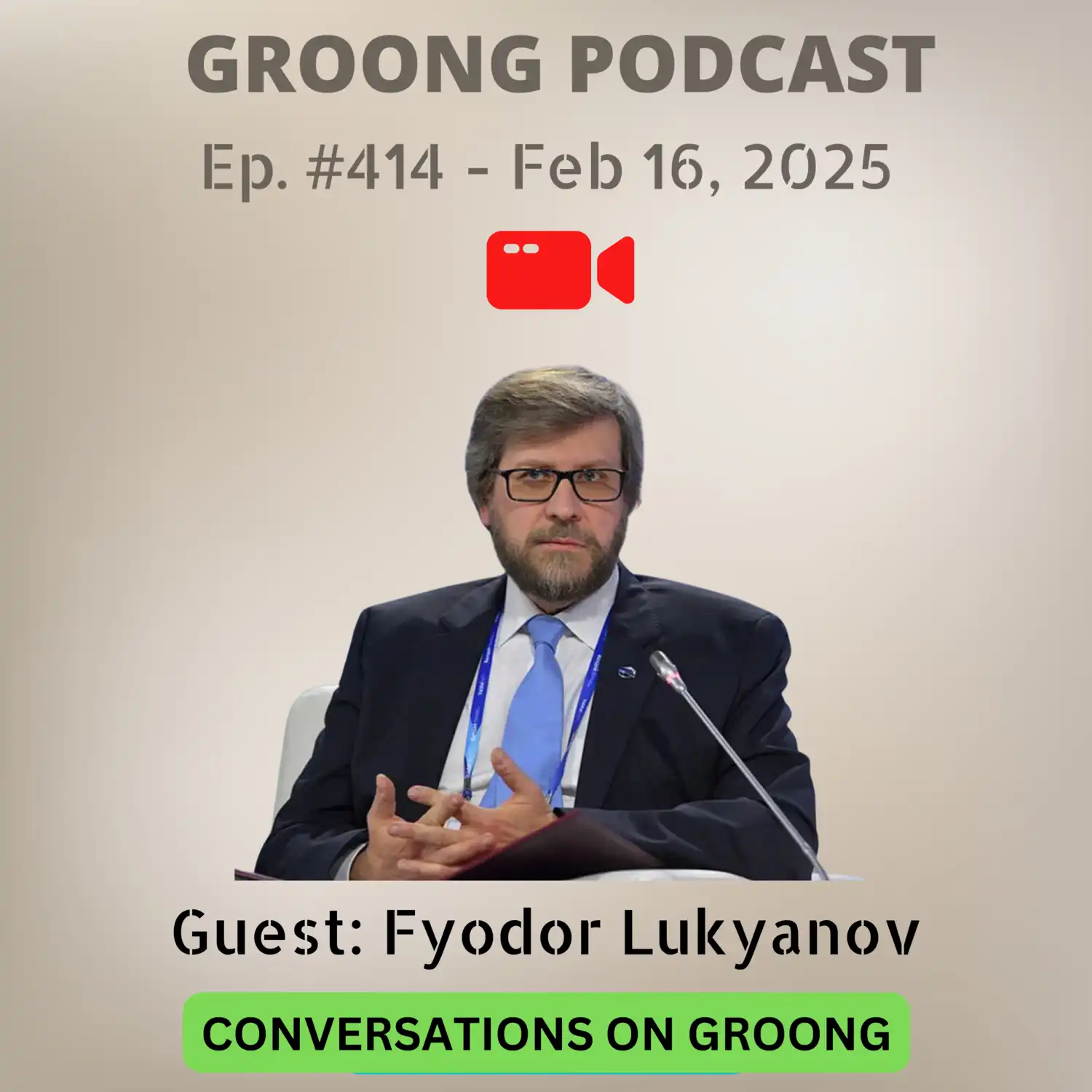
Groong Links:
Guest:
Topics:
- A New Détente?
- The Trump-Putin Call
- Russiaâs Strategic Choices
- Russo-Armenian Relations
- Russo-Azerbaijani Relations
- Georgiaâs Pragmatism
Episode 414 | Recorded: Valentineâs Day, February 14, 2025
Fyodor Lukyanov - Russia, the US, Ukraine, Armenia, Georgia, and the New Global Order | Ep 414, Feb. 16, 2025 [EP414]
Posted on Sunday, Feb 16, 2025 | Category: Russia, Ukraine, Armenia, Azerbaijan, Georgia, Geopolitics, Iran, Turkey, Nagorno Karabakh, BRICS, NATO, European Union, China, Economy, GenocideGroong Links:
Guest:
Topics:
- A New Détente?
- The Trump-Putin Call
- Russiaâs Strategic Choices
- Russo-Armenian Relations
- Russo-Azerbaijani Relations
- Georgiaâs Pragmatism
Episode 414 | Recorded: Valentineâs Day, February 14, 2025
Transcript: Fyodor Lukyanov - Russia, the US, Ukraine, Armenia, Georgia, and the New Global Order | Ep 414, Feb. 16, 2025 [EP414]
Posted on Sunday, Feb 16, 2025 | Category: Russia, Ukraine, Armenia, Azerbaijan, Georgia, Geopolitics, Iran, Turkey, Nagorno Karabakh, BRICS, NATO, European Union, China, Economy, Genocide, TranscriptA New Détente? The Trump-Putin Call. Russia’s Strategic Choices. Russo-Armenian Relations. Russo-Azerbaijani Relations. Georgia’s Pragmatism.
Glenn Diesen & Arman Grigoryan - The Incoming Multipolar World | Ep 411, Feb 9, 2025 [EP411]
Posted on Sunday, Feb 9, 2025 | Category: Russia, Ukraine, World Order, Syria, Israel, USA, China, Middle East, BRICS, European Union, NATO, Turkey, Armenia, Economy, Georgia, Iran, Azerbaijan, Geopolitics, Human Rights, India | Series: cog, video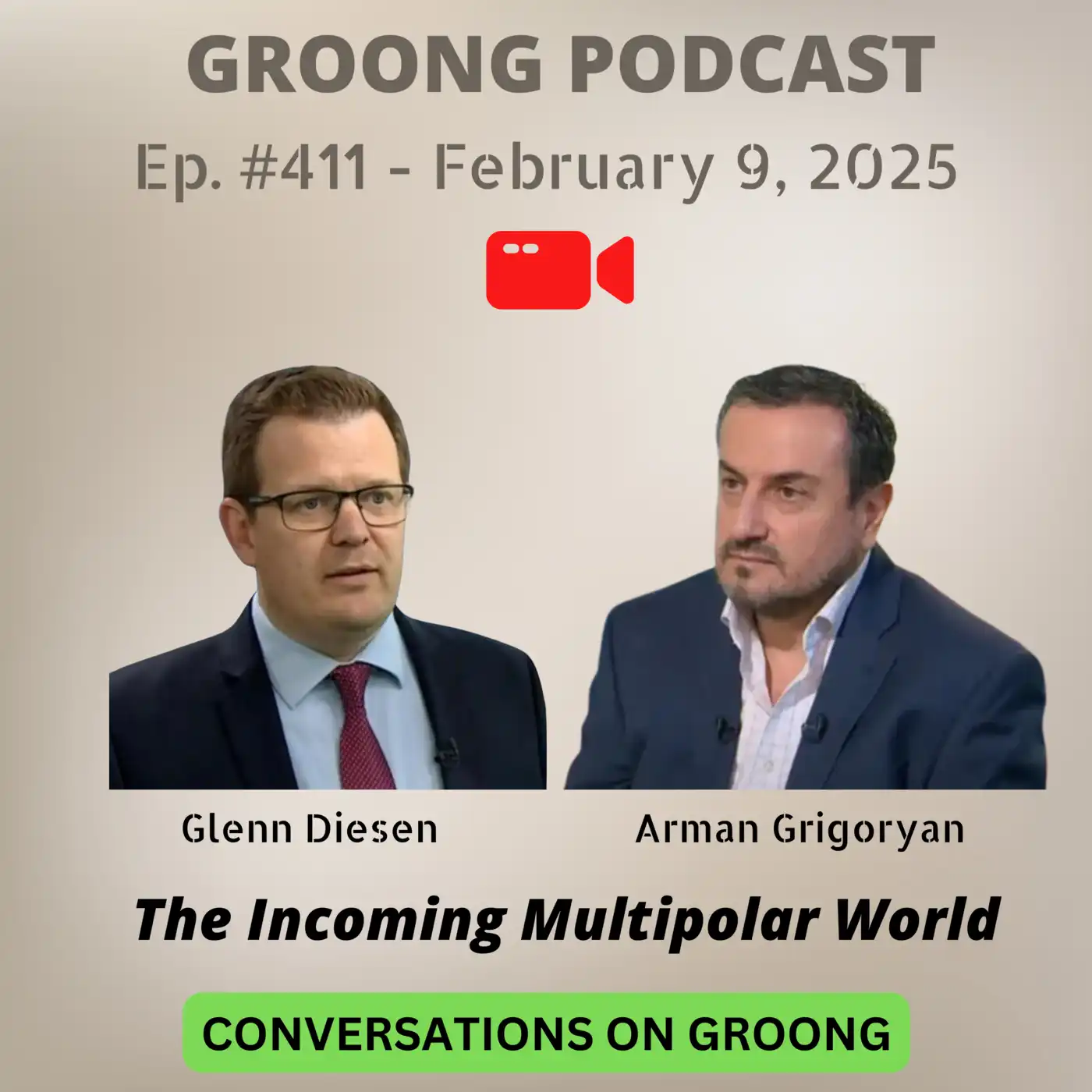
Groong Links:
Guest:
Topics:
- The Ongoing conflicts: Gaza, Syria, Ukraine
- Shifting Global Power and Alliances
- Small Countries in a Multipolar World
Episode 411 | Recorded: February 6, 2025
Glenn Diesen & Arman Grigoryan - The Incoming Multipolar World | Ep 411, Feb 9, 2025 [EP411]
Posted on Sunday, Feb 9, 2025 | Category: Russia, Ukraine, World Order, Syria, Israel, USA, China, Middle East, BRICS, European Union, NATO, Turkey, Armenia, Economy, Georgia, Iran, Azerbaijan, Geopolitics, Human Rights, IndiaGroong Links:
Guest:
Topics:
- The Ongoing conflicts: Gaza, Syria, Ukraine
- Shifting Global Power and Alliances
- Small Countries in a Multipolar World
Episode 411 | Recorded: February 6, 2025
Transcript: Glenn Diesen & Arman Grigoryan - The Incoming Multipolar World | Ep 411, Feb 9, 2025 [EP411]
Posted on Sunday, Feb 9, 2025 | Category: Russia, Ukraine, World Order, Syria, Israel, USA, China, Middle East, BRICS, European Union, NATO, Turkey, Armenia, Economy, Georgia, Iran, Azerbaijan, Geopolitics, Human Rights, India, TranscriptThe Ongoing conflicts: Gaza, Syria, Ukraine. Shifting Global Power and Alliances. Small Countries in a Multipolar World.
Benyamin Poghosyan - MPG Poll, Russia-Azerbaijan Relations Deteriorate, Armenian Strategic Geopolitical Balancing, Azerbaijan and the ‘Zangezur Corridor’ | Ep 410, Feb 2, 2025 [EP410]
Posted on Tuesday, Feb 4, 2025 | Category: Armenia, Azerbaijan, Poll, Artsakh, Nagorno Karabakh, Turkey, Russia, Iran, Ukraine, Geopolitics, Georgia, China, Economy, European Union, Israel | Series: wir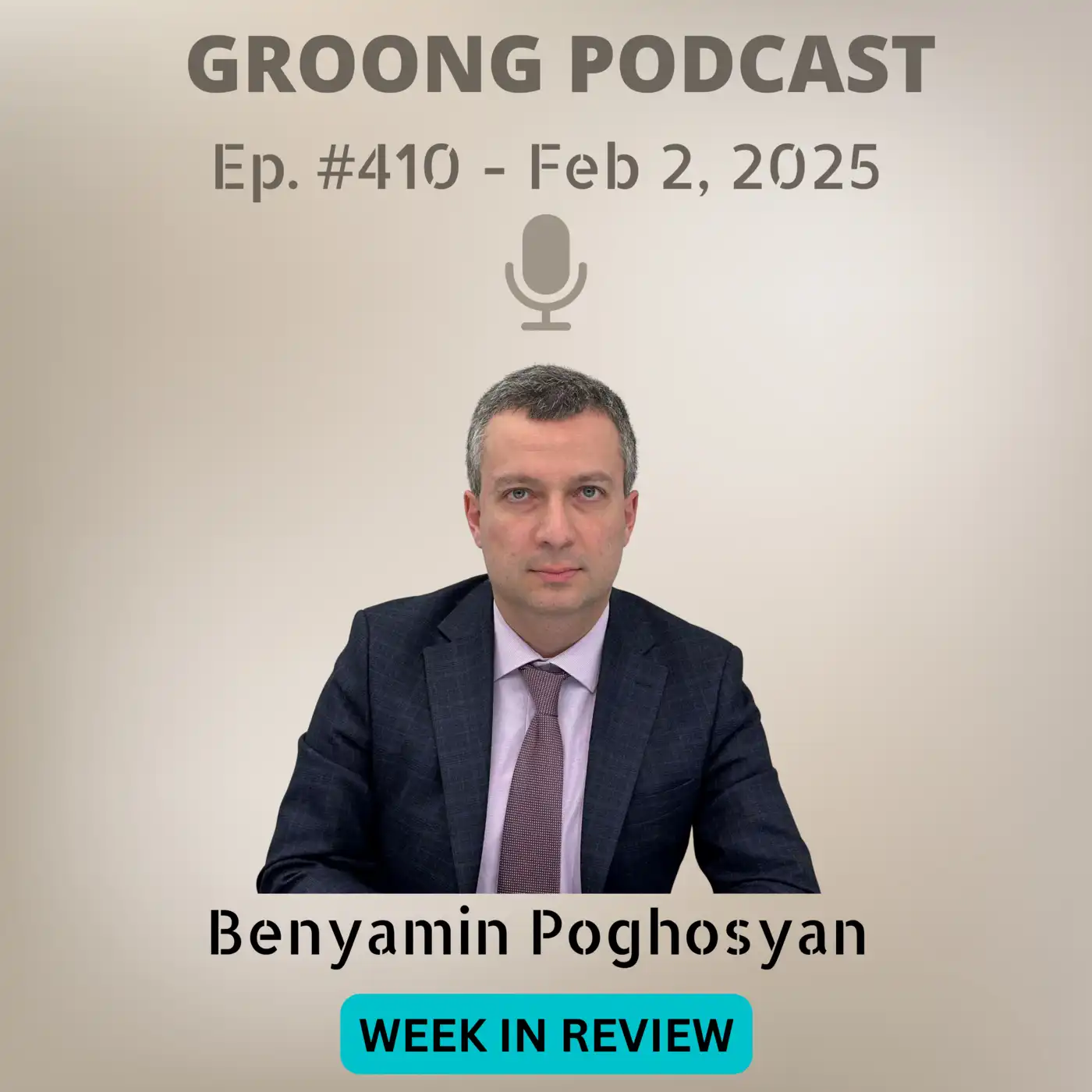
Groong Links:
Guest:
Topics:
- MPG Poll: Pashinyanâs Rating Tanks
- Russia Azerbaijan Relations Deteriorating
- Armeniaâs Strategic Geopolitical Balancing
- Azerbaijan and the âZangezur Corridorâ
Episode 410 | Recorded: February 3, 2025
Benyamin Poghosyan - MPG Poll, Russia-Azerbaijan Relations Deteriorate, Armenian Strategic Geopolitical Balancing, Azerbaijan and the ‘Zangezur Corridor’ | Ep 410, Feb 2, 2025 [EP410]
Posted on Tuesday, Feb 4, 2025 | Category: Armenia, Azerbaijan, Poll, Artsakh, Nagorno Karabakh, Turkey, Russia, Iran, Ukraine, Geopolitics, Georgia, China, Economy, European Union, IsraelGroong Links:
Guest:
Topics:
- MPG Poll: Pashinyanâs Rating Tanks
- Russia Azerbaijan Relations Deteriorating
- Armeniaâs Strategic Geopolitical Balancing
- Azerbaijan and the âZangezur Corridorâ
Episode 410 | Recorded: February 3, 2025
Arthur Khachatryan - Mirzoyan in Moscow, Kostanyan in Tehran, Mher Grigoryan on the Border, FIS Annual Report, Silence of the Lambs | Ep 409, Jan 26, 2025 [EP408]
Posted on Thursday, Jan 30, 2025 | Category: Armenia, Artsakh, Nagorno Karabakh, Economy, Azerbaijan, Georgia, Turkey, Russia, Armenian Church, Armenian Genocide, Iran, European Union, Genocide, Syria, Lebanon, NATO, Middle East, Ukraine, Human Rights | Series: wir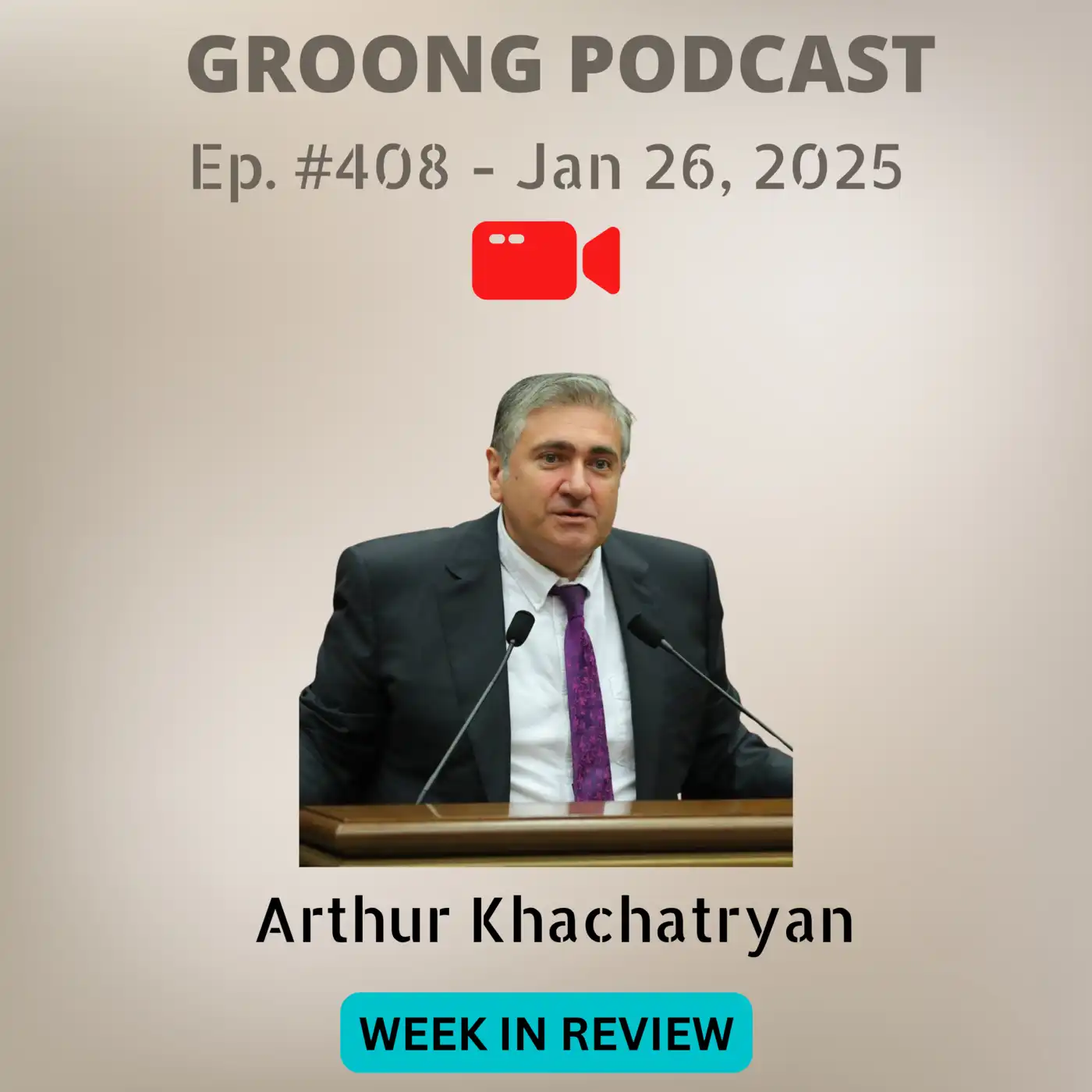
Groong Links:
Guest:
- Mr. Arthur Khachatryan , MP, Hayastan Dashinq/Armenia Alliance
Topics:
- Mirzoyan in Moscow
- Vahan Kostanyan in Tehran
- Mher Grigoryan on the Border (concessions)
- FIS Annual Report 2025
- The Silence of the Lambs
Episode 408 | Recorded: January 29, 2025
Arthur Khachatryan - Mirzoyan in Moscow, Kostanyan in Tehran, Mher Grigoryan on the Border, FIS Annual Report, Silence of the Lambs | Ep 409, Jan 26, 2025 [EP408]
Posted on Thursday, Jan 30, 2025 | Category: Armenia, Artsakh, Nagorno Karabakh, Economy, Azerbaijan, Georgia, Turkey, Russia, Armenian Church, Armenian Genocide, Iran, European Union, Genocide, Syria, Lebanon, NATO, Middle East, Ukraine, Human RightsGroong Links:
Guest:
- Mr. Arthur Khachatryan , MP, Hayastan Dashinq/Armenia Alliance
Topics:
- Mirzoyan in Moscow
- Vahan Kostanyan in Tehran
- Mher Grigoryan on the Border (concessions)
- FIS Annual Report 2025
- The Silence of the Lambs
Episode 408 | Recorded: January 29, 2025
Tevan Poghosyan - Incoming Trump, Armenia Azerbaijan Talks, Iran Visit, Pro-West Signals | Ep 404, Jan 12, 2025 [EP404]
Posted on Wednesday, Jan 15, 2025 | Category: Armenia, Artsakh, Nagorno Karabakh, Azerbaijan, USA, Russia, Iran, Ukraine, Turkey, Israel, Syria, China, Georgia, Middle East, NATO, Economy, Genocide, Lebanon, European Union | Series: wir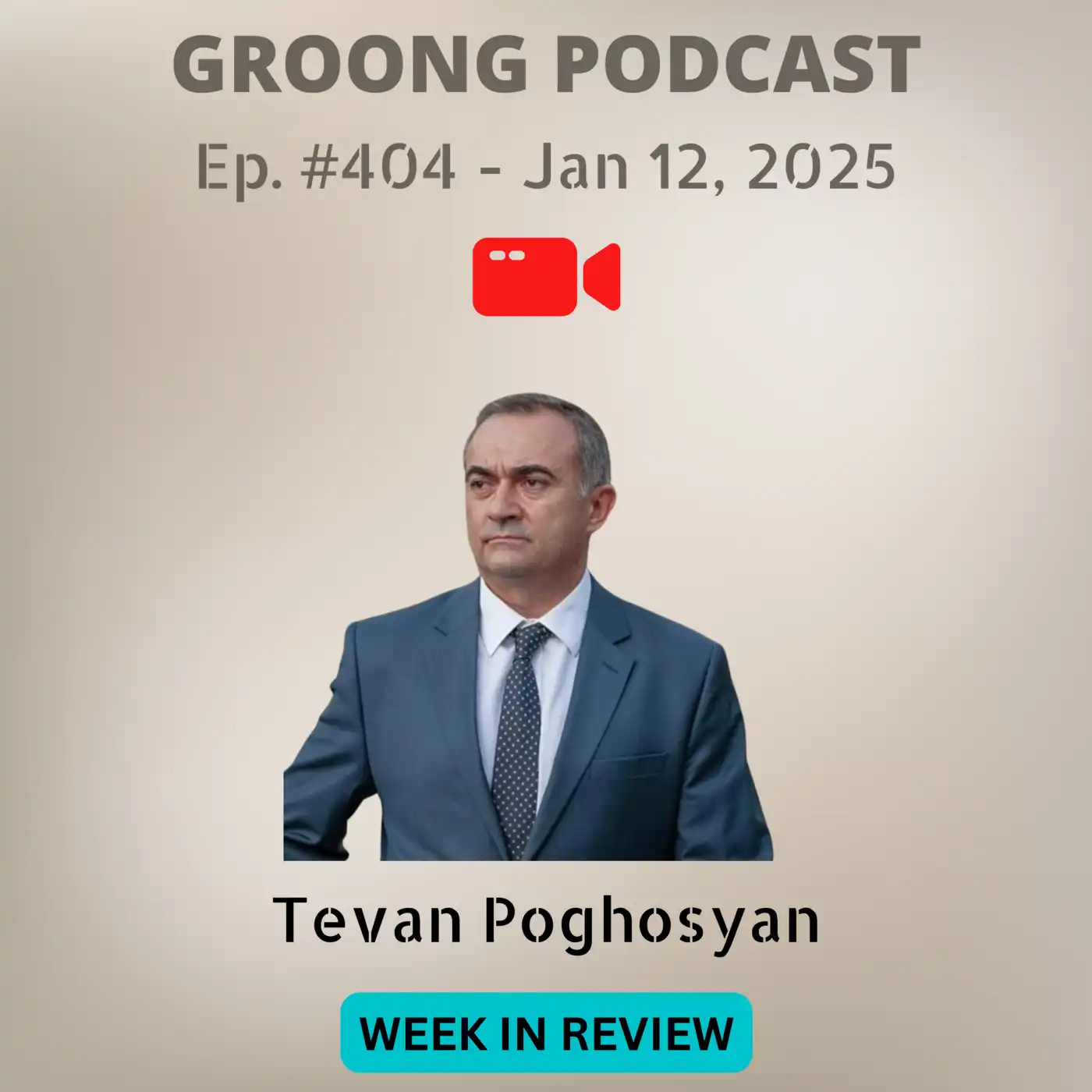
Groong Links:
Guest:
Topics:
- Incoming Trump Admin
- Armenia Azerbaijan Talks Stalled
- Iran Security Chief Visit
- Armeniaâs Pro-West Signals
Episode 404 | Recorded: January 14, 2025
Tevan Poghosyan - Incoming Trump, Armenia Azerbaijan Talks, Iran Visit, Pro-West Signals | Ep 404, Jan 12, 2025 [EP404]
Posted on Wednesday, Jan 15, 2025 | Category: Armenia, Artsakh, Nagorno Karabakh, Azerbaijan, USA, Russia, Iran, Ukraine, Turkey, Israel, Syria, China, Georgia, Middle East, NATO, Economy, Genocide, Lebanon, European UnionGroong Links:
Guest:
Topics:
- Incoming Trump Admin
- Armenia Azerbaijan Talks Stalled
- Iran Security Chief Visit
- Armeniaâs Pro-West Signals
Episode 404 | Recorded: January 14, 2025
Benyamin Poghosyan - Pashinyan Lies on Decades of Negotiations, 17 Points to an Agreement, 2024 Review and 2025 Outlook | Ep 403 - Dec 29, 2024 [EP403]
Posted on Wednesday, Jan 1, 2025 | Category: Armenia, Azerbaijan, Artsakh, Nagorno Karabakh, Middle East, Israel, Lebanon, Syria, Iran, Turkey, Russia, Armenian Church, Ukraine, Genocide, Geopolitics, China, Georgia, European Union | Series: wir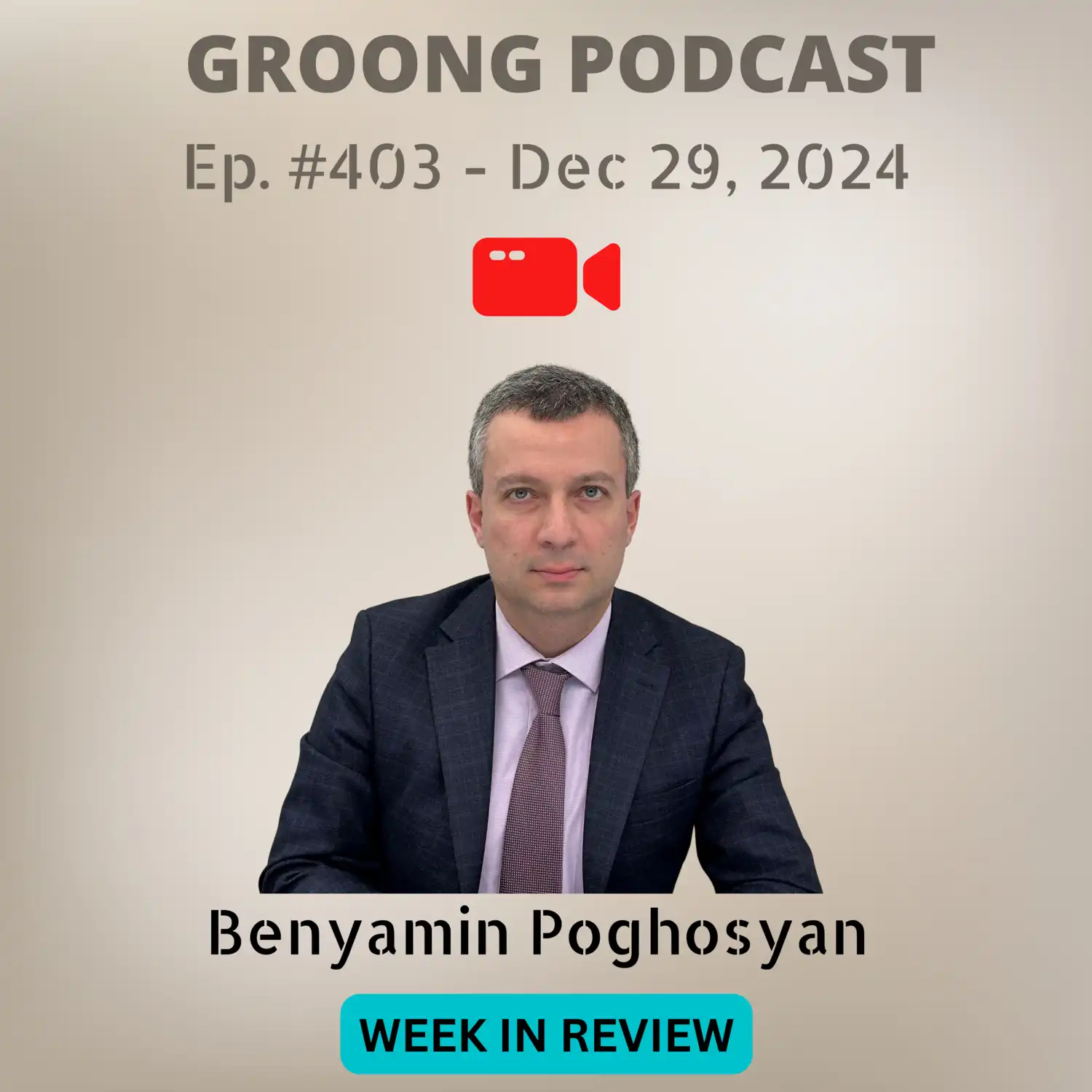
Groong Links:
Guest:
Topics:
- Pashinyanâs Lies on Decades of Negotiations
- 17 Points to an Agreement
- 2024 Review and 2025 Outlook
Episode 403 | Recorded: December 31, 2024
Benyamin Poghosyan - Pashinyan Lies on Decades of Negotiations, 17 Points to an Agreement, 2024 Review and 2025 Outlook | Ep 403 - Dec 29, 2024 [EP403]
Posted on Wednesday, Jan 1, 2025 | Category: Armenia, Azerbaijan, Artsakh, Nagorno Karabakh, Middle East, Israel, Lebanon, Syria, Iran, Turkey, Russia, Armenian Church, Ukraine, Genocide, Geopolitics, China, Georgia, European UnionGroong Links:
Guest:
Topics:
- Pashinyanâs Lies on Decades of Negotiations
- 17 Points to an Agreement
- 2024 Review and 2025 Outlook
Episode 403 | Recorded: December 31, 2024
Ethnic Cleansing of Artsakh: Gev Iskajyan Reflects on Survival and Tragedy | Ep 397 - Dec 18, 2024 [EP397]
Posted on Wednesday, Dec 18, 2024 | Category: Artsakh, Armenia, Artsakh Blockade, Nagorno Karabakh, Azerbaijan, Russia, Ukraine, Iran, Turkey, Genocide, Georgia, Human Rights, Syria | Series: cog, video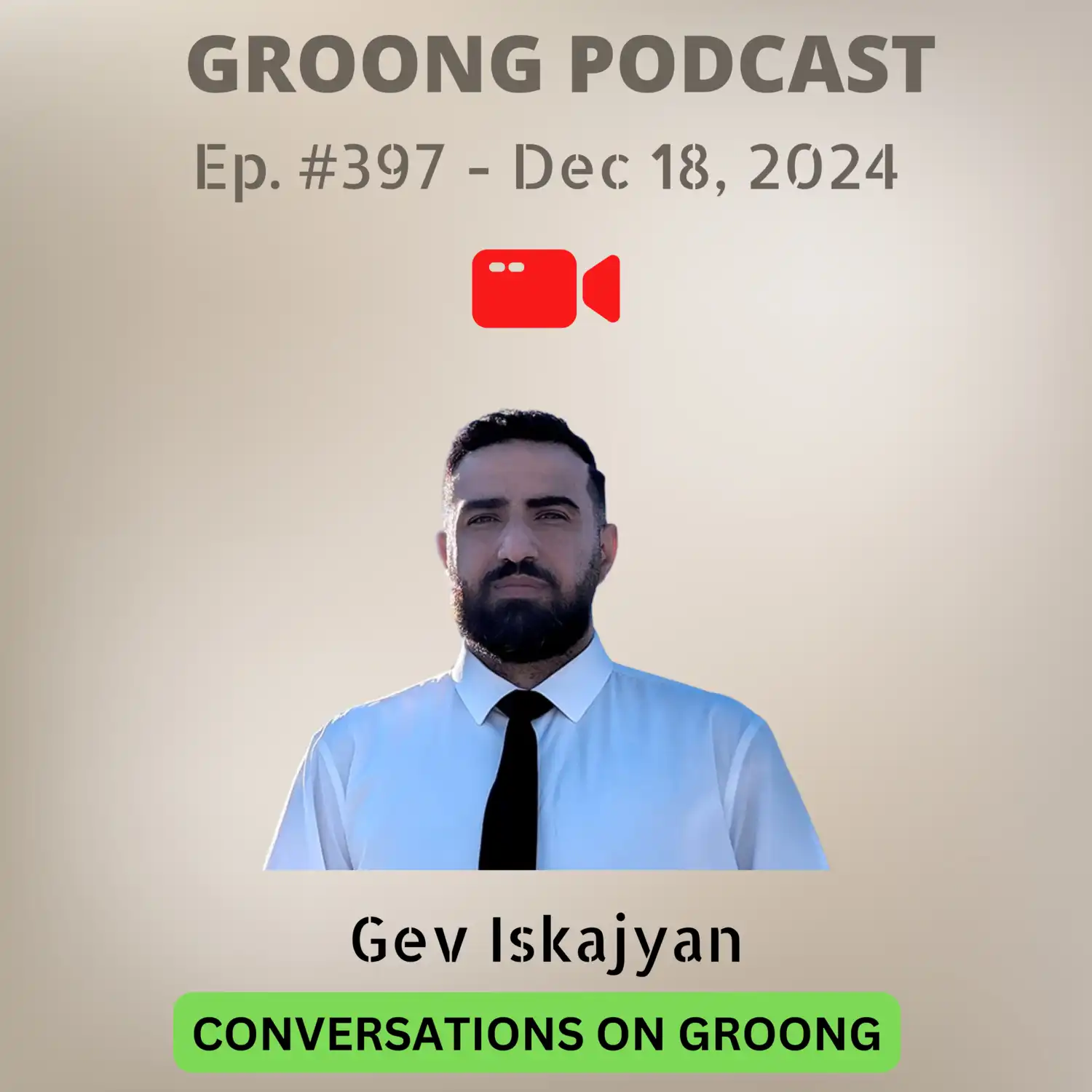
Groong Links:
Guest:
Topics:
- Memories of the Artsakh Blockade
- Ethnic Cleansing
- Trump Returns to the White House
Episode 397 | Recorded: December 18, 2024
Ethnic Cleansing of Artsakh: Gev Iskajyan Reflects on Survival and Tragedy | Ep 397 - Dec 18, 2024 [EP397]
Posted on Wednesday, Dec 18, 2024 | Category: Artsakh, Armenia, Artsakh Blockade, Nagorno Karabakh, Azerbaijan, Russia, Ukraine, Iran, Turkey, Genocide, Georgia, Human Rights, SyriaGroong Links:
Guest:
Topics:
- Memories of the Artsakh Blockade
- Ethnic Cleansing
- Trump Returns to the White House
Episode 397 | Recorded: December 18, 2024
Benyamin Poghosyan - COP29 Post Mortem, Azerbaijan Slams Polish President, Developments in the Middle East, Post-Election Georgia, Russian-Armenian Relations | Ep 390 - Dec 1, 2024 [EP390]
Posted on Wednesday, Dec 4, 2024 | Category: Armenia, Middle East, Georgia, Artsakh, Nagorno Karabakh, Azerbaijan, Israel, Lebanon, Syria, Iran, Turkey, Russia, Ukraine, European Union, NATO, China, Geopolitics, Human Rights | Series: wir
Groong Links:
Guest:
Topics:
- COP29 Post-Mortem
- Azerbaijan Slams Polish President in Armenia
- Developments in the Middle East
- Post-election Developments in Georgia
- Russian Intel Warnings to Armenia
Episode 390 | Recorded: December 2, 2024
Benyamin Poghosyan - COP29 Post Mortem, Azerbaijan Slams Polish President, Developments in the Middle East, Post-Election Georgia, Russian-Armenian Relations | Ep 390 - Dec 1, 2024 [EP390]
Posted on Wednesday, Dec 4, 2024 | Category: Armenia, Middle East, Georgia, Artsakh, Nagorno Karabakh, Azerbaijan, Israel, Lebanon, Syria, Iran, Turkey, Russia, Ukraine, European Union, NATO, China, Geopolitics, Human RightsGroong Links:
Guest:
Topics:
- COP29 Post-Mortem
- Azerbaijan Slams Polish President in Armenia
- Developments in the Middle East
- Post-election Developments in Georgia
- Russian Intel Warnings to Armenia
Episode 390 | Recorded: December 2, 2024
Tevan Poghosyan - Armenia-Azerbaijan Talks, COP29 in Baku, Gyumri Politics, Police Reform | Ep 386 - Nov 17, 2024 [EP386]
Posted on Tuesday, Nov 19, 2024 | Category: Armenia, Artsakh, Nagorno Karabakh, Azerbaijan, Georgia, Turkey, Russia, Human Rights, Economy, Ukraine, China, Iran, Israel, Middle East | Series: wir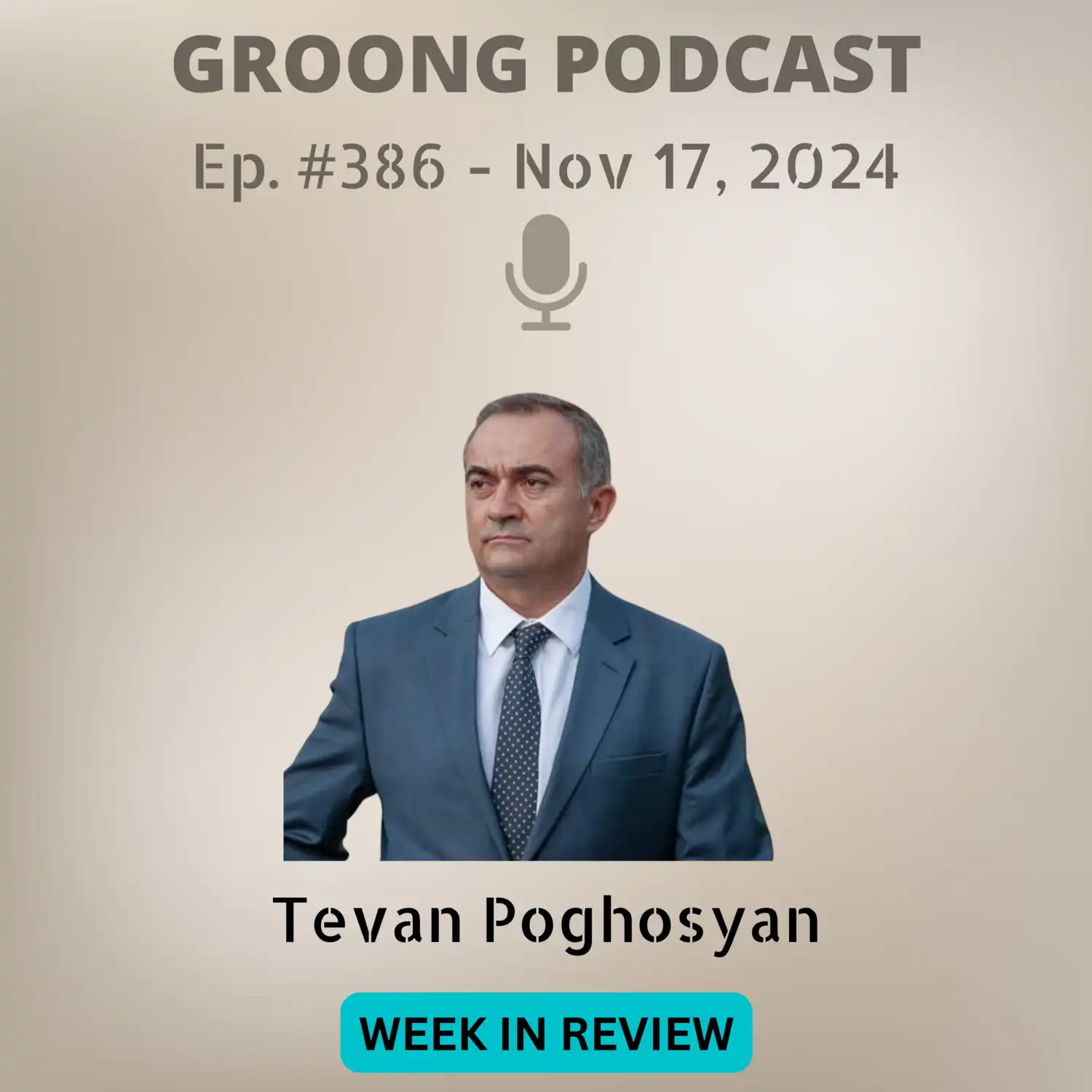
Groong Links:
Guest:
Topics:
- Armenia-Azerbaijan talks
- COP29: Diplomacy and boycotts
- Gyumri’s political intrigues
- Mass dismissal of Armenian government members
- Police âreformâ
- Legislative Changes In Preparation For Elections
Episode 386 | Recorded: November 17, 2024
Tevan Poghosyan - Armenia-Azerbaijan Talks, COP29 in Baku, Gyumri Politics, Police Reform | Ep 386 - Nov 17, 2024 [EP386]
Posted on Tuesday, Nov 19, 2024 | Category: Armenia, Artsakh, Nagorno Karabakh, Azerbaijan, Georgia, Turkey, Russia, Human Rights, Economy, Ukraine, China, Iran, Israel, Middle EastGroong Links:
Guest:
Topics:
- Armenia-Azerbaijan talks
- COP29: Diplomacy and boycotts
- Gyumri’s political intrigues
- Mass dismissal of Armenian government members
- Police âreformâ
- Legislative Changes In Preparation For Elections
Episode 386 | Recorded: November 17, 2024