China
Last updated: June 11, 2026
China is the world’s second-largest economy with a population of approximately 1.4 billion people and the largest manufacturing base globally. The People’s Republic of China (PRC), governed as a one-party socialist state under the Chinese Communist Party, has emerged as a superpower through rapid economic growth, technological advancement, and strategic infrastructure development. China’s Belt and Road Initiative (BRI), launched in 2013, represents a comprehensive strategy to expand economic ties and geopolitical influence across Asia, Africa, Europe, and increasingly the South Caucasus through infrastructure investment, trade partnerships, and financial mechanisms like the Asian Infrastructure Investment Bank (AIIB).
China’s rise as a global power shapes the geopolitical environment in which Armenia operates, particularly through its strategic partnership with Russia and its competition with the United States for influence across Eurasia. Beijing has deepened ties with Moscow in response to Western sanctions and isolation, creating a de facto alignment that affects regional dynamics from Ukraine to the South Caucasus. China’s Belt and Road Initiative and its broader vision of a multipolar world order challenge the U.S.-led international system, creating openings and constraints for smaller states navigating between competing great powers.
China’s Economic Strategy in the South Caucasus
China views the South Caucasus as a critical bridge connecting Central Asia to Europe and bypassing trans-Siberian routes. The Belt and Road Initiative focuses on developing reliable trans-Caspian trade routes, securing energy resources, capturing electric vehicle markets, and establishing logistical footholds in Black Sea ports. In Georgia, Chinese consortia are reviving the stalled Anaklia Deep-Sea Port project to create a major container hub, leveraging Georgia’s tariff-free trade agreement with China. In Azerbaijan, bilateral trade reached approximately $3.74 billion, with Chinese state-owned enterprises investing heavily in petrochemicals, metallurgy, and renewable energy. Azerbaijan has also emerged as a massive market for Chinese EV exports, importing nearly 15,500 hybrid and electric vehicles in a recent year. China has aligned the BRI with Azerbaijan’s domestic “Silk Road Revival” to maximize trans-Caspian multimodal freight integration.
China-Armenia Relations
China’s economic engagement with Armenia remains underdeveloped compared to its partnerships with Azerbaijan and Georgia. Beijing is exploring highway development via the North-South Transport Corridor to better link Armenia to regional trade networks. The Asian Infrastructure Investment Bank (AIIB) and Silk Road Fund serve as primary mechanisms for Chinese financing of regional road, rail, and telecommunication upgrades, though Armenian participation lags behind other Caucasus states. China’s technological and innovation cooperation includes digitalization and “Smart Science City” development initiatives, but Armenia has not been prioritized as a hub for these programs. The limited bilateral economic engagement reflects both Armenia’s smaller market size and its historical alignment with Russia, which constrains Chinese investment even as Beijing seeks to expand its economic footprint across the region.
For Armenia, China’s trajectory matters less as a direct economic partner than as a force reshaping the larger contest between Russia and the West—and increasingly, between itself and the West—within which Armenia’s own survival depends.
The Iran War beginning in early 2026 brought China into sharper focus as a factor in Armenian security. Dr. Anatol Lieven and Sergei Melkonian both examined how the war affects energy supplies, de-dollarization, and alternative financial architectures that bypass American control, with China positioned as a potential beneficiary of reduced U.S. dominance in global markets. Prof. Warwick Powell discussed in depth how the war on Iran relates to U.S. energy efficiency, the limits of American airpower, and the rise of alternative payment systems and information networks in which China plays a central role. These conversations illustrated that Armenia’s position in a multipolar order depends partly on whether China and Russia can sustain their partnership, and whether the U.S. can maintain its leverage over regional states despite mounting challenges to its global position.
TRIPP (Trump Route for International Peace and Prosperity), the U.S.-backed transit corridor through Armenian Syunik province, is explicitly framed by Washington as a tool to limit Chinese and Russian influence in Central Asia and the Middle East. Multiple episodes have noted that the corridor serves American strategic interests in accessing critical minerals and building logistics networks independent of both Iran and Russia, with secondary implications for containing Chinese Belt and Road expansion in the region. China’s own interests in Eurasian connectivity remain underdeveloped in Armenia-specific analysis, but the competing visions of regional integration between TRIPP and Russian-Chinese alternatives represent a structural choice Armenia cannot avoid indefinitely. Whether Armenia emerges from its current isolation as a node in a U.S., Russian, Chinese, or genuinely multipolar network will depend on outcomes beyond Armenian control, making Armenia’s role in the broader U.S.-China-Russia competition far more consequential than any direct Sino-Armenian relationship.
Groong episodes that include this tag
Below are all Groong episodes tagged with China.
Arthur G Martirosyan - Ukraine, Edgar Ghazaryan, Robert Kocharyan, Yerevan Bus Fares | Ep 418, Feb 23, 2025 [EP418]
Posted on Tuesday, Feb 25, 2025 | Category: Armenia, Politics, Artsakh, Nagorno Karabakh, Georgia, Turkey, Russia, Azerbaijan, Ukraine, China, Iran, NATO, Israel, European Union, Syria
Groong Links:
Guest:
Topics:
- Ukraine Negotiations in Riyadh
- Edgar Ghazayan Bullied by the Government
- Robert Kocharyan Press Conference
- Yerevan Bus Fares
Episode 418 | Recorded: February 24, 2025
Dziunik Aghajanian - Peace Plan 2019, Corridor Talks, Armenia Domestic Politics, World Politics | Ep 416, Feb 16, 2025 [EP416]
Posted on Wednesday, Feb 19, 2025 | Category: Armenia, Azerbaijan, Middle East, Artsakh, Nagorno Karabakh, Georgia, Turkey, Russia, Iran, Geopolitics, BRICS, NATO, European Union, Ukraine, Israel, China, Syria, Human Rights | Series: wir, video
Groong Links:
Guest:
Topics:
- World Politics
- Plan, or No Plan?
- Corridor Talk
- Domestic Politics
Episode 416 | Recorded: February 17, 2025
Dziunik Aghajanian - Peace Plan 2019, Corridor Talks, Armenia Domestic Politics, World Politics | Ep 416, Feb 16, 2025 [EP416]
Posted on Wednesday, Feb 19, 2025 | Category: Armenia, Azerbaijan, Middle East, Artsakh, Nagorno Karabakh, Georgia, Turkey, Russia, Iran, Geopolitics, BRICS, NATO, European Union, Ukraine, Israel, China, Syria, Human RightsGroong Links:
Guest:
Topics:
- World Politics
- Plan, or No Plan?
- Corridor Talk
- Domestic Politics
Episode 416 | Recorded: February 17, 2025
Glenn Diesen - The Think Tank Racket: Managing the Information War with Russia | Ep 415, Feb 17, 2025 [EP415]
Posted on Monday, Feb 17, 2025 | Category: Russia, Ukraine, Georgia, Armenian Genocide, NATO, European Union, Armenia, Human Rights, Syria, China, Iran, Azerbaijan, Genocide, Geopolitics, Israel | Series: cog, video
Groong Links:
Guest:
Topics:
- Think Tanks: Defining the Problem
- Media Manipulation, NGOs, and Colored Coups
- Reforming the Think Tank Industry
Episode 415 | Recorded: February 6, 2025
Glenn Diesen - The Think Tank Racket: Managing the Information War with Russia | Ep 415, Feb 17, 2025 [EP415]
Posted on Monday, Feb 17, 2025 | Category: Russia, Ukraine, Georgia, Armenian Genocide, NATO, European Union, Armenia, Human Rights, Syria, China, Iran, Azerbaijan, Genocide, Geopolitics, IsraelGroong Links:
Guest:
Topics:
- Think Tanks: Defining the Problem
- Media Manipulation, NGOs, and Colored Coups
- Reforming the Think Tank Industry
Episode 415 | Recorded: February 6, 2025
Fyodor Lukyanov - Russia, the US, Ukraine, Armenia, Georgia, and the New Global Order | Ep 414, Feb. 16, 2025 [EP414]
Posted on Sunday, Feb 16, 2025 | Category: Russia, Ukraine, Armenia, Azerbaijan, Georgia, Geopolitics, Iran, Turkey, Nagorno Karabakh, BRICS, NATO, European Union, China, Economy, Genocide | Series: cog, video
Groong Links:
Guest:
Topics:
- A New Détente?
- The Trump-Putin Call
- Russiaâs Strategic Choices
- Russo-Armenian Relations
- Russo-Azerbaijani Relations
- Georgiaâs Pragmatism
Episode 414 | Recorded: Valentineâs Day, February 14, 2025
Fyodor Lukyanov - Russia, the US, Ukraine, Armenia, Georgia, and the New Global Order | Ep 414, Feb. 16, 2025 [EP414]
Posted on Sunday, Feb 16, 2025 | Category: Russia, Ukraine, Armenia, Azerbaijan, Georgia, Geopolitics, Iran, Turkey, Nagorno Karabakh, BRICS, NATO, European Union, China, Economy, GenocideGroong Links:
Guest:
Topics:
- A New Détente?
- The Trump-Putin Call
- Russiaâs Strategic Choices
- Russo-Armenian Relations
- Russo-Azerbaijani Relations
- Georgiaâs Pragmatism
Episode 414 | Recorded: Valentineâs Day, February 14, 2025
Transcript: Fyodor Lukyanov - Russia, the US, Ukraine, Armenia, Georgia, and the New Global Order | Ep 414, Feb. 16, 2025 [EP414]
Posted on Sunday, Feb 16, 2025 | Category: Russia, Ukraine, Armenia, Azerbaijan, Georgia, Geopolitics, Iran, Turkey, Nagorno Karabakh, BRICS, NATO, European Union, China, Economy, Genocide, TranscriptA New Détente? The Trump-Putin Call. Russia’s Strategic Choices. Russo-Armenian Relations. Russo-Azerbaijani Relations. Georgia’s Pragmatism.
Glenn Diesen & Arman Grigoryan - The Incoming Multipolar World | Ep 411, Feb 9, 2025 [EP411]
Posted on Sunday, Feb 9, 2025 | Category: Russia, Ukraine, World Order, Syria, Israel, USA, China, Middle East, BRICS, European Union, NATO, Turkey, Armenia, Economy, Georgia, Iran, Azerbaijan, Geopolitics, Human Rights, India | Series: cog, video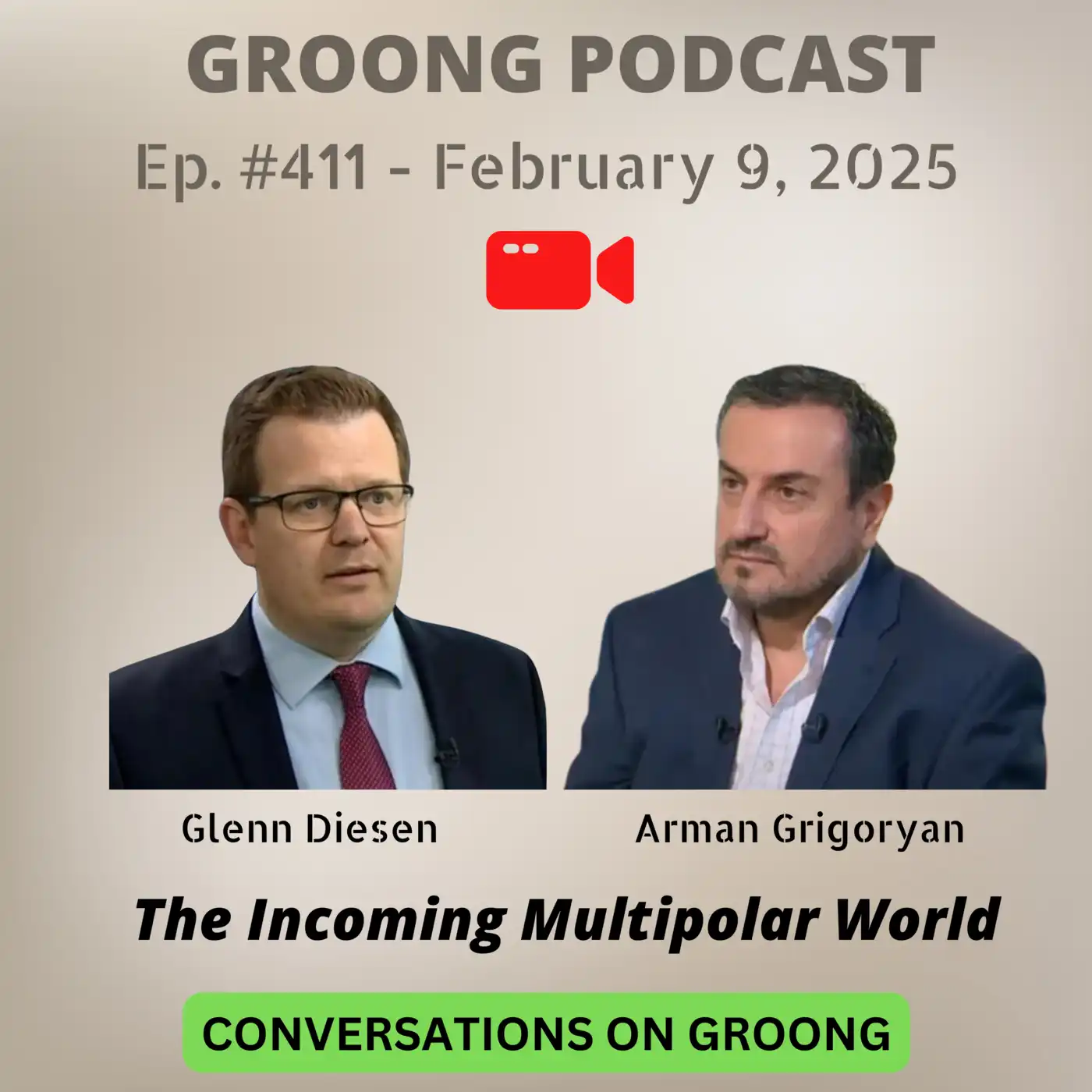
Groong Links:
Guest:
Topics:
- The Ongoing conflicts: Gaza, Syria, Ukraine
- Shifting Global Power and Alliances
- Small Countries in a Multipolar World
Episode 411 | Recorded: February 6, 2025
Glenn Diesen & Arman Grigoryan - The Incoming Multipolar World | Ep 411, Feb 9, 2025 [EP411]
Posted on Sunday, Feb 9, 2025 | Category: Russia, Ukraine, World Order, Syria, Israel, USA, China, Middle East, BRICS, European Union, NATO, Turkey, Armenia, Economy, Georgia, Iran, Azerbaijan, Geopolitics, Human Rights, IndiaGroong Links:
Guest:
Topics:
- The Ongoing conflicts: Gaza, Syria, Ukraine
- Shifting Global Power and Alliances
- Small Countries in a Multipolar World
Episode 411 | Recorded: February 6, 2025
Transcript: Glenn Diesen & Arman Grigoryan - The Incoming Multipolar World | Ep 411, Feb 9, 2025 [EP411]
Posted on Sunday, Feb 9, 2025 | Category: Russia, Ukraine, World Order, Syria, Israel, USA, China, Middle East, BRICS, European Union, NATO, Turkey, Armenia, Economy, Georgia, Iran, Azerbaijan, Geopolitics, Human Rights, India, TranscriptThe Ongoing conflicts: Gaza, Syria, Ukraine. Shifting Global Power and Alliances. Small Countries in a Multipolar World.
Benyamin Poghosyan - MPG Poll, Russia-Azerbaijan Relations Deteriorate, Armenian Strategic Geopolitical Balancing, Azerbaijan and the ‘Zangezur Corridor’ | Ep 410, Feb 2, 2025 [EP410]
Posted on Tuesday, Feb 4, 2025 | Category: Armenia, Azerbaijan, Poll, Artsakh, Nagorno Karabakh, Turkey, Russia, Iran, Ukraine, Geopolitics, Georgia, China, Economy, European Union, Israel | Series: wir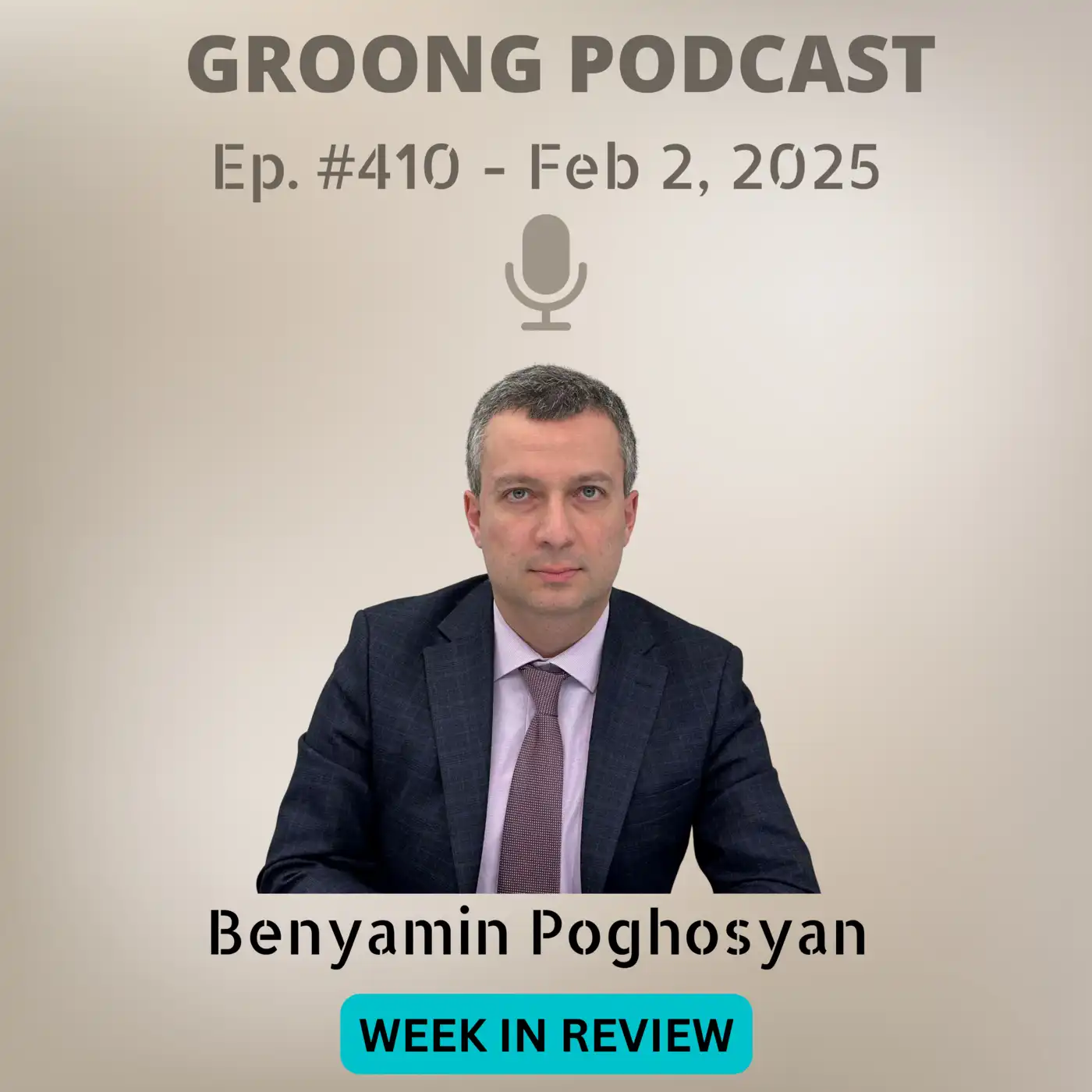
Groong Links:
Guest:
Topics:
- MPG Poll: Pashinyanâs Rating Tanks
- Russia Azerbaijan Relations Deteriorating
- Armeniaâs Strategic Geopolitical Balancing
- Azerbaijan and the âZangezur Corridorâ
Episode 410 | Recorded: February 3, 2025
Benyamin Poghosyan - MPG Poll, Russia-Azerbaijan Relations Deteriorate, Armenian Strategic Geopolitical Balancing, Azerbaijan and the ‘Zangezur Corridor’ | Ep 410, Feb 2, 2025 [EP410]
Posted on Tuesday, Feb 4, 2025 | Category: Armenia, Azerbaijan, Poll, Artsakh, Nagorno Karabakh, Turkey, Russia, Iran, Ukraine, Geopolitics, Georgia, China, Economy, European Union, IsraelGroong Links:
Guest:
Topics:
- MPG Poll: Pashinyanâs Rating Tanks
- Russia Azerbaijan Relations Deteriorating
- Armeniaâs Strategic Geopolitical Balancing
- Azerbaijan and the âZangezur Corridorâ
Episode 410 | Recorded: February 3, 2025
Pietro Shakarian - Russian-Iranian Partnership Pact | Ep 407, Jan 27, 2025 [EP407]
Posted on Monday, Jan 27, 2025 | Category: Russia, Iran, Ukraine, Armenia, Artsakh, Nagorno Karabakh, BRICS, Syria, Turkey, Israel, NATO, Middle East, Azerbaijan, China, Georgia, India | Series: cog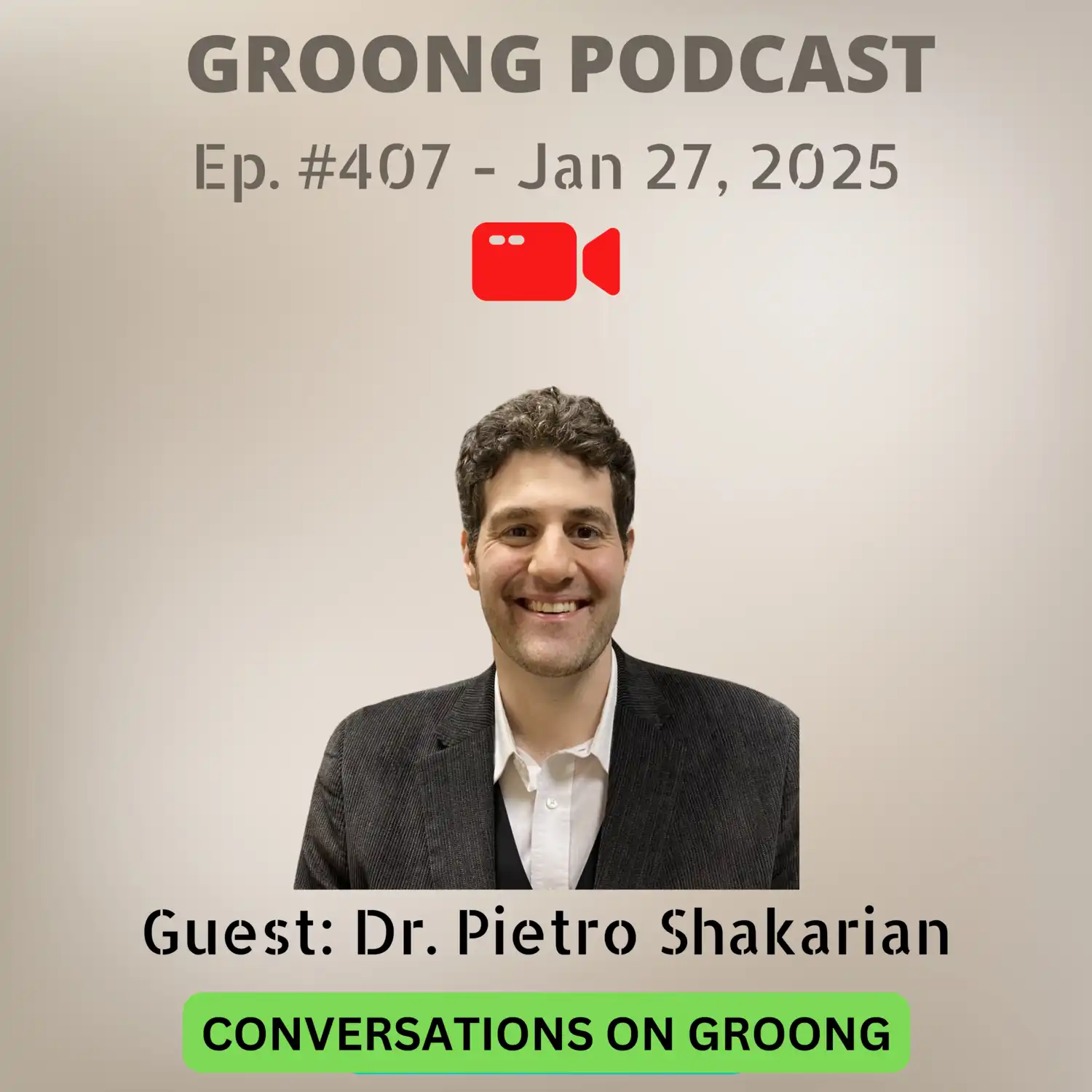
Groong Links:
Guest:
Topics:
- Russo-Iranian Partnership Treaty
- Implications of ð·ðº - ð®ð· pact for Armenia
- Trump Back in Office: War or Peace?
Episode 407 | Recorded: January 25, 2025
Pietro Shakarian - Russian-Iranian Partnership Pact | Ep 407, Jan 27, 2025 [EP407]
Posted on Monday, Jan 27, 2025 | Category: Russia, Iran, Ukraine, Armenia, Artsakh, Nagorno Karabakh, BRICS, Syria, Turkey, Israel, NATO, Middle East, Azerbaijan, China, Georgia, IndiaGroong Links:
Guest:
Topics:
- Russo-Iranian Partnership Treaty
- Implications of ð·ðº - ð®ð· pact for Armenia
- Trump Back in Office: War or Peace?
Episode 407 | Recorded: January 25, 2025
Hrant Mikaelian - Trump Inauguration, Iran-Russia, UK-Ukraine, US-Armenia Strategic Partnerships | Ep 406, Jan 19, 2025 [EP406]
Posted on Tuesday, Jan 21, 2025 | Category: Armenia, Artsakh, Nagorno Karabakh, USA, Iran, Russia, Ukraine, Azerbaijan, Georgia, Israel, Middle East, Turkey, European Union, Syria, China, Economy, Lebanon, NATO | Series: wir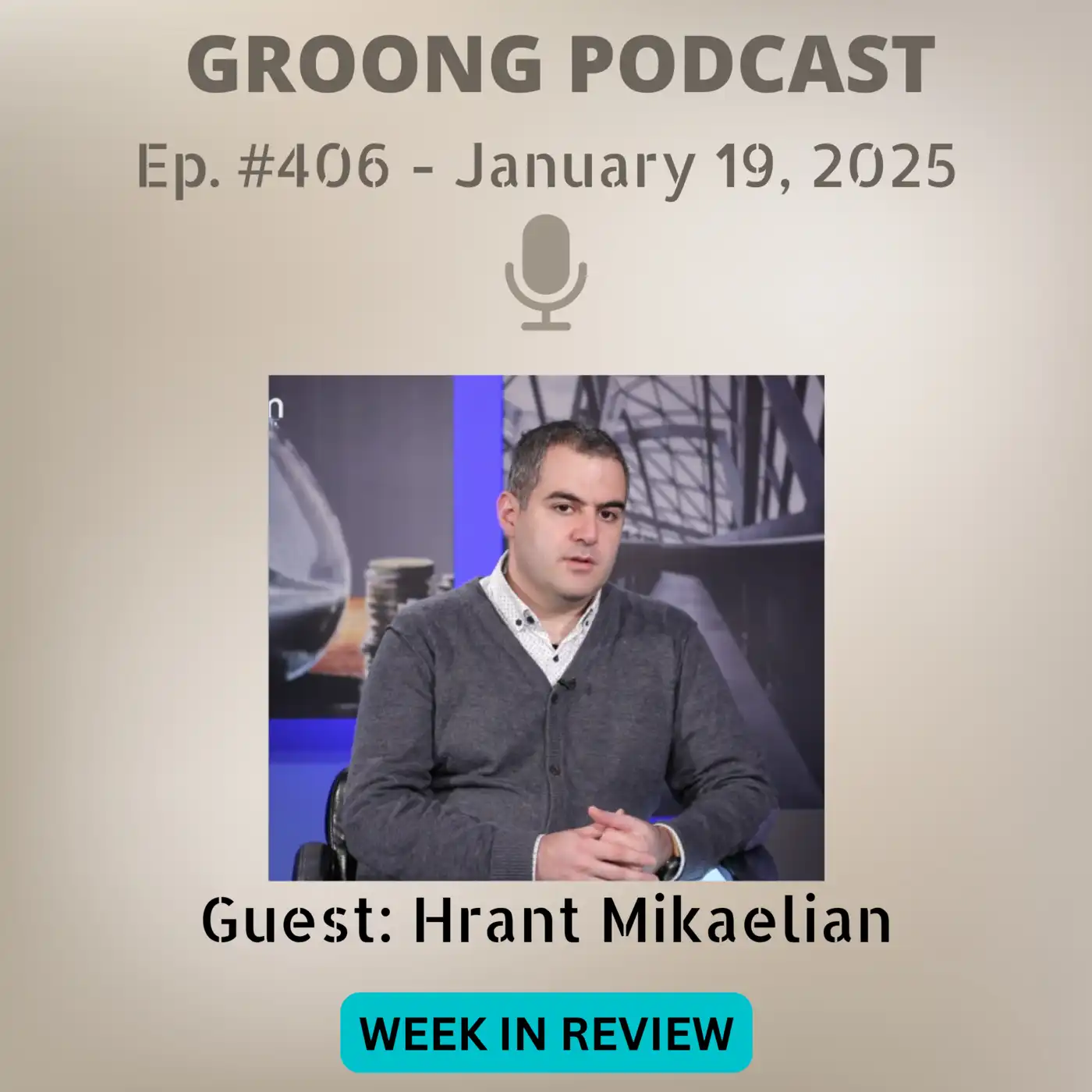
Groong Links:
Guest:
Topics:
- Trump Inauguration
- Russian-Iranian Strategic Partnership
- UK-Ukrainian 100-Year Partnership
- US-Armenian âStrategic Partnershipâ
Episode 406 | Recorded: January 20, 2025
Hrant Mikaelian - Trump Inauguration, Iran-Russia, UK-Ukraine, US-Armenia Strategic Partnerships | Ep 406, Jan 19, 2025 [EP406]
Posted on Tuesday, Jan 21, 2025 | Category: Armenia, Artsakh, Nagorno Karabakh, USA, Iran, Russia, Ukraine, Azerbaijan, Georgia, Israel, Middle East, Turkey, European Union, Syria, China, Economy, Lebanon, NATOGroong Links:
Guest:
Topics:
- Trump Inauguration
- Russian-Iranian Strategic Partnership
- UK-Ukrainian 100-Year Partnership
- US-Armenian âStrategic Partnershipâ
Episode 406 | Recorded: January 20, 2025
Yeghia Tashjian - New Leadership in Lebanon - New President, New Prime Minister | Ep 405, Jan 21, 2025 [EP405]
Posted on Monday, Jan 20, 2025 | Category: Lebanon, Middle East, Israel, Iran, Turkey, USA, Syria, Armenia, Russia, China, Geopolitics, NATO | Series: cog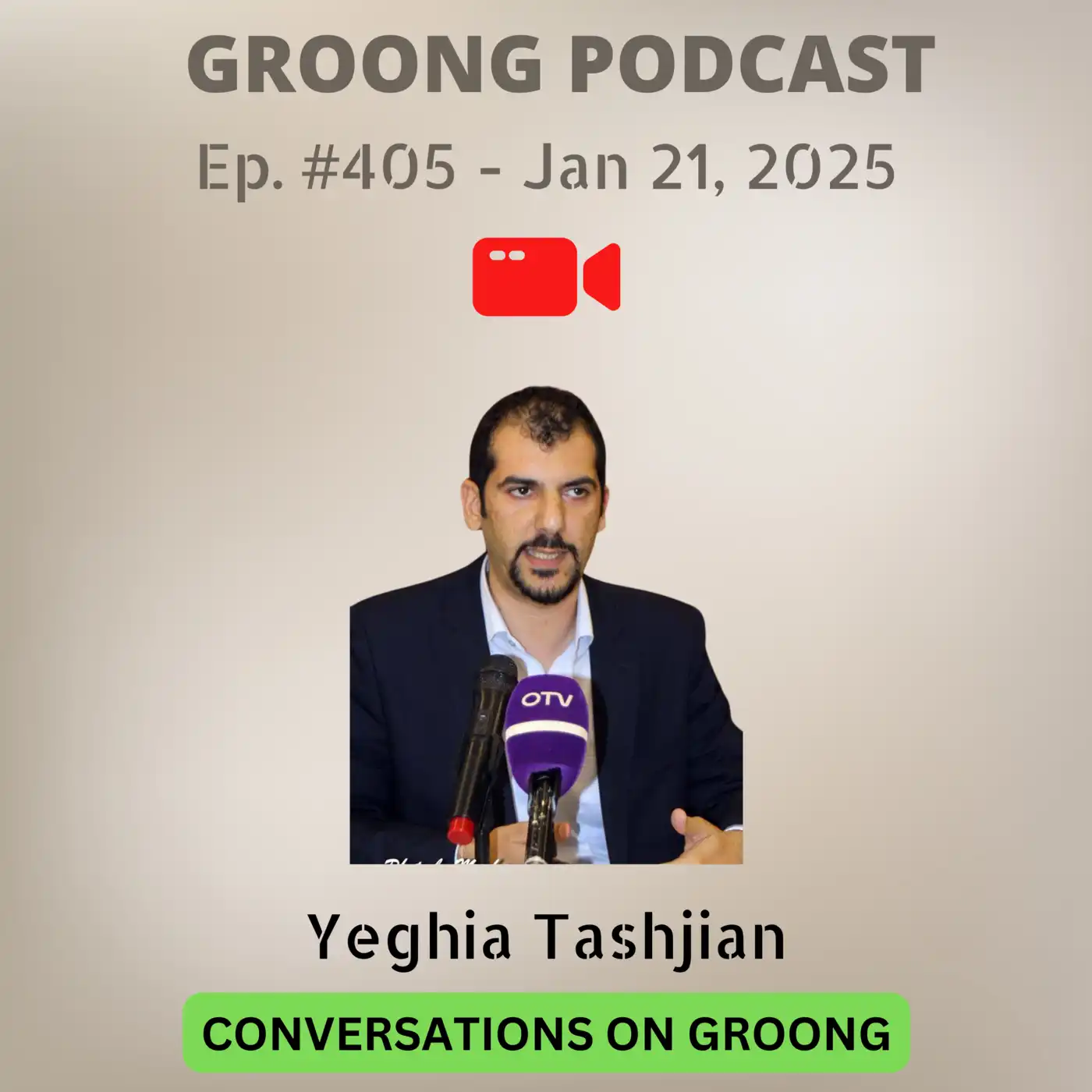
Groong Links:
Guest:
Topics:
- President Joseph Aoun
- Prime Minister-designate Nawaf Salam
- The Changing Face of the Middle East
- Armenian Communityâs and Joseph Aoun
Episode 405 | Recorded: Januaqry 19, 2025
Yeghia Tashjian - New Leadership in Lebanon - New President, New Prime Minister | Ep 405, Jan 21, 2025 [EP405]
Posted on Monday, Jan 20, 2025 | Category: Lebanon, Middle East, Israel, Iran, Turkey, USA, Syria, Armenia, Russia, China, Geopolitics, NATOGroong Links:
Guest:
Topics:
- President Joseph Aoun
- Prime Minister-designate Nawaf Salam
- The Changing Face of the Middle East
- Armenian Communityâs and Joseph Aoun
Episode 405 | Recorded: Januaqry 19, 2025
Tevan Poghosyan - Incoming Trump, Armenia Azerbaijan Talks, Iran Visit, Pro-West Signals | Ep 404, Jan 12, 2025 [EP404]
Posted on Wednesday, Jan 15, 2025 | Category: Armenia, Artsakh, Nagorno Karabakh, Azerbaijan, USA, Russia, Iran, Ukraine, Turkey, Israel, Syria, China, Georgia, Middle East, NATO, Economy, Genocide, Lebanon, European Union | Series: wir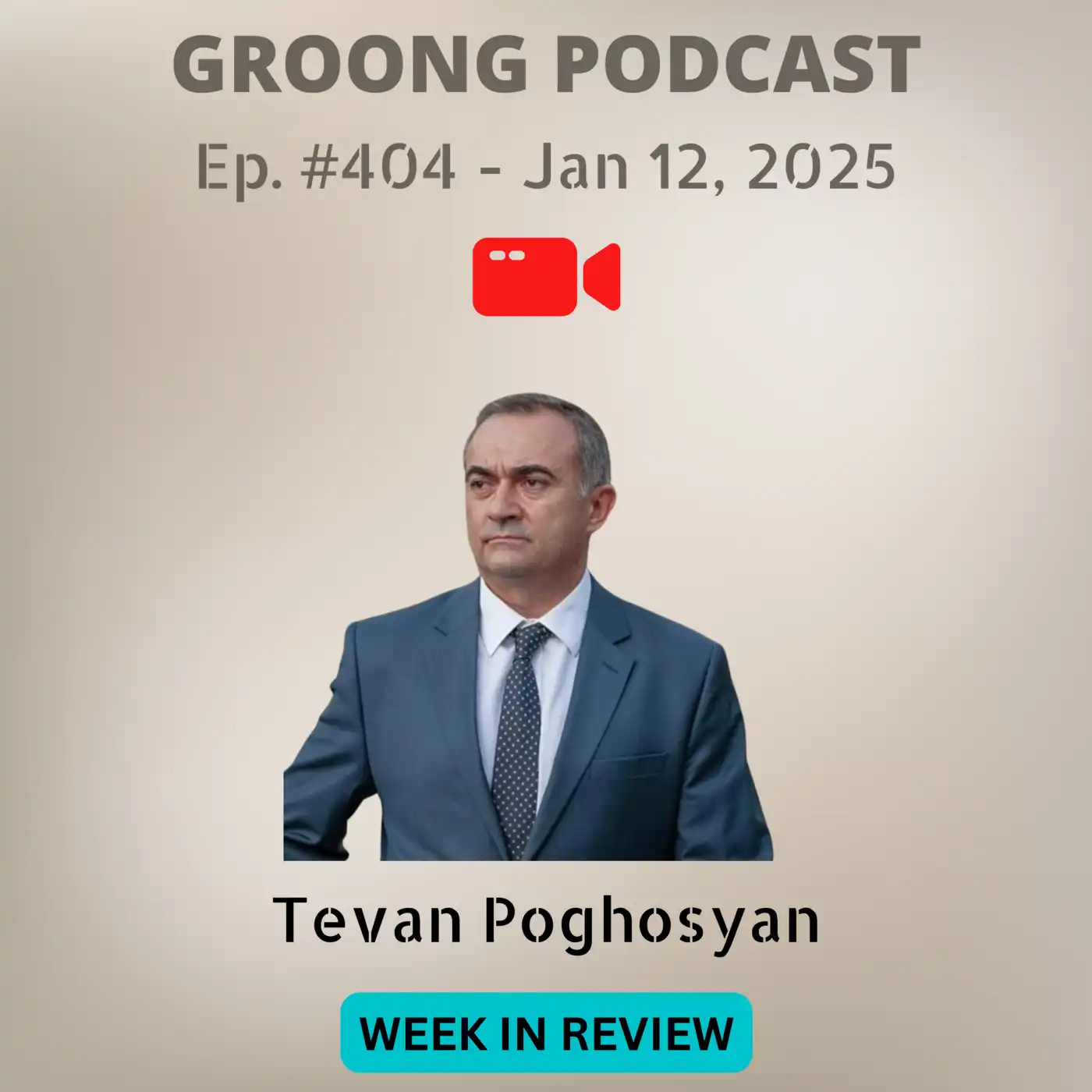
Groong Links:
Guest:
Topics:
- Incoming Trump Admin
- Armenia Azerbaijan Talks Stalled
- Iran Security Chief Visit
- Armeniaâs Pro-West Signals
Episode 404 | Recorded: January 14, 2025
Tevan Poghosyan - Incoming Trump, Armenia Azerbaijan Talks, Iran Visit, Pro-West Signals | Ep 404, Jan 12, 2025 [EP404]
Posted on Wednesday, Jan 15, 2025 | Category: Armenia, Artsakh, Nagorno Karabakh, Azerbaijan, USA, Russia, Iran, Ukraine, Turkey, Israel, Syria, China, Georgia, Middle East, NATO, Economy, Genocide, Lebanon, European UnionGroong Links:
Guest:
Topics:
- Incoming Trump Admin
- Armenia Azerbaijan Talks Stalled
- Iran Security Chief Visit
- Armeniaâs Pro-West Signals
Episode 404 | Recorded: January 14, 2025
Benyamin Poghosyan - Pashinyan Lies on Decades of Negotiations, 17 Points to an Agreement, 2024 Review and 2025 Outlook | Ep 403 - Dec 29, 2024 [EP403]
Posted on Wednesday, Jan 1, 2025 | Category: Armenia, Azerbaijan, Artsakh, Nagorno Karabakh, Middle East, Israel, Lebanon, Syria, Iran, Turkey, Russia, Armenian Church, Ukraine, Genocide, Geopolitics, China, Georgia, European Union | Series: wir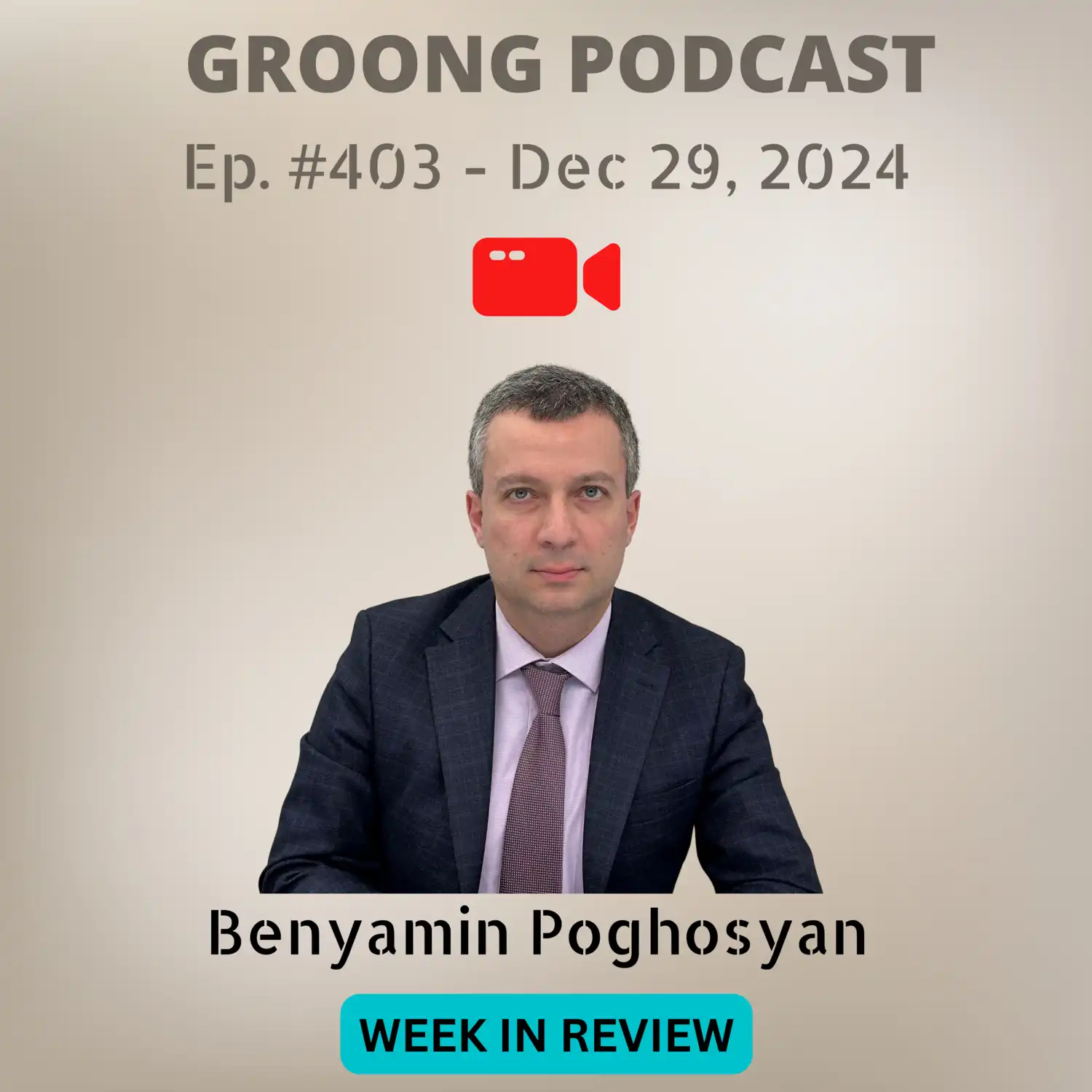
Groong Links:
Guest:
Topics:
- Pashinyanâs Lies on Decades of Negotiations
- 17 Points to an Agreement
- 2024 Review and 2025 Outlook
Episode 403 | Recorded: December 31, 2024
Benyamin Poghosyan - Pashinyan Lies on Decades of Negotiations, 17 Points to an Agreement, 2024 Review and 2025 Outlook | Ep 403 - Dec 29, 2024 [EP403]
Posted on Wednesday, Jan 1, 2025 | Category: Armenia, Azerbaijan, Artsakh, Nagorno Karabakh, Middle East, Israel, Lebanon, Syria, Iran, Turkey, Russia, Armenian Church, Ukraine, Genocide, Geopolitics, China, Georgia, European UnionGroong Links:
Guest:
Topics:
- Pashinyanâs Lies on Decades of Negotiations
- 17 Points to an Agreement
- 2024 Review and 2025 Outlook
Episode 403 | Recorded: December 31, 2024
Dziunik Aghajanian - Armenia Azerbaijan Talks, Syria, Defense Politics, Civil Contract Strife | Ep 401 - Dec 22, 2024 [EP401]
Posted on Wednesday, Dec 25, 2024 | Category: Armenia, Azerbaijan, Middle East, Artsakh, Nagorno Karabakh, Russia, Iran, Israel, BRICS, Syria, Turkey, Georgia, Ukraine, Human Rights, Lebanon, NATO, China, Economy | Series: wir, video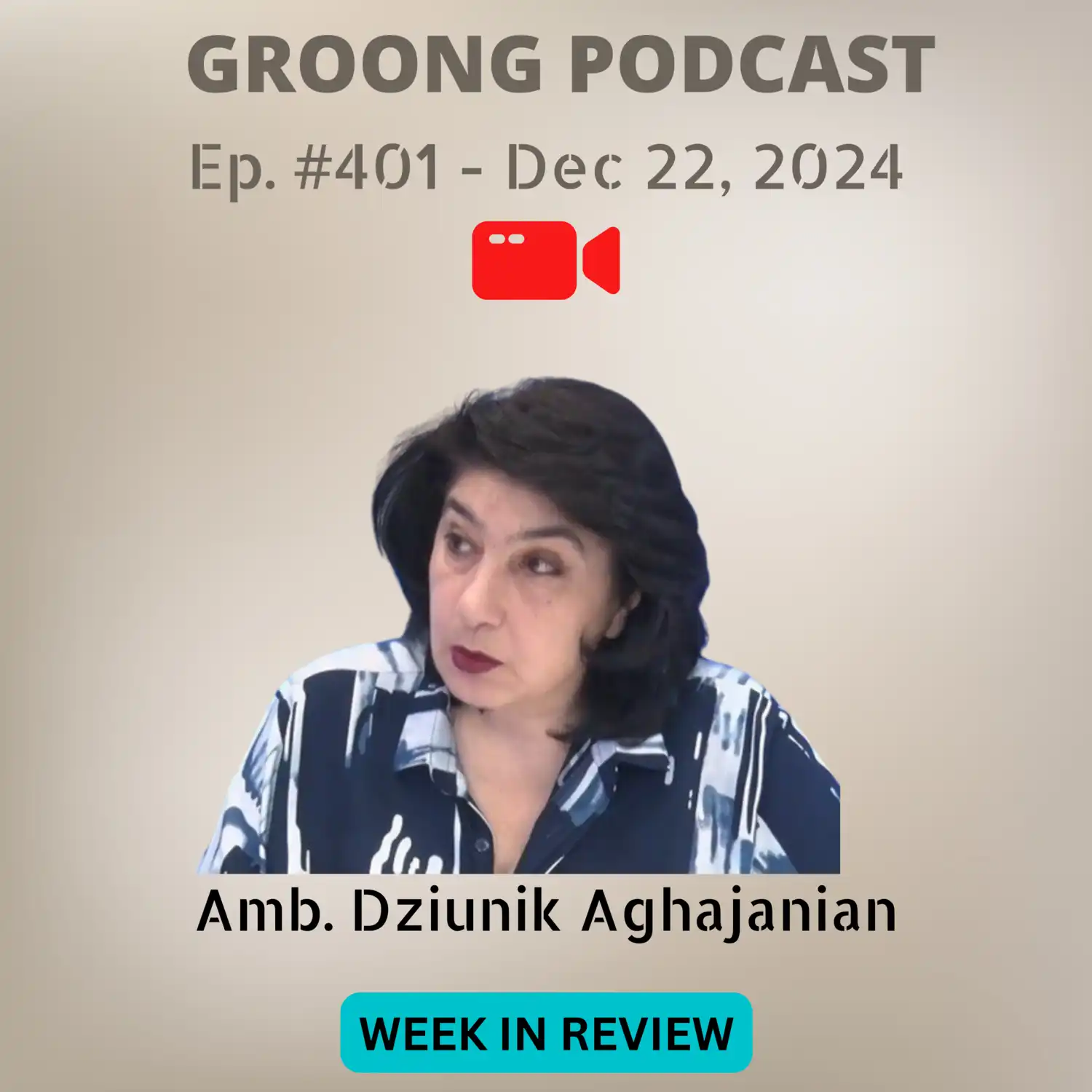
Groong Links:
Guest:
Topics:
- Armenian Azerbaijani Stalled Talks
- Fall of Syria
- Defense Politics
- Un-Civil Strife
Episode 401 | Recorded: December 24, 2024
Dziunik Aghajanian - Armenia Azerbaijan Talks, Syria, Defense Politics, Civil Contract Strife | Ep 401 - Dec 22, 2024 [EP401]
Posted on Wednesday, Dec 25, 2024 | Category: Armenia, Azerbaijan, Middle East, Artsakh, Nagorno Karabakh, Russia, Iran, Israel, BRICS, Syria, Turkey, Georgia, Ukraine, Human Rights, Lebanon, NATO, China, EconomyGroong Links:
Guest:
Topics:
- Armenian Azerbaijani Stalled Talks
- Fall of Syria
- Defense Politics
- Un-Civil Strife
Episode 401 | Recorded: December 24, 2024
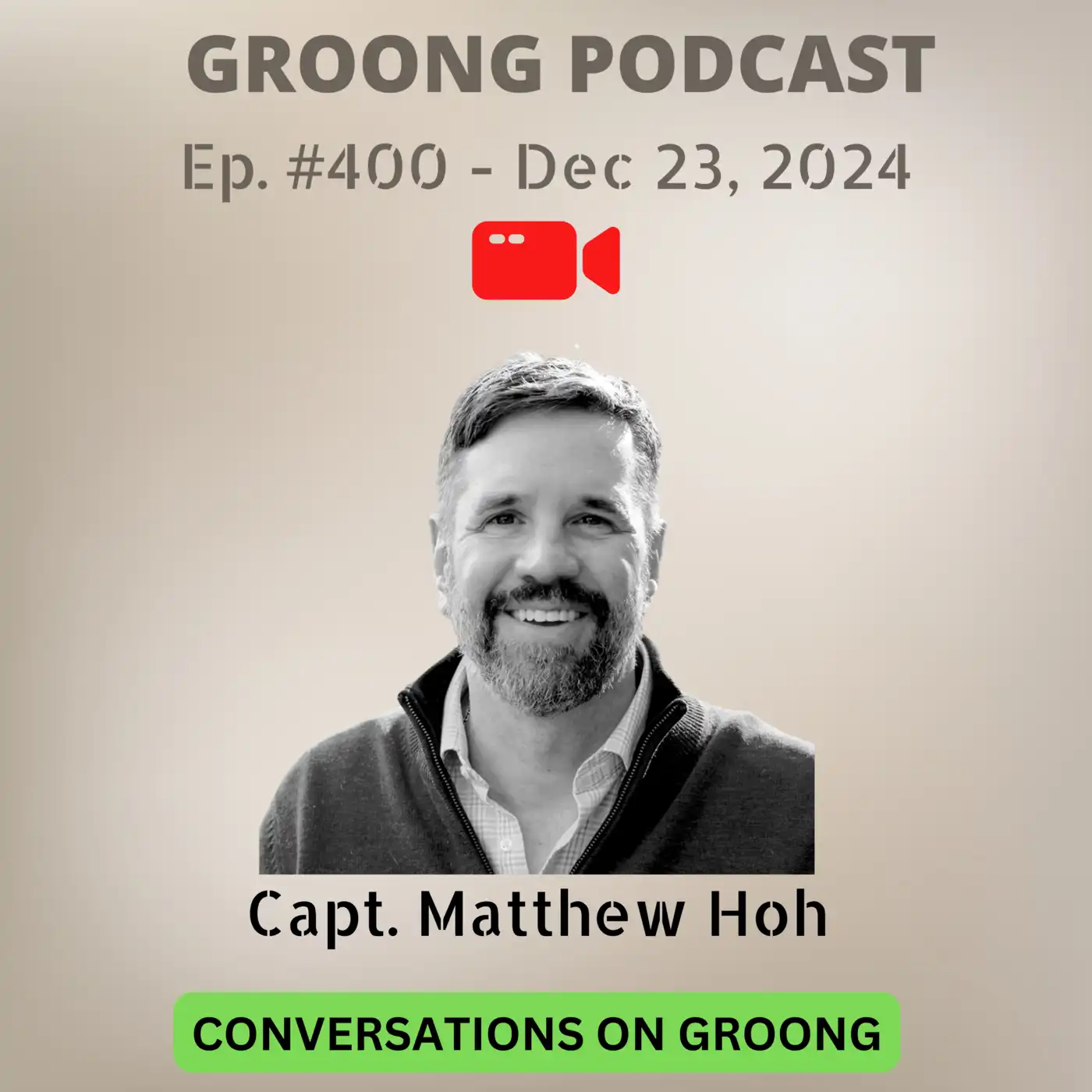
Groong Links:
Guest:
Topics:
- U.S. Imperialism
- The Role of the Think Tank Industry
Episode 400 | Recorded: December 20, 2024
Matthew Hoh - Imperial US Foreign Policy, and the Role of the Think Tank Industry | Ep 400 - Dec 23, 2024 [EP400]
Posted on Sunday, Dec 22, 2024 | Category: USA, World Order, Middle East, Israel, Russia, China, NATO, Syria, Ukraine, Armenia, Economy, Lebanon, IndiaGroong Links:
Guest:
Topics:
- U.S. Imperialism
- The Role of the Think Tank Industry
Episode 400 | Recorded: December 20, 2024
Larry C Johnson - Syria, South Caucasus, and Regional Power Dynamics | Ep 395, Dec 14, 2024 [EP395]
Posted on Saturday, Dec 14, 2024 | Category: Middle East, Armenia, Politics, Syria, Turkey, Israel, Russia, Nagorno Karabakh, Iran, Armenian Genocide, NATO, Ukraine, Azerbaijan, China, European Union, Genocide, Georgia, Lebanon | Series: cog, video
Groong Links:
Guest:
Topics:
- Syria and the Middle East
- The South Caucasus
- Intelligence, Surveillance, Reconnaissance
- 44-Day War and the ISR Factor
- Fueling Other Wars
Episode 395 | Recorded: December 12, 2024
Larry C Johnson - Syria, South Caucasus, and Regional Power Dynamics | Ep 395, Dec 14, 2024 [EP395]
Posted on Saturday, Dec 14, 2024 | Category: Middle East, Armenia, Politics, Syria, Turkey, Israel, Russia, Nagorno Karabakh, Iran, Armenian Genocide, NATO, Ukraine, Azerbaijan, China, European Union, Genocide, Georgia, LebanonGroong Links:
Guest:
Topics:
- Syria and the Middle East
- The South Caucasus
- Intelligence, Surveillance, Reconnaissance
- 44-Day War and the ISR Factor
- Fueling Other Wars
Episode 395 | Recorded: December 12, 2024
Transcript: Larry C Johnson - Syria, South Caucasus, and Regional Power Dynamics | Ep 395, Dec 14, 2024 [EP395]
Posted on Saturday, Dec 14, 2024 | Category: Middle East, Armenia, Politics, Syria, Turkey, Israel, Russia, Nagorno Karabakh, Iran, Armenian Genocide, NATO, Ukraine, Azerbaijan, China, European Union, Genocide, Georgia, Lebanon, TranscriptSyria and the Middle East. The South Caucasus. Intelligence, Surveillance, Reconnaissance. 44-Day War and the ISR Factor. Fueling Other Wars.
Karen Kwiatkowski on Turkey, NATO, and the 44-Day War | Ep 392 - Dec 7, 2024 [EP392]
Posted on Saturday, Dec 7, 2024 | Category: Politics, Turkey, NATO, Armenia, Nagorno Karabakh, Artsakh, Azerbaijan, USA, Ukraine, Russia, Israel, Iran, Middle East, Geopolitics, Syria, China, Genocide, Georgia, Lebanon, European Union | Series: cog, video
Groong Links:
Guest:
Topics:
- Turkeyâs Role in the 44-Day War
- NATO and Intelligence Sharing
- Global Power Rivalries
- Lessons from U.S. Intelligence Practices
Episode 392 | Recorded: December 2, 2024
Karen Kwiatkowski on Turkey, NATO, and the 44-Day War | Ep 392 - Dec 7, 2024 [EP392]
Posted on Saturday, Dec 7, 2024 | Category: Politics, Turkey, NATO, Armenia, Nagorno Karabakh, Artsakh, Azerbaijan, USA, Ukraine, Russia, Israel, Iran, Middle East, Geopolitics, Syria, China, Genocide, Georgia, Lebanon, European UnionGroong Links:
Guest:
Topics:
- Turkeyâs Role in the 44-Day War
- NATO and Intelligence Sharing
- Global Power Rivalries
- Lessons from U.S. Intelligence Practices
Episode 392 | Recorded: December 2, 2024
Transcript: Karen Kwiatkowski on Turkey, NATO, and the 44-Day War | Ep 392 - Dec 7, 2024 [EP392]
Posted on Saturday, Dec 7, 2024 | Category: Politics, Turkey, NATO, Armenia, Nagorno Karabakh, Artsakh, Azerbaijan, USA, Ukraine, Russia, Israel, Iran, Middle East, Geopolitics, Syria, China, Genocide, Georgia, Lebanon, European Union, TranscriptTurkey’s Role in the 44-Day War. NATO and Intelligence Sharing. Global Power Rivalries. Lessons from U.S. Intelligence Practices.
Jeffrey Sachs - Escalation in Syria, COP29, Advice for Armenia | Ep 391 - Dec 5, 2024 [EP391]
Posted on Thursday, Dec 5, 2024 | Category: Syria, Armenia, Azerbaijan, USA, Turkey, Russia, Nagorno Karabakh, Artsakh, Iran, Ukraine, Israel, Middle East, Georgia, BRICS, NATO, Geopolitics, China, European Union, Lebanon | Series: cog, video
Groong Links:
Guest:
Topics:
- Escalation in Syria
- COP29 Summit
- Can NATO save Armenia?
Episode 391 | Recorded: December 4, 2024
Jeffrey Sachs - Escalation in Syria, COP29, Advice for Armenia | Ep 391 - Dec 5, 2024 [EP391]
Posted on Thursday, Dec 5, 2024 | Category: Syria, Armenia, Azerbaijan, USA, Turkey, Russia, Nagorno Karabakh, Artsakh, Iran, Ukraine, Israel, Middle East, Georgia, BRICS, NATO, Geopolitics, China, European Union, LebanonGroong Links:
Guest:
Topics:
- Escalation in Syria
- COP29 Summit
- Can NATO save Armenia?
Episode 391 | Recorded: December 4, 2024
Transcript: Jeffrey Sachs - Escalation in Syria, COP29, Advice for Armenia | Ep 391 - Dec 5, 2024 [EP391]
Posted on Thursday, Dec 5, 2024 | Category: Syria, Armenia, Azerbaijan, USA, Turkey, Russia, Nagorno Karabakh, Artsakh, Iran, Ukraine, Israel, Middle East, Georgia, BRICS, NATO, Geopolitics, China, European Union, Lebanon, TranscriptEscalation in Syria. COP29 Summit. Can NATO save Armenia?
Benyamin Poghosyan - COP29 Post Mortem, Azerbaijan Slams Polish President, Developments in the Middle East, Post-Election Georgia, Russian-Armenian Relations | Ep 390 - Dec 1, 2024 [EP390]
Posted on Wednesday, Dec 4, 2024 | Category: Armenia, Middle East, Georgia, Artsakh, Nagorno Karabakh, Azerbaijan, Israel, Lebanon, Syria, Iran, Turkey, Russia, Ukraine, European Union, NATO, China, Geopolitics, Human Rights | Series: wir
Groong Links:
Guest:
Topics:
- COP29 Post-Mortem
- Azerbaijan Slams Polish President in Armenia
- Developments in the Middle East
- Post-election Developments in Georgia
- Russian Intel Warnings to Armenia
Episode 390 | Recorded: December 2, 2024
Benyamin Poghosyan - COP29 Post Mortem, Azerbaijan Slams Polish President, Developments in the Middle East, Post-Election Georgia, Russian-Armenian Relations | Ep 390 - Dec 1, 2024 [EP390]
Posted on Wednesday, Dec 4, 2024 | Category: Armenia, Middle East, Georgia, Artsakh, Nagorno Karabakh, Azerbaijan, Israel, Lebanon, Syria, Iran, Turkey, Russia, Ukraine, European Union, NATO, China, Geopolitics, Human RightsGroong Links:
Guest:
Topics:
- COP29 Post-Mortem
- Azerbaijan Slams Polish President in Armenia
- Developments in the Middle East
- Post-election Developments in Georgia
- Russian Intel Warnings to Armenia
Episode 390 | Recorded: December 2, 2024
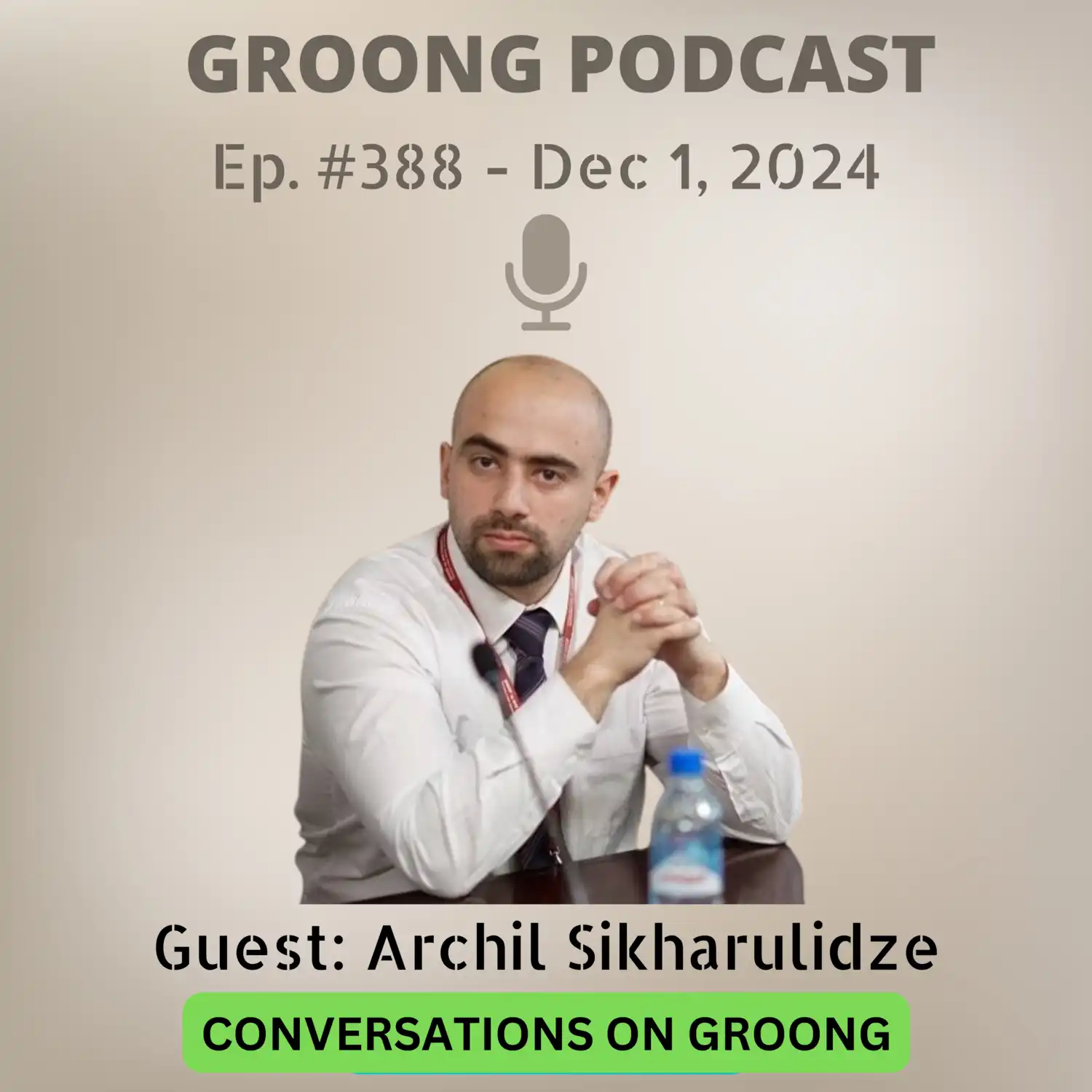
Groong Links:
Guest:
Topics:
- Constitutional Crisis In Georgia?
- Western Reactions and Escalation
- Russian Reactions and Georgiaâs Strategic Direction
- Unrest In Abkhazia
Episode 388 | Recorded: November 30, 2024
Groong Links:
Guest:
Topics:
- Constitutional Crisis In Georgia?
- Western Reactions and Escalation
- Russian Reactions and Georgiaâs Strategic Direction
- Unrest In Abkhazia
Episode 388 | Recorded: November 30, 2024
Arthur G. Martirosyan - Government Firings by Text, Another Scandalous Pashinyan Interview, New Escalation in Ukraine | Ep 387 - Nov 24, 2024 [EP387]
Posted on Tuesday, Nov 26, 2024 | Category: Armenia, Politics, Artsakh, Nagorno Karabakh, Georgia, Turkey, Russia, Azerbaijan, Ukraine, China, Genocide, Economy, Middle East, NATO, Syria | Series: wir
Groong Links:
Guest:
Topics:
- Supreme Judicial Council Head, MPs resign at Pashinyanâs âAskâ
- Another Pashinyan Interview, More Scandalous Statements
- Speed Cameras, Government Officials Cars
- âWestern Azerbaijanâ â âWestern Armeniaâ
- EU Mission in Armenia
- New Escalation in Ukraine
Episode 387 | Recorded: November 25, 2024
Arthur G. Martirosyan - Government Firings by Text, Another Scandalous Pashinyan Interview, New Escalation in Ukraine | Ep 387 - Nov 24, 2024 [EP387]
Posted on Tuesday, Nov 26, 2024 | Category: Armenia, Politics, Artsakh, Nagorno Karabakh, Georgia, Turkey, Russia, Azerbaijan, Ukraine, China, Genocide, Economy, Middle East, NATO, SyriaGroong Links:
Guest:
Topics:
- Supreme Judicial Council Head, MPs resign at Pashinyanâs âAskâ
- Another Pashinyan Interview, More Scandalous Statements
- Speed Cameras, Government Officials Cars
- âWestern Azerbaijanâ â âWestern Armeniaâ
- EU Mission in Armenia
- New Escalation in Ukraine
Episode 387 | Recorded: November 25, 2024
Tevan Poghosyan - Armenia-Azerbaijan Talks, COP29 in Baku, Gyumri Politics, Police Reform | Ep 386 - Nov 17, 2024 [EP386]
Posted on Tuesday, Nov 19, 2024 | Category: Armenia, Artsakh, Nagorno Karabakh, Azerbaijan, Georgia, Turkey, Russia, Human Rights, Economy, Ukraine, China, Iran, Israel, Middle East | Series: wir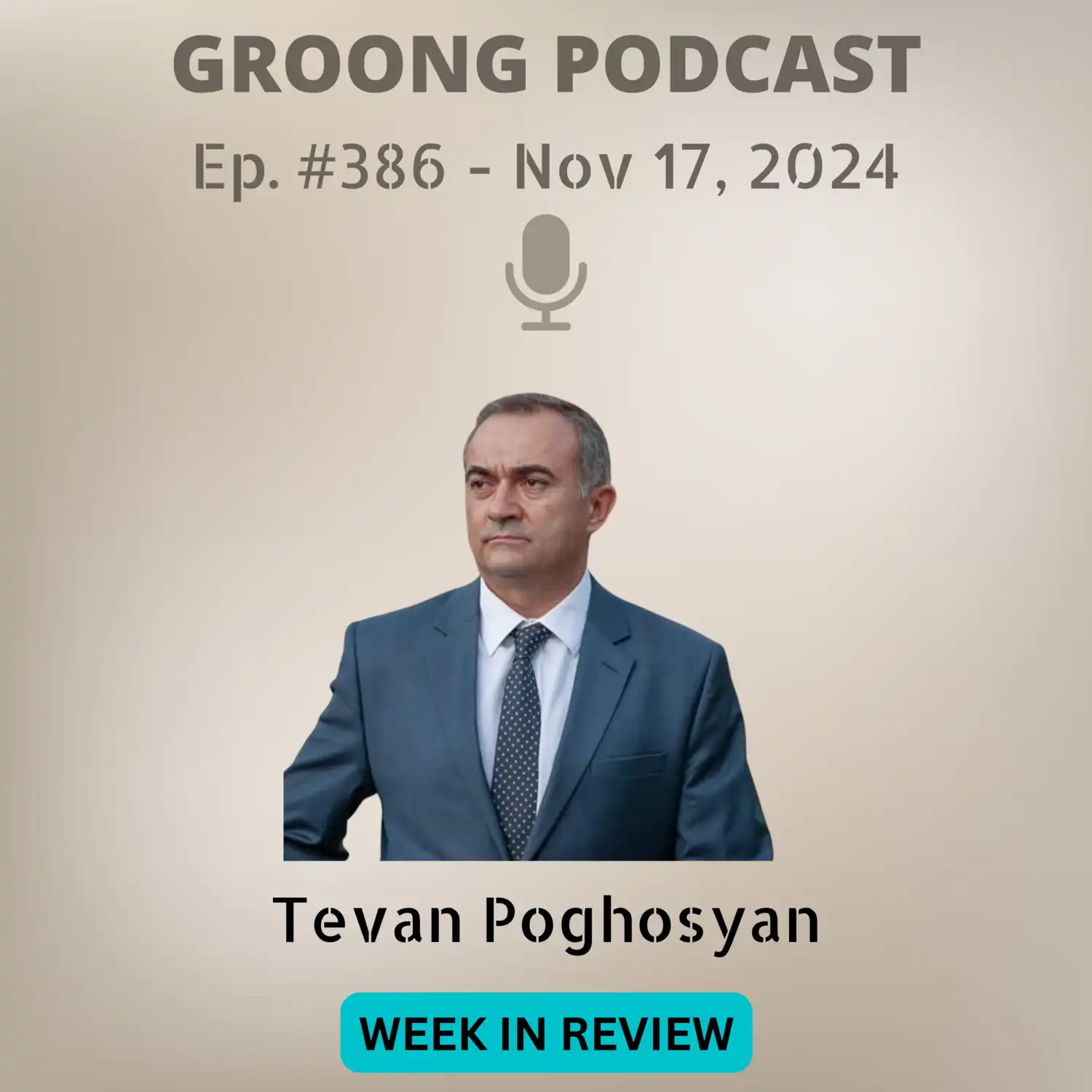
Groong Links:
Guest:
Topics:
- Armenia-Azerbaijan talks
- COP29: Diplomacy and boycotts
- Gyumri’s political intrigues
- Mass dismissal of Armenian government members
- Police âreformâ
- Legislative Changes In Preparation For Elections
Episode 386 | Recorded: November 17, 2024
Tevan Poghosyan - Armenia-Azerbaijan Talks, COP29 in Baku, Gyumri Politics, Police Reform | Ep 386 - Nov 17, 2024 [EP386]
Posted on Tuesday, Nov 19, 2024 | Category: Armenia, Artsakh, Nagorno Karabakh, Azerbaijan, Georgia, Turkey, Russia, Human Rights, Economy, Ukraine, China, Iran, Israel, Middle EastGroong Links:
Guest:
Topics:
- Armenia-Azerbaijan talks
- COP29: Diplomacy and boycotts
- Gyumri’s political intrigues
- Mass dismissal of Armenian government members
- Police âreformâ
- Legislative Changes In Preparation For Elections
Episode 386 | Recorded: November 17, 2024
Suren Sargsyan - Armenia and Trump’s Election as President Again | Ep 384 - Nov 9, 2024 [EP384]
Posted on Saturday, Nov 9, 2024 | Category: Armenia, Politics, USA, Middle East, Ukraine, Artsakh, Nagorno Karabakh, Israel, Lebanon, Genocide, Armenian Church, China, Russia, NATO, Iran, Economy, Human Rights | Series: cog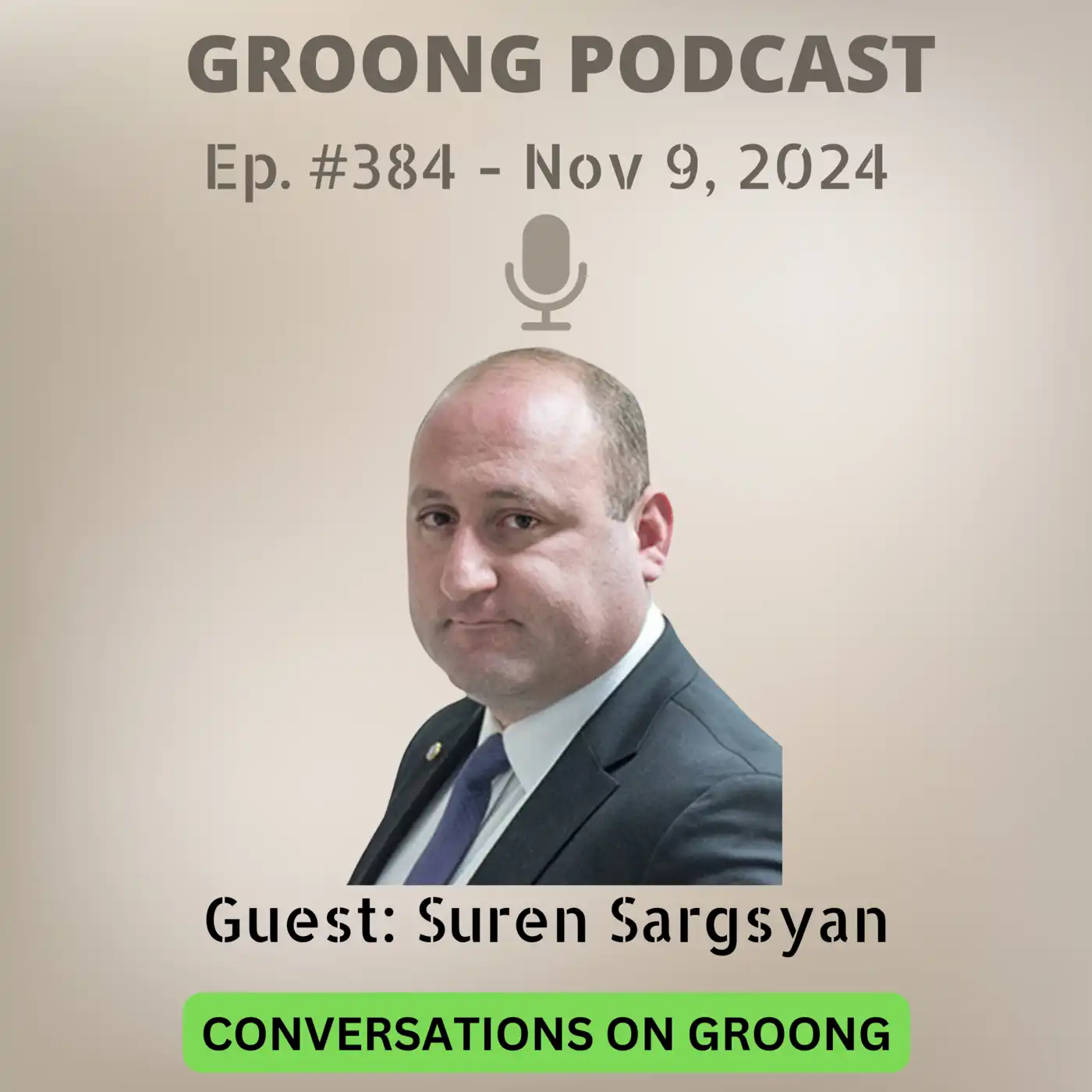
Groong Links:
Guest:
Topic:
- Armenia, Armenian Americans, Artsakh
- Ukraine War, NATO, China
- Israel, Gaza, Lebanon, Iran
Episode 384 | Recorded: April 3, 2023
Suren Sargsyan - Armenia and Trump’s Election as President Again | Ep 384 - Nov 9, 2024 [EP384]
Posted on Saturday, Nov 9, 2024 | Category: Armenia, Politics, USA, Middle East, Ukraine, Artsakh, Nagorno Karabakh, Israel, Lebanon, Genocide, Armenian Church, China, Russia, NATO, Iran, Economy, Human RightsGroong Links:
Guest:
Topic:
- Armenia, Armenian Americans, Artsakh
- Ukraine War, NATO, China
- Israel, Gaza, Lebanon, Iran
Episode 384 | Recorded: April 3, 2023
Benyamin Poghosyan - China, BRICS, New World Order, Armenia in Kazan, Georgian Elections in 2024 | Ep 382 - Nov 4, 2024 [EP382]
Posted on Monday, Nov 4, 2024 | Category: China, World Order, Georgia, Armenia, Russia, USA, India, Ukraine, Azerbaijan, Artsakh Blockade, BRICS, NATO, Turkey, Iran, Economy, European Union, Geopolitics, Syria | Series: cog
Groong Links:
Guest:
Topics:
- China, and the New World Order
- BRICS Summit and Multipolarity
- Armenia at BRICS
- Georgian Elections in 2024
Episode 382 | Recorded: October 29, 2024
Benyamin Poghosyan - China, BRICS, New World Order, Armenia in Kazan, Georgian Elections in 2024 | Ep 382 - Nov 4, 2024 [EP382]
Posted on Monday, Nov 4, 2024 | Category: China, World Order, Georgia, Armenia, Russia, USA, India, Ukraine, Azerbaijan, Artsakh Blockade, BRICS, NATO, Turkey, Iran, Economy, European Union, Geopolitics, SyriaGroong Links:
Guest:
Topics:
- China, and the New World Order
- BRICS Summit and Multipolarity
- Armenia at BRICS
- Georgian Elections in 2024
Episode 382 | Recorded: October 29, 2024
Groong Links:
Guest:
Topics:
- Georgian Elections Outcome
- Political Landscape
- Effect on Armenia and Beyond
Episode 381 | Recorded: November 3, 2024
Groong Links:
Guest:
Topics:
- Georgian Elections Outcome
- Political Landscape
- Effect on Armenia and Beyond
Episode 381 | Recorded: November 3, 2024

Groong Links:
Guest:
Topics:
- Georgian Elections in 2024
- Election Landscape
- Themes of the Campaigns
- Comparison with Moldova 2024
- Outcomes and Expectations
Episode 377 | Recorded: October 23, 2024
Groong Links:
Guest:
Topics:
- Georgian Elections in 2024
- Election Landscape
- Themes of the Campaigns
- Comparison with Moldova 2024
- Outcomes and Expectations
Episode 377 | Recorded: October 23, 2024
Sergei Melkonian - Armenia Azerbaijan, Moldova Georgia Elections, Iran Russia, BRICS in Kazan, Russia | Ep 376 - Oct 20, 2024 [EP376]
Posted on Tuesday, Oct 22, 2024 | Category: Armenia, Azerbaijan, Russia, Georgia, Artsakh, Nagorno Karabakh, Turkey, Iran, USA, Israel, Lebanon, Armenian Church, BRICS, Middle East, Syria, China, Ukraine, Genocide, Human Rights, European Union, Geopolitics | Series: wir
Groong Links:
Guest:
Topics:
- Armenia Azerbaijan Talks
- Elections in Moldova and Georgia
- Iran Russia Relations
- BRICS Summit in Kaza, Russia
Episode 376 | Recorded: October 20, 2024
Sergei Melkonian - Armenia Azerbaijan, Moldova Georgia Elections, Iran Russia, BRICS in Kazan, Russia | Ep 376 - Oct 20, 2024 [EP376]
Posted on Tuesday, Oct 22, 2024 | Category: Armenia, Azerbaijan, Russia, Georgia, Artsakh, Nagorno Karabakh, Turkey, Iran, USA, Israel, Lebanon, Armenian Church, BRICS, Middle East, Syria, China, Ukraine, Genocide, Human Rights, European Union, GeopoliticsGroong Links:
Guest:
Topics:
- Armenia Azerbaijan Talks
- Elections in Moldova and Georgia
- Iran Russia Relations
- BRICS Summit in Kaza, Russia
Episode 376 | Recorded: October 20, 2024
Nino Skvortsova - Political Science, Politics, and Identity in Georgia, Relations with Armenia | Ep 375 - Oct 21, 2024 [EP375]
Posted on Monday, Oct 21, 2024 | Category: Georgia, Armenia, Elections, Azerbaijan, Turkey, Russia, USA, European Union, NATO, Iran, China, Economy, Genocide, Geopolitics, Israel, Lebanon, Middle East, Ukraine | Series: cog
Groong Links:
Guest:
Topics:
- Political Science in Georgia
- Elections and Potential Political Pivot
- Influences on Georgian Identity
- Georgia-Armenia Relations
Episode 375 | Recorded: October 15, 2024
Nino Skvortsova - Political Science, Politics, and Identity in Georgia, Relations with Armenia | Ep 375 - Oct 21, 2024 [EP375]
Posted on Monday, Oct 21, 2024 | Category: Georgia, Armenia, Elections, Azerbaijan, Turkey, Russia, USA, European Union, NATO, Iran, China, Economy, Genocide, Geopolitics, Israel, Lebanon, Middle East, UkraineGroong Links:
Guest:
Topics:
- Political Science in Georgia
- Elections and Potential Political Pivot
- Influences on Georgian Identity
- Georgia-Armenia Relations
Episode 375 | Recorded: October 15, 2024
Dziunik Aghajanian - Azerbaijan Escalates Threats, Russia-Armenia Relations, Eat Rice, not Wheat, Have some Cold Winters, Srbazan Movement Update, Regional Geopolitics, Georgian Elections | Ep 374 - Oct 13, 2024 [EP374]
Posted on Tuesday, Oct 15, 2024 | Category: Armenia, Azerbaijan, Georgia, Middle East, Iran, Artsakh, Nagorno Karabakh, Russia, Israel, Artsakh Blockade, Economy, European Union, NATO, Lebanon, Syria, Turkey, China, Ukraine | Series: wir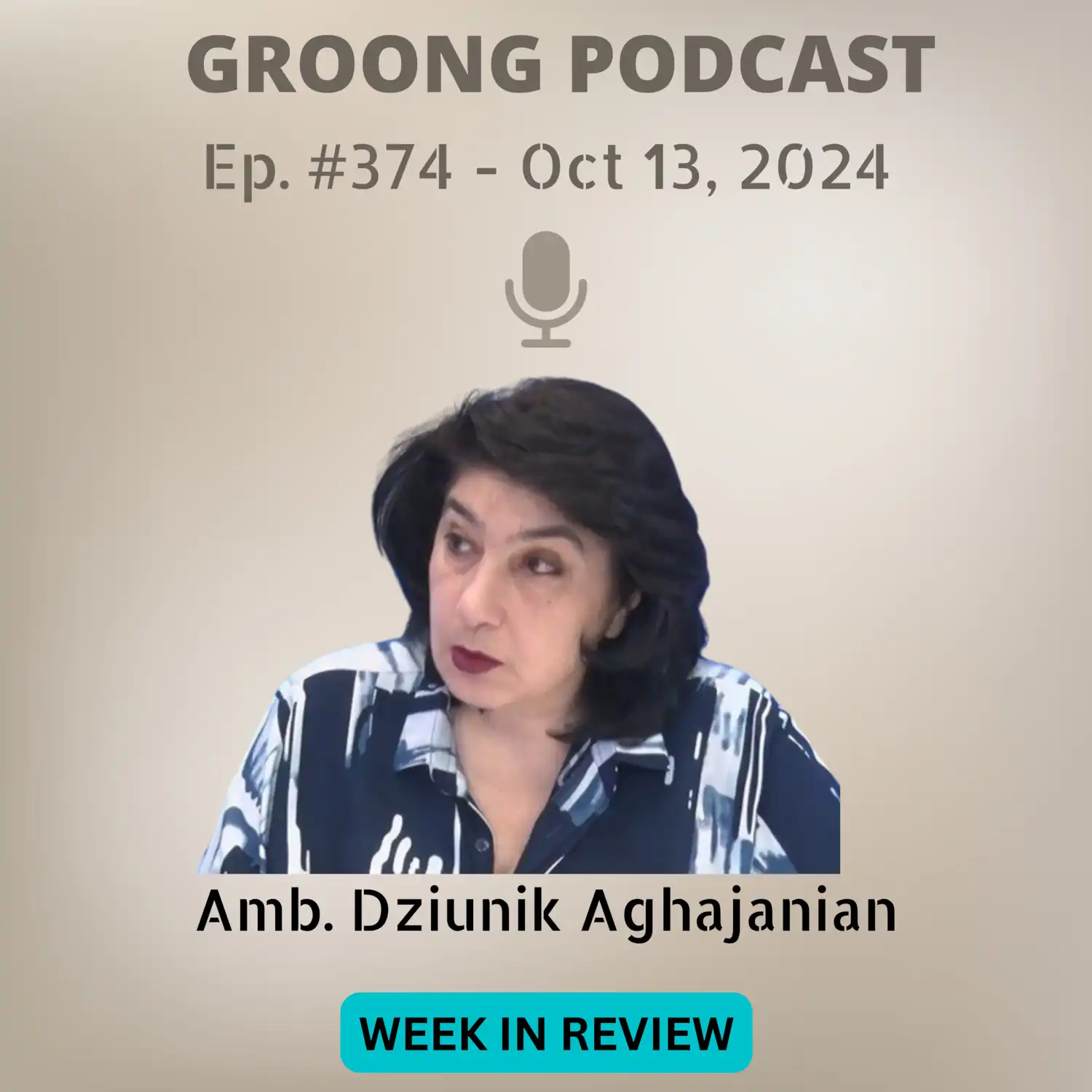
Groong Links:
Guest:
Topics:
- Azerbaijan Escalates Threats
- Russia-Armenia Relations
- Eat Rice, not Wheat, Have some Cold Winters!
- Srbazan Movement Update
- Regional Geopolitics
- Iran-Russia
- Israel-Iran
- Georgian Elections
Episode 374 | Recorded: October 14, 2024
Dziunik Aghajanian - Azerbaijan Escalates Threats, Russia-Armenia Relations, Eat Rice, not Wheat, Have some Cold Winters, Srbazan Movement Update, Regional Geopolitics, Georgian Elections | Ep 374 - Oct 13, 2024 [EP374]
Posted on Tuesday, Oct 15, 2024 | Category: Armenia, Azerbaijan, Georgia, Middle East, Iran, Artsakh, Nagorno Karabakh, Russia, Israel, Artsakh Blockade, Economy, European Union, NATO, Lebanon, Syria, Turkey, China, UkraineGroong Links:
Guest:
Topics:
- Azerbaijan Escalates Threats
- Russia-Armenia Relations
- Eat Rice, not Wheat, Have some Cold Winters!
- Srbazan Movement Update
- Regional Geopolitics
- Iran-Russia
- Israel-Iran
- Georgian Elections
Episode 374 | Recorded: October 14, 2024
Benyamin Poghosyan - Armenia Azerbaijan, Escalation in the Middle East, Constitutional Court Punts, Upcoming BRICS Summit | Ep 373 - Oct 6, 2024 [EP373]
Posted on Tuesday, Oct 8, 2024 | Category: Armenia, Artsakh, Middle East, Nagorno Karabakh, Azerbaijan, Georgia, Turkey, Russia, Israel, Iran, Armenian Genocide, BRICS, China, Economy, Syria, European Union, NATO, Ukraine, Genocide, Geopolitics, Lebanon | Series: wir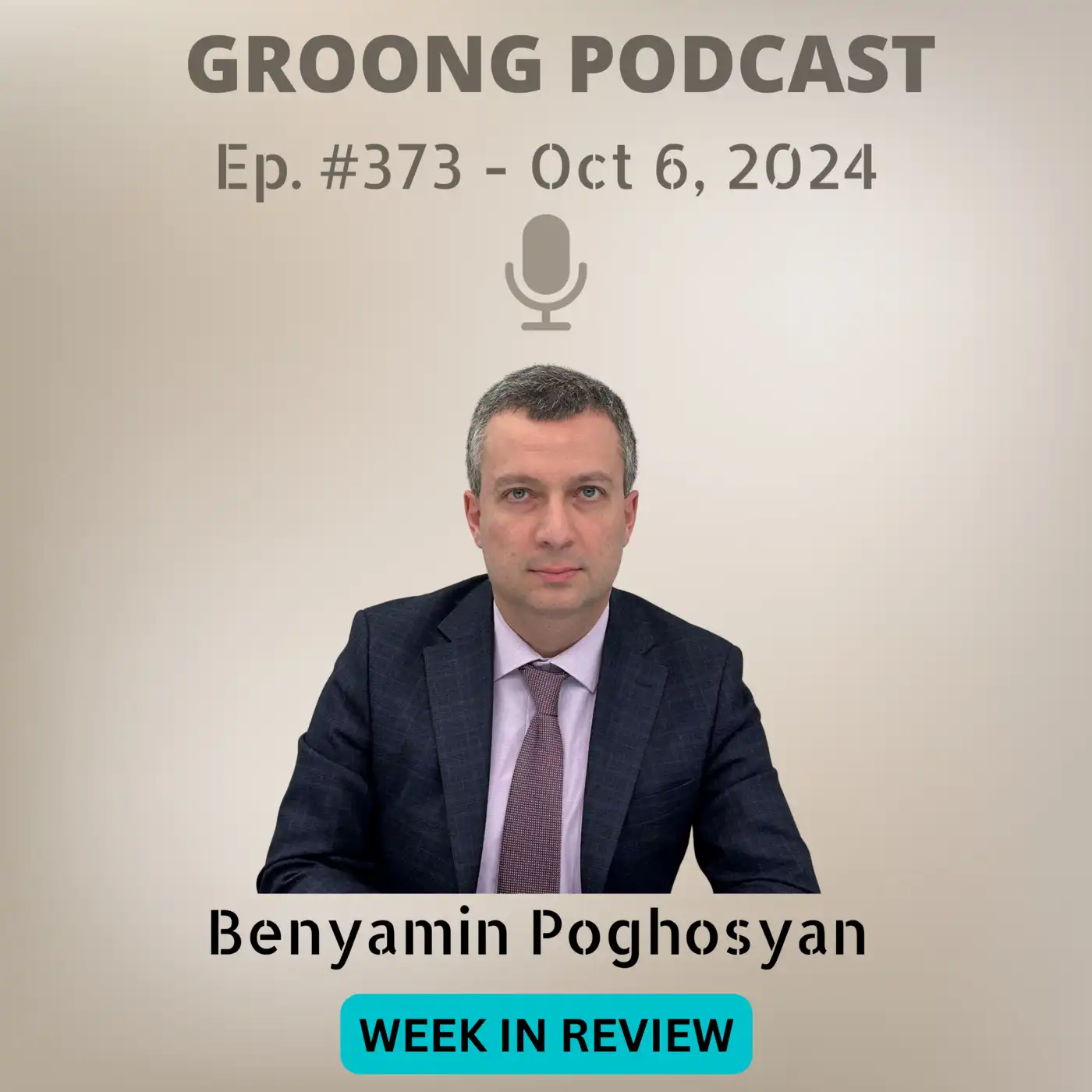
Groong Links:
Guest:
Topics:
- Armenian Azerbaijani Talks
- Escalation in the Middle East
- Constitutional Court Punts
- Upcoming BRICS Summit
Episode 373 | Recorded: Octoberr 7, 2024
Benyamin Poghosyan - Armenia Azerbaijan, Escalation in the Middle East, Constitutional Court Punts, Upcoming BRICS Summit | Ep 373 - Oct 6, 2024 [EP373]
Posted on Tuesday, Oct 8, 2024 | Category: Armenia, Artsakh, Middle East, Nagorno Karabakh, Azerbaijan, Georgia, Turkey, Russia, Israel, Iran, Armenian Genocide, BRICS, China, Economy, Syria, European Union, NATO, Ukraine, Genocide, Geopolitics, LebanonGroong Links:
Guest:
Topics:
- Armenian Azerbaijani Talks
- Escalation in the Middle East
- Constitutional Court Punts
- Upcoming BRICS Summit
Episode 373 | Recorded: Octoberr 7, 2024