China
Last updated: June 11, 2026
China is the world’s second-largest economy with a population of approximately 1.4 billion people and the largest manufacturing base globally. The People’s Republic of China (PRC), governed as a one-party socialist state under the Chinese Communist Party, has emerged as a superpower through rapid economic growth, technological advancement, and strategic infrastructure development. China’s Belt and Road Initiative (BRI), launched in 2013, represents a comprehensive strategy to expand economic ties and geopolitical influence across Asia, Africa, Europe, and increasingly the South Caucasus through infrastructure investment, trade partnerships, and financial mechanisms like the Asian Infrastructure Investment Bank (AIIB).
China’s rise as a global power shapes the geopolitical environment in which Armenia operates, particularly through its strategic partnership with Russia and its competition with the United States for influence across Eurasia. Beijing has deepened ties with Moscow in response to Western sanctions and isolation, creating a de facto alignment that affects regional dynamics from Ukraine to the South Caucasus. China’s Belt and Road Initiative and its broader vision of a multipolar world order challenge the U.S.-led international system, creating openings and constraints for smaller states navigating between competing great powers.
China’s Economic Strategy in the South Caucasus
China views the South Caucasus as a critical bridge connecting Central Asia to Europe and bypassing trans-Siberian routes. The Belt and Road Initiative focuses on developing reliable trans-Caspian trade routes, securing energy resources, capturing electric vehicle markets, and establishing logistical footholds in Black Sea ports. In Georgia, Chinese consortia are reviving the stalled Anaklia Deep-Sea Port project to create a major container hub, leveraging Georgia’s tariff-free trade agreement with China. In Azerbaijan, bilateral trade reached approximately $3.74 billion, with Chinese state-owned enterprises investing heavily in petrochemicals, metallurgy, and renewable energy. Azerbaijan has also emerged as a massive market for Chinese EV exports, importing nearly 15,500 hybrid and electric vehicles in a recent year. China has aligned the BRI with Azerbaijan’s domestic “Silk Road Revival” to maximize trans-Caspian multimodal freight integration.
China-Armenia Relations
China’s economic engagement with Armenia remains underdeveloped compared to its partnerships with Azerbaijan and Georgia. Beijing is exploring highway development via the North-South Transport Corridor to better link Armenia to regional trade networks. The Asian Infrastructure Investment Bank (AIIB) and Silk Road Fund serve as primary mechanisms for Chinese financing of regional road, rail, and telecommunication upgrades, though Armenian participation lags behind other Caucasus states. China’s technological and innovation cooperation includes digitalization and “Smart Science City” development initiatives, but Armenia has not been prioritized as a hub for these programs. The limited bilateral economic engagement reflects both Armenia’s smaller market size and its historical alignment with Russia, which constrains Chinese investment even as Beijing seeks to expand its economic footprint across the region.
For Armenia, China’s trajectory matters less as a direct economic partner than as a force reshaping the larger contest between Russia and the West—and increasingly, between itself and the West—within which Armenia’s own survival depends.
The Iran War beginning in early 2026 brought China into sharper focus as a factor in Armenian security. Dr. Anatol Lieven and Sergei Melkonian both examined how the war affects energy supplies, de-dollarization, and alternative financial architectures that bypass American control, with China positioned as a potential beneficiary of reduced U.S. dominance in global markets. Prof. Warwick Powell discussed in depth how the war on Iran relates to U.S. energy efficiency, the limits of American airpower, and the rise of alternative payment systems and information networks in which China plays a central role. These conversations illustrated that Armenia’s position in a multipolar order depends partly on whether China and Russia can sustain their partnership, and whether the U.S. can maintain its leverage over regional states despite mounting challenges to its global position.
TRIPP (Trump Route for International Peace and Prosperity), the U.S.-backed transit corridor through Armenian Syunik province, is explicitly framed by Washington as a tool to limit Chinese and Russian influence in Central Asia and the Middle East. Multiple episodes have noted that the corridor serves American strategic interests in accessing critical minerals and building logistics networks independent of both Iran and Russia, with secondary implications for containing Chinese Belt and Road expansion in the region. China’s own interests in Eurasian connectivity remain underdeveloped in Armenia-specific analysis, but the competing visions of regional integration between TRIPP and Russian-Chinese alternatives represent a structural choice Armenia cannot avoid indefinitely. Whether Armenia emerges from its current isolation as a node in a U.S., Russian, Chinese, or genuinely multipolar network will depend on outcomes beyond Armenian control, making Armenia’s role in the broader U.S.-China-Russia competition far more consequential than any direct Sino-Armenian relationship.
Groong episodes that include this tag
Below are all Groong episodes tagged with China.
Benyamin Poghosyan - Trump Ultimatum to Putin, Corridor Pressures, DC Summit, Kitchen Sink | Ep 457, Aug 3, 2025 [EP457]
Posted on Tuesday, Aug 5, 2025 | Category: Armenia, Politics, Poll, Artsakh, Nagorno Karabakh, Azerbaijan, Iran, Ukraine, Russia, India, China, Armenian Genocide, NATO | Series: wir, video
Groong Links:
Guest:
Topics:
- Trump Ultimatum to Putin
- US Sanctions effect on Armenia
- Turkey, US, and Armeniaâs Territory
- The Kitchen Sink
Episode 457 | Recorded: August 3, 2025
Benyamin Poghosyan - Trump Ultimatum to Putin, Corridor Pressures, DC Summit, Kitchen Sink | Ep 457, Aug 3, 2025 [EP457]
Posted on Tuesday, Aug 5, 2025 | Category: Armenia, Politics, Poll, Artsakh, Nagorno Karabakh, Azerbaijan, Iran, Ukraine, Russia, India, China, Armenian Genocide, NATOGroong Links:
Guest:
Topics:
- Trump Ultimatum to Putin
- US Sanctions effect on Armenia
- Turkey, US, and Armeniaâs Territory
- The Kitchen Sink
Episode 457 | Recorded: August 3, 2025
Benyamin Poghosyan - Public Trust in Freefall, Church on the Rise, and Corridor Pressures Mount | Ep 456, Jul 27, 2025 [EP456]
Posted on Tuesday, Jul 29, 2025 | Category: Armenia, Politics, Poll, Russia, Iran, Georgia, Azerbaijan, Turkey, Ukraine, Middle East, Israel, China, India, Geopolitics, Artsakh, Armenian Church, Nagorno Karabakh, European Union, Economy, Syria | Series: wir, video
Groong Links:
Guest:
Topics:
- Corridor Logic
- Crackdown Logic
- IRI Poll
- Russian-Azerbaijani Relations
Episode 456 | Recorded: July 28, 2025
Benyamin Poghosyan - Public Trust in Freefall, Church on the Rise, and Corridor Pressures Mount | Ep 456, Jul 27, 2025 [EP456]
Posted on Tuesday, Jul 29, 2025 | Category: Armenia, Politics, Poll, Russia, Iran, Georgia, Azerbaijan, Turkey, Ukraine, Middle East, Israel, China, India, Geopolitics, Artsakh, Armenian Church, Nagorno Karabakh, European Union, Economy, SyriaGroong Links:
Guest:
Topics:
- Corridor Logic
- Crackdown Logic
- IRI Poll
- Russian-Azerbaijani Relations
Episode 456 | Recorded: July 28, 2025
Archil Sikharulidze - Why does Georgia matter for the EU | Ep 454, Jul 24, 2025 [EP454]
Posted on Thursday, Jul 24, 2025 | Category: Georgia, Politics, Armenia, Azerbaijan, Russia, USA, Armenian Church, Nagorno Karabakh, European Union, Iran, China, Turkey, Ukraine, NATO, Economy, Human Rights, India, Israel | Series: cog
Groong Links:
Guest:
Topics:
- EU Strategy in the South Caucasus
- Attacks on the National Church
- 2025 Local Election Politics
Episode 454 | Recorded: July 22, 2025
Archil Sikharulidze - Why does Georgia matter for the EU | Ep 454, Jul 24, 2025 [EP454]
Posted on Thursday, Jul 24, 2025 | Category: Georgia, Politics, Armenia, Azerbaijan, Russia, USA, Armenian Church, Nagorno Karabakh, European Union, Iran, China, Turkey, Ukraine, NATO, Economy, Human Rights, India, IsraelGroong Links:
Guest:
Topics:
- EU Strategy in the South Caucasus
- Attacks on the National Church
- 2025 Local Election Politics
Episode 454 | Recorded: July 22, 2025
Arthur Martirosyan - Constitution, Western Controlled Syunik, Church Crackdown | Ep 452, Jul 6, 2025 [EP452]
Posted on Tuesday, Jul 8, 2025 | Category: Armenia, Politics, Turkey, Azerbaijan, Russia, Iran, Armenian Church, Artsakh, Nagorno Karabakh, Ukraine, NATO, China, Economy, Genocide | Series: wir, video
Groong Links:
Guest:
Topics:
- Constitution Day
- Western Controlled Syunik?
- What was Kallas Doing in Yerevan?
- Russian-Azerbaijani Relations
- Coup dâEtat? Or Coup dâÃglise?
- The Kitchen Sink
Episode 452 | Recorded: July 7, 2025
Arthur Martirosyan - Constitution, Western Controlled Syunik, Church Crackdown | Ep 452, Jul 6, 2025 [EP452]
Posted on Tuesday, Jul 8, 2025 | Category: Armenia, Politics, Turkey, Azerbaijan, Russia, Iran, Armenian Church, Artsakh, Nagorno Karabakh, Ukraine, NATO, China, Economy, GenocideGroong Links:
Guest:
Topics:
- Constitution Day
- Western Controlled Syunik?
- What was Kallas Doing in Yerevan?
- Russian-Azerbaijani Relations
- Coup dâEtat? Or Coup dâÃglise?
- The Kitchen Sink
Episode 452 | Recorded: July 7, 2025
Karen Kwiatkowski - Israel Attacks Iran, Where did Trump’s America 1st Go | Ep 450, June 28, 2025 [EP450]
Posted on Saturday, Jun 28, 2025 | Category: Iran, USA, Geopolitics, Israel, Ukraine, China, Russia, Armenia, NATO, Syria, Turkey, Middle East, Lebanon, Azerbaijan | Series: cog, video
Groong Links:
Guest:
Topics:
- The 12-Day War
- Where did Trumpâs American 1st Go?
Episode 450 | Recorded: June 26, 2025
Karen Kwiatkowski - Israel Attacks Iran, Where did Trump’s America 1st Go | Ep 450, June 28, 2025 [EP450]
Posted on Saturday, Jun 28, 2025 | Category: Iran, USA, Geopolitics, Israel, Ukraine, China, Russia, Armenia, NATO, Syria, Turkey, Middle East, Lebanon, AzerbaijanGroong Links:
Guest:
Topics:
- The 12-Day War
- Where did Trumpâs American 1st Go?
Episode 450 | Recorded: June 26, 2025
Transcript: Karen Kwiatkowski - Israel Attacks Iran, Where did Trump’s America 1st Go | Ep 450, June 28, 2025 [EP450]
Posted on Saturday, Jun 28, 2025 | Category: Iran, USA, Geopolitics, Israel, Ukraine, China, Russia, Armenia, NATO, Syria, Turkey, Middle East, Lebanon, Azerbaijan, TranscriptThe 12-Day War. Where did Trump’s American 1st Go?
Sergei Melkonian - Israel & Iran, Opposition Crackdown, Pashinyan in Istanbul | Ep 449, Jun 22, 2025 [EP449]
Posted on Thursday, Jun 26, 2025 | Category: Armenia, Politics, Iran, Israel, Azerbaijan, Turkey, Russia, Artsakh, Nagorno Karabakh, Armenian Church, Economy, China, Middle East | Series: wir, video
Groong Links:
Guest:
Topics:
- Israel and Iran
- Crackdown on the Opposition
- Pashinyan in Istanbul
- The Kitchen Sink
Episode 449 | Recorded: June 25, 2025
Sergei Melkonian - Israel & Iran, Opposition Crackdown, Pashinyan in Istanbul | Ep 449, Jun 22, 2025 [EP449]
Posted on Thursday, Jun 26, 2025 | Category: Armenia, Politics, Iran, Israel, Azerbaijan, Turkey, Russia, Artsakh, Nagorno Karabakh, Armenian Church, Economy, China, Middle EastGroong Links:
Guest:
Topics:
- Israel and Iran
- Crackdown on the Opposition
- Pashinyan in Istanbul
- The Kitchen Sink
Episode 449 | Recorded: June 25, 2025
Arman Grigoryan - Iran and US vs Iran, Strategic Dangers to Armenia | Ep 448, Jun 23, 2025 [EP448]
Posted on Monday, Jun 23, 2025 | Category: Iran, Russia, Armenia, Israel, Politics, Syria, China, USA, Azerbaijan, European Union, Turkey, Ukraine, Middle East, Georgia | Series: cog, video
Groong Links:
Guest:
Topics:
- Israelâs war on Iran and U.S. involvement
- Risks of Iranian regime change or partition
- Strategic dangers to Armenia
Episode 448 | Recorded: June 21, 2025
Arman Grigoryan - Iran and US vs Iran, Strategic Dangers to Armenia | Ep 448, Jun 23, 2025 [EP448]
Posted on Monday, Jun 23, 2025 | Category: Iran, Russia, Armenia, Israel, Politics, Syria, China, USA, Azerbaijan, European Union, Turkey, Ukraine, Middle East, GeorgiaGroong Links:
Guest:
Topics:
- Israelâs war on Iran and U.S. involvement
- Risks of Iranian regime change or partition
- Strategic dangers to Armenia
Episode 448 | Recorded: June 21, 2025
Fyodor Lukyanov - Israel Attacks Iran: Perspectives From Russia | Ep 447, Jun 16, 2025 [EP447]
Posted on Monday, Jun 16, 2025 | Category: Iran, Russia, Armenia, Israel, Politics, Azerbaijan, Georgia, Geopolitics, Turkey, Ukraine, Armenian Church, Artsakh Blockade, NATO, China, Syria, Middle East, Economy | Series: cog, video
Groong Links:
Guest:
Topics:
- Israel hits Iran, talks collapse
- Armenia at risk if Iran weakens
- Russia hardens stance on Ukraine
Episode 447 | Recorded: June 15, 2025
Fyodor Lukyanov - Israel Attacks Iran: Perspectives From Russia | Ep 447, Jun 16, 2025 [EP447]
Posted on Monday, Jun 16, 2025 | Category: Iran, Russia, Armenia, Israel, Politics, Azerbaijan, Georgia, Geopolitics, Turkey, Ukraine, Armenian Church, Artsakh Blockade, NATO, China, Syria, Middle East, EconomyGroong Links:
Guest:
Topics:
- Israel hits Iran, talks collapse
- Armenia at risk if Iran weakens
- Russia hardens stance on Ukraine
Episode 447 | Recorded: June 15, 2025
Transcript: Fyodor Lukyanov - Israel Attacks Iran: Perspectives From Russia | Ep 447, Jun 16, 2025 [EP447]
Posted on Monday, Jun 16, 2025 | Category: Iran, Russia, Armenia, Israel, Politics, Azerbaijan, Georgia, Geopolitics, Turkey, Ukraine, Armenian Church, Artsakh Blockade, NATO, China, Syria, Middle East, Economy, TranscriptIn this episode of Conversations on Groong, we speak with Fyodor Lukyanov, editor-in-chief of Russia in Global Affairs, to analyze the geopolitical fallout from Israel’s surprise military campaign against Iran, known as Operation Rising Lion. We explore how the attacks may sabotage U.S.-Iran nuclear negotiations, shift Russia’s strategic calculus, and destabilize the South Caucasus—particularly Armenia’s Syunik province. We also examine the implications for Russia-Iran relations, the Zangezur corridor, and Azerbaijan’s military posture. Finally, we discuss Ukraine’s Operation Spiderweb, recent Read More
Rananjay Anand – Will India Turn to Armenia Amid Turkey-Azerbaijan Fallout? | Ep 445, June 12, 2025 [EP445]
Posted on Thursday, Jun 12, 2025 | Category: Armenia, Geopolitics, India, Turkey, Azerbaijan, Nagorno Karabakh, Economy, China, Genocide | Series: cog, video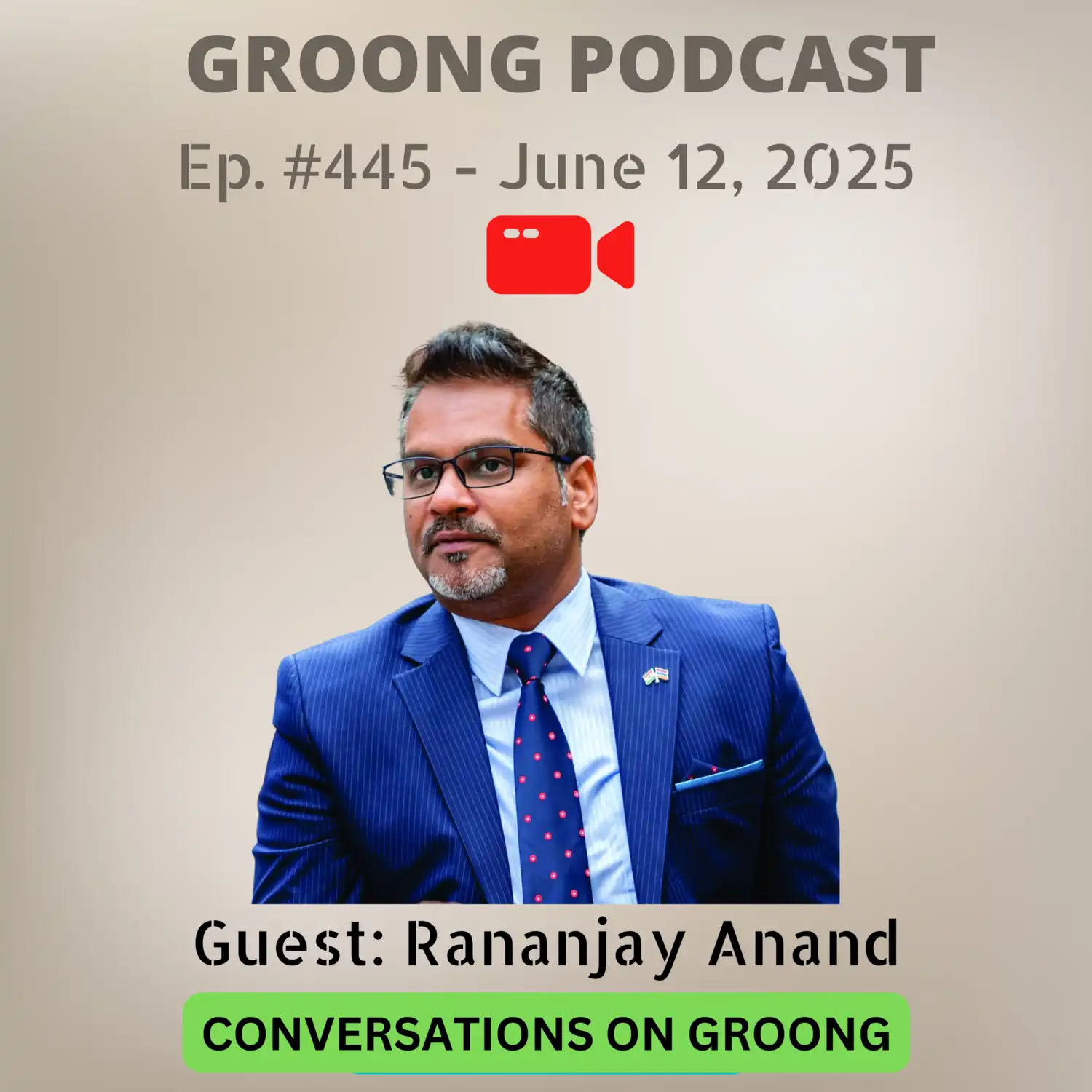
Groong Links:
Guest:
- Rananjay Anand , Co-Founder & President of the Indo-Armenian Friendship NGO.
Topics:
- Operation Sindoor
- Indians Boycott Turkey & Azerbaijan
- Armenia as a Robus Partner
Episode 445 | Recorded: June 9, 2025
Rananjay Anand – Will India Turn to Armenia Amid Turkey-Azerbaijan Fallout? | Ep 445, June 12, 2025 [EP445]
Posted on Thursday, Jun 12, 2025 | Category: Armenia, Geopolitics, India, Turkey, Azerbaijan, Nagorno Karabakh, Economy, China, GenocideGroong Links:
Guest:
- Rananjay Anand , Co-Founder & President of the Indo-Armenian Friendship NGO.
Topics:
- Operation Sindoor
- Indians Boycott Turkey & Azerbaijan
- Armenia as a Robus Partner
Episode 445 | Recorded: June 9, 2025
Abhinav Pandya - From Sindoor to Syunik: India’s New Geopolitical Frontline | Ep 443, June 5, 2025 [EP443]
Posted on Friday, Jun 6, 2025 | Category: Armenia, Geopolitics, India, Azerbaijan, Turkey, Israel, Iran, Artsakh, Nagorno Karabakh, Syria, China, Russia, BRICS, Economy | Series: cog, video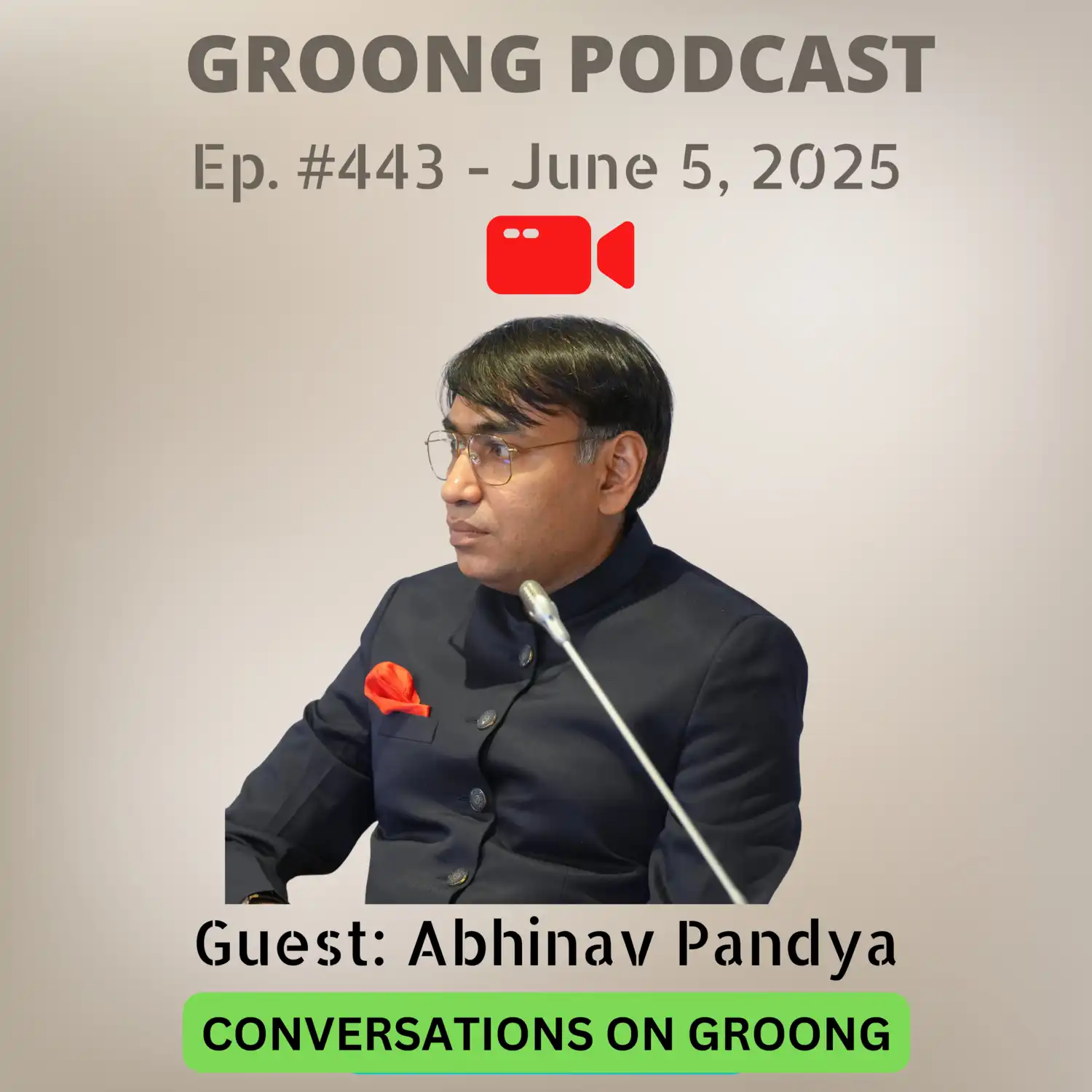
Groong Links:
Guest:
- Dr. Abhinav Pandya , Founder, President and CEO of Usanas Foundation Think Tank.
Topics:
- Turkey-Pakistan-Azerbaijan Axis
- Operation Sindoor
- Armenia As a Strategic Partner
- West Asia and Eurasia Context
- Future Outlook
Episode 443 | Recorded: June 3, 2025
Abhinav Pandya - From Sindoor to Syunik: India’s New Geopolitical Frontline | Ep 443, June 5, 2025 [EP443]
Posted on Friday, Jun 6, 2025 | Category: Armenia, Geopolitics, India, Azerbaijan, Turkey, Israel, Iran, Artsakh, Nagorno Karabakh, Syria, China, Russia, BRICS, EconomyGroong Links:
Guest:
- Dr. Abhinav Pandya , Founder, President and CEO of Usanas Foundation Think Tank.
Topics:
- Turkey-Pakistan-Azerbaijan Axis
- Operation Sindoor
- Armenia As a Strategic Partner
- West Asia and Eurasia Context
- Future Outlook
Episode 443 | Recorded: June 3, 2025
Benyamin Poghosyan - Ukraine and US-Iran, Fidan in Moscow, Lachin, Azerbaijan and Pashinyan attack Armenian Church, Impeachment vs. Elections | Ep 442, June 1, 2025 [EP442]
Posted on Tuesday, Jun 3, 2025 | Category: Armenia, Politics, Iran, Geopolitics, Artsakh, Nagorno Karabakh, Azerbaijan, Georgia, Turkey, Russia, Armenian Church, Ukraine, India, Israel, China, Syria, Economy, European Union | Series: wir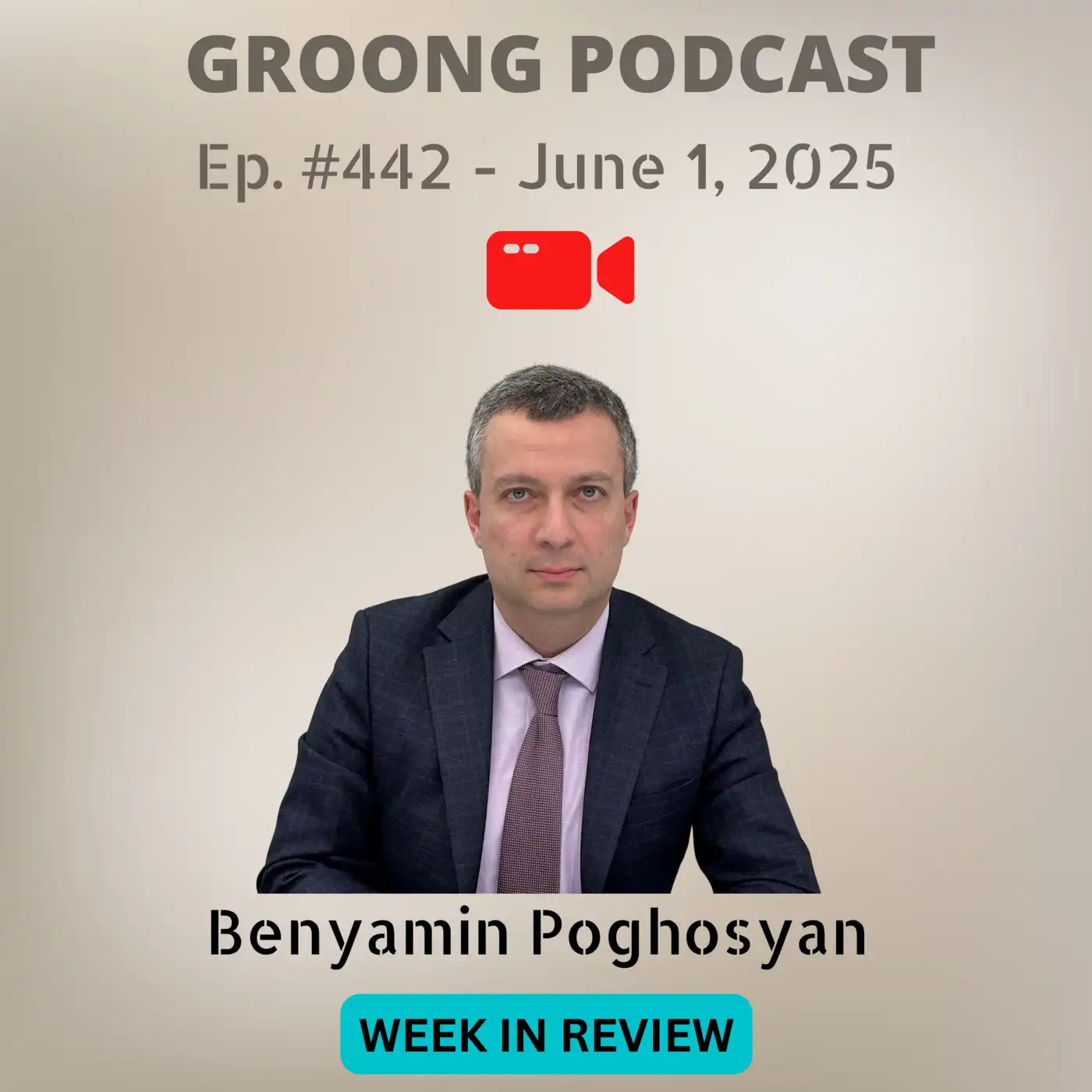
Groong Links:
Guest:
Topics:
- Status of Ukraine and US-Iran Crises
- Hakan Fidan in Moscow
- Erdogan, Aliyev, Sharif in Lachin
- Azerbaijan and Pashinyan Attack the Armenian Church
- Impeachment vs. Elections
- The Kitchen Sink
Episode 442 | Recorded: June 2, 2025
Benyamin Poghosyan - Ukraine and US-Iran, Fidan in Moscow, Lachin, Azerbaijan and Pashinyan attack Armenian Church, Impeachment vs. Elections | Ep 442, June 1, 2025 [EP442]
Posted on Tuesday, Jun 3, 2025 | Category: Armenia, Politics, Iran, Geopolitics, Artsakh, Nagorno Karabakh, Azerbaijan, Georgia, Turkey, Russia, Armenian Church, Ukraine, India, Israel, China, Syria, Economy, European UnionGroong Links:
Guest:
Topics:
- Status of Ukraine and US-Iran Crises
- Hakan Fidan in Moscow
- Erdogan, Aliyev, Sharif in Lachin
- Azerbaijan and Pashinyan Attack the Armenian Church
- Impeachment vs. Elections
- The Kitchen Sink
Episode 442 | Recorded: June 2, 2025
Ehsan Movahedian - Iran Amidst Geopolitical Tensions | Ep 437, May 19, 2025 [EP437]
Posted on Monday, May 19, 2025 | Category: Iran, Armenia, Geopolitics, USA, Russia, Israel, Azerbaijan, Syria, Turkey, Georgia, Nagorno Karabakh, NATO, China, Middle East, Economy | Series: cog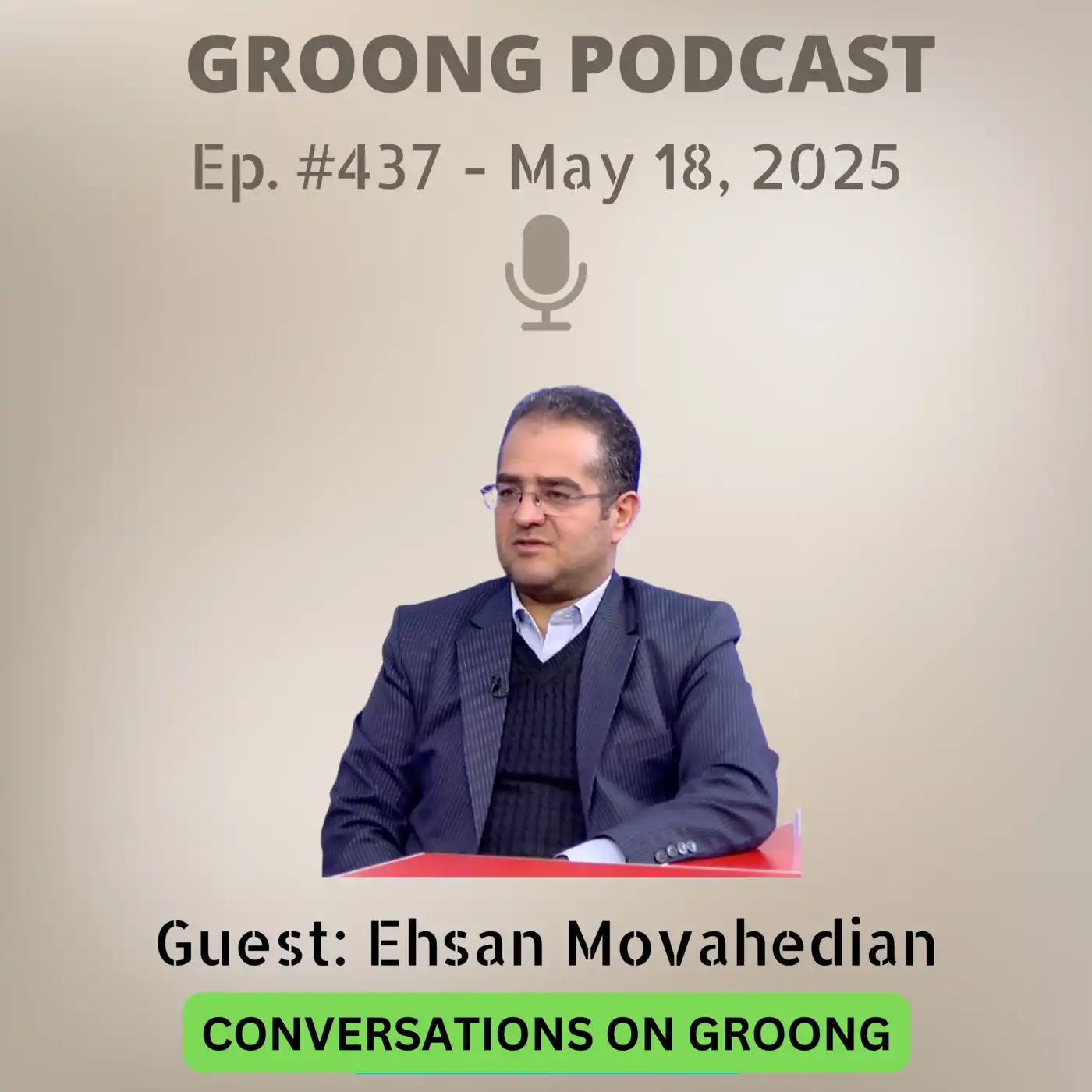
Groong Links:
Guest:
Topics:
- US-Iran Nuclear Talks
- Pezeshkian Visit to Baku
- Iran-Armenia Relations
- US Support for Azerbaijan
Episode 437 | Recorded: May 16, 2025
Ehsan Movahedian - Iran Amidst Geopolitical Tensions | Ep 437, May 19, 2025 [EP437]
Posted on Monday, May 19, 2025 | Category: Iran, Armenia, Geopolitics, USA, Russia, Israel, Azerbaijan, Syria, Turkey, Georgia, Nagorno Karabakh, NATO, China, Middle East, EconomyGroong Links:
Guest:
Topics:
- US-Iran Nuclear Talks
- Pezeshkian Visit to Baku
- Iran-Armenia Relations
- US Support for Azerbaijan
Episode 437 | Recorded: May 16, 2025
Pietro Shakarian - May 9, Victory Day and Parade, Artsrun Hovhannisyan’s Historical Revision | Ep 436, May 15, 2025 [EP436]
Posted on Thursday, May 15, 2025 | Category: Russia, Armenia, Geopolitics, Nagorno Karabakh, China, Armenian Genocide, Turkey, Azerbaijan, NATO, Ukraine, Genocide, Soviet Armenia, Modern Armenia | Series: cog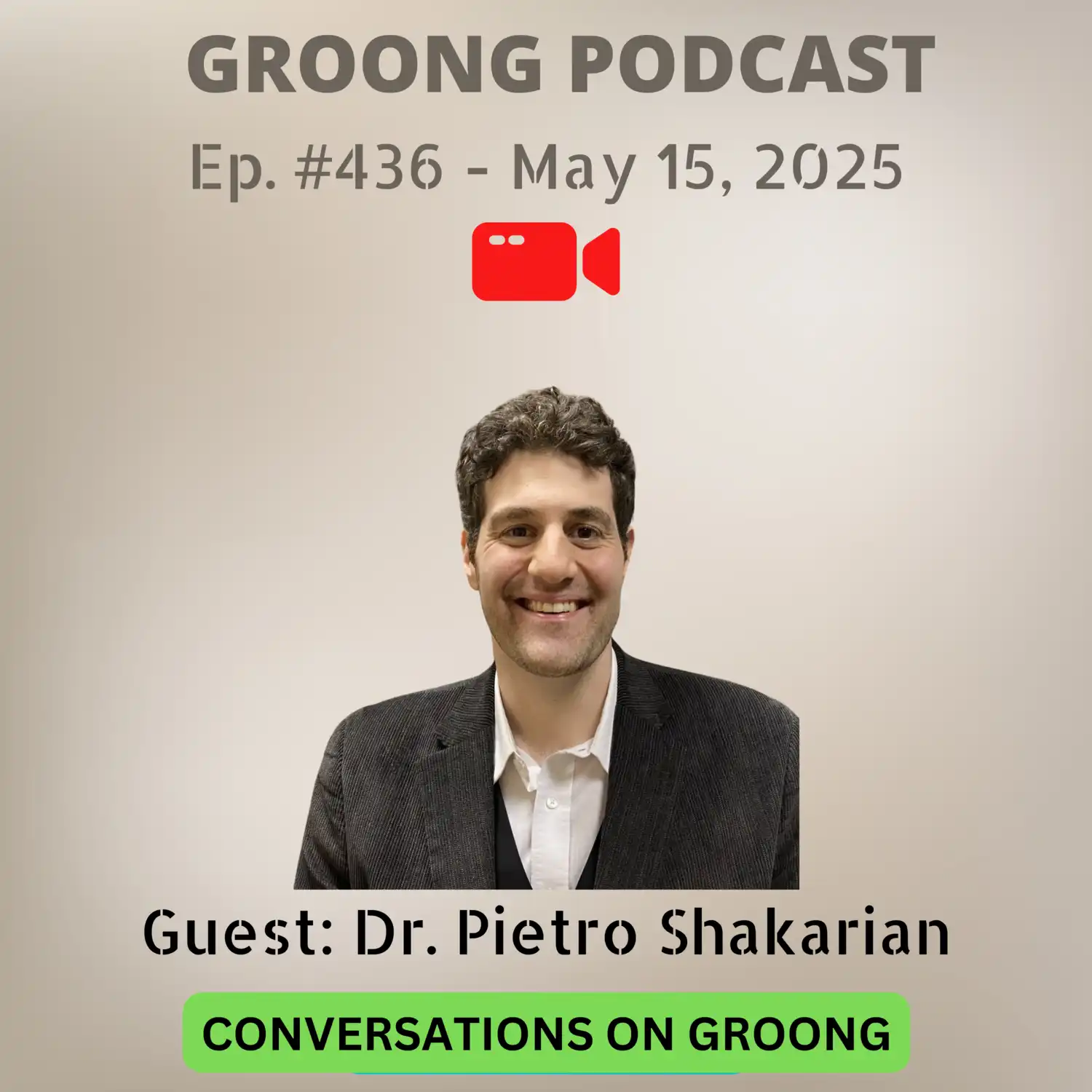
Groong Links:
Guest:
Topics:
- May 9, Victory Day and Parade
- Pashinyan, Aliyev Posture at Victory Day
- Artsrun Hovhannisyanâs Historical Revision
- Armenia and Artsakh Contributions to WW2
Episode 436 | Recorded: May 15, 2025
Pietro Shakarian - May 9, Victory Day and Parade, Artsrun Hovhannisyan’s Historical Revision | Ep 436, May 15, 2025 [EP436]
Posted on Thursday, May 15, 2025 | Category: Russia, Armenia, Geopolitics, Nagorno Karabakh, China, Armenian Genocide, Turkey, Azerbaijan, NATO, Ukraine, Genocide, Soviet Armenia, Modern ArmeniaGroong Links:
Guest:
Topics:
- May 9, Victory Day and Parade
- Pashinyan, Aliyev Posture at Victory Day
- Artsrun Hovhannisyanâs Historical Revision
- Armenia and Artsakh Contributions to WW2
Episode 436 | Recorded: May 15, 2025
Arthur G Martirosyan - Victory Day, India Pakistan, Armenia Azerbaijan, Pope Leo XIV | Ep 435, May 11, 2025 [EP435]
Posted on Wednesday, May 14, 2025 | Category: Armenia, Politics, Russia, Azerbaijan, Armenian Genocide, Armenian Church, India, Turkey, China, Genocide, Ukraine, Israel, Iran, Economy, Georgia | Series: wir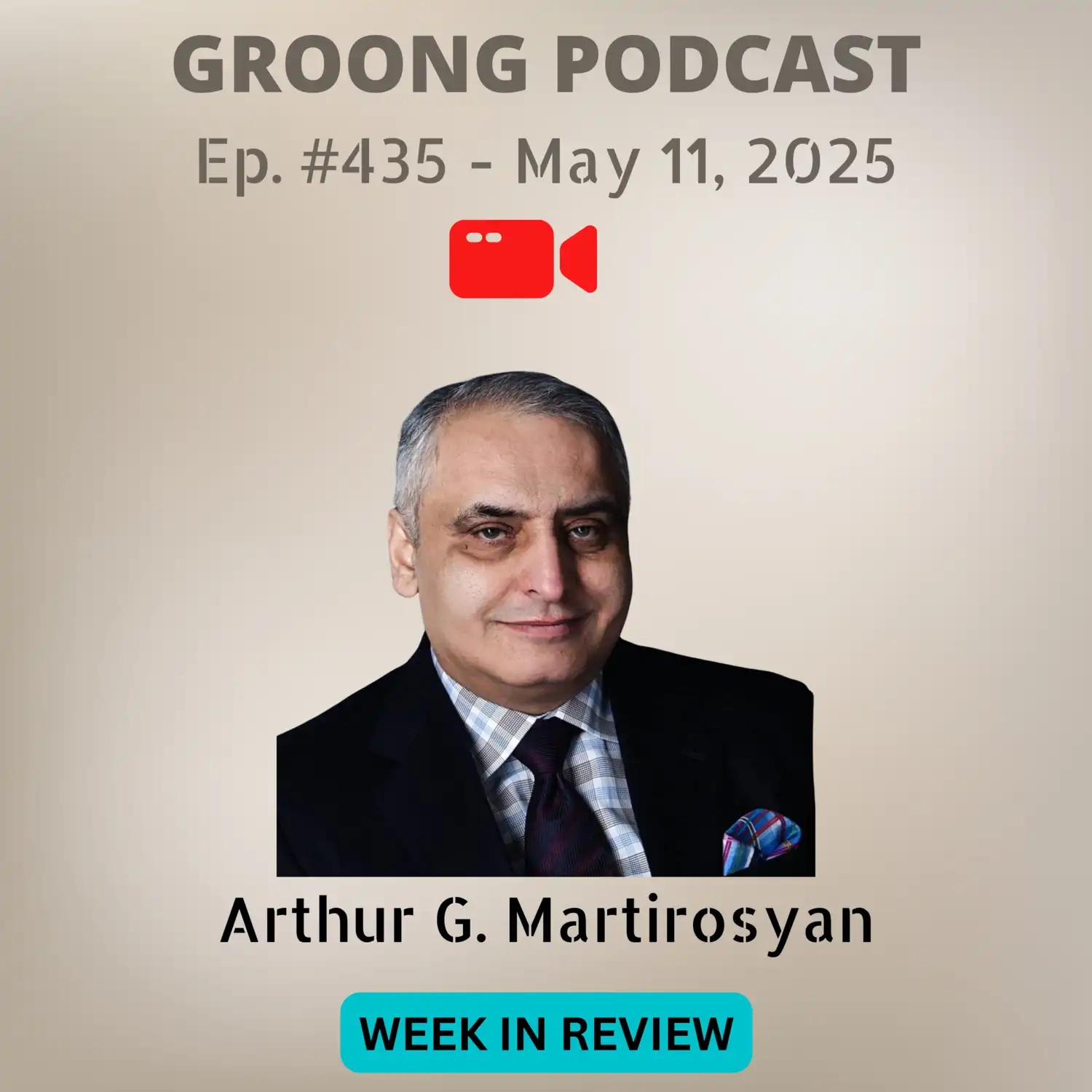
Groong Links:
Guest:
Topics:
- May 9 Victory Parade
- Ukraine
- India and Pakistan
- Armenian Azerbaijani Talks
- American Pope
Episode 435 | Recorded: May 12, 2025
Arthur G Martirosyan - Victory Day, India Pakistan, Armenia Azerbaijan, Pope Leo XIV | Ep 435, May 11, 2025 [EP435]
Posted on Wednesday, May 14, 2025 | Category: Armenia, Politics, Russia, Azerbaijan, Armenian Genocide, Armenian Church, India, Turkey, China, Genocide, Ukraine, Israel, Iran, Economy, GeorgiaGroong Links:
Guest:
Topics:
- May 9 Victory Parade
- Ukraine
- India and Pakistan
- Armenian Azerbaijani Talks
- American Pope
Episode 435 | Recorded: May 12, 2025
Benyamin Poghosyan - US-Iran Tensions, Armenia-Azerbaijan, Victory Day, Journalist Assaulted | Ep 434, May 4, 2025 [EP434]
Posted on Wednesday, May 7, 2025 | Category: Armenia, Politics, Iran, Geopolitics, Artsakh, Nagorno Karabakh, Azerbaijan, Georgia, Turkey, Russia, Israel, China, Ukraine, Syria | Series: wir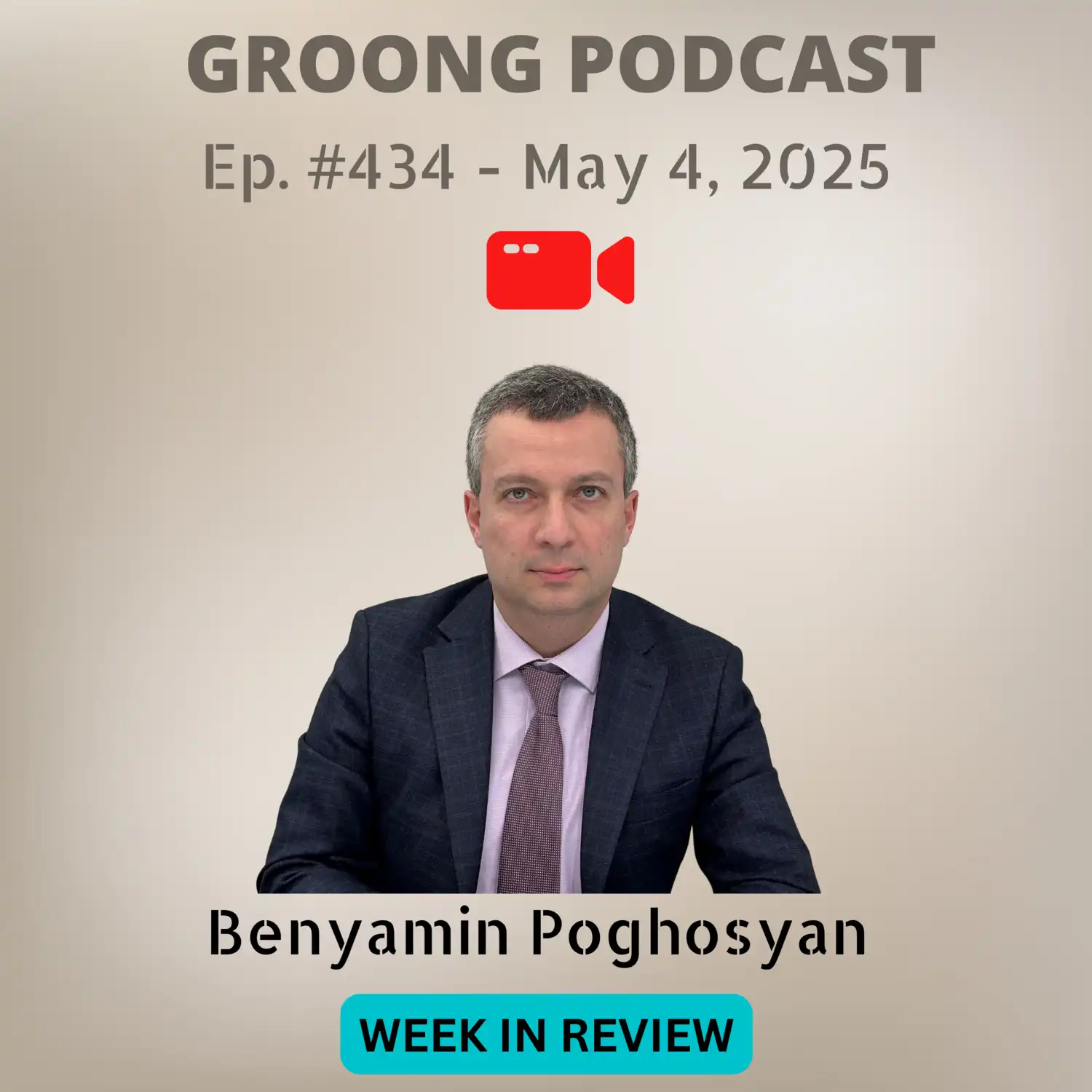
Groong Links:
Guest:
Topics:
- Iran Sanctions Escalate Amid Tensions
- Journalist Beaten Inside Yerevan Office
- Moscow Celebrates Victory Day Parade
- Armenia Caught Between EU and Russia
Episode 434 | Recorded: May 6, 2025
Benyamin Poghosyan - US-Iran Tensions, Armenia-Azerbaijan, Victory Day, Journalist Assaulted | Ep 434, May 4, 2025 [EP434]
Posted on Wednesday, May 7, 2025 | Category: Armenia, Politics, Iran, Geopolitics, Artsakh, Nagorno Karabakh, Azerbaijan, Georgia, Turkey, Russia, Israel, China, Ukraine, SyriaGroong Links:
Guest:
Topics:
- Iran Sanctions Escalate Amid Tensions
- Journalist Beaten Inside Yerevan Office
- Moscow Celebrates Victory Day Parade
- Armenia Caught Between EU and Russia
Episode 434 | Recorded: May 6, 2025
Dziunik Aghajanian - Armenian State Genocide Denial, Politics of Silence, Pezeshkian in Baku, Bandar Abbas | Ep 432, Apr 27, 2025 [EP432]
Posted on Wednesday, Apr 30, 2025 | Category: Armenia, Politics, Iran, Artsakh, Nagorno Karabakh, Turkey, Azerbaijan, Russia, China, India, Geopolitics, Diaspora, Armenian Genocide, Artsakh Blockade, BRICS, Genocide, European Union, Middle East, Economy, Lebanon, Georgia, Human Rights, Israel | Series: wir, video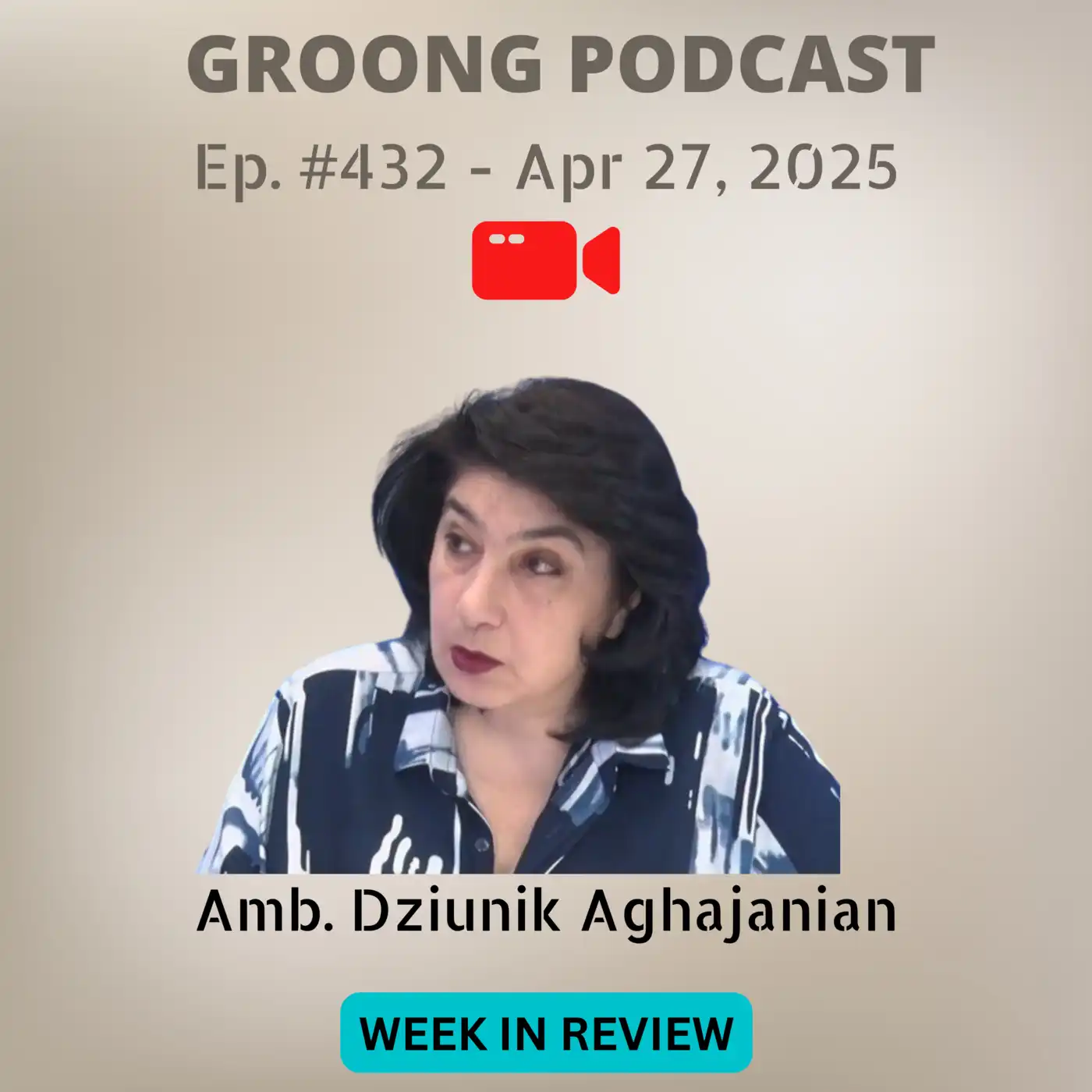
Groong Links:
Guest:
Topics:
- Genocide Recognition and State Silence
- Iran-Azerbaijan Talks & Geopolitical Shifts
- Bandar Abbas: Explosion, or Warning?
Episode 432 | Recorded: April 29, 2025
Dziunik Aghajanian - Armenian State Genocide Denial, Politics of Silence, Pezeshkian in Baku, Bandar Abbas | Ep 432, Apr 27, 2025 [EP432]
Posted on Wednesday, Apr 30, 2025 | Category: Armenia, Politics, Iran, Artsakh, Nagorno Karabakh, Turkey, Azerbaijan, Russia, China, India, Geopolitics, Diaspora, Armenian Genocide, Artsakh Blockade, BRICS, Genocide, European Union, Middle East, Economy, Lebanon, Georgia, Human Rights, IsraelGroong Links:
Guest:
Topics:
- Genocide Recognition and State Silence
- Iran-Azerbaijan Talks & Geopolitical Shifts
- Bandar Abbas: Explosion, or Warning?
Episode 432 | Recorded: April 29, 2025
Alberto M. Fernandez – Vatican-Baku Partnership & Erosion of Moral Authority | Ep 431, Apr 29, 2025 [EP431]
Posted on Tuesday, Apr 29, 2025 | Category: Armenia, World, Vatican, Azerbaijan, Artsakh, Nagorno Karabakh, Armenian Church, Iran, Armenian Genocide, Artsakh Blockade, Syria, Genocide, Turkey, Russia, Middle East, Lebanon, Human Rights, Georgia, Israel, China, India, NATO, Ukraine | Series: cog, video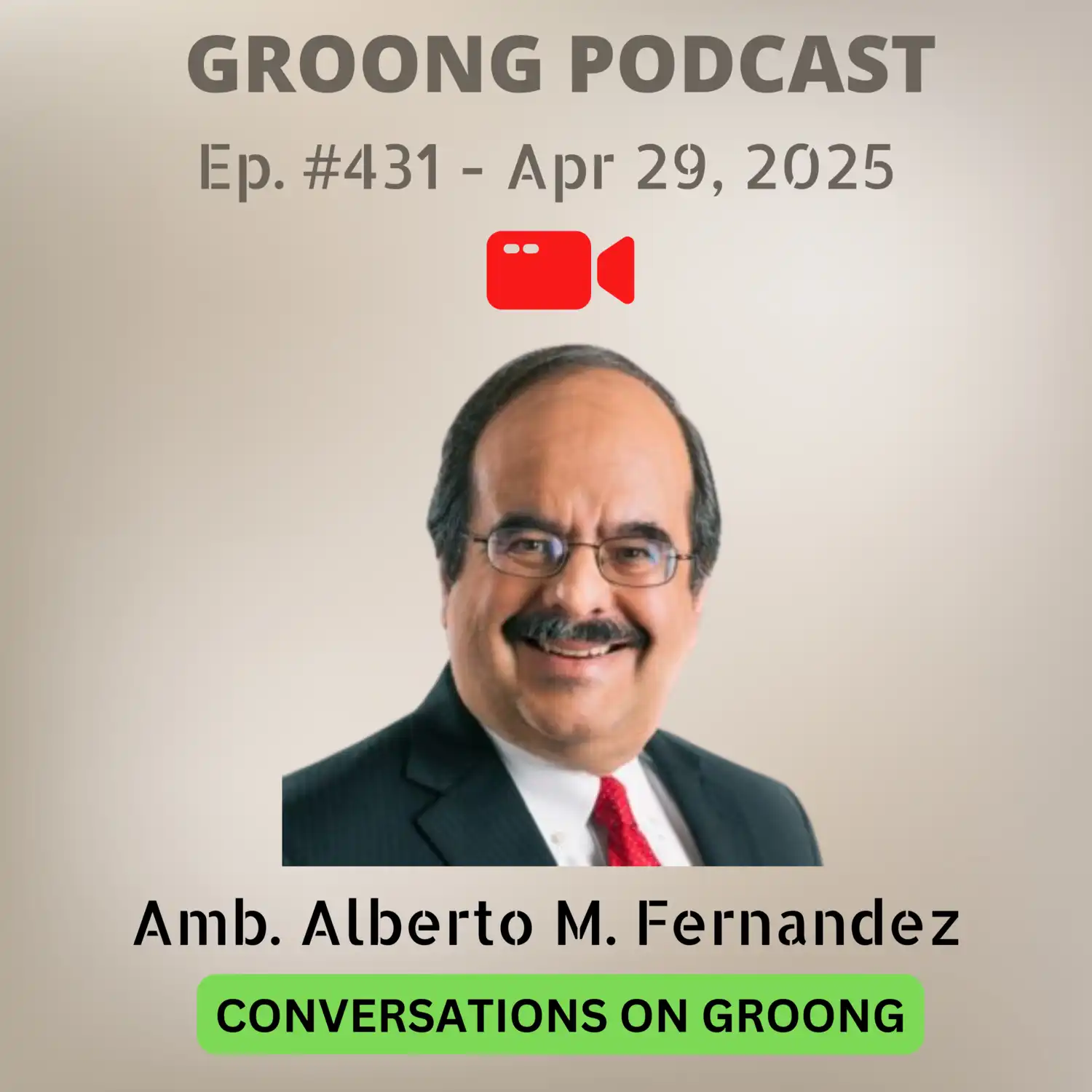
Groong Links:
Guest:
Topics:
- Vaticanâs alliance with Azerbaijan
- Whitewashing of Artsakhâs ethnic cleansing
- Global silence on Armenian Genocide
- U.S. policy under Trump and risks to Armenia
Episode 431 | Recorded: April 29, 2025
Alberto M. Fernandez – Vatican-Baku Partnership & Erosion of Moral Authority | Ep 431, Apr 29, 2025 [EP431]
Posted on Tuesday, Apr 29, 2025 | Category: Armenia, World, Vatican, Azerbaijan, Artsakh, Nagorno Karabakh, Armenian Church, Iran, Armenian Genocide, Artsakh Blockade, Syria, Genocide, Turkey, Russia, Middle East, Lebanon, Human Rights, Georgia, Israel, China, India, NATO, UkraineGroong Links:
Guest:
Topics:
- Vaticanâs alliance with Azerbaijan
- Whitewashing of Artsakhâs ethnic cleansing
- Global silence on Armenian Genocide
- U.S. policy under Trump and risks to Armenia
Episode 431 | Recorded: April 29, 2025
Vatican Betrays Armenians, Aids Azerbaijani Propaganda (Hadjian & Matiossian) | Ep 430, Apr 29, 2025 [EP430]
Posted on Monday, Apr 28, 2025 | Category: Armenia, World, Vatican, Azerbaijan, Nagorno Karabakh, Artsakh, Armenian Genocide, Armenian Church, Genocide, Turkey, China, Iran, Israel, Russia | Series: cog, video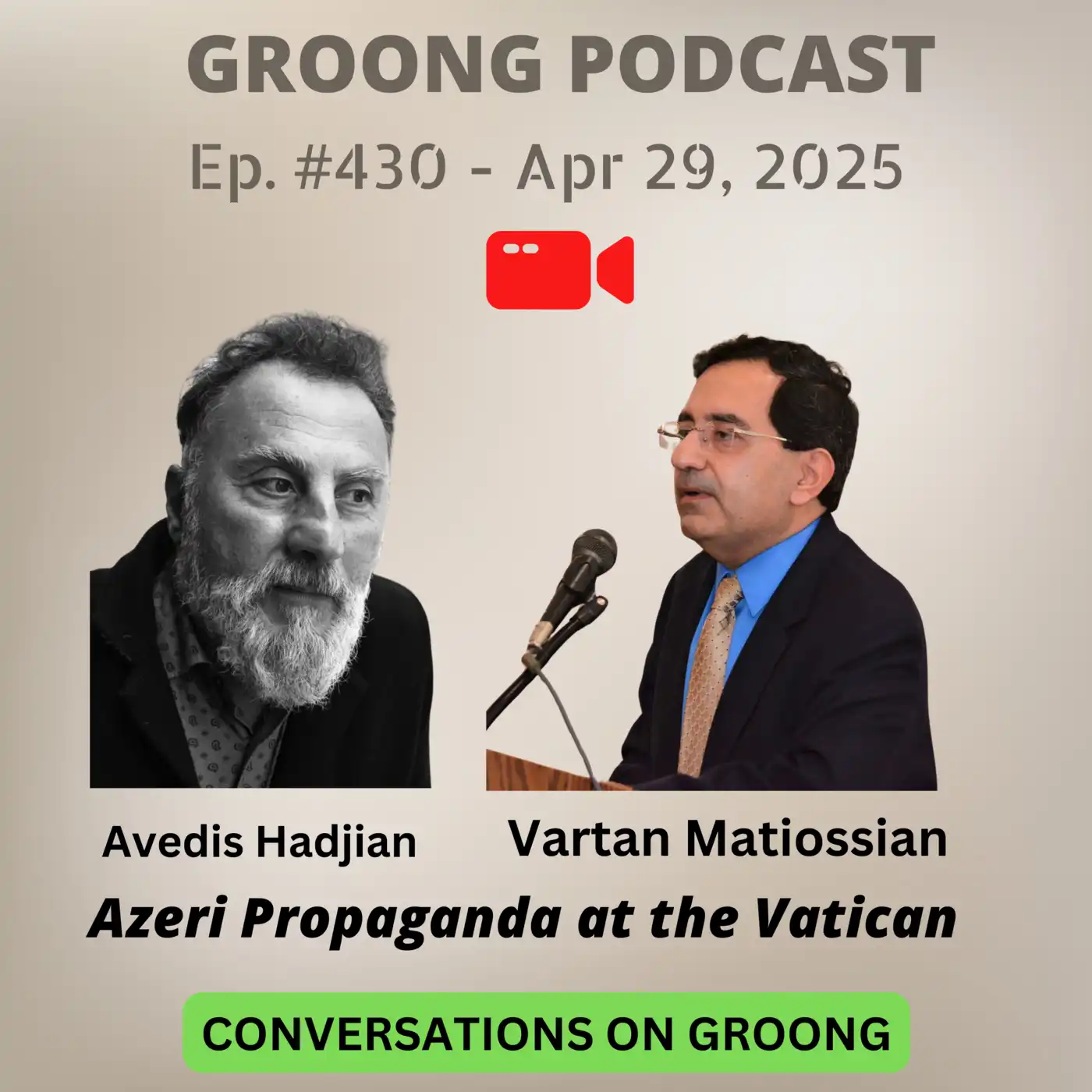
Groong Links:
Guest:
Topics:
- Vatican Hosts Fake Azeri Conference
- Azerbaijani Propaganda and Cultural Misappropriation
- Weakness and Silent Complicity of the Armenian State
Episode 430 | Recorded: April 26, 2025
Vatican Betrays Armenians, Aids Azerbaijani Propaganda (Hadjian & Matiossian) | Ep 430, Apr 29, 2025 [EP430]
Posted on Monday, Apr 28, 2025 | Category: Armenia, World, Vatican, Azerbaijan, Nagorno Karabakh, Artsakh, Armenian Genocide, Armenian Church, Genocide, Turkey, China, Iran, Israel, RussiaGroong Links:
Guest:
Topics:
- Vatican Hosts Fake Azeri Conference
- Azerbaijani Propaganda and Cultural Misappropriation
- Weakness and Silent Complicity of the Armenian State
Episode 430 | Recorded: April 26, 2025
Hrant Mikaelian - Iran, EXIM and Azerbaijan, Gyumri, Artsakh Refugees in Armenia | Ep 429, Apr 20, 2025 [EP429]
Posted on Wednesday, Apr 23, 2025 | Category: Armenia, Politics, Vatican, Artsakh, Nagorno Karabakh, Azerbaijan, Genocide, Armenian Church, Armenian Genocide, Iran, Russia, Israel, Turkey, Ukraine, Middle East, China, European Union, Economy, Georgia, NATO, Geopolitics, Human Rights | Series: wir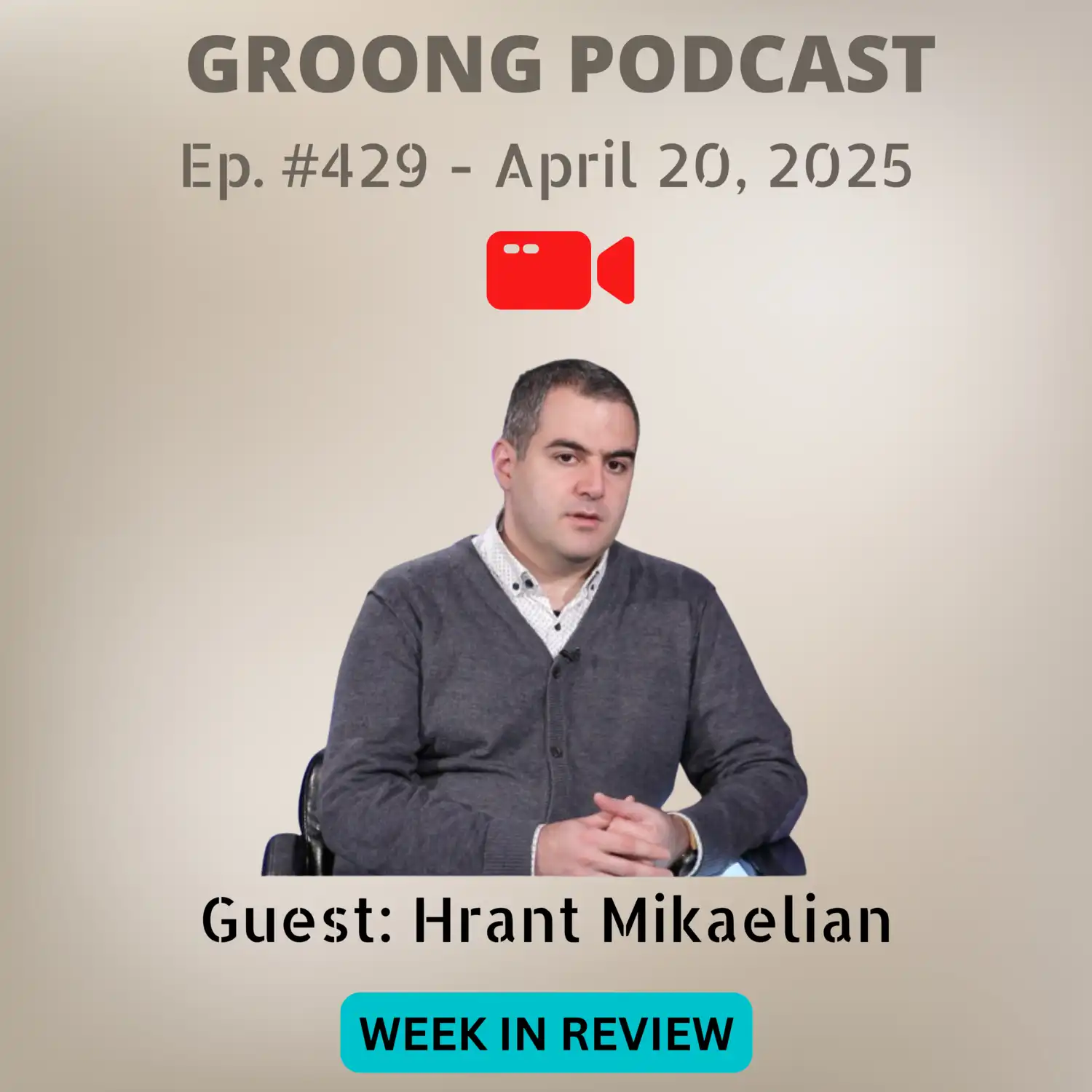
Groong Links:
Guest:
Topics:
- US-Iran Talks & Israeli Threats
- Trump Administration Support for Azerbaijan
- Iran-Azerbaijan Relations & Corridor Demands
- Vatican Controversy & Global Anti-Armenian Propaganda
- Local Elections in Gyumri and Parakar
- Government-Fueled Hate Against Artsakh Refugees
Episode 429 | Recorded: April 22, 2025
Hrant Mikaelian - Iran, EXIM and Azerbaijan, Gyumri, Artsakh Refugees in Armenia | Ep 429, Apr 20, 2025 [EP429]
Posted on Wednesday, Apr 23, 2025 | Category: Armenia, Politics, Vatican, Artsakh, Nagorno Karabakh, Azerbaijan, Genocide, Armenian Church, Armenian Genocide, Iran, Russia, Israel, Turkey, Ukraine, Middle East, China, European Union, Economy, Georgia, NATO, Geopolitics, Human RightsGroong Links:
Guest:
Topics:
- US-Iran Talks & Israeli Threats
- Trump Administration Support for Azerbaijan
- Iran-Azerbaijan Relations & Corridor Demands
- Vatican Controversy & Global Anti-Armenian Propaganda
- Local Elections in Gyumri and Parakar
- Government-Fueled Hate Against Artsakh Refugees
Episode 429 | Recorded: April 22, 2025
Groong Links:
Guest:
Topics:
- U.S. Tariff Wars
- Target: Iran
- The Global South
- The Belt and Road Initiative
Episode 427 | Recorded: April 6, 2025
Groong Links:
Guest:
Topics:
- U.S. Tariff Wars
- Target: Iran
- The Global South
- The Belt and Road Initiative
Episode 427 | Recorded: April 6, 2025
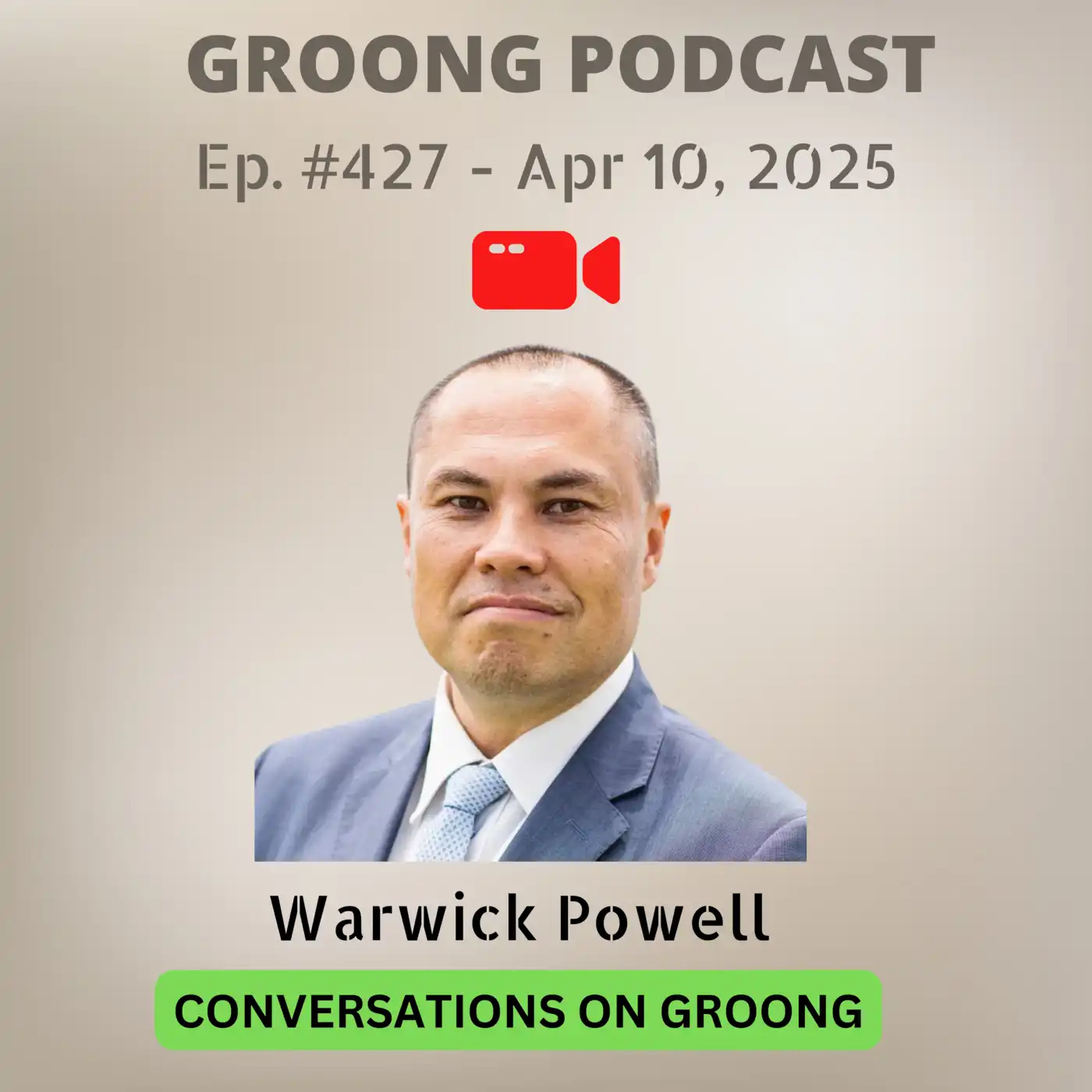
Transcript: Warwick Powell - U.S., China, Tariff Wars, and Multipolarity | Ep 427, Apr 8, 2025 [EP427]
Posted on Thursday, Apr 10, 2025 | Category: Armenia, World, Geopolitics, Economy, USA, China, India, Iran, Russia, Israel, BRICS, TranscriptIn this Conversations on Groong episode, we speak with Professor Warwick Powell about the tectonic shifts in global trade, economics, and geopolitics. From Washington’s renewed tariff wars to China’s expanding influence through BRICS and infrastructure initiatives like the BRI, Powell shares his insights on the emerging multipolar order and the declining dominance of the U.S.-centric financial system.
Benyamin Poghosyan - US-Iran, Gyumri, Armenia MFA Blames Artsakh, Negotiations with Azerbaijan | Ep 426, Apr 6, 2025 [EP426]
Posted on Wednesday, Apr 9, 2025 | Category: Armenia, Politics, Iran, Geopolitics, Artsakh, Nagorno Karabakh, Azerbaijan, USA, Russia, China, Israel, Middle East, Ukraine, Artsakh Blockade, Armenian Genocide, Genocide, Turkey, NATO, Syria | Series: wir
Groong Links:
Guest:
Topics:
- US Iran Escalation
- Aftermath of Gyumri and Parakar
- MFA blames Artsakh for Regional Isolation
- Bullets and Peace
Episode 426 | Recorded: April 8, 2025
Benyamin Poghosyan - US-Iran, Gyumri, Armenia MFA Blames Artsakh, Negotiations with Azerbaijan | Ep 426, Apr 6, 2025 [EP426]
Posted on Wednesday, Apr 9, 2025 | Category: Armenia, Politics, Iran, Geopolitics, Artsakh, Nagorno Karabakh, Azerbaijan, USA, Russia, China, Israel, Middle East, Ukraine, Artsakh Blockade, Armenian Genocide, Genocide, Turkey, NATO, SyriaGroong Links:
Guest:
Topics:
- US Iran Escalation
- Aftermath of Gyumri and Parakar
- MFA blames Artsakh for Regional Isolation
- Bullets and Peace
Episode 426 | Recorded: April 8, 2025
Arthur Khachatryan - Iran, US, Armenia, Fake Peace, Gyumri & Parakar Municipal Elections | Ep 425, Mar 30, 2025 [EP425]
Posted on Tuesday, Apr 1, 2025 | Category: Armenia, Artsakh, Nagorno Karabakh, Elections, Azerbaijan, Iran, USA, European Union, Turkey, Israel, Genocide, Russia, China, Georgia, Human Rights, Syria, Middle East | Series: wir
Groong Links:
Guest:
- Mr. Arthur Khachatryan , MP, Hayastan Dashinq/Armenia Alliance
Topics:
- Iran Rejects US Offer of Direct Negotiations
- Iran and Armenia Ties
- Gyumri and Parakar Municipal Elections
- Artsakh Refugee Protests in Armenia
Episode 425 | Recorded: March 31, 2025
Arthur Khachatryan - Iran, US, Armenia, Fake Peace, Gyumri & Parakar Municipal Elections | Ep 425, Mar 30, 2025 [EP425]
Posted on Tuesday, Apr 1, 2025 | Category: Armenia, Artsakh, Nagorno Karabakh, Elections, Azerbaijan, Iran, USA, European Union, Turkey, Israel, Genocide, Russia, China, Georgia, Human Rights, Syria, Middle EastGroong Links:
Guest:
- Mr. Arthur Khachatryan , MP, Hayastan Dashinq/Armenia Alliance
Topics:
- Iran Rejects US Offer of Direct Negotiations
- Iran and Armenia Ties
- Gyumri and Parakar Municipal Elections
- Artsakh Refugee Protests in Armenia
Episode 425 | Recorded: March 31, 2025
Dziunik Aghajanian - Illusions of Peace and Geopolitical Games | Ep 424 - Mar 23, 2025 [EP424]
Posted on Wednesday, Mar 26, 2025 | Category: Armenia, Politics, Iran, Artsakh, Nagorno Karabakh, Azerbaijan, Middle East, Israel, Geopolitics, Russia, Syria, Turkey, Lebanon, Ukraine, China | Series: wir, video
Groong Links:
Guest:
Topics:
- Trumpâs Iran ultimatum explored
- Turkeyâs protests seen as strategic
- Azerbaijanâs peace deal as smokescreen
- Armeniaâs Westward drift analyzed
- Gyumri elections stir controversy
Episode 424 | Recorded: March 25, 2025
Dziunik Aghajanian - Illusions of Peace and Geopolitical Games | Ep 424 - Mar 23, 2025 [EP424]
Posted on Wednesday, Mar 26, 2025 | Category: Armenia, Politics, Iran, Artsakh, Nagorno Karabakh, Azerbaijan, Middle East, Israel, Geopolitics, Russia, Syria, Turkey, Lebanon, Ukraine, ChinaGroong Links:
Guest:
Topics:
- Trumpâs Iran ultimatum explored
- Turkeyâs protests seen as strategic
- Azerbaijanâs peace deal as smokescreen
- Armeniaâs Westward drift analyzed
- Gyumri elections stir controversy
Episode 424 | Recorded: March 25, 2025
Benyamin Poghosyan - Peace or Capitulation? Armenia's Dilemma & Ukraine Shifts | Ep 423 - Mar 16, 2025 [EP423]
Posted on Tuesday, Mar 18, 2025 | Category: Armenia, Politics, Artsakh, Azerbaijan, Geopolitics, Russia, Iran, Turkey, Nagorno Karabakh, NATO, European Union, Ukraine, Israel, China, Middle East, Genocide | Series: wir
Groong Links:
Guest:
Topics:
- Armenia-Azerbaijan “Treaty”: Concessions, secrecy, opposition backlash.
- Preconditions for Peace: OSCE Minsk dissolution, constitutional changes.
- Ukraine War Talks: Jeddah negotiations, UAV attacks, Trump-Putin call.
- Witkoffâs Baku Stop: Mysterious visit raising geopolitical questions.
Episode 423 | Recorded: March 17, 2025
Benyamin Poghosyan - Peace or Capitulation? Armenia's Dilemma & Ukraine Shifts | Ep 423 - Mar 16, 2025 [EP423]
Posted on Tuesday, Mar 18, 2025 | Category: Armenia, Politics, Artsakh, Azerbaijan, Geopolitics, Russia, Iran, Turkey, Nagorno Karabakh, NATO, European Union, Ukraine, Israel, China, Middle East, GenocideGroong Links:
Guest:
Topics:
- Armenia-Azerbaijan “Treaty”: Concessions, secrecy, opposition backlash.
- Preconditions for Peace: OSCE Minsk dissolution, constitutional changes.
- Ukraine War Talks: Jeddah negotiations, UAV attacks, Trump-Putin call.
- Witkoffâs Baku Stop: Mysterious visit raising geopolitical questions.
Episode 423 | Recorded: March 17, 2025
Negotiations Expert: Ukraine-U.S. Ceasefire Agreement in Jeddah – Is Russia on Board? | Ep 422, Mar 12, 2025 [EP422]
Posted on Thursday, Mar 13, 2025 | Category: Ukraine, Russia, Politics, Geopolitics, Iran, NATO, Armenia, China, Middle East | Series: cog, video
Groong Links:
Guest:
Topics:
- Ceasefire Terms:
- Negotiation Dynamics
- Posturing & International Pressure
- Risks & Challenges
Episode 422 | Recorded: March 12, 2025
Negotiations Expert: Ukraine-U.S. Ceasefire Agreement in Jeddah – Is Russia on Board? | Ep 422, Mar 12, 2025 [EP422]
Posted on Thursday, Mar 13, 2025 | Category: Ukraine, Russia, Politics, Geopolitics, Iran, NATO, Armenia, China, Middle EastGroong Links:
Guest:
Topics:
- Ceasefire Terms:
- Negotiation Dynamics
- Posturing & International Pressure
- Risks & Challenges
Episode 422 | Recorded: March 12, 2025
Hrant Mikaelian - Abkhazia Polls, Armenian Hostages in Baku, Yerevan Protests | Ep 421, Mar 2, 2025 [EP421]
Posted on Wednesday, Mar 5, 2025 | Category: Armenia, Politics, Artsakh, Azerbaijan, Geopolitics, Human Rights, Russia, Nagorno Karabakh, Georgia, Turkey, Ukraine, Iran, China, Israel, Middle East | Series: wir
Groong Links:
Guest:
Topics:
- Abkhaz Elections & Regional Implications â The second round of Abkhaziaâs presidential elections, the impact of mass protests, and what Badra Gunbaâs victory means for the region.
- Armenian Hostages in Baku â Ongoing trials of Armenian POWs and former Artsakh leaders, reports of torture, and international calls for independent medical evaluations.
- Protests in Yerevan Over POWs â Civil society and opposition-led demonstrations demanding stronger government action and international intervention.
Hrant Mikaelian - Abkhazia Polls, Armenian Hostages in Baku, Yerevan Protests | Ep 421, Mar 2, 2025 [EP421]
Posted on Wednesday, Mar 5, 2025 | Category: Armenia, Politics, Artsakh, Azerbaijan, Geopolitics, Human Rights, Russia, Nagorno Karabakh, Georgia, Turkey, Ukraine, Iran, China, Israel, Middle EastGroong Links:
Guest:
Topics:
- Abkhaz Elections & Regional Implications â The second round of Abkhaziaâs presidential elections, the impact of mass protests, and what Badra Gunbaâs victory means for the region.
- Armenian Hostages in Baku â Ongoing trials of Armenian POWs and former Artsakh leaders, reports of torture, and international calls for independent medical evaluations.
- Protests in Yerevan Over POWs â Civil society and opposition-led demonstrations demanding stronger government action and international intervention.
Carden, Shakarian - Trump, Foreign Policy, Foreign Aid, US-Armenia and Regions | Ep 420, Mar 3, 2025 [EP420]
Posted on Tuesday, Mar 4, 2025 | Category: USA, Ukraine, Russia, Armenia, Azerbaijan, Turkey, Geopolitics, China, Nagorno Karabakh, NATO, Israel, Iran, Georgia, Human Rights, Syria, Genocide | Series: cog, video
Groong Links:
Guest:
Topics:
- US Foreign Policy Under Trump
- Transactional Foreign Policy
- Trumpâs Cabinet & Policy Shifts
- US-Armenia Relations
Episode 420 | Recorded: February 27, 2025
Carden, Shakarian - Trump, Foreign Policy, Foreign Aid, US-Armenia and Regions | Ep 420, Mar 3, 2025 [EP420]
Posted on Tuesday, Mar 4, 2025 | Category: USA, Ukraine, Russia, Armenia, Azerbaijan, Turkey, Geopolitics, China, Nagorno Karabakh, NATO, Israel, Iran, Georgia, Human Rights, Syria, GenocideGroong Links:
Guest:
Topics:
- US Foreign Policy Under Trump
- Transactional Foreign Policy
- Trumpâs Cabinet & Policy Shifts
- US-Armenia Relations
Episode 420 | Recorded: February 27, 2025
Jean-Daniel Ruch - Geopolitics, Justice and the Future World Order | Ep 419, Mar 1, 2025 [EP419]
Posted on Sunday, Mar 2, 2025 | Category: Armenia, Russia, Ukraine, Artsakh, Nagorno Karabakh, Geopolitics, Azerbaijan, Turkey, NATO, Israel, Georgia, Human Rights, China, Syria, Economy, Iran, Middle East | Series: cog, video
Groong Links:
Guest:
Topics:
- Jean-Daniel Ruchâs Career & Background
- The Role of Diplomacy in Conflict Resolution
- Western Democracy Promotion & Geopolitical Power Plays
- The War in Ukraine & Failed Peace Efforts
- US & European Geopolitical Strategies
- The International Criminal Court & Selective Justice
- The Artsakh Conflict & Armenian Displacement
Episode 419 | Recorded: February 27, 2025
Jean-Daniel Ruch - Geopolitics, Justice and the Future World Order | Ep 419, Mar 1, 2025 [EP419]
Posted on Sunday, Mar 2, 2025 | Category: Armenia, Russia, Ukraine, Artsakh, Nagorno Karabakh, Geopolitics, Azerbaijan, Turkey, NATO, Israel, Georgia, Human Rights, China, Syria, Economy, Iran, Middle EastGroong Links:
Guest:
Topics:
- Jean-Daniel Ruchâs Career & Background
- The Role of Diplomacy in Conflict Resolution
- Western Democracy Promotion & Geopolitical Power Plays
- The War in Ukraine & Failed Peace Efforts
- US & European Geopolitical Strategies
- The International Criminal Court & Selective Justice
- The Artsakh Conflict & Armenian Displacement
Episode 419 | Recorded: February 27, 2025
Arthur G Martirosyan - Ukraine, Edgar Ghazaryan, Robert Kocharyan, Yerevan Bus Fares | Ep 418, Feb 23, 2025 [EP418]
Posted on Tuesday, Feb 25, 2025 | Category: Armenia, Politics, Artsakh, Nagorno Karabakh, Georgia, Turkey, Russia, Azerbaijan, Ukraine, China, Iran, NATO, Israel, European Union, Syria | Series: wir, video
Groong Links:
Guest:
Topics:
- Ukraine Negotiations in Riyadh
- Edgar Ghazayan Bullied by the Government
- Robert Kocharyan Press Conference
- Yerevan Bus Fares
Episode 418 | Recorded: February 24, 2025