Central Electoral Commission (CEC)
Last updated: June 11, 2026
The Central Electoral Commission (CEC) is Armenia’s independent state body responsible for administering national elections, managing voter registration, and ensuring compliance with electoral law. The CEC holds authority over all phases of election organization, from candidate registration and ballot preparation to vote counting and dispute resolution. As the primary arbiter of electoral procedure, the CEC’s decisions directly affect which parties and candidates appear on ballots, how votes are counted, and how election disputes are resolved. The integrity of CEC operations thus determines the fairness of Armenia’s elections and the legitimacy of the government that emerges from them.
Vahagn Hovakimyan , as CEC Chair, has held responsibility for administering the June 7, 2026 parliamentary elections at a critical moment in Armenian politics. The 2026 Parliamentary Elections take place amid Civil Contract efforts to consolidate power and opposition concerns about electoral manipulation. Groong coverage has repeatedly raised questions about the CEC’s independence, the potential use of administrative resources (state institutions and officials) to coerce voters, and whether the commission’s procedures ensure a level playing field for all parties. The CEC’s role in monitoring and preventing such abuses—or its failure to do so—has become inseparable from broader debates about whether Armenia’s elections can be considered free and fair.
The commission’s technical decisions on voter registration, ballot access, and vote counting procedures have major political consequences. Disputes over electoral procedures, candidate disqualifications, and vote tallies all flow through the CEC’s authority. In the context of Pashinyan ’s consolidation of state institutions—including the judiciary, security services, and media—the CEC’s independence has become uncertain. Whether the commission functions as a neutral arbiter of electoral rules or as an instrument of the ruling party’s electoral advantage remains a central question for Armenia’s democratic future.
Groong episodes that include this tag
Below are all Groong episodes tagged with Central Electoral Commission (CEC).
When Israel Recognizes and Yerevan Dodges | Ep 562, Apr 25, 2026 [EP562]
Posted on Wednesday, Jul 1, 2026 | Category: Armenia, Politics | Series: wir, video
Groong Links:
Topics:
- Israel Recognizes the Armenian Genocide
- Russian Warnings Continue
- Post Election Limbo
Episode 562 | Recorded: June 29, 2026
#ArmenianGenocide #Armenia #Israel #Pashinyan #RussiaArmenia #SouthCaucasus
When Israel Recognizes and Yerevan Dodges | Ep 562, Apr 25, 2026 [EP562]
Posted on Wednesday, Jul 1, 2026 | Category: Armenia, PoliticsGroong Links:
Topics:
- Israel Recognizes the Armenian Genocide
- Russian Warnings Continue
- Post Election Limbo
Episode 562 | Recorded: June 29, 2026
#ArmenianGenocide #Armenia #Israel #Pashinyan #RussiaArmenia #SouthCaucasus
Transcript: When Israel Recognizes and Yerevan Dodges | Ep 562, Apr 25, 2026 [EP562]
Posted on Wednesday, Jul 1, 2026 | Category: Armenia, Politics, TranscriptIn this week’s Groong Week in Review, Hovik and Asbed discuss Israel’s historic recognition of the Armenian Genocide, Russia’s ongoing warnings toward Armenia, and the political uncertainty following the 2026 Armenian Parliamentary Election. We examine the geopolitical context behind Israel’s decision, Pashinyan’s measured response, and what these developments signal about Armenia’s regional position amid shifting US-Turkey relations and broader Middle East tensions.
Groong Links:
Topics:
- Armenian Election Aftermath
- Armenia-Georgia Relations
- US-Iran Interim Agreement
Episode 558 | Recorded: June 15, 2026
#Armenia #ArmenianNews #ArmenianElections #CivilContract #Pashinyan #ArmenianConstitution #Referendum #ProsperousArmenia #SouthCaucasus #CEC
Armenian Parliamentary Election, US-Iran Agreement | Ep 558, Jun 14, 2026 [EP558]
Posted on Tuesday, Jun 16, 2026 | Category: Armenia, Politics, IranGroong Links:
Topics:
- Armenian Election Aftermath
- Armenia-Georgia Relations
- US-Iran Interim Agreement
Episode 558 | Recorded: June 15, 2026
#Armenia #ArmenianNews #ArmenianElections #CivilContract #Pashinyan #ArmenianConstitution #Referendum #ProsperousArmenia #SouthCaucasus #CEC
Transcript: Armenian Parliamentary Election, US-Iran Agreement | Ep 558, Jun 14, 2026 [EP558]
Posted on Tuesday, Jun 16, 2026 | Category: Armenia, Politics, Iran, TranscriptIn this episode of Groong Week in Review for June 14, 2026, hosts Hovik Manucharyan and Asbed Bedrossian analyze the aftermath of Armenia’s 2026 Armenian Parliamentary Election, shifting Armenia-Georgia relations, and a landmark interim US-Iran agreement that reshapes regional stability. We discuss the ceasefire framework, sanctions relief, and how the Iran war’s resolution affects Armenian security, energy markets, and the broader South Caucasus landscape.
Arthur Martirosyan - After the Anger, What Next? | Ep 557, Jun 10, 2026 [EP557]
Posted on Thursday, Jun 11, 2026 | Category: Armenia, Politics | Series: cog, video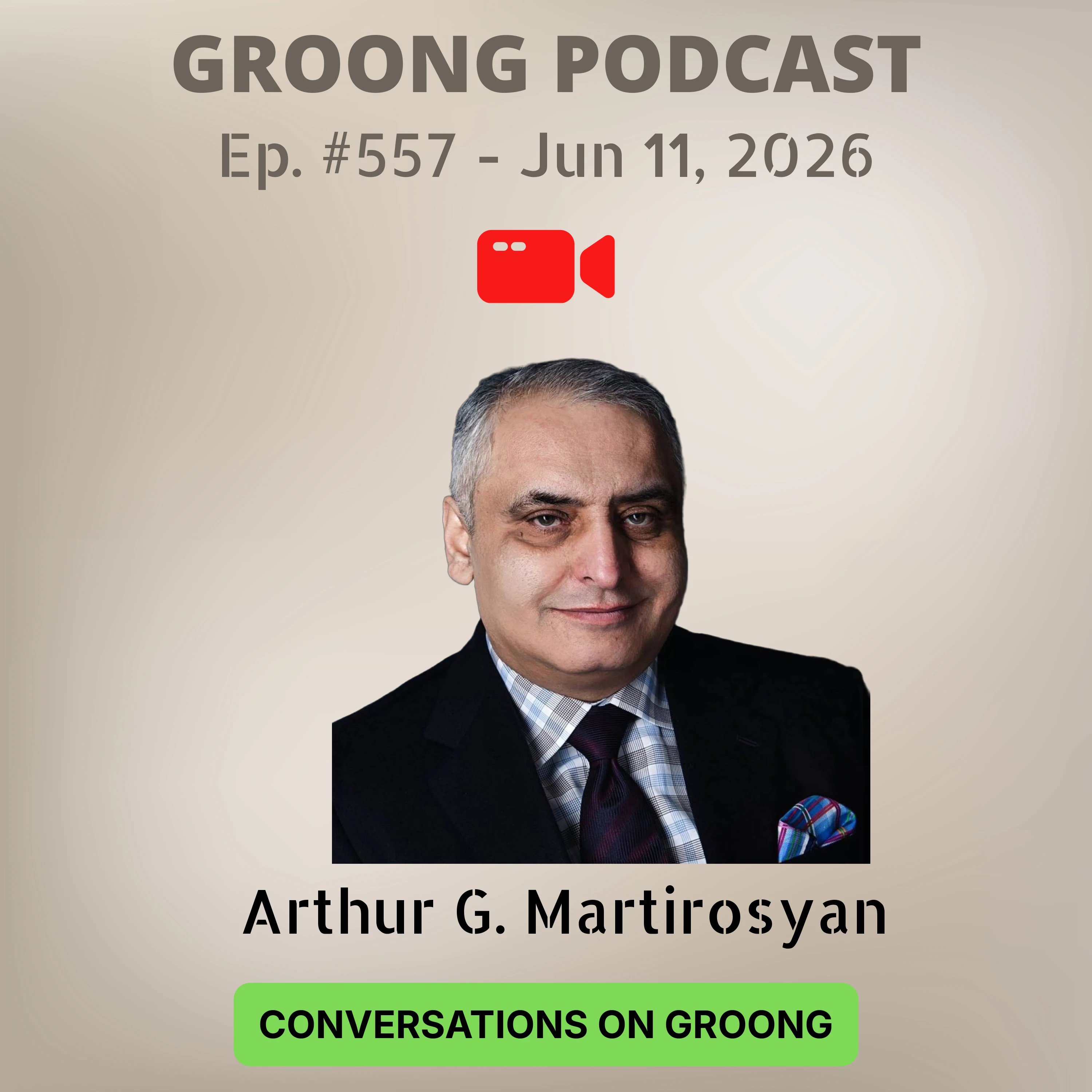
Groong Links:
Guest(s):
Topics:
- Contested results and thresholds
- Pashinyan’s post-election crackdown
- Western backing and interference
- Russia’s delayed pressure campaign
- Opposition choices after the vote
Episode 557 | Recorded: June 9, 2026
#ArmenianElections #Armenia #NikolPashinyan #CivilContract #StrongArmenia #ArmenianOpposition
Arthur Martirosyan - After the Anger, What Next? | Ep 557, Jun 10, 2026 [EP557]
Posted on Thursday, Jun 11, 2026 | Category: Armenia, PoliticsGroong Links:
Guest(s):
Topics:
- Contested results and thresholds
- Pashinyan’s post-election crackdown
- Western backing and interference
- Russia’s delayed pressure campaign
- Opposition choices after the vote
Episode 557 | Recorded: June 9, 2026
#ArmenianElections #Armenia #NikolPashinyan #CivilContract #StrongArmenia #ArmenianOpposition
Transcript: Arthur Martirosyan - After the Anger, What Next? | Ep 557, Jun 10, 2026 [EP557]
Posted on Thursday, Jun 11, 2026 | Category: Armenia, Politics, TranscriptIn this episode of Conversations on Groong, we speak with Arthur G. Martirosyan about Armenia’s contested 2026 Armenian Parliamentary Election and Pashinyan’s path to a third term. We discuss whether the vote was free and fair, how state pressure and Western backing shaped the outcome, the razor-thin thresholds that determine parliamentary representation, Pashinyan’s post-election crackdown against the Established Opposition, and what a Civil Contract supermajority would mean for Armenia’s governance and the Armenia-Azerbaijan Peace Process.
Parties and Alliances in the 2026 Armenian Parliamentary Election | Ep 548, May 22, 2026 [EP548]
Posted on Saturday, May 23, 2026 | Category: Armenia, Politics, Armenian Church, Nagorno Karabakh, Artsakh Blockade, BRICS, Russia, Iran, Azerbaijan, European Union | Series: cog, video
Groong Links:
Topics:
- Armenia’s election rules
- Parties and alliances competing
- MPG polling and thresholds
- Opposition challenges and turnout
- Geopolitical positions heatmap
Episode 548 | Recorded: May 22, 2026
#Armenia #ArmenianElections #ArmenianPolitics #Artsakh #SouthCaucasus #CivilContract #StrongArmenia #HayastanDashinq
Parties and Alliances in the 2026 Armenian Parliamentary Election | Ep 548, May 22, 2026 [EP548]
Posted on Saturday, May 23, 2026 | Category: Armenia, Politics, Armenian Church, Nagorno Karabakh, Artsakh Blockade, BRICS, Russia, Iran, Azerbaijan, European UnionGroong Links:
Topics:
- Armenia’s election rules
- Parties and alliances competing
- MPG polling and thresholds
- Opposition challenges and turnout
- Geopolitical positions heatmap
Episode 548 | Recorded: May 22, 2026
#Armenia #ArmenianElections #ArmenianPolitics #Artsakh #SouthCaucasus #CivilContract #StrongArmenia #HayastanDashinq
Transcript: Parties and Alliances in the 2026 Armenian Parliamentary Election | Ep 548, May 22, 2026 [EP548]
Posted on Saturday, May 23, 2026 | Category: Armenia, Politics, Armenian Church, Nagorno Karabakh, Artsakh Blockade, BRICS, Russia, Iran, Azerbaijan, European Union, TranscriptThis Conversations on Groong episode provides a primer on Armenia’s June 7, 2026 parliamentary elections, reviewing the 17 parties and 2 alliances registered to compete. The discussion explains the election rules, thresholds, coalition process, and the “stable majority” mechanism, while stressing the uneven political environment facing opposition forces. The episode then walks through each participant, including Civil Contract, Strong Armenia, Armenia Alliance, Prosperous Armenia, Wings of Unity, Bright Armenia, ANC, Bever, Republic, DOK, Democratic Consolidation, and smaller parties with Read More
Pashinyan's Hate Speech, Threats, and the June 7 Election Climate | Ep 547, May 17, 2026 [EP547]
Posted on Tuesday, May 19, 2026 | Category: Armenia, Politics, Election, Armenian Church, Nagorno Karabakh, Artsakh Blockade, Russia, China, Azerbaijan, Georgia, Iran, NATO | Series: wir, video
Groong Links:
Topics:
- Trump, China, and Iran
- Armenia-Russia “soft divorce”
- Pashinyan’s violent campaign rhetoric
- State resources and election pressure
- Javakhk church vandalism concerns
Episode 547 | Recorded: May 18, 2026
#Pashinyan #ArmeniaElections #ArmenianPolitics #PoliticalViolence #HateSpeech #ArmeniaRussia #IranWar #SouthCaucasus
Pashinyan's Hate Speech, Threats, and the June 7 Election Climate | Ep 547, May 17, 2026 [EP547]
Posted on Tuesday, May 19, 2026 | Category: Armenia, Politics, Election, Armenian Church, Nagorno Karabakh, Artsakh Blockade, Russia, China, Azerbaijan, Georgia, Iran, NATOGroong Links:
Topics:
- Trump, China, and Iran
- Armenia-Russia “soft divorce”
- Pashinyan’s violent campaign rhetoric
- State resources and election pressure
- Javakhk church vandalism concerns
Episode 547 | Recorded: May 18, 2026
#Pashinyan #ArmeniaElections #ArmenianPolitics #PoliticalViolence #HateSpeech #ArmeniaRussia #IranWar #SouthCaucasus
Transcript: Pashinyan's Hate Speech, Threats, and the June 7 Election Climate | Ep 547, May 17, 2026 [EP547]
Posted on Tuesday, May 19, 2026 | Category: Armenia, Politics, Election, Armenian Church, Nagorno Karabakh, Artsakh Blockade, Russia, China, Azerbaijan, Georgia, Iran, NATO, TranscriptThis Week in Review covers a tense mix of global and Armenian political crises, from Trump’s summit with Xi Jinping and the deepening Iran war, to Armenia’s worsening relations with Russia and the risks to trade, energy, and security ties. Hovik and Asbed also examine Armenia’s heated election climate, including allegations of state pressure, abuse of administrative resources, selective law enforcement, Pashinyan’s violent campaign rhetoric against opposition leaders, and the muted response of international observers. The episode also looks at Robert Kocharyan’s call for major-power guarantees for peace with Azerbaijan, and the vandalism of the Sourp Nshan Armenian Church in Javakhk.
Meetings in Prague | Pashinyan Consolidating Power | Personal Rants | Ep 167 - Oct 9, 2022 [EP167]
Posted on Tuesday, Oct 11, 2022 | Category: Armenia, Azerbaijan, Russia, Turkey, Ukraine, Genocide, India, Armenian Genocide, Georgia, Iran, Nagorno Karabakh, European Union, NATO | Series: wir
Guest:
Topics:
- Meetings in Prague
- Pashinyan Consolidating Power
- Personal Rants
Episode 167 | Recorded: October 10, 2022
Meetings in Prague | Pashinyan Consolidating Power | Personal Rants | Ep 167 - Oct 9, 2022 [EP167]
Posted on Tuesday, Oct 11, 2022 | Category: Armenia, Azerbaijan, Russia, Turkey, Ukraine, Genocide, India, Armenian Genocide, Georgia, Iran, Nagorno Karabakh, European Union, NATOGuest:
Topics:
- Meetings in Prague
- Pashinyan Consolidating Power
- Personal Rants
Episode 167 | Recorded: October 10, 2022