Borders
Last updated: June 10, 2026
Armenia’s land borders span approximately 1,570 kilometers and connect it to four neighboring countries: Azerbaijan (910 km to the east and north), Turkey (311 km to the west), Iran (910 km to the south and southeast), and Georgia (164 km to the north). The borders define Armenia’s access to regional markets, energy supplies, and transit options. Turkey has maintained a unilateral blockade of Armenia since 1993, closing its land border and airspace. Following the ceasefire agreements of 1994 and 2020, border demarcation and delimitation with Azerbaijan have remained contested, with disputes over enclaves, territorial control, and transit corridor status creating persistent tensions.
Armenia’s borders determine its survival as a sovereign state. The loss of Artsakh (Nagorno Karabakh) in a 24-hour offensive on September 19–20, 2023, ethnically cleansed the enclave of its more than 150,000 Armenian inhabitants and reduced Armenian territorial control to the Republic proper. The primary obstacle to the Armenia-Azerbaijan peace process is Azerbaijan’s precondition that Armenia amend its constitution to remove references to Artsakh and recognize Azerbaijani territorial claims. Border demarcation and delimitation, while technically complex and lengthy, is proceeding but Armenian opposition parties criticize the Pashinyan government for accepting Azerbaijan’s sequencing priorities in determining which areas are demarcated first. Beyond the constitutional demands and demarcation process, Azerbaijan demands implementation of transit arrangements that would connect mainland Azerbaijan to Nakhijevan across Armenian Syunik province. Armenia fears that such arrangements, marketed as TRIPP (Trump Route for International Peace and Prosperity) by Washington, would cement Azerbaijani and Turkish control over Armenian territory and sever Armenia’s ability to maintain open transit with Iran through Syunik , a critical lifeline for trade and energy independent of hostile neighbors.
The Zangezur Corridor label itself reflects geopolitical competition over naming rights and intent. The United States frames the corridor as TRIPP, a transit project designed to connect Asia to Europe while bypassing Russia and Iran and serving American strategic interests in accessing critical minerals and limiting Chinese and Russian influence. Azerbaijan and Turkey call it the “Zangezur Corridor,” terminology rooted in pan-Turanic ambitions to integrate the region under Turkish-Azerbaijani leadership. This is not a semantic difference. Implementation would allow Turkey to link directly with Azerbaijan and Central Asia, completing a corridor that many Armenian analysts see as a threat to Armenian sovereignty rather than a neutral infrastructure project. The Iran War that erupted in early 2026 has frozen TRIPP’s implementation by making the corridor’s passage through Syunik strategically volatile, but it has not resolved the underlying question of whether Armenia will eventually be forced to accept transit arrangements that benefit Turkey and Azerbaijan more than Armenia itself.
Armenia’s border situation defines its options for trade, energy, and geopolitical alignment. With Turkey’s border closed since 1993, Armenia cannot access Europe overland and remains dependent on air and sea routes through Georgia and Iran. Armenia’s southern border with Iran remains open and functional, and the northern border with Georgia is also open. These two neighbors provide Armenia’s only reliable transit routes for goods and energy independent of hostile powers. Turkey’s continued closure of its border means that any corridor arrangement through Syunik that severs Armenia’s direct access to Iran would eliminate Armenia’s most critical independent trade pathway. In this context, border demarcation with Azerbaijan becomes more than a technical boundary matter: it determines whether Armenia can survive as a sovereign state or whether it will be economically strangled by hostile neighbors and forced into submission. Fyodor Lukyanov and Varuzhan Geghamyan have analyzed how the corridor question and border disputes shape Armenia’s choices between competing blocs, and how Armenia’s weakness in border negotiations reflects its broader loss of leverage in a region where Russia no longer guarantees its security and the West offers support without binding commitments.
Groong episodes that include this tag
Below are all Groong episodes tagged with Borders.
Armenian News: Askeran Incursion | Artsakh Still Without Gas | Pax Azeriana | Ep. 130 - Mar 27, 2022 [EP130]
Posted on Monday, Mar 28, 2022 | Category: Armenia, Artsakh, Azerbaijan, Nagorno Karabakh, Turkey, Russia, European Union, Iran, Ukraine, Geopolitics, Genocide, Georgia, Israel, NATO, Syria
Armenian News Network/Groong Week in Review - March 27, 2022
Topics:
- Introduction
- Azerbaijan Incursions into Askeran Region
- Artsakh Still Without Natural Gas
- Pax Azeriana
Guest:
Episode 130 | Recorded: Monday, March 28, 2022
Armenian News: "Peace" Deal | Artsakh Gas | Ukraine Protests | Vardenis | Ep #129 - Mar 20, 2022 [EP129]
Posted on Monday, Mar 21, 2022 | Category: Armenia, Russia, Azerbaijan, Ukraine, Turkey, Artsakh, China, Economy, Georgia, India, Nagorno Karabakh, NATO, European Union | Series: wir
Guest(s):
Armenian News Network/Groong Week in Review - March 20, 2022
Topics:
- 00:00 Introduction
- 00:47 Azerbaijan’s “Peace” Deal
- 13:34 Artsakh Without Natural Gas in Winter
- 28:07 Ukraine Protests in Yerevan
- 43:29 Vardenis Mayoral Issue Resolved
- 47:17 Rants
Guest:
- Benyamin Poghosyan https://twitter.com/Benyamin_Poghos
Host:
- Hovik Manucharyan https://twitter.com/HovikYerevan
- Asbed Bedrossian https://twitter.com/qubriq
Episode 129 | Recorded: Sunday, March 21, 2022 Website: https://groong.org/podcasts/WiR-20220320.html
Armenian News: "Peace" Deal | Artsakh Gas | Ukraine Protests | Vardenis | Ep #129 - Mar 20, 2022 [EP129]
Posted on Monday, Mar 21, 2022 | Category: Armenia, Russia, Azerbaijan, Ukraine, Turkey, Artsakh, China, Economy, Georgia, India, Nagorno Karabakh, NATO, European UnionGuest(s):
Armenian News Network/Groong Week in Review - March 20, 2022
Topics:
- 00:00 Introduction
- 00:47 Azerbaijan’s “Peace” Deal
- 13:34 Artsakh Without Natural Gas in Winter
- 28:07 Ukraine Protests in Yerevan
- 43:29 Vardenis Mayoral Issue Resolved
- 47:17 Rants
Guest:
- Benyamin Poghosyan https://twitter.com/Benyamin_Poghos
Host:
- Hovik Manucharyan https://twitter.com/HovikYerevan
- Asbed Bedrossian https://twitter.com/qubriq
Episode 129 | Recorded: Sunday, March 21, 2022 Website: https://groong.org/podcasts/WiR-20220320.html
The State of Armenia’s Economy - A Conversation with Vache Gabrielyan | Ep #127 - March 10, 2022 [EP127]
Posted on Thursday, Mar 10, 2022 | Category: Armenia, Economy, Russia, Turkey, Azerbaijan, Georgia, Ukraine, Iran, China, Artsakh, Israel, Nagorno Karabakh | Series: cog
The State of Armeniaâs Economy - March 10, 2022
A Conversation with Vache Gabrielyan
Topics:
- 00:00:00 Introduction
- 00:01:25 Risk from the Ukraine War
- 00:37:18 Pandemic, War and Beyond Economy
- 01:01:47 Normalization with Turkey and Corridor Economics
Guest:
Dr. Vache Gabrielyan who is the Dean of the Manoogian Simone College of Business and Economics at the American University of Armenia and specializes in public administration and economics. Since 2008, he has served as Vice-Governor of the Central Bank of Armenia, Minister of Finance, Minister-Chief of the Government Staff, Chief Advisor
Read MoreThe State of Armenia’s Economy - A Conversation with Vache Gabrielyan | Ep #127 - March 10, 2022 [EP127]
Posted on Thursday, Mar 10, 2022 | Category: Armenia, Economy, Russia, Turkey, Azerbaijan, Georgia, Ukraine, Iran, China, Artsakh, Israel, Nagorno KarabakhThe State of Armeniaâs Economy - March 10, 2022
A Conversation with Vache Gabrielyan
Topics:
- 00:00:00 Introduction
- 00:01:25 Risk from the Ukraine War
- 00:37:18 Pandemic, War and Beyond Economy
- 01:01:47 Normalization with Turkey and Corridor Economics
Guest:
Dr. Vache Gabrielyan who is the Dean of the Manoogian Simone College of Business and Economics at the American University of Armenia and specializes in public administration and economics. Since 2008, he has served as Vice-Governor of the Central Bank of Armenia, Minister of Finance, Minister-Chief of the Government Staff, Chief Advisor
Read MoreUkraine | Dismissing Generals | 2nd Normalization Meeting | New President | Ep #126 - Mar 6, 2022 [EP126]
Posted on Monday, Mar 7, 2022 | Category: Russia, Ukraine, Armenia, Turkey, China, Economy, Syria, Genocide, Iran, Azerbaijan, Geopolitics, Georgia, India, Nagorno Karabakh, Armenian Genocide, NATO | Series: wir
Guest(s):
ANN/Groong Week in Review - March 6, 2022
Topics:
- 00:00 Introduction
- 01:15 Ukraine War and Effects on Armenia
- 19:04 Armenia Shuffles Generals
- 25:15 Second Normalization Meeting
- 33:06 Armenian Parliament Elects New President
Guest:
- Benyamin Poghosyan TW/@Benyamin_Poghos
Host:
- Asbed Bedrossian TW/@qubriq
Episode 126 | Recorded: Sunday, March 6, 2022 Website: https://groong.org/podcasts/WiR-20220306.html
Ukraine | Dismissing Generals | 2nd Normalization Meeting | New President | Ep #126 - Mar 6, 2022 [EP126]
Posted on Monday, Mar 7, 2022 | Category: Russia, Ukraine, Armenia, Turkey, China, Economy, Syria, Genocide, Iran, Azerbaijan, Geopolitics, Georgia, India, Nagorno Karabakh, Armenian Genocide, NATOGuest(s):
ANN/Groong Week in Review - March 6, 2022
Topics:
- 00:00 Introduction
- 01:15 Ukraine War and Effects on Armenia
- 19:04 Armenia Shuffles Generals
- 25:15 Second Normalization Meeting
- 33:06 Armenian Parliament Elects New President
Guest:
- Benyamin Poghosyan TW/@Benyamin_Poghos
Host:
- Asbed Bedrossian TW/@qubriq
Episode 126 | Recorded: Sunday, March 6, 2022 Website: https://groong.org/podcasts/WiR-20220306.html
Ukraine | Donetsk Luhansk, Artsakh | Aliyev in Moscow | Euronest in Yerevan | Ep #125 - Feb 27, 2022 [EP125]
Posted on Monday, Feb 28, 2022 | Category: Russia, Ukraine, Armenia, Azerbaijan, Turkey, Georgia, Iran, China, Artsakh, Genocide, Economy, Geopolitics, Lebanon, Nagorno Karabakh, NATO | Series: wir
Guest(s):
ANN/Groong Week in Review - February 27, 2022
Topics:
- Developments in the Ukraine Crisis
- Donetsk, Luhansk. Artsakh?
- Aliyev in Moscow
- Euronest in Yerevan
Guest:
- Pietro Shakarian
- Yeghia Tashjian Host:
- Asbed Bedrossian TW/@qubriq
- Hovik Manucharyan TW/@HovikYerevan
Episode 125 | Recorded: Sunday, February 27, 2022 Website: https://groong.org/podcasts/WiR-20220227.html
Ukraine | Donetsk Luhansk, Artsakh | Aliyev in Moscow | Euronest in Yerevan | Ep #125 - Feb 27, 2022 [EP125]
Posted on Monday, Feb 28, 2022 | Category: Russia, Ukraine, Armenia, Azerbaijan, Turkey, Georgia, Iran, China, Artsakh, Genocide, Economy, Geopolitics, Lebanon, Nagorno Karabakh, NATOGuest(s):
ANN/Groong Week in Review - February 27, 2022
Topics:
- Developments in the Ukraine Crisis
- Donetsk, Luhansk. Artsakh?
- Aliyev in Moscow
- Euronest in Yerevan
Guest:
- Pietro Shakarian
- Yeghia Tashjian Host:
- Asbed Bedrossian TW/@qubriq
- Hovik Manucharyan TW/@HovikYerevan
Episode 125 | Recorded: Sunday, February 27, 2022 Website: https://groong.org/podcasts/WiR-20220227.html
Roundup on the Ukraine Crisis - February 22, 2022 [EP123]
Posted on Tuesday, Feb 22, 2022 | Category: Russia, Ukraine, Armenia, Artsakh, Azerbaijan, China, Syria, Nagorno Karabakh, NATO | Series: cog
Roundup on the Ukraine Crisis - February 22, 2022
Topics:
- Why did Putin Recognize Ukraine’s Donetsk and Luhansk Oblasts as Independent Republics?
- Is Putin Trying to Recreate the USSR?
- Is “The West” a Homogeneous Political Bloc?
- What are the Objectives of the US?
Guest:
- Dr. Pietro Shakarian, who is a Lecturer in History at the American University of Armenia in Yerevan. His research focuses on the history of Soviet Armenia and the Caucasus.
Guest(s):
Hosts:
- Hovik Manucharyan TW/@HovikYerevan
- Asbed Bedrossian TW/@qubriq
Episode 123 | Recorded on Friday, February 22, 2022 Show notes: https://groong.org/podcasts/CoG-20220222.html
Roundup on the Ukraine Crisis - February 22, 2022 [EP123]
Posted on Tuesday, Feb 22, 2022 | Category: Russia, Ukraine, Armenia, Artsakh, Azerbaijan, China, Syria, Nagorno Karabakh, NATORoundup on the Ukraine Crisis - February 22, 2022
Topics:
- Why did Putin Recognize Ukraine’s Donetsk and Luhansk Oblasts as Independent Republics?
- Is Putin Trying to Recreate the USSR?
- Is “The West” a Homogeneous Political Bloc?
- What are the Objectives of the US?
Guest:
- Dr. Pietro Shakarian, who is a Lecturer in History at the American University of Armenia in Yerevan. His research focuses on the history of Soviet Armenia and the Caucasus.
Guest(s):
Hosts:
- Hovik Manucharyan TW/@HovikYerevan
- Asbed Bedrossian TW/@qubriq
Episode 123 | Recorded on Friday, February 22, 2022 Show notes: https://groong.org/podcasts/CoG-20220222.html
Ukraine | Heritage Destruction | NKR Law | Arresting Arayik | IRI results | Ep #121 - Feb 20, 2022 [EP121]
Posted on Sunday, Feb 20, 2022 | Category: Armenia, Russia, Azerbaijan, Turkey, China, Ukraine, Iran, Artsakh, Economy, Genocide, Armenian Church, Nagorno Karabakh, European Union, NATO | Series: wir
ANN/Groong Week in Review - February 20, 2022
Topics:
- Ukraine: Biden’s Tunnel of Crisis
- Azeri Commission to Destroy Armenian Heritage
- Artsakh Law on Occupied Territories
- Azerbaijan Wants to Arrest Artsakh President
- IRI Poll Results Revisited
Guests:
- Hrant Mikaelian TW/@hrant_m
Guest(s):
Hosts:
- Asbed Bedrossian TW/@qubriq
Episode 121 | Recorded: Sunday, February 20, 2022 Website: https://groong.org/podcasts/WiR-20220220.html
Ukraine | Heritage Destruction | NKR Law | Arresting Arayik | IRI results | Ep #121 - Feb 20, 2022 [EP121]
Posted on Sunday, Feb 20, 2022 | Category: Armenia, Russia, Azerbaijan, Turkey, China, Ukraine, Iran, Artsakh, Economy, Genocide, Armenian Church, Nagorno Karabakh, European Union, NATOANN/Groong Week in Review - February 20, 2022
Topics:
- Ukraine: Biden’s Tunnel of Crisis
- Azeri Commission to Destroy Armenian Heritage
- Artsakh Law on Occupied Territories
- Azerbaijan Wants to Arrest Artsakh President
- IRI Poll Results Revisited
Guests:
- Hrant Mikaelian TW/@hrant_m
Guest(s):
Hosts:
- Asbed Bedrossian TW/@qubriq
Episode 121 | Recorded: Sunday, February 20, 2022 Website: https://groong.org/podcasts/WiR-20220220.html
Political Topics with Edmon Marukyan | Ep #120 - Feb 18, 2022 [EP120]
Posted on Friday, Feb 18, 2022 | Category: Armenia, Turkey, Genocide, Azerbaijan, Economy, Artsakh, Armenian Genocide, Russia, Human Rights, USA, Nagorno Karabakh, European Union | Series: cog
Political Topics with Edmon Marukyan - February 18, 2022
Topics:
- Constitutional Change Commission
- Artsakh Law on Occupied Territories
- State of Bright Armenia Party
- Turkish-Armenian Normalization
Guest:
- Edmon Marukyan, who is a lawyer by profession and the leader of the Bright Armenia party (Ô¼Õ¸ÖÕ½Õ¡Õ¾Õ¸Ö ÕÕ¡ÕµÕ¡Õ½Õ¿Õ¡Õ¶). He was a member of the fifth, sixth and seventh convocations of the National Assembly of the Republic of Armenia from 2012 till 2021. Heâs also a member of the newly formed commission to amend the constitution.
Guest(s):
Hosts:
- Hovik Manucharyan
Political Topics with Edmon Marukyan | Ep #120 - Feb 18, 2022 [EP120]
Posted on Friday, Feb 18, 2022 | Category: Armenia, Turkey, Genocide, Azerbaijan, Economy, Artsakh, Armenian Genocide, Russia, Human Rights, USA, Nagorno Karabakh, European UnionPolitical Topics with Edmon Marukyan - February 18, 2022
Topics:
- Constitutional Change Commission
- Artsakh Law on Occupied Territories
- State of Bright Armenia Party
- Turkish-Armenian Normalization
Guest:
- Edmon Marukyan, who is a lawyer by profession and the leader of the Bright Armenia party (Ô¼Õ¸ÖÕ½Õ¡Õ¾Õ¸Ö ÕÕ¡ÕµÕ¡Õ½Õ¿Õ¡Õ¶). He was a member of the fifth, sixth and seventh convocations of the National Assembly of the Republic of Armenia from 2012 till 2021. Heâs also a member of the newly formed commission to amend the constitution.
Guest(s):
Hosts:
- Hovik Manucharyan
Ukraine | Antalya | Army Day in Armenia | The Ministry of Foreign Affairs | Ep #116 - Jan 30, 2022 [EP116]
Posted on Monday, Jan 31, 2022 | Category: Armenia, Russia, Turkey, Genocide, Ukraine, Armenian Genocide, Economy, Artsakh, Azerbaijan, China, Human Rights, USA, Nagorno Karabakh, NATO | Series: wir
ANN/Groong Week in Review - January 30, 2022
Topics:
- 00:00 Introduction
- 00:43 Game of Chicken over Ukraine
- 08:17 Antalya Diplomatic Forum
- 22:54 Army Day in Armenia
- 27:54 Armenian Ministry of Foreign Affairs
- 31:11 Rants/Announcements
Guests:
- Suren Sargsyan https://twitter.com/s_a_sargsyan
Guest(s):
Hosts:
- Hovik Manucharyan https://twitter.com/HovikYerevan
- Asbed Bedrossian https://twitter.com/qubriq
Episode 116 | Recorded: Sunday, January 30, 2022 Website: https://groong.org/podcasts/WiR-20220130.html
Ukraine | Antalya | Army Day in Armenia | The Ministry of Foreign Affairs | Ep #116 - Jan 30, 2022 [EP116]
Posted on Monday, Jan 31, 2022 | Category: Armenia, Russia, Turkey, Genocide, Ukraine, Armenian Genocide, Economy, Artsakh, Azerbaijan, China, Human Rights, USA, Nagorno Karabakh, NATOANN/Groong Week in Review - January 30, 2022
Topics:
- 00:00 Introduction
- 00:43 Game of Chicken over Ukraine
- 08:17 Antalya Diplomatic Forum
- 22:54 Army Day in Armenia
- 27:54 Armenian Ministry of Foreign Affairs
- 31:11 Rants/Announcements
Guests:
- Suren Sargsyan https://twitter.com/s_a_sargsyan
Guest(s):
Hosts:
- Hovik Manucharyan https://twitter.com/HovikYerevan
- Asbed Bedrossian https://twitter.com/qubriq
Episode 116 | Recorded: Sunday, January 30, 2022 Website: https://groong.org/podcasts/WiR-20220130.html
ANN/Groong Week in Review - January 23, 2022
Topics:
- 00:00 Introduction
- 01:04 President Armen Sarkissian Resigns
- 20:46 Russia-NATO Standoff over Ukraine
- 47:55 Vahan Kerobyan, Minister of Comedy
Guests:
- Dr. Pietro Shakarian
Guest(s):
Hosts:
- Hovik Manucharyan twitter.com/HovikYerevan
- Asbed Bedrossian twitter.com/qubriq
Episode 114 | Recorded: Sunday, January 25, 2022
ANN/Groong Week in Review - January 23, 2022
Topics:
- 00:00 Introduction
- 01:04 President Armen Sarkissian Resigns
- 20:46 Russia-NATO Standoff over Ukraine
- 47:55 Vahan Kerobyan, Minister of Comedy
Guests:
- Dr. Pietro Shakarian
Guest(s):
Hosts:
- Hovik Manucharyan twitter.com/HovikYerevan
- Asbed Bedrossian twitter.com/qubriq
Episode 114 | Recorded: Sunday, January 25, 2022
Color Me Kazakhstan | Expectations From 1st Normalization Meeting on Friday | Ep #112 - Jan 9, 2022 [EP112]
Posted on Tuesday, Jan 11, 2022 | Category: Russia, Armenia, Azerbaijan, Turkey, Ukraine, Iran, Georgia, Geopolitics, USA, China, Human Rights, Economy, Nagorno Karabakh, European Union, NATO, Syria, India | Series: wir
ANN/Groong Week in Review - January 9, 2022
Topics:
- Color Me Kazakhstan
- Turkish-Armenian Normalization Meeting on January 14
Guests:
- Benyamin Poghosyan TW/@Benyamin_Poghos
- Pietro Shakarian
Guest(s):
Hosts:
- Asbed Bedrossian TW/@qubriq
- Hovik Manucharyan TW/@HovikYerevan
Episode 112 | Recorded: Sunday, January 9, 2022 Website: https://groong.org/podcasts/WiR-20220109.html
Color Me Kazakhstan | Expectations From 1st Normalization Meeting on Friday | Ep #112 - Jan 9, 2022 [EP112]
Posted on Tuesday, Jan 11, 2022 | Category: Russia, Armenia, Azerbaijan, Turkey, Ukraine, Iran, Georgia, Geopolitics, USA, China, Human Rights, Economy, Nagorno Karabakh, European Union, NATO, Syria, IndiaANN/Groong Week in Review - January 9, 2022
Topics:
- Color Me Kazakhstan
- Turkish-Armenian Normalization Meeting on January 14
Guests:
- Benyamin Poghosyan TW/@Benyamin_Poghos
- Pietro Shakarian
Guest(s):
Hosts:
- Asbed Bedrossian TW/@qubriq
- Hovik Manucharyan TW/@HovikYerevan
Episode 112 | Recorded: Sunday, January 9, 2022 Website: https://groong.org/podcasts/WiR-20220109.html
Turkish Armenian Normalization - Conversation with Harut Sassounian | Ep #111 - Jan 9, 2022 [EP111]
Posted on Sunday, Jan 9, 2022 | Category: Armenia, Turkey, Azerbaijan, Genocide, Russia, Israel, Artsakh, Economy, Armenian Genocide, Human Rights, Armenian Church, Georgia, Syria, Nagorno Karabakh, Artsakh Blockade, European Union, NATO | Series: cog
Turkish-Armenian Normalization Negotiations A Conversation with Harut Sassounian
- Harut Sassounian has been the publisher of The California Courier newspaper since 1983. He is also the President of the Armenia Artsakh Fund, a non-profit organization which has delivered to Armenia and Artsakh $947 million of humanitarian assistance since 1989. He is currently engaged in forming the Diaspora Armenian Parliament through local elections.
Topics:
- History of Turkish-Armenian Attempts at Negotiations
- Who are The Players?
- Why Now? What’s on the Agenda?
- What are the Pitfalls and Opportunities?
Turkish Armenian Normalization - Conversation with Harut Sassounian | Ep #111 - Jan 9, 2022 [EP111]
Posted on Sunday, Jan 9, 2022 | Category: Armenia, Turkey, Azerbaijan, Genocide, Russia, Israel, Artsakh, Economy, Armenian Genocide, Human Rights, Armenian Church, Georgia, Syria, Nagorno Karabakh, Artsakh Blockade, European Union, NATOTurkish-Armenian Normalization Negotiations A Conversation with Harut Sassounian
- Harut Sassounian has been the publisher of The California Courier newspaper since 1983. He is also the President of the Armenia Artsakh Fund, a non-profit organization which has delivered to Armenia and Artsakh $947 million of humanitarian assistance since 1989. He is currently engaged in forming the Diaspora Armenian Parliament through local elections.
Topics:
- History of Turkish-Armenian Attempts at Negotiations
- Who are The Players?
- Why Now? What’s on the Agenda?
- What are the Pitfalls and Opportunities?
Pashinyan press conference | Kocharyan press conference | EVN Mayor Saga | Ep #110 - Dec 26, 2021 [EP110]
Posted on Wednesday, Dec 29, 2021 | Category: Armenia, Azerbaijan, Turkey, Russia, USA, Artsakh, Genocide, Georgia, Iran, Economy, India, Nagorno Karabakh, European Union | Series: wir
ANN/Groong Week in Review - December 26, 2021
Topics:
- Nikol Pashinyan holds a press conference
- Robert Kocharyan holds a press conference
- The Yerevan Mayor Saga
Guests:
- Tevan Poghosyan TW/@ TevanPoghosyan
Guest(s):
Hosts:
- Hovik Manucharyan TW/@HovikYerevan
- Asbed Bedrossian TW/@qubriq
Episode 110 | Recorded: Sunday, December 27, 2021
Pashinyan press conference | Kocharyan press conference | EVN Mayor Saga | Ep #110 - Dec 26, 2021 [EP110]
Posted on Wednesday, Dec 29, 2021 | Category: Armenia, Azerbaijan, Turkey, Russia, USA, Artsakh, Genocide, Georgia, Iran, Economy, India, Nagorno Karabakh, European UnionANN/Groong Week in Review - December 26, 2021
Topics:
- Nikol Pashinyan holds a press conference
- Robert Kocharyan holds a press conference
- The Yerevan Mayor Saga
Guests:
- Tevan Poghosyan TW/@ TevanPoghosyan
Guest(s):
Hosts:
- Hovik Manucharyan TW/@HovikYerevan
- Asbed Bedrossian TW/@qubriq
Episode 110 | Recorded: Sunday, December 27, 2021
Thirty Years After the USSR | Ep #109 - Dec 26, 2021 [EP109]
Posted on Sunday, Dec 26, 2021 | Category: Armenia, Russia, USSR, Georgia, Ukraine, Azerbaijan, Economy, Artsakh, Turkey, Nagorno Karabakh, Artsakh Blockade, NATO, European Union | Series: cog
Thirty Years After the USSR
- Dr. Pietro Shakarian is a Lecturer in history at the American University of Armenia in Yerevan. His research focuses on the history of Eastern Armenia and the Caucasus, especially Soviet Armenia during the era of Nikita Khrushchevâs Thaw. His analyses on Russia and the former Soviet region have appeared in The Nation, The Plain Dealer, the Russian International Affairs Council, Hetq, and more.
Topics:
- How did the USSR Dissolve, who were the personalities behind it?
- Did Ethnic Nationalism Have a Hand in it?
- Did Ronald Reagan Defeat the Soviet Union?
- What are the
Thirty Years After the USSR | Ep #109 - Dec 26, 2021 [EP109]
Posted on Sunday, Dec 26, 2021 | Category: Armenia, Russia, USSR, Georgia, Ukraine, Azerbaijan, Economy, Artsakh, Turkey, Nagorno Karabakh, Artsakh Blockade, NATO, European UnionThirty Years After the USSR
- Dr. Pietro Shakarian is a Lecturer in history at the American University of Armenia in Yerevan. His research focuses on the history of Eastern Armenia and the Caucasus, especially Soviet Armenia during the era of Nikita Khrushchevâs Thaw. His analyses on Russia and the former Soviet region have appeared in The Nation, The Plain Dealer, the Russian International Affairs Council, Hetq, and more.
Topics:
- How did the USSR Dissolve, who were the personalities behind it?
- Did Ethnic Nationalism Have a Hand in it?
- Did Ronald Reagan Defeat the Soviet Union?
- What are the
Normalization | Brussels Sprouts | NSC Chair in DC | Armenia Project Tour | Ep. 108 - Dec 19, 2021 [EP108]
Posted on Tuesday, Dec 21, 2021 | Category: Armenia, Artsakh, Azerbaijan, Turkey, Russia, Nagorno Karabakh, Artsakh Blockade, Armenian Genocide, European Union, Genocide, Georgia, Iran, Ukraine, NATO, Economy, Middle East | Series: wir
ANN/Groong Week in Review - December 19, 2021
Topics:
- Turkish-Armenian normalization
- Brussels Sprouts
- Armen Grigoryan in Washington DC
- The Armenian Project - US Tour
- Analyst Rants
Guest:
Episode 108 | Recorded: December 20, 2021
Normalization | Brussels Sprouts | NSC Chair in DC | Armenia Project Tour | Ep. 108 - Dec 19, 2021 [EP108]
Posted on Tuesday, Dec 21, 2021 | Category: Armenia, Artsakh, Azerbaijan, Turkey, Russia, Nagorno Karabakh, Artsakh Blockade, Armenian Genocide, European Union, Genocide, Georgia, Iran, Ukraine, NATO, Economy, Middle EastANN/Groong Week in Review - December 19, 2021
Topics:
- Turkish-Armenian normalization
- Brussels Sprouts
- Armen Grigoryan in Washington DC
- The Armenian Project - US Tour
- Analyst Rants
Guest:
Episode 108 | Recorded: December 20, 2021
Armenian and Azerbaijani Expert Perspectives on Negotiations | Ep #107 - Dec 15, 2021 [EP107]
Posted on Wednesday, Dec 15, 2021 | Category: Armenia, Politics, Geopolitics, Azerbaijan, Russia, Turkey, Iran, Georgia, Artsakh, USA, China, Syria, Armenian Genocide, Nagorno Karabakh, European Union, NATO, Genocide, Israel, India | Series: cog, video
Anar Valiyev and Benyamin Poghosyan discuss stumbling blocks in post-war negotiations
Guests:
- Dr. Anar Valiyev, Associate Professor at Azerbaijani Diplomatic Academy (ADA) University in Baku.
- Dr. Benyamin Poghosyan, Chairman of Yerevan-based think tank Center for Political and Economic Strategic Studies.
Topics:
- Artsakh Status (@4:54)
- Is the conflict really “solved” (@11:04)
- Opening of Communications (@38:52)
- Corridor for Corridor (@46:32)
- “Unimpeded” Access (@50:15)
- Russia’s regional role (@53:16)
- Turkey’s regional role (@58:48)
- 3+3 or 3+2 Format
Armenian and Azerbaijani Expert Perspectives on Negotiations | Ep #107 - Dec 15, 2021 [EP107]
Posted on Wednesday, Dec 15, 2021 | Category: Armenia, Politics, Geopolitics, Azerbaijan, Russia, Turkey, Iran, Georgia, Artsakh, USA, China, Syria, Armenian Genocide, Nagorno Karabakh, European Union, NATO, Genocide, Israel, IndiaAnar Valiyev and Benyamin Poghosyan discuss stumbling blocks in post-war negotiations
Guests:
- Dr. Anar Valiyev, Associate Professor at Azerbaijani Diplomatic Academy (ADA) University in Baku.
- Dr. Benyamin Poghosyan, Chairman of Yerevan-based think tank Center for Political and Economic Strategic Studies.
Topics:
- Artsakh Status (@4:54)
- Is the conflict really “solved” (@11:04)
- Opening of Communications (@38:52)
- Corridor for Corridor (@46:32)
- “Unimpeded” Access (@50:15)
- Russia’s regional role (@53:16)
- Turkey’s regional role (@58:48)
- 3+3 or 3+2 Format
Zoom for Democracy | Domestic & Regional Politics | Artsakh Republic at 30 | Ep #106 - Dec 12, 2021 [EP106]
Posted on Monday, Dec 13, 2021 | Category: Armenia, Artsakh, Politics, Geopolitics, Russia, Azerbaijan, Ukraine, Turkey, Iran, Georgia, China, Israel, Syria, Genocide, Human Rights, Economy, Armenian Genocide, Nagorno Karabakh, Artsakh Blockade, European Union, NATO, Lebanon, Middle East | Series: wir
ANN/Groong Week in Review - December 12, 2021
Topics:
- Zoom for Democracy
- Domestic Politics
- Regional Politics
- Artsakh Independence at 30
- Analyst Rants
Guests:
- Benyamin Poghosyan TW/@benyamin_poghos
- Pietro Shakarian
Guest(s):
Hosts:
- Hovik Manucharyan TW/@HovikYerevan
- Asbed Bedrossian TW/@qubriq
Episode 106 | Recorded: Sunday, December 12, 2021
Zoom for Democracy | Domestic & Regional Politics | Artsakh Republic at 30 | Ep #106 - Dec 12, 2021 [EP106]
Posted on Monday, Dec 13, 2021 | Category: Armenia, Artsakh, Politics, Geopolitics, Russia, Azerbaijan, Ukraine, Turkey, Iran, Georgia, China, Israel, Syria, Genocide, Human Rights, Economy, Armenian Genocide, Nagorno Karabakh, Artsakh Blockade, European Union, NATO, Lebanon, Middle EastANN/Groong Week in Review - December 12, 2021
Topics:
- Zoom for Democracy
- Domestic Politics
- Regional Politics
- Artsakh Independence at 30
- Analyst Rants
Guests:
- Benyamin Poghosyan TW/@benyamin_poghos
- Pietro Shakarian
Guest(s):
Hosts:
- Hovik Manucharyan TW/@HovikYerevan
- Asbed Bedrossian TW/@qubriq
Episode 106 | Recorded: Sunday, December 12, 2021
Regional Geopolitics | Turkmen / Iran Gas | Armenian Opposition Fizzles Out | Ep #105 - Dec 5, 2021 [EP105]
Posted on Monday, Dec 6, 2021 | Category: Armenia, Politics, Iran, Azerbaijan, Russia, Turkey, China, Artsakh, Geopolitics, India, Israel, Economy, Nagorno Karabakh, European Union, Georgia, Syria, Ukraine | Series: wir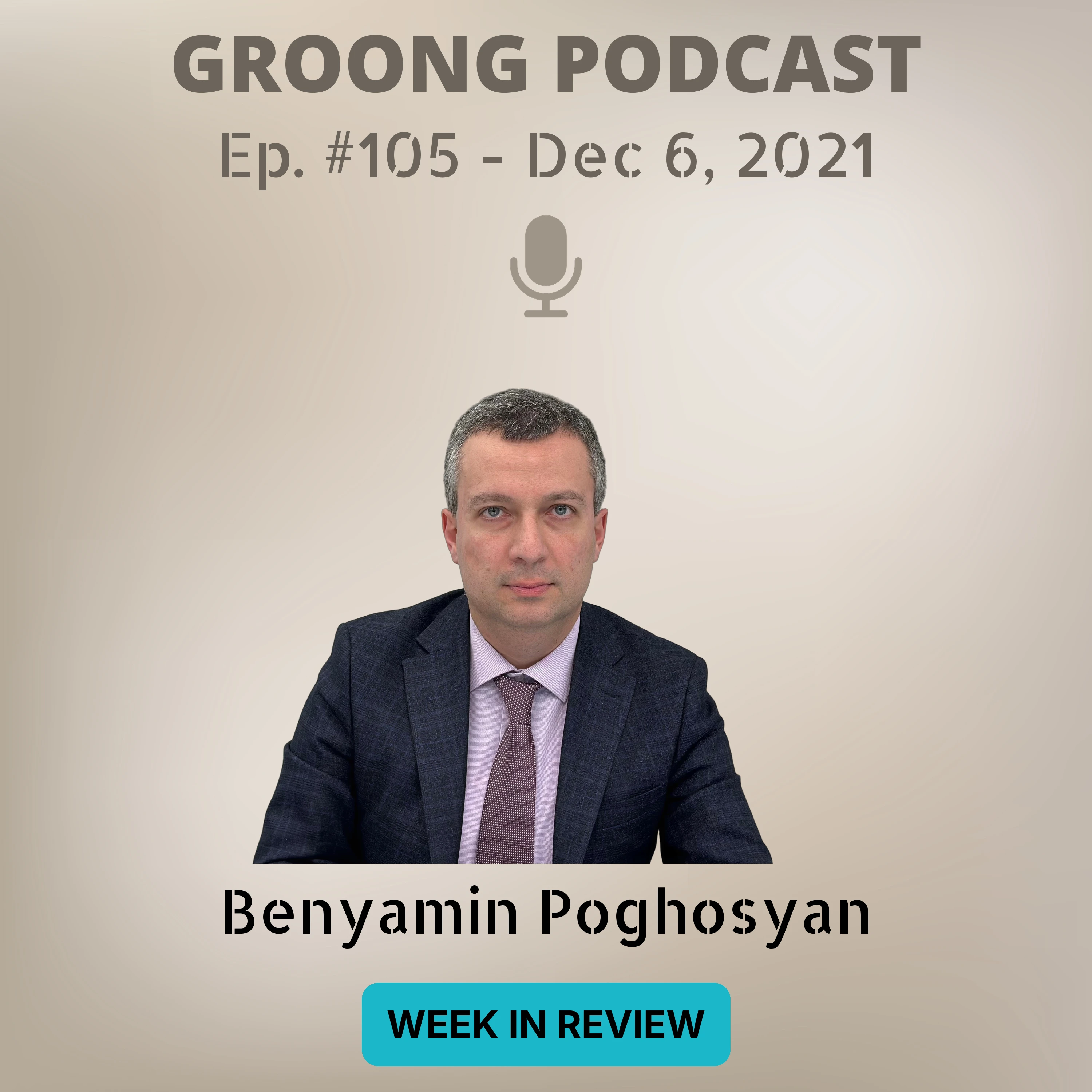
ANN/Groong Week in Review - December 5, 2021
Topics:
- Regional Geopolitics @1:07
- Turkmenistan / Iran Gas Swap Deal @46:58
- Opposition Fizzles Out. Again @58:18
Guests:
- Benyamin Poghosyan TW/@benyamin_poghos
Guest(s):
Hosts:
- Hovik Manucharyan TW/@HovikYerevan
- Asbed Bedrossian TW/@qubriq
Episode 105 | Recorded: Sunday, December 5, 2021 Website: https://groong.org/podcasts/WiR-20211205.html
Regional Geopolitics | Turkmen / Iran Gas | Armenian Opposition Fizzles Out | Ep #105 - Dec 5, 2021 [EP105]
Posted on Monday, Dec 6, 2021 | Category: Armenia, Politics, Iran, Azerbaijan, Russia, Turkey, China, Artsakh, Geopolitics, India, Israel, Economy, Nagorno Karabakh, European Union, Georgia, Syria, UkraineANN/Groong Week in Review - December 5, 2021
Topics:
- Regional Geopolitics @1:07
- Turkmenistan / Iran Gas Swap Deal @46:58
- Opposition Fizzles Out. Again @58:18
Guests:
- Benyamin Poghosyan TW/@benyamin_poghos
Guest(s):
Hosts:
- Hovik Manucharyan TW/@HovikYerevan
- Asbed Bedrossian TW/@qubriq
Episode 105 | Recorded: Sunday, December 5, 2021 Website: https://groong.org/podcasts/WiR-20211205.html
Pashinyan Live | From Sochi to Brussels | Normalization | Co-opetition | Ep #104 - Nov 28, 2021 [EP104]
Posted on Monday, Nov 29, 2021 | Category: Armenia, Politics, Geopolitics, Russia, Turkey, Iran, Azerbaijan, Syria, Economy, Georgia, China, India, Lebanon, Artsakh, Ukraine, Genocide, Middle East, Nagorno Karabakh, European Union, NATO | Series: wir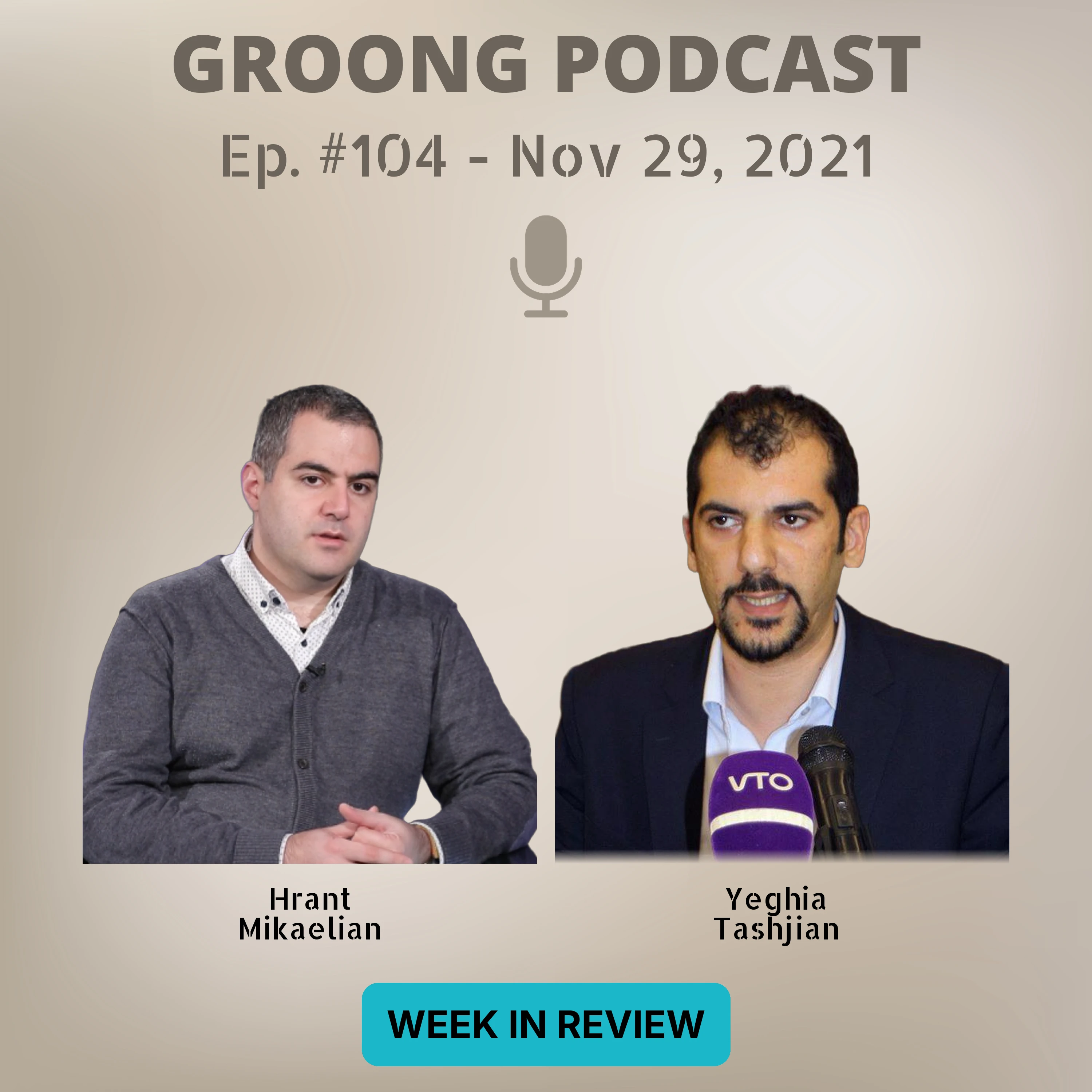
ANN/Groong Week in Review - November 28, 2021
Topics:
- Pashinyan Live on Facebook
- Trilateral in Sochi, Bilateral in Brussels
- Turkish-Armenian “Normalization”
- Russian-Turkish “Co-opetition” in Eurasia
Guests:
- Hrant Mikaelian TW/@hrant_m
- Yeghia Tashjian TW/@yeghig
Guest(s):
Hosts:
- Hovik Manucharyan TW/@HovikYerevan
- Asbed Bedrossian TW/@qubriq
Episode 104 | Recorded: Sunday, November 28, 2021 Website: https://groong.org/podcasts/WiR-20211128.html
Pashinyan Live | From Sochi to Brussels | Normalization | Co-opetition | Ep #104 - Nov 28, 2021 [EP104]
Posted on Monday, Nov 29, 2021 | Category: Armenia, Politics, Geopolitics, Russia, Turkey, Iran, Azerbaijan, Syria, Economy, Georgia, China, India, Lebanon, Artsakh, Ukraine, Genocide, Middle East, Nagorno Karabakh, European Union, NATOANN/Groong Week in Review - November 28, 2021
Topics:
- Pashinyan Live on Facebook
- Trilateral in Sochi, Bilateral in Brussels
- Turkish-Armenian “Normalization”
- Russian-Turkish “Co-opetition” in Eurasia
Guests:
- Hrant Mikaelian TW/@hrant_m
- Yeghia Tashjian TW/@yeghig
Guest(s):
Hosts:
- Hovik Manucharyan TW/@HovikYerevan
- Asbed Bedrossian TW/@qubriq
Episode 104 | Recorded: Sunday, November 28, 2021 Website: https://groong.org/podcasts/WiR-20211128.html
Russia-NATO | Border | Goodbye Moscow, Hello Brussels! | Protests in EVN | Ep #103 - Nov 21, 2021 [EP103]
Posted on Monday, Nov 22, 2021 | Category: Armenia, Politics, Geopolitics, Russia, Azerbaijan, Ukraine, Turkey, Iran, Georgia, USA, Economy, NATO, European Union | Series: wir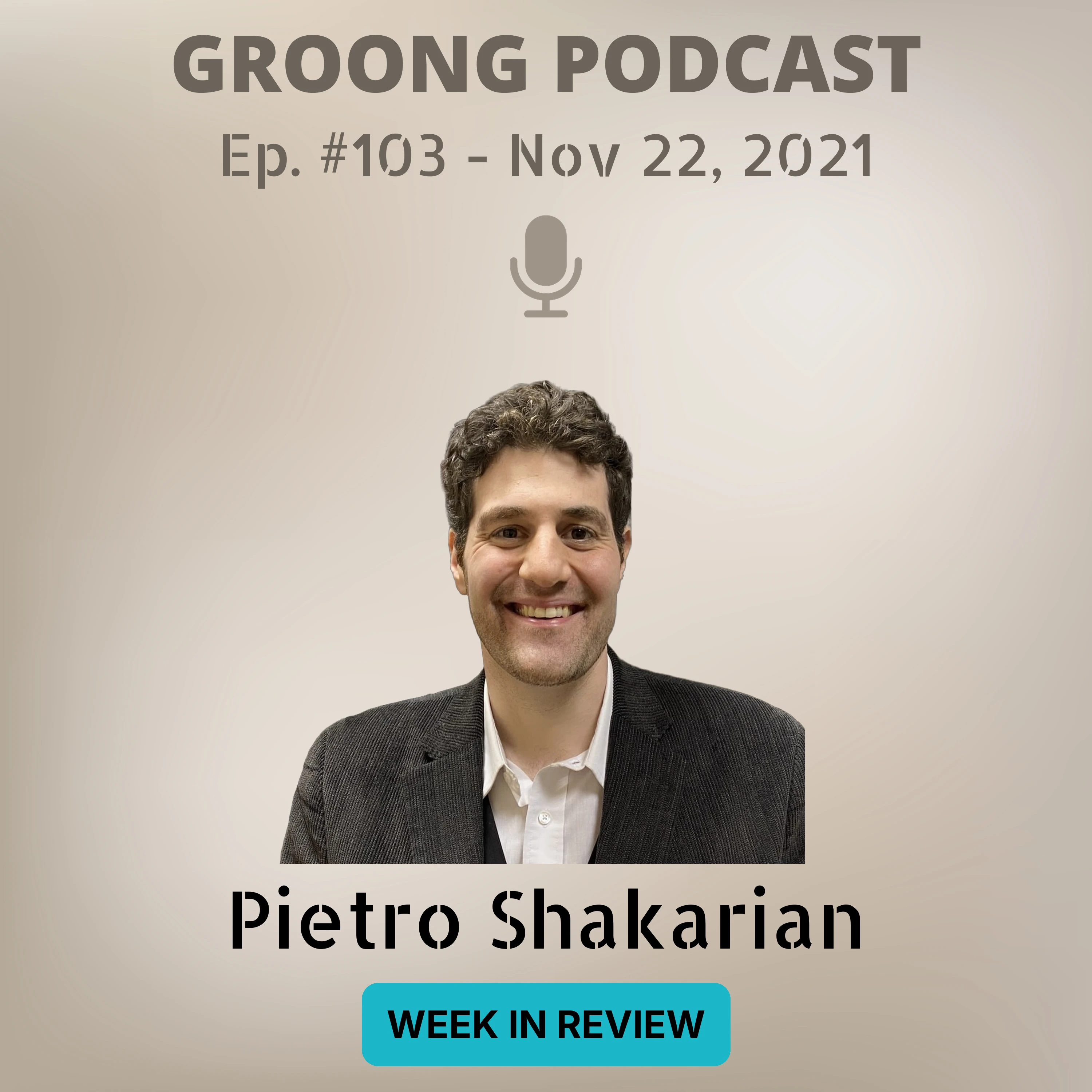
ANN/Groong Week in Review - November 21, 2021
Topics:
- Russia-NATO escalation
- Border escalation
- Goodbye Moscow, Hello Brussels!
- Protests in Yerevan
Guest: Pietro Shakarian
Guest(s):
Hosts:
- Hovik Manucharyan TW/@HovikYerevan
- Asbed Bedrossian TW/@qubriq
Episode 103 | Recorded: Monday, November 22, 2021 Show notes: https://groong.org/podcasts/WiR-20211121.html
Russia-NATO | Border | Goodbye Moscow, Hello Brussels! | Protests in EVN | Ep #103 - Nov 21, 2021 [EP103]
Posted on Monday, Nov 22, 2021 | Category: Armenia, Politics, Geopolitics, Russia, Azerbaijan, Ukraine, Turkey, Iran, Georgia, USA, Economy, NATO, European UnionANN/Groong Week in Review - November 21, 2021
Topics:
- Russia-NATO escalation
- Border escalation
- Goodbye Moscow, Hello Brussels!
- Protests in Yerevan
Guest: Pietro Shakarian
Guest(s):
Hosts:
- Hovik Manucharyan TW/@HovikYerevan
- Asbed Bedrossian TW/@qubriq
Episode 103 | Recorded: Monday, November 22, 2021 Show notes: https://groong.org/podcasts/WiR-20211121.html
Armenia Attacked | Border Politics | Back to OSCE MG | Municipal Results | Ep #101 - Nov 14, 2021 [EP101]
Posted on Wednesday, Nov 17, 2021 | Category: Armenia, Politics, Geopolitics, Russia, Azerbaijan, Artsakh, Turkey, Israel, China, Ukraine, Georgia, Iran, Economy, Middle East, Nagorno Karabakh, European Union, Syria | Series: wir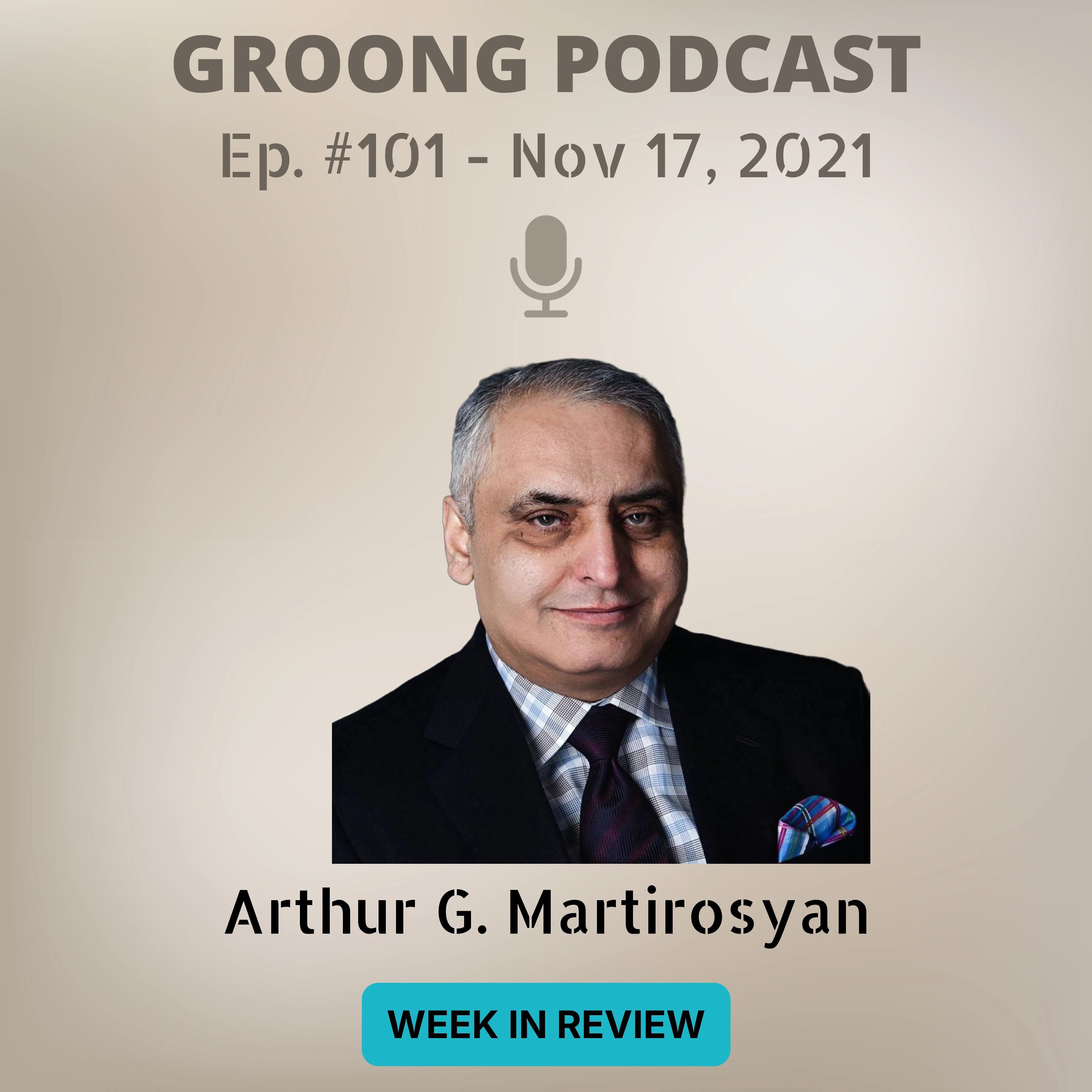
ANN/Groong Week in Review - November 7, 2021
Topics:
- Armenia under wide scale attacks by Azerbaijan @0:55
- Border Politics @7:20
- Azerbaijan Returns to the OSCE MG @29:49
- Municipal elections Over the Past Weekend @44:38
Guests:
- Arthur Martirosyan TW/@ArtMart96
Guest(s):
Hosts:
- Hovik Manucharyan TW/@HovikYerevan
- Asbed Bedrossian TW/@qubriq
Episode 101 | Recorded: Monday, November 16, 2021 Website: https://groong.org/podcasts/WiR-20211114.html
Armenia Attacked | Border Politics | Back to OSCE MG | Municipal Results | Ep #101 - Nov 14, 2021 [EP101]
Posted on Wednesday, Nov 17, 2021 | Category: Armenia, Politics, Geopolitics, Russia, Azerbaijan, Artsakh, Turkey, Israel, China, Ukraine, Georgia, Iran, Economy, Middle East, Nagorno Karabakh, European Union, SyriaANN/Groong Week in Review - November 7, 2021
Topics:
- Armenia under wide scale attacks by Azerbaijan @0:55
- Border Politics @7:20
- Azerbaijan Returns to the OSCE MG @29:49
- Municipal elections Over the Past Weekend @44:38
Guests:
- Arthur Martirosyan TW/@ArtMart96
Guest(s):
Hosts:
- Hovik Manucharyan TW/@HovikYerevan
- Asbed Bedrossian TW/@qubriq
Episode 101 | Recorded: Monday, November 16, 2021 Website: https://groong.org/podcasts/WiR-20211114.html
Talking with Alison Tahmizian Meuse | Ep. #100 - Nov 17, 2021 [EP100]
Posted on Tuesday, Nov 16, 2021 | Category: Artsakh, Nagorno Karabakh, Armenia, Politics, Azerbaijan, Turkey, Lebanon, Syria, Iran, Middle East, Genocide, India, Armenian Genocide, Economy, Georgia, USA, Russia, European Union | Series: cog, video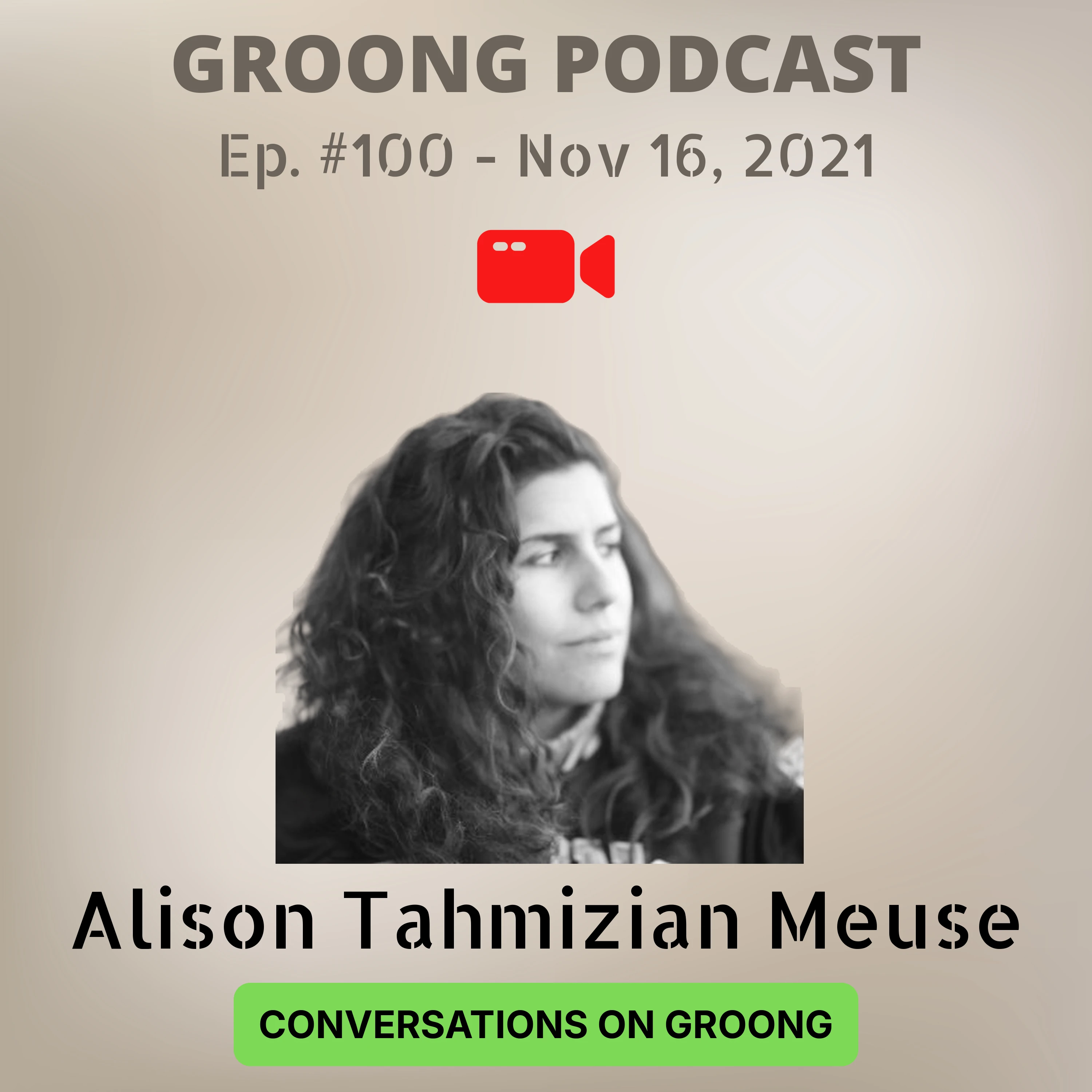
Talking with Alison Tahmizian Meuse - TW/@AliTahmizian - November 17, 2021
- Alison Tahmizian Meuse is a graduate of the George Washington University’s Elliott School of International Affairs. She is a French and Arabic speaker, and a veteran Middle East journalist, having worked over the past decade as a producer, correspondent and editor for major international publications including Agence France-Presse, NPR, and the Asia Times. She currently serves as a strategic advisor for the New Delhi-based consultancy DeepStrat and is newly based in Yerevan.
Topics:
- The drive to cover dangerous
Talking with Alison Tahmizian Meuse | Ep. #100 - Nov 17, 2021 [EP100]
Posted on Tuesday, Nov 16, 2021 | Category: Artsakh, Nagorno Karabakh, Armenia, Politics, Azerbaijan, Turkey, Lebanon, Syria, Iran, Middle East, Genocide, India, Armenian Genocide, Economy, Georgia, USA, Russia, European UnionTalking with Alison Tahmizian Meuse - TW/@AliTahmizian - November 17, 2021
- Alison Tahmizian Meuse is a graduate of the George Washington University’s Elliott School of International Affairs. She is a French and Arabic speaker, and a veteran Middle East journalist, having worked over the past decade as a producer, correspondent and editor for major international publications including Agence France-Presse, NPR, and the Asia Times. She currently serves as a strategic advisor for the New Delhi-based consultancy DeepStrat and is newly based in Yerevan.
Topics:
- The drive to cover dangerous
War in Artsakh, 1 Year On | Erika Olson visits Region | Internal developments | Ep #99 - Nov 7, 2021 [EP99]
Posted on Tuesday, Nov 9, 2021 | Category: Armenia, Azerbaijan, Russia, Iran, China, Artsakh, India, Georgia, Turkey, Israel, Nagorno Karabakh, European Union | Series: wir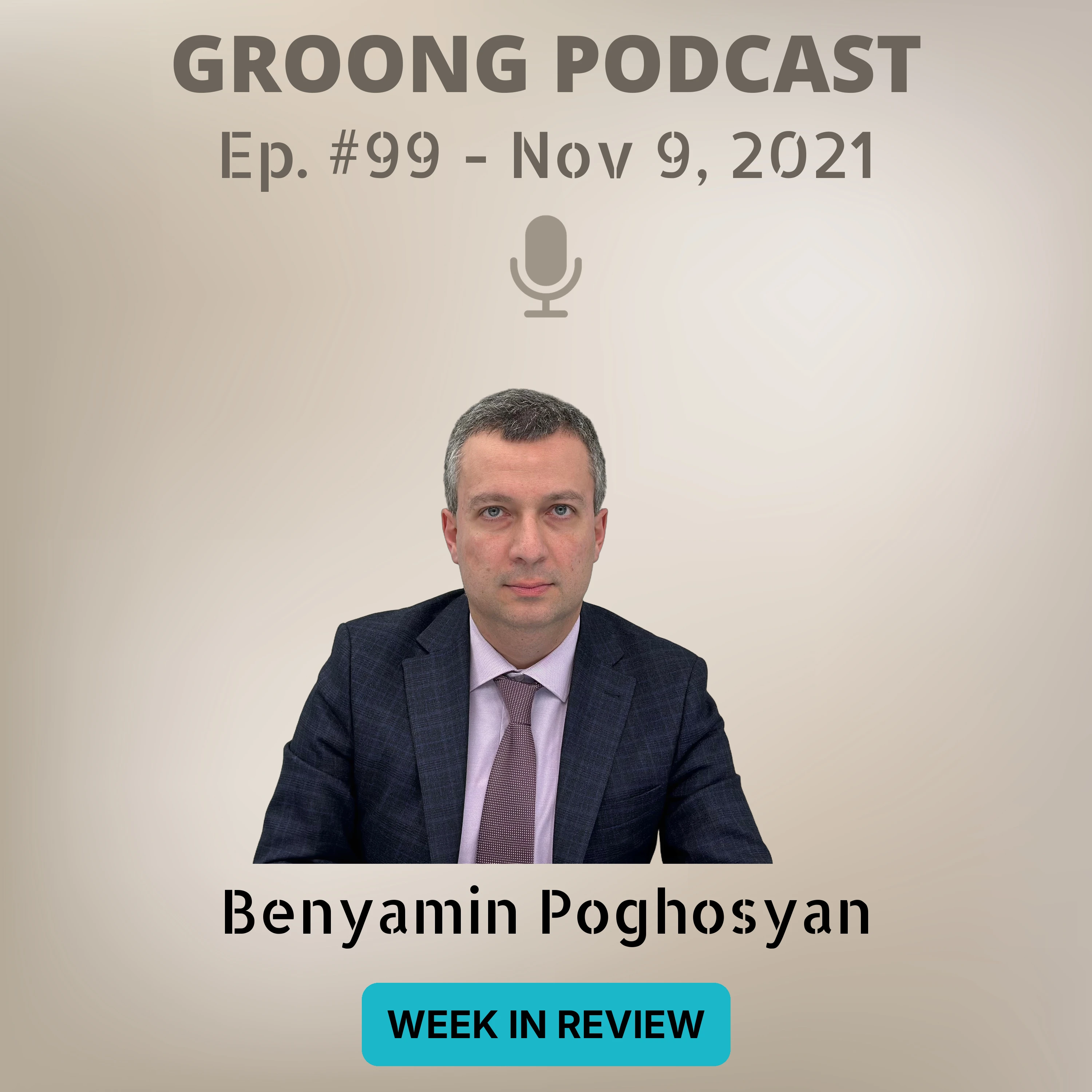
ANN/Groong Week in Review - November 7, 2021
Topics:
- The War in Artsakh, One Year Later
- Erika Olson visits the South Caucasus
- Internal political developments
Guests:
- Benyamin Poghosyan TW/@Benyamin_Poghos
Guest(s):
Hosts:
- Hovik Manucharyan TW/@HovikYerevan
- Asbed Bedrossian TW/@qubriq
Episode 99 | Recorded: Monday, November 8, 2021 Website: https://groong.org/podcasts/WiR-20211107.html
War in Artsakh, 1 Year On | Erika Olson visits Region | Internal developments | Ep #99 - Nov 7, 2021 [EP99]
Posted on Tuesday, Nov 9, 2021 | Category: Armenia, Azerbaijan, Russia, Iran, China, Artsakh, India, Georgia, Turkey, Israel, Nagorno Karabakh, European UnionANN/Groong Week in Review - November 7, 2021
Topics:
- The War in Artsakh, One Year Later
- Erika Olson visits the South Caucasus
- Internal political developments
Guests:
- Benyamin Poghosyan TW/@Benyamin_Poghos
Guest(s):
Hosts:
- Hovik Manucharyan TW/@HovikYerevan
- Asbed Bedrossian TW/@qubriq
Episode 99 | Recorded: Monday, November 8, 2021 Website: https://groong.org/podcasts/WiR-20211107.html
Georgian Runoffs | Turkish Drones in Donbas | Iran-Turkey | G20 Palooza | Ep #96 - Oct 31, 2021 [EP96]
Posted on Monday, Nov 1, 2021 | Category: Russia, Iran, Armenia, Ukraine, Turkey, Georgia, Azerbaijan, China, Artsakh, Israel, Economy, Geopolitics, Human Rights, India, Nagorno Karabakh, NATO | Series: wir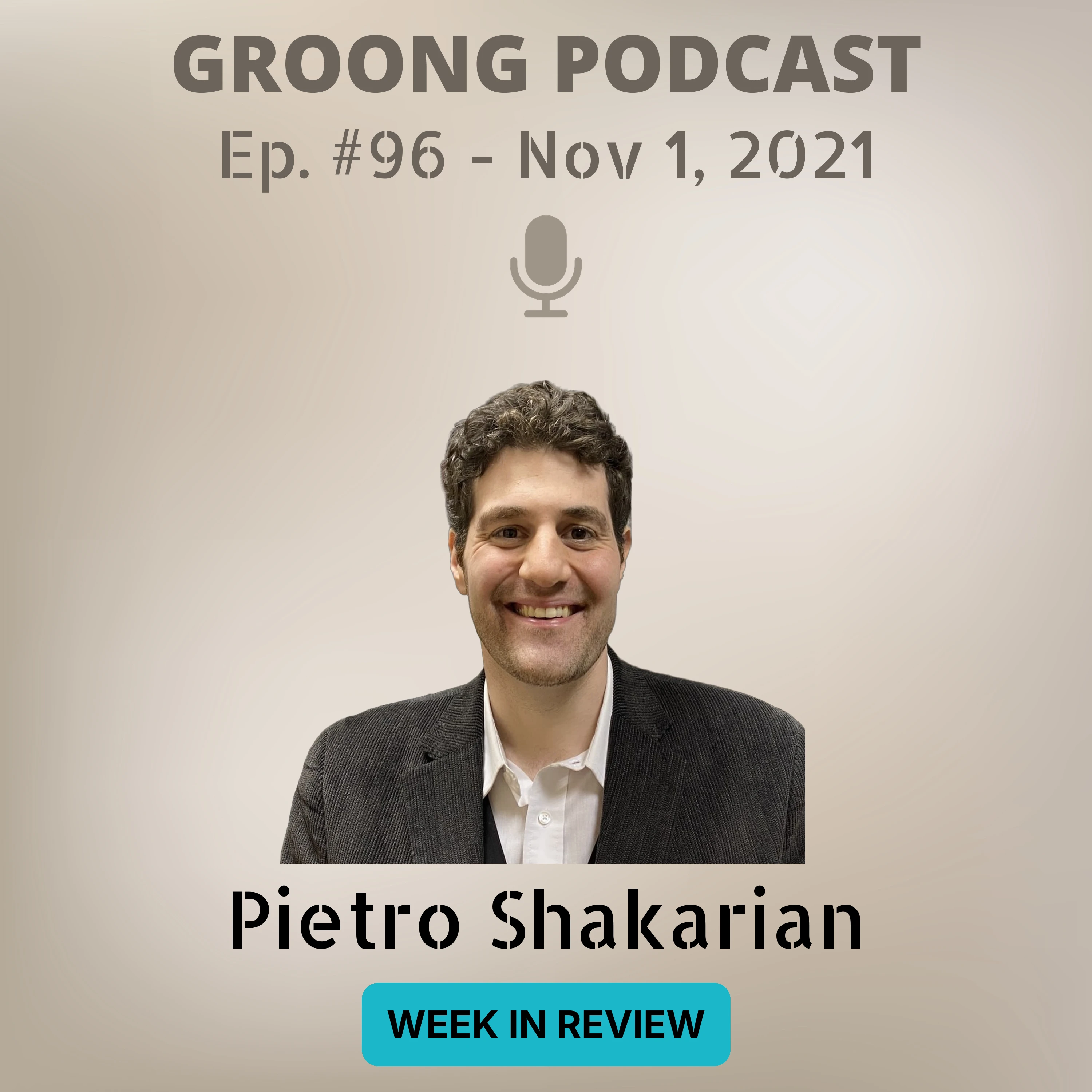
ANN/Groong Week in Review - October 31, 2021
Topics:
- Georgiaâs Runoff Elections
- Turkish Drones in Donbas
- Iran-Turkey Tensions
- The G20 Palooza
Guests:
- Pietro Shakarian
Guest(s):
Hosts:
- Hovik Manucharyan TW/@HovikYerevan
- Asbed Bedrossian TW/@qubriq
Episode 96 | Recorded: October 31, 2021 Website: https://groong.org/podcasts/WiR-20211031.html
Georgian Runoffs | Turkish Drones in Donbas | Iran-Turkey | G20 Palooza | Ep #96 - Oct 31, 2021 [EP96]
Posted on Monday, Nov 1, 2021 | Category: Russia, Iran, Armenia, Ukraine, Turkey, Georgia, Azerbaijan, China, Artsakh, Israel, Economy, Geopolitics, Human Rights, India, Nagorno Karabakh, NATOANN/Groong Week in Review - October 31, 2021
Topics:
- Georgiaâs Runoff Elections
- Turkish Drones in Donbas
- Iran-Turkey Tensions
- The G20 Palooza
Guests:
- Pietro Shakarian
Guest(s):
Hosts:
- Hovik Manucharyan TW/@HovikYerevan
- Asbed Bedrossian TW/@qubriq
Episode 96 | Recorded: October 31, 2021 Website: https://groong.org/podcasts/WiR-20211031.html
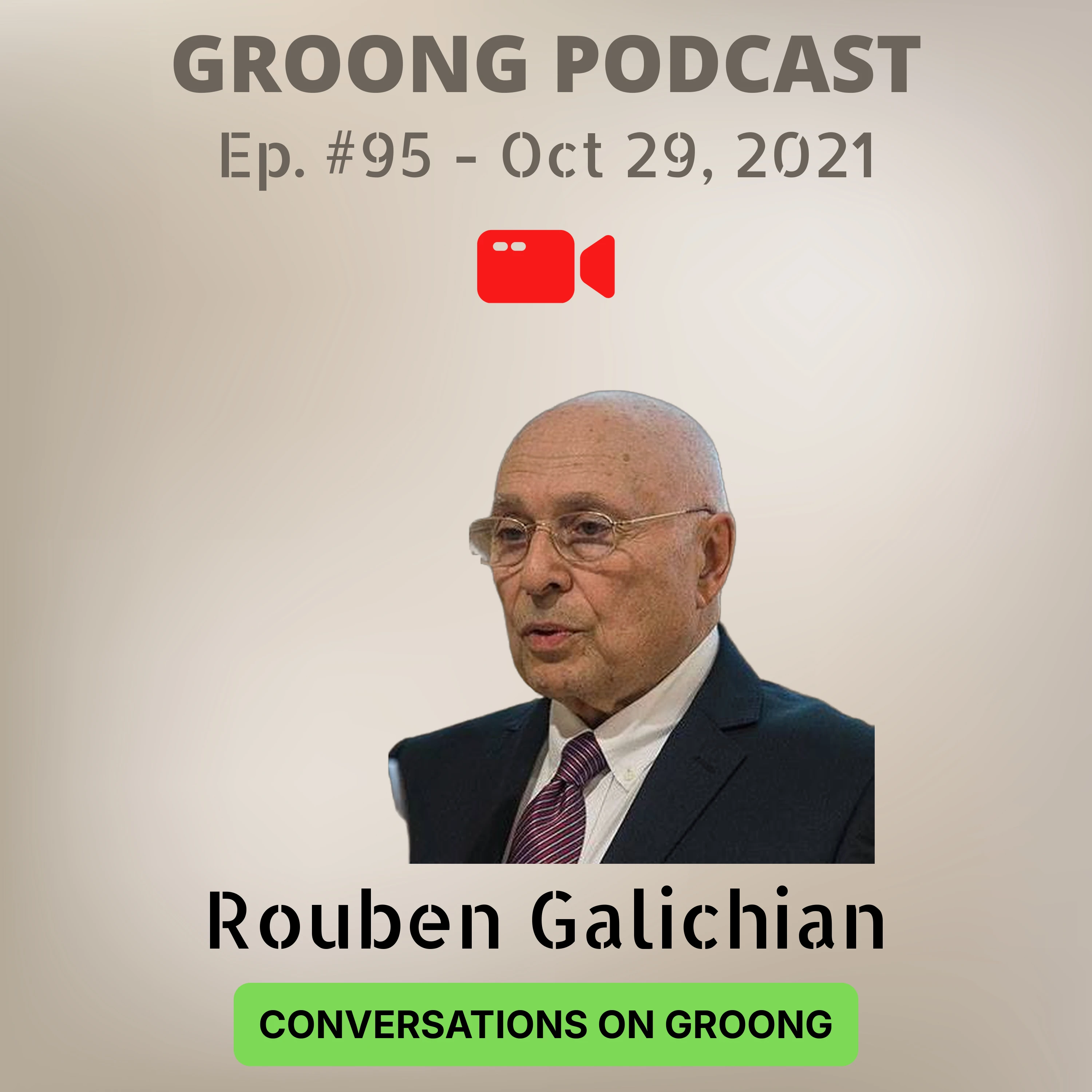
Armenia’s Borders in Maps - A Conversation with Rouben Galichian | Ep 95 - Oct 29, 2021
Guest:
Topics:
- Following the 44-day War in Artsakh, Azerbaijan’s president demands Armenia sign a “Peace Treaty” involving full border recognition.
- Historical and contemporary mapping of Armenian borders
- Early cartography and 20th-century developments
- Enclaves, the Goris-Kapan Highway, and Sev Lake
- Armenia-Iran border considerations
Episode 95 | Recorded: October 29, 2021
Armenia's Borders in Maps - A Conversation with Rouben Galichian | Ep 95 - Oct 29, 2021 [EP95]
Posted on Friday, Oct 29, 2021 | Category: Armenia, Artsakh, Azerbaijan, History, Maps, Nagorno Karabakh, Iran, Russia, Georgia, Turkey, Genocide, NATO, SyriaArmenia’s Borders in Maps - A Conversation with Rouben Galichian | Ep 95 - Oct 29, 2021
Guest:
Topics:
- Following the 44-day War in Artsakh, Azerbaijan’s president demands Armenia sign a “Peace Treaty” involving full border recognition.
- Historical and contemporary mapping of Armenian borders
- Early cartography and 20th-century developments
- Enclaves, the Goris-Kapan Highway, and Sev Lake
- Armenia-Iran border considerations
Episode 95 | Recorded: October 29, 2021
“Positive Messages” | Street Rallies | Election Setbacks | Siradeghyan Dies | Ep #94 - Oct 24, 2021 [EP94]
Posted on Monday, Oct 25, 2021 | Category: Armenia, Azerbaijan, Russia, Artsakh, Iran, Human Rights, Georgia, Turkey, China, Nagorno Karabakh | Series: wir
ANN/Groong Week in Review - October 24, 2021
Topics:
- Yerevanâs âPositive Messagesâ
- Opposition Going Back to Street Rallies?
- Ruling Party Setbacks in Local Elections
- Vano Siradeghyan Dies
Guests:
- Tevan Poghosyan TW/@TevanPoghosyan
Guest(s):
Hosts:
- Hovik Manucharyan TW/@HovikYerevan
- Asbed Bedrossian TW/@qubriq
Episode 94 | Recorded: October 25, 2021 Website: https://groong.org/podcasts/WiR-20211024.html
“Positive Messages” | Street Rallies | Election Setbacks | Siradeghyan Dies | Ep #94 - Oct 24, 2021 [EP94]
Posted on Monday, Oct 25, 2021 | Category: Armenia, Azerbaijan, Russia, Artsakh, Iran, Human Rights, Georgia, Turkey, China, Nagorno KarabakhANN/Groong Week in Review - October 24, 2021
Topics:
- Yerevanâs âPositive Messagesâ
- Opposition Going Back to Street Rallies?
- Ruling Party Setbacks in Local Elections
- Vano Siradeghyan Dies
Guests:
- Tevan Poghosyan TW/@TevanPoghosyan
Guest(s):
Hosts:
- Hovik Manucharyan TW/@HovikYerevan
- Asbed Bedrossian TW/@qubriq
Episode 94 | Recorded: October 25, 2021 Website: https://groong.org/podcasts/WiR-20211024.html
Flurry of Diplomacy | Regional Results | Vaccine Update | Trust in Gov Info | Ep #92 - Oct 17, 2021 [EP92]
Posted on Tuesday, Oct 19, 2021 | Category: Armenia, Azerbaijan, Iran, Turkey, Georgia, Economy, Russia, Syria, Artsakh, India, Israel, Lebanon, Middle East, Ukraine, Nagorno Karabakh | Series: wir
ANN/Groong Week in Review - October 17, 2021
Topics:
- A Flurry of Diplomatic Activity
- Results from Tavush, Shirak and Syunik
- Vaccination in Armenia
- Trust in the Authorities about Information from Border Areas
Guests:
- Hrant Mikaelian TW/@hrant_m
Guest(s):
Hosts:
- Hovik Manucharyan TW/@HovikYerevan
- Asbed Bedrossian TW/@qubriq
Episode 92 | Recorded: October 18, 2021 Website: https://groong.org/podcasts/WiR-20211017.html
Flurry of Diplomacy | Regional Results | Vaccine Update | Trust in Gov Info | Ep #92 - Oct 17, 2021 [EP92]
Posted on Tuesday, Oct 19, 2021 | Category: Armenia, Azerbaijan, Iran, Turkey, Georgia, Economy, Russia, Syria, Artsakh, India, Israel, Lebanon, Middle East, Ukraine, Nagorno KarabakhANN/Groong Week in Review - October 17, 2021
Topics:
- A Flurry of Diplomatic Activity
- Results from Tavush, Shirak and Syunik
- Vaccination in Armenia
- Trust in the Authorities about Information from Border Areas
Guests:
- Hrant Mikaelian TW/@hrant_m
Guest(s):
Hosts:
- Hovik Manucharyan TW/@HovikYerevan
- Asbed Bedrossian TW/@qubriq
Episode 92 | Recorded: October 18, 2021 Website: https://groong.org/podcasts/WiR-20211017.html
Saakashvili in Georgia | Putin Erdogan in Sochi | OSCE MG in NK | Tonoyan in Jail | Ep 91 Oct 3 2021 [EP91]
Posted on Monday, Oct 4, 2021 | Category: Armenia, Politics, Georgia, Geopolitics, Russia, Azerbaijan, Turkey, Artsakh, Ukraine, Iran, Syria, China, Nagorno Karabakh, NATO, European Union | Series: wir
ANN/Groong Week in Review - October 3, 2021
Topics:
- Saakashvili Back in Georgia
- Putin, Erdogan, in Sochi
- OSCE Minsk Group in Artsakh?
- Tonoyan, Galstyan in Jail
- Hovik in Stepanakert
Guests:
- Benyamin Poghosyan TW/@benyamin_poghos
- Pietro Shakarian
Guest(s):
Hosts:
- Asbed Bedrossian TW/@qubriq
- Hovik Manucharyan TW/@HovikYerevan
Episode 91 | Recorded: October 3, 2021 https://groong.org/podcasts/WiR-20211003.html
Saakashvili in Georgia | Putin Erdogan in Sochi | OSCE MG in NK | Tonoyan in Jail | Ep 91 Oct 3 2021 [EP91]
Posted on Monday, Oct 4, 2021 | Category: Armenia, Politics, Georgia, Geopolitics, Russia, Azerbaijan, Turkey, Artsakh, Ukraine, Iran, Syria, China, Nagorno Karabakh, NATO, European UnionANN/Groong Week in Review - October 3, 2021
Topics:
- Saakashvili Back in Georgia
- Putin, Erdogan, in Sochi
- OSCE Minsk Group in Artsakh?
- Tonoyan, Galstyan in Jail
- Hovik in Stepanakert
Guests:
- Benyamin Poghosyan TW/@benyamin_poghos
- Pietro Shakarian
Guest(s):
Hosts:
- Asbed Bedrossian TW/@qubriq
- Hovik Manucharyan TW/@HovikYerevan
Episode 91 | Recorded: October 3, 2021 https://groong.org/podcasts/WiR-20211003.html
One-year anniversary of Artsakh War | Can the Opposition Reorg | TARC 2.0 | Ep 90 - Sep 26, 2021 [EP90]
Posted on Sunday, Sep 26, 2021 | Category: Armenia, Politics, Azerbaijan, Georgia, Turkey, Russia, Nagorno Karabakh, Armenian Genocide, Genocide, Economy, China, Syria | Series: wir
Guest:
- Tevan Poghosyan , is president of the International Center for Human Development in Yerevan. Mr. Poghosyan was an MP in the National Assembly between 2012 and 2017 from the Heritage party. From 1997 to 1999 he served as the Nagorno-Karabakh Public Affairs Office Director in Washington, D.C.
Topic:
- The One-year anniversary of The War in Artsakh
- Can the Opposition Reorganize?
- Turkish-Armenian Possible Rapprochement
Episode 90 | Recorded: September 27, 2021
One-year anniversary of Artsakh War | Can the Opposition Reorg | TARC 2.0 | Ep 90 - Sep 26, 2021 [EP90]
Posted on Sunday, Sep 26, 2021 | Category: Armenia, Politics, Azerbaijan, Georgia, Turkey, Russia, Nagorno Karabakh, Armenian Genocide, Genocide, Economy, China, SyriaGuest:
- Tevan Poghosyan , is president of the International Center for Human Development in Yerevan. Mr. Poghosyan was an MP in the National Assembly between 2012 and 2017 from the Heritage party. From 1997 to 1999 he served as the Nagorno-Karabakh Public Affairs Office Director in Washington, D.C.
Topic:
- The One-year anniversary of The War in Artsakh
- Can the Opposition Reorganize?
- Turkish-Armenian Possible Rapprochement
Episode 90 | Recorded: September 27, 2021
Independence Day | Pashinyan's Turkish Overtures | Goris-Kapan Highway | Ep #89 - Sep 19, 2021 [EP89]
Posted on Tuesday, Sep 21, 2021 | Category: Armenia, Azerbaijan, Turkey, Iran, Russia, Georgia, Artsakh, Ukraine, Economy, Genocide, Israel, Nagorno Karabakh, Artsakh Blockade, Armenian Genocide, European Union | Series: wir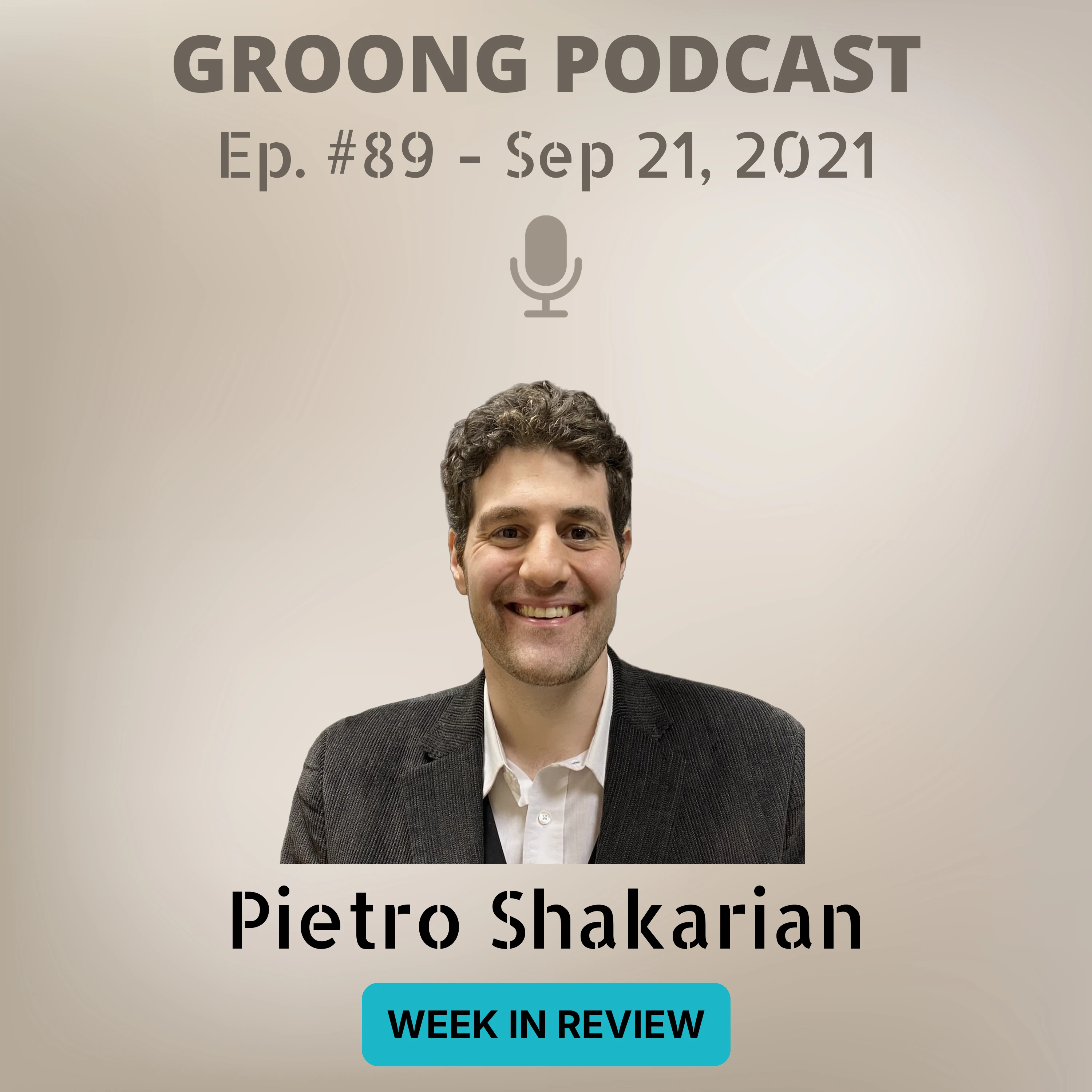
Guest(s):
ANN/Groong Week in Review - September 19, 2021
Topics:
- Independence Day
- Pashinyanâs Turkish overtures
- Goris-Kapan highway
Guests:
- Dr. Pietro Shakarian
Host:
- Hovik Manucharyan
Episode #89 | Recorded: September 20, 2021 Website: https://groong.org/podcasts/WiR-20210919.html
Independence Day | Pashinyan's Turkish Overtures | Goris-Kapan Highway | Ep #89 - Sep 19, 2021 [EP89]
Posted on Tuesday, Sep 21, 2021 | Category: Armenia, Azerbaijan, Turkey, Iran, Russia, Georgia, Artsakh, Ukraine, Economy, Genocide, Israel, Nagorno Karabakh, Artsakh Blockade, Armenian Genocide, European UnionGuest(s):
ANN/Groong Week in Review - September 19, 2021
Topics:
- Independence Day
- Pashinyanâs Turkish overtures
- Goris-Kapan highway
Guests:
- Dr. Pietro Shakarian
Host:
- Hovik Manucharyan
Episode #89 | Recorded: September 20, 2021 Website: https://groong.org/podcasts/WiR-20210919.html
Syunik Blocked and Unblocked | 5-Year Plan Approved | Parliamentary Dynamics | Ep #87 - Aug 29, 2021 [EP87]
Posted on Sunday, Aug 29, 2021 | Category: Armenia, Azerbaijan, Iran, Russia, Turkey, Artsakh, Economy, Georgia, Israel, Middle East, Nagorno Karabakh, European Union, NATO | Series: wir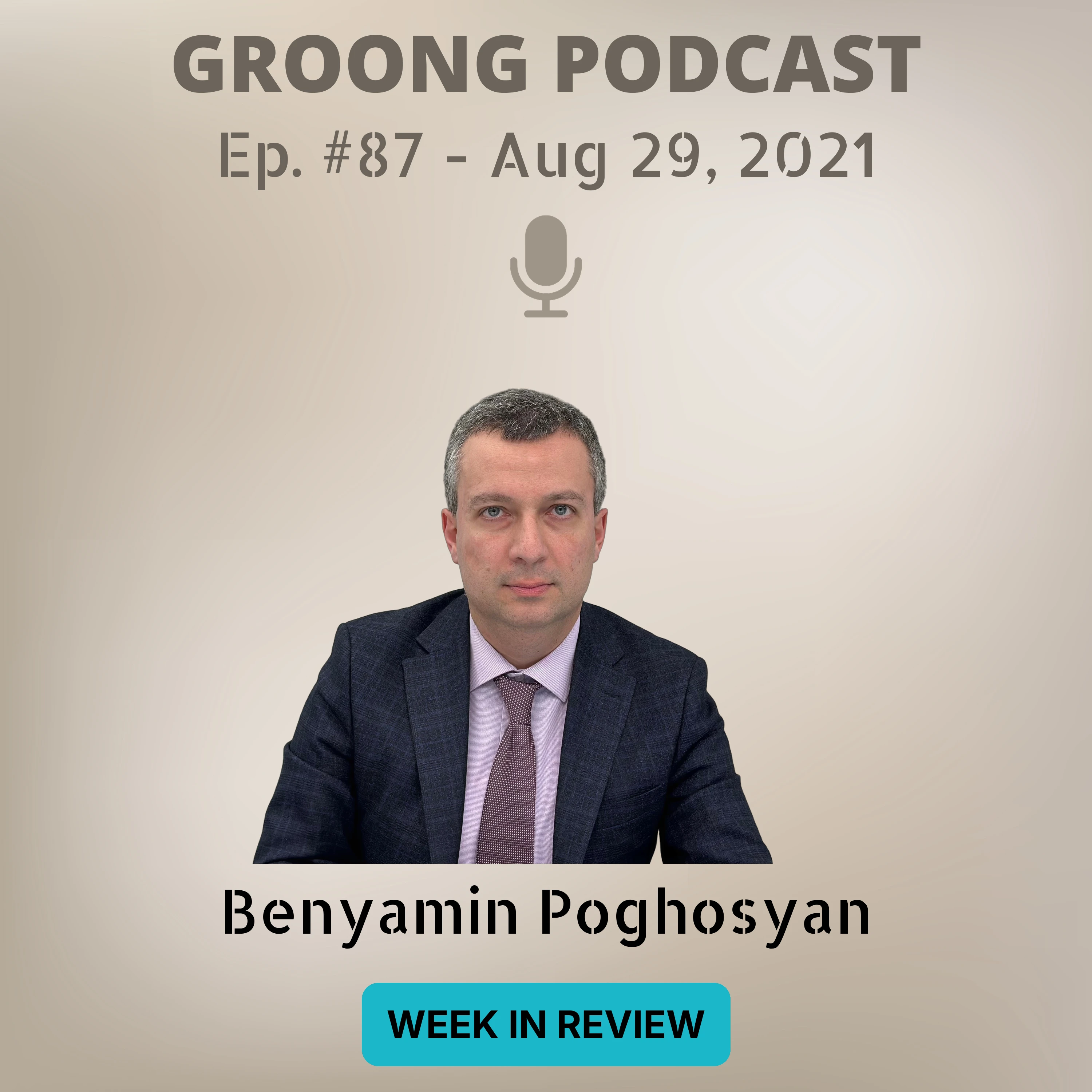
ANN/Groong Week in Review - August 29, 2021
Topics:
- Road to Syunik Blocked and Unblocked
- 5-Year Plan Approved
- Parliamentary Dynamics
Guests:
- Benyamin Poghosyan / TW @Benyamin_Poghos
Guest(s):
Hosts:
- Asbed Bedrossian / TW @qubriq
Episode 87 | Recorded: August 29, 2021 Website: https://groong.org/podcasts/WiR-20210829.html