Borders
Last updated: June 10, 2026
Armenia’s land borders span approximately 1,570 kilometers and connect it to four neighboring countries: Azerbaijan (910 km to the east and north), Turkey (311 km to the west), Iran (910 km to the south and southeast), and Georgia (164 km to the north). The borders define Armenia’s access to regional markets, energy supplies, and transit options. Turkey has maintained a unilateral blockade of Armenia since 1993, closing its land border and airspace. Following the ceasefire agreements of 1994 and 2020, border demarcation and delimitation with Azerbaijan have remained contested, with disputes over enclaves, territorial control, and transit corridor status creating persistent tensions.
Armenia’s borders determine its survival as a sovereign state. The loss of Artsakh (Nagorno Karabakh) in a 24-hour offensive on September 19–20, 2023, ethnically cleansed the enclave of its more than 150,000 Armenian inhabitants and reduced Armenian territorial control to the Republic proper. The primary obstacle to the Armenia-Azerbaijan peace process is Azerbaijan’s precondition that Armenia amend its constitution to remove references to Artsakh and recognize Azerbaijani territorial claims. Border demarcation and delimitation, while technically complex and lengthy, is proceeding but Armenian opposition parties criticize the Pashinyan government for accepting Azerbaijan’s sequencing priorities in determining which areas are demarcated first. Beyond the constitutional demands and demarcation process, Azerbaijan demands implementation of transit arrangements that would connect mainland Azerbaijan to Nakhijevan across Armenian Syunik province. Armenia fears that such arrangements, marketed as TRIPP (Trump Route for International Peace and Prosperity) by Washington, would cement Azerbaijani and Turkish control over Armenian territory and sever Armenia’s ability to maintain open transit with Iran through Syunik , a critical lifeline for trade and energy independent of hostile neighbors.
The Zangezur Corridor label itself reflects geopolitical competition over naming rights and intent. The United States frames the corridor as TRIPP, a transit project designed to connect Asia to Europe while bypassing Russia and Iran and serving American strategic interests in accessing critical minerals and limiting Chinese and Russian influence. Azerbaijan and Turkey call it the “Zangezur Corridor,” terminology rooted in pan-Turanic ambitions to integrate the region under Turkish-Azerbaijani leadership. This is not a semantic difference. Implementation would allow Turkey to link directly with Azerbaijan and Central Asia, completing a corridor that many Armenian analysts see as a threat to Armenian sovereignty rather than a neutral infrastructure project. The Iran War that erupted in early 2026 has frozen TRIPP’s implementation by making the corridor’s passage through Syunik strategically volatile, but it has not resolved the underlying question of whether Armenia will eventually be forced to accept transit arrangements that benefit Turkey and Azerbaijan more than Armenia itself.
Armenia’s border situation defines its options for trade, energy, and geopolitical alignment. With Turkey’s border closed since 1993, Armenia cannot access Europe overland and remains dependent on air and sea routes through Georgia and Iran. Armenia’s southern border with Iran remains open and functional, and the northern border with Georgia is also open. These two neighbors provide Armenia’s only reliable transit routes for goods and energy independent of hostile powers. Turkey’s continued closure of its border means that any corridor arrangement through Syunik that severs Armenia’s direct access to Iran would eliminate Armenia’s most critical independent trade pathway. In this context, border demarcation with Azerbaijan becomes more than a technical boundary matter: it determines whether Armenia can survive as a sovereign state or whether it will be economically strangled by hostile neighbors and forced into submission. Fyodor Lukyanov and Varuzhan Geghamyan have analyzed how the corridor question and border disputes shape Armenia’s choices between competing blocs, and how Armenia’s weakness in border negotiations reflects its broader loss of leverage in a region where Russia no longer guarantees its security and the West offers support without binding commitments.
Groong episodes that include this tag
Below are all Groong episodes tagged with Borders.
Turkey - Part 2 - Zero Problems? | Ep. 10 - Aug 28, 2020 [EP10]
Posted on Friday, Aug 28, 2020 | Category: Turkey, Armenia, Genocide, Armenian Genocide, Azerbaijan, Russia, China, Middle East, Syria, Georgia, Iran, Economy, Nagorno Karabakh, NATO
Topics:
- Turkey: Zero Problems?
- Azerbaijan: The Myth of Brotherly Relations?
- Armenia: From Diplomatic Overtures to a Mini Cold War
Guests:
Host:
Episode 10 | Recorded: August 2020
Turkey - Part 1 - Transformation and Continuity | Ep. 9 - Aug 24, 2020 [EP9]
Posted on Tuesday, Aug 25, 2020 | Category: Turkey, Armenia, Genocide, Middle East, Syria, Azerbaijan, Iran, Israel, Lebanon, Economy, NATO, Russia | Series: cog
Topics:
- Turkeyâs Transformation in Historical Perspective
- Change and Continuity of Turkish Political Culture
- Turkeyâs Foreign Policy
Guests:
Host:
Episode 9 | Recorded: August 2020
Turkey - Part 1 - Transformation and Continuity | Ep. 9 - Aug 24, 2020 [EP9]
Posted on Tuesday, Aug 25, 2020 | Category: Turkey, Armenia, Genocide, Middle East, Syria, Azerbaijan, Iran, Israel, Lebanon, Economy, NATO, RussiaTopics:
- Turkeyâs Transformation in Historical Perspective
- Change and Continuity of Turkish Political Culture
- Turkeyâs Foreign Policy
Guests:
Host:
Episode 9 | Recorded: August 2020
ANN/Groong Week in Review - (Ep #8) - 08/16/2020 [EP8]
Posted on Monday, Aug 17, 2020 | Category: Armenia, Russia, Economy, Azerbaijan, Georgia, Ukraine, Iran, Human Rights, Genocide, Israel, China, Turkey, Middle East, Nagorno Karabakh, European Union, NATO | Series: wir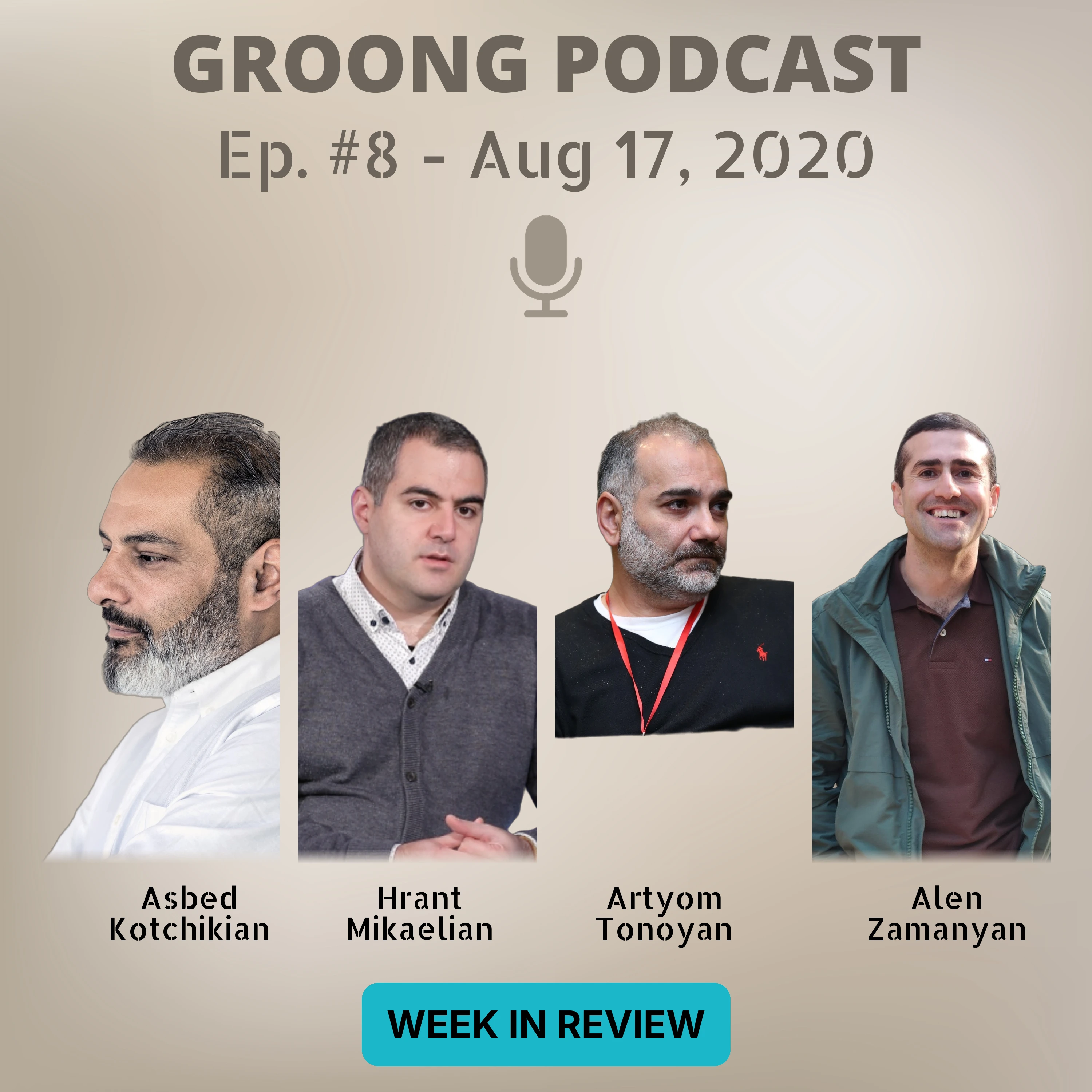
Guest(s):
ANN/Groong Week in Review - 08/16/2020
This Week in Review we talk with Hrant Mikaelian to discuss important issues and developments around Armenia, such as the Coronavirus Pandemic, and its economic effect; Armenia’s membership in EurAsian Economic Union and the economic effect of that organization on Armenia; and some of the trends affecting Russia and its economy.
Hrant will then join us in our weekly lightning round of questions from the past weekâs headlines, to analyze Prime Minister Pashinyanâs
Read MoreANN/Groong Week in Review - (Ep #8) - 08/16/2020 [EP8]
Posted on Monday, Aug 17, 2020 | Category: Armenia, Russia, Economy, Azerbaijan, Georgia, Ukraine, Iran, Human Rights, Genocide, Israel, China, Turkey, Middle East, Nagorno Karabakh, European Union, NATOGuest(s):
ANN/Groong Week in Review - 08/16/2020
This Week in Review we talk with Hrant Mikaelian to discuss important issues and developments around Armenia, such as the Coronavirus Pandemic, and its economic effect; Armenia’s membership in EurAsian Economic Union and the economic effect of that organization on Armenia; and some of the trends affecting Russia and its economy.
Hrant will then join us in our weekly lightning round of questions from the past weekâs headlines, to analyze Prime Minister Pashinyanâs
Read MoreWar Roundup | National Security Strategy | Headlines | People | Ep 4 - July 26, 2020 [EP4]
Posted on Monday, Jul 27, 2020 | Category: Armenia, Azerbaijan, Russia, Artsakh, Israel, Turkey, Human Rights, Iran, Syria, Nagorno Karabakh | Series: wir
ANN Groong Week in Review - 07/26/2020
Topics:
- Panel: War roundup / Artsakh
- Conversation: National Security Doctrine
- Panel: National Security Doctrine
Guests
A Conversation with
- Karena Avedissian (special guest)
Episode 4 | Recorded on July 26, 2020
War Roundup | National Security Strategy | Headlines | People | Ep 4 - July 26, 2020 [EP4]
Posted on Monday, Jul 27, 2020 | Category: Armenia, Azerbaijan, Russia, Artsakh, Israel, Turkey, Human Rights, Iran, Syria, Nagorno KarabakhANN Groong Week in Review - 07/26/2020
Topics:
- Panel: War roundup / Artsakh
- Conversation: National Security Doctrine
- Panel: National Security Doctrine
Guests
A Conversation with
- Karena Avedissian (special guest)
Episode 4 | Recorded on July 26, 2020
Constitutional Court Standoff | Polls | Armenia Response to COVID | Armenian Media | Headlines | People in the News | Ep 1 - Jul 12, 2020 [EP1]
Posted on Sunday, Jul 12, 2020 | Category: Armenia, Artsakh, Politics, Poll, Azerbaijan, Georgia, Economy, China, Turkey, Armenian Genocide | Series: wir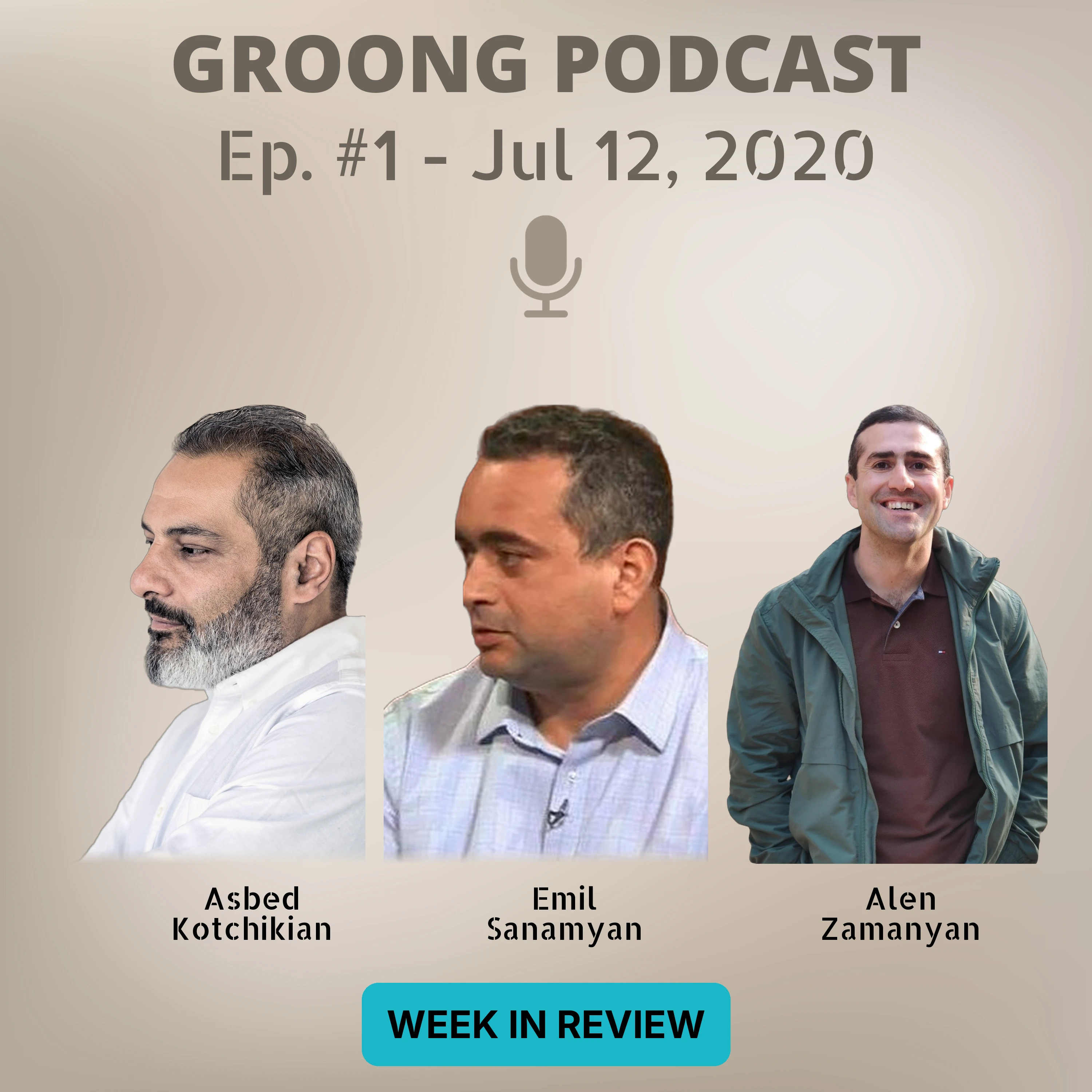
ANN/Groong Week in Review - 07/12/2020
Topics:
- The Constitutional Court Standoff Continues in Limbo
- Polls, and what you should know about them
- The Armenian Government’s response to COVID-19
- The State of Armenian Media: Media Freedoms During Covid
Guests:
Episode 1 | Recorded on July 12, 2020
Constitutional Court Standoff | Polls | Armenia Response to COVID | Armenian Media | Headlines | People in the News | Ep 1 - Jul 12, 2020 [EP1]
Posted on Sunday, Jul 12, 2020 | Category: Armenia, Artsakh, Politics, Poll, Azerbaijan, Georgia, Economy, China, Turkey, Armenian GenocideANN/Groong Week in Review - 07/12/2020
Topics:
- The Constitutional Court Standoff Continues in Limbo
- Polls, and what you should know about them
- The Armenian Government’s response to COVID-19
- The State of Armenian Media: Media Freedoms During Covid
Guests:
Episode 1 | Recorded on July 12, 2020