Azerbaijan
Last updated: June 10, 2026
Azerbaijan is a South Caucasus republic with a population of approximately 10 million and a territory spanning roughly 86,600 square kilometers. The country is governed as a presidential republic under President Ilham Aliyev , who has held power since 2003. Azerbaijan’s economy is heavily dependent on oil and natural gas exports, particularly through the Baku-Tbilisi-Ceyhan (BTC) pipeline and the Southern Gas Corridor, which connects Caspian energy reserves to European markets. The capital, Baku, serves as a major regional hub. Azerbaijan is a member of the United Nations, OSCE, and various regional organizations. The country’s Azerbaijani-speaking population is predominantly Muslim. Azerbaijan also includes the Nakhchivan Autonomous Republic, an exclave separated from mainland Azerbaijan by Armenian territory.
However, international human rights organizations, including Human Rights Watch and Amnesty International, have extensively documented systematic human rights abuses in Azerbaijan, including arbitrary detention, torture, suppression of political opposition, restrictions on press freedom, and limitations on civil society. Aliyev’s government maintains tight control over dissent, with opposition politicians, journalists, and activists facing harassment, imprisonment, and violence. The country ranks poorly on freedom indices, with Reporters Without Borders, Freedom House, and Transparency International consistently ranking Azerbaijan among the world’s most repressive states regarding democratic freedoms and rule of law. Prison conditions are documented as harsh, and extrajudicial executions and enforced disappearances have been reported. The state monopoly on media, combined with internet censorship and restrictions on assembly, creates an environment where independent voices face significant risk. These governance practices have been particularly intensified since Aliyev’s re-election in 2018 and remain central to how the regime maintains internal control while projecting external power.
Azerbaijan is a South Caucasus republic whose military campaigns against Armenia in 2020 and 2023 have reshaped the regional balance of power. Following the 44-Day War in 2020 and the complete capture of Artsakh (Nagorno Karabakh) in a 24-hour offensive on September 19–20, 2023, Azerbaijan controls territory that was previously under Armenian administration, ethnically cleansing the enclave of its more than 150,000 Armenian inhabitants. President Ilham Aliyev has used military victory to extract territorial and geopolitical concessions from Armenia, including commitments toward the so-called “Zangezur Corridor”—what Washington frames as TRIPP (Trump Route for International Peace and Prosperity), a transit corridor through Armenian Syunik province that would connect Azerbaijan to Turkey via Armenian land. Aliyev has consistently framed these arrangements in pan-Turanic terms, treating them as steps toward regional integration under Turkish-Azerbaijani leadership rather than as neutral infrastructure projects. Azerbaijan’s leverage over Armenia derives not only from military superiority but from Armenia’s isolation: as Russia has grown less reliable as a security guarantor and Armenia has sought Western partnerships that remain incomplete, Baku has incrementally pressed its advantage through border incursions, blockade threats, and demands for “unblocking” that contain implicit security concessions.
Azerbaijan’s relationship with Turkey is central to its strategy and its self-conception as a regional power. The two states share language, historical narratives around pan-Turkism, and military-strategic interests in offsetting Iran and resisting Russian influence. Turkey provided air support during the 2020 war and has supplied weapons and military training throughout Azerbaijan’s buildup. However, the relationship is not symmetrical: Azerbaijan maintains its own foreign policy interests, including energy partnerships with Europe via the Southern Gas Corridor and a degree of hedging toward Russia that reflects Baku’s awareness that it cannot afford permanent enmity with Moscow. In early 2026, tensions between Azerbaijan and Iran spiked following military exercises in Nakhijevan and constitutional changes that centralized control over the exclave, raising questions about whether Baku is positioning itself as a U.S.-backed pressure point against Iran or merely consolidating internal authority. The trajectory of the U.S.-Israeli war on Iran, discussed in episodes examining the regional dimensions of that conflict, has direct bearing on Azerbaijan’s calculations about its northern neighbor and its room for maneuver between Washington and Moscow.
Armenia’s vulnerability has translated into Azerbaijan’s expanding room for territorial and political demands. Pashinyan has signed successive ceasefire agreements and acknowledged Armenian territorial losses while framing them as necessary trade-offs for regional peace. Yet Azerbaijan has continued to occupy positions inside internationally recognized Armenian territory, has threatened blockades over the movement of humanitarian supplies to Armenia, and has used negotiations over transit corridors as leverage to extract security concessions from Yerevan. Eldar Mamedov’s analysis of the Iran war and Azerbaijan’s role as a potential northern front, alongside Arman Grigoryan’s assessment of what he terms Armenia’s “revolutionary recklessness” in abandoning Russian security ties without securing firm Western alternatives, illustrates the degree to which Azerbaijan’s actions are embedded in a wider geopolitical struggle between Russia, the United States, Europe, Iran, and Turkey. Whether Azerbaijan consolidates its wartime gains into a permanent shift in the regional balance or whether changed circumstances in Iran, Russia, or Western policy create openings for Armenian repositioning remains among the most contested questions shaping the South Caucasus through 2026 and beyond.
Groong episodes that include this tag
Below are all Groong episodes tagged with Azerbaijan.
Azerbaijan's Nuclear Threat on Armenia - Areg Danagoulian - Ep 3 - 07/19/2020 [EP3]
Posted on Friday, Jul 17, 2020 | Category: Armenia, Azerbaijan, Politics, Geopolitics, Economy, Russia, Turkey, Syria, Georgia, Israel, Middle East | Series: cog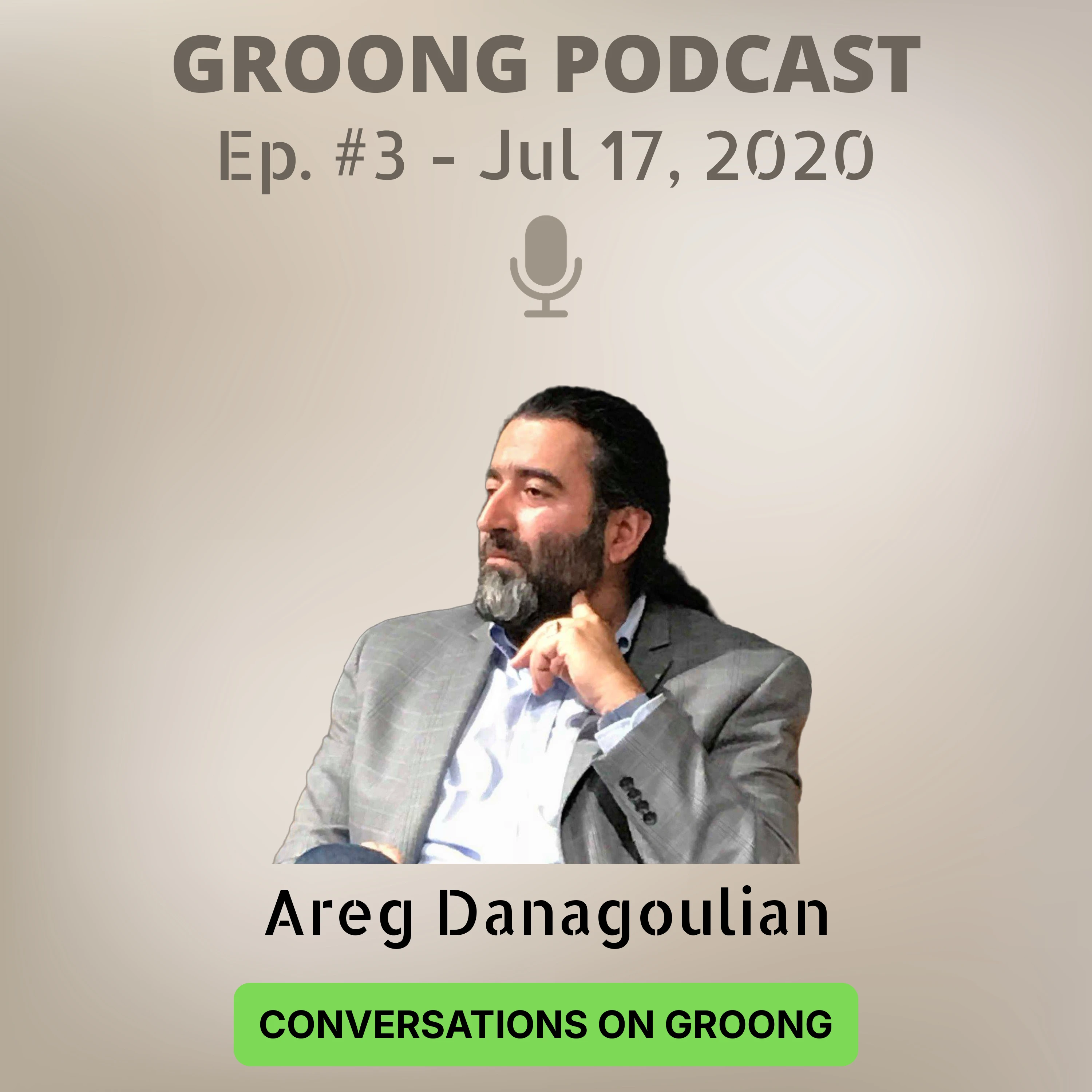
Guest(s):
Conversations on Groong
Safety and Security of Metsamor
Topics:
- Azerbaijan’s threat to attack the NPP
- Overall safety and security of the plant
- Safe handling of nuclear fuel
- Renewable energy alternatives to nuclear
- Maintenance and upgrades to the NPP
Episode 3 | Recorded on July 17, 2020
Azerbaijan's Nuclear Threat on Armenia - Areg Danagoulian - Ep 3 - 07/19/2020 [EP3]
Posted on Friday, Jul 17, 2020 | Category: Armenia, Azerbaijan, Politics, Geopolitics, Economy, Russia, Turkey, Syria, Georgia, Israel, Middle EastGuest(s):
Conversations on Groong
Safety and Security of Metsamor
Topics:
- Azerbaijan’s threat to attack the NPP
- Overall safety and security of the plant
- Safe handling of nuclear fuel
- Renewable energy alternatives to nuclear
- Maintenance and upgrades to the NPP
Episode 3 | Recorded on July 17, 2020
Constitutional Court Standoff | Polls | Armenia Response to COVID | Armenian Media | Headlines | People in the News | Ep 1 - Jul 12, 2020 [EP1]
Posted on Sunday, Jul 12, 2020 | Category: Armenia, Artsakh, Politics, Poll, Azerbaijan, Georgia, Economy, China, Turkey, Armenian Genocide | Series: wir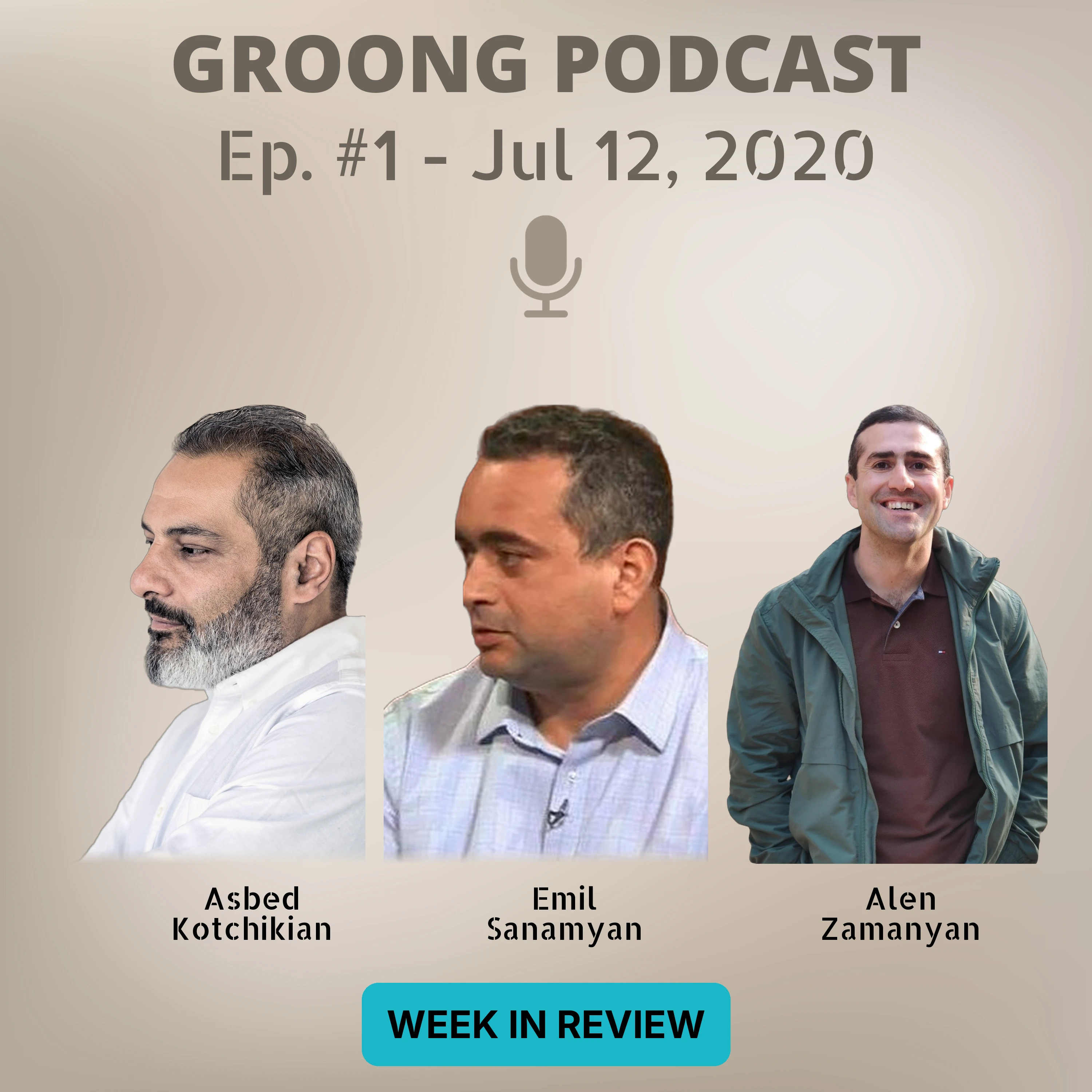
ANN/Groong Week in Review - 07/12/2020
Topics:
- The Constitutional Court Standoff Continues in Limbo
- Polls, and what you should know about them
- The Armenian Government’s response to COVID-19
- The State of Armenian Media: Media Freedoms During Covid
Guests:
Episode 1 | Recorded on July 12, 2020
Constitutional Court Standoff | Polls | Armenia Response to COVID | Armenian Media | Headlines | People in the News | Ep 1 - Jul 12, 2020 [EP1]
Posted on Sunday, Jul 12, 2020 | Category: Armenia, Artsakh, Politics, Poll, Azerbaijan, Georgia, Economy, China, Turkey, Armenian GenocideANN/Groong Week in Review - 07/12/2020
Topics:
- The Constitutional Court Standoff Continues in Limbo
- Polls, and what you should know about them
- The Armenian Government’s response to COVID-19
- The State of Armenian Media: Media Freedoms During Covid
Guests:
Episode 1 | Recorded on July 12, 2020