Armenian Elections
Last updated: May 30, 2026
Armenian elections determine the composition of the National Assembly and the presidency under Armenia’s mixed electoral system. Groong covers these contests as events of decisive importance to Armenia’s trajectory, given the country’s precarious geopolitical position following the 44-Day War , the complete ethnic cleansing of Artsakh (Nagorno Karabakh) of more than 150,000 Armenian inhabitants, unresolved negotiations with Azerbaijan, and Armenia’s contested alignment between Russia, the West, and Iran. The 2026 Armenian Parliamentary Election on June 7 represents the most consequential vote since the 2018 Velvet Revolution—a color revolution and regime change operation that brought Nikol Pashinyan and Civil Contract to power. That government’s tenure has been marked by military defeats, territorial losses, the Artsakh Blockade and the subsequent displacement of its entire population, and a stalled Armenia-Azerbaijan Peace Process alongside deepening confrontation with the Armenian Church .
Election coverage on Groong examines the competing parties and alliances—Civil Contract , the Strong Armenia Alliance, the Armenia Alliance (Hayastan Dashinq), Prosperous Armenia , Wings of Unity , and smaller formations—alongside polling data from organizations like MPG and IRI, structural disadvantages facing opposition forces in a landscape where state resources and media access are unevenly distributed, and the geopolitical context shaping electoral outcomes. Recent coverage has analyzed the phenomenon of “hidden votes,” where public polls fail to capture voters’ true intentions, the escalating campaign rhetoric of Civil Contract under Pashinyan, arrests and administrative pressure against opposition figures and civil society activists, mass surveillance, and allegations of unfair electoral conditions. Episodes have also examined how external actors including Emmanuel Macron and France’s Armenia policy, the European Union’s political messaging, JD Vance and the Trump administration’s role, the CSTO and Russia’s position on Armenian politics, and Iran’s strategic interests intersect with domestic political competition.
A central question running through Groong’s election coverage is whether fragmented opposition forces can collectively clear enough thresholds to deny Civil Contract parliamentary supermajorities, and whether voters will treat elections as choices about Armenia’s strategic direction. Key issues include the Zangezur Corridor also known as the Trump Route for International Peace and Prosperity (TRIPP), Armenia’s relationship with the Armenian Church , ties to the Armenian Diaspora , constitutional changes implemented by Pashinyan’s government, and the limits of what domestic political change can achieve in a country subject to intense external pressures from Azerbaijan, Turkey, Russia, Iran, and the West. Episodes have explored whether opposition campaigns address the issues that matter most to Armenian voters—statehood, security, public trust, and accountability—and whether electoral outcomes will be accepted domestically and internationally as legitimate.
Groong episodes that include this tag
Below are all Groong episodes tagged with Armenian Elections.
EU Interference and Armenia's 2026 Elections | Ep 543, May 10, 2026 [EP543]
Posted on Sunday, May 10, 2026 | Category: Armenia, Politics, Armenian Church, Nagorno Karabakh, Artsakh Blockade, Russia, Azerbaijan, Iran, Turkey, Georgia, Human Rights, NATO, European Union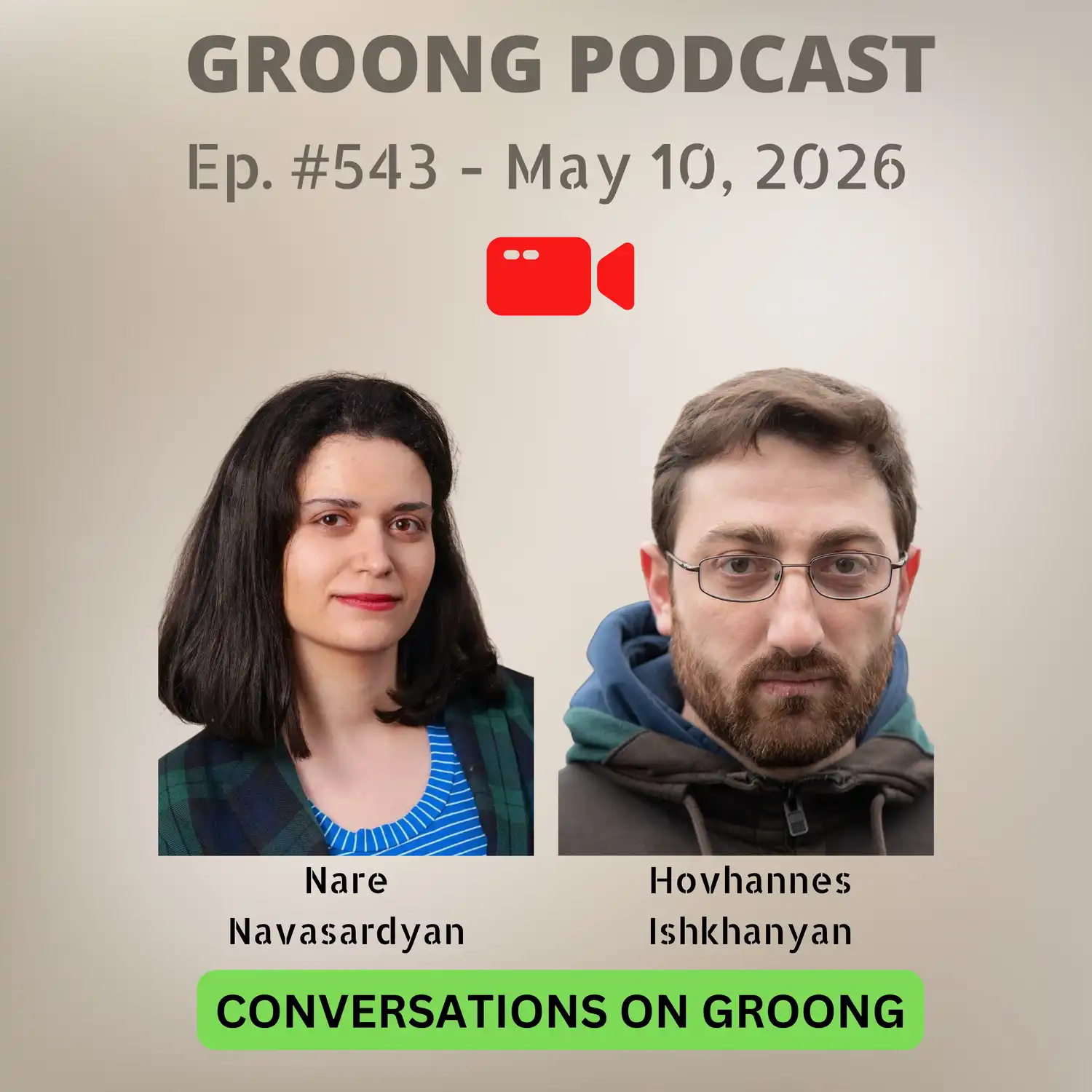
Groong Links:
Guest(s):
Topics:
- EU role in Armenia’s elections
- Fact-checkers and political bias
- Dissent labeled as disinformation
- Lawsuits, pressure, and intimidation
- Censorship and social media control
Episode 543 | Recorded: May 7, 2026
#Armenia #ArmenianElections #EU #Disinformation #FactChecking #Censorship #CivilSociety #FreeSpeech
Transcript: Anna Grigoryan - Armenia Alliance in the 2026 Armenian Parliamentary Election | Ep 544, May 11, 2026 [EP544]
Posted on Monday, May 11, 2026 | Category: Nagorno Karabakh, Armenia, Azerbaijan, Russia, Iran, European Union, Economy, NATO, Human Rights, TranscriptAnna Grigoryan of Hayastan Dashinq (Armenia Alliance) joins Groong to discuss Armenia’s June 7 parliamentary election and the start of the official campaign. The conversation examines the EPC and Armenia-EU summits in Yerevan, EU political and financial support for Pashinyan, Aliyev’s remote demarche, and opposition protests around Artsakh rights, Armenian prisoners, and democratic backsliding. The episode also covers opposition coalition math, Hayastan Dashinq’s 8% bloc threshold, Strong Armenia’s lead among opposition forces, possible post-election governing formulas, Read More
Transcript: EU Interference and Armenia's 2026 Elections | Ep 543, May 10, 2026 [EP543]
Posted on Sunday, May 10, 2026 | Category: Armenia, Politics, Armenian Church, Nagorno Karabakh, Artsakh Blockade, Russia, Azerbaijan, Iran, Turkey, Georgia, Human Rights, NATO, European Union, TranscriptHovhannes Ishkhanyan and Nare Navasardyan discuss the growing role of the EU, fact-checking networks, and counter-disinformation programs in Armenia’s 2026 election environment. The conversation examines claims of foreign interference, the use of “hybrid threats” and “disinformation” labels against domestic dissent, and the political bias of Armenia’s fact-checking ecosystem. The guests also share personal experiences with lawsuits, public confrontation, protest, and censorship, raising broader questions about free speech, election fairness, and the management of Armenia’s information space.
Trump’s Iran Ceasefire, Operation Kochari, and Armenia’s Election Fog | Ep 539, May 3, 2026 [EP539]
Posted on Tuesday, May 5, 2026 | Category: Armenia, Politics, Poll, Armenian News, Israel, Artsakh, Nagorno Karabakh, Azerbaijan, USA, Armenian Church, Artsakh Blockade, Armenian Genocide, Iran, Russia, Georgia, Genocide, Human Rights | Series: wir, video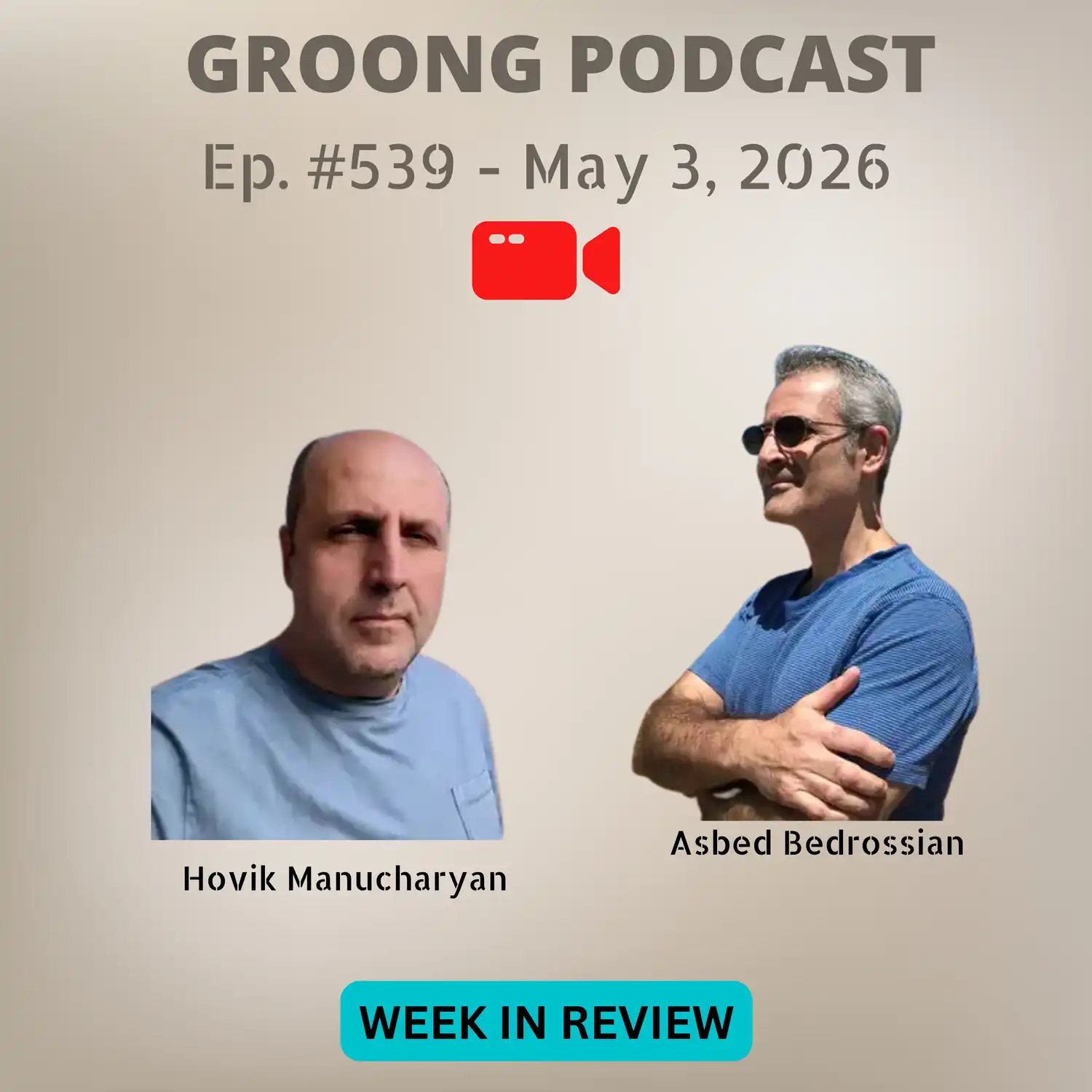
Groong Links:
Topics:
- Iran War
- Mustafayev in Armenia
- Destruction of the Stepanakert cathedral by Azerbaijan
- Election politics
Episode 539 | Recorded: May 3, 2026
#Armenia #Azerbaijan #IranWar #TRIPP #Artsakh #Stepanakert #ArmenianElections #Groong
Trump’s Iran Ceasefire, Operation Kochari, and Armenia’s Election Fog | Ep 539, May 3, 2026 [EP539]
Posted on Tuesday, May 5, 2026 | Category: Armenia, Politics, Poll, Armenian News, Israel, Artsakh, Nagorno Karabakh, Azerbaijan, USA, Armenian Church, Artsakh Blockade, Armenian Genocide, Iran, Russia, Georgia, Genocide, Human RightsGroong Links:
Topics:
- Iran War
- Mustafayev in Armenia
- Destruction of the Stepanakert cathedral by Azerbaijan
- Election politics
Episode 539 | Recorded: May 3, 2026
#Armenia #Azerbaijan #IranWar #TRIPP #Artsakh #Stepanakert #ArmenianElections #Groong
Transcript: Trump’s Iran Ceasefire, Operation Kochari, and Armenia’s Election Fog | Ep 539, May 3, 2026 [EP539]
Posted on Tuesday, May 5, 2026 | Category: Armenia, Politics, Poll, Armenian News, Israel, Artsakh, Nagorno Karabakh, Azerbaijan, USA, Armenian Church, Artsakh Blockade, Armenian Genocide, Iran, Russia, Georgia, Genocide, Human Rights, TranscriptThis Groong Week in Review covers Trump’s Iran ceasefire, failed US-Iran talks in Islamabad, the naval blockade, and Washington’s war politics. Asbed and Hovik also examine “Operation Kochari,” Shahin Mustafayev’s secret visit to Armenia, TRIPP, border demarcation, Armenia-Azerbaijan trade, Azerbaijan’s destruction of the Stepanakert cathedral, Pashinyan’s response, the MPG poll, opposition coalition math, election fraud risks, the EPC meeting, legal pressure, mass surveillance, and Armenia’s falling press freedom ranking.
Hrair Balian - From Karabakh to TRIPP: Armenia’s Security Dilemma | Ep 538, May 3, 2026 [EP538]
Posted on Sunday, May 3, 2026 | Category: Armenia, Politics, Artsakh, Nagorno Karabakh, Iran, Israel, Azerbaijan, Turkey, Lebanon, Armenian News, Artsakh Blockade, Russia, Georgia, NATO, Human Rights | Series: cog, video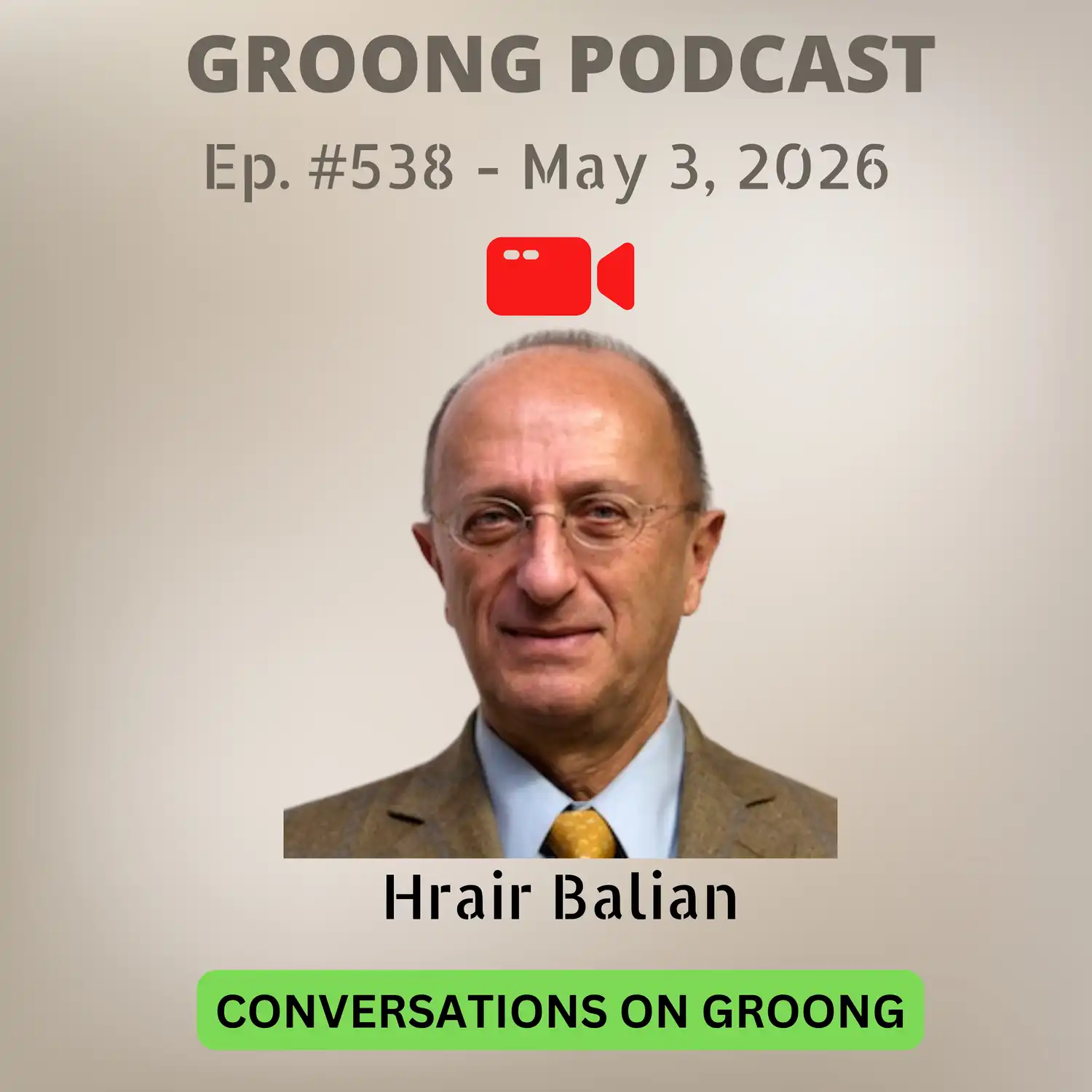
Groong Links:
Guest:
Mr. Balian’s book: https://www.amazon.com/Anatomy-Peacemaking-Nagorno-Karabakh-Opportunities-Rethinking/dp/3032124891
Topics:
- US-Iran war and failed diplomacy
- TRIPP and Armenia’s security risks
- Karabakh negotiations and missed chances
- Pashinyan’s Artsakh policy reversal
- Armenia’s June elections and monitoring
Episode 538 | Recorded: April 30, 2026
#HrairBalian #Groong #Armenia #Artsakh #NagornoKarabakh #TRIPP #ZangezurCorridor #ArmenianElections
Hrair Balian - From Karabakh to TRIPP: Armenia’s Security Dilemma | Ep 538, May 3, 2026 [EP538]
Posted on Sunday, May 3, 2026 | Category: Armenia, Politics, Artsakh, Nagorno Karabakh, Iran, Israel, Azerbaijan, Turkey, Lebanon, Armenian News, Artsakh Blockade, Russia, Georgia, NATO, Human RightsGroong Links:
Guest:
Mr. Balian’s book: https://www.amazon.com/Anatomy-Peacemaking-Nagorno-Karabakh-Opportunities-Rethinking/dp/3032124891
Topics:
- US-Iran war and failed diplomacy
- TRIPP and Armenia’s security risks
- Karabakh negotiations and missed chances
- Pashinyan’s Artsakh policy reversal
- Armenia’s June elections and monitoring
Episode 538 | Recorded: April 30, 2026
#HrairBalian #Groong #Armenia #Artsakh #NagornoKarabakh #TRIPP #ZangezurCorridor #ArmenianElections
Transcript: Hrair Balian - From Karabakh to TRIPP: Armenia’s Security Dilemma | Ep 538, May 3, 2026 [EP538]
Posted on Sunday, May 3, 2026 | Category: Armenia, Politics, Artsakh, Nagorno Karabakh, Iran, Israel, Azerbaijan, Turkey, Lebanon, Armenian News, Artsakh Blockade, Russia, Georgia, NATO, Human Rights, TranscriptHrair Balian joins us to discuss his book Anatomy of Peacemaking: Nagorno Karabakh Conflict & Missed Opportunities, the failure of diplomacy around Artsakh, and what Armenia should learn from the long collapse of the peace process. The conversation also looks at the Iran war, US and Israeli goals in the region, the TRIPP/Zangezur Corridor and its security impact on Armenia, and the role of outside powers in shaping outcomes in the South Caucasus. The episode closes with a discussion of Armenia’s June parliamentary elections, opposition repression, election monitoring, and whether international observers will judge the vote by facts on the ground or political convenience.