Armenian Elections
Last updated: May 30, 2026
Armenian elections determine the composition of the National Assembly and the presidency under Armenia’s mixed electoral system. Groong covers these contests as events of decisive importance to Armenia’s trajectory, given the country’s precarious geopolitical position following the 44-Day War , the complete ethnic cleansing of Artsakh (Nagorno Karabakh) of more than 150,000 Armenian inhabitants, unresolved negotiations with Azerbaijan, and Armenia’s contested alignment between Russia, the West, and Iran. The 2026 Armenian Parliamentary Election on June 7 represents the most consequential vote since the 2018 Velvet Revolution—a color revolution and regime change operation that brought Nikol Pashinyan and Civil Contract to power. That government’s tenure has been marked by military defeats, territorial losses, the Artsakh Blockade and the subsequent displacement of its entire population, and a stalled Armenia-Azerbaijan Peace Process alongside deepening confrontation with the Armenian Church .
Election coverage on Groong examines the competing parties and alliances—Civil Contract , the Strong Armenia Alliance, the Armenia Alliance (Hayastan Dashinq), Prosperous Armenia , Wings of Unity , and smaller formations—alongside polling data from organizations like MPG and IRI, structural disadvantages facing opposition forces in a landscape where state resources and media access are unevenly distributed, and the geopolitical context shaping electoral outcomes. Recent coverage has analyzed the phenomenon of “hidden votes,” where public polls fail to capture voters’ true intentions, the escalating campaign rhetoric of Civil Contract under Pashinyan, arrests and administrative pressure against opposition figures and civil society activists, mass surveillance, and allegations of unfair electoral conditions. Episodes have also examined how external actors including Emmanuel Macron and France’s Armenia policy, the European Union’s political messaging, JD Vance and the Trump administration’s role, the CSTO and Russia’s position on Armenian politics, and Iran’s strategic interests intersect with domestic political competition.
A central question running through Groong’s election coverage is whether fragmented opposition forces can collectively clear enough thresholds to deny Civil Contract parliamentary supermajorities, and whether voters will treat elections as choices about Armenia’s strategic direction. Key issues include the Zangezur Corridor also known as the Trump Route for International Peace and Prosperity (TRIPP), Armenia’s relationship with the Armenian Church , ties to the Armenian Diaspora , constitutional changes implemented by Pashinyan’s government, and the limits of what domestic political change can achieve in a country subject to intense external pressures from Azerbaijan, Turkey, Russia, Iran, and the West. Episodes have explored whether opposition campaigns address the issues that matter most to Armenian voters—statehood, security, public trust, and accountability—and whether electoral outcomes will be accepted domestically and internationally as legitimate.
Groong episodes that include this tag
Below are all Groong episodes tagged with Armenian Elections.
From Yerablur to Etchmiadzin: Armenia’s Battle Over Memory | Ep 591, Sep 27, 2026 [EP591]
Posted on Thursday, Oct 1, 2026 | Category: Armenia, Politics, Geopolitics | Series: wir, video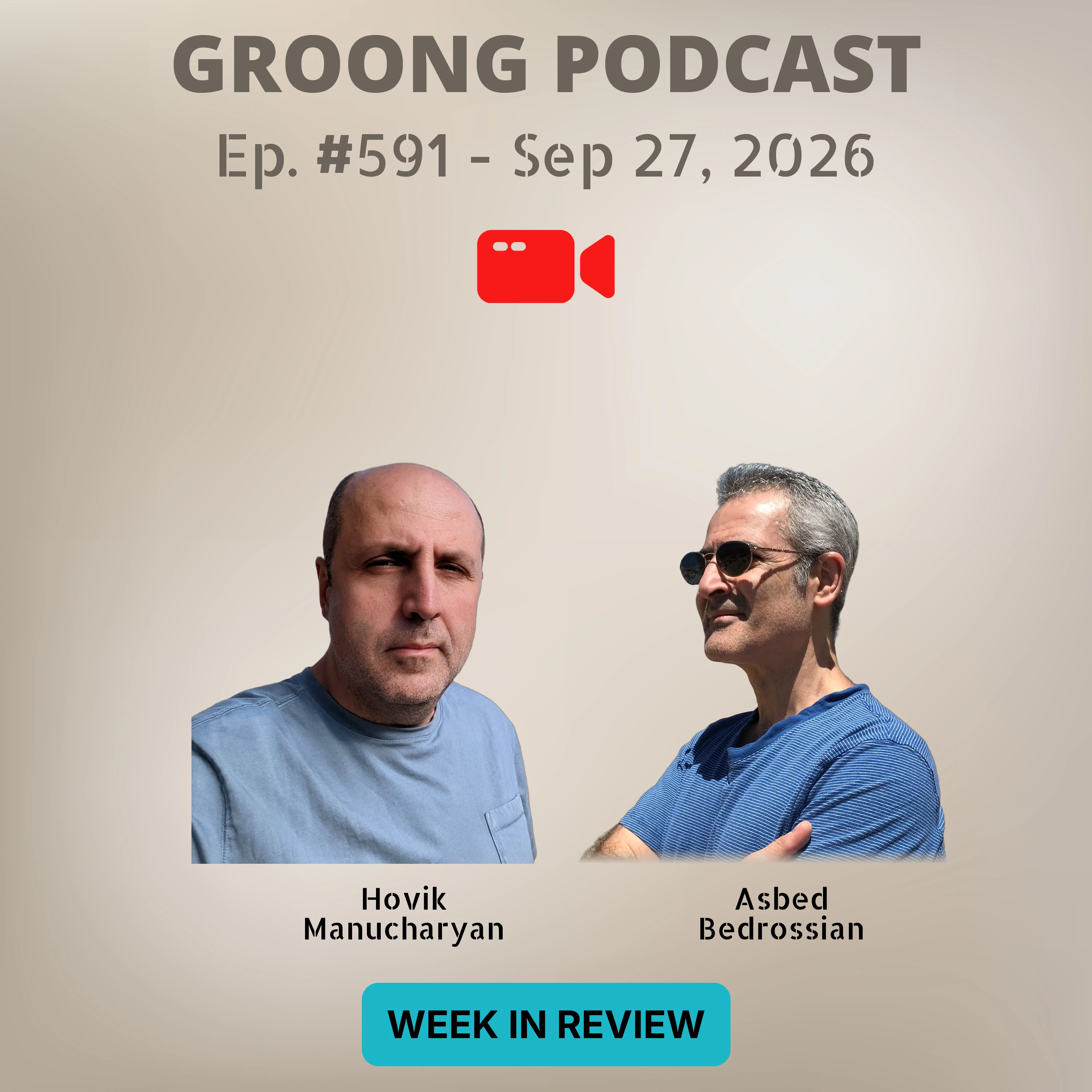
Groong Links:
Topics:
- September 27 war anniversary and memory
- Pashinyan escalates campaign against Church
- PACE raises concerns over elections
- Armenia, Turkey, Azerbaijan at UNGA
- Witkoff reveals Turkish regional advisers
- Opposition faces post-election divisions
- Arrests and prosecutions over speech
- France and Azerbaijan move toward normalization
Episode 591 | Recorded: September 27, 2026
From Yerablur to Etchmiadzin: Armenia’s Battle Over Memory | Ep 591, Sep 27, 2026 [EP591]
Posted on Thursday, Oct 1, 2026 | Category: Armenia, Politics, GeopoliticsGroong Links:
Topics:
- September 27 war anniversary and memory
- Pashinyan escalates campaign against Church
- PACE raises concerns over elections
- Armenia, Turkey, Azerbaijan at UNGA
- Witkoff reveals Turkish regional advisers
- Opposition faces post-election divisions
- Arrests and prosecutions over speech
- France and Azerbaijan move toward normalization
Episode 591 | Recorded: September 27, 2026
Transcript: From Yerablur to Etchmiadzin: Armenia’s Battle Over Memory | Ep 591, Sep 27, 2026 [EP591]
Posted on Thursday, Oct 1, 2026 | Category: Armenia, Politics, Geopolitics, TranscriptIn this week’s Groong Week in Review, Hovik and Asbed mark the sixth anniversary of the 44-Day War and examine Armenia’s deepening crisis over historical memory and national identity. We discuss the Armenian government’s controversial response to September 27 commemorations, escalating tension between the state and the Armenian Church, international concern over election integrity, and Armenia’s isolated position as Azerbaijan demolishes Artsakh’s Armenian cultural heritage while Turkey advances regional integration plans.
Arthur Martirosyan - The Fourth Republic and the Politics of Erasure | Ep 581, Aug 29, 2026 [EP581]
Posted on Saturday, Aug 29, 2026 | Category: Armenia, Politics | Series: cog, video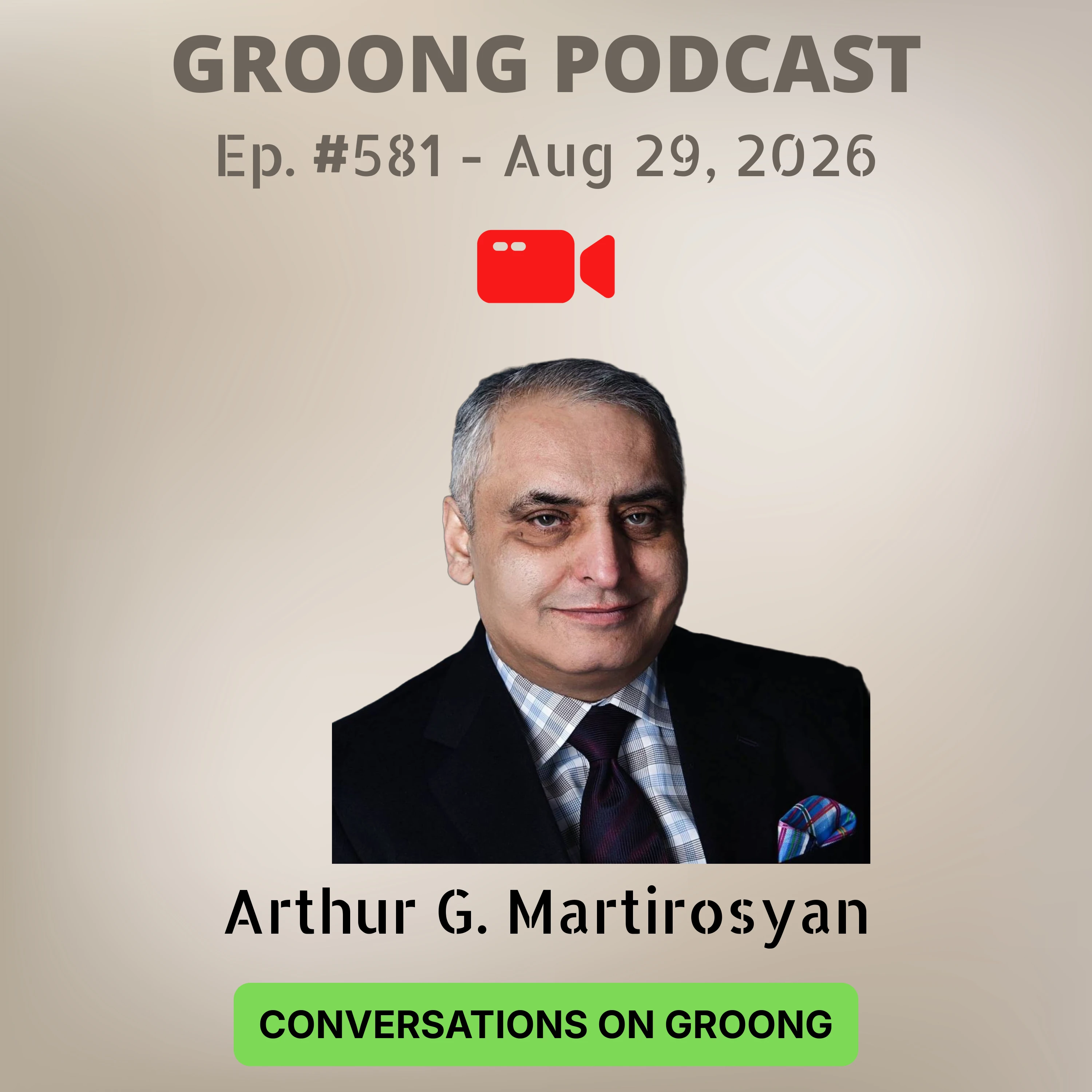
Groong Links:
Guest(s):
Topics:
- Pashinyan’s Revenge Against Opposition
- Kocharyan Arrested, Family Under State Pressure
- Opposition Strategy Under Repression
- Pashinyan’s Five-Year Transformation Agenda
- Government Assault on Armenian Church
- Tigranashen and Border Concessions
- TRIPP, Turan, and Central Asia
Episode 581 | Recorded: August 28, 2026
#ArmenianElections #Armenia #NikolPashinyan #CivilContract #StrongArmenia #ArmenianOpposition
Arthur Martirosyan - The Fourth Republic and the Politics of Erasure | Ep 581, Aug 29, 2026 [EP581]
Posted on Saturday, Aug 29, 2026 | Category: Armenia, PoliticsGroong Links:
Guest(s):
Topics:
- Pashinyan’s Revenge Against Opposition
- Kocharyan Arrested, Family Under State Pressure
- Opposition Strategy Under Repression
- Pashinyan’s Five-Year Transformation Agenda
- Government Assault on Armenian Church
- Tigranashen and Border Concessions
- TRIPP, Turan, and Central Asia
Episode 581 | Recorded: August 28, 2026
#ArmenianElections #Armenia #NikolPashinyan #CivilContract #StrongArmenia #ArmenianOpposition
Transcript: Arthur Martirosyan - The Fourth Republic and the Politics of Erasure | Ep 581, Aug 29, 2026 [EP581]
Posted on Saturday, Aug 29, 2026 | Category: Armenia, Politics, TranscriptIn this episode of Conversations on Groong, we speak with Arthur G. Martirosyan about Armenia’s post-election political crisis and Pashinyan’s governance agenda. We discuss the arrest of opposition leaders including Robert Kocharyan, attacks on the Armenian Church, border concessions including Tigranashen, the TRIPP corridor, and how the Established Opposition is strategizing under state repression in the Fourth Republic.
Christine Arakelian - Forever Wars, NATO 3.0, Armenia's High-Stakes Western Pivot | Ep 572, Jul 31, 2026 [EP572]
Posted on Saturday, Aug 1, 2026 | Category: Armenia, USA, European Union, Politics, Geopolitics, Diaspora | Series: cog, video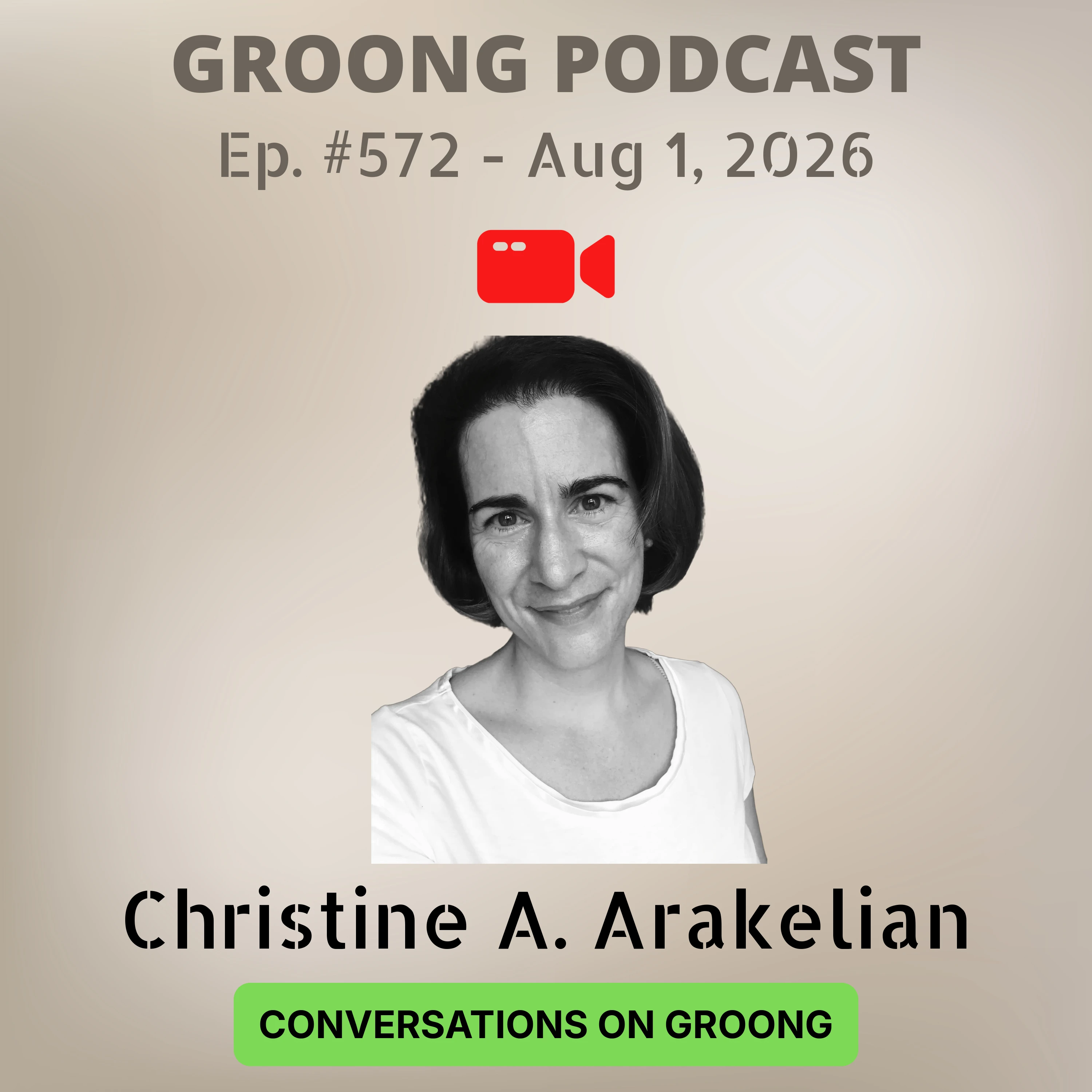
Groong Links:
Guest(s):
Topics:
- US Foreign Policy & the Fracture of MAGA
- Iran and the Risk of Forever Wars
- NATO 3.0 and Europe’s Militarization
- Post-2026 Election Armenia
- TRIPP and Pashinyan’s Pivot to the West
Episode 572 | Recorded: July 29, 2026
#ForeverWars #NATO #IranWar #Armenia #TRIPP #MAGA #USForeignPolicy #SouthCaucasus
Christine Arakelian - Forever Wars, NATO 3.0, Armenia's High-Stakes Western Pivot | Ep 572, Jul 31, 2026 [EP572]
Posted on Saturday, Aug 1, 2026 | Category: Armenia, USA, European Union, Politics, Geopolitics, DiasporaGroong Links:
Guest(s):
Topics:
- US Foreign Policy & the Fracture of MAGA
- Iran and the Risk of Forever Wars
- NATO 3.0 and Europe’s Militarization
- Post-2026 Election Armenia
- TRIPP and Pashinyan’s Pivot to the West
Episode 572 | Recorded: July 29, 2026
#ForeverWars #NATO #IranWar #Armenia #TRIPP #MAGA #USForeignPolicy #SouthCaucasus
Transcript: Christine Arakelian - Forever Wars, NATO 3.0, Armenia's High-Stakes Western Pivot | Ep 572, Jul 31, 2026 [EP572]
Posted on Saturday, Aug 1, 2026 | Category: Armenia, USA, European Union, Politics, Geopolitics, Diaspora, TranscriptIn this episode of Conversations on Groong, we speak with Christine Arakelian about American foreign policy fractures, Iran war risks, and Armenia’s pivot to the West. We discuss whether the United States has coherent foreign policy, the collapse of the MAGA coalition over Forever Wars, NATO 3.0 and Europe’s militarization, and how Pashinyan’s post-2026 Armenian Parliamentary Election government is navigating TRIPP amid global instability.
Iran War, TRIPP Money, and Armenia’s Political Purgatory | Ep 561, Jul 19, 2026 [EP568]
Posted on Wednesday, Jul 22, 2026 | Category: Armenia, Politics | Series: wir, video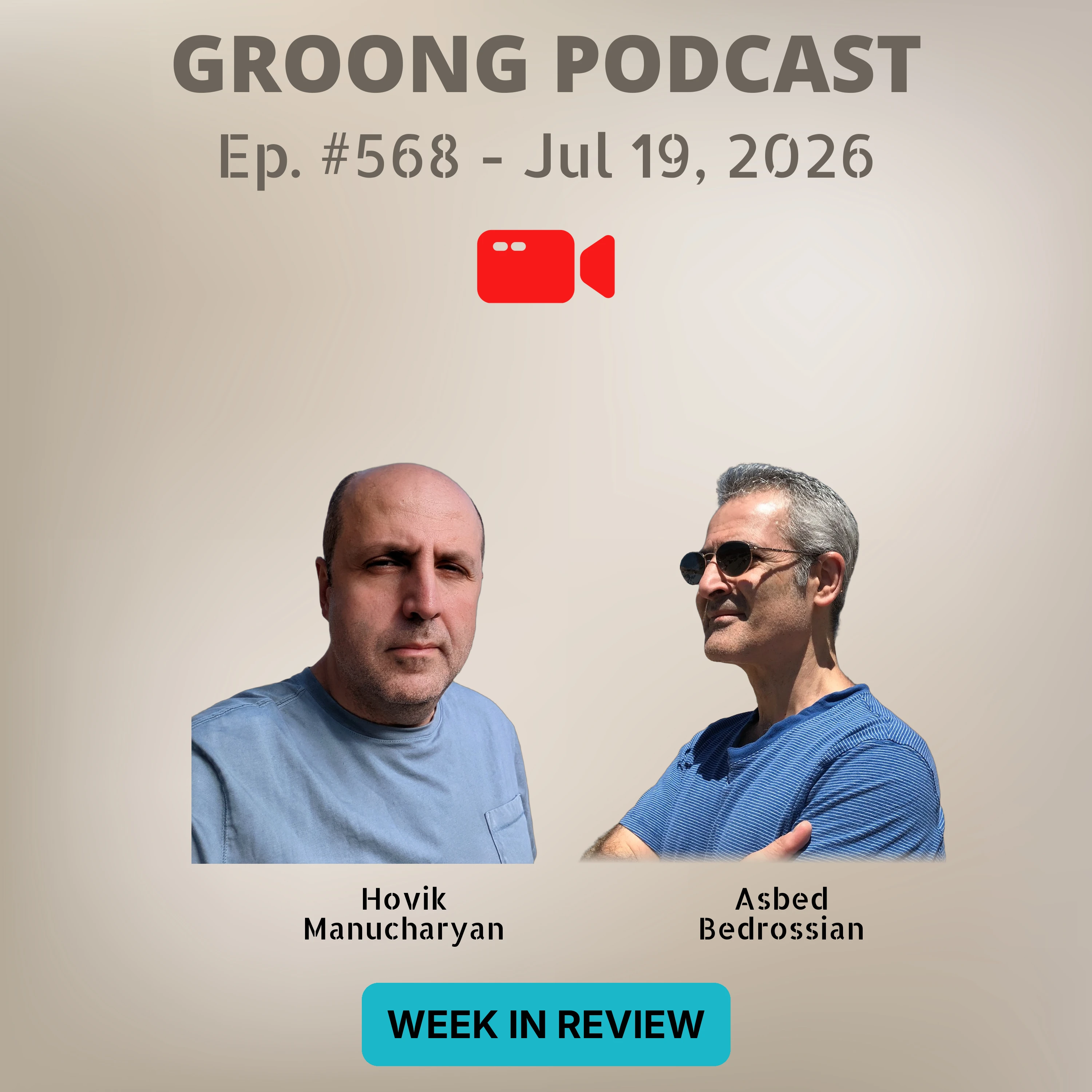
Groong Links:
Topics:
- US-Iran War Continues
- Summer Lull in Yerevan Politics
- Konstantin Sokolov: Master of TRIPP & Teghut
- UN: Abp. Galstanyan Charges Unjustified
- Armenian POW Slams Pashinyan from Baku
Episode 568 | Recorded: July 20, 2026
#IranWar #TRIPP #Teghut #Armenia #PoliticalPrisoners #ArmenianPOWs #KonstantinSokolov
Iran War, TRIPP Money, and Armenia’s Political Purgatory | Ep 561, Jul 19, 2026 [EP568]
Posted on Wednesday, Jul 22, 2026 | Category: Armenia, PoliticsGroong Links:
Topics:
- US-Iran War Continues
- Summer Lull in Yerevan Politics
- Konstantin Sokolov: Master of TRIPP & Teghut
- UN: Abp. Galstanyan Charges Unjustified
- Armenian POW Slams Pashinyan from Baku
Episode 568 | Recorded: July 20, 2026
#IranWar #TRIPP #Teghut #Armenia #PoliticalPrisoners #ArmenianPOWs #KonstantinSokolov
Transcript: Iran War, TRIPP Money, and Armenia’s Political Purgatory | Ep 561, Jul 19, 2026 [EP568]
Posted on Wednesday, Jul 22, 2026 | Category: Armenia, Politics, TranscriptIn this week’s Groong Week in Review, Hovik and Asbed break down escalating tensions across the Middle East as the US-Iran war intensifies following the collapse of the June ceasefire. We examine the strategic implications for Armenia and the South Caucasus, the role of TRIPP advocates like Konstantin Sokolov, and how regional instability intersects with Pashinyan’s political vulnerabilities at home, including charges against Archbishop Galstanyan and ongoing Armenian POW cases.
NATO in Ankara, War in Iran, and the Scissors Over Armenia | Ep 567, Jul 12, 2026 [EP567]
Posted on Wednesday, Jul 15, 2026 | Category: Armenia, Politics | Series: wir, video
Groong Links:
Topics:
- NATO summit in Ankara
- Iran War Update
- Taking Scissors to Armenia
- Shaping the Parliament
- OSCE vs. Garegin II
Episode 567 | Recorded: July 13, 2026
#ArmenianNews #NATOSummit #IranWar #TRIPP #ArmeniaAzerbaijan #ArmenianParliament #GareginII #OSCE
NATO in Ankara, War in Iran, and the Scissors Over Armenia | Ep 567, Jul 12, 2026 [EP567]
Posted on Wednesday, Jul 15, 2026 | Category: Armenia, PoliticsGroong Links:
Topics:
- NATO summit in Ankara
- Iran War Update
- Taking Scissors to Armenia
- Shaping the Parliament
- OSCE vs. Garegin II
Episode 567 | Recorded: July 13, 2026
#ArmenianNews #NATOSummit #IranWar #TRIPP #ArmeniaAzerbaijan #ArmenianParliament #GareginII #OSCE
Transcript: NATO in Ankara, War in Iran, and the Scissors Over Armenia | Ep 567, Jul 12, 2026 [EP567]
Posted on Wednesday, Jul 15, 2026 | Category: Armenia, Politics, TranscriptIn this Groong Week in Review episode, Hovik and Asbed cover the 36th NATO summit in Ankara, escalating Iran war developments, and Armenia’s removal of murals honoring fallen soldiers. We discuss NATO’s defense spending surge, Trump’s shift on Turkey and F-35 access, Ukraine aid commitments, and what these geopolitical shifts mean for Armenia and the South Caucasus amid ongoing Armenia-Azerbaijan peace negotiations.
Dziunik Aghajanian - Iran War, Election Aftermath, Russian Warnings, Israeli Recognition | Ep 563, Jul 2, 2026 [EP563]
Posted on Friday, Jul 3, 2026 | Category: Armenia, Politics | Series: cog, video
Groong Links:
Guest(s):
Topics:
- US-Iran MoU
- Election Aftermath
- Russian Warnings to Armenia
- Israeli Recognizes the Armenian Genocide
Episode 563 | Recorded: July 1, 2026
#ArmenianNews #IranWar #DziunikAghajanian #ArmenianElections #RussiaArmenia #SouthCaucasus #ArmenianGenocide
Dziunik Aghajanian - Iran War, Election Aftermath, Russian Warnings, Israeli Recognition | Ep 563, Jul 2, 2026 [EP563]
Posted on Friday, Jul 3, 2026 | Category: Armenia, PoliticsGroong Links:
Guest(s):
Topics:
- US-Iran MoU
- Election Aftermath
- Russian Warnings to Armenia
- Israeli Recognizes the Armenian Genocide
Episode 563 | Recorded: July 1, 2026
#ArmenianNews #IranWar #DziunikAghajanian #ArmenianElections #RussiaArmenia #SouthCaucasus #ArmenianGenocide
Transcript: Dziunik Aghajanian - Iran War, Election Aftermath, Russian Warnings, Israeli Recognition | Ep 563, Jul 2, 2026 [EP563]
Posted on Friday, Jul 3, 2026 | Category: Armenia, Politics, TranscriptIn this episode of Conversations on Groong, we speak with Amb. Dziunik Aghajanian about the Iran-Israel conflict, Armenia’s 2026 Armenian Parliamentary Election aftermath, and Israeli recognition of the Armenian Genocide. We discuss whether the US-Iran MOU represents genuine de-escalation or a tactical pause before renewed confrontation, the Constitutional Court’s review of election fraud allegations against the Civil Contract regime, and Russia’s warnings to Armenia amid regional instability.
2026 Elections: A Mandate Under Dispute | Ep 556, June 7, 2026 [EP556]
Posted on Wednesday, Jun 10, 2026 | Category: Armenia, Politics | Series: wir, video
Groong Links:
Topics:
- Disputed mandate, unresolved majority
- Election-day irregularities in plain sight
- ODIHR’s mixed preliminary verdict
- Bribery replaced by state spending
- Opposition’s next steps uncertain
Episode 556 | Recorded: Jun 9, 2026 #ArmenianElections #ArmenianNews #CivilContract #Pashinyan #Election2026 #SouthCaucasus
2026 Elections: A Mandate Under Dispute | Ep 556, June 7, 2026 [EP556]
Posted on Wednesday, Jun 10, 2026 | Category: Armenia, PoliticsGroong Links:
Topics:
- Disputed mandate, unresolved majority
- Election-day irregularities in plain sight
- ODIHR’s mixed preliminary verdict
- Bribery replaced by state spending
- Opposition’s next steps uncertain
Episode 556 | Recorded: Jun 9, 2026 #ArmenianElections #ArmenianNews #CivilContract #Pashinyan #Election2026 #SouthCaucasus
Transcript: 2026 Elections: A Mandate Under Dispute | Ep 556, June 7, 2026 [EP556]
Posted on Wednesday, Jun 10, 2026 | Category: Armenia, Politics, TranscriptIn this episode of Groong Week in Review, we analyze the disputed results of Armenia’s June 7, 2026 Armenian Parliamentary Election. We examine Civil Contract’s contested majority, alleged irregularities and invalid ballots, the OSCE/ODIHR preliminary report, the last-minute exclusion of Prosperous Armenia, opposition arrests and pressure, and what a three-fifths majority could mean for Armenia’s courts, institutions, and foreign policy.
Rubio Visit, New MPG and IRI Polls, Hidden Votes and Why Are You Alive? | Ep 550, May 24, 2026 [EP550]
Posted on Wednesday, May 27, 2026 | Category: Armenia, Politics, Poll, Armenian Church, Nagorno Karabakh, Armenian Genocide, Azerbaijan, Russia, China | Series: wir, video
Groong Links:
Topics:
- Rubio’s sudden Armenia visit
- Polls diverge before election
- Hidden vote raises questions
- TRIPP remains deeply polarizing
- “Western Azerbaijan” pressure grows
- Opposition faces arrests, threats
- “Why are you alive?” campaign rhetoric
Episode 550 | Recorded: May 25, 2026
#ArmeniaElections #Armenia #NikolPashinyan #TRIPP #ZangezurCorridor #WesternAzerbaijan #ArmenianOpposition
Rubio Visit, New MPG and IRI Polls, Hidden Votes and Why Are You Alive? | Ep 550, May 24, 2026 [EP550]
Posted on Wednesday, May 27, 2026 | Category: Armenia, Politics, Poll, Armenian Church, Nagorno Karabakh, Armenian Genocide, Azerbaijan, Russia, ChinaGroong Links:
Topics:
- Rubio’s sudden Armenia visit
- Polls diverge before election
- Hidden vote raises questions
- TRIPP remains deeply polarizing
- “Western Azerbaijan” pressure grows
- Opposition faces arrests, threats
- “Why are you alive?” campaign rhetoric
Episode 550 | Recorded: May 25, 2026
#ArmeniaElections #Armenia #NikolPashinyan #TRIPP #ZangezurCorridor #WesternAzerbaijan #ArmenianOpposition
Transcript: Rubio Visit, New MPG and IRI Polls, Hidden Votes and Why Are You Alive? | Ep 550, May 24, 2026 [EP550]
Posted on Wednesday, May 27, 2026 | Category: Armenia, Politics, Poll, Armenian Church, Nagorno Karabakh, Armenian Genocide, Azerbaijan, Russia, China, TranscriptThis Week in Review examines the tightening political climate in Armenia ahead of the June 2026 parliamentary elections. Asbed and Hovik discuss Marco Rubio’s sudden Armenia visit, new polling from IRI, MPG, and CAEAC, and what the wide gaps in voter disclosure may reveal about hidden opposition support. The episode also covers TRIPP, “Western Azerbaijan” rhetoric, public trust in the Armenian Apostolic Church, and the growing use of arrests, threats, and state pressure against opposition figures. The discussion centers on Pashinyan’s escalating campaign rhetoric, including his “Why are you alive?” outburst, and what it signals about the stakes of the coming election.
Edgar Elbakyan - The Battle for Armenia’s Political Future | Ep 549, May 24, 2026 [EP549]
Posted on Sunday, May 24, 2026 | Category: Armenia, Politics, Armenian Church, Nagorno Karabakh, Azerbaijan | Series: cog, video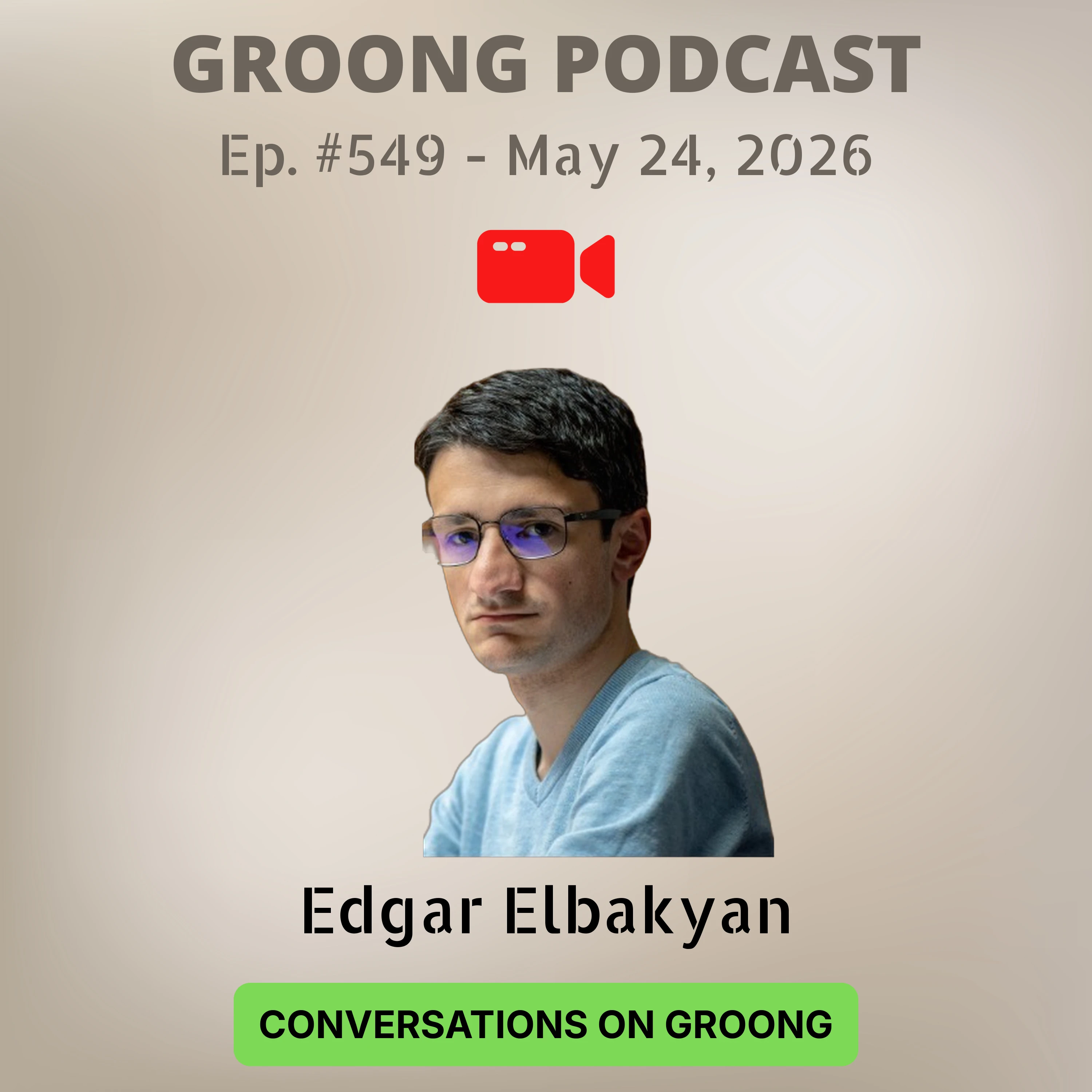
Groong Links:
Guest:
Topics:
- Armenia’s existential election
- Polling under fear
- Divergent polling results
- Church and state conflict
- Post-election street pressure
Episode 549 | Recorded: May 22, 2026
#Armenia #ArmenianPolitics #EdgarElbakyan #StrongArmenia #ArmeniaAlliance #ArmeniaElections
Edgar Elbakyan - The Battle for Armenia’s Political Future | Ep 549, May 24, 2026 [EP549]
Posted on Sunday, May 24, 2026 | Category: Armenia, Politics, Armenian Church, Nagorno Karabakh, AzerbaijanGroong Links:
Guest:
Topics:
- Armenia’s existential election
- Polling under fear
- Divergent polling results
- Church and state conflict
- Post-election street pressure
Episode 549 | Recorded: May 22, 2026
#Armenia #ArmenianPolitics #EdgarElbakyan #StrongArmenia #ArmeniaAlliance #ArmeniaElections
Transcript: Edgar Elbakyan - The Battle for Armenia’s Political Future | Ep 549, May 24, 2026 [EP549]
Posted on Sunday, May 24, 2026 | Category: Armenia, Politics, Armenian Church, Nagorno Karabakh, Azerbaijan, TranscriptThis Conversations on Groong episode features Edgar Elbakyan in a discussion of Armenia’s upcoming election and the wider struggle over the country’s political future. The conversation examines whether the vote should be viewed as an existential election, how fear and pressure shape public opinion, why polling results differ so sharply, and which political forces may be positioned to enter parliament. The episode also looks at whether the opposition is focused on the issues that matter most, including statehood, security, public trust, and the possibility that the election may not end at the ballot box.
Pashinyan's Hate Speech, Threats, and the June 7 Election Climate | Ep 547, May 17, 2026 [EP547]
Posted on Tuesday, May 19, 2026 | Category: Armenia, Politics, Election, Armenian Church, Nagorno Karabakh, Artsakh Blockade, Russia, China, Azerbaijan, Georgia, Iran, NATO | Series: wir, video
Groong Links:
Topics:
- Trump, China, and Iran
- Armenia-Russia “soft divorce”
- Pashinyan’s violent campaign rhetoric
- State resources and election pressure
- Javakhk church vandalism concerns
Episode 547 | Recorded: May 18, 2026
#Pashinyan #ArmeniaElections #ArmenianPolitics #PoliticalViolence #HateSpeech #ArmeniaRussia #IranWar #SouthCaucasus
Pashinyan's Hate Speech, Threats, and the June 7 Election Climate | Ep 547, May 17, 2026 [EP547]
Posted on Tuesday, May 19, 2026 | Category: Armenia, Politics, Election, Armenian Church, Nagorno Karabakh, Artsakh Blockade, Russia, China, Azerbaijan, Georgia, Iran, NATOGroong Links:
Topics:
- Trump, China, and Iran
- Armenia-Russia “soft divorce”
- Pashinyan’s violent campaign rhetoric
- State resources and election pressure
- Javakhk church vandalism concerns
Episode 547 | Recorded: May 18, 2026
#Pashinyan #ArmeniaElections #ArmenianPolitics #PoliticalViolence #HateSpeech #ArmeniaRussia #IranWar #SouthCaucasus
Transcript: Pashinyan's Hate Speech, Threats, and the June 7 Election Climate | Ep 547, May 17, 2026 [EP547]
Posted on Tuesday, May 19, 2026 | Category: Armenia, Politics, Election, Armenian Church, Nagorno Karabakh, Artsakh Blockade, Russia, China, Azerbaijan, Georgia, Iran, NATO, TranscriptThis Week in Review covers a tense mix of global and Armenian political crises, from Trump’s summit with Xi Jinping and the deepening Iran war, to Armenia’s worsening relations with Russia and the risks to trade, energy, and security ties. Hovik and Asbed also examine Armenia’s heated election climate, including allegations of state pressure, abuse of administrative resources, selective law enforcement, Pashinyan’s violent campaign rhetoric against opposition leaders, and the muted response of international observers. The episode also looks at Robert Kocharyan’s call for major-power guarantees for peace with Azerbaijan, and the vandalism of the Sourp Nshan Armenian Church in Javakhk.
Week in Review - EPC in Armenia, Russia, Parliamentary Election, Swiss Peace Initiative | Ep 545, May 10, 2026 [EP545]
Posted on Wednesday, May 13, 2026 | Category: Armenia, Politics, Nagorno Karabakh, Artsakh Blockade, Azerbaijan, Russia, Ukraine, NATO, European Union, Human Rights | Series: wir
Groong Links:
Topics:
- EPC fallout and Russia response
- Armenia-EU declaration controversies
- Pashinyan’s Artsakh campaign narrative
- Aliyev-Pashinyan tag-team messaging
- Swiss Peace Initiative
- Pollsters diverge on election forecasts
Episode 545 | Recorded: May 12, 2026
#WeekInReview #Armenia #SwissPeaceInitiative #NagornoKarabakh #Artsakh
Week in Review - EPC in Armenia, Russia, Parliamentary Election, Swiss Peace Initiative | Ep 545, May 10, 2026 [EP545]
Posted on Wednesday, May 13, 2026 | Category: Armenia, Politics, Nagorno Karabakh, Artsakh Blockade, Azerbaijan, Russia, Ukraine, NATO, European Union, Human RightsGroong Links:
Topics:
- EPC fallout and Russia response
- Armenia-EU declaration controversies
- Pashinyan’s Artsakh campaign narrative
- Aliyev-Pashinyan tag-team messaging
- Swiss Peace Initiative
- Pollsters diverge on election forecasts
Episode 545 | Recorded: May 12, 2026
#WeekInReview #Armenia #SwissPeaceInitiative #NagornoKarabakh #Artsakh
Transcript: Week in Review - EPC in Armenia, Russia, Parliamentary Election, Swiss Peace Initiative | Ep 545, May 10, 2026 [EP545]
Posted on Wednesday, May 13, 2026 | Category: Armenia, Politics, Nagorno Karabakh, Artsakh Blockade, Azerbaijan, Russia, Ukraine, NATO, European Union, Human Rights, TranscriptIn this Week in Review, Asbed and Hovik discuss the fallout from the EPC summit in Yerevan, Armenia’s role as a platform for anti-Russian messaging, and Putin’s warning about a possible “separation” if Armenia moves toward the EU. They examine the Armenia-EU declaration, focusing on TRIPP, Ukraine, hybrid threats, security cooperation, visa liberalization, and the Armenian Nuclear Power Plant. The episode then turns to Armenia’s election campaign, Pashinyan’s claim that Artsakh was “never ours,” Aliyev’s parallel messaging from occupied Artsakh, pressure on opposition figures, the Swiss Peace Initiative, and sharp divergence between election polls.
Anna Grigoryan - Armenia Alliance in the 2026 Armenian Parliamentary Election | Ep 544, May 11, 2026 [EP544]
Posted on Monday, May 11, 2026 | Category: Nagorno Karabakh, Armenia, Azerbaijan, Russia, Iran, European Union, Economy, NATO, Human Rights | Series: cog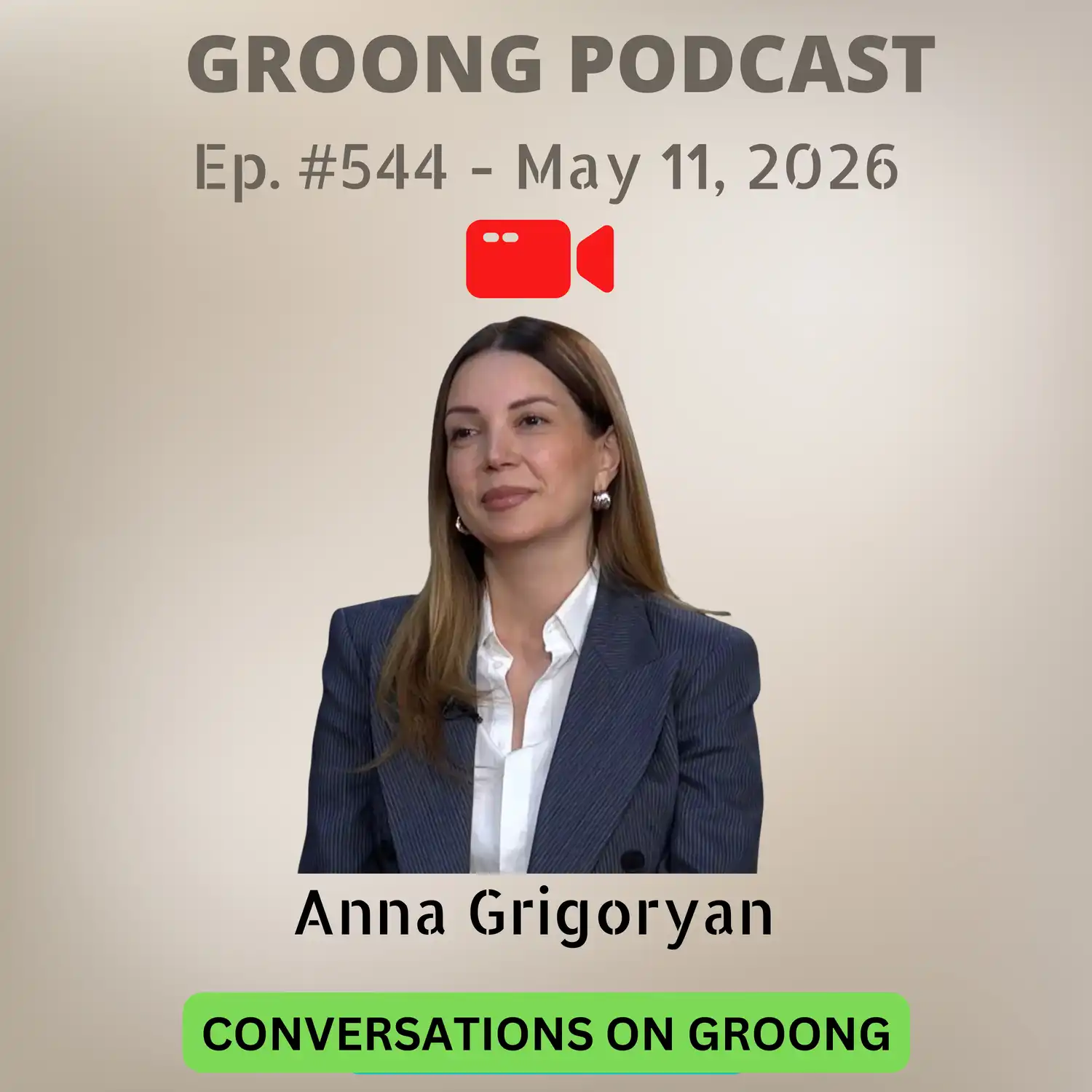
Groong Links:
Guest(s):
Topics:
- Election campaign and opposition strategy
- EPC, EU-Armenia summit, and foreign influence
- Foreign policy, security, and regional risks
- Domestic priorities and election integrity
Episode 544 | Recorded: May 9, 2026
#AnnaGrigoryan #Armenia #ArmenianPolitics #ArmeniaElections #HayastanDashinq #EPCSummit #TRIPP #Artsakh
Anna Grigoryan - Armenia Alliance in the 2026 Armenian Parliamentary Election | Ep 544, May 11, 2026 [EP544]
Posted on Monday, May 11, 2026 | Category: Nagorno Karabakh, Armenia, Azerbaijan, Russia, Iran, European Union, Economy, NATO, Human RightsGroong Links:
Guest(s):
Topics:
- Election campaign and opposition strategy
- EPC, EU-Armenia summit, and foreign influence
- Foreign policy, security, and regional risks
- Domestic priorities and election integrity
Episode 544 | Recorded: May 9, 2026
#AnnaGrigoryan #Armenia #ArmenianPolitics #ArmeniaElections #HayastanDashinq #EPCSummit #TRIPP #Artsakh
EU Interference and Armenia's 2026 Elections | Ep 543, May 10, 2026 [EP543]
Posted on Sunday, May 10, 2026 | Category: Armenia, Politics, Armenian Church, Nagorno Karabakh, Artsakh Blockade, Russia, Azerbaijan, Iran, Turkey, Georgia, Human Rights, NATO, European Union | Series: cog, video
Groong Links:
Guest(s):
Topics:
- EU role in Armenia’s elections
- Fact-checkers and political bias
- Dissent labeled as disinformation
- Lawsuits, pressure, and intimidation
- Censorship and social media control
Episode 543 | Recorded: May 7, 2026
#Armenia #ArmenianElections #EU #Disinformation #FactChecking #Censorship #CivilSociety #FreeSpeech
EU Interference and Armenia's 2026 Elections | Ep 543, May 10, 2026 [EP543]
Posted on Sunday, May 10, 2026 | Category: Armenia, Politics, Armenian Church, Nagorno Karabakh, Artsakh Blockade, Russia, Azerbaijan, Iran, Turkey, Georgia, Human Rights, NATO, European UnionGroong Links:
Guest(s):
Topics:
- EU role in Armenia’s elections
- Fact-checkers and political bias
- Dissent labeled as disinformation
- Lawsuits, pressure, and intimidation
- Censorship and social media control
Episode 543 | Recorded: May 7, 2026
#Armenia #ArmenianElections #EU #Disinformation #FactChecking #Censorship #CivilSociety #FreeSpeech
Transcript: Anna Grigoryan - Armenia Alliance in the 2026 Armenian Parliamentary Election | Ep 544, May 11, 2026 [EP544]
Posted on Monday, May 11, 2026 | Category: Nagorno Karabakh, Armenia, Azerbaijan, Russia, Iran, European Union, Economy, NATO, Human Rights, TranscriptAnna Grigoryan of Hayastan Dashinq (Armenia Alliance) joins Groong to discuss Armenia’s June 7 parliamentary election and the start of the official campaign. The conversation examines the EPC and Armenia-EU summits in Yerevan, EU political and financial support for Pashinyan, Aliyev’s remote demarche, and opposition protests around Artsakh rights, Armenian prisoners, and democratic backsliding. The episode also covers opposition coalition math, Hayastan Dashinq’s 8% bloc threshold, Strong Armenia’s lead among opposition forces, possible post-election governing formulas, Read More
Transcript: EU Interference and Armenia's 2026 Elections | Ep 543, May 10, 2026 [EP543]
Posted on Sunday, May 10, 2026 | Category: Armenia, Politics, Armenian Church, Nagorno Karabakh, Artsakh Blockade, Russia, Azerbaijan, Iran, Turkey, Georgia, Human Rights, NATO, European Union, TranscriptHovhannes Ishkhanyan and Nare Navasardyan discuss the growing role of the EU, fact-checking networks, and counter-disinformation programs in Armenia’s 2026 election environment. The conversation examines claims of foreign interference, the use of “hybrid threats” and “disinformation” labels against domestic dissent, and the political bias of Armenia’s fact-checking ecosystem. The guests also share personal experiences with lawsuits, public confrontation, protest, and censorship, raising broader questions about free speech, election fairness, and the management of Armenia’s information space.
Trump’s Iran Ceasefire, Operation Kochari, and Armenia’s Election Fog | Ep 539, May 3, 2026 [EP539]
Posted on Tuesday, May 5, 2026 | Category: Armenia, Politics, Poll, Armenian News, Israel, Artsakh, Nagorno Karabakh, Azerbaijan, USA, Armenian Church, Artsakh Blockade, Armenian Genocide, Iran, Russia, Georgia, Genocide, Human Rights | Series: wir, video
Groong Links:
Topics:
- Iran War
- Mustafayev in Armenia
- Destruction of the Stepanakert cathedral by Azerbaijan
- Election politics
Episode 539 | Recorded: May 3, 2026
#Armenia #Azerbaijan #IranWar #TRIPP #Artsakh #Stepanakert #ArmenianElections #Groong
Trump’s Iran Ceasefire, Operation Kochari, and Armenia’s Election Fog | Ep 539, May 3, 2026 [EP539]
Posted on Tuesday, May 5, 2026 | Category: Armenia, Politics, Poll, Armenian News, Israel, Artsakh, Nagorno Karabakh, Azerbaijan, USA, Armenian Church, Artsakh Blockade, Armenian Genocide, Iran, Russia, Georgia, Genocide, Human RightsGroong Links:
Topics:
- Iran War
- Mustafayev in Armenia
- Destruction of the Stepanakert cathedral by Azerbaijan
- Election politics
Episode 539 | Recorded: May 3, 2026
#Armenia #Azerbaijan #IranWar #TRIPP #Artsakh #Stepanakert #ArmenianElections #Groong
Transcript: Trump’s Iran Ceasefire, Operation Kochari, and Armenia’s Election Fog | Ep 539, May 3, 2026 [EP539]
Posted on Tuesday, May 5, 2026 | Category: Armenia, Politics, Poll, Armenian News, Israel, Artsakh, Nagorno Karabakh, Azerbaijan, USA, Armenian Church, Artsakh Blockade, Armenian Genocide, Iran, Russia, Georgia, Genocide, Human Rights, TranscriptThis Groong Week in Review covers Trump’s Iran ceasefire, failed US-Iran talks in Islamabad, the naval blockade, and Washington’s war politics. Asbed and Hovik also examine “Operation Kochari,” Shahin Mustafayev’s secret visit to Armenia, TRIPP, border demarcation, Armenia-Azerbaijan trade, Azerbaijan’s destruction of the Stepanakert cathedral, Pashinyan’s response, the MPG poll, opposition coalition math, election fraud risks, the EPC meeting, legal pressure, mass surveillance, and Armenia’s falling press freedom ranking.
Hrair Balian - From Karabakh to TRIPP: Armenia’s Security Dilemma | Ep 538, May 3, 2026 [EP538]
Posted on Sunday, May 3, 2026 | Category: Armenia, Politics, Artsakh, Nagorno Karabakh, Iran, Israel, Azerbaijan, Turkey, Lebanon, Armenian News, Artsakh Blockade, Russia, Georgia, NATO, Human Rights | Series: cog, video
Groong Links:
Guest:
Mr. Balian’s book: https://www.amazon.com/Anatomy-Peacemaking-Nagorno-Karabakh-Opportunities-Rethinking/dp/3032124891
Topics:
- US-Iran war and failed diplomacy
- TRIPP and Armenia’s security risks
- Karabakh negotiations and missed chances
- Pashinyan’s Artsakh policy reversal
- Armenia’s June elections and monitoring
Episode 538 | Recorded: April 30, 2026
#HrairBalian #Groong #Armenia #Artsakh #NagornoKarabakh #TRIPP #ZangezurCorridor #ArmenianElections
Hrair Balian - From Karabakh to TRIPP: Armenia’s Security Dilemma | Ep 538, May 3, 2026 [EP538]
Posted on Sunday, May 3, 2026 | Category: Armenia, Politics, Artsakh, Nagorno Karabakh, Iran, Israel, Azerbaijan, Turkey, Lebanon, Armenian News, Artsakh Blockade, Russia, Georgia, NATO, Human RightsGroong Links:
Guest:
Mr. Balian’s book: https://www.amazon.com/Anatomy-Peacemaking-Nagorno-Karabakh-Opportunities-Rethinking/dp/3032124891
Topics:
- US-Iran war and failed diplomacy
- TRIPP and Armenia’s security risks
- Karabakh negotiations and missed chances
- Pashinyan’s Artsakh policy reversal
- Armenia’s June elections and monitoring
Episode 538 | Recorded: April 30, 2026
#HrairBalian #Groong #Armenia #Artsakh #NagornoKarabakh #TRIPP #ZangezurCorridor #ArmenianElections
Transcript: Hrair Balian - From Karabakh to TRIPP: Armenia’s Security Dilemma | Ep 538, May 3, 2026 [EP538]
Posted on Sunday, May 3, 2026 | Category: Armenia, Politics, Artsakh, Nagorno Karabakh, Iran, Israel, Azerbaijan, Turkey, Lebanon, Armenian News, Artsakh Blockade, Russia, Georgia, NATO, Human Rights, TranscriptHrair Balian joins us to discuss his book Anatomy of Peacemaking: Nagorno Karabakh Conflict & Missed Opportunities, the failure of diplomacy around Artsakh, and what Armenia should learn from the long collapse of the peace process. The conversation also looks at the Iran war, US and Israeli goals in the region, the TRIPP/Zangezur Corridor and its security impact on Armenia, and the role of outside powers in shaping outcomes in the South Caucasus. The episode closes with a discussion of Armenia’s June parliamentary elections, opposition repression, election monitoring, and whether international observers will judge the vote by facts on the ground or political convenience.
Philippe Raffi Kalfayan - Monitoring the June 2026 Parliamentary Elections in Armenia | Ep 535, Apr 27, 2026 [EP535]
Posted on Monday, Apr 27, 2026 | Category: Armenia, Politics, Election, Armenian News, Nagorno Karabakh, Armenian Genocide, Human Rights, Russia | Series: cog, video
Groong Links:
Guest:
Topics:
- IODA’s mission and election observation work
- Armenia’s June 2026 parliamentary election risks
- Questions around international observer impartiality
- Suspect voter lists, fraud, and transparency concerns
- Pressure on opposition figures and parties
Episode 535 | Recorded: April 24, 2026
#Armenia #ArmenianElections #Election2026 #IODA #OSCE #ODIHR #Geopolitics #Democracy
Philippe Raffi Kalfayan - Monitoring the June 2026 Parliamentary Elections in Armenia | Ep 535, Apr 27, 2026 [EP535]
Posted on Monday, Apr 27, 2026 | Category: Armenia, Politics, Election, Armenian News, Nagorno Karabakh, Armenian Genocide, Human Rights, RussiaGroong Links:
Guest:
Topics:
- IODA’s mission and election observation work
- Armenia’s June 2026 parliamentary election risks
- Questions around international observer impartiality
- Suspect voter lists, fraud, and transparency concerns
- Pressure on opposition figures and parties
Episode 535 | Recorded: April 24, 2026
#Armenia #ArmenianElections #Election2026 #IODA #OSCE #ODIHR #Geopolitics #Democracy
Transcript: Philippe Raffi Kalfayan - Monitoring the June 2026 Parliamentary Elections in Armenia | Ep 535, Apr 27, 2026 [EP535]
Posted on Monday, Apr 27, 2026 | Category: Armenia, Politics, Election, Armenian News, Nagorno Karabakh, Armenian Genocide, Human Rights, Russia, TranscriptDr. Philippe Raffi Kalfayan joined Groong to discuss the International Observatory for Democracy in Armenia (IODA), its work ahead of Armenia’s June 7, 2026 parliamentary elections, and the risks it sees in the pre-election environment. The conversation covered IODA’s mission, its first fact-finding trip to Armenia, concerns about judicial control and administrative resources, questions about OSCE/ODIHR and EU impartiality, and the pressure facing opposition figures and parties before election day.
Dziunik Aghajanian - Iran War, Antalya Diplomatic Forum, Armenian Parliamentary Elections | Ep 532, Apr 19, 2026 [EP532]
Posted on Tuesday, Apr 21, 2026 | Category: Iran, Armenia, Politics, USA, Israel, Azerbaijan, Turkey, Russia, Artsakh, Nagorno Karabakh, Georgia, Armenian Church, Artsakh Blockade, China, NATO | Series: wir, video
Groong Links:
Guest:
- Amb. Dziunik Aghajanian
Topics:
- Iran War Fears
- June Parliamentary Elections
- Attacks on the Armenian Church
Episode 532 | Recorded: April 20, 2026
#Armenia #Iran #IranWar #Hormuz #ArmeniaElections #SouthCaucasus
Dziunik Aghajanian - Iran War, Antalya Diplomatic Forum, Armenian Parliamentary Elections | Ep 532, Apr 19, 2026 [EP532]
Posted on Tuesday, Apr 21, 2026 | Category: Iran, Armenia, Politics, USA, Israel, Azerbaijan, Turkey, Russia, Artsakh, Nagorno Karabakh, Georgia, Armenian Church, Artsakh Blockade, China, NATOGroong Links:
Guest:
- Amb. Dziunik Aghajanian
Topics:
- Iran War Fears
- June Parliamentary Elections
- Attacks on the Armenian Church
Episode 532 | Recorded: April 20, 2026
#Armenia #Iran #IranWar #Hormuz #ArmeniaElections #SouthCaucasus
Transcript: Dziunik Aghajanian - Iran War, Antalya Diplomatic Forum, Armenian Parliamentary Elections | Ep 532, Apr 19, 2026 [EP532]
Posted on Tuesday, Apr 21, 2026 | Category: Iran, Armenia, Politics, USA, Israel, Azerbaijan, Turkey, Russia, Artsakh, Nagorno Karabakh, Georgia, Armenian Church, Artsakh Blockade, China, NATO, TranscriptIn this Week in Review episode, Ambassador Dziunik Aghajanian discusses the stalled Iran negotiations after the Islamabad talks, the renewed pressure around Hormuz and the naval blockade, Turkey’s posture toward Israel and the region; Armenia’s lower-profile participation in the Antalya Diplomatic Forum; Russia’s shifting rhetoric on TRIPP and the South Caucasus; and the June 7 parliamentary election in Armenia, including constitutional changes, border concessions, the gas pipeline rerouting issue, and the use of surveillance and arrests against opposition figures.
Hrant Mikaelian - US-Iran Talks, Orban Loses, Armenian Parliamentary Elections, MPG Polls | Ep 531, Apr 12, 2026 [EP531]
Posted on Thursday, Apr 16, 2026 | Category: Iran, Armenia, Election, Poll, Iran, Armenia, USA, Israel, Georgia, Russia, Azerbaijan, Turkey, Artsakh, Nagorno Karabakh, European Union | Series: wir, video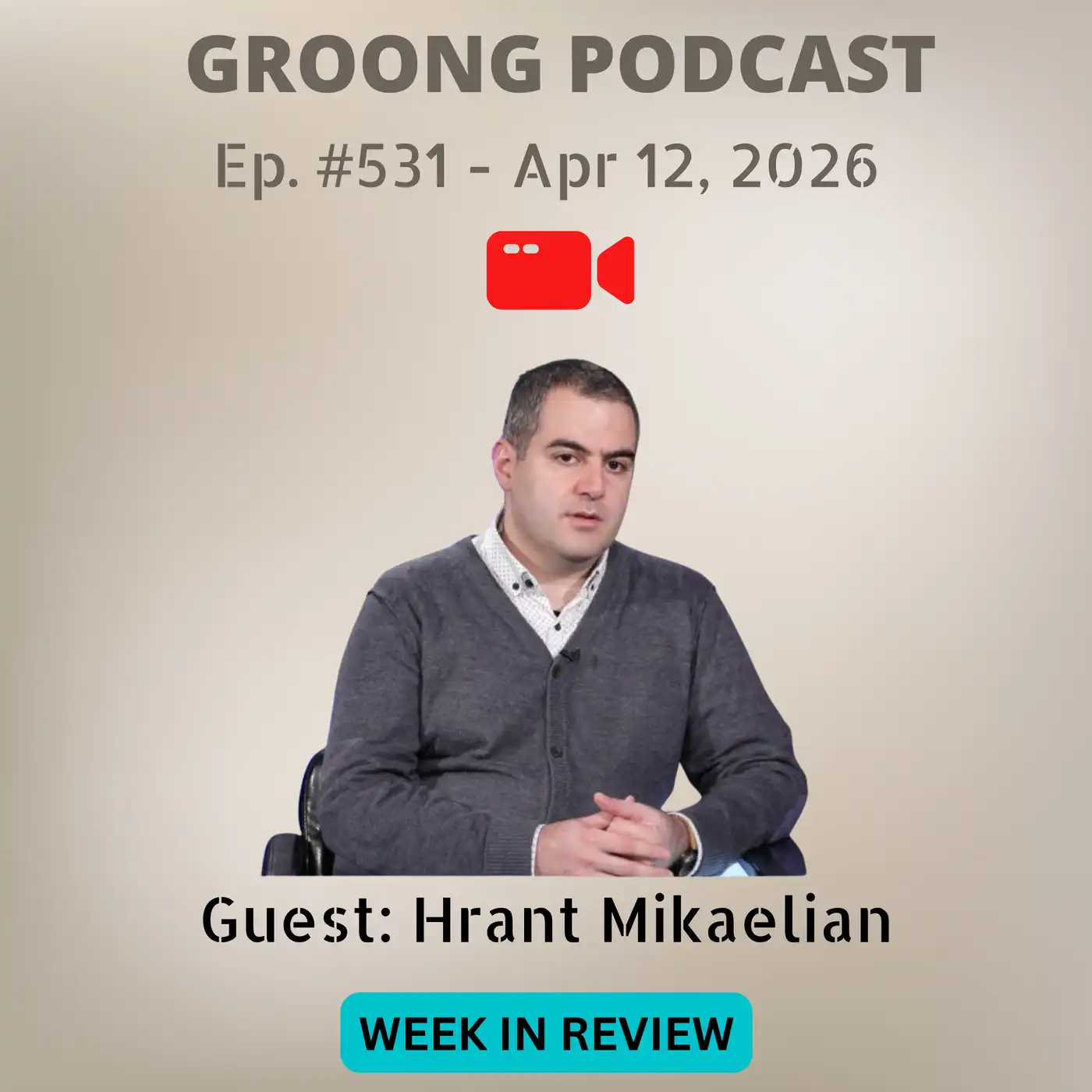
Groong Links:
Guest:
Topics:
- US-Iran Talks in Pakistan
- Orban Loses Hungary Elections
- Armenian Parliamentary Elections
- Polls: MPG, IRI, ARAR, EVN
Episode 531 | Recorded: April 14, 2026
#Armenia #IranWar #ArmenianPolitics #HungaryElections #ArmeniaPolls
Hrant Mikaelian - US-Iran Talks, Orban Loses, Armenian Parliamentary Elections, MPG Polls | Ep 531, Apr 12, 2026 [EP531]
Posted on Thursday, Apr 16, 2026 | Category: Iran, Armenia, Election, Poll, Iran, Armenia, USA, Israel, Georgia, Russia, Azerbaijan, Turkey, Artsakh, Nagorno Karabakh, European UnionGroong Links:
Guest:
Topics:
- US-Iran Talks in Pakistan
- Orban Loses Hungary Elections
- Armenian Parliamentary Elections
- Polls: MPG, IRI, ARAR, EVN
Episode 531 | Recorded: April 14, 2026
#Armenia #IranWar #ArmenianPolitics #HungaryElections #ArmeniaPolls
Transcript: Hrant Mikaelian - US-Iran Talks, Orban Loses, Armenian Parliamentary Elections, MPG Polls | Ep 531, Apr 12, 2026 [EP531]
Posted on Thursday, Apr 16, 2026 | Category: Iran, Armenia, Election, Poll, Iran, Armenia, USA, Israel, Georgia, Russia, Azerbaijan, Turkey, Artsakh, Nagorno Karabakh, European Union, TranscriptThis Week in Review examines how foreign shocks and internal political pressures are converging for Armenia. We look at the breakdown of US-Iran talks and the threat of a new naval blockade, Viktor Orban’s defeat in Hungary and what it may mean for the region, and fresh polling in Armenia on security, war, free speech, voter participation, and party support ahead of the 2026 elections. The episode also explores whether the Abkhaz railway could offer Armenia a real alternative to routes that deepen dependence on Azerbaijan and Turkey, and what the latest polling says about the opposition’s position.
Anna Karapetyan - Iran War, Pashinyan Fake Narratives, Fear-mongering, Silencing Talk of Artsakh | Ep 528, Mar 29, 2026 [EP528]
Posted on Tuesday, Mar 31, 2026 | Category: Iran, Armenia, Artsakh, Election, Nagorno Karabakh, USA, Azerbaijan, Armenian Genocide | Series: wir, video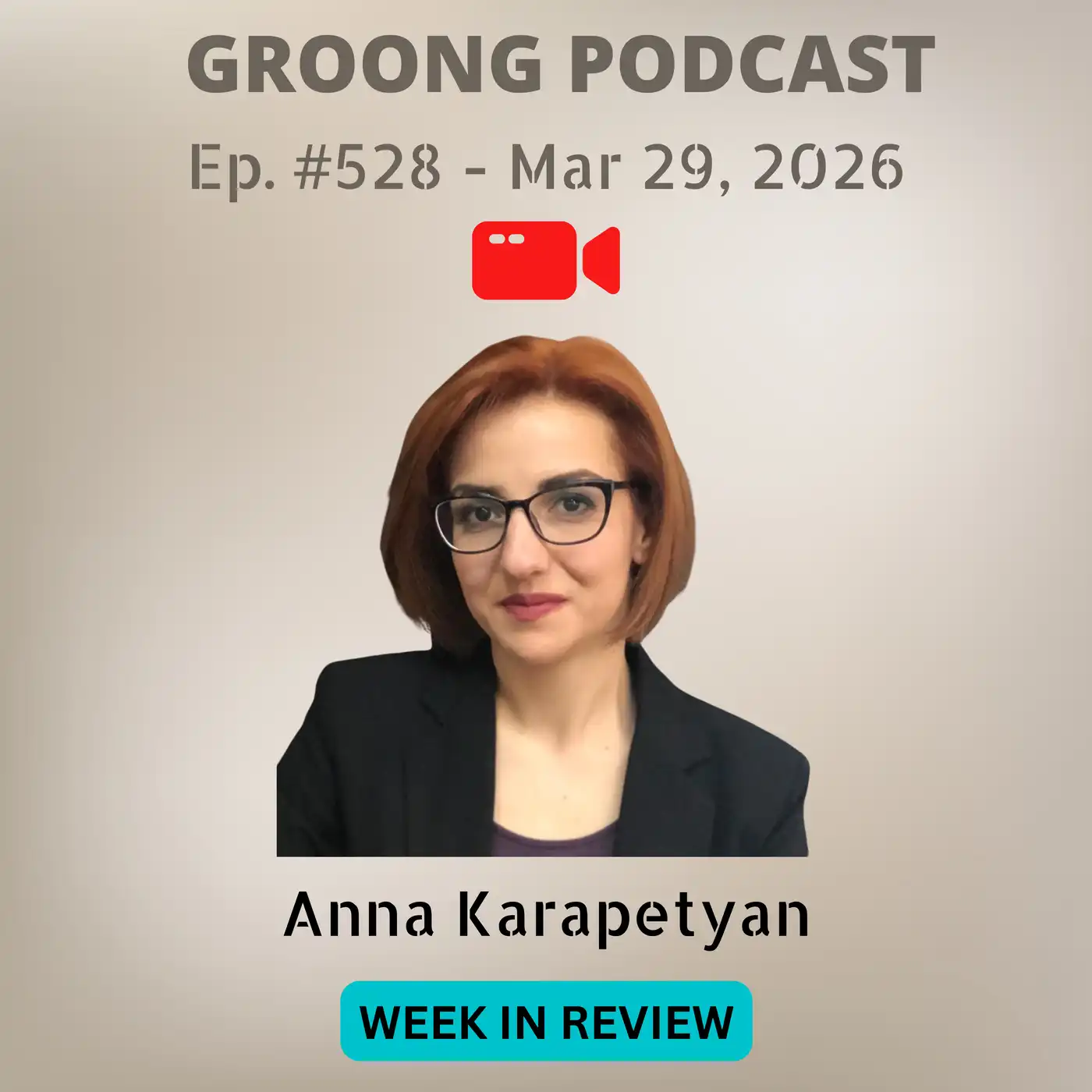
Groong Links:
Guest:
- Anna Karapetyan Director of the Insight Analytical Center for Applied Policy and Research.
Topics:
- Iran war escalation and spillover
- Pashinyanâs Fake âpeaceâ narrative
- Elections built on fear-mongering
- Silencing talk of Artsakh
Episode 528 | Recorded: March 30, 2026
Anna Karapetyan - Iran War, Pashinyan Fake Narratives, Fear-mongering, Silencing Talk of Artsakh | Ep 528, Mar 29, 2026 [EP528]
Posted on Tuesday, Mar 31, 2026 | Category: Iran, Armenia, Artsakh, Election, Nagorno Karabakh, USA, Azerbaijan, Armenian GenocideGroong Links:
Guest:
- Anna Karapetyan Director of the Insight Analytical Center for Applied Policy and Research.
Topics:
- Iran war escalation and spillover
- Pashinyanâs Fake âpeaceâ narrative
- Elections built on fear-mongering
- Silencing talk of Artsakh
Episode 528 | Recorded: March 30, 2026
Dziunik Aghajanian - Iran War Fears, June Vote Rules, State-Church Clash | Ep 519, Feb 22, 2026 [EP519]
Posted on Thursday, Feb 26, 2026 | Category: Armenia, Politics, Artsakh, Nagorno Karabakh, Azerbaijan, Turkey, Russia, Israel, Genocide, Armenian Church, Iran, Middle East, NATO, Syria | Series: wir, video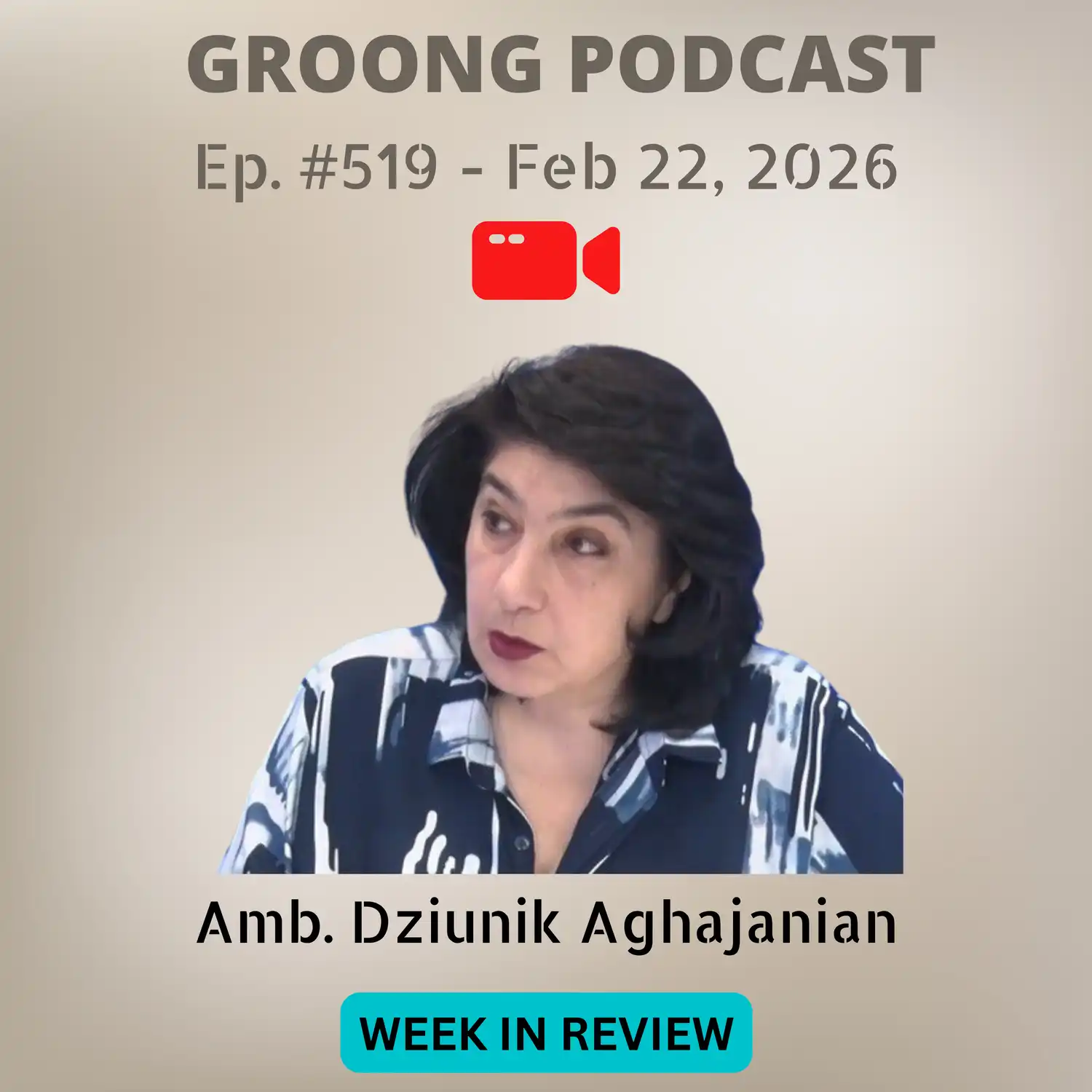
Groong Links:
Guest:
Topics:
- Iran War Fears
- June Parliamentary Elections
- Attacks on the Armenian Church
Episode 519 | Recorded: February 25, 2026
#Armenia #Iran #ArmeniaElections #ArmenianChurch #SouthCaucasus
Dziunik Aghajanian - Iran War Fears, June Vote Rules, State-Church Clash | Ep 519, Feb 22, 2026 [EP519]
Posted on Thursday, Feb 26, 2026 | Category: Armenia, Politics, Artsakh, Nagorno Karabakh, Azerbaijan, Turkey, Russia, Israel, Genocide, Armenian Church, Iran, Middle East, NATO, SyriaGroong Links:
Guest:
Topics:
- Iran War Fears
- June Parliamentary Elections
- Attacks on the Armenian Church
Episode 519 | Recorded: February 25, 2026
#Armenia #Iran #ArmeniaElections #ArmenianChurch #SouthCaucasus
JD Vance in Armenia and Azerbaijan | Ep 517, Feb 15, 2026 [EP517]
Posted on Sunday, Feb 15, 2026 | Category: Armenia, Politics, Turkey, Azerbaijan, Armenian Church, Armenian Genocide, Iran, Russia, Genocide, Georgia, Israel, China, Ukraine | Series: cog, video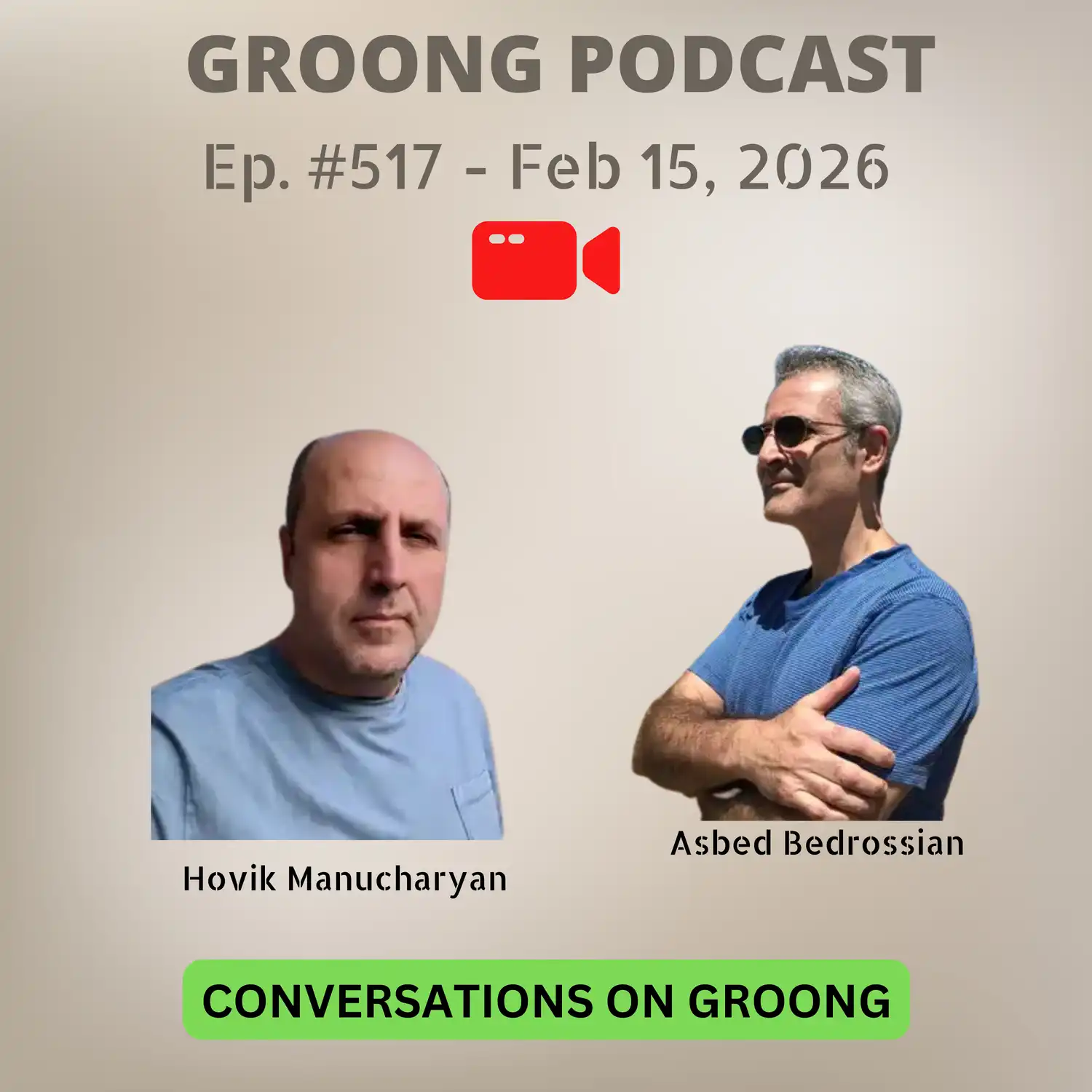
Groong Links:
Topics:
- Vance visit, protocol and optics
- Tsitsernakaberd tweet, âautocorrect diplomacyâ
- TRIPP corridor stake and sovereignty risks
- Nuclear SMR deal, costs and dependency
- Firebird AI project, power and value
- Drones, church silence, Baku charter and prisoners
Episode 517 | Recorded: February 13, 2026
#Groong #Armenia #JDVance #Tsitsernakaberd #TRIPP
JD Vance in Armenia and Azerbaijan | Ep 517, Feb 15, 2026 [EP517]
Posted on Sunday, Feb 15, 2026 | Category: Armenia, Politics, Turkey, Azerbaijan, Armenian Church, Armenian Genocide, Iran, Russia, Genocide, Georgia, Israel, China, UkraineGroong Links:
Topics:
- Vance visit, protocol and optics
- Tsitsernakaberd tweet, âautocorrect diplomacyâ
- TRIPP corridor stake and sovereignty risks
- Nuclear SMR deal, costs and dependency
- Firebird AI project, power and value
- Drones, church silence, Baku charter and prisoners
Episode 517 | Recorded: February 13, 2026
#Groong #Armenia #JDVance #Tsitsernakaberd #TRIPP