Armenian Economy
Last updated: June 10, 2026
Armenia’s economy is a middle-income, transition economy with a population of approximately 3 million. With a GDP of roughly $16–17 billion (2023–2024), Armenia ranks among the smallest economies in the South Caucasus region. The economy is built on a mix of industrial production, services, agriculture, and mining. Key sectors include mining (copper, molybdenum, gold), food processing, chemicals, telecommunications, and information technology. Armenia is a member of the Eurasian Economic Union (EAEU) and the World Trade Organization (WTO). The Armenian dram (AMD) is the official currency. The country’s economy is heavily dependent on international trade, with Russia and the European Union serving as primary trade partners. Armenia has sought to develop IT and tech sectors as growth engines, particularly through the Tumo Center and startup initiatives in Yerevan.
Armenia’s economy faces structural pressures that reflect both the country’s limited domestic market and its precarious geopolitical position. Over a third of Armenia’s foreign trade flows through Russia, which absorbs 44% of Armenian exports, creating severe vulnerability to sanctions, currency fluctuations, and Moscow’s political leverage. The 44-Day War in 2020 and the subsequent loss of Artsakh (Nagorno Karabakh) disrupted supply chains and regional trade patterns, while the complete ethnic cleansing of Artsakh’s more than 150,000 Armenian inhabitants eliminated any prospect of reintegrating the territory’s economy into Armenia’s. Since 2021, Armenia has pursued economic diversification and EU integration, but progress has been constrained by continued regional instability, the incomplete peace process with Azerbaijan , and the government’s inability to attract sustained foreign investment amid political uncertainty.
The government’s economic performance through 2024 reflected mixed results. First-half 2024 figures showed slowing growth compared to the first quarter, with both import and export sectors declining. The state has struggled with revenue collection and spending discipline, while the finance sector remained fragile. Proposals to open transit corridors through Syunik province, framed by Washington as TRIPP and by Baku and Ankara as the “Zangezur Corridor,” promised potential trade benefits but remained contested over control and Armenia’s security guarantees. Economist Jeffrey Sachs argued in August 2025 that Armenia should not depend on distant foreign powers but instead pursue pragmatic economic cooperation with immediate neighbors, particularly Iran , whose land border offers the only trade route independent of Turkish or Azerbaijani intermediaries.
Corruption and systemic governance failures continue to undermine confidence. The government’s seizure of Armenia’s power grid in late 2025, the pressure on the banking sector, and persistent capital flight reflect deeper institutional weaknesses that no single trade agreement can resolve. The 2026 Armenian Parliamentary Election will partly turn on whether voters believe the current administration can deliver economic stability or whether opposition parties offer a credible alternative approach to managing Armenia’s fiscal crisis and external economic constraints.
Groong episodes that include this tag
Below are all Groong episodes tagged with Armenian Economy.
Groong News Digest — Week of August 24–30, 2026
Posted on Sunday, Aug 30, 2026 | Category: Digest, News DigestPashinyan presents contentious five-year government program amid church confrontation, opposition arrests, and deepening rifts with Russia over EU membership and CSTO participation.
Groong Podcast Digest — Week of August 24–30, 2026
Posted on Sunday, Aug 30, 2026 | Category: Digest, Podcast DigestAmbassador Jack Matlock, the last U.S. Ambassador to the Soviet Union, examines whether the West missed a historic opportunity to integrate Russia into Western security architecture after the Cold War, and reflects on how Cold War-era decisions shape Armenia’s geopolitical choices today. Arthur G. Martirosyan discusses Armenia’s post-election political crisis, the arrest of opposition leaders including Robert Kocharyan, attacks on the Armenian Church, border concessions including Tigranashen, the TRIPP corridor, and how the Established Opposition is strategizing under state repression in what Pashinyan calls the Fourth Republic.
Groong News Digest — Week of August 10–16, 2026
Posted on Sunday, Aug 16, 2026 | Category: Digest, News DigestOne year after Washington’s Armenia-Azerbaijan peace summit, regional tensions escalate as Aliyev threatens military action, Iran rejects TRIPP terms, and Pashinyan pursues EU integration while constitutional reform divides the opposition.
Groong Podcast Digest — Week of August 10–16, 2026
Posted on Sunday, Aug 16, 2026 | Category: Digest, Podcast DigestAsbed and Hovik examine Pashinyan’s confrontation with the Armenian Church, Armenia’s balancing act between Russia and the EU, the geopolitical implications of TRIPP, Iran’s military leadership realignment under wartime pressure, the Turkey-Pakistan-Saudi Arabia defense pact, and how these shifts reshape Armenia’s role in the South Caucasus. Richard Campbell discusses the global AI race, data center economics, energy constraints, and Armenia’s Firebird project, examining whether current AI infrastructure investments align with physical and economic realities.
Hrant Mikaelian - Armenia’s Western Pivot: Strategy or Wishful Thinking? | Ep 575, Aug 8, 2026 [EP575]
Posted on Saturday, Aug 8, 2026 | Category: Armenia, Politics | Series: cog, video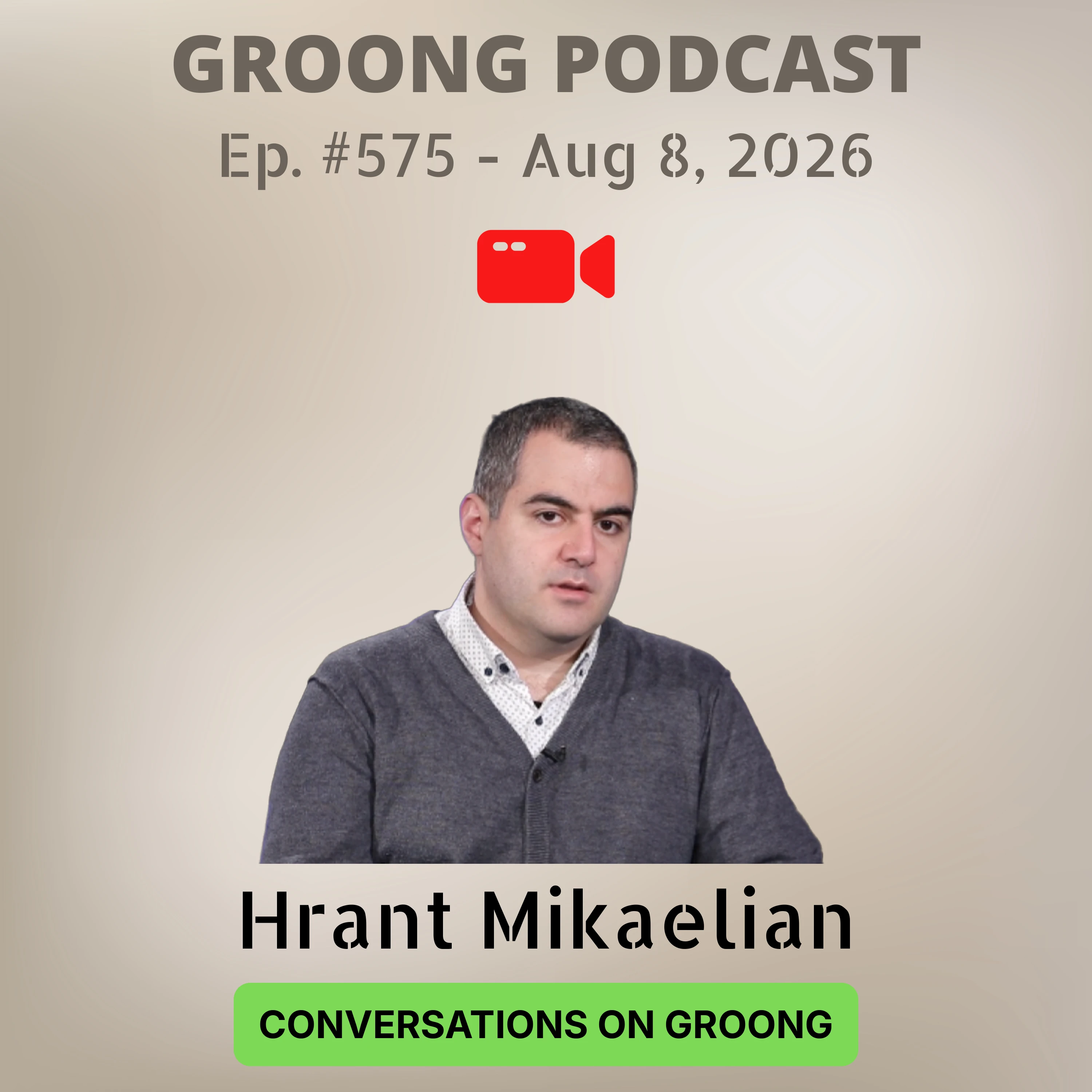
Groong Links:
Guest(s):
Topics:
- New Armenian Parliament
- Armenia-Russia-EAEU Relations
- EUropean Aid for Armenia
- Church & National Identity
- Armenian Economy
Episode 575 | Recorded: August 4, 2026
#Armenia #Russia #EuropeanUnion #ArmenianPolitics #ArmeniaRussia #ArmenianChurch #SouthCaucasus #Geopolitics
Hrant Mikaelian - Armenia’s Western Pivot: Strategy or Wishful Thinking? | Ep 575, Aug 8, 2026 [EP575]
Posted on Saturday, Aug 8, 2026 | Category: Armenia, PoliticsGroong Links:
Guest(s):
Topics:
- New Armenian Parliament
- Armenia-Russia-EAEU Relations
- EUropean Aid for Armenia
- Church & National Identity
- Armenian Economy
Episode 575 | Recorded: August 4, 2026
#Armenia #Russia #EuropeanUnion #ArmenianPolitics #ArmeniaRussia #ArmenianChurch #SouthCaucasus #Geopolitics
Transcript: Hrant Mikaelian - Armenia’s Western Pivot: Strategy or Wishful Thinking? | Ep 575, Aug 8, 2026 [EP575]
Posted on Saturday, Aug 8, 2026 | Category: Armenia, Politics, TranscriptIn this episode of Conversations on Groong, we speak with Hrant Mikaelian about Armenia’s Western pivot and the opening of the new parliament. We discuss Ruben Rubinyan’s appointment as speaker, Armenia-Russia-EAEU relations, lessons from the 44-Day War, European aid for Armenia, the role of the Armenian Church in national identity, and Armenia’s economic direction amid geopolitical pressure.
Groong News Digest — Week of July 20–26, 2026
Posted on Sunday, Jul 26, 2026 | Category: Digest, News DigestArmenian prisoners in Azerbaijani custody demand government accountability; opposition faces legal crackdowns; regional powers maneuver as US-Iran tensions escalate near Armenia’s borders.
Groong Podcast Digest — Week of July 20–26, 2026
Posted on Sunday, Jul 26, 2026 | Category: Digest, Podcast DigestAsbed and Hovik examine escalating US-Iran war tensions following the June ceasefire collapse, Konstantin Sokolov’s appointment to lead TRIPP+ while acquiring Armenia’s Teghut mine, and Pashinyan’s political vulnerabilities including charges against Archbishop Galstanyan and prolonged Armenian POW detention. Anthony Barsamian discusses Armenian Diaspora advocacy, U.S. recognition of the Armenian Genocide, the role of Armenia’s government in genocide recognition efforts, the suspension of Israeli recognition, the Armenian Church’s place in Armenian life, and Armenia’s geopolitical positioning between East and West.
Groong News Digest — Week of July 13–19, 2026
Posted on Sunday, Jul 19, 2026 | Category: Digest, News DigestAzerbaijan insists Armenia amend its constitution before signing a final peace treaty, while TRIPP corridor ratification advances and domestic political tensions escalate over opposition arrests.
Groong Podcast Digest — Week of July 13–19, 2026
Posted on Sunday, Jul 19, 2026 | Category: Digest, Podcast DigestWe discuss NATO’s 36th summit in Ankara, escalating Iran war developments, examining NATO’s defense spending surge, Trump’s shift on Turkey and F-35 access, Ukraine aid commitments, and what these geopolitical shifts mean for Armenia and the South Caucasus amid ongoing Armenia-Azerbaijan peace negotiations.
Groong News Digest — Week of May 18–24, 2026
Posted on Sunday, May 24, 2026 | Category: Digest, News DigestArmenia’s June 7 parliamentary campaign turned sharply confrontational as security forces raided opposition offices, Russia escalated economic pressure through export bans, and Pashinyan announced new railway connectivity through Turkey while signaling further territorial concessions to Azerbaijan.
Week in Review - EPC in Armenia, Russia, Parliamentary Election, Swiss Peace Initiative | Ep 545, May 10, 2026 [EP545]
Posted on Wednesday, May 13, 2026 | Category: Armenia, Politics, Nagorno Karabakh, Artsakh Blockade, Azerbaijan, Russia, Ukraine, NATO, European Union, Human Rights | Series: wir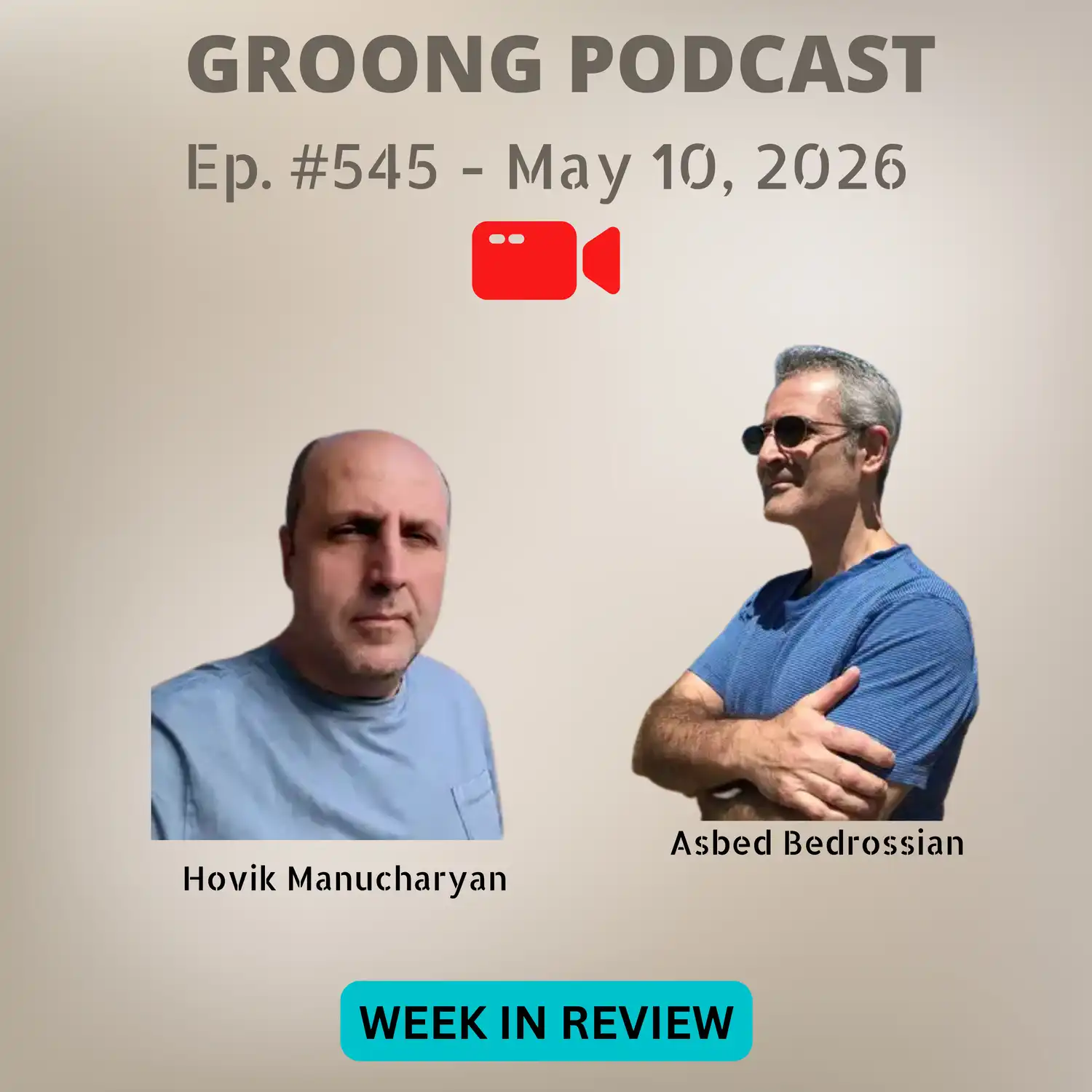
Groong Links:
Topics:
- EPC fallout and Russia response
- Armenia-EU declaration controversies
- Pashinyan’s Artsakh campaign narrative
- Aliyev-Pashinyan tag-team messaging
- Swiss Peace Initiative
- Pollsters diverge on election forecasts
Episode 545 | Recorded: May 12, 2026
#WeekInReview #Armenia #SwissPeaceInitiative #NagornoKarabakh #Artsakh
Week in Review - EPC in Armenia, Russia, Parliamentary Election, Swiss Peace Initiative | Ep 545, May 10, 2026 [EP545]
Posted on Wednesday, May 13, 2026 | Category: Armenia, Politics, Nagorno Karabakh, Artsakh Blockade, Azerbaijan, Russia, Ukraine, NATO, European Union, Human RightsGroong Links:
Topics:
- EPC fallout and Russia response
- Armenia-EU declaration controversies
- Pashinyan’s Artsakh campaign narrative
- Aliyev-Pashinyan tag-team messaging
- Swiss Peace Initiative
- Pollsters diverge on election forecasts
Episode 545 | Recorded: May 12, 2026
#WeekInReview #Armenia #SwissPeaceInitiative #NagornoKarabakh #Artsakh
Transcript: Week in Review - EPC in Armenia, Russia, Parliamentary Election, Swiss Peace Initiative | Ep 545, May 10, 2026 [EP545]
Posted on Wednesday, May 13, 2026 | Category: Armenia, Politics, Nagorno Karabakh, Artsakh Blockade, Azerbaijan, Russia, Ukraine, NATO, European Union, Human Rights, TranscriptIn this Week in Review, Asbed and Hovik discuss the fallout from the EPC summit in Yerevan, Armenia’s role as a platform for anti-Russian messaging, and Putin’s warning about a possible “separation” if Armenia moves toward the EU. They examine the Armenia-EU declaration, focusing on TRIPP, Ukraine, hybrid threats, security cooperation, visa liberalization, and the Armenian Nuclear Power Plant. The episode then turns to Armenia’s election campaign, Pashinyan’s claim that Artsakh was “never ours,” Aliyev’s parallel messaging from occupied Artsakh, pressure on opposition figures, the Swiss Peace Initiative, and sharp divergence between election polls.
Arthur Martirosyan - Ukraine, Iran, Baku Pogroms, Church Clash | Ep 505, Jan 11, 2026 [EP505]
Posted on Wednesday, Jan 14, 2026 | Category: Armenia, Politics, Armenian Church, Ukraine, Artsakh, Nagorno Karabakh, Azerbaijan, Turkey, Russia, USA, Armenian Genocide, Artsakh Blockade, European Union, Iran, Israel, Economy, Georgia, Middle East, Syria, China, Genocide | Series: wir, video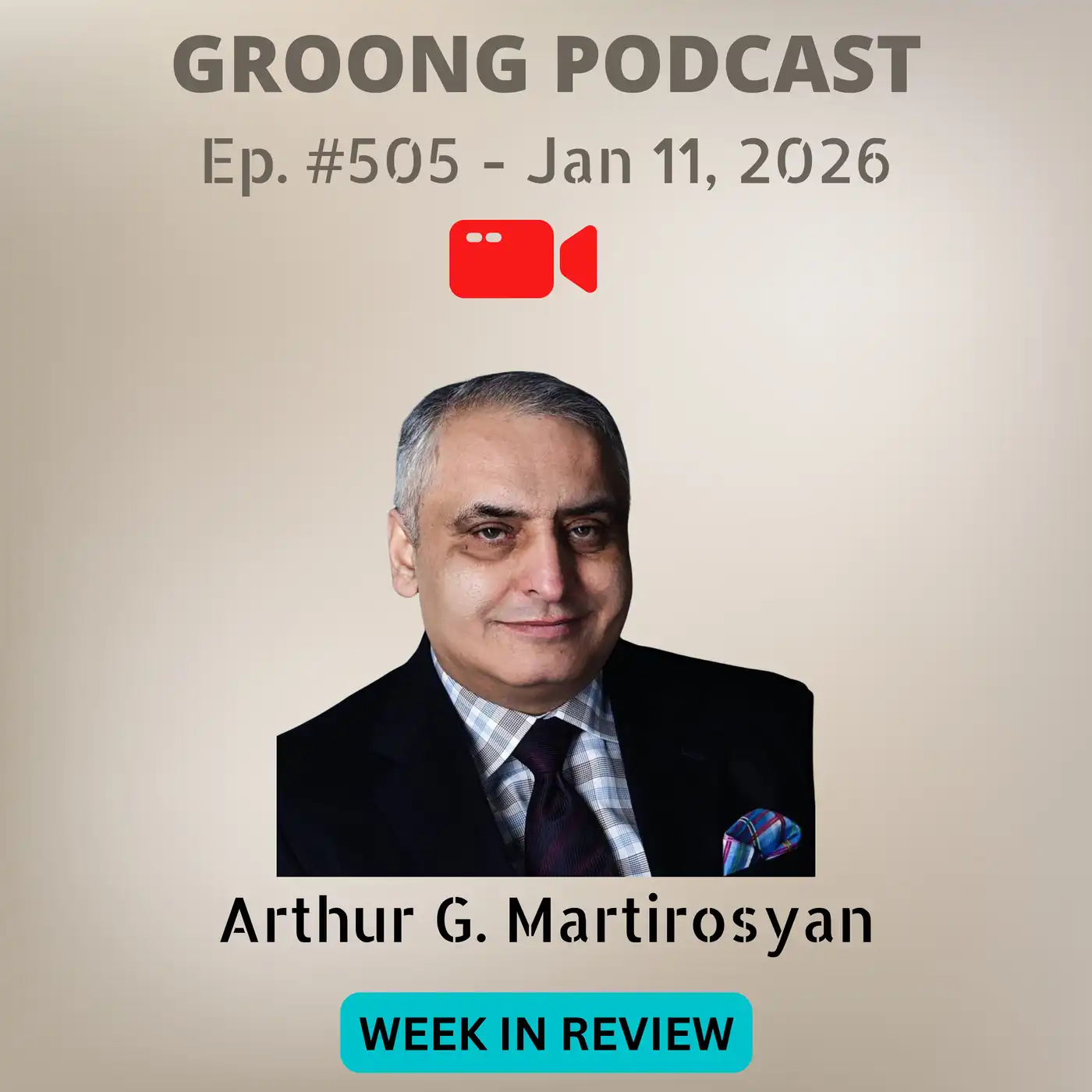
Groong Links:
Guest:
Topics:
- Ukraine warâs global cost to Russia
- Iran unrest and war risk
- Remembering the Baku pogroms
- Russia-Armenia tensions and media threats
- Pashinyanâs clash with Armenian Church
Episode 505 | Recorded: January 13, 2026
Arthur Martirosyan - Ukraine, Iran, Baku Pogroms, Church Clash | Ep 505, Jan 11, 2026 [EP505]
Posted on Wednesday, Jan 14, 2026 | Category: Armenia, Politics, Armenian Church, Ukraine, Artsakh, Nagorno Karabakh, Azerbaijan, Turkey, Russia, USA, Armenian Genocide, Artsakh Blockade, European Union, Iran, Israel, Economy, Georgia, Middle East, Syria, China, GenocideGroong Links:
Guest:
Topics:
- Ukraine warâs global cost to Russia
- Iran unrest and war risk
- Remembering the Baku pogroms
- Russia-Armenia tensions and media threats
- Pashinyanâs clash with Armenian Church
Episode 505 | Recorded: January 13, 2026
Hrant Mikaelian - Ukraine Talks, Armenia’s Crackdowns, and Rising Tensions | Ep 488, Nov 23, 2025 [EP488]
Posted on Wednesday, Nov 26, 2025 | Category: Armenia, Politics, Russia, Ukraine, Turkey, Georgia, Azerbaijan, Armenian Church, China, Economy, Iran, Middle East, Artsakh, Human Rights, Genocide, Nagorno Karabakh, European Union, NATO | Series: wir, video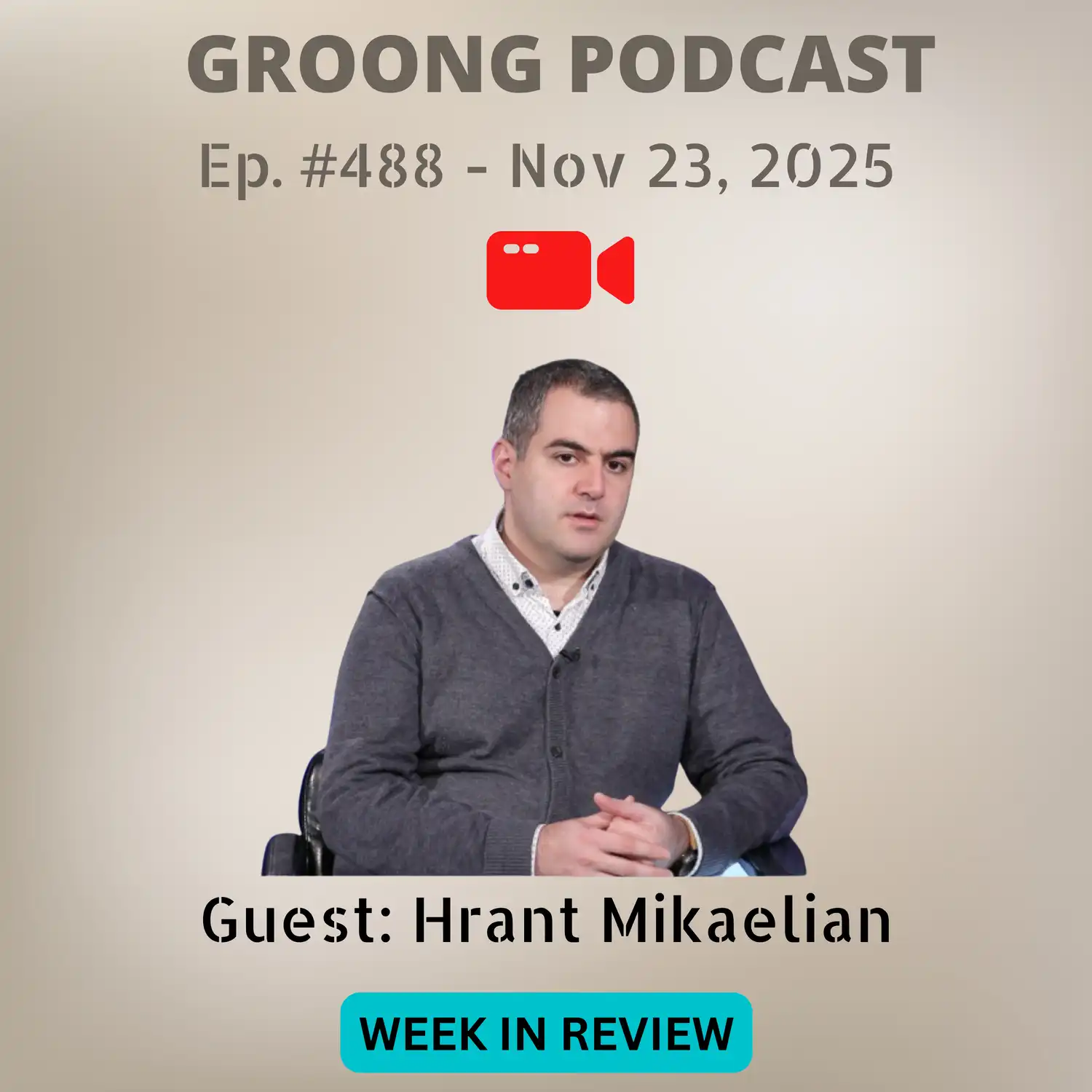
Groong Links:
Guest:
Topics:
- High-Stakes Ukraine Talks
- Armeniaâs Growing Political Detentions
- Pashinyan Honored In Kazakhstan
- Rising Pressure On The Church
- Impeachment vs. Elections
- Pashinyan Seizes Power Grid
Episode 488 | Recorded: November 24, 2025
Hrant Mikaelian - Ukraine Talks, Armenia’s Crackdowns, and Rising Tensions | Ep 488, Nov 23, 2025 [EP488]
Posted on Wednesday, Nov 26, 2025 | Category: Armenia, Politics, Russia, Ukraine, Turkey, Georgia, Azerbaijan, Armenian Church, China, Economy, Iran, Middle East, Artsakh, Human Rights, Genocide, Nagorno Karabakh, European Union, NATOGroong Links:
Guest:
Topics:
- High-Stakes Ukraine Talks
- Armeniaâs Growing Political Detentions
- Pashinyan Honored In Kazakhstan
- Rising Pressure On The Church
- Impeachment vs. Elections
- Pashinyan Seizes Power Grid
Episode 488 | Recorded: November 24, 2025
Hrant Mikaelian - War on Iran, Russia on TRIPP, New MPG Poll in Armenia, Economy | Ep 471, Sep 7, 2025 [EP471]
Posted on Tuesday, Sep 9, 2025 | Category: Armenia, Politics, Iran, Poll, Azerbaijan, Turkey, Russia, Iran, Armenian Church, Nagorno Karabakh, Armenian Genocide, Economy, Georgia, Israel, Genocide, China, Ukraine, India | Series: wir, video
Groong Links:
Guest:
Topics:
- War in Iran, Chapter 2?
- Russiaâs Stance on TRIPP
- New MPG Poll in Armenia
- Armenian Economy in H1/2025
Episode 471 | Recorded: September 8, 2025
Hrant Mikaelian - War on Iran, Russia on TRIPP, New MPG Poll in Armenia, Economy | Ep 471, Sep 7, 2025 [EP471]
Posted on Tuesday, Sep 9, 2025 | Category: Armenia, Politics, Iran, Poll, Azerbaijan, Turkey, Russia, Iran, Armenian Church, Nagorno Karabakh, Armenian Genocide, Economy, Georgia, Israel, Genocide, China, Ukraine, IndiaGroong Links:
Guest:
Topics:
- War in Iran, Chapter 2?
- Russiaâs Stance on TRIPP
- New MPG Poll in Armenia
- Armenian Economy in H1/2025
Episode 471 | Recorded: September 8, 2025
Jeffrey Sachs - TRIPP down Zangezur Corridor | Ep 466, Aug 29, 2025 [EP466]
Posted on Friday, Aug 29, 2025 | Category: Armenia, Geopolitics, Azerbaijan, Artsakh, Nagorno Karabakh, Russia, Iran, Turkey, Georgia, USA, Economy, Israel, European Union, NATO | Series: cog, video
Groong Links:
Guest:
Topics:
- Pashinyan, Aliyev, in the White House
- What âPeaceâ?
- Armenian Economy
Episode 466 | Recorded: August 28, 2025
Jeffrey Sachs - TRIPP down Zangezur Corridor | Ep 466, Aug 29, 2025 [EP466]
Posted on Friday, Aug 29, 2025 | Category: Armenia, Geopolitics, Azerbaijan, Artsakh, Nagorno Karabakh, Russia, Iran, Turkey, Georgia, USA, Economy, Israel, European Union, NATOGroong Links:
Guest:
Topics:
- Pashinyan, Aliyev, in the White House
- What âPeaceâ?
- Armenian Economy
Episode 466 | Recorded: August 28, 2025
Transcript: Jeffrey Sachs - TRIPP down Zangezur Corridor | Ep 466, Aug 29, 2025 [EP466]
Posted on Friday, Aug 29, 2025 | Category: Armenia, Geopolitics, Azerbaijan, Artsakh, Nagorno Karabakh, Russia, Iran, Turkey, Georgia, USA, Economy, Israel, European Union, NATO, TranscriptIn this episode of Conversations on Groong, renowned economist Jeffrey Sachs joins to discuss the U.S.-brokered “TRIPP” (Trump Route for International Peace and Prosperity), also known as the Zangezur Corridor. The discussion covers the risks of foreign powers imposing corridors through Armenia, the muted response from Moscow, Tehran’s strong opposition, and what this means for regional security. Sachs stresses that Armenia should not look to distant powers like the United States for security or stability, but instead pursue prudent arrangements and economic cooperation with its immediate Read More
Pashinyan Meets Aliyev as Armenia Cracks Down on Opposition and Church | Ep 453, Jul 13, 2025 [EP453]
Posted on Sunday, Jul 13, 2025 | Category: Armenia, Politics, Artsakh, Nagorno Karabakh, Azerbaijan, Turkey, Russia, Armenian Church, Iran, Economy, Israel, NATO, Middle East, Ukraine | Series: wir, video
Groong Links:
Topics:
- Pashinyan meets Aliyev in Abu Dhabi
- Continued Persecution of Church and Opposition
Episode 453 | Recorded: July 13, 2025
Pashinyan Meets Aliyev as Armenia Cracks Down on Opposition and Church | Ep 453, Jul 13, 2025 [EP453]
Posted on Sunday, Jul 13, 2025 | Category: Armenia, Politics, Artsakh, Nagorno Karabakh, Azerbaijan, Turkey, Russia, Armenian Church, Iran, Economy, Israel, NATO, Middle East, UkraineGroong Links:
Topics:
- Pashinyan meets Aliyev in Abu Dhabi
- Continued Persecution of Church and Opposition
Episode 453 | Recorded: July 13, 2025
Hrant Mikaelian - Review of the Armenian Economy in 2024 | Ep 417, Feb 22, 2025 [EP417]
Posted on Saturday, Feb 22, 2025 | Category: Armenia, Turkey, Artsakh, Economy, Poll, Nagorno Karabakh, Russia, Georgia, European Union, Azerbaijan, Ukraine, Iran, NATO, India | Series: cog
Groong Links:
Guest:
Topics:
- TBD
Episode 417 | Recorded: February 12, 2025
Hrant Mikaelian - Review of the Armenian Economy in 2024 | Ep 417, Feb 22, 2025 [EP417]
Posted on Saturday, Feb 22, 2025 | Category: Armenia, Turkey, Artsakh, Economy, Poll, Nagorno Karabakh, Russia, Georgia, European Union, Azerbaijan, Ukraine, Iran, NATO, IndiaGroong Links:
Guest:
Topics:
- TBD
Episode 417 | Recorded: February 12, 2025
Arthur Khachatryan - Mirzoyan in Moscow, Kostanyan in Tehran, Mher Grigoryan on the Border, FIS Annual Report, Silence of the Lambs | Ep 409, Jan 26, 2025 [EP408]
Posted on Thursday, Jan 30, 2025 | Category: Armenia, Artsakh, Nagorno Karabakh, Economy, Azerbaijan, Georgia, Turkey, Russia, Armenian Church, Armenian Genocide, Iran, European Union, Genocide, Syria, Lebanon, NATO, Middle East, Ukraine, Human Rights | Series: wir
Groong Links:
Guest:
- Mr. Arthur Khachatryan , MP, Hayastan Dashinq/Armenia Alliance
Topics:
- Mirzoyan in Moscow
- Vahan Kostanyan in Tehran
- Mher Grigoryan on the Border (concessions)
- FIS Annual Report 2025
- The Silence of the Lambs
Episode 408 | Recorded: January 29, 2025
Arthur Khachatryan - Mirzoyan in Moscow, Kostanyan in Tehran, Mher Grigoryan on the Border, FIS Annual Report, Silence of the Lambs | Ep 409, Jan 26, 2025 [EP408]
Posted on Thursday, Jan 30, 2025 | Category: Armenia, Artsakh, Nagorno Karabakh, Economy, Azerbaijan, Georgia, Turkey, Russia, Armenian Church, Armenian Genocide, Iran, European Union, Genocide, Syria, Lebanon, NATO, Middle East, Ukraine, Human RightsGroong Links:
Guest:
- Mr. Arthur Khachatryan , MP, Hayastan Dashinq/Armenia Alliance
Topics:
- Mirzoyan in Moscow
- Vahan Kostanyan in Tehran
- Mher Grigoryan on the Border (concessions)
- FIS Annual Report 2025
- The Silence of the Lambs
Episode 408 | Recorded: January 29, 2025
Groong Links:
Guest:
Topics:
- Constitutional Crisis In Georgia?
- Western Reactions and Escalation
- Russian Reactions and Georgiaâs Strategic Direction
- Unrest In Abkhazia
Episode 388 | Recorded: November 30, 2024
Groong Links:
Guest:
Topics:
- Constitutional Crisis In Georgia?
- Western Reactions and Escalation
- Russian Reactions and Georgiaâs Strategic Direction
- Unrest In Abkhazia
Episode 388 | Recorded: November 30, 2024
Tevan Poghosyan - Armenia-Azerbaijan Talks, COP29 in Baku, Gyumri Politics, Police Reform | Ep 386 - Nov 17, 2024 [EP386]
Posted on Tuesday, Nov 19, 2024 | Category: Armenia, Artsakh, Nagorno Karabakh, Azerbaijan, Georgia, Turkey, Russia, Human Rights, Economy, Ukraine, China, Iran, Israel, Middle East | Series: wir
Groong Links:
Guest:
Topics:
- Armenia-Azerbaijan talks
- COP29: Diplomacy and boycotts
- Gyumri’s political intrigues
- Mass dismissal of Armenian government members
- Police âreformâ
- Legislative Changes In Preparation For Elections
Episode 386 | Recorded: November 17, 2024
Tevan Poghosyan - Armenia-Azerbaijan Talks, COP29 in Baku, Gyumri Politics, Police Reform | Ep 386 - Nov 17, 2024 [EP386]
Posted on Tuesday, Nov 19, 2024 | Category: Armenia, Artsakh, Nagorno Karabakh, Azerbaijan, Georgia, Turkey, Russia, Human Rights, Economy, Ukraine, China, Iran, Israel, Middle EastGroong Links:
Guest:
Topics:
- Armenia-Azerbaijan talks
- COP29: Diplomacy and boycotts
- Gyumri’s political intrigues
- Mass dismissal of Armenian government members
- Police âreformâ
- Legislative Changes In Preparation For Elections
Episode 386 | Recorded: November 17, 2024
Arthur Khachatryan - Armenia Azerbaijan Talks, 2025 State Budget, Internal Political Developments | Ep 385 - Nov 10, 2024 [EP385]
Posted on Thursday, Nov 14, 2024 | Category: Armenia, Artsakh, Nagorno Karabakh, Economy, Turkey, Russia, Ukraine, Genocide, Iran, Lebanon, European Union, Georgia, Israel, Middle East, NATO, Syria | Series: wir
Groong Links:
Guest:
Topics:
- Armenia Azerbaijan Talks
- Draft 2025 State Budget
- Armenian Internal Politics
Episode 385 | Recorded: November 13, 2024
Arthur Khachatryan - Armenia Azerbaijan Talks, 2025 State Budget, Internal Political Developments | Ep 385 - Nov 10, 2024 [EP385]
Posted on Thursday, Nov 14, 2024 | Category: Armenia, Artsakh, Nagorno Karabakh, Economy, Turkey, Russia, Ukraine, Genocide, Iran, Lebanon, European Union, Georgia, Israel, Middle East, NATO, SyriaGroong Links:
Guest:
Topics:
- Armenia Azerbaijan Talks
- Draft 2025 State Budget
- Armenian Internal Politics
Episode 385 | Recorded: November 13, 2024
Dziunik Aghajanian - Azerbaijan Escalates Threats, Russia-Armenia Relations, Eat Rice, not Wheat, Have some Cold Winters, Srbazan Movement Update, Regional Geopolitics, Georgian Elections | Ep 374 - Oct 13, 2024 [EP374]
Posted on Tuesday, Oct 15, 2024 | Category: Armenia, Azerbaijan, Georgia, Middle East, Iran, Artsakh, Nagorno Karabakh, Russia, Israel, Artsakh Blockade, Economy, European Union, NATO, Lebanon, Syria, Turkey, China, Ukraine | Series: wir
Groong Links:
Guest:
Topics:
- Azerbaijan Escalates Threats
- Russia-Armenia Relations
- Eat Rice, not Wheat, Have some Cold Winters!
- Srbazan Movement Update
- Regional Geopolitics
- Iran-Russia
- Israel-Iran
- Georgian Elections
Episode 374 | Recorded: October 14, 2024
Dziunik Aghajanian - Azerbaijan Escalates Threats, Russia-Armenia Relations, Eat Rice, not Wheat, Have some Cold Winters, Srbazan Movement Update, Regional Geopolitics, Georgian Elections | Ep 374 - Oct 13, 2024 [EP374]
Posted on Tuesday, Oct 15, 2024 | Category: Armenia, Azerbaijan, Georgia, Middle East, Iran, Artsakh, Nagorno Karabakh, Russia, Israel, Artsakh Blockade, Economy, European Union, NATO, Lebanon, Syria, Turkey, China, UkraineGroong Links:
Guest:
Topics:
- Azerbaijan Escalates Threats
- Russia-Armenia Relations
- Eat Rice, not Wheat, Have some Cold Winters!
- Srbazan Movement Update
- Regional Geopolitics
- Iran-Russia
- Israel-Iran
- Georgian Elections
Episode 374 | Recorded: October 14, 2024
Hrant Mikaelian - Commemorating the 44-Day War, Armenia Azerbaijan Talks, Draft 2025 State Budget, | Ep 371 - Sep 29, 2024 [EP371]
Posted on Tuesday, Oct 1, 2024 | Category: Armenia, Politics, Economy, Artsakh, Nagorno Karabakh, Azerbaijan, Turkey, Iran, Armenian Church, Russia, Georgia, Ukraine, European Union, India | Series: wir
Groong Links:
Guest:
Topics:
- Tavush Protests Gain Momentum
- Pashinyan Pressing Ahead with Land Concessions
- Poll Results on Tavush Protests
Episode 371 | Recorded: September 30, 2024
Hrant Mikaelian - Commemorating the 44-Day War, Armenia Azerbaijan Talks, Draft 2025 State Budget, | Ep 371 - Sep 29, 2024 [EP371]
Posted on Tuesday, Oct 1, 2024 | Category: Armenia, Politics, Economy, Artsakh, Nagorno Karabakh, Azerbaijan, Turkey, Iran, Armenian Church, Russia, Georgia, Ukraine, European Union, IndiaGroong Links:
Guest:
Topics:
- Tavush Protests Gain Momentum
- Pashinyan Pressing Ahead with Land Concessions
- Poll Results on Tavush Protests
Episode 371 | Recorded: September 30, 2024
Arthur G Martirosyan - Armenian Independence Day, Strategic Partnerships, Talks with Azerbaijan | Ep 368 - Sep 22, 2024 [EP368]
Posted on Tuesday, Sep 24, 2024 | Category: Armenia, Politics, Artsakh, Nagorno Karabakh, USA, Georgia, Azerbaijan, Russia, Turkey, NATO, Ukraine, Israel, China, European Union, Iran, Economy, Human Rights, Middle East | Series: wir
Groong Links:
Guest:
Topics:
- Armenian Day of Independence: Sep. 21
- âStrategic Partnershipsâ
- Armenian Azerbaijani Talks
Episode 368 | Recorded: September 23, 2024
Arthur G Martirosyan - Armenian Independence Day, Strategic Partnerships, Talks with Azerbaijan | Ep 368 - Sep 22, 2024 [EP368]
Posted on Tuesday, Sep 24, 2024 | Category: Armenia, Politics, Artsakh, Nagorno Karabakh, USA, Georgia, Azerbaijan, Russia, Turkey, NATO, Ukraine, Israel, China, European Union, Iran, Economy, Human Rights, Middle EastGroong Links:
Guest:
Topics:
- Armenian Day of Independence: Sep. 21
- âStrategic Partnershipsâ
- Armenian Azerbaijani Talks
Episode 368 | Recorded: September 23, 2024
Arthur Khachatryan - Politics and Economy in Armenia, Fall 2024 | Ep 366 - Sep 21, 2024 [EP366]
Posted on Saturday, Sep 21, 2024 | Category: Armenia, Artsakh, Nagorno Karabakh, Economy, Georgia, Russia, Turkey, Lebanon, Iran, European Union, Israel, Genocide, Ukraine | Series: cog
Groong Links:
Guest:
Topics:
- The Governmentâs Track Record
- The State of the Economy
- âPivot to the Westâ
- Elections in Georgia
Episode 366 | Recorded: September 18, 2024
Arthur Khachatryan - Politics and Economy in Armenia, Fall 2024 | Ep 366 - Sep 21, 2024 [EP366]
Posted on Saturday, Sep 21, 2024 | Category: Armenia, Artsakh, Nagorno Karabakh, Economy, Georgia, Russia, Turkey, Lebanon, Iran, European Union, Israel, Genocide, UkraineGroong Links:
Guest:
Topics:
- The Governmentâs Track Record
- The State of the Economy
- âPivot to the Westâ
- Elections in Georgia
Episode 366 | Recorded: September 18, 2024
Groong Links:
Guest:
- Mr. Vardan Aramyan - Fmr. Minister of Finance, Republic of Armenia
Topics:
- Inflation
- Monetary Policy
- Economic Performance
- Remittances
- National Debt
- Economic Outlook
- References
Episode 362 | Recorded: Septemberr 11, 2024
Groong Links:
Guest:
- Mr. Vardan Aramyan - Fmr. Minister of Finance, Republic of Armenia
Topics:
- Inflation
- Monetary Policy
- Economic Performance
- Remittances
- National Debt
- Economic Outlook
- References
Episode 362 | Recorded: Septemberr 11, 2024
Tevan Poghosyan - US Leadership Changes, Iran Armenia Relations, Russian-Armenian Relations, EU Push for an Agreement, Srbazan Movement Next Steps | Ep 351 - Aug 4, 2024 [EP351]
Posted on Sunday, Aug 4, 2024 | Category: Armenia, Artsakh, Politics, Nagorno Karabakh, Azerbaijan, Iran, Russia, Turkey, Georgia, Economy, China, Genocide, Human Rights, Ukraine, Israel, European Union, NATO | Series: wir
Groong Links:
Guest:
Topics:
- US Leadership Changes
- Iran Armenia Relations
- Russian-Armenian Relations
- EU Push for an Agreement
- Srbazan Movement Next Steps
Episode 351 | Recorded: August 6, 2024
Tevan Poghosyan - US Leadership Changes, Iran Armenia Relations, Russian-Armenian Relations, EU Push for an Agreement, Srbazan Movement Next Steps | Ep 351 - Aug 4, 2024 [EP351]
Posted on Sunday, Aug 4, 2024 | Category: Armenia, Artsakh, Politics, Nagorno Karabakh, Azerbaijan, Iran, Russia, Turkey, Georgia, Economy, China, Genocide, Human Rights, Ukraine, Israel, European Union, NATOGroong Links:
Guest:
Topics:
- US Leadership Changes
- Iran Armenia Relations
- Russian-Armenian Relations
- EU Push for an Agreement
- Srbazan Movement Next Steps
Episode 351 | Recorded: August 6, 2024
Groong Links:
Guest:
Topics:
- Economy in the First Half of 2024
- State Revenues & Spending
- Finance Sector
- Looking Ahead
Episode 350 | Recorded: August 1, 2024
Groong Links:
Guest:
Topics:
- Economy in the First Half of 2024
- State Revenues & Spending
- Finance Sector
- Looking Ahead
Episode 350 | Recorded: August 1, 2024
Anna Karapetyan | Peace Treaty and more Aliyev Demands | James O’Brien in Yerevan | Srbazan Movement | Ep 335 - June 9, 2024 [EP335]
Posted on Tuesday, Jun 11, 2024 | Category: Armenia, Politics, Artsakh, Nagorno Karabakh, Azerbaijan, Turkey, Russia, Economy, Genocide, Ukraine, Geopolitics, Human Rights, Iran | Series: wir
Groong Links:
Guest:
Topics:
- Peace Treaty and more Aliyev Demands
- James OâBrien in Yerevan
- Russia Armenia Relations
- Srbazan Movement
Episode 335 | Recorded: June 10, 2024
Anna Karapetyan | Peace Treaty and more Aliyev Demands | James O’Brien in Yerevan | Srbazan Movement | Ep 335 - June 9, 2024 [EP335]
Posted on Tuesday, Jun 11, 2024 | Category: Armenia, Politics, Artsakh, Nagorno Karabakh, Azerbaijan, Turkey, Russia, Economy, Genocide, Ukraine, Geopolitics, Human Rights, IranGroong Links:
Guest:
Topics:
- Peace Treaty and more Aliyev Demands
- James OâBrien in Yerevan
- Russia Armenia Relations
- Srbazan Movement
Episode 335 | Recorded: June 10, 2024
Anna Karapetyan - Trilateral US-EU-Armenia Meeting | Talks with Azerbaijan | Relations with Russia in Free fall | Pashinyan Suppressing Artsakh Leadership | Ep 323 - Apr 7, 2024 [EP323]
Posted on Tuesday, Apr 9, 2024 | Category: Armenia, Politics, Artsakh, Nagorno Karabakh, Azerbaijan, Russia, USA, Artsakh Blockade, European Union, NATO, Turkey, Economy, Iran, Georgia, Ukraine, India | Series: wir
Groong Links:
Guest:
Topics:
- Trilateral US-EU-Armenia Meeting
- Talks with Azerbaijan
- Tavush: What has Pashinyan Promised
- Relations with Russia in Freefall
- Pashinyan Suppressing Artsakh Leadership
Episode 323 | Recorded: April 8, 2024
Anna Karapetyan - Trilateral US-EU-Armenia Meeting | Talks with Azerbaijan | Relations with Russia in Free fall | Pashinyan Suppressing Artsakh Leadership | Ep 323 - Apr 7, 2024 [EP323]
Posted on Tuesday, Apr 9, 2024 | Category: Armenia, Politics, Artsakh, Nagorno Karabakh, Azerbaijan, Russia, USA, Artsakh Blockade, European Union, NATO, Turkey, Economy, Iran, Georgia, Ukraine, IndiaGroong Links:
Guest:
Topics:
- Trilateral US-EU-Armenia Meeting
- Talks with Azerbaijan
- Tavush: What has Pashinyan Promised
- Relations with Russia in Freefall
- Pashinyan Suppressing Artsakh Leadership
Episode 323 | Recorded: April 8, 2024
Tatul Manaseryan: Armenia's Economic Diversification | Corruption | Bank Secrecy | Ep 319 - Mar 23, 2024 [EP319]
Posted on Saturday, Mar 23, 2024 | Category: Economy, Armenia, Economy, Russia, Turkey, Azerbaijan, Geopolitics, European Union, Iran, Georgia, Ukraine, China, Middle East, Human Rights | Series: cog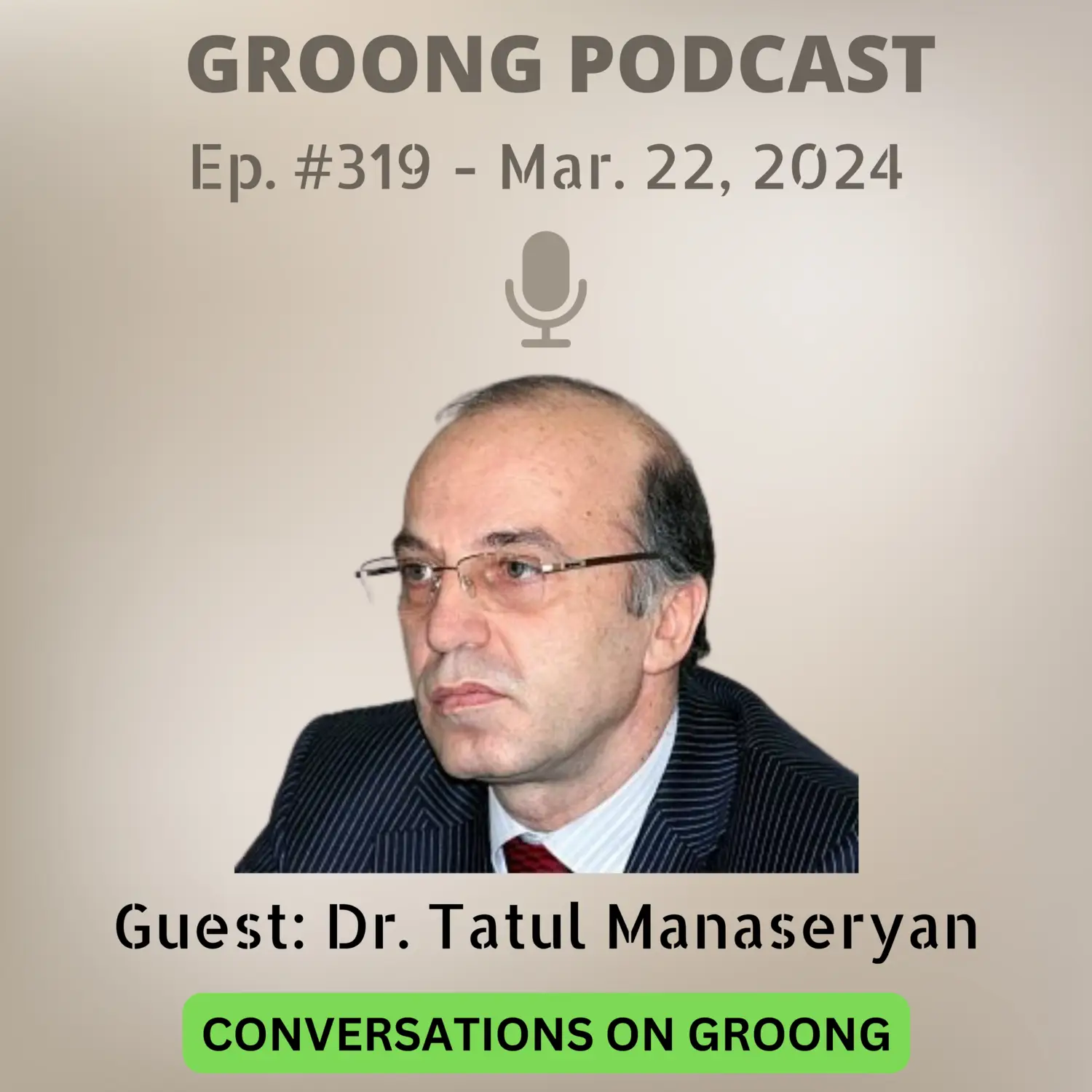
Groong Links:
Topics:
- Economic Diversification
- Systemic Corruption
- Bank Secrecy Scrapped
Guest:
Episode 319 | Recorded: March 16, 2024
Tatul Manaseryan: Armenia's Economic Diversification | Corruption | Bank Secrecy | Ep 319 - Mar 23, 2024 [EP319]
Posted on Saturday, Mar 23, 2024 | Category: Economy, Armenia, Economy, Russia, Turkey, Azerbaijan, Geopolitics, European Union, Iran, Georgia, Ukraine, China, Middle East, Human RightsGroong Links:
Topics:
- Economic Diversification
- Systemic Corruption
- Bank Secrecy Scrapped
Guest:
Episode 319 | Recorded: March 16, 2024
Benyamin Poghosyan - Shahramanyan Annuls Artsakh Dissolution | Insecurity without Borders | Pashinyan in St. Petersburgh | Year-end Predictions | Ep 300, Dec 31, 2023 [EP300]
Posted on Saturday, Dec 30, 2023 | Category: Armenia, Artsakh, Politics, Nagorno Karabakh, Azerbaijan, Russia, Iran, Ukraine, European Union, NATO, Turkey, Economy, Geopolitics, Israel, India | Series: wir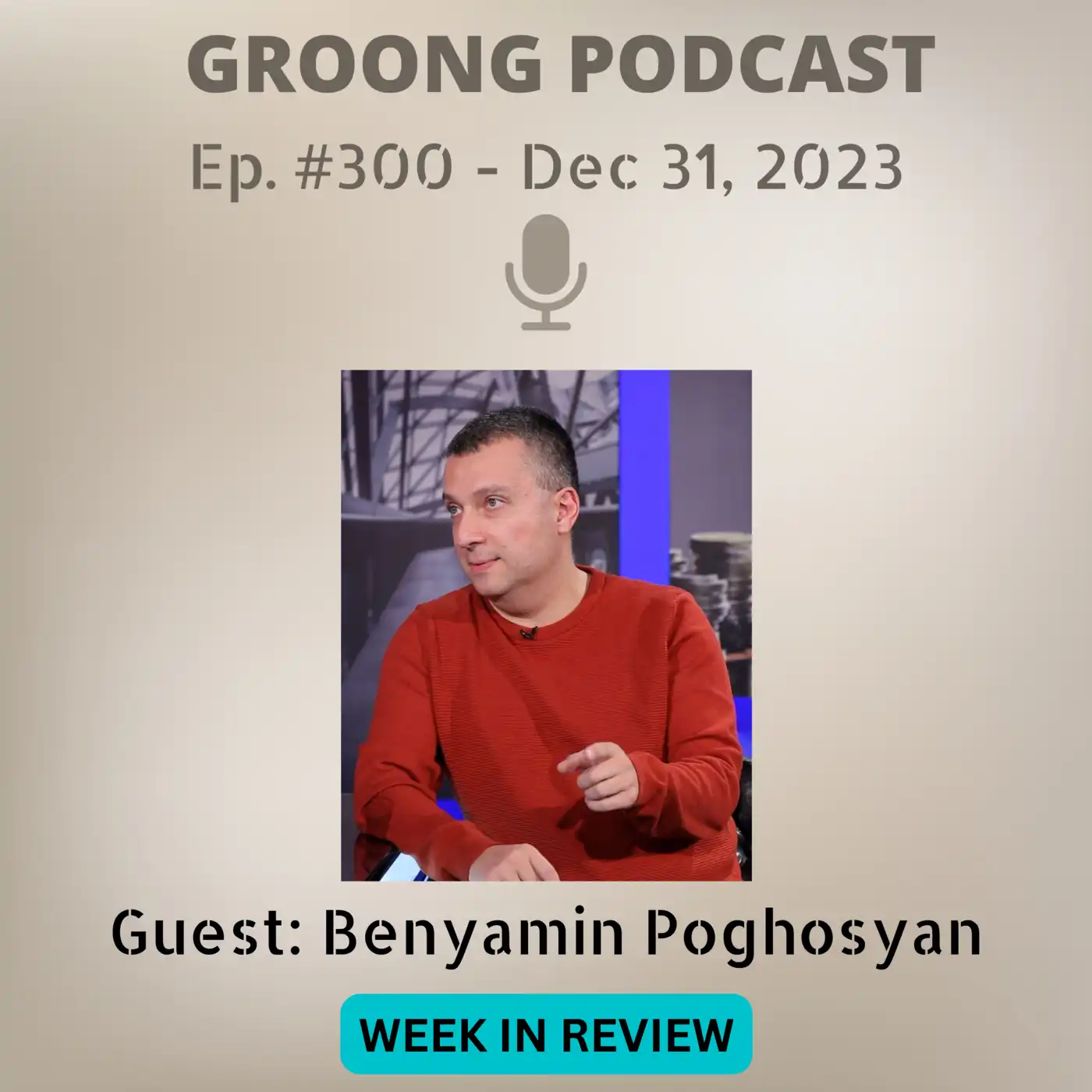
Groong Links:
Guest:
Topics:
- Artsakh President Annuls Dissolution of Republic
- Insecurity without Borders
- Pashinyan in St. Petersburg
- Year-end 2023 Predictions Review
- Predictions for 2024
Episode 300 | Recorded: December 31, 2023
Benyamin Poghosyan - Shahramanyan Annuls Artsakh Dissolution | Insecurity without Borders | Pashinyan in St. Petersburgh | Year-end Predictions | Ep 300, Dec 31, 2023 [EP300]
Posted on Saturday, Dec 30, 2023 | Category: Armenia, Artsakh, Politics, Nagorno Karabakh, Azerbaijan, Russia, Iran, Ukraine, European Union, NATO, Turkey, Economy, Geopolitics, Israel, IndiaGroong Links:
Guest:
Topics:
- Artsakh President Annuls Dissolution of Republic
- Insecurity without Borders
- Pashinyan in St. Petersburg
- Year-end 2023 Predictions Review
- Predictions for 2024
Episode 300 | Recorded: December 31, 2023
Sergei Melkonian - 'No Peace' Negotiations | Aliyev Snap Elections | Russia Armenia Relations | Ukraine War | Ep 297, Dec 10, 2023 [EP297]
Posted on Wednesday, Dec 13, 2023 | Category: Armenia, Azerbaijan, Russia, Politics, Artsakh, Nagorno Karabakh, Genocide, Ukraine, Turkey, European Union, Iran, Economy, India, Georgia, Human Rights, China, Geopolitics, Israel, Middle East | Series: wir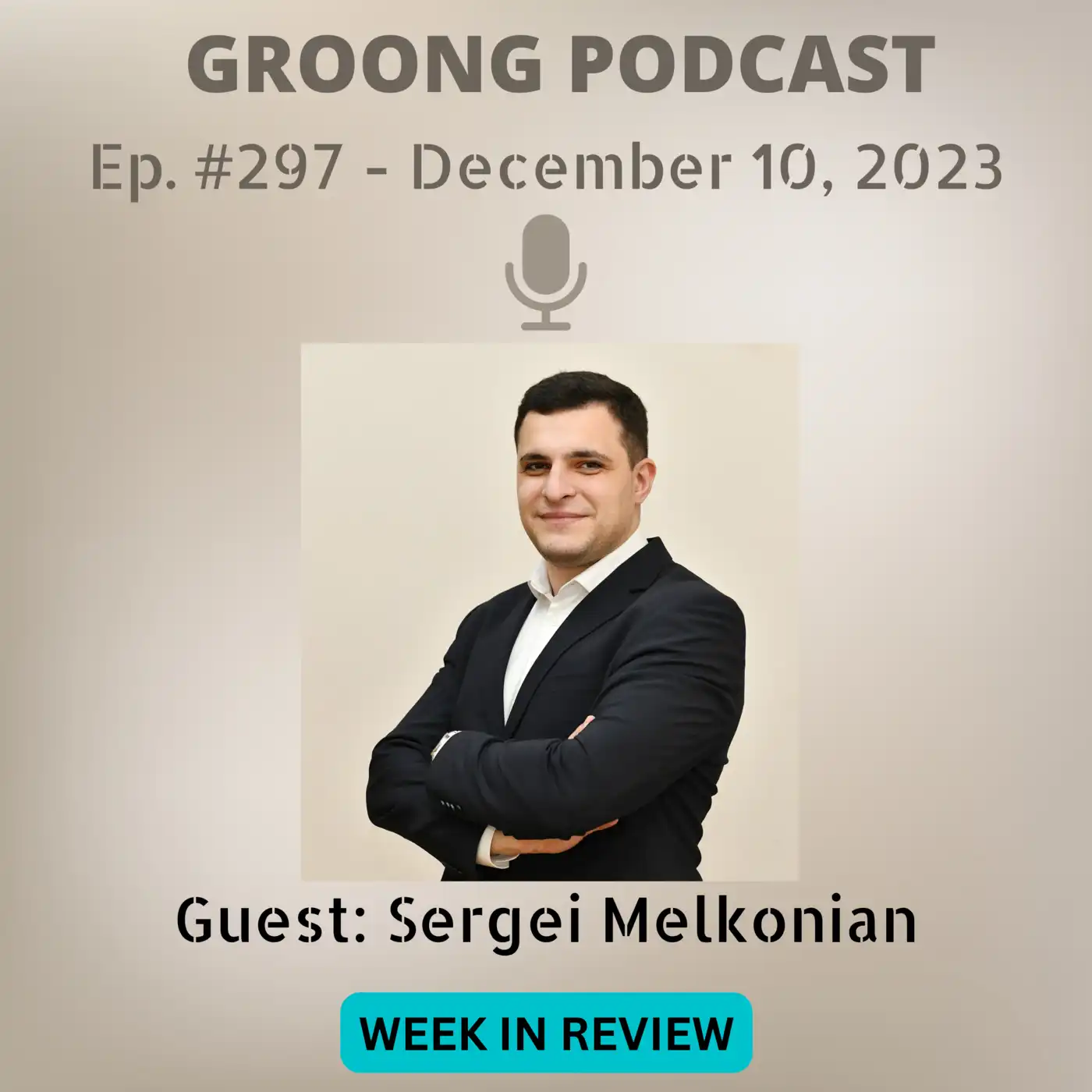
Groong Links:
Guest:
Topics:
- âNo Peaceâ Treaty Negotiations
- Turkish-Azeri goal: Demilitarized Armenia (aka Batumi Treaty 2.0)
- Humiliating Swap of Azeri Criminals for Armenian Hostages
- Aliyev Calls for Snap Elections
- Russia-Armenian Relations
- Russia-Ukraine War
Episode 297 | Recorded: December 10, 2023
Sergei Melkonian - 'No Peace' Negotiations | Aliyev Snap Elections | Russia Armenia Relations | Ukraine War | Ep 297, Dec 10, 2023 [EP297]
Posted on Wednesday, Dec 13, 2023 | Category: Armenia, Azerbaijan, Russia, Politics, Artsakh, Nagorno Karabakh, Genocide, Ukraine, Turkey, European Union, Iran, Economy, India, Georgia, Human Rights, China, Geopolitics, Israel, Middle EastGroong Links:
Guest:
Topics:
- âNo Peaceâ Treaty Negotiations
- Turkish-Azeri goal: Demilitarized Armenia (aka Batumi Treaty 2.0)
- Humiliating Swap of Azeri Criminals for Armenian Hostages
- Aliyev Calls for Snap Elections
- Russia-Armenian Relations
- Russia-Ukraine War
Episode 297 | Recorded: December 10, 2023