Armenian Church
Last updated: May 29, 2026
The Armenian Apostolic Church — sometimes referred to in Western sources as the Armenian Orthodox Church, though the Church itself uses the Apostolic designation — was founded in 301 AD when Armenia became the first nation to adopt Christianity as a state religion, making it among the world’s oldest Christian institutions. Its spiritual center is the Mother See of Holy Etchmiadzin , and it is led by the Catholicos of All Armenians, currently Garegin II .
Groong has covered the Armenian Church across more than 80 episodes, from its theological and cultural role in Armenian identity to its increasingly contested political position. Coverage includes the church’s response to the 2020 Nagorno Karabakh war, the emergence of tensions between the Catholicosate and the Pashinyan government, and the dramatic events of 2025 in which multiple senior archbishops were arrested.
A central theme in recent coverage is the Pashinyan government’s effort to weaken the Armenian Apostolic Church under the framing of institutional reform. Critics argue that the government has used legislative and legal mechanisms to reduce the church’s influence in Armenian public life — stripping its exemptions, challenging its land holdings, and targeting clergy through the court system — in what many observers describe as a politically motivated campaign to neutralize a powerful institution that has historically commanded broad public trust.
The arrests of multiple senior clergy in 2025 form the sharpest edge of this confrontation. Archbishop Bagrat Galstanyan led a mass opposition movement before his arrest in June. Archbishops Mikayel Ajapahyan and Arshak Khachatryan and Bishop Mkrtich Proshyan were also arrested later that year. These events have made the church-state relationship one of the most closely watched dimensions of Armenian domestic politics heading into the 2026 parliamentary elections.
Groong episodes that include this tag
Below are all Groong episodes tagged with Armenian Church.
Transcript: Fyodor Lukyanov - Russia in Evolving Global Geopolitics | Ep 502, Jan 9, 2026 [EP502]
Posted on Friday, Jan 9, 2026 | Category: Iran, Russia, Armenia, Israel, Politics, China, Ukraine, Armenian Church, Artsakh Blockade, BRICS, European Union, NATO, Azerbaijan, TranscriptFyodor Lukyanov joins Groong to discuss how Moscow reads a fast-shifting global landscape, from the U.S. raid in Venezuela and maritime seizures at sea, to Trump’s Greenland rhetoric, the stalled endgame in Ukraine, the likelihood of a renewed Israel-Iran war, and how TRIPP and “unblocking” disputes in Armenia’s south fit into Russia’s regional priorities.
Hrant Mikaelian - Venezuela, Attacks on the Armenian Church Continue, MPG Poll Results | Ep 501, Jan 4, 2026 [EP501]
Posted on Wednesday, Jan 7, 2026 | Category: Armenia, Politics, Poll, Armenian Church, Economy, Azerbaijan, Artsakh, Nagorno Karabakh, BRICS, Russia, China, Geopolitics, Georgia, Human Rights, Iran, NATO, Syria | Series: wir, video
Groong Links:
Guest:
Topics:
- Developments in Venezuela
- Attacks on Armenian Church Continue
- New MPG Poll Results
Episode 501 | Recorded: January 6, 2026
#VenezuelaCrisis #ArmenianChurch #MPGPoll #ArmeniaEconomy #Geopolitics
Hrant Mikaelian - Venezuela, Attacks on the Armenian Church Continue, MPG Poll Results | Ep 501, Jan 4, 2026 [EP501]
Posted on Wednesday, Jan 7, 2026 | Category: Armenia, Politics, Poll, Armenian Church, Economy, Azerbaijan, Artsakh, Nagorno Karabakh, BRICS, Russia, China, Geopolitics, Georgia, Human Rights, Iran, NATO, SyriaGroong Links:
Guest:
Topics:
- Developments in Venezuela
- Attacks on Armenian Church Continue
- New MPG Poll Results
Episode 501 | Recorded: January 6, 2026
#VenezuelaCrisis #ArmenianChurch #MPGPoll #ArmeniaEconomy #Geopolitics
Benyamin Poghosyan - Ukraine, Iran, Armenia, Azerbaijan, Russia, TRIPP, Review & Outlook | Ep 500, Dec 28, 2025 [EP500]
Posted on Wednesday, Dec 31, 2025 | Category: Armenia, Geopolitics, Artsakh, Nagorno Karabakh, Azerbaijan, Turkey, Russia, Israel, Iran, Armenian Church, Ukraine, Georgia, China, NATO, Economy, European Union, Syria, India, Middle East, Genocide, Lebanon | Series: video, wir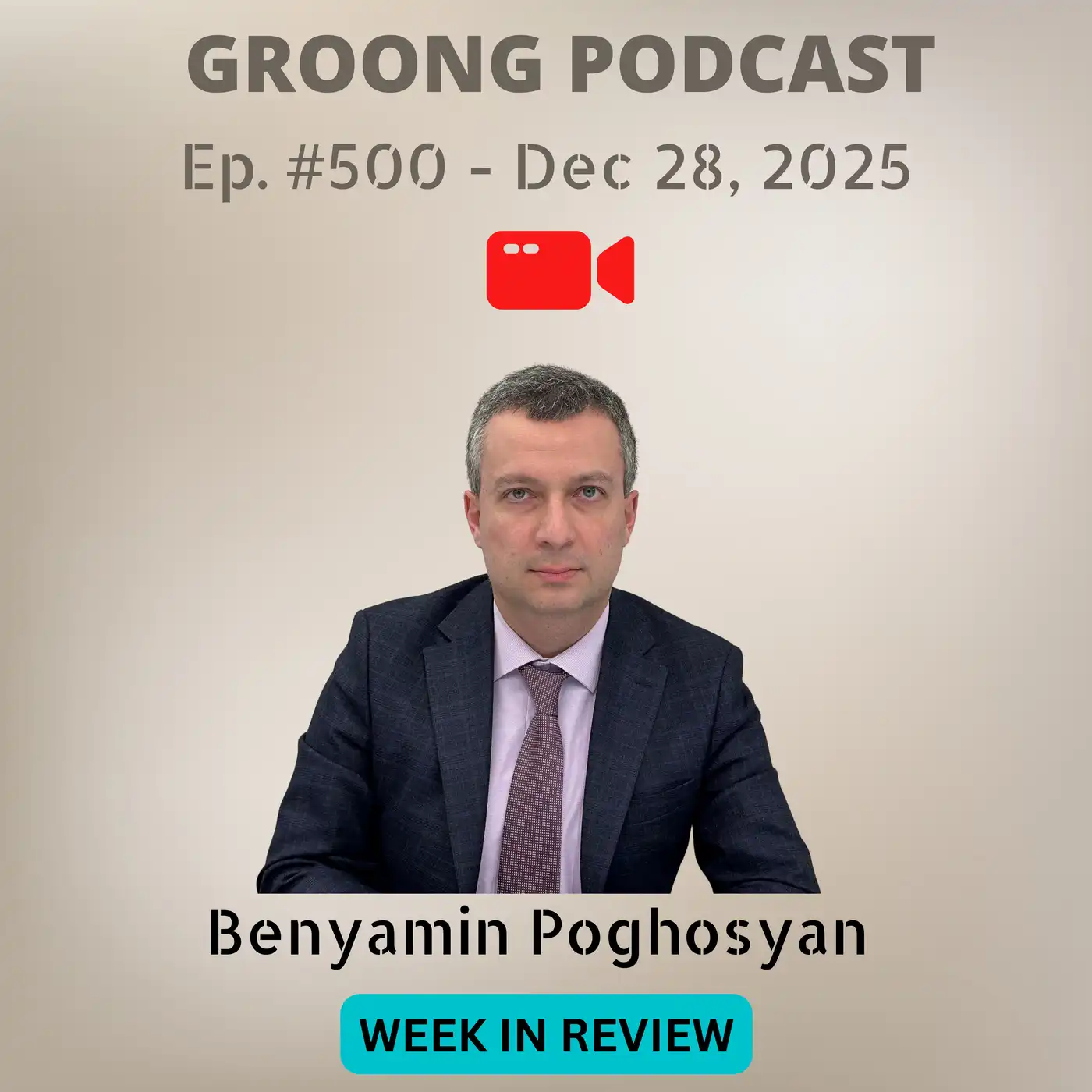
Groong Links:
Guest:
Topics:
- Foreign Crises Affecting Armenia
- Armenia-Azerbaijan Saga
- Russia and TRIPP
- Change of US Ambassador
- Year-End Review & Outlook
Episode 500 | Recorded: December 31, 2025
Benyamin Poghosyan - Ukraine, Iran, Armenia, Azerbaijan, Russia, TRIPP, Review & Outlook | Ep 500, Dec 28, 2025 [EP500]
Posted on Wednesday, Dec 31, 2025 | Category: Armenia, Geopolitics, Artsakh, Nagorno Karabakh, Azerbaijan, Turkey, Russia, Israel, Iran, Armenian Church, Ukraine, Georgia, China, NATO, Economy, European Union, Syria, India, Middle East, Genocide, LebanonGroong Links:
Guest:
Topics:
- Foreign Crises Affecting Armenia
- Armenia-Azerbaijan Saga
- Russia and TRIPP
- Change of US Ambassador
- Year-End Review & Outlook
Episode 500 | Recorded: December 31, 2025
Dziunik Aghajanian - EU Ukraine Rift, Church Siege, and TRIPP Power Games | Ep 498, Dec 21, 2025 [EP498]
Posted on Thursday, Dec 25, 2025 | Category: Armenia, Politics, Artsakh, Nagorno Karabakh, Azerbaijan, Turkey, Russia, Armenian Church, Ukraine, Iran, Economy, Georgia, European Union, China, Middle East, NATO | Series: wir, video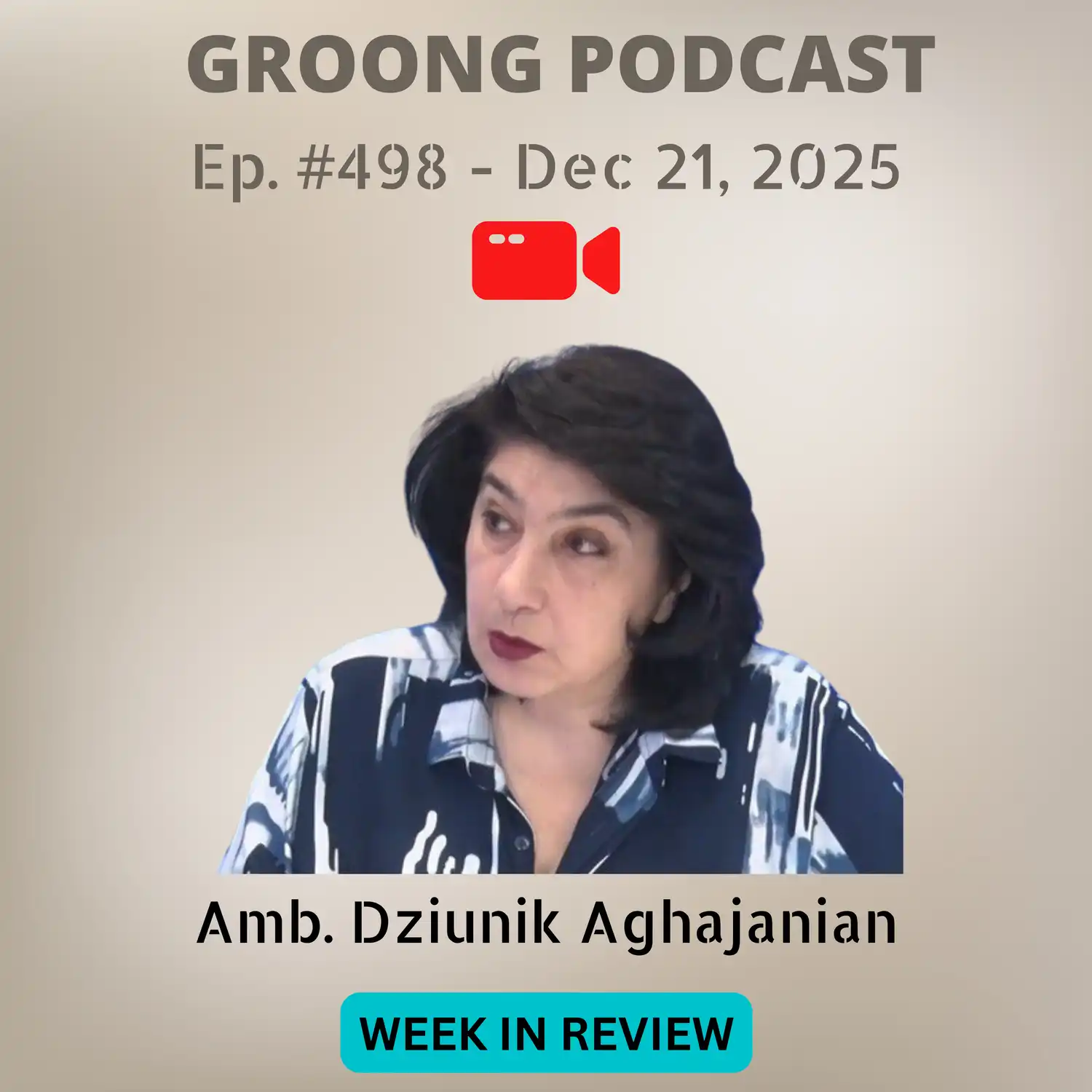
Groong Links:
Guest:
Topics:
- Ukraine War and EU Rift
- Siege on Etchmiadzin and the Church
- Peace Dividend or Political Theater
- TRIPP and Competing Power Claims
Episode 498 | Recorded: December 23, 2025
#ArmenianChurch #Etchmiadzin #TRIPP #ArmeniaPolitics #Groong
Dziunik Aghajanian - EU Ukraine Rift, Church Siege, and TRIPP Power Games | Ep 498, Dec 21, 2025 [EP498]
Posted on Thursday, Dec 25, 2025 | Category: Armenia, Politics, Artsakh, Nagorno Karabakh, Azerbaijan, Turkey, Russia, Armenian Church, Ukraine, Iran, Economy, Georgia, European Union, China, Middle East, NATOGroong Links:
Guest:
Topics:
- Ukraine War and EU Rift
- Siege on Etchmiadzin and the Church
- Peace Dividend or Political Theater
- TRIPP and Competing Power Claims
Episode 498 | Recorded: December 23, 2025
#ArmenianChurch #Etchmiadzin #TRIPP #ArmeniaPolitics #Groong
Spotlight on Silence: InJustice in Armenia | Ep 497, Dec 18, 2025 [EP497]
Posted on Thursday, Dec 18, 2025 | Category: Armenia, Spotlight on Silence, Political Prisoners, Armenian Church, Human Rights, Russia, Georgia, Turkey, Ukraine | Series: video, sos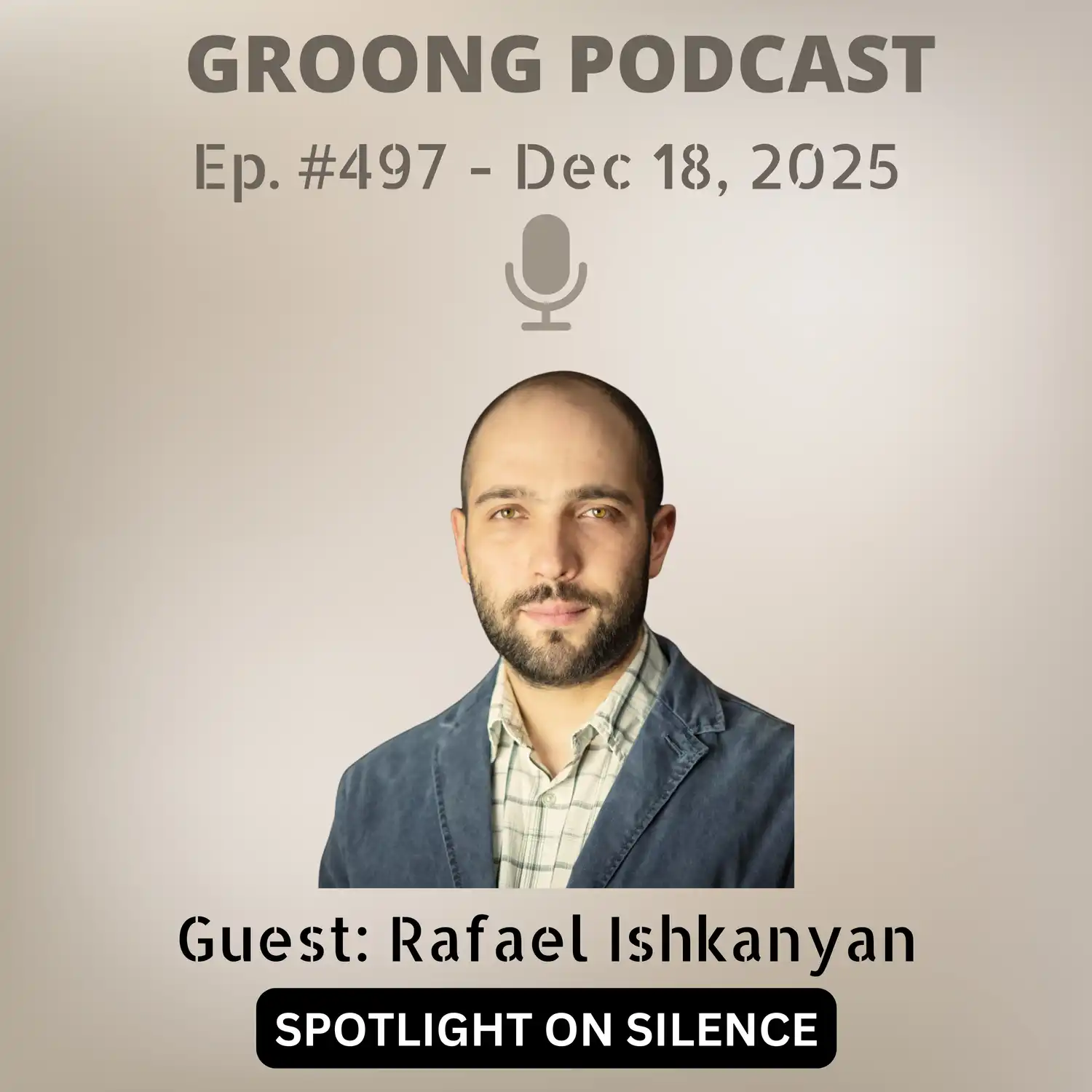
Groong Links:
Guest:
Follow ACPR on Facebook: Քաղաքական իրավունքների հայկական կենտրոն - ՔԻՀԿ / ACPR
Topics:
- Criminalization of Speech and Dissent in Armenia
- Legal Pressure on Lawyers, Journalists, and Clergy
- Selective Justice and Coordinated Propaganda
- Article 236 and the Policing of Protest
Episode 497 | Recorded: December 14, 2025
#SpotlightOnSilence #ArmeniaJustice #PoliticalPrisoners #FreedomOfSpeech #RuleOfLaw #HumanRights #Groong
Read MoreSpotlight on Silence: InJustice in Armenia | Ep 497, Dec 18, 2025 [EP497]
Posted on Thursday, Dec 18, 2025 | Category: Armenia, Spotlight on Silence, Political Prisoners, Armenian Church, Human Rights, Russia, Georgia, Turkey, UkraineGroong Links:
Guest:
Follow ACPR on Facebook: Քաղաքական իրավունքների հայկական կենտրոն - ՔԻՀԿ / ACPR
Topics:
- Criminalization of Speech and Dissent in Armenia
- Legal Pressure on Lawyers, Journalists, and Clergy
- Selective Justice and Coordinated Propaganda
- Article 236 and the Policing of Protest
Episode 497 | Recorded: December 14, 2025
#SpotlightOnSilence #ArmeniaJustice #PoliticalPrisoners #FreedomOfSpeech #RuleOfLaw #HumanRights #Groong
Read MoreArthur Khachatryan - Foreign Pressure, Attack on Church, Artsakh Repression | Ep 496, Dec 14, 2025 [EP496]
Posted on Tuesday, Dec 16, 2025 | Category: Armenia, Politics, Azerbaijan, Russia, Georgia, Armenian Church, Artsakh, Nagorno Karabakh, Armenian Genocide, European Union, Genocide, Ukraine, Turkey, Iran, Economy, India, NATO | Series: wir, video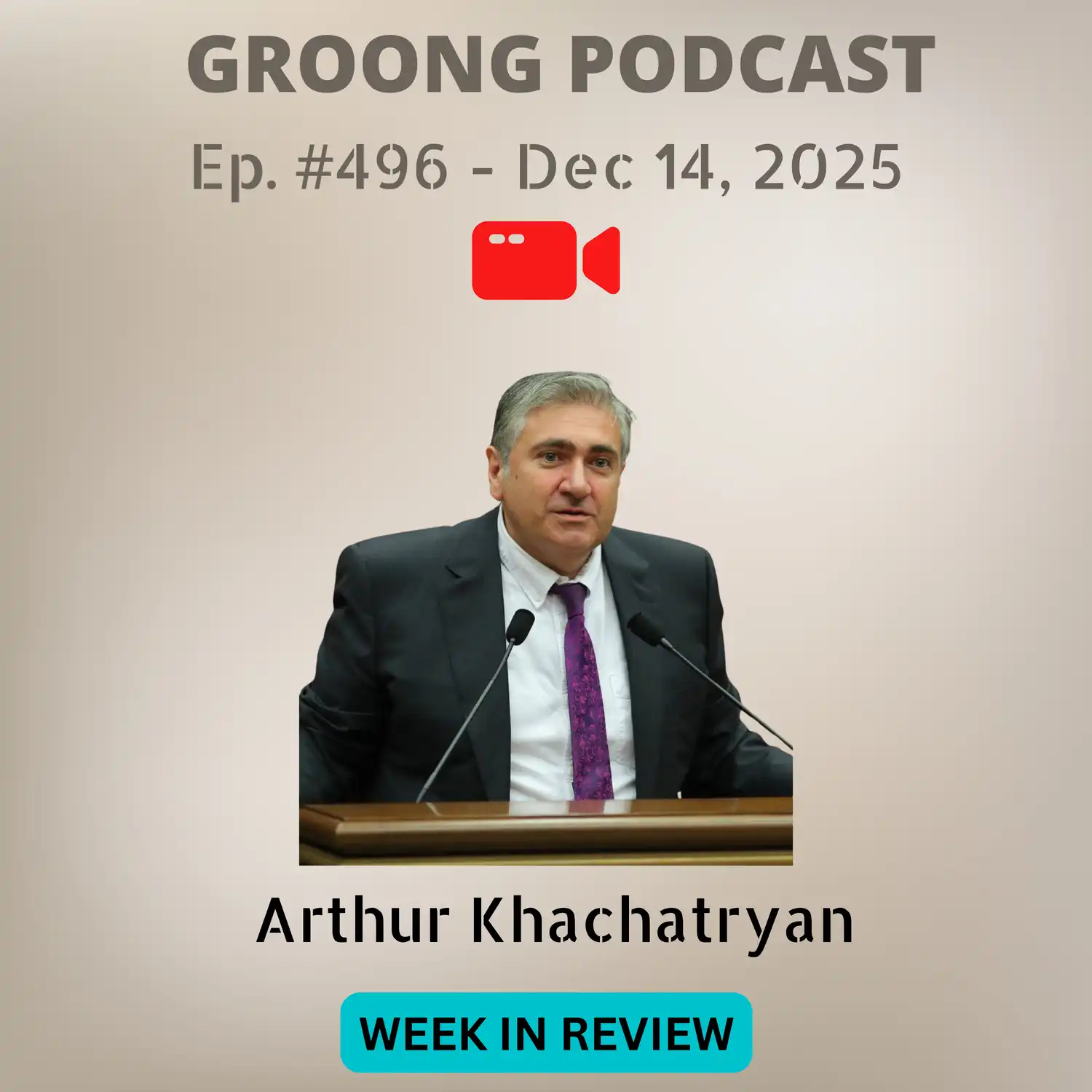
Groong Links:
Guest:
Topics:
- Armenia between EU and Russia
- Churchâstate confrontation in Armenia
- Artsakh concessions and return debate
- Economy, debt, and governance
- NSS raids Artsakh offices
Episode 496 | Recorded: December 15, 2025
#ArmeniaPolitics #EUvsRussia #ArmenianChurch #Artsakh #Geopolitics
Arthur Khachatryan - Foreign Pressure, Attack on Church, Artsakh Repression | Ep 496, Dec 14, 2025 [EP496]
Posted on Tuesday, Dec 16, 2025 | Category: Armenia, Politics, Azerbaijan, Russia, Georgia, Armenian Church, Artsakh, Nagorno Karabakh, Armenian Genocide, European Union, Genocide, Ukraine, Turkey, Iran, Economy, India, NATOGroong Links:
Guest:
Topics:
- Armenia between EU and Russia
- Churchâstate confrontation in Armenia
- Artsakh concessions and return debate
- Economy, debt, and governance
- NSS raids Artsakh offices
Episode 496 | Recorded: December 15, 2025
#ArmeniaPolitics #EUvsRussia #ArmenianChurch #Artsakh #Geopolitics
Benyamin Poghosyan - Pashinyan War on Armenian Church, EU-Armenia, Artsakh, Arar Poll | Ep 494, Sep 25, 2025 [EP494]
Posted on Tuesday, Dec 9, 2025 | Category: Armenia, Politics, Artsakh, Poll, Nagorno Karabakh, Azerbaijan, Georgia, Armenian Church, Russia, European Union, Turkey, Ukraine, Iran, India | Series: video, wir
Groong Links:
Guest:
Topics:
- 1988 Earthquake Remembered
- Pashinyanâs War on the Armenian Church
- EU-Armenia Relations
- Nagorno-Karabakh Negotiation Documents
- ARAR Foundation Poll
Episode 494 | Recorded: December 8, 2025
#ArmenianChurch #NSS #Pashinyan #ArarPoll #ArmeniaEU
Benyamin Poghosyan - Pashinyan War on Armenian Church, EU-Armenia, Artsakh, Arar Poll | Ep 494, Sep 25, 2025 [EP494]
Posted on Tuesday, Dec 9, 2025 | Category: Armenia, Politics, Artsakh, Poll, Nagorno Karabakh, Azerbaijan, Georgia, Armenian Church, Russia, European Union, Turkey, Ukraine, Iran, IndiaGroong Links:
Guest:
Topics:
- 1988 Earthquake Remembered
- Pashinyanâs War on the Armenian Church
- EU-Armenia Relations
- Nagorno-Karabakh Negotiation Documents
- ARAR Foundation Poll
Episode 494 | Recorded: December 8, 2025
#ArmenianChurch #NSS #Pashinyan #ArarPoll #ArmeniaEU
Arthur Khachikyan - OSCE MG Dissolved, Libaridian on Submission, New Constitution, Armenian Church, Prayer Breakfast, Border Commissions meet in Baku | Ep 493, Nov 30, 2025 [EP493]
Posted on Wednesday, Dec 3, 2025 | Category: Armenia, Politics, Nagorno Karabakh, Artsakh, Azerbaijan, Armenian Genocide, Armenian Church, Turkey, Russia, Genocide, Iran, Israel, Middle East, China, NATO | Series: wir, video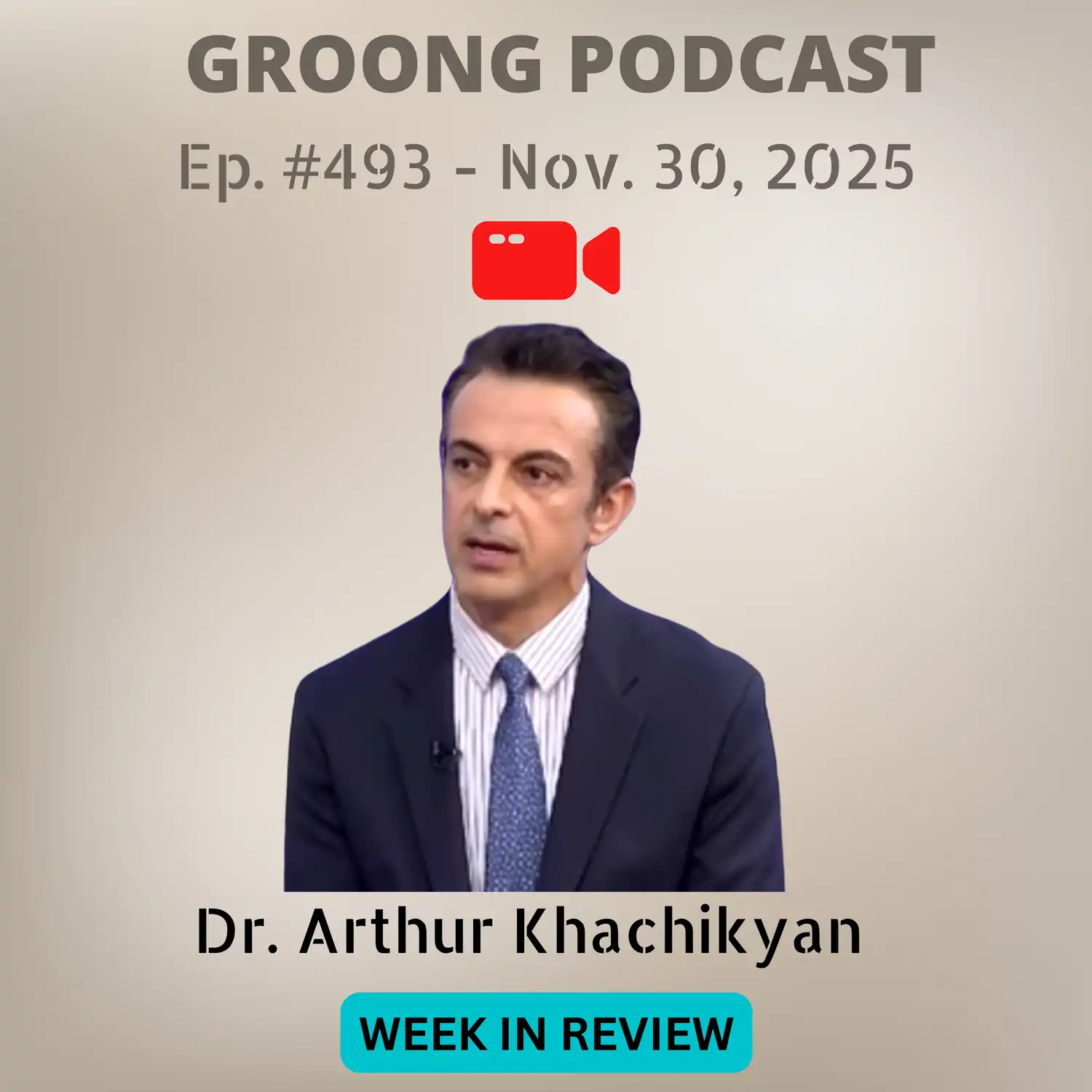
Groong Links:
Guest:
Topics:
- OSCE MG Dissolved
- Libaridian on Submitting to Turkey and Azerbaijan
- News Constitution to be Drafted by March 2026
- Archbishops, Letters, Attacks on the Church
- Border Commissions Meet in Baku
- Comments from Jacob Pursley
Episode 493 | Recorded: December 2, 2025
Arthur Khachikyan - OSCE MG Dissolved, Libaridian on Submission, New Constitution, Armenian Church, Prayer Breakfast, Border Commissions meet in Baku | Ep 493, Nov 30, 2025 [EP493]
Posted on Wednesday, Dec 3, 2025 | Category: Armenia, Politics, Nagorno Karabakh, Artsakh, Azerbaijan, Armenian Genocide, Armenian Church, Turkey, Russia, Genocide, Iran, Israel, Middle East, China, NATOGroong Links:
Guest:
Topics:
- OSCE MG Dissolved
- Libaridian on Submitting to Turkey and Azerbaijan
- News Constitution to be Drafted by March 2026
- Archbishops, Letters, Attacks on the Church
- Border Commissions Meet in Baku
- Comments from Jacob Pursley
Episode 493 | Recorded: December 2, 2025
Joel Veldkamp - Armenia’s Prayer Breakfast and the Crackdown on the Church | Ep 490, Nov 27, 2025 [EP490]
Posted on Thursday, Nov 27, 2025 | Category: Armenia, Politics, Armenian Church, Artsakh, Nagorno Karabakh, Human Rights, Artsakh Blockade, Russia, Azerbaijan, China, Genocide | Series: cog, video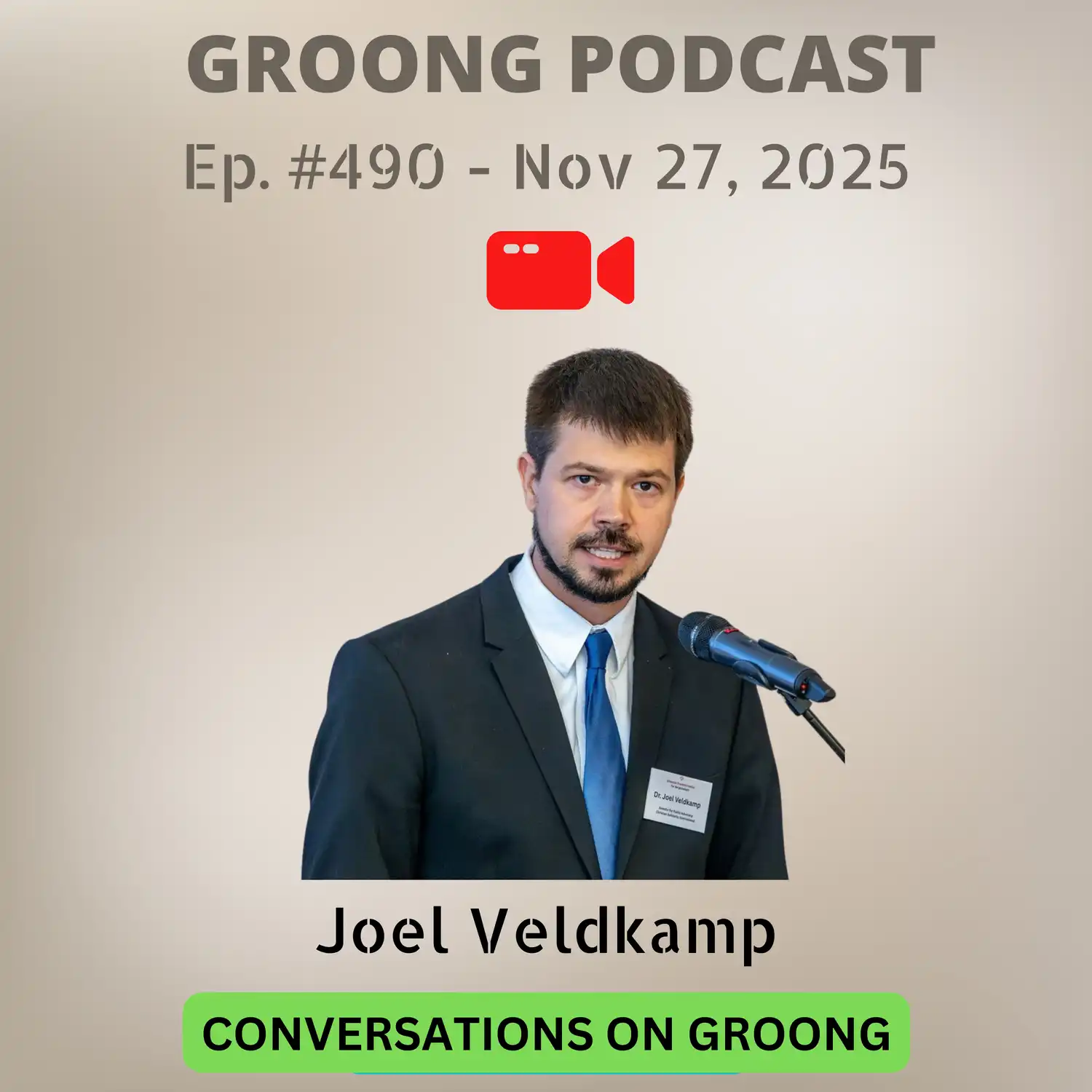
Groong Links:
Guest:
Topics:
- Clergy Arrests in Armenia
- Church Under Pressure
- Prayer Breakfast Controversy
- Western Silence on Repression
- CSIâs Findings in Yerevan
Episode 490 | Recorded: November 25, 2025
#ArmenianChurch #ReligiousFreedom #ClergyArrests #ChristianSolidarityInternational #HumanRightsInArmenia
Joel Veldkamp - Armenia’s Prayer Breakfast and the Crackdown on the Church | Ep 490, Nov 27, 2025 [EP490]
Posted on Thursday, Nov 27, 2025 | Category: Armenia, Politics, Armenian Church, Artsakh, Nagorno Karabakh, Human Rights, Artsakh Blockade, Russia, Azerbaijan, China, GenocideGroong Links:
Guest:
Topics:
- Clergy Arrests in Armenia
- Church Under Pressure
- Prayer Breakfast Controversy
- Western Silence on Repression
- CSIâs Findings in Yerevan
Episode 490 | Recorded: November 25, 2025
#ArmenianChurch #ReligiousFreedom #ClergyArrests #ChristianSolidarityInternational #HumanRightsInArmenia
Garen Jinbachian - OSCE Human Dimension Conf, Armenia, Azerbaijan, and The West | Ep 489, Nov 26, 2025 [EP489]
Posted on Wednesday, Nov 26, 2025 | Category: Armenia, Artsakh, Political Prisoners, Artsakh, Nagorno Karabakh, Human Rights, Azerbaijan, Armenian Church, Georgia, Genocide, Turkey, Iran, Lebanon | Series: cog
Groong Links:
Guest:
Topics:
- Azerbaijanâs war crimes and impunity
- Sham trials of Artsakh leaders
- Silence of the OSCE and the West
- Armeniaâs growing political repression
- Attacks on the Armenian Church
Episode 489 | Recorded: November 23, 2025
Garen Jinbachian - OSCE Human Dimension Conf, Armenia, Azerbaijan, and The West | Ep 489, Nov 26, 2025 [EP489]
Posted on Wednesday, Nov 26, 2025 | Category: Armenia, Artsakh, Political Prisoners, Artsakh, Nagorno Karabakh, Human Rights, Azerbaijan, Armenian Church, Georgia, Genocide, Turkey, Iran, LebanonGroong Links:
Guest:
Topics:
- Azerbaijanâs war crimes and impunity
- Sham trials of Artsakh leaders
- Silence of the OSCE and the West
- Armeniaâs growing political repression
- Attacks on the Armenian Church
Episode 489 | Recorded: November 23, 2025
Hrant Mikaelian - Ukraine Talks, Armenia’s Crackdowns, and Rising Tensions | Ep 488, Nov 23, 2025 [EP488]
Posted on Wednesday, Nov 26, 2025 | Category: Armenia, Politics, Russia, Ukraine, Turkey, Georgia, Azerbaijan, Armenian Church, China, Economy, Iran, Middle East, Artsakh, Human Rights, Genocide, Nagorno Karabakh, European Union, NATO | Series: wir, video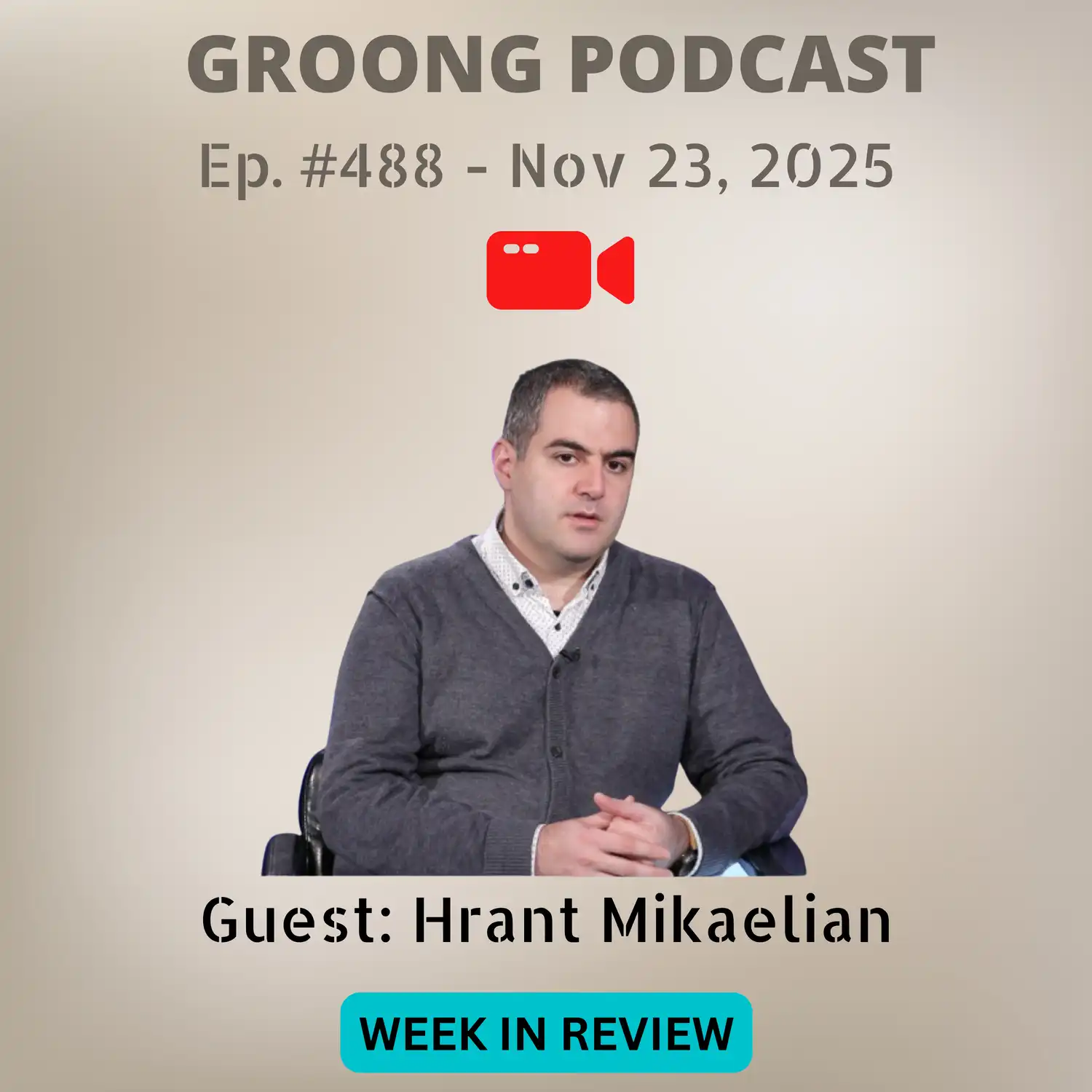
Groong Links:
Guest:
Topics:
- High-Stakes Ukraine Talks
- Armeniaâs Growing Political Detentions
- Pashinyan Honored In Kazakhstan
- Rising Pressure On The Church
- Impeachment vs. Elections
- Pashinyan Seizes Power Grid
Episode 488 | Recorded: November 24, 2025
Hrant Mikaelian - Ukraine Talks, Armenia’s Crackdowns, and Rising Tensions | Ep 488, Nov 23, 2025 [EP488]
Posted on Wednesday, Nov 26, 2025 | Category: Armenia, Politics, Russia, Ukraine, Turkey, Georgia, Azerbaijan, Armenian Church, China, Economy, Iran, Middle East, Artsakh, Human Rights, Genocide, Nagorno Karabakh, European Union, NATOGroong Links:
Guest:
Topics:
- High-Stakes Ukraine Talks
- Armeniaâs Growing Political Detentions
- Pashinyan Honored In Kazakhstan
- Rising Pressure On The Church
- Impeachment vs. Elections
- Pashinyan Seizes Power Grid
Episode 488 | Recorded: November 24, 2025
Hayk Mamijanyan - Freedom of Expression at Risk in Armenia, Vagharshapat, RPA Strategy | Ep 487, Nov 19, 2025 [EP487]
Posted on Wednesday, Nov 19, 2025 | Category: Armenia, Artsakh, Political Prisoners, Artsakh, Nagorno Karabakh, Armenian Church, Geopolitics, European Union, Iran | Series: cog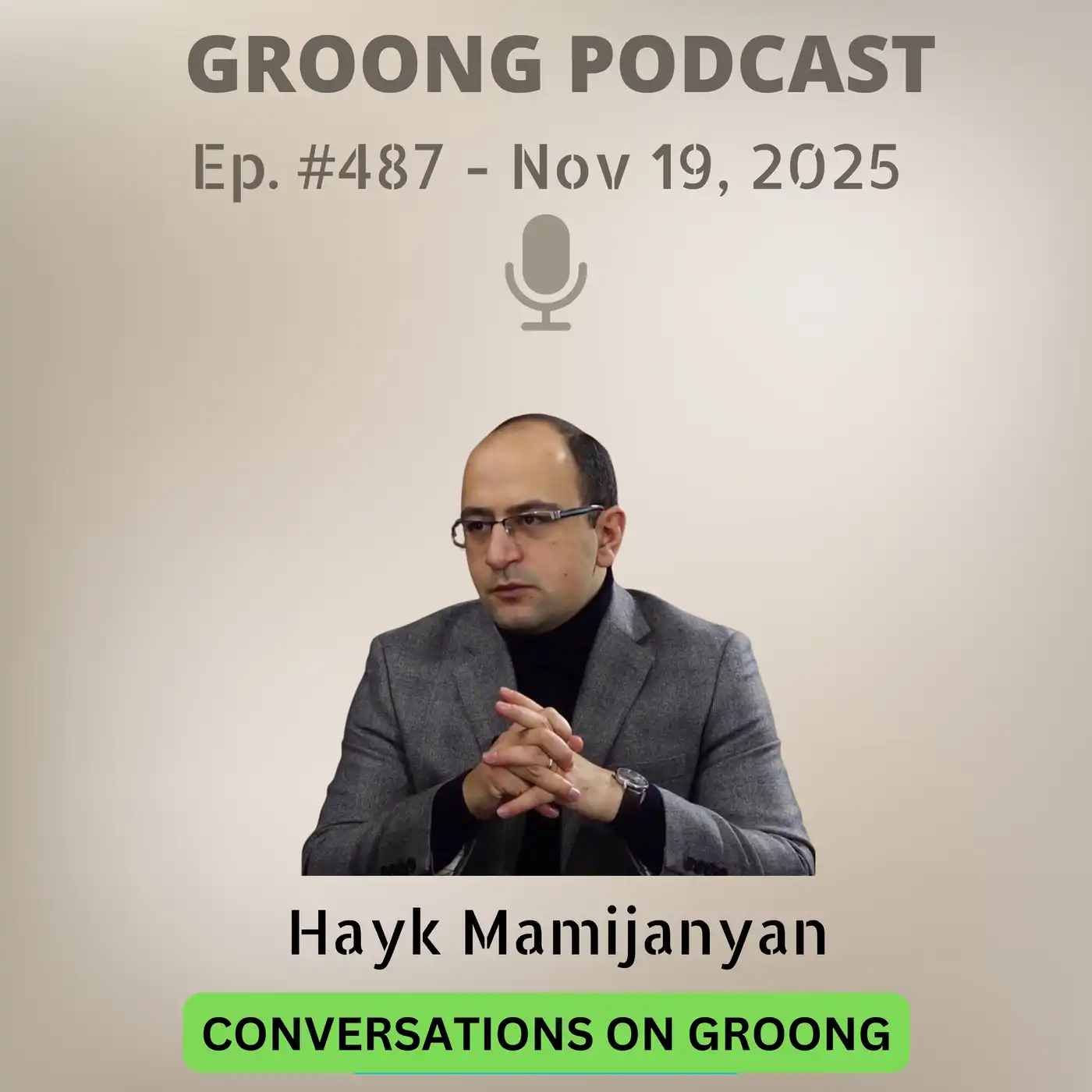
Groong Links:
Guest:
Topics:
- Freedom of Expression at Risk in Armenia
- Vagharshapat Municipal Outcomes
- Republican Party Election Strategy
- Stand in Support of Independent Media and Journalism in Armenia
Episode 487 | Recorded: November 18, 2025
Hayk Mamijanyan - Freedom of Expression at Risk in Armenia, Vagharshapat, RPA Strategy | Ep 487, Nov 19, 2025 [EP487]
Posted on Wednesday, Nov 19, 2025 | Category: Armenia, Artsakh, Political Prisoners, Artsakh, Nagorno Karabakh, Armenian Church, Geopolitics, European Union, IranGroong Links:
Guest:
Topics:
- Freedom of Expression at Risk in Armenia
- Vagharshapat Municipal Outcomes
- Republican Party Election Strategy
- Stand in Support of Independent Media and Journalism in Armenia
Episode 487 | Recorded: November 18, 2025
Sergei Melkonian - Ukraine, Iran & Israel, C5+1 in DC, Vagharshapat Municipal Outcome | Ep 486, Nov 16, 2025 [EP486]
Posted on Tuesday, Nov 18, 2025 | Category: Armenia, Politics, Iran, Israel, Azerbaijan, Turkey, Russia, Artsakh, Nagorno Karabakh, Armenian Church, Syria, Ukraine, China, Middle East, NATO, Economy, European Union, Geopolitics, India | Series: wir, video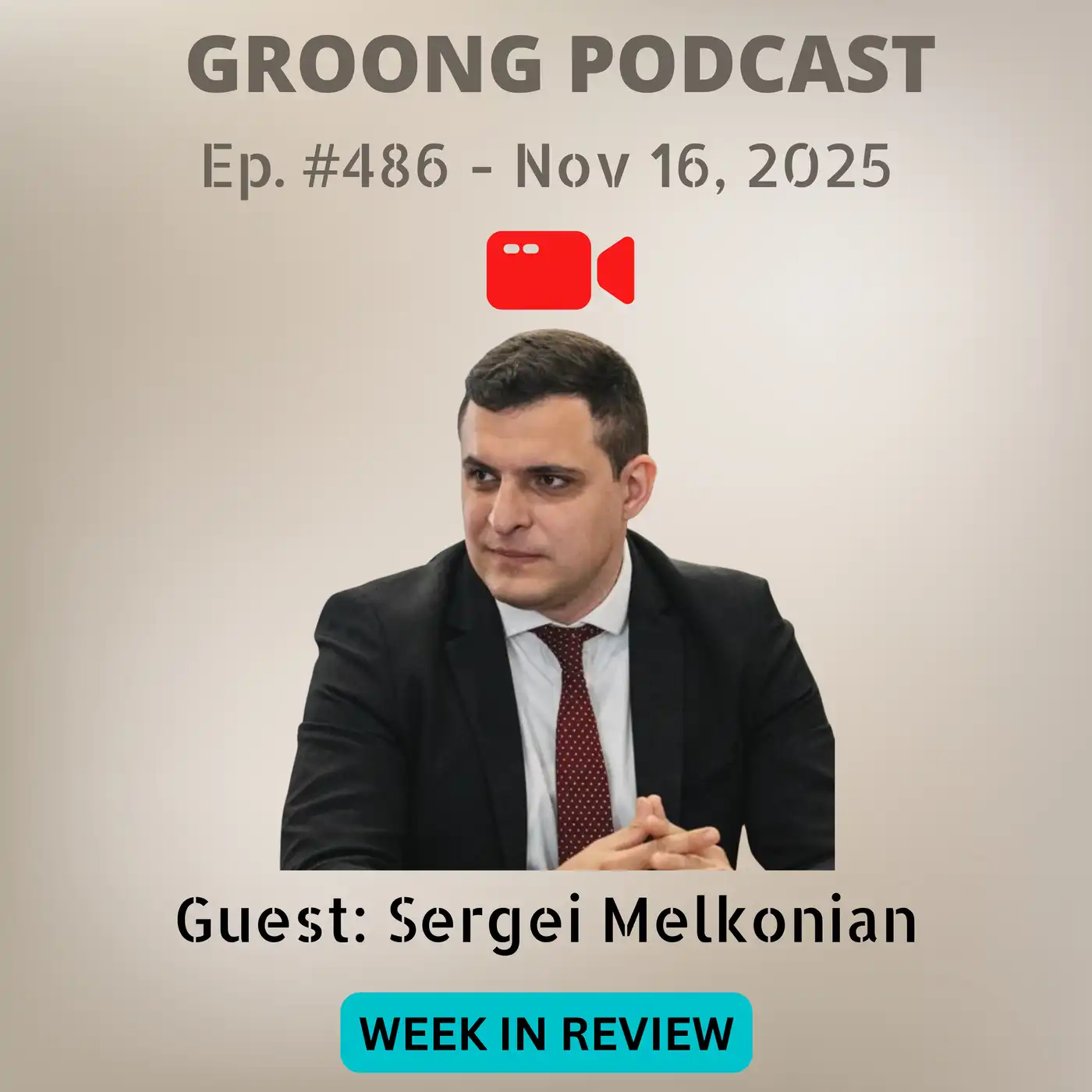
Groong Links:
Guest:
Topics:
- Ukraine and Iran-Israel Conflicts
- C5+1 in Washington DC
- Vagharshapat/Etchmiadzin Municipal
Episode 486 | Recorded: November 17, 2025
Sergei Melkonian - Ukraine, Iran & Israel, C5+1 in DC, Vagharshapat Municipal Outcome | Ep 486, Nov 16, 2025 [EP486]
Posted on Tuesday, Nov 18, 2025 | Category: Armenia, Politics, Iran, Israel, Azerbaijan, Turkey, Russia, Artsakh, Nagorno Karabakh, Armenian Church, Syria, Ukraine, China, Middle East, NATO, Economy, European Union, Geopolitics, IndiaGroong Links:
Guest:
Topics:
- Ukraine and Iran-Israel Conflicts
- C5+1 in Washington DC
- Vagharshapat/Etchmiadzin Municipal
Episode 486 | Recorded: November 17, 2025
Arthur Khachikyan - Imnemnimi Podcasters Arrested, Freedom of Expression at Risk in Armenia | Ep 485, Nov 14, 2025 [EP485]
Posted on Friday, Nov 14, 2025 | Category: Armenia, Politics, Armenian Church, Human Rights, Russia, Georgia, Syria, Ukraine, China, Israel, Turkey, India | Series: cog
Guest:
Topics:
- Arrest of Imnemnimi Podcasters
- What are the Governmentâs Real Intentions?
- Silence of the West
- Call to All Media: Cover Aggressions Against Freedom of Expression in Armenia!
Episode 485 | Recorded: November 14, 2025
Arthur Khachikyan - Imnemnimi Podcasters Arrested, Freedom of Expression at Risk in Armenia | Ep 485, Nov 14, 2025 [EP485]
Posted on Friday, Nov 14, 2025 | Category: Armenia, Politics, Armenian Church, Human Rights, Russia, Georgia, Syria, Ukraine, China, Israel, Turkey, IndiaGuest:
Topics:
- Arrest of Imnemnimi Podcasters
- What are the Governmentâs Real Intentions?
- Silence of the West
- Call to All Media: Cover Aggressions Against Freedom of Expression in Armenia!
Episode 485 | Recorded: November 14, 2025
Benyamin Poghosyan - Ukraine War update, Pashinyan’s Persecution of Church and Opposition intensifies | Ep 483, Nov 2, 2025 [EP483]
Posted on Tuesday, Nov 4, 2025 | Category: Armenia, Politics, Ukraine, Russia, Azerbaijan, Georgia, Turkey, Artsakh, Nagorno Karabakh, USA, Armenian Church, Artsakh Blockade, China, Economy, Genocide, India, Iran, Middle East, NATO | Series: video, wir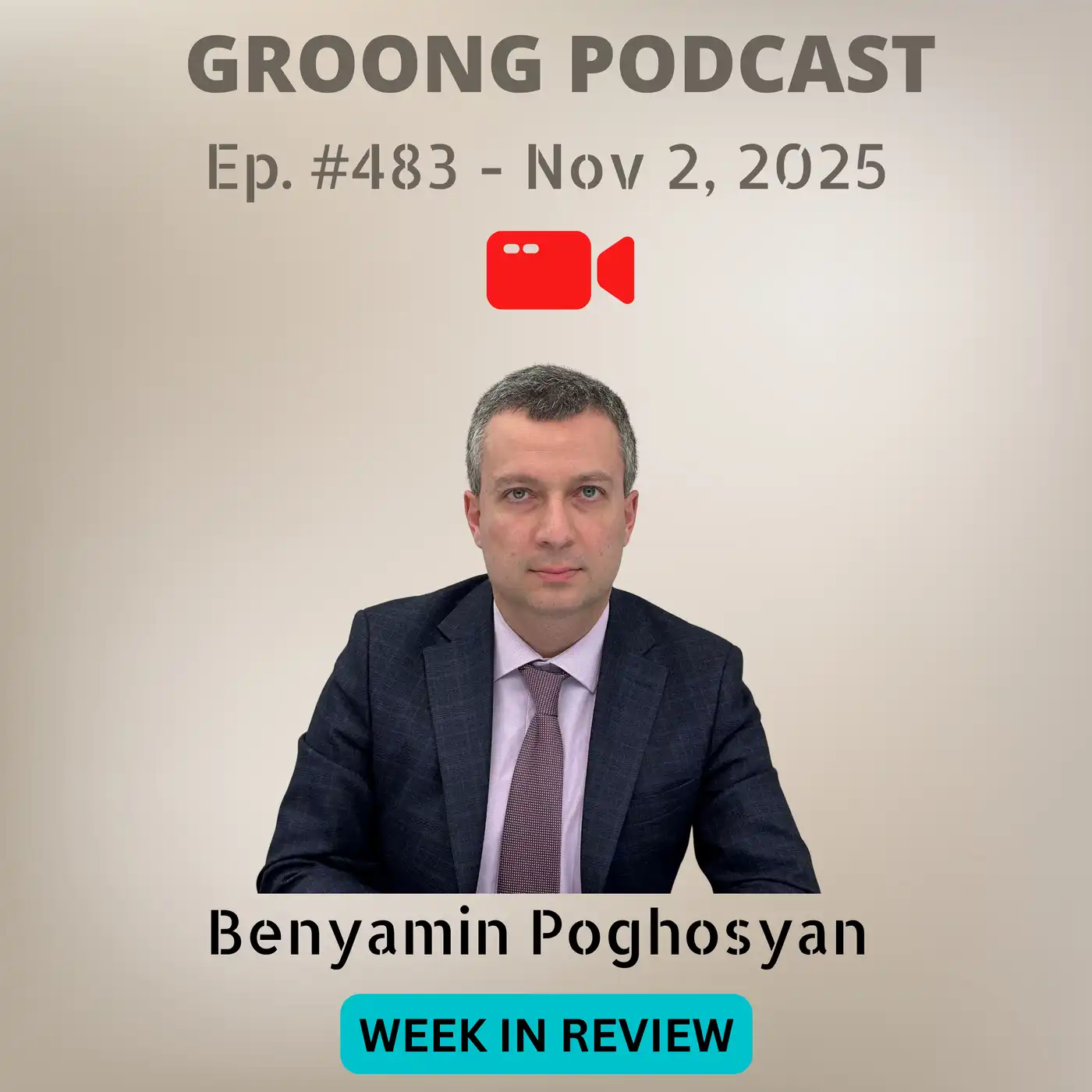
Groong Links:
Guest:
Topics:
- Ukraine war status and U.S.âRussia dynamics
- Churchâstate tensions and religious prosecutions
- Opposition arrests, trials, and civil liberties
- Border demarcation, enclaves
Episode 483 | Recorded: November 3, 2025
Benyamin Poghosyan - Ukraine War update, Pashinyan’s Persecution of Church and Opposition intensifies | Ep 483, Nov 2, 2025 [EP483]
Posted on Tuesday, Nov 4, 2025 | Category: Armenia, Politics, Ukraine, Russia, Azerbaijan, Georgia, Turkey, Artsakh, Nagorno Karabakh, USA, Armenian Church, Artsakh Blockade, China, Economy, Genocide, India, Iran, Middle East, NATOGroong Links:
Guest:
Topics:
- Ukraine war status and U.S.âRussia dynamics
- Churchâstate tensions and religious prosecutions
- Opposition arrests, trials, and civil liberties
- Border demarcation, enclaves
Episode 483 | Recorded: November 3, 2025
Arthur Khachatryan - Euronest, Aliyev Transit Move, Gyumri Mayor Arrest, Pashinyan vs. Church | Ep 481, Oct 26, 2025 [EP481]
Posted on Friday, Oct 31, 2025 | Category: Armenia, Politics, Azerbaijan, Armenian Church, Georgia, Turkey, Russia, Artsakh, Nagorno Karabakh, Artsakh Blockade, European Union, Ukraine, NATO | Series: wir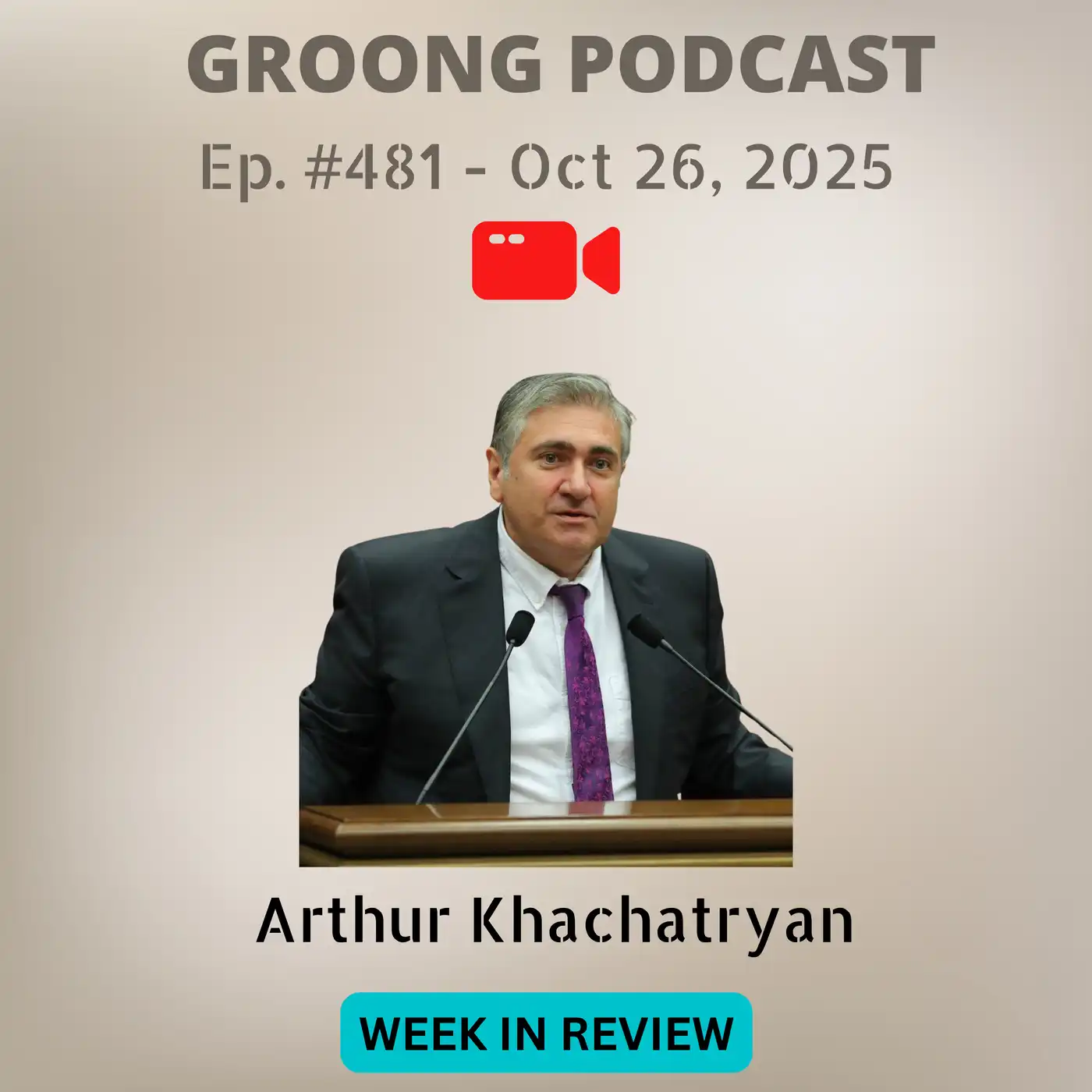
Groong Links:
Guest:
- Arthur Khachatryan , MP
Topics:
- Euronest session takeaways
- Aliyevâs transit move and TRIPP
- Gyumri mayor arrest fallout
- Pashinyanâs push to control the Church
Episode 481 | Recorded: October 29, 2025
Arthur Khachatryan - Euronest, Aliyev Transit Move, Gyumri Mayor Arrest, Pashinyan vs. Church | Ep 481, Oct 26, 2025 [EP481]
Posted on Friday, Oct 31, 2025 | Category: Armenia, Politics, Azerbaijan, Armenian Church, Georgia, Turkey, Russia, Artsakh, Nagorno Karabakh, Artsakh Blockade, European Union, Ukraine, NATOGroong Links:
Guest:
- Arthur Khachatryan , MP
Topics:
- Euronest session takeaways
- Aliyevâs transit move and TRIPP
- Gyumri mayor arrest fallout
- Pashinyanâs push to control the Church
Episode 481 | Recorded: October 29, 2025
Pietro Shakarian - Anastas Mikoyan, An Armenian Reformer in Khrushchev's Kremlin| Ep 480, Oct 22, 2025 [EP480]
Posted on Wednesday, Oct 22, 2025 | Category: Armenia, History, Artsakh, Nagorno Karabakh, History, Armenian Genocide, USSR, Armenian Church, Russia, Genocide, China, Georgia, Turkey, Economy, NATO, Iran, Lebanon, Middle East, Ukraine, India, Soviet Armenia, Modern Armenia | Series: cog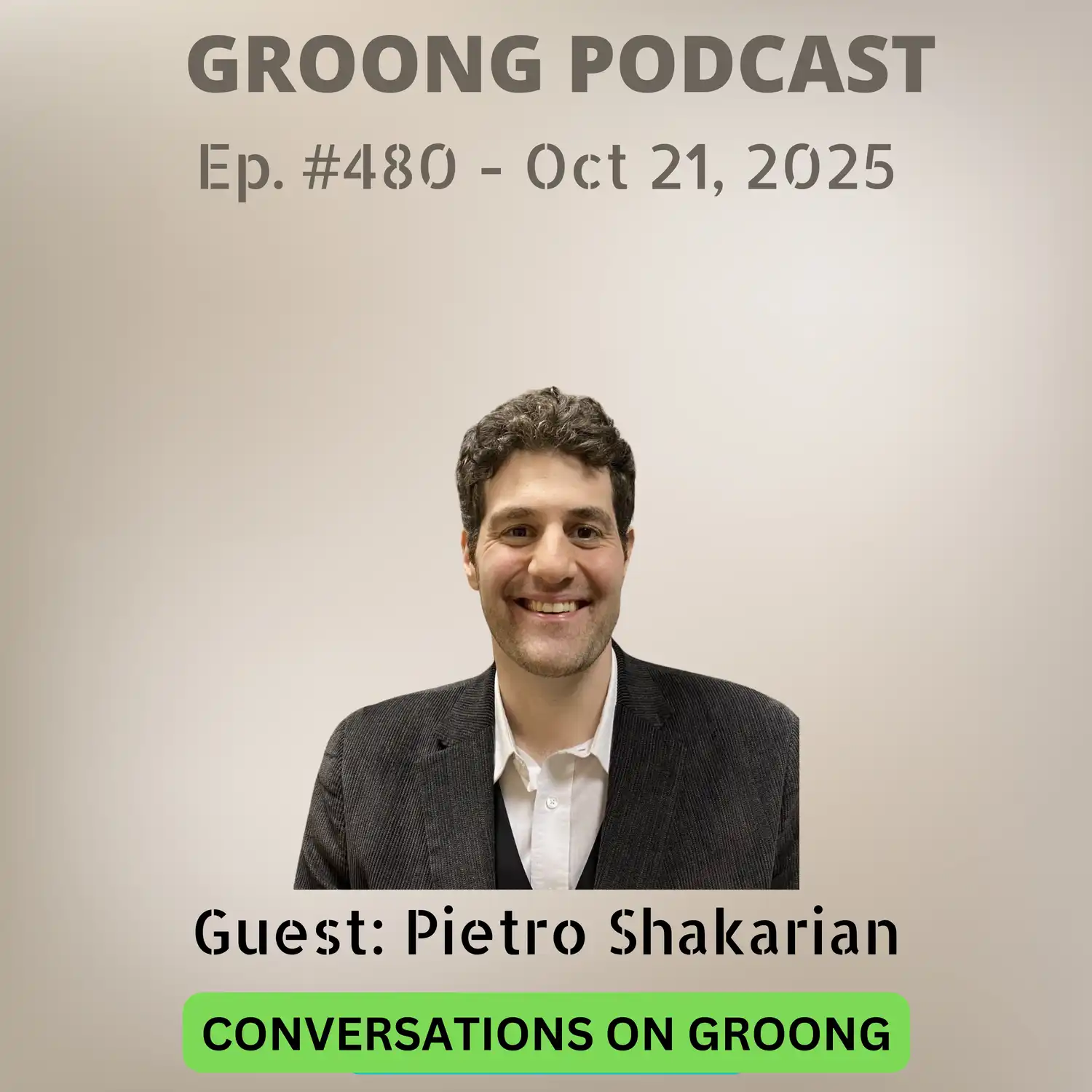
Groong Links:
Guest:
Topics:
- Research journey, archives Moscow and Yerevan
- Mikoyanâs vision of confederation for the USSR
- Artsakhâs status within Soviet constraints
- De-Stalinization and Armeniaâs cultural thaw
- Mikoyanâs stance toward the Armenian Church
Episode 480 | Recorded on October 18, 2025
Pietro Shakarian - Anastas Mikoyan, An Armenian Reformer in Khrushchev's Kremlin| Ep 480, Oct 22, 2025 [EP480]
Posted on Wednesday, Oct 22, 2025 | Category: Armenia, History, Artsakh, Nagorno Karabakh, History, Armenian Genocide, USSR, Armenian Church, Russia, Genocide, China, Georgia, Turkey, Economy, NATO, Iran, Lebanon, Middle East, Ukraine, India, Soviet Armenia, Modern ArmeniaGroong Links:
Guest:
Topics:
- Research journey, archives Moscow and Yerevan
- Mikoyanâs vision of confederation for the USSR
- Artsakhâs status within Soviet constraints
- De-Stalinization and Armeniaâs cultural thaw
- Mikoyanâs stance toward the Armenian Church
Episode 480 | Recorded on October 18, 2025
Dziunik Aghajanian - Ukraine, Israel-Gaza, Armenian Government Repressions | Ep 479, Oct 19, 2025 [EP479]
Posted on Tuesday, Oct 21, 2025 | Category: Armenia, Politics, Artsakh, Nagorno Karabakh, Azerbaijan, Ukraine, Turkey, Russia, Israel, Iran, Armenian Church, Middle East, NATO, Syria, Genocide, European Union, China, Human Rights, Lebanon, India | Series: wir, video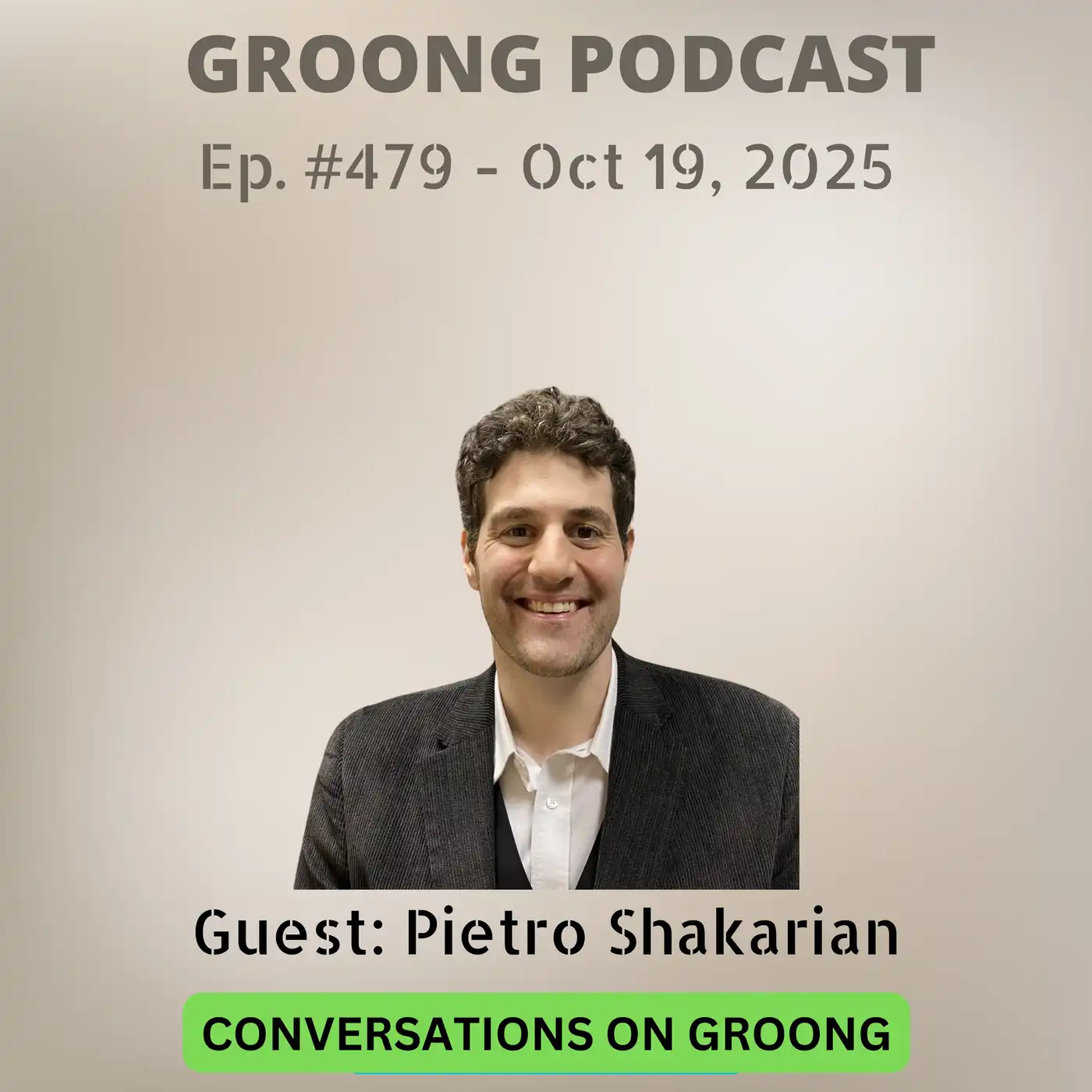
Groong Links:
Guest:
Topics:
- Ukraine War, Trump - Putin Upcoming Summit
- Israel-Gaza âCease Fireâ
- Armenian Government Repressions Accelerate
Episode 479 | Recorded: October 20, 2025
Dziunik Aghajanian - Ukraine, Israel-Gaza, Armenian Government Repressions | Ep 479, Oct 19, 2025 [EP479]
Posted on Tuesday, Oct 21, 2025 | Category: Armenia, Politics, Artsakh, Nagorno Karabakh, Azerbaijan, Ukraine, Turkey, Russia, Israel, Iran, Armenian Church, Middle East, NATO, Syria, Genocide, European Union, China, Human Rights, Lebanon, IndiaGroong Links:
Guest:
Topics:
- Ukraine War, Trump - Putin Upcoming Summit
- Israel-Gaza âCease Fireâ
- Armenian Government Repressions Accelerate
Episode 479 | Recorded: October 20, 2025
Benyamin Poghosyan - Ajapahyan Sentenced, Moldova, EPC, Peace Act, Dismantling the Armenian Military | Ep 477, Oct 5, 2025 [EP477]
Posted on Wednesday, Oct 8, 2025 | Category: Armenia, Politics, Artsakh, Nagorno Karabakh, Azerbaijan, Armenian Church, Russia, Ukraine, Iran, Israel, European Union, Turkey, China, Economy | Series: video, wir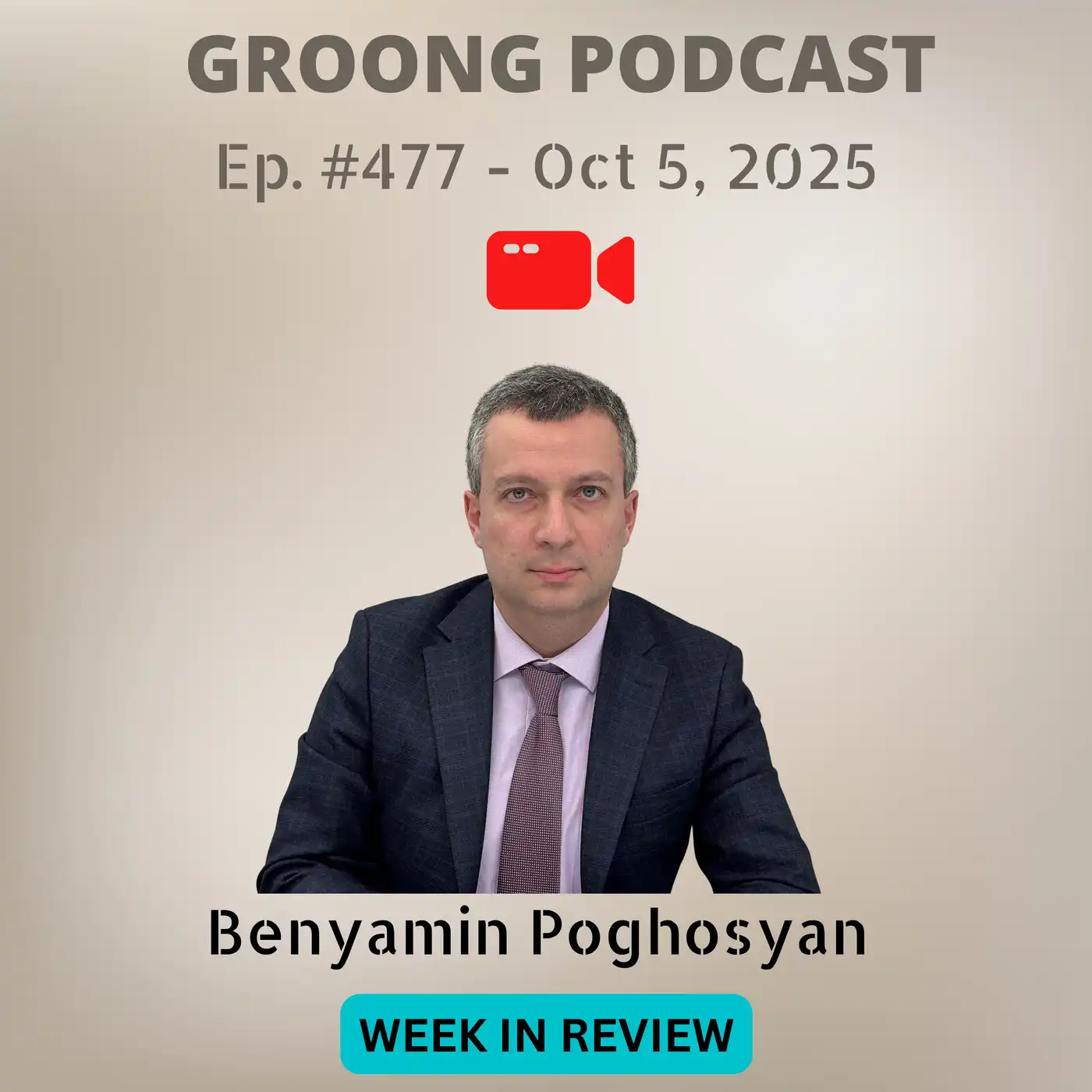
Groong Links:
Guest:
Topics:
- Ajapahyan Sentenced: 2 Years in Jail for speaking out!
- Moldova Election Lessons
- EPC in Copenhagen, WSF in Warsaw
- PEACE Act politics
- Dismantling the Armenian Military
Episode 477 | Recorded: October 6, 2025
Benyamin Poghosyan - Ajapahyan Sentenced, Moldova, EPC, Peace Act, Dismantling the Armenian Military | Ep 477, Oct 5, 2025 [EP477]
Posted on Wednesday, Oct 8, 2025 | Category: Armenia, Politics, Artsakh, Nagorno Karabakh, Azerbaijan, Armenian Church, Russia, Ukraine, Iran, Israel, European Union, Turkey, China, EconomyGroong Links:
Guest:
Topics:
- Ajapahyan Sentenced: 2 Years in Jail for speaking out!
- Moldova Election Lessons
- EPC in Copenhagen, WSF in Warsaw
- PEACE Act politics
- Dismantling the Armenian Military
Episode 477 | Recorded: October 6, 2025
Hrant Mikaelian - War on Iran, Russia on TRIPP, New MPG Poll in Armenia, Economy | Ep 471, Sep 7, 2025 [EP471]
Posted on Tuesday, Sep 9, 2025 | Category: Armenia, Politics, Iran, Poll, Azerbaijan, Turkey, Russia, Iran, Armenian Church, Nagorno Karabakh, Armenian Genocide, Economy, Georgia, Israel, Genocide, China, Ukraine, India | Series: wir, video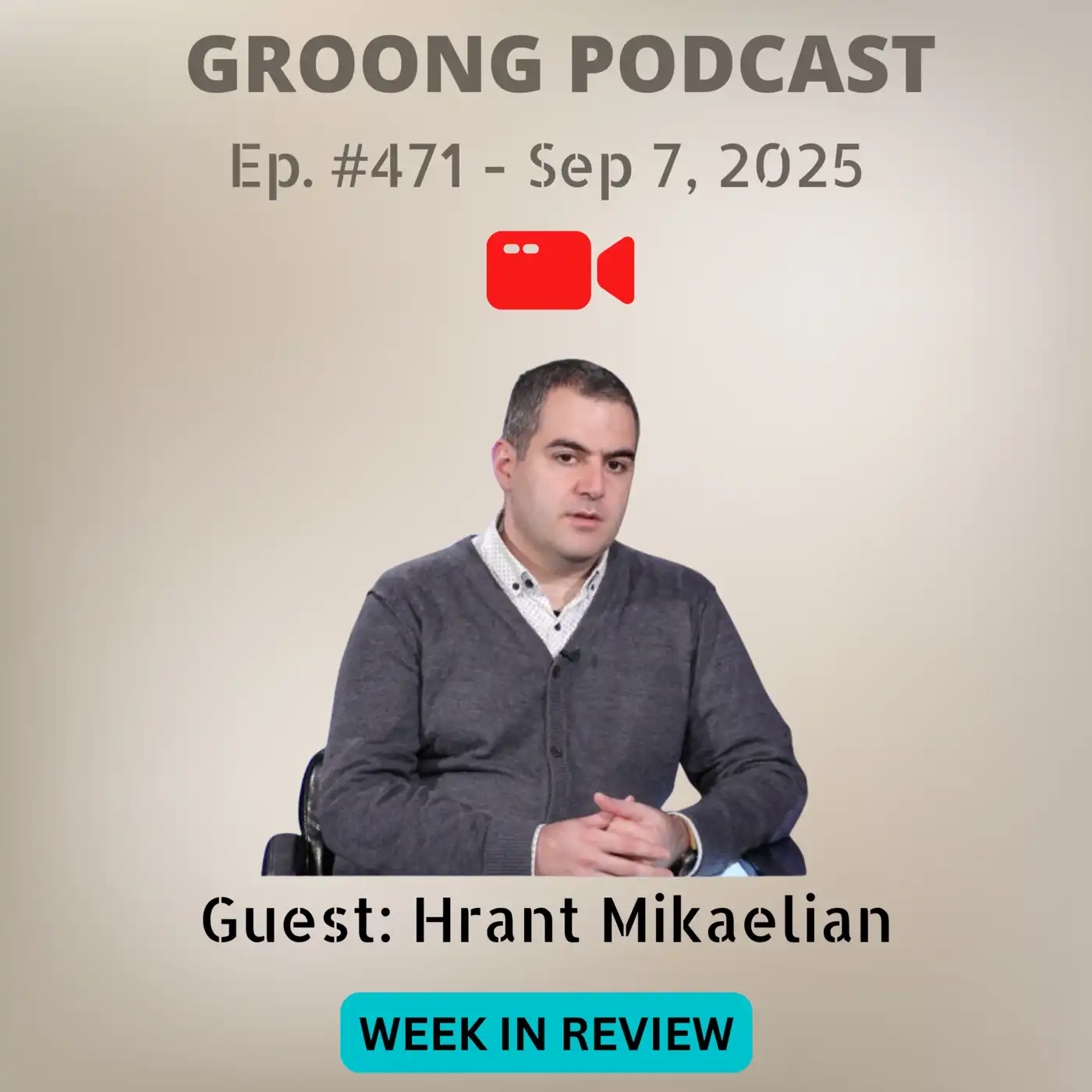
Groong Links:
Guest:
Topics:
- War in Iran, Chapter 2?
- Russiaâs Stance on TRIPP
- New MPG Poll in Armenia
- Armenian Economy in H1/2025
Episode 471 | Recorded: September 8, 2025
Hrant Mikaelian - War on Iran, Russia on TRIPP, New MPG Poll in Armenia, Economy | Ep 471, Sep 7, 2025 [EP471]
Posted on Tuesday, Sep 9, 2025 | Category: Armenia, Politics, Iran, Poll, Azerbaijan, Turkey, Russia, Iran, Armenian Church, Nagorno Karabakh, Armenian Genocide, Economy, Georgia, Israel, Genocide, China, Ukraine, IndiaGroong Links:
Guest:
Topics:
- War in Iran, Chapter 2?
- Russiaâs Stance on TRIPP
- New MPG Poll in Armenia
- Armenian Economy in H1/2025
Episode 471 | Recorded: September 8, 2025
Lenna Hovanessian – White House Meeting Fallout, Artsakh Erasure, Genocide Dismissal, Azerbaijan Playbook in the US | Ep 470, Sep 7, 2025 [EP470]
Posted on Sunday, Sep 7, 2025 | Category: Armenia, Politics, Artsakh, Nagorno Karabakh, Genocide, Azerbaijan, Armenian Church, Israel, Artsakh Blockade | Series: cog, video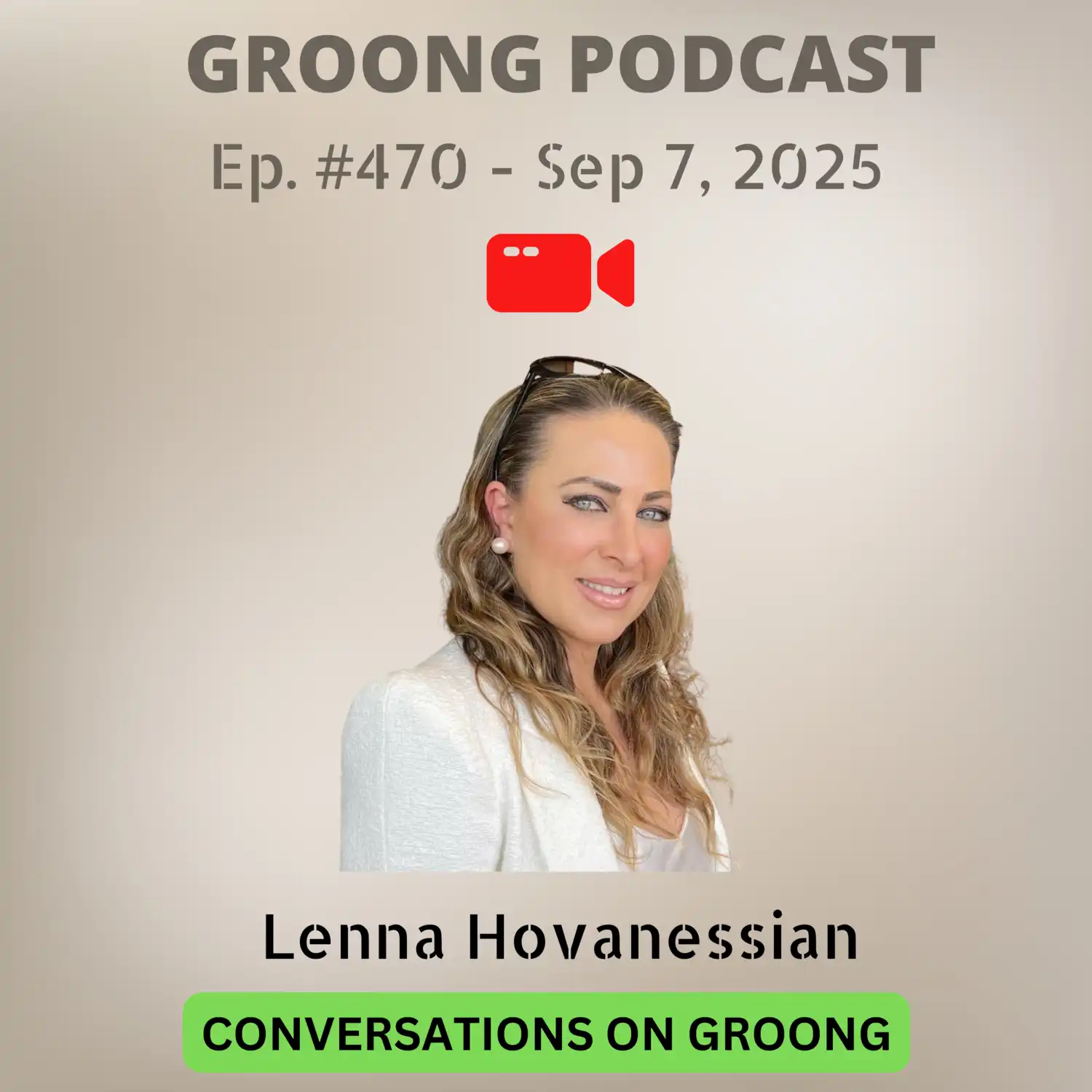
Groong Links:
Guest:
Topics:
- Reflections on August 8 White House Meeting
- Tensions in Diaspora-Armenia Relations
- Azerbaijani Lobbying, Caviar Diplomacy, and the Cuellar Bribery Case
Episode 470 | Recorded: September 5, 2025
Lenna Hovanessian – White House Meeting Fallout, Artsakh Erasure, Genocide Dismissal, Azerbaijan Playbook in the US | Ep 470, Sep 7, 2025 [EP470]
Posted on Sunday, Sep 7, 2025 | Category: Armenia, Politics, Artsakh, Nagorno Karabakh, Genocide, Azerbaijan, Armenian Church, Israel, Artsakh BlockadeGroong Links:
Guest:
Topics:
- Reflections on August 8 White House Meeting
- Tensions in Diaspora-Armenia Relations
- Azerbaijani Lobbying, Caviar Diplomacy, and the Cuellar Bribery Case
Episode 470 | Recorded: September 5, 2025
Robert Amsterdam - In Our Own Way: The Samvel Karapetyan Case | Ep 468, Sep 4, 2025 [EP468]
Posted on Thursday, Sep 4, 2025 | Category: Armenia, Politics, Armenian Church, Russia, Ukraine, Artsakh, Nagorno Karabakh, Human Rights, NATO | Series: cog, video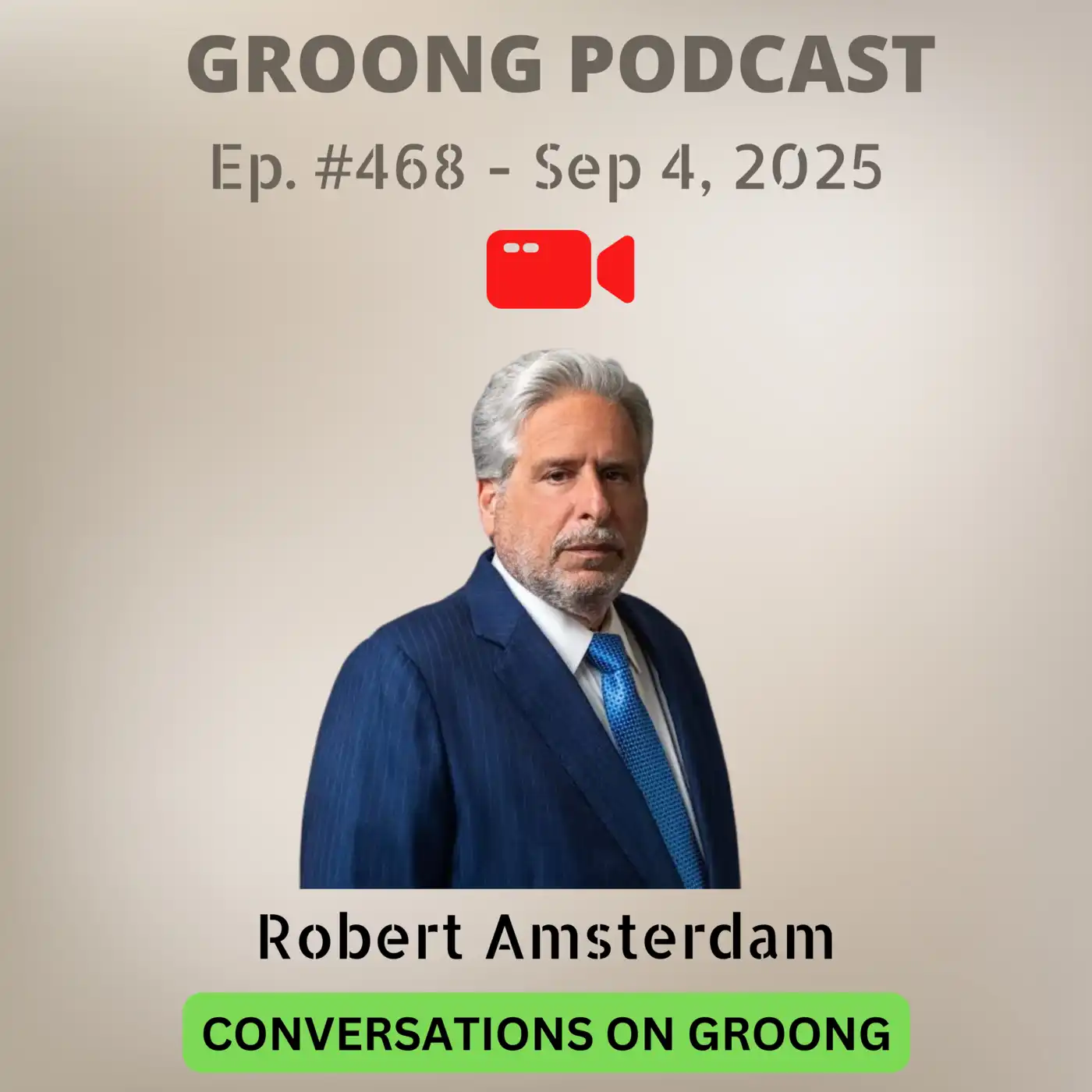
Groong Links:
Guest:
Topics:
- Arrest of Samvel Karapetyan
- Pre-trial detention practices
- Lawfare and double standards
- Armeniaâs global consequences
Episode 468 | Recorded: September 4, 2025
Robert Amsterdam - In Our Own Way: The Samvel Karapetyan Case | Ep 468, Sep 4, 2025 [EP468]
Posted on Thursday, Sep 4, 2025 | Category: Armenia, Politics, Armenian Church, Russia, Ukraine, Artsakh, Nagorno Karabakh, Human Rights, NATOGroong Links:
Guest:
Topics:
- Arrest of Samvel Karapetyan
- Pre-trial detention practices
- Lawfare and double standards
- Armeniaâs global consequences
Episode 468 | Recorded: September 4, 2025
Armen Ashotyan - Reflections on Life as a Political Prisoner, Attacks on the Church and Sovereignty | Ep 465, Aug 28, 2025 [EP465]
Posted on Thursday, Aug 28, 2025 | Category: Armenia, Artsakh, Nagorno Karabakh, Human Rights, Armenian Church, Lebanon, Syria, Iran, Russia, India, Middle East, China, European Union, Ukraine, Azerbaijan | Series: cog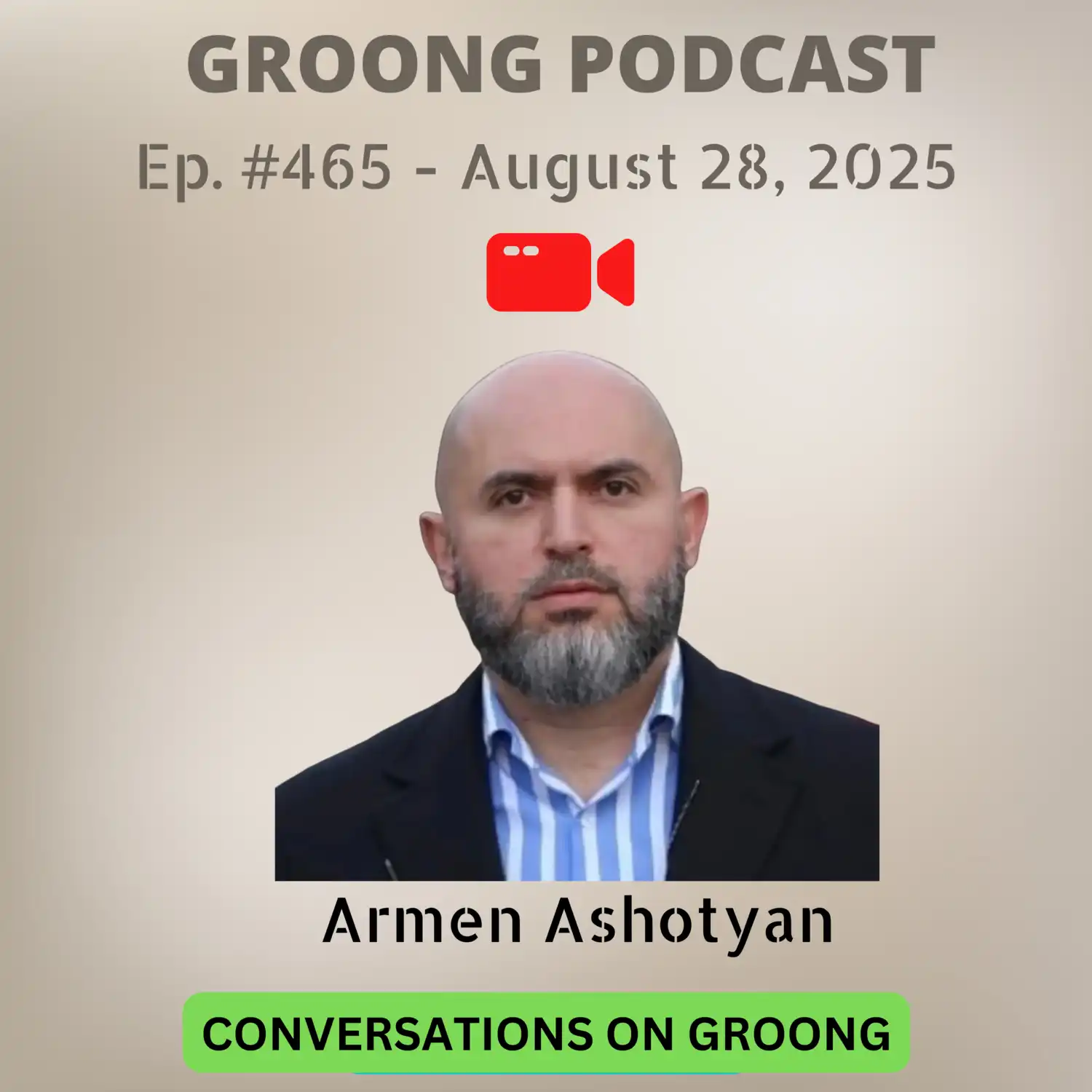
Groong Links:
Guest:
- Armen Ashotyan , MP, VP Republican Party of Armenia (HHK)
Topics:
- Imprisonment and Political Persecution
- International and Diaspora Response
- Pashinyan Regime Attack on the Church
- The Managed Capitulation Process
Episode 465 | Recorded on August 27, 2025
Armen Ashotyan - Reflections on Life as a Political Prisoner, Attacks on the Church and Sovereignty | Ep 465, Aug 28, 2025 [EP465]
Posted on Thursday, Aug 28, 2025 | Category: Armenia, Artsakh, Nagorno Karabakh, Human Rights, Armenian Church, Lebanon, Syria, Iran, Russia, India, Middle East, China, European Union, Ukraine, AzerbaijanGroong Links:
Guest:
- Armen Ashotyan , MP, VP Republican Party of Armenia (HHK)
Topics:
- Imprisonment and Political Persecution
- International and Diaspora Response
- Pashinyan Regime Attack on the Church
- The Managed Capitulation Process
Episode 465 | Recorded on August 27, 2025
Sergei Melkonian - Alaska Summit, Trump Corridor, Russia, Azerbaijan, Iran, Our Way | Ep 463, Aug 17, 2025 [EP463]
Posted on Tuesday, Aug 19, 2025 | Category: Armenia, Geopolitics, Artsakh, Nagorno Karabakh, Azerbaijan, Turkey, Russia, Ukraine, Iran, Syria, Armenian Church, NATO | Series: wir, video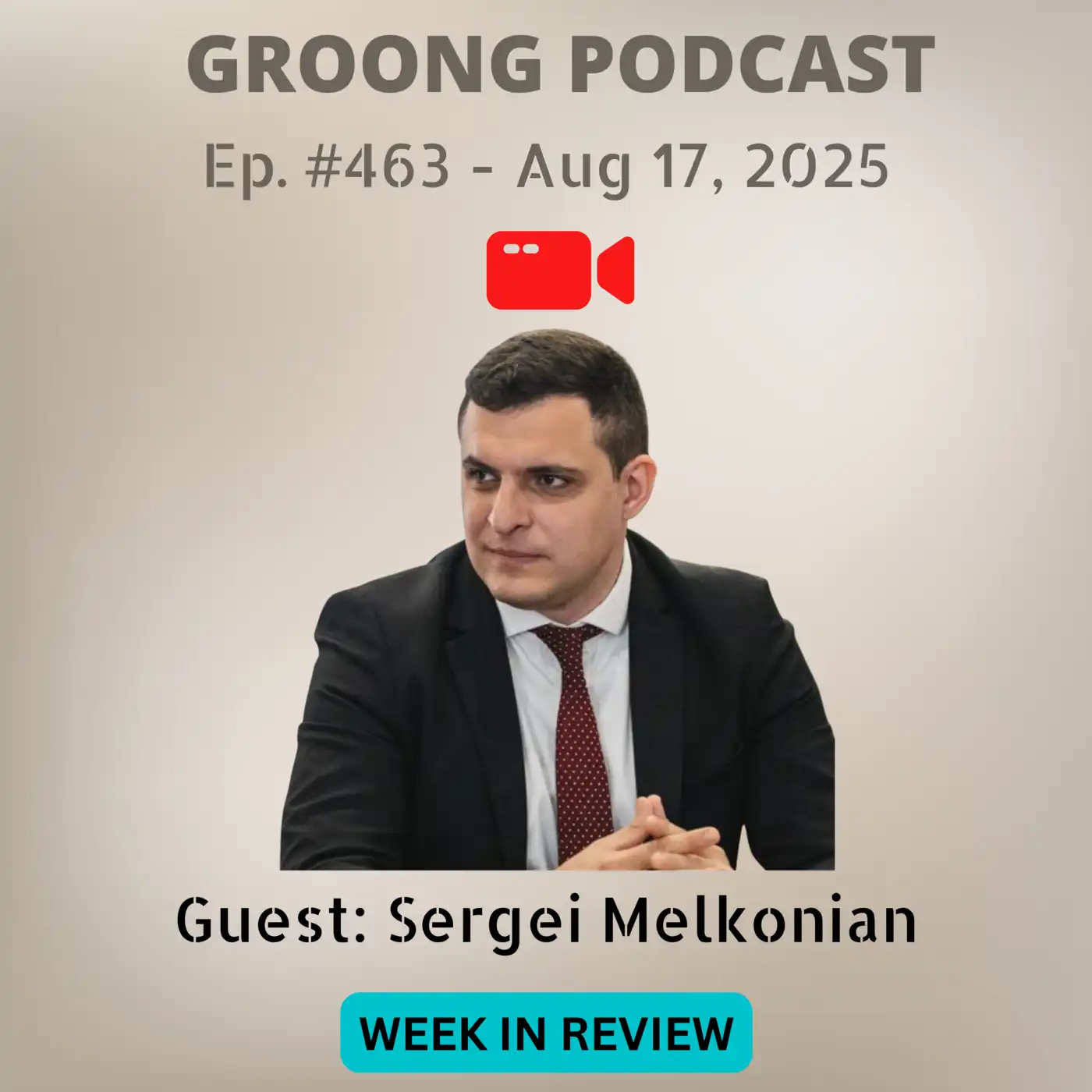
Groong Links:
Guest:
Topics:
- Trump-Putin Alaska Summit
- Trump Corridor Politics
- Russian-Azerbaijani Relations
- Russian-Iranian Recalibration
- New Opposition Emerging - Our Way
Episode 463 | Recorded: August 18, 2025
Sergei Melkonian - Alaska Summit, Trump Corridor, Russia, Azerbaijan, Iran, Our Way | Ep 463, Aug 17, 2025 [EP463]
Posted on Tuesday, Aug 19, 2025 | Category: Armenia, Geopolitics, Artsakh, Nagorno Karabakh, Azerbaijan, Turkey, Russia, Ukraine, Iran, Syria, Armenian Church, NATOGroong Links:
Guest:
Topics:
- Trump-Putin Alaska Summit
- Trump Corridor Politics
- Russian-Azerbaijani Relations
- Russian-Iranian Recalibration
- New Opposition Emerging - Our Way
Episode 463 | Recorded: August 18, 2025
Christine Arakelian - Pashinyan vs. the Church, India Armenia, NGOs and Foreign Influence | Ep 462, Aug 17, 2025 [EP462]
Posted on Sunday, Aug 17, 2025 | Category: Georgia, Politics, Armenia, Armenian Church, Human Rights, Russia, India, Turkey, Ukraine, Israel, Economy | Series: cog, video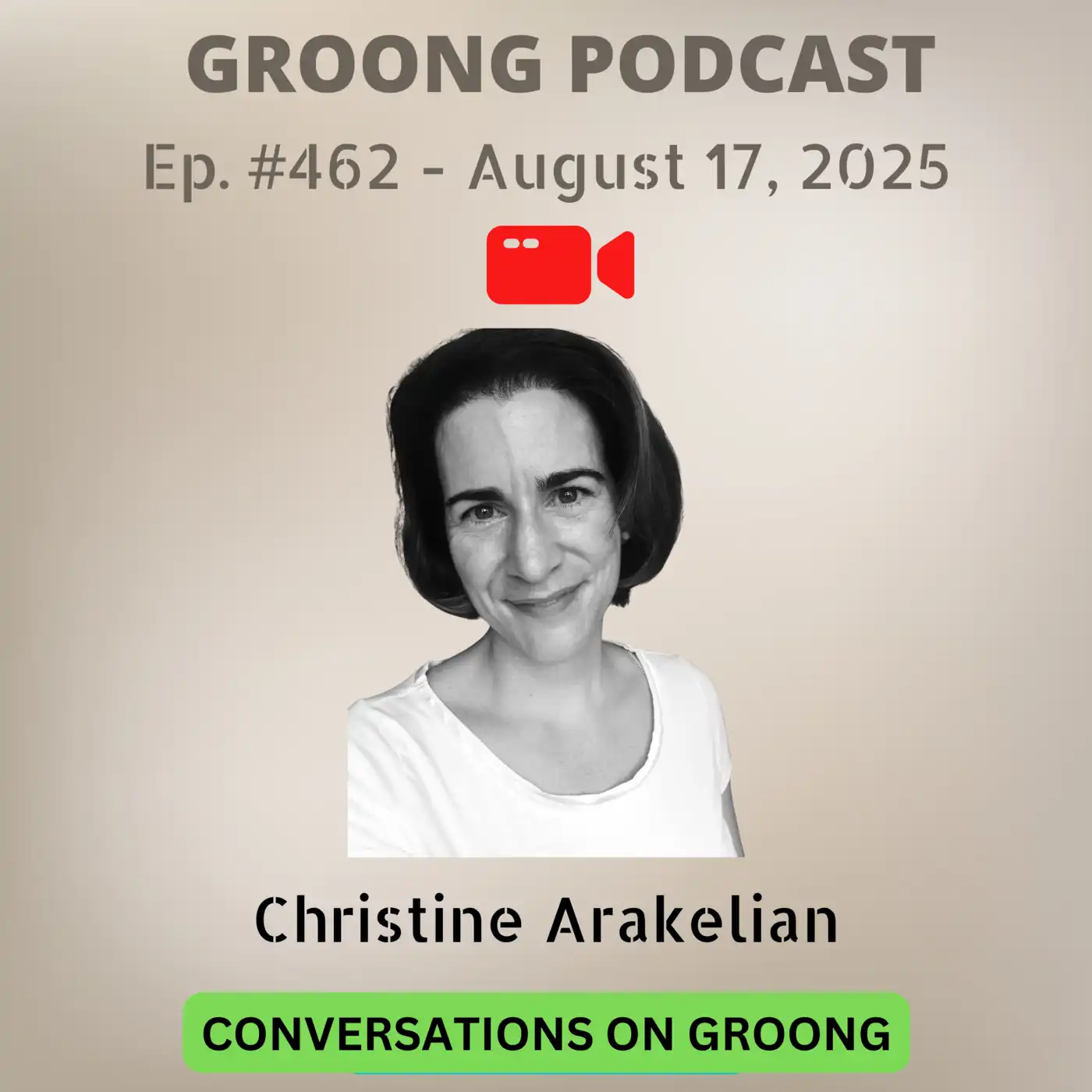
Groong Links:
Guest:
Topics:
- Pashinyan vs. The Armenian Church
- Indian-Armenian Relations
- NGOs and Foreign Influence
- U.S. Geopolitics and the Trump Corridor
Episode 462 | Recorded: August 15, 2025
Christine Arakelian - Pashinyan vs. the Church, India Armenia, NGOs and Foreign Influence | Ep 462, Aug 17, 2025 [EP462]
Posted on Sunday, Aug 17, 2025 | Category: Georgia, Politics, Armenia, Armenian Church, Human Rights, Russia, India, Turkey, Ukraine, Israel, EconomyGroong Links:
Guest:
Topics:
- Pashinyan vs. The Armenian Church
- Indian-Armenian Relations
- NGOs and Foreign Influence
- U.S. Geopolitics and the Trump Corridor
Episode 462 | Recorded: August 15, 2025
Stanislav Krapivnik - The Evolving World Order, Russia, and the South Caucasus | Ep 458, Aug 9, 2025 [EP458]
Posted on Sunday, Aug 10, 2025 | Category: Georgia, Politics, Ukraine, Artsakh, Nagorno Karabakh, Armenia, Azerbaijan, Armenian Church, Russia, Iran, NATO, Turkey, Economy, Israel | Series: cog, video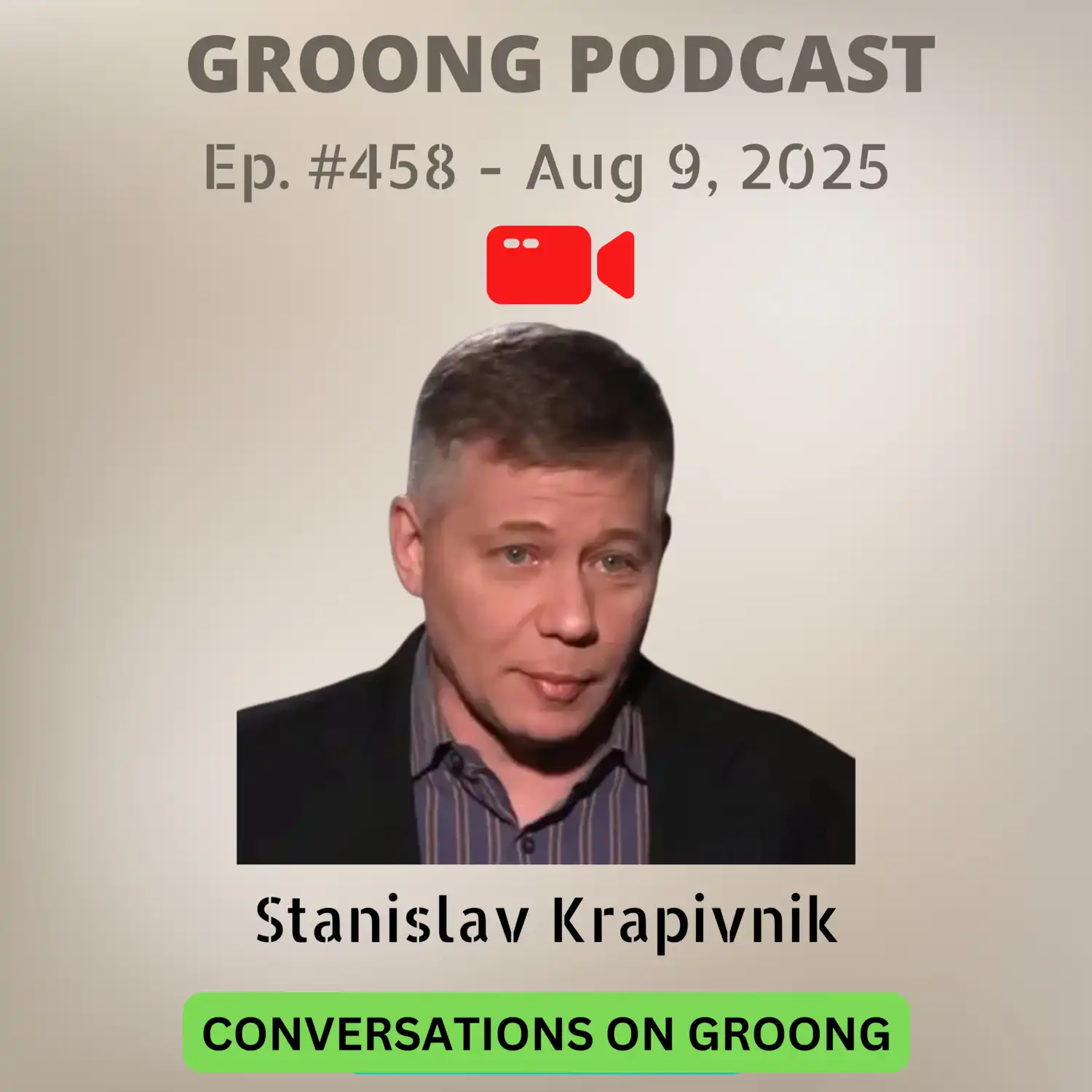
Groong Links:
Guest:
Topics:
- Trump, Pashinyan, Aliyev DC Summit
- Ukraine War and the Shifting World Order
- Russia and the South Caucasus
Episode 458 | Recorded: August 9, 2025
Stanislav Krapivnik - The Evolving World Order, Russia, and the South Caucasus | Ep 458, Aug 9, 2025 [EP458]
Posted on Sunday, Aug 10, 2025 | Category: Georgia, Politics, Ukraine, Artsakh, Nagorno Karabakh, Armenia, Azerbaijan, Armenian Church, Russia, Iran, NATO, Turkey, Economy, IsraelGroong Links:
Guest:
Topics:
- Trump, Pashinyan, Aliyev DC Summit
- Ukraine War and the Shifting World Order
- Russia and the South Caucasus
Episode 458 | Recorded: August 9, 2025
Transcript: Stanislav Krapivnik - The Evolving World Order, Russia, and the South Caucasus | Ep 458, Aug 9, 2025 [EP458]
Posted on Sunday, Aug 10, 2025 | Category: Georgia, Politics, Ukraine, Artsakh, Nagorno Karabakh, Armenia, Azerbaijan, Armenian Church, Russia, Iran, NATO, Turkey, Economy, Israel, TranscriptIn this episode, former U.S. Army officer and military-political analyst Stanislav Krapivnik discusses the geopolitical fallout from the Trump-Pashinyan-Aliyev summit in Washington, which saw the announcement of a “peace” framework, the dissolution of the OSCE Minsk Group, U.S. plans for a 99-year “Trump Corridor” across Armenia, and the dropping of Section 907 to allow arms sales to Azerbaijan. He examines Russia’s heavy focus on the Ukraine war at the expense of the South Caucasus, the loss of Russian leverage over Armenia and Azerbaijan, and the growing role of Turkey. Krapivnik warns of Read More
Benyamin Poghosyan - Public Trust in Freefall, Church on the Rise, and Corridor Pressures Mount | Ep 456, Jul 27, 2025 [EP456]
Posted on Tuesday, Jul 29, 2025 | Category: Armenia, Politics, Poll, Russia, Iran, Georgia, Azerbaijan, Turkey, Ukraine, Middle East, Israel, China, India, Geopolitics, Artsakh, Armenian Church, Nagorno Karabakh, European Union, Economy, Syria | Series: wir, video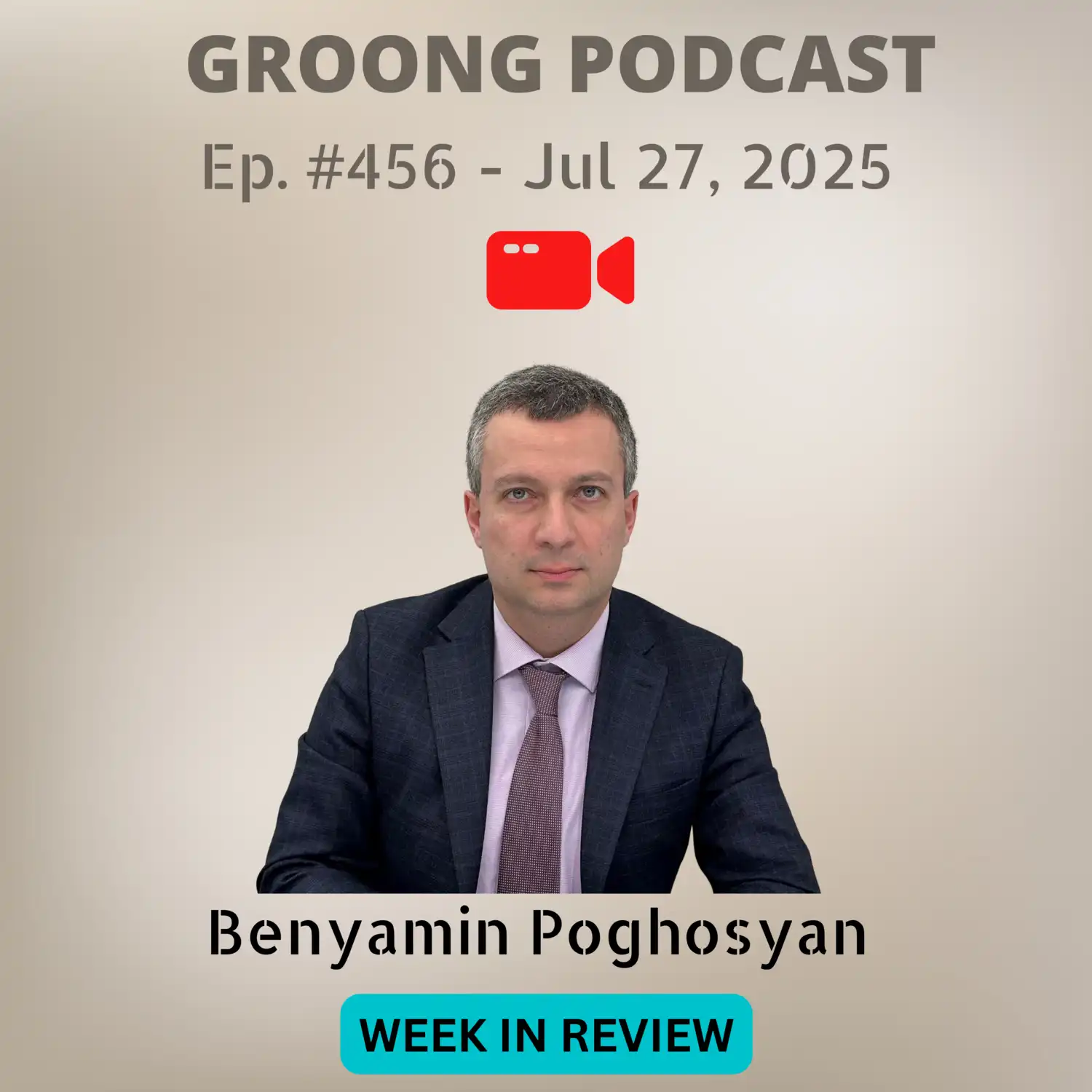
Groong Links:
Guest:
Topics:
- Corridor Logic
- Crackdown Logic
- IRI Poll
- Russian-Azerbaijani Relations
Episode 456 | Recorded: July 28, 2025
Benyamin Poghosyan - Public Trust in Freefall, Church on the Rise, and Corridor Pressures Mount | Ep 456, Jul 27, 2025 [EP456]
Posted on Tuesday, Jul 29, 2025 | Category: Armenia, Politics, Poll, Russia, Iran, Georgia, Azerbaijan, Turkey, Ukraine, Middle East, Israel, China, India, Geopolitics, Artsakh, Armenian Church, Nagorno Karabakh, European Union, Economy, SyriaGroong Links:
Guest:
Topics:
- Corridor Logic
- Crackdown Logic
- IRI Poll
- Russian-Azerbaijani Relations
Episode 456 | Recorded: July 28, 2025
Arthur Khachatryan - Artsakh Negotiations, Armenian Domestic Politics | Ep 455, Jul 27, 2025 [EP455]
Posted on Sunday, Jul 27, 2025 | Category: Georgia, Politics, Artsakh, Nagorno Karabakh, Azerbaijan, Armenian Church, Armenia, Russia, Turkey, Human Rights, Ukraine, Genocide | Series: cog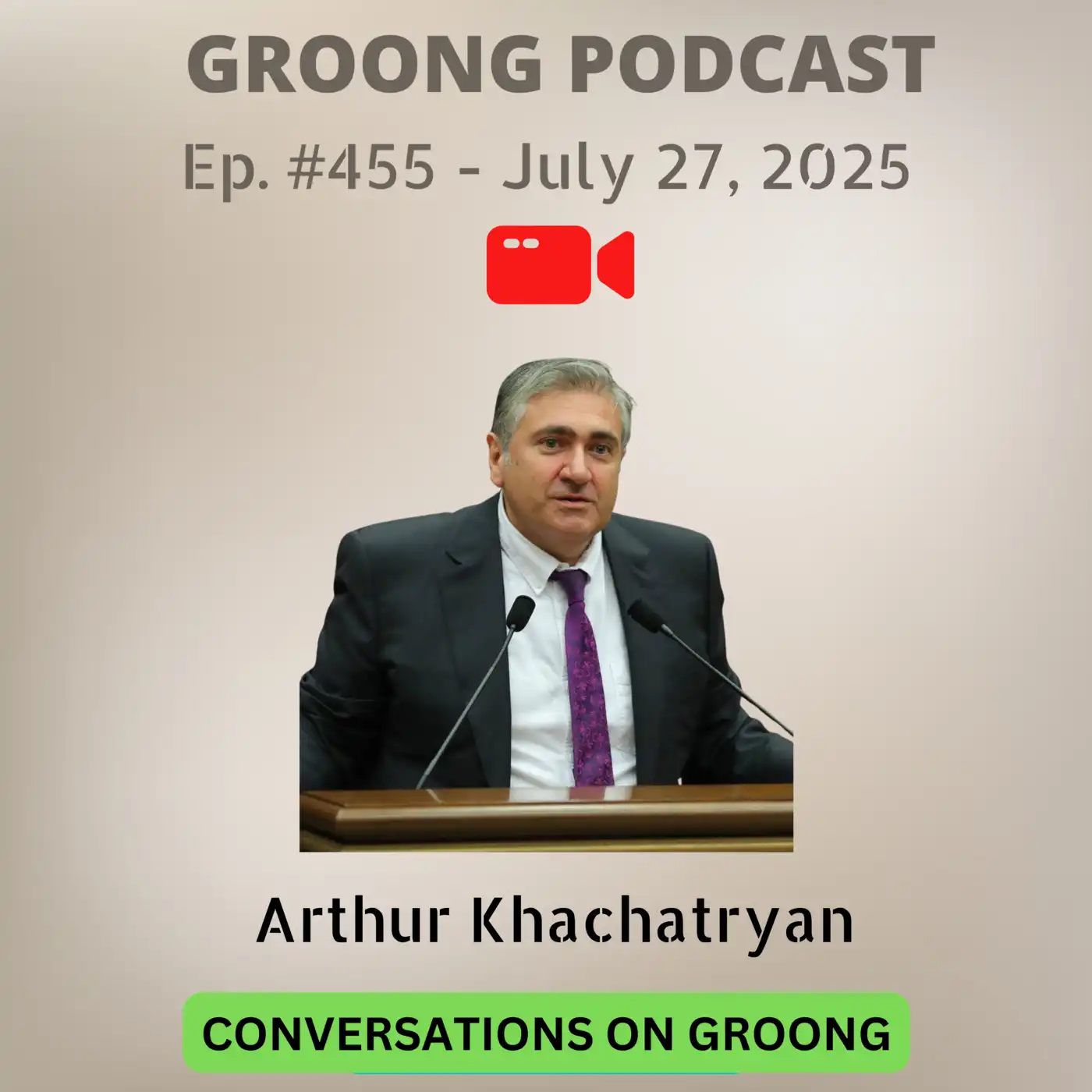
Groong Links:
Guest:
- Arthur Khachatryan , MP
Topics:
- Artsakh Negotiations
- Armenian Domestic Politics
Episode 455 | Recorded: July 25, 2025
Arthur Khachatryan - Artsakh Negotiations, Armenian Domestic Politics | Ep 455, Jul 27, 2025 [EP455]
Posted on Sunday, Jul 27, 2025 | Category: Georgia, Politics, Artsakh, Nagorno Karabakh, Azerbaijan, Armenian Church, Armenia, Russia, Turkey, Human Rights, Ukraine, GenocideGroong Links:
Guest:
- Arthur Khachatryan , MP
Topics:
- Artsakh Negotiations
- Armenian Domestic Politics
Episode 455 | Recorded: July 25, 2025
Archil Sikharulidze - Why does Georgia matter for the EU | Ep 454, Jul 24, 2025 [EP454]
Posted on Thursday, Jul 24, 2025 | Category: Georgia, Politics, Armenia, Azerbaijan, Russia, USA, Armenian Church, Nagorno Karabakh, European Union, Iran, China, Turkey, Ukraine, NATO, Economy, Human Rights, India, Israel | Series: cog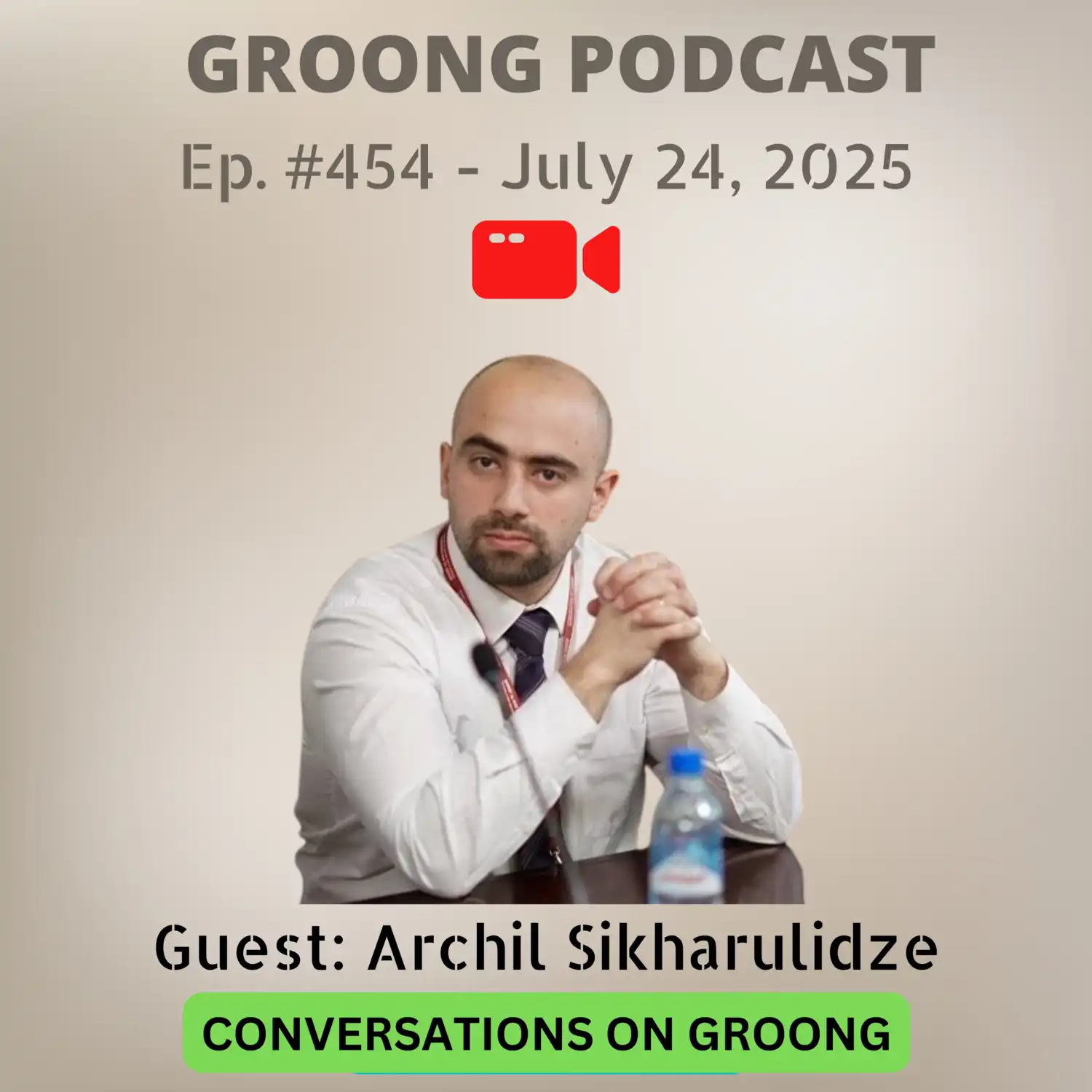
Groong Links:
Guest:
Topics:
- EU Strategy in the South Caucasus
- Attacks on the National Church
- 2025 Local Election Politics
Episode 454 | Recorded: July 22, 2025
Archil Sikharulidze - Why does Georgia matter for the EU | Ep 454, Jul 24, 2025 [EP454]
Posted on Thursday, Jul 24, 2025 | Category: Georgia, Politics, Armenia, Azerbaijan, Russia, USA, Armenian Church, Nagorno Karabakh, European Union, Iran, China, Turkey, Ukraine, NATO, Economy, Human Rights, India, IsraelGroong Links:
Guest:
Topics:
- EU Strategy in the South Caucasus
- Attacks on the National Church
- 2025 Local Election Politics
Episode 454 | Recorded: July 22, 2025
Pashinyan Meets Aliyev as Armenia Cracks Down on Opposition and Church | Ep 453, Jul 13, 2025 [EP453]
Posted on Sunday, Jul 13, 2025 | Category: Armenia, Politics, Artsakh, Nagorno Karabakh, Azerbaijan, Turkey, Russia, Armenian Church, Iran, Economy, Israel, NATO, Middle East, Ukraine | Series: wir, video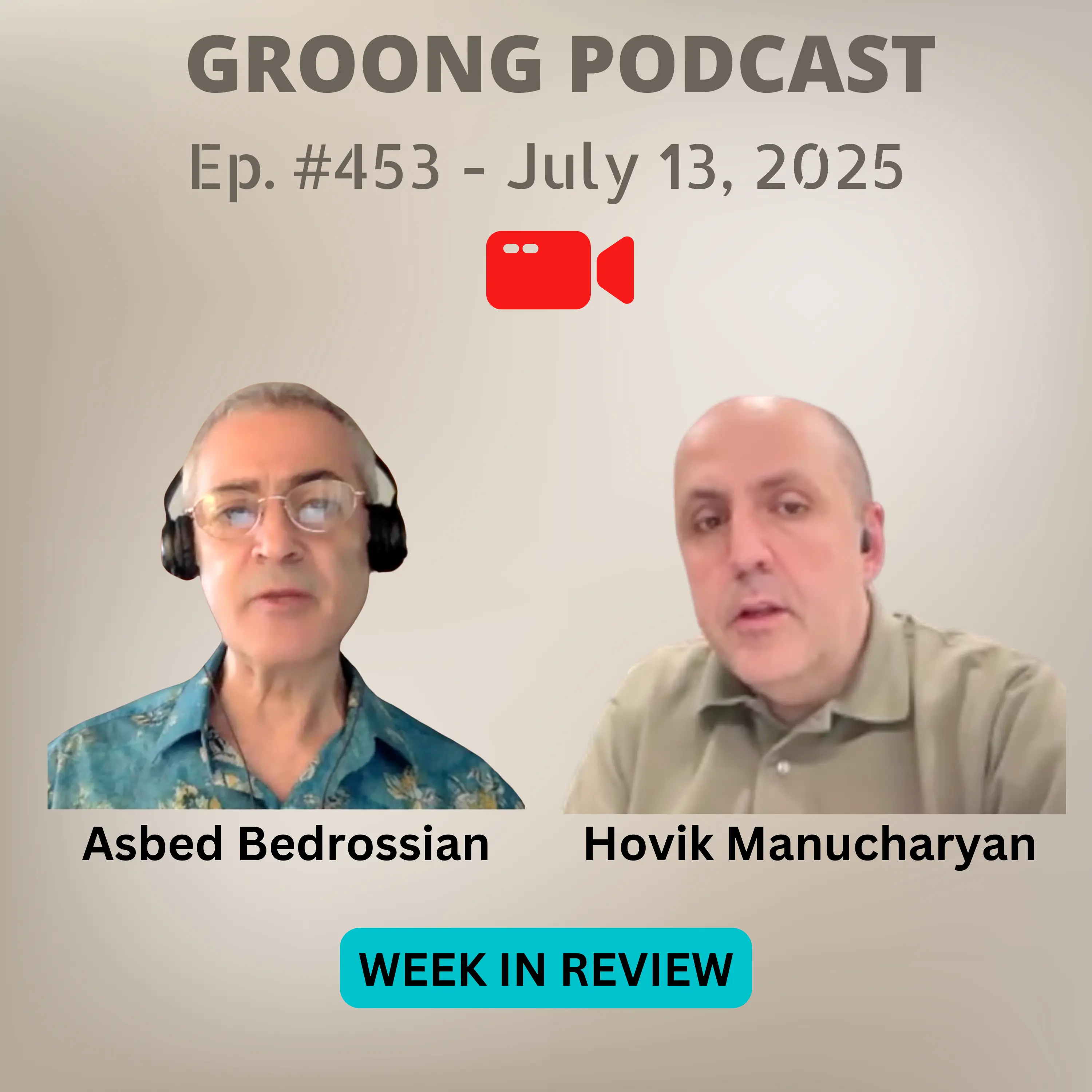
Groong Links:
Topics:
- Pashinyan meets Aliyev in Abu Dhabi
- Continued Persecution of Church and Opposition
Episode 453 | Recorded: July 13, 2025
Pashinyan Meets Aliyev as Armenia Cracks Down on Opposition and Church | Ep 453, Jul 13, 2025 [EP453]
Posted on Sunday, Jul 13, 2025 | Category: Armenia, Politics, Artsakh, Nagorno Karabakh, Azerbaijan, Turkey, Russia, Armenian Church, Iran, Economy, Israel, NATO, Middle East, UkraineGroong Links:
Topics:
- Pashinyan meets Aliyev in Abu Dhabi
- Continued Persecution of Church and Opposition
Episode 453 | Recorded: July 13, 2025