Armenian Armed Forces
Last updated: June 10, 2026
The Armenian Armed Forces were formally established following Armenia’s independence from the Soviet Union in 1991. The military was initially built from Soviet-era infrastructure and personnel, and was tested almost immediately in the First Karabakh War (1988–1994), which shaped its early doctrine, structure, and operational experience. Through the 1990s and early 2000s, Armenia developed a conscription-based military with Russian Federation support, including weapons supplies and military cooperation agreements. The country joined the Collective Security Treaty Organization (CSTO) in 1992, which formalized Armenia’s security alignment with Russia. Throughout the 2000s and 2010s, the Armenian Armed Forces underwent periodic modernization efforts, expanded its officer corps, and conducted military exercises, while maintaining a constant state of readiness along the Azerbaijan border and in Artsakh (Nagorno Karabakh). By the late 2010s, the military numbered approximately 100,000 active personnel. Armenia’s military doctrine and force structure were largely defined by the frozen conflict dynamic and the assumption of prolonged territorial defense.
Armenia’s military entered a state of fundamental crisis after the 44-Day War in 2020, facing not only territorial losses but also questions about command structure, equipment, training, and strategic doctrine. The Armenian Armed Forces had built much of their capacity during the first war for Artsakh (Nagorno Karabakh) in the 1990s, relying heavily on Soviet-era equipment and doctrinal inheritances that proved inadequate against Azerbaijan’s modern drone warfare and precision strikes. The post-war period has forced a reckoning with this legacy: Armenia has pursued weapons procurement from France and India , including French CAESAR howitzers and Indian Pinaka multiple rocket launchers, alongside efforts to upgrade command-and-control systems and establish more professional military structures. These acquisitions represent an attempt to modernize the force without access to Russian equipment pipelines that were constrained by Moscow’s focus on Ukraine and its deteriorating relationship with Yerevan. Yet acquisition of new weapons alone does not resolve deeper problems of doctrine, officer training, or strategic planning that became apparent during the 2020 war and have not been systematically addressed.
Armenia’s security relationship with Russia and the CSTO , the cornerstone of Armenian military doctrine since 1992, faced critical tests during and after the 2020 war. Russia declined to invoke CSTO treaty obligations, citing legal arguments that fighting in Artsakh fell outside CSTO territory and therefore did not trigger collective defense provisions. Russia’s position reflected broader geopolitical considerations: Azerbaijan serves as a critical energy transit hub for Russian regional interests, and deeper military involvement risked complicating Moscow’s relations with both Baku and Turkey at a moment when Russia was heavily committed to Ukraine. Russian peacekeepers did deploy to Artsakh under the November 2020 ceasefire agreement to maintain the ceasefire and protect the local Armenian population, but withdrew completely in September 2023 following Azerbaijan’s military operation. While Armenia had relied on their presence to help stabilize the region, the peacekeepers’ mandate was limited to maintaining the ceasefire and civilian protection, not providing state-level security guarantees. This sequence prompted Armenia to reassess its military posture and security partnerships. The Armenian Armed Forces began pursuing weapons procurement and training relationships with Western countries—France, India, and the United States—while Armenia’s participation in CSTO effectively froze. For detailed analysis of this geopolitical rupture, see Armenia-Russia relations . The military’s historical dependence on Russian doctrine, equipment, and the CSTO security framework thus gave way to a diversified search for alternative partnerships, though the strategic implications of this reorientation remain contested as Armenia navigates between Russian, Western, and regional interests.
The military’s role in Armenian politics and governance has shifted significantly under the so-called Velvet Revolution government. Unlike previous administrations, Pashinyan’s government has sought to assert civilian control and reduce the armed forces’ institutional autonomy, a process complicated by the military’s central role in post-war security and by persistent tensions between civilian leadership and officers who question decision-making during conflicts. The Armenian defense establishment has also been strained by the loss of Artsakh entirely in September 2023, which eliminated the military’s primary territorial responsibility and forced a strategic reorientation toward defending the Armenian homeland itself rather than holding territory beyond it. This shift has exposed the Armenian Armed Forces to direct comparison with CSTO allies and Western partners, raising questions about whether Armenia’s security guarantees—from Russia , Europe , or the United States —are sufficient against threats from Azerbaijan and Turkey, or whether the military’s fundamental vulnerabilities require more radical structural change than procurement alone can achieve.
Groong episodes that include this tag
Below are all Groong episodes tagged with Armenian Armed Forces.
Anna Abrahamian: Munich Security Conference | Artsakh [EP230]
Posted on Friday, Feb 24, 2023 | Category: Armenia, Artsakh, Politics, China, Russia, Azerbaijan, Nagorno Karabakh, Artsakh Blockade, Armenian Genocide, Ukraine, NATO, Turkey, Genocide, Iran, Israel, Economy, Syria, European Union, Georgia, Middle East | Series: cog, video
Today weâre going to talk with Anna Abrahamian about two or three topics.
- The Munich Security Conference 2023.
- Weâll touch on Russian president Putinâs state of the federation address.
- The latest political developments in Artsakh.
Guest:
- Anna Abrahamian , a geopolitical analyst who splits her time between Moscow and Athens. Having obtained training in international law, Anna has worked in such noteworthy institutions as the Defense Analyses Institute in Athens as well as the Crisis Group in Brussels. Today, Anna provides her analysis on geopolitics and Armenian politics to her
Anna Abrahamian: Munich Security Conference | Artsakh [EP230]
Posted on Friday, Feb 24, 2023 | Category: Armenia, Artsakh, Politics, China, Russia, Azerbaijan, Nagorno Karabakh, Artsakh Blockade, Armenian Genocide, Ukraine, NATO, Turkey, Genocide, Iran, Israel, Economy, Syria, European Union, Georgia, Middle EastToday weâre going to talk with Anna Abrahamian about two or three topics.
- The Munich Security Conference 2023.
- Weâll touch on Russian president Putinâs state of the federation address.
- The latest political developments in Artsakh.
Guest:
- Anna Abrahamian , a geopolitical analyst who splits her time between Moscow and Athens. Having obtained training in international law, Anna has worked in such noteworthy institutions as the Defense Analyses Institute in Athens as well as the Crisis Group in Brussels. Today, Anna provides her analysis on geopolitics and Armenian politics to her
Arthur G Martirosyan | Army Day in Armenia | New EU Civilian Mission to Armenia | Politics of Artsakh Blockade | Ep 219 - Jan 29, 2023 [EP219]
Posted on Sunday, Jan 29, 2023 | Category: Armenia, Artsakh, Politics, Azerbaijan, Nagorno Karabakh, Russia, Iran, USA, Artsakh Blockade, European Union, Turkey, Ukraine, Israel, Genocide, Georgia, Middle East, NATO | Series: wir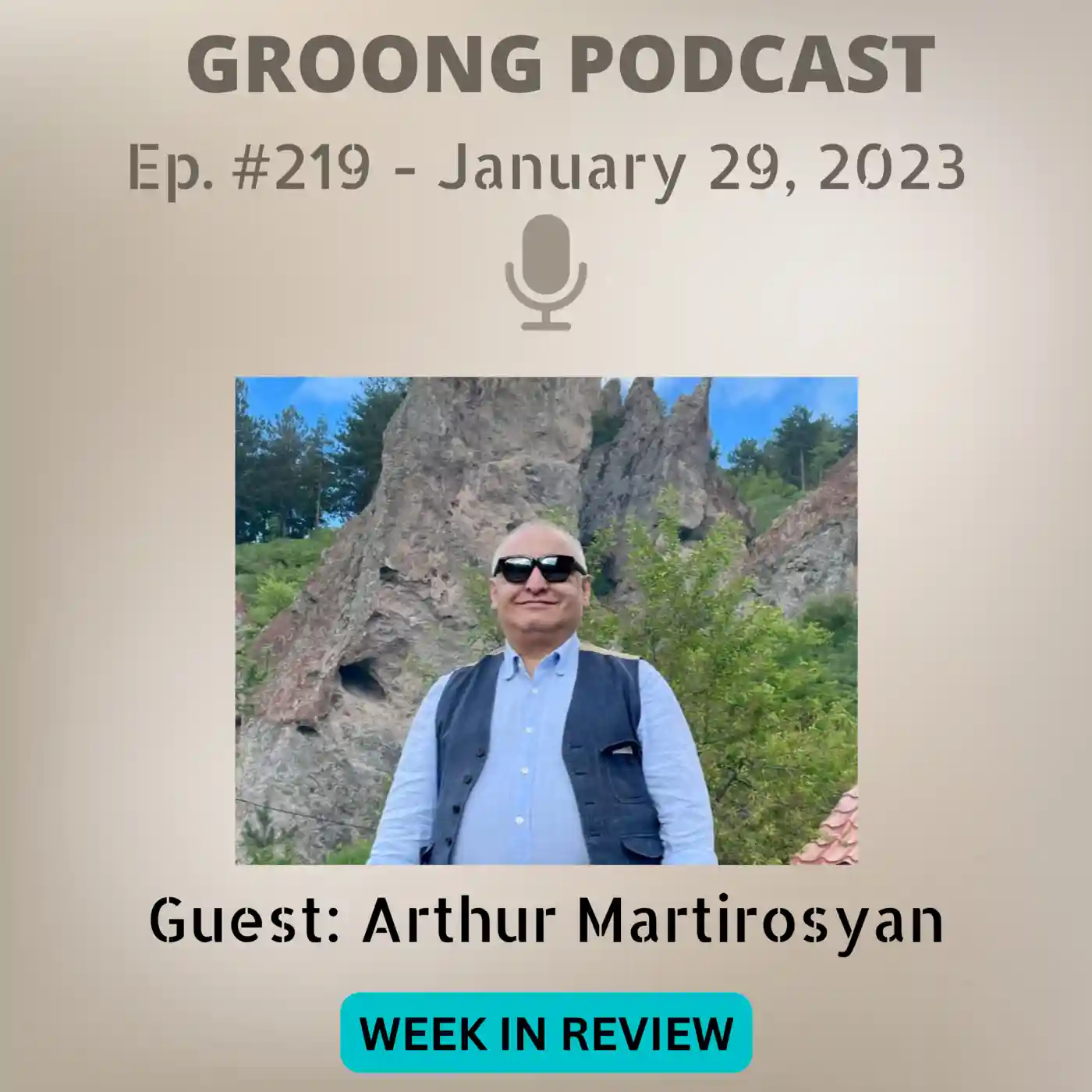
Guest:
Topics:
- Army Day - January 28
- Events at Yerablur
- New EU Monitoring Mission
- Armenia’s Diplomacy
- Russia’s Increasing Displeasure
- Iran’s Tempered Displeasure
- Artsakh Blockade
Episode 219 | Recorded: January 29, 2023
Arthur G Martirosyan | Army Day in Armenia | New EU Civilian Mission to Armenia | Politics of Artsakh Blockade | Ep 219 - Jan 29, 2023 [EP219]
Posted on Sunday, Jan 29, 2023 | Category: Armenia, Artsakh, Politics, Azerbaijan, Nagorno Karabakh, Russia, Iran, USA, Artsakh Blockade, European Union, Turkey, Ukraine, Israel, Genocide, Georgia, Middle East, NATOGuest:
Topics:
- Army Day - January 28
- Events at Yerablur
- New EU Monitoring Mission
- Armenia’s Diplomacy
- Russia’s Increasing Displeasure
- Iran’s Tempered Displeasure
- Artsakh Blockade
Episode 219 | Recorded: January 29, 2023
Tevan Poghosyan | Catastrophic Accident in Military Barrack | New EU Civilian Mission to Armenia | Armenia-Russia Relations | Ruben Vardanyan on BBC HARDtalk | Ep 217 - Jan 22, 2023 [EP217]
Posted on Tuesday, Jan 24, 2023 | Category: Armenia, Artsakh, Politics, Nagorno Karabakh, Artsakh Blockade, European Union, Russia, Azerbaijan, Iran, NATO, Ukraine, Turkey | Series: wir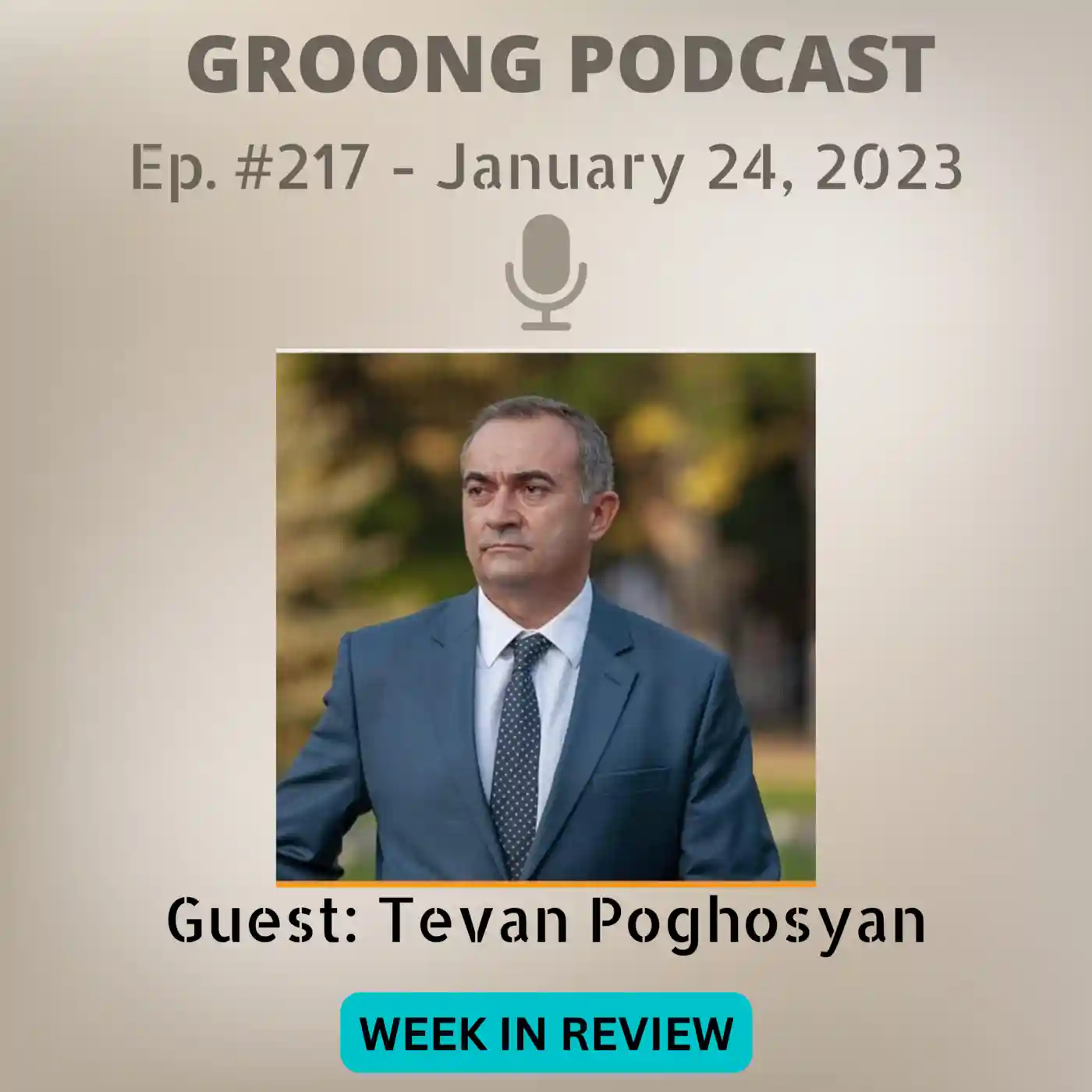
Guest:
Topics:
- Catastrophic Accident in Military Barrack
- New EU Civilian Mission to Armenia
- Armenia-Russia Relations
- Ruben Vardanyan on BBC HARDtalk
Episode 217 | Recorded: January 24, 2023
Tevan Poghosyan | Catastrophic Accident in Military Barrack | New EU Civilian Mission to Armenia | Armenia-Russia Relations | Ruben Vardanyan on BBC HARDtalk | Ep 217 - Jan 22, 2023 [EP217]
Posted on Tuesday, Jan 24, 2023 | Category: Armenia, Artsakh, Politics, Nagorno Karabakh, Artsakh Blockade, European Union, Russia, Azerbaijan, Iran, NATO, Ukraine, TurkeyGuest:
Topics:
- Catastrophic Accident in Military Barrack
- New EU Civilian Mission to Armenia
- Armenia-Russia Relations
- Ruben Vardanyan on BBC HARDtalk
Episode 217 | Recorded: January 24, 2023
Karen Vrtanesyan: Catastrophe in Azat [EP214]
Posted on Monday, Jan 23, 2023 | Category: Armenia, Politics, Azerbaijan, Economy, NATO | Series: cog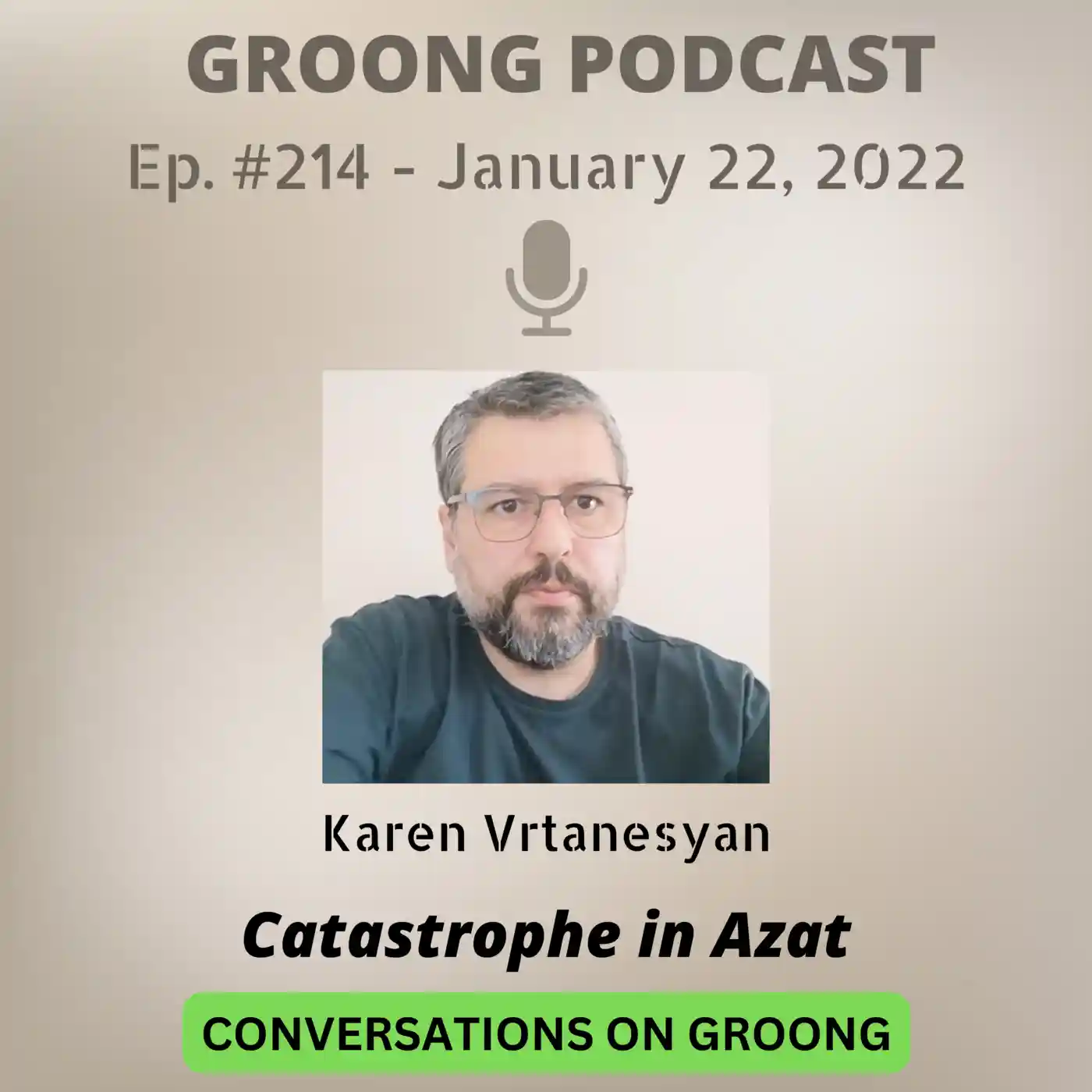
Conversations on Groong - Jan 22, 2023
On January 19, 15 conscripts in the village of Azat, Armenia died in a fire that engulfed their temporary makeshift barracks.
Guest:
Topics:
- Conditions in the Armenian Army
- Information chaos following the incident
- Beheading of the 2nd Army Corps
Episode 214 | Recorded: January 22, 2023
Karen Vrtanesyan: Catastrophe in Azat [EP214]
Posted on Monday, Jan 23, 2023 | Category: Armenia, Politics, Azerbaijan, Economy, NATOConversations on Groong - Jan 22, 2023
On January 19, 15 conscripts in the village of Azat, Armenia died in a fire that engulfed their temporary makeshift barracks.
Guest:
Topics:
- Conditions in the Armenian Army
- Information chaos following the incident
- Beheading of the 2nd Army Corps
Episode 214 | Recorded: January 22, 2023
William Bairamian, Arthur Khachikyan: Artsakh Under Blockade - Day 31 [EP199]
Posted on Wednesday, Jan 11, 2023 | Category: Artsakh, Politics, Armenia, Nagorno Karabakh, Russia, Diaspora, Artsakh Blockade, Turkey, Azerbaijan, NATO, Ukraine, Georgia, Economy, European Union, China, Genocide, Middle East | Series: cog, video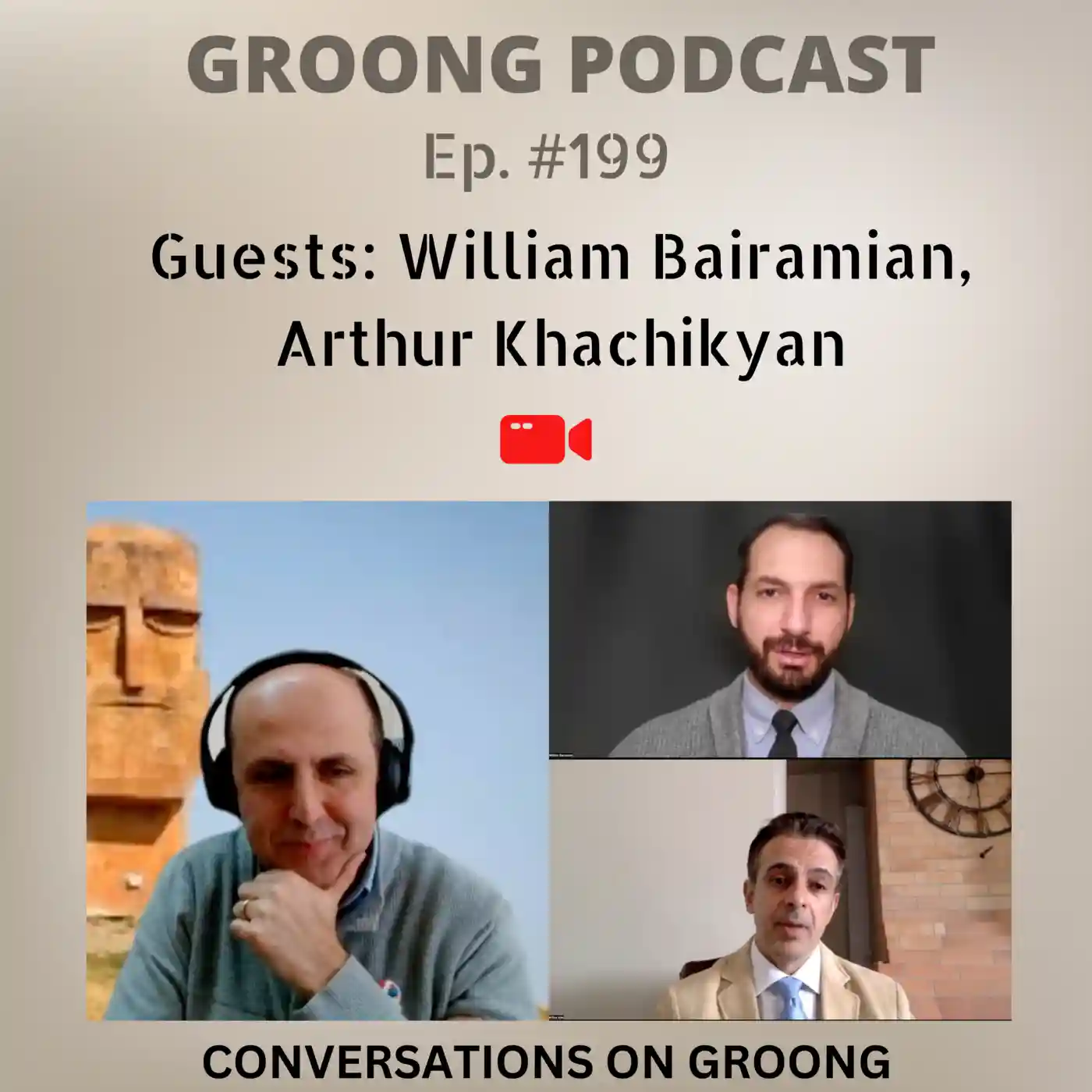
Guests:
- William Bairamian , founder and editor of The Armenite. He has written extensively on Armenian politics, culture, and society. He received degrees in international affairs from Columbia University and UCLA.
- Arthur Khachikyan , International Relations expert from Stanford University, specializing in Intervention. He currently teaches at the Russian Armenian University in Yerevan.
âThis is a repeat of Srebrenica. To gradually strangle and force the people to leave.â -Arthur Khachikyan
Topic:
More than 120,000 people remain trapped in the Republic of Artsakh (or Nagorno-Karabakh)
Read More