Armenia
Last updated: June 10, 2026
Armenia is a landlocked nation in the South Caucasus region of Western Asia, bordered by Georgia, Azerbaijan, Iran, and Turkey. With a population of approximately 3 million, Armenia is one of the world’s oldest Christian civilizations, having adopted Christianity as its state religion in 301 CE—the first country to do so. The capital and largest city is Yerevan, located in the central part of the country. Armenia’s geography is characterized by the Armenian Highlands, a mountainous region with an average elevation exceeding 1,600 meters. The country is known for its rich cultural heritage, including ancient churches, monasteries, and archaeological sites. Armenia is a member of numerous international organizations including the United Nations, World Trade Organization, and the Eurasian Economic Union.
In the context of Groong’s coverage, Armenia is a landlocked South Caucasus republic facing an acute strategic and political crisis. Since the 2020 44-Day War , the country has lost control of Artsakh (Nagorno Karabakh) and hundreds of square kilometers of territory to Azerbaijan, undergone the complete ethnic cleansing of more than 150,000 Armenian inhabitants from Artsakh, and seen its borders redrawn under duress. Prime Minister Nikol Pashinyan and his Civil Contract party have governed through this catastrophe while pursuing what opponents describe as a capitulation strategy: signing ceasefire agreements, negotiating territorial concessions, and attempting to normalize relations with Turkey despite no reciprocal gesture. The government frames this course as realism and peace-building; critics argue it surrenders Armenian sovereignty without securing the rights or security of displaced Artsakhtsis. Armenia’s relationship with its traditional security guarantor Russia has deteriorated sharply, while its pivot toward the European Union and United States remains hesitant and incomplete, leaving the country in a precarious middle position between Moscow and the West.
Domestic politics in Armenia since 2021 have been dominated by the opposition’s demand for Pashinyan’s resignation and accountability for the war’s loss. The Established Opposition parties—Strong Armenia , Armenia Alliance (Hayastan Dashinq) , Prosperous Armenia , and the Republican Party of Armenia —have held street protests, mounted electoral challenges, and attempted to build coalitions for the June 7, 2026 parliamentary elections. Civil Contract’s supermajority in parliament has allowed it to pass constitutional amendments, strip opposition figures of immunity, and advance its agenda despite sustained criticism over corruption, misuse of administrative resources, and alleged election irregularities. The government has also escalated confrontation with the Armenian Church , arresting clergy, seizing church property, and pressuring the Catholicos , actions that have alarmed international observers and divided public opinion. Simultaneously, Pashinyan has consolidated control over state institutions, including the judiciary and security services, raising concerns about democratic backsliding and rule of law.
Armenia’s economy remains fragile. Growth statistics mask structural weaknesses: the country is heavily dependent on remittances and Russian trade, faces declining foreign investment, carries rising national debt, and has seen its ties to Iran—a key trade and energy partner—complicated by U.S. pressure over TRIPP, the so-called Trump Route for International Peace and Prosperity . The project aims to open transport corridors through Armenian territory in Syunik province, a move that would connect Azerbaijan to Turkey via Armenian land and raise questions about Armenian sovereignty over the route and control of its security. Russia has shifted from enthusiastic support of the corridor to public ambivalence, while Iran has issued explicit warnings that it will not accept any arrangement that bypasses or threatens its interests. The competing pressures from Washington, Moscow, Tehran, and Baku leave Armenia’s leadership navigating impossible choices between security guarantees that do not yet exist and economic partnerships that require territorial and strategic concessions it is reluctant to make permanent. The 2026 election will determine whether Armenian voters remain committed to Pashinyan’s course or whether opposition forces can forge a unified alternative around themes of security, sovereignty, and the rights of displaced Artsakhtsis to return home.
Groong episodes that include this tag
Below are all Groong episodes tagged with Armenia.
Hrant Mikaelian - Venezuela, Attacks on the Armenian Church Continue, MPG Poll Results | Ep 501, Jan 4, 2026 [EP501]
Posted on Wednesday, Jan 7, 2026 | Category: Armenia, Politics, Poll, Armenian Church, Economy, Azerbaijan, Artsakh, Nagorno Karabakh, BRICS, Russia, China, Geopolitics, Georgia, Human Rights, Iran, NATO, Syria | Series: wir, video
Groong Links:
Guest:
Topics:
- Developments in Venezuela
- Attacks on Armenian Church Continue
- New MPG Poll Results
Episode 501 | Recorded: January 6, 2026
#VenezuelaCrisis #ArmenianChurch #MPGPoll #ArmeniaEconomy #Geopolitics
Hrant Mikaelian - Venezuela, Attacks on the Armenian Church Continue, MPG Poll Results | Ep 501, Jan 4, 2026 [EP501]
Posted on Wednesday, Jan 7, 2026 | Category: Armenia, Politics, Poll, Armenian Church, Economy, Azerbaijan, Artsakh, Nagorno Karabakh, BRICS, Russia, China, Geopolitics, Georgia, Human Rights, Iran, NATO, SyriaGroong Links:
Guest:
Topics:
- Developments in Venezuela
- Attacks on Armenian Church Continue
- New MPG Poll Results
Episode 501 | Recorded: January 6, 2026
#VenezuelaCrisis #ArmenianChurch #MPGPoll #ArmeniaEconomy #Geopolitics
Benyamin Poghosyan - Ukraine, Iran, Armenia, Azerbaijan, Russia, TRIPP, Review & Outlook | Ep 500, Dec 28, 2025 [EP500]
Posted on Wednesday, Dec 31, 2025 | Category: Armenia, Geopolitics, Artsakh, Nagorno Karabakh, Azerbaijan, Turkey, Russia, Israel, Iran, Armenian Church, Ukraine, Georgia, China, NATO, Economy, European Union, Syria, India, Middle East, Genocide, Lebanon | Series: video, wir
Groong Links:
Guest:
Topics:
- Foreign Crises Affecting Armenia
- Armenia-Azerbaijan Saga
- Russia and TRIPP
- Change of US Ambassador
- Year-End Review & Outlook
Episode 500 | Recorded: December 31, 2025
Benyamin Poghosyan - Ukraine, Iran, Armenia, Azerbaijan, Russia, TRIPP, Review & Outlook | Ep 500, Dec 28, 2025 [EP500]
Posted on Wednesday, Dec 31, 2025 | Category: Armenia, Geopolitics, Artsakh, Nagorno Karabakh, Azerbaijan, Turkey, Russia, Israel, Iran, Armenian Church, Ukraine, Georgia, China, NATO, Economy, European Union, Syria, India, Middle East, Genocide, LebanonGroong Links:
Guest:
Topics:
- Foreign Crises Affecting Armenia
- Armenia-Azerbaijan Saga
- Russia and TRIPP
- Change of US Ambassador
- Year-End Review & Outlook
Episode 500 | Recorded: December 31, 2025
Diana Mkrtchyan - Ojakh, the Other Side of Silence - a Marvel to Behold | Ep 499, Dec 30, 2025 [EP499]
Posted on Tuesday, Dec 30, 2025 | Category: Arts, Armenia, Artsakh, Nagorno Karabakh, Artsakh Blockade, Armenian Genocide, Genocide, Russia, Iran, Turkey, Georgia, Israel, Syria | Series: tcc
Groong Links:
Guest Host:
Guest:
Topics:
- Diana Mkrtchyanâs personal and artistic journey
- The origins of Ojakh in Erhan Arikâs photographic work
- Filming the final testimonies of Armenian Genocide survivors
- Ethical and technical challenges of documenting trauma
- The erasure of Ojakh from official cultural promotion in Armenia
- Cinema as historical record and moral witness
- Mkrtchyanâs Artsakh footage during the blockade
Episode 499 | Recorded: December 27, 2025
Diana Mkrtchyan - Ojakh, the Other Side of Silence - a Marvel to Behold | Ep 499, Dec 30, 2025 [EP499]
Posted on Tuesday, Dec 30, 2025 | Category: Arts, Armenia, Artsakh, Nagorno Karabakh, Artsakh Blockade, Armenian Genocide, Genocide, Russia, Iran, Turkey, Georgia, Israel, SyriaGroong Links:
Guest Host:
Guest:
Topics:
- Diana Mkrtchyanâs personal and artistic journey
- The origins of Ojakh in Erhan Arikâs photographic work
- Filming the final testimonies of Armenian Genocide survivors
- Ethical and technical challenges of documenting trauma
- The erasure of Ojakh from official cultural promotion in Armenia
- Cinema as historical record and moral witness
- Mkrtchyanâs Artsakh footage during the blockade
Episode 499 | Recorded: December 27, 2025
Dziunik Aghajanian - EU Ukraine Rift, Church Siege, and TRIPP Power Games | Ep 498, Dec 21, 2025 [EP498]
Posted on Thursday, Dec 25, 2025 | Category: Armenia, Politics, Artsakh, Nagorno Karabakh, Azerbaijan, Turkey, Russia, Armenian Church, Ukraine, Iran, Economy, Georgia, European Union, China, Middle East, NATO | Series: wir, video
Groong Links:
Guest:
Topics:
- Ukraine War and EU Rift
- Siege on Etchmiadzin and the Church
- Peace Dividend or Political Theater
- TRIPP and Competing Power Claims
Episode 498 | Recorded: December 23, 2025
#ArmenianChurch #Etchmiadzin #TRIPP #ArmeniaPolitics #Groong
Dziunik Aghajanian - EU Ukraine Rift, Church Siege, and TRIPP Power Games | Ep 498, Dec 21, 2025 [EP498]
Posted on Thursday, Dec 25, 2025 | Category: Armenia, Politics, Artsakh, Nagorno Karabakh, Azerbaijan, Turkey, Russia, Armenian Church, Ukraine, Iran, Economy, Georgia, European Union, China, Middle East, NATOGroong Links:
Guest:
Topics:
- Ukraine War and EU Rift
- Siege on Etchmiadzin and the Church
- Peace Dividend or Political Theater
- TRIPP and Competing Power Claims
Episode 498 | Recorded: December 23, 2025
#ArmenianChurch #Etchmiadzin #TRIPP #ArmeniaPolitics #Groong
Spotlight on Silence: InJustice in Armenia | Ep 497, Dec 18, 2025 [EP497]
Posted on Thursday, Dec 18, 2025 | Category: Armenia, Spotlight on Silence, Political Prisoners, Armenian Church, Human Rights, Russia, Georgia, Turkey, Ukraine | Series: video, sos
Groong Links:
Guest:
Follow ACPR on Facebook: Քաղաքական իրավունքների հայկական կենտրոն - ՔԻՀԿ / ACPR
Topics:
- Criminalization of Speech and Dissent in Armenia
- Legal Pressure on Lawyers, Journalists, and Clergy
- Selective Justice and Coordinated Propaganda
- Article 236 and the Policing of Protest
Episode 497 | Recorded: December 14, 2025
#SpotlightOnSilence #ArmeniaJustice #PoliticalPrisoners #FreedomOfSpeech #RuleOfLaw #HumanRights #Groong
Read MoreSpotlight on Silence: InJustice in Armenia | Ep 497, Dec 18, 2025 [EP497]
Posted on Thursday, Dec 18, 2025 | Category: Armenia, Spotlight on Silence, Political Prisoners, Armenian Church, Human Rights, Russia, Georgia, Turkey, UkraineGroong Links:
Guest:
Follow ACPR on Facebook: Քաղաքական իրավունքների հայկական կենտրոն - ՔԻՀԿ / ACPR
Topics:
- Criminalization of Speech and Dissent in Armenia
- Legal Pressure on Lawyers, Journalists, and Clergy
- Selective Justice and Coordinated Propaganda
- Article 236 and the Policing of Protest
Episode 497 | Recorded: December 14, 2025
#SpotlightOnSilence #ArmeniaJustice #PoliticalPrisoners #FreedomOfSpeech #RuleOfLaw #HumanRights #Groong
Read MoreArthur Khachatryan - Foreign Pressure, Attack on Church, Artsakh Repression | Ep 496, Dec 14, 2025 [EP496]
Posted on Tuesday, Dec 16, 2025 | Category: Armenia, Politics, Azerbaijan, Russia, Georgia, Armenian Church, Artsakh, Nagorno Karabakh, Armenian Genocide, European Union, Genocide, Ukraine, Turkey, Iran, Economy, India, NATO | Series: wir, video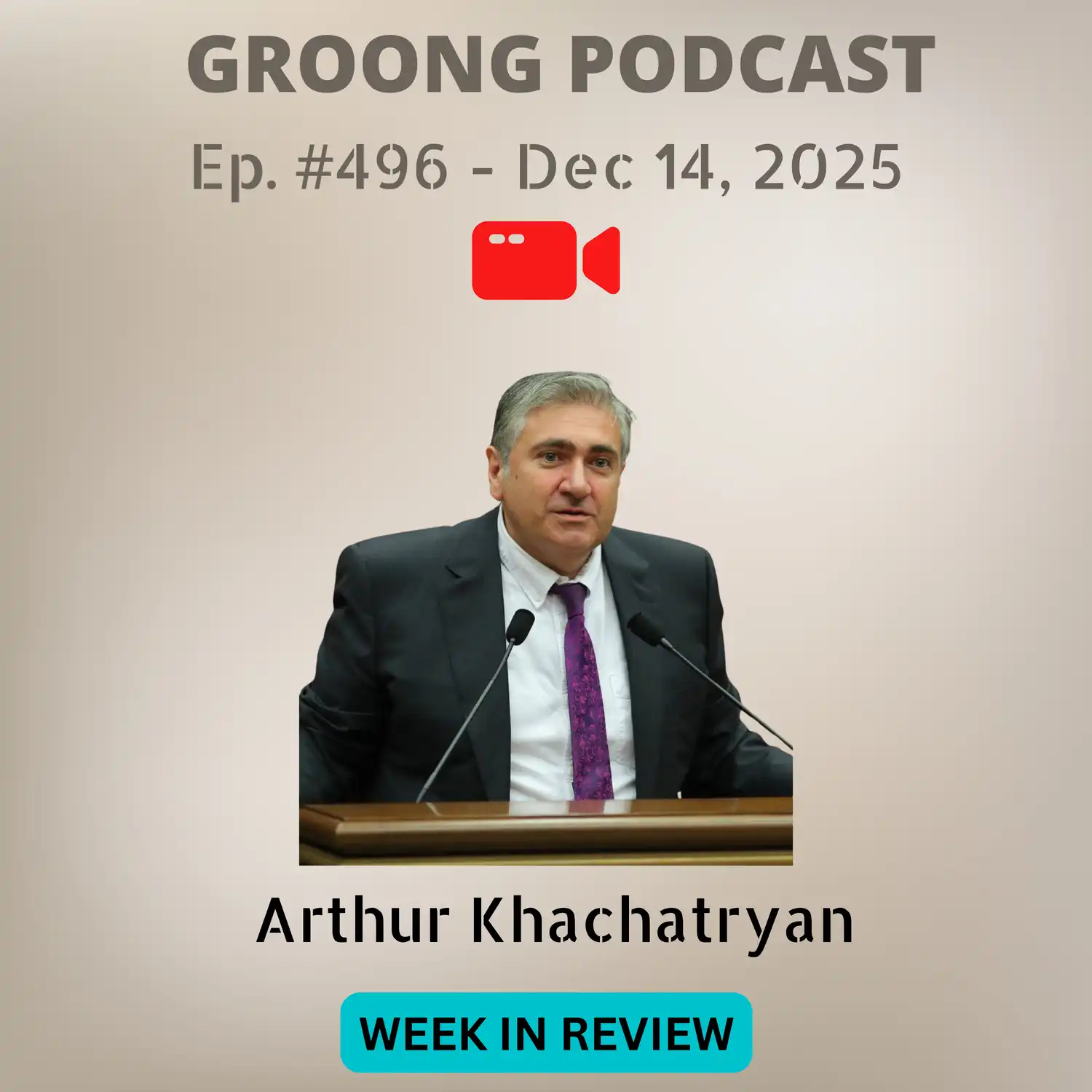
Groong Links:
Guest:
Topics:
- Armenia between EU and Russia
- Churchâstate confrontation in Armenia
- Artsakh concessions and return debate
- Economy, debt, and governance
- NSS raids Artsakh offices
Episode 496 | Recorded: December 15, 2025
#ArmeniaPolitics #EUvsRussia #ArmenianChurch #Artsakh #Geopolitics
Arthur Khachatryan - Foreign Pressure, Attack on Church, Artsakh Repression | Ep 496, Dec 14, 2025 [EP496]
Posted on Tuesday, Dec 16, 2025 | Category: Armenia, Politics, Azerbaijan, Russia, Georgia, Armenian Church, Artsakh, Nagorno Karabakh, Armenian Genocide, European Union, Genocide, Ukraine, Turkey, Iran, Economy, India, NATOGroong Links:
Guest:
Topics:
- Armenia between EU and Russia
- Churchâstate confrontation in Armenia
- Artsakh concessions and return debate
- Economy, debt, and governance
- NSS raids Artsakh offices
Episode 496 | Recorded: December 15, 2025
#ArmeniaPolitics #EUvsRussia #ArmenianChurch #Artsakh #Geopolitics
Harry Istepanian - Venezuela’s Oil and the Global Power Struggle | Ep 495, Dec 14, 2025 [EP495]
Posted on Sunday, Dec 14, 2025 | Category: Geopolitics, Armenia, China, Ukraine, Russia, Middle East, Iran, Israel, Azerbaijan, Economy, India, Turkey | Series: cog, video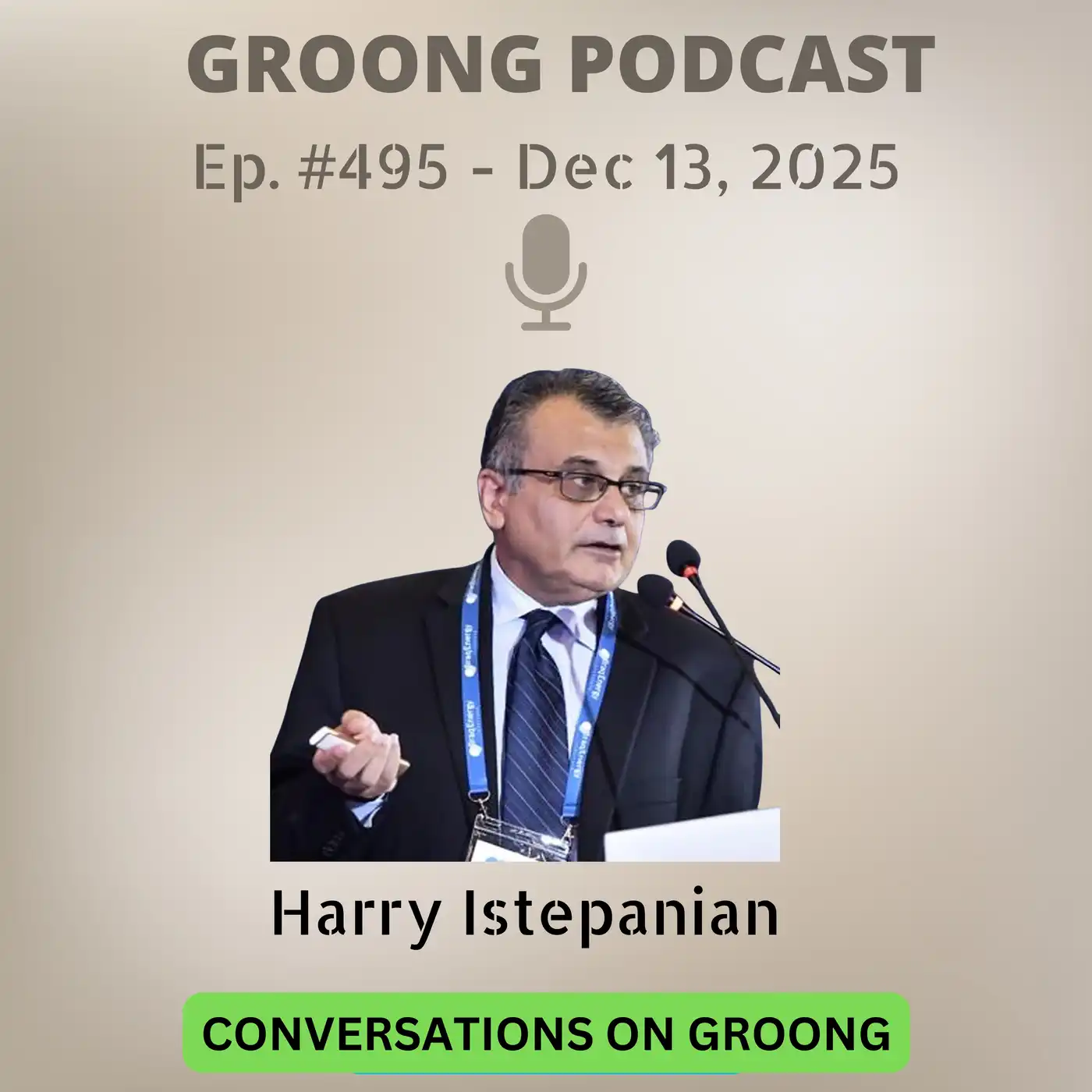
Groong Links:
Guest:
Topics:
- Venezuelaâs oil and US pressure
- Trump, oil prices, and OPEC+
- Middle East fallout from cheap oil
- Ukraine war and Iran conflict stakes
Episode 495 | Recorded: December 11, 2025
#Venezuela #OilPolitics #Geopolitics #USForeignPolicy #EnergyWars
Harry Istepanian - Venezuela’s Oil and the Global Power Struggle | Ep 495, Dec 14, 2025 [EP495]
Posted on Sunday, Dec 14, 2025 | Category: Geopolitics, Armenia, China, Ukraine, Russia, Middle East, Iran, Israel, Azerbaijan, Economy, India, TurkeyGroong Links:
Guest:
Topics:
- Venezuelaâs oil and US pressure
- Trump, oil prices, and OPEC+
- Middle East fallout from cheap oil
- Ukraine war and Iran conflict stakes
Episode 495 | Recorded: December 11, 2025
#Venezuela #OilPolitics #Geopolitics #USForeignPolicy #EnergyWars
Benyamin Poghosyan - Pashinyan War on Armenian Church, EU-Armenia, Artsakh, Arar Poll | Ep 494, Sep 25, 2025 [EP494]
Posted on Tuesday, Dec 9, 2025 | Category: Armenia, Politics, Artsakh, Poll, Nagorno Karabakh, Azerbaijan, Georgia, Armenian Church, Russia, European Union, Turkey, Ukraine, Iran, India | Series: video, wir
Groong Links:
Guest:
Topics:
- 1988 Earthquake Remembered
- Pashinyanâs War on the Armenian Church
- EU-Armenia Relations
- Nagorno-Karabakh Negotiation Documents
- ARAR Foundation Poll
Episode 494 | Recorded: December 8, 2025
#ArmenianChurch #NSS #Pashinyan #ArarPoll #ArmeniaEU
Benyamin Poghosyan - Pashinyan War on Armenian Church, EU-Armenia, Artsakh, Arar Poll | Ep 494, Sep 25, 2025 [EP494]
Posted on Tuesday, Dec 9, 2025 | Category: Armenia, Politics, Artsakh, Poll, Nagorno Karabakh, Azerbaijan, Georgia, Armenian Church, Russia, European Union, Turkey, Ukraine, Iran, IndiaGroong Links:
Guest:
Topics:
- 1988 Earthquake Remembered
- Pashinyanâs War on the Armenian Church
- EU-Armenia Relations
- Nagorno-Karabakh Negotiation Documents
- ARAR Foundation Poll
Episode 494 | Recorded: December 8, 2025
#ArmenianChurch #NSS #Pashinyan #ArarPoll #ArmeniaEU
Arthur Khachikyan - OSCE MG Dissolved, Libaridian on Submission, New Constitution, Armenian Church, Prayer Breakfast, Border Commissions meet in Baku | Ep 493, Nov 30, 2025 [EP493]
Posted on Wednesday, Dec 3, 2025 | Category: Armenia, Politics, Nagorno Karabakh, Artsakh, Azerbaijan, Armenian Genocide, Armenian Church, Turkey, Russia, Genocide, Iran, Israel, Middle East, China, NATO | Series: wir, video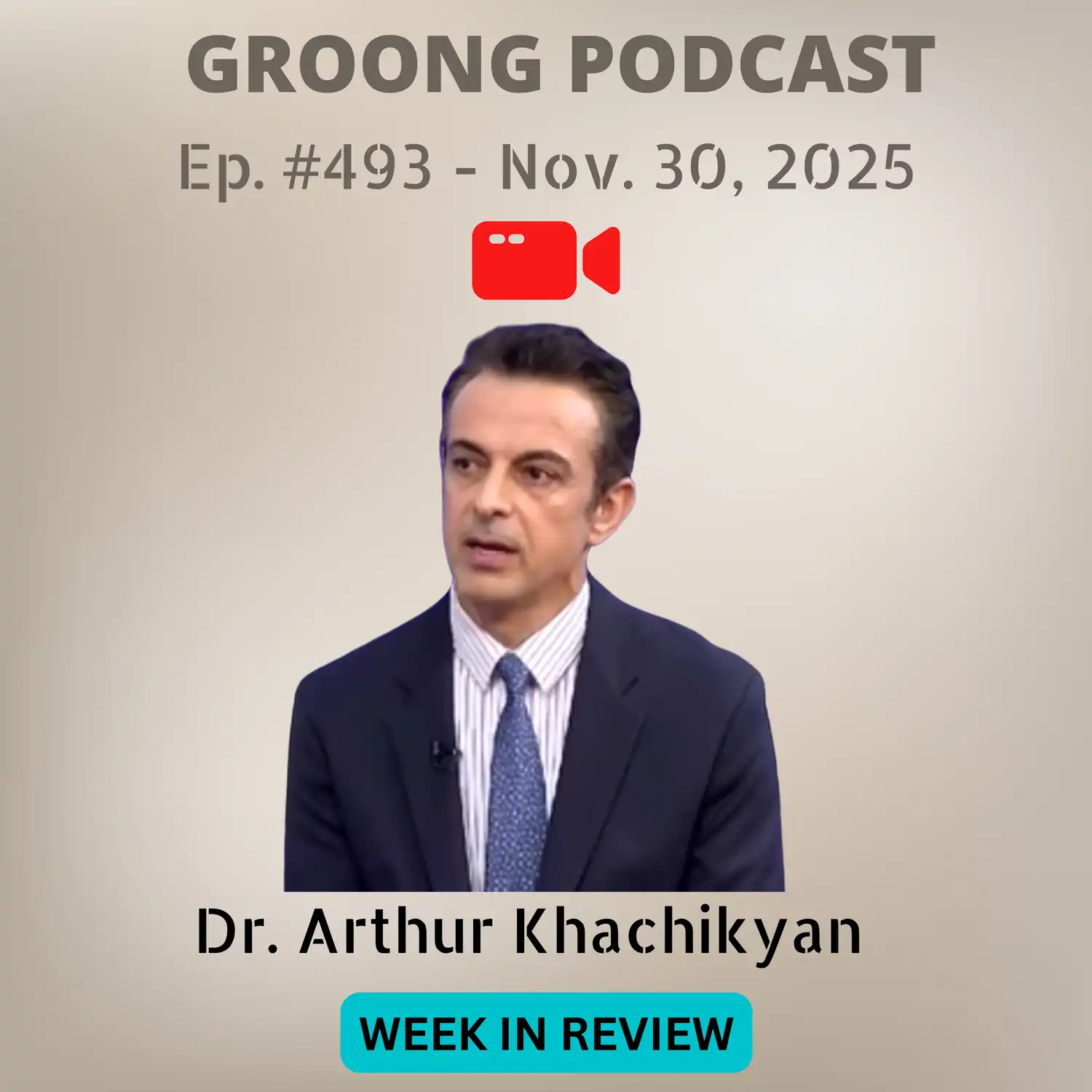
Groong Links:
Guest:
Topics:
- OSCE MG Dissolved
- Libaridian on Submitting to Turkey and Azerbaijan
- News Constitution to be Drafted by March 2026
- Archbishops, Letters, Attacks on the Church
- Border Commissions Meet in Baku
- Comments from Jacob Pursley
Episode 493 | Recorded: December 2, 2025
Arthur Khachikyan - OSCE MG Dissolved, Libaridian on Submission, New Constitution, Armenian Church, Prayer Breakfast, Border Commissions meet in Baku | Ep 493, Nov 30, 2025 [EP493]
Posted on Wednesday, Dec 3, 2025 | Category: Armenia, Politics, Nagorno Karabakh, Artsakh, Azerbaijan, Armenian Genocide, Armenian Church, Turkey, Russia, Genocide, Iran, Israel, Middle East, China, NATOGroong Links:
Guest:
Topics:
- OSCE MG Dissolved
- Libaridian on Submitting to Turkey and Azerbaijan
- News Constitution to be Drafted by March 2026
- Archbishops, Letters, Attacks on the Church
- Border Commissions Meet in Baku
- Comments from Jacob Pursley
Episode 493 | Recorded: December 2, 2025
Eldar Mamedov - The Global Geopolitics Surrounding the South Caucasus | Ep 492, Dec 1, 2025 [EP492]
Posted on Monday, Dec 1, 2025 | Category: World Order, TRIPP, Armenia, USA, Iran, Israel, Azerbaijan, Turkey, Russia, Ukraine, NATO, European Union, Middle East, Syria, Geopolitics, China, Lebanon | Series: cog, video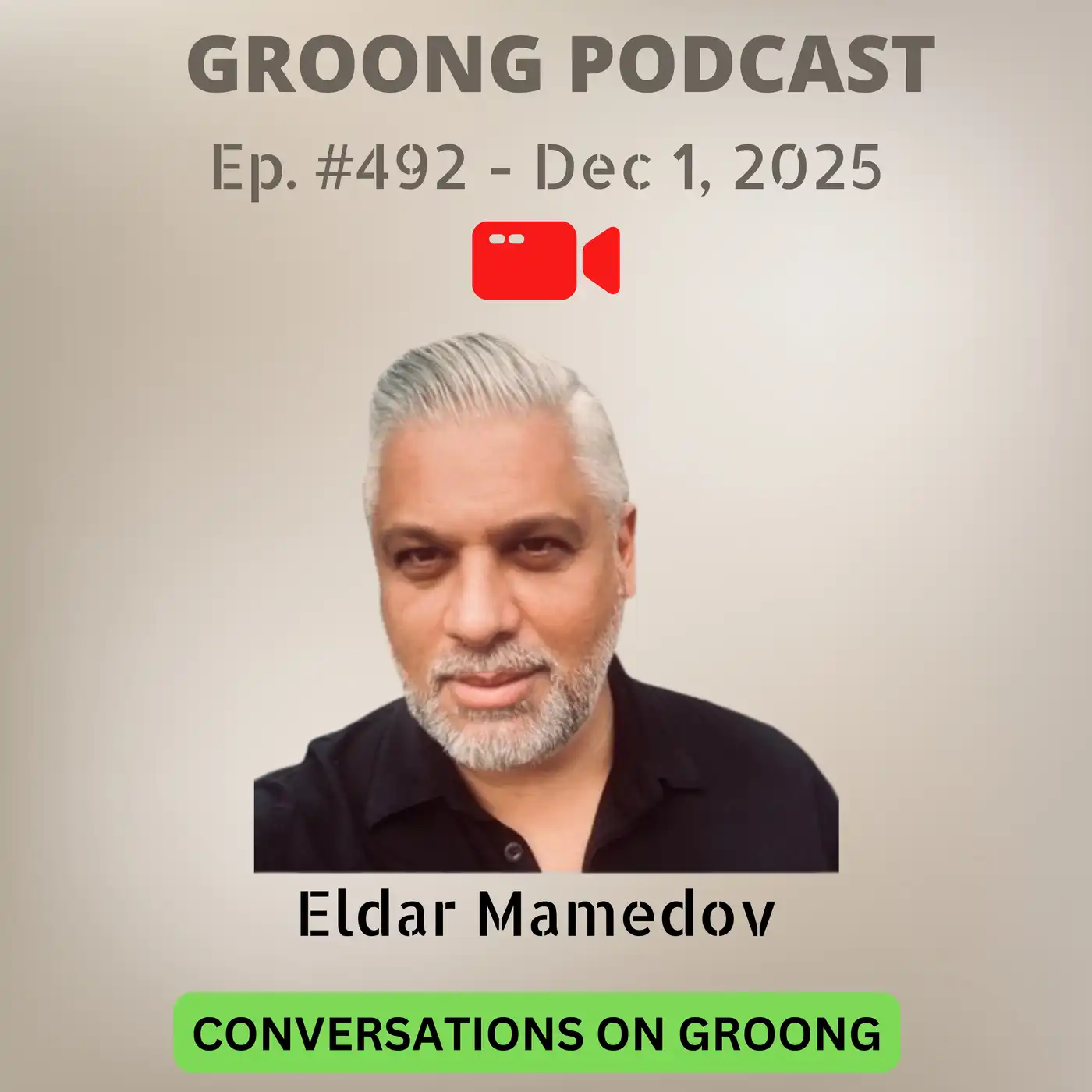
Groong Links:
Guest:
Topics:
- US and Venezuela
- Potential for New War on Iran
- Is Azerbaijan a âMiddle Powerâ?
- Europeâs Confused Geopolitical Identity
- Armeniaâs Confused Geopolitics
Episode 492 | Recorded: November 29, 2025
#IranCrisis #AzerbaijanPolitics #EuropeanGeopolitics #ArmeniaSecurity #SouthCaucasus #GlobalPowerPolitics
Eldar Mamedov - The Global Geopolitics Surrounding the South Caucasus | Ep 492, Dec 1, 2025 [EP492]
Posted on Monday, Dec 1, 2025 | Category: World Order, TRIPP, Armenia, USA, Iran, Israel, Azerbaijan, Turkey, Russia, Ukraine, NATO, European Union, Middle East, Syria, Geopolitics, China, LebanonGroong Links:
Guest:
Topics:
- US and Venezuela
- Potential for New War on Iran
- Is Azerbaijan a âMiddle Powerâ?
- Europeâs Confused Geopolitical Identity
- Armeniaâs Confused Geopolitics
Episode 492 | Recorded: November 29, 2025
#IranCrisis #AzerbaijanPolitics #EuropeanGeopolitics #ArmeniaSecurity #SouthCaucasus #GlobalPowerPolitics
Matt Hoh - What Happened to America First, Ukraine, Gaza, TRIPP in Armenia and other US Adventures | Ep 491 - Nov 30, 2025 [EP491]
Posted on Sunday, Nov 30, 2025 | Category: USA, World Order, TRIPP, Ukraine, Israel, Russia, China, Turkey, Azerbaijan, Artsakh, Nagorno Karabakh, Artsakh Blockade, Armenia, Iran, Middle East, Economy, NATO, Genocide, Geopolitics, Human Rights | Series: cog, video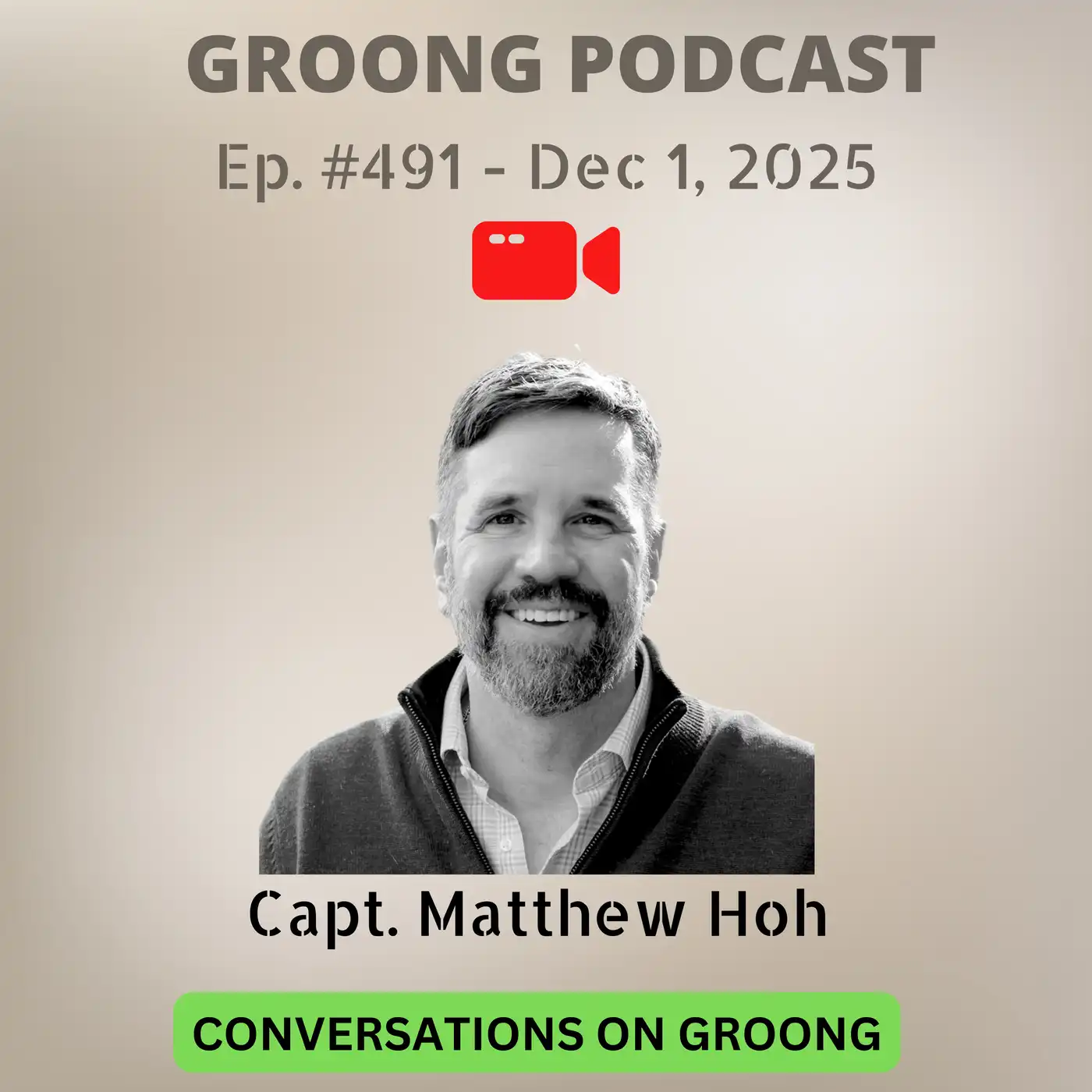
Groong Links:
Guest:
Topics:
- Venezuela
- Ukraine War
- Gaza
- TRIPP in Armenia
Episode 491 | Recorded: November 29, 2025
#Venezuela #AmericaFirst #USForeignPolicy #TRIPP #UkraineWar
Matt Hoh - What Happened to America First, Ukraine, Gaza, TRIPP in Armenia and other US Adventures | Ep 491 - Nov 30, 2025 [EP491]
Posted on Sunday, Nov 30, 2025 | Category: USA, World Order, TRIPP, Ukraine, Israel, Russia, China, Turkey, Azerbaijan, Artsakh, Nagorno Karabakh, Artsakh Blockade, Armenia, Iran, Middle East, Economy, NATO, Genocide, Geopolitics, Human RightsGroong Links:
Guest:
Topics:
- Venezuela
- Ukraine War
- Gaza
- TRIPP in Armenia
Episode 491 | Recorded: November 29, 2025
#Venezuela #AmericaFirst #USForeignPolicy #TRIPP #UkraineWar
Joel Veldkamp - Armenia’s Prayer Breakfast and the Crackdown on the Church | Ep 490, Nov 27, 2025 [EP490]
Posted on Thursday, Nov 27, 2025 | Category: Armenia, Politics, Armenian Church, Artsakh, Nagorno Karabakh, Human Rights, Artsakh Blockade, Russia, Azerbaijan, China, Genocide | Series: cog, video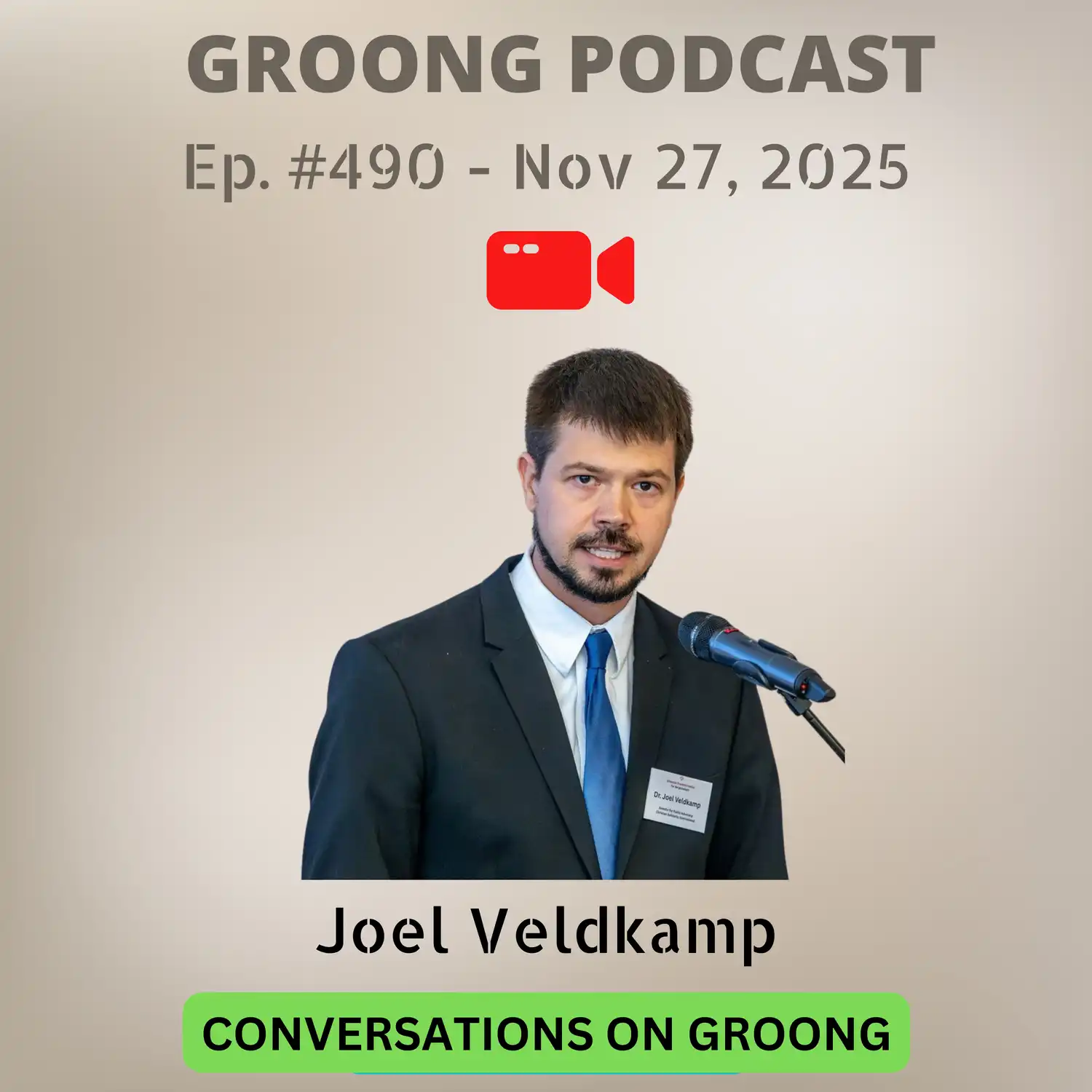
Groong Links:
Guest:
Topics:
- Clergy Arrests in Armenia
- Church Under Pressure
- Prayer Breakfast Controversy
- Western Silence on Repression
- CSIâs Findings in Yerevan
Episode 490 | Recorded: November 25, 2025
#ArmenianChurch #ReligiousFreedom #ClergyArrests #ChristianSolidarityInternational #HumanRightsInArmenia
Joel Veldkamp - Armenia’s Prayer Breakfast and the Crackdown on the Church | Ep 490, Nov 27, 2025 [EP490]
Posted on Thursday, Nov 27, 2025 | Category: Armenia, Politics, Armenian Church, Artsakh, Nagorno Karabakh, Human Rights, Artsakh Blockade, Russia, Azerbaijan, China, GenocideGroong Links:
Guest:
Topics:
- Clergy Arrests in Armenia
- Church Under Pressure
- Prayer Breakfast Controversy
- Western Silence on Repression
- CSIâs Findings in Yerevan
Episode 490 | Recorded: November 25, 2025
#ArmenianChurch #ReligiousFreedom #ClergyArrests #ChristianSolidarityInternational #HumanRightsInArmenia
Garen Jinbachian - OSCE Human Dimension Conf, Armenia, Azerbaijan, and The West | Ep 489, Nov 26, 2025 [EP489]
Posted on Wednesday, Nov 26, 2025 | Category: Armenia, Artsakh, Political Prisoners, Artsakh, Nagorno Karabakh, Human Rights, Azerbaijan, Armenian Church, Georgia, Genocide, Turkey, Iran, Lebanon | Series: cog
Groong Links:
Guest:
Topics:
- Azerbaijanâs war crimes and impunity
- Sham trials of Artsakh leaders
- Silence of the OSCE and the West
- Armeniaâs growing political repression
- Attacks on the Armenian Church
Episode 489 | Recorded: November 23, 2025
Garen Jinbachian - OSCE Human Dimension Conf, Armenia, Azerbaijan, and The West | Ep 489, Nov 26, 2025 [EP489]
Posted on Wednesday, Nov 26, 2025 | Category: Armenia, Artsakh, Political Prisoners, Artsakh, Nagorno Karabakh, Human Rights, Azerbaijan, Armenian Church, Georgia, Genocide, Turkey, Iran, LebanonGroong Links:
Guest:
Topics:
- Azerbaijanâs war crimes and impunity
- Sham trials of Artsakh leaders
- Silence of the OSCE and the West
- Armeniaâs growing political repression
- Attacks on the Armenian Church
Episode 489 | Recorded: November 23, 2025
Hrant Mikaelian - Ukraine Talks, Armenia’s Crackdowns, and Rising Tensions | Ep 488, Nov 23, 2025 [EP488]
Posted on Wednesday, Nov 26, 2025 | Category: Armenia, Politics, Russia, Ukraine, Turkey, Georgia, Azerbaijan, Armenian Church, China, Economy, Iran, Middle East, Artsakh, Human Rights, Genocide, Nagorno Karabakh, European Union, NATO | Series: wir, video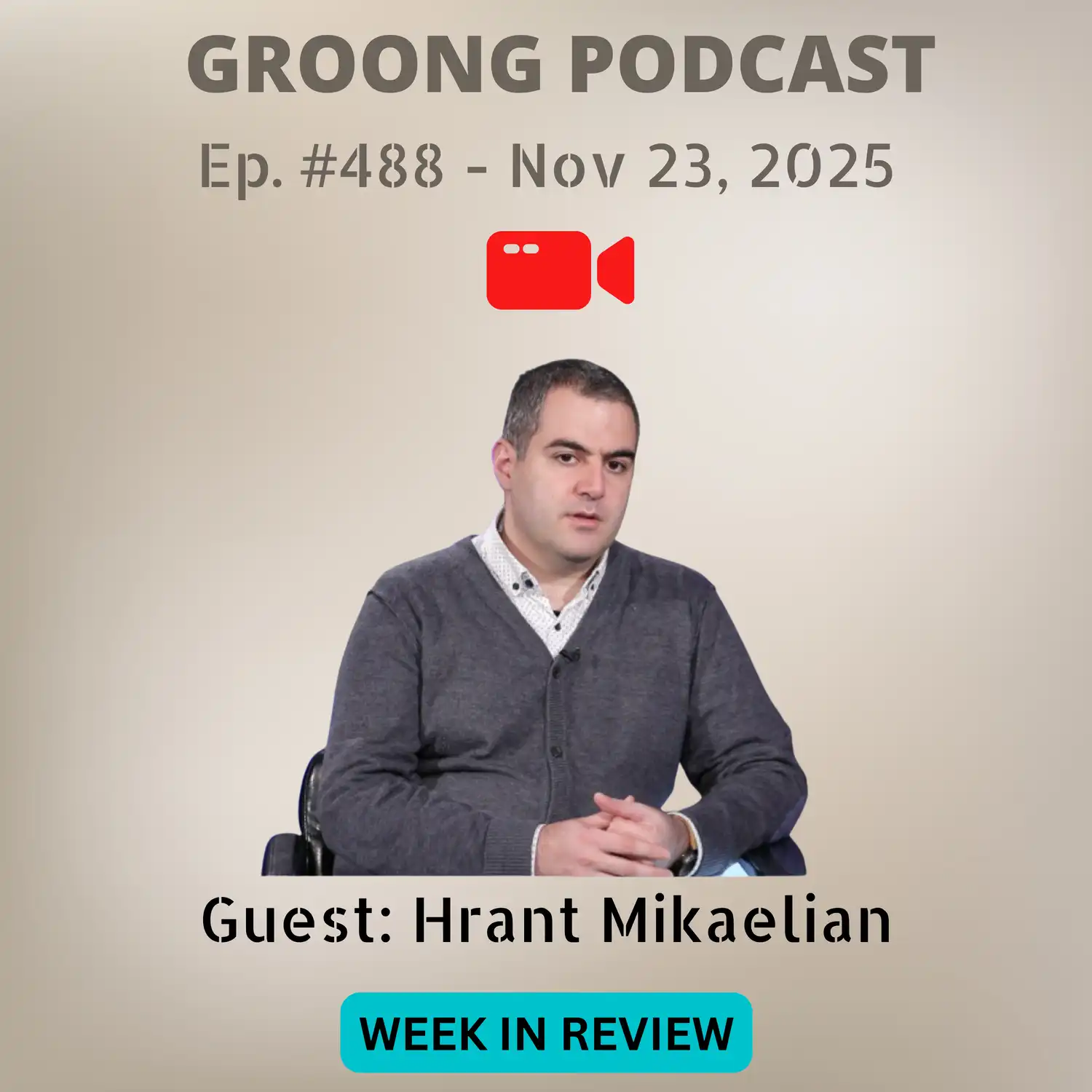
Groong Links:
Guest:
Topics:
- High-Stakes Ukraine Talks
- Armeniaâs Growing Political Detentions
- Pashinyan Honored In Kazakhstan
- Rising Pressure On The Church
- Impeachment vs. Elections
- Pashinyan Seizes Power Grid
Episode 488 | Recorded: November 24, 2025
Hrant Mikaelian - Ukraine Talks, Armenia’s Crackdowns, and Rising Tensions | Ep 488, Nov 23, 2025 [EP488]
Posted on Wednesday, Nov 26, 2025 | Category: Armenia, Politics, Russia, Ukraine, Turkey, Georgia, Azerbaijan, Armenian Church, China, Economy, Iran, Middle East, Artsakh, Human Rights, Genocide, Nagorno Karabakh, European Union, NATOGroong Links:
Guest:
Topics:
- High-Stakes Ukraine Talks
- Armeniaâs Growing Political Detentions
- Pashinyan Honored In Kazakhstan
- Rising Pressure On The Church
- Impeachment vs. Elections
- Pashinyan Seizes Power Grid
Episode 488 | Recorded: November 24, 2025
Hayk Mamijanyan - Freedom of Expression at Risk in Armenia, Vagharshapat, RPA Strategy | Ep 487, Nov 19, 2025 [EP487]
Posted on Wednesday, Nov 19, 2025 | Category: Armenia, Artsakh, Political Prisoners, Artsakh, Nagorno Karabakh, Armenian Church, Geopolitics, European Union, Iran | Series: cog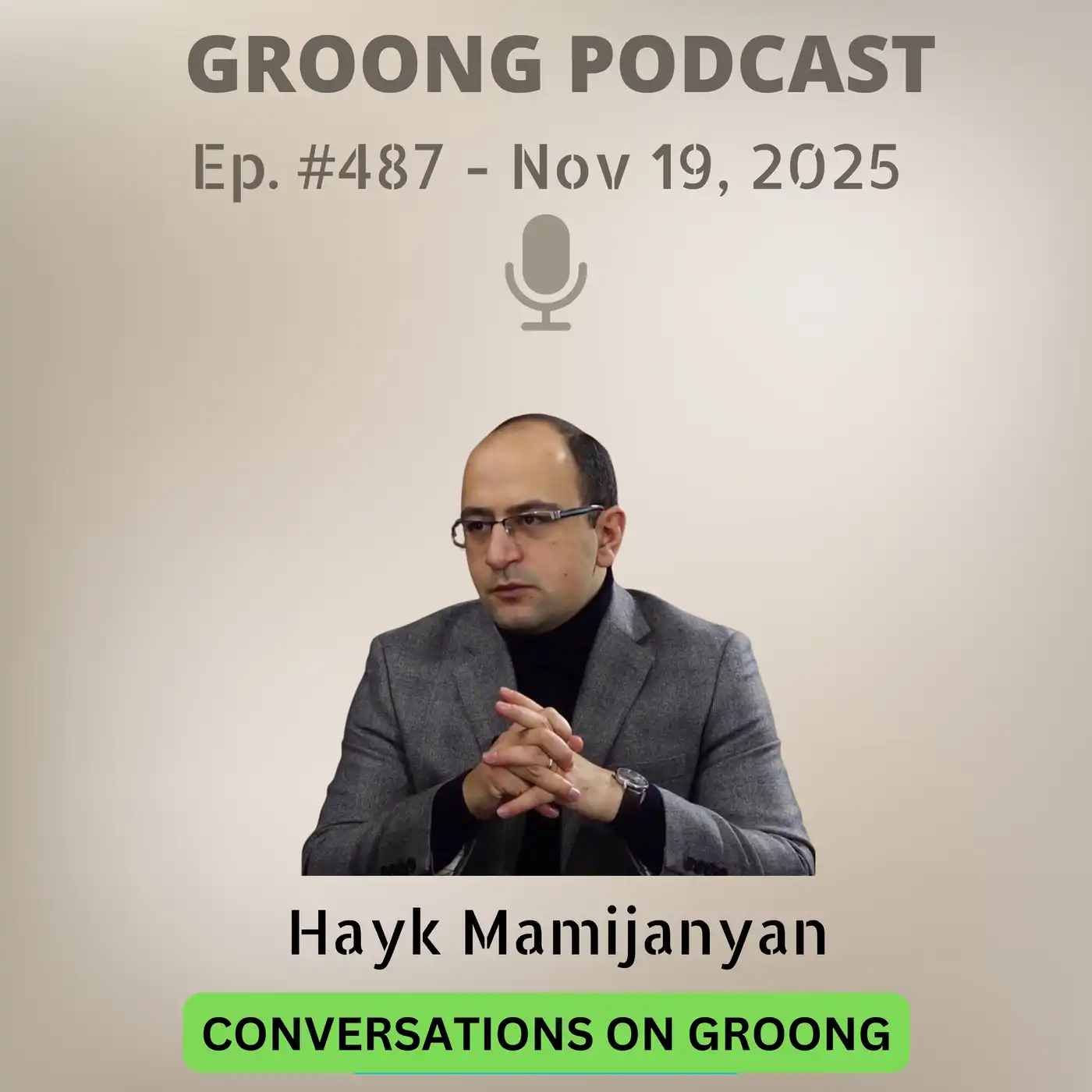
Groong Links:
Guest:
Topics:
- Freedom of Expression at Risk in Armenia
- Vagharshapat Municipal Outcomes
- Republican Party Election Strategy
- Stand in Support of Independent Media and Journalism in Armenia
Episode 487 | Recorded: November 18, 2025
Hayk Mamijanyan - Freedom of Expression at Risk in Armenia, Vagharshapat, RPA Strategy | Ep 487, Nov 19, 2025 [EP487]
Posted on Wednesday, Nov 19, 2025 | Category: Armenia, Artsakh, Political Prisoners, Artsakh, Nagorno Karabakh, Armenian Church, Geopolitics, European Union, IranGroong Links:
Guest:
Topics:
- Freedom of Expression at Risk in Armenia
- Vagharshapat Municipal Outcomes
- Republican Party Election Strategy
- Stand in Support of Independent Media and Journalism in Armenia
Episode 487 | Recorded: November 18, 2025
Sergei Melkonian - Ukraine, Iran & Israel, C5+1 in DC, Vagharshapat Municipal Outcome | Ep 486, Nov 16, 2025 [EP486]
Posted on Tuesday, Nov 18, 2025 | Category: Armenia, Politics, Iran, Israel, Azerbaijan, Turkey, Russia, Artsakh, Nagorno Karabakh, Armenian Church, Syria, Ukraine, China, Middle East, NATO, Economy, European Union, Geopolitics, India | Series: wir, video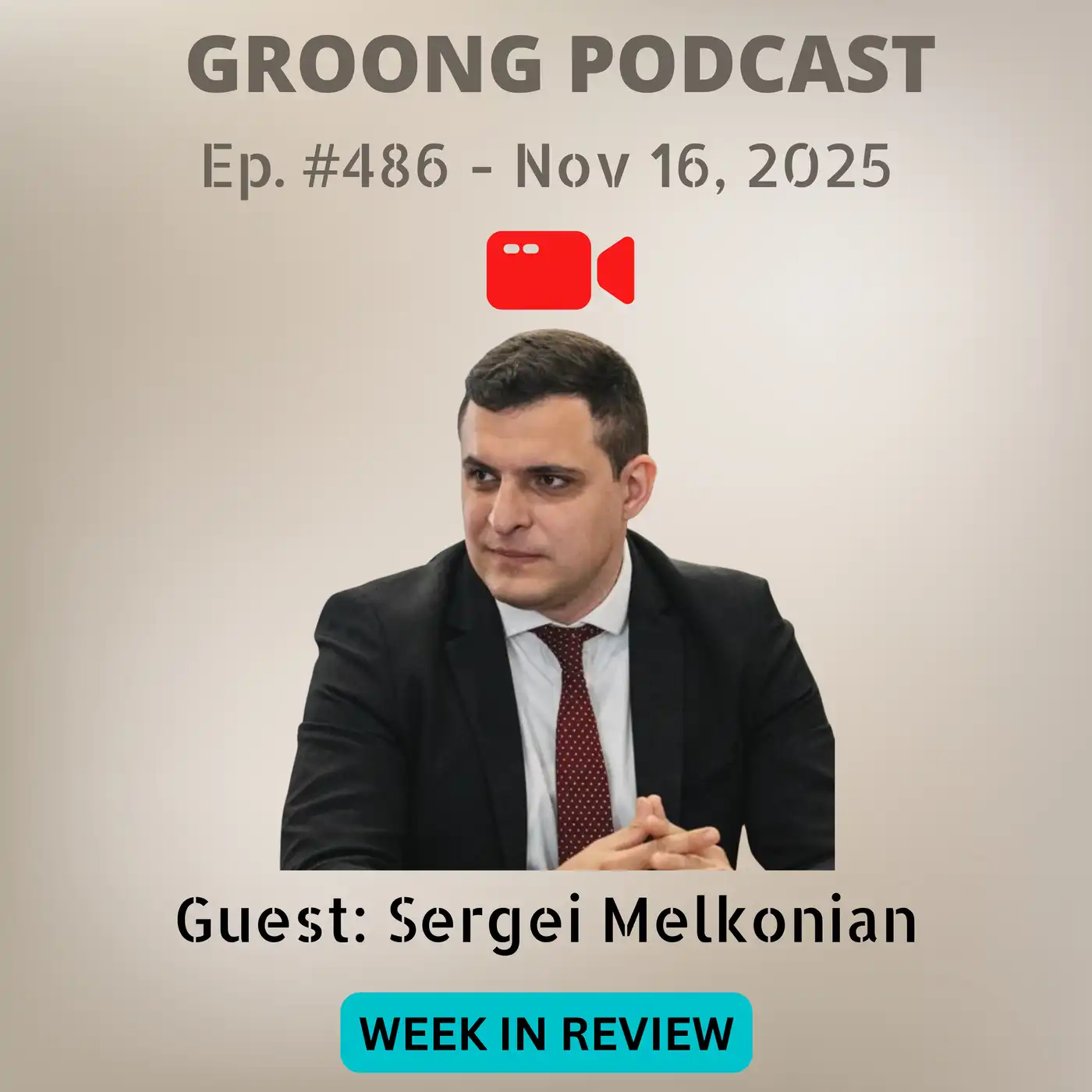
Groong Links:
Guest:
Topics:
- Ukraine and Iran-Israel Conflicts
- C5+1 in Washington DC
- Vagharshapat/Etchmiadzin Municipal
Episode 486 | Recorded: November 17, 2025
Sergei Melkonian - Ukraine, Iran & Israel, C5+1 in DC, Vagharshapat Municipal Outcome | Ep 486, Nov 16, 2025 [EP486]
Posted on Tuesday, Nov 18, 2025 | Category: Armenia, Politics, Iran, Israel, Azerbaijan, Turkey, Russia, Artsakh, Nagorno Karabakh, Armenian Church, Syria, Ukraine, China, Middle East, NATO, Economy, European Union, Geopolitics, IndiaGroong Links:
Guest:
Topics:
- Ukraine and Iran-Israel Conflicts
- C5+1 in Washington DC
- Vagharshapat/Etchmiadzin Municipal
Episode 486 | Recorded: November 17, 2025
Arthur Khachikyan - Imnemnimi Podcasters Arrested, Freedom of Expression at Risk in Armenia | Ep 485, Nov 14, 2025 [EP485]
Posted on Friday, Nov 14, 2025 | Category: Armenia, Politics, Armenian Church, Human Rights, Russia, Georgia, Syria, Ukraine, China, Israel, Turkey, India | Series: cog
Guest:
Topics:
- Arrest of Imnemnimi Podcasters
- What are the Governmentâs Real Intentions?
- Silence of the West
- Call to All Media: Cover Aggressions Against Freedom of Expression in Armenia!
Episode 485 | Recorded: November 14, 2025
Arthur Khachikyan - Imnemnimi Podcasters Arrested, Freedom of Expression at Risk in Armenia | Ep 485, Nov 14, 2025 [EP485]
Posted on Friday, Nov 14, 2025 | Category: Armenia, Politics, Armenian Church, Human Rights, Russia, Georgia, Syria, Ukraine, China, Israel, Turkey, IndiaGuest:
Topics:
- Arrest of Imnemnimi Podcasters
- What are the Governmentâs Real Intentions?
- Silence of the West
- Call to All Media: Cover Aggressions Against Freedom of Expression in Armenia!
Episode 485 | Recorded: November 14, 2025
Arthur Martirosyan - 44 Day War, Ukraine, Iran-Israel, Sargsyan and Kocharyan Interviews, Narek Karapetyan on Tucker Carlson | Ep 484, Nov 9, 2025 [EP484]
Posted on Tuesday, Nov 11, 2025 | Category: Armenia, Politics, Artsakh, Nagorno Karabakh, Azerbaijan, Turkey, Russia, Iran, Israel, Ukraine, Middle East, NATO, Georgia, European Union | Series: wir, video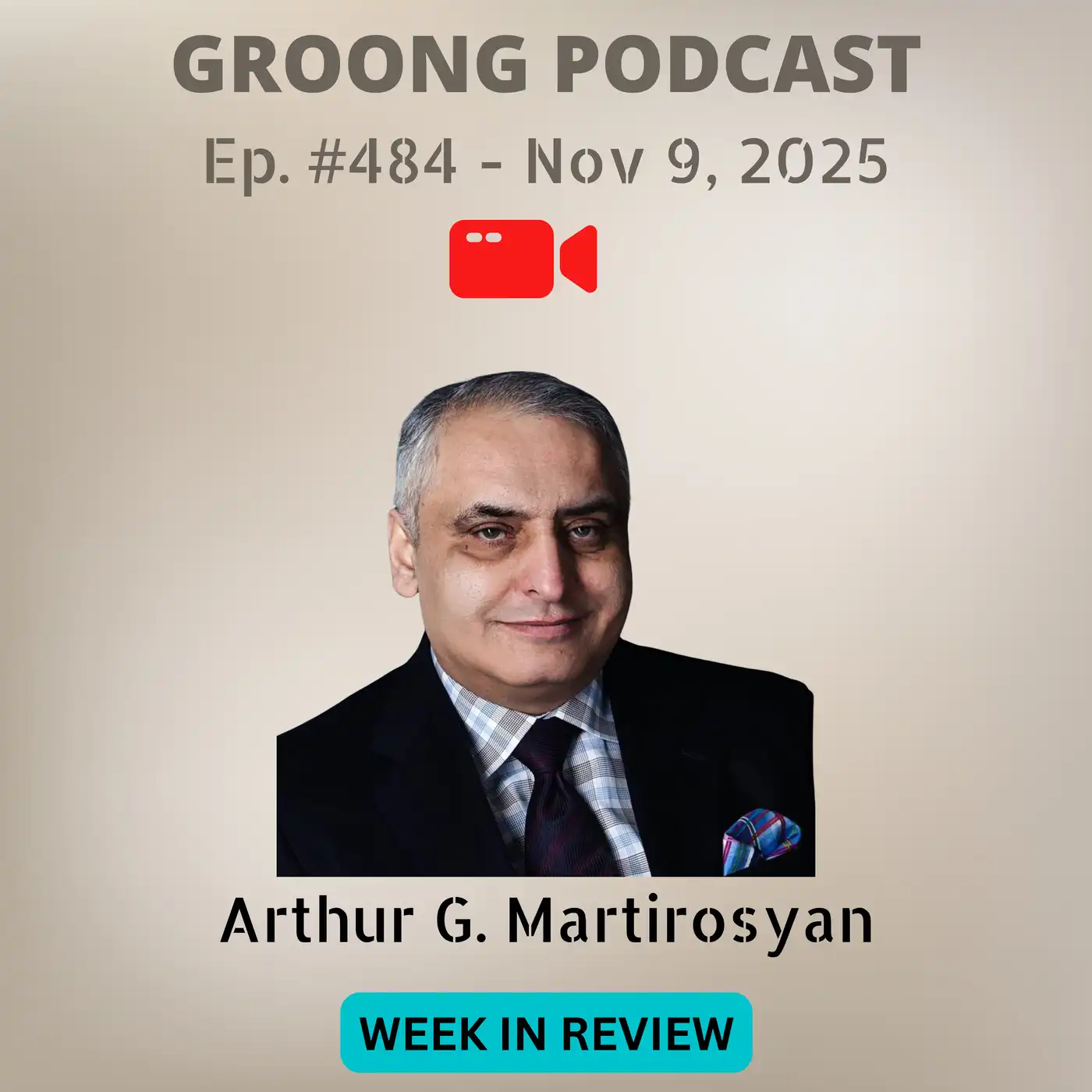
Groong Links:
Guest:
Topics:
- Nov 9: 44-Day War 5 years Hence
- Ukraine and Iran-Israel Conflicts
- Pres. Serge Sargsyanâs Interview
- Pres. Robert Kocharyanâs Interview
- Narek Karapetyan on Tucker Carlson
Episode 484 | Recorded: November 10, 2025
Arthur Martirosyan - 44 Day War, Ukraine, Iran-Israel, Sargsyan and Kocharyan Interviews, Narek Karapetyan on Tucker Carlson | Ep 484, Nov 9, 2025 [EP484]
Posted on Tuesday, Nov 11, 2025 | Category: Armenia, Politics, Artsakh, Nagorno Karabakh, Azerbaijan, Turkey, Russia, Iran, Israel, Ukraine, Middle East, NATO, Georgia, European UnionGroong Links:
Guest:
Topics:
- Nov 9: 44-Day War 5 years Hence
- Ukraine and Iran-Israel Conflicts
- Pres. Serge Sargsyanâs Interview
- Pres. Robert Kocharyanâs Interview
- Narek Karapetyan on Tucker Carlson
Episode 484 | Recorded: November 10, 2025
Benyamin Poghosyan - Ukraine War update, Pashinyan’s Persecution of Church and Opposition intensifies | Ep 483, Nov 2, 2025 [EP483]
Posted on Tuesday, Nov 4, 2025 | Category: Armenia, Politics, Ukraine, Russia, Azerbaijan, Georgia, Turkey, Artsakh, Nagorno Karabakh, USA, Armenian Church, Artsakh Blockade, China, Economy, Genocide, India, Iran, Middle East, NATO | Series: video, wir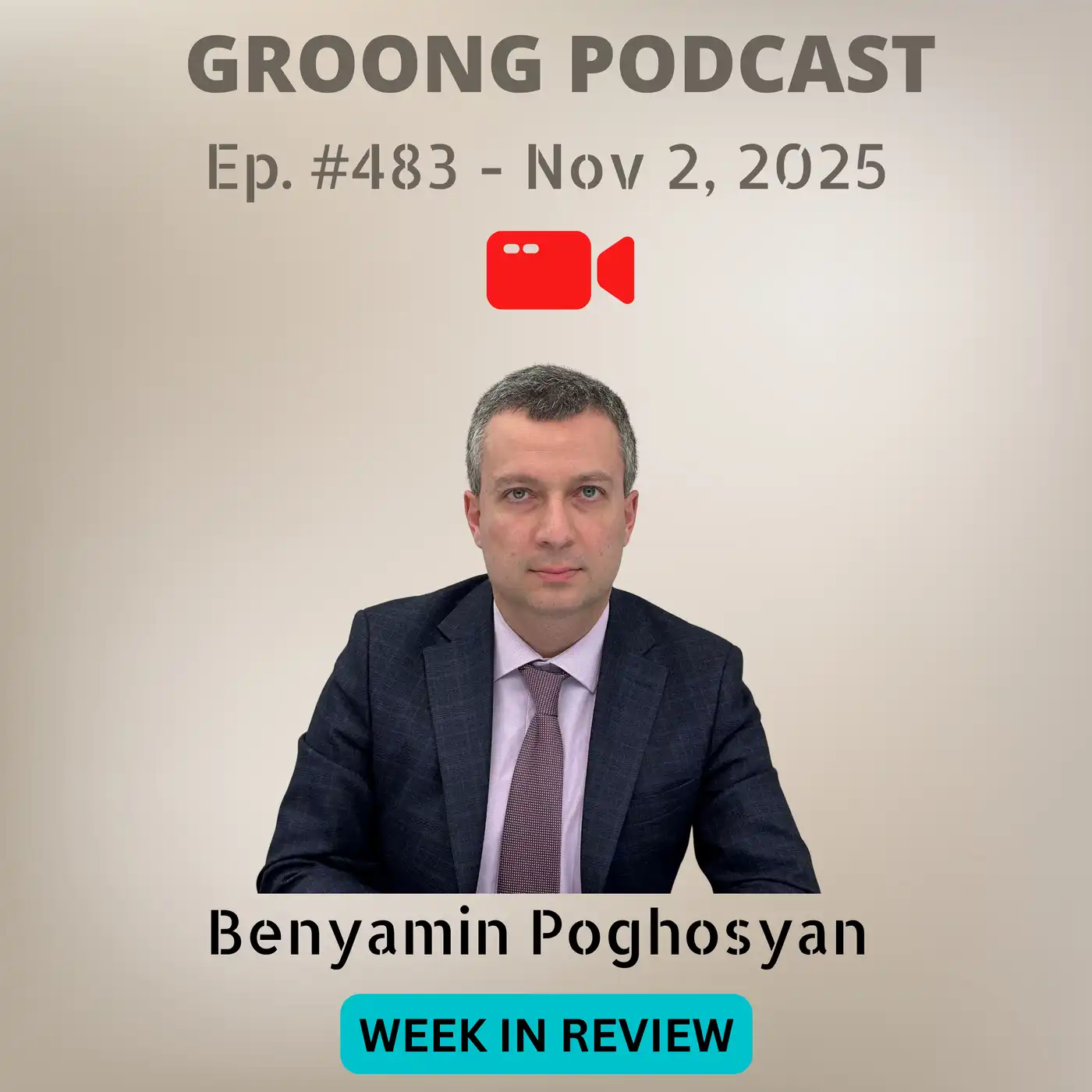
Groong Links:
Guest:
Topics:
- Ukraine war status and U.S.âRussia dynamics
- Churchâstate tensions and religious prosecutions
- Opposition arrests, trials, and civil liberties
- Border demarcation, enclaves
Episode 483 | Recorded: November 3, 2025
Benyamin Poghosyan - Ukraine War update, Pashinyan’s Persecution of Church and Opposition intensifies | Ep 483, Nov 2, 2025 [EP483]
Posted on Tuesday, Nov 4, 2025 | Category: Armenia, Politics, Ukraine, Russia, Azerbaijan, Georgia, Turkey, Artsakh, Nagorno Karabakh, USA, Armenian Church, Artsakh Blockade, China, Economy, Genocide, India, Iran, Middle East, NATOGroong Links:
Guest:
Topics:
- Ukraine war status and U.S.âRussia dynamics
- Churchâstate tensions and religious prosecutions
- Opposition arrests, trials, and civil liberties
- Border demarcation, enclaves
Episode 483 | Recorded: November 3, 2025
Trita Parsi - Prospect, Grounds and Consequences of a Second Israeli War on Iran | Ep 482, Nov 1, 2025 [EP482]
Posted on Saturday, Nov 1, 2025 | Category: Middle East, Iran, Israel, Syria, USA, Armenia, Azerbaijan, European Union, Lebanon, Russia, Turkey | Series: cog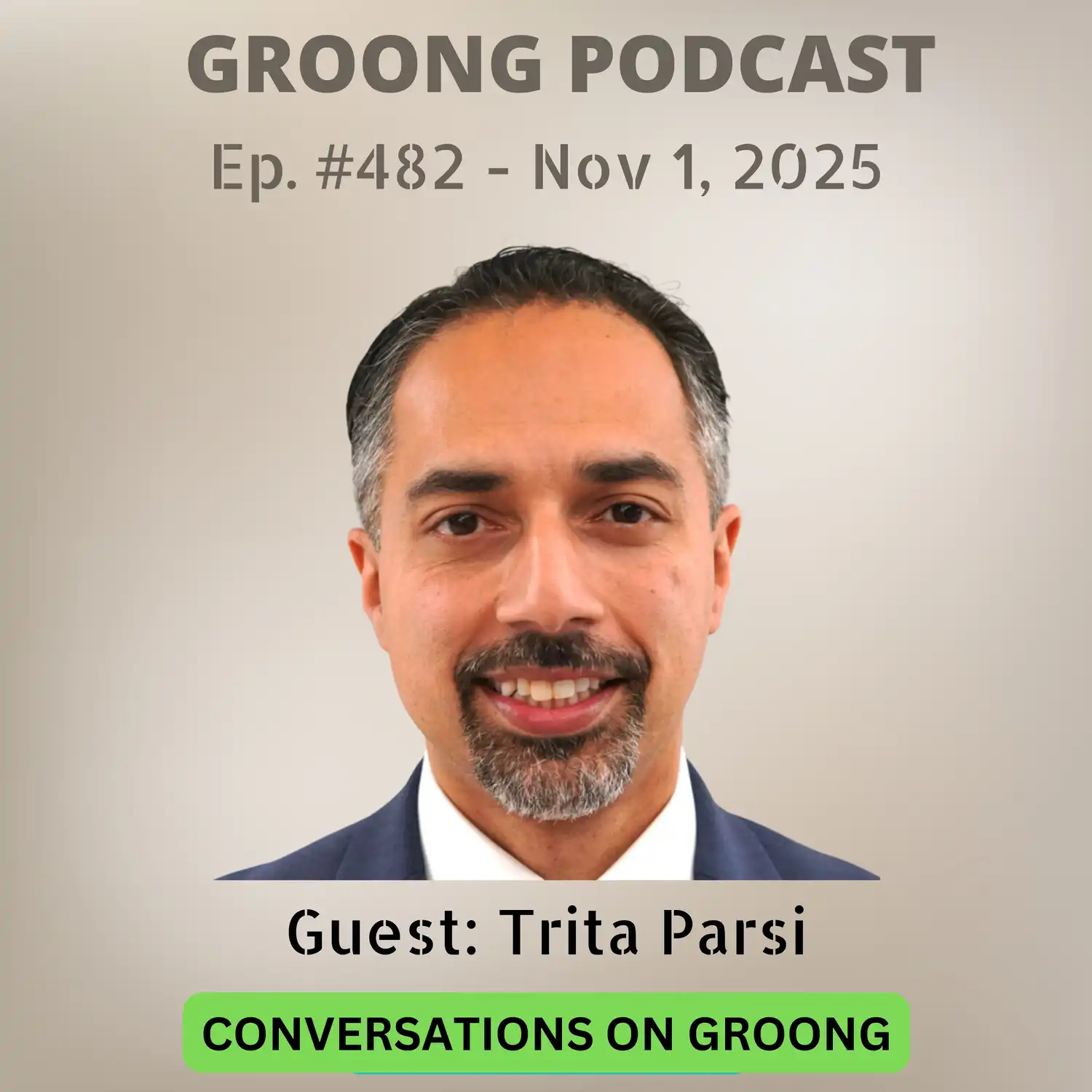
Groong Links:
Guest:
- Dr. Trita Parsi , EVP, Quincy Institute
Topics:
- Timing and intent for an Israel and Iran clash
- Unfinished business from the June war
- US role, limited support or full engagement
- Iranâs escalation ladder and Caucasus spillover scenarios
Episode 482 | Recorded on October 30, 2025
Trita Parsi - Prospect, Grounds and Consequences of a Second Israeli War on Iran | Ep 482, Nov 1, 2025 [EP482]
Posted on Saturday, Nov 1, 2025 | Category: Middle East, Iran, Israel, Syria, USA, Armenia, Azerbaijan, European Union, Lebanon, Russia, TurkeyGroong Links:
Guest:
- Dr. Trita Parsi , EVP, Quincy Institute
Topics:
- Timing and intent for an Israel and Iran clash
- Unfinished business from the June war
- US role, limited support or full engagement
- Iranâs escalation ladder and Caucasus spillover scenarios
Episode 482 | Recorded on October 30, 2025
Transcript: Trita Parsi - Prospect, Grounds and Consequences of a Second Israeli War on Iran | Ep 482, Nov 1, 2025 [EP482]
Posted on Saturday, Nov 1, 2025 | Category: Middle East, Iran, Israel, Syria, USA, Armenia, Azerbaijan, European Union, Lebanon, Russia, Turkey, TranscriptA deep dive with Dr. Trita Parsi on whether Israel will strike Iran again, why June’s war left “unfinished business,” how much Israel depends on the United States, what Iran’s rapid-response playbook looks like after June, and how a wider fight could spill into the South Caucasus and affect Armenia. Recorded Oct 30, 2025.
Arthur Khachatryan - Euronest, Aliyev Transit Move, Gyumri Mayor Arrest, Pashinyan vs. Church | Ep 481, Oct 26, 2025 [EP481]
Posted on Friday, Oct 31, 2025 | Category: Armenia, Politics, Azerbaijan, Armenian Church, Georgia, Turkey, Russia, Artsakh, Nagorno Karabakh, Artsakh Blockade, European Union, Ukraine, NATO | Series: wir
Groong Links:
Guest:
- Arthur Khachatryan , MP
Topics:
- Euronest session takeaways
- Aliyevâs transit move and TRIPP
- Gyumri mayor arrest fallout
- Pashinyanâs push to control the Church
Episode 481 | Recorded: October 29, 2025
Arthur Khachatryan - Euronest, Aliyev Transit Move, Gyumri Mayor Arrest, Pashinyan vs. Church | Ep 481, Oct 26, 2025 [EP481]
Posted on Friday, Oct 31, 2025 | Category: Armenia, Politics, Azerbaijan, Armenian Church, Georgia, Turkey, Russia, Artsakh, Nagorno Karabakh, Artsakh Blockade, European Union, Ukraine, NATOGroong Links:
Guest:
- Arthur Khachatryan , MP
Topics:
- Euronest session takeaways
- Aliyevâs transit move and TRIPP
- Gyumri mayor arrest fallout
- Pashinyanâs push to control the Church
Episode 481 | Recorded: October 29, 2025
Pietro Shakarian - Anastas Mikoyan, An Armenian Reformer in Khrushchev's Kremlin| Ep 480, Oct 22, 2025 [EP480]
Posted on Wednesday, Oct 22, 2025 | Category: Armenia, History, Artsakh, Nagorno Karabakh, History, Armenian Genocide, USSR, Armenian Church, Russia, Genocide, China, Georgia, Turkey, Economy, NATO, Iran, Lebanon, Middle East, Ukraine, India, Soviet Armenia, Modern Armenia | Series: cog
Groong Links:
Guest:
Topics:
- Research journey, archives Moscow and Yerevan
- Mikoyanâs vision of confederation for the USSR
- Artsakhâs status within Soviet constraints
- De-Stalinization and Armeniaâs cultural thaw
- Mikoyanâs stance toward the Armenian Church
Episode 480 | Recorded on October 18, 2025
Pietro Shakarian - Anastas Mikoyan, An Armenian Reformer in Khrushchev's Kremlin| Ep 480, Oct 22, 2025 [EP480]
Posted on Wednesday, Oct 22, 2025 | Category: Armenia, History, Artsakh, Nagorno Karabakh, History, Armenian Genocide, USSR, Armenian Church, Russia, Genocide, China, Georgia, Turkey, Economy, NATO, Iran, Lebanon, Middle East, Ukraine, India, Soviet Armenia, Modern ArmeniaGroong Links:
Guest:
Topics:
- Research journey, archives Moscow and Yerevan
- Mikoyanâs vision of confederation for the USSR
- Artsakhâs status within Soviet constraints
- De-Stalinization and Armeniaâs cultural thaw
- Mikoyanâs stance toward the Armenian Church
Episode 480 | Recorded on October 18, 2025
Dziunik Aghajanian - Ukraine, Israel-Gaza, Armenian Government Repressions | Ep 479, Oct 19, 2025 [EP479]
Posted on Tuesday, Oct 21, 2025 | Category: Armenia, Politics, Artsakh, Nagorno Karabakh, Azerbaijan, Ukraine, Turkey, Russia, Israel, Iran, Armenian Church, Middle East, NATO, Syria, Genocide, European Union, China, Human Rights, Lebanon, India | Series: wir, video
Groong Links:
Guest:
Topics:
- Ukraine War, Trump - Putin Upcoming Summit
- Israel-Gaza âCease Fireâ
- Armenian Government Repressions Accelerate
Episode 479 | Recorded: October 20, 2025
Dziunik Aghajanian - Ukraine, Israel-Gaza, Armenian Government Repressions | Ep 479, Oct 19, 2025 [EP479]
Posted on Tuesday, Oct 21, 2025 | Category: Armenia, Politics, Artsakh, Nagorno Karabakh, Azerbaijan, Ukraine, Turkey, Russia, Israel, Iran, Armenian Church, Middle East, NATO, Syria, Genocide, European Union, China, Human Rights, Lebanon, IndiaGroong Links:
Guest:
Topics:
- Ukraine War, Trump - Putin Upcoming Summit
- Israel-Gaza âCease Fireâ
- Armenian Government Repressions Accelerate
Episode 479 | Recorded: October 20, 2025
Hrant Mikaelian - OTS & CIS summits, Trump-Aliyev Tensions, Armenia Opposition Gears up for 2026 | Ep 478, Oct 12, 2025 [EP478]
Posted on Tuesday, Oct 14, 2025 | Category: Armenia, Politics, Artsakh, Nagorno Karabakh, Azerbaijan, Turkey, Russia, Artsakh Blockade, European Union, China | Series: wir, video
Groong Links:
Guest:
Topics:
- Aliyev pushes âZangezur Corridorâ at OTS
- Pashinyan pitches âTrump Routeâ at CIS
- PutinâAliyev meeting eases tensions
- Armeniaâs opposition gears up for 2026
Episode 478 | Recorded: October 14, 2025
Hrant Mikaelian - OTS & CIS summits, Trump-Aliyev Tensions, Armenia Opposition Gears up for 2026 | Ep 478, Oct 12, 2025 [EP478]
Posted on Tuesday, Oct 14, 2025 | Category: Armenia, Politics, Artsakh, Nagorno Karabakh, Azerbaijan, Turkey, Russia, Artsakh Blockade, European Union, ChinaGroong Links:
Guest:
Topics:
- Aliyev pushes âZangezur Corridorâ at OTS
- Pashinyan pitches âTrump Routeâ at CIS
- PutinâAliyev meeting eases tensions
- Armeniaâs opposition gears up for 2026
Episode 478 | Recorded: October 14, 2025
Benyamin Poghosyan - Ajapahyan Sentenced, Moldova, EPC, Peace Act, Dismantling the Armenian Military | Ep 477, Oct 5, 2025 [EP477]
Posted on Wednesday, Oct 8, 2025 | Category: Armenia, Politics, Artsakh, Nagorno Karabakh, Azerbaijan, Armenian Church, Russia, Ukraine, Iran, Israel, European Union, Turkey, China, Economy | Series: video, wir
Groong Links:
Guest:
Topics:
- Ajapahyan Sentenced: 2 Years in Jail for speaking out!
- Moldova Election Lessons
- EPC in Copenhagen, WSF in Warsaw
- PEACE Act politics
- Dismantling the Armenian Military
Episode 477 | Recorded: October 6, 2025
Benyamin Poghosyan - Ajapahyan Sentenced, Moldova, EPC, Peace Act, Dismantling the Armenian Military | Ep 477, Oct 5, 2025 [EP477]
Posted on Wednesday, Oct 8, 2025 | Category: Armenia, Politics, Artsakh, Nagorno Karabakh, Azerbaijan, Armenian Church, Russia, Ukraine, Iran, Israel, European Union, Turkey, China, EconomyGroong Links:
Guest:
Topics:
- Ajapahyan Sentenced: 2 Years in Jail for speaking out!
- Moldova Election Lessons
- EPC in Copenhagen, WSF in Warsaw
- PEACE Act politics
- Dismantling the Armenian Military
Episode 477 | Recorded: October 6, 2025
Groong Links:
Topics:
- Pashinyan’s rise and Western backing
- Breakdown of talks and secret meetings
- Failures and propaganda during the war
- Aftermath, revisionism, and political responsibility
Episode 476 | Recorded: September 28, 2025
44-Day War, A Tale of Betrayal | Ep 476, Sep 28, 2025 [EP476]
Posted on Wednesday, Oct 1, 2025 | Category: Armenia, Politics, Artsakh, Nagorno Karabakh, Azerbaijan, Turkey, Russia, Genocide, NATO, Ukraine, Georgia, Iran, ChinaGroong Links:
Topics:
- Pashinyan’s rise and Western backing
- Breakdown of talks and secret meetings
- Failures and propaganda during the war
- Aftermath, revisionism, and political responsibility
Episode 476 | Recorded: September 28, 2025
Archil Sikharulidze - Georgian Municipal Elections 2025 | Ep 475, Sep 30, 2025 [EP475]
Posted on Tuesday, Sep 30, 2025 | Category: Georgia, Politics, Armenia, Azerbaijan, Russia, European Union, Iran, Ukraine, Turkey, Middle East, NATO, Human Rights | Series: cog
Groong Links:
Guest:
Topics:
- Municipal Elections & Tbilisi Politics
- Foreign Agent Law, One Year Later
- Georgian Perspectives on TRIPP
Episode 475 | Recorded: September 28, 2025
Archil Sikharulidze - Georgian Municipal Elections 2025 | Ep 475, Sep 30, 2025 [EP475]
Posted on Tuesday, Sep 30, 2025 | Category: Georgia, Politics, Armenia, Azerbaijan, Russia, European Union, Iran, Ukraine, Turkey, Middle East, NATO, Human RightsGroong Links:
Guest:
Topics:
- Municipal Elections & Tbilisi Politics
- Foreign Agent Law, One Year Later
- Georgian Perspectives on TRIPP
Episode 475 | Recorded: September 28, 2025
Arthur Martirosyan - Sep 19, Civil Contract, Opposition Inaction, Electric Network | Ep 474, Sep 21, 2025 [EP474]
Posted on Tuesday, Sep 23, 2025 | Category: Armenia, Politics, Artsakh, Nagorno Karabakh, Azerbaijan, Turkey, Russia, Genocide, Artsakh Blockade, European Union, China, Georgia, Israel, Middle East | Series: wir, video
Groong Links:
Guest:
Topics:
- Sep. 19: Day of Artsakhâs Ethnic Cleansing
- Civil Contractâs 7th Congress
- Opposition (In)Action
- Electric Network of Armenia
Episode 474 | Recorded: September 22, 2025
Arthur Martirosyan - Sep 19, Civil Contract, Opposition Inaction, Electric Network | Ep 474, Sep 21, 2025 [EP474]
Posted on Tuesday, Sep 23, 2025 | Category: Armenia, Politics, Artsakh, Nagorno Karabakh, Azerbaijan, Turkey, Russia, Genocide, Artsakh Blockade, European Union, China, Georgia, Israel, Middle EastGroong Links:
Guest:
Topics:
- Sep. 19: Day of Artsakhâs Ethnic Cleansing
- Civil Contractâs 7th Congress
- Opposition (In)Action
- Electric Network of Armenia
Episode 474 | Recorded: September 22, 2025
Armen Ashotyan - Pashinyan Vote of No Confidence, Opposition Strategies | Ep 473, Sep 19, 2025 [EP473]
Posted on Friday, Sep 19, 2025 | Category: Armenia, Artsakh, Nagorno Karabakh, Human Rights, Turkey, Azerbaijan, Economy | Series: cog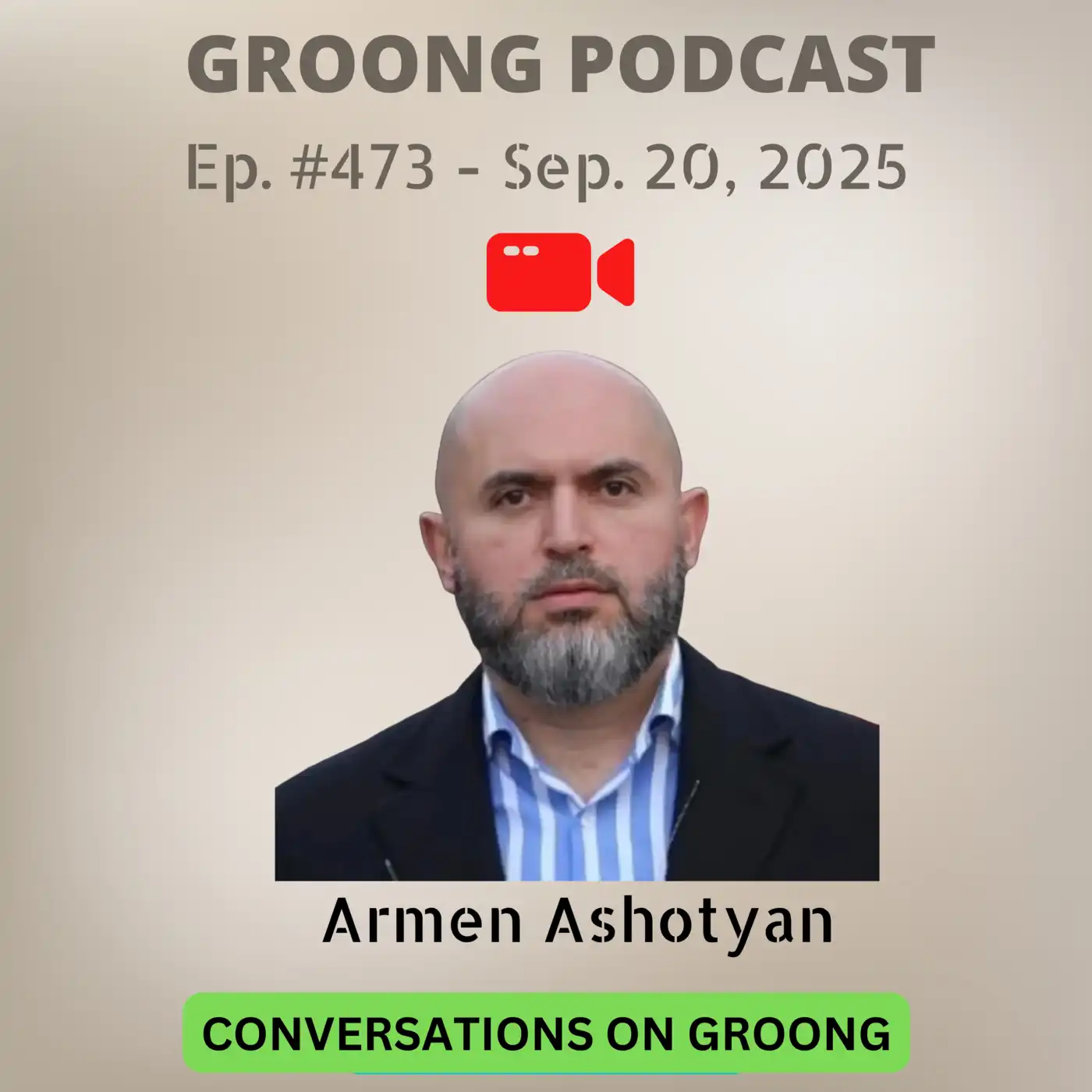
Groong Links:
Guest:
- Armen Ashotyan , MP, VP Republican Party of Armenia (HHK)
Topics:
- TRIPP / Trump Route / Zangezur Corridor
- Vote of No Confidence
- âPashinyan or Warâ?
Episode 473 | Recorded on September 17, 2025
Armen Ashotyan - Pashinyan Vote of No Confidence, Opposition Strategies | Ep 473, Sep 19, 2025 [EP473]
Posted on Friday, Sep 19, 2025 | Category: Armenia, Artsakh, Nagorno Karabakh, Human Rights, Turkey, Azerbaijan, EconomyGroong Links:
Guest:
- Armen Ashotyan , MP, VP Republican Party of Armenia (HHK)
Topics:
- TRIPP / Trump Route / Zangezur Corridor
- Vote of No Confidence
- âPashinyan or Warâ?
Episode 473 | Recorded on September 17, 2025
Arthur Khachatryan - September 13 War, Kiliç in Armenia, US $145M for TRIPP, Shorter Military Service | Ep 472, Sep 14, 2025 [EP472]
Posted on Wednesday, Sep 17, 2025 | Category: Armenia, Politics, Artsakh, Nagorno Karabakh, Azerbaijan, Turkey, Artsakh Blockade, Economy, Russia, Georgia, Iran, China | Series: cog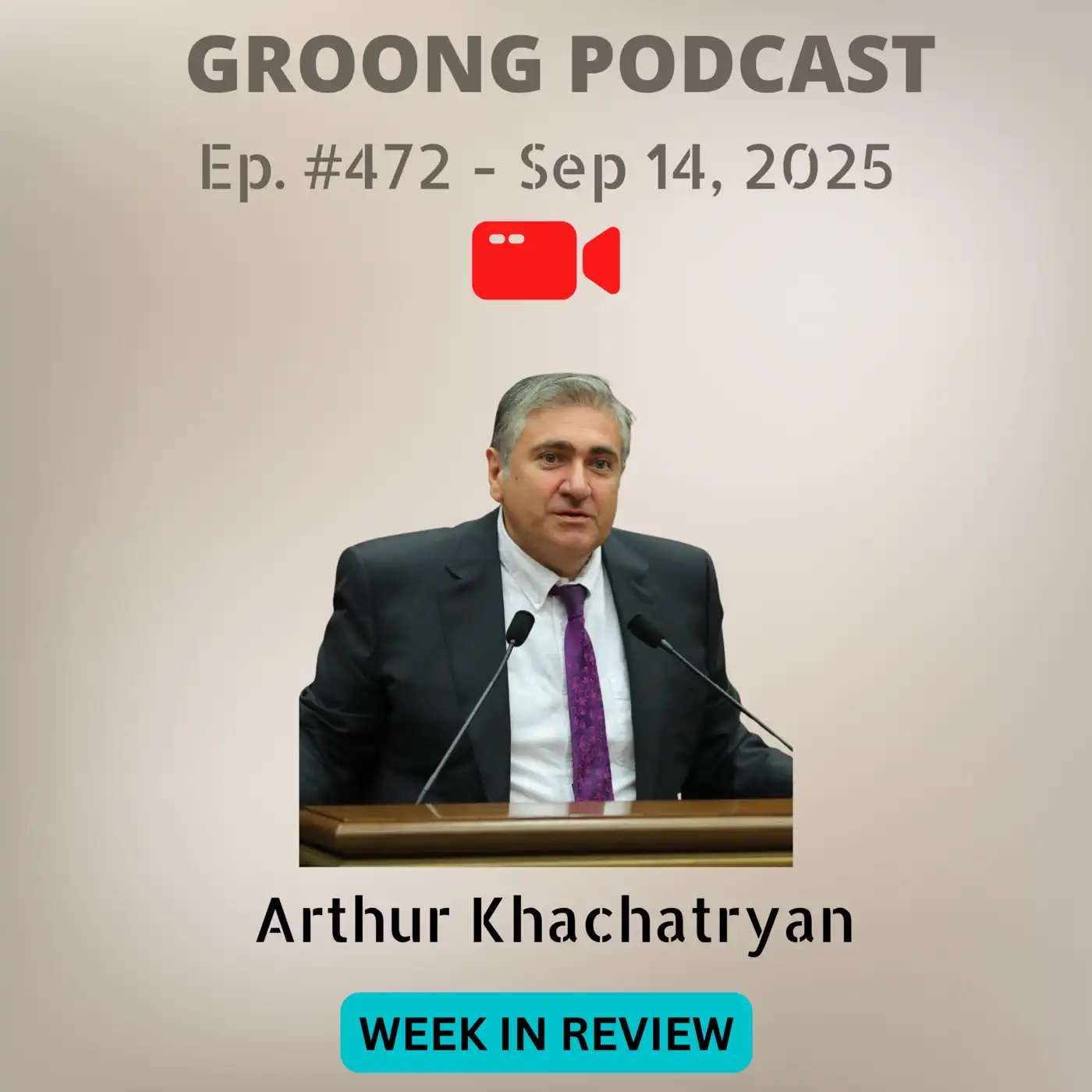
Groong Links:
Guest:
- Arthur Khachatryan , MP
Topics:
- September 13, 2022 War anniversary
- Serdar Kiliç in Armenia for Normalization
- U.S. State Dept. $145M for TRIPP
Episode 472 | Recorded: September 15, 2025