Armenia
Last updated: June 10, 2026
Armenia is a landlocked nation in the South Caucasus region of Western Asia, bordered by Georgia, Azerbaijan, Iran, and Turkey. With a population of approximately 3 million, Armenia is one of the world’s oldest Christian civilizations, having adopted Christianity as its state religion in 301 CE—the first country to do so. The capital and largest city is Yerevan, located in the central part of the country. Armenia’s geography is characterized by the Armenian Highlands, a mountainous region with an average elevation exceeding 1,600 meters. The country is known for its rich cultural heritage, including ancient churches, monasteries, and archaeological sites. Armenia is a member of numerous international organizations including the United Nations, World Trade Organization, and the Eurasian Economic Union.
In the context of Groong’s coverage, Armenia is a landlocked South Caucasus republic facing an acute strategic and political crisis. Since the 2020 44-Day War , the country has lost control of Artsakh (Nagorno Karabakh) and hundreds of square kilometers of territory to Azerbaijan, undergone the complete ethnic cleansing of more than 150,000 Armenian inhabitants from Artsakh, and seen its borders redrawn under duress. Prime Minister Nikol Pashinyan and his Civil Contract party have governed through this catastrophe while pursuing what opponents describe as a capitulation strategy: signing ceasefire agreements, negotiating territorial concessions, and attempting to normalize relations with Turkey despite no reciprocal gesture. The government frames this course as realism and peace-building; critics argue it surrenders Armenian sovereignty without securing the rights or security of displaced Artsakhtsis. Armenia’s relationship with its traditional security guarantor Russia has deteriorated sharply, while its pivot toward the European Union and United States remains hesitant and incomplete, leaving the country in a precarious middle position between Moscow and the West.
Domestic politics in Armenia since 2021 have been dominated by the opposition’s demand for Pashinyan’s resignation and accountability for the war’s loss. The Established Opposition parties—Strong Armenia , Armenia Alliance (Hayastan Dashinq) , Prosperous Armenia , and the Republican Party of Armenia —have held street protests, mounted electoral challenges, and attempted to build coalitions for the June 7, 2026 parliamentary elections. Civil Contract’s supermajority in parliament has allowed it to pass constitutional amendments, strip opposition figures of immunity, and advance its agenda despite sustained criticism over corruption, misuse of administrative resources, and alleged election irregularities. The government has also escalated confrontation with the Armenian Church , arresting clergy, seizing church property, and pressuring the Catholicos , actions that have alarmed international observers and divided public opinion. Simultaneously, Pashinyan has consolidated control over state institutions, including the judiciary and security services, raising concerns about democratic backsliding and rule of law.
Armenia’s economy remains fragile. Growth statistics mask structural weaknesses: the country is heavily dependent on remittances and Russian trade, faces declining foreign investment, carries rising national debt, and has seen its ties to Iran—a key trade and energy partner—complicated by U.S. pressure over TRIPP, the so-called Trump Route for International Peace and Prosperity . The project aims to open transport corridors through Armenian territory in Syunik province, a move that would connect Azerbaijan to Turkey via Armenian land and raise questions about Armenian sovereignty over the route and control of its security. Russia has shifted from enthusiastic support of the corridor to public ambivalence, while Iran has issued explicit warnings that it will not accept any arrangement that bypasses or threatens its interests. The competing pressures from Washington, Moscow, Tehran, and Baku leave Armenia’s leadership navigating impossible choices between security guarantees that do not yet exist and economic partnerships that require territorial and strategic concessions it is reluctant to make permanent. The 2026 election will determine whether Armenian voters remain committed to Pashinyan’s course or whether opposition forces can forge a unified alternative around themes of security, sovereignty, and the rights of displaced Artsakhtsis to return home.
Groong episodes that include this tag
Below are all Groong episodes tagged with Armenia.
Transcript: Hrant Mikaelian - US-Iran Talks, Orban Loses, Armenian Parliamentary Elections, MPG Polls | Ep 531, Apr 12, 2026 [EP531]
Posted on Thursday, Apr 16, 2026 | Category: Iran, Armenia, Election, Poll, Iran, Armenia, USA, Israel, Georgia, Russia, Azerbaijan, Turkey, Artsakh, Nagorno Karabakh, European Union, TranscriptThis Week in Review examines how foreign shocks and internal political pressures are converging for Armenia. We look at the breakdown of US-Iran talks and the threat of a new naval blockade, Viktor Orban’s defeat in Hungary and what it may mean for the region, and fresh polling in Armenia on security, war, free speech, voter participation, and party support ahead of the 2026 elections. The episode also explores whether the Abkhaz railway could offer Armenia a real alternative to routes that deepen dependence on Azerbaijan and Turkey, and what the latest polling says about the opposition’s position.
Hovik & Asbed - Iran War, April 2016 War, Armenia & Russia, Politics & Election | Ep 530, Apr 5, 2026 [EP530]
Posted on Wednesday, Apr 8, 2026 | Category: Iran, Armenia, Politics, Election, Artsakh, Nagorno Karabakh, Azerbaijan, Armenian Church, European Union, Russia, Georgia, Turkey | Series: cog, video
Groong Links:
Topics:
- Iran War Update
- 2016 April War
- Aftermath of Pashinyan in Moscow
- Domestic Politics & Election
Episode 530 | Recorded: April 7, 2026
#Groong #Armenia
Hovik & Asbed - Iran War, April 2016 War, Armenia & Russia, Politics & Election | Ep 530, Apr 5, 2026 [EP530]
Posted on Wednesday, Apr 8, 2026 | Category: Iran, Armenia, Politics, Election, Artsakh, Nagorno Karabakh, Azerbaijan, Armenian Church, European Union, Russia, Georgia, TurkeyGroong Links:
Topics:
- Iran War Update
- 2016 April War
- Aftermath of Pashinyan in Moscow
- Domestic Politics & Election
Episode 530 | Recorded: April 7, 2026
#Groong #Armenia
Transcript: Hovik & Asbed - Iran War, April 2016 War, Armenia & Russia, Politics & Election | Ep 530, Apr 5, 2026 [EP530]
Posted on Wednesday, Apr 8, 2026 | Category: Iran, Armenia, Politics, Election, Artsakh, Nagorno Karabakh, Azerbaijan, Armenian Church, European Union, Russia, Georgia, Turkey, TranscriptIn this Week in Review, Hovik and Asbed discussed the escalating US-Israeli war on Iran and the danger of a wider regional catastrophe; we reflected on the tenth anniversary of the April 2016 Four-Day War and what it revealed about Armenia’s military and diplomatic posture; we examined the fallout from Pashinyan’s Moscow visit and the increasingly blunt Russian response, and reviewed the fast-moving Armenian election campaign, including pressure on the opposition, EU involvement, and the emerging strategies of major the various alliances.
Pietro Shakarian - Iran War, Armenia and Russia, June Parliamentary Elections | Ep 529, Apr 4, 2026 [EP529]
Posted on Saturday, Apr 4, 2026 | Category: Armenia, Iran, Russia, Azerbaijan, Turkey, Israel, Nagorno Karabakh, BRICS, European Union, Ukraine, NATO | Series: cog
Groong Links:
Guest:
Topics:
- The Iran War and Its Global Impacts
- Armenia-Russia Relations
- Parliamentary Elections in Armenia
Episode 529 | Recorded on April 3, 2026
#IranIsraelWar #IsraelIranConflict #IsraelConflict #Armenia #MiddleEastCrisis #ArmeniaElections #PietroShakarian #TRIPP
Pietro Shakarian - Iran War, Armenia and Russia, June Parliamentary Elections | Ep 529, Apr 4, 2026 [EP529]
Posted on Saturday, Apr 4, 2026 | Category: Armenia, Iran, Russia, Azerbaijan, Turkey, Israel, Nagorno Karabakh, BRICS, European Union, Ukraine, NATOGroong Links:
Guest:
Topics:
- The Iran War and Its Global Impacts
- Armenia-Russia Relations
- Parliamentary Elections in Armenia
Episode 529 | Recorded on April 3, 2026
#IranIsraelWar #IsraelIranConflict #IsraelConflict #Armenia #MiddleEastCrisis #ArmeniaElections #PietroShakarian #TRIPP
Transcript: Pietro Shakarian - Iran War, Armenia and Russia, June Parliamentary Elections | Ep 529, Apr 4, 2026 [EP529]
Posted on Saturday, Apr 4, 2026 | Category: Armenia, Iran, Russia, Azerbaijan, Turkey, Israel, Nagorno Karabakh, BRICS, European Union, Ukraine, NATO, TranscriptDr. Pietro Shakarian joined us to discuss the state of the U.S.-Israel war on Iran, the shrinking chances for a diplomatic off-ramp, and how the conflict is shifting wider Eurasian politics. The conversation then turned to Armenia, including the likely freezing of TRIPP amid the Iran war, Pashinyan’s contentious visit to Moscow, and the deeper low point in Armenia-Russia relations. The final section focused on Armenia’s June parliamentary elections, public sentiment toward Pashinyan, fears over election integrity, and the evolving opposition landscape.
Anna Karapetyan - Iran War, Pashinyan Fake Narratives, Fear-mongering, Silencing Talk of Artsakh | Ep 528, Mar 29, 2026 [EP528]
Posted on Tuesday, Mar 31, 2026 | Category: Iran, Armenia, Artsakh, Election, Nagorno Karabakh, USA, Azerbaijan, Armenian Genocide | Series: wir, video
Groong Links:
Guest:
- Anna Karapetyan Director of the Insight Analytical Center for Applied Policy and Research.
Topics:
- Iran war escalation and spillover
- Pashinyanâs Fake âpeaceâ narrative
- Elections built on fear-mongering
- Silencing talk of Artsakh
Episode 528 | Recorded: March 30, 2026
Anna Karapetyan - Iran War, Pashinyan Fake Narratives, Fear-mongering, Silencing Talk of Artsakh | Ep 528, Mar 29, 2026 [EP528]
Posted on Tuesday, Mar 31, 2026 | Category: Iran, Armenia, Artsakh, Election, Nagorno Karabakh, USA, Azerbaijan, Armenian GenocideGroong Links:
Guest:
- Anna Karapetyan Director of the Insight Analytical Center for Applied Policy and Research.
Topics:
- Iran war escalation and spillover
- Pashinyanâs Fake âpeaceâ narrative
- Elections built on fear-mongering
- Silencing talk of Artsakh
Episode 528 | Recorded: March 30, 2026
Groong Links:
Topics:
- Georgian Patriarch Ilia II passes away
- Karekin II travel banned from funeral
- Iran war update
- June election in Armenia
Episode 527 | Recorded: March 23, 2026
#Groong #Armenia
Hovik & Asbed - Karekin II & Ilia II Funeral, Iran War, Armenia Elections | Ep 527, Mar 22, 2026 [EP527]
Posted on Tuesday, Mar 24, 2026 | Category: Iran, Armenia, Politics, Israel, USA, Turkey, Russia, China, Artsakh, Nagorno Karabakh, Azerbaijan, Georgia, Economy, LebanonGroong Links:
Topics:
- Georgian Patriarch Ilia II passes away
- Karekin II travel banned from funeral
- Iran war update
- June election in Armenia
Episode 527 | Recorded: March 23, 2026
#Groong #Armenia
YoungMin - Travel Blogger’s Visit to Occupied and Ethnically Cleansed Artsakh | Ep 526, Mar 22, 2026 [EP526]
Posted on Sunday, Mar 22, 2026 | Category: Artsakh, Kagorno Karabakh, Armenia, Azerbaijan, Iran, Nagorno Karabakh, Geopolitics, Middle East, Syria, India, Israel, Russia | Series: cog, video
Groong Links:
Guest:
- YoungMin
- YouTube: https://www.youtube.com/@YoungMinSkies
- Instagram: https://www.instagram.com/YoungMinSkies
Topics:
- YoungMinâs journey into post-2023 Artsakh
- Controlled access, guided narratives
- Erasing Traces of Armenians
- In Agdam, Askeran, and Stepanakert
- Memory, loss, and the aftermath of Ethnic Cleansing
Episode 526 | Recorded: March 21, 2026
#Artsakh #Armenia #YoungMin #NagornoKarabakh #EthnicCleansing
Read MoreYoungMin - Travel Blogger’s Visit to Occupied and Ethnically Cleansed Artsakh | Ep 526, Mar 22, 2026 [EP526]
Posted on Sunday, Mar 22, 2026 | Category: Artsakh, Kagorno Karabakh, Armenia, Azerbaijan, Iran, Nagorno Karabakh, Geopolitics, Middle East, Syria, India, Israel, RussiaGroong Links:
Guest:
- YoungMin
- YouTube: https://www.youtube.com/@YoungMinSkies
- Instagram: https://www.instagram.com/YoungMinSkies
Topics:
- YoungMinâs journey into post-2023 Artsakh
- Controlled access, guided narratives
- Erasing Traces of Armenians
- In Agdam, Askeran, and Stepanakert
- Memory, loss, and the aftermath of Ethnic Cleansing
Episode 526 | Recorded: March 21, 2026
#Artsakh #Armenia #YoungMin #NagornoKarabakh #EthnicCleansing
Read MoreEldar Mamedov - Iran War: The Northern Front | Ep 525, Mar 22, 2026 [EP525]
Posted on Sunday, Mar 22, 2026 | Category: Iran, Politics, Armenia, Israel, USA, Turkey, Azerbaijan, Artsakh, Nagorno Karabakh, Syria, Economy, Genocide, NATO, Russia, Georgia, Middle East | Series: cog, video
Groong Links:
Guest:
Topics:
- Iran at War
- The Northern Front: Turkey & Azerbaijan
- Changing Nakhijevanâs Constitution
Episode 525 | Recorded: March 20, 2026
#GroongPodcast #EldarMamedov #IranWar #Azerbaijan #SouthCaucasus
Eldar Mamedov - Iran War: The Northern Front | Ep 525, Mar 22, 2026 [EP525]
Posted on Sunday, Mar 22, 2026 | Category: Iran, Politics, Armenia, Israel, USA, Turkey, Azerbaijan, Artsakh, Nagorno Karabakh, Syria, Economy, Genocide, NATO, Russia, Georgia, Middle EastGroong Links:
Guest:
Topics:
- Iran at War
- The Northern Front: Turkey & Azerbaijan
- Changing Nakhijevanâs Constitution
Episode 525 | Recorded: March 20, 2026
#GroongPodcast #EldarMamedov #IranWar #Azerbaijan #SouthCaucasus
Varuzhan Geghamyan - Iran War, Zangezur Corridor, Nakhijevan Constitution | Ep 524, Mar 20, 2026 [EP524]
Posted on Friday, Mar 20, 2026 | Category: Politics, Iran, Armenia, Israel, Azerbaijan, USA, Turkey, Artsakh, Geopolitics, Middle East, Nagorno Karabakh, Russia, Syria, China, Economy, Georgia, Ukraine | Series: cog, video
Groong Links:
Guest:
Topics:
- Iran at War
- The Northern Front: Turkey & Azerbaijan
- Changing Nakhichevanâs Constitution
Episode 524 | Recorded: March 19, 2026
#IranWar #VaruzhanGeghamyan #ZangezurCorridor #Syunik #ArmeniaGeopolitics
Varuzhan Geghamyan - Iran War, Zangezur Corridor, Nakhijevan Constitution | Ep 524, Mar 20, 2026 [EP524]
Posted on Friday, Mar 20, 2026 | Category: Politics, Iran, Armenia, Israel, Azerbaijan, USA, Turkey, Artsakh, Geopolitics, Middle East, Nagorno Karabakh, Russia, Syria, China, Economy, Georgia, UkraineGroong Links:
Guest:
Topics:
- Iran at War
- The Northern Front: Turkey & Azerbaijan
- Changing Nakhichevanâs Constitution
Episode 524 | Recorded: March 19, 2026
#IranWar #VaruzhanGeghamyan #ZangezurCorridor #Syunik #ArmeniaGeopolitics
Arthur Martirosyan - Iran War, Effect on Armenia, June Parliamentary | Ep 522, Mar 15, 2026 [EP522]
Posted on Monday, Mar 16, 2026 | Category: Armenia, Politics, Armenian Church, Ukraine, Iran, Azerbaijan, Israel, USA, Turkey, Russia, Artsakh, Nagorno Karabakh, Armenian Genocide, Genocide, Georgia, Middle East | Series: wir, video
Groong Links:
Guest:
Topics:
- Iran War
- Effect on Armenia
- June Parliamentary Elections
Episode 522 | Recorded: March 16, 2026
Arthur Martirosyan - Iran War, Effect on Armenia, June Parliamentary | Ep 522, Mar 15, 2026 [EP522]
Posted on Monday, Mar 16, 2026 | Category: Armenia, Politics, Armenian Church, Ukraine, Iran, Azerbaijan, Israel, USA, Turkey, Russia, Artsakh, Nagorno Karabakh, Armenian Genocide, Genocide, Georgia, Middle EastGroong Links:
Guest:
Topics:
- Iran War
- Effect on Armenia
- June Parliamentary Elections
Episode 522 | Recorded: March 16, 2026
Groong Links:
Guest:
Topics:
- Iran War Update
- IRI Poll Review
- Political Landscape
Episode 521 | Recorded: March 10, 2026
#IranWar #EpicFury #MiddleEastWar #ArmeniaForeignPolicy #Sumgait1988 #IranIsraelConflict
Groong Links:
Guest:
Topics:
- Iran War Update
- IRI Poll Review
- Political Landscape
Episode 521 | Recorded: March 10, 2026
#IranWar #EpicFury #MiddleEastWar #ArmeniaForeignPolicy #Sumgait1988 #IranIsraelConflict
Hrant Mikaelian - Iran War, Effect on Armenia, Sumgait Pogroms | Ep 520, Mar 1, 2026 [EP520]
Posted on Wednesday, Mar 4, 2026 | Category: Iran, Armenia, Artsakh, Nagorno Karabakh, Iran, USA, Israel, Armenia, Azerbaijan, Turkey, Russia, China, BRICS, Ukraine, Middle East, Geopolitics, NATO, Syria | Series: wir, video
Groong Links:
Guest:
Topics:
- US and Israel launch war against Iran
- Decapitation strikes, mass civilian casualties
- Iran retaliates region-wide, war expands
- Armenia leadership silent
- Sumgait remembered
Episode 520 | Recorded: March 3, 2026
#IranWar #EpicFury #MiddleEastWar #ArmeniaForeignPolicy #Sumgait1988 #IranIsraelConflict
Hrant Mikaelian - Iran War, Effect on Armenia, Sumgait Pogroms | Ep 520, Mar 1, 2026 [EP520]
Posted on Wednesday, Mar 4, 2026 | Category: Iran, Armenia, Artsakh, Nagorno Karabakh, Iran, USA, Israel, Armenia, Azerbaijan, Turkey, Russia, China, BRICS, Ukraine, Middle East, Geopolitics, NATO, SyriaGroong Links:
Guest:
Topics:
- US and Israel launch war against Iran
- Decapitation strikes, mass civilian casualties
- Iran retaliates region-wide, war expands
- Armenia leadership silent
- Sumgait remembered
Episode 520 | Recorded: March 3, 2026
#IranWar #EpicFury #MiddleEastWar #ArmeniaForeignPolicy #Sumgait1988 #IranIsraelConflict
Dziunik Aghajanian - Iran War Fears, June Vote Rules, State-Church Clash | Ep 519, Feb 22, 2026 [EP519]
Posted on Thursday, Feb 26, 2026 | Category: Armenia, Politics, Artsakh, Nagorno Karabakh, Azerbaijan, Turkey, Russia, Israel, Genocide, Armenian Church, Iran, Middle East, NATO, Syria | Series: wir, video
Groong Links:
Guest:
Topics:
- Iran War Fears
- June Parliamentary Elections
- Attacks on the Armenian Church
Episode 519 | Recorded: February 25, 2026
#Armenia #Iran #ArmeniaElections #ArmenianChurch #SouthCaucasus
Dziunik Aghajanian - Iran War Fears, June Vote Rules, State-Church Clash | Ep 519, Feb 22, 2026 [EP519]
Posted on Thursday, Feb 26, 2026 | Category: Armenia, Politics, Artsakh, Nagorno Karabakh, Azerbaijan, Turkey, Russia, Israel, Genocide, Armenian Church, Iran, Middle East, NATO, SyriaGroong Links:
Guest:
Topics:
- Iran War Fears
- June Parliamentary Elections
- Attacks on the Armenian Church
Episode 519 | Recorded: February 25, 2026
#Armenia #Iran #ArmeniaElections #ArmenianChurch #SouthCaucasus
Zaroui Pogossian - Vardanank, The Battle of Avarayr in 451 AD | Ep 518, Feb 24, 2026 [EP518]
Posted on Tuesday, Feb 24, 2026 | Category: Armenia, History, Medieval Armenia, Armenian Church, Iran | Series: gdh, video
Groong Links:
Guest:
Topics:
- Vardanank Wars and Battle of Avarayr
- Armenian Sources, Yeghishe and Parpetsi
- Politics, Christianity, Nakharar Power Dynamics
Episode 518 | Recorded: February 22, 2026
#GroongDeepHistory #Vardanank #BattleOfAvarayr #ArmenianHistory #ZarouiPogossian
Zaroui Pogossian - Vardanank, The Battle of Avarayr in 451 AD | Ep 518, Feb 24, 2026 [EP518]
Posted on Tuesday, Feb 24, 2026 | Category: Armenia, History, Medieval Armenia, Armenian Church, IranGroong Links:
Guest:
Topics:
- Vardanank Wars and Battle of Avarayr
- Armenian Sources, Yeghishe and Parpetsi
- Politics, Christianity, Nakharar Power Dynamics
Episode 518 | Recorded: February 22, 2026
#GroongDeepHistory #Vardanank #BattleOfAvarayr #ArmenianHistory #ZarouiPogossian
JD Vance in Armenia and Azerbaijan | Ep 517, Feb 15, 2026 [EP517]
Posted on Sunday, Feb 15, 2026 | Category: Armenia, Politics, Turkey, Azerbaijan, Armenian Church, Armenian Genocide, Iran, Russia, Genocide, Georgia, Israel, China, Ukraine | Series: cog, video
Groong Links:
Topics:
- Vance visit, protocol and optics
- Tsitsernakaberd tweet, âautocorrect diplomacyâ
- TRIPP corridor stake and sovereignty risks
- Nuclear SMR deal, costs and dependency
- Firebird AI project, power and value
- Drones, church silence, Baku charter and prisoners
Episode 517 | Recorded: February 13, 2026
#Groong #Armenia #JDVance #Tsitsernakaberd #TRIPP
JD Vance in Armenia and Azerbaijan | Ep 517, Feb 15, 2026 [EP517]
Posted on Sunday, Feb 15, 2026 | Category: Armenia, Politics, Turkey, Azerbaijan, Armenian Church, Armenian Genocide, Iran, Russia, Genocide, Georgia, Israel, China, UkraineGroong Links:
Topics:
- Vance visit, protocol and optics
- Tsitsernakaberd tweet, âautocorrect diplomacyâ
- TRIPP corridor stake and sovereignty risks
- Nuclear SMR deal, costs and dependency
- Firebird AI project, power and value
- Drones, church silence, Baku charter and prisoners
Episode 517 | Recorded: February 13, 2026
#Groong #Armenia #JDVance #Tsitsernakaberd #TRIPP
Philippe Raffi Kalfayan - Europe and America, JD Vance in Armenia, Pashinyan vs. Church | Ep 516, Feb 8, 2026 [EP516]
Posted on Wednesday, Feb 11, 2026 | Category: Armenia, Politics, Artsakh, Nagorno Karabakh, USA, Azerbaijan, Turkey, Russia, Syria, Armenian Church, European Union, Iran, China, Ukraine, Human Rights, Georgia, Israel, Genocide, Economy, Geopolitics, India, NATO | Series: wir, video
Groong Links:
Guest:
Topics:
- A European View of America
- JD Vance in Armenia
- Pashinyan vs. The Armenian Church
- Europe and Armenia
Episode 516 | Recorded: February 9, 2026
Philippe Raffi Kalfayan - Europe and America, JD Vance in Armenia, Pashinyan vs. Church | Ep 516, Feb 8, 2026 [EP516]
Posted on Wednesday, Feb 11, 2026 | Category: Armenia, Politics, Artsakh, Nagorno Karabakh, USA, Azerbaijan, Turkey, Russia, Syria, Armenian Church, European Union, Iran, China, Ukraine, Human Rights, Georgia, Israel, Genocide, Economy, Geopolitics, India, NATOGroong Links:
Guest:
Topics:
- A European View of America
- JD Vance in Armenia
- Pashinyan vs. The Armenian Church
- Europe and Armenia
Episode 516 | Recorded: February 9, 2026
James Carden & Pietro Shakarian - Global Affairs in the Age of Trump 2.0 | Ep 515, Feb 7, 2026 [EP515]
Posted on Saturday, Feb 7, 2026 | Category: USA, TRIPP, Iran, Armenia, Israel, Azerbaijan, Armenian Church, Nagorno Karabakh, BRICS, Russia, China, Economy, Syria, Turkey, Ukraine, Human Rights, India, Middle East, NATO | Series: cog, video
Groong Links:
Guest:
Topics:
- Trump 2.0 and the âDonroe Doctrineâ
- Rules-Based Disorder?
- Iran vs. the âBig, Beautiful Armadaâ
- US Cohesion and Midterms
- JD Vance in the South Caucasus
Episode 515 | Recorded: February 6, 2026
James Carden & Pietro Shakarian - Global Affairs in the Age of Trump 2.0 | Ep 515, Feb 7, 2026 [EP515]
Posted on Saturday, Feb 7, 2026 | Category: USA, TRIPP, Iran, Armenia, Israel, Azerbaijan, Armenian Church, Nagorno Karabakh, BRICS, Russia, China, Economy, Syria, Turkey, Ukraine, Human Rights, India, Middle East, NATOGroong Links:
Guest:
Topics:
- Trump 2.0 and the âDonroe Doctrineâ
- Rules-Based Disorder?
- Iran vs. the âBig, Beautiful Armadaâ
- US Cohesion and Midterms
- JD Vance in the South Caucasus
Episode 515 | Recorded: February 6, 2026
Groong Links:
Guest:
Topics:
- Defining the “Canceling Russia” phenomenon
- The “cancel Russia” lobby
- Containment shifts to coercive transformation
- Russian Orthodox Church as battleground
- Kremlin “towers” and civilizational logic
Episode 514 | Recorded: February 4, 2026
#CancelingRussia #RussianForeignPolicy #UkraineWar #StateCivilization #TowersOfTheKremlin #RussianOrthodoxChurch
Andrei Tsygankov - Canceling Russia and The Towers of the Kremlin | Ep 514, Feb 5, 2026 [EP514]
Posted on Thursday, Feb 5, 2026 | Category: Russia, Politics, Geopolitics, BRICS, Ukraine, Economy, NATO, Armenia, Georgia, China, European Union, Iran, IsraelGroong Links:
Guest:
Topics:
- Defining the “Canceling Russia” phenomenon
- The “cancel Russia” lobby
- Containment shifts to coercive transformation
- Russian Orthodox Church as battleground
- Kremlin “towers” and civilizational logic
Episode 514 | Recorded: February 4, 2026
#CancelingRussia #RussianForeignPolicy #UkraineWar #StateCivilization #TowersOfTheKremlin #RussianOrthodoxChurch
Joel Veldkamp - Christian Solidarity International Visits Armenian Bishops in Jail | Ep 513, Feb 4, 2026 [EP513]
Posted on Wednesday, Feb 4, 2026 | Category: Armenia, Politics, Armenian Church, Artsakh, Nagorno Karabakh, Human Rights, Artsakh Blockade, China, NATO, Iran | Series: cog, video
Groong Links:
Guest:
Topics:
- CSI Visits Jailed Cleric
- IRF Summit
- PACE MP Speaks Up
Episode 513 | Recorded: February 3, 2026
#ArmenianChurch #ReligiousFreedom #ClergyArrests #IRFSummit2026 #ChristianSolidarityInternational
Joel Veldkamp - Christian Solidarity International Visits Armenian Bishops in Jail | Ep 513, Feb 4, 2026 [EP513]
Posted on Wednesday, Feb 4, 2026 | Category: Armenia, Politics, Armenian Church, Artsakh, Nagorno Karabakh, Human Rights, Artsakh Blockade, China, NATO, IranGroong Links:
Guest:
Topics:
- CSI Visits Jailed Cleric
- IRF Summit
- PACE MP Speaks Up
Episode 513 | Recorded: February 3, 2026
#ArmenianChurch #ReligiousFreedom #ClergyArrests #IRFSummit2026 #ChristianSolidarityInternational
Asbed & Hovik - Iran, Varchaband, War on Church, Mehmet Oz, Strong Armenia, Noragyugh | Ep 512, Feb 1, 2026 [EP512]
Posted on Tuesday, Feb 3, 2026 | Category: Armenia, Politics, Artsakh, Nagorno Karabakh, Iran, Israel, Azerbaijan, Armenian Church, BRICS, Russia, Turkey, China, India, Ukraine | Series: wir, video
Groong Links:
Topics:
- Iran Conflict
- Varchaband
- War on Armenian Church
- Mehmet Oz vs Armenian Americans
- Narek Karapetyan and Strong Armenia
- A Big Beautiful Noragyugh
Episode 512 | Recorded: February 2, 2026
#IranIsraelWar #TrumpArmada #ArmenianChurch #Pashinyan #ArmenianDiaspora
Asbed & Hovik - Iran, Varchaband, War on Church, Mehmet Oz, Strong Armenia, Noragyugh | Ep 512, Feb 1, 2026 [EP512]
Posted on Tuesday, Feb 3, 2026 | Category: Armenia, Politics, Artsakh, Nagorno Karabakh, Iran, Israel, Azerbaijan, Armenian Church, BRICS, Russia, Turkey, China, India, UkraineGroong Links:
Topics:
- Iran Conflict
- Varchaband
- War on Armenian Church
- Mehmet Oz vs Armenian Americans
- Narek Karapetyan and Strong Armenia
- A Big Beautiful Noragyugh
Episode 512 | Recorded: February 2, 2026
#IranIsraelWar #TrumpArmada #ArmenianChurch #Pashinyan #ArmenianDiaspora
David Davidian - Armenia’s Foreign Intel Service Annual Report | Ep 511, Jan 31, 2026 [EP511]
Posted on Saturday, Jan 31, 2026 | Category: Armenia, Politics, Armenian Genocide, Nagorno Karabakh, Russia, Iran, Azerbaijan, Georgia, Genocide, India, Israel | Series: cog, video
Groong Links:
Guest:
Topics:
- Return of Four Hostages
- Pashinyan vs. Church
- TRIPP
- Armenia Parliamentary Election
Episode 511 | Recorded: January 28, 2026
David Davidian - Armenia’s Foreign Intel Service Annual Report | Ep 511, Jan 31, 2026 [EP511]
Posted on Saturday, Jan 31, 2026 | Category: Armenia, Politics, Armenian Genocide, Nagorno Karabakh, Russia, Iran, Azerbaijan, Georgia, Genocide, India, IsraelGroong Links:
Guest:
Topics:
- Return of Four Hostages
- Pashinyan vs. Church
- TRIPP
- Armenia Parliamentary Election
Episode 511 | Recorded: January 28, 2026
Arthur Khachatryan - Army Day, JD Vance to Armenia, TRIPP, Church, Strong Armenia Political Party | Ep 510, Jan 27, 2026 [EP510]
Posted on Wednesday, Jan 28, 2026 | Category: Armenia, Politics, Artsakh, Nagorno Karabakh, Azerbaijan, Turkey, Russia, Armenian Church, Artsakh Blockade, Iran, Economy, Georgia, Human Rights, Syria | Series: wir, video
Groong Links:
Guest:
Topics:
- Memorial Day vs. Army Day
- JD Vance to Armenia and Azerbaijan
- Armenian Church Developments
- Strong Armenia - New Political Party
Episode 510 | Recorded: Jnauary 27, 2026
Arthur Khachatryan - Army Day, JD Vance to Armenia, TRIPP, Church, Strong Armenia Political Party | Ep 510, Jan 27, 2026 [EP510]
Posted on Wednesday, Jan 28, 2026 | Category: Armenia, Politics, Artsakh, Nagorno Karabakh, Azerbaijan, Turkey, Russia, Armenian Church, Artsakh Blockade, Iran, Economy, Georgia, Human Rights, SyriaGroong Links:
Guest:
Topics:
- Memorial Day vs. Army Day
- JD Vance to Armenia and Azerbaijan
- Armenian Church Developments
- Strong Armenia - New Political Party
Episode 510 | Recorded: Jnauary 27, 2026
Erhan Arik - Horovel and The Armenian Genocide | Ep 509, Jan 22, 2026 [EP509]
Posted on Thursday, Jan 22, 2026 | Category: Arts, Armenia, Artsakh, Nagorno Karabakh, Armenian Genocide, Turkey, Genocide, Iran, Russia, Middle East, Lebanon, Georgia, India, NATO, Azerbaijan | Series: tcc
Groong Links:
Guest Host:
Guest:
- Erhan Arik ,Photojournalist
Topics:
- Horovel, a cross-border memory project
- Ojakh, a second trip down memory lane
- Gayan, a wider regional lens
- Our Seeds, continuity across generations
Episode 509 | Recorded: January 18, 2026
Erhan Arik - Horovel and The Armenian Genocide | Ep 509, Jan 22, 2026 [EP509]
Posted on Thursday, Jan 22, 2026 | Category: Arts, Armenia, Artsakh, Nagorno Karabakh, Armenian Genocide, Turkey, Genocide, Iran, Russia, Middle East, Lebanon, Georgia, India, NATO, AzerbaijanGroong Links:
Guest Host:
Guest:
- Erhan Arik ,Photojournalist
Topics:
- Horovel, a cross-border memory project
- Ojakh, a second trip down memory lane
- Gayan, a wider regional lens
- Our Seeds, continuity across generations
Episode 509 | Recorded: January 18, 2026
Sergei Melkonian - Syria, Iran Unrest, TRIPP, Armenian Parliamentary Elections | Ep 508, Jan 18, 2026 [EP508]
Posted on Tuesday, Jan 20, 2026 | Category: Armenia, Politics, Artsakh, Nagorno Karabakh, Azerbaijan, Turkey, Russia, Syria, Iran, Israel, China, Geopolitics, Middle East, Georgia, Ukraine, Economy, India, European Union | Series: wir, video
Groong Links:
Guest:
Topics:
- Syria, Kurds, Turkish advance
- Iran Unrest, War Postponed
- TRIPP and sovereignty dispute
- 2026 Elections and Foreign Influence
Episode 508 | Recorded: January 19, 2026
#ArmenianNews #Syria #Iran #ZangezurCorridor #TRIPP #Geopolitics
Sergei Melkonian - Syria, Iran Unrest, TRIPP, Armenian Parliamentary Elections | Ep 508, Jan 18, 2026 [EP508]
Posted on Tuesday, Jan 20, 2026 | Category: Armenia, Politics, Artsakh, Nagorno Karabakh, Azerbaijan, Turkey, Russia, Syria, Iran, Israel, China, Geopolitics, Middle East, Georgia, Ukraine, Economy, India, European UnionGroong Links:
Guest:
Topics:
- Syria, Kurds, Turkish advance
- Iran Unrest, War Postponed
- TRIPP and sovereignty dispute
- 2026 Elections and Foreign Influence
Episode 508 | Recorded: January 19, 2026
#ArmenianNews #Syria #Iran #ZangezurCorridor #TRIPP #Geopolitics
Anna Grigoryan - Armenia’s Political Crisis | Ep 507, Jan 17, 2026 [EP507]
Posted on Saturday, Jan 17, 2026 | Category: Armenia, Artsakh, Elections, Politics, Armenian Church, Nagorno Karabakh, Russia, Iran, Azerbaijan, Turkey, European Union, Economy, Syria, Human Rights, Georgia, Israel, Ukraine | Series: cog, video
Groong Links:
Guest:
Topics:
- Return of Four Hostages
- Pashinyan vs. Church
- TRIPP
- Armenia Parliamentary Election
Episode 507 | Recorded: January 16, 2026
#AnnaGrigoryan #Armenia #ArmenianPolitics #TRIPP #ArmenianChurch #POWs
Anna Grigoryan - Armenia’s Political Crisis | Ep 507, Jan 17, 2026 [EP507]
Posted on Saturday, Jan 17, 2026 | Category: Armenia, Artsakh, Elections, Politics, Armenian Church, Nagorno Karabakh, Russia, Iran, Azerbaijan, Turkey, European Union, Economy, Syria, Human Rights, Georgia, Israel, UkraineGroong Links:
Guest:
Topics:
- Return of Four Hostages
- Pashinyan vs. Church
- TRIPP
- Armenia Parliamentary Election
Episode 507 | Recorded: January 16, 2026
#AnnaGrigoryan #Armenia #ArmenianPolitics #TRIPP #ArmenianChurch #POWs
Pietro Shakarian - Iran, Russia, and the Geopolitics of Post-Soviet Eurasia | Ep 506, Jan 16, 2026 [EP506]
Posted on Friday, Jan 16, 2026 | Category: Armenia, History, Iran, Russia, Azerbaijan, Turkey, Israel, Nagorno Karabakh, BRICS, European Union, Syria, China, Ukraine, Genocide, India, NATO, Georgia, Middle East, Human Rights | Series: cog
Groong Links:
Guest:
Topics:
- Unrest in Iran
- Russia-Iran Partnership
- Solovyovâs Statements
- Trumpâs âTRIPP Wireâ in the Caucasus
- Release of Armenian hostages
Episode 506 | Recorded on January 14, 2026
Pietro Shakarian - Iran, Russia, and the Geopolitics of Post-Soviet Eurasia | Ep 506, Jan 16, 2026 [EP506]
Posted on Friday, Jan 16, 2026 | Category: Armenia, History, Iran, Russia, Azerbaijan, Turkey, Israel, Nagorno Karabakh, BRICS, European Union, Syria, China, Ukraine, Genocide, India, NATO, Georgia, Middle East, Human RightsGroong Links:
Guest:
Topics:
- Unrest in Iran
- Russia-Iran Partnership
- Solovyovâs Statements
- Trumpâs âTRIPP Wireâ in the Caucasus
- Release of Armenian hostages
Episode 506 | Recorded on January 14, 2026
Arthur Martirosyan - Ukraine, Iran, Baku Pogroms, Church Clash | Ep 505, Jan 11, 2026 [EP505]
Posted on Wednesday, Jan 14, 2026 | Category: Armenia, Politics, Armenian Church, Ukraine, Artsakh, Nagorno Karabakh, Azerbaijan, Turkey, Russia, USA, Armenian Genocide, Artsakh Blockade, European Union, Iran, Israel, Economy, Georgia, Middle East, Syria, China, Genocide | Series: wir, video
Groong Links:
Guest:
Topics:
- Ukraine warâs global cost to Russia
- Iran unrest and war risk
- Remembering the Baku pogroms
- Russia-Armenia tensions and media threats
- Pashinyanâs clash with Armenian Church
Episode 505 | Recorded: January 13, 2026
Arthur Martirosyan - Ukraine, Iran, Baku Pogroms, Church Clash | Ep 505, Jan 11, 2026 [EP505]
Posted on Wednesday, Jan 14, 2026 | Category: Armenia, Politics, Armenian Church, Ukraine, Artsakh, Nagorno Karabakh, Azerbaijan, Turkey, Russia, USA, Armenian Genocide, Artsakh Blockade, European Union, Iran, Israel, Economy, Georgia, Middle East, Syria, China, GenocideGroong Links:
Guest:
Topics:
- Ukraine warâs global cost to Russia
- Iran unrest and war risk
- Remembering the Baku pogroms
- Russia-Armenia tensions and media threats
- Pashinyanâs clash with Armenian Church
Episode 505 | Recorded: January 13, 2026
Kevork Hagopjian - Armenia’s Church-State Showdown | Ep 504, Jan 13, 2026 [EP504]
Posted on Tuesday, Jan 13, 2026 | Category: Armenia, Armenian Church, Politics, Artsakh, Nagorno Karabakh, Artsakh Blockade, Human Rights, Russia, Turkey, Iran, Azerbaijan, Lebanon, NATO, European Union | Series: cog, video
Groong Links:
Guest:
Topics:
- The Legal Architecture: Autonomy, Exclusive Mission, and State Neutrality
- Engineering Parallel, Schismatic Structures
- Criminal Law as Leverage
- Bern in Action and Reaction
- The Deeper Stakes: National Identity
Episode 504 | Recorded: January 12, 2026
#Armenia #ArmenianChurch #Etchmiadzin #HumanRights #ReligiousFreedom
Kevork Hagopjian - Armenia’s Church-State Showdown | Ep 504, Jan 13, 2026 [EP504]
Posted on Tuesday, Jan 13, 2026 | Category: Armenia, Armenian Church, Politics, Artsakh, Nagorno Karabakh, Artsakh Blockade, Human Rights, Russia, Turkey, Iran, Azerbaijan, Lebanon, NATO, European UnionGroong Links:
Guest:
Topics:
- The Legal Architecture: Autonomy, Exclusive Mission, and State Neutrality
- Engineering Parallel, Schismatic Structures
- Criminal Law as Leverage
- Bern in Action and Reaction
- The Deeper Stakes: National Identity
Episode 504 | Recorded: January 12, 2026
#Armenia #ArmenianChurch #Etchmiadzin #HumanRights #ReligiousFreedom
Fr. Serop Azarian - Armenian Church Under Attack | Ep 503, Jan 11, 2026 [EP503]
Posted on Sunday, Jan 11, 2026 | Category: Armenia, Armenian Church, Politics, Artsakh, Nagorno Karabakh, Artsakh Blockade, Armenian Genocide, Georgia, Turkey, Genocide, Azerbaijan, Russia, Iran, Syria, Ukraine, Israel, NATO, India | Series: cog, video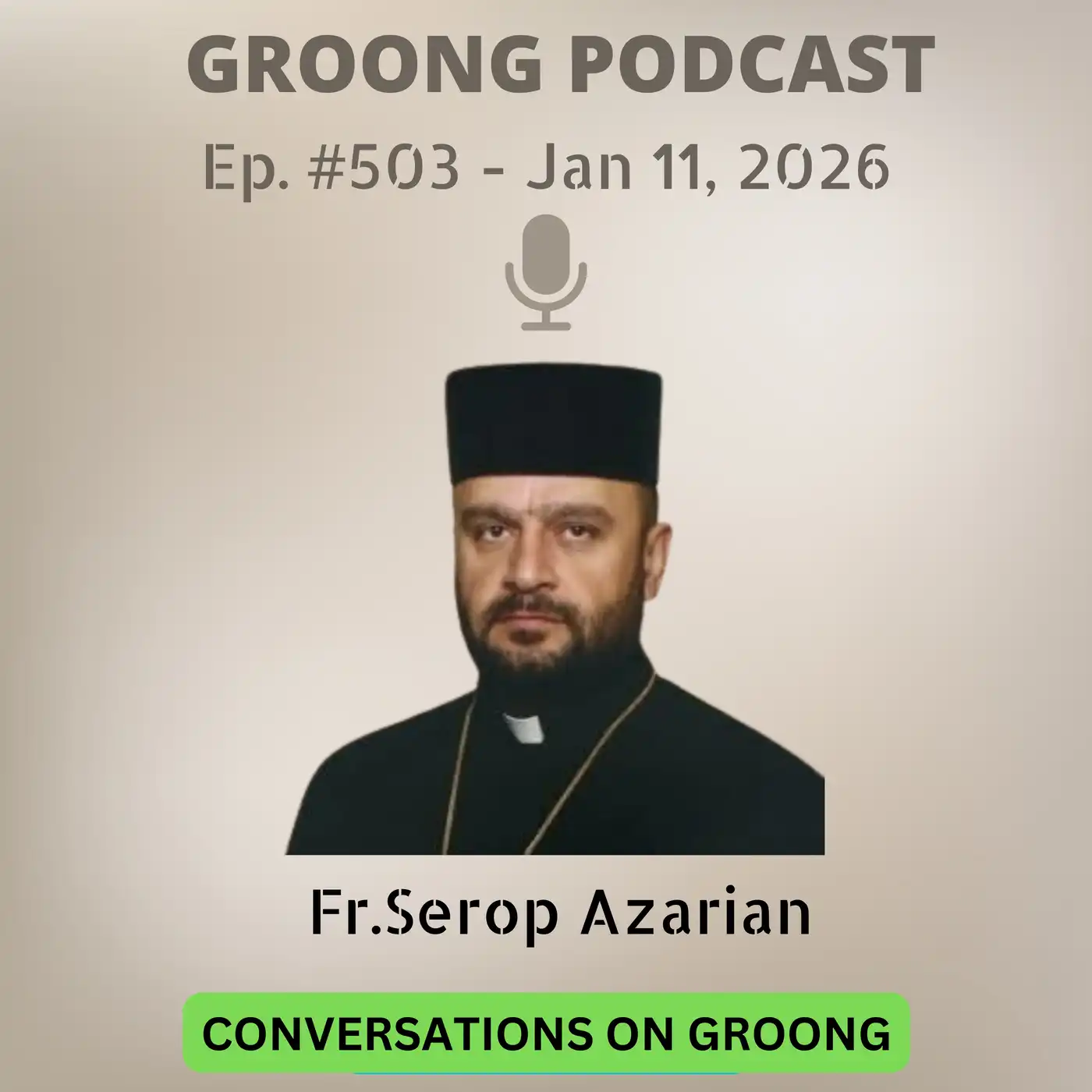
Groong Links:
Guest:
Topics:
- Pashinyan Attacks: Geopolitics or Vendetta?
- Renegade Bishops: Demands and Narratives
- Stolen Church Property
- From Christmas to Easter
Episode 503 | Recorded: January 9, 2026
#ArmenianApostolicChurch #ArmenianChurch #Garegin #Catholicos #NikolPashinyan #ArmenianDiaspora
Fr. Serop Azarian - Armenian Church Under Attack | Ep 503, Jan 11, 2026 [EP503]
Posted on Sunday, Jan 11, 2026 | Category: Armenia, Armenian Church, Politics, Artsakh, Nagorno Karabakh, Artsakh Blockade, Armenian Genocide, Georgia, Turkey, Genocide, Azerbaijan, Russia, Iran, Syria, Ukraine, Israel, NATO, IndiaGroong Links:
Guest:
Topics:
- Pashinyan Attacks: Geopolitics or Vendetta?
- Renegade Bishops: Demands and Narratives
- Stolen Church Property
- From Christmas to Easter
Episode 503 | Recorded: January 9, 2026
#ArmenianApostolicChurch #ArmenianChurch #Garegin #Catholicos #NikolPashinyan #ArmenianDiaspora
Fyodor Lukyanov - Russia in Evolving Global Geopolitics | Ep 502, Jan 9, 2026 [EP502]
Posted on Friday, Jan 9, 2026 | Category: Iran, Russia, Armenia, Israel, Politics, China, Ukraine, Armenian Church, Artsakh Blockade, BRICS, European Union, NATO, Azerbaijan | Series: cog, video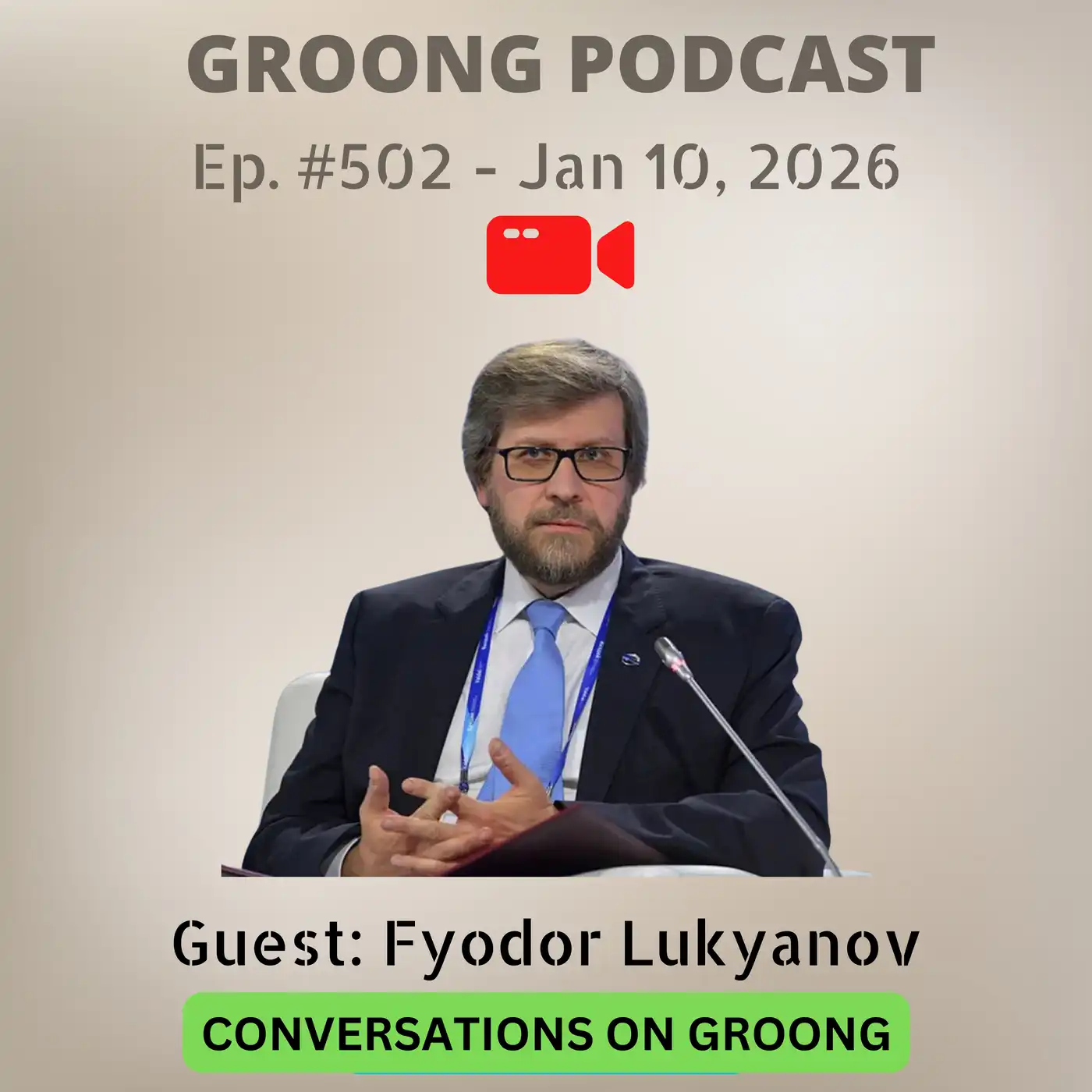
Groong Links:
Guest:
Topics:
- Venezuela
- Ukraine War
- Russia-Iran Relations
- TRIPP and Russian-Armenian Relations
Episode 502 | Recorded: January 8, 2026
#FyodorLukyanov #RussiaGeopolitics #UkraineWar #IranIsrael #VenezuelaCrisis #TRIPP
Fyodor Lukyanov - Russia in Evolving Global Geopolitics | Ep 502, Jan 9, 2026 [EP502]
Posted on Friday, Jan 9, 2026 | Category: Iran, Russia, Armenia, Israel, Politics, China, Ukraine, Armenian Church, Artsakh Blockade, BRICS, European Union, NATO, AzerbaijanGroong Links:
Guest:
Topics:
- Venezuela
- Ukraine War
- Russia-Iran Relations
- TRIPP and Russian-Armenian Relations
Episode 502 | Recorded: January 8, 2026
#FyodorLukyanov #RussiaGeopolitics #UkraineWar #IranIsrael #VenezuelaCrisis #TRIPP
Transcript: Fyodor Lukyanov - Russia in Evolving Global Geopolitics | Ep 502, Jan 9, 2026 [EP502]
Posted on Friday, Jan 9, 2026 | Category: Iran, Russia, Armenia, Israel, Politics, China, Ukraine, Armenian Church, Artsakh Blockade, BRICS, European Union, NATO, Azerbaijan, TranscriptFyodor Lukyanov joins Groong to discuss how Moscow reads a fast-shifting global landscape, from the U.S. raid in Venezuela and maritime seizures at sea, to Trump’s Greenland rhetoric, the stalled endgame in Ukraine, the likelihood of a renewed Israel-Iran war, and how TRIPP and “unblocking” disputes in Armenia’s south fit into Russia’s regional priorities.