Armenia
Last updated: June 10, 2026
Armenia is a landlocked nation in the South Caucasus region of Western Asia, bordered by Georgia, Azerbaijan, Iran, and Turkey. With a population of approximately 3 million, Armenia is one of the world’s oldest Christian civilizations, having adopted Christianity as its state religion in 301 CE—the first country to do so. The capital and largest city is Yerevan, located in the central part of the country. Armenia’s geography is characterized by the Armenian Highlands, a mountainous region with an average elevation exceeding 1,600 meters. The country is known for its rich cultural heritage, including ancient churches, monasteries, and archaeological sites. Armenia is a member of numerous international organizations including the United Nations, World Trade Organization, and the Eurasian Economic Union.
In the context of Groong’s coverage, Armenia is a landlocked South Caucasus republic facing an acute strategic and political crisis. Since the 2020 44-Day War , the country has lost control of Artsakh (Nagorno Karabakh) and hundreds of square kilometers of territory to Azerbaijan, undergone the complete ethnic cleansing of more than 150,000 Armenian inhabitants from Artsakh, and seen its borders redrawn under duress. Prime Minister Nikol Pashinyan and his Civil Contract party have governed through this catastrophe while pursuing what opponents describe as a capitulation strategy: signing ceasefire agreements, negotiating territorial concessions, and attempting to normalize relations with Turkey despite no reciprocal gesture. The government frames this course as realism and peace-building; critics argue it surrenders Armenian sovereignty without securing the rights or security of displaced Artsakhtsis. Armenia’s relationship with its traditional security guarantor Russia has deteriorated sharply, while its pivot toward the European Union and United States remains hesitant and incomplete, leaving the country in a precarious middle position between Moscow and the West.
Domestic politics in Armenia since 2021 have been dominated by the opposition’s demand for Pashinyan’s resignation and accountability for the war’s loss. The Established Opposition parties—Strong Armenia , Armenia Alliance (Hayastan Dashinq) , Prosperous Armenia , and the Republican Party of Armenia —have held street protests, mounted electoral challenges, and attempted to build coalitions for the June 7, 2026 parliamentary elections. Civil Contract’s supermajority in parliament has allowed it to pass constitutional amendments, strip opposition figures of immunity, and advance its agenda despite sustained criticism over corruption, misuse of administrative resources, and alleged election irregularities. The government has also escalated confrontation with the Armenian Church , arresting clergy, seizing church property, and pressuring the Catholicos , actions that have alarmed international observers and divided public opinion. Simultaneously, Pashinyan has consolidated control over state institutions, including the judiciary and security services, raising concerns about democratic backsliding and rule of law.
Armenia’s economy remains fragile. Growth statistics mask structural weaknesses: the country is heavily dependent on remittances and Russian trade, faces declining foreign investment, carries rising national debt, and has seen its ties to Iran—a key trade and energy partner—complicated by U.S. pressure over TRIPP, the so-called Trump Route for International Peace and Prosperity . The project aims to open transport corridors through Armenian territory in Syunik province, a move that would connect Azerbaijan to Turkey via Armenian land and raise questions about Armenian sovereignty over the route and control of its security. Russia has shifted from enthusiastic support of the corridor to public ambivalence, while Iran has issued explicit warnings that it will not accept any arrangement that bypasses or threatens its interests. The competing pressures from Washington, Moscow, Tehran, and Baku leave Armenia’s leadership navigating impossible choices between security guarantees that do not yet exist and economic partnerships that require territorial and strategic concessions it is reluctant to make permanent. The 2026 election will determine whether Armenian voters remain committed to Pashinyan’s course or whether opposition forces can forge a unified alternative around themes of security, sovereignty, and the rights of displaced Artsakhtsis to return home.
Groong episodes that include this tag
Below are all Groong episodes tagged with Armenia.
Sanation: How Pashinyan is 'Cleansing' Armenian Politics [EP565]
Posted on Friday, Jul 10, 2026 | Category: Armenia, Politics, Human RightsMarkedonov documents Pashinyan’s systematic criminalization of opposition through the concept of ‘Sanation,’ revealing an authoritarian consolidation pattern in post-election Armenia.
2,000 Agents Raid Gagik Tsarukyan's Homes and Businesses in Show Trial Theater [EP564]
Posted on Wednesday, Jul 8, 2026 | Category: Human Rights, Politics, ArmeniaWithin hours of the Constitutional Court ruling, 2,000 NSS agents raided over 70 sites linked to opposition figure Gagik Tsarukyan, using military-grade weaponry in what hosts describe as political theater targeting alleged white-collar crimes.
Constitutional Court Strips Prosperous Armenia of Seats by 200 Votes [EP564]
Posted on Wednesday, Jul 8, 2026 | Category: Politics, ArmeniaArmenia’s Constitutional Court invalidated votes from three precincts to exclude Prosperous Armenia from parliament, falling just 200 votes short of the 4% threshold despite over 1.5 million total votes cast.
EU Praises Aliyev for Peace While Ignoring Armenian POWs and Ethnic Cleansing [EP564]
Posted on Wednesday, Jul 8, 2026 | Category: Human Rights, Geopolitics, ArmeniaEU Commission President Ursula von der Leyen visited Baku and praised Aliyev for peace and cooperation, while remaining silent on Armenian POWs still held, ethnic cleansing of Artsakh, and destruction of Armenian heritage sites.
If Aliyev Kills 99% of Armenians, EU Will Thank Him for the Museum [EP564]
Posted on Wednesday, Jul 8, 2026 | Category: Human Rights, Geopolitics, ArmeniaHovik’s stark warning that EU priorities have shifted so radically toward Azerbaijan that even large-scale ethnic cleansing would likely be reframed as regional stability and economic progress.
IMEI Registry: Armenia Building a Centralized Digital Surveillance Database [EP564]
Posted on Wednesday, Jul 8, 2026 | Category: Technology, Human Rights, Politics, ArmeniaArmenia’s government is implementing a mandatory IMEI phone registry by 2027, framed as tax enforcement but critics warn it creates a centralized surveillance database linking every citizen’s phone to their identity, with few legal safeguards.
Opposition Will Take Parliament Seats, Plans Coordination for Future Battles [EP564]
Posted on Wednesday, Jul 8, 2026 | Category: Politics, ArmeniaAfter the Constitutional Court ruling, Strong Armenia and Armenia Alliance confirmed they will accept parliamentary mandates, betting that legislative work combined with coordinated street action will be more effective than boycott.
The Constitutional Court has ruled, now what? | Ep 564, Jul 5, 2026 [EP564]
Posted on Wednesday, Jul 8, 2026 | Category: Armenia, Politics | Series: wir, video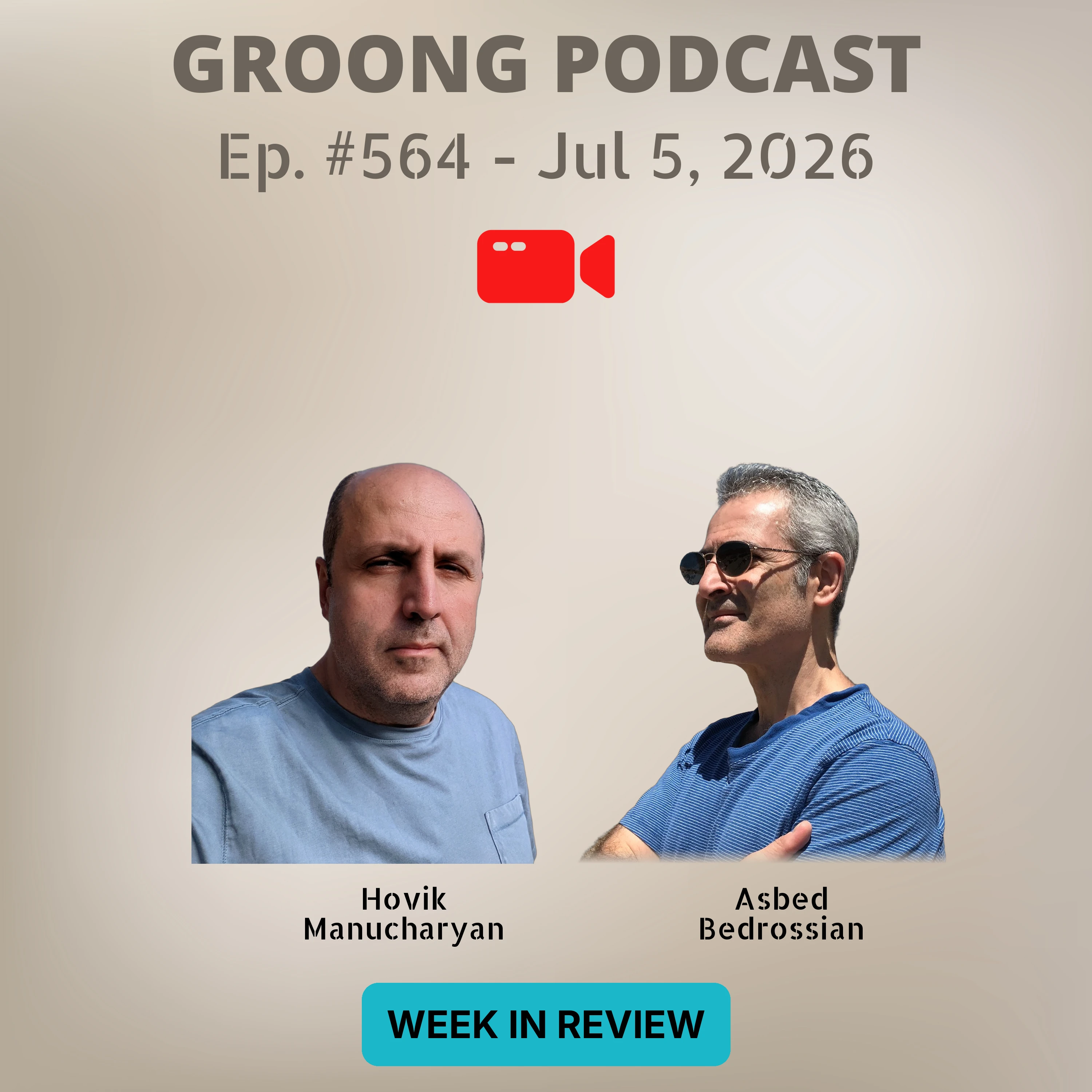
Groong Links:
Topics:
- Court rubber stamps stolen elections
- Von der Leyen in the South Caucasus
- EU connectivity push in Caucasus
- Rubinyan vs. Simonyan
- Post-election opposition raids begin
- IMEI or IMEI not
Episode 564 | Recorded: July 6, 2026
#Armenia #ArmenianNews #Pashinyan #ArmenianPolitics #SouthCaucasus #ConstitutionalCourt #SurveillanceState
The Constitutional Court has ruled, now what? | Ep 564, Jul 5, 2026 [EP564]
Posted on Wednesday, Jul 8, 2026 | Category: Armenia, PoliticsGroong Links:
Topics:
- Court rubber stamps stolen elections
- Von der Leyen in the South Caucasus
- EU connectivity push in Caucasus
- Rubinyan vs. Simonyan
- Post-election opposition raids begin
- IMEI or IMEI not
Episode 564 | Recorded: July 6, 2026
#Armenia #ArmenianNews #Pashinyan #ArmenianPolitics #SouthCaucasus #ConstitutionalCourt #SurveillanceState
Transcript: The Constitutional Court has ruled, now what? | Ep 564, Jul 5, 2026 [EP564]
Posted on Wednesday, Jul 8, 2026 | Category: Armenia, Politics, TranscriptIn this episode of Groong Week in Review for July 5, 2026, Hovik and Asbed analyze Armenia’s Constitutional Court ruling upholding the disputed 2026 Armenian Parliamentary Election results. We examine the disqualification of Prosperous Armenia votes, Civil Contract’s three-fifths majority, the opposition’s parliamentary leverage, and what these outcomes mean for Armenian sovereignty amid ongoing Armenia-Azerbaijan Peace Process negotiations and regional pressures.
Groong News Digest — Week of June 29–5, 2026
Posted on Sunday, Jul 5, 2026 | Category: Digest, News DigestArmenia’s Constitutional Court upheld contested June 7 election results, opposition leaders pledged legal challenges to a new diaspora voting restriction, and Israel’s genocide recognition sparked regional tensions while drawing Armenia’s muted response.
Groong Podcast Digest — Week of June 29–5, 2026
Posted on Sunday, Jul 5, 2026 | Category: Digest, Podcast DigestHovik and Asbed examine Israel’s historic recognition of the Armenian Genocide amid shifting geopolitical tensions, Russia’s escalating warnings toward Armenia, and the post-election standoff as the Constitutional Court prepares to rule on opposition challenges to the legitimacy of the June 2026 parliamentary elections. Ambassador Dziunik Aghajanian examines the Iran-US MOU, Armenia’s 2026 parliamentary election aftermath and Constitutional Court proceedings, Russian economic pressure on Armenia, and Israel’s recognition of the Armenian Genocide.
Armenia Has Crossed Red Lines with Russia, Pashinyan Miscalculated Timing [EP563]
Posted on Friday, Jul 3, 2026 | Category: Russia, Armenia, GeopoliticsAmbassador Aghajanian explains why Russia has escalated restrictions on Armenian exports and issued warnings to Pashinyan, arguing Pashinyan has crossed Moscow’s red lines by pursuing a Western pivot while maintaining EAEU membership.
Dziunik Aghajanian - Iran War, Election Aftermath, Russian Warnings, Israeli Recognition | Ep 563, Jul 2, 2026 [EP563]
Posted on Friday, Jul 3, 2026 | Category: Armenia, Politics | Series: cog, video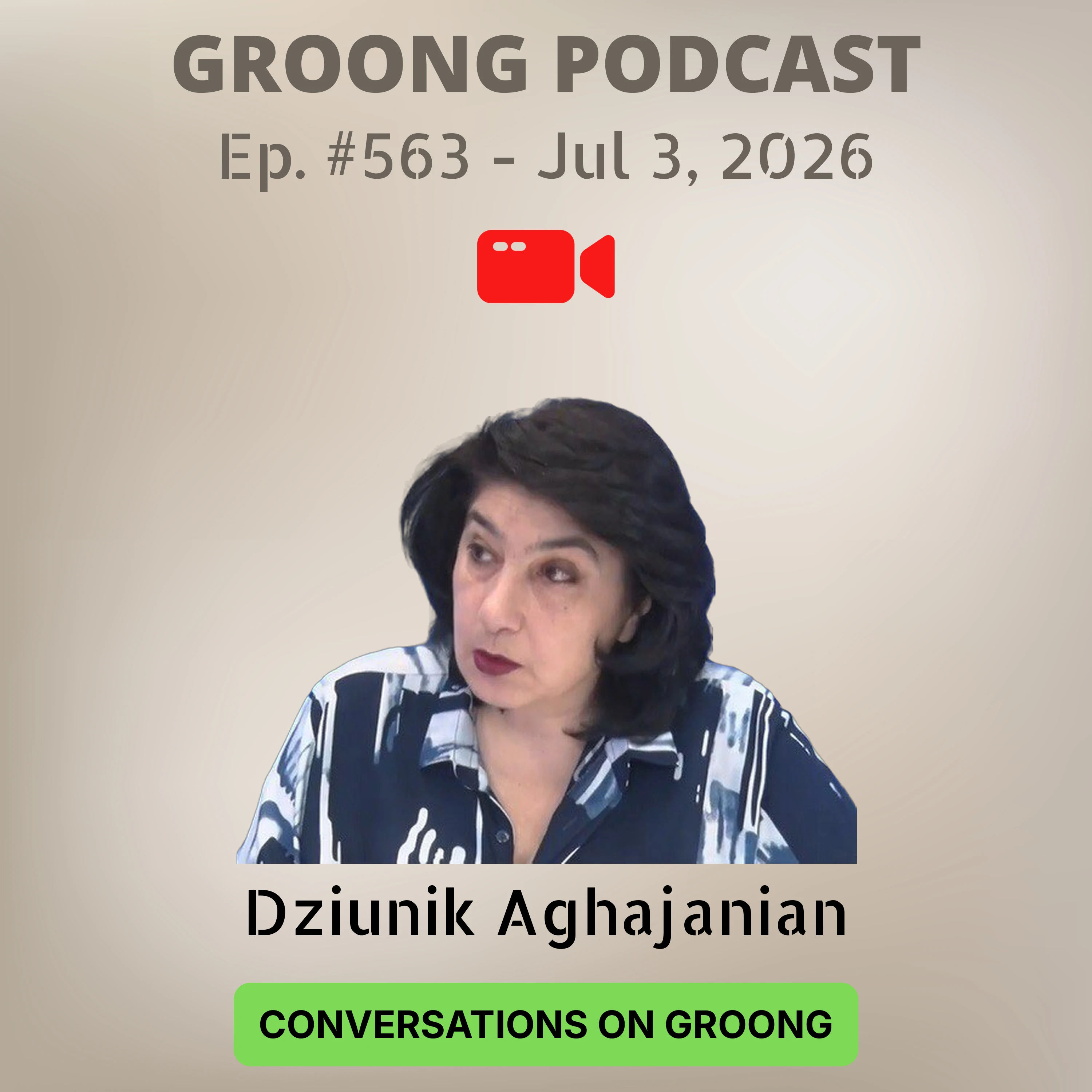
Groong Links:
Guest(s):
Topics:
- US-Iran MoU
- Election Aftermath
- Russian Warnings to Armenia
- Israeli Recognizes the Armenian Genocide
Episode 563 | Recorded: July 1, 2026
#ArmenianNews #IranWar #DziunikAghajanian #ArmenianElections #RussiaArmenia #SouthCaucasus #ArmenianGenocide
Dziunik Aghajanian - Iran War, Election Aftermath, Russian Warnings, Israeli Recognition | Ep 563, Jul 2, 2026 [EP563]
Posted on Friday, Jul 3, 2026 | Category: Armenia, PoliticsGroong Links:
Guest(s):
Topics:
- US-Iran MoU
- Election Aftermath
- Russian Warnings to Armenia
- Israeli Recognizes the Armenian Genocide
Episode 563 | Recorded: July 1, 2026
#ArmenianNews #IranWar #DziunikAghajanian #ArmenianElections #RussiaArmenia #SouthCaucasus #ArmenianGenocide
Pashinyan Adopted Denialist Language When Responding to Israeli Recognition [EP563]
Posted on Friday, Jul 3, 2026 | Category: Armenian Genocide, Armenia, Politics, Human RightsAmbassador Aghajanian argues that Pashinyan’s response to Israeli Armenian Genocide recognition, warning against weaponization, echoes Turkish denialist narratives and represents a fundamental betrayal of Armenian historical truth.
Transcript: Dziunik Aghajanian - Iran War, Election Aftermath, Russian Warnings, Israeli Recognition | Ep 563, Jul 2, 2026 [EP563]
Posted on Friday, Jul 3, 2026 | Category: Armenia, Politics, TranscriptIn this episode of Conversations on Groong, we speak with Amb. Dziunik Aghajanian about the Iran-Israel conflict, Armenia’s 2026 Armenian Parliamentary Election aftermath, and Israeli recognition of the Armenian Genocide. We discuss whether the US-Iran MOU represents genuine de-escalation or a tactical pause before renewed confrontation, the Constitutional Court’s review of election fraud allegations against the Civil Contract regime, and Russia’s warnings to Armenia amid regional instability.
Armen Grigoryan in Gdańsk: Russia Reads Ukraine Conference Attendance as Frozen Asset Threat [EP562]
Posted on Wednesday, Jul 1, 2026 | Category: Geopolitics, ArmeniaArmen Grigoryan’s participation in a Ukraine reconstruction conference in Gdańsk signals to Russia that Armenia may be considering freezing Russian assets, escalating tensions.
Constitutional Court Will Likely Rule for Pashinyan: 60% Chance Nothing Changes, 20% for New Elections [EP562]
Posted on Wednesday, Jul 1, 2026 | Category: Politics, ArmeniaHovik assesses the Constitutional Court’s July 4 ruling on election appeals, predicting a 60% chance of no meaningful change and warning that new elections could serve as cover for opposition bans.
Pashinyan's Silence on Israeli Genocide Recognition Gives Turkey New Ammunition [EP562]
Posted on Wednesday, Jul 1, 2026 | Category: Armenian Genocide, Politics, ArmeniaAsbed critiques Pashinyan’s silence on Israel’s cabinet recognition of the Armenian Genocide, arguing it hands Turkey new tools for denial.
Post-Election Crackdown: Stalinist Purge Disabling Opposition Today, Not Tomorrow [EP562]
Posted on Wednesday, Jul 1, 2026 | Category: Politics, Human Rights, ArmeniaAsbed explains the logic behind Armenia’s post-election arrests: disabling opposition in the present, not building lasting cases for future prosecution.
Russia's Remittance Threat: $3-4 Billion That Keeps Armenia's Economy Afloat [EP562]
Posted on Wednesday, Jul 1, 2026 | Category: Economy, Russia, ArmeniaAsbed reveals that remittances from Armenians working in Russia, totaling $3-4 billion annually, are the hidden pillar keeping Armenia’s currency and economy stable.
When Israel Recognizes and Yerevan Dodges | Ep 562, Apr 25, 2026 [EP562]
Posted on Wednesday, Jul 1, 2026 | Category: Armenia, Politics | Series: wir, video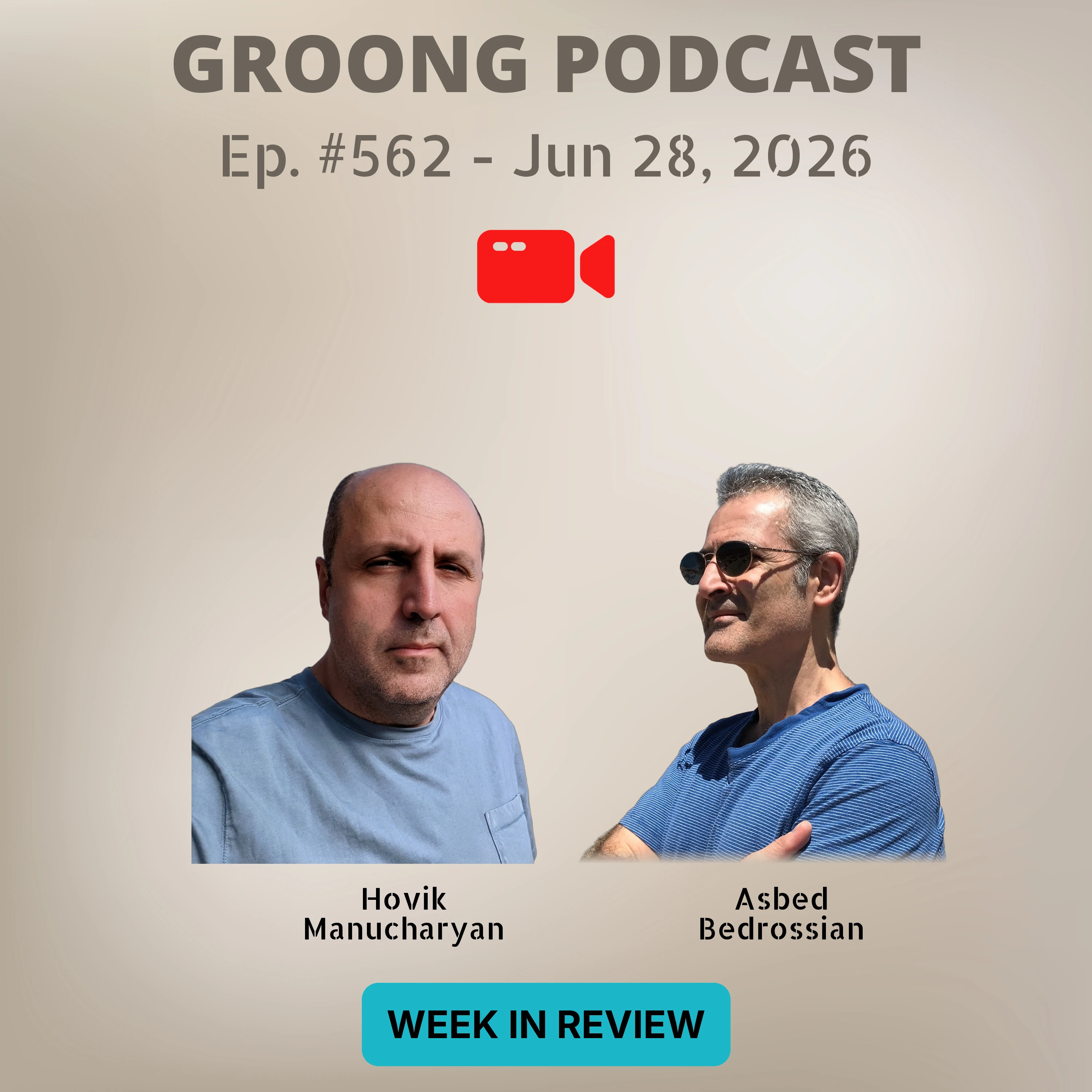
Groong Links:
Topics:
- Israel Recognizes the Armenian Genocide
- Russian Warnings Continue
- Post Election Limbo
Episode 562 | Recorded: June 29, 2026
#ArmenianGenocide #Armenia #Israel #Pashinyan #RussiaArmenia #SouthCaucasus
When Israel Recognizes and Yerevan Dodges | Ep 562, Apr 25, 2026 [EP562]
Posted on Wednesday, Jul 1, 2026 | Category: Armenia, PoliticsGroong Links:
Topics:
- Israel Recognizes the Armenian Genocide
- Russian Warnings Continue
- Post Election Limbo
Episode 562 | Recorded: June 29, 2026
#ArmenianGenocide #Armenia #Israel #Pashinyan #RussiaArmenia #SouthCaucasus
Transcript: When Israel Recognizes and Yerevan Dodges | Ep 562, Apr 25, 2026 [EP562]
Posted on Wednesday, Jul 1, 2026 | Category: Armenia, Politics, TranscriptIn this week’s Groong Week in Review, Hovik and Asbed discuss Israel’s historic recognition of the Armenian Genocide, Russia’s ongoing warnings toward Armenia, and the political uncertainty following the 2026 Armenian Parliamentary Election. We examine the geopolitical context behind Israel’s decision, Pashinyan’s measured response, and what these developments signal about Armenia’s regional position amid shifting US-Turkey relations and broader Middle East tensions.
Groong News Digest — Week of June 22–28, 2026
Posted on Sunday, Jun 28, 2026 | Category: Digest, News DigestArmenia’s June 7 parliamentary elections dominate the week as opposition parties challenge results in Constitutional Court, while post-election crackdowns intensify and the Israeli Cabinet voted to recognize the Armenian Genocide despite Turkish objections.
Groong Podcast Digest — Week of June 22–28, 2026
Posted on Sunday, Jun 28, 2026 | Category: Digest, Podcast DigestArman Grigoryan discusses US-Iran negotiations and their implications for TRIPP, regional power dynamics, and Armenia’s contested 2026 parliamentary election aftermath. We examine the fallout from Armenia’s 2026 Armenian Parliamentary Elections, including six opposition parties challenging results at the Constitutional Court, escalating political persecutions targeting opposition figures, Russia’s continued economic pressure on Pashinyan’s government, US-Iran ceasefire negotiations and their regional implications, and a new Armenia-Azerbaijan telecommunications agreement that raises cybersecurity and strategic dependency concerns.
Pashinyan Is Preparing for New Elections and Constitutional Crisis [EP560]
Posted on Tuesday, Jun 23, 2026 | Category: Politics, ArmeniaGrigoryan argues Pashinyan is strategically preparing for inevitable constitutional crises by disqualifying opposition parties and restricting diasporic-citizen voting rights.
Pashinyan's 'Clear Choice' Was Anything But Clear [EP560]
Posted on Tuesday, Jun 23, 2026 | Category: Politics, Armenia, MediaDr. Grigoryan deconstructs the Western narrative that Armenian voters made a ‘clear choice’ for Europe, arguing the election was driven by negative voting and distorted media narratives.
The Opposition's Fatal Mistake: Trying to Out-Pashinyan Pashinyan [EP560]
Posted on Tuesday, Jun 23, 2026 | Category: Politics, ArmeniaGrigoryan explains why the opposition lost: Strong Armenia and the Armenia Alliance embraced TRIPP and Western integration, making them indistinguishable from Pashinyan and thus unelectable.
Why Voters Rejected the 'Nakhkins': Dignity Over Economics [EP560]
Posted on Tuesday, Jun 23, 2026 | Category: Politics, ArmeniaGrigoryan argues that Armenian voters rejected the pre-2018 regime primarily because of systemic humiliation by oligarchs and local warlords, not merely economic corruption.
Armenia faces impossible choice: replace Russia with EU markets overnight or collapse [EP559]
Posted on Saturday, Jun 20, 2026 | Category: Economy, Geopolitics, ArmeniaHrant Mikaelian analyzes why the EU’s 50 million euro credit line cannot realistically replace the Russian market for Armenian agricultural exports, and how logistics costs make European market access illusory.
How Western intelligence shaped Armenia's 2026 election [EP559]
Posted on Saturday, Jun 20, 2026 | Category: Geopolitics, Politics, ArmeniaHrant Mikaelian details how U.S. and European intelligence agencies, along with a Brussels-Berlin technical coordination group, directly shaped Armenia’s June 2026 elections to advance anti-Russian and TRIPP corridor objectives.
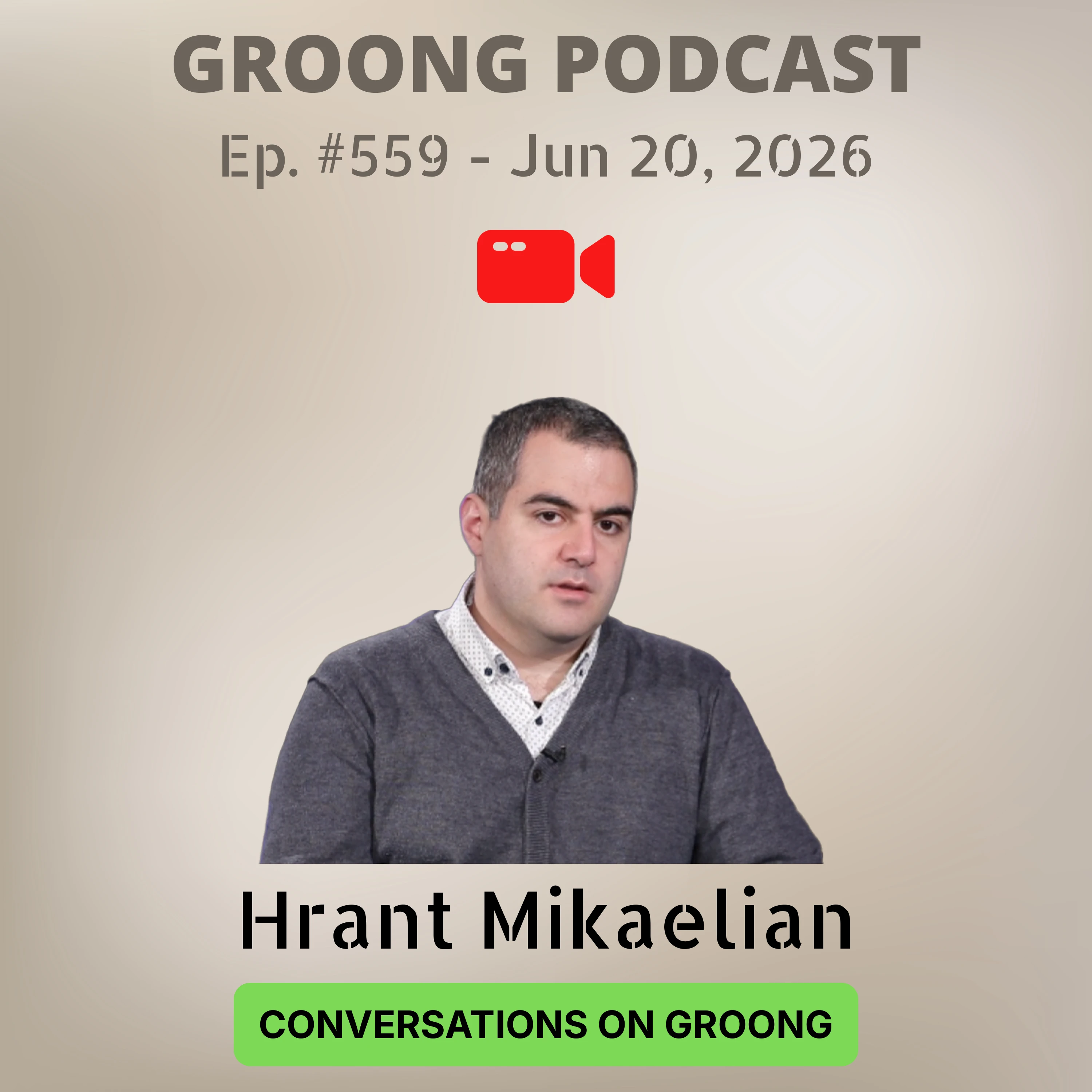
Groong Links:
Guest(s):
Topics:
- Election aftermath and disputed legitimacy
- Threats against opposition parties
- Armenia-Russia tensions after vote
- EU lifeline for Armenian exports
- Polling failures and hidden votes
Episode 559 | Recorded: June 18, 2026
#Armenia #ArmenianElections #HrantMikaelian #NikolPashinyan #CivilContract #ArmeniaRussia #Polling
Hrant Mikaelian - Election Aftermath and Polls in Armenia | Ep 559, Jun 20, 2026 [EP559]
Posted on Saturday, Jun 20, 2026 | Category: Armenia, Politics, PollGroong Links:
Guest(s):
Topics:
- Election aftermath and disputed legitimacy
- Threats against opposition parties
- Armenia-Russia tensions after vote
- EU lifeline for Armenian exports
- Polling failures and hidden votes
Episode 559 | Recorded: June 18, 2026
#Armenia #ArmenianElections #HrantMikaelian #NikolPashinyan #CivilContract #ArmeniaRussia #Polling
Prosperous Armenia robbed of parliament through cancelled precinct results [EP559]
Posted on Saturday, Jun 20, 2026 | Category: Politics, ArmeniaHrant Mikaelian documents how the government cancelled results from three precincts to deliberately push Prosperous Armenia below the 4% threshold, effectively removing a major opposition party from parliament.
The opposition's only remaining path: Constitutional Court and local elections [EP559]
Posted on Saturday, Jun 20, 2026 | Category: Politics, ArmeniaPolitical scientist Hrant Mikaelian outlines the opposition’s realistic options: accept parliamentary mandates, challenge electoral fraud at the Constitutional Court, and prepare for critical local elections in September and October.
Why all Armenian polls failed spectacularly: garbage in, garbage out [EP559]
Posted on Saturday, Jun 20, 2026 | Category: Politics, Poll, ArmeniaHrant Mikaelian explains why EVN Report, IRI, and MPG polls all failed catastrophically to predict civil Contract’s actual result, revealing systematic problems in Armenian political polling.
Why Pashinyan is terrified even after winning the election [EP559]
Posted on Saturday, Jun 20, 2026 | Category: Politics, ArmeniaPolitical scientist Hrant Mikaelian explains why Pashinyan’s government is escalating repression despite claiming electoral victory, signaling deeper anxiety about legitimacy and control.
Transcript: Hrant Mikaelian - Election Aftermath and Polls in Armenia | Ep 559, Jun 20, 2026 [EP559]
Posted on Saturday, Jun 20, 2026 | Category: Armenia, Politics, Poll, TranscriptIn this episode of Conversations on Groong, we speak with Hrant Mikaelian about the disputed aftermath of Armenia’s June 7, 2026 parliamentary election. We discuss allegations of electoral fraud, threats against opposition parties, the Anti-Corruption Committee’s proposed ban on opposition groups, Armenia-Russia tensions following the vote, and the EU’s financial support for Armenian agricultural exports amid Russian sanctions.
CEC Invalidated 213 Votes to Push Prosperous Armenia Below 4% Threshold [EP558]
Posted on Tuesday, Jun 16, 2026 | Category: PoliticsHovik details how Armenia’s Central Election Commission invalidated entire precincts, removing 213 votes from Prosperous Armenia and pushing the party below the 4% threshold needed for parliamentary entry.
Opposition Must Take Parliamentary Mandates AND Protest in the Streets [EP558]
Posted on Tuesday, Jun 16, 2026 | Category: PoliticsHovik outlines a two-track strategy for the opposition: accept parliamentary mandates while appealing to the Constitutional Court and organizing street pressure to challenge Pashinyan’s illegitimate government.
Pashinyan's Pre-Election Spending Was Vote-Buying, Now Comes the Bill [EP558]
Posted on Tuesday, Jun 16, 2026 | Category: Politics, EconomyAsbed and Hovik expose the mechanics of Civil Contract’s pre-election spending spree: a billion dollars in unfunded pension and healthcare benefits promised to voters, now recovered through excise taxes on fuel and cigarettes.
The Right of Return for Artsakh Armenians Remains Unresolved and Vulnerable [EP558]
Posted on Tuesday, Jun 16, 2026 | Category: Human Rights, ArtsakhHovik and Asbed discuss the right of return for Artsakh (Nagorno Karabakh) Armenians, the most vulnerable point in regional negotiations after the complete ethnic cleansing of the territory.
Why Armenia and Georgia Must Stay United or Face Azerbaijan Hegemony [EP558]
Posted on Tuesday, Jun 16, 2026 | Category: Geopolitics, ArmeniaHovik warns that Armenia and Georgia must maintain strong partnership to resist external pressures. Without unity, Azerbaijan will emerge as the regional hegemon, benefiting from competition between its neighbors.
2026 Elections: A Mandate Under Dispute | Ep 556, June 7, 2026 [EP556]
Posted on Wednesday, Jun 10, 2026 | Category: Armenia, Politics | Series: wir, video
Groong Links:
Topics:
- Disputed mandate, unresolved majority
- Election-day irregularities in plain sight
- ODIHR’s mixed preliminary verdict
- Bribery replaced by state spending
- Opposition’s next steps uncertain
Episode 556 | Recorded: Jun 9, 2026 #ArmenianElections #ArmenianNews #CivilContract #Pashinyan #Election2026 #SouthCaucasus
2026 Elections: A Mandate Under Dispute | Ep 556, June 7, 2026 [EP556]
Posted on Wednesday, Jun 10, 2026 | Category: Armenia, PoliticsGroong Links:
Topics:
- Disputed mandate, unresolved majority
- Election-day irregularities in plain sight
- ODIHR’s mixed preliminary verdict
- Bribery replaced by state spending
- Opposition’s next steps uncertain
Episode 556 | Recorded: Jun 9, 2026 #ArmenianElections #ArmenianNews #CivilContract #Pashinyan #Election2026 #SouthCaucasus
Transcript: 2026 Elections: A Mandate Under Dispute | Ep 556, June 7, 2026 [EP556]
Posted on Wednesday, Jun 10, 2026 | Category: Armenia, Politics, TranscriptIn this episode of Groong Week in Review, we analyze the disputed results of Armenia’s June 7, 2026 Armenian Parliamentary Election. We examine Civil Contract’s contested majority, alleged irregularities and invalid ballots, the OSCE/ODIHR preliminary report, the last-minute exclusion of Prosperous Armenia, opposition arrests and pressure, and what a three-fifths majority could mean for Armenia’s courts, institutions, and foreign policy.
An Administrative Machine, Not an Election Campaign: One Party Controls Every Institution [EP555]
Posted on Saturday, Jun 6, 2026 | Category: PoliticsArmenia operates as a de facto one-party system where a single political center controls law enforcement, judiciary, and all state apparatus, making fair electoral competition impossible.
Arthur Osipyan Detained for Asking Pashinyan Questions: Three Charges, No Logic [EP555]
Posted on Saturday, Jun 6, 2026 | Category: Human Rights, PoliticsArthur Osipyan was arrested and charged with three counts, including obstructing a campaign, for politely asking Pashinyan questions on video that the prime minister agreed to answer.
Artsakh Refugees Targeted with Dehumanizing Rhetoric During Election Campaign [EP555]
Posted on Saturday, Jun 6, 2026 | Category: Human Rights, Politics, ArtsakhOver 150,000 Artsakh Armenians displaced in September 2023 face dehumanizing rhetoric from Civil Contract officials, including Pashinyan, during the 2026 election campaign.
Hate Speech Laws Weaponized Against Critics of Pashinyan [EP555]
Posted on Saturday, Jun 6, 2026 | Category: Human Rights, PoliticsArmenia’s hate speech laws, meant to protect minorities, are being weaponized to criminalize political criticism of Pashinyan, with courts treating his political conduct as a protected characteristic.
Military Service as Electoral Punishment: Citizens Arriving from Russia Face Summons [EP555]
Posted on Saturday, Jun 6, 2026 | Category: Human Rights, PoliticsPashinyan’s Deputy Chief of Staff admits the government is summoning diaspora Armenians arriving from Russia to 25-day military training camps to punish suspected opposition voters.
Wiretaps as Campaign Material: The Double Standard in Armenia's Elections [EP555]
Posted on Saturday, Jun 6, 2026 | Category: Politics, Human RightsLaw enforcement in Armenia rapidly leaks opposition wiretaps during the election campaign while ignoring reports of government-side abuse and patronage, creating a stark double standard.
May 28, Rubio’s Armenia Deals, and the Cost of Strategic Drift | Ep 553, May 31, 2026 [EP553]
Posted on Tuesday, Jun 2, 2026 | Category: Armenia, Politics, Nagorno Karabakh, NATO, Artsakh, Azerbaijan, Turkey, Russia, Iran, Georgia | Series: wir, video
Groong Links:
Topics:
- May 28 and Statehood
- Parade as Campaign Theater
- Rubio’s Armenia Agreements
- Minerals Without Guarantees
- TRIPP Risks in Syunik
- Russia and Iran Pushback
- Election Climate and Repression
Episode 553 | Recorded: June 1, 2026
#Armenia #May28 #MarcoRubio #TRIPP #Syunik #CriticalMinerals #ElectionFraud #RussiaArmenia
May 28, Rubio’s Armenia Deals, and the Cost of Strategic Drift | Ep 553, May 31, 2026 [EP553]
Posted on Tuesday, Jun 2, 2026 | Category: Armenia, Politics, Nagorno Karabakh, NATO, Artsakh, Azerbaijan, Turkey, Russia, Iran, GeorgiaGroong Links:
Topics:
- May 28 and Statehood
- Parade as Campaign Theater
- Rubio’s Armenia Agreements
- Minerals Without Guarantees
- TRIPP Risks in Syunik
- Russia and Iran Pushback
- Election Climate and Repression
Episode 553 | Recorded: June 1, 2026
#Armenia #May28 #MarcoRubio #TRIPP #Syunik #CriticalMinerals #ElectionFraud #RussiaArmenia
Transcript: May 28, Rubio’s Armenia Deals, and the Cost of Strategic Drift | Ep 553, May 31, 2026 [EP553]
Posted on Tuesday, Jun 2, 2026 | Category: Armenia, Politics, Nagorno Karabakh, NATO, Artsakh, Azerbaijan, Turkey, Russia, Iran, Georgia, TranscriptIn this episode of Groong’s Week in Review, hosts Hovik and Asbed examine Armenia’s May 28 Independence Day parade as campaign theater, Marco Rubio’s push for critical minerals deals, and the strategic risks of TRIPP in Syunik. We discuss how Pashinyan’s military parade coincides with Armenian prisoners of war held hostage in Baku, the questionable financing of weapons through $8 billion in external debt, and the broader geopolitical pressures from Russia and Iran as Armenia heads into the 2026 Armenian Parliamentary Election.
Sergey Markedonov - Russia-Armenia Relations Before the Vote | Ep 552, June 1, 2026 [EP552]
Posted on Monday, Jun 1, 2026 | Category: Armenia, Politics, Russia, Armenian Church, Nagorno Karabakh, Azerbaijan, Artsakh, Turkey, Iran, Georgia | Series: cog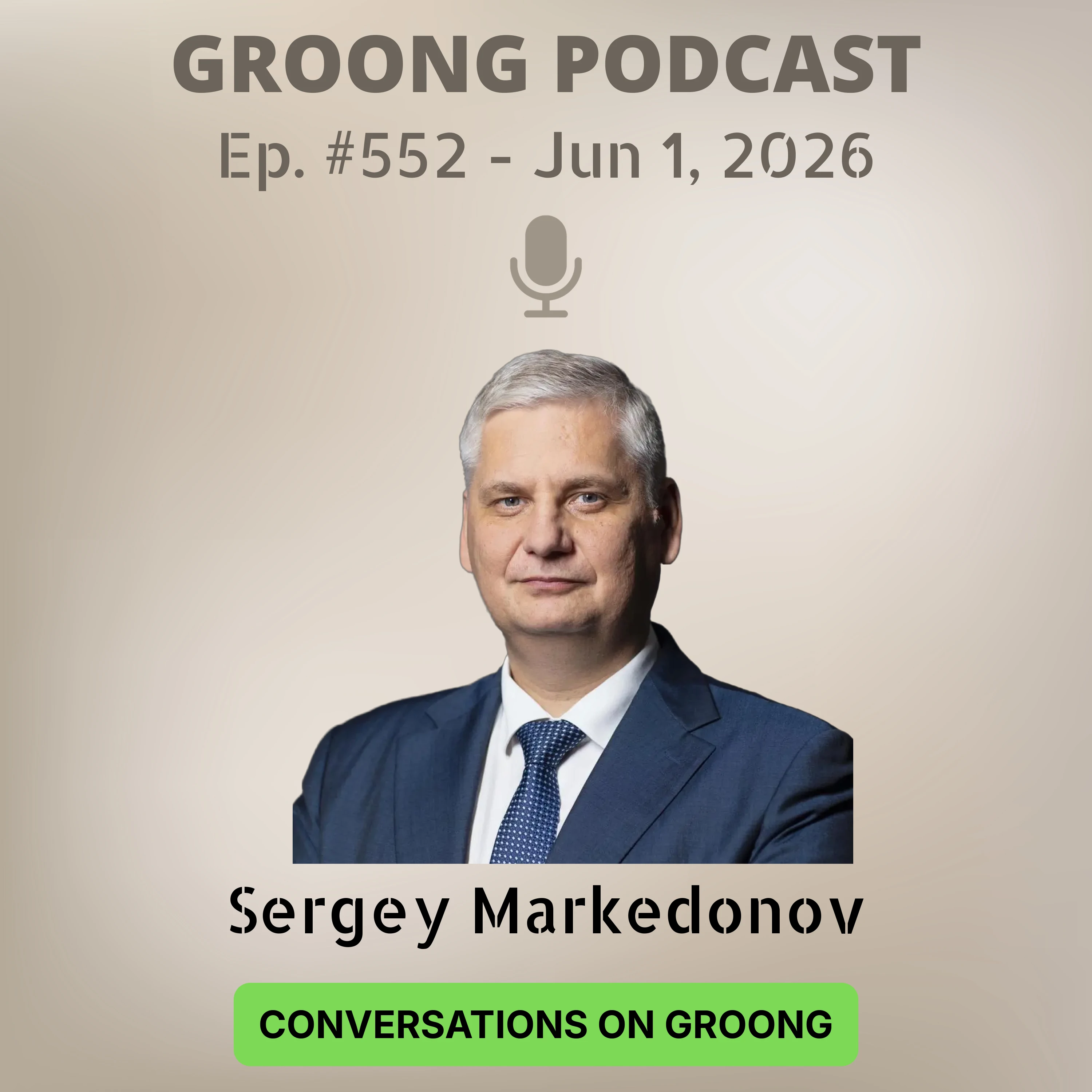
Groong Links:
Guest(s):
Topics:
- TRIPP and Regional Balance
- Armenia’s Geopolitical Election
- Pashinyan’s “Real Armenia”
- Russia’s Economic Pressure
Episode 552 | Recorded: May 31, 2026
#RussiaArmenia #SergeyMarkedonov #ArmeniaElections #Pashinyan #TRIPP #SouthCaucasus #RealArmenia #EAEU
Sergey Markedonov - Russia-Armenia Relations Before the Vote | Ep 552, June 1, 2026 [EP552]
Posted on Monday, Jun 1, 2026 | Category: Armenia, Politics, Russia, Armenian Church, Nagorno Karabakh, Azerbaijan, Artsakh, Turkey, Iran, GeorgiaGroong Links:
Guest(s):
Topics:
- TRIPP and Regional Balance
- Armenia’s Geopolitical Election
- Pashinyan’s “Real Armenia”
- Russia’s Economic Pressure
Episode 552 | Recorded: May 31, 2026
#RussiaArmenia #SergeyMarkedonov #ArmeniaElections #Pashinyan #TRIPP #SouthCaucasus #RealArmenia #EAEU
Transcript: Sergey Markedonov - Russia-Armenia Relations Before the Vote | Ep 552, June 1, 2026 [EP552]
Posted on Monday, Jun 1, 2026 | Category: Armenia, Politics, Russia, Armenian Church, Nagorno Karabakh, Azerbaijan, Artsakh, Turkey, Iran, Georgia, TranscriptIn this episode of Conversations on Groong, we speak with Dr. Sergey Markedonov about Russia-Armenia relations and Armenia’s geopolitical position ahead of the June 7, 2026 Armenian parliamentary elections. We discuss the Trump Route for International Peace and Prosperity (TRIPP), Russian concerns about regional balance, Pashinyan’s westward orientation, economic pressure from Moscow, and how Armenia’s strategic partnerships will shape its future in the South Caucasus.