Armenia
Last updated: June 10, 2026
Armenia is a landlocked nation in the South Caucasus region of Western Asia, bordered by Georgia, Azerbaijan, Iran, and Turkey. With a population of approximately 3 million, Armenia is one of the world’s oldest Christian civilizations, having adopted Christianity as its state religion in 301 CE—the first country to do so. The capital and largest city is Yerevan, located in the central part of the country. Armenia’s geography is characterized by the Armenian Highlands, a mountainous region with an average elevation exceeding 1,600 meters. The country is known for its rich cultural heritage, including ancient churches, monasteries, and archaeological sites. Armenia is a member of numerous international organizations including the United Nations, World Trade Organization, and the Eurasian Economic Union.
In the context of Groong’s coverage, Armenia is a landlocked South Caucasus republic facing an acute strategic and political crisis. Since the 2020 44-Day War , the country has lost control of Artsakh (Nagorno Karabakh) and hundreds of square kilometers of territory to Azerbaijan, undergone the complete ethnic cleansing of more than 150,000 Armenian inhabitants from Artsakh, and seen its borders redrawn under duress. Prime Minister Nikol Pashinyan and his Civil Contract party have governed through this catastrophe while pursuing what opponents describe as a capitulation strategy: signing ceasefire agreements, negotiating territorial concessions, and attempting to normalize relations with Turkey despite no reciprocal gesture. The government frames this course as realism and peace-building; critics argue it surrenders Armenian sovereignty without securing the rights or security of displaced Artsakhtsis. Armenia’s relationship with its traditional security guarantor Russia has deteriorated sharply, while its pivot toward the European Union and United States remains hesitant and incomplete, leaving the country in a precarious middle position between Moscow and the West.
Domestic politics in Armenia since 2021 have been dominated by the opposition’s demand for Pashinyan’s resignation and accountability for the war’s loss. The Established Opposition parties—Strong Armenia , Armenia Alliance (Hayastan Dashinq) , Prosperous Armenia , and the Republican Party of Armenia —have held street protests, mounted electoral challenges, and attempted to build coalitions for the June 7, 2026 parliamentary elections. Civil Contract’s supermajority in parliament has allowed it to pass constitutional amendments, strip opposition figures of immunity, and advance its agenda despite sustained criticism over corruption, misuse of administrative resources, and alleged election irregularities. The government has also escalated confrontation with the Armenian Church , arresting clergy, seizing church property, and pressuring the Catholicos , actions that have alarmed international observers and divided public opinion. Simultaneously, Pashinyan has consolidated control over state institutions, including the judiciary and security services, raising concerns about democratic backsliding and rule of law.
Armenia’s economy remains fragile. Growth statistics mask structural weaknesses: the country is heavily dependent on remittances and Russian trade, faces declining foreign investment, carries rising national debt, and has seen its ties to Iran—a key trade and energy partner—complicated by U.S. pressure over TRIPP, the so-called Trump Route for International Peace and Prosperity . The project aims to open transport corridors through Armenian territory in Syunik province, a move that would connect Azerbaijan to Turkey via Armenian land and raise questions about Armenian sovereignty over the route and control of its security. Russia has shifted from enthusiastic support of the corridor to public ambivalence, while Iran has issued explicit warnings that it will not accept any arrangement that bypasses or threatens its interests. The competing pressures from Washington, Moscow, Tehran, and Baku leave Armenia’s leadership navigating impossible choices between security guarantees that do not yet exist and economic partnerships that require territorial and strategic concessions it is reluctant to make permanent. The 2026 election will determine whether Armenian voters remain committed to Pashinyan’s course or whether opposition forces can forge a unified alternative around themes of security, sovereignty, and the rights of displaced Artsakhtsis to return home.
Groong episodes that include this tag
Below are all Groong episodes tagged with Armenia.
Suren Sargsyan - Azerbaijan Attacks Artsakh, East West Negotiation Platforms, Armenia and the Rome Statute | Ep 242 - Apr 2, 2023 [EP242]
Posted on Monday, Apr 3, 2023 | Category: Armenia, Politics, Artsakh, Nagorno Karabakh, Azerbaijan, Iran, Russia, Israel, Armenian Genocide, European Union, Turkey, China, India, Genocide, Ukraine, Syria, NATO, Geopolitics | Series: wir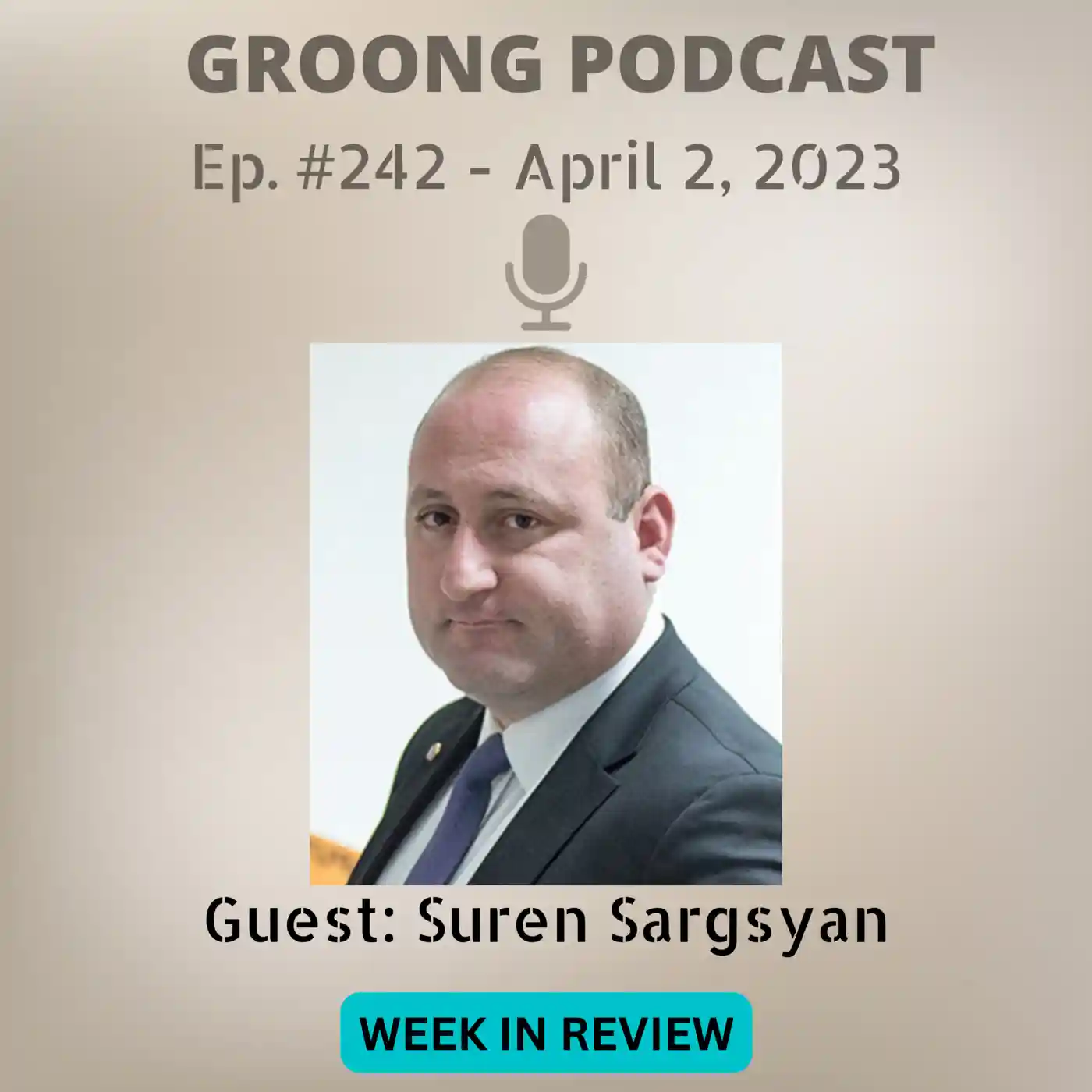
Guest:
Topic:
- Azerbaijan Invades, Pashinyan “Explains”
- Armenia at the Democracy Summit
- Armenia and the Rome Statute
- Iran FM in Moscow, Azeri FM in Israel
Episode 242 | Recorded: April 3, 2023
Suren Sargsyan - Azerbaijan Attacks Artsakh, East West Negotiation Platforms, Armenia and the Rome Statute | Ep 242 - Apr 2, 2023 [EP242]
Posted on Monday, Apr 3, 2023 | Category: Armenia, Politics, Artsakh, Nagorno Karabakh, Azerbaijan, Iran, Russia, Israel, Armenian Genocide, European Union, Turkey, China, India, Genocide, Ukraine, Syria, NATO, GeopoliticsGuest:
Topic:
- Azerbaijan Invades, Pashinyan “Explains”
- Armenia at the Democracy Summit
- Armenia and the Rome Statute
- Iran FM in Moscow, Azeri FM in Israel
Episode 242 | Recorded: April 3, 2023
Azerbaijan Attacks Artsakh | East West Negotiation Platforms | Armenia and the Rome Statute | Ep 241 - Mar 26, 2023 [EP241]
Posted on Sunday, Mar 26, 2023 | Category: Armenia, Politics, Poll, Azerbaijan, Russia, Nagorno Karabakh, Artsakh Blockade, European Union, Genocide, India, Ukraine, China, Geopolitics, Economy, NATO, Iran, Turkey | Series: wir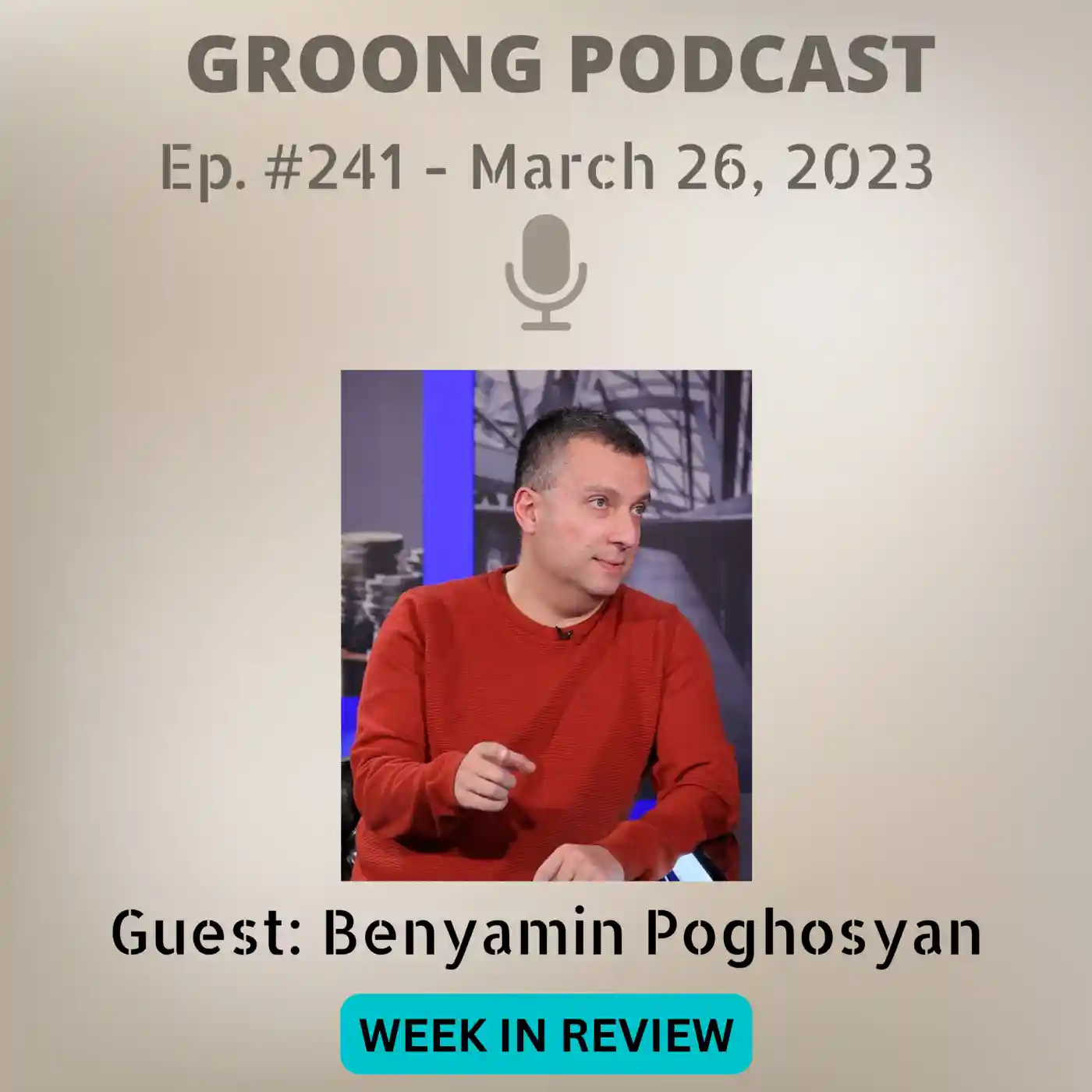
Guest:
Topic:
- Azerbaijani Attacks over the Weekend
- East and West
- Armenia and the Rome Statute
Episode 241 | Recorded: March 26, 2023
Azerbaijan Attacks Artsakh | East West Negotiation Platforms | Armenia and the Rome Statute | Ep 241 - Mar 26, 2023 [EP241]
Posted on Sunday, Mar 26, 2023 | Category: Armenia, Politics, Poll, Azerbaijan, Russia, Nagorno Karabakh, Artsakh Blockade, European Union, Genocide, India, Ukraine, China, Geopolitics, Economy, NATO, Iran, TurkeyGuest:
Topic:
- Azerbaijani Attacks over the Weekend
- East and West
- Armenia and the Rome Statute
Episode 241 | Recorded: March 26, 2023
Pashinyan Press Conference | Belligerent Azerbaijan | Mirzoyan in Moscow | Yerevan Mayor | Ep 240 - Mar 19, 2023 [EP240]
Posted on Sunday, Mar 19, 2023 | Category: Armenia, Artsakh, Politics, Nagorno Karabakh, Azerbaijan, Russia, Iran, Artsakh Blockade, NATO, Turkey, India, China, Georgia, Israel, Ukraine | Series: wir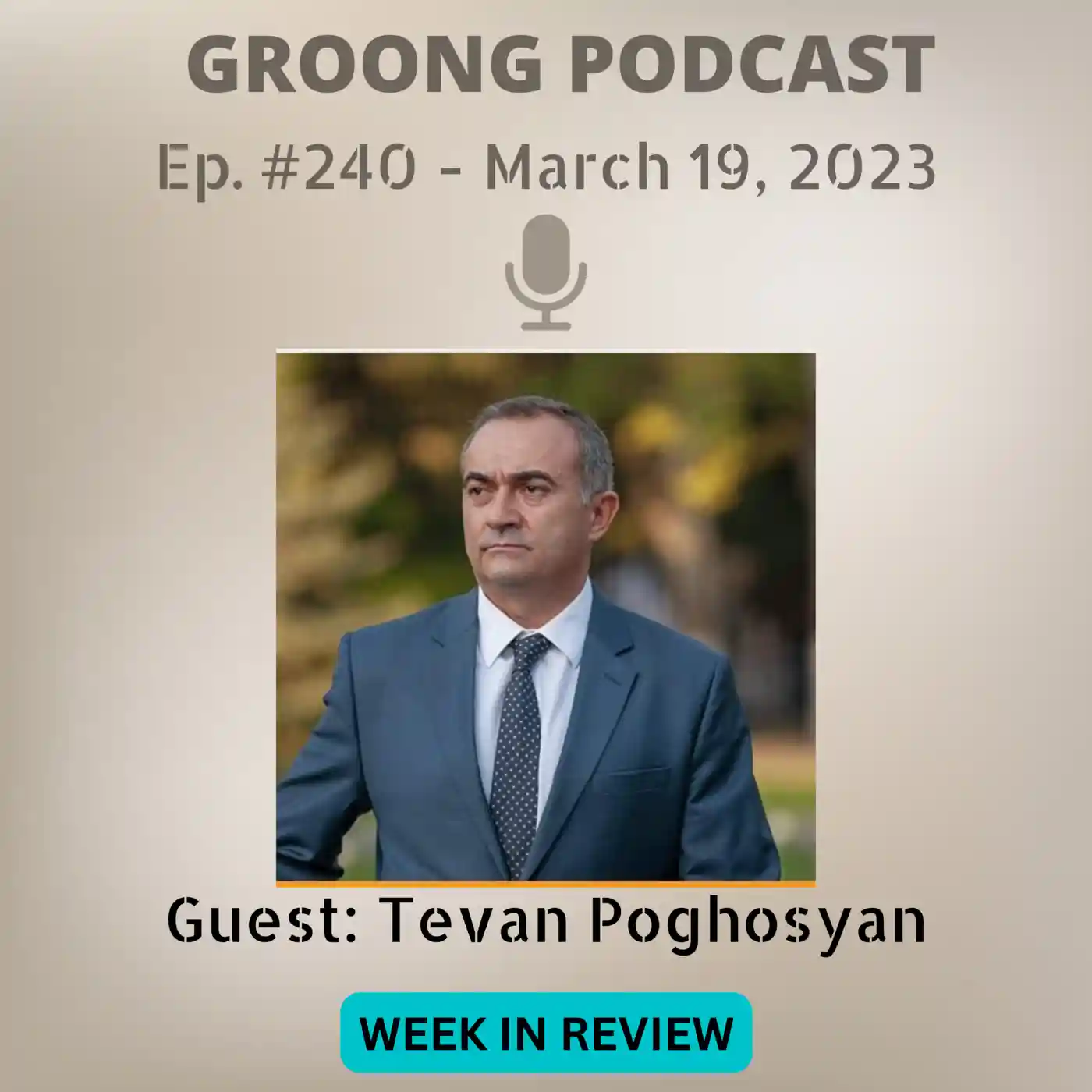
Guest:
Topics:
- Pashinyanâs Press Conference
- Negotiating with Belligerent Azerbaijan
- Mirzoyan in Moscow
- Mayoral Politics in Yerevan
Episode 240 | Recorded: March 20, 2023
Pashinyan Press Conference | Belligerent Azerbaijan | Mirzoyan in Moscow | Yerevan Mayor | Ep 240 - Mar 19, 2023 [EP240]
Posted on Sunday, Mar 19, 2023 | Category: Armenia, Artsakh, Politics, Nagorno Karabakh, Azerbaijan, Russia, Iran, Artsakh Blockade, NATO, Turkey, India, China, Georgia, Israel, UkraineGuest:
Topics:
- Pashinyanâs Press Conference
- Negotiating with Belligerent Azerbaijan
- Mirzoyan in Moscow
- Mayoral Politics in Yerevan
Episode 240 | Recorded: March 20, 2023
Artsakh Blockade Flash Update with Gev Iskajyan - Ep 239, Mar 19, 2023 [EP239]
Posted on Sunday, Mar 19, 2023 | Category: Politics, Artsakh, Nagorno Karabakh, Armenia, Azerbaijan, Russia, Artsakh Blockade | Series: artsakhblockade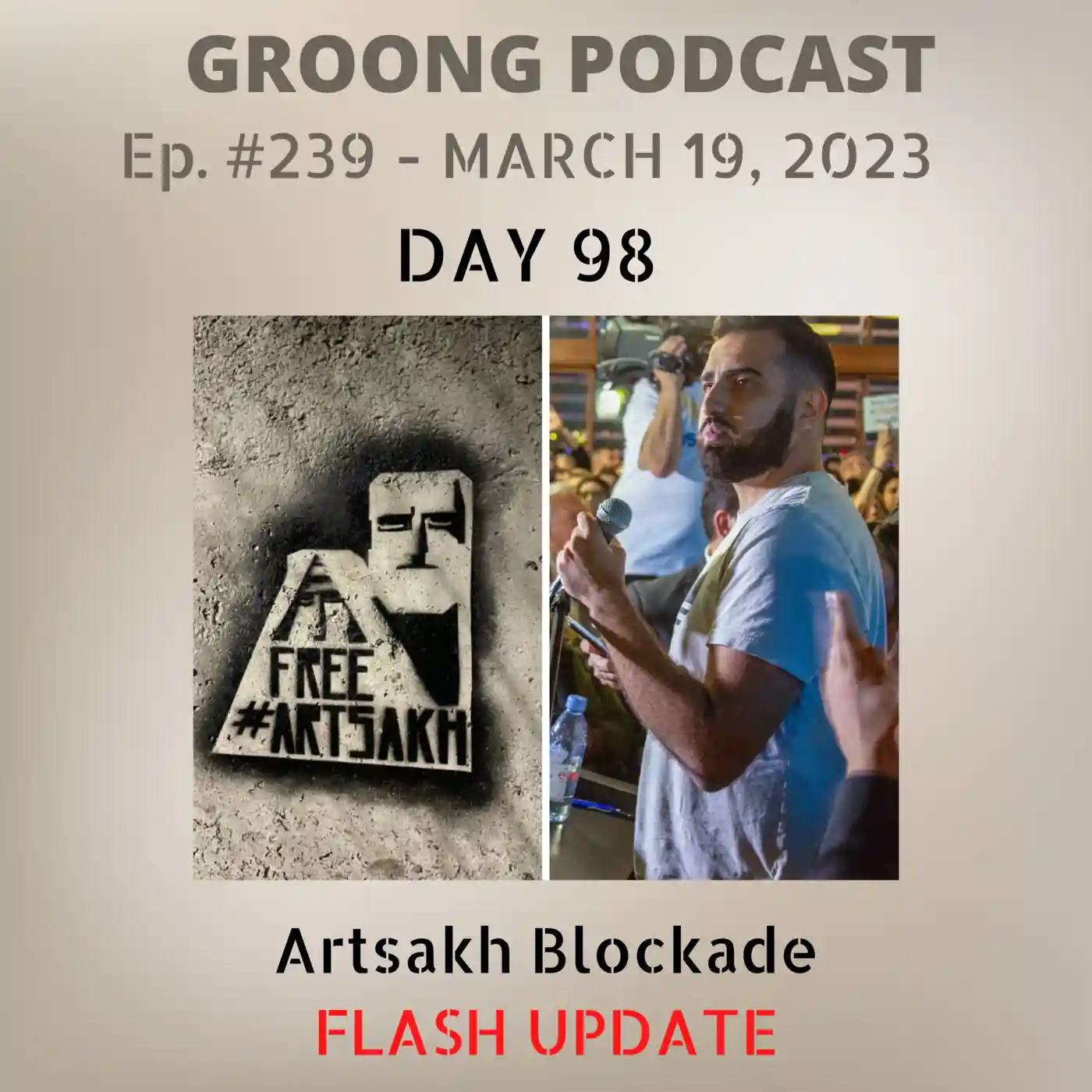
Artsakh Blockade Flash Update with Gev Iskajyan - Ep 239, Mar 19, 2023
Armenian News Network Groong - March 19, 2023
Guest:
Topics:
- The Current Living Conditions
- Gas, Power, Food, Weather
- Daily Ceasefire Violations
- Shooting at Civilians
- Heightened Threat of War
- Process of Constitutional Amendment
- Is Arayik Harutyunyan Planning to Resign?
- Will the Amendment Go Through?
- Negotiations with Azerbaijan
- Invitation to Negtiate âIntegrationâ in Baku
- Artsakh Demands that Armenia Respect its own Laws
- Artsakh Demands an International Platform for Negotiations
Episode 239 | Recorded: March 19, 2023
Artsakh Blockade Flash Update with Gev Iskajyan - Ep 239, Mar 19, 2023 [EP239]
Posted on Sunday, Mar 19, 2023 | Category: Politics, Artsakh, Nagorno Karabakh, Armenia, Azerbaijan, Russia, Artsakh BlockadeArtsakh Blockade Flash Update with Gev Iskajyan - Ep 239, Mar 19, 2023
Armenian News Network Groong - March 19, 2023
Guest:
Topics:
- The Current Living Conditions
- Gas, Power, Food, Weather
- Daily Ceasefire Violations
- Shooting at Civilians
- Heightened Threat of War
- Process of Constitutional Amendment
- Is Arayik Harutyunyan Planning to Resign?
- Will the Amendment Go Through?
- Negotiations with Azerbaijan
- Invitation to Negtiate âIntegrationâ in Baku
- Artsakh Demands that Armenia Respect its own Laws
- Artsakh Demands an International Platform for Negotiations
Episode 239 | Recorded: March 19, 2023
Johnny Melikian on the Georgia Law on Foreign Agents, Protests and Aftermath| Ep 238 - March 15, 2023 [EP238]
Posted on Wednesday, Mar 15, 2023 | Category: Georgia, Politics, Armenia, Ukraine, European Union, Russia, Economy, Human Rights, India | Series: cog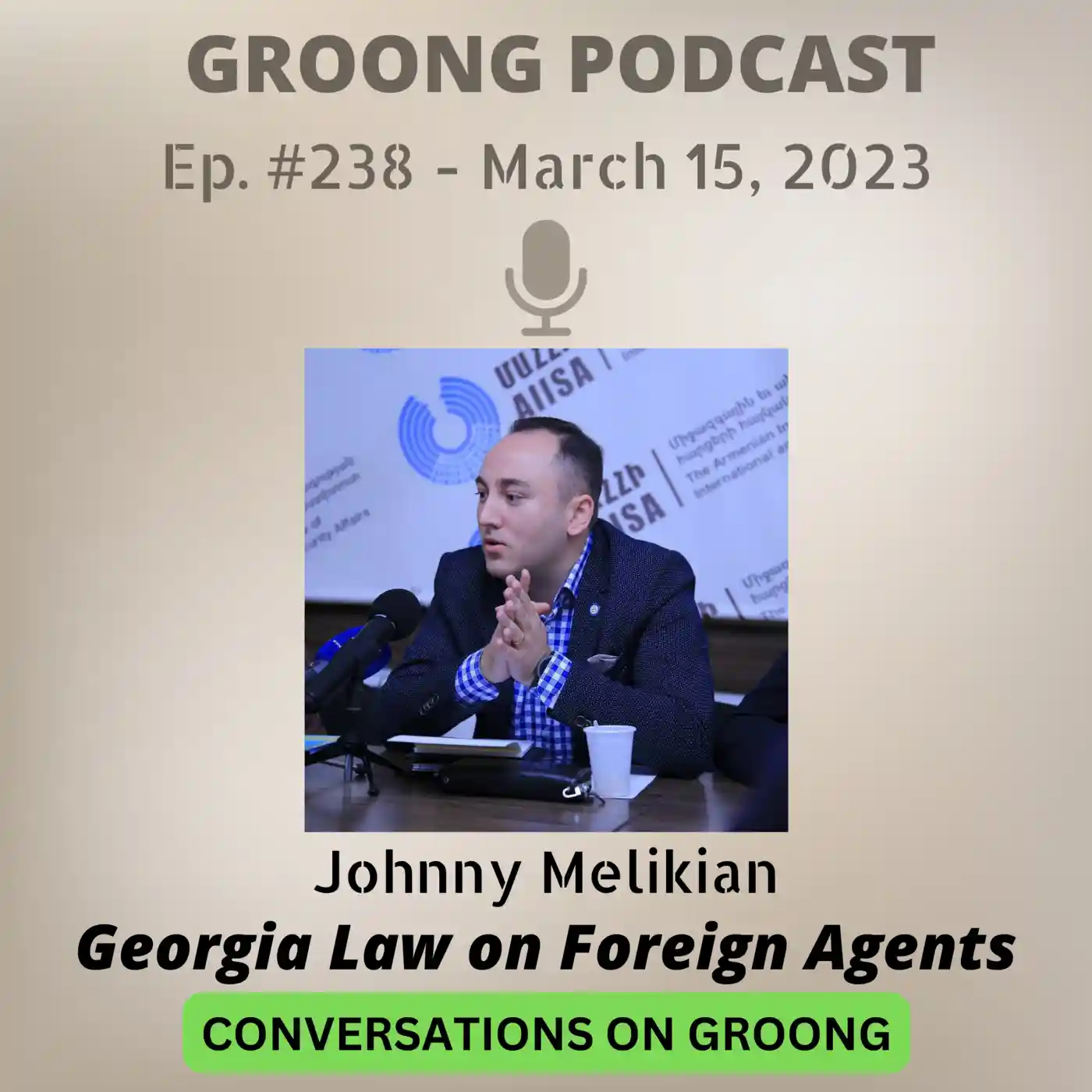
Guest:
Topics:
- On March 7, the Georgian parliament voted into law a bill that would require political actors to clarify their foreign funding sources and their activities to lobby lawmakers with such funding. This ignited large protests in Tbilisi, and on March 9 the parliament agreed to rescind the law and to release arrested opposition members. We analyze the events and the outcome.
Episode 238 | Recorded: March 15, 2023
Johnny Melikian on the Georgia Law on Foreign Agents, Protests and Aftermath| Ep 238 - March 15, 2023 [EP238]
Posted on Wednesday, Mar 15, 2023 | Category: Georgia, Politics, Armenia, Ukraine, European Union, Russia, Economy, Human Rights, IndiaGuest:
Topics:
- On March 7, the Georgian parliament voted into law a bill that would require political actors to clarify their foreign funding sources and their activities to lobby lawmakers with such funding. This ignited large protests in Tbilisi, and on March 9 the parliament agreed to rescind the law and to release arrested opposition members. We analyze the events and the outcome.
Episode 238 | Recorded: March 15, 2023
Armenia Azerbaijan Negotiations | Georgia Opposition | MPG Poll | Ep 237 [EP237]
Posted on Monday, Mar 13, 2023 | Category: Armenia, Artsakh, Politics, Poll, Azerbaijan, Georgia, Turkey, Russia, Nagorno Karabakh, Artsakh Blockade, European Union, Genocide, Human Rights, India, Iran | Series: wir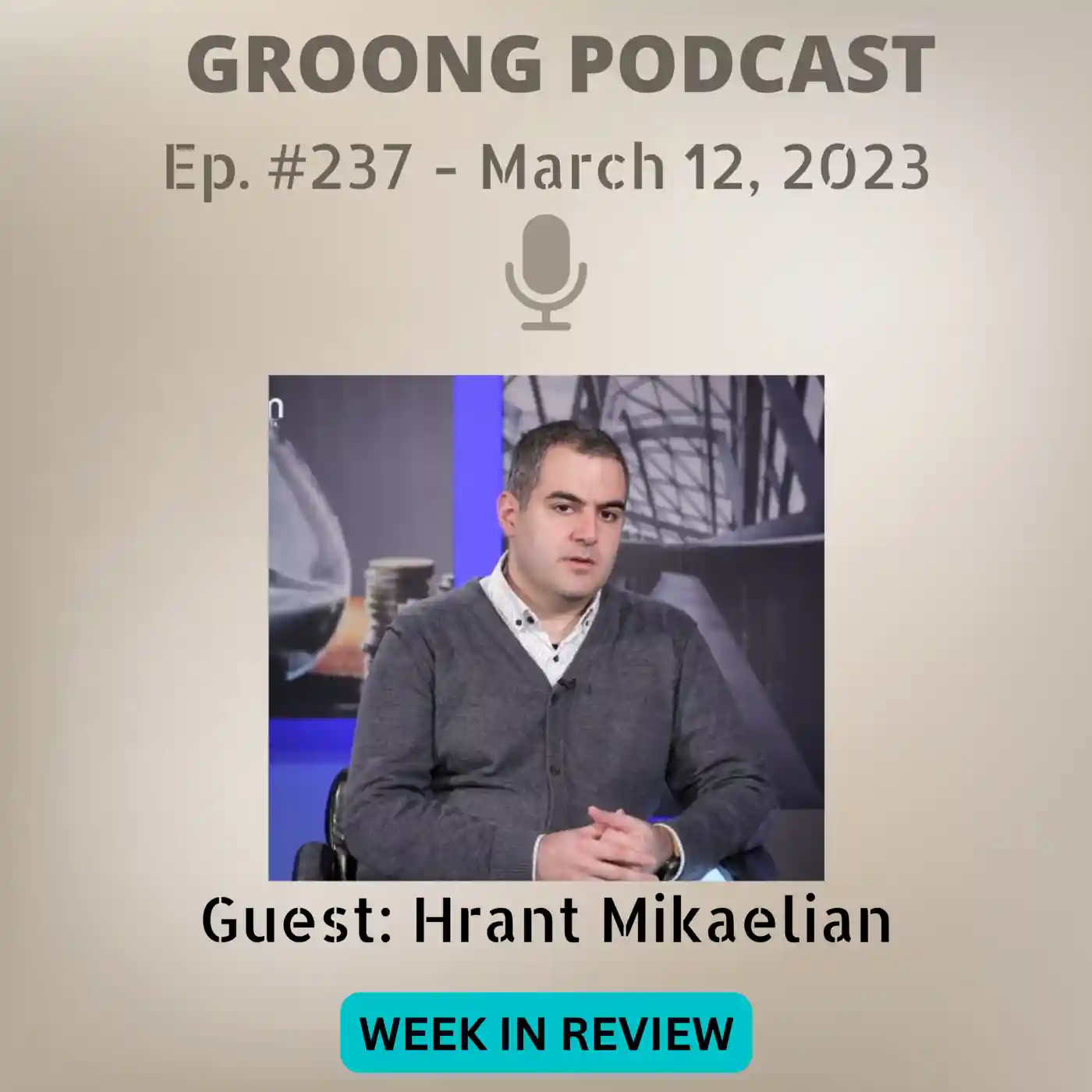
Guest:
Topics:
- Armenia-Azerbaijan Negotiations Continue
- Developments in Artsakh
- No âPeaceâ without âRights and Securityâ?
- Armenia Downgrades CSTO Relations
- Georgian Law on Foreign Agents
- Reflections on MPG Poll âAmotiSarâ Results
Episode 237 | Recorded: March 12, 2023
Armenia Azerbaijan Negotiations | Georgia Opposition | MPG Poll | Ep 237 [EP237]
Posted on Monday, Mar 13, 2023 | Category: Armenia, Artsakh, Politics, Poll, Azerbaijan, Georgia, Turkey, Russia, Nagorno Karabakh, Artsakh Blockade, European Union, Genocide, Human Rights, India, IranGuest:
Topics:
- Armenia-Azerbaijan Negotiations Continue
- Developments in Artsakh
- No âPeaceâ without âRights and Securityâ?
- Armenia Downgrades CSTO Relations
- Georgian Law on Foreign Agents
- Reflections on MPG Poll âAmotiSarâ Results
Episode 237 | Recorded: March 12, 2023
Artsakh Blockade Flash Update with Gev Iskajyan - Ep 236, Mar 12, 2023 [EP236]
Posted on Sunday, Mar 12, 2023 | Category: Politics, Artsakh, Nagorno Karabakh, Armenia, Azerbaijan, Russia, Artsakh Blockade, India, Iran, Human Rights | Series: artsakhblockade
Artsakh Blockade Flash Update with Gev Iskajyan - Ep 236, Mar 12, 2023
Armenian News Network Groong - March 12, 2023
Guest:
Topics:
- Gas cutoff again.
- Aftermath of Azerbaijan Killing 3 Artsakh Policemen
- Potential for New Aggression
- No âPeaceâ without âRights and Security for Artsakhâ?
Episode 236 | Recorded: March 12, 2023
Artsakh Blockade Flash Update with Gev Iskajyan - Ep 236, Mar 12, 2023 [EP236]
Posted on Sunday, Mar 12, 2023 | Category: Politics, Artsakh, Nagorno Karabakh, Armenia, Azerbaijan, Russia, Artsakh Blockade, India, Iran, Human RightsArtsakh Blockade Flash Update with Gev Iskajyan - Ep 236, Mar 12, 2023
Armenian News Network Groong - March 12, 2023
Guest:
Topics:
- Gas cutoff again.
- Aftermath of Azerbaijan Killing 3 Artsakh Policemen
- Potential for New Aggression
- No âPeaceâ without âRights and Security for Artsakhâ?
Episode 236 | Recorded: March 12, 2023
Artsakh Blockade Flash Update with Gev Iskajyan - Ep 235, Mar 6, 2023 [EP235]
Posted on Monday, Mar 6, 2023 | Category: Politics, Artsakh, Nagorno Karabakh, Armenia, Azerbaijan, Russia, Artsakh Blockade, NATO, Genocide, Geopolitics | Series: artsakhblockade
Artsakh Blockade Flash Update with Gev Iskajyan - Ep 235, Mar 6, 2023
Armenian News Network Groong - March 6, 2023
Guest:
Topics:
- Azerbaijan Attack Kills 3 Artsakh Citizens
- Arayik Harutyunyan rejects Azeri ultimatum, Warns of Further Aggression
- How are people responding?
- About the international response
- Russian peacekeeper report and response
- On the trilateral agreement of Nov. 2020
Episode 235 | Recorded: March 6, 2023
Artsakh Blockade Flash Update with Gev Iskajyan - Ep 235, Mar 6, 2023 [EP235]
Posted on Monday, Mar 6, 2023 | Category: Politics, Artsakh, Nagorno Karabakh, Armenia, Azerbaijan, Russia, Artsakh Blockade, NATO, Genocide, GeopoliticsArtsakh Blockade Flash Update with Gev Iskajyan - Ep 235, Mar 6, 2023
Armenian News Network Groong - March 6, 2023
Guest:
Topics:
- Azerbaijan Attack Kills 3 Artsakh Citizens
- Arayik Harutyunyan rejects Azeri ultimatum, Warns of Further Aggression
- How are people responding?
- About the international response
- Russian peacekeeper report and response
- On the trilateral agreement of Nov. 2020
Episode 235 | Recorded: March 6, 2023
Turkish Politics After the Earthquake | Artsakh Blockade Developments | Armenian Diplomacy | Egyptian President’s Visit to Armenia | Ep 234 - Mar 5, 2023 [EP234]
Posted on Sunday, Mar 5, 2023 | Category: Armenia, Politics, Artsakh, Nagorno Karabakh, Azerbaijan, Turkey, Syria, Lebanon, Artsakh Blockade, Russia, Ukraine, European Union, Iran, Genocide, NATO, Middle East, China, Economy, India, Israel | Series: wir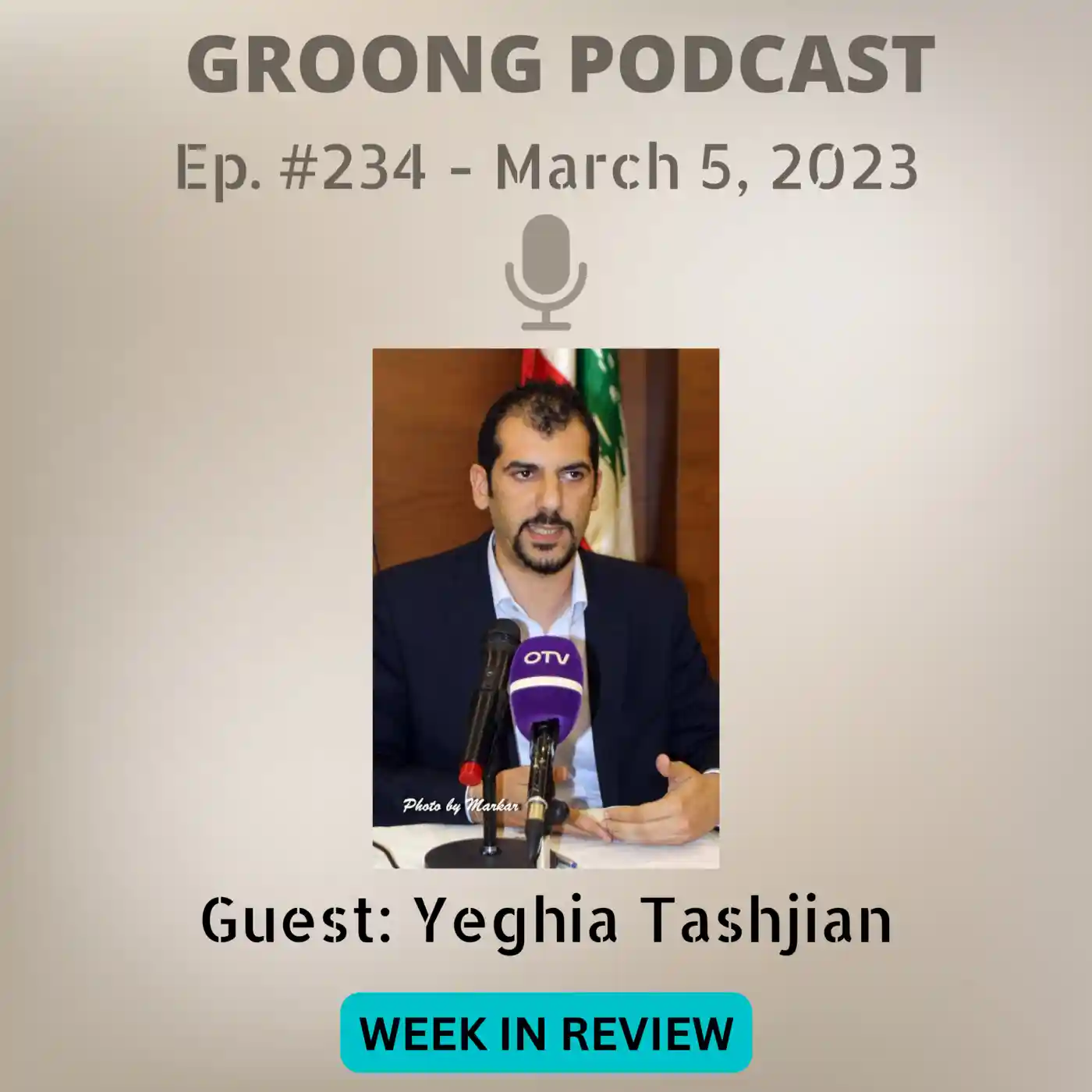
Guest:
Topics:
- Turkish Politics after the Earthquake
- Artsakh Blockade and Developments
- Armenian Diplomatic Developments
- Egyptian Presidentâs Visit to Armenia
Episode 234 | Recorded: March 5, 2023
Turkish Politics After the Earthquake | Artsakh Blockade Developments | Armenian Diplomacy | Egyptian President’s Visit to Armenia | Ep 234 - Mar 5, 2023 [EP234]
Posted on Sunday, Mar 5, 2023 | Category: Armenia, Politics, Artsakh, Nagorno Karabakh, Azerbaijan, Turkey, Syria, Lebanon, Artsakh Blockade, Russia, Ukraine, European Union, Iran, Genocide, NATO, Middle East, China, Economy, India, IsraelGuest:
Topics:
- Turkish Politics after the Earthquake
- Artsakh Blockade and Developments
- Armenian Diplomatic Developments
- Egyptian Presidentâs Visit to Armenia
Episode 234 | Recorded: March 5, 2023
Artsakh Blockade Flash Update with Gev Iskajyan - Ep 233, Mar 2, 2023 [EP233]
Posted on Thursday, Mar 2, 2023 | Category: Politics, Artsakh, Nagorno Karabakh, Armenia, Azerbaijan, Russia, Artsakh Blockade | Series: artsakhblockade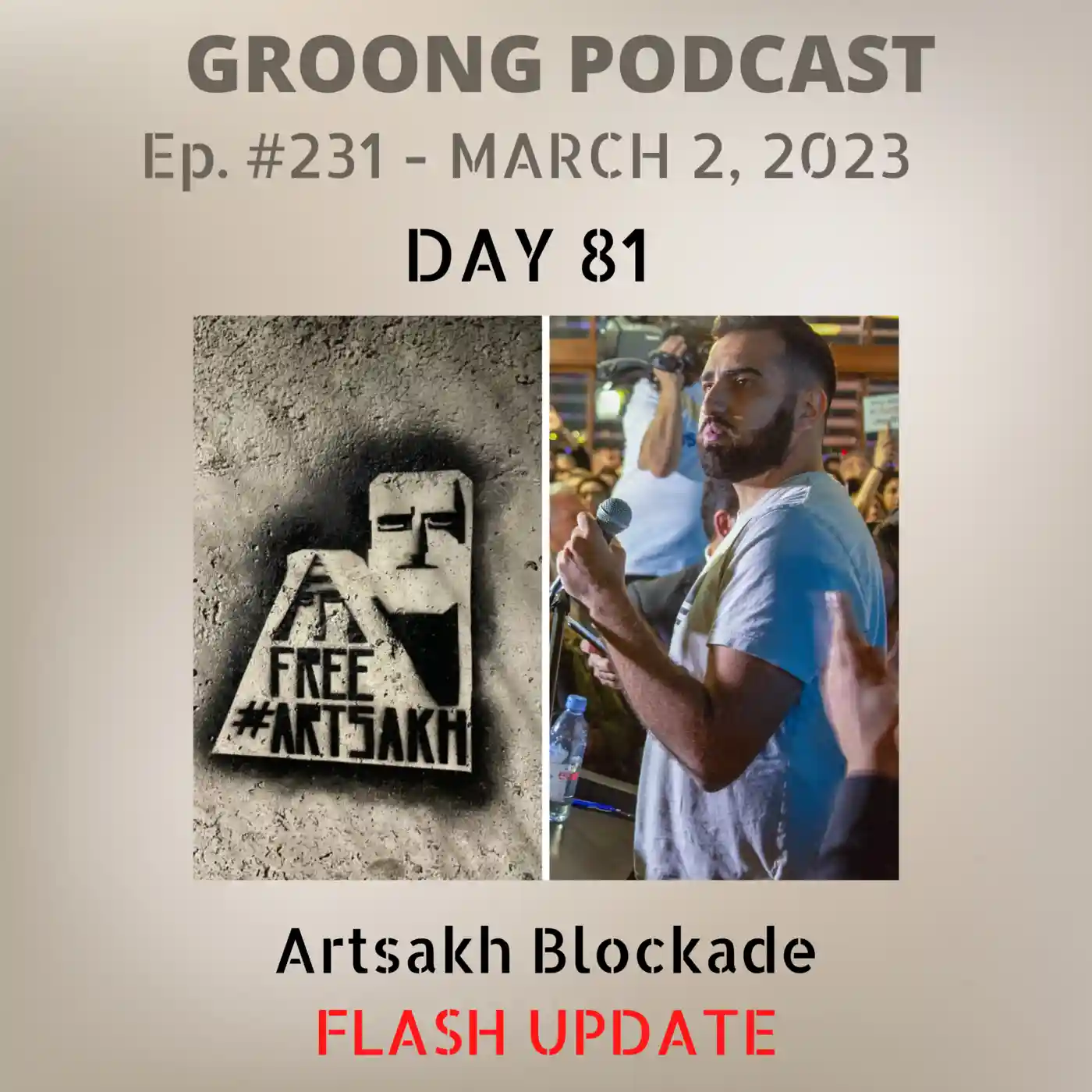
Artsakh Blockade Flash Update with Gev Iskajyan - Ep 233, Mar 2, 2023
Armenian News Network Groong - Mar 2, 2023
Guest:
Topics:
- Day to day Conditions
- Meeting of Artsakh and Azerbaijani Reps
- What is Artsakh Discussing at the Meeting
- What Concessions are being Discussed?
- New State Minister Gurgen Nersesyan
- More Azeri Shootings in Martakert and Askeran
Episode 233 | Recorded: March 2, 2023
Artsakh Blockade Flash Update with Gev Iskajyan - Ep 233, Mar 2, 2023 [EP233]
Posted on Thursday, Mar 2, 2023 | Category: Politics, Artsakh, Nagorno Karabakh, Armenia, Azerbaijan, Russia, Artsakh BlockadeArtsakh Blockade Flash Update with Gev Iskajyan - Ep 233, Mar 2, 2023
Armenian News Network Groong - Mar 2, 2023
Guest:
Topics:
- Day to day Conditions
- Meeting of Artsakh and Azerbaijani Reps
- What is Artsakh Discussing at the Meeting
- What Concessions are being Discussed?
- New State Minister Gurgen Nersesyan
- More Azeri Shootings in Martakert and Askeran
Episode 233 | Recorded: March 2, 2023
35th Anniversary of the Sumgait Pogroms | Russia Warns the EU and Armenia | Armenian Azerbaijani Negotiations Continue | Ep 232 - Feb 26, 2023 [EP232]
Posted on Tuesday, Feb 28, 2023 | Category: Armenia, Politics, Artsakh, Nagorno Karabakh, Azerbaijan, Turkey, Ukraine, Russia, Artsakh Blockade, China, NATO, Syria, Genocide, Georgia | Series: wir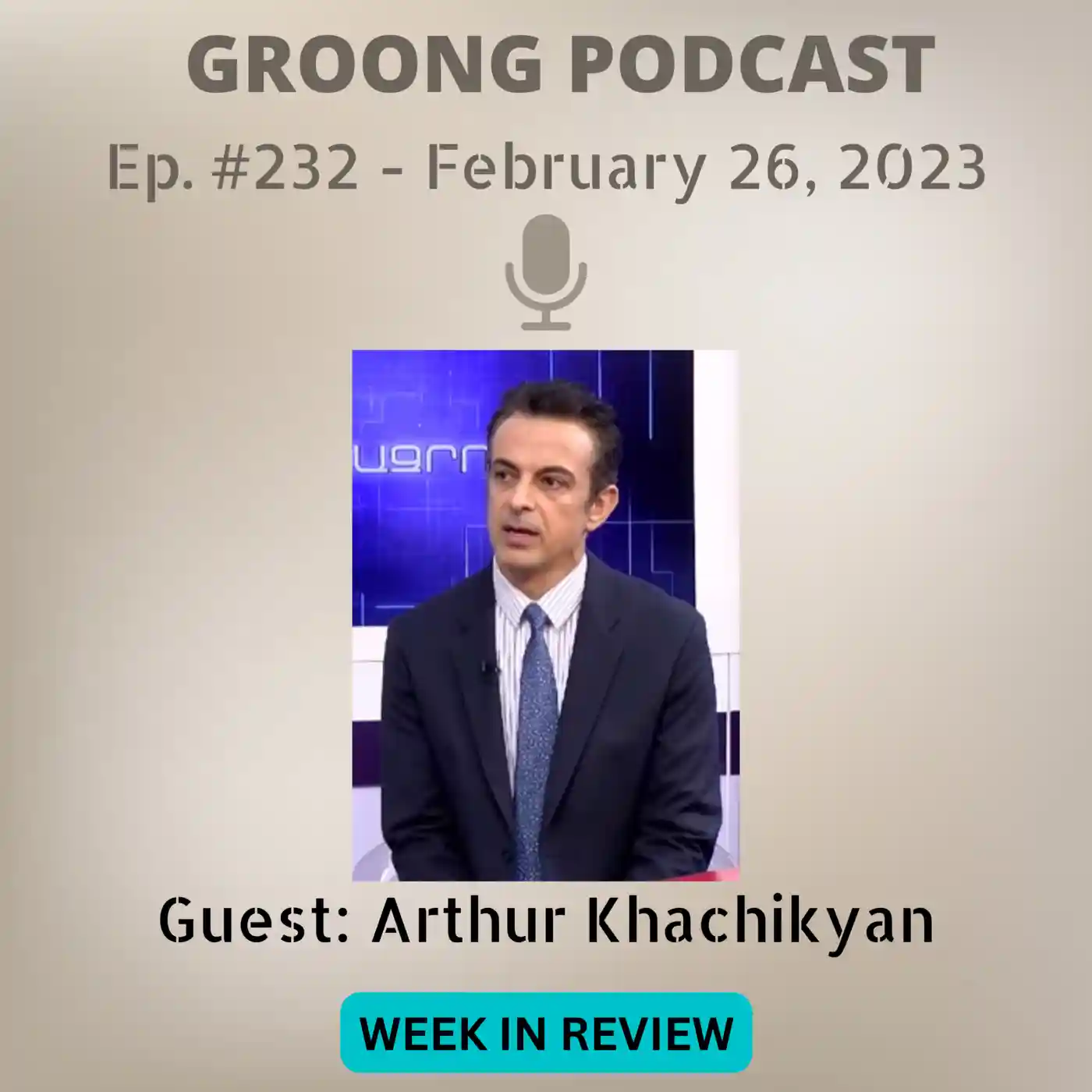
Guest:
Topics:
- 35th Anniversary of the Sumgait Pogroms
- Turkey after the Earthquake
- One Year Anniversary of the War in Ukraine
- Azerbaijan-Armenian Negotiations Continue
- Personal topics
Episode 232 | Recorded: February 28, 2023
35th Anniversary of the Sumgait Pogroms | Russia Warns the EU and Armenia | Armenian Azerbaijani Negotiations Continue | Ep 232 - Feb 26, 2023 [EP232]
Posted on Tuesday, Feb 28, 2023 | Category: Armenia, Politics, Artsakh, Nagorno Karabakh, Azerbaijan, Turkey, Ukraine, Russia, Artsakh Blockade, China, NATO, Syria, Genocide, GeorgiaGuest:
Topics:
- 35th Anniversary of the Sumgait Pogroms
- Turkey after the Earthquake
- One Year Anniversary of the War in Ukraine
- Azerbaijan-Armenian Negotiations Continue
- Personal topics
Episode 232 | Recorded: February 28, 2023
Anna Abrahamian: Munich Security Conference | Artsakh [EP230]
Posted on Friday, Feb 24, 2023 | Category: Armenia, Artsakh, Politics, China, Russia, Azerbaijan, Nagorno Karabakh, Artsakh Blockade, Armenian Genocide, Ukraine, NATO, Turkey, Genocide, Iran, Israel, Economy, Syria, European Union, Georgia, Middle East | Series: cog, video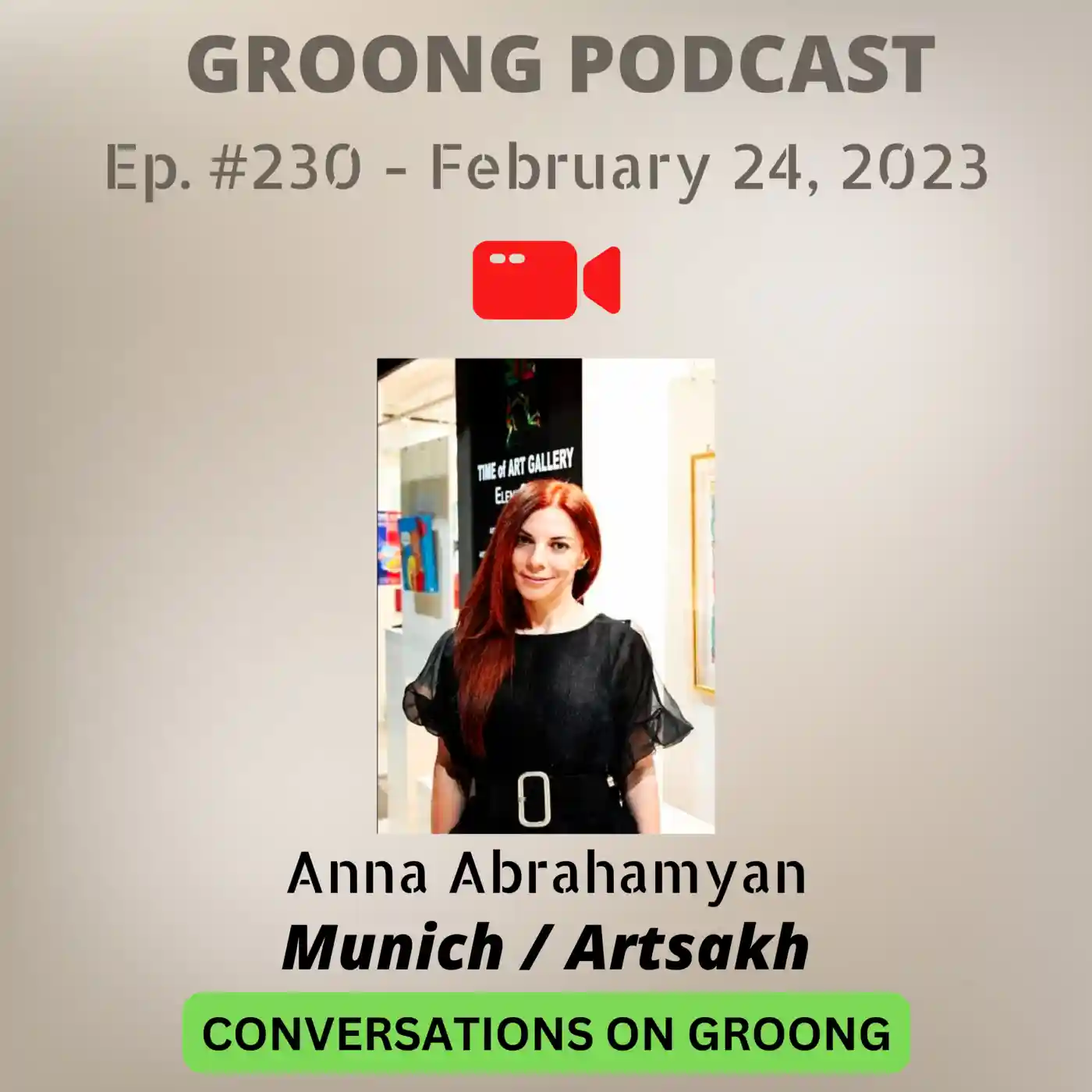
Today weâre going to talk with Anna Abrahamian about two or three topics.
- The Munich Security Conference 2023.
- Weâll touch on Russian president Putinâs state of the federation address.
- The latest political developments in Artsakh.
Guest:
- Anna Abrahamian , a geopolitical analyst who splits her time between Moscow and Athens. Having obtained training in international law, Anna has worked in such noteworthy institutions as the Defense Analyses Institute in Athens as well as the Crisis Group in Brussels. Today, Anna provides her analysis on geopolitics and Armenian politics to her
Anna Abrahamian: Munich Security Conference | Artsakh [EP230]
Posted on Friday, Feb 24, 2023 | Category: Armenia, Artsakh, Politics, China, Russia, Azerbaijan, Nagorno Karabakh, Artsakh Blockade, Armenian Genocide, Ukraine, NATO, Turkey, Genocide, Iran, Israel, Economy, Syria, European Union, Georgia, Middle EastToday weâre going to talk with Anna Abrahamian about two or three topics.
- The Munich Security Conference 2023.
- Weâll touch on Russian president Putinâs state of the federation address.
- The latest political developments in Artsakh.
Guest:
- Anna Abrahamian , a geopolitical analyst who splits her time between Moscow and Athens. Having obtained training in international law, Anna has worked in such noteworthy institutions as the Defense Analyses Institute in Athens as well as the Crisis Group in Brussels. Today, Anna provides her analysis on geopolitics and Armenian politics to her
Artsakh Blockade Flash Update with Gev Iskajyan - Ep 231, Feb 24, 2023 [EP231]
Posted on Friday, Feb 24, 2023 | Category: Politics, Artsakh, Nagorno Karabakh, Azerbaijan, Russia, Artsakh Blockade, Armenia | Series: artsakhblockade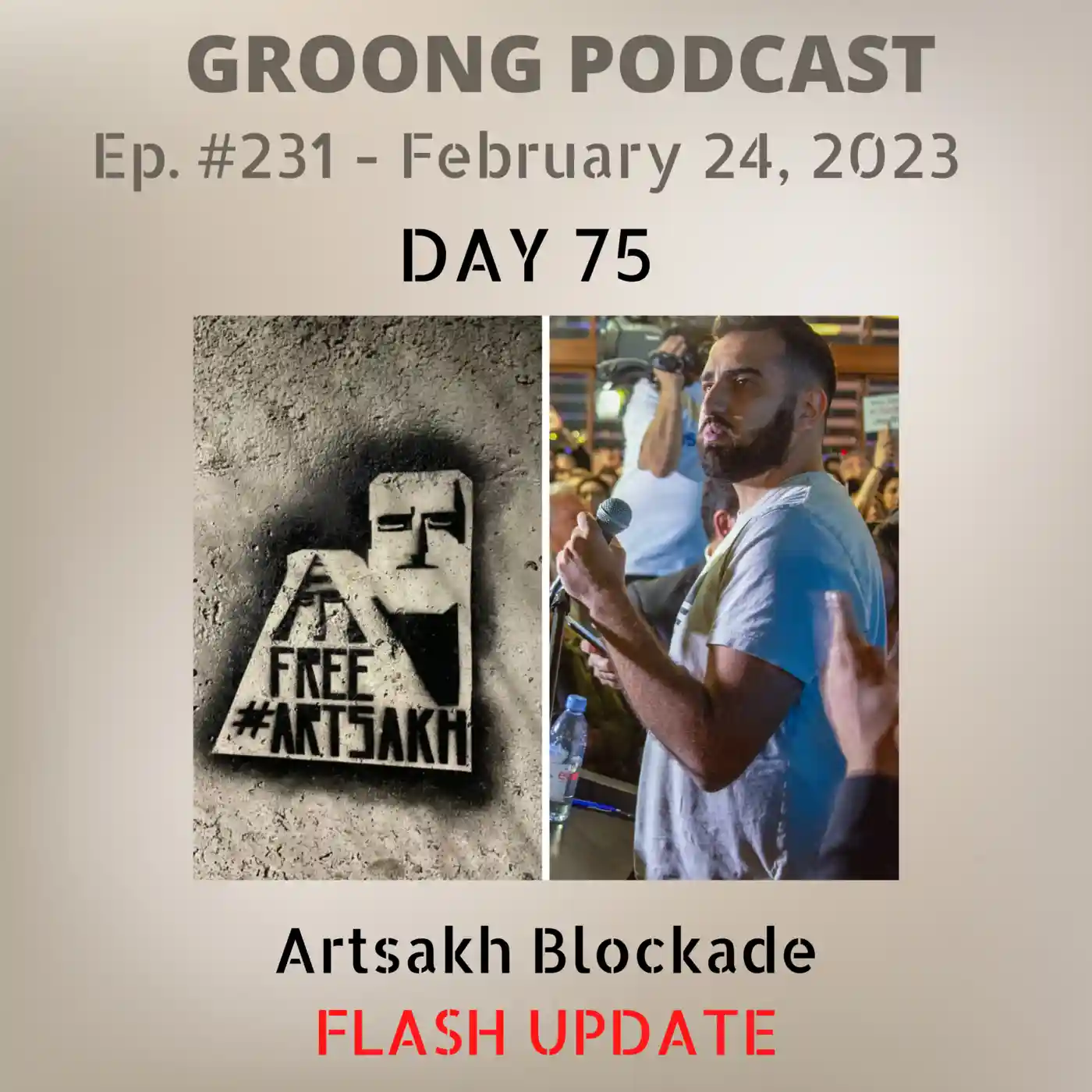
Artsakh Blockade Flash Update with Gev Iskajyan - Ep 231, Feb 24, 2023
Armenian News Network Groong - Feb 24, 2023
Guest:
Topics:
- Rouben Vardanyan sacked in Stepanakert
- Samuel Babayan in Artsakh
- Azeri and Artsakh reps meet to resume Gas & Electricity
- Further Azeri demands, Artsakh red lines
- Medical topics
Episode 231 | Recorded: February 24, 2023
Artsakh Blockade Flash Update with Gev Iskajyan - Ep 231, Feb 24, 2023 [EP231]
Posted on Friday, Feb 24, 2023 | Category: Politics, Artsakh, Nagorno Karabakh, Azerbaijan, Russia, Artsakh Blockade, ArmeniaArtsakh Blockade Flash Update with Gev Iskajyan - Ep 231, Feb 24, 2023
Armenian News Network Groong - Feb 24, 2023
Guest:
Topics:
- Rouben Vardanyan sacked in Stepanakert
- Samuel Babayan in Artsakh
- Azeri and Artsakh reps meet to resume Gas & Electricity
- Further Azeri demands, Artsakh red lines
- Medical topics
Episode 231 | Recorded: February 24, 2023
Artur Papyan: Cyber Laws and Threats in Armenia [EP229]
Posted on Friday, Feb 24, 2023 | Category: Armenia, Technology, Media, Azerbaijan, Israel, Human Rights | Series: cog, video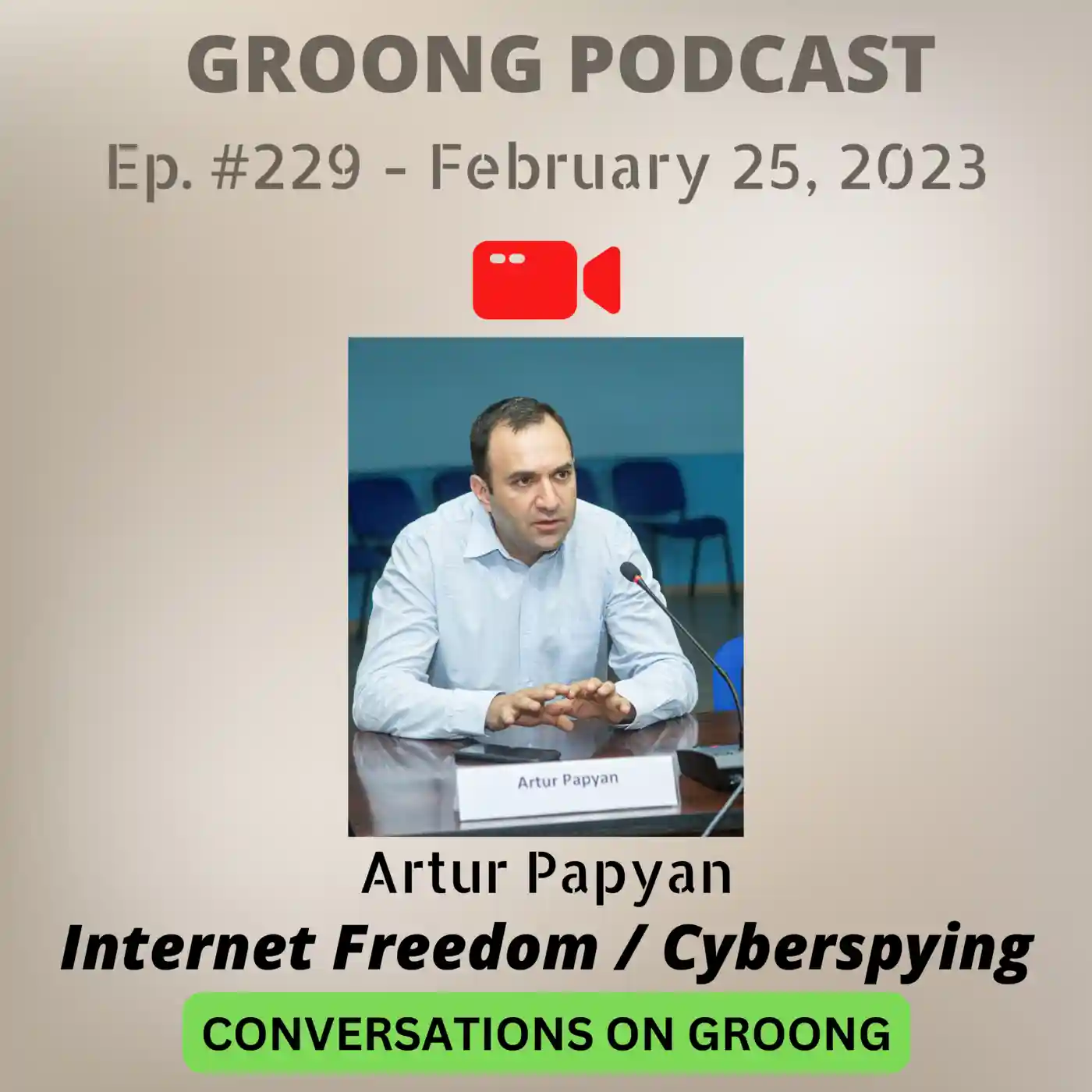
In this Conversations on Groong episode, we’ll be talking about the Internet censorship bill proposed in Armenia before the new year. We’ll also talk about the threat and activity of some Cyber spying malware in Armenia, such as the Israeli Pegasus software, which represents a threat to journalists and freedom of expression.
Topics:
- Censoring the Internet
- Cyberthreats and Cyberspying in Armenia
Guest: Artur Papyan , malware researcher, digital security consultant, co-founder of CyberHub and director of the Media DIversity Institute .
Episode 229 | Recorded: February 24, 2023
Artur Papyan: Cyber Laws and Threats in Armenia [EP229]
Posted on Friday, Feb 24, 2023 | Category: Armenia, Technology, Media, Azerbaijan, Israel, Human RightsIn this Conversations on Groong episode, we’ll be talking about the Internet censorship bill proposed in Armenia before the new year. We’ll also talk about the threat and activity of some Cyber spying malware in Armenia, such as the Israeli Pegasus software, which represents a threat to journalists and freedom of expression.
Topics:
- Censoring the Internet
- Cyberthreats and Cyberspying in Armenia
Guest: Artur Papyan , malware researcher, digital security consultant, co-founder of CyberHub and director of the Media DIversity Institute .
Episode 229 | Recorded: February 24, 2023
Suren Sargsyan: Artsakh Under Blockade - Day 72 [EP228]
Posted on Tuesday, Feb 21, 2023 | Category: Artsakh, Politics, Geopolitics, Russia, Azerbaijan, Artsakh Blockade, 168am, Nagorno Karabakh, European Union, Armenia, Turkey, Ukraine, Iran, Israel, Middle East | Series: cog, video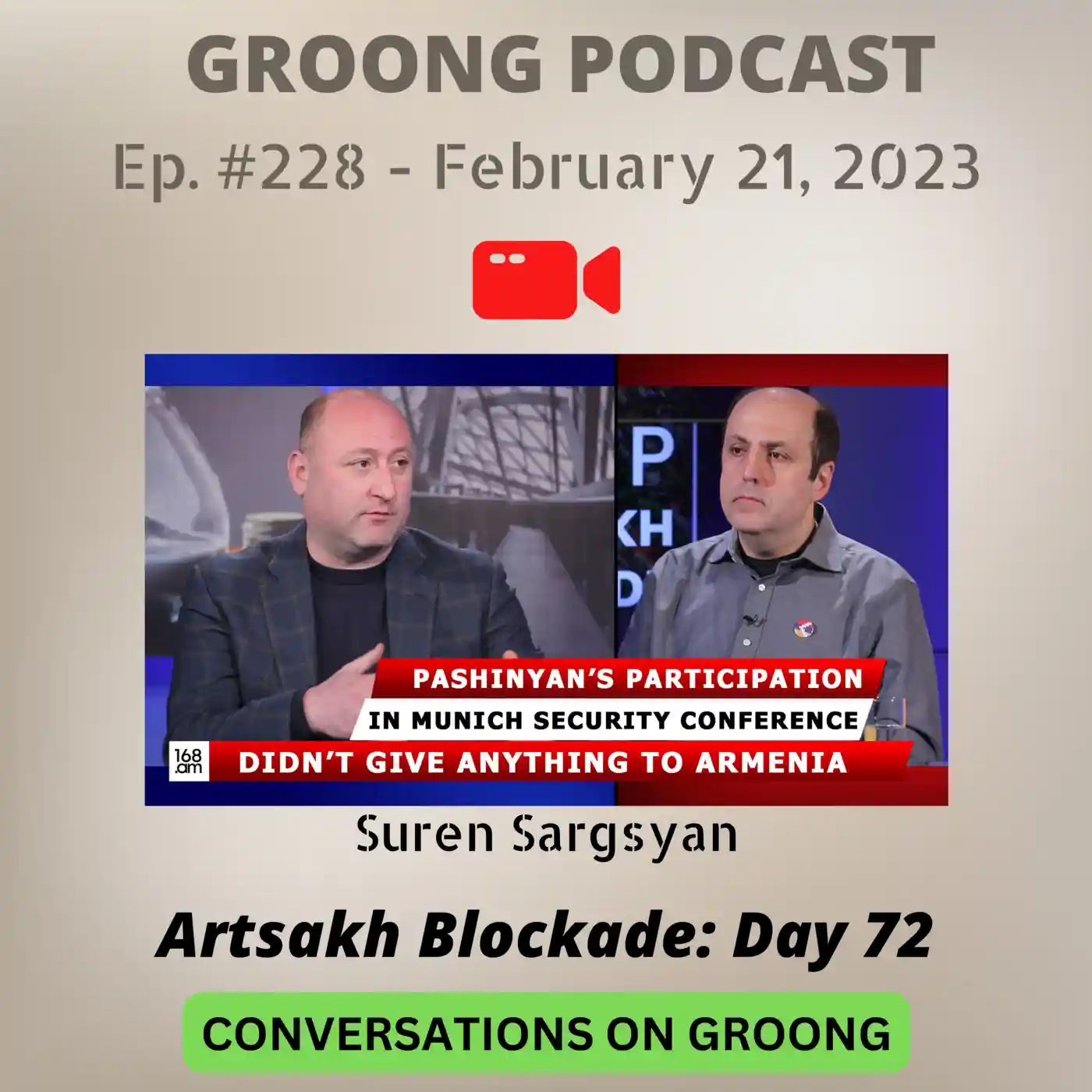
Guests:
- Suren Sargsyan , founder and a President at the Armenian Center for American Studies, a research center based in Yerevan.
“Pashinyanâs participation in Munich Security Conference didnât give anything to Armenia” - Suren Sargsyan
Topic:
Today is day 72 of the total blockade of Artsakh. For 72 days, the 120K citizens of Artsakh have not had the ability to enter or exit their country. They are deprived of the ability to visit Armenia or to receive guests from Armenia. With very limited supplies, they are forced to ration food with the help of food stamps in order to
Read MoreSuren Sargsyan: Artsakh Under Blockade - Day 72 [EP228]
Posted on Tuesday, Feb 21, 2023 | Category: Artsakh, Politics, Geopolitics, Russia, Azerbaijan, Artsakh Blockade, 168am, Nagorno Karabakh, European Union, Armenia, Turkey, Ukraine, Iran, Israel, Middle EastGuests:
- Suren Sargsyan , founder and a President at the Armenian Center for American Studies, a research center based in Yerevan.
“Pashinyanâs participation in Munich Security Conference didnât give anything to Armenia” - Suren Sargsyan
Topic:
Today is day 72 of the total blockade of Artsakh. For 72 days, the 120K citizens of Artsakh have not had the ability to enter or exit their country. They are deprived of the ability to visit Armenia or to receive guests from Armenia. With very limited supplies, they are forced to ration food with the help of food stamps in order to
Read MoreArtsakh Blockade Flash Update with Gev Iskajyan - Ep 227, Feb 21, 2023 [EP227]
Posted on Tuesday, Feb 21, 2023 | Category: Politics, Artsakh, Nagorno Karabakh, Azerbaijan, Artsakh Blockade, Armenia, Russia | Series: artsakhblockade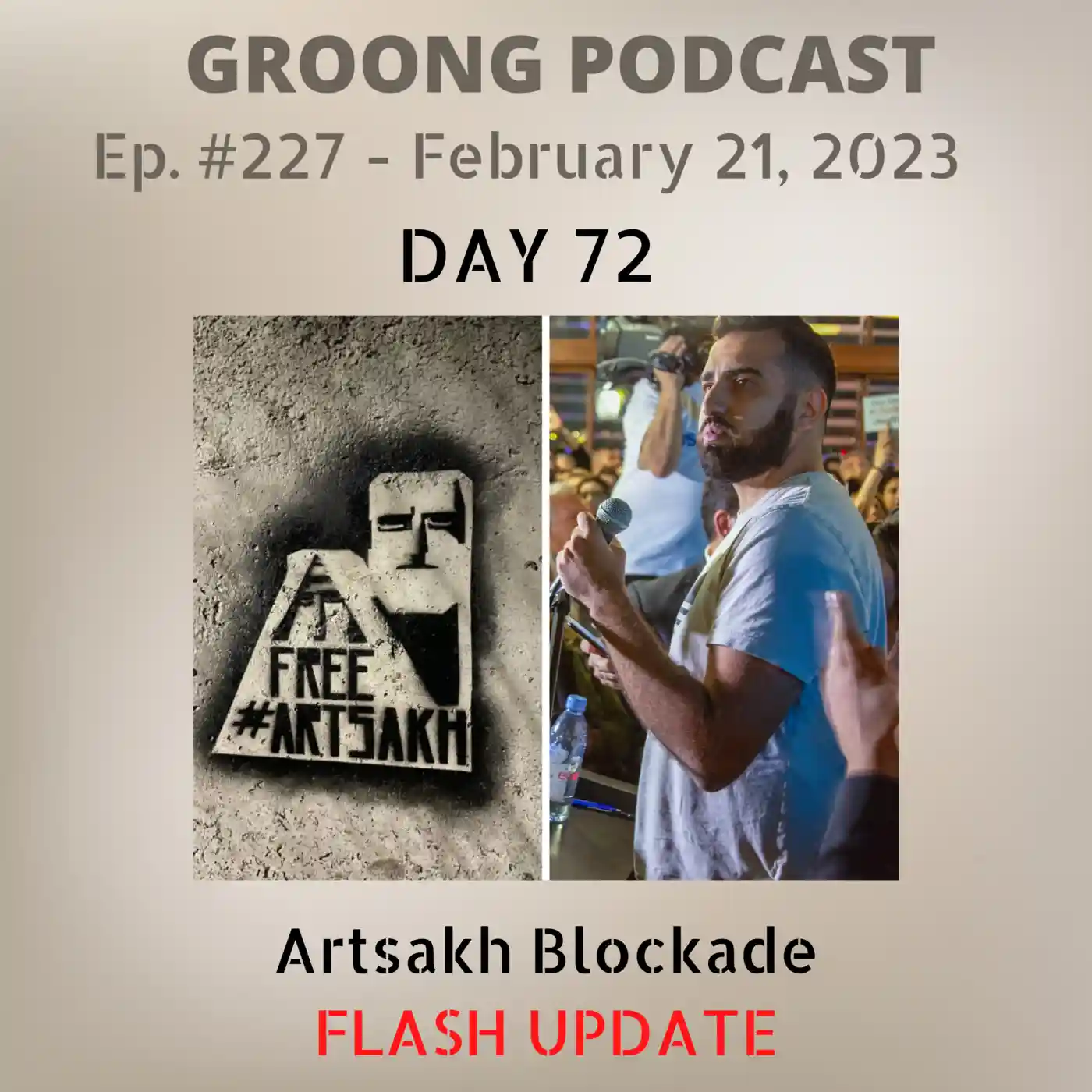
Artsakh Blockade Flash Update with Gev Iskajyan - Ep 227, Feb 21, 2023
Armenian News Network Groong - Feb 21, 2023
Guest:
Topics:
- The Politics around Ruben Vardanyan
Episode 227 | Recorded: February 21, 2023
Artsakh Blockade Flash Update with Gev Iskajyan - Ep 227, Feb 21, 2023 [EP227]
Posted on Tuesday, Feb 21, 2023 | Category: Politics, Artsakh, Nagorno Karabakh, Azerbaijan, Artsakh Blockade, Armenia, RussiaArtsakh Blockade Flash Update with Gev Iskajyan - Ep 227, Feb 21, 2023
Armenian News Network Groong - Feb 21, 2023
Guest:
Topics:
- The Politics around Ruben Vardanyan
Episode 227 | Recorded: February 21, 2023
35th Anniversary of the Karabakh Movement | Russia Warns the EU and Armenia | Armenian Azerbaijani Negotiations Continue | Ep 226 - Feb 19, 2023 [EP226]
Posted on Monday, Feb 20, 2023 | Category: Armenia, Politics, Artsakh, Nagorno Karabakh, Azerbaijan, Russia, Artsakh Blockade, European Union, Iran, Ukraine, Georgia, Economy, Geopolitics, Turkey | Series: wir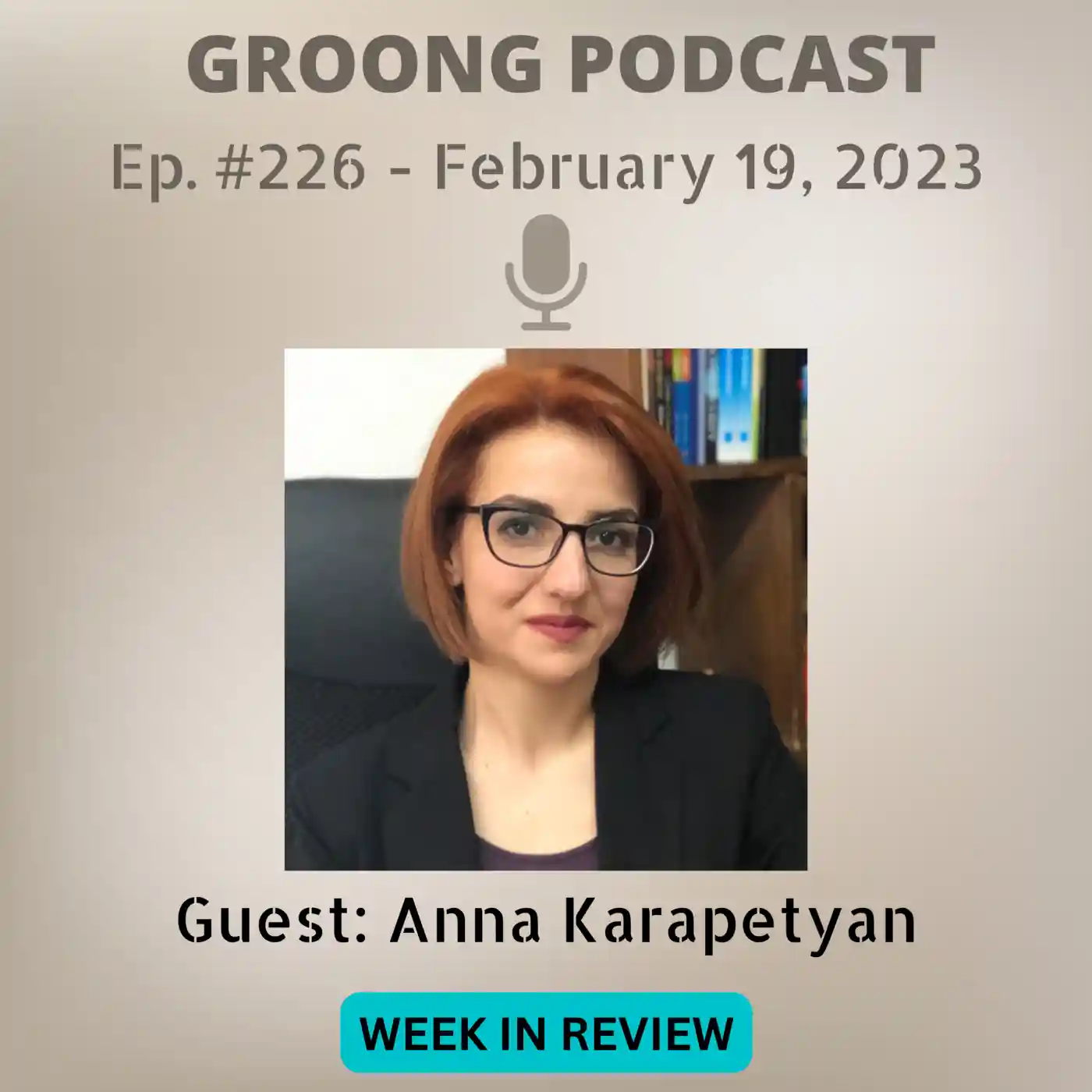
Guest:
Topics:
- 35th Anniversary of the Karabakh Movement
- Russia Warns the EU and Armenia
- Armenian Azerbaijani Negotiations Continue
- Personal topics
Episode 226 | Recorded: February 19, 2023
35th Anniversary of the Karabakh Movement | Russia Warns the EU and Armenia | Armenian Azerbaijani Negotiations Continue | Ep 226 - Feb 19, 2023 [EP226]
Posted on Monday, Feb 20, 2023 | Category: Armenia, Politics, Artsakh, Nagorno Karabakh, Azerbaijan, Russia, Artsakh Blockade, European Union, Iran, Ukraine, Georgia, Economy, Geopolitics, TurkeyGuest:
Topics:
- 35th Anniversary of the Karabakh Movement
- Russia Warns the EU and Armenia
- Armenian Azerbaijani Negotiations Continue
- Personal topics
Episode 226 | Recorded: February 19, 2023
Earthquake in Turkey and Syria | Armenia-Azerbaijan Conflict | Lavrov Interview | EU and CSTO Missions | Shifting Public Perceptions | Yerevan Political Shuffle | Ep 224 - Feb 12, 2023 [EP224]
Posted on Sunday, Feb 12, 2023 | Category: Armenia, Politics, Poll, Artsakh, Nagorno Karabakh, Azerbaijan, Turkey, Syria, Russia, Iran, Artsakh Blockade, European Union, Ukraine, China, India, Geopolitics, Genocide, Georgia, Israel, Lebanon | Series: wir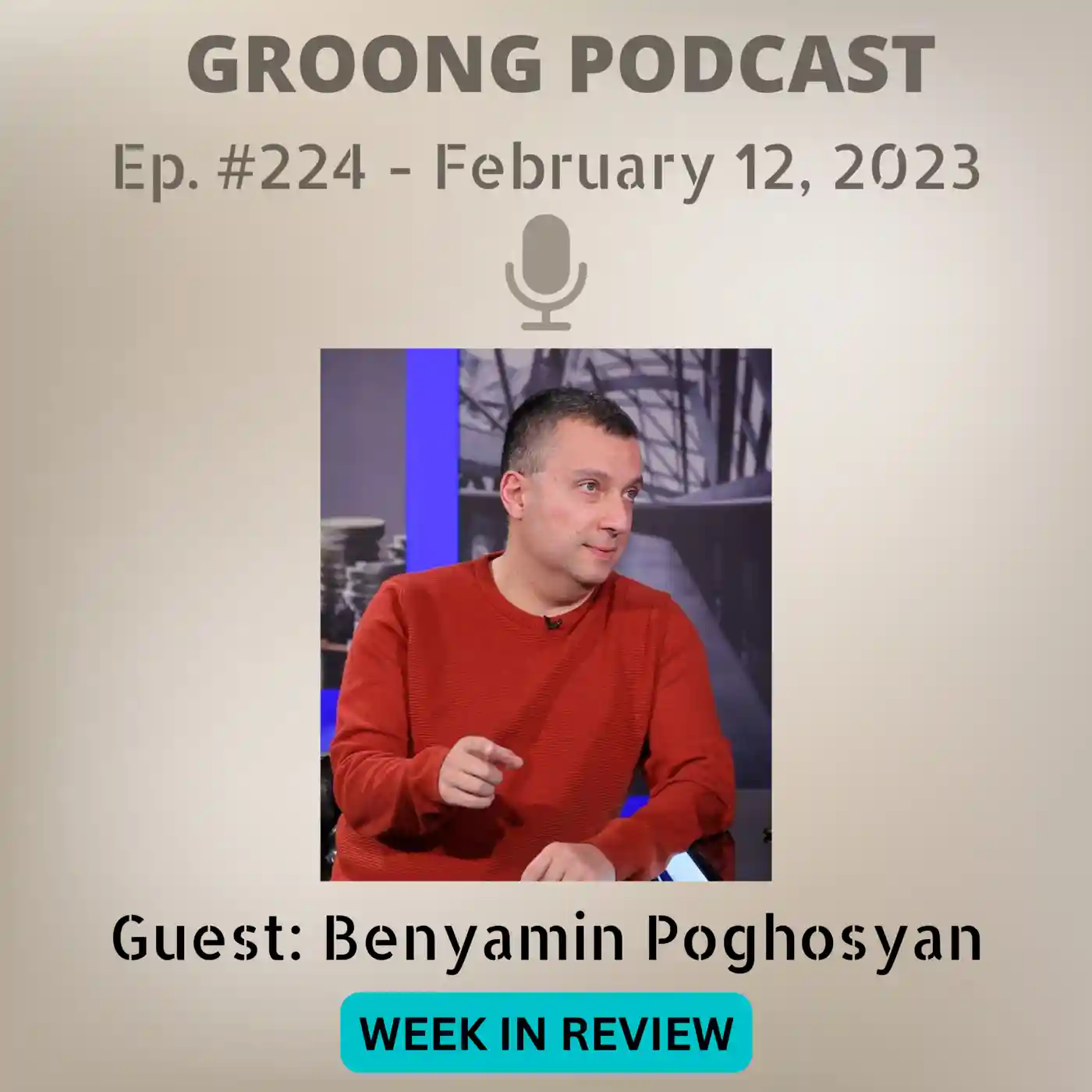
Guest:
Topic:
- Earthquake in Turkey and Syria
- Armenia-Azerbaijan Conflict
- FM Lavrovâs Interview to Russian Media
- EU vs CSTO Missions
- Shifting Public Perceptions
- Political Shuffles in Yerevan
Episode 224 | Recorded: February 12, 2023
Earthquake in Turkey and Syria | Armenia-Azerbaijan Conflict | Lavrov Interview | EU and CSTO Missions | Shifting Public Perceptions | Yerevan Political Shuffle | Ep 224 - Feb 12, 2023 [EP224]
Posted on Sunday, Feb 12, 2023 | Category: Armenia, Politics, Poll, Artsakh, Nagorno Karabakh, Azerbaijan, Turkey, Syria, Russia, Iran, Artsakh Blockade, European Union, Ukraine, China, India, Geopolitics, Genocide, Georgia, Israel, LebanonGuest:
Topic:
- Earthquake in Turkey and Syria
- Armenia-Azerbaijan Conflict
- FM Lavrovâs Interview to Russian Media
- EU vs CSTO Missions
- Shifting Public Perceptions
- Political Shuffles in Yerevan
Episode 224 | Recorded: February 12, 2023
Artsakh Blockade Flash Update with Gev Iskajyan - Ep 223, Feb 9, 2023 [EP223]
Posted on Thursday, Feb 9, 2023 | Category: Politics, Artsakh, Nagorno Karabakh, Azerbaijan, Artsakh Blockade, Armenia, Russia | Series: artsakhblockade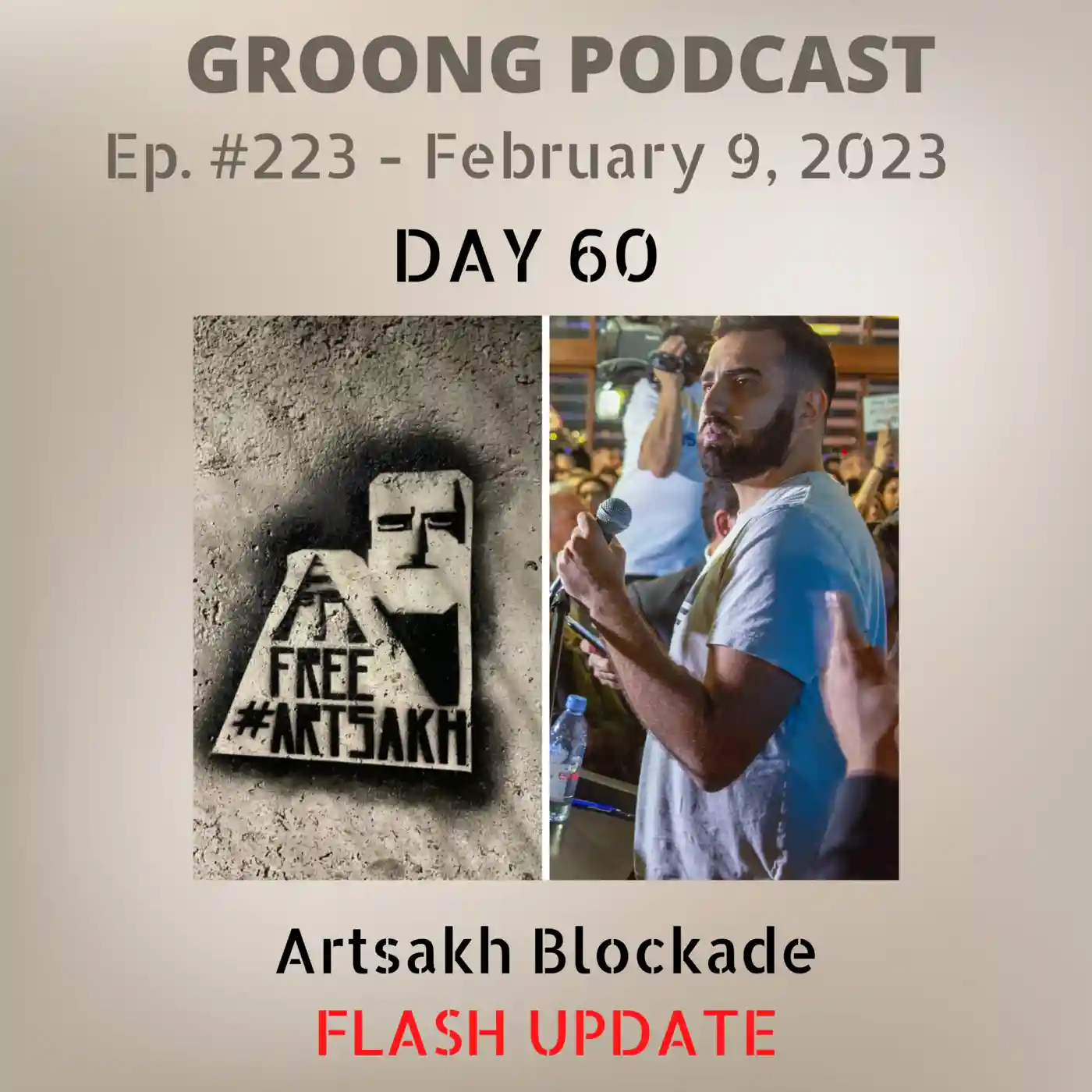
Artsakh Blockade Flash Update with Gev Iskajyan - Ep 223, Feb 9, 2023
Armenian News Network Groong - Feb 9, 2023
Guest:
Topics:
- Snowy and cold weather sets in
- Azerbaijan Switches off Gas again
- Shifting Electricity Blackout Strategy
- 25 Tons of Russian Aid Reach Stepanakert
- Negotiations and Negotiators Continue
- Redlines for Artsakh
- Arayik Harutyunyan talks with Gagik Tsarukyan
- Do not Take this Blockade Lightly!
- Treasonous Mindsets in Armenian Government
- Who Will They Fight For?
Episode 223 | Recorded: February 9, 2023
Artsakh Blockade Flash Update with Gev Iskajyan - Ep 223, Feb 9, 2023 [EP223]
Posted on Thursday, Feb 9, 2023 | Category: Politics, Artsakh, Nagorno Karabakh, Azerbaijan, Artsakh Blockade, Armenia, RussiaArtsakh Blockade Flash Update with Gev Iskajyan - Ep 223, Feb 9, 2023
Armenian News Network Groong - Feb 9, 2023
Guest:
Topics:
- Snowy and cold weather sets in
- Azerbaijan Switches off Gas again
- Shifting Electricity Blackout Strategy
- 25 Tons of Russian Aid Reach Stepanakert
- Negotiations and Negotiators Continue
- Redlines for Artsakh
- Arayik Harutyunyan talks with Gagik Tsarukyan
- Do not Take this Blockade Lightly!
- Treasonous Mindsets in Armenian Government
- Who Will They Fight For?
Episode 223 | Recorded: February 9, 2023
Artsakh Blockade Flash Update with Gev Iskajyan - Ep 221, Feb 4, 2023 [EP221]
Posted on Saturday, Feb 4, 2023 | Category: Politics, Artsakh, Nagorno Karabakh, Azerbaijan, Artsakh Blockade, Armenia | Series: artsakhblockade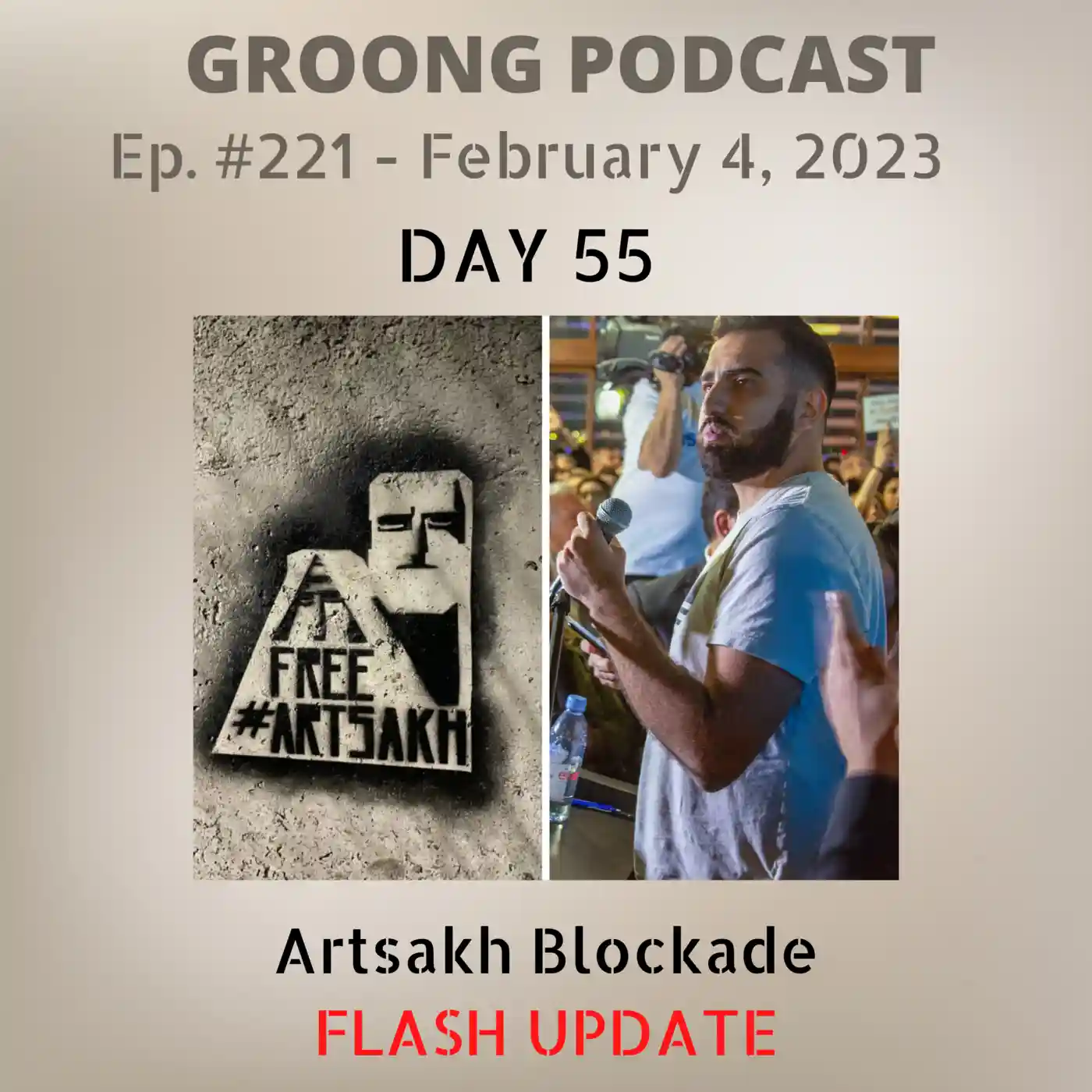
Artsakh Blockade Flash Update with Gev Iskajyan - Ep 221, Feb 4, 2023
Armenian News Network Groong - Feb 4, 2023
Guest:
Topics:
- Update for February 4
- Blackouts at 6 hours per day
- Gas mostly ok for 5-6 days
- Food Stamp & Rationing System working OK
- Azerbaijan Curating Profile of Azeri Activists
- More professional, curated, Organized
- Hand-picked journalists
- Protests as a Show
Episode 221 | Recorded: February 4, 2023
Artsakh Blockade Flash Update with Gev Iskajyan - Ep 221, Feb 4, 2023 [EP221]
Posted on Saturday, Feb 4, 2023 | Category: Politics, Artsakh, Nagorno Karabakh, Azerbaijan, Artsakh Blockade, ArmeniaArtsakh Blockade Flash Update with Gev Iskajyan - Ep 221, Feb 4, 2023
Armenian News Network Groong - Feb 4, 2023
Guest:
Topics:
- Update for February 4
- Blackouts at 6 hours per day
- Gas mostly ok for 5-6 days
- Food Stamp & Rationing System working OK
- Azerbaijan Curating Profile of Azeri Activists
- More professional, curated, Organized
- Hand-picked journalists
- Protests as a Show
Episode 221 | Recorded: February 4, 2023
Artsakh Blockade Flash Update with Gev Iskajyan - Ep 220, Jan 31, 2023 [EP220]
Posted on Tuesday, Jan 31, 2023 | Category: Politics, Artsakh, Nagorno Karabakh, Azerbaijan, Artsakh Blockade, Armenia, Human Rights | Series: artsakhblockade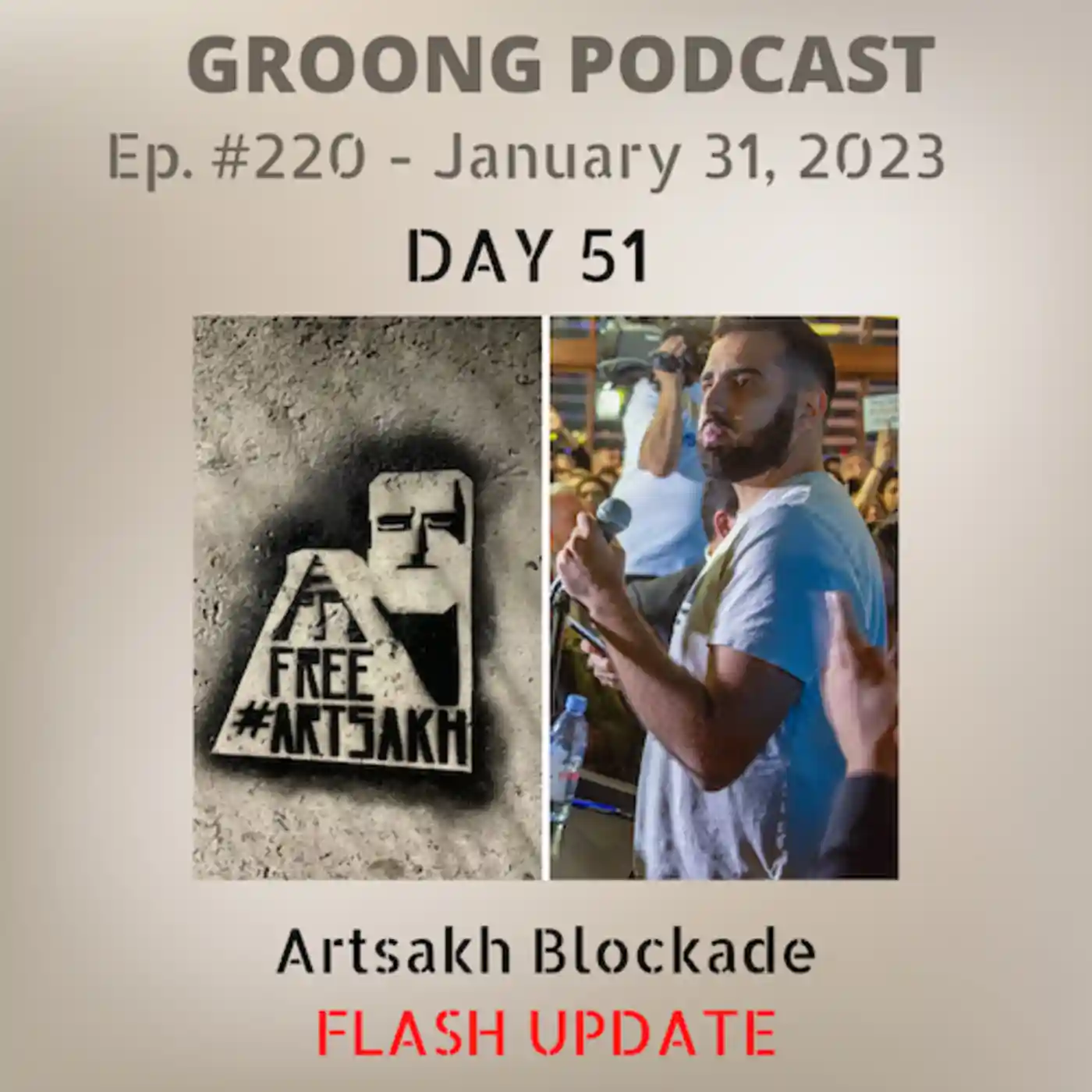
Artsakh Blockade Flash Update with Gev Iskajyan - Ep 220, Jan 31, 2023
Armenian News Network Groong - Jan 31, 2023
Guest:
Topics:
- Why less than daily updates
- January 31 Update
- Over 183 births since the blockade
- Gas has been on for 2 days now
- Some Service sector workers working again
Episode 220 | Recorded: January 31, 2023
Artsakh Blockade Flash Update with Gev Iskajyan - Ep 220, Jan 31, 2023 [EP220]
Posted on Tuesday, Jan 31, 2023 | Category: Politics, Artsakh, Nagorno Karabakh, Azerbaijan, Artsakh Blockade, Armenia, Human RightsArtsakh Blockade Flash Update with Gev Iskajyan - Ep 220, Jan 31, 2023
Armenian News Network Groong - Jan 31, 2023
Guest:
Topics:
- Why less than daily updates
- January 31 Update
- Over 183 births since the blockade
- Gas has been on for 2 days now
- Some Service sector workers working again
Episode 220 | Recorded: January 31, 2023
Arthur G Martirosyan | Army Day in Armenia | New EU Civilian Mission to Armenia | Politics of Artsakh Blockade | Ep 219 - Jan 29, 2023 [EP219]
Posted on Sunday, Jan 29, 2023 | Category: Armenia, Artsakh, Politics, Azerbaijan, Nagorno Karabakh, Russia, Iran, USA, Artsakh Blockade, European Union, Turkey, Ukraine, Israel, Genocide, Georgia, Middle East, NATO | Series: wir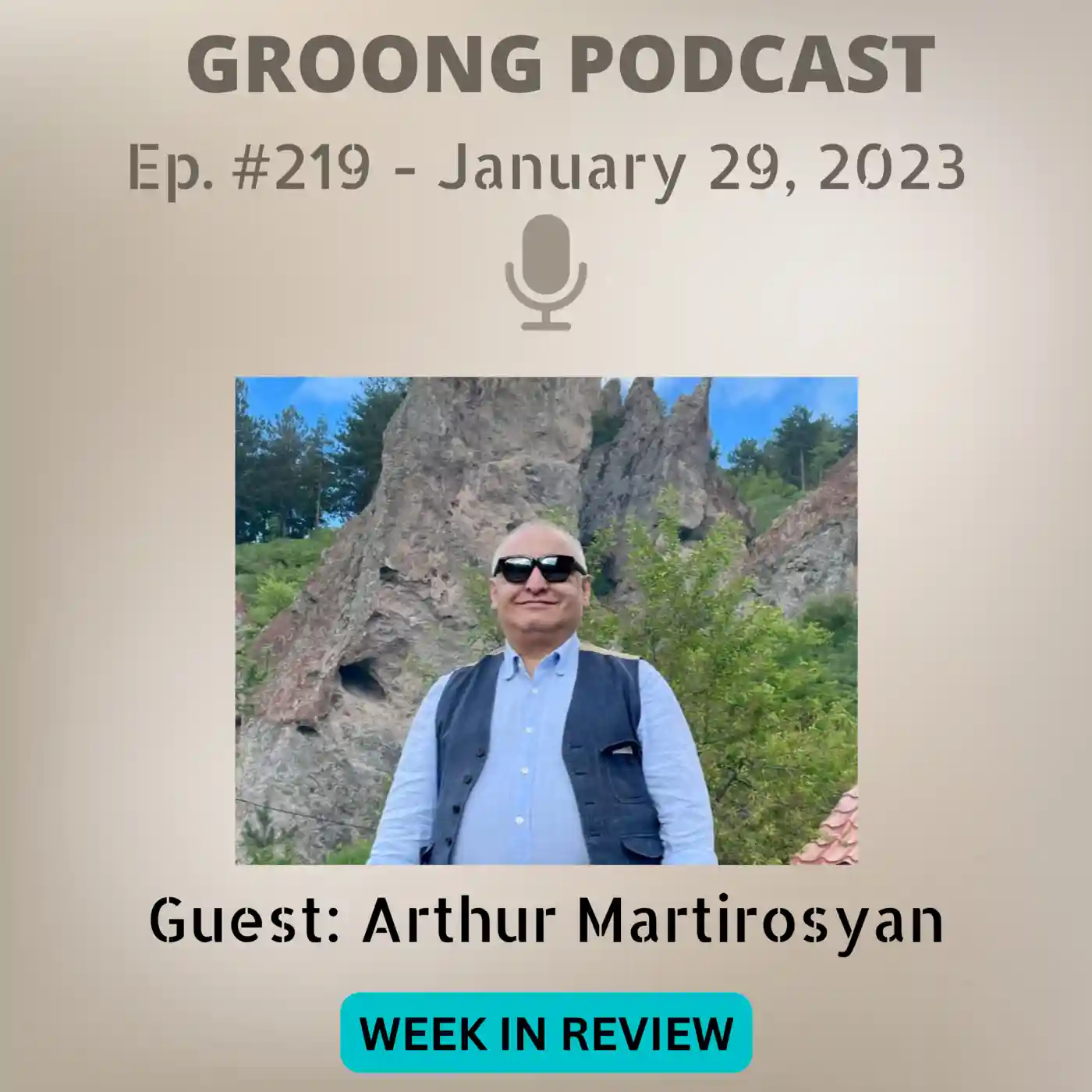
Guest:
Topics:
- Army Day - January 28
- Events at Yerablur
- New EU Monitoring Mission
- Armenia’s Diplomacy
- Russia’s Increasing Displeasure
- Iran’s Tempered Displeasure
- Artsakh Blockade
Episode 219 | Recorded: January 29, 2023
Arthur G Martirosyan | Army Day in Armenia | New EU Civilian Mission to Armenia | Politics of Artsakh Blockade | Ep 219 - Jan 29, 2023 [EP219]
Posted on Sunday, Jan 29, 2023 | Category: Armenia, Artsakh, Politics, Azerbaijan, Nagorno Karabakh, Russia, Iran, USA, Artsakh Blockade, European Union, Turkey, Ukraine, Israel, Genocide, Georgia, Middle East, NATOGuest:
Topics:
- Army Day - January 28
- Events at Yerablur
- New EU Monitoring Mission
- Armenia’s Diplomacy
- Russia’s Increasing Displeasure
- Iran’s Tempered Displeasure
- Artsakh Blockade
Episode 219 | Recorded: January 29, 2023
Artsakh Blockade Flash Update with Gev Iskajyan - Ep 218, Jan 27, 2023 [EP218]
Posted on Friday, Jan 27, 2023 | Category: Politics, Artsakh, Nagorno Karabakh, Azerbaijan, Artsakh Blockade, Armenia | Series: artsakhblockade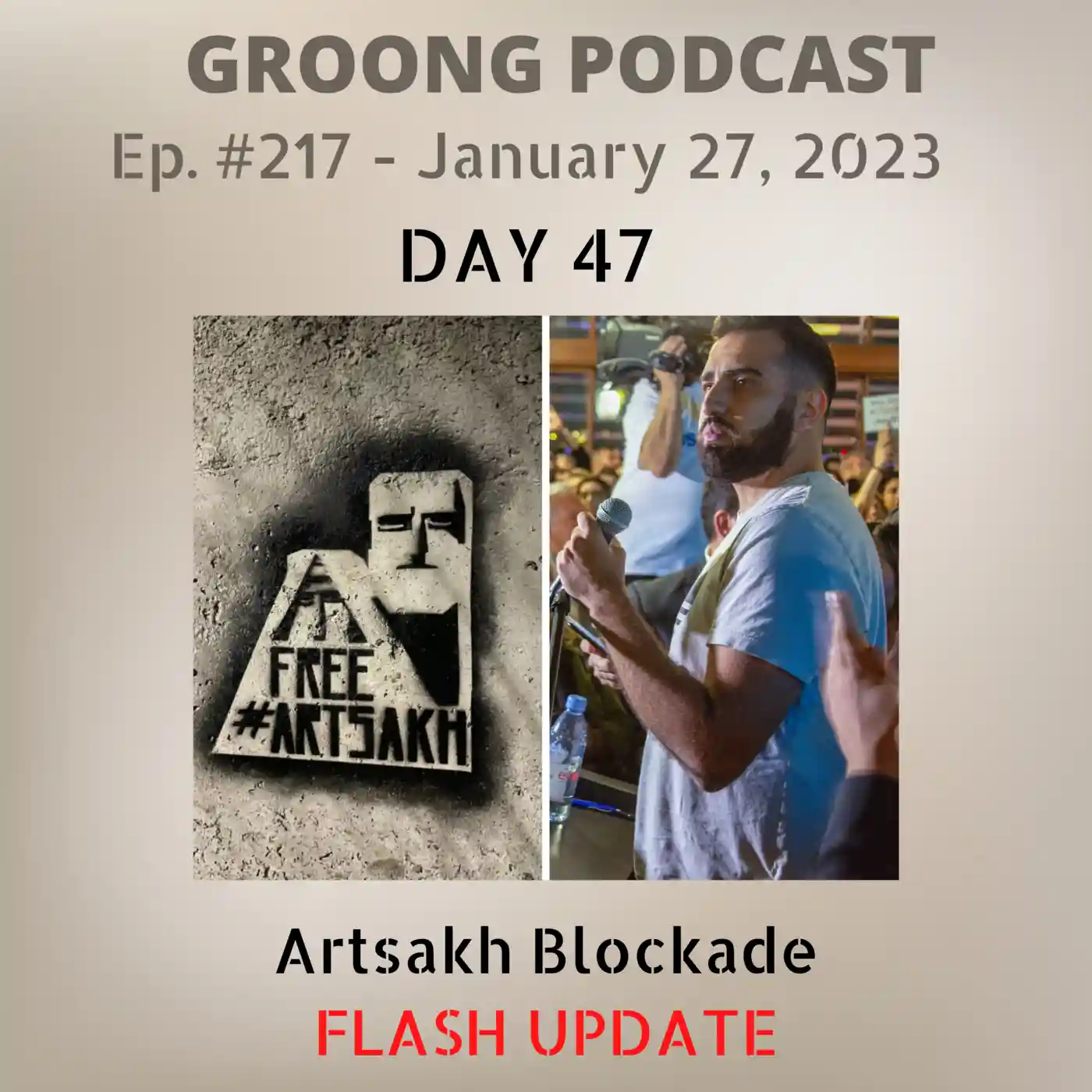
Artsakh Blockade Flash Update with Gev Iskajyan - Ep 218, Jan 27, 2023
Armenian News Network Groong - Jan 27, 2023
Guest:
Topics:
- January 27 Update
- Reportedly Gas turned back on
- Blaclouts continue
- Hagop Ipdjian in Artsakh
- How to get Involved
Episode 218 | Recorded: January 27, 2023
Read MoreArtsakh Blockade Flash Update with Gev Iskajyan - Ep 218, Jan 27, 2023 [EP218]
Posted on Friday, Jan 27, 2023 | Category: Politics, Artsakh, Nagorno Karabakh, Azerbaijan, Artsakh Blockade, ArmeniaArtsakh Blockade Flash Update with Gev Iskajyan - Ep 218, Jan 27, 2023
Armenian News Network Groong - Jan 27, 2023
Guest:
Topics:
- January 27 Update
- Reportedly Gas turned back on
- Blaclouts continue
- Hagop Ipdjian in Artsakh
- How to get Involved
Episode 218 | Recorded: January 27, 2023
Read MoreTevan Poghosyan | Catastrophic Accident in Military Barrack | New EU Civilian Mission to Armenia | Armenia-Russia Relations | Ruben Vardanyan on BBC HARDtalk | Ep 217 - Jan 22, 2023 [EP217]
Posted on Tuesday, Jan 24, 2023 | Category: Armenia, Artsakh, Politics, Nagorno Karabakh, Artsakh Blockade, European Union, Russia, Azerbaijan, Iran, NATO, Ukraine, Turkey | Series: wir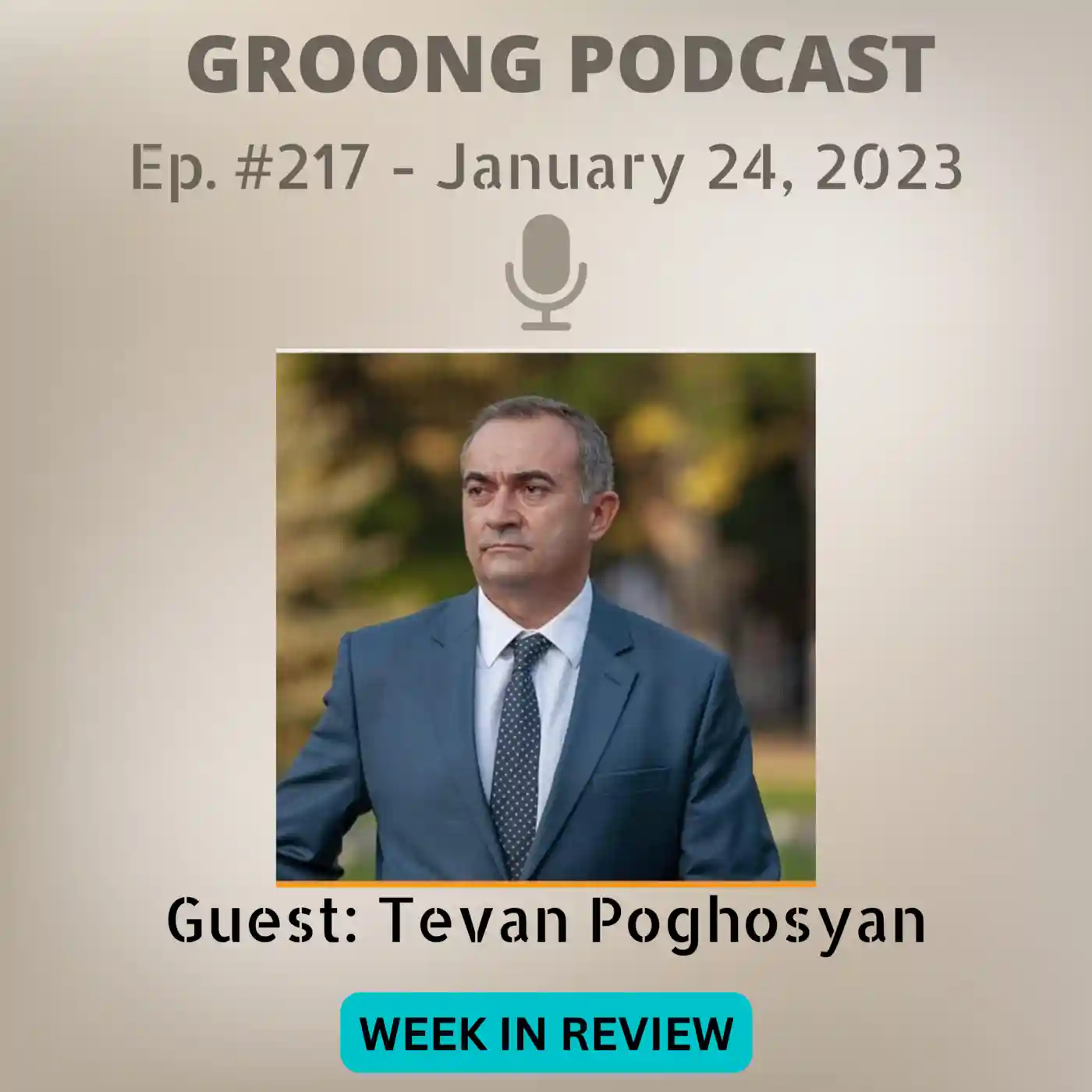
Guest:
Topics:
- Catastrophic Accident in Military Barrack
- New EU Civilian Mission to Armenia
- Armenia-Russia Relations
- Ruben Vardanyan on BBC HARDtalk
Episode 217 | Recorded: January 24, 2023
Tevan Poghosyan | Catastrophic Accident in Military Barrack | New EU Civilian Mission to Armenia | Armenia-Russia Relations | Ruben Vardanyan on BBC HARDtalk | Ep 217 - Jan 22, 2023 [EP217]
Posted on Tuesday, Jan 24, 2023 | Category: Armenia, Artsakh, Politics, Nagorno Karabakh, Artsakh Blockade, European Union, Russia, Azerbaijan, Iran, NATO, Ukraine, TurkeyGuest:
Topics:
- Catastrophic Accident in Military Barrack
- New EU Civilian Mission to Armenia
- Armenia-Russia Relations
- Ruben Vardanyan on BBC HARDtalk
Episode 217 | Recorded: January 24, 2023
Artsakh Blockade Flash Update with Gev Iskajyan - Ep 216, Jan 24, 2023 [EP216]
Posted on Tuesday, Jan 24, 2023 | Category: Politics, Artsakh, Nagorno Karabakh, Azerbaijan, Armenia, Artsakh Blockade, Ukraine, Genocide, Human Rights, Russia | Series: artsakhblockade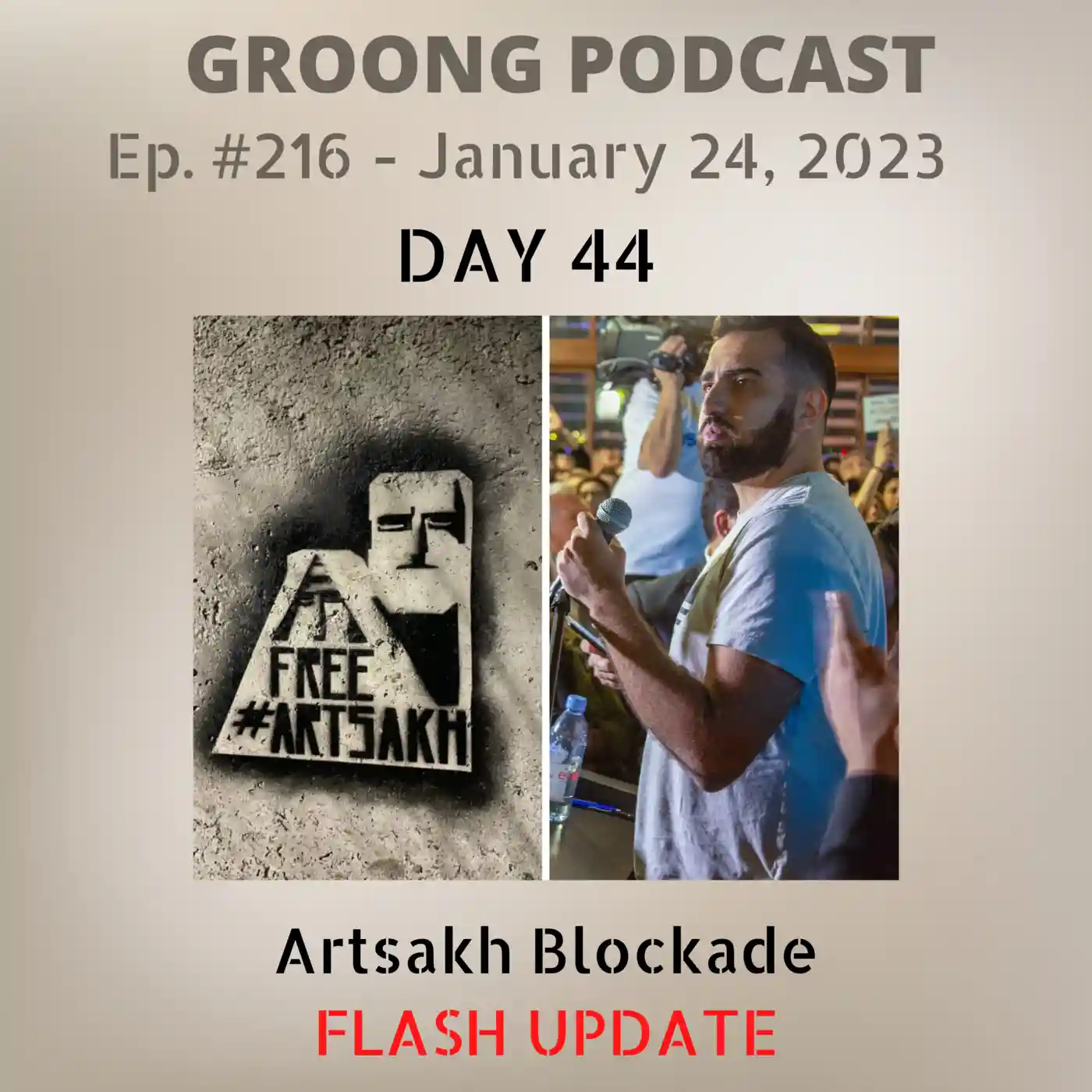
Artsakh Blockade Flash Update with Gev Iskajyan - Ep 216, Jan 24, 2023
Armenian News Network Groong - Jan 24, 2023
Guest:
Topics:
- January 24 Update
- Ruben Vardanyan on BBC HARDtalk
- Importance of not normalizing tragedy
Episode 216 | Recorded: January 24, 2023
Artsakh Blockade Flash Update with Gev Iskajyan - Ep 216, Jan 24, 2023 [EP216]
Posted on Tuesday, Jan 24, 2023 | Category: Politics, Artsakh, Nagorno Karabakh, Azerbaijan, Armenia, Artsakh Blockade, Ukraine, Genocide, Human Rights, RussiaArtsakh Blockade Flash Update with Gev Iskajyan - Ep 216, Jan 24, 2023
Armenian News Network Groong - Jan 24, 2023
Guest:
Topics:
- January 24 Update
- Ruben Vardanyan on BBC HARDtalk
- Importance of not normalizing tragedy
Episode 216 | Recorded: January 24, 2023
Karen Vrtanesyan: Catastrophe in Azat [EP214]
Posted on Monday, Jan 23, 2023 | Category: Armenia, Politics, Azerbaijan, Economy, NATO | Series: cog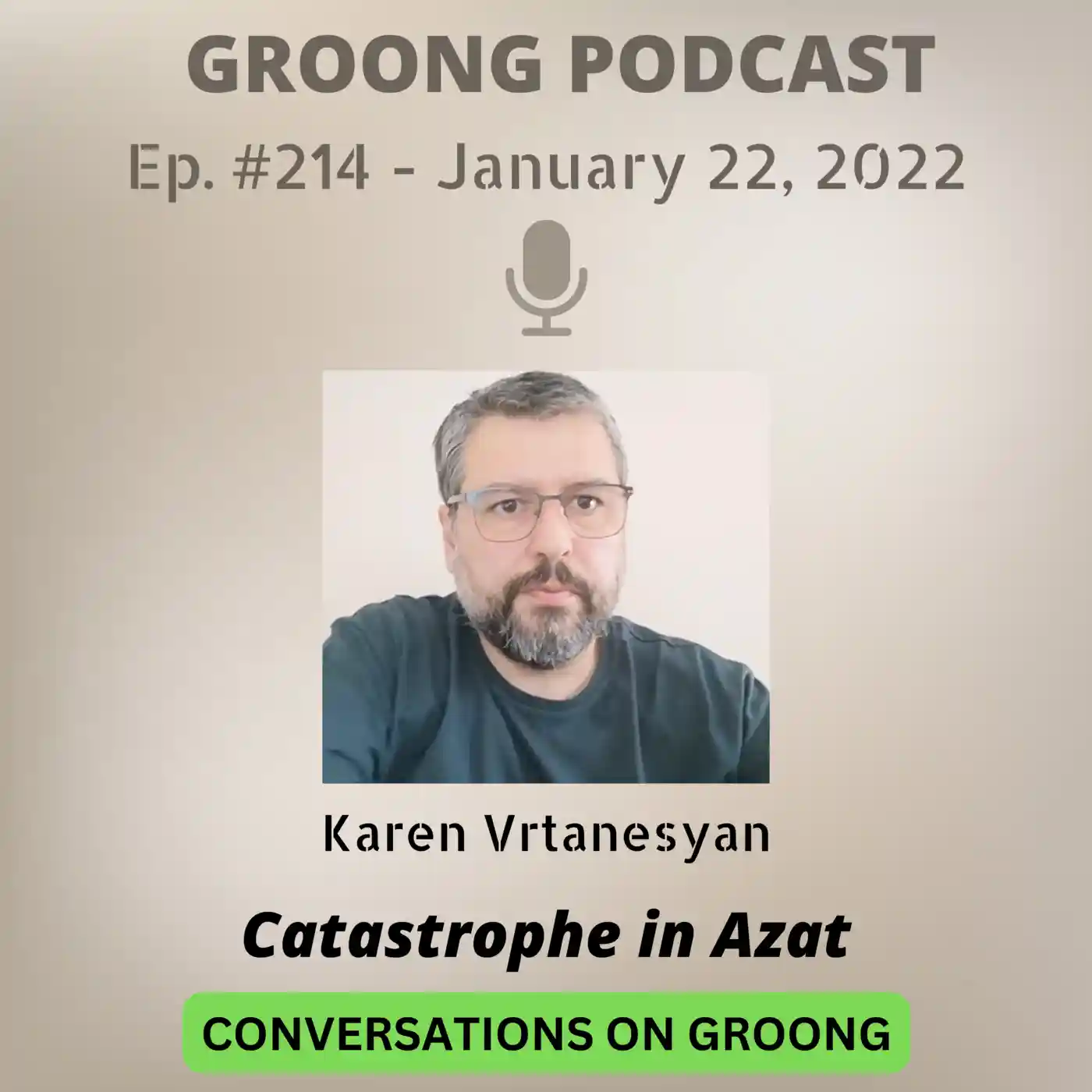
Conversations on Groong - Jan 22, 2023
On January 19, 15 conscripts in the village of Azat, Armenia died in a fire that engulfed their temporary makeshift barracks.
Guest:
Topics:
- Conditions in the Armenian Army
- Information chaos following the incident
- Beheading of the 2nd Army Corps
Episode 214 | Recorded: January 22, 2023
Karen Vrtanesyan: Catastrophe in Azat [EP214]
Posted on Monday, Jan 23, 2023 | Category: Armenia, Politics, Azerbaijan, Economy, NATOConversations on Groong - Jan 22, 2023
On January 19, 15 conscripts in the village of Azat, Armenia died in a fire that engulfed their temporary makeshift barracks.
Guest:
Topics:
- Conditions in the Armenian Army
- Information chaos following the incident
- Beheading of the 2nd Army Corps
Episode 214 | Recorded: January 22, 2023
Artsakh Blockade Flash Update with Gev Iskajyan - Ep 215, Jan 22, 2023 [EP215]
Posted on Sunday, Jan 22, 2023 | Category: Politics, Artsakh, Nagorno Karabakh, Azerbaijan, Artsakh Blockade, Armenia | Series: artsakhblockade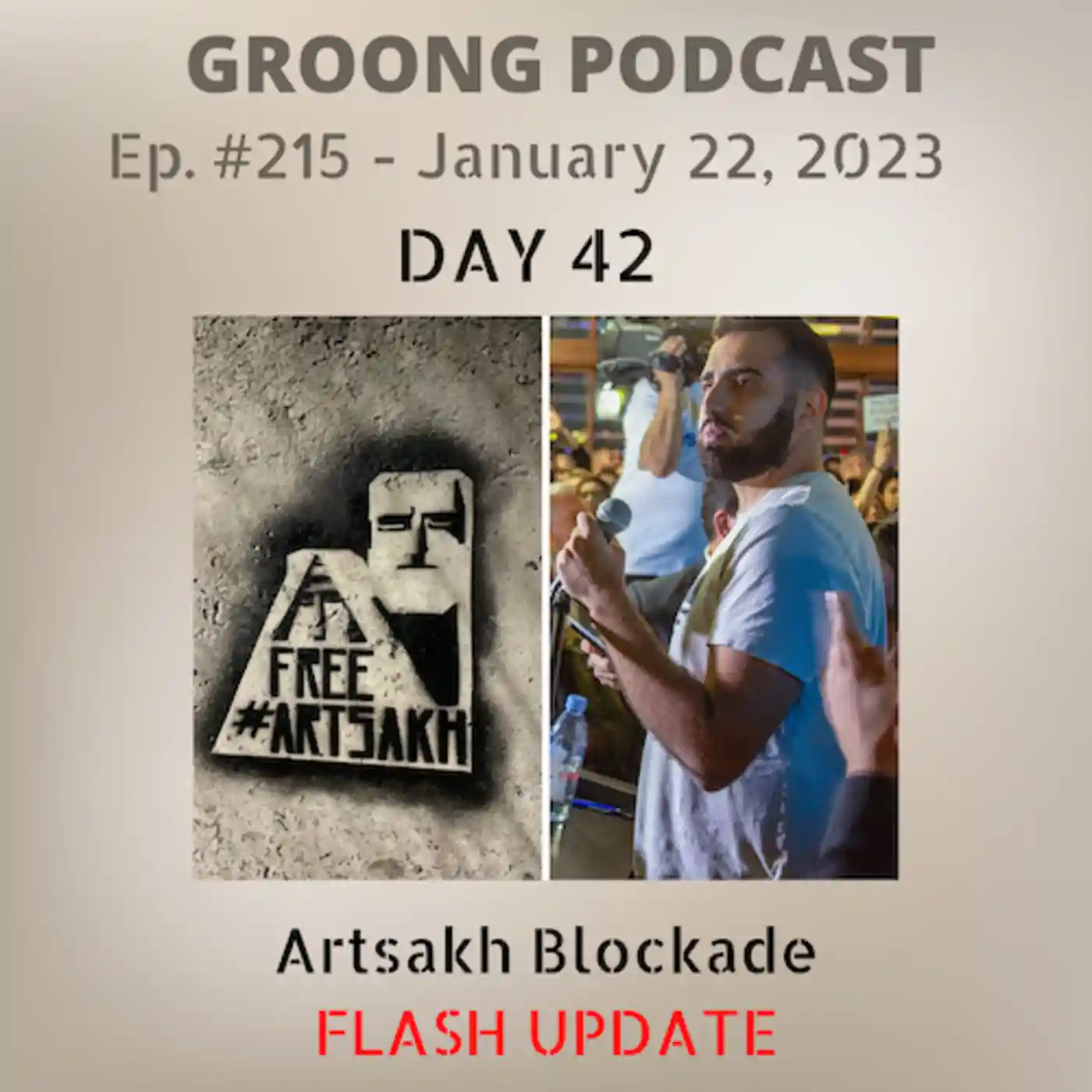
Artsakh Blockade Flash Update with Gev Iskajyan - Ep 215, Jan 22, 2023
Armenian News Network Groong - Jan 22, 2023
Guest:
Topics:
- Gas Cutoff AGAIN
- Azerbaijanâs Psychological and Political Games
- Effect on the Electricity Grid
- Pattern of Increasing Blackouts
- Impressions from Askeran Region
- Urban vs Rural Aspects of the Blockade
- Risk of Normalizing the Pain of Artsakh
- MP Metaxe Hakobyanâs concerns
Episode 215 | Recorded: January 22, 2023
Artsakh Blockade Flash Update with Gev Iskajyan - Ep 215, Jan 22, 2023 [EP215]
Posted on Sunday, Jan 22, 2023 | Category: Politics, Artsakh, Nagorno Karabakh, Azerbaijan, Artsakh Blockade, ArmeniaArtsakh Blockade Flash Update with Gev Iskajyan - Ep 215, Jan 22, 2023
Armenian News Network Groong - Jan 22, 2023
Guest:
Topics:
- Gas Cutoff AGAIN
- Azerbaijanâs Psychological and Political Games
- Effect on the Electricity Grid
- Pattern of Increasing Blackouts
- Impressions from Askeran Region
- Urban vs Rural Aspects of the Blockade
- Risk of Normalizing the Pain of Artsakh
- MP Metaxe Hakobyanâs concerns
Episode 215 | Recorded: January 22, 2023
Metaxe Hakobyan: Blockade of Artsakh Day 41 [EP213]
Posted on Sunday, Jan 22, 2023 | Category: Artsakh, Nagorno Karabakh, Politics, In Armenian, Azerbaijan, Armenia, Artsakh Blockade | Series: cog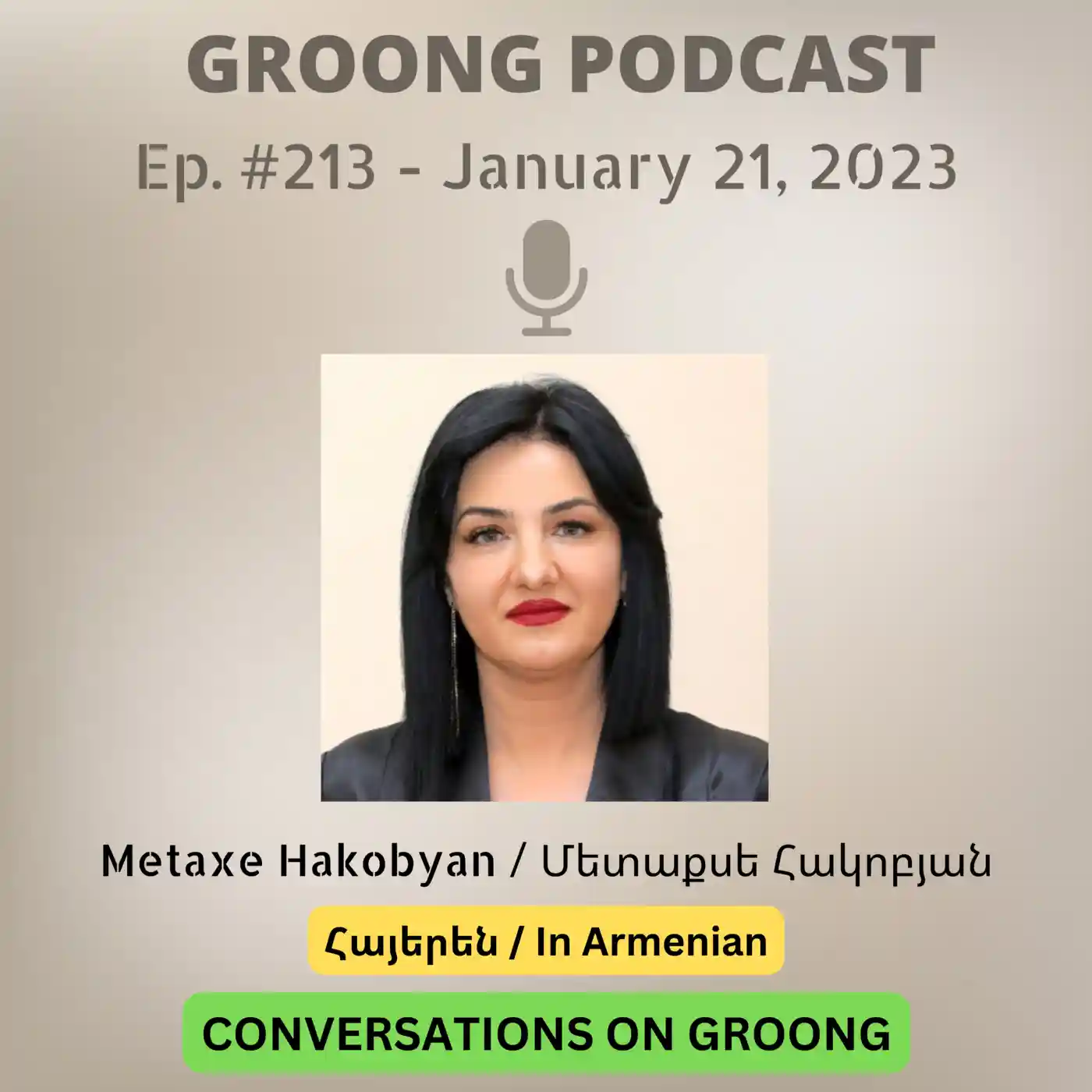
Metaxe Hakobyan: Blockade of Artsakh Day 41 | Ep 213 - Jan 21, 2023
Armenian News Network Groong - Jan 21, 2023
Guest/ÕÕµÕ¸ÖÖÕ¨:
- Metaxe Hakobyan : member of the Justice faction in the National Assembly of the Republic of Artsakh.
Episode 213 | Recorded: January 21, 2023
Metaxe Hakobyan: Blockade of Artsakh Day 41 [EP213]
Posted on Sunday, Jan 22, 2023 | Category: Artsakh, Nagorno Karabakh, Politics, In Armenian, Azerbaijan, Armenia, Artsakh BlockadeMetaxe Hakobyan: Blockade of Artsakh Day 41 | Ep 213 - Jan 21, 2023
Armenian News Network Groong - Jan 21, 2023
Guest/ÕÕµÕ¸ÖÖÕ¨:
- Metaxe Hakobyan : member of the Justice faction in the National Assembly of the Republic of Artsakh.
Episode 213 | Recorded: January 21, 2023
Artsakh Blockade Flash Update with Gev Iskajyan - Ep 212, Jan 20, 2023 [EP212]
Posted on Friday, Jan 20, 2023 | Category: Politics, Artsakh, Nagorno Karabakh, Azerbaijan, Artsakh Blockade, Armenia | Series: artsakhblockade
Artsakh Blockade Flash Update with Gev Iskajyan - Ep 212, Jan 20, 2023
Armenian News Network Groong - Jan 20, 2023
Guest:
Topics:
- Gas Partially Restored
- Listener Questions
- Do the people of Artsakh feel abandoned by the ROA
- Is High Commissioner of Diaspora Office in Artsakh
- International Coverage of Artsakh Blockade
- Lack of Foreign Journalists in Artsakh Currently
- Send us your Listener Questions
Episode 212 | Recorded: January 20, 2023
Artsakh Blockade Flash Update with Gev Iskajyan - Ep 212, Jan 20, 2023 [EP212]
Posted on Friday, Jan 20, 2023 | Category: Politics, Artsakh, Nagorno Karabakh, Azerbaijan, Artsakh Blockade, ArmeniaArtsakh Blockade Flash Update with Gev Iskajyan - Ep 212, Jan 20, 2023
Armenian News Network Groong - Jan 20, 2023
Guest:
Topics:
- Gas Partially Restored
- Listener Questions
- Do the people of Artsakh feel abandoned by the ROA
- Is High Commissioner of Diaspora Office in Artsakh
- International Coverage of Artsakh Blockade
- Lack of Foreign Journalists in Artsakh Currently
- Send us your Listener Questions
Episode 212 | Recorded: January 20, 2023
Artsakh Blockade Flash Update with Gev Iskajyan - Ep 211, Jan 19, 2023 [EP211]
Posted on Thursday, Jan 19, 2023 | Category: Politics, Artsakh, Nagorno Karabakh, Azerbaijan, Russia, Artsakh Blockade, Canada, European Union, Armenia | Series: artsakhblockade
Artsakh Blockade Flash Update with Gev Iskajyan - Ep 211, Jan 19, 2023
Armenian News Network Groong - Jan 19, 2023
Guest:
Topics:
- Ongoing Gas Cutoff
- Electricity Grid Ooverload
- Effects on the Community
- School Closures
- Bakeries
- Work to Restore Energy
- Tragic accident in Geghargunik military outpost
Episode 211 | Recorded: January 19, 2023
Artsakh Blockade Flash Update with Gev Iskajyan - Ep 211, Jan 19, 2023 [EP211]
Posted on Thursday, Jan 19, 2023 | Category: Politics, Artsakh, Nagorno Karabakh, Azerbaijan, Russia, Artsakh Blockade, Canada, European Union, ArmeniaArtsakh Blockade Flash Update with Gev Iskajyan - Ep 211, Jan 19, 2023
Armenian News Network Groong - Jan 19, 2023
Guest:
Topics:
- Ongoing Gas Cutoff
- Electricity Grid Ooverload
- Effects on the Community
- School Closures
- Bakeries
- Work to Restore Energy
- Tragic accident in Geghargunik military outpost
Episode 211 | Recorded: January 19, 2023