Armenia-EAEU Relations
Last updated: June 11, 2026
Armenia joined the Eurasian Economic Union on January 1, 2015, alongside Russia, Belarus, Kazakhstan, and Kyrgyzstan. Before formal EAEU membership, Armenia was part of the Commonwealth of Independent States (CIS) framework since independence in 1991, maintaining economic ties with Russia and other post-Soviet states through bilateral and regional agreements. The union provides Armenia with substantial and concrete economic benefits: preferential access to Russian and Central Asian markets, reduced tariffs on Armenian agricultural products and brandy exports, simplified customs procedures, and critical protection against the economic isolation imposed by Turkey’s blockade and Azerbaijan’s trade restrictions. Russia currently accounts for approximately 35–36% of Armenian exports (down from a peak of 40–45% in 2022–2023, when the Ukraine war rerouted supply chains and Western sanctions accelerated Russian circumvention trade through Armenia). This dependency makes EAEU membership vital to Armenia’s export economy, with 2024 exports to Russia valued at $3.14 billion. Beyond trade, millions of Armenian households depend on Russian remittances for survival. Over a decade of integration has built supply chains, regulatory frameworks, and trade relationships deeply embedded in Armenia’s economic structure. The Pashinyan government’s strategy is to extract maximum economic benefit from EAEU membership while positioning Armenia for eventual European Union integration, pursuing parallel negotiations with Turkey and the EU for future trade and security arrangements. However, Russia and other EAEU members view this dual-track approach as inherently contradictory and unsustainable, pressuring Armenia to choose between full EAEU commitment and a Western pivot. Armenia’s position—deriving substantial economic sustenance from EAEU while preparing for a future EU path—remains contested and increasingly challenged by Moscow and Minsk.
The Armenia-Azerbaijan Peace Process has exposed tensions between Armenia’s EAEU commitments and its broader geopolitical interests. Pashinyan’s pursuit of transit corridors through Armenian territory, particularly TRIPP (the Trump Route for International Peace and Prosperity), has created friction with EAEU partners over economic barriers and tariff protections that EAEU rules are designed to defend. Russia has raised concerns that corridor development through Armenia could undermine EAEU integration, while the United States and other Western powers have pressured Armenia to open its territory to international infrastructure projects. Armenia is caught between its EAEU obligations to maintain trade barriers and tariff frameworks with Russia and Kazakhstan, and its desire to position itself as a regional trade hub through new corridors and Western partnerships. The Eurasian Economic Union itself has provided no mechanism for Armenia to reconcile these contradictions or to pursue EU integration without creating friction with Moscow, a challenge that has become increasingly acute as Armenia attempts to hedge between Russian and Western partners.
Armenia remains heavily dependent on EAEU benefits for its economic survival, with Russia accounting for approximately 35–36% of Armenia’s exports (valued at $3.14 billion in 2024) and remittances from Russia sustaining millions of Armenian households. Yet the strategic problem is that Armenia is pursuing a Western pivot without having secured concrete economic substitutes for these EAEU-dependent revenue streams. Armenia’s economy contracted sharply after the loss of Artsakh in September 2023, which eliminated additional regional trade routes and market access. The EAEU framework has not expanded compensatory investment or preferential terms to offset these losses, while Russia has maintained baseline trade relationships without proposing new economic initiatives to strengthen the partnership. Simultaneously, the parallel economic partnerships Armenia is pursuing with India , France , and the European Union have not materialized into trade volumes or investment commitments comparable to EAEU benefits. This leaves Armenia in a precarious position: deriving essential economic sustenance from EAEU membership while preparing for an eventual Western shift, a dual strategy that Moscow views as unsustainable and that has yet to produce concrete Western economic gains to justify the risks of contradicting EAEU obligations.
Groong episodes that include this tag
Below are all Groong episodes tagged with Armenia-EAEU Relations.
Armenian News: April 24 Never Forget | Brussels Meet | Pashinyan in Moscow | Ep #133 - Apr 24, 2022 [EP133]
Posted on Tuesday, Apr 26, 2022 | Category: Armenia, Russia, Azerbaijan, Turkey, Genocide, Armenian Genocide, Ukraine, Artsakh, Georgia, China, Human Rights, Nagorno Karabakh, European Union, NATO, Lebanon | Series: wir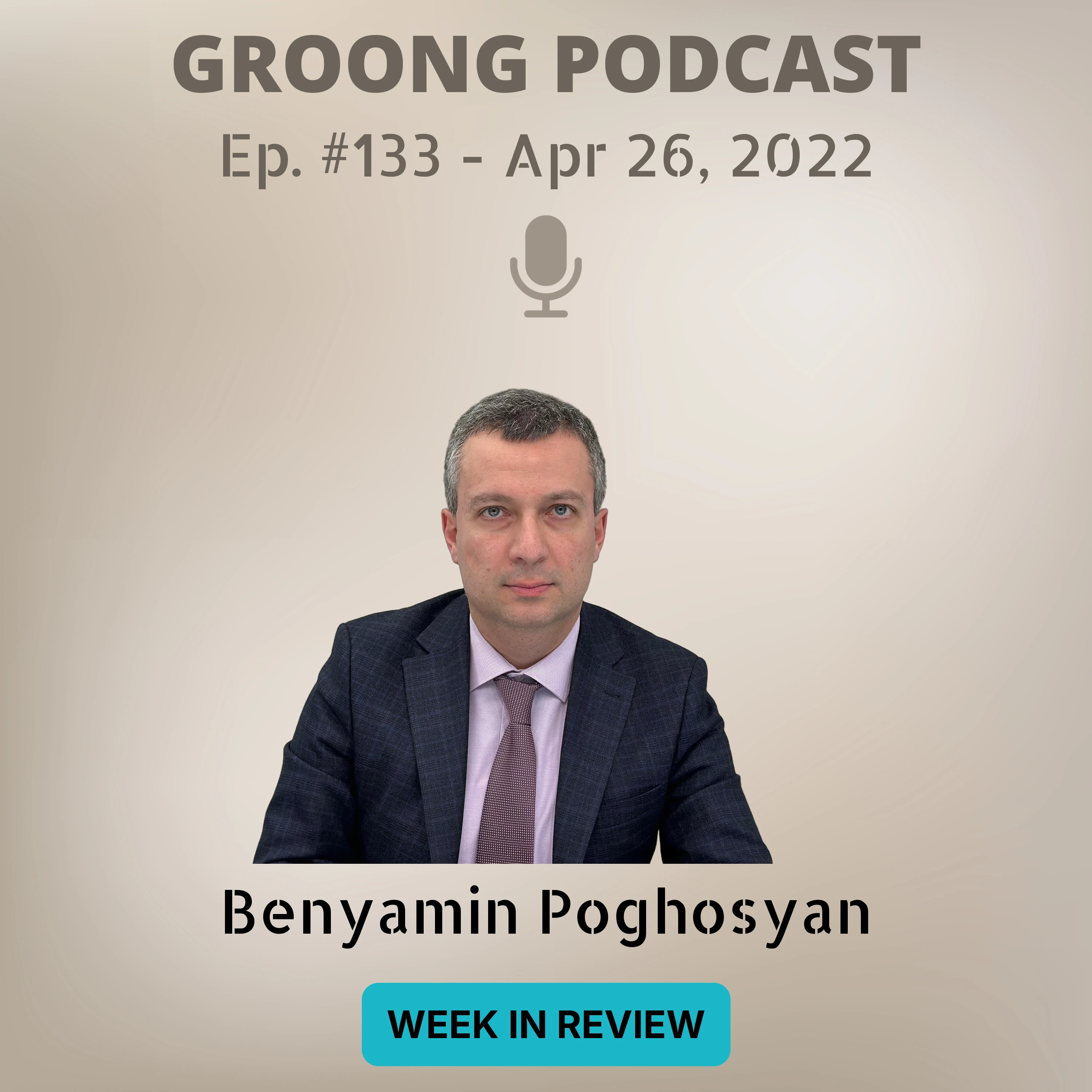
Guest(s):
Armenian News Network/Groong Week in Review - April 24, 2022
Topics:
- 00:00:00 Intro
- 00:00:53 April 24, Never Forget!
- 00:15:54 Aliyev and Pashinyan in Brussels
- 00:41:01 Pashinyan in Moscow
- 01:01:36 Rants
Guest:
- Benyamin Poghosyan TW/@Benyamin_Poghos
Host:
- Hovik Manucharyan TW/@HovikYerevan
- Asbed Bedrossian TW/@qubriq
Episode 133 | Recorded: Monday, April 25, 2022 Website: https://groong.org/podcasts/WiR-20220424.html
Armenian News: April 24 Never Forget | Brussels Meet | Pashinyan in Moscow | Ep #133 - Apr 24, 2022 [EP133]
Posted on Tuesday, Apr 26, 2022 | Category: Armenia, Russia, Azerbaijan, Turkey, Genocide, Armenian Genocide, Ukraine, Artsakh, Georgia, China, Human Rights, Nagorno Karabakh, European Union, NATO, LebanonGuest(s):
Armenian News Network/Groong Week in Review - April 24, 2022
Topics:
- 00:00:00 Intro
- 00:00:53 April 24, Never Forget!
- 00:15:54 Aliyev and Pashinyan in Brussels
- 00:41:01 Pashinyan in Moscow
- 01:01:36 Rants
Guest:
- Benyamin Poghosyan TW/@Benyamin_Poghos
Host:
- Hovik Manucharyan TW/@HovikYerevan
- Asbed Bedrossian TW/@qubriq
Episode 133 | Recorded: Monday, April 25, 2022 Website: https://groong.org/podcasts/WiR-20220424.html
Armenian News: Opposition | Brussels | Alison | Economy | Poll | Artsakh | Ep #132 - Apr 10, 2022 [EP132]
Posted on Tuesday, Apr 12, 2022 | Category: Artsakh, Armenia, Politics, Poll, Russia, Turkey, Azerbaijan, Iran, Ukraine, Economy, India, Georgia, Geopolitics, Human Rights, Nagorno Karabakh, Lebanon, Middle East, NATO, Syria, European Union | Series: wir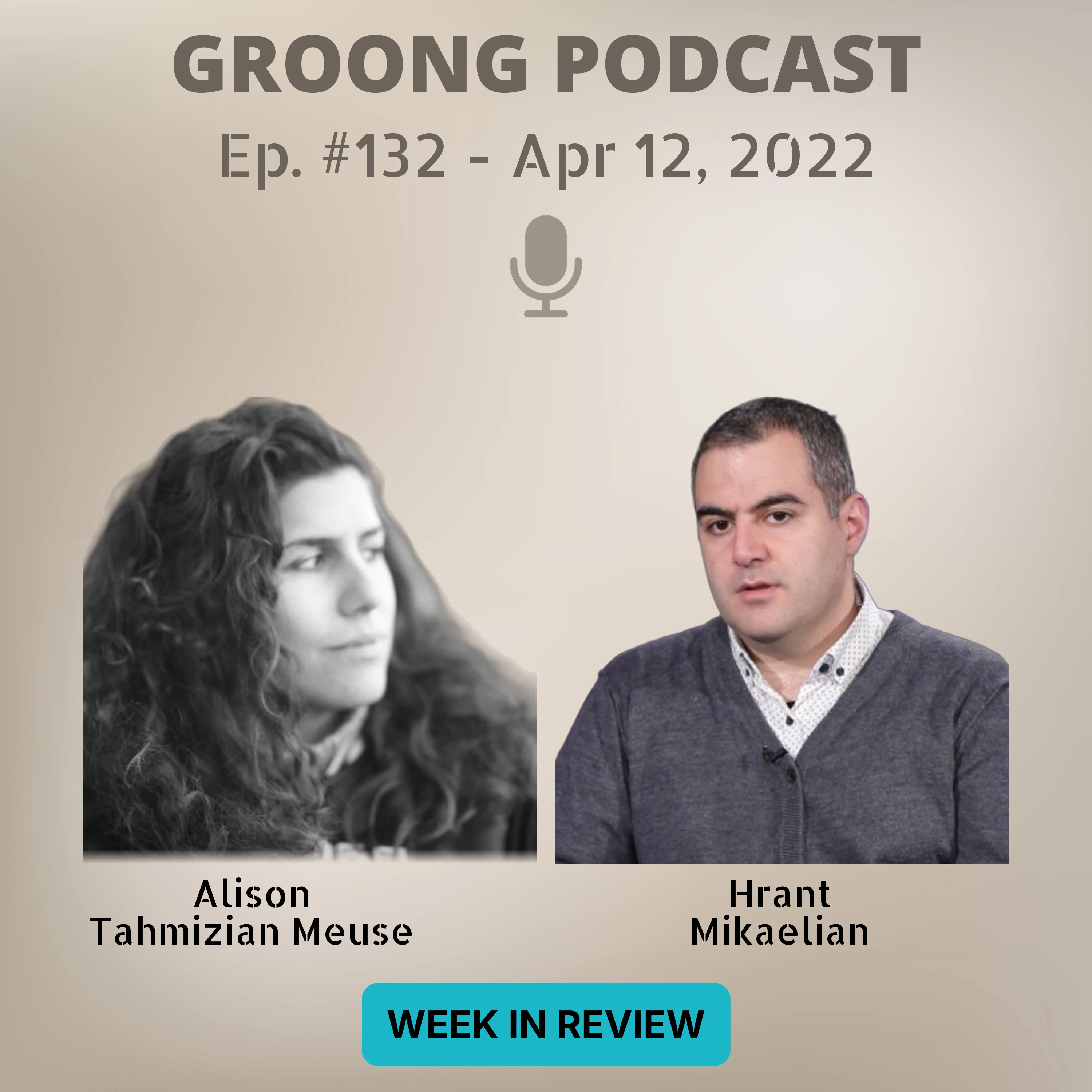
Guest(s):
Armenian News Network/Groong Week in Review - April 10, 2022
Topics:
00:00:00 Introduction
00:02:25 Opposition Protests in Yerevan: Thousands showed up to the opposition protest on Tuesday, outlining the red lines for Pashinyan’s dealings with Aliyev, ahead of the meeting in Brussels. Opposition says this is only the beginning, but have yet to indicate what their next steps will be.
00:12:35 Buying Bread from a Man in Brussels: Pashinyan went to Brussels this week to meet with Charles Michel and Ilham Aliyev. Did the Armenian PM
Armenian News: Opposition | Brussels | Alison | Economy | Poll | Artsakh | Ep #132 - Apr 10, 2022 [EP132]
Posted on Tuesday, Apr 12, 2022 | Category: Artsakh, Armenia, Politics, Poll, Russia, Turkey, Azerbaijan, Iran, Ukraine, Economy, India, Georgia, Geopolitics, Human Rights, Nagorno Karabakh, Lebanon, Middle East, NATO, Syria, European UnionGuest(s):
Armenian News Network/Groong Week in Review - April 10, 2022
Topics:
00:00:00 Introduction
00:02:25 Opposition Protests in Yerevan: Thousands showed up to the opposition protest on Tuesday, outlining the red lines for Pashinyan’s dealings with Aliyev, ahead of the meeting in Brussels. Opposition says this is only the beginning, but have yet to indicate what their next steps will be.
00:12:35 Buying Bread from a Man in Brussels: Pashinyan went to Brussels this week to meet with Charles Michel and Ilham Aliyev. Did the Armenian PM
Armenian News: "Peace" Deal | Artsakh Gas | Ukraine Protests | Vardenis | Ep #129 - Mar 20, 2022 [EP129]
Posted on Monday, Mar 21, 2022 | Category: Armenia, Russia, Azerbaijan, Ukraine, Turkey, Artsakh, China, Economy, Georgia, India, Nagorno Karabakh, NATO, European Union | Series: wir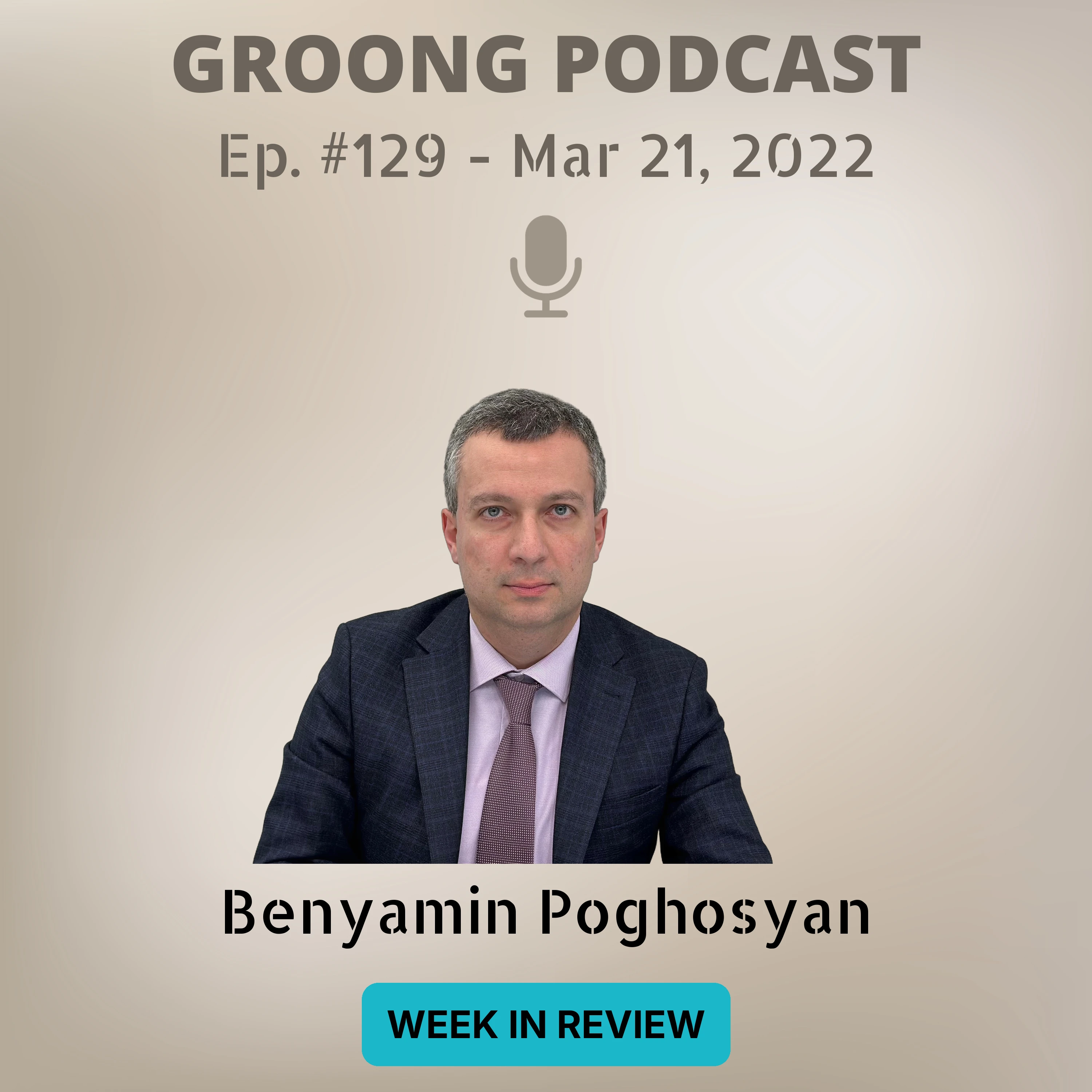
Guest(s):
Armenian News Network/Groong Week in Review - March 20, 2022
Topics:
- 00:00 Introduction
- 00:47 Azerbaijan’s “Peace” Deal
- 13:34 Artsakh Without Natural Gas in Winter
- 28:07 Ukraine Protests in Yerevan
- 43:29 Vardenis Mayoral Issue Resolved
- 47:17 Rants
Guest:
- Benyamin Poghosyan https://twitter.com/Benyamin_Poghos
Host:
- Hovik Manucharyan https://twitter.com/HovikYerevan
- Asbed Bedrossian https://twitter.com/qubriq
Episode 129 | Recorded: Sunday, March 21, 2022 Website: https://groong.org/podcasts/WiR-20220320.html
Armenian News: "Peace" Deal | Artsakh Gas | Ukraine Protests | Vardenis | Ep #129 - Mar 20, 2022 [EP129]
Posted on Monday, Mar 21, 2022 | Category: Armenia, Russia, Azerbaijan, Ukraine, Turkey, Artsakh, China, Economy, Georgia, India, Nagorno Karabakh, NATO, European UnionGuest(s):
Armenian News Network/Groong Week in Review - March 20, 2022
Topics:
- 00:00 Introduction
- 00:47 Azerbaijan’s “Peace” Deal
- 13:34 Artsakh Without Natural Gas in Winter
- 28:07 Ukraine Protests in Yerevan
- 43:29 Vardenis Mayoral Issue Resolved
- 47:17 Rants
Guest:
- Benyamin Poghosyan https://twitter.com/Benyamin_Poghos
Host:
- Hovik Manucharyan https://twitter.com/HovikYerevan
- Asbed Bedrossian https://twitter.com/qubriq
Episode 129 | Recorded: Sunday, March 21, 2022 Website: https://groong.org/podcasts/WiR-20220320.html
Renewed Hostilities in Artsakh | Ukraine | FM Arabat Mirzoyan in Antalya | Ep #128 - Mar 13, 2022 [EP128]
Posted on Monday, Mar 14, 2022 | Category: Russia, Ukraine, Armenia, Azerbaijan, Turkey, Artsakh, Syria, Iran, Armenian Church, Nagorno Karabakh, NATO | Series: wir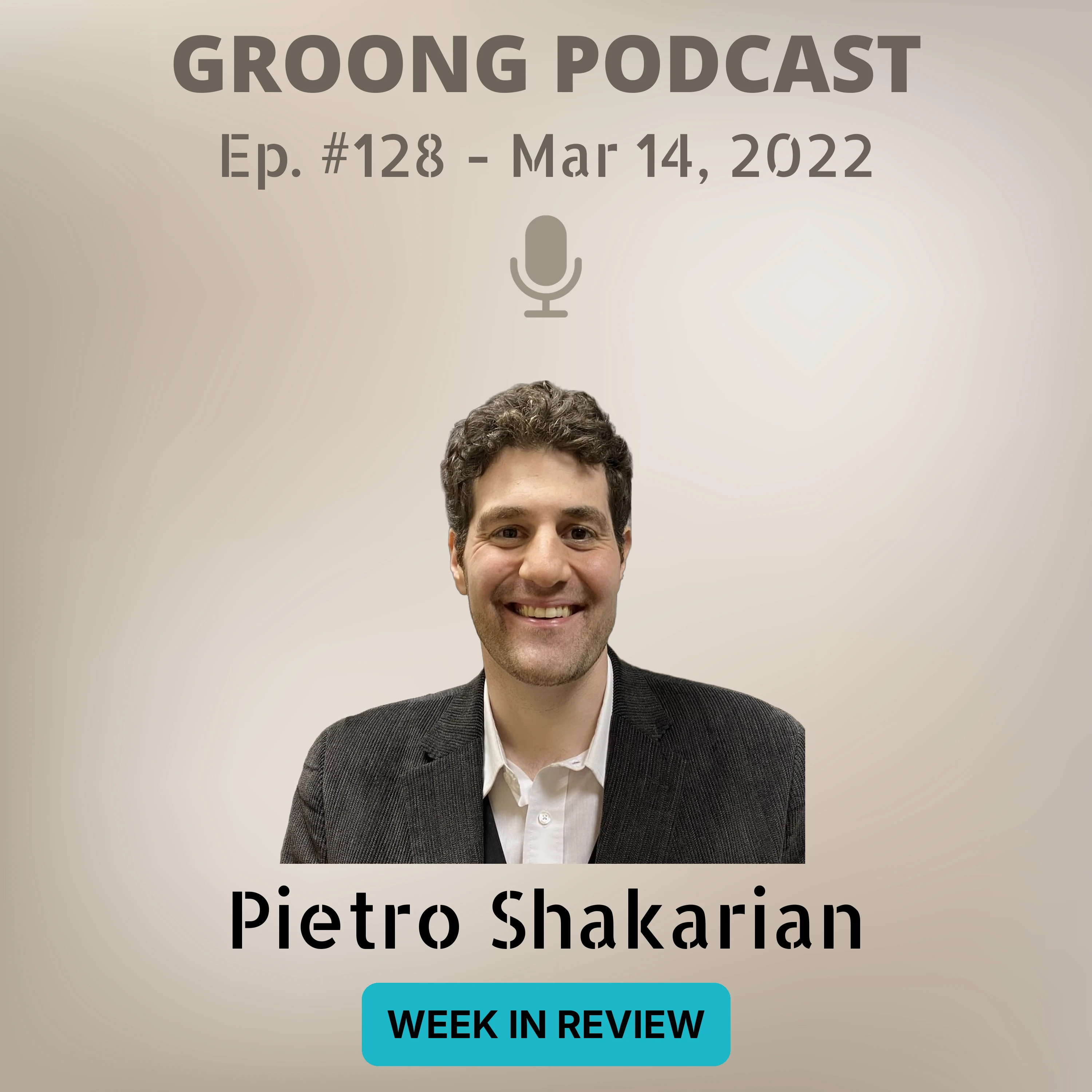
Guest(s):
ANN/Groong Week in Review - March 13, 2022
Topics:
- Renewed Hostilities in Artsakh
- Update on Ukraine
- FM “Arabat” Mirzoyan in Antalya
Guest:
- Dr. Pietro Shakarian
Host:
- Asbed Bedrossian TW/@qubriq
- Hovik Manucharyan TW/@HovikYerevan
Episode 128 | Recorded: Sunday, March 13, 2022 Website: https://groong.org/podcasts/WiR-20220313.html
Renewed Hostilities in Artsakh | Ukraine | FM Arabat Mirzoyan in Antalya | Ep #128 - Mar 13, 2022 [EP128]
Posted on Monday, Mar 14, 2022 | Category: Russia, Ukraine, Armenia, Azerbaijan, Turkey, Artsakh, Syria, Iran, Armenian Church, Nagorno Karabakh, NATOGuest(s):
ANN/Groong Week in Review - March 13, 2022
Topics:
- Renewed Hostilities in Artsakh
- Update on Ukraine
- FM “Arabat” Mirzoyan in Antalya
Guest:
- Dr. Pietro Shakarian
Host:
- Asbed Bedrossian TW/@qubriq
- Hovik Manucharyan TW/@HovikYerevan
Episode 128 | Recorded: Sunday, March 13, 2022 Website: https://groong.org/podcasts/WiR-20220313.html
The State of Armenia’s Economy - A Conversation with Vache Gabrielyan | Ep #127 - March 10, 2022 [EP127]
Posted on Thursday, Mar 10, 2022 | Category: Armenia, Economy, Russia, Turkey, Azerbaijan, Georgia, Ukraine, Iran, China, Artsakh, Israel, Nagorno Karabakh | Series: cog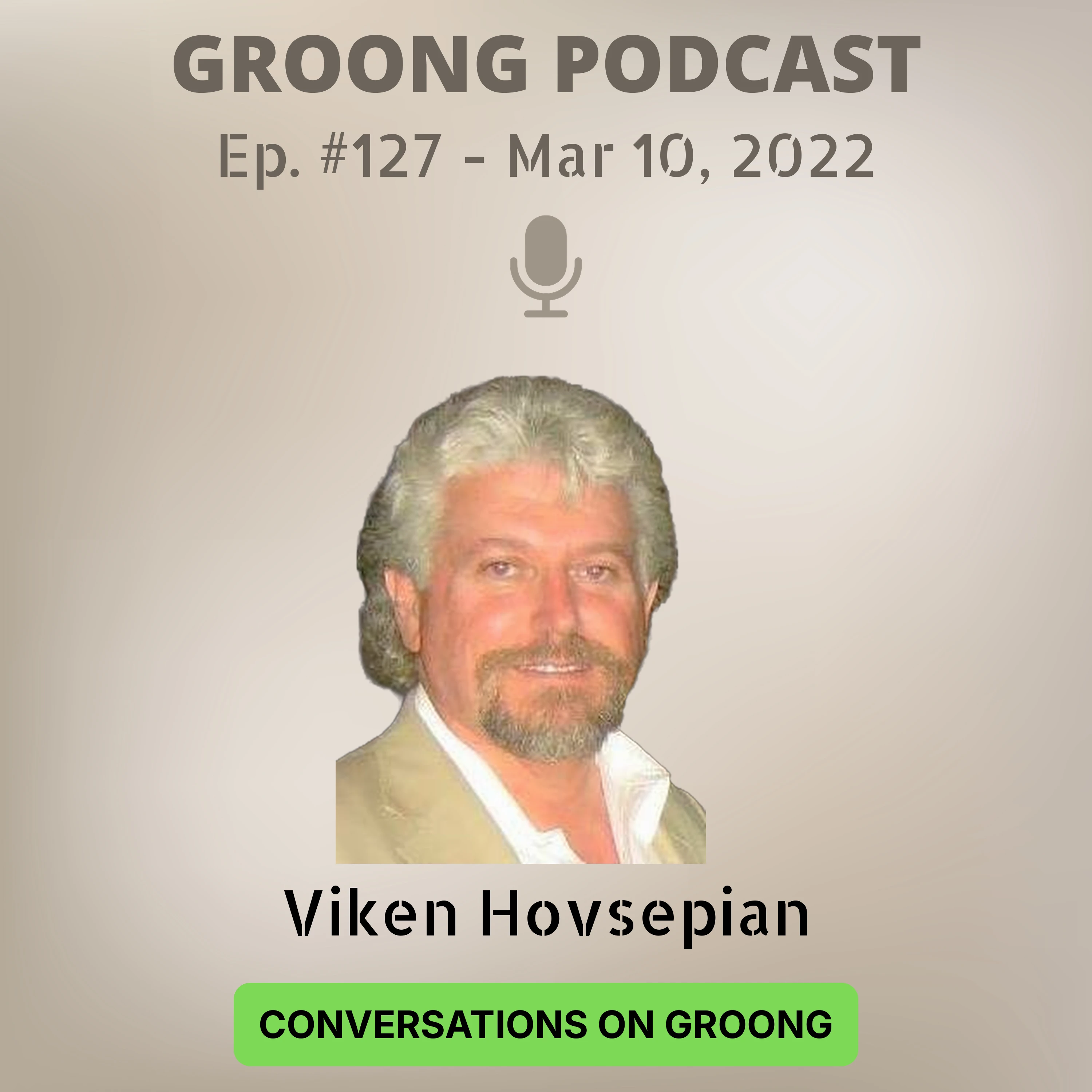
The State of Armeniaâs Economy - March 10, 2022
A Conversation with Vache Gabrielyan
Topics:
- 00:00:00 Introduction
- 00:01:25 Risk from the Ukraine War
- 00:37:18 Pandemic, War and Beyond Economy
- 01:01:47 Normalization with Turkey and Corridor Economics
Guest:
Dr. Vache Gabrielyan who is the Dean of the Manoogian Simone College of Business and Economics at the American University of Armenia and specializes in public administration and economics. Since 2008, he has served as Vice-Governor of the Central Bank of Armenia, Minister of Finance, Minister-Chief of the Government Staff, Chief Advisor
Read More