Armenia-EAEU Relations
Last updated: June 11, 2026
Armenia joined the Eurasian Economic Union on January 1, 2015, alongside Russia, Belarus, Kazakhstan, and Kyrgyzstan. Before formal EAEU membership, Armenia was part of the Commonwealth of Independent States (CIS) framework since independence in 1991, maintaining economic ties with Russia and other post-Soviet states through bilateral and regional agreements. The union provides Armenia with substantial and concrete economic benefits: preferential access to Russian and Central Asian markets, reduced tariffs on Armenian agricultural products and brandy exports, simplified customs procedures, and critical protection against the economic isolation imposed by Turkey’s blockade and Azerbaijan’s trade restrictions. Russia currently accounts for approximately 35–36% of Armenian exports (down from a peak of 40–45% in 2022–2023, when the Ukraine war rerouted supply chains and Western sanctions accelerated Russian circumvention trade through Armenia). This dependency makes EAEU membership vital to Armenia’s export economy, with 2024 exports to Russia valued at $3.14 billion. Beyond trade, millions of Armenian households depend on Russian remittances for survival. Over a decade of integration has built supply chains, regulatory frameworks, and trade relationships deeply embedded in Armenia’s economic structure. The Pashinyan government’s strategy is to extract maximum economic benefit from EAEU membership while positioning Armenia for eventual European Union integration, pursuing parallel negotiations with Turkey and the EU for future trade and security arrangements. However, Russia and other EAEU members view this dual-track approach as inherently contradictory and unsustainable, pressuring Armenia to choose between full EAEU commitment and a Western pivot. Armenia’s position—deriving substantial economic sustenance from EAEU while preparing for a future EU path—remains contested and increasingly challenged by Moscow and Minsk.
The Armenia-Azerbaijan Peace Process has exposed tensions between Armenia’s EAEU commitments and its broader geopolitical interests. Pashinyan’s pursuit of transit corridors through Armenian territory, particularly TRIPP (the Trump Route for International Peace and Prosperity), has created friction with EAEU partners over economic barriers and tariff protections that EAEU rules are designed to defend. Russia has raised concerns that corridor development through Armenia could undermine EAEU integration, while the United States and other Western powers have pressured Armenia to open its territory to international infrastructure projects. Armenia is caught between its EAEU obligations to maintain trade barriers and tariff frameworks with Russia and Kazakhstan, and its desire to position itself as a regional trade hub through new corridors and Western partnerships. The Eurasian Economic Union itself has provided no mechanism for Armenia to reconcile these contradictions or to pursue EU integration without creating friction with Moscow, a challenge that has become increasingly acute as Armenia attempts to hedge between Russian and Western partners.
Armenia remains heavily dependent on EAEU benefits for its economic survival, with Russia accounting for approximately 35–36% of Armenia’s exports (valued at $3.14 billion in 2024) and remittances from Russia sustaining millions of Armenian households. Yet the strategic problem is that Armenia is pursuing a Western pivot without having secured concrete economic substitutes for these EAEU-dependent revenue streams. Armenia’s economy contracted sharply after the loss of Artsakh in September 2023, which eliminated additional regional trade routes and market access. The EAEU framework has not expanded compensatory investment or preferential terms to offset these losses, while Russia has maintained baseline trade relationships without proposing new economic initiatives to strengthen the partnership. Simultaneously, the parallel economic partnerships Armenia is pursuing with India , France , and the European Union have not materialized into trade volumes or investment commitments comparable to EAEU benefits. This leaves Armenia in a precarious position: deriving essential economic sustenance from EAEU membership while preparing for an eventual Western shift, a dual strategy that Moscow views as unsustainable and that has yet to produce concrete Western economic gains to justify the risks of contradicting EAEU obligations.
Groong episodes that include this tag
Below are all Groong episodes tagged with Armenia-EAEU Relations.
Reflections on Artsakh Blockade | Is Russia Pressuring Armenia to join Union State | Bill to Control Internet during Martial Law | Highlights and Lowlights of 2022 | Predictions for 2023 [EP197]
Posted on Tuesday, Jan 3, 2023 | Category: Armenia, Politics, Artsakh, Nagorno Karabakh, Azerbaijan, Russia, Ukraine, Artsakh Blockade, Lebanon, Syria, Turkey, European Union, Genocide, Israel, Economy, Georgia, Human Rights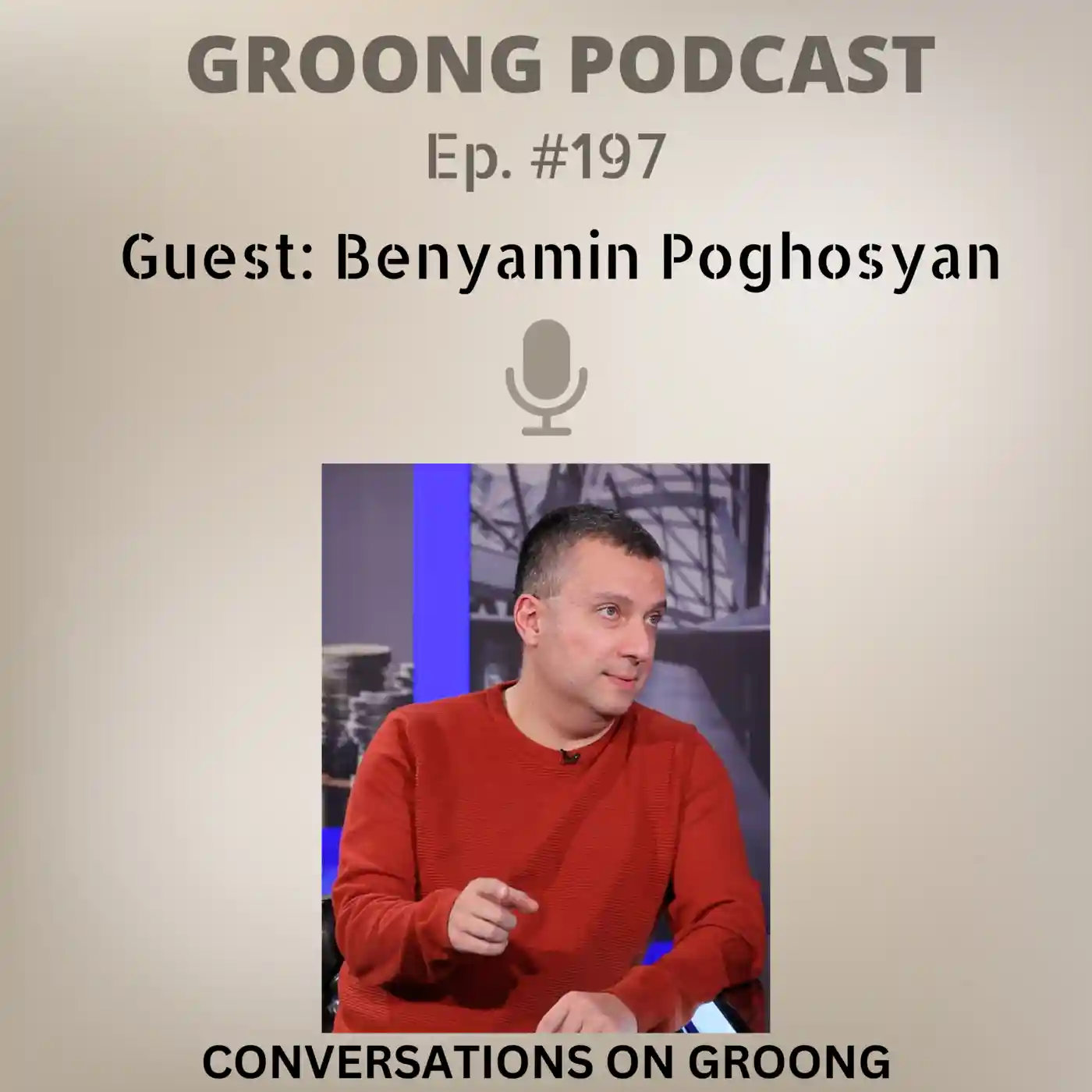
Guest:
Topic:
- Hovikâs Reflections from the Artsakh Blockade Interviews
- Is Russia Pressuring Armenia to join a âUnion Stateâ?
- Government Bill to Control the Internet During Martial Law
- Highlights and Lowlights from Armenian News in 2022
- Predictions for 2023
Episode 197 | Recorded: January 3, 2023
Monitors in Armenia | Russia-West Rivalry in South Caucasus | Armenia-Iran Relations | Israel-Lebanon Maritime Agreement | Lebanon Presidential Elections [EP171]
Posted on Sunday, Oct 23, 2022 | Category: Politics, Artsakh, Diaspora, Armenia, Azerbaijan, Iran, India, Lebanon, Turkey, Russia, Israel, Ukraine, Nagorno Karabakh, Genocide, NATO, China, Syria, Human Rights, Middle East, Georgia | Series: wir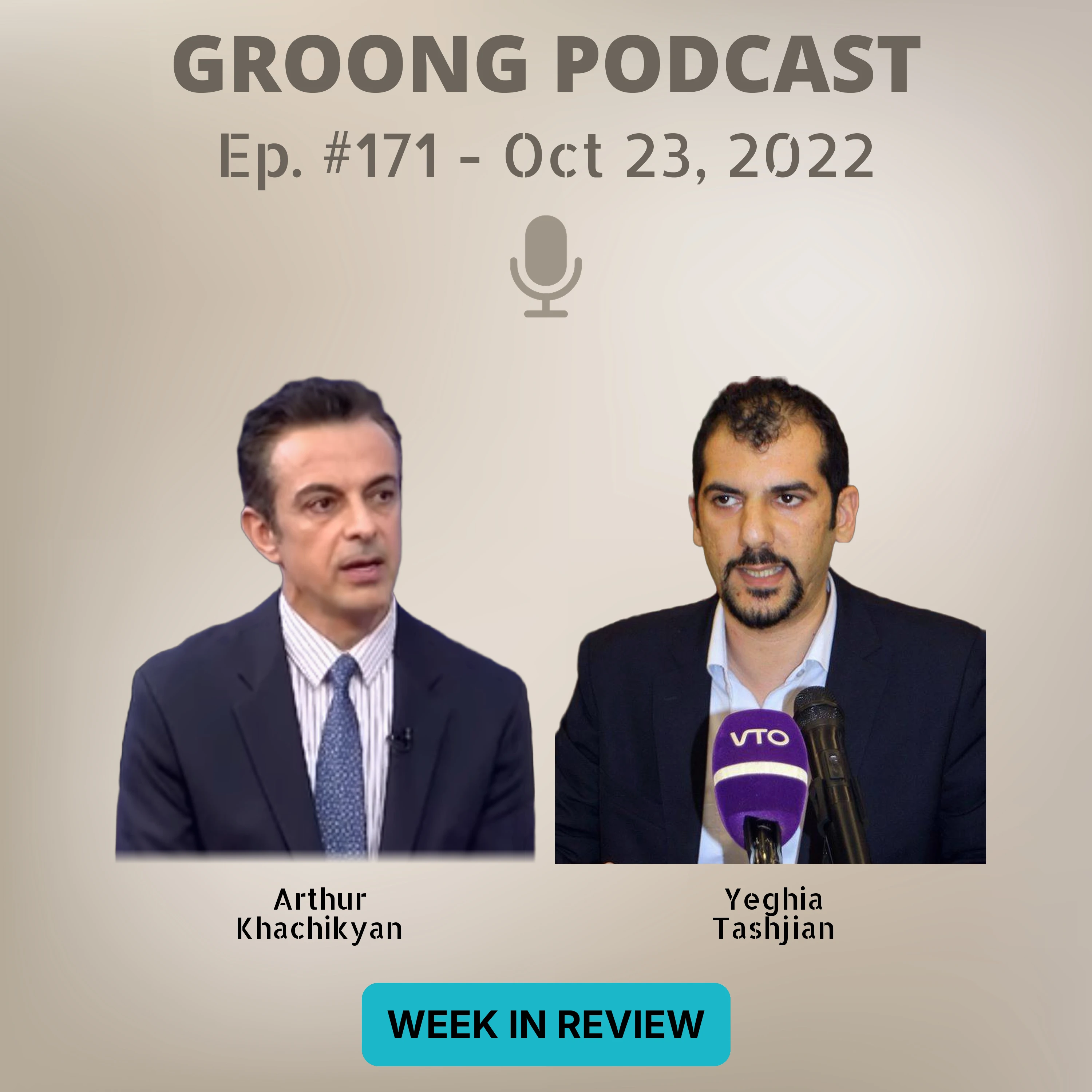
Guests:
Topics:
- Monitors in Armenia
- Russia-West Rivalry in the South Caucasus
- Armenian-Iranian Relations
- Maritime Agreement between Israel and Lebanon
- State of Lebanonâs Presidential Election
Monitors in Armenia | Russia-West Rivalry in South Caucasus | Armenia-Iran Relations | Israel-Lebanon Maritime Agreement | Lebanon Presidential Elections [EP171]
Posted on Sunday, Oct 23, 2022 | Category: Politics, Artsakh, Diaspora, Armenia, Azerbaijan, Iran, India, Lebanon, Turkey, Russia, Israel, Ukraine, Nagorno Karabakh, Genocide, NATO, China, Syria, Human Rights, Middle East, GeorgiaGuests:
Topics:
- Monitors in Armenia
- Russia-West Rivalry in the South Caucasus
- Armenian-Iranian Relations
- Maritime Agreement between Israel and Lebanon
- State of Lebanonâs Presidential Election
2022 Census | Astana | Iran | Cyber Attack | Remembering TsOR Unit | Ep 169 - Oct 16, 2022 [EP169]
Posted on Monday, Oct 17, 2022 | Category: Armenia, Nagorno Karabakh, Artsakh, Azerbaijan, Iran, Russia, Human Rights, Turkey, Ukraine, Georgia, Economy, Geopolitics, Israel, India | Series: wir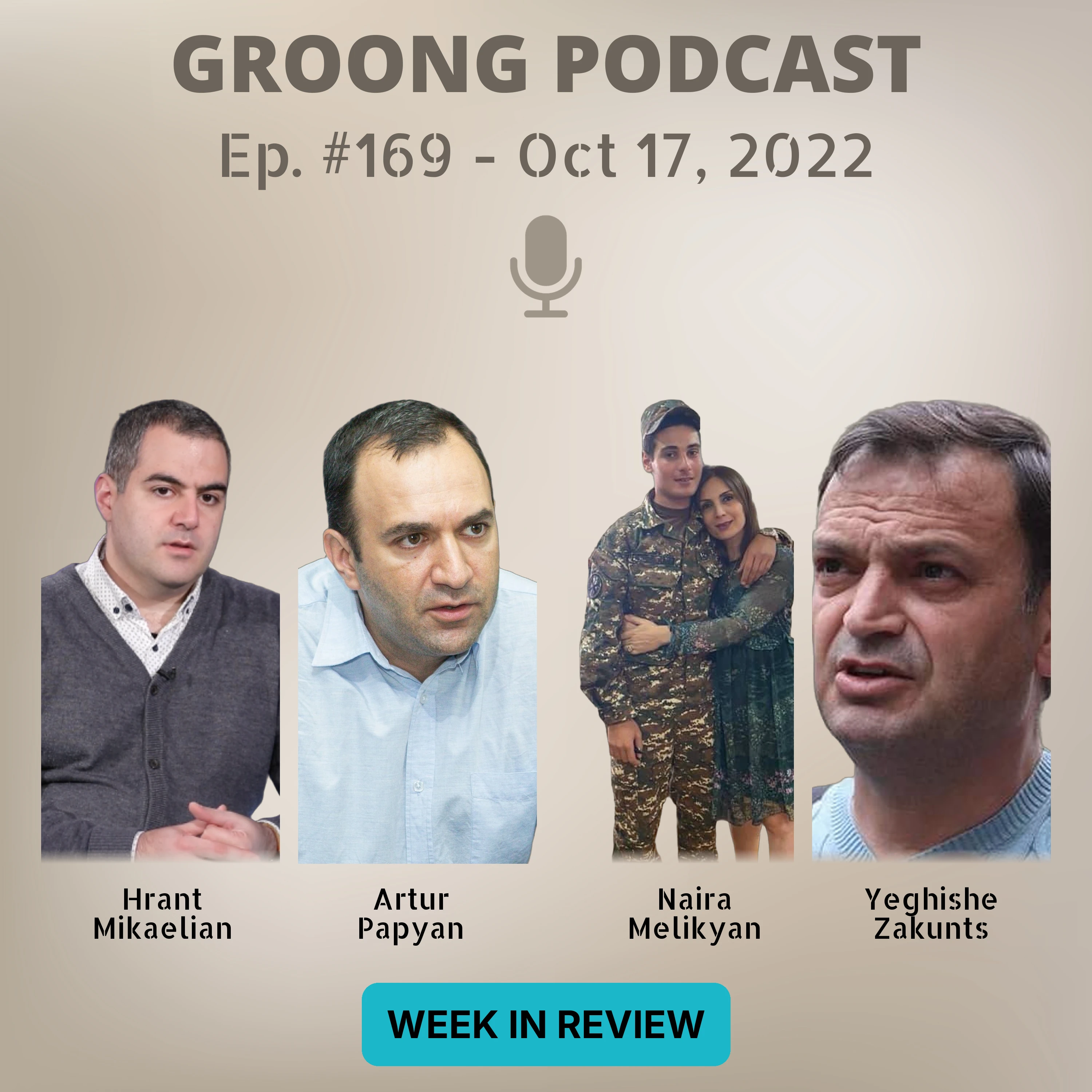
Guests:
Topics:
- Census in progress in Armenia
- Meetings in Astana
- Developments in Iran
- Armenian websites compromised
- Remembering the TsOR artillery unit
Episode 169 | Recorded: October 17, 2022
2022 Census | Astana | Iran | Cyber Attack | Remembering TsOR Unit | Ep 169 - Oct 16, 2022 [EP169]
Posted on Monday, Oct 17, 2022 | Category: Armenia, Nagorno Karabakh, Artsakh, Azerbaijan, Iran, Russia, Human Rights, Turkey, Ukraine, Georgia, Economy, Geopolitics, Israel, IndiaGuests:
Topics:
- Census in progress in Armenia
- Meetings in Astana
- Developments in Iran
- Armenian websites compromised
- Remembering the TsOR artillery unit
Episode 169 | Recorded: October 17, 2022
Armenian News: Negotiations | Opp Protests | Iran-Armenia Rels | CSTO Meet | Ep #139 - May 22, 2022 [EP139]
Posted on Tuesday, May 24, 2022 | Category: Armenia, Azerbaijan, Russia, Iran, Georgia, Turkey, Syria, Ukraine, Israel, Artsakh, Nagorno Karabakh, Economy, European Union, NATO, Human Rights | Series: wir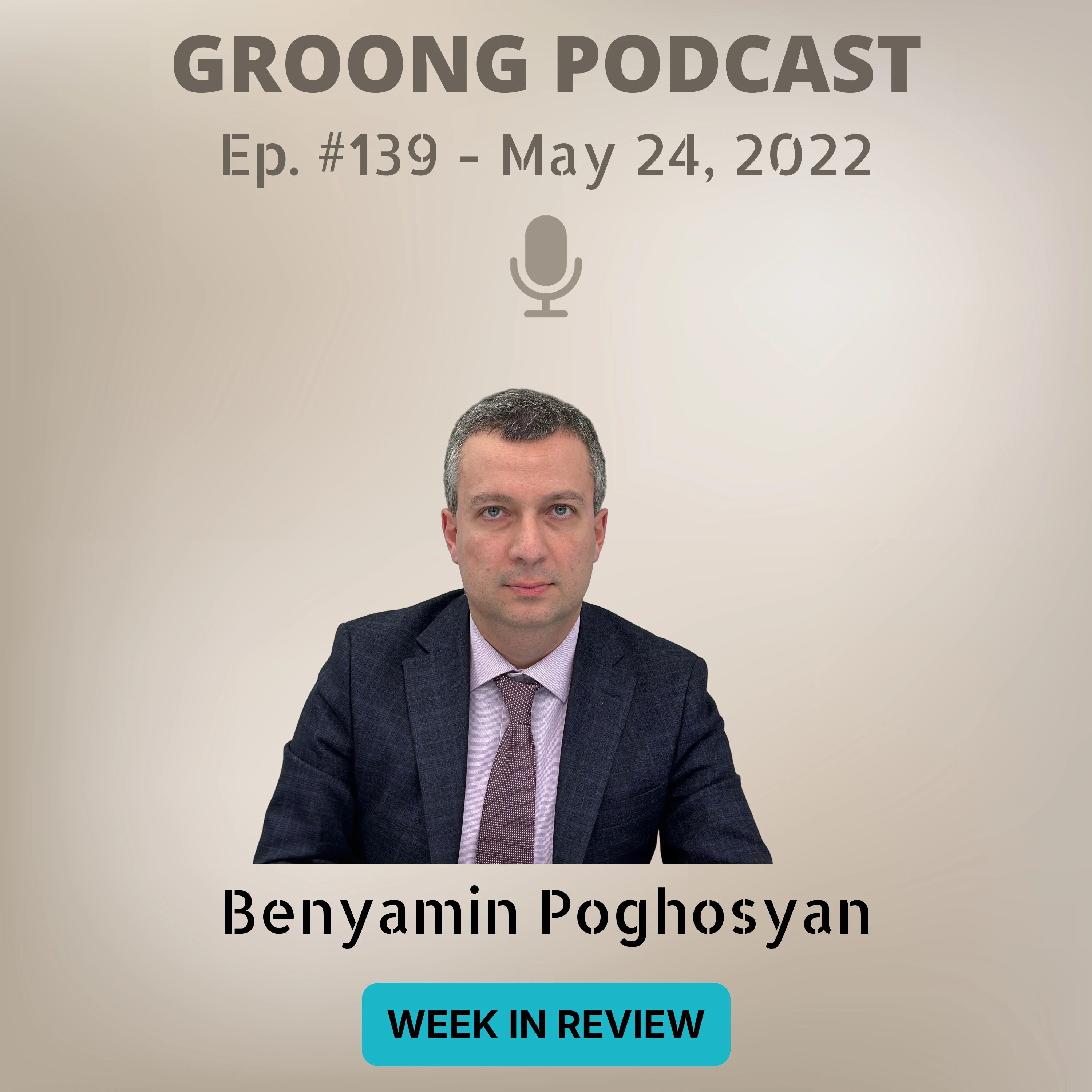
Guest(s):
Armenian News Network/Groong Week in Review - May 22, 2022
Topics:
- 00:00 Introduction
- 01:05 âAgenda of Peaceâ Negotiations Continue
- 34:49 Iran-Armenia Relations
- 44:00 CSTO Leaders Meeting in Moscow
- 49:44 State of the Opposition Protests
- 59:51 Hovik’s Rant
Guests:
- Dr. Benyamin Poghosyan / TW/@Benyamin_Poghos
Host:
- Hovik Manucharyan TW/@HovikYerevan
- Asbed Bedrossian TW/@qubriq
Episode 139 | Recorded: Monday, May 23, 2022 Website: https://groong.org/podcasts/WiR-20220522.html #zartnirlao
Armenian News: Negotiations | Opp Protests | Iran-Armenia Rels | CSTO Meet | Ep #139 - May 22, 2022 [EP139]
Posted on Tuesday, May 24, 2022 | Category: Armenia, Azerbaijan, Russia, Iran, Georgia, Turkey, Syria, Ukraine, Israel, Artsakh, Nagorno Karabakh, Economy, European Union, NATO, Human RightsGuest(s):
Armenian News Network/Groong Week in Review - May 22, 2022
Topics:
- 00:00 Introduction
- 01:05 âAgenda of Peaceâ Negotiations Continue
- 34:49 Iran-Armenia Relations
- 44:00 CSTO Leaders Meeting in Moscow
- 49:44 State of the Opposition Protests
- 59:51 Hovik’s Rant
Guests:
- Dr. Benyamin Poghosyan / TW/@Benyamin_Poghos
Host:
- Hovik Manucharyan TW/@HovikYerevan
- Asbed Bedrossian TW/@qubriq
Episode 139 | Recorded: Monday, May 23, 2022 Website: https://groong.org/podcasts/WiR-20220522.html #zartnirlao
Armenian News: Protests Growing | FM Mirzoyan in DC | Normalization ROUnd 3 | Ep #135 - May 8, 2022 [EP135]
Posted on Tuesday, May 10, 2022 | Category: Armenia, Russia, Azerbaijan, Turkey, Iran, Armenian Genocide, Genocide, Georgia, Artsakh, Geopolitics, Human Rights, Nagorno Karabakh, Ukraine, European Union | Series: wir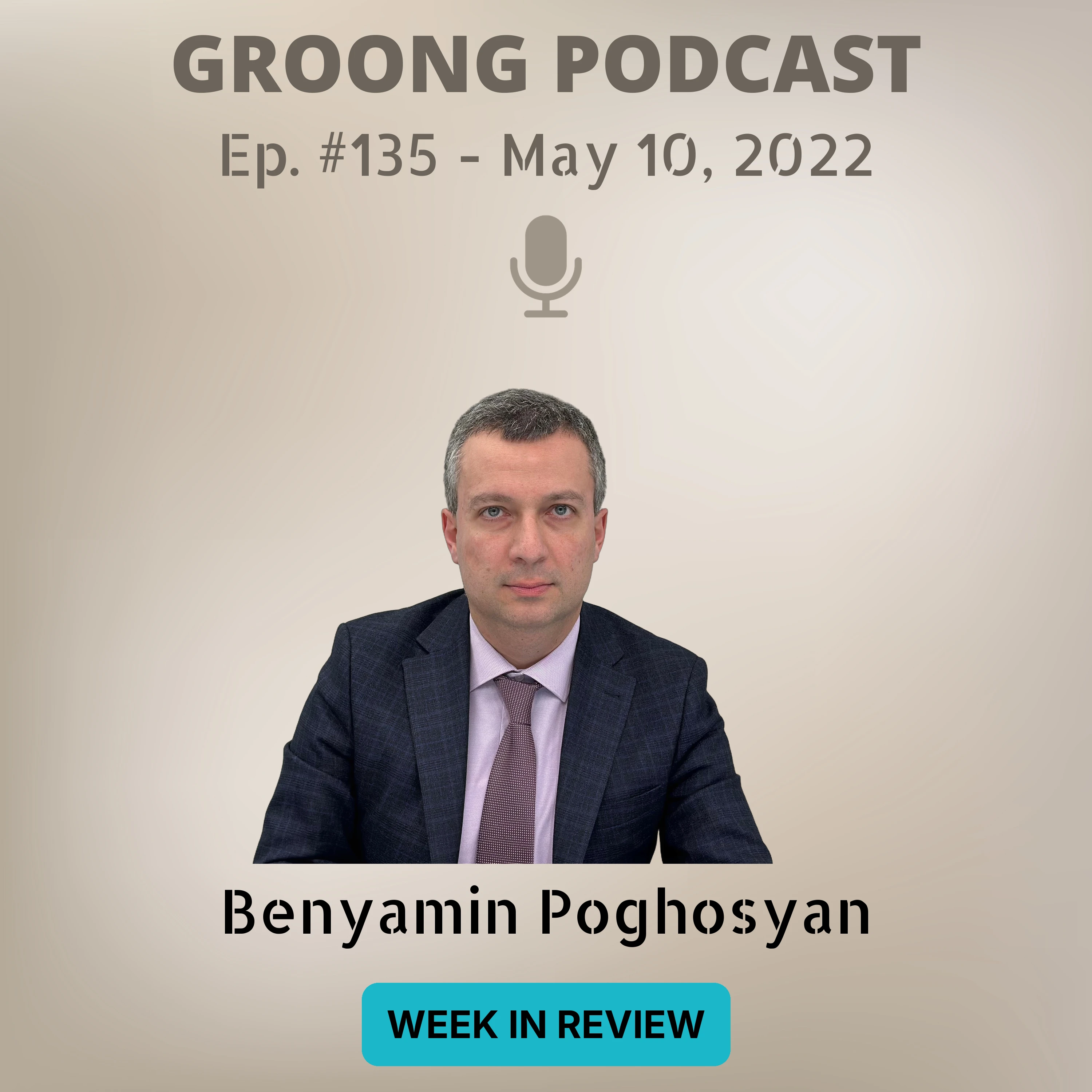
Guest(s):
Armenian News Network/Groong Week in Review - May 8, 2022
Topics:
- 00:00 Introduction
- 00:49 Mass Protests Growing in Yerevan
- 24:31 FM Mirzoyan in Washington DC
- 38:38 Normalization Round 3
- 52:25 Rants
Guest:
- Benyamin Poghosyan TW/@Benyamin_Poghos
Host:
- Hovik Manucharyan TW/@HovikYerevan
- Asbed Bedrossian TW/@qubriq
Episode 135 | Recorded: Tuesday, May 10, 2022 Website: https://groong.org/podcasts/WiR-20220508.html
Armenian News: Protests Growing | FM Mirzoyan in DC | Normalization ROUnd 3 | Ep #135 - May 8, 2022 [EP135]
Posted on Tuesday, May 10, 2022 | Category: Armenia, Russia, Azerbaijan, Turkey, Iran, Armenian Genocide, Genocide, Georgia, Artsakh, Geopolitics, Human Rights, Nagorno Karabakh, Ukraine, European UnionGuest(s):
Armenian News Network/Groong Week in Review - May 8, 2022
Topics:
- 00:00 Introduction
- 00:49 Mass Protests Growing in Yerevan
- 24:31 FM Mirzoyan in Washington DC
- 38:38 Normalization Round 3
- 52:25 Rants
Guest:
- Benyamin Poghosyan TW/@Benyamin_Poghos
Host:
- Hovik Manucharyan TW/@HovikYerevan
- Asbed Bedrossian TW/@qubriq
Episode 135 | Recorded: Tuesday, May 10, 2022 Website: https://groong.org/podcasts/WiR-20220508.html