Armenia-CSTO Relations
Last updated: June 11, 2026
Armenia joined the CSTO in 1992, shortly after independence, anchoring its security doctrine on collective defense obligations with Russia and other post-Soviet states. This alliance defined Armenian military planning, procurement, and strategic posture for three decades. The CSTO framework promised that an armed attack on one member would trigger joint military response from all others, a guarantee Armenia believed would deter Azerbaijan and protect its territory. The organization also provided a mechanism for Russian military presence in the region, including military bases and peacekeeping deployments that became central to Armenian security architecture. Yet the alliance proved brittle when tested by actual conflict.
During the 44-Day War in September-November 2020, Russia invoked legal technicalities to avoid triggering CSTO collective defense obligations, arguing that fighting in Artsakh (Nagorno Karabakh) fell outside CSTO territory and therefore did not obligate member states to intervene militarily. This interpretation shattered Armenian confidence in the treaty’s protective value. Russia did deploy peacekeepers to Artsakh under the November 10 ceasefire agreement to maintain the ceasefire and protect the local Armenian population, though this peacekeeping role did not constitute a state-level security guarantee for Armenia. That presence lasted only three years. In September 2023, when Azerbaijan launched a military operation that resulted in the complete ethnic cleansing of more than 150,000 Armenian inhabitants from Artsakh, Russian peacekeepers withdrew without resisting, and Armenia’s government did not invoke CSTO protections. Armenia’s participation in CSTO effectively froze thereafter, with the country pursuing alternative security partnerships with France , India , and the United States instead.
The collapse of Armenian confidence in CSTO reflects broader geopolitical realities: Russia’s focus on Ukraine limited its capacity to reinforce the South Caucasus, and Azerbaijan’s role as a key energy transit route made Moscow reluctant to confront Baku militarily. Armenia has maintained formal CSTO membership but frozen its practical participation—no longer contributing military personnel, resources, or political backing to collective CSTO operations, even as it retains the nominal right to invoke collective defense (which Armenia no longer expects Russia to honor). Armenia’s leadership has signaled openness to continued formal membership while abandoning practical reliance on it, a middle position that acknowledges historical ties to Russia while hedging against future abandonment. Whether Armenia will eventually leave the organization or attempt to renegotiate its terms remains contested, with opposition parties arguing that membership without teeth represents capitulation and pro-government figures maintaining that formal ties preserve strategic options. The question of Armenia’s security guarantees, absent Russian protection, defines the country’s vulnerability heading into the 2026 election .
Groong episodes that include this tag
Below are all Groong episodes tagged with Armenia-CSTO Relations.
ArmVote21 | Am/Az Negotiations | Erdogan in Az | Biden Meets Erdogan & Putin| Ep #74 - June 20, 2021 [EP74]
Posted on Monday, Jun 21, 2021 | Category: Armenia, Russia, Azerbaijan, Iran, Turkey, China, Middle East, Armenian Genocide, Genocide, Georgia, Syria, Ukraine, Nagorno Karabakh, NATO | Series: wir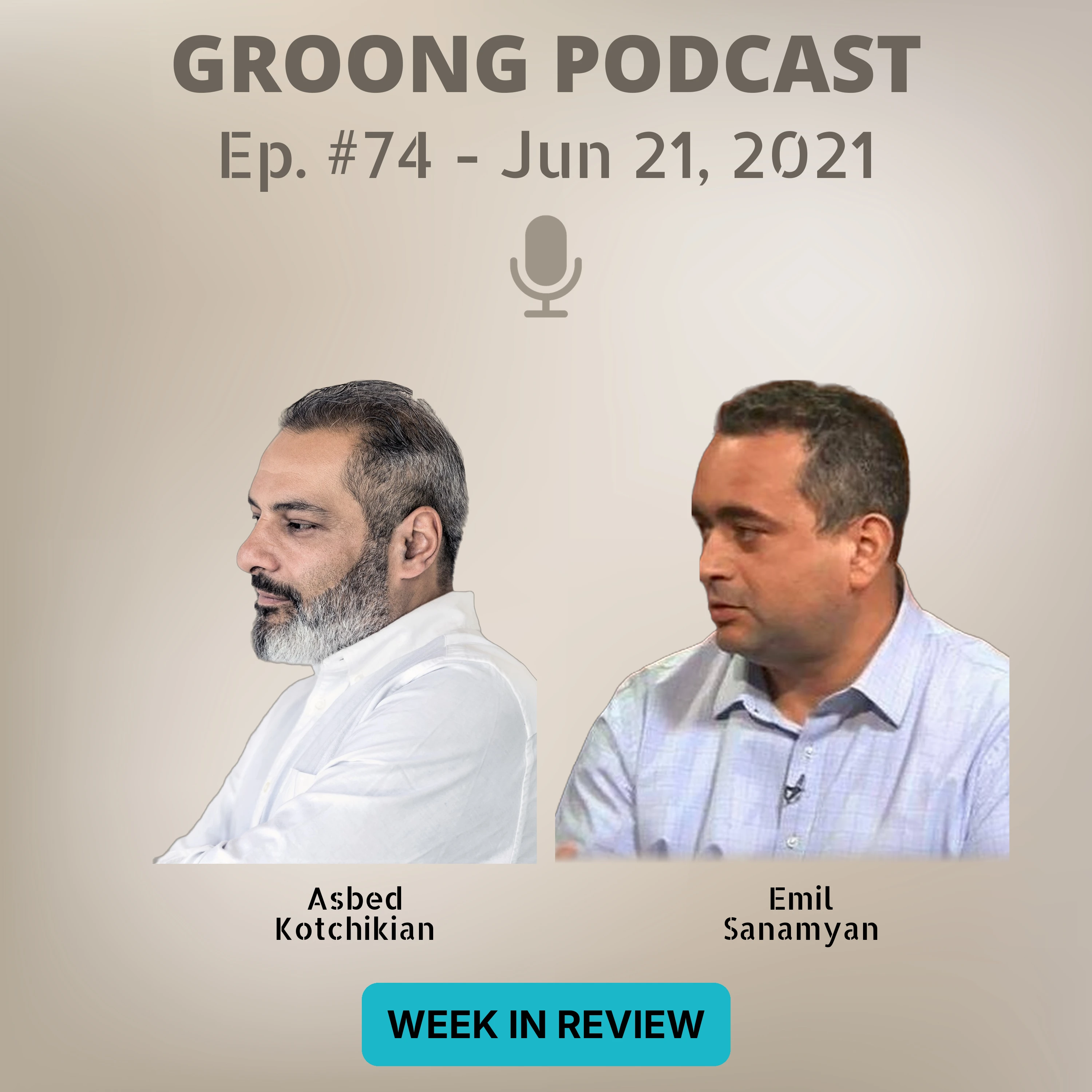
ANN/Groong Week in Review - June 20, 2021 Topics:
- Armeniaâs Elections
- Behind The Scenes with Armenia and Azerbaijan
- Erdogan in Azerbaijan
- Biden Meets Erdogan, then Putin
Guests:
- Asbed Kotchikian
- @Emil_Sanamyan
Guest(s):
Hosts:
- Hovik Manucharyan
- Asbed Bedrossian
Episode 74 | Recorded: June 20, 2021 Website: https://groong.org/podcasts/WiR-20210620.html
ArmVote21 | Am/Az Negotiations | Erdogan in Az | Biden Meets Erdogan & Putin| Ep #74 - June 20, 2021 [EP74]
Posted on Monday, Jun 21, 2021 | Category: Armenia, Russia, Azerbaijan, Iran, Turkey, China, Middle East, Armenian Genocide, Genocide, Georgia, Syria, Ukraine, Nagorno Karabakh, NATOANN/Groong Week in Review - June 20, 2021 Topics:
- Armeniaâs Elections
- Behind The Scenes with Armenia and Azerbaijan
- Erdogan in Azerbaijan
- Biden Meets Erdogan, then Putin
Guests:
- Asbed Kotchikian
- @Emil_Sanamyan
Guest(s):
Hosts:
- Hovik Manucharyan
- Asbed Bedrossian
Episode 74 | Recorded: June 20, 2021 Website: https://groong.org/podcasts/WiR-20210620.html
Robert Markarian: Party Platforms in June 20 Parliamentary Elections (Ep #73) - June 20, 2021 [EP73]
Posted on Saturday, Jun 19, 2021 | Category: In Armenian, Armenia, Politics, Economy, Azerbaijan, Artsakh, Russia, Iran, Nagorno Karabakh, NATO | Series: cog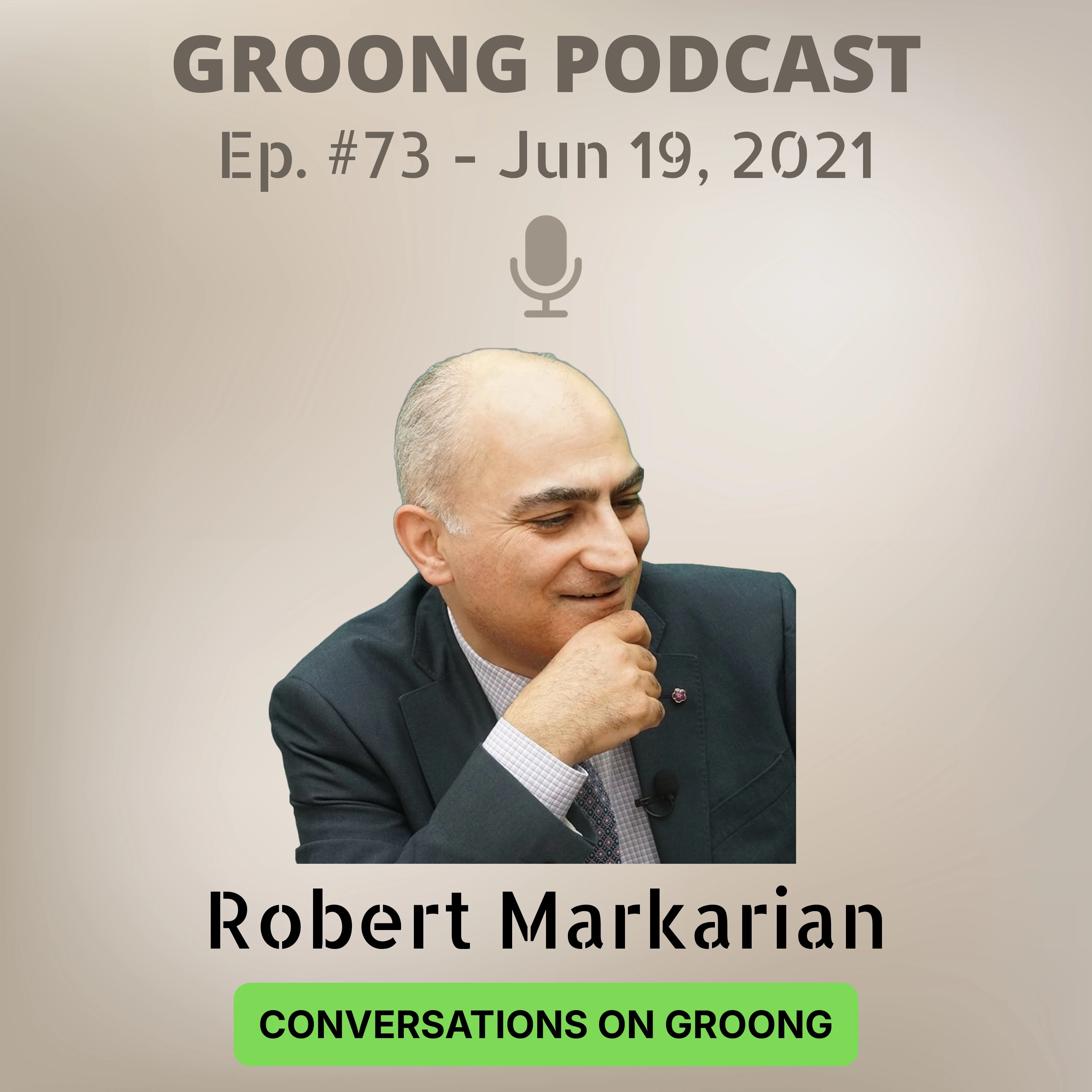
Analyzing Party Platforms in June 20 Parliamentary Elections
A Conversation with Robert Markarian
Guest:
Robert Markarian was born in Iran and has university education in physics and law. For 25 years, he has worked as a host, editor, and analyst on Armenian Radio Hour in Iranâs public radio and television. He has cooperated articles covering Armenia and Artsakh in Armenian, Persian, and English published by Iranian and Armenian sites and analytical centers.
Topics:
- Security/Defense
- Economy and Social
- Artsakh
- Diaspora Relations
Conversation in English and Armenian
Guest(s):
Read MoreRobert Markarian: Party Platforms in June 20 Parliamentary Elections (Ep #73) - June 20, 2021 [EP73]
Posted on Saturday, Jun 19, 2021 | Category: In Armenian, Armenia, Politics, Economy, Azerbaijan, Artsakh, Russia, Iran, Nagorno Karabakh, NATOAnalyzing Party Platforms in June 20 Parliamentary Elections
A Conversation with Robert Markarian
Guest:
Robert Markarian was born in Iran and has university education in physics and law. For 25 years, he has worked as a host, editor, and analyst on Armenian Radio Hour in Iranâs public radio and television. He has cooperated articles covering Armenia and Artsakh in Armenian, Persian, and English published by Iranian and Armenian sites and analytical centers.
Topics:
- Security/Defense
- Economy and Social
- Artsakh
- Diaspora Relations
Conversation in English and Armenian
Guest(s):
Read MoreArmenia, Superpowers and The New Cold War | (Ep #68) - June 8, 2021 [EP68]
Posted on Tuesday, Jun 8, 2021 | Category: Russia, Armenia, Georgia, Turkey, China, Ukraine, Economy, Azerbaijan, India, Iran, Artsakh, Genocide, Middle East, Syria, Nagorno Karabakh, NATO | Series: cog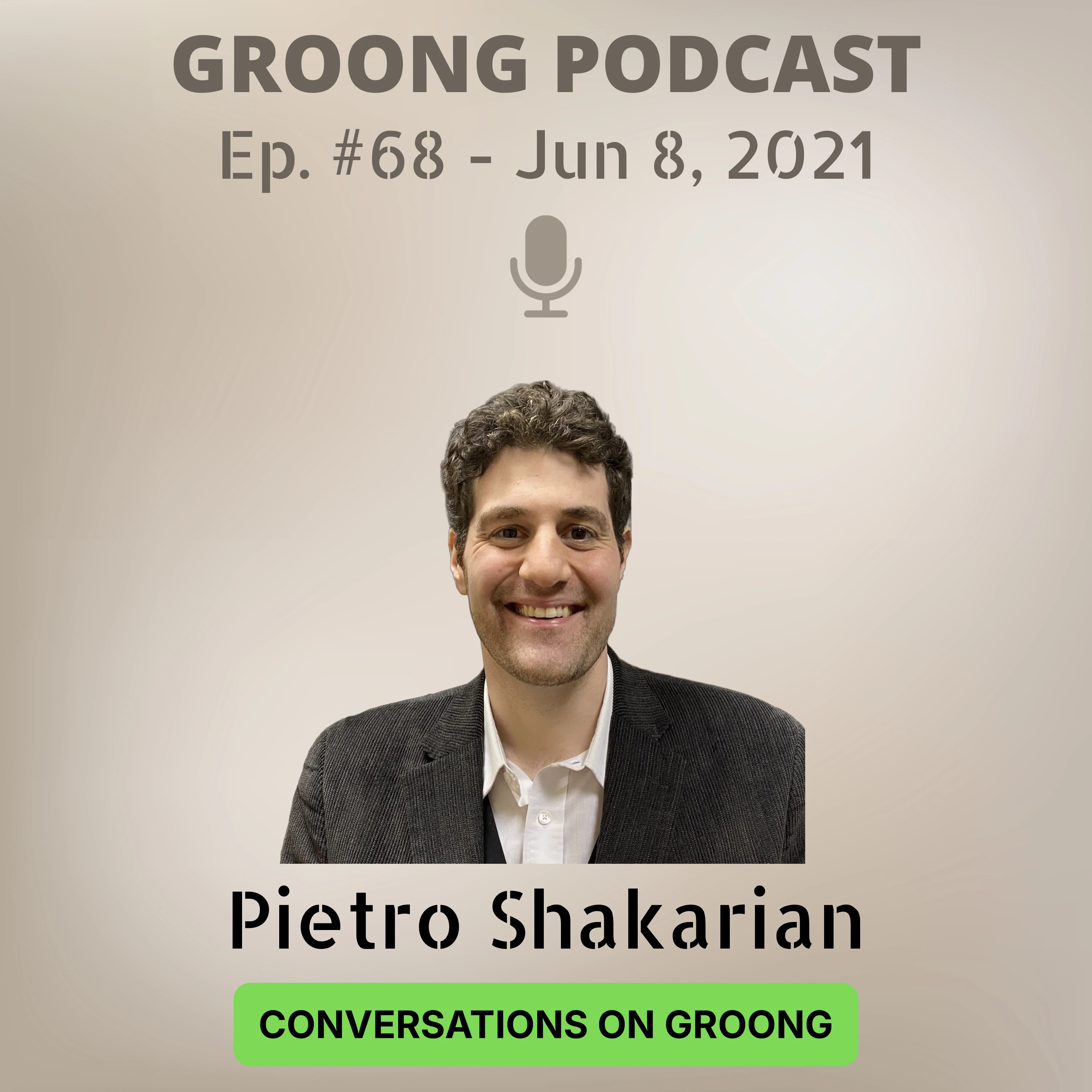
Armenia, Superpowers and The New Cold War
A Conversation with:
Guest:
- Dr. Pietro Shakarian, who is a Cleveland-based historian of Russia and the Soviet Union, with a focus on Soviet Armenia and the Caucasus during the era of Nikita Khrushchevâs Thaw.
Topics
- Democracy-building in the Post Soviet Space
- NATO and expansion
- Russia in the Caucasus
- China and the New Silk Road through Iran and Georgia
Guest(s):
Hosts:
- Hovik Manucharyan
- Asbed Bedrossian
Episode 68 | Recorded: June 4, 2021 Website: https://groong.org/podcasts/CoG-20210608.html
Armenia, Superpowers and The New Cold War | (Ep #68) - June 8, 2021 [EP68]
Posted on Tuesday, Jun 8, 2021 | Category: Russia, Armenia, Georgia, Turkey, China, Ukraine, Economy, Azerbaijan, India, Iran, Artsakh, Genocide, Middle East, Syria, Nagorno Karabakh, NATOArmenia, Superpowers and The New Cold War
A Conversation with:
Guest:
- Dr. Pietro Shakarian, who is a Cleveland-based historian of Russia and the Soviet Union, with a focus on Soviet Armenia and the Caucasus during the era of Nikita Khrushchevâs Thaw.
Topics
- Democracy-building in the Post Soviet Space
- NATO and expansion
- Russia in the Caucasus
- China and the New Silk Road through Iran and Georgia
Guest(s):
Hosts:
- Hovik Manucharyan
- Asbed Bedrossian
Episode 68 | Recorded: June 4, 2021 Website: https://groong.org/podcasts/CoG-20210608.html
ANN/Groong Week in Review - May 23, 2021
Topics:
- Border update, and Leaked documents
- Azerbaijan membership in the CSTO?
- New MPG Poll on the Armenian Elections
Guest:
- Emil Sanamyan
Guest(s):
Hosts:
- Hovik Manucharyan
- Asbed Bedrossian
Website: https://groong.org/podcasts/WiR-20210523.html Recorded: May 24, 2021
Border Update & Leaks | Azerbaijan in the CSTO? | New Poll & Elections | (Ep #62) - May 23, 2021 [EP62]
Posted on Tuesday, May 25, 2021 | Category: Armenia, Politics, Poll, Azerbaijan, Russia, Georgia, Turkey, Ukraine, China, Iran, Artsakh, Syria, Nagorno Karabakh, NATOANN/Groong Week in Review - May 23, 2021
Topics:
- Border update, and Leaked documents
- Azerbaijan membership in the CSTO?
- New MPG Poll on the Armenian Elections
Guest:
- Emil Sanamyan
Guest(s):
Hosts:
- Hovik Manucharyan
- Asbed Bedrossian
Website: https://groong.org/podcasts/WiR-20210523.html Recorded: May 24, 2021
Azerbaijan Incursion in Syunik | Lavrov in Yerevan/Baku | Electoral Politics (Ep #61) May 16, 2021 [EP61]
Posted on Monday, May 17, 2021 | Category: Armenia, Russia, Azerbaijan, Turkey, Georgia, Iran, Ukraine, China, Genocide, India, Israel, Middle East, Nagorno Karabakh, NATO | Series: wir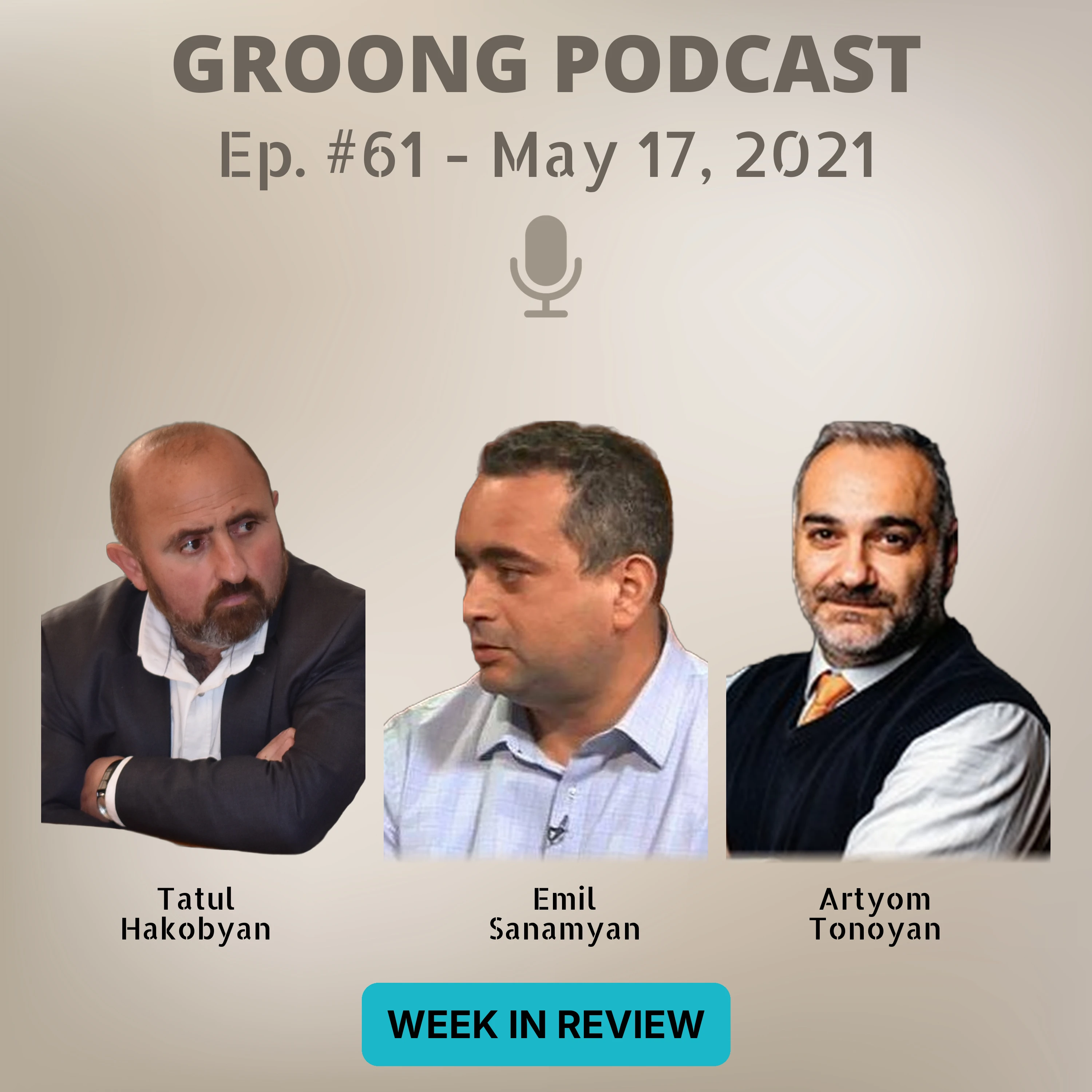
ANN/Groong Week in Review - May 16, 2021 Topics:
- Azerbaijanâs Incursion into Syunik
- Lavrovâs Visit to Yerevan and Baku
- Electoral Politics
Guests:
- Tatul Hakobyan
- Emil Sanamyan
- Artyom Tonoyan
Guest(s):
Hosts:
- Hovik Manucharyan @HovikYerevan
- Asbed Bedrossian @qubriq
Episode 60 | Recorded: May 2, 2021 Website: https://groong.org/podcasts/WiR-20210516.html