Groong Podcast Digest — Week of July 20–26, 2026
Published July 26, 2026 6 min read See also: News Digest →- EP568: Asbed and Hovik examine escalating US-Iran war tensions following the June ceasefire collapse, Konstantin Sokolov’s appointment to lead TRIPP+ while acquiring Armenia’s Teghut mine, and Pashinyan’s political vulnerabilities including charges against Archbishop Galstanyan and prolonged Armenian POW detention.
- EP569: Anthony Barsamian discusses Armenian Diaspora advocacy, U.S. recognition of the Armenian Genocide, the role of Armenia’s government in genocide recognition efforts, the suspension of Israeli recognition, the Armenian Church’s place in Armenian life, and Armenia’s geopolitical positioning between East and West.
This Week’s Podcast Episodes
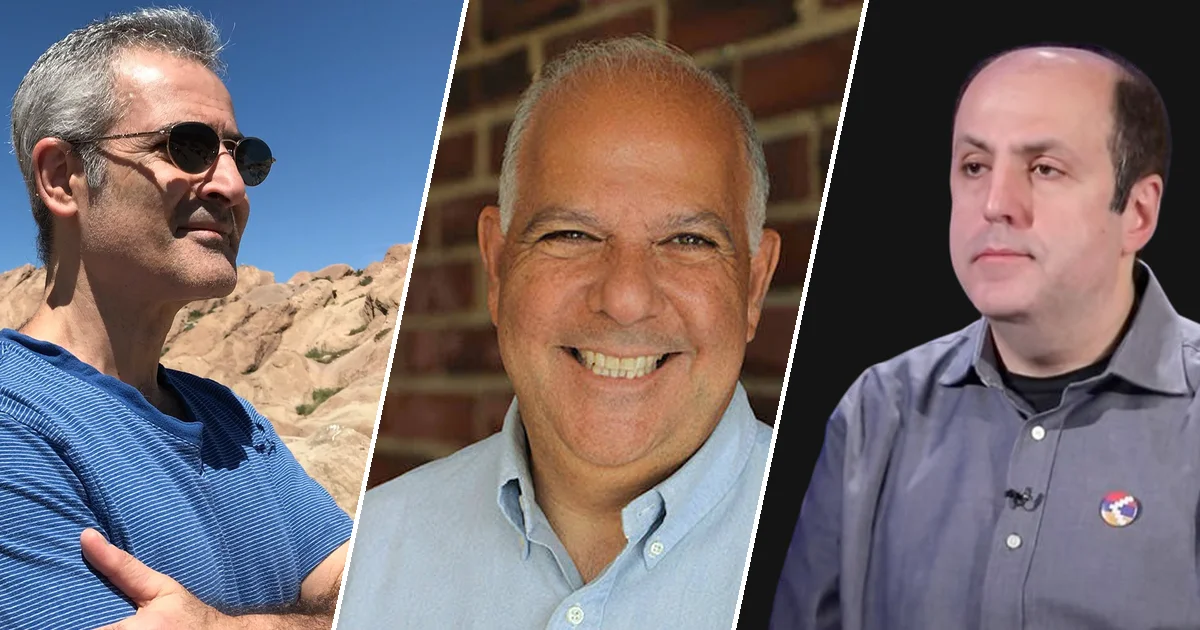
Episode 568: Iran War, TRIPP Money, and Armenia’s Political Purgatory | Ep 561, Jul 19, 2026
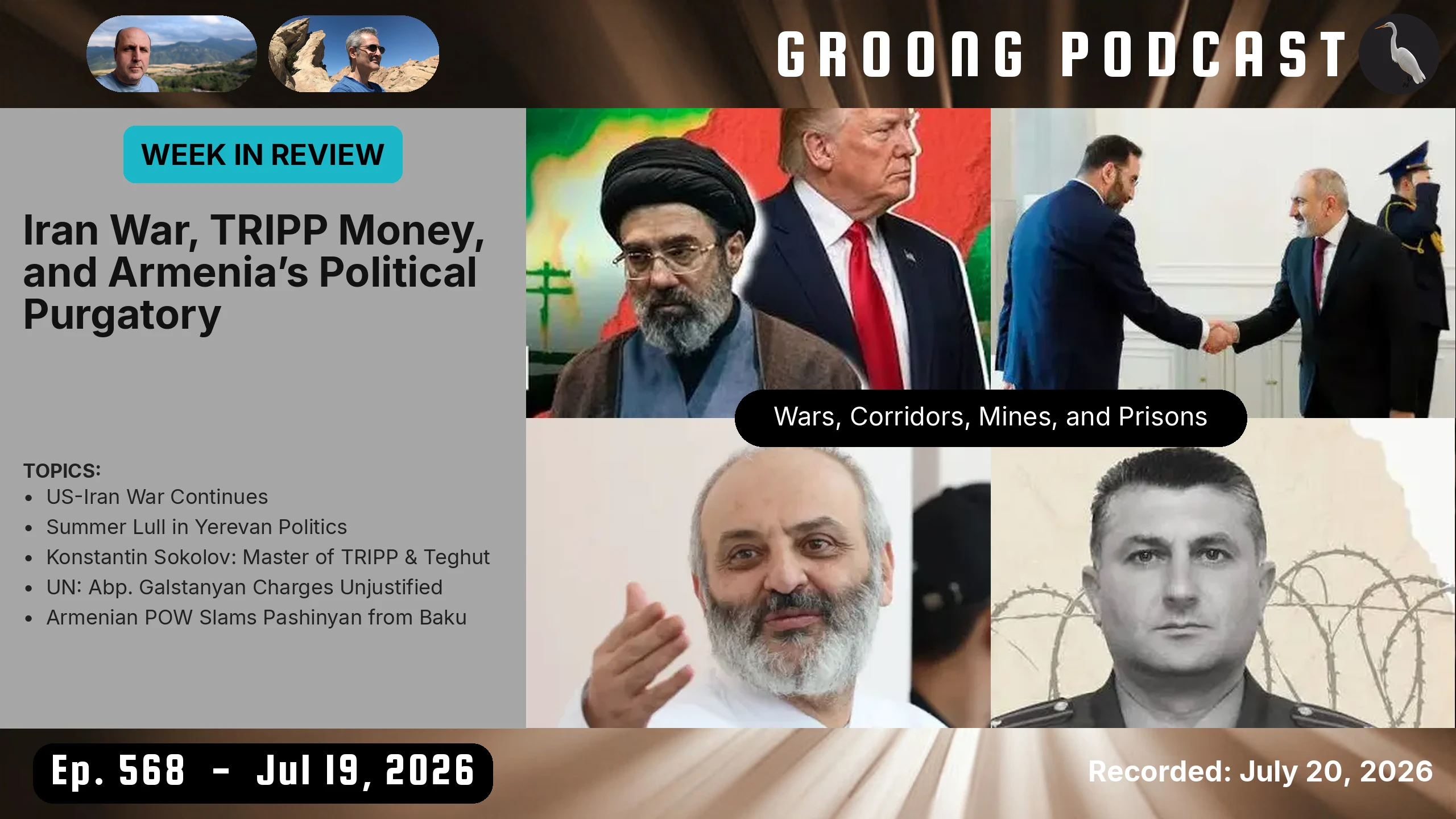
The hosts begin by analyzing the trajectory of the US-Iran conflict, which has shifted from initial nuclear concerns to deep mistrust in the negotiation process. Asbed argues the situation will likely persist as controlled escalation through November, while Hovik references John Mearsheimer’s analysis that Iran’s negotiating position has strengthened since June. The discussion centers on Iran’s coercive leverage, particularly its ability to disrupt Gulf desalination infrastructure, which has convinced regional states to pressure Washington for de-escalation. Trita Parsi’s assessment that US military dominance in the Middle East has ended frames the conversation about whether the conflict will become a new forever war. The hosts emphasize the human cost: 17 US servicemen and dozens or hundreds of Iranians have died in a conflict they see as preventable. Hovik expresses cautious optimism that a stronger Iran emerging from this conflict could stabilize the South Caucasus by constraining Israel, Turkey, and Azerbaijan.
The conversation then pivots to Armenia’s political summer lull. Asbed notes that government media coverage focuses almost entirely on European news, suggesting minimal domestic activity. He expresses frustration that the opposition failed to galvanize labor protests sparked by Tsarukyan’s enterprise closures, comparing the opposition’s passivity to a Toumanian parable about rejecting opportunities. Hovik counters that operating in what he describes as Armenia’s movement toward totalitarianism requires strategic restraint and that external conditions, particularly the Ukraine war keeping Russia less attentive to the South Caucasus, constrain opposition options. The hosts debate whether summer inaction reflects legitimate strategic calculation or insufficient effort, ultimately agreeing that while opposition patience may be justified, more evidence of planning would reassure supporters.
Konstantin Sokolov emerges as the episode’s most contentious figure. The Russian-born American investor and Trump donor has been appointed chairman of the TRIPP + Enterprise Fund, which will distribute at least 200 million dollars across Armenia, Georgia, Azerbaijan, and Central Asia, potentially expanding to 400 million-plus. Simultaneously, Sokolov acquired 49.9 percent of Armenia’s Teghut copper-molybdenum mine from VTB Bank and holds significant stakes in Viva Armenia telecommunications. The hosts identify this as a massive conflict of interest: a single investor now controls strategic assets and distributes development funds across the region. Asbed notes Western media labels Sokolov as “Russian-born” while consistently calling Samvel Karapetyan “Armenian billionaire,” reflecting double standards in coverage. Hovik argues Sokolov’s appointment demonstrates how billionaire-class interests now supersede national sovereignty in development projects. Both hosts conclude that Armenia lacks meaningful agency to reject TRIPP+ terms, bound by unequal partnership agreements securing US control for 49-99 years. However, Asbed adds that Iran’s ongoing war reduces TRIPP’s viability by making Armenia too geopolitically unstable for serious investment.
The episode closes with extended discussion of political detention and prisoners. Archbishop Bagrat Galstanyan was transferred from 344 days of pretrial detention to house arrest in June, likely following UN criticism that his terrorism charges violated international human rights obligations. Hovik notes the tactical precision of 344 days, just under the one-year threshold that triggers international scrutiny, and describes Armenia’s system as a version of the post-Bolshevik Red Terror conducted through indefinite pretrial detention rather than execution. Multiple opposition figures including Aregnaz Manukyan, Vardan Ghukasyan, and Avetik Chalabyan remain detained on charges the hosts describe as baseless. Hovik and Asbed emphasize that prosecution outcomes are irrelevant; the regime uses pretrial detention itself as a political tool to remove opposition leaders from public life. The discussion extends to Armenian POWs and political prisoners held in Baku, citing Major-General Davit Manukyan’s letter from prison accusing Pashinyan of complicity with Azerbaijan. Both hosts argue Pashinyan has no incentive to secure their release, as popular Artsakh leaders would threaten Civil Contract ’s political position. They conclude by reaffirming solidarity with political prisoners, stating the struggle continues in the opposition and diaspora advocacy.
Watch/Listen: Episode 568
Keywords: Iran War , US-Iran escalation, TRIPP, Konstantin Sokolov, Teghut mine, Conflicts of interest, Armenia-Azerbaijan Peace Process, Prisoners of War, Bagrat Galstanyan, Pretrial detention, Political detention, Armenian Church, South Caucasus, Samvel Karapetyan , Established Opposition
Episode 569: Anthony Barsamian - Armenia-Diaspora checkpoint | Ep 569, Jul 25, 2026
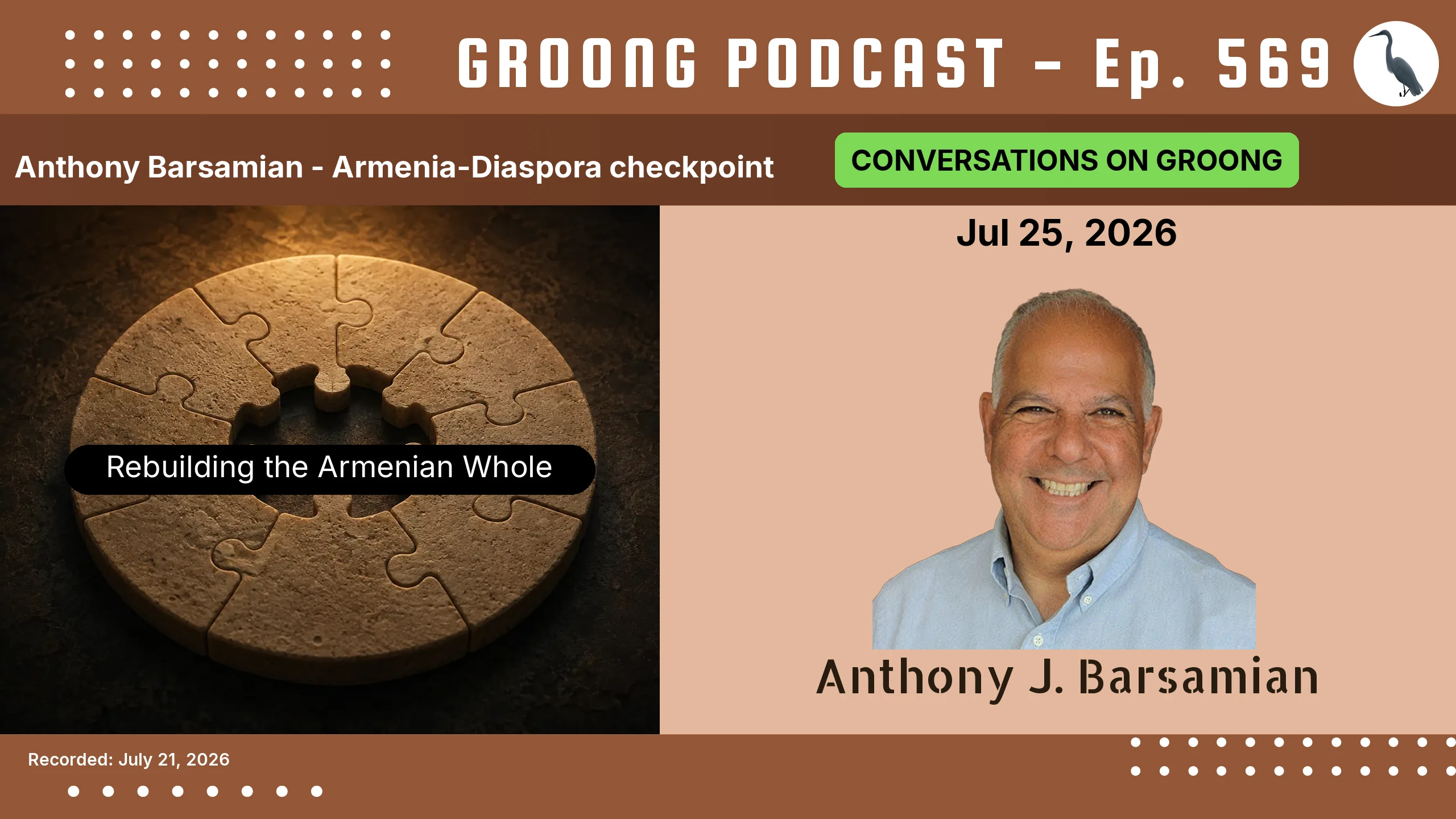
Anthony Barsamian reflects on decades of Armenian-American advocacy centered on securing U.S. recognition of the Armenian Genocide. He emphasizes that recognition is not a “win or lose situation” but rather a beginning. The recent passage of recognition through both houses of Congress, with near-unanimous support, marks a turning point that places the Armenian Genocide on the international stage alongside other major historical catastrophes. Barsamian notes that while President Biden’s recognition was important, congressional affirmation carries greater weight and sends a powerful message to the world that genocide recognition transcends Armenian concerns to become a universal human rights issue. He stresses that Turkey’s continued denial is increasingly untenable, particularly as many Turkish citizens privately acknowledge the Genocide’s reality. The challenge now shifts to what comes next: education, prevention, and ensuring that recognition translates into concrete action rather than remaining symbolic.
Barsamian then addresses the Israeli question, describing the recent suspension of Knesset recognition as a missed opportunity with unclear causes. He speculates about possible external pressure from the U.S. government, Azerbaijan, or other actors but resists certainty, emphasizing that the fight must continue. He argues passionately that Israel, as a Holocaust survivor nation, bears a moral obligation to recognize the Armenian Genocide. Failing to do so undermines the universal principle that genocide matters and creates dangerous precedent for future denials. Barsamian calls for frank conversations with Israeli partners and expects continued pressure for recognition within the next generation.
On Armenia’s role in genocide recognition, Barsamian adopts a pragmatic stance. He acknowledges that diaspora Armenians prioritize genocide recognition differently than Armenians in the homeland, who face immediate survival concerns including food security and military threats. He argues that Pashinyan’s government should maintain genocide recognition on the agenda while prioritizing national security, territorial integrity, and the release of Armenian prisoners held in Baku. Barsamian insists that peace requires all parties to surrender something and that security for Armenia—preventing threats from Azerbaijan and Turkey—represents a form of justice rooted in the Genocide’s lessons.
Watch/Listen: Episode 569
Keywords: Armenian Genocide, Armenian Diaspora, U.S. recognition, Israeli recognition, Armenia-Azerbaijan Peace Process, Pashinyan, Prisoners of War
Stay Connected
For the full, unfiltered stream of Armenia news as it happens, subscribe to the Groong Mailing List on Google Groups. Subscribers receive the complete daily news feed directly in their inbox — expect tens of emails per day covering Armenia, Artsakh, the diaspora, and the broader region.