Groong Podcast Digest — Week of July 6–12, 2026
Published July 12, 2026 6 min read- EP564: Hovik and Asbed analyze Armenia’s Constitutional Court ruling upholding the 2026 Armenian Parliamentary Election results, the disqualification of Prosperous Armenia votes, Civil Contract’s three-fifths majority, the opposition’s parliamentary leverage, and what these outcomes mean for Armenian sovereignty amid ongoing Armenia-Azerbaijan Peace Process negotiations and regional pressures.
- EP565: Dr. Sergey Markedonov examines Russia’s strategic bandwidth problem in Ukraine, the geopolitical stakes of TRIPP in Syunik, and Pashinyan’s Western pivot following Armenia’s June 2026 parliamentary election.
- EP566: Dmitry Suslov analyzes Russia’s strategic position across Ukraine, Europe’s rearmament, Armenia’s Western pivot after the 2026 election, and the future of Moscow’s influence in the South Caucasus.
This Week’s Podcast Episodes
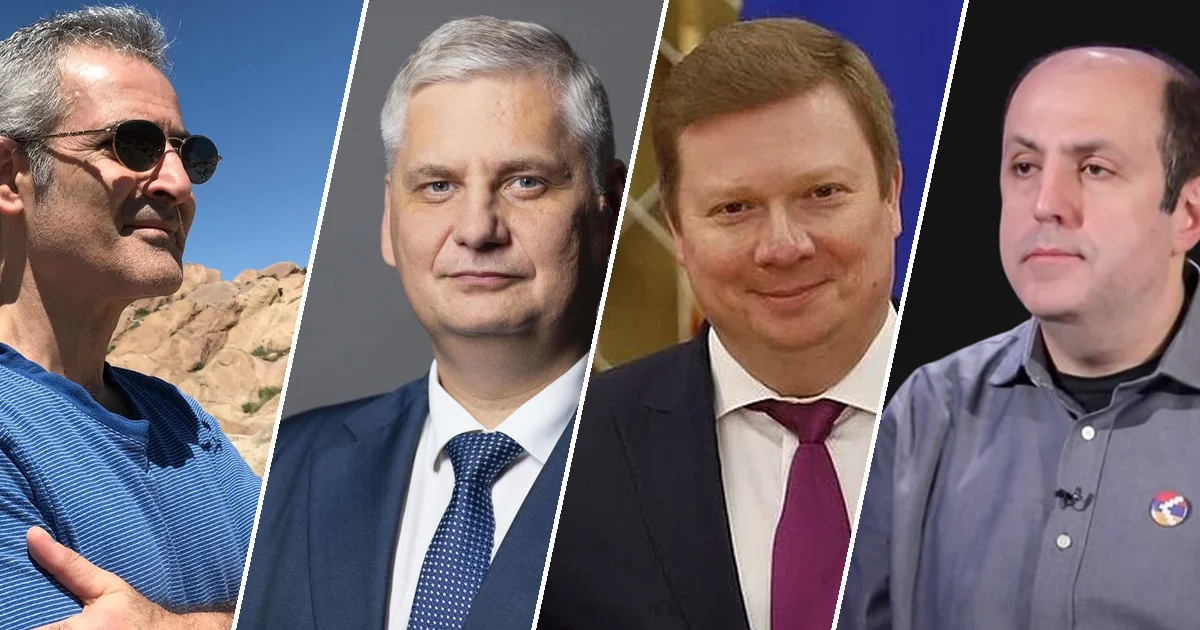
Episode 564: The Constitutional Court has ruled, now what? | Ep 564, Jul 5, 2026
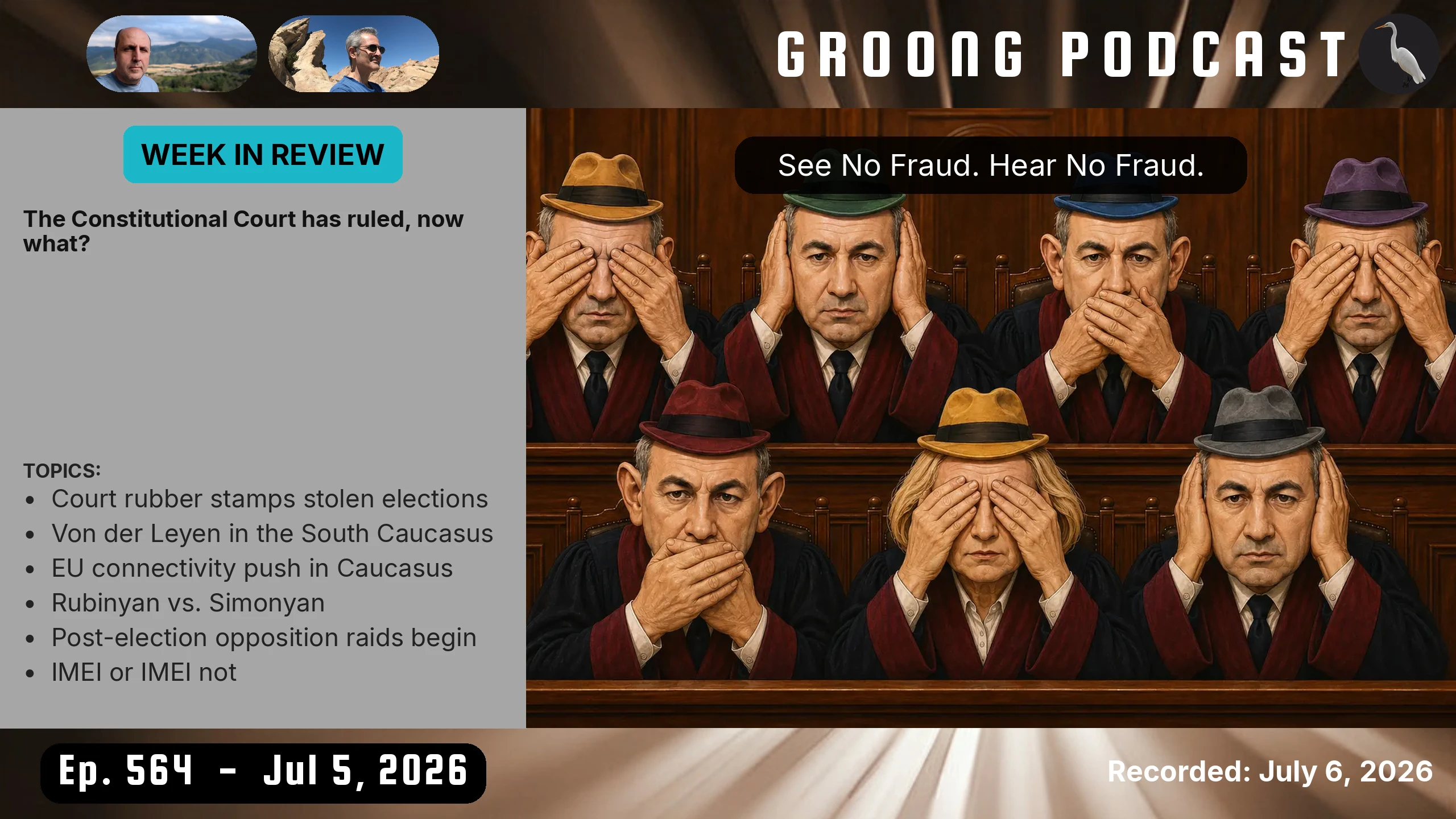
The Constitutional Court’s rubber-stamp validation of the disputed 2026 election results sets the stage for a tumultuous five-year term. Pashinyan ’s Civil Contract party holds 64 seats, falling short of the 69-vote supermajority needed to pass constitutional amendments unilaterally. Strong Armenia and Armenia Alliance, together commanding 41 seats, announced they will take their parliamentary mandates, rejecting a boycott strategy and framing legislative participation as complementary to street-level mobilization when conditions permit. Hovik and Asbed debate whether opposition forces possess enough leverage to block concessions to Azerbaijan or whether geopolitical realities, particularly Russia’s preoccupation with Ukraine, constrain their options.
The EU’s Peace Through Connectivity agenda gained momentum when European Commission President Ursula von der Leyen visited Baku and Yerevan on July 1-2. In Baku, she lauded Aliyev for promoting peace while ignoring Armenian prisoners of war, the ethnic cleansing of Artsakh , and destruction of Armenian heritage, alongside a controversial 200 million euro Global Gateway investment package emphasizing Nakhichevan railway infrastructure. In Yerevan, she offered Autonomous Trade Measures freeing 80 percent of Armenian exports from EU tariffs, plus financial assistance. Hovik argues the EU is preparing TRIPP (Trump Route for International Peace and Prosperity) and Middle Corridor logistics to access Central Asian uranium and energy resources while marginalizing Russian influence, a strategy rooted in France’s loss of African markets and the EU’s pivot toward nuclear security. The hosts stress that EU praise for Aliyev, combined with indifference to Armenian repression and sovereignty, reveals Western interests prioritize transit corridors over Armenian security.
Post-election repression began immediately. On July 5, masked National Security Service agents raided over 70 sites linked to Gagik Tsarukyan, resulting in his arrest on white-collar crime allegations. Serzh Sargsyan faced asset seizures, and fresh vote-buying charges were filed against Hayastan Dashinq figures. Hovik emphasizes the theatrical scale of these operations, numbering roughly 2,000 agents, and notes the absence of any court verdicts while opposition leaders remain imprisoned. The hosts warn this campaign may persist for five years and express alarm at Western media’s complicity in normalizing the spectacle. Samvel Karapetyan has proposed establishing an opposition coordinating council to unify strategy. Hovik expects coordination but believes the opposition will bide time before orchestrating larger mobilization around specific territorial handovers, such as Tigranashen.
Watch/Listen: Episode 564
Keywords: 2026 Armenian Parliamentary Election , Pashinyan, Civil Contract, Constitutional Court, Strong Armenia, Armenia Alliance, Armenia-Azerbaijan Peace Process, TRIPP, Gagik Tsarukyan, Samvel Karapetyan, Ursula von der Leyen, South Caucasus , Zangezur Corridor , Prisoners of War, Ethnic Cleansing, Eurasian Economic Union, Recep Tayyip Erdogan , Syunik
Episode 565: Sergey Markedonov - Ukraine, TRIPP, and Armenia’s Western Pivot | Ep 565, Jul 10, 2026
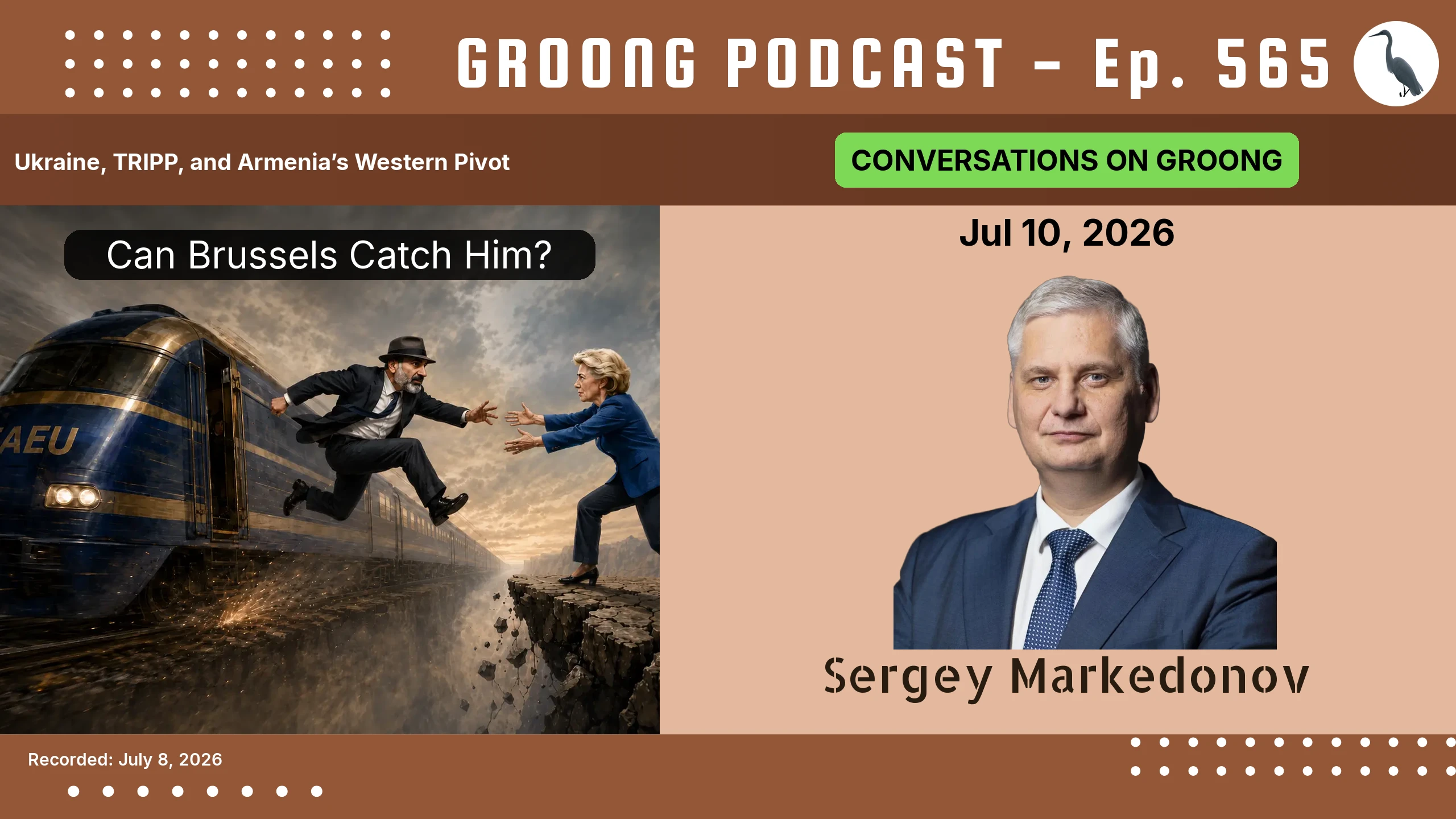
Markedonov opens by analyzing why Russia has not rapidly concluded the war in Ukraine , framing the conflict as fundamentally a Russia-NATO confrontation rather than a bilateral dispute. He argues that Russia views Ukraine’s political status as non-negotiable: Moscow demands either a settlement that removes NATO as a threat to Russian security or a territorial arrangement that reflects military gains. The guest suggests that Russia may have miscalculated Ukraine’s resilience and NATO’s depth of commitment, leading to a war of attrition that now strains Russian military and economic capacity. Markedonov notes that escalation remains controlled because both sides fear nuclear confrontation, though Russian strategic debate includes voices like Sergey Karaganov who advocate for tactical nuclear signaling. The prolonged war leaves Russia with limited bandwidth for other regions, including the South Caucasus.
Turning to TRIPP, Markedonov emphasizes that the project is fundamentally political economy rather than mere transport infrastructure. He expresses skepticism about the corridor’s immediate logistical value, comparing it unfavorably to existing projects like the Baku-Akhalkalaki-Tbilisi-Kars railway. The critical issue is Syunik’s terrain and the absence of functioning rail links; without those conditions, TRIPP remains aspirational. Markedonov identifies TRIPP as a U.S.-led effort to isolate Iran and constrain Russian influence in the South Caucasus. Iran views the project as an existential isolation threat and has drawn clearer red lines than Russia. Moscow’s concern is whether the United States intends to replace Russia as the primary regional mediator. Markedonov suggests Russia might accept TRIPP if structured to include Russian participation, but opposes any configuration that explicitly excludes Moscow from the region’s future.
On Armenia’s June 2026 election and its aftermath, Markedonov describes a political stalemate. Pashinyan retained power but lost his constitutional majority, leaving Civil Contract dependent on opposition support or a constitutional referendum. Samvel Karapetyan’s Strong Armenia emerged as a new opposition force, representing a shift from the older Karabakh-war political class toward a business-networked profile seeking a ’third way’ between Pashinyan and the Established Opposition. Markedonov argues that Pashinyan’s post-election pivot toward the European Union reflects weakness rather than strength: the EU offers symbolic support and modest financial assistance, but cannot replace Armenia’s structural economic dependence on Russia and the Eurasian Economic Union. He expects a reconfiguration of Russia-Armenia ties, not a break, as Moscow works to preserve its position while Armenia explores Western alternatives.
Watch/Listen: Episode 565
Keywords: Ukraine War, Russia-NATO Confrontation, TRIPP, Syunik, Armenia-Azerbaijan Peace Process, Eurasian Economic Union, Strong Armenia, Samvel Karapetyan, Pashinyan, South Caucasus
Episode 566: Dmitry Suslov - Ukraine’s Endgame, Armenia’s Crossroads | Ep 566, Jul 11, 2026
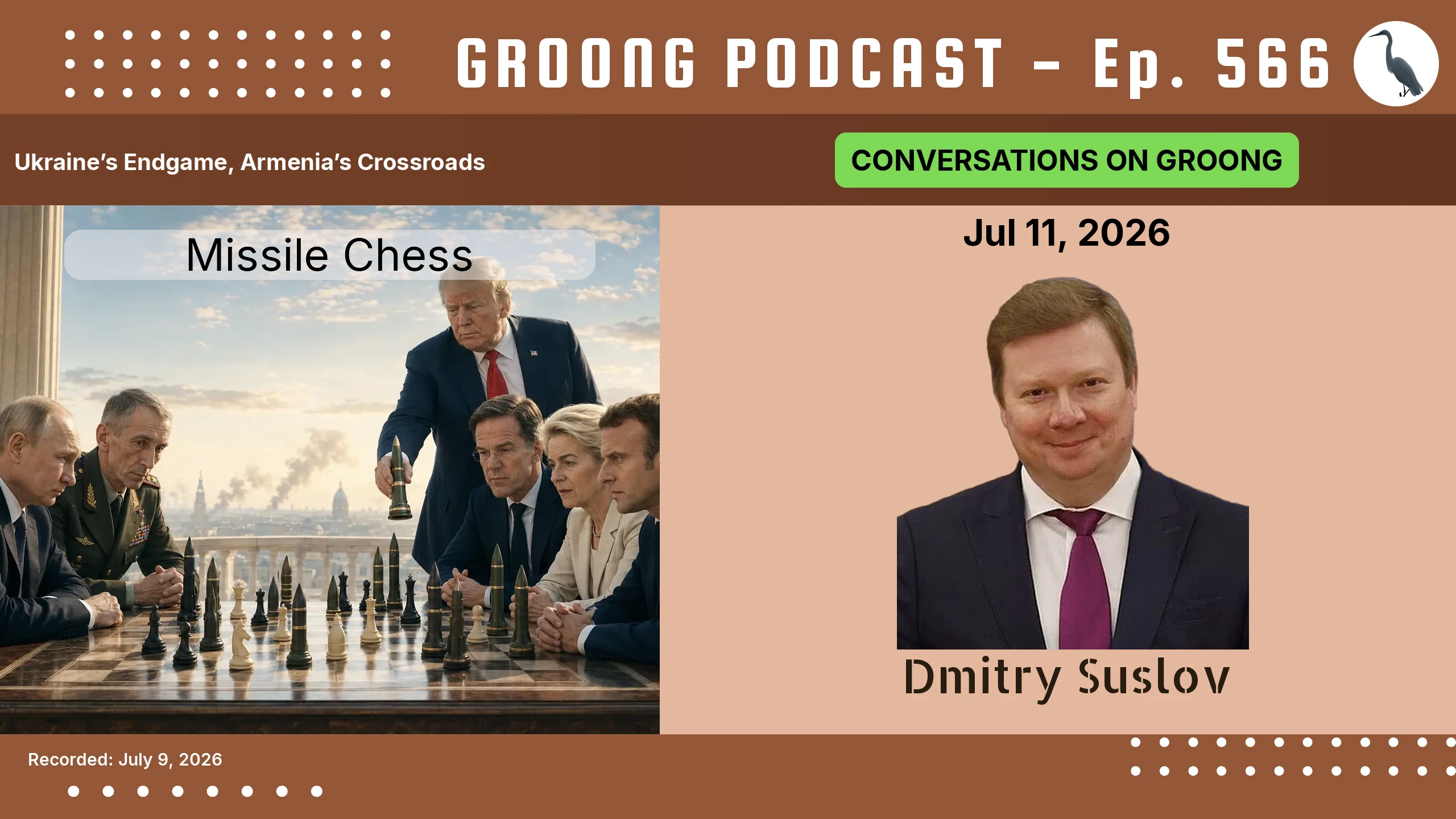
Dr. Dmitry Suslov frames Armenia’s post-election Western alignment as part of a Western operation to weaken Russian influence in the South Caucasus, drawing parallels to Georgia under Mikhail Saakashvili. He argues that Pashinyan’s pursuit of EU integration while maintaining EAEU membership represents a contradiction rooted in geopolitical weakness rather than genuine Armenian choice. Moscow views this dual approach skeptically, particularly the framing of EAEU membership as temporary rather than strategic. Suslov emphasizes that Russia is not interested in subsidizing Pashinyan’s reorientation toward the West and suggests that a national referendum would clarify Armenian preferences, allowing Russia to recalibrate its own engagement accordingly.
On the structural economic incompatibility between EU and Russian alternatives, Suslov contends that European tariff relief, grants, and credit lines cannot realistically replace Russia’s deep integration into Armenian markets, labor migration, energy supplies, and remittances. He illustrates this through Georgia’s experience: despite a deep and comprehensive free trade agreement with the EU, Georgia’s primary trade partners remain Turkey and Russia. Armenian agriculture faces the same protectionist barriers that prevented Georgian wine and cheese from accessing European markets. The geographic proximity to Russia and Turkey, combined with Europe’s distance and agricultural protectionism, makes geopolitical reorientation economically unsustainable without substantial cost to Armenian living standards.
Regarding the opposition, Suslov distinguishes between Pashinyan’s instrumental use of Armenia as a Western pawn and the Armenia-centric focus of figures like Samvel Karapetyan and Robert Kocharyan. He suggests that Karapetyan’s business-oriented approach may offer Russia a more pragmatic partnership than the nationalist Karabakh-war generation, though Russia remains committed to working with any genuinely Armenia-oriented political movement. Russia’s traditional restraint in supporting opposition movements, rooted in respect for state sovereignty, contrasts sharply with Western interference through NGOs and civil society cultivation. Suslov concedes this may be a weakness in Russian foreign policy, particularly as the international environment shifts.
Watch/Listen: Episode 566
Keywords: Pashinyan, Armenia-Azerbaijan Peace Process, Civil Contract, Eurasian Economic Union, TRIPP, Syunik, Samvel Karapetyan, Western pivot
Stay Connected
For the full, unfiltered stream of Armenia news as it happens, subscribe to the Groong Mailing List on Google Groups. Subscribers receive the complete daily news feed directly in their inbox — expect tens of emails per day covering Armenia, Artsakh, the diaspora, and the broader region.