Groong Podcast Digest — Week of June 9–15, 2026
Published June 15, 2026 5 min read See also: News Digest →- EP556: We analyze the disputed results of Armenia’s June 7, 2026 parliamentary election, examining Civil Contract’s contested majority, alleged irregularities and invalid ballots, the OSCE/ODIHR preliminary report, the last-minute exclusion of Prosperous Armenia, opposition arrests and pressure, and what a three-fifths majority could mean for Armenia’s courts, institutions, and foreign policy.
- EP557: Arthur G. Martirosyan examines Armenia’s contested 2026 Armenian Parliamentary Election, discussing whether the vote was free and fair, how state pressure and Western backing shaped the outcome, Pashinyan’s post-election crackdown against the established Opposition, and what a Civil Contract supermajority would mean for Armenia’s governance and the Armenia-Azerbaijan Peace Process.
This Week’s Podcast Episodes

Episode 556: 2026 Elections: A Mandate Under Dispute | Ep 556, June 7, 2026
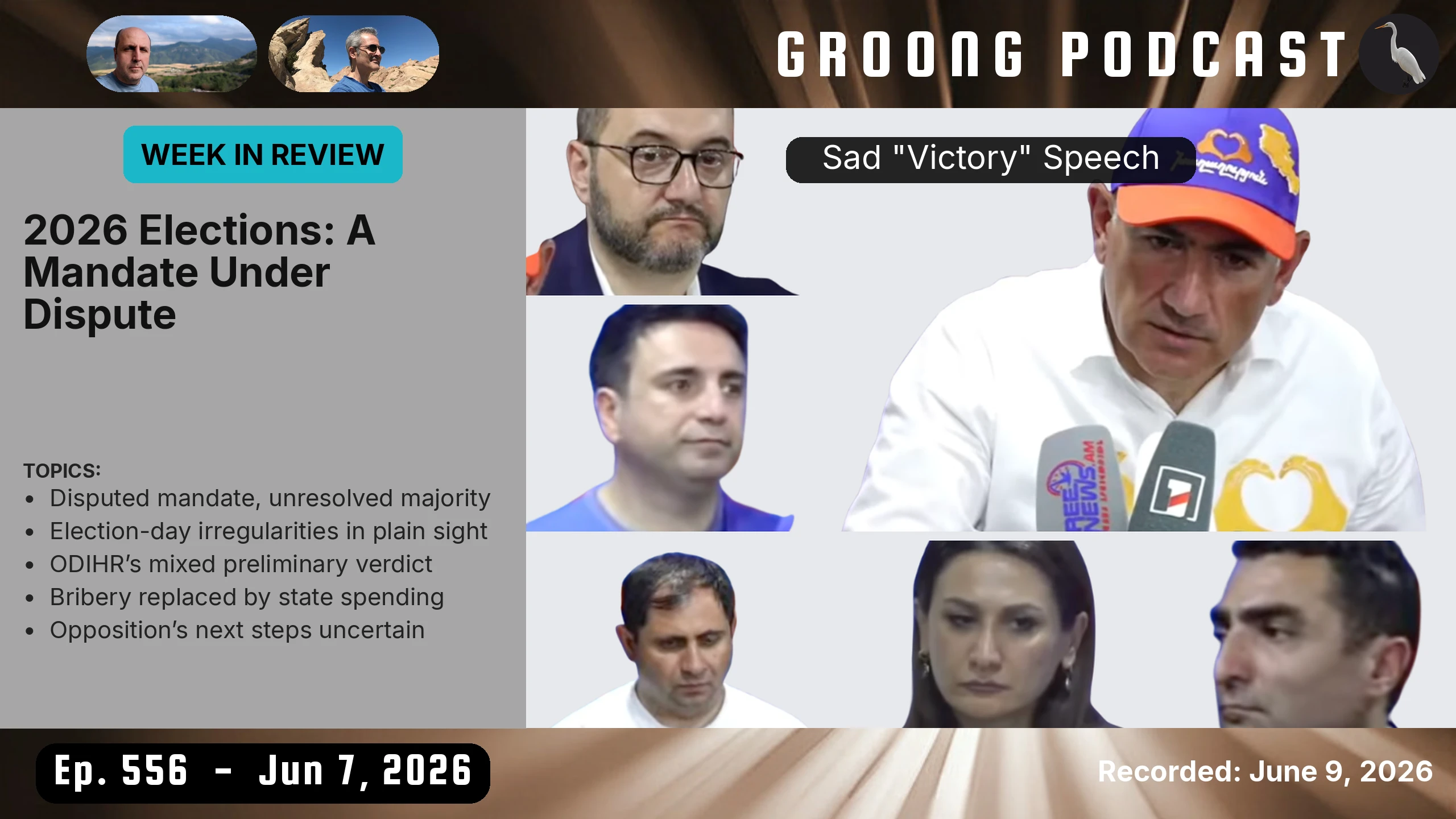
Armenia’s June 7, 2026 parliamentary election delivered a contested result that has raised serious questions about the integrity of the process. Civil Contract , led by Nikol Pashinyan , claimed victory with approximately 49.8% of the vote, while the established Opposition was fractured among three parties: Strong Armenia at 23.3%, Armenia Alliance at 9.9%, and Prosperous Armenia at the critical 4% threshold. The threshold dispute is pivotal. Throughout election night, the Central Election Commission website showed Prosperous Armenia at exactly 4%, but by morning the figure had dropped to 3.996%, excluding them from parliament by approximately 60 votes. This discrepancy occurred despite the election recording over 17,000 invalid ballots, a sharp increase from the 4,000 invalid ballots in 2021. All three opposition parties demanded recounts, though the CEC announced recounts in fewer than 100 of Armenia’s 2,005 precincts. In one documented example, a precinct reported 72 votes for Prosperous Armenia initially, then listed only one vote in the final tally, suggesting room for substantial recovery in Prosperous Armenia’s count through recounts.
The election campaign took place under deeply unequal conditions. Samvel Karapetyan , Prosperous Armenia’s leading figure, spent the entire election cycle under house arrest or pretrial detention, unable to campaign normally. Hundreds of opposition-minded people faced arrest before election day. Pashinyan’s government deployed extensive state resources for pre-election spending: pension increases, a healthcare insurance overhaul, and massive infrastructure projects added over one billion dollars in recurring expenses to influence voters. Meanwhile, the government prevented Armenian citizens abroad from voting, despite earlier Pashinyan claims that 65% of diaspora Armenians would support Civil Contract. A discrepancy of 21,635 voters emerged between the pre-election electorate figure of 2,485,581 and the post-election figure of 2,507,216, which the CEC declined to explain. Late-night military voting occurred hours after the 8 p.m. official closing time, with soldiers arriving in organized groups. Voter intimidation was widespread, with allegations that teachers and state employees were compelled to attend pro-Pashinyan rallies.
International observers offered mixed verdicts. The OSCE/ODIHR preliminary statement acknowledged a severe structural imbalance and unequal playing field but concluded these could not have affected the outcome, a claim that puzzled observers given the 50-75 vote margins at stake. The International Republican Institute declared the election free and fair. By contrast, the Russian Foreign Ministry criticized the election harshly. Western leaders, including almost all EU member states and U.S. officials like Marco Rubio, congratulated Pashinyan before detailed results were finalized or observer reports released, undercutting the credibility of international scrutiny. Conspicuously absent were congratulations from China, Vladimir Putin , or Donald Trump himself. The election outcome hinges on whether Prosperous Armenia’s recounts restore it to above 4%, which would prevent Pashinyan from securing a three-fifths majority. A three-fifths majority (60%) would allow him to appoint judges and amend constitutional laws, consolidating control over the judiciary without any chacks and pushback from the opposition. A two-thirds majority would permit unilateral constitutional amendments on specified articles. The opposition now faces a critical decision about whether to enter parliament, boycott, or organize street action.
Watch/Listen: Episode 556
Keywords: 2026 Armenian Parliamentary Election , Civil Contract, Nikol Pashinyan, Prosperous Armenia, Election irregularities, Invalid ballots, OSCE/ODIHR, Opposition arrests, Samvel Karapetyan, Established Opposition, Recounts, State spending, Three-fifths majority, Election fairness, Armenian News
Episode 557: Arthur Martirosyan - After the Anger, What Next? | Ep 557, Jun 10, 2026
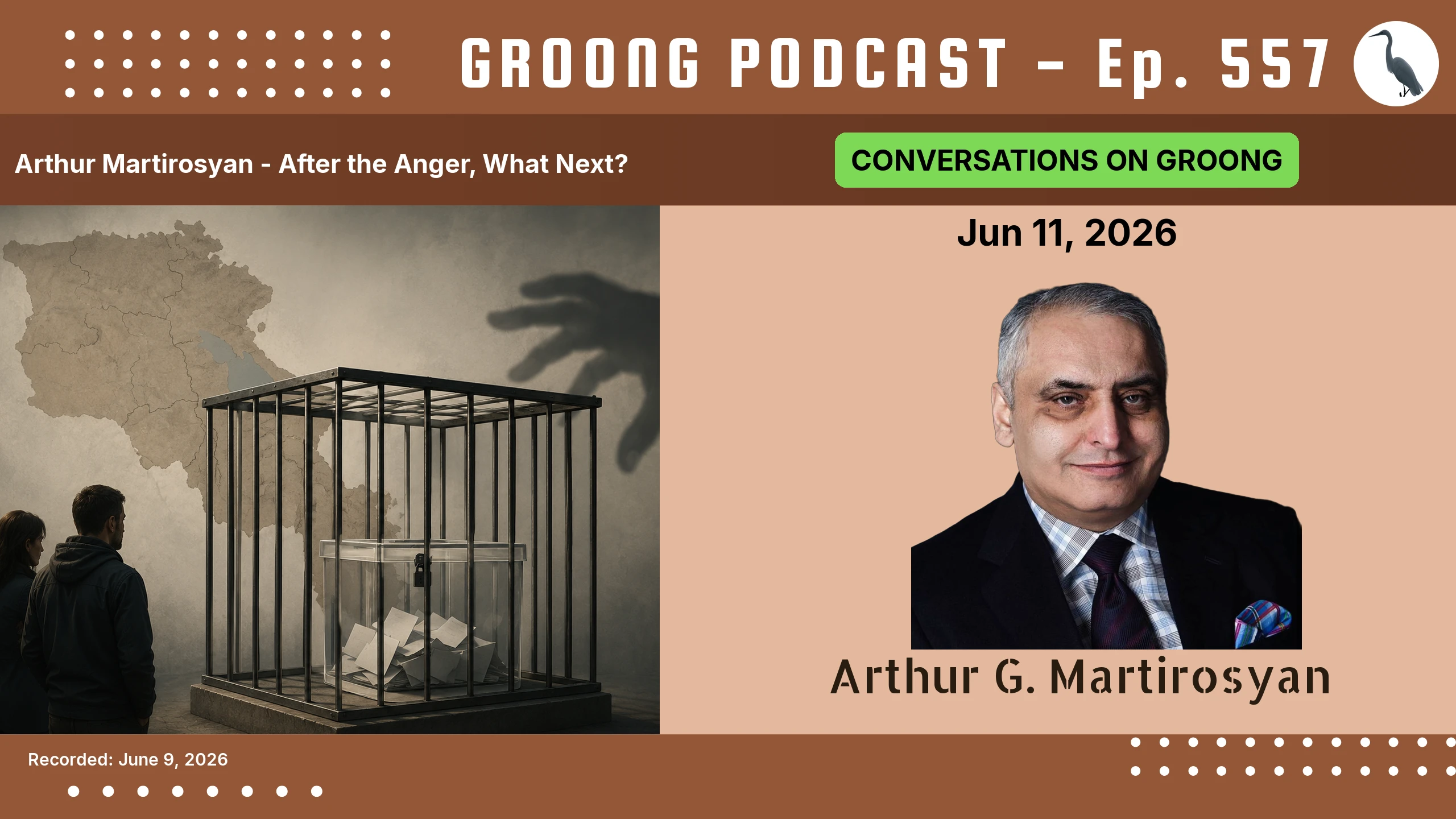
Arthur Martirosyan argues that Armenia’s June 2026 election cannot be judged by voting day alone but must include the pre-election environment, arrests of opposition figures, state media influence, and the subsequent recount and legal process. The Central Electoral Commission, chaired by Vahagn Hovakimyan and dominated by Civil Contract members, reported Civil Contract at 49.825%, Strong Armenia at 23.281%, and Armenia Alliance at 9.934%. Prosperous Armenia fell just 0.004% short of the 4% parliamentary threshold, a gap smaller than the roughly 17,000 invalid ballots reported, which is unusually high compared to prior elections. Martirosyan contends that a free and fair election must provide genuine legal recourse through independent institutions, which Armenia’s system does not offer given the ruling party’s control over the Central Electoral Commission and Constitutional Court.
Martirosyan observes that Pashinyan claimed victory when only 15% of precincts had reported results, using psychological pressure and selective precinct data to create the appearance of a landslide before votes were fully counted. As counting continued, Pashinyan’s share declined to 49%, short of the constitutional majority he publicly promised to deliver. This creates a critical problem: Pashinyan campaigned on securing a peace agreement with Azerbaijan, which demands constitutional changes. Without a constitutional majority, he cannot deliver that pledge through parliament. He will likely resort to coercing individual opposition MPs through kompromat and blackmail to gain the additional votes needed, or alternatively, pressure Prosperous Armenia to remain below the 4% threshold through continued criminal cases against its leader, Gagik Tsarukyan.
The episode raises serious concerns about post-electoral violence and state repression. Pashinyan’s victory speech contained threats to jail opponents for bribery without trial, and he referenced his Arabkir speech where he threatened to “kill” political enemies. He demanded sentences through 2031 elections for anyone accused of election bribery, behavior that violates republican governance norms. Martirosyan notes that Western actors, particularly France and the United States, have condoned this behavior because they view Pashinyan as a tool for reducing Russian influence in the South Caucasus . This Western backing gives Pashinyan a “carte blanche” to pursue authoritarian measures.
Watch/Listen: Episode 557
Keywords: 2026 Armenian Parliamentary Election, Civil Contract, Nikol Pashinyan, Armenia-Azerbaijan Peace Process, Prosperous Armenia, Constitutional majority, Established Opposition, Central Electoral Commission
Stay Connected
For the full, unfiltered stream of Armenia news as it happens, subscribe to the Groong Mailing List on Google Groups. Subscribers receive the complete daily news feed directly in their inbox — expect tens of emails per day covering Armenia, Artsakh , the diaspora, and the broader region.