Category: Armenia
Pashinyan Blames Army Deaths on His Own 'Peace' [EP584]
Posted on Monday, Sep 7, 2026 | Category: Politics, ArmeniaPashinyan reportedly explains rising army deaths by saying that with no enemy shooting, soldiers grow lax and fight over who sleeps on watch.
The Cucumber Paradox: Armenia's EU Export Sham [EP584]
Posted on Monday, Sep 7, 2026 | Category: Economy, European Union, ArmeniaThe EU says Armenia can export 6,500 tons of cucumbers tariff-free. Armenia only produces 1,100. The hosts break down the export illusion.
The NSC Chief Who Once Called Concessions 'Betrayal' [EP584]
Posted on Monday, Sep 7, 2026 | Category: Politics, Nagorno Karabakh, ArmeniaThe hosts read Arman Grigoryan’s 2012 words calling concessions to Azerbaijan a betrayal, then reveal he was born in Martuni, Artsakh.
Armenia Has No Plan B if TRIPP Fails [EP583]
Posted on Saturday, Sep 5, 2026 | Category: Geopolitics, Armenia, PoliticsSuren Sargsyan warns that Pashinyan’s government has developed no contingency plans if the U.S.-backed TRIPP project fails, leaving the country dangerously exposed.
Can Armenia Avoid Choosing Sides Between Russia and the West? [EP583]
Posted on Saturday, Sep 5, 2026 | Category: Geopolitics, ArmeniaSuren Sargsyan argues that Armenia’s best survival strategy is to avoid picking sides in the Russia-West rivalry, despite mounting pressure from both sides.
Suren Sargsyan - Central Asia, TRIPP, Iran, and Armenia in the New Great Game | Ep 583, Sep 5, 2026 [EP583]
Posted on Saturday, Sep 5, 2026 | Category: Armenia, Geopolitics | Series: cog, video
Groong Links:
Guest(s):
Topics:
- U.S. objectives in the Iran war
- Russia’s 102nd base in Armenia
- Pashinyan’s sovereignty policy contradictions
- Great-power rivalry across Central Asia
- U.S. and EU interests in TRIPP
- Armenia’s place in Eurasian competition
Episode 583 | Recorded: Sep 4, 2026
#Armenia #IranWar #TRIPP #CentralAsia #Russia #UnitedStates #Geopolitics #SouthCaucasus
Suren Sargsyan - Central Asia, TRIPP, Iran, and Armenia in the New Great Game | Ep 583, Sep 5, 2026 [EP583]
Posted on Saturday, Sep 5, 2026 | Category: Armenia, GeopoliticsGroong Links:
Guest(s):
Topics:
- U.S. objectives in the Iran war
- Russia’s 102nd base in Armenia
- Pashinyan’s sovereignty policy contradictions
- Great-power rivalry across Central Asia
- U.S. and EU interests in TRIPP
- Armenia’s place in Eurasian competition
Episode 583 | Recorded: Sep 4, 2026
#Armenia #IranWar #TRIPP #CentralAsia #Russia #UnitedStates #Geopolitics #SouthCaucasus
TRIPP: Who Developed the Corridor Deal and Why Steve Witkoff Matters [EP583]
Posted on Saturday, Sep 5, 2026 | Category: Geopolitics, Armenia, Azerbaijan, USASuren Sargsyan traces the origins of TRIPP back decades and identifies Steve Witkoff as the key architect of the current U.S. initiative.
Why Putin and Pashinyan Both Avoid Deciding on Russian Military Base [EP583]
Posted on Saturday, Sep 5, 2026 | Category: Geopolitics, Politics, Armenia, RussiaSuren Sargsyan analyzes why both Putin and Pashinyan publicly defer the decision on the 102nd Russian military base in Gyumri, avoiding responsibility while maintaining the status quo.
Why Russia Might Outsource South Caucasus Control to Iran [EP583]
Posted on Saturday, Sep 5, 2026 | Category: Geopolitics, Russia, Iran, ArmeniaSuren Sargsyan explores whether Russia might cede South Caucasus dominance to Iran as a strategic partner, given Moscow’s focus on Ukraine.
Transcript: Suren Sargsyan - Central Asia, TRIPP, Iran, and Armenia in the New Great Game | Ep 583, Sep 5, 2026 [EP583]
Posted on Saturday, Sep 5, 2026 | Category: Armenia, Geopolitics, TranscriptIn this episode of Conversations on Groong, we speak with Suren Sargsyan about the Iran War and great power competition for Armenia’s strategic position. We discuss Washington’s unclear endgame in the conflict with Iran, the future of Russia’s military presence in Armenia and CSTO membership, and competing U.S. and European interests in new east-west transit routes through Armenia and Central Asia amid broader geopolitical rivalries.
Armenian Trade with Azerbaijan: $20M Imports, $960 Exports, a One-Sided Illusion [EP582]
Posted on Wednesday, Sep 2, 2026 | Category: Economy, Politics, Armenia, AzerbaijanArmenia imports $18-20M in petroleum from Azerbaijan but exports only $960 worth of goods. Hovik reveals the fuel is actually Russian energy white-labeled through Baku, exposing the false ‘peace’ narrative.
No Criminal Charges for School Administrators Who Forced Students to Pashinyan Rallies [EP582]
Posted on Wednesday, Sep 2, 2026 | Category: Politics, Human Rights, ArmeniaSchool administrators forced underage students to attend Pashinyan campaign rallies during elections. The government declined to prosecute, issuing only administrative reprimands, a stark contrast to treatment of opposition figures.
Putin's Birthday Message to Kocharyan: A Subtle Rebuke to Pashinyan [EP582]
Posted on Wednesday, Sep 2, 2026 | Category: Politics, Geopolitics, Russia, ArmeniaPutin congratulates imprisoned Robert Kocharyan on his birthday while ignoring Pashinyan’s reelection. The hosts decode the geopolitical message behind this selective honor.
Tigranashen: The Strategic Prize Behind the 'Peace' Narrative [EP582]
Posted on Wednesday, Sep 2, 2026 | Category: Geopolitics, Politics, Armenia, AzerbaijanTigranashen, a small village controlling roads between North and South Armenia, is the next territorial concession demanded by Azerbaijan as the price of ‘peace.’ Its strategic value exposes the coercive nature of the settlement.
All Opposition Leaders Under Arrest: Pashinyan's Revenge Politics [EP581]
Posted on Saturday, Aug 29, 2026 | Category: Politics, Human Rights, ArmeniaPashinyan intensifies crackdown against opposition figures post-election. Tsarukyan, Kocharyan, and Karapetyan face arrest and asset seizures as regime consolidates power.
Arthur Martirosyan - The Fourth Republic and the Politics of Erasure | Ep 581, Aug 29, 2026 [EP581]
Posted on Saturday, Aug 29, 2026 | Category: Armenia, Politics | Series: cog, video
Groong Links:
Guest(s):
Topics:
- Pashinyan’s Revenge Against Opposition
- Kocharyan Arrested, Family Under State Pressure
- Opposition Strategy Under Repression
- Pashinyan’s Five-Year Transformation Agenda
- Government Assault on Armenian Church
- Tigranashen and Border Concessions
- TRIPP, Turan, and Central Asia
Episode 581 | Recorded: August 28, 2026
#ArmenianElections #Armenia #NikolPashinyan #CivilContract #StrongArmenia #ArmenianOpposition
Arthur Martirosyan - The Fourth Republic and the Politics of Erasure | Ep 581, Aug 29, 2026 [EP581]
Posted on Saturday, Aug 29, 2026 | Category: Armenia, PoliticsGroong Links:
Guest(s):
Topics:
- Pashinyan’s Revenge Against Opposition
- Kocharyan Arrested, Family Under State Pressure
- Opposition Strategy Under Repression
- Pashinyan’s Five-Year Transformation Agenda
- Government Assault on Armenian Church
- Tigranashen and Border Concessions
- TRIPP, Turan, and Central Asia
Episode 581 | Recorded: August 28, 2026
#ArmenianElections #Armenia #NikolPashinyan #CivilContract #StrongArmenia #ArmenianOpposition
The AI Factory and Energy Trap: How Armenia Becomes Dependent on Azerbaijan [EP581]
Posted on Saturday, Aug 29, 2026 | Category: Economy, Technology, ArmeniaPashinyan plans 300 MW AI facility but would shut Metsamor nuclear plant, losing net power while creating dependency on Azerbaijani electricity imports.
The Fourth Republic: Pashinyan's Plan to Kill Armenian Identity [EP581]
Posted on Saturday, Aug 29, 2026 | Category: Politics, ArmeniaPashinyan frames the Third Republic as failed and proposes a Fourth Republic based on rejecting Artsakh claims and Armenian diaspora ties. Expert analysis reveals this mirrors Atatürk’s identity transformation strategy.
Tigranashen: The Strategic Enclave Pashinyan Plans to Give Away [EP581]
Posted on Saturday, Aug 29, 2026 | Category: Geopolitics, Politics, ArmeniaPashinyan explicitly stated Armenia comprises 29,743 sq km, excluding Tigranashen. Expert analyzes this strategic territory’s importance and why Azerbaijan uses Jermuk occupation as leverage.
Why Pashinyan Attacks the Armenian Church [EP581]
Posted on Saturday, Aug 29, 2026 | Category: Politics, Armenian Church, ArmeniaPashinyan intensifies attacks on Armenian Apostolic Church after Catholicos speaks about Artsakh rights. Expert analysis reveals this targets the church’s diaspora ties and identity independence.
Ambassador Jack Matlock - Did the West Fumble the Post-Cold War Peace? | Ep 580, Aug 28, 2026 [EP580]
Posted on Friday, Aug 28, 2026 | Category: Armenia, US, Russia, Geopolitics, History, Soviet Armenia, USSR | Series: cog, video
Groong Links:
Guest(s):
Topics:
- Recollections from Soviet South Caucasus
- Why the Soviet Union collapsed
- How the Cold War ended
- Reagan and Gorbachev’s diplomacy
- America’s post-Cold War triumphalism
- NATO expansion and Russian backlash
- Great-power rivalry in the Caucasus
- Armenia’s geopolitical choices today
Episode 580 | Recorded: Aug 27, 2026
#JackMatlock #ColdWar #SovietUnion #Reagan #Gorbachev #NATO #Russia #SouthCaucasus #Armenia
Ambassador Jack Matlock - Did the West Fumble the Post-Cold War Peace? | Ep 580, Aug 28, 2026 [EP580]
Posted on Friday, Aug 28, 2026 | Category: Armenia, US, Russia, Geopolitics, History, Soviet Armenia, USSRGroong Links:
Guest(s):
Topics:
- Recollections from Soviet South Caucasus
- Why the Soviet Union collapsed
- How the Cold War ended
- Reagan and Gorbachev’s diplomacy
- America’s post-Cold War triumphalism
- NATO expansion and Russian backlash
- Great-power rivalry in the Caucasus
- Armenia’s geopolitical choices today
Episode 580 | Recorded: Aug 27, 2026
#JackMatlock #ColdWar #SovietUnion #Reagan #Gorbachev #NATO #Russia #SouthCaucasus #Armenia
Armenia Must Avoid Zero-Sum Geopolitics and Preserve Regional Relations [EP580]
Posted on Friday, Aug 28, 2026 | Category: Geopolitics, ArmeniaMatlock advises Armenia to avoid choosing sides in great-power competition and instead prioritize peaceful relations with neighbors and preservation of cultural identity.
Transcript: Arthur Martirosyan - The Fourth Republic and the Politics of Erasure | Ep 581, Aug 29, 2026 [EP581]
Posted on Saturday, Aug 29, 2026 | Category: Armenia, Politics, TranscriptIn this episode of Conversations on Groong, we speak with Arthur G. Martirosyan about Armenia’s post-election political crisis and Pashinyan’s governance agenda. We discuss the arrest of opposition leaders including Robert Kocharyan, attacks on the Armenian Church, border concessions including Tigranashen, the TRIPP corridor, and how the Established Opposition is strategizing under state repression in the Fourth Republic.
Transcript: Ambassador Jack Matlock - Did the West Fumble the Post-Cold War Peace? | Ep 580, Aug 28, 2026 [EP580]
Posted on Friday, Aug 28, 2026 | Category: Armenia, US, Russia, Geopolitics, History, Soviet Armenia, USSR, TranscriptIn this episode of Conversations on Groong, we speak with Ambassador Jack Matlock, the last US Ambassador to the Soviet Union, about whether the West missed a historic opportunity to integrate Russia into Western security architecture after the Cold War. We discuss the internal collapse of the Soviet Union, Reagan-Gorbachev diplomacy, NATO expansion and Russian backlash, and how Cold War-era decisions shape Armenia’s geopolitical choices today, including Matlock’s firsthand observations of Soviet Armenia during glasnost and the Nagorno Karabakh movement.
Armenia's Nuclear Power Plant: Turkey & Azerbaijan's Prize, Security Guarantee Lost [EP579]
Posted on Saturday, Aug 22, 2026 | Category: Politics, Armenia, Azerbaijan, TurkeyAmbassador explains why Armenia’s nuclear power plant is not just an energy asset but a critical strategic deterrent against Turkish and Azerbaijani aggression, and why closing it would be catastrophic.
Dziunik Aghajanian - Armenia Between Iran, Russia & the New Middle East Order | Ep 579, Aug 22, 2026 [EP579]
Posted on Saturday, Aug 22, 2026 | Category: Armenia, Politics, Geopolitics | Series: cog, video
Groong Links:
Guest(s):
Topics:
- Significance of the Mecca joint defense pact
- Iran warns Armenia over TRIPP
- Aliyev advances plans through Syunik
- Armenia faces growing energy dependence
- Russia sets deadlines for Yerevan
- Opposition tests its parliamentary strategy
Episode 579 | Recorded: August 18, 2026
#Armenia #SouthCaucasus #Mecca #TRIPP #Iran #Russia #Azerbaijan #EAEU #CSTO
Dziunik Aghajanian - Armenia Between Iran, Russia & the New Middle East Order | Ep 579, Aug 22, 2026 [EP579]
Posted on Saturday, Aug 22, 2026 | Category: Armenia, Politics, GeopoliticsGroong Links:
Guest(s):
Topics:
- Significance of the Mecca joint defense pact
- Iran warns Armenia over TRIPP
- Aliyev advances plans through Syunik
- Armenia faces growing energy dependence
- Russia sets deadlines for Yerevan
- Opposition tests its parliamentary strategy
Episode 579 | Recorded: August 18, 2026
#Armenia #SouthCaucasus #Mecca #TRIPP #Iran #Russia #Azerbaijan #EAEU #CSTO
Russia's December Ultimatum: Armenia Must Choose EAEU or EU, Not Both [EP579]
Posted on Saturday, Aug 22, 2026 | Category: Geopolitics, Armenia, Russia, European UnionRussia ultimatum: Armenia must decide by December 2026 whether to hold EU membership referendum or face EAEU suspension. Ambassador explains why both paths lead to economic devastation.
The Opposition's Limited Options: How Parliament Can Block Pashinyan Without Votes to Remove Him [EP579]
Posted on Saturday, Aug 22, 2026 | Category: Politics, ArmeniaAmbassador analyzes how Armenia’s opposition can block TRIPP ratification and constitutional changes even without enough votes to remove Pashinyan, and why this leverage will define coming months.
TRIPP is a Ground Operation Against Iran, Ambassador Says [EP579]
Posted on Saturday, Aug 22, 2026 | Category: Geopolitics, Iran, Armenia, PoliticsFormer Ambassador Aghajanian argues TRIPP is designed as part of a U.S.-led ground operation strategy against Iran, putting Armenia in an extremely vulnerable position.
Transcript: Dziunik Aghajanian - Armenia Between Iran, Russia & the New Middle East Order | Ep 579, Aug 22, 2026 [EP579]
Posted on Saturday, Aug 22, 2026 | Category: Armenia, Politics, Geopolitics, TranscriptIn this episode of Conversations on Groong, we speak with Dziunik Aghajanian about Armenia’s precarious position between Iran, Russia, and emerging Middle East power shifts. We discuss the Mecca joint defense pact signed by Turkey, Pakistan, and Saudi Arabia, Iran’s warnings over TRIPP, Ilham Aliyev’s militarization plans in Nakhijevan, Armenia’s growing energy dependence, Russian deadlines for Yerevan, and how the Established Opposition is testing its parliamentary strategy ahead of the 2026 Armenian Parliamentary Election.
Aliyev's TRIPP Play: Azerbaijani Teams Scoping Syunik, Threatening Armenian Nuclear Power [EP578]
Posted on Wednesday, Aug 19, 2026 | Category: Azerbaijan, Geopolitics, ArmeniaAliyev revealed that Azerbaijani technical teams have surveyed transmission line routes through Syunik for TRIPP, and he is now signaling that Armenia’s nuclear power plant could become a future demand.
Aliyev’s TRIPP, Russia’s Deadline, Iran’s Warning | Ep 578, Aug 16, 2026 [EP578]
Posted on Wednesday, Aug 19, 2026 | Category: Armenia, Politics | Series: wir, video
Groong Links:
Topics:
- US-Iran War Risks Return
- Armenia Faces Regional Spillover Risks
- Russia Pressures Armenia Over Western Pivot
- TRIPP Deepens Security and Energy Risks
- Domestic Politics Grow More Confrontational
- Arrests and Prosecutions Fuel Repression Claims
Episode 578 | Recorded: August 17, 2026
#Armenia #IranWar #TRIPP #Syunik #SouthCaucasus #RussiaArmenia #Nakhichevan #ArmenianPolitics
Aliyev’s TRIPP, Russia’s Deadline, Iran’s Warning | Ep 578, Aug 16, 2026 [EP578]
Posted on Wednesday, Aug 19, 2026 | Category: Armenia, PoliticsGroong Links:
Topics:
- US-Iran War Risks Return
- Armenia Faces Regional Spillover Risks
- Russia Pressures Armenia Over Western Pivot
- TRIPP Deepens Security and Energy Risks
- Domestic Politics Grow More Confrontational
- Arrests and Prosecutions Fuel Repression Claims
Episode 578 | Recorded: August 17, 2026
#Armenia #IranWar #TRIPP #Syunik #SouthCaucasus #RussiaArmenia #Nakhichevan #ArmenianPolitics
Iran's Warning to Armenia: TRIPP Could Mean War [EP578]
Posted on Wednesday, Aug 19, 2026 | Category: Iran, Geopolitics, ArmeniaA senior Iranian military advisor warns that Armenia will face the same treatment as US bases in the Middle East if TRIPP becomes a problem for Iran.
Nakhichevan Militarization: Target is Iran, Not Just Armenia [EP578]
Posted on Wednesday, Aug 19, 2026 | Category: Geopolitics, Iran, Azerbaijan, ArmeniaExperts argue Nakhichevan’s extreme militarization under Aliyev is primarily aimed at Iran, not Armenia, and reflects preparations for potential future conflict.
Political Prisoners in Armenia: Thousands Hidden in Plain Sight [EP578]
Posted on Wednesday, Aug 19, 2026 | Category: Human Rights, Politics, ArmeniaArmenia is largely absent from international political prisoner tracking databases despite widespread detention, house arrest, and administrative supervision of opposition figures.
Russia's Ultimatum: Armenia Must Choose EAEU or Lose Everything [EP578]
Posted on Wednesday, Aug 19, 2026 | Category: Russia, Economy, Geopolitics, ArmeniaRussia has given Armenia until December 2026 to hold a referendum on EU membership or face suspension from the Eurasian Economic Union and potential sanctions.
Strong Armenia's Unwritten Deal with Civil Contract: What's the Real Cost? [EP578]
Posted on Wednesday, Aug 19, 2026 | Category: Politics, ArmeniaAn apparent unwritten ethical agreement between Civil Contract and the opposition to maintain parliamentary civility masks a larger question: is Strong Armenia trading political leverage for immunity from prosecution?
Transcript: Aliyev’s TRIPP, Russia’s Deadline, Iran’s Warning | Ep 578, Aug 16, 2026 [EP578]
Posted on Wednesday, Aug 19, 2026 | Category: Armenia, Politics, TranscriptIn this episode of Groong Week in Review, Hovik and Asbed discuss Armenia’s precarious position amid escalating Iran War risks, Russia’s December ultimatum on the Eurasian Economic Union, and deepening security threats from TRIPP. We examine how a broader US-Iran conflict could devastate Armenia through refugee flows and logistics collapse, why Pashinyan’s EAEU defiance has triggered Russian pressure, and what frozen CSTO membership actually means for Armenian security.
Armenia Could Be a Data Bridge Connecting Its Neighbors-If It Chooses Peace [EP577]
Posted on Sunday, Aug 16, 2026 | Category: Geopolitics, Technology, ArmeniaCampbell proposes that Armenia’s landlocked position and fiber connectivity could make it a regional data hub, turning potential vulnerability into strategic advantage through trade and interconnection.
Armenia's Real Competitive Edge Isn't the Data Center-It's the Ecosystem Around It [EP577]
Posted on Sunday, Aug 16, 2026 | Category: Technology, Economy, ArmeniaCampbell argues that Armenia’s real advantage from Firebird lies not in direct compute access but in the startup ecosystem, workforce development, and diaspora reconnection it catalyzes.
Data Centers Don't Need Military Weapons to Create Value [EP577]
Posted on Sunday, Aug 16, 2026 | Category: Technology, Geopolitics, ArmeniaCampbell explains why Armenia’s data center need not violate export controls to gain strategic value, focusing on building institutional knowledge and sovereignty over the long term.
Invest in People, Not Just Machines-That's How You Build Real Technological Sovereignty [EP577]
Posted on Sunday, Aug 16, 2026 | Category: Technology, Economy, ArmeniaCampbell advises Armenia to treat Firebird as a human-capital investment, not merely a data center project, focusing on workforce development and talent retention.
Richard Campbell - The AI Infrastructure Race and Armenia’s High-Stakes Bet | Ep 577, Aug 16, 2026 [EP577]
Posted on Sunday, Aug 16, 2026 | Category: Armenia, Geopolitics, Technology | Series: cog, video
Groong Links:
Guest(s):
Topics:
- Global AI race and hype
- Economics of AI data centers
- Energy limits and infrastructure demands
- Armenia’s Firebird AI project
- Jobs, innovation, and local benefits
- AI sovereignty and export controls
- Military value and security risks
Episode 577 | Recorded: August 11, 2026
#ArtificialIntelligence #Armenia #FirebirdAI #AIDataCenters #SovereignAI #EnergySecurity #TechGeopolitics #NationalSecurity
Richard Campbell - The AI Infrastructure Race and Armenia’s High-Stakes Bet | Ep 577, Aug 16, 2026 [EP577]
Posted on Sunday, Aug 16, 2026 | Category: Armenia, Geopolitics, TechnologyGroong Links:
Guest(s):
Topics:
- Global AI race and hype
- Economics of AI data centers
- Energy limits and infrastructure demands
- Armenia’s Firebird AI project
- Jobs, innovation, and local benefits
- AI sovereignty and export controls
- Military value and security risks
Episode 577 | Recorded: August 11, 2026
#ArtificialIntelligence #Armenia #FirebirdAI #AIDataCenters #SovereignAI #EnergySecurity #TechGeopolitics #NationalSecurity
Transcript: Richard Campbell - The AI Infrastructure Race and Armenia’s High-Stakes Bet | Ep 577, Aug 16, 2026 [EP577]
Posted on Sunday, Aug 16, 2026 | Category: Armenia, Geopolitics, Technology, TranscriptIn this episode of Conversations on Groong, we speak with Richard Campbell about artificial intelligence infrastructure and Armenia’s Firebird project. We discuss the global AI race, the economics and energy demands of data centers, whether current AI valuations align with physical and economic realities, and what sovereign AI capacity means for Armenia’s strategic positioning.
Aryeh Lightstone: The Rabbi Behind TRIPP and U.S. Armenian Policy [EP576]
Posted on Wednesday, Aug 12, 2026 | Category: Geopolitics, USA, Israel, Politics, ArmeniaHovik profiles Aryeh Lightstone, the Orthodox rabbi and Abraham Accords architect now advising on TRIPP implementation in Armenia.
Corruption and Favoritism: Government Officials' Wives Drawing Massive Salaries Through Rigged Job Contests [EP576]
Posted on Wednesday, Aug 12, 2026 | Category: Politics, Human Rights, ArmeniaHovik and Asbed detail how government officials’ wives are drawing astronomical salaries through rigged job contests while state enterprises decline.
How Long Can Armenia Sit on Two Chairs? EAEU vs. EU Balancing Act Collapsing [EP576]
Posted on Wednesday, Aug 12, 2026 | Category: Geopolitics, Economy, Russia, European Union, ArmeniaAsbed and Hovik discuss Armenia’s impossible balancing act between EAEU membership and EU integration, and the economic and political consequences of Pashinyan’s refusal to choose.
Judge Recuses Himself from Catholicos Case: Admission of Shameful Lawsuit? [EP576]
Posted on Wednesday, Aug 12, 2026 | Category: Politics, Human Rights, Armenian Church, ArmeniaThe judge in the case against Catholicos Garegin II recuses himself citing a dubious conflict of interest, likely recognizing the case’s lack of legal merit.
Pashinyan's Attack on the Armenian Church: Dragging the Catholicos to Court [EP576]
Posted on Wednesday, Aug 12, 2026 | Category: Armenian Church, Politics, Human Rights, ArmeniaHovik condemns Pashinyan’s legal assault on Catholicos Garegin II, calling it an affront to Armenians worldwide and comparing it to past governance failures.
Pashinyan’s Church War, the Russia-EU Choice, and TRIPP | Ep 576, Aug 9, 2026 [EP576]
Posted on Wednesday, Aug 12, 2026 | Category: Armenia, Politics | Series: wir, video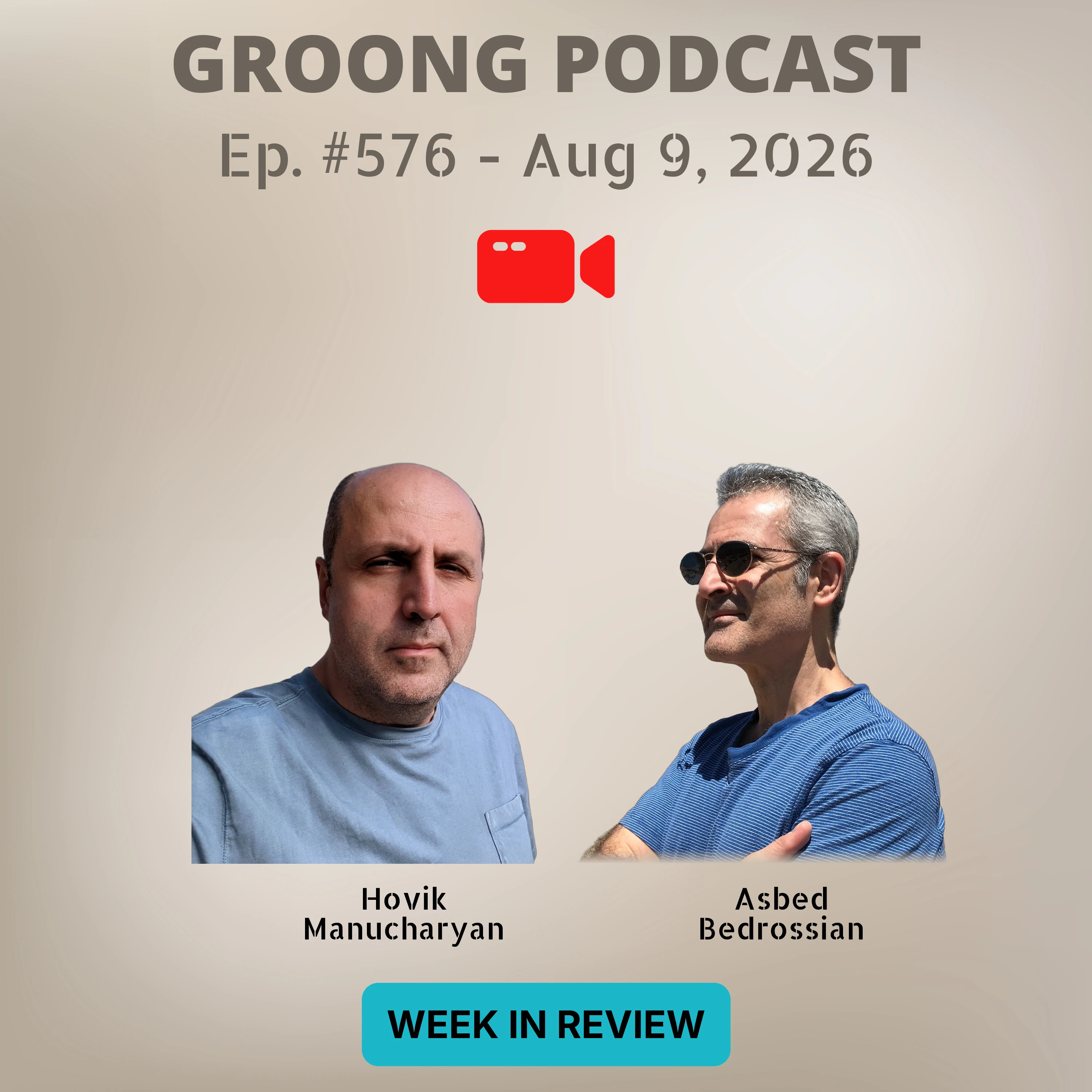
Groong Links:
Topics:
- Turkey-Pakistan-Saudi Alliance
- Iran War Update
- Catholicos on Trial
- EAEU Meeting in Cholpon-Ata
- Corruption & Persecutions
Episode 576 | Recorded: August 10, 2026
#Armenia #ArmenianPolitics #ArmenianChurch #GareginII #TRIPP #ArmeniaRussia #SouthCaucasus #Groong
Pashinyan’s Church War, the Russia-EU Choice, and TRIPP | Ep 576, Aug 9, 2026 [EP576]
Posted on Wednesday, Aug 12, 2026 | Category: Armenia, PoliticsGroong Links:
Topics:
- Turkey-Pakistan-Saudi Alliance
- Iran War Update
- Catholicos on Trial
- EAEU Meeting in Cholpon-Ata
- Corruption & Persecutions
Episode 576 | Recorded: August 10, 2026
#Armenia #ArmenianPolitics #ArmenianChurch #GareginII #TRIPP #ArmeniaRussia #SouthCaucasus #Groong
Transcript: Pashinyan’s Church War, the Russia-EU Choice, and TRIPP | Ep 576, Aug 9, 2026 [EP576]
Posted on Wednesday, Aug 12, 2026 | Category: Armenia, Politics, TranscriptIn this week’s Groong episode, the hosts examine Pashinyan’s confrontation with the Armenian Church, Armenia’s strategic positioning between Russia and the EU, and the geopolitical implications of TRIPP. We discuss the trial of Catholicos Garegin II, Iran’s military leadership realignment, the Turkey-Pakistan-Saudi Arabia defense pact, and how these shifts reshape Armenia’s role in the South Caucasus.
Appeasement of Aggressors Doesn't Stop War, Hrant Mikaelian Says [EP575]
Posted on Saturday, Aug 8, 2026 | Category: Geopolitics, Politics, ArmeniaHrant Mikaelian argues that appeasement of aggressors, citing the pre-WWII Chamberlain-Daladier example, historically fails to prevent war and invites further aggression.
Hrant Mikaelian - Armenia’s Western Pivot: Strategy or Wishful Thinking? | Ep 575, Aug 8, 2026 [EP575]
Posted on Saturday, Aug 8, 2026 | Category: Armenia, Politics | Series: cog, video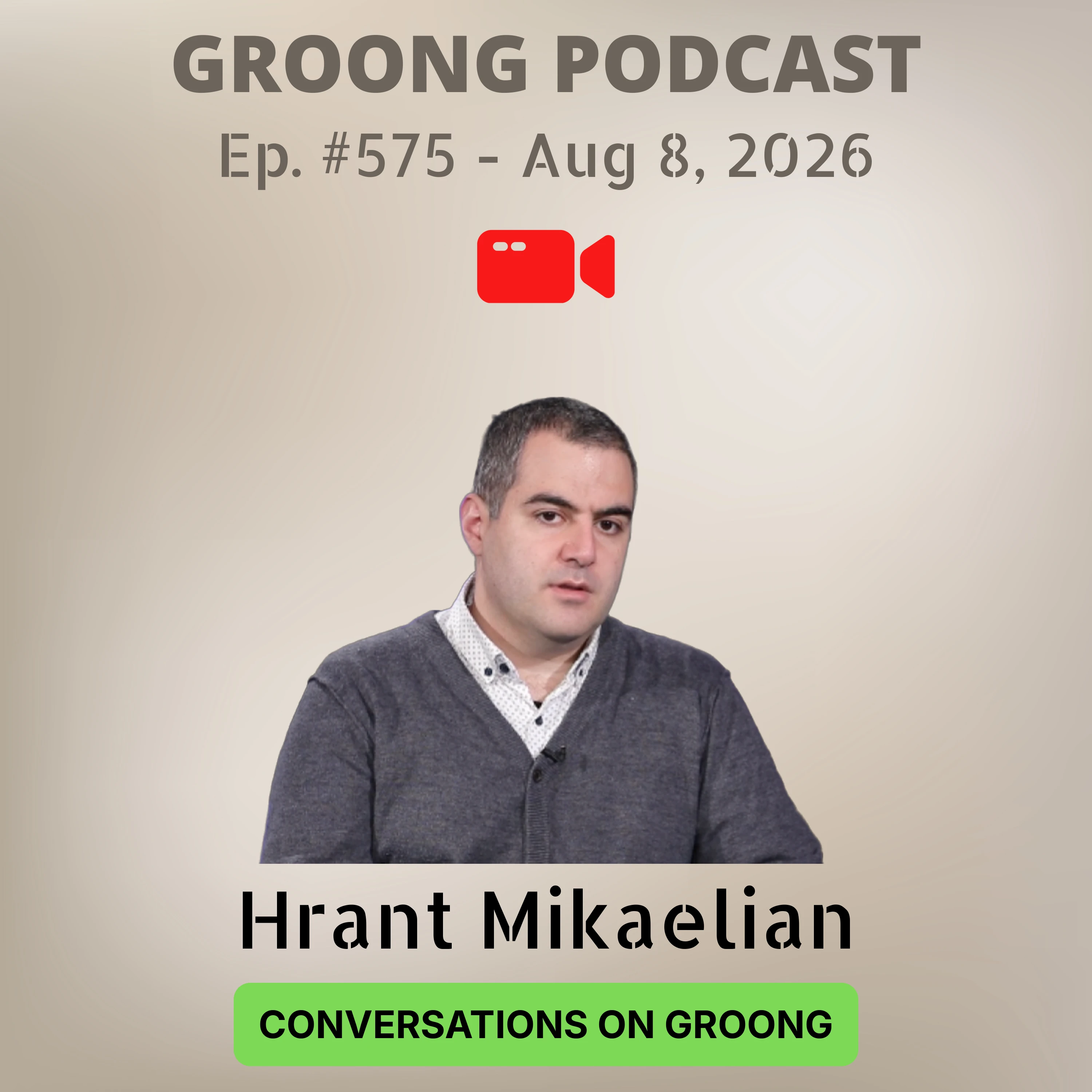
Groong Links:
Guest(s):
Topics:
- New Armenian Parliament
- Armenia-Russia-EAEU Relations
- EUropean Aid for Armenia
- Church & National Identity
- Armenian Economy
Episode 575 | Recorded: August 4, 2026
#Armenia #Russia #EuropeanUnion #ArmenianPolitics #ArmeniaRussia #ArmenianChurch #SouthCaucasus #Geopolitics