Latest Blog Post
Transcript: Arthur Martirosyan - Armenia at a Crossroads: Railways, Reactors, and Security | Ep 594, Oct 17, 2026
Posted on Saturday, Oct 17, 2026 | Category: Armenia, Politics, Geopolitics, Transcript | Armenian News, Nagorno Karabakh, Zangezur Corridor, Eurasian Economic Union, Trump Route for International Peace and Prosperity, Arthur G. Martirosyan, COP29, Alma Ata, Amulsar, Ani Avetisyan, ANPP, Armenia, Armenian Constitution, Armenian Economy, Armenian nuclear power, Azerbaijan, Azerbaijani Infiltration, Azeri Infiltration, Baku, BioDiversity, Biological Diversity, border security failures, Constitutional Referendum, COP17, Enclaves, Environmentalist Protests, Exclaves, government transparency, Iran, Kashi, Lena Nazaryan, Nuclear Power Plant, Oleg Belozerov, Pan Turan, Pashinyan accountability, Popular Referendum, Rosatom, Russia, Russian Railway, Russian Railways concession, RZhD arbitration, Shaki shooting incident, Small Modular Reactor, SMR, SMR technology, Turan, Yerevan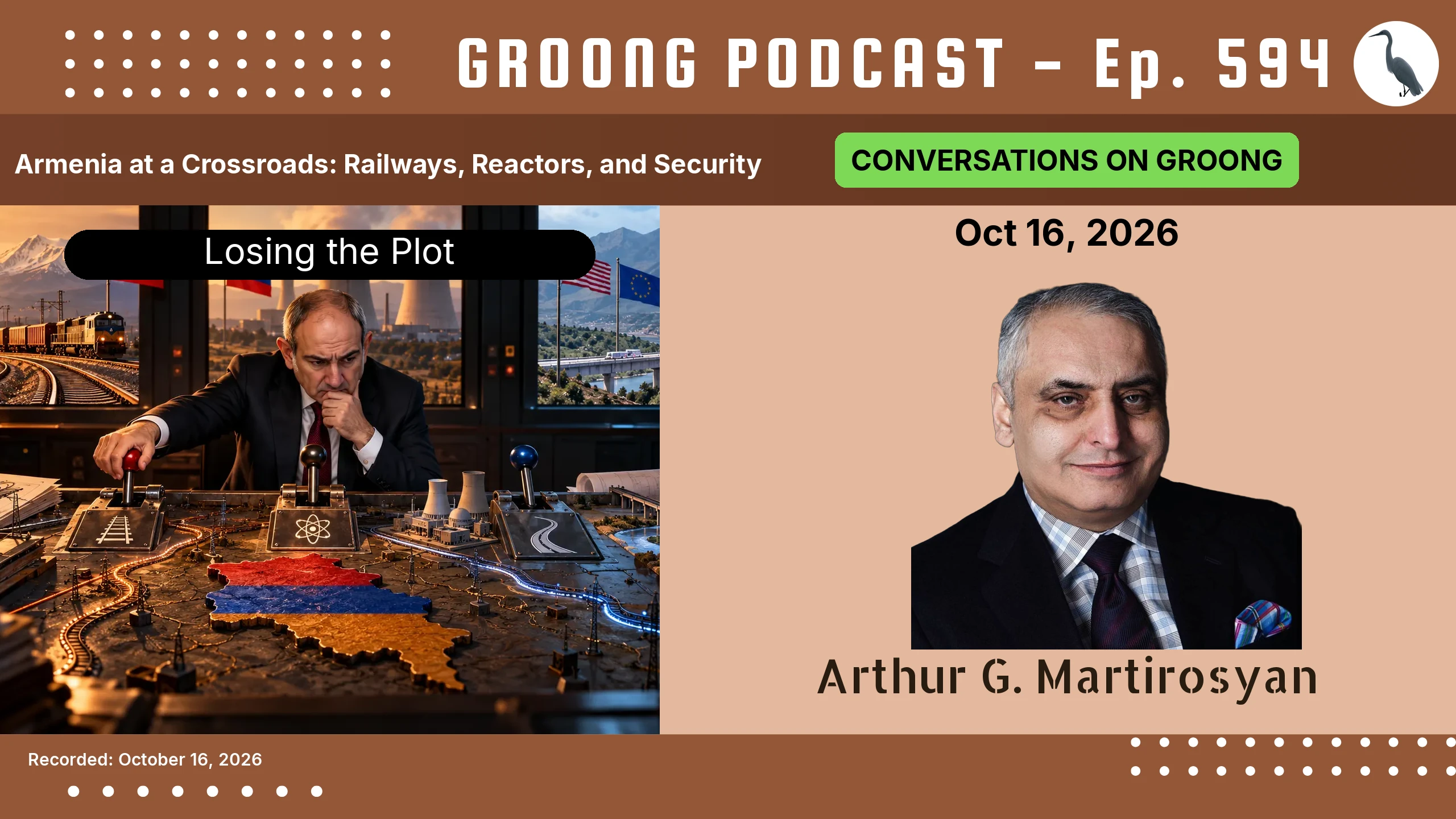
In this episode of Conversations on Groong, we speak with Arthur G. Martirosyan about Armenia at a crossroads in politics and security. We discuss the Shaki infiltration incident and government accountability, Pashinyan’s standoff with Russian Railways over the rail concession, nuclear energy options including Western SMRs versus Russian reactors, TRIPP’s implications for Armenian geopolitics, and environmental destruction at COP17.
Transcript: Rubio Visit, New MPG and IRI Polls, Hidden Votes and Why Are You Alive? | Ep 550, May 24, 2026
Posted on Wednesday, May 27, 2026 | Category: Armenia, Politics, Poll, Armenian Church, Nagorno Karabakh, Armenian Genocide, Azerbaijan, Russia, China, Transcript | Armenian News, Armenian Church, Nagorno Karabakh, Nikol Pashinyan, Ilham Aliyev, Armenia-Azerbaijan Peace Process, Civil Contract, 2026 Armenian Parliamentary Election, Zangezur Corridor, Armenian Genocide, Armenian Parliamentary Elections, Vladimir Putin, Samvel Karapetyan, Robert Kocharyan, Catholicos, Trump Route for International Peace and Prosperity, Hayastan Dashinq, Ararat Mirzoyan, Strong Armenia, Armenian Elections, Emmanuel Macron, Against All Party, JD Vance, Nakhijevan, Prosperous Armenia, Gagik Tsarukyan, MPG Poll, Bright Armenia, Garegin II, Wings of Unity, Narek Karapetyan, IRI Armenia Poll, Western Azerbaijan, EVN Report Poll, Armenia Polls, Marco Rubio Armenia Visit, Armenian Opposition, Andranik Tevanyan, Arthur Osipyan, Election Fraud Armenia, Armenia Foreign Policy, Armenia, Azerbaijan, Peace, Russia, United States, Yerevan, China, Europe, Donald Trump, TRIPP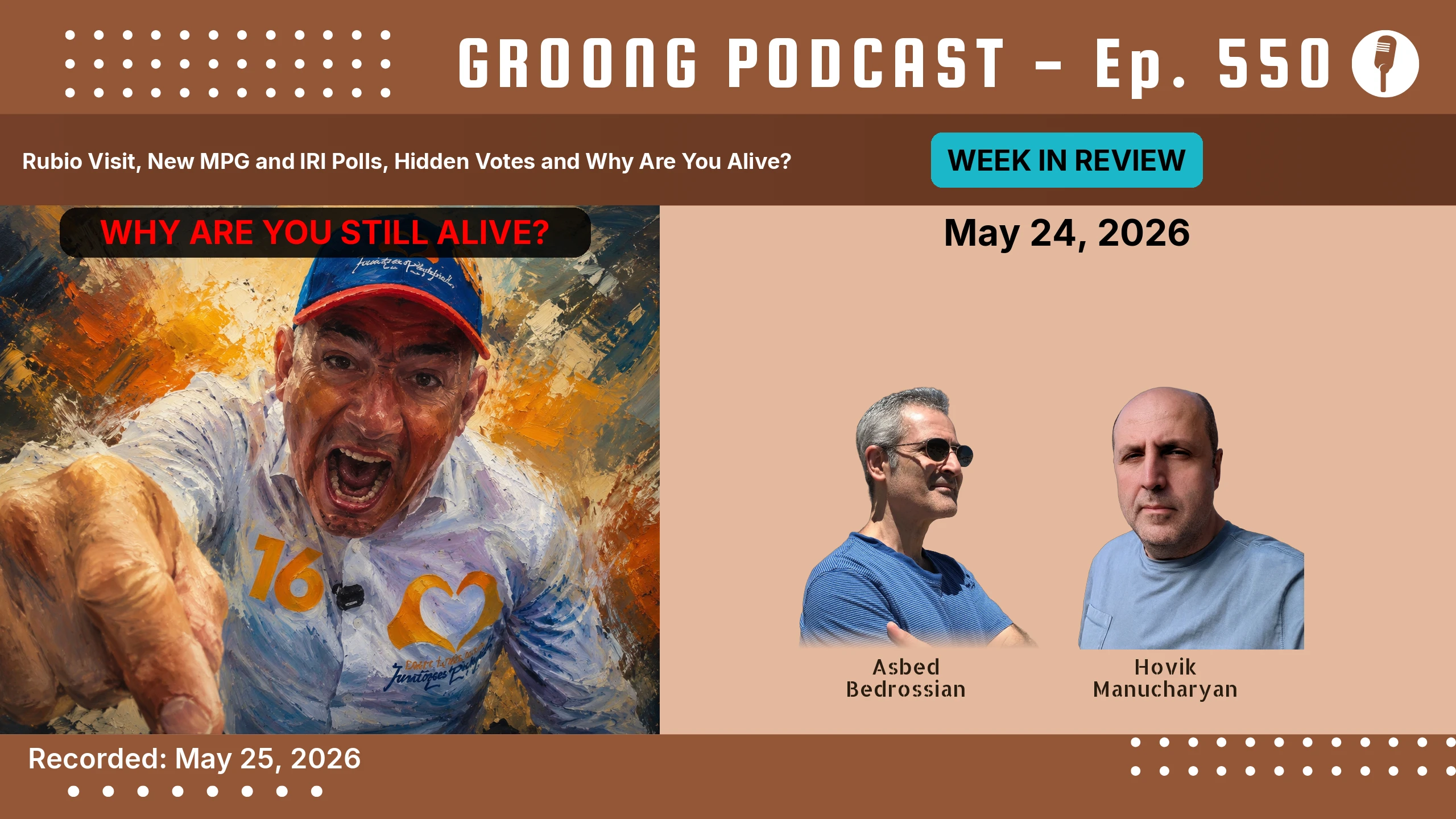
This Week in Review examines the tightening political climate in Armenia ahead of the June 2026 parliamentary elections. Asbed and Hovik discuss Marco Rubio’s sudden Armenia visit, new polling from IRI, MPG, and CAEAC, and what the wide gaps in voter disclosure may reveal about hidden opposition support. The episode also covers TRIPP, “Western Azerbaijan” rhetoric, public trust in the Armenian Apostolic Church, and the growing use of arrests, threats, and state pressure against opposition figures. The discussion centers on Pashinyan’s escalating campaign rhetoric, including his “Why are you alive?” outburst, and what it signals about the stakes of the coming election.
Transcript: Edgar Elbakyan - The Battle for Armenia’s Political Future | Ep 549, May 24, 2026
Posted on Sunday, May 24, 2026 | Category: Armenia, Politics, Armenian Church, Nagorno Karabakh, Azerbaijan, Transcript | Armenian Church, Nagorno Karabakh, Nikol Pashinyan, Ilham Aliyev, Recep Tayyip Erdogan, Civil Contract, Zangezur Corridor, Armenian Parliamentary Elections, Samvel Karapetyan, Robert Kocharyan, Catholicos, Trump Route for International Peace and Prosperity, Hayastan Dashinq, Strong Armenia, Armenian Elections, Prosperous Armenia, Arman Tatoyan, Wings of Unity, Armenian National Congress, IRI Armenia Poll, EVN Report Poll, Meritocratic Party of Armenia, Armenia Polls, Edgar Elbakyan, Armenia Opposition, Armenia 2026 Election, Armenian Politics, Existential Election, Pashinyan Government, Armenian Voters, Election Polling, Armenian Opposition Coalition, Armenia Constitution, Artsakh Armenians, Armenia, Azerbaijan, Yerevan, Donald Trump, Genocide Recognition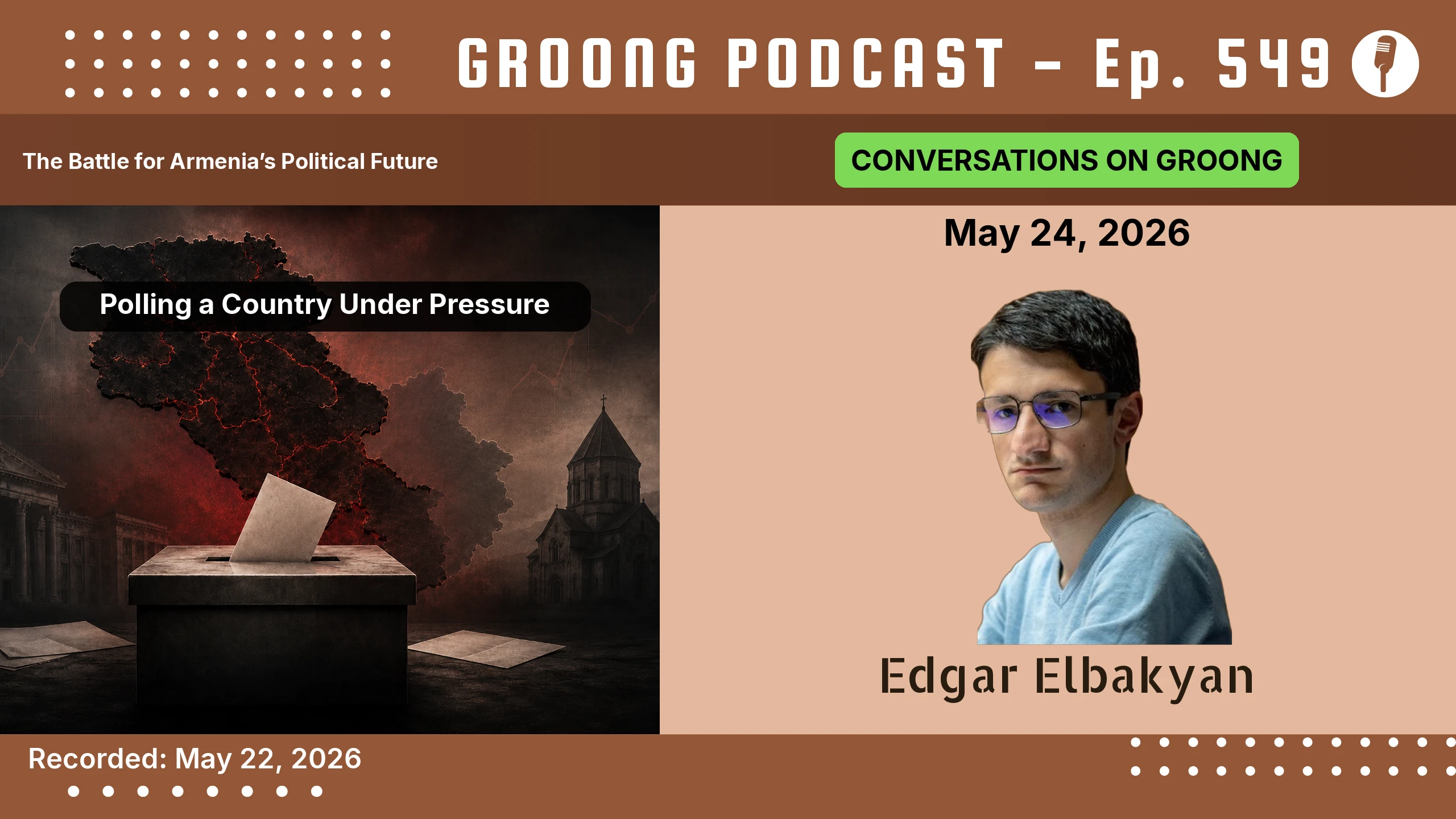
This Conversations on Groong episode features Edgar Elbakyan in a discussion of Armenia’s upcoming election and the wider struggle over the country’s political future. The conversation examines whether the vote should be viewed as an existential election, how fear and pressure shape public opinion, why polling results differ so sharply, and which political forces may be positioned to enter parliament. The episode also looks at whether the opposition is focused on the issues that matter most, including statehood, security, public trust, and the possibility that the election may not end at the ballot box.
Transcript: Parties and Alliances in the 2026 Armenian Parliamentary Election | Ep 548, May 22, 2026
Posted on Saturday, May 23, 2026 | Category: Armenia, Politics, Armenian Church, Nagorno Karabakh, Artsakh Blockade, BRICS, Russia, Iran, Azerbaijan, European Union, Transcript | Vahagn Hovakimyan, Central Electoral Commission, Armenian Church, Nagorno Karabakh, Nikol Pashinyan, Civil Contract, 2026 Armenian Parliamentary Election, Syunik, Artsakh Blockade, Armenian Parliamentary Elections, Samvel Karapetyan, Robert Kocharyan, BRICS, Trump Route for International Peace and Prosperity, Hayastan Dashinq, Right of Return, Tavush, Strong Armenia, Against All Party, Bagrat Galstanyan, Prosperous Armenia, Gagik Tsarukyan, MPG Poll, Bright Armenia, For the Republic, Bever Party, Arman Tatoyan, Wings of Unity, Armenian National Congress, New Power, IRI Armenia Poll, Republic Party, Edmon Marukyan, Aram Sargsyan, Meritocratic Party of Armenia, Democratic Consolidation, Christian-Democrat, Democracy Law Discipline, Anna Grigoryan, Reformists, Kochari, Alliance, Armenia, Russia, Iran, Yerevan, Europe, United States, Azerbaijan, Vagharshak Harutyunyan, Artsakh Aftermath, European Union, TRIPP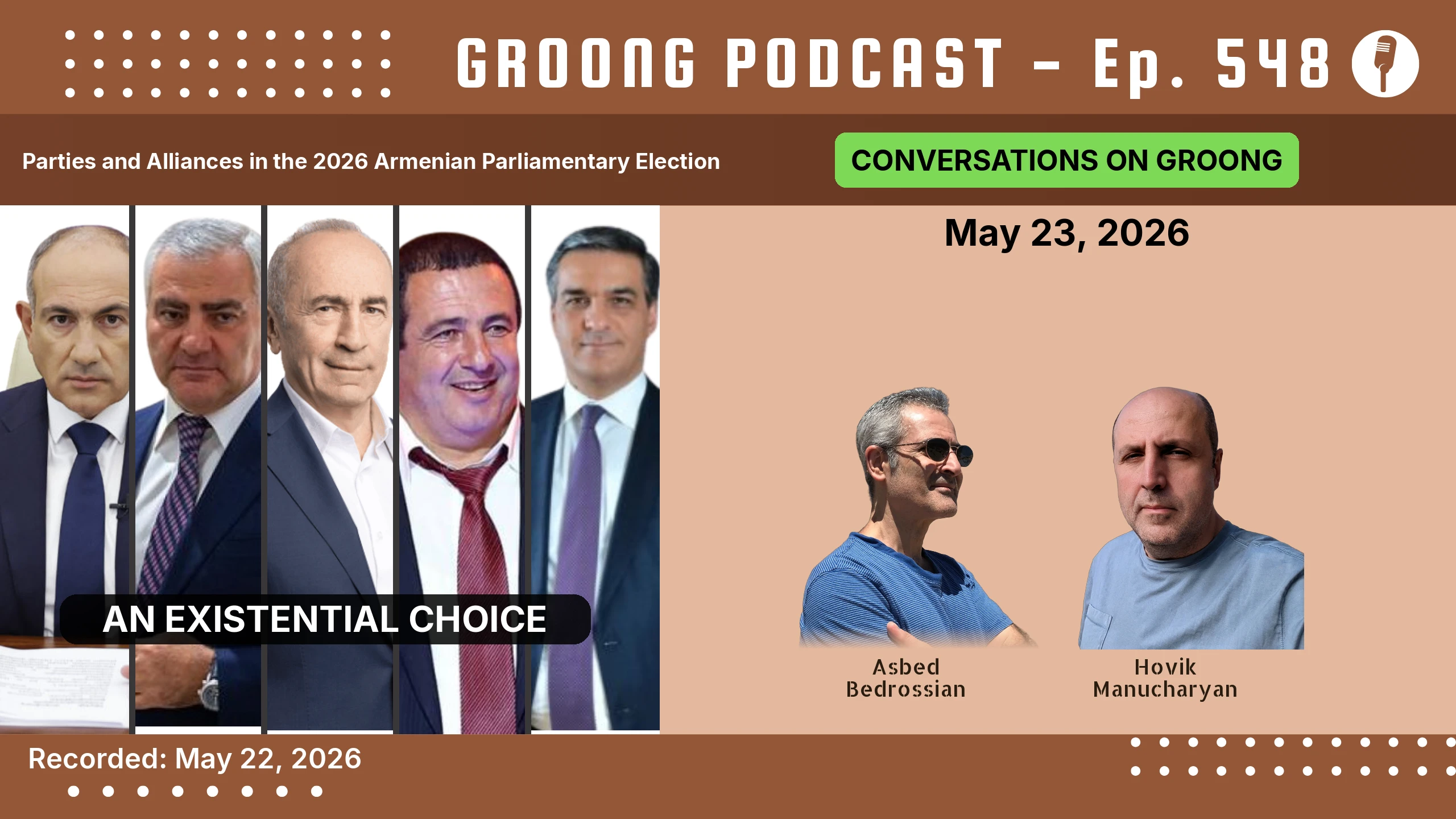
This Conversations on Groong episode provides a primer on Armenia’s June 7, 2026 parliamentary elections, reviewing the 17 parties and 2 alliances registered to compete. The discussion explains the election rules, thresholds, coalition process, and the “stable majority” mechanism, while stressing the uneven political environment facing opposition forces. The episode then walks through each participant, including Civil Contract, Strong Armenia, Armenia Alliance, Prosperous Armenia, Wings of Unity, Bright Armenia, ANC, Bever, Republic, DOK, Democratic Consolidation, and smaller parties with Read More
Transcript: Pashinyan's Hate Speech, Threats, and the June 7 Election Climate | Ep 547, May 17, 2026
Posted on Tuesday, May 19, 2026 | Category: Armenia, Politics, Election, Armenian Church, Nagorno Karabakh, Artsakh Blockade, Russia, China, Azerbaijan, Georgia, Iran, NATO, Transcript | Vahagn Hovakimyan, Central Electoral Commission, Armenian Church, Nagorno Karabakh, Nikol Pashinyan, South Caucasus, Ilham Aliyev, Armenia-Azerbaijan Peace Process, Recep Tayyip Erdogan, Civil Contract, 2026 Armenian Parliamentary Election, Syunik, Artsakh Blockade, Vladimir Putin, Eurasian Economic Union, Robert Kocharyan, OSCE Minsk Group, Trump Route for International Peace and Prosperity, Hayastan Dashinq, Strong Armenia, Sergey Lavrov, Armenian Elections, Gagik Tsarukyan, Arayik Harutyunyan, Samvel Shahramanyan, Mher Grigoryan, Armenian Politics, Hate Speech, Political Violence, Armenia-Russia Relations, Trump China Summit, Iran War, Administrative Resources, Election Fraud, Javakhk Church Vandalism, Opposition Crackdown, EEU Relations, Javakhk, Election Observers, Armenia, Russia, China, Azerbaijan, Donald Trump, Georgia, Europe, Iran, Peace, United States, Corruption, France, NATO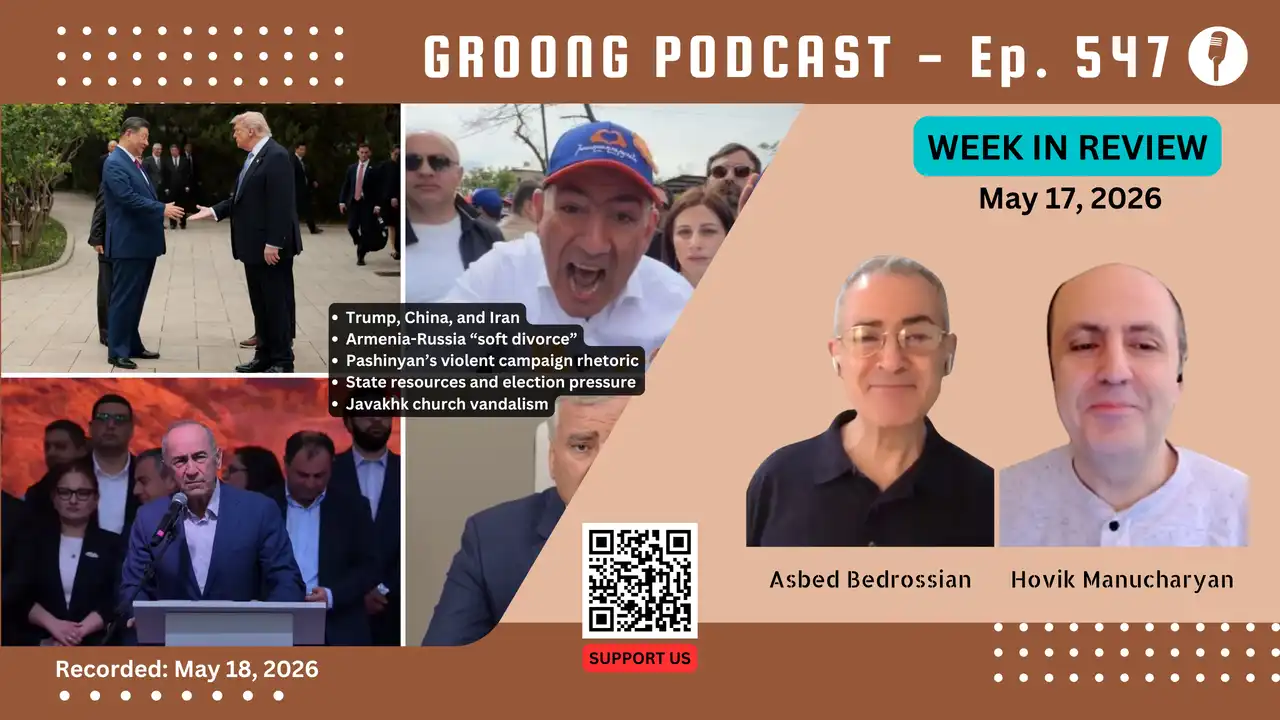
This Week in Review covers a tense mix of global and Armenian political crises, from Trump’s summit with Xi Jinping and the deepening Iran war, to Armenia’s worsening relations with Russia and the risks to trade, energy, and security ties. Hovik and Asbed also examine Armenia’s heated election climate, including allegations of state pressure, abuse of administrative resources, selective law enforcement, Pashinyan’s violent campaign rhetoric against opposition leaders, and the muted response of international observers. The episode also looks at Robert Kocharyan’s call for major-power guarantees for peace with Azerbaijan, and the vandalism of the Sourp Nshan Armenian Church in Javakhk.
Transcript: Arman Grigoryan - Revolutionary Recklessness: Armenia After the War | Ep 546, May 15, 2026
Posted on Friday, May 15, 2026 | Category: Armenia, Politics, Geopolitics, Nagorno Karabakh, Artsakh Blockade, Russia, Iran, Israel, Azerbaijan, Turkey, Ukraine, NATO, Transcript | Nagorno Karabakh, Nikol Pashinyan, South Caucasus, Ilham Aliyev, Armenia-Azerbaijan Peace Process, Recep Tayyip Erdogan, Civil Contract, Zangezur Corridor, Syunik, Artsakh Blockade, Lachin Corridor, Vladimir Putin, 44-Day War, Eurasian Economic Union, Robert Kocharyan, Trump Route for International Peace and Prosperity, Emmanuel Macron, Serzh Sargsyan, Arman Grigoryan, Anatol Lieven, Revolutionary Recklessness, Russia, Geopolitics, Western Pivot, Dmitry Suslov, Kristina Kvien, Hrair Balian, Paul Goble, Matthew Bryza, Iran, Iran War, Israel, United States, Robert Kagan, Armenia, Azerbaijan, Europe, Peace, Negotiations, Turkey, Ukraine, Donald Trump, Armenian Armed Forces, NATO, TRIPP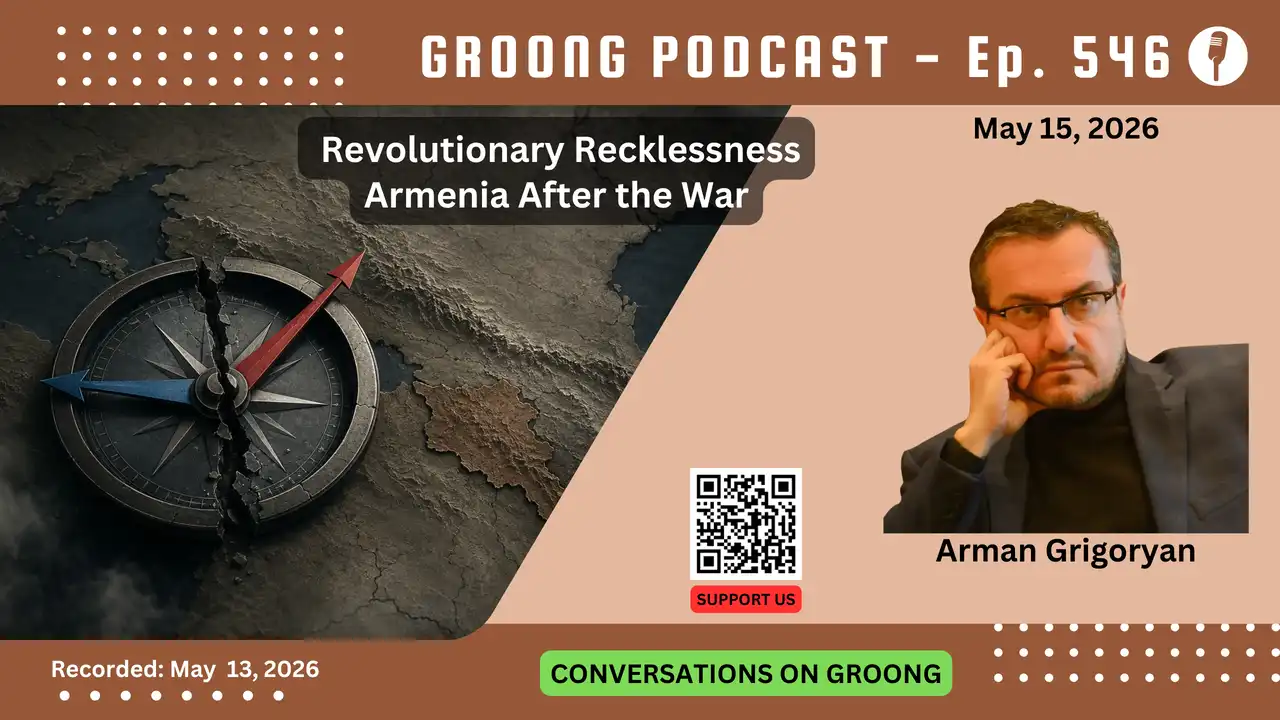
Dr. Arman Grigoryan joins Groong to discuss Armenia’s post-2020 foreign policy and his argument that Pashinyan’s government has replaced one failed project, maximalist claims over Artsakh, with another: a risky strategic pivot away from Russia and toward the West. The conversation examines “revolutionary recklessness,” the roots of the 2020 war, Armenia’s worsening ties with Russia, the surrender of Artsakh, TRIPP and Syunik, Western encouragement, and the absence of firm security guarantees. Grigoryan also considers whether Armenia is gaining real sovereignty or exposing itself to greater pressure from Azerbaijan, Turkey, and Russia.
Transcript: Week in Review - EPC in Armenia, Russia, Parliamentary Election, Swiss Peace Initiative | Ep 545, May 10, 2026
Posted on Wednesday, May 13, 2026 | Category: Armenia, Politics, Nagorno Karabakh, Artsakh Blockade, Azerbaijan, Russia, Ukraine, NATO, European Union, Human Rights, Transcript | Armenian News, Nagorno Karabakh, Nikol Pashinyan, South Caucasus, Ilham Aliyev, Civil Contract, Syunik, Artsakh Blockade, Armenian Parliamentary Elections, Vladimir Putin, 44-Day War, Samvel Karapetyan, Eurasian Economic Union, Robert Kocharyan, CSTO, Hayastan Dashinq, Strong Armenia, Armenian Elections, Etchmiadzin, Serzh Sargsyan, MPG Poll, Viktor Orban, Wings of Unity, New Power, Suren Papikyan, EVN Report Poll, Anna Grigoryan, Armenia, Azerbaijan, EPC, European Political Community, Volodimyr Zelensky, Swiss Peace Initiative, Russia, Europe, Peace, Ukraine, NATO, Armenian Economy, European Union, Human Rights, United States, TRIPP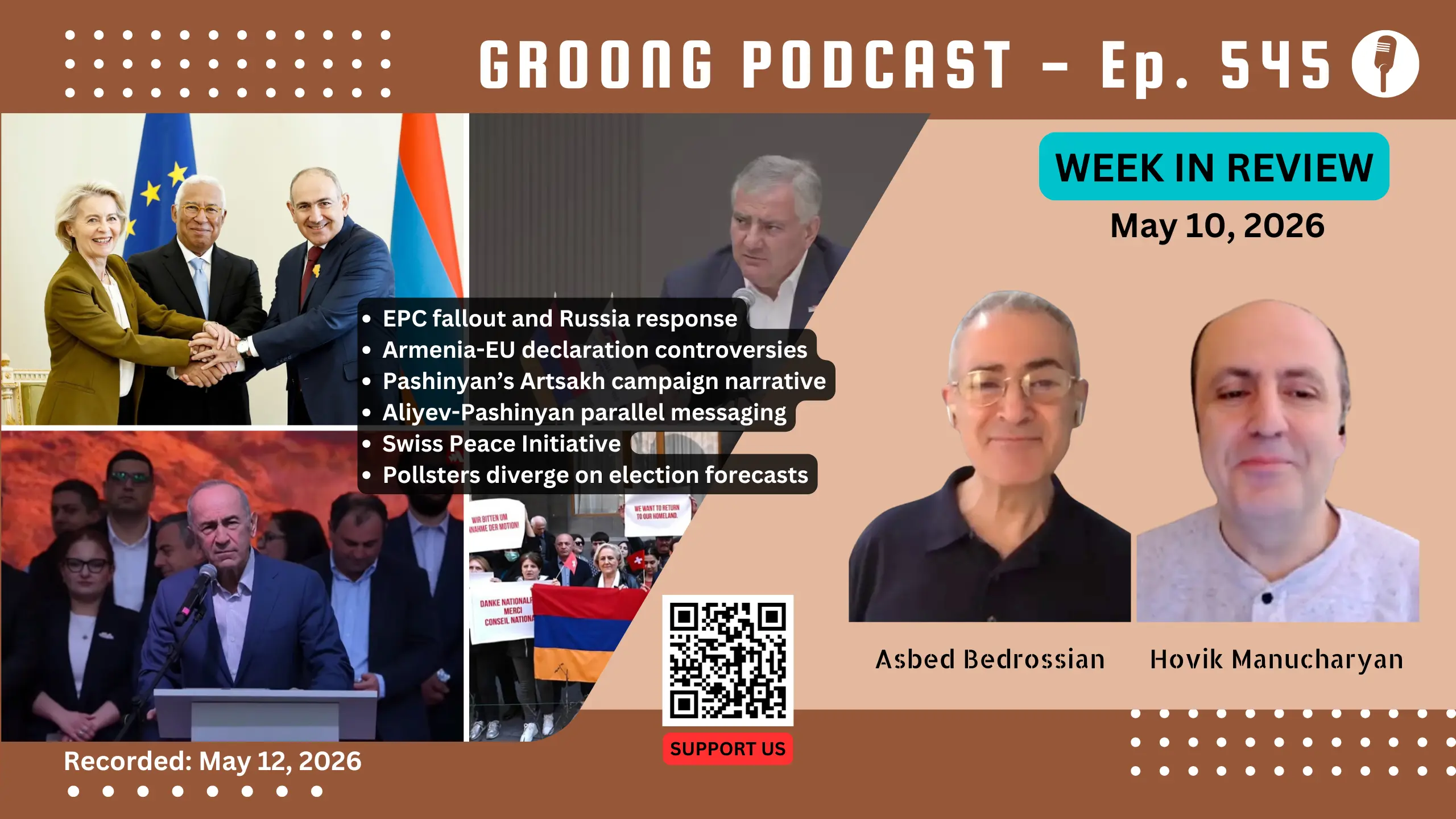
In this Week in Review, Asbed and Hovik discuss the fallout from the EPC summit in Yerevan, Armenia’s role as a platform for anti-Russian messaging, and Putin’s warning about a possible “separation” if Armenia moves toward the EU. They examine the Armenia-EU declaration, focusing on TRIPP, Ukraine, hybrid threats, security cooperation, visa liberalization, and the Armenian Nuclear Power Plant. The episode then turns to Armenia’s election campaign, Pashinyan’s claim that Artsakh was “never ours,” Aliyev’s parallel messaging from occupied Artsakh, pressure on opposition figures, the Swiss Peace Initiative, and sharp divergence between election polls.
Transcript: Anna Grigoryan - Armenia Alliance in the 2026 Armenian Parliamentary Election | Ep 544, May 11, 2026
Posted on Monday, May 11, 2026 | Category: Nagorno Karabakh, Armenia, Azerbaijan, Russia, Iran, European Union, Economy, NATO, Human Rights, Transcript | Nagorno Karabakh, Nikol Pashinyan, Ilham Aliyev, Armenia-Azerbaijan Peace Process, Civil Contract, Zangezur Corridor, Prisoners of War, Armenian Parliamentary Elections, Vladimir Putin, Samvel Karapetyan, Eurasian Economic Union, Robert Kocharyan, CSTO, Catholicos, Trump Route for International Peace and Prosperity, Hayastan Dashinq, Political Prisoners, Strong Armenia, Armenian Elections, Emmanuel Macron, Etchmiadzin, Jeffrey Sachs, Nakhijevan, Gagik Tsarukyan, MPG Poll, Arman Tatoyan, Arayik Harutyunyan, Western Azerbaijan, Kristine Grigoryan, Anna Grigoryan, European Political Community, Yerevan Dialogue, Donald Trump, Armenia, Azerbaijan, Russia, Europe, Iran, Baku, European Union, Peace, Yerevan, Negotiations, Economy, United States, NATO, Armenia-Russia Relations, Artsakh Aftermath, Bako Sahakyan, Human Rights, TRIPP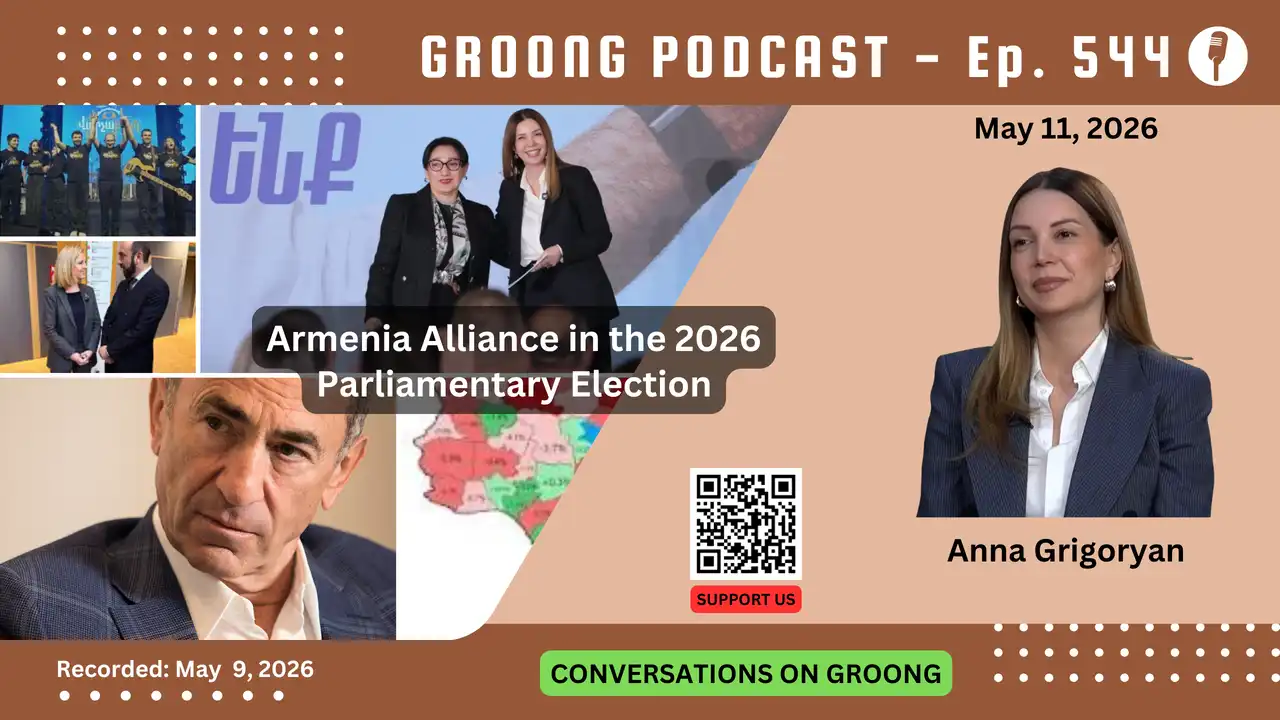
Anna Grigoryan of Hayastan Dashinq (Armenia Alliance) joins Groong to discuss Armenia’s June 7 parliamentary election and the start of the official campaign. The conversation examines the EPC and Armenia-EU summits in Yerevan, EU political and financial support for Pashinyan, Aliyev’s remote demarche, and opposition protests around Artsakh rights, Armenian prisoners, and democratic backsliding. The episode also covers opposition coalition math, Hayastan Dashinq’s 8% bloc threshold, Strong Armenia’s lead among opposition forces, possible post-election governing formulas, Read More
Transcript: EU Interference and Armenia's 2026 Elections | Ep 543, May 10, 2026
Posted on Sunday, May 10, 2026 | Category: Armenia, Politics, Armenian Church, Nagorno Karabakh, Artsakh Blockade, Russia, Azerbaijan, Iran, Turkey, Georgia, Human Rights, NATO, European Union, Transcript | Armenian Church, Nagorno Karabakh, Nikol Pashinyan, Ilham Aliyev, Civil Contract, 2026 Armenian Parliamentary Election, Zangezur Corridor, Syunik, Artsakh Blockade, Armenian Parliamentary Elections, Vladimir Putin, Samvel Karapetyan, Catholicos, Political Prisoners, Tavush, Armenian Elections, Emmanuel Macron, MPG Poll, Western Azerbaijan, Armenia, Nare Navasardyan, Hovhannes Ishkhanyan, Protesters, Iain Davis, MI6, SLAPP, FIP.am, sut.am, Fact Checking, Russia, EXPOSE Network, Daniel Ioannisyan, Europe, Azerbaijan, France, Yerevan, Iran, Turkey, Georgia, Human Rights, NATO, United States, European Union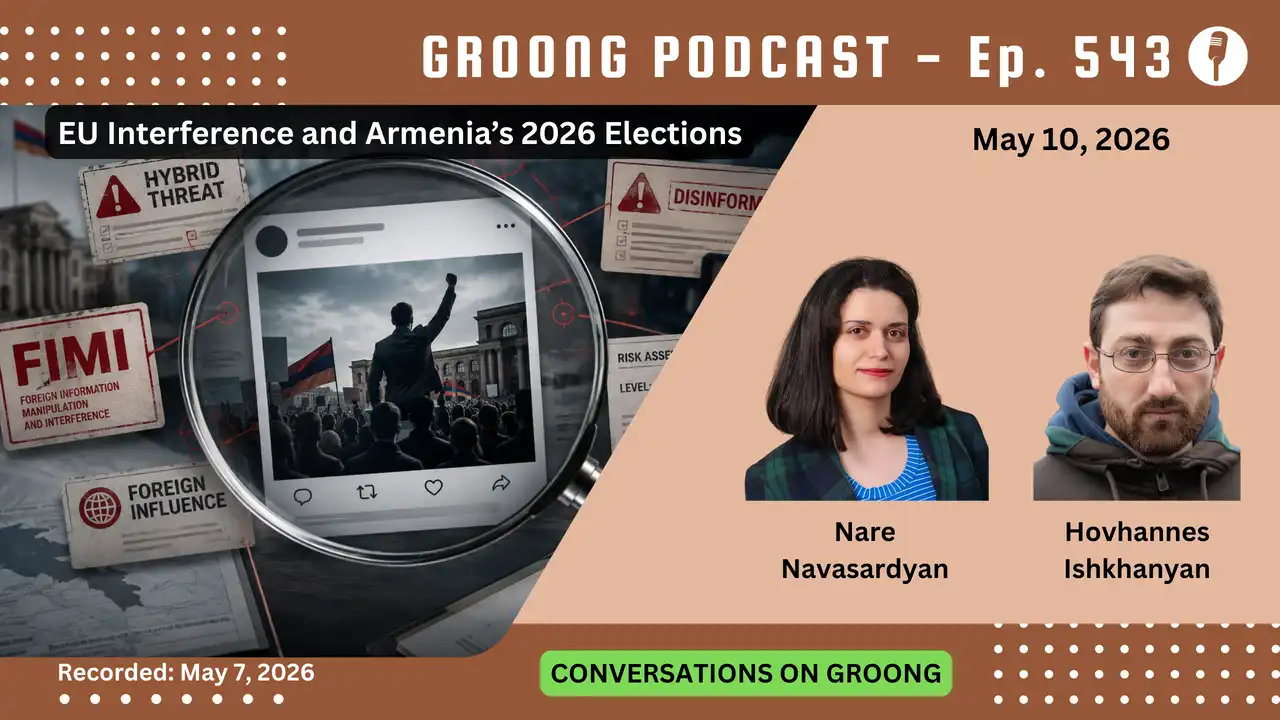
Hovhannes Ishkhanyan and Nare Navasardyan discuss the growing role of the EU, fact-checking networks, and counter-disinformation programs in Armenia’s 2026 election environment. The conversation examines claims of foreign interference, the use of “hybrid threats” and “disinformation” labels against domestic dissent, and the political bias of Armenia’s fact-checking ecosystem. The guests also share personal experiences with lawsuits, public confrontation, protest, and censorship, raising broader questions about free speech, election fairness, and the management of Armenia’s information space.
Transcript: Tatevik Soghoyan - Who Failed the Children of Vedi | Ep 542, May 10, 2026
Posted on Sunday, May 10, 2026 | Category: Armenia, Politics, Human Rights, Nagorno Karabakh, Transcript | Nagorno Karabakh, Nikol Pashinyan, Samvel Karapetyan, Against All Party, Armenian Center for Political Rights, Armenia, Vedi, Child Protection, Rule of Law, Human Rights, Victims Rights, Law Enforcement, Police Accountability, Political Responsibility, Justice System, Tatevik Soghoyan, Child Abuse Prevention, Vedi Case, Armenia Justice, Minor Victims, Investigative Committee, Legal Reform, Victim Privacy, Social Services, Prosecutorial Oversight, Criminal Negligence, Institutional Failure, Anna Vardapetyan, Anahit Manasyan, Suzy Badoyan, Arpine Sargsyan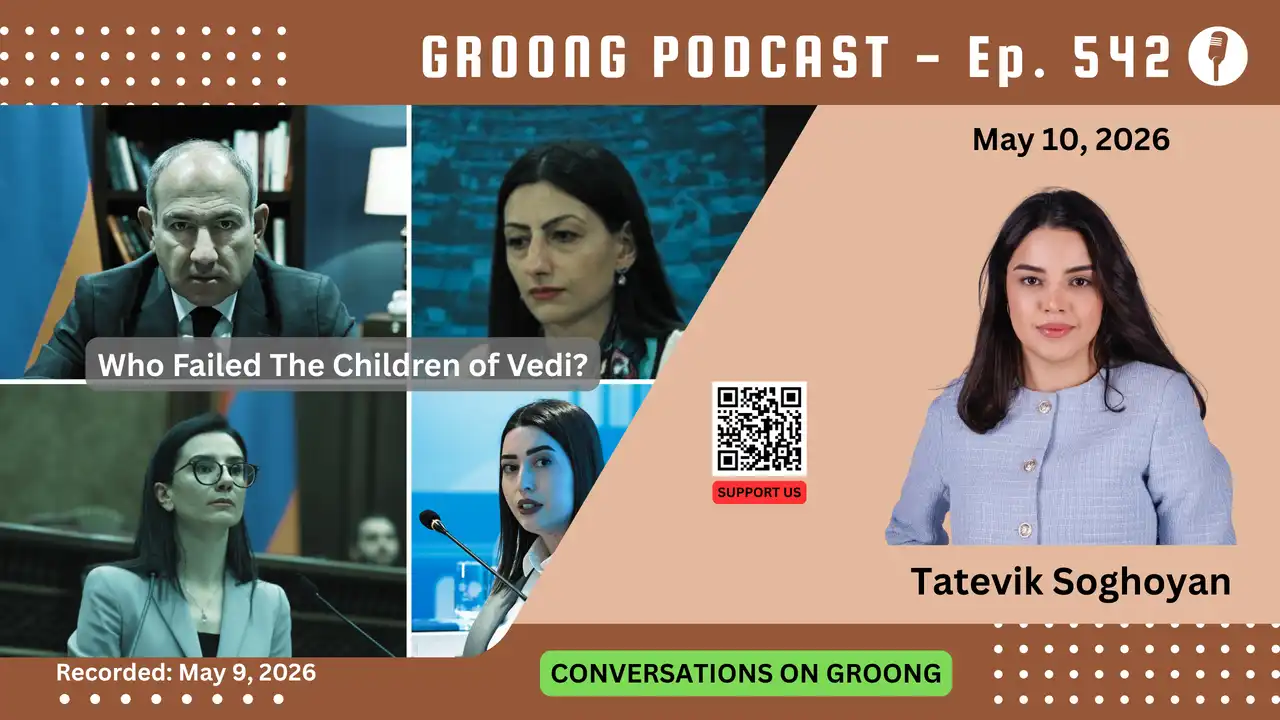
This Conversations on Groong episode examines the Vedi abuse case, a disturbing story involving alleged sexual abuse of vulnerable minors and serious questions about Armenia’s law-enforcement response. Attorney Tatevik Soghoyan joins the program to discuss the known timeline, the delays between the first reports and arrests, the treatment of the victims, and the public statements by investigators and government officials. The discussion focuses on whether this was a local failure, a systemic breakdown, or a deeper case of political responsibility, while asking what Armenia’s justice and child-protection systems must do to prevent such cases from being ignored, delayed, or mishandled.