Latest Blog Post
Transcript: Arthur Martirosyan - Armenia at a Crossroads: Railways, Reactors, and Security | Ep 594, Oct 17, 2026
Posted on Saturday, Oct 17, 2026 | Category: Armenia, Politics, Geopolitics, Transcript | Armenian News, Nagorno Karabakh, Zangezur Corridor, Eurasian Economic Union, Trump Route for International Peace and Prosperity, Arthur G. Martirosyan, COP29, Alma Ata, Amulsar, Ani Avetisyan, ANPP, Armenia, Armenian Constitution, Armenian Economy, Armenian nuclear power, Azerbaijan, Azerbaijani Infiltration, Azeri Infiltration, Baku, BioDiversity, Biological Diversity, border security failures, Constitutional Referendum, COP17, Enclaves, Environmentalist Protests, Exclaves, government transparency, Iran, Kashi, Lena Nazaryan, Nuclear Power Plant, Oleg Belozerov, Pan Turan, Pashinyan accountability, Popular Referendum, Rosatom, Russia, Russian Railway, Russian Railways concession, RZhD arbitration, Shaki shooting incident, Small Modular Reactor, SMR, SMR technology, Turan, Yerevan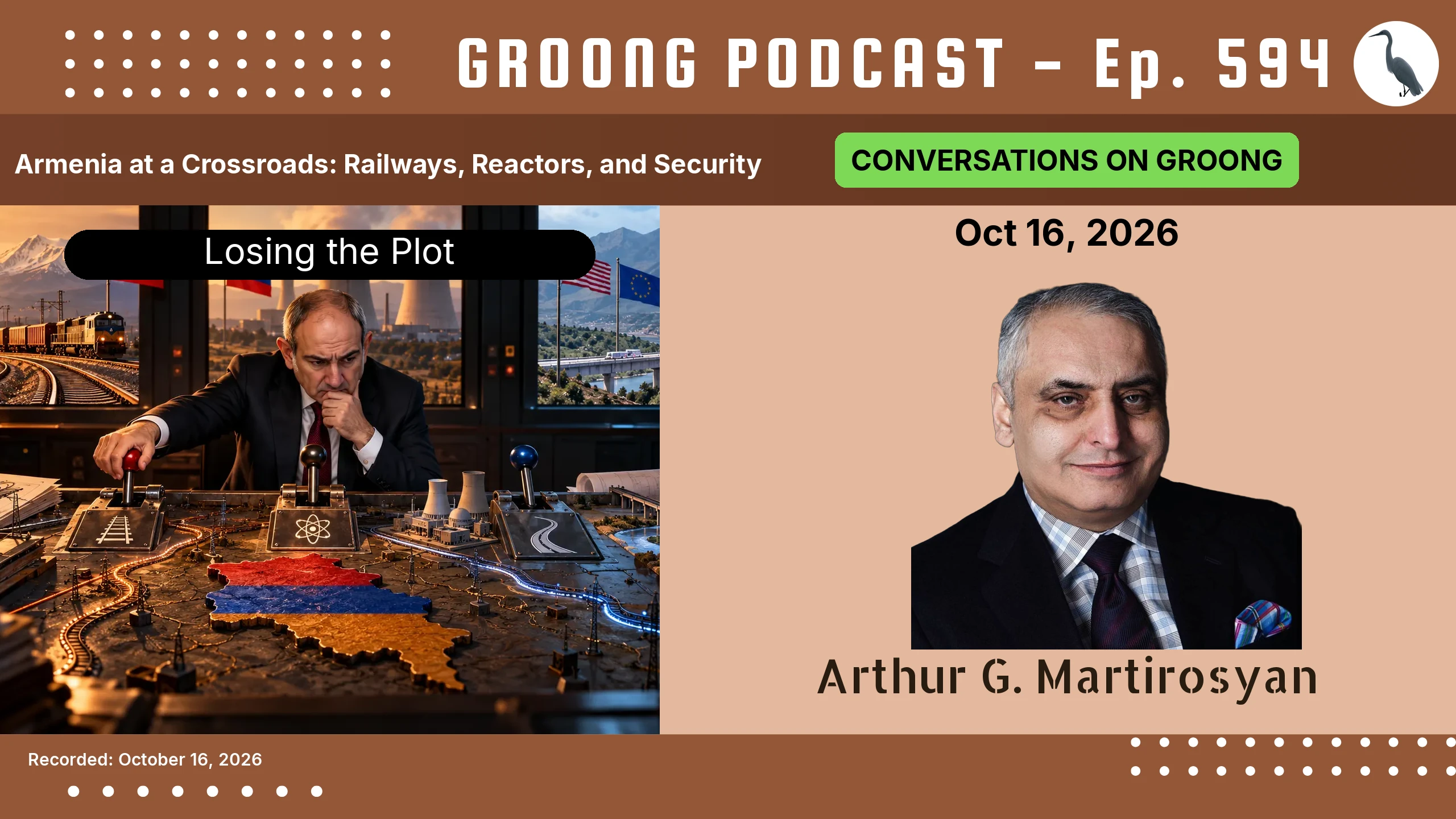
In this episode of Conversations on Groong, we speak with Arthur G. Martirosyan about Armenia at a crossroads in politics and security. We discuss the Shaki infiltration incident and government accountability, Pashinyan’s standoff with Russian Railways over the rail concession, nuclear energy options including Western SMRs versus Russian reactors, TRIPP’s implications for Armenian geopolitics, and environmental destruction at COP17.
Transcript: Pashinyan’s Church War, the Russia-EU Choice, and TRIPP | Ep 576, Aug 9, 2026
Posted on Wednesday, Aug 12, 2026 | Category: Armenia, Politics, Transcript | Armenian News, Armenian Church, Nagorno Karabakh, Nikol Pashinyan, South Caucasus, Civil Contract, Zangezur Corridor, Corruption, Vladimir Putin, Samvel Karapetyan, Eurasian Economic Union, Catholicos of All Armenians, Trump Route for International Peace and Prosperity, Human Rights, Strong Armenia, Armenia-Russia Relations, Gagik Tsarukyan, Narek Karapetyan, Garegin II, Armenian History, Anna Grigoryan, Edgar Ghazaryan, Cilician Armenia, Abraham Accords, Alaska Summit, Anchorage Summit, Andranik Kocharyan, Aram Vardevanyan, Armenia, Armenia Russia EU relations, Armenian Constitution, Armenian Dram, Aryeh Lightstone, Azerbaijan, Cholpon-Ata, European Union, Garegin II trial, Iran, Iran military appointments, Israel, Konstantin Sokolov, Marco Rubio, Mecca Joint Deterrence Agreement, NATO, Pakistan, Pashinyan Church conflict, Russia, Saudi Arabia, Turkey, Turkey-Pakistan-Saudi Arabia alliance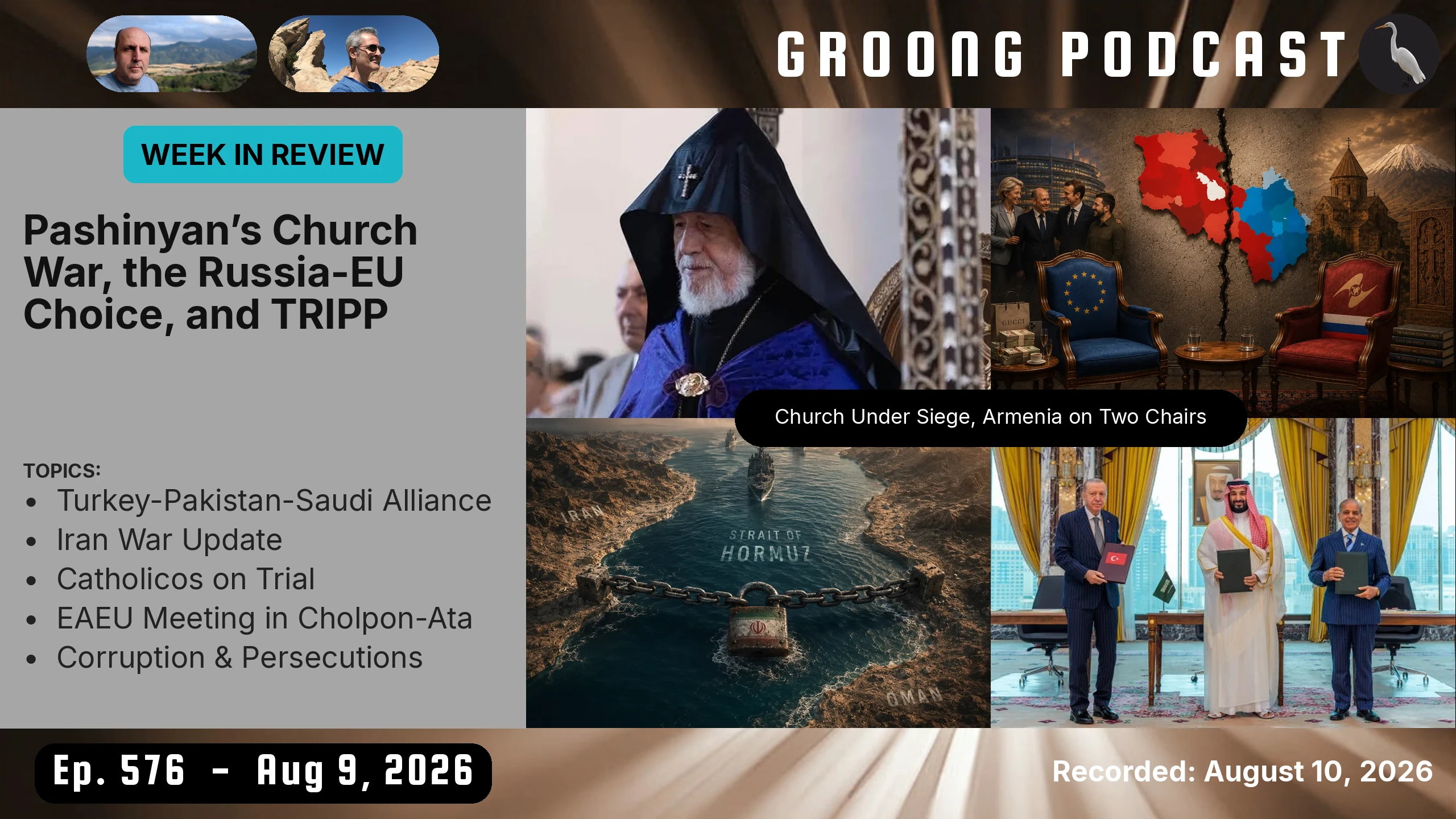
In this week’s Groong episode, the hosts examine Pashinyan’s confrontation with the Armenian Church, Armenia’s strategic positioning between Russia and the EU, and the geopolitical implications of TRIPP. We discuss the trial of Catholicos Garegin II, Iran’s military leadership realignment, the Turkey-Pakistan-Saudi Arabia defense pact, and how these shifts reshape Armenia’s role in the South Caucasus.
Transcript: Hrant Mikaelian - Armenia’s Western Pivot: Strategy or Wishful Thinking? | Ep 575, Aug 8, 2026
Posted on Saturday, Aug 8, 2026 | Category: Armenia, Politics, Transcript | Armenian News, Armenian Church, Nagorno Karabakh, Civil Contract, 44-Day War, Catholicos of All Armenians, OSCE, Armenia-Turkey Relations, Etchmiadzin, Hrant Mikaelian, Armenian Economy, Ruben Rubinyan, Serdar Kilic, European Union, Speaker of National Assembly, Pashinyan government policy, Armenia Western alignment, 2026 Armenian Parliament, Turkey-Azerbaijan-Armenia triangle, Armenian economic strategy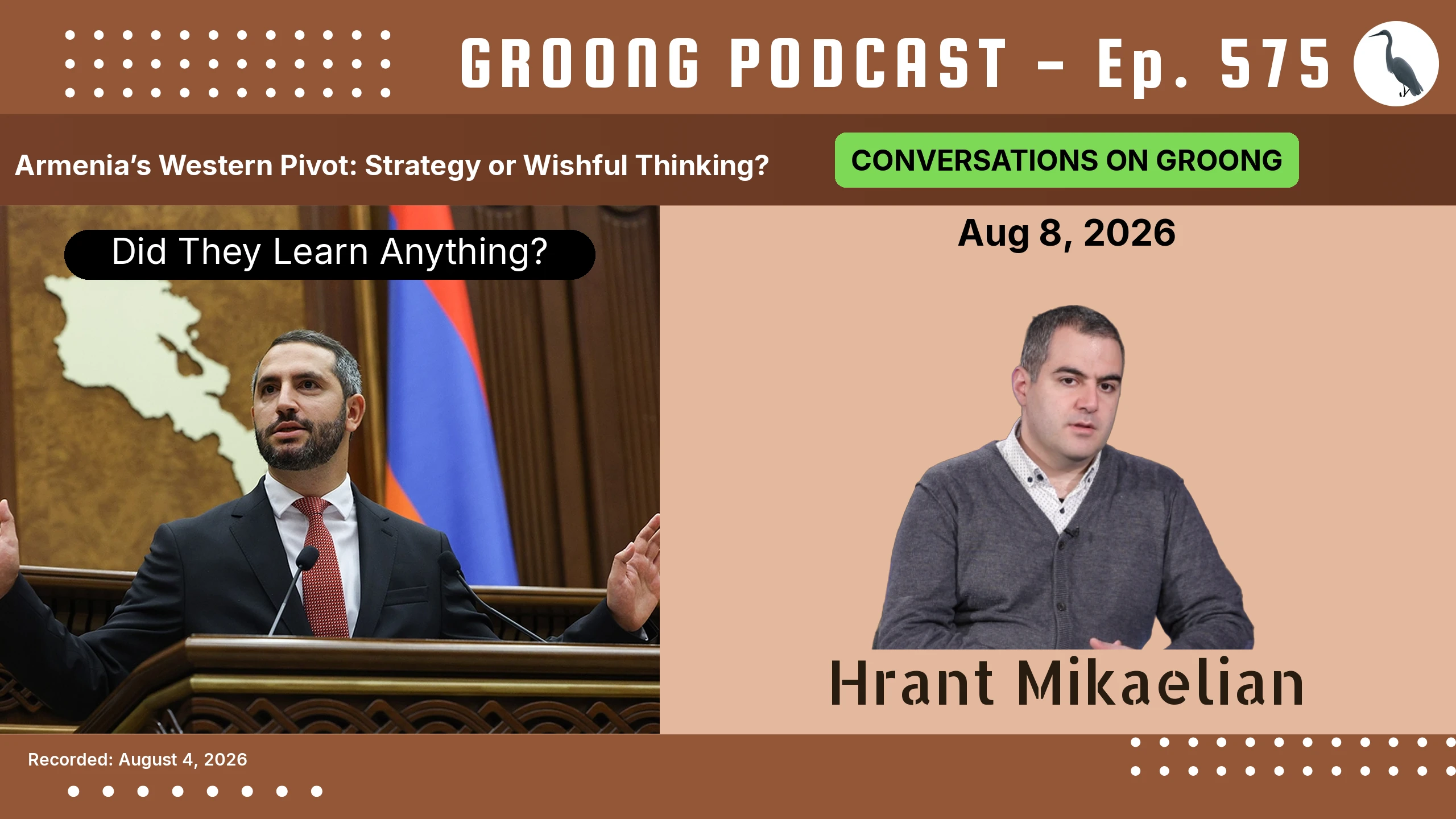
In this episode of Conversations on Groong, we speak with Hrant Mikaelian about Armenia’s Western pivot and the opening of the new parliament. We discuss Ruben Rubinyan’s appointment as speaker, Armenia-Russia-EAEU relations, lessons from the 44-Day War, European aid for Armenia, the role of the Armenian Church in national identity, and Armenia’s economic direction amid geopolitical pressure.
Transcript: Tigranashen Unanswered, Russia’s Railways Challenged | Ep 574, Aug 2, 2026
Posted on Tuesday, Aug 4, 2026 | Category: Armenia, Politics, Geopolitics, Transcript | Armenian News, Nagorno Karabakh, South Caucasus, Civil Contract, Zangezur Corridor, Syunik, Trump Route for International Peace and Prosperity, Strong Armenia, Nakhijevan, Garegin II, Arthur Khachatryan, Anna Grigoryan, Edgar Ghazaryan, Arega Hovsepyan, Ishkhan Saghatelyan, 9th convocation parliament, Armenia, Armenia-Russia railway concession, Armenian Constitution, Armenian demarcation talks, Armenian Parliament, Armenian Rail System, Armenian territorial integrity, Azerbaijan, Border Commission, Border Demarcation, border optimization debate, Civil Contract evasion, Enclaves, George Tabakian, Kars-Gyumri Railroad, Kazakhstan, National Assembly, National Debt, Oleg Belozerov, Qatar, Ruben Rubinyan, Russia, Territorial Concessions, Tigranashen, Tigranashen territorial dispute, Turkey, UAE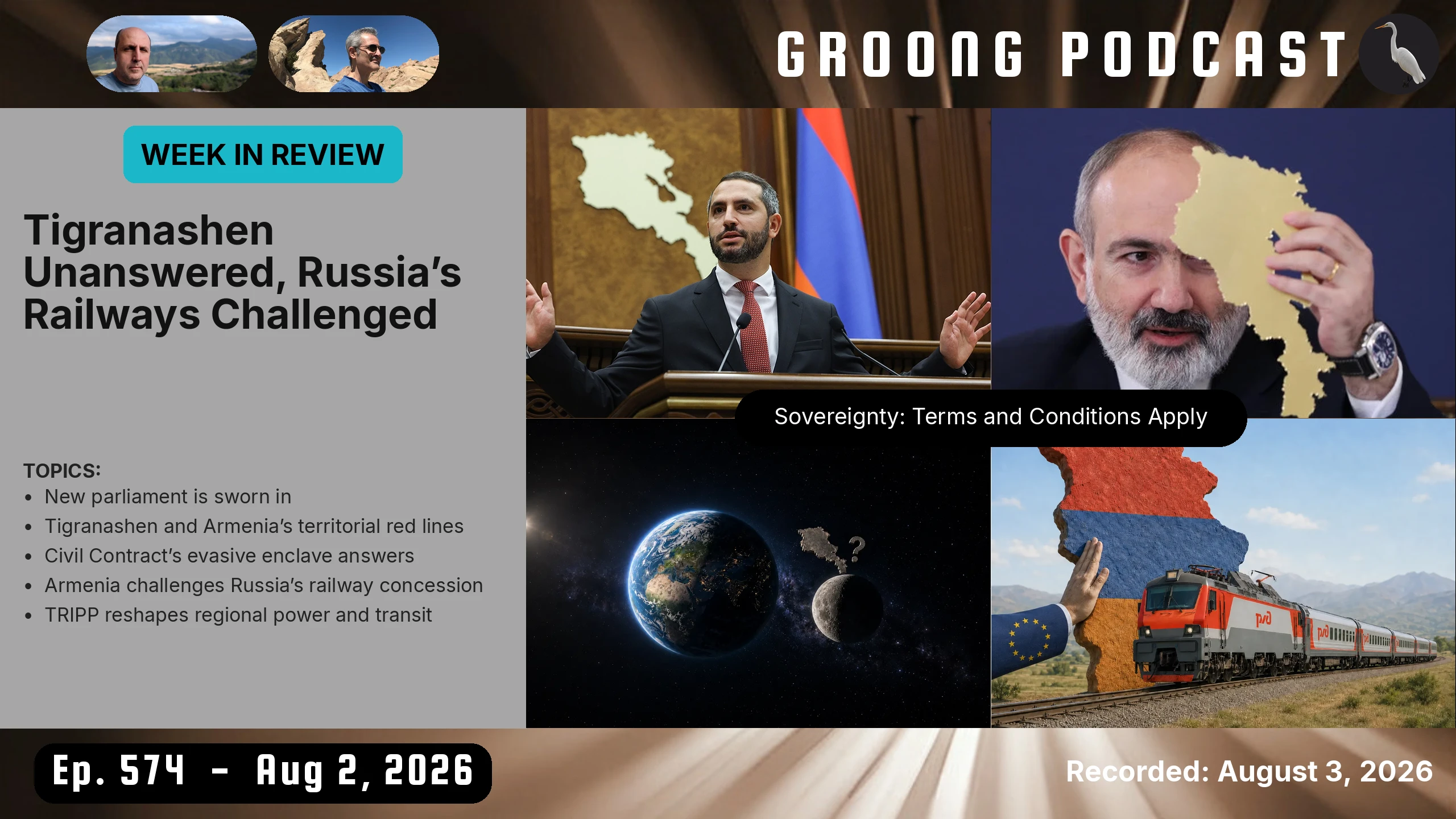
In this week’s Groong Week in Review, Hovik and Asbed discuss Armenia’s new parliament sworn in on August 2, 2026, and the Armenia Alliance’s direct challenge to Civil Contract over Tigranashen. We examine the government’s evasive responses on territorial red lines, Armenia’s challenge to Russia’s railway concession, and how TRIPP reshapes regional power dynamics in the South Caucasus.
Transcript: Pietro Shakarian - Memory Under Siege: From Stalin to Pashinyan | Ep 573, Aug 3, 2026
Posted on Monday, Aug 3, 2026 | Category: Armenia, Politics, History, Transcript | Armenian News, Armenian Church, Nagorno Karabakh, Nikol Pashinyan, Ilham Aliyev, Civil Contract, Armenian Genocide, Ethnic Cleansing, Armenian Diaspora, Catholicos of All Armenians, Strong Armenia, Etchmiadzin, Armenian Revolutionary Federation, Garegin II, Anastas Mikoyan, Armenian History, Pietro Shakarian, Modern Armenia, Soviet Armenia, Aghasi Khanjyan, Aghasi Khanjyan assassination, Aksel Bakunts, Amatuni, Anna Akhmatova, Armenain Apostolic Church, Armenian Church pressure, Armenian Identity, Armenian national communism, Beria repression Transcaucasia, Communist Party of Armenia, Glasnost, Great Purge Soviet Armenia, Historical repression patterns, Josef Stalin, Khachik Mugdusi, Lavrenti Beria, Memory and authoritarianism, Milan Kundera, Nersik Stepanyan, New Economic Policy, NKVD, Perestroika, Repentence, Self-Determination, Soviet History, Soviet Union, Stalinist terror Armenia, Sumgait Pogroms, Tengiz Abuladze, Third Republic, UNM, Vahan Totovents, Yeghishe Charents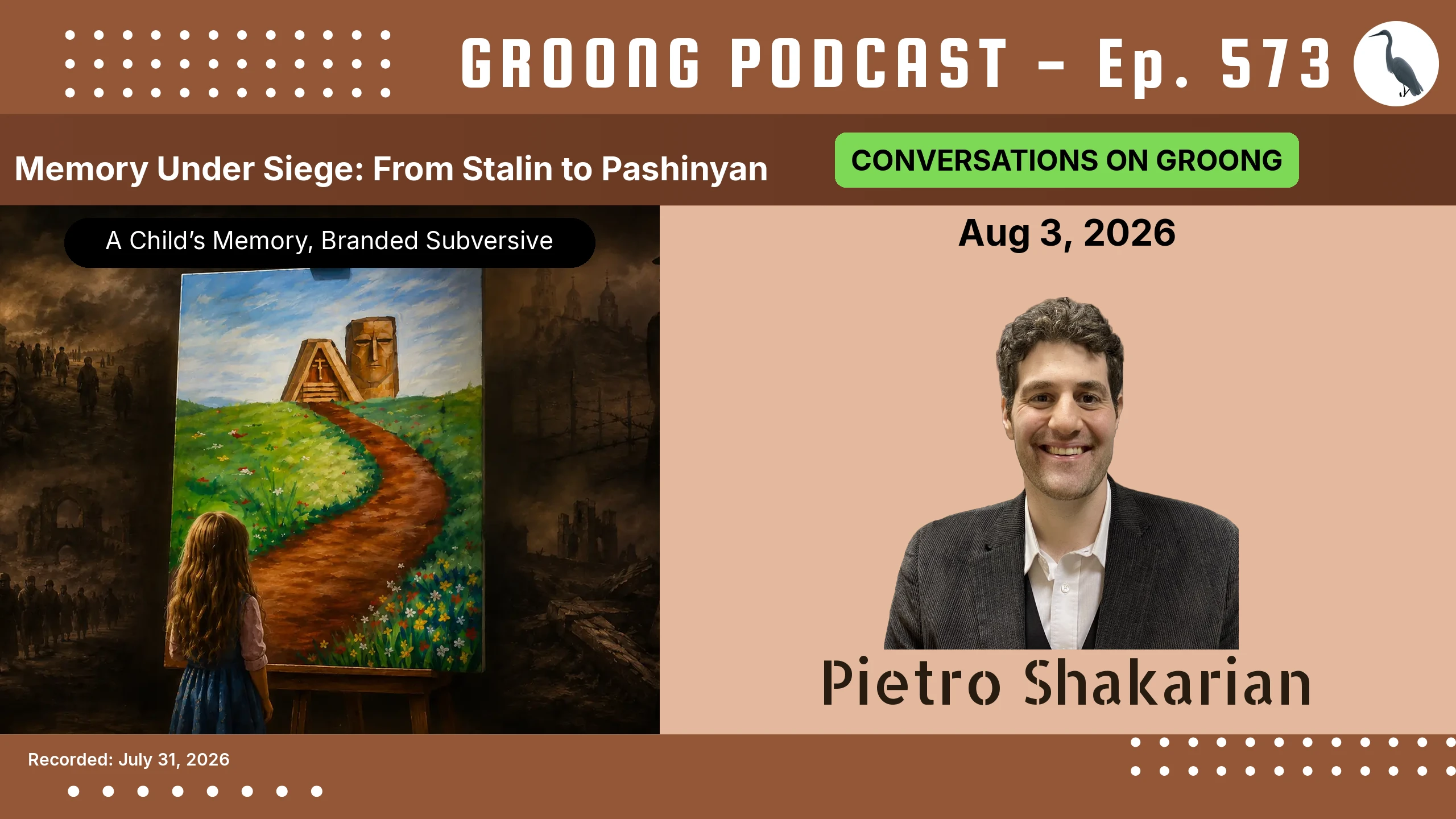
In this episode of Conversations on Groong, we speak with Dr. Pietro Shakarian about memory, repression, and state power in Armenia across Soviet and contemporary periods. We discuss the Great Purge in Soviet Armenia, the assassination of Aghasi Khanjyan, the suppression of Armenian national institutions under Stalin and Beria, and the parallels between Stalinist erasure and current efforts to control public memory, symbols, and mourning in post-Artsakh Armenia under the Civil Contract regime.
Transcript: Christine Arakelian - Forever Wars, NATO 3.0, Armenia's High-Stakes Western Pivot | Ep 572, Jul 31, 2026
Posted on Saturday, Aug 1, 2026 | Category: Armenia, USA, European Union, Politics, Geopolitics, Diaspora, Transcript | Armenian News, Nagorno Karabakh, Nikol Pashinyan, South Caucasus, Civil Contract, 2026 Armenian Parliamentary Election, Zangezur Corridor, Prisoners of War, Armenian Diaspora, Iran War, Syunik, Robert Kocharyan, OSCE, BRICS, Trump Route for International Peace and Prosperity, Hayastan Dashinq, United Nations, Strong Armenia, Armenian Elections, JD Vance, Emmanuel Macron, U.S. Foreign Policy, Lilit Makunts, Africa, America, American Moslem Coalition, ANCA, Andrew Burnham, Arakelian international law, Armenia Western alignment, Armenian Caucus, Caspian Pipeline Consortium, Christine Arakelian, Church of England, Deep State, Donald Trump, Foreign Policy, France, Free Trade Agreement, Freedom Support Act, Gaza, geopolitical realignment, International Election Observation Mission, Iran, Israel, Kazakhstan, Lebanon, Lobito Corridor, MAGA coalition fracture, Marco Rubio, Medicare, Mid-term Elections, Middle Corridor, NATO, NATO 3.0, NATO Corridor, NATO militarization, Natural Resources, Nuclear Power, Nuclear Stockpile, Oil Prices, Russia, Social Security, State Department, Steve Witkoff, Strait of Hormuz, Suez Canal, TRIPP Development Company, Trump Administration, Trump administration doctrine, UK, Ukraine, United States, US foreign policy coherence, US Tariffs, USMCA, Vladimir Zelensky, Volodymyr Zelensky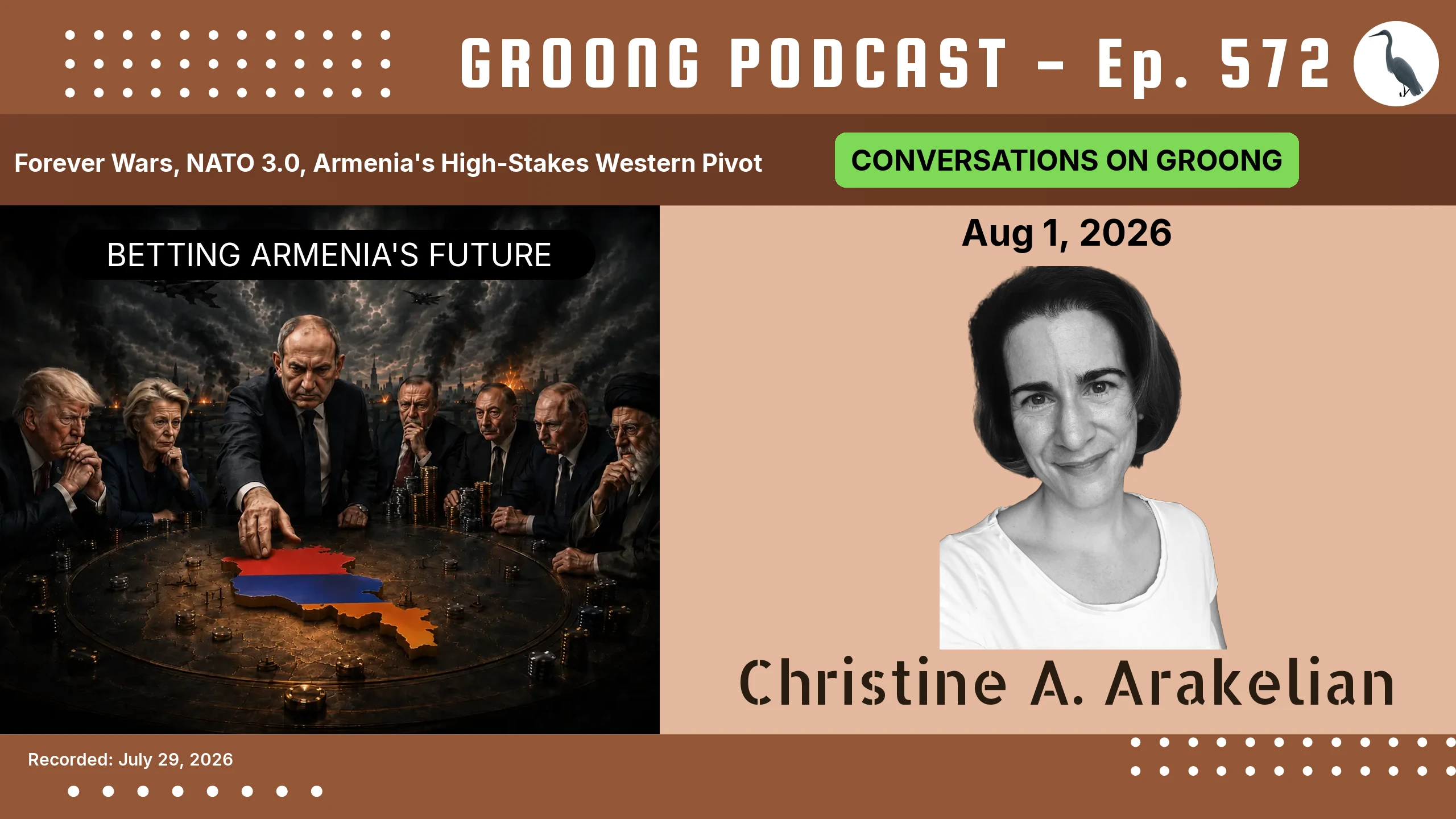
In this episode of Conversations on Groong, we speak with Christine Arakelian about American foreign policy fractures, Iran war risks, and Armenia’s pivot to the West. We discuss whether the United States has coherent foreign policy, the collapse of the MAGA coalition over Forever Wars, NATO 3.0 and Europe’s militarization, and how Pashinyan’s post-2026 Armenian Parliamentary Election government is navigating TRIPP amid global instability.
Transcript: From Caspian Drones to Armenia’s Cold Winter | Ep 571, Jul 26, 2026
Posted on Tuesday, Jul 28, 2026 | Category: Armenia, Iran, Politics, Transcript | Armenian News, Armenian Church, Nagorno Karabakh, Nikol Pashinyan, South Caucasus, Ilham Aliyev, Ukraine War, Iran War, Vladimir Putin, Eurasian Economic Union, Robert Kocharyan, Trump Route for International Peace and Prosperity, Human Rights, Sergey Lavrov, Strong Armenia, Narek Karapetyan, Garegin II, Aliyev-Merz diplomacy, Anthony Barsamian, Armenia, Armenian POW conditions, Azerbaijan, Caspian Sea, Caspian Sea escalation, Drones, Eurasia, Eurasian Trade, European Union, Friedrich Merz, Germany, housing policy Armenia, Iranian military response, Kazakhstan energy security, Rapid Response Team, Russia, Turkey, UAVs, Ukraine, Ukraine Caspian operations, Western pressure on Pashinyan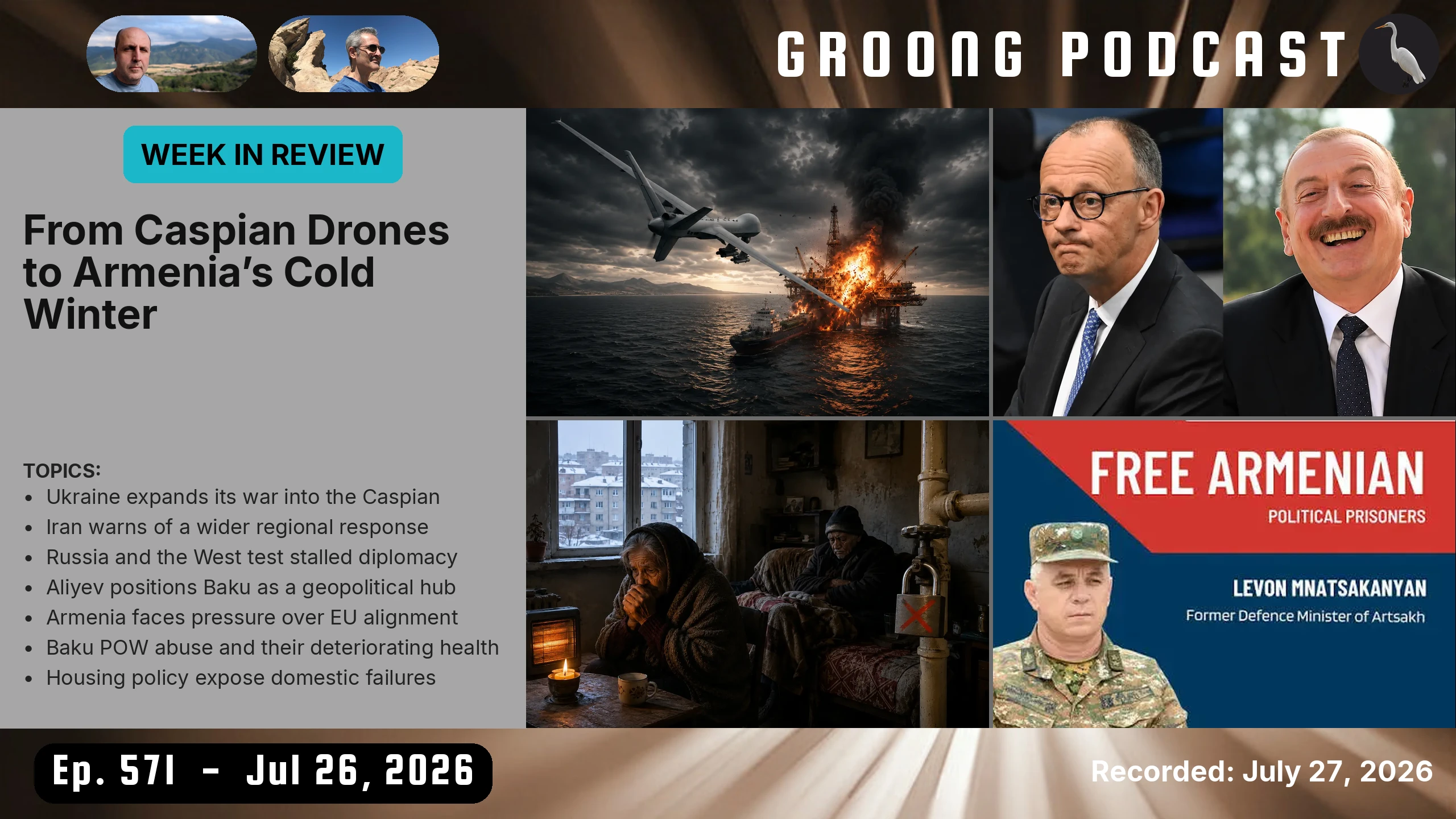
In this week’s edition of the Armenian News podcast, Hovik and Asbed analyze escalating regional tensions as Ukraine expands operations into the Caspian Sea, striking Iranian and Russian assets. We examine how this merger of the Northern and Southern conflicts affects Armenia, Kazakhstan’s energy security, and Pashinyan’s diplomatic positioning amid new pressure from Western capitals following Aliyev’s recent visits to Germany and Berlin.
Transcript: Archil Sikharulidze - Armenia and Georgia Between Russia and Europe | Ep 570, Jul 26, 2026
Posted on Monday, Jul 27, 2026 | Category: Armenia, Georgia, Geopolitics, Politics, Transcript | Armenian News, Nagorno Karabakh, Nikol Pashinyan, South Caucasus, Armenia-Azerbaijan Peace Process, Civil Contract, Trump Route for International Peace and Prosperity, Georgian Dream, Archil Sikharulidze, Aleksandr Iskandaryan, Armenia, Armenia-Russia deterioration, Azerbaijan, Georgia, Georgia-Europe relations, Georgian Dream government, Iran, Kulebi, Moscow, Prigozhin March, Primakov Readings, Primakov Readings Moscow, Pyatigorsk, regional transit corridors, Russia, Russian Embargo, Russian Oil, Russian South Caucasus strategy, Soft Power, Trade Sanctions, Trade War, Turkey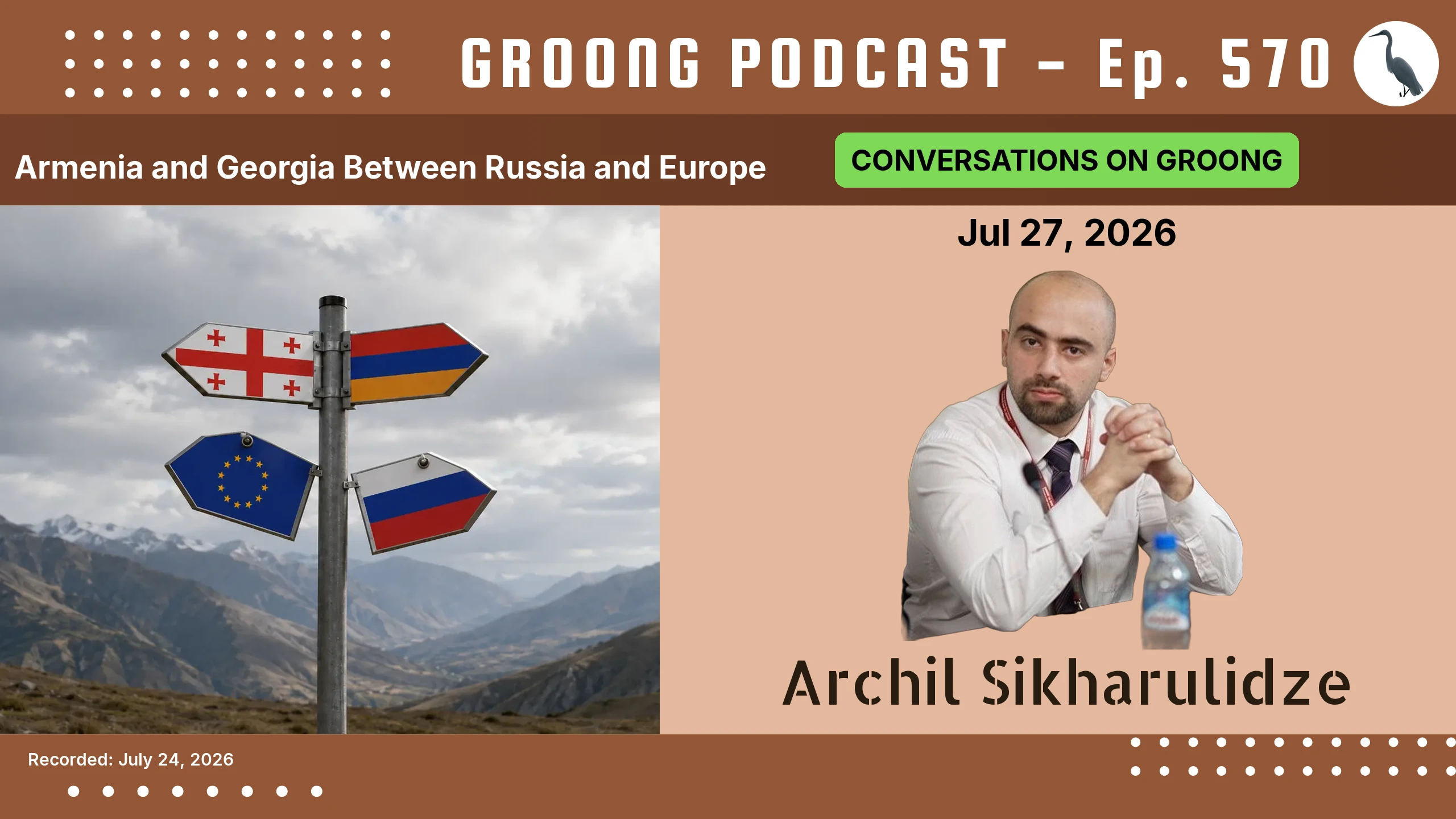
In this episode of Conversations on Groong, we speak with Dr. Archil Sikharulidze about Russia’s shifting strategy in the South Caucasus and Armenia and Georgia’s diverging paths. We discuss Moscow’s assessment of Armenia-Azerbaijan Peace Process developments, Georgia’s widening dispute with Europe, Armenia’s shift away from Russia, and how regional transit corridors reshape geopolitical competition between Moscow, Brussels, and Washington.
Transcript: Anthony Barsamian - Armenia-Diaspora checkpoint | Ep 569, Jul 25, 2026
Posted on Saturday, Jul 25, 2026 | Category: Armenia, Diaspora, Politics, Transcript | Armenian News, Armenian Church, Nagorno Karabakh, Nikol Pashinyan, South Caucasus, Armenian Genocide, Ethnic Cleansing, Armenian Diaspora, 44-Day War, Catholicos of All Armenians, Human Rights, Armenian History, AGBU, Anthony Barsamian, Anthony J Barsamian, Aram Hamparian, Aram Suren Hamparian, Armenia, Armenia Tree Project, Armenian Assembly of America, Armenian diaspora identity, Armenian Quarter, Armenian-American advocacy, Aurora, Berne, Carolyn Mugar, Church-State Relations, diaspora activism, Genocide Recognition, genocide recognition and reparations, Hagop Djernazian, Holocaust Museum, Israeli-Armenian relations, Jerusalem, Massachusets Council of Churches, MCC, Noubar Afeyan, Patriarch of Jerusalem, Sam Simonian, Section 907, Switzerland, Tsitsernakabert, Yad Vashem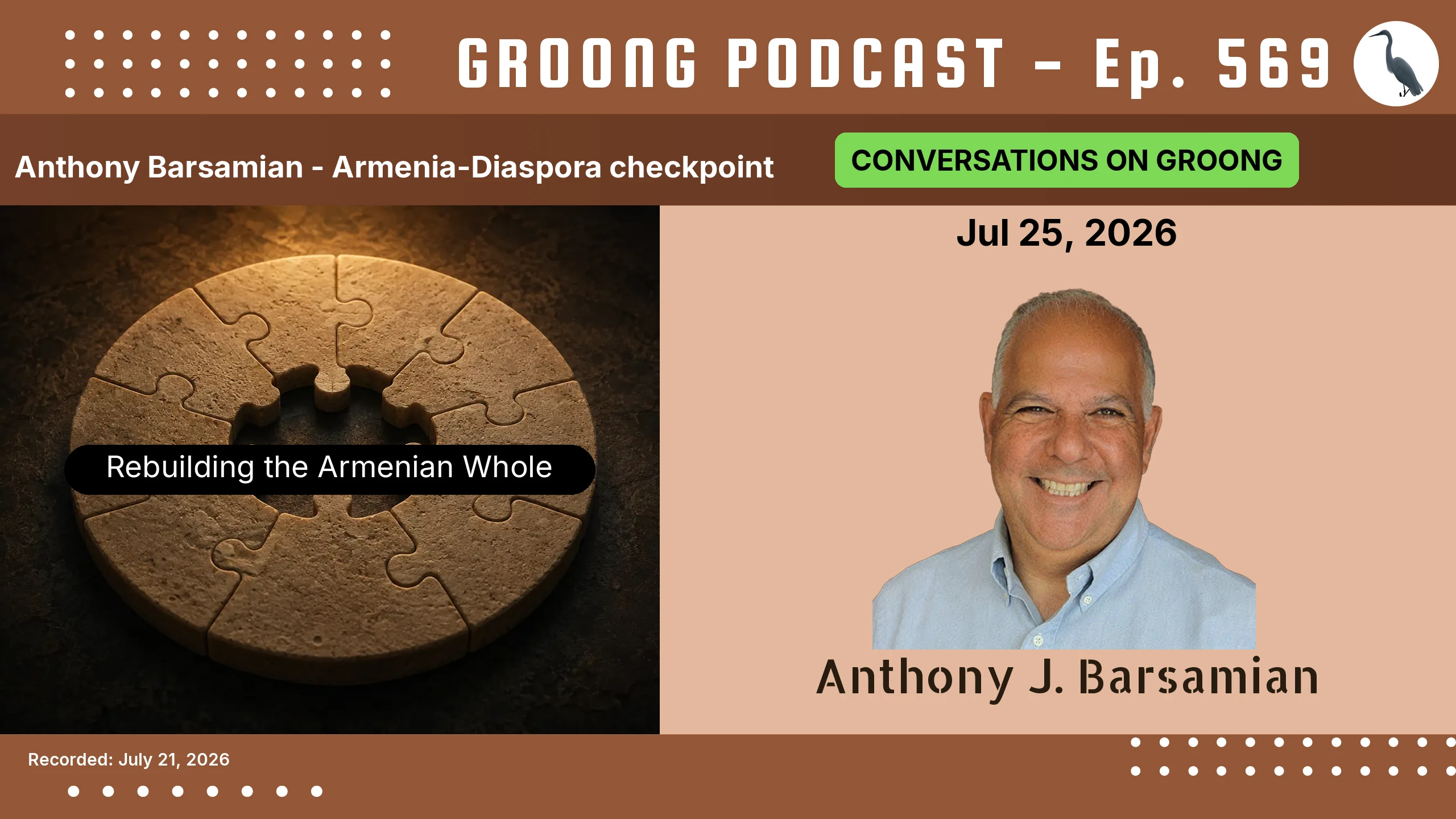
In this episode of Conversations on Groong, we speak with Anthony Barsamian about Armenian Diaspora advocacy, Armenia-Diaspora relations, and the next phase of Armenian-American activism. We discuss decades of work securing U.S.-Armenia relations and aid packages, the achievement of U.S. Armenian Genocide recognition and what comes next, and the role of the Armenian Republic in promoting international genocide recognition—including recent developments with Israeli recognition efforts.
Transcript: Iran War, TRIPP Money, and Armenia’s Political Purgatory | Ep 561, Jul 19, 2026
Posted on Wednesday, Jul 22, 2026 | Category: Armenia, Politics, Transcript | Armenian News, Nagorno Karabakh, Nikol Pashinyan, South Caucasus, Civil Contract, 2026 Armenian Parliamentary Election, Armenian Parliamentary Elections, Iran War, Samvel Karapetyan, Trump Route for International Peace and Prosperity, United Nations, Political Prisoners, Human Rights, Tavush, Armenian Elections, Bagrat Galstanyan, Prosperous Armenia, Garegin II, Glenn Diesen, Armen Ashotyan, Archbishop Galstanyan detention, Aregnaz Manukyan, Armenia, Armenian domestic politics summer 2026, Armenian POWs in Baku, Avetik Chalbyan, Azerbaijan, Copper, Davit Ishkhanyan, Davit Manukyan, Desalination Plants John Mearsheimer, Gulf monarchies geopolitics, Gyumri, House Arrest, Iran, Konstantin Sokolov, Konstantin Sokolov TRIPP, Middle East desalination crisis, Molybdenum, Office of the High Commissioner for Human Rights, OHCHR, Pre-Trial Detention, Russia, Teghut Mining, Teghut mining project, TRIPP Plus, TRIPP+, Turkey, United States, US-Iran military escalation, Vardan Ghukasyan, Viva, VTB Bank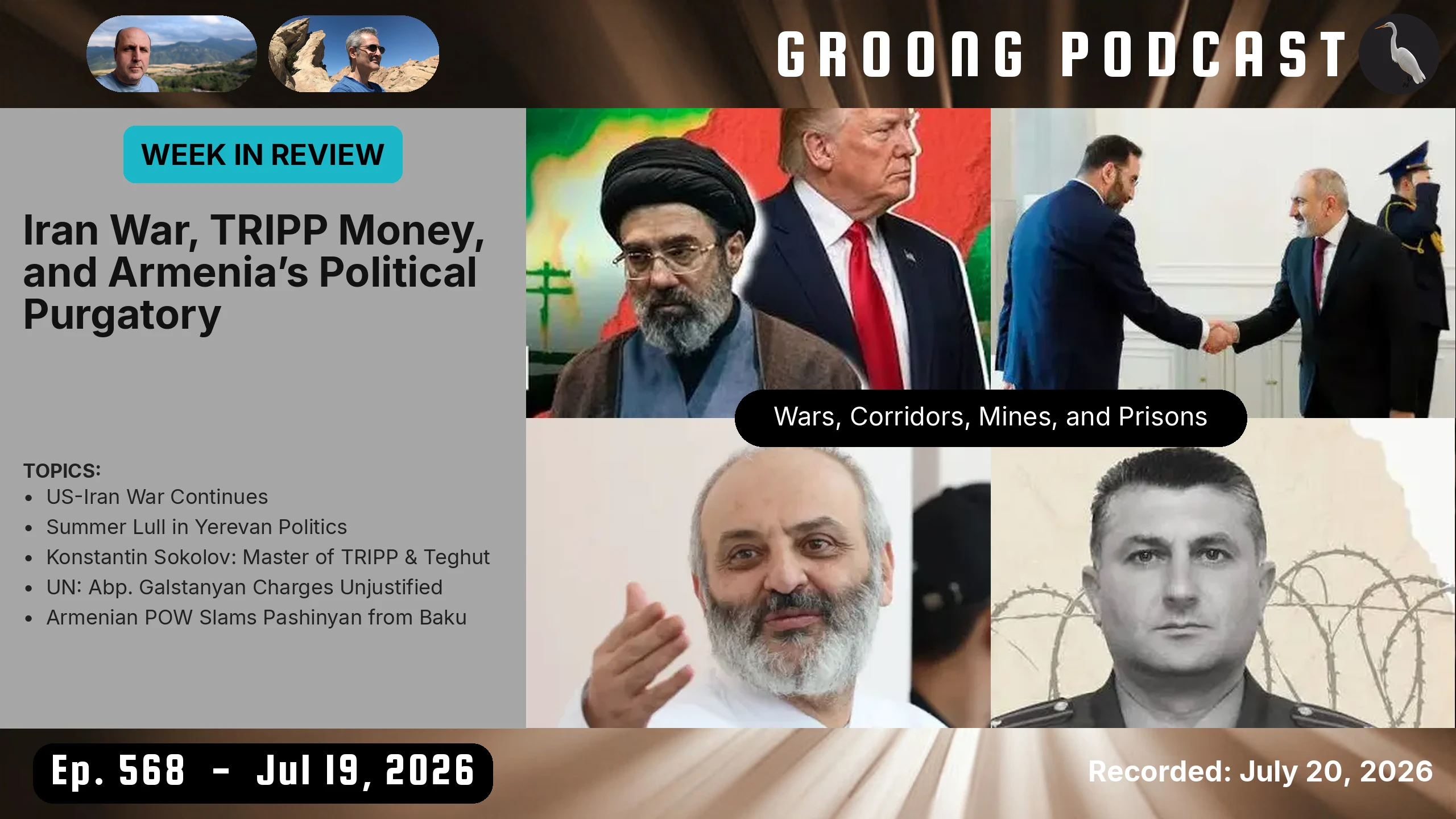
In this week’s Groong Week in Review, Hovik and Asbed break down escalating tensions across the Middle East as the US-Iran war intensifies following the collapse of the June ceasefire. We examine the strategic implications for Armenia and the South Caucasus, the role of TRIPP advocates like Konstantin Sokolov, and how regional instability intersects with Pashinyan’s political vulnerabilities at home, including charges against Archbishop Galstanyan and ongoing Armenian POW cases.