Latest Blog Post
Transcript: Arthur Martirosyan - Armenia at a Crossroads: Railways, Reactors, and Security | Ep 594, Oct 17, 2026
Posted on Saturday, Oct 17, 2026 | Category: Armenia, Politics, Geopolitics, Transcript | Armenian News, Nagorno Karabakh, Zangezur Corridor, Eurasian Economic Union, Trump Route for International Peace and Prosperity, Arthur G. Martirosyan, COP29, Alma Ata, Amulsar, Ani Avetisyan, ANPP, Armenia, Armenian Constitution, Armenian Economy, Armenian nuclear power, Azerbaijan, Azerbaijani Infiltration, Azeri Infiltration, Baku, BioDiversity, Biological Diversity, border security failures, Constitutional Referendum, COP17, Enclaves, Environmentalist Protests, Exclaves, government transparency, Iran, Kashi, Lena Nazaryan, Nuclear Power Plant, Oleg Belozerov, Pan Turan, Pashinyan accountability, Popular Referendum, Rosatom, Russia, Russian Railway, Russian Railways concession, RZhD arbitration, Shaki shooting incident, Small Modular Reactor, SMR, SMR technology, Turan, Yerevan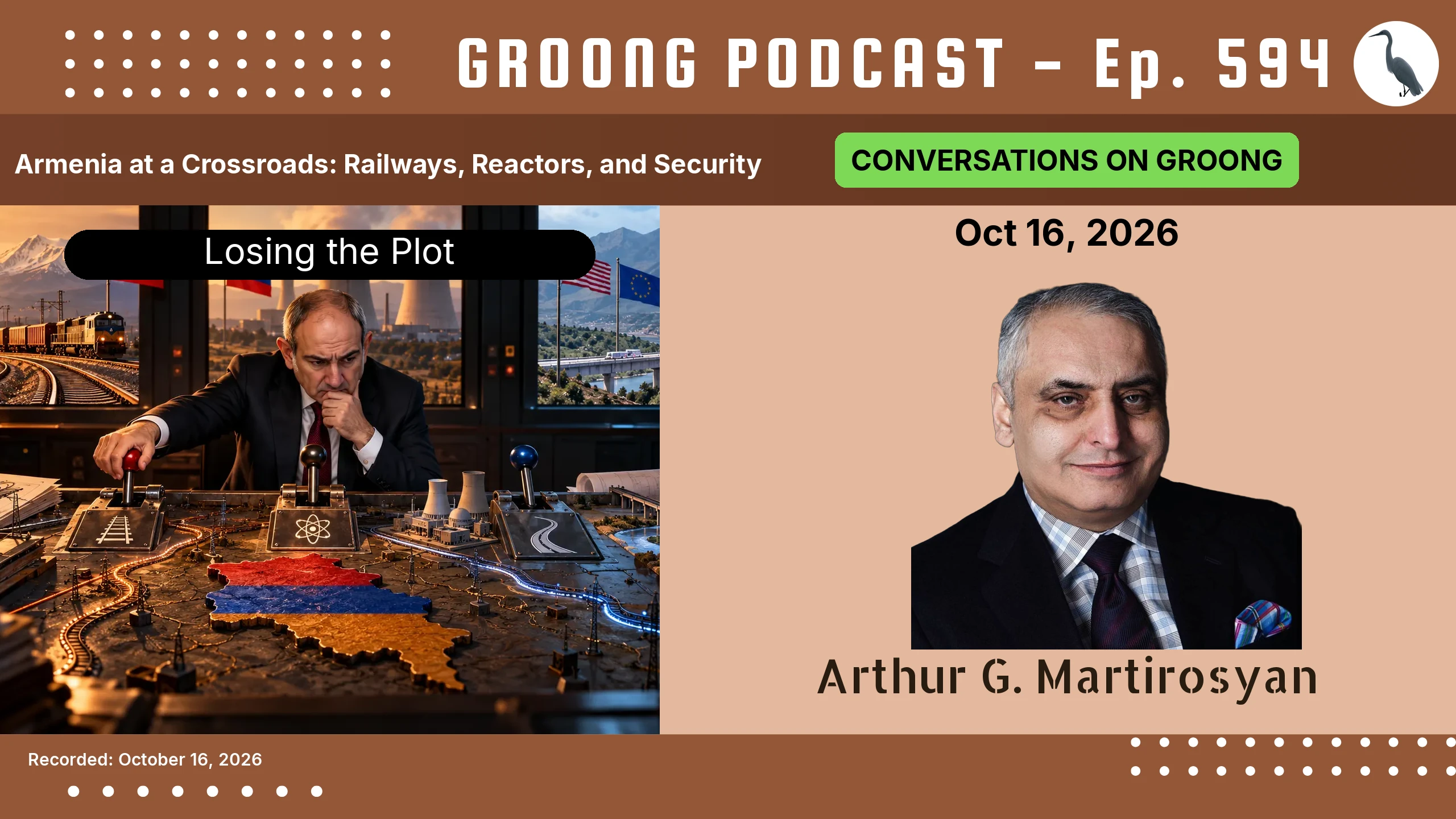
In this episode of Conversations on Groong, we speak with Arthur G. Martirosyan about Armenia at a crossroads in politics and security. We discuss the Shaki infiltration incident and government accountability, Pashinyan’s standoff with Russian Railways over the rail concession, nuclear energy options including Western SMRs versus Russian reactors, TRIPP’s implications for Armenian geopolitics, and environmental destruction at COP17.
Transcript: Gandzasar Erasure, Chips for Territory, Russian Money & Pashinyan in Space | Ep 585, Sep 13, 2026
Posted on Wednesday, Sep 16, 2026 | Category: Armenia, Politics, Geopolitics, Transcript | Armenian News, Armenian Church, Nagorno Karabakh, South Caucasus, Civil Contract, Zangezur Corridor, Ukraine War, Prisoners of War, Armenian Genocide, Corruption, Syunik, OSCE, Political Prisoners, Charles Michel, Armenia-Russia Relations, Gagik Tsarukyan, War Crimes, Armen Grigoryan, Alen Simonyan, Sergei Melkonian, Armenian History, Medieval Armenia, Alen Ghevondyan, Armenia, Armenian Armed Forces, Armenian Central Bank, Armenian servicemen martyrs, Azerbaijan, Banking Sector, CBA, Cultural Erasure, Hajiyev hate speech, Hikmet Hajiyev, Magdalena Grono, NVIDIA chips Armenia, Pashinyan territorial concessions, Pretrial Detention, Ruben Rubinyan, Russia, Russian Banks, September 2022 border war, September 2022 War, Sexual Abuse, Sexual Torture, SWIFT, Torturing Prisoners, TRIPP corridor geopolitics, Turkey, United States, Western Sanctions, Woman Soldiers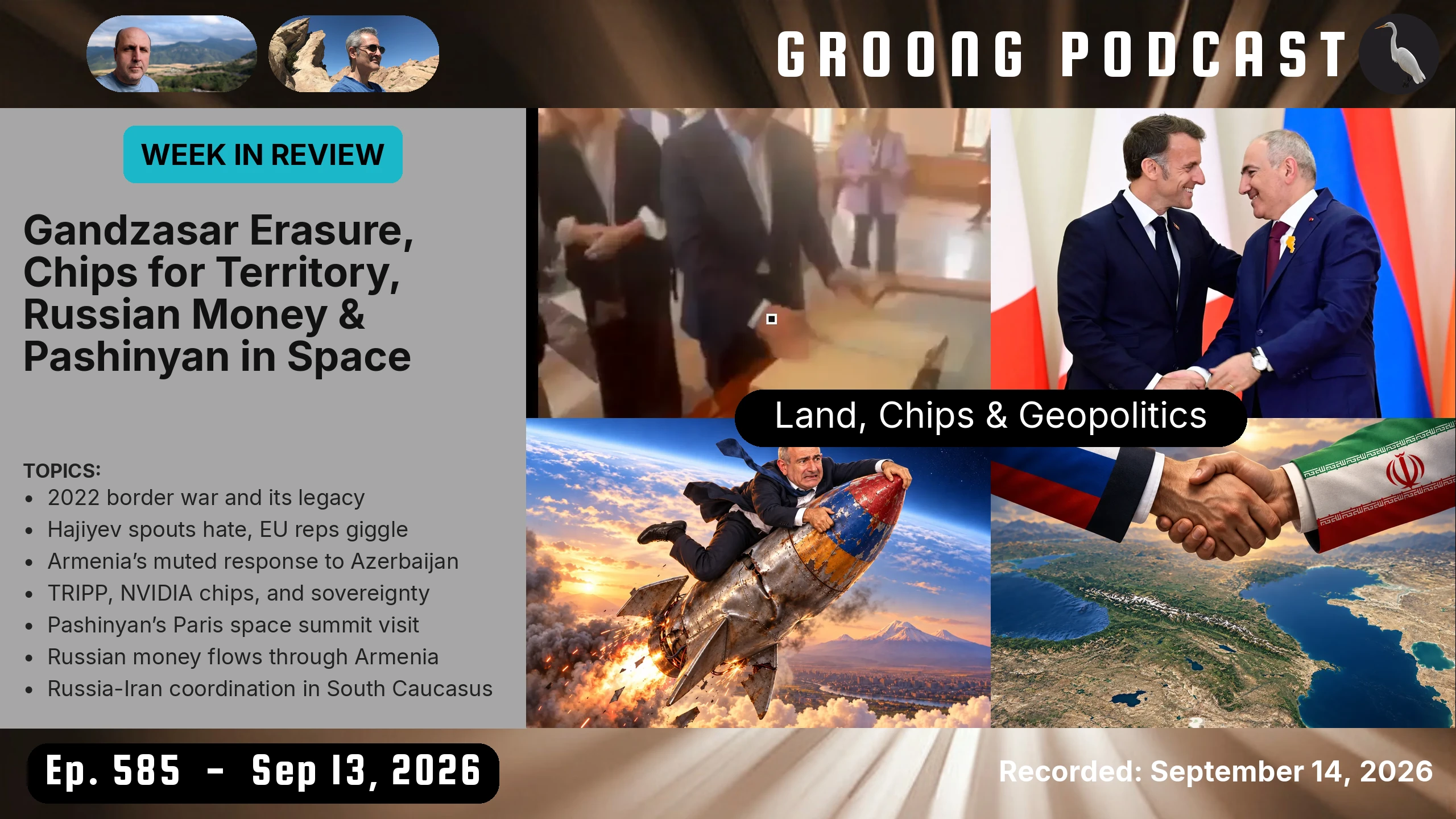
In this Groong Week in Review episode, Hovik and Asbed examine the fourth anniversary of the September 2022 border war, Azerbaijan’s ongoing occupation of Armenian territory, and Pashinyan’s political trajectory toward recognizing Artsakh’s loss. We discuss Hajiyev’s inflammatory rhetoric, Armenia’s muted diplomatic response, TRIPP and semiconductor sovereignty, Pashinyan’s attendance at a Paris space summit, Russian financial flows through Armenia, and Russia-Iran coordination in the South Caucasus.
Transcript: Artsakh Remembered, SCO Theater, Russian Signals, and the Cucumber Paradox | Ep 584, Sep 6, 2026
Posted on Monday, Sep 7, 2026 | Category: Transcript | Armenian News, Armenian Church, Nagorno Karabakh, Nikol Pashinyan, South Caucasus, Ilham Aliyev, Civil Contract, Ukraine War, Armenian Genocide, Ethnic Cleansing, Vladimir Putin, Eurasian Economic Union, Catholicos of All Armenians, CSTO, Trump Route for International Peace and Prosperity, Political Prisoners, Human Rights, Etchmiadzin, Armen Grigoryan, Garegin II, Shanghai Cooperation Organization, Suren Papikyan, 102nd Military Base, Armen Grigiryan, Armenia, Armenian Apricots, Armenian Armed Forces, Armenian Church prosecutions, Armenian Cucumbers, Armenian local elections 2026, Army discipline and non-combat deaths, Arsen Aghababyan, Bishkek, EU-Armenia trade relations, European Union, Gyumri, Jared Kushner, Moscow, National Security Council, Noyemberyan, Russian military base negotiations, Steve Witkoff, U.S.-Russia-Ukraine diplomacy, Ukraine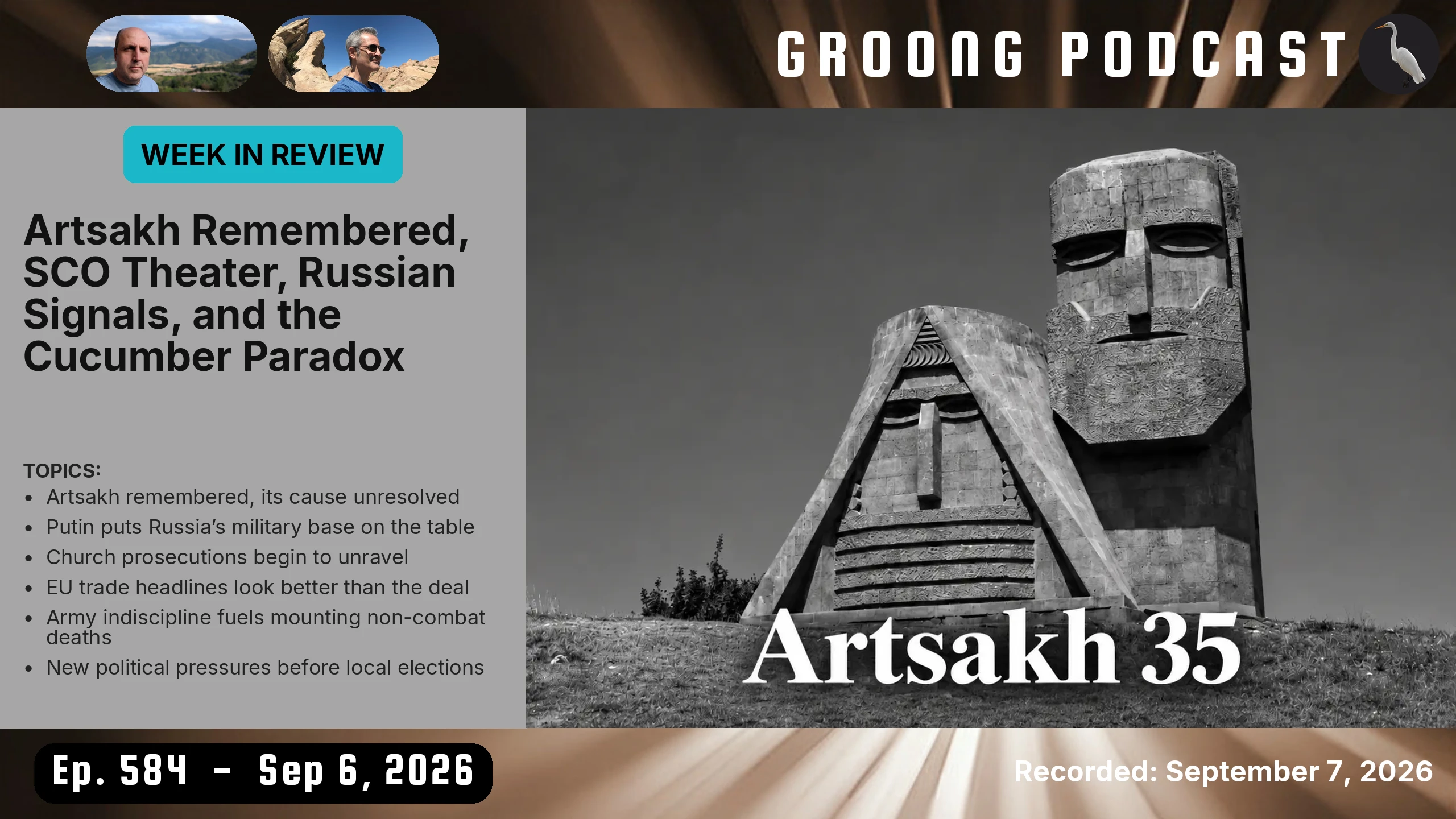
In this week’s Groong episode, Hovik and Asbed review September 2026 developments across Armenia and the South Caucasus. We examine Artsakh’s remembered independence declaration on September 2, 1991, and its unresolved cause following the 2023 ethnic cleansing; Putin’s signaling on Russia’s military base presence; ongoing Armenian Church prosecutions; EU trade negotiations; mounting non-combat military deaths; and political pressures ahead of local elections. We also analyze U.S. envoy Witkoff and Kushner’s diplomatic shuttle through Moscow and Kyiv.
Transcript: Suren Sargsyan - Central Asia, TRIPP, Iran, and Armenia in the New Great Game | Ep 583, Sep 5, 2026
Posted on Saturday, Sep 5, 2026 | Category: Armenia, Geopolitics, Transcript | Armenian News, Nagorno Karabakh, South Caucasus, Zangezur Corridor, Ukraine War, Iran War, CSTO, Trump Route for International Peace and Prosperity, Shanghai Cooperation Organization, 102nd Military Base, ANPP, Armenia, Armenian Center for American Studies, Armenian geopolitics, Azerbaijan, Bishkek, Central Asia, Central Asia transit routes, China, CSTO membership Armenia, Donald Trump, European Union, Goble Plan, Gyumri, Iran, Konstantin Sokolov, Mid-term Elections, Middle Corridor, Middle East, NATO, Nuclear Power Station, Referendum, Russia, Russia 102nd Military Base Armenia, Russian Military Base, Small Modular Reactor, SMR, Steve Daines, Suren Sargsyan, Trump Iran policy, Turkey, U.S.-Iran conflict, United States, US Elections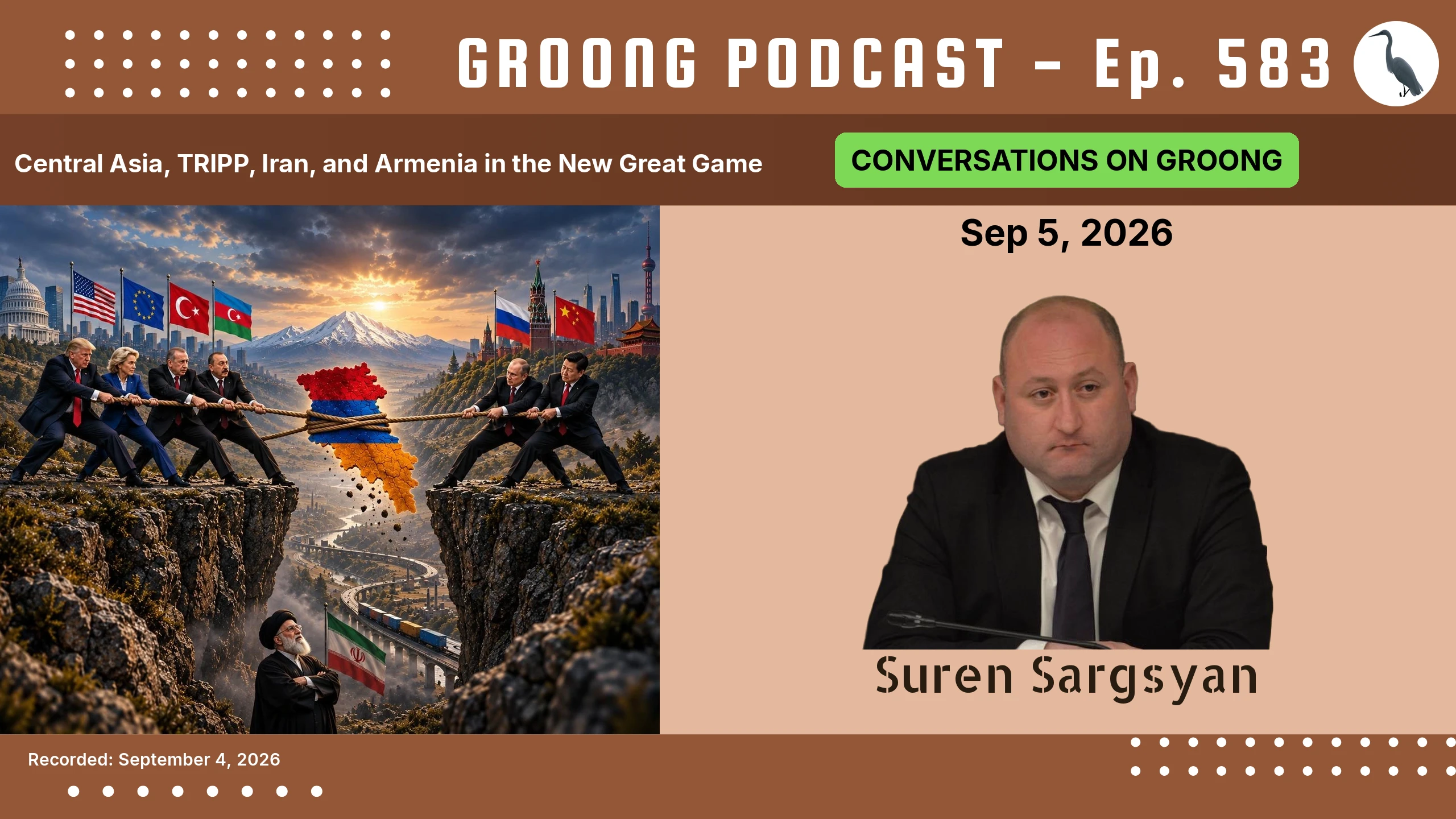
In this episode of Conversations on Groong, we speak with Suren Sargsyan about the Iran War and great power competition for Armenia’s strategic position. We discuss Washington’s unclear endgame in the conflict with Iran, the future of Russia’s military presence in Armenia and CSTO membership, and competing U.S. and European interests in new east-west transit routes through Armenia and Central Asia amid broader geopolitical rivalries.
Transcript: Armenia at the SCO Summit as Ukraine and Iran Wars Intensify | Ep 582, Aug 30, 2026
Posted on Wednesday, Sep 2, 2026 | Category: Transcript | Armenian News, Nagorno Karabakh, Nikol Pashinyan, South Caucasus, Ilham Aliyev, Ukraine War, Prisoners of War, Iran War, Corruption, Vladimir Putin, Robert Kocharyan, Human Rights, Armenia-Russia Relations, Masoud Pezeshkian, Garegin II, Alen Simonyan, Shanghai Cooperation Organization, Armenian Center for Political Rights, Levon Kocharyan, Aregnaz Manukyan, Armenia, Armenian political persecution, Artsakh leaders imprisonment, Avetik Chalabyan, Azerbaijan, Bako Sahakyan, Bishkek, CIA, CIA Director Moscow visit, Donald Trump, India, Investigative Services, Iran, John Radcliffe, Jordan, Kharg Island, Larak Island, Narendra Modi, NATO, NSS, Pashinyan-Aliyev talks, Paul Gallagher, Pralay Missiles, Regional geopolitics August 2026, Russia, SCO Summit 2026, Tigranashen, Turkey, Ukraine war escalation, US Military Bases, US-Iran military strikes, Vatican, Vatican diplomacy Russia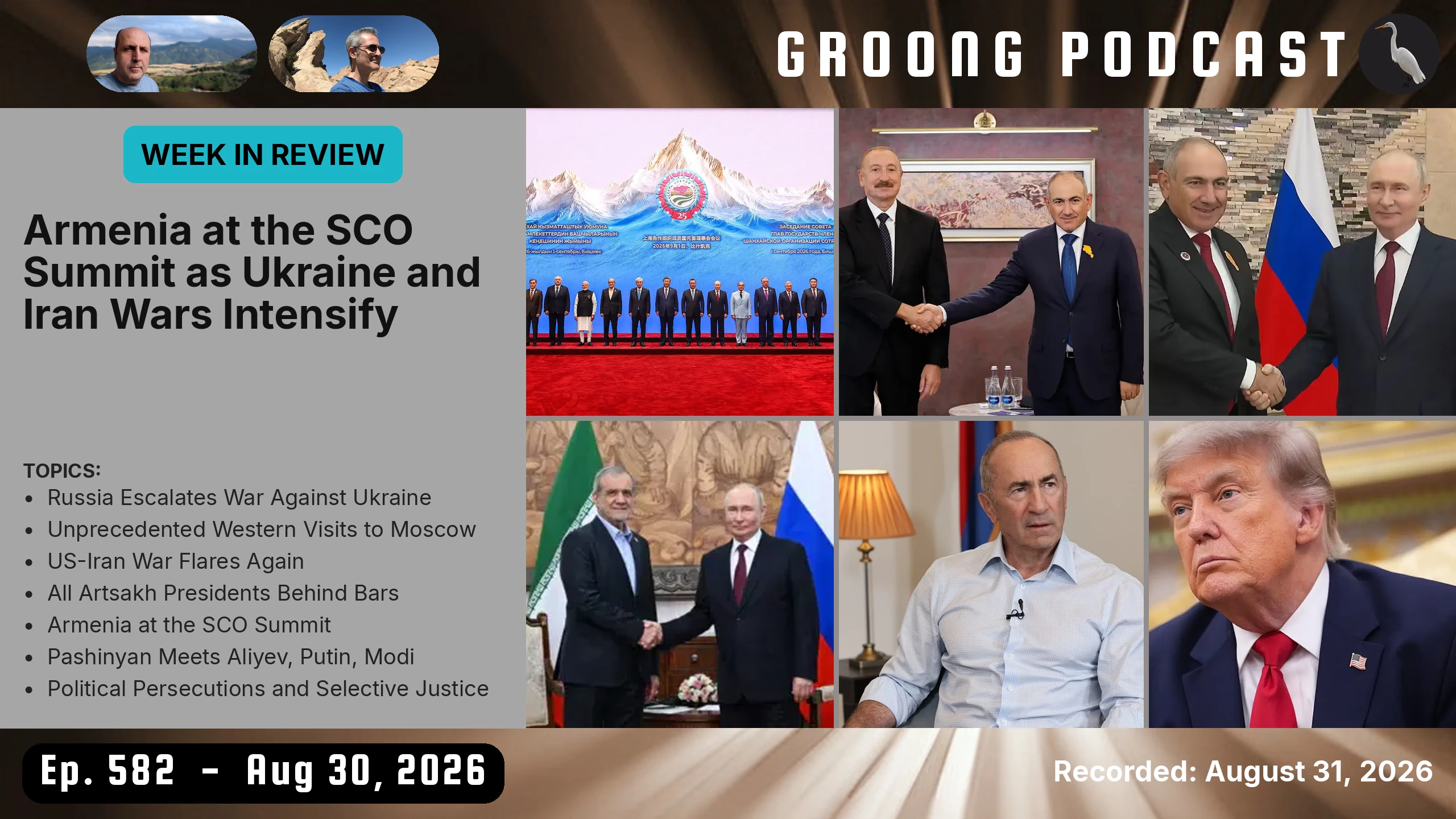
In this week’s Groong news roundup, Hovik and Asbed examine Armenia’s position at the SCO Summit amid intensifying global conflicts. We discuss Russia’s escalation in Ukraine, unprecedented Western diplomatic visits to Moscow, the renewed US-Iran War, and Pashinyan’s meetings with regional and global leaders including Aliyev and Putin. We also address the ongoing persecution of former Artsakh leaders and the selective justice targeting Armenia’s political landscape.
Transcript: Arthur Martirosyan - The Fourth Republic and the Politics of Erasure | Ep 581, Aug 29, 2026
Posted on Saturday, Aug 29, 2026 | Category: Armenia, Politics, Transcript | Armenian News, Armenian Church, Nagorno Karabakh, Nikol Pashinyan, Ilham Aliyev, Armenia-Azerbaijan Peace Process, Civil Contract, 2026 Armenian Parliamentary Election, Armenian Parliamentary Elections, Armenian Diaspora, Corruption, Samvel Karapetyan, Robert Kocharyan, Catholicos of All Armenians, Trump Route for International Peace and Prosperity, Hayastan Dashinq, Political Prisoners, Strong Armenia, Armenian Elections, Serzh Sargsyan, Gagik Tsarukyan, Prosperous Armenia, Garegin II, Arthur G. Martirosyan, Shanghai Cooperation Organization, Levon Kocharyan, Edgar Ghazaryan, AI Factory, Alma Ata, ANPP, Armenia, Armenian Church attacks, Armenian Identity, Armenian Opposition, Ataturk, Azerbaijan, Energy Infrastructure, Gagik Tsarukyan detention, Hrazdan, Kocharyan arrest August 2026, Metsamor, Nuclear Power Plant, opposition repression Armenia, Organization of Turkic States, Pashinyan revenge politics, Political Arrests, Pre-Trial Detention, Russia, Samvel Karapetyan house arrest, Separation of Church and State, Soviet borders, Surveillance, Tigranashen border concessions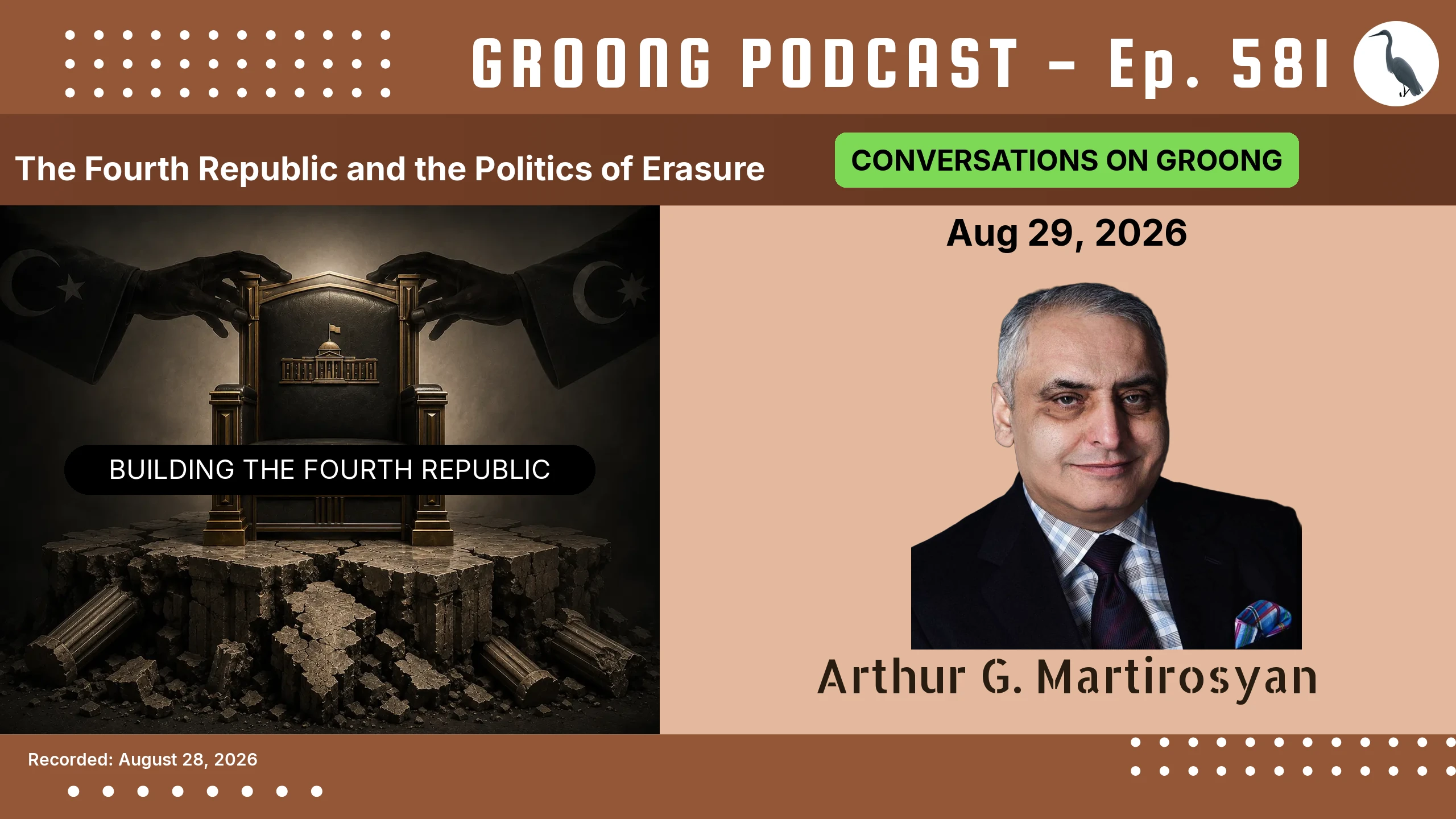
In this episode of Conversations on Groong, we speak with Arthur G. Martirosyan about Armenia’s post-election political crisis and Pashinyan’s governance agenda. We discuss the arrest of opposition leaders including Robert Kocharyan, attacks on the Armenian Church, border concessions including Tigranashen, the TRIPP corridor, and how the Established Opposition is strategizing under state repression in the Fourth Republic.
Transcript: Ambassador Jack Matlock - Did the West Fumble the Post-Cold War Peace? | Ep 580, Aug 28, 2026
Posted on Friday, Aug 28, 2026 | Category: Armenia, US, Russia, Geopolitics, History, Soviet Armenia, USSR, Transcript | Armenian News, Nagorno Karabakh, South Caucasus, Four-Day War, Soviet Armenia, Abdurrahman Vezirov, Andrei Gromyko, Autopsy on an Empire, Azerbaijan, Baku Pogroms, Baltic States, Boris Yeltsin, Chicken Kiev, Cold War, Cold War ending, Crimea, Cuban Missile Crisis, European Union, Extending Russia, Georgia, Great-power rivalry Caucasus, Jack Matlock, Joseph Stalin, Kosovo, Mikhail Gorbachev, NATO, NATO expansion, Nuclear Proliferation, Post-Cold War strategy, RAND, Reagan-Gorbachev diplomacy, Referendum, Ronald Reagan, Russia, Serbia, Soviet Union, Soviet Union collapse, Sumgait Pogroms, Suren Arutyunyan, United States, US-Russia Relations, USSR, Victory Park, Western Civilization, Yerevan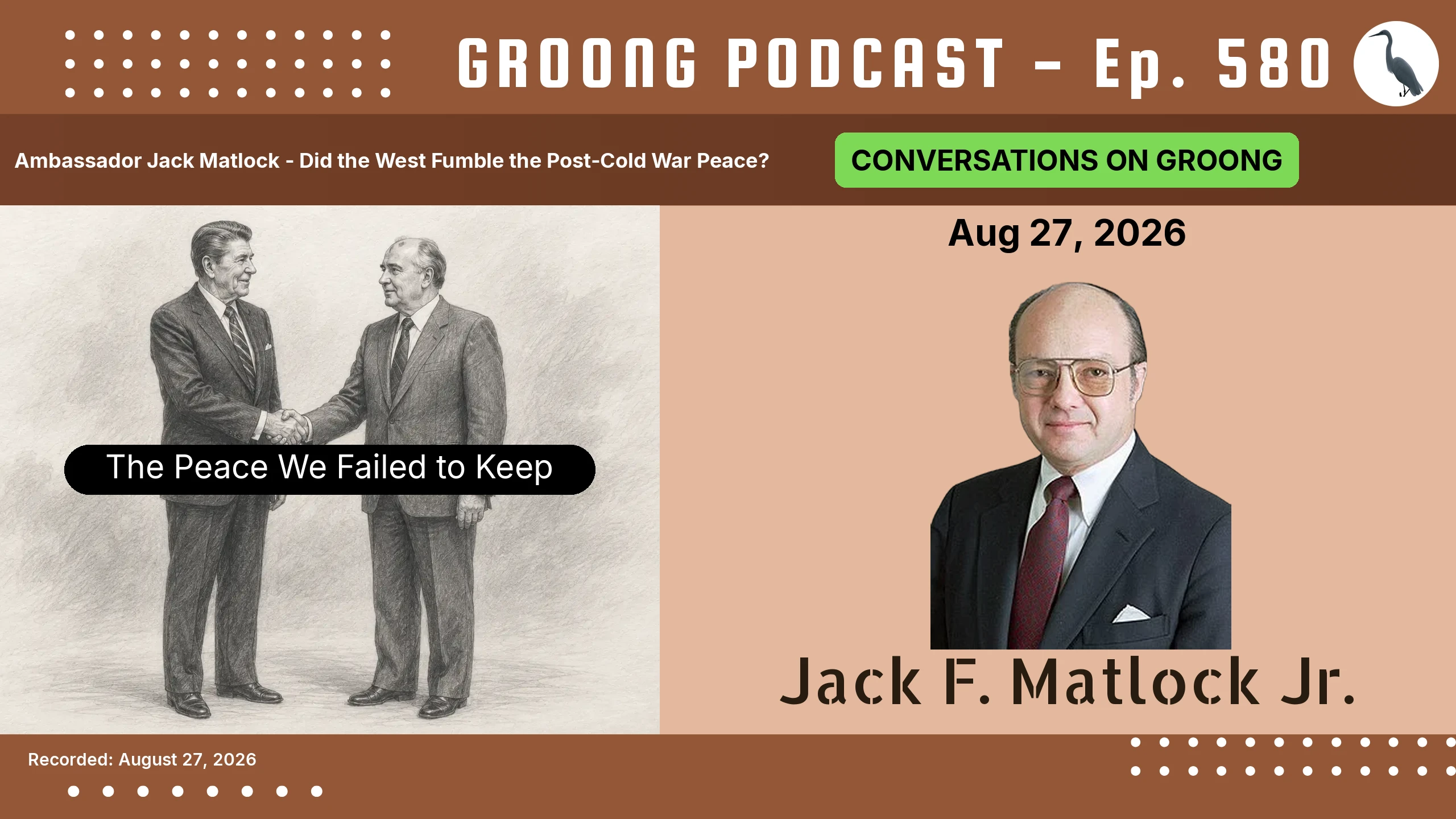
In this episode of Conversations on Groong, we speak with Ambassador Jack Matlock, the last US Ambassador to the Soviet Union, about whether the West missed a historic opportunity to integrate Russia into Western security architecture after the Cold War. We discuss the internal collapse of the Soviet Union, Reagan-Gorbachev diplomacy, NATO expansion and Russian backlash, and how Cold War-era decisions shape Armenia’s geopolitical choices today, including Matlock’s firsthand observations of Soviet Armenia during glasnost and the Nagorno Karabakh movement.
Transcript: Dziunik Aghajanian - Armenia Between Iran, Russia & the New Middle East Order | Ep 579, Aug 22, 2026
Posted on Saturday, Aug 22, 2026 | Category: Armenia, Politics, Geopolitics, Transcript | Armenian News, Armenian Church, Nagorno Karabakh, Nikol Pashinyan, Ilham Aliyev, Civil Contract, 2026 Armenian Parliamentary Election, Zangezur Corridor, Iran War, Syunik, Eurasian Economic Union, Catholicos of All Armenians, CSTO, Trump Route for International Peace and Prosperity, Hayastan Dashinq, Strong Armenia, Nakhijevan, Prosperous Armenia, Narek Karapetyan, Dziunik Aghajanian, Armenia-Iran Relations, Edgar Ghazaryan, Armenia, Armenia energy crisis, Azerbaijan, Donald Trump, Established Opposition strategy, Iran, Israel, Mecca defense pact, Mecca Joint Defense Agreement, Middle East realignment, Nakhijevan militarization, Pakistan, Russia, Russia CSTO deadlines, Saudi Arabia, Syunik Corridor, Turkey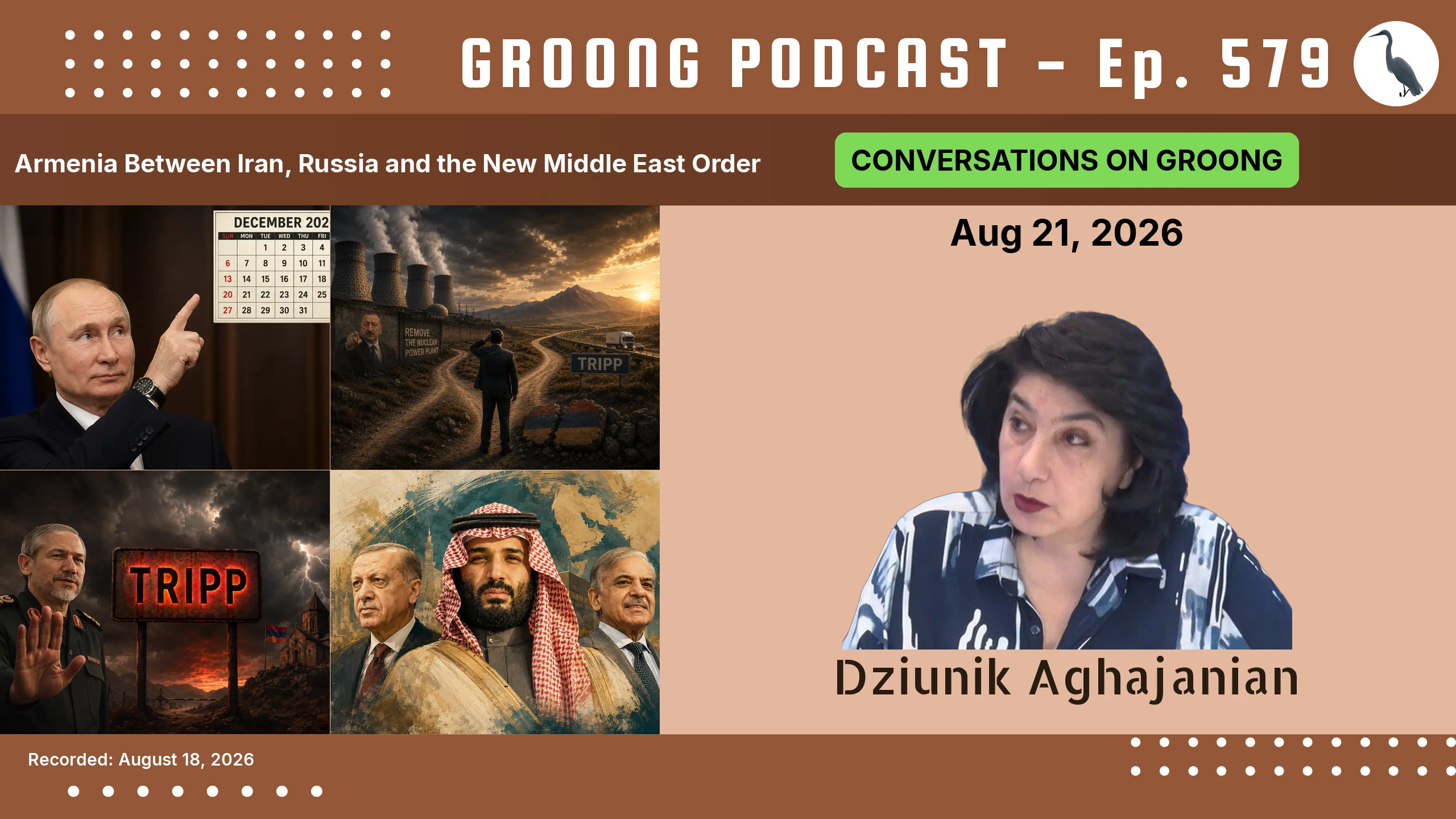
In this episode of Conversations on Groong, we speak with Dziunik Aghajanian about Armenia’s precarious position between Iran, Russia, and emerging Middle East power shifts. We discuss the Mecca joint defense pact signed by Turkey, Pakistan, and Saudi Arabia, Iran’s warnings over TRIPP, Ilham Aliyev’s militarization plans in Nakhijevan, Armenia’s growing energy dependence, Russian deadlines for Yerevan, and how the Established Opposition is testing its parliamentary strategy ahead of the 2026 Armenian Parliamentary Election.
Transcript: Aliyev’s TRIPP, Russia’s Deadline, Iran’s Warning | Ep 578, Aug 16, 2026
Posted on Wednesday, Aug 19, 2026 | Category: Armenia, Politics, Transcript | Armenian News, Nagorno Karabakh, South Caucasus, Ilham Aliyev, Civil Contract, Zangezur Corridor, Iran War, Corruption, Syunik, Eurasian Economic Union, CSTO, Strong Armenia, Nakhijevan, Armen Grigoryan, Narek Karapetyan, Garegin II, Alen Simonyan, Edgar Ghazaryan, Ruben Rubinyan, Donald Trump, Iran War spillover Armenia, Russia EAEU ultimatum December 2026, CSTO membership freeze, Pashinyan EU pivot, Trump Route TRIPP, Strait of Hormuz, Armenian regional security, EAEU suspension threat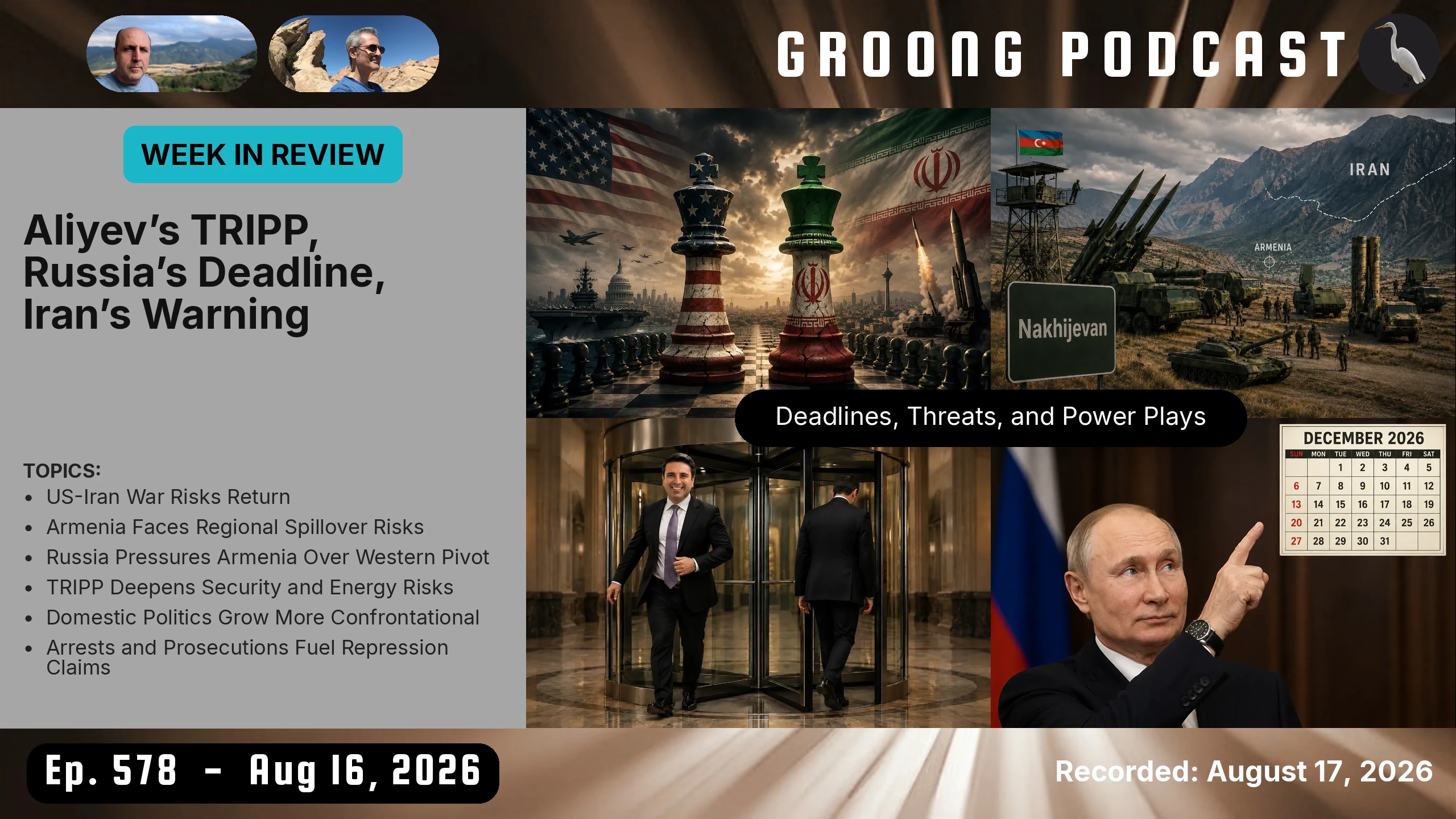
In this episode of Groong Week in Review, Hovik and Asbed discuss Armenia’s precarious position amid escalating Iran War risks, Russia’s December ultimatum on the Eurasian Economic Union, and deepening security threats from TRIPP. We examine how a broader US-Iran conflict could devastate Armenia through refugee flows and logistics collapse, why Pashinyan’s EAEU defiance has triggered Russian pressure, and what frozen CSTO membership actually means for Armenian security.
Transcript: Richard Campbell - The AI Infrastructure Race and Armenia’s High-Stakes Bet | Ep 577, Aug 16, 2026
Posted on Sunday, Aug 16, 2026 | Category: Armenia, Geopolitics, Technology, Transcript | Armenian News, Ukraine War, Iran War, AGI, AI, AI infrastructure, AI sovereignty, ANPP, Armenia, Artificial Intelligence, AWS, China, Cloud Computing, data center economics, Data Sovereignty, Datacenter, EBR, energy demands, European Boiling Water Reactor, Evaporative Cooling, Firebird, Firebird project, frontier AI development, Frontier Model, geopolitical AI race, GPU, Hrazdan, Insanity Bubble, Leopold Aschenbrenner, Manhattan Project, Metsamor, Nuclear Power Plant, NVIDIA, NVIDIA GPUs, One Child Policy, Richard Campbell, Ship of Theseus, Small Modular Reactor, SMR, Super-Intelligence, Taiwan Semiconductor, Technology Sovereignty, TRS80, TSM, United States, VVER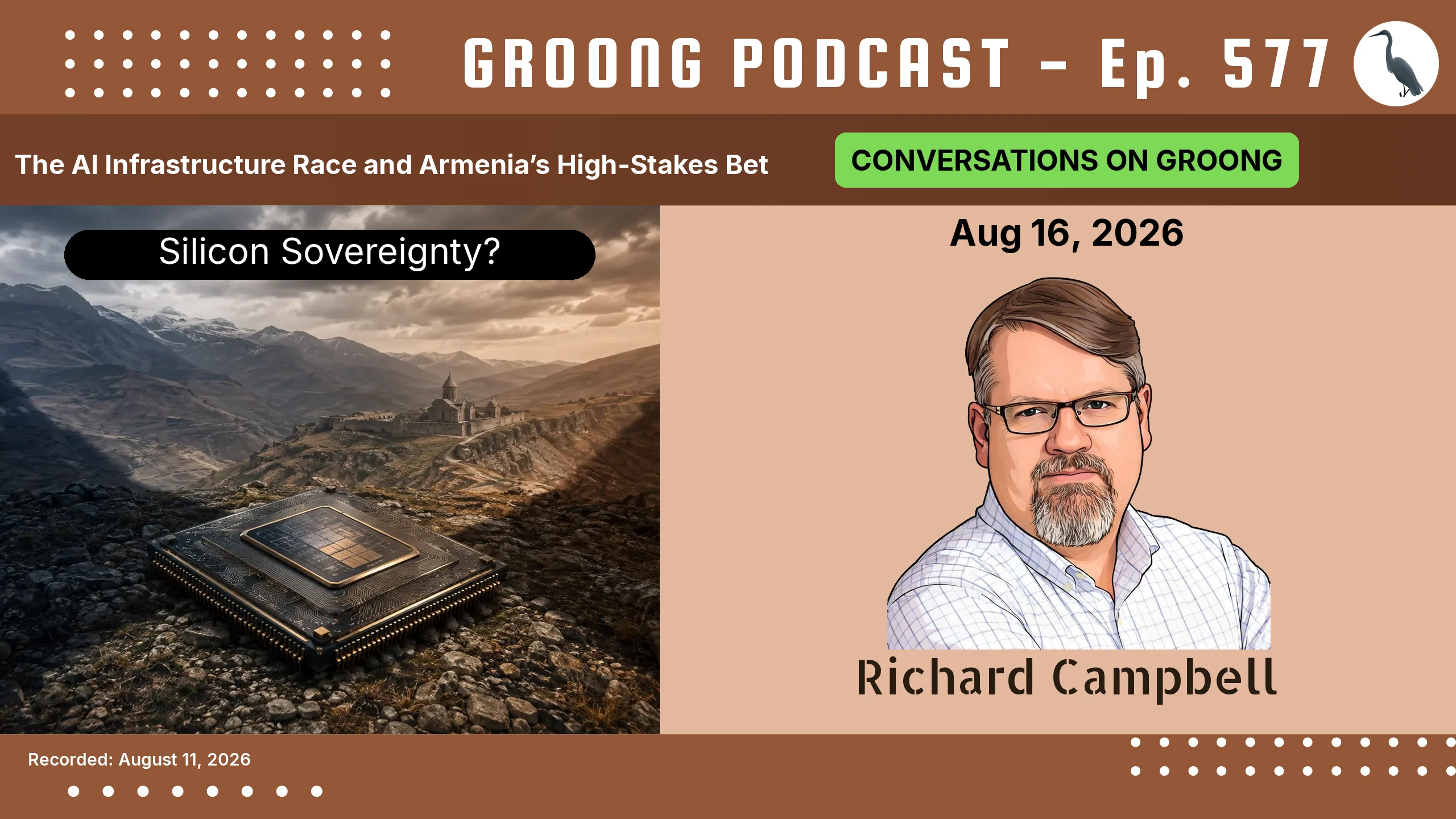
In this episode of Conversations on Groong, we speak with Richard Campbell about artificial intelligence infrastructure and Armenia’s Firebird project. We discuss the global AI race, the economics and energy demands of data centers, whether current AI valuations align with physical and economic realities, and what sovereign AI capacity means for Armenia’s strategic positioning.