Latest Blog Post
Transcript: Arthur Martirosyan - Armenia at a Crossroads: Railways, Reactors, and Security | Ep 594, Oct 17, 2026
Posted on Saturday, Oct 17, 2026 | Category: Armenia, Politics, Geopolitics, Transcript | Armenian News, Nagorno Karabakh, Zangezur Corridor, Eurasian Economic Union, Trump Route for International Peace and Prosperity, Arthur G. Martirosyan, COP29, Alma Ata, Amulsar, Ani Avetisyan, ANPP, Armenia, Armenian Constitution, Armenian Economy, Armenian nuclear power, Azerbaijan, Azerbaijani Infiltration, Azeri Infiltration, Baku, BioDiversity, Biological Diversity, border security failures, Constitutional Referendum, COP17, Enclaves, Environmentalist Protests, Exclaves, government transparency, Iran, Kashi, Lena Nazaryan, Nuclear Power Plant, Oleg Belozerov, Pan Turan, Pashinyan accountability, Popular Referendum, Rosatom, Russia, Russian Railway, Russian Railways concession, RZhD arbitration, Shaki shooting incident, Small Modular Reactor, SMR, SMR technology, Turan, Yerevan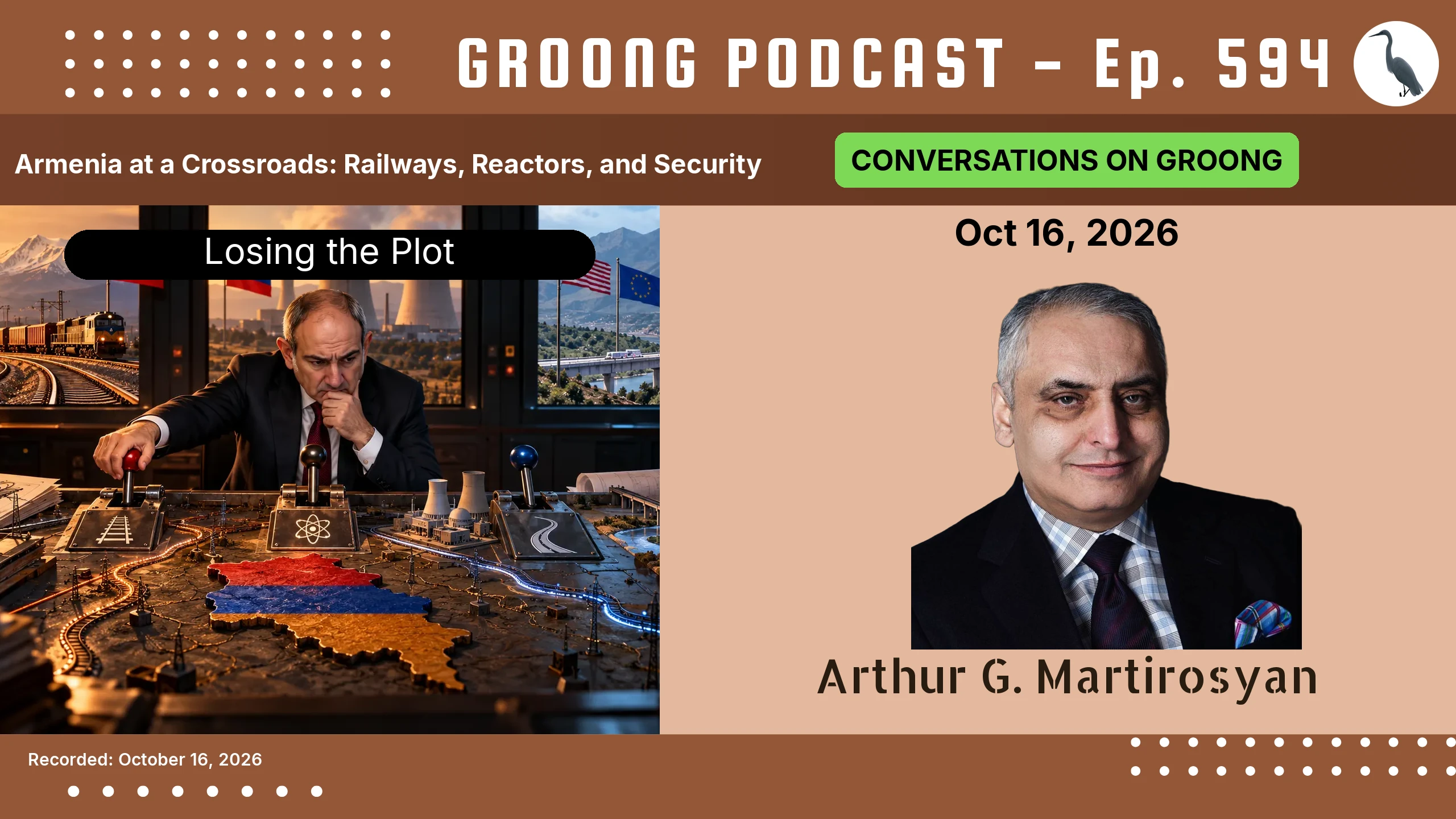
In this episode of Conversations on Groong, we speak with Arthur G. Martirosyan about Armenia at a crossroads in politics and security. We discuss the Shaki infiltration incident and government accountability, Pashinyan’s standoff with Russian Railways over the rail concession, nuclear energy options including Western SMRs versus Russian reactors, TRIPP’s implications for Armenian geopolitics, and environmental destruction at COP17.
Transcript: Arthur Martirosyan - Armenia at a Crossroads: Railways, Reactors, and Security | Ep 594, Oct 17, 2026
Posted on Saturday, Oct 17, 2026 | Category: Armenia, Politics, Geopolitics, Transcript | Armenian News, Nagorno Karabakh, Zangezur Corridor, Eurasian Economic Union, Trump Route for International Peace and Prosperity, Arthur G. Martirosyan, COP29, Alma Ata, Amulsar, Ani Avetisyan, ANPP, Armenia, Armenian Constitution, Armenian Economy, Armenian nuclear power, Azerbaijan, Azerbaijani Infiltration, Azeri Infiltration, Baku, BioDiversity, Biological Diversity, border security failures, Constitutional Referendum, COP17, Enclaves, Environmentalist Protests, Exclaves, government transparency, Iran, Kashi, Lena Nazaryan, Nuclear Power Plant, Oleg Belozerov, Pan Turan, Pashinyan accountability, Popular Referendum, Rosatom, Russia, Russian Railway, Russian Railways concession, RZhD arbitration, Shaki shooting incident, Small Modular Reactor, SMR, SMR technology, Turan, YerevanIn this episode of Conversations on Groong, we speak with Arthur G. Martirosyan about Armenia at a crossroads in politics and security. We discuss the Shaki infiltration incident and government accountability, Pashinyan’s standoff with Russian Railways over the rail concession, nuclear energy options including Western SMRs versus Russian reactors, TRIPP’s implications for Armenian geopolitics, and environmental destruction at COP17.
Transcript: Pashinyan's Nuclear U-Turn and Armenia's Security Failures | Ep 593, Oct 11, 2026
Posted on Wednesday, Oct 14, 2026 | Category: Armenia, Politics, Geopolitics, Transcript | Armenian News, Nagorno Karabakh, Nikol Pashinyan, South Caucasus, Civil Contract, Corruption, Samvel Karapetyan, Eurasian Economic Union, CSTO, Strong Armenia, Garegin II, AI, Alexey Likhachev, Ani Avetisyan, ANPP, Armenia, Azerbaijan, Azeri Infiltration, Azeri Soldier, Data Centers, data centers Hrazdan Sevan, Doping Space, energy security dependency, grid stability management, Jennifer Lopez, Metsamor, Money Embezzling, Money Laundering, nuclear energy Armenia, Nuclear Power Plant, opposition unity, Rosatom negotiations, Russia, Shaki, SMR versus gigawatt NPP, Snoop Dogg, Turkey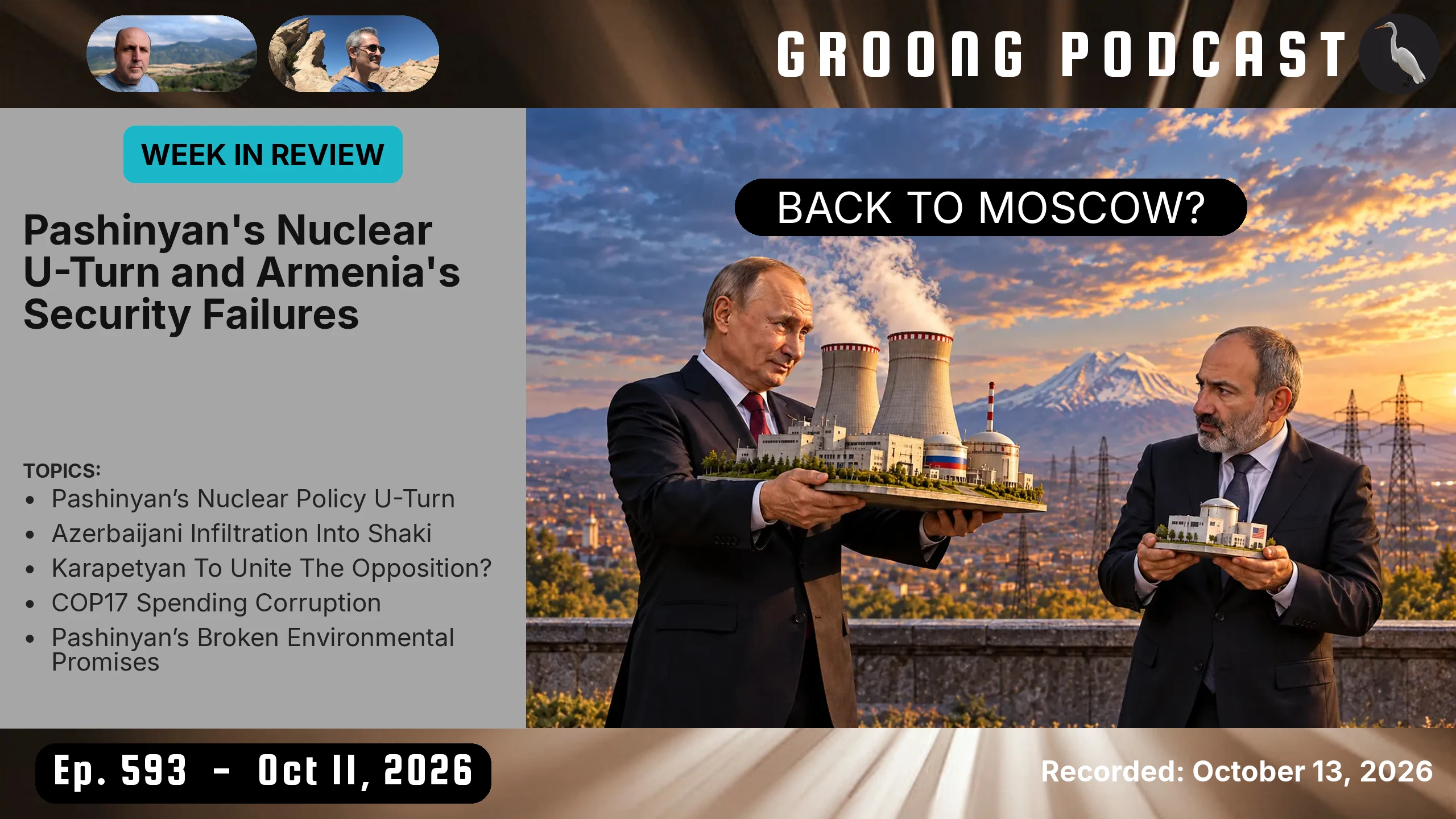
In this week’s episode of Groong Week in Review, Hovik and Asbed examine Pashinyan’s abrupt reversal on nuclear energy policy, shifting from Western small modular reactors to consideration of a Russian gigawatt-scale plant amid surging data center demands. We discuss the security implications of long-term energy dependency, the geopolitics behind Armenia’s power infrastructure choices, and ongoing concerns about Azerbaijani infiltration, opposition unity under Samvel Karapetyan, and corruption at COP17.
Transcript: Harut Sassounian - Armenia’s Identity Crisis: Church, State, and Diaspora | Ep 592, Oct 2, 2026
Posted on Friday, Oct 2, 2026 | Category: Armenia, Politics, Geopolitics, Transcript | Armenian News, Armenian Church, Nagorno Karabakh, Nikol Pashinyan, Civil Contract, 2026 Armenian Parliamentary Election, Armenian Parliamentary Elections, 44-Day War, Catholicos of All Armenians, United Nations, Right of Return, Ruben Vardanyan, Garegin II, Armenian History, Harut Sassounian, Hovnan Derderian, Catholicos Garegin II, Church-State conflict in Armenia, Armenian national identity, Artsakh displacement and return, Armenia-Diaspora tensions, World Council of Churches Bern 2025, Armenian Church governance, Constitutional Article 18
In this episode of Conversations on Groong, we speak with Harut Sassounian about Armenia’s identity crisis amid escalating conflict between the Armenian government and the Armenian Apostolic Church. We discuss Catholicos Garegin II’s statements at the May 2025 World Council of Churches conference in Bern, Pashinyan’s public attacks on senior clergy, the constitutional role of the Armenian Church in national identity, and the deeper geopolitical questions surrounding Armenia-Diaspora relations following the June 2026 Armenian parliamentary elections.
Transcript: From Yerablur to Etchmiadzin: Armenia’s Battle Over Memory | Ep 591, Sep 27, 2026
Posted on Thursday, Oct 1, 2026 | Category: Armenia, Politics, Geopolitics, Transcript | Armenian News, Armenian Church, Nagorno Karabakh, Nikol Pashinyan, South Caucasus, Recep Tayyip Erdogan, Civil Contract, Prisoners of War, Armenian Genocide, Ethnic Cleansing, Corruption, Samvel Karapetyan, 44-Day War, Catholicos of All Armenians, OSCE, United Nations, Political Prisoners, Strong Armenia, Armenian Elections, Ararat Mirzoyan, Etchmiadzin, Gagik Tsarukyan, Prosperous Armenia, Arman Tatoyan, Narek Karapetyan, Wings of Unity, Garegin II, INSTC, Armenian History, Lilit Makunts, Cilician Armenia, Albert Hovannisyan, Anna Hakobyan, Aram I, Armenia, Armenian Identity, Armenian Public TV, Azerbaijan, Benjamin Netanyahu, Bern, BHK, Christian Solidarity International, CSI, Dadivank, Edward Leigh, European Union, Gandzasar, Hakan Fidan, Hovnan Derderian, Hripsime Grigoryan, Ibrahim Kalin, John Eibner, Khachkars, ODIHR, PACE, Pre-Trial Detention, Russia, September 27, Steve Witkoff, Tata Simonian, Tom Barrack, Turkey, UNGA81, United Nations General Assembly, Victory Park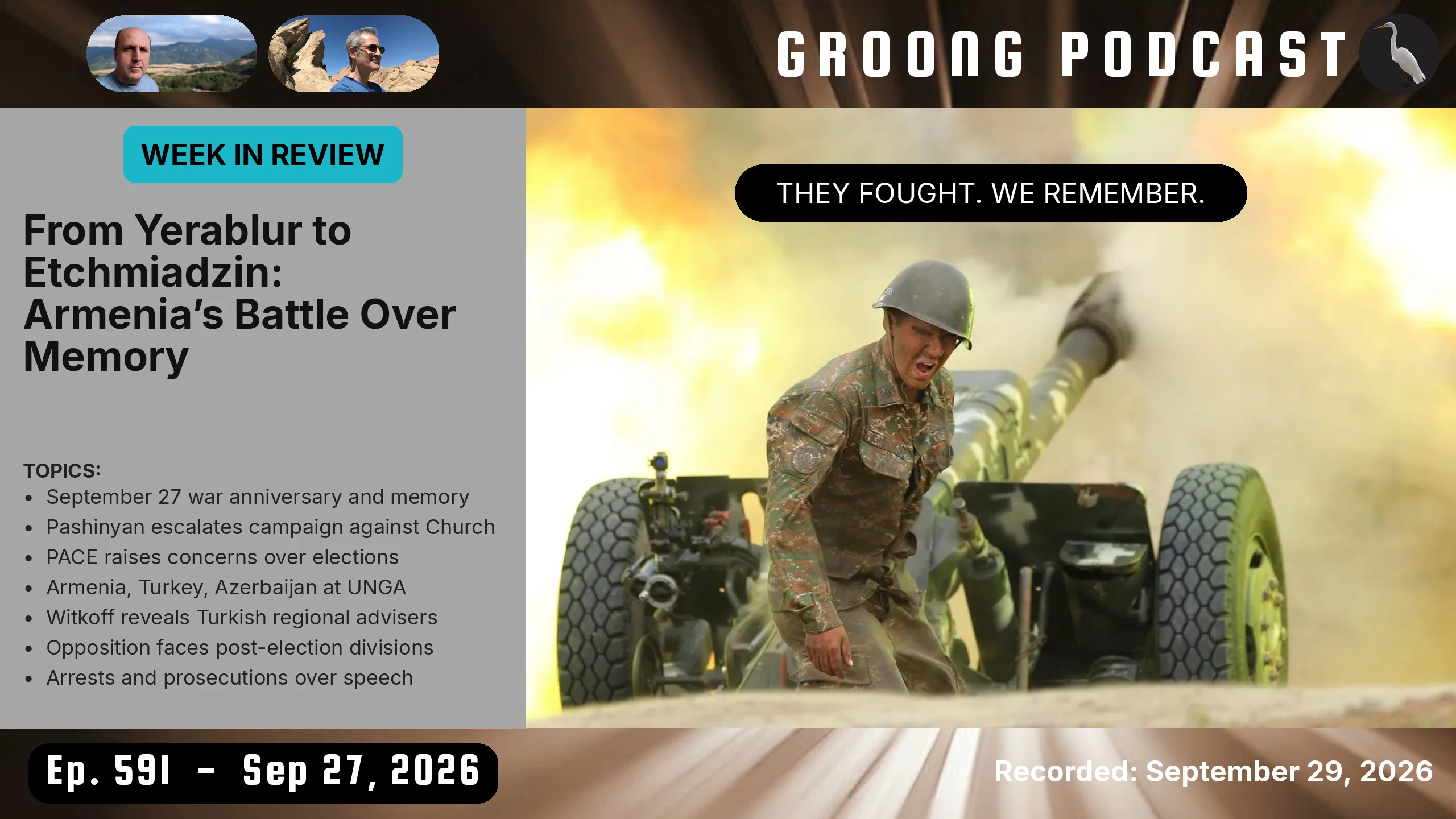
In this week’s Groong Week in Review, Hovik and Asbed mark the sixth anniversary of the 44-Day War and examine Armenia’s deepening crisis over historical memory and national identity. We discuss the Armenian government’s controversial response to September 27 commemorations, escalating tension between the state and the Armenian Church, international concern over election integrity, and Armenia’s isolated position as Azerbaijan demolishes Artsakh’s Armenian cultural heritage while Turkey advances regional integration plans.
Transcript: Dziunik Aghajanian - From Moscow to Riyadh: New Fault Lines Around Armenia | Ep 590, Sep 25, 2026
Posted on Friday, Sep 25, 2026 | Category: Armenia, Politics, Geopolitics, Transcript | Armenian News, Armenian Church, Nagorno Karabakh, Nikol Pashinyan, South Caucasus, Armenia-Azerbaijan Peace Process, Civil Contract, Zangezur Corridor, Iran War, Corruption, Eurasian Economic Union, Robert Kocharyan, Catholicos of All Armenians, OSCE, CSTO, Trump Route for International Peace and Prosperity, Armenia-Russia Relations, Gagik Tsarukyan, Nakhijevan, Dziunik Aghajanian, 102nd Russian military base, Armenia, Armenia foreign policy 2026, Armenian anti-corruption, Azerbaijan, Houthi tensions, Iran, Israel, Mecca Joint Defense Agreement, Middle East escalation, Pakistan, Russia, Russian military withdrawal, Saudi Arabia, Turkey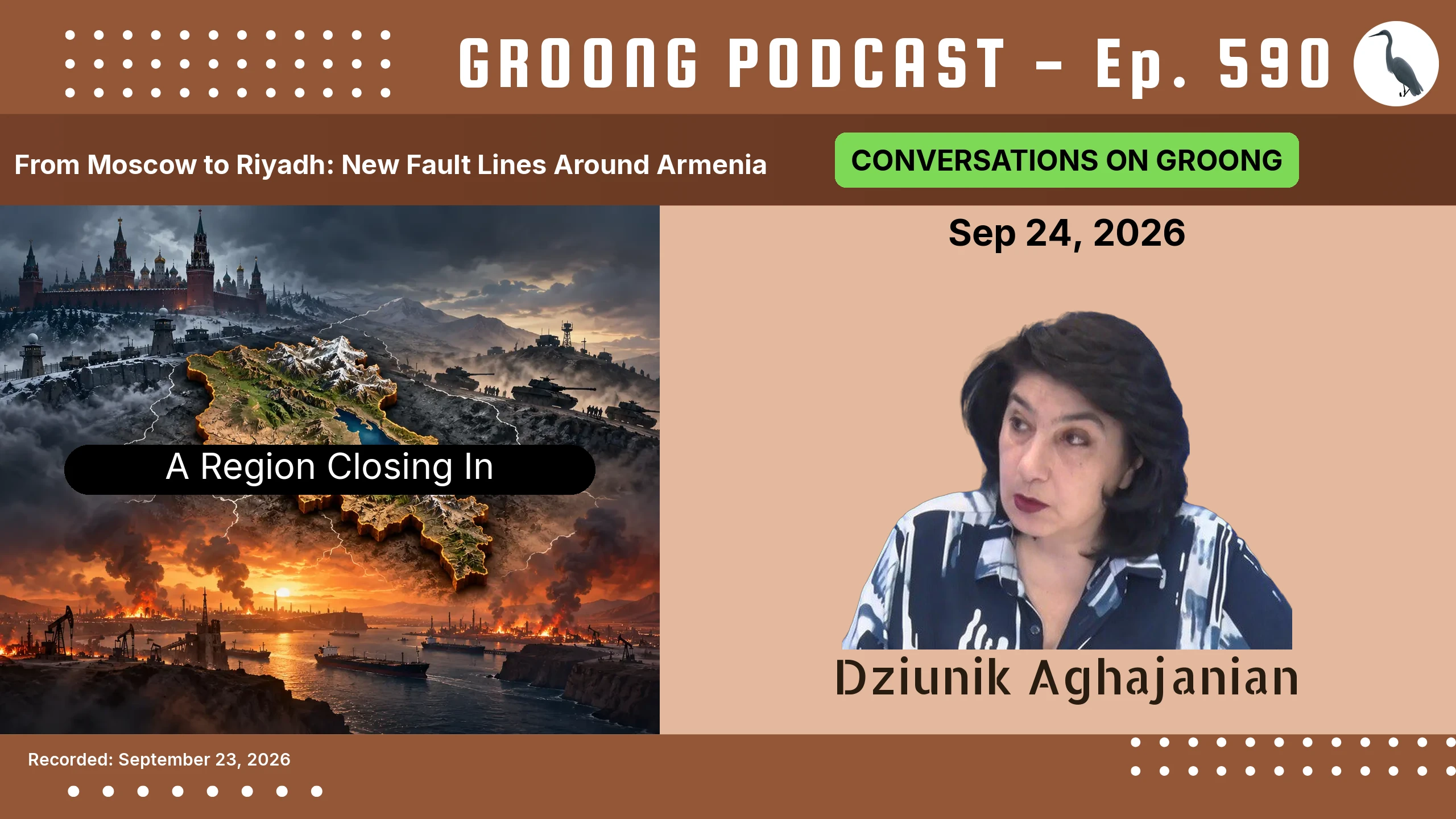
In this episode of Conversations on Groong, we speak with Dziunik Aghajanian about shifting geopolitical pressures on Armenia following Russia’s September 2026 parliamentary elections. We discuss Putin’s strengthened domestic position, the Armenia-Russia confrontation over the 102nd base, asset confiscation and anti-corruption efforts targeting Russian interests, and how Middle East escalation and the Iran War reshape Armenia’s strategic environment amid ongoing Armenia-Azerbaijan Peace Process tensions.
Transcript: Armenia at 35: Independence, Loss, and Unfinished Wars | Ep 588, Sep 20, 2026
Posted on Wednesday, Sep 23, 2026 | Category: Armenia, Politics, Geopolitics, Transcript | Armenian News, Armenian Church, Nagorno Karabakh, Nikol Pashinyan, Ilham Aliyev, Civil Contract, Zangezur Corridor, Ukraine War, Prisoners of War, Ethnic Cleansing, Corruption, Syunik, Catholicos of All Armenians, OSCE, Trump Route for International Peace and Prosperity, Garegin II, Levon Ter-Petrosyan, Armenian History, Vahagn Khachaturyan, Armenia, Armenia blockade legacy, Armenia independence day 2026, Armenian citizenship policy, Armenian Earthquake, Armenian POWs Baku, Artsakh loss 2023, Arush Arushanyan, AUA, Azerbaijan, Baku Pogroms, Boris Yeltsin, Carholicos, Catholicos Garegin II, Data Center, Digital House of Artsakh Culture, Drone War, Hakan Fidan, Hayk Sargsyan, Hessian Peace Prize, Independence Day, Jeyhun Bayramov, Khachatur Andreasyan, Levon Mnatsakanyan, Meghri, Mikhail Gorbachev, Moscow, Moscow Putsch, Narek Nalpantyan, ODIHR, Russia, Russian Election, Soviet Union, Sumgait Pogroms, Turkey, Turkey-Azerbaijan coordination, United Russia, Yerablur, Yerablur military cemetery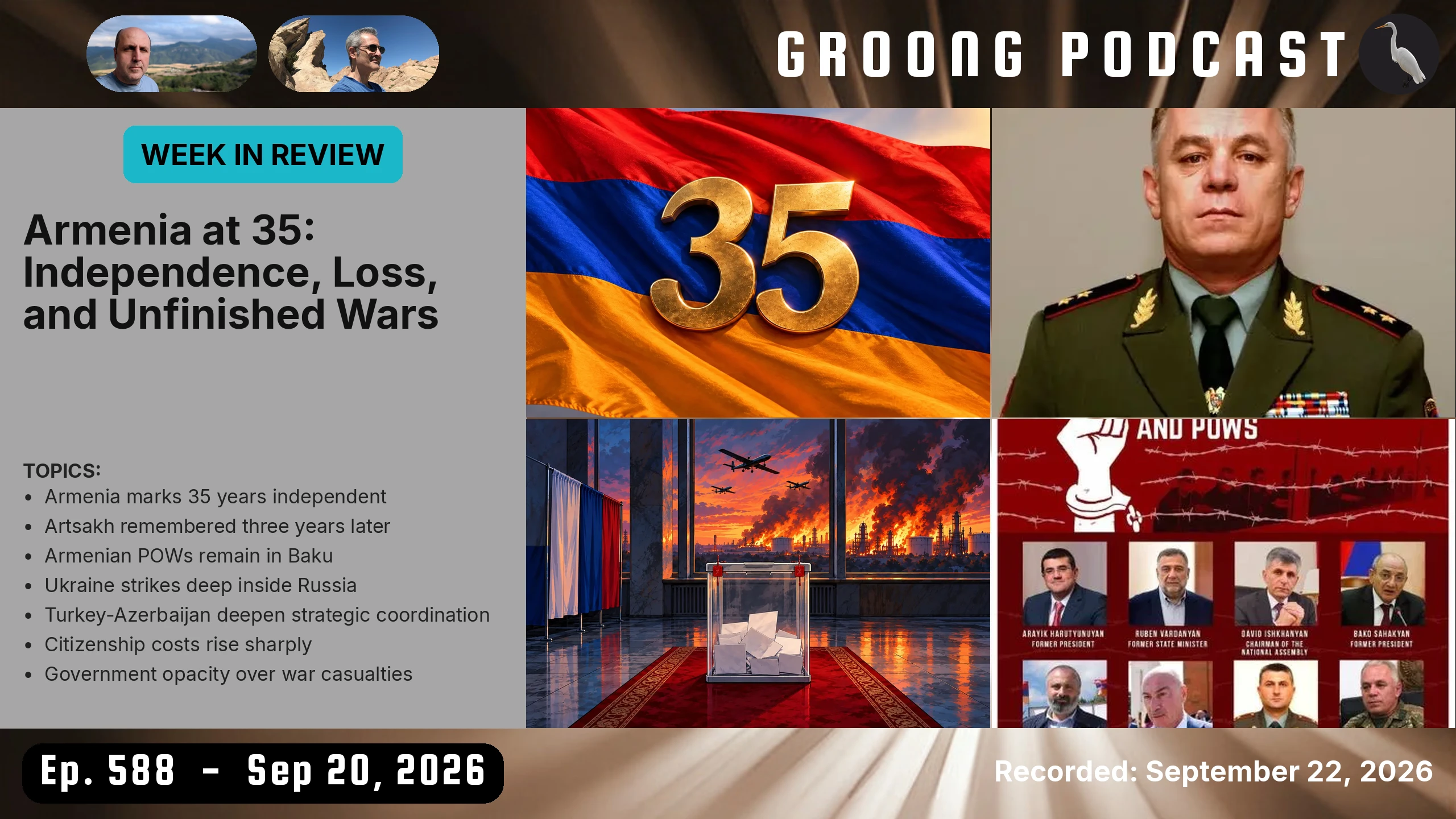
In this week’s Groong podcast episode, Hovik and Asbed reflect on Armenia’s 35th independence anniversary amid ongoing regional tensions and unresolved conflicts. We discuss the state of Armenian statehood three years after the ethnic cleansing of Artsakh, Armenian prisoners of war still held in Baku, rising citizenship costs, government opacity over war casualties, and deepening Turkey-Azerbaijan strategic coordination.
Transcript: Arthur Khachatryan - Opposition Strategy, TRIPP, and the Russian Base | Ep 589, Sep 23, 2026
Posted on Wednesday, Sep 23, 2026 | Category: Transcript | Armenian News, Armenian Church, Nagorno Karabakh, Nikol Pashinyan, South Caucasus, Ilham Aliyev, Civil Contract, 2026 Armenian Parliamentary Election, Zangezur Corridor, Armenian Diaspora, Corruption, Syunik, Robert Kocharyan, Trump Route for International Peace and Prosperity, Hayastan Dashinq, Strong Armenia, Gagik Tsarukyan, Armenian Revolutionary Federation, Nakhijevan, Narek Karapetyan, Arthur Khachatryan, Armenian History, Levon Kocharyan, Armenia-Azerbaijan Relations, Administrative Resources, Alma Ata, Armenia, Armenia Alliance / Hayastan Dashinq, Arush Arushanyan, Constitution, Dadivank, Gandzasar, Hikmet Hajiyev, Independence Day, June 2026 elections, Magdalena Grono, Matenadaran, Mikhail Galuzin, Narek Nalbandyan, Opposition strategy post-election, Paruyr Sevak, Ruben Rubinyan, September 21, Tigranashen, Tigranashen territorial dispute, TRIPP corridor access, Vote Buying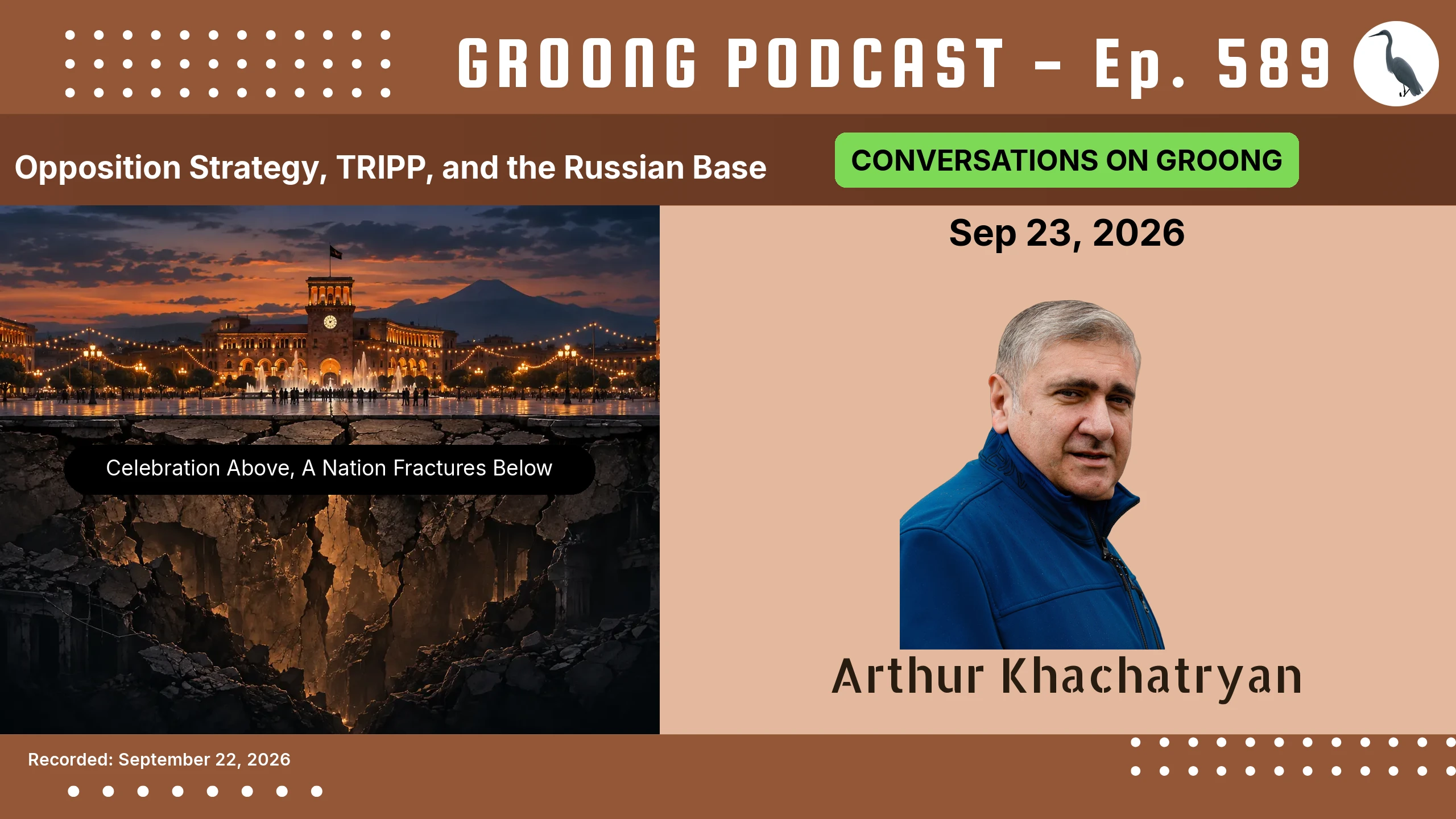
In this episode of Conversations on Groong, we speak with Arthur Khachatryan, MP from Armenia Alliance, about opposition strategy following the June 2026 Armenian Parliamentary Election. We discuss the Established Opposition’s plans to counter Pashinyan’s agenda, territorial concessions including Tigranashen, Azerbaijani attacks on Armenian heritage, the role of TRIPP and Azerbaijan’s control over transit corridors, the future of Russia’s 102nd military base, and escalating threats against opposition parties.
Transcript: Warwick Powell - From BRICS to AI: The Infrastructure Multipolarity | Ep 587, Sep 20, 2026
Posted on Sunday, Sep 20, 2026 | Category: Armenia, China, Geopolitics, Transcript | Armenian News, South Caucasus, Ukraine War, Syunik, Vladimir Putin, BRICS, East-West Corridor, Shanghai Cooperation Organization, AI, AI strategic competition, Bishkek, BRICS Pay, BRICS summit outcomes, CBDC, CBET, CBIT, Central Bank, China-India relations, De-dollarization, digital sovereignty, emerging financial architecture, Energy Sovereignty, European Union, John Pang, Malaysia, mBridge, multipolarity infrastructure, Narendra Modi, NATO, New Delhi, Nuclear Power, Nuclear Power Plant, Panama, SCO Summit 2026, Supply Chain, SWIFT, Tariffs, Technology Sovereignty, United States, UPI, Venezuela, Warwick Powell, Xi Jinping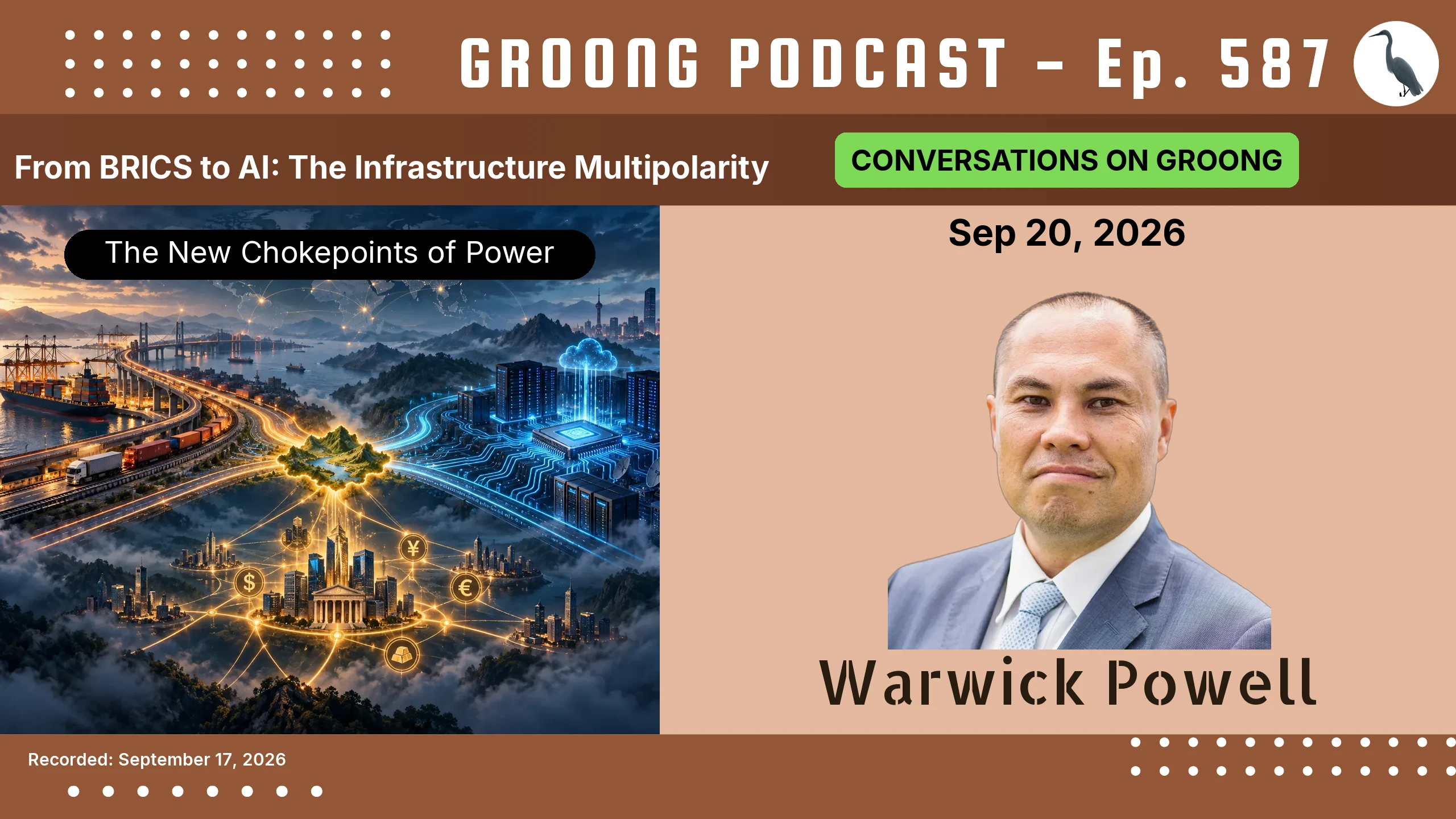
In this episode of Conversations on Groong, we speak with Professor Warwick Powell about multipolarity, infrastructure, and the strategic implications of emerging power blocs. We discuss tangible outcomes from the SCO and BRICS summits, the shift toward local-currency settlement and financial alternatives to Western institutions, China’s role as an enabling power, and how countries like Armenia navigate the infrastructure competition between TRIPP and competing regional corridors. We also examine AI safety and digital sovereignty in a multipolar world, where both Washington and Beijing view artificial intelligence as a decisive strategic contest.
Transcript: Hrant Mikaelian - Chips for TRIPP, Education Crisis, and Economic Risks | Ep 586, Sep 17, 2026
Posted on Friday, Sep 18, 2026 | Category: Armenia, Politics, Geopolitics, Transcript | Armenian News, Nagorno Karabakh, Armenia-Azerbaijan Peace Process, Civil Contract, Zangezur Corridor, Iran War, Trump Route for International Peace and Prosperity, JD Vance, Hrant Mikaelian, Armenian History, 102nd Military Base, AI, AI infrastructure Armenia, ANPP, Armenia, Armenian economic risks, Armenian education outcomes, Central Bank of Armenia, chip diplomacy, Data Center, Firebird, Firebird data center, Hrazdan, Magdalena Grono, Martin Galstyan, Matenadaran, Nuclear Power Plant, nuclear power plant shutdown, NVIDIA, Reading Literacy, Russia, Russian Gas, Sevan, Solar Energy, Solar Power, TRIPP energy demands, Water Consumption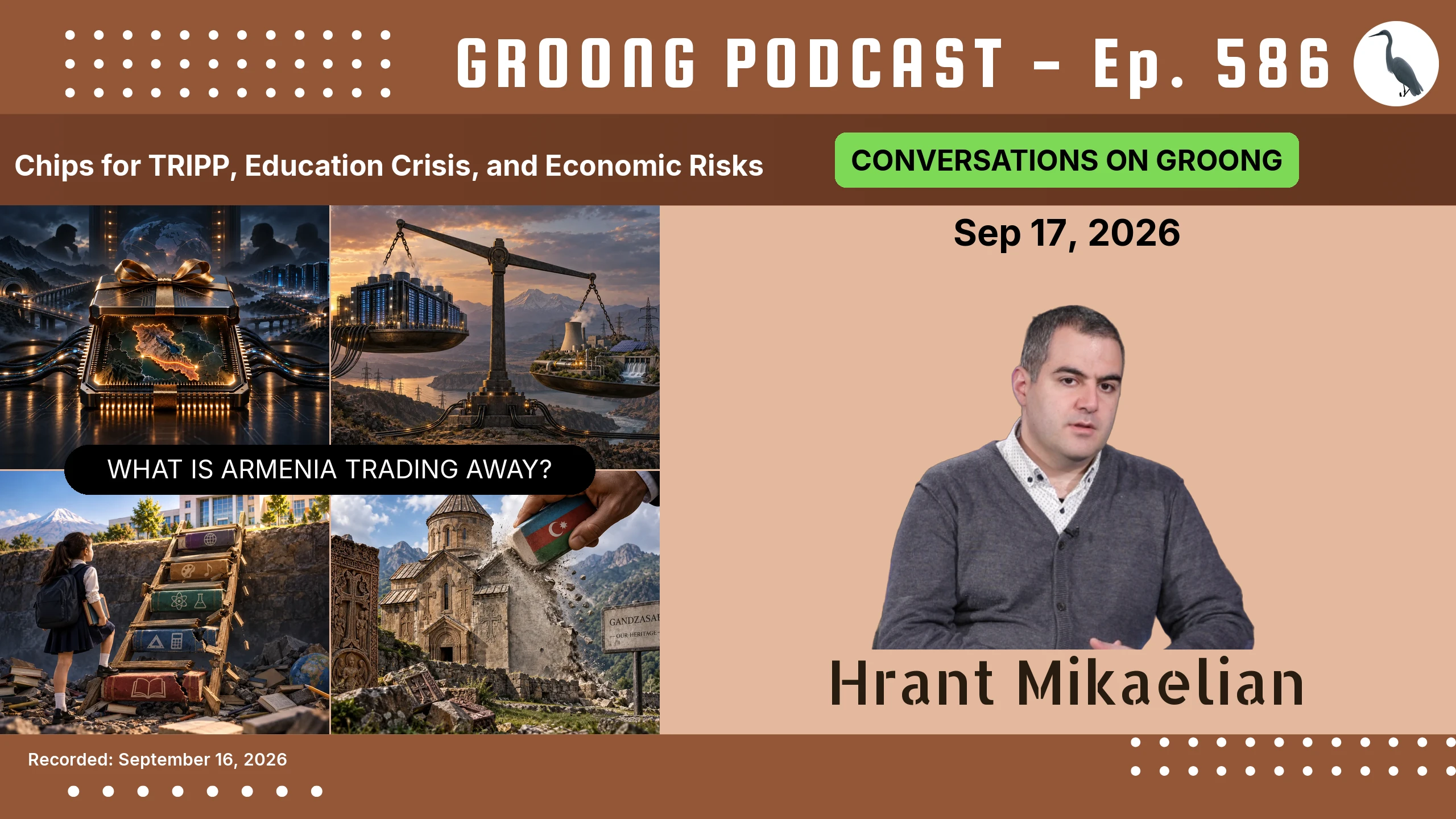
In this episode of Conversations on Groong, we speak with Hrant Mikaelian about chip diplomacy, the TRIPP framework, and Armenia’s structural economic vulnerabilities. We discuss how the U.S. fast-tracked advanced AI exports to secure the Armenia-Azerbaijan Peace Process agreement, the massive energy demands of the planned Firebird data center, Armenia’s deepening education crisis, and the risks of energy dependence as the Armenian Nuclear Power Plant approaches shutdown.