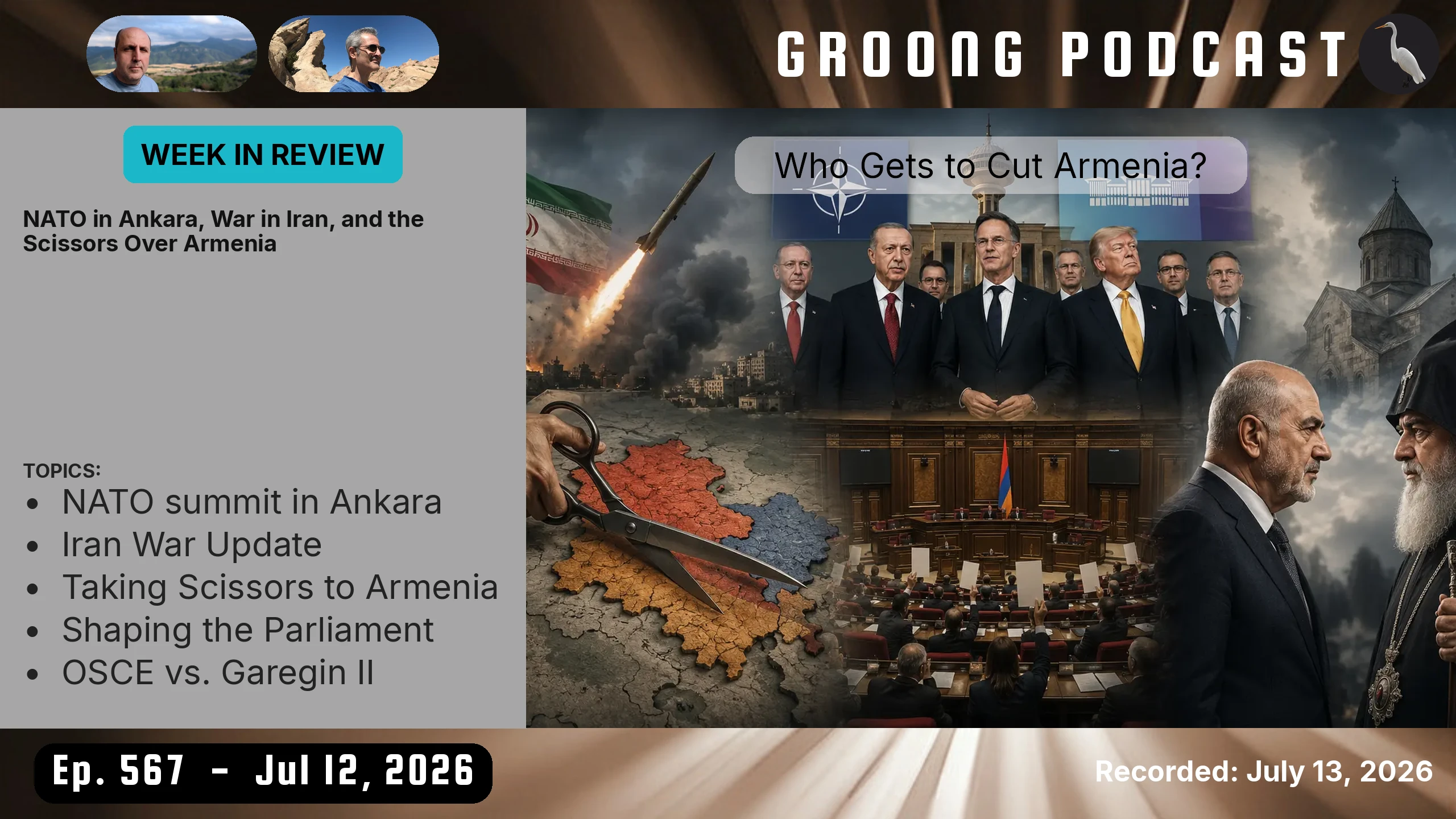
Armenia on Fire Sale: Land Swaps, COP17, POWs, and the War for Gyumri | Ep 595, Oct 18, 2026 [EP595]
Posted on Thursday, Oct 22, 2026 | Category: Armenia, Politics, Geopolitics | Series: wir, video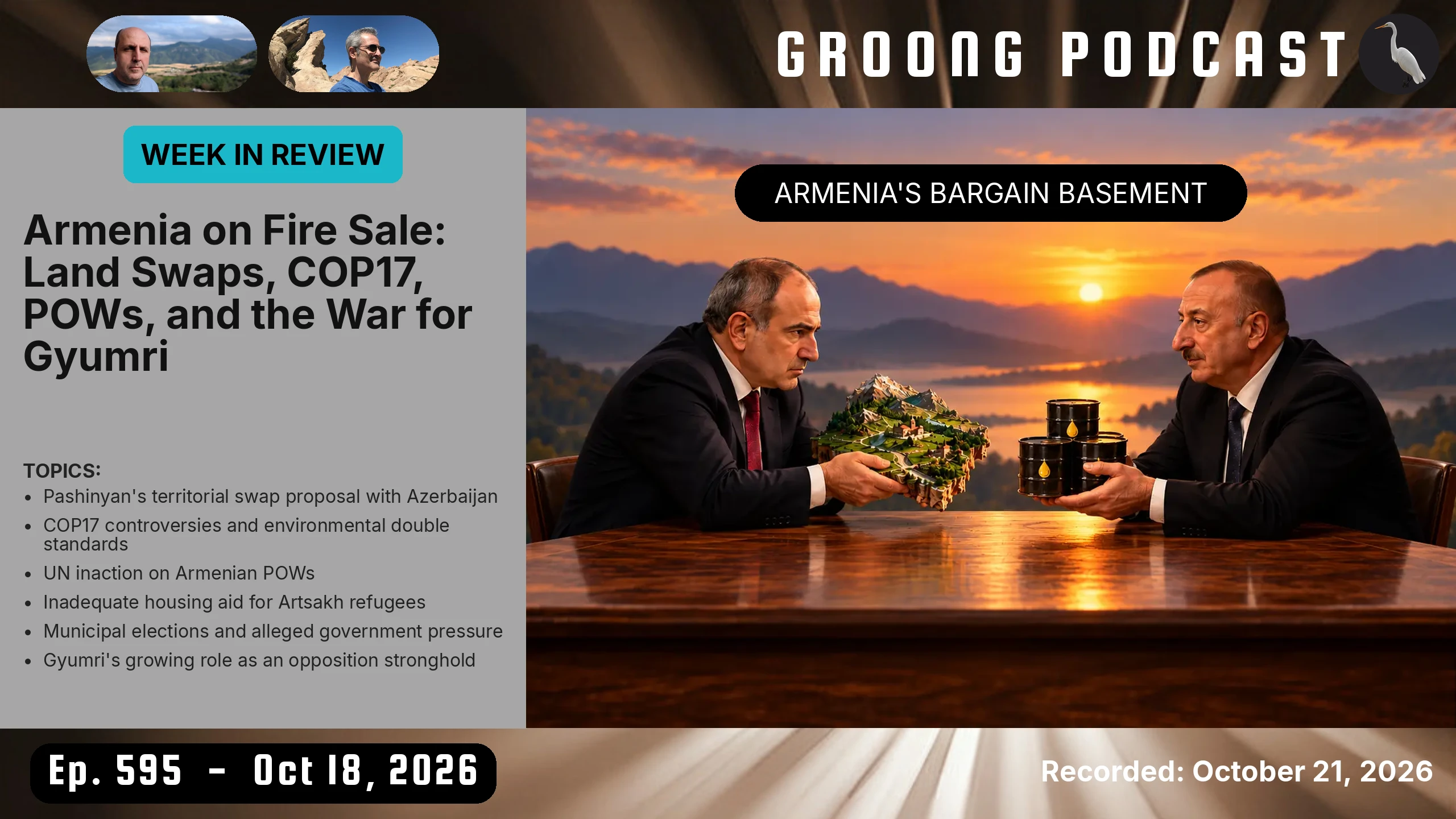
Groong Links:
Topics:
- Pashinyan’s territorial swap proposal with Azerbaijan
- COP17 controversies and environmental double standards
- UN inaction on Armenian POWs
- Inadequate housing aid for Artsakh refugees
- Municipal elections and alleged government pressure
- Gyumri’s growing role as an opposition stronghold
Episode 595 | Recorded: October 21, 2026
#Armenia #Azerbaijan #Pashinyan #TerritorialSwap #COP17 #ArmenianPOWs #ArtsakhRefugees #Gyumri
Show Notes
Summary
In this episode of Groong Week in Review, Hovik and Asbed break down Pashinyan’s territorial swap proposal with Azerbaijan, examining the strategic implications for Armenia’s 29,743 square kilometers and the security of border communities. We discuss the Armenia-Azerbaijan Peace Process, contradictions between government officials on formal negotiations, inadequate housing aid for Artsakh refugees displaced during the ethnic cleansing, UN inaction on Armenian Prisoners of War, and Gyumri’s emergence as an opposition stronghold ahead of municipal elections.Topics Covered
Pashinyan’s Territorial Swap Proposal: Is Every Square Inch Equal?
- Pashinyan’s proposal to eliminate enclaves and exclaves through territorial exchanges with Azerbaijan, while preserving Armenia’s stated area of 29,743 square kilometers.
- Conflicting signals from the government: Pashinyan suggests emerging understanding with Baku, while Deputy Prime Minister Mher Grigoryan says no agreement exists and the border delimitation commission has not discussed an exchange.
- Foreign Minister Ararat Mirzoyan ’s statement that territorial exchanges would require a referendum.
- The possible exchange of Artsvashen and Tigranashen (Kyarki), and the differences in their strategic and geographic value.
- The importance of roads near Tigranashen for Armenia’s north-south transport links and access to Iran, and the importance of other enclave areas for connections with Georgia.
- The hosts’ concern that Azerbaijan could seek land corridors connecting former enclaves to its existing territory, creating new security challenges for Armenia.
- Azerbaijan’s continued occupation and reported fortification of positions in internationally recognized Armenian territory.
- The imbalance in military and diplomatic leverage between Armenia and Azerbaijan, and whether a negotiated territorial exchange could produce lasting peace.
COP17 in Yerevan: Biodiversity, Politics, and Double Standards
- The UN Biodiversity Conference in Yerevan and the contrast between its stated environmental goals and the political issues surrounding Armenia.
- The exclusion of displaced Artsakh Armenians from a pavilion in COP17’s Green Zone, despite the conference’s focus on indigenous communities and their relationship with their lands.
- Reports of Azerbaijani destruction of more than 60 hectares of forest in the Shikahogh State Reserve area of Syunik .
- COP17 Executive Secretary Astrid Schomaker’s reluctance to address questions concerning Armenian prisoners held in Azerbaijan.
- The hosts’ criticism of the Armenian government’s handling of politically sensitive issues during the conference.
- The absence of high-level Western leaders and the presence of Iranian President Masoud Pezeshkian and Foreign Minister Abbas Araghchi.
- Iran’s diplomatic message to Armenia and concerns about the growing American presence in the region.
- The hosts’ doubts about the effectiveness of international environmental conferences, including Greenpeace’s call for concrete action rather than declarations.
Armenian POWs: Guterres and the Limits of International Diplomacy
- UN Secretary-General António Guterres’s response to questions about Armenian prisoners held in Baku.
- His emphasis on implementing the Armenia-Azerbaijan peace agreement rather than announcing specific UN action to secure the prisoners’ release.
- The hosts’ criticism of international institutions and their limited ability or willingness to influence Azerbaijan.
- Their contention that the Armenian government has failed to make the prisoners’ return a priority.
- Ruben Vardanyan and other Armenian detainees as continuing symbols of the unresolved conflict.
- The relationship between prisoner releases, Armenian domestic politics, and the broader peace process.
Artsakh Refugees: Housing Assistance Falls Short
- The Armenian government’s five-year housing assistance program, introduced in 2024, offering roughly $5,000 to $14,000 in support.
- Labor Minister Arsen Torosyan’s announcement that additional funding will not be allocated, despite limited participation in the program.
- The growing gap between available assistance and the cost of housing, including in rural communities.
- Questions about the requirement for displaced Artsakh Armenians to obtain new Armenian citizenship documents and the possible implications for their former status and claims to return.
- The financial pressures forcing some displaced families to consider leaving Armenia, with Russia among their destinations.
- The contrast between Armenia’s construction boom and the inability of many displaced families to secure permanent homes.
- The hosts’ criticism of government spending priorities, contrasting COP17 expenditures with the needs of displaced Armenians.
Municipal Elections: Civil Contract’s Pursuit of Local Control
- Municipal elections across 21 Armenian communities and their significance for national political competition.
- Allegations of threats, intimidation, and administrative pressure against opposition candidates and local officials.
- Civil Contract ’s reliance on incumbent mayors, regional political networks, and alliances with established local figures.
- Reports of pressure on candidates and their families in Vayots Dzor.
- The cases of Arush Arushanyan in Goris and Jemma Harutyunyan in Amasia, and their relationships with the ruling party.
- The dependence of municipalities on central government funding and the potential use of that dependence to influence local politics.
- The hosts’ view that municipal control helps Civil Contract expand its political and administrative influence.
Gyumri: A Center of Opposition and Political Resistance
- Gyumri’s distinct political identity and its history of resistance to central government control.
- Mayor Vardan Ghukasyan’s extended detention and the legal pressure facing him and his family.
- Gyumri’s longstanding economic difficulties, including high poverty rates and unresolved housing problems dating to the 1988 earthquake.
- The concentration of investment in Yerevan and its effect on regional development.
- The role of Samvel Karapetyan and Strong Armenia in building an opposition presence in Gyumri.
- Strong Armenia’s public events, infrastructure commitments, and proposed reconstruction of Kirk Kerkorian Street.
- The political implications of the government’s takeover of the Electric Networks of Armenia and the hosts’ broader discussion of private investment, state control, and economic conditions.
- The Armenian Apostolic Church ’s influence in Shirak, including the role of Archbishop Mikael Ajapahyan.
- The hosts’ debate over whether opposition parties are investing enough effort in municipal politics.
- Gyumri’s potential significance as a center of opposition organization beyond Yerevan.
Key Questions Discussed
Territorial Exchanges and National Security
- Why is Pashinyan proposing territorial exchanges now, and has Azerbaijan endorsed the concept?
- What would Armenia gain by exchanging Artsvashen for territory near Tigranashen?
- Can preserving 29,743 square kilometers guarantee territorial integrity if Armenia loses strategically important roads and border positions?
- Why has the formal border delimitation commission not discussed the proposal?
- Should territorial exchanges be considered before Azerbaijan withdraws from the Armenian territories it occupies?
- What leverage does Armenia possess to negotiate an equitable agreement?
COP17 and Armenian National Interests
- Why were displaced Artsakh Armenians unable to present their concerns within COP17’s Green Zone?
- Why was the reported destruction of forests in occupied Armenian territory not a central topic of the biodiversity conference?
- What does the limited attendance by Western leaders say about COP17’s significance?
- Was Iran’s high-level participation motivated by broader geopolitical concerns rather than biodiversity?
- Can UN conferences produce meaningful results without political commitment from major powers?
Armenian Prisoners and Displaced Artsakh Armenians
- What concrete action, if any, is the United Nations prepared to take to secure the release of Armenian prisoners?
- Why do the hosts believe the Armenian government has not prioritized the prisoners’ return?
- Why has participation in the government’s housing assistance program remained limited?
- Are citizenship and passport requirements creating obstacles for Artsakh refugees?
- What are the long-term implications if displaced Armenians leave Armenia because of inadequate housing and economic opportunities?
Municipal Elections and the Opposition
- How are administrative resources and political pressure influencing local electoral contests?
- Why does Civil Contract place such importance on controlling municipal governments?
- Why has Gyumri remained resistant to central government control?
- Can Strong Armenia turn its investments and local relationships into a durable regional political presence?
- Are opposition parties doing enough to contest municipal elections?
- What would continued opposition control of Gyumri mean for Armenia’s political landscape?
Links Referenced During the Show
Territorial Exchanges and Border Delimitation
- Armenpress: Pashinyan’s territorial exchange proposal
- Armenpress: Armenian government statements on territorial exchanges
- Armenpress: Border delimitation and territorial integrity
- Armenpress: Developments in the Armenia-Azerbaijan negotiations
- Armenpress: Armenian officials on the enclave question
- Armenpress: Territorial exchange discussions
- Azatutyun: Territorial exchanges and political reactions
- NEWS.am: Video report on territorial exchanges
- Aysor: Mher Grigoryan on the enclave question
- 1news.az: Mher Grigoryan says no enclave exchange agreement exists
COP17 and Environmental Issues
- 168.am: COP17 coverage
- Yerkramas: Azerbaijani activity and forest destruction in Shikahogh
- 168.am: COP17 and Armenian concerns
- Greenpeace: Governments Must Move from Words to Action at UN Biodiversity COP17
Armenian Prisoners in Azerbaijan
Housing Assistance for Artsakh Refugees
Municipal Elections and Gyumri
- Pastinfo: Municipal political developments
- Hraparak: Local election reporting
- Pastinfo: Regional municipal politics
- Hraparak: Municipal election developments
- Armat Media: Armenian municipal politics
- Pastinfo: Local political reporting
- Armenpress: Municipal and regional developments
- 168.am: Political developments ahead of municipal elections
- Hraparak: Local election developments
- Hraparak: Municipal political alliances
- Pastinfo: Related municipal election coverage
- Hraparak: Regional political reporting
- Armat Media: Regional political developments
- Armlur: Municipal elections across Armenia’s regions
- Azatutyun: Municipal political developments
- Azatutyun: Regional election reporting
Wrap-up
Links and Resources
That’s our show , we hope you found it helpful. We invite your feedback and your suggestions, you can find us on most social media and podcast platforms.
Thanks to Laura Osborn for the music on our podcasts.
Hosts
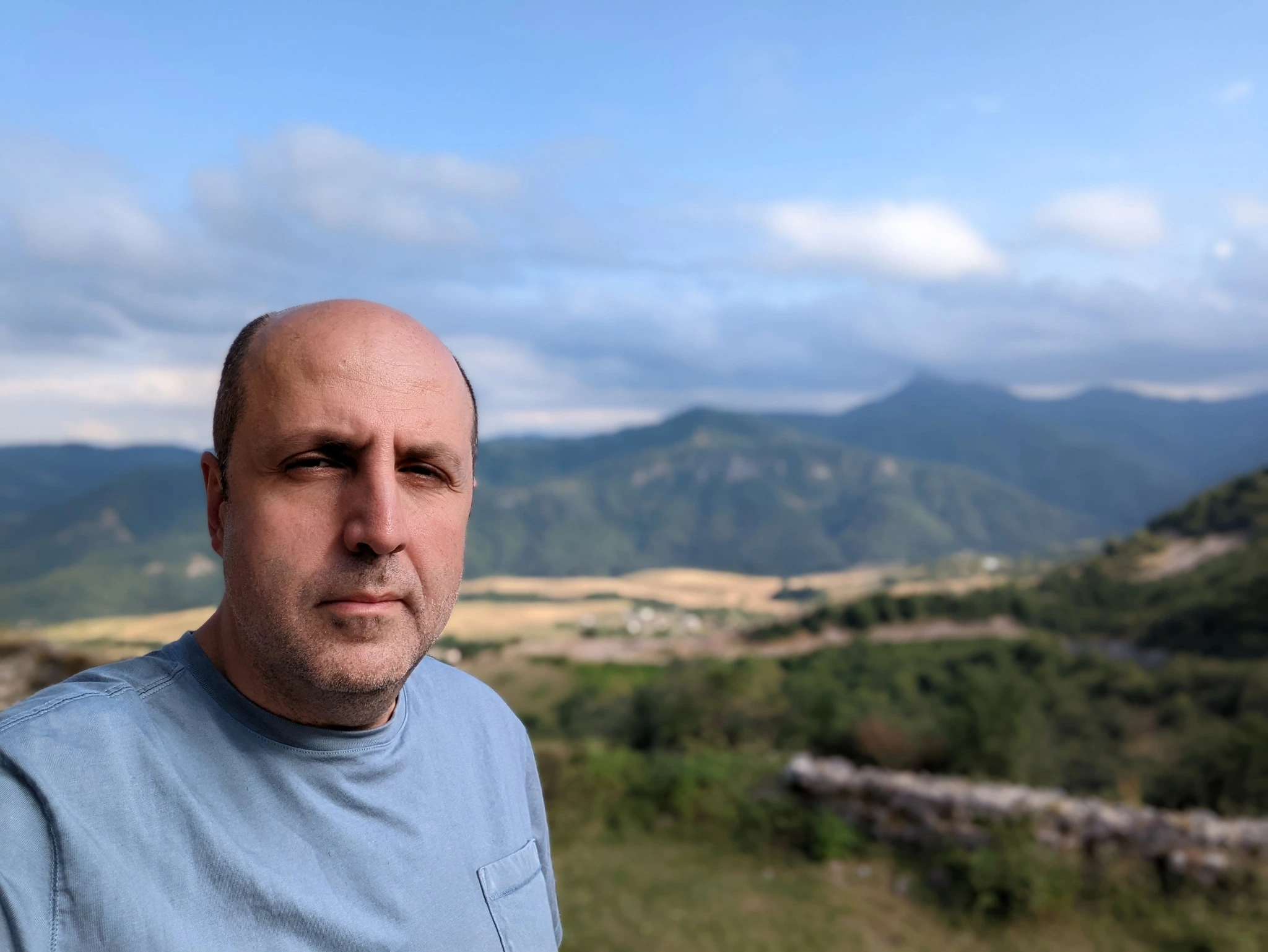
Hovik Manucharyan
Hovik Manucharyan is an information security engineer who moved from Seattle to Armenia in 2022. He co-founded the ANN/Groong podcast in 2020 and has been a contributor to Groong News since the late 1990s.
Disclaimer: The views expressed by Hovik Manucharyan on the ANN/Groong podcast are his own and do not necessarily reflect the opinions of his employer or any other organization.

Asbed Bedrossian
Asbed Bedrossian is an IT professional, and for years oversaw the central IT enterprise infrastructure and services at USC. His decades of experience spanned across IT strategy, enterprise architecture, infrastructure, cybersecurity, enterprise applications, data center operations, high performance computing, ITSM, ITPM, and more.
Asbed founded the Armenian News Network Groong circa 1989/1990, and co-founded the ANN/Groong podcast in 2020.