Pashinyan's Nuclear U-Turn and Armenia's Security Failures | Ep 593, Oct 11, 2026 [EP593]
Posted on Wednesday, Oct 14, 2026 | Category: Armenia, Politics, Geopolitics | Series: wir, video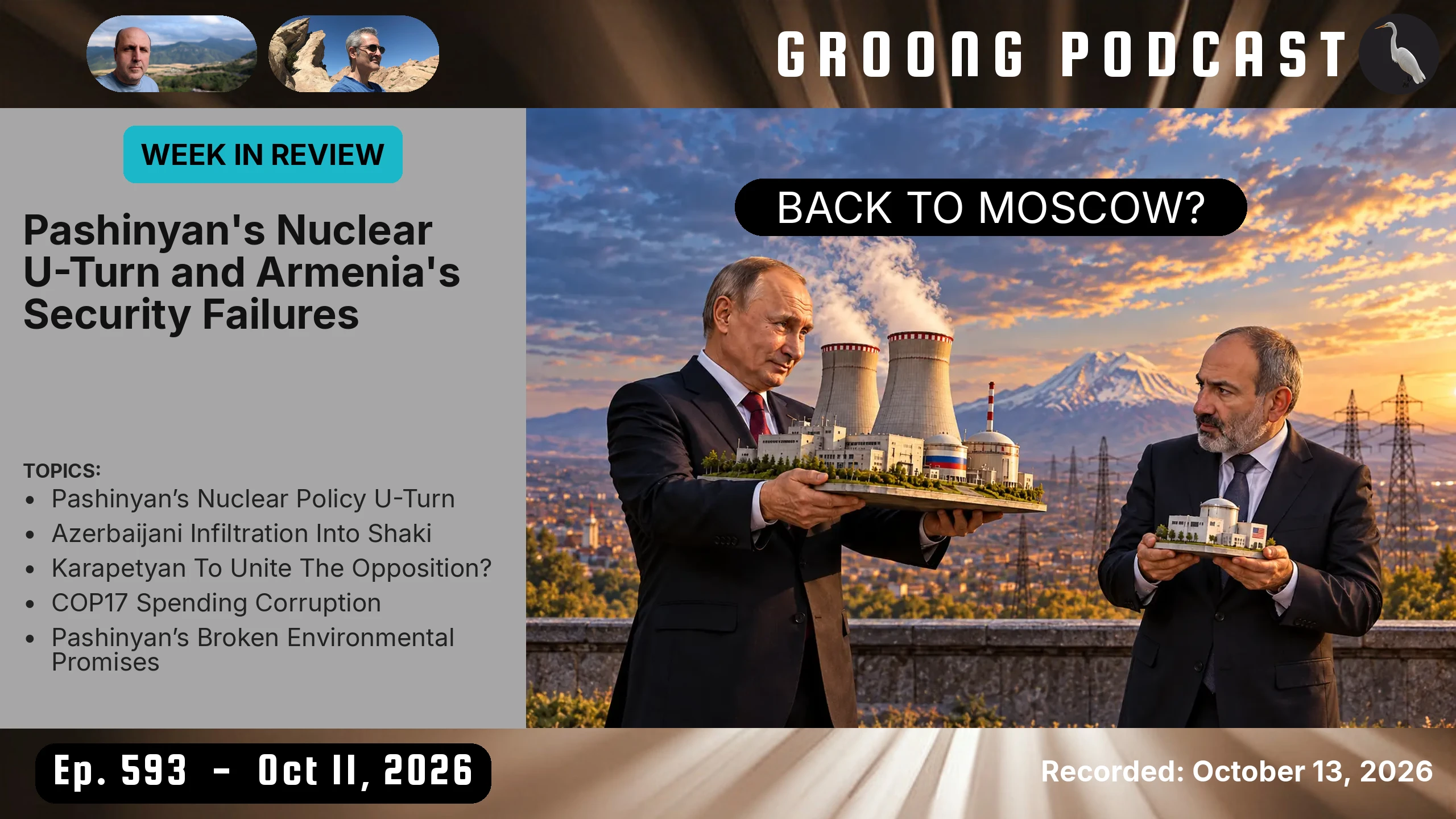
Groong Links:
Topics:
- Pashinyan’s Nuclear Policy U-Turn
- Azerbaijani Infiltration Into Shaki
- Karapetyan To Unite The Opposition?
- COP17 Spending Corruption
- Pashinyan’s Broken Environmental Promises
Episode 593 | Recorded: October 13, 2026
#Armenia #Pashinyan #NuclearEnergy #Azerbaijan #NationalSecurity #SamvelKarapetyan #Corruption #Amulsar
Show Notes
Summary
In this week’s episode of Groong Week in Review, Hovik and Asbed examine Pashinyan’s abrupt reversal on nuclear energy policy, shifting from Western small modular reactors to consideration of a Russian gigawatt-scale plant amid surging data center demands. We discuss the security implications of long-term energy dependency, the geopolitics behind Armenia’s power infrastructure choices, and ongoing concerns about Azerbaijani infiltration, opposition unity under Samvel Karapetyan, and corruption at COP17.Topics This Week
Pashinyan’s Nuclear U-Turn and Armenia’s Energy Future
- Pashinyan reconsiders Western small modular reactors (SMRs) in favor of a potential 1,000 MW Russian nuclear power plant.
- Surging electricity demand from planned AI data centers in Hrazdan and Sevan raises questions about Armenia’s long-term energy strategy.
- Rosatom chief Alexey Likhachev’s meetings with Russian and Armenian officials suggest renewed negotiations over nuclear cooperation.
- The nuclear decision intersects with broader Armenian-Russian disputes over railway concessions, the 102nd military base, Russian border guards, and Armenia’s EAEU membership.
- The hosts compare the cost, capacity, and maturity of Russian VVER-1000 and VVER-1200 reactors with Western SMR proposals.
- The future of the Metsamor Nuclear Power Plant, including its possible operation through 2031 or 2036, adds urgency to the choice.
- Armenia’s dependence on foreign nuclear technology raises questions about energy sovereignty, national security, and long-term leverage.
- Firebird AI’s planned data centers face questions about water consumption, environmental safeguards, and possible impacts on Lake Sevan.
Azerbaijani Infiltration Exposes Armenia’s Security Failures
- Ani Avetisyan recounts her struggle to protect her children after an armed Azerbaijani serviceman entered her home in Shaki and shot her.
- Pashinyan’s characterization of the incident as an ordinary crime draws criticism for overlooking its national security implications.
- The hosts question how an armed Azerbaijani soldier crossed the border and traveled deep into Armenia without being intercepted.
- Armenian authorities took approximately 12 days to formally recognize Avetisyan as a victim.
- Dismissals within the National Security Service and military raise questions about accountability at higher levels.
- The Armenia Alliance seeks legislation requiring the defense minister and NSS chief to report to parliament about major security incidents.
- The hosts discuss, as a possibility rather than an established fact, whether the infiltration could be related to Azerbaijani, Turkish, and Pakistani military exercises.
Karapetyan’s “Peace Without Concessions” Initiative
- Strong Armenia leader Samvel Karapetyan renews his call to unite the “real opposition” against Pashinyan.
- His proposed “Peace Without Concessions” political program seeks to build a common platform among opposition groups.
- Questions remain about which parties would participate, including the Armenia Alliance and other opposition movements.
- Hovik calls for concrete action and stronger coordination among opposition leaders.
- Asbed highlights the legal proceedings, detention, surveillance, and financial pressures that constrain opposition activity.
- The hosts discuss the cases involving Robert Kocharyan , Samvel Karapetyan, and Gagik Tsarukyan .
- Groong extends an invitation to Narek Karapetyan to discuss the initiative and Strong Armenia’s plans.
COP17 Spending and Government Corruption Allegations
- Strong Armenia MP Lena Matevosyan questions government spending ahead of the COP17 biodiversity conference in Yerevan.
- Deputy Foreign Minister Robert Abisoghomyan acknowledges a $2.2 million transfer to an account managed by Doping Space.
- The hosts question why Doping Space continues receiving government contracts amid disputes over its previous work.
- They discuss reported overcharges involving a Jennifer Lopez concert and payments associated with a Snoop Dogg concert that never took place.
- Repeated single-source contracts raise concerns about procurement transparency and political favoritism.
- The hosts also revisit Armenia’s gambling legislation, questioning whether restrictions on physical gambling have benefited online operators, including Vivarobet.
- The discussion raises broader concerns about political connections, public spending, and accountability under Civil Contract.
Amulsar and the Government’s Environmental Contradictions
- The hosts revisit the “Save Amulsar” movement and its role in the political mobilization preceding the 2018 change of government.
- Pashinyan’s support for the Amulsar gold mining project contrasts with the environmental opposition associated with his political movement.
- The Armenian government’s 12.5% stake in the project raises questions about the relationship between public ownership, political influence, and economic interests.
- The hosts compare the arrangement with the government’s stake in the Zangezur Copper and Molybdenum Combine.
- The discussion includes questions about the role of Civil Contract officials in overseeing government-owned stakes in major enterprises.
- As Armenia prepares to host COP17, the hosts question the government’s decision not to raise reported environmental damage connected to Azerbaijani military positions near the Shikahogh Natural Reserve.
- The hosts also criticize the suspension of school classes during COP17, contrasting it with Armenia’s poor educational performance.
Key Questions Discussed
- Is Pashinyan’s nuclear policy reversal driven by Armenia’s energy needs or geopolitical bargaining with Moscow?
- Would a large Russian nuclear plant offer Armenia a more practical and affordable solution than Western SMRs?
- How should Armenia manage the national security dependencies created by its choice of nuclear technology partner?
- What environmental costs could AI data centers impose on Armenia, particularly Lake Sevan?
- How could an armed Azerbaijani soldier penetrate so far into Armenia, and who should be held accountable?
- Why did Armenian authorities take nearly two weeks to formally recognize Ani Avetisyan as a victim?
- Can Karapetyan’s “Peace Without Concessions” initiative unite the opposition around an effective political program?
- Why does the government continue awarding contracts to Doping Space despite disputes over previous spending?
- How does the government’s current support for Amulsar square with the environmental campaigns associated with its rise to power?
- Why is Armenia reluctant to use COP17 to raise environmental damage linked to Azerbaijani military activity on Armenian territory?
Referenced Articles & Sources
Nuclear Energy and Armenian-Russian Relations
- Pashinyan Does Not Rule Out Armenia Could Need a 1,000 MW Nuclear Power Plant, Public Radio of Armenia
- Armenpress Report on Armenia’s Nuclear Energy Plans
- Rosatom Proposes New 1,000-Megawatt Nuclear Power Unit in Armenia, Anadolu Agency
- Armenian Premier Says Planned Modular Nuclear Power Plant May Not Meet Growing Energy Needs, Anadolu Agency
- Armenia Rethinks SMR Plan, Nuclear Engineering International
- Russia Ready to Turn Screws on Armenia, Eurasianet
- Armenia, World Nuclear Outlook Report
- Putin’s August 20 Meeting on Russia’s Nuclear Energy Sector
- Putin’s September 29 Meeting with Rosatom Chief Alexey Likhachev
Azerbaijani Infiltration in Shaki
Opposition and “Peace Without Concessions”
Wrap-up
Links and Resources
That’s our show , we hope you found it helpful. We invite your feedback and your suggestions, you can find us on most social media and podcast platforms.
Thanks to Laura Osborn for the music on our podcasts.
Hosts
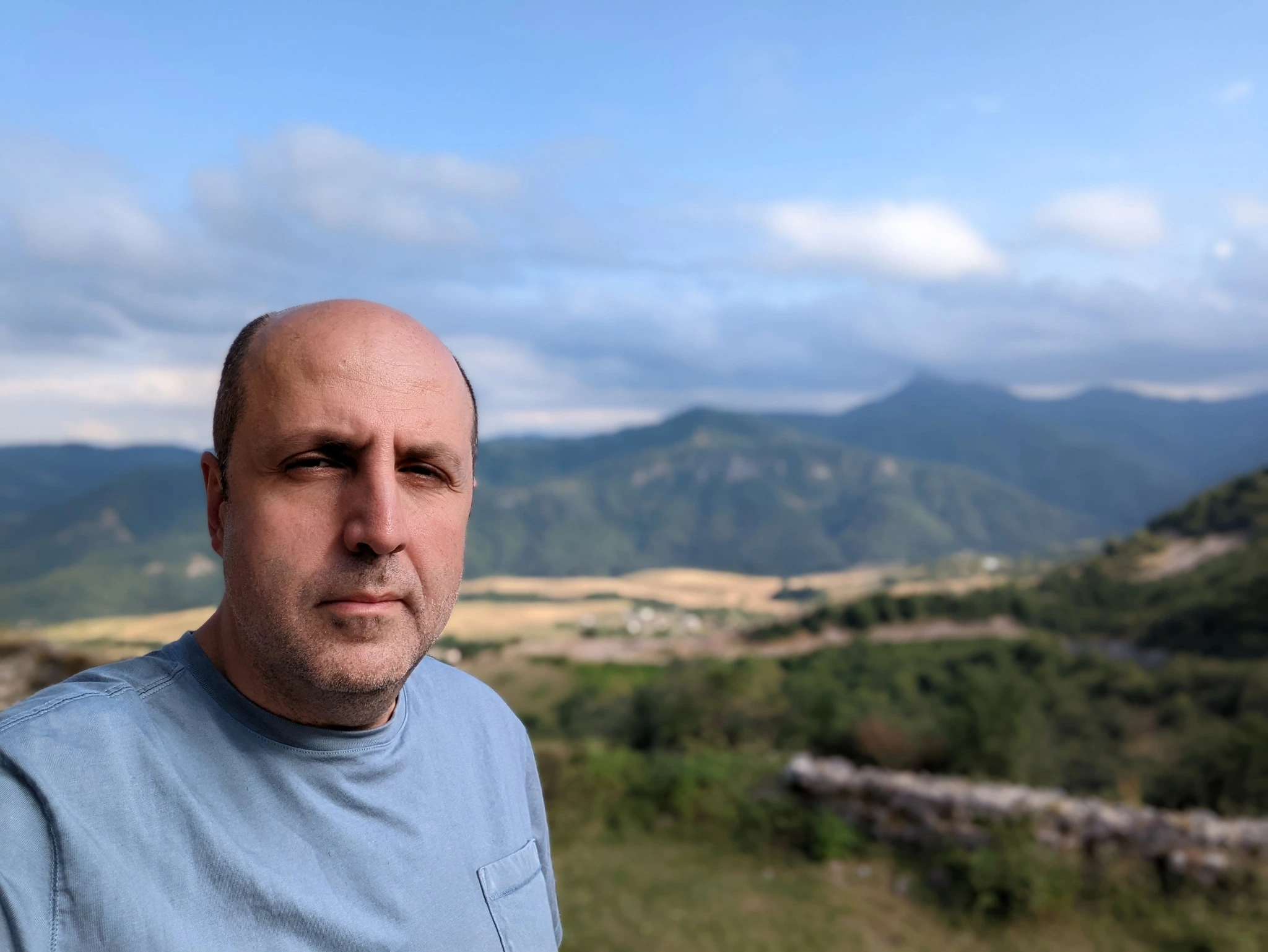
Hovik Manucharyan
Hovik Manucharyan is an information security engineer who moved from Seattle to Armenia in 2022. He co-founded the ANN/Groong podcast in 2020 and has been a contributor to Groong News since the late 1990s.
Disclaimer: The views expressed by Hovik Manucharyan on the ANN/Groong podcast are his own and do not necessarily reflect the opinions of his employer or any other organization.
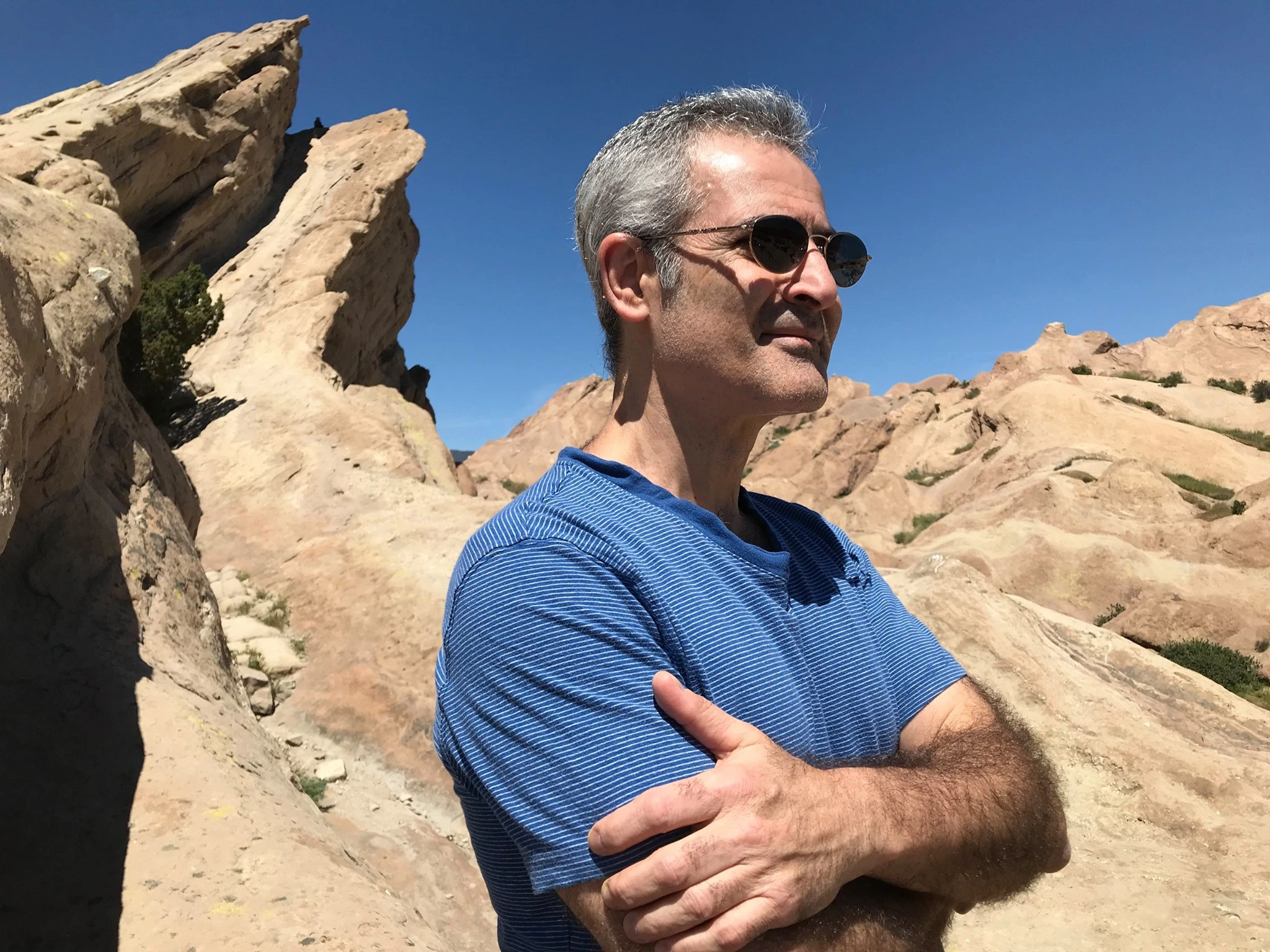
Asbed Bedrossian
Asbed Bedrossian is an IT professional, and for years oversaw the central IT enterprise infrastructure and services at USC. His decades of experience spanned across IT strategy, enterprise architecture, infrastructure, cybersecurity, enterprise applications, data center operations, high performance computing, ITSM, ITPM, and more.
Asbed founded the Armenian News Network Groong circa 1989/1990, and co-founded the ANN/Groong podcast in 2020.