Harut Sassounian - Armenia’s Identity Crisis: Church, State, and Diaspora | Ep 592, Oct 2, 2026 [EP592]
Posted on Friday, Oct 2, 2026 | Category: Armenia, Politics, Geopolitics | Series: cog, video
Groong Links:
Guest(s):
Topics:
- Church-State conflict and Garegin II
- Bern, Artsakh, and national identity
- Government plans to “reform” Church
- Pashinyan’s meeting with All-ASA
- Armenia-Diaspora relations after June 7
Episode 592 | Recorded: September 30, 2026
#Armenia #ArmenianChurch #GareginII #NikolPashinyan #Artsakh #ArmenianDiaspora #ChurchState #ArmenianIdentity
Show Notes
Summary
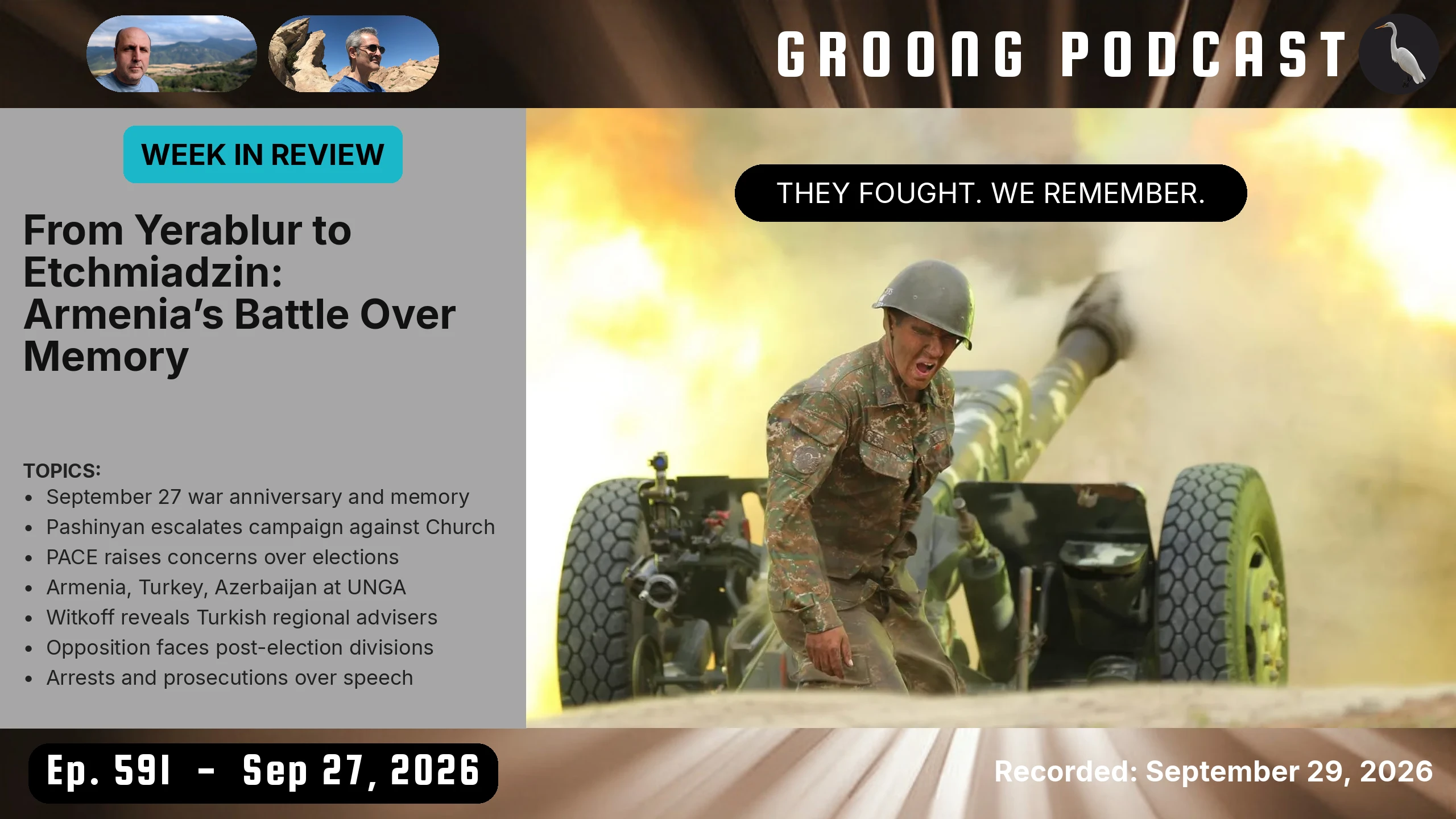
In this episode of Conversations on Groong, we speak with Harut Sassounian about Armenia’s identity crisis amid escalating conflict between the Armenian government and the Armenian Apostolic Church. We discuss Catholicos Garegin II’s statements at the May 2025 World Council of Churches conference in Bern, Pashinyan’s public attacks on senior clergy, the constitutional role of the Armenian Church in national identity, and the deeper geopolitical questions surrounding Armenia-Diaspora relations following the June 2026 Armenian parliamentary elections.Topics Covered
Church-State conflict and Garegin II
The conversation traces the current phase of the confrontation from the 2025 Bern conference through Pashinyan ’s public attacks on senior clergy, allegations concerning celibacy, attempts to influence Church leadership, and the government’s report on the alleged Church crisis. Sassounian argues that questions of ecclesiastical discipline belong within the Church unless secular Armenian law has been violated. 592 592The Church’s constitutional and national role
The hosts raise Article 18 of the Armenian Constitution and ask whether the Armenian Apostolic Church’s recognized role in Armenian spiritual life, culture, and national identity gives it not only the right, but also a responsibility, to speak on issues such as Artsakh, displaced Armenians, and national policy. Sassounian strongly defends the right of Church leaders and Diaspora Armenians to criticize government policy. 592 592Government power versus ecclesiastical authority
Sassounian argues that the state may act when clergy violate Armenian law, but not simply because a cleric is accused of violating Church rules. The discussion focuses on whether government efforts to remove the Catholicos, alter Church bylaws, or influence succession cross the line from criticism into interference with religious autonomy. 592Armenian clergy, Washington, and the White House
The hosts and Sassounian discuss a meeting involving Armenian clergy, Armenia’s ambassador in Washington, and Trump’s spiritual adviser. Sassounian questions how the meeting was organized, discusses Archbishop Hovnan Derderian’s shifting position in the Church dispute, and asks whether the clergy used their access to raise the issue of Armenian prisoners held in Baku. 592 592Pashinyan’s UN trip and Armenian prisoners
Sassounian corrects the hosts on one point, noting that Pashinyan did mention the Armenian prisoners in Baku during his UN speech. He then criticizes Pashinyan’s wider handling of the prisoner issue and discusses earlier exchanges with President Trump concerning possible U.S. involvement. 592 592The All-ASA meeting in New York
The discussion turns to Pashinyan’s meeting with Armenian-American college students. Sassounian says the controversy was less about whether Armenian students should meet Armenia’s prime minister and more about transparency, consultation with All-ASA chapters, the appearance of political use of an ostensibly nonpartisan student organization, and restrictions surrounding the meeting. 592 592Armenia-Diaspora relations
Sassounian describes Armenia-Diaspora relations as badly damaged. He criticizes the abolition of the Diaspora Ministry, the role of High Commissioner Zareh Sinanyan, government rhetoric about Diaspora aid, and what he views as an increasingly partisan approach to Diaspora engagement. 592 592Can Armenia and the Diaspora rebuild trust?
In the closing discussion, Sassounian argues that Armenians on opposing political sides must still be willing to communicate and cooperate around Armenia’s security and national interests. He recounts his own difficult relationship with former President Levon Ter-Petrosyan as an example of setting personal disputes aside to work for Armenia. 592 592
Key Questions Discussed
- Where should the constitutional boundary lie between the Armenian state and the Armenian Apostolic Church ?
- Does the Church’s constitutional role in preserving Armenian identity give it a legitimate public voice on Artsakh and other national questions?
- If a cleric violates celibacy or other Church rules, what authority does the state have to intervene?
- Is the government’s effort to remove or replace Garegin II a matter of lawful oversight or interference in Church self-government?
- What role did the Bern conference and the Church’s advocacy for Artsakh Armenians play in the present phase of the conflict?
- What was the purpose of the Armenian clergy’s White House meeting, and were Armenia’s prisoners in Baku raised?
- Why did Pashinyan meet with a small group connected to All-ASA rather than hold a broader public meeting with the Armenian-American community?
- Has the Armenian government weakened traditional Armenia-Diaspora relations in favor of a more controlled or politically aligned model?
- What steps could both Armenia and the Diaspora take to restore trust and cooperation?
Referenced Articles & Sources
- Constitution of the Republic of Armenia
- 2007 Law on Relations Between Armenia and the Armenian Apostolic Church
- Official Government Report on the Armenian Apostolic Church
- Armenpress summary of the government Church report
- Garegin II’s address at the Armenian Heritage Conference in Bern
- Hetq analysis of Pashinyan’s campaign against the Church
Wrap-up
Links and Resources
That’s our show , we hope you found it helpful. We invite your feedback and your suggestions, you can find us on most social media and podcast platforms.
Thanks to Laura Osborn for the music on our podcasts.
Guests

Harut Sassounian
Harut Sassounian, who is the Chairman of the board of trustees of HyelD. He’s also the publisher of The California Courier newspaper, and the president of the Armenia Artsakh Fund, a non-profit organization which has delivered over one $1.06 Billion in humanitarian assistance to Armenia and Artsakh since 1989.
Hosts
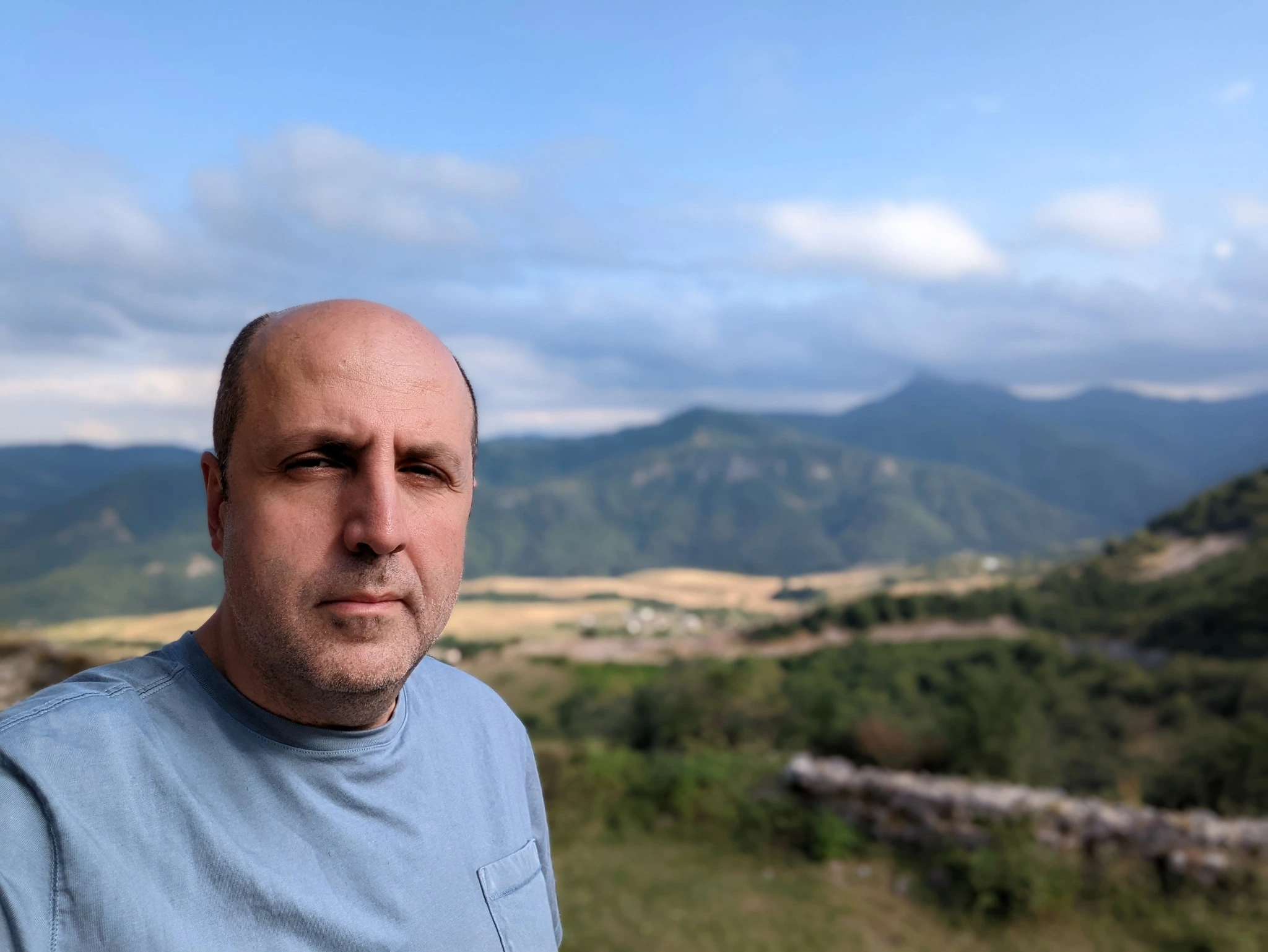
Hovik Manucharyan
Hovik Manucharyan is an information security engineer who moved from Seattle to Armenia in 2022. He co-founded the ANN/Groong podcast in 2020 and has been a contributor to Groong News since the late 1990s.
Disclaimer: The views expressed by Hovik Manucharyan on the ANN/Groong podcast are his own and do not necessarily reflect the opinions of his employer or any other organization.
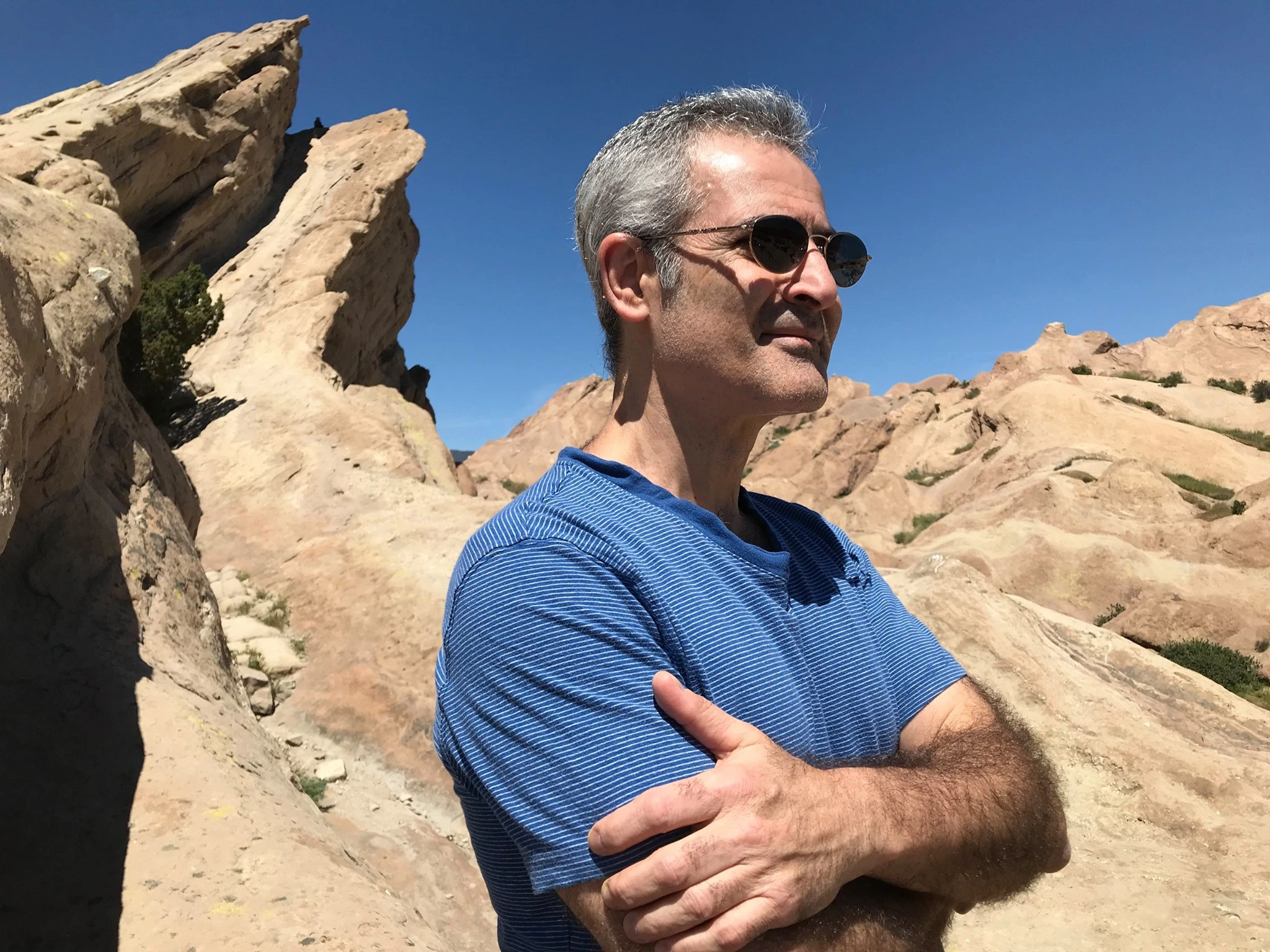
Asbed Bedrossian
Asbed Bedrossian is an IT professional, and for years oversaw the central IT enterprise infrastructure and services at USC. His decades of experience spanned across IT strategy, enterprise architecture, infrastructure, cybersecurity, enterprise applications, data center operations, high performance computing, ITSM, ITPM, and more.
Asbed founded the Armenian News Network Groong circa 1989/1990, and co-founded the ANN/Groong podcast in 2020.