Groong Links:
Guest(s):
Topics:
- Pashinyan’s Revenge Against Opposition
- Kocharyan Arrested, Family Under State Pressure
- Opposition Strategy Under Repression
- Pashinyan’s Five-Year Transformation Agenda
- Government Assault on Armenian Church
- Tigranashen and Border Concessions
- TRIPP, Turan, and Central Asia
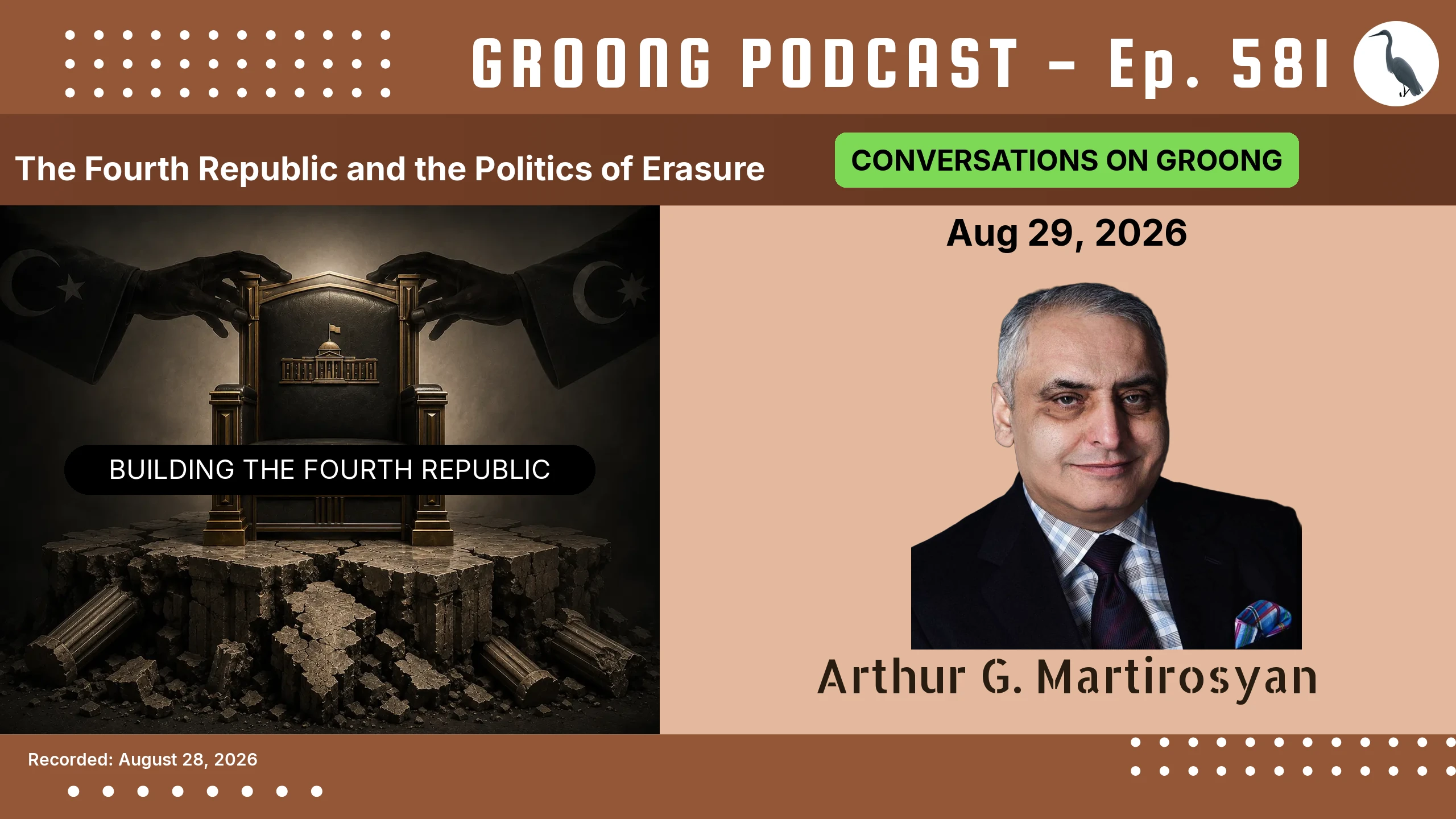
Episode 581 | Recorded: August 28, 2026
#ArmenianElections #Armenia #NikolPashinyan #CivilContract #StrongArmenia #ArmenianOpposition
Show Notes
Summary
In this episode of Conversations on Groong, we speak with Arthur G. Martirosyan about Armenia’s post-election political crisis and Pashinyan’s governance agenda. We discuss the arrest of opposition leaders including Robert Kocharyan, attacks on the Armenian Church, border concessions including Tigranashen, the TRIPP corridor, and how the Established Opposition is strategizing under state repression in the Fourth Republic.Topics Covered
Post-Election Arrests and Political Repression
- Arrest of Robert Kocharyan and Sedrak Kocharyan
- Search of Levon Kocharyan’s home
- Investigations involving Kocharyan-linked businesses
- Continued detention of Gagik Tsarukyan and Samvel Karapetyan
- Criminal proceedings involving Serzh Sargsyan
- Whether the crackdown serves both domestic and geopolitical goals
- Possible pressure on parliamentary opposition figures
Opposition Strategy Inside Parliament
- Strong Armenia ’s initial effort to maintain a civil parliamentary tone
- The Edgar Ghazaryan controversy
- Civil Contract ’s treatment of opposition nominations
- Whether entering parliament legitimized the post-election political order
- What practical leverage parliamentary mandates provide
- Prospects for renewed street opposition
- Whether fear and repression have weakened public mobilization
Tigranashen, Artsvashen and the Enclave Question
- Pashinyan ’s statements on Armenia’s 29,743-square-kilometer territory
- Tigranashen, also known as Kyarki
- The strategic importance of the Yerevan-Syunik transport route
- The history of fighting around Tigranashen
- Comparing Tigranashen with Artsvashen
- Azerbaijan’s presence near Jermuk as possible negotiating leverage
- The role of Soviet maps and the Almaty Declaration in delimitation
The 2026–2031 Government Program
- Replacing the Third Republic with “Real Armenia”
- Pashinyan’s proposed “Fourth Republic”
- Recasting Armenia’s national identity around current state borders
- Russia no longer described as a strategic partner
- Tensions between EU integration, the EAEU and the CSTO
- Whether the government has credible alternatives to Russian economic and security ties
- Questions about accountability for promises made in the 2021 government program
AI, Nuclear Power and Energy Dependence
- Plans for major AI computing infrastructure in Hrazdan
- The large electricity requirements of proposed data centers
- The future of the Metsamor Nuclear Power Plant
- Possible construction of a small modular reactor
- Water and cooling requirements for AI infrastructure
- Possible electricity links with Azerbaijan
- Risks of replacing existing dependencies with new dependence on Turkey and Azerbaijan
Government Campaign Against the Armenian Church
- Church “reform” included in the government program
- Pressure on Catholicos Karekin II
- State involvement in disputes over defrocked clergy
- Pashinyan’s criticism of prayers calling for the preservation of Artsakh
- The Catholicos’ statements on the rights of displaced Artsakh Armenians and Armenian heritage
- The Church’s role as a global Armenian institution
- Whether weakening the Church also weakens Armenia-Diaspora ties
- Comparisons with state-controlled religious institutions
TRIPP, the Middle Corridor and Central Asia
- Reports that Armenia offered TRIPP stakes to Kazakhstan and Kyrgyzstan
- Kazakhstan and Kyrgyzstan as both EAEU members and Turkic states
- Armenia’s effort to regain control of the Russian railway concession
- TRIPP’s relationship to the Middle Corridor
- Areas of overlap between Western connectivity plans and Turkic regional integration
- European interest in greater access to Central Asia
- Turkey’s growing regional role
- Russia’s long-term strategic concerns in its southern periphery
- The growing importance of China in the Central Asian balance
Key Questions Discussed
- Why did Pashinyan intensify action against opposition leaders after the election?
- Is the campaign against Kocharyan connected to his ties with Russia and his role in the Artsakh conflict?
- Did opposition leaders anticipate the pressure they would face after entering parliament?
- Does parliamentary participation give the opposition useful leverage, or mainly legitimize the political system?
- Can the opposition still mobilize a meaningful street movement under current conditions?
- Why does Pashinyan want to replace the political identity of the Third Republic with a “Fourth Republic”?
- Can Armenia pursue EU integration while maintaining its economic and security relationships with Russia?
- Are the government’s AI and energy plans technically and economically sustainable?
- Could Armenia’s energy strategy create greater dependence on Azerbaijan and Turkey?
- What is the strategic importance of Tigranashen, and how does it compare with Artsvashen?
- Could Azerbaijan use its positions near Jermuk as leverage in negotiations over Tigranashen?
- Is Pashinyan’s confrontation with the Armenian Apostolic Church linked to the Church’s position on Artsakh?
- Would weakening the Church also reduce the political influence of the Armenian Diaspora ?
- Why are Kazakhstan and Kyrgyzstan being offered participation in TRIPP?
- How closely do the Western-backed Middle Corridor and Turkic integration projects overlap?
- Will Russia willingly surrender its railway concession in Armenia?
- How serious is Western and Turkish expansion into Central Asia from Moscow’s perspective?
BACKGROUND FOR 2026-2031 PROGRAM
The 2026–2031 agenda working outline, which the government formally approved on August 20, and parliament approved it on August 25.
- “Real Armenia” and the “Fourth Republic”
- Make Pashinyan’s “Real Armenia” doctrine the ideological basis of government.
- Define the new state around Armenia’s 29,743 km² internationally recognized territory, rather than restoration of “historical justice” or the Karabakh movement.
- Present the Third Republic as founded on conflict, and the Fourth Republic as founded on peace.
- Resume the unfinished 2018 agenda: anti-corruption, public administration reform, democratic institutions, and asset recovery.
- Azerbaijan, Turkey and regional normalization
- Institutionalize peace with Azerbaijan.
- Sign and ratify the Armenia-Azerbaijan peace agreement.
- Continue border delimitation and demarcation.
- Develop civil-society, business and eventually trade relations with Azerbaijan.
- Establish diplomatic relations with Turkey.
- Open the Turkish border, with at least two modern crossings.
- Restore transport, energy and digital links with Turkey.
- TRIPP and regional connectivity
- Make Armenia’s “unblocking” a major government objective.
- Implement TRIPP as part of the “Crossroads of Peace.”
- TRIPP is envisioned to include railways, roads, pipelines, cables and electricity transmission infrastructure.
- Integrate Armenia into regional transport and logistics networks.
- Revisit the Russian railway concession where it obstructs this integration.
- “Balanced and balancing” foreign policy
- Deepen EU integration and begin moving toward a formal EU membership application.
- Seek EU visa liberalization for Armenian citizens.
- Deepen the US strategic partnership, including TRIPP.
- Deepen strategic relations with France.
- “Transform and deepen” relations with Russia under the new regional conditions.
- Continue participation in the EAEU and insist on its free movement rules.
- Deepen ties with Iran, Georgia, China and India.
- Seek membership in the Shanghai Cooperation Organization.
- The underlying doctrine is to replace dependence on a small number of partners with dependence on many.
- New security doctrine
- Define peace as Armenia’s primary security guarantee.
- Treat the Armed Forces as a reserve instrument when diplomacy fails.
- Limit the military’s mission to defending Armenia’s internationally recognized territory.
- Continue transition toward a professional army.
- Diversify foreign military partners and weapons suppliers.
- Expand domestic defense production and joint manufacturing.
- Modernize command, mobilization, reserves and military education.
- Borders, police and internal security
- Gradually place more of Armenia’s borders under Armenian border guards, with full Armenian responsibility as the eventual goal.
- Make the border service less military and more compatible with EU-style border management.
- Expand biometric migration and border systems.
- Create a Digital Police and AI-based “AI Police.”
- Expand centralized video surveillance under a “Smart City” system.
- Use AI for crime forecasting, risk analysis and profiling.
- Build a National Cyber Defense Center within the NSS.
- Counter foreign information manipulation, disinformation, deepfakes and synthetic content.
- Economic targets
- Average 6% annual economic growth.
- Create 125,000 jobs.
- Double exports of Armenian-origin products.
- Increase industrial production from roughly AMD 3.3 trillion to AMD 5 trillion.
- Triple the corporate bond market.
- Position Armenia as an investment, logistics and technology hub.
- Diversify exports and imports to reduce dependence on individual markets.
- Agriculture, food and water
- Increase agricultural output by at least 50%.
- Double grain production.
- Raise beef and dairy self-sufficiency.
- Establish strategic food reserves.
- Start construction of 10 reservoirs.
- Build or renovate 350 km of irrigation infrastructure.
- Add irrigation for 10,000 hectares.
- Provide 24-hour water supply at least in Yerevan, Gyumri and Vanadzor.
- Energy independence
- Explicitly pursue what Pashinyan calls “energy independence.”
- Add 1,000 MW of photovoltaic capacity.
- Develop 800 MW of battery-storage capacity by 2031.
- Decide within roughly a year what type of new nuclear plant Armenia will build and with whom.
- Keep open the possibility of extending the existing ANPP beyond 2036.
- Explore geothermal, hydrogen and other energy sources.
- Education as the “strategy of strategies”
- Build, reconstruct or renovate 300 schools.
- Do the same for 30 colleges, 100 extracurricular institutions and 100 kindergartens.
- Develop Academic City, including its technology cluster and housing for 3,600 students.
- Expand lifelong education, retraining and professional development.
- Use education to cultivate what the program describes as a more state-centered social psychology and understanding of citizenship and statehood.
- AI, digitalization and space
- Build computing capacity equivalent to at least 100,000 advanced GPUs.
- Reserve at least 10% of that capacity for Armenian research, education, startups, industry and government.
- Digitize core state and municipal services.
- Acquire at least two Earth-observation satellites and one telecommunications satellite.
- Develop domestic satellite control, ground infrastructure and data-processing capacity.
- Social policy
- Enroll the entire population in the health-insurance system.
- Reduce poverty by 5 percentage points.
- Link the government’s broader welfare philosophy to education, work, skills, health and earned income.
- Infrastructure
- Build or repair 2,500 km of roads.
- Build or repair 40 bridges.
- Develop logistics centers, border crossings and international transport links.
- Make regional connectivity central to economic development rather than treating infrastructure as a purely domestic issue.
- Asset recovery and anti-corruption
- Target roughly $2 billion in allegedly illicit assets for recovery.
- Recover illegally privatized or leased forests, parks, beaches, educational property and other public assets.
- Continue pursuing high-profile property and corporate interests that the government says were improperly acquired before 2018.
- Armenian Apostolic Church
- Treat Church “reform” as part of the government’s concept of “spiritual security.”
- Seek removal or retirement of Catholicos Karekin II.
- Seek election of a Locum Tenens under Church procedure.
- Seek adoption of a Church charter addressing governance, clergy conduct and financial transparency.
- Seek the subsequent election of a new Catholicos.
- Present these measures as necessary in part to prevent political use of the Church and alleged foreign “hybrid warfare.” This is the portion we discussed earlier that raises serious Church-state autonomy questions.
Links Referenced During The Show
Gagik Tsarukyan property developments, Armenpress https://armenpress.am/hy/article/1258865
Charges in the Kocharyan-related case, Armenpress https://armenpress.am/hy/article/1258810
Criminal proceedings involving company directors, Armenpress https://armenpress.am/hy/article/1258818
Criminal case involving Serzh Sargsyan, Pastinfo https://pastinfo.am/hy/news/2026/08/25/52747774/1978713
Russia criticizes pressure on pro-Russian Armenian opposition figures, Azatutyun https://www.azatutyun.am/a/33841931.html
Russia no longer called Armenia’s strategic partner in new government program, Asbarez https://asbarez.com/russia-no-longer-armenias-strategic-partner-new-government-plan-says/
Wrap-up
Links and Resources
That’s our show , we hope you found it helpful. We invite your feedback and your suggestions, you can find us on most social media and podcast platforms.
Thanks to Laura Osborn for the music on our podcasts.
Special thanks to Pietro Shakarian for connecting us with Ambassador Matlock.
Guests
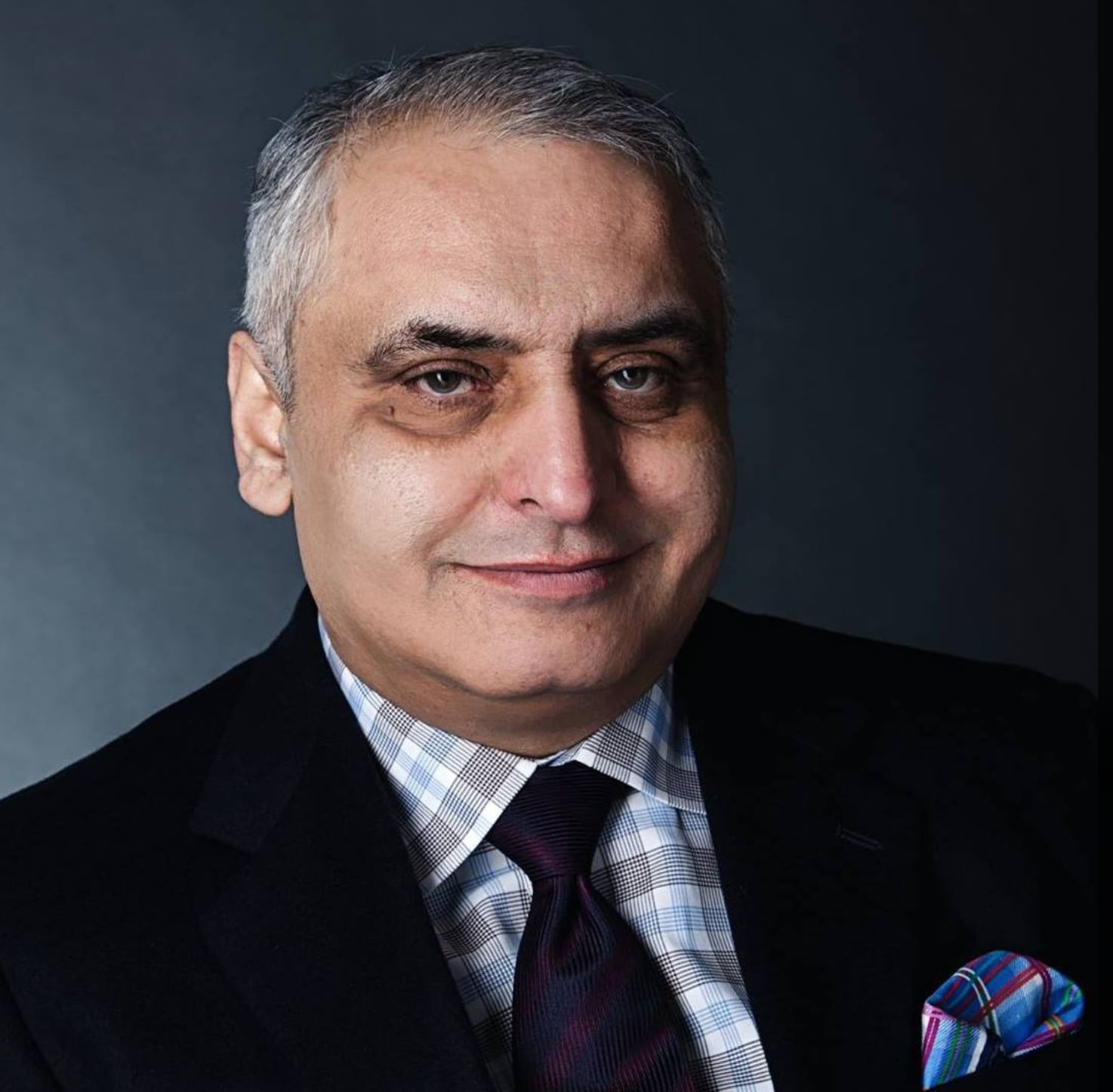
Arthur G. Martirosyan
Arthur G. Martirosyan is a Senior Consultant with CM Partners. In 1994, after graduating from Yale University, he joined Conflict Management Group and Harvard Negotiation Project, and has since worked on conflicts in the former Soviet Union, the Middle East, the Balkans, Africa, and Latin America.
Hosts
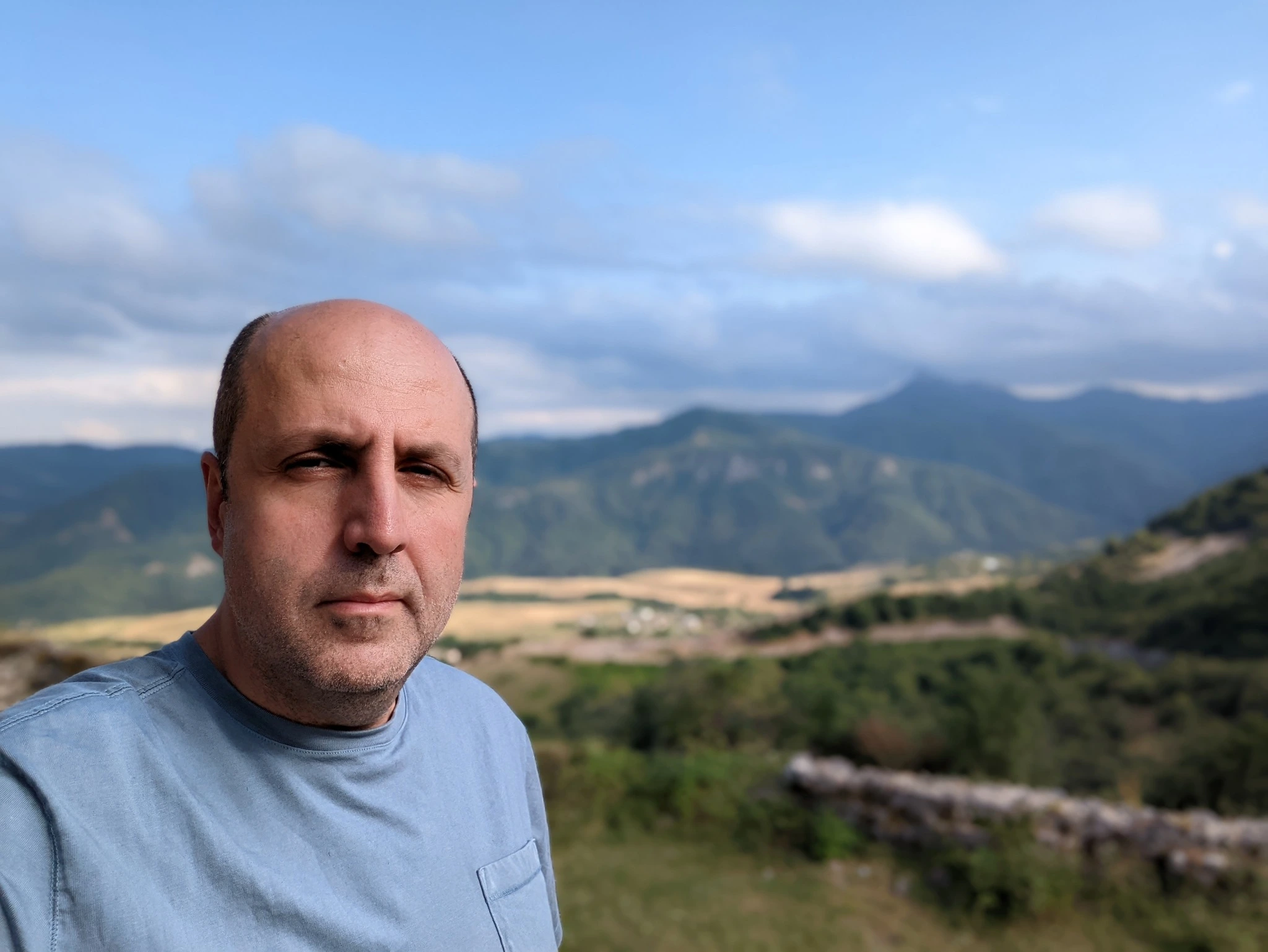
Hovik Manucharyan
Hovik Manucharyan is an information security engineer who moved from Seattle to Armenia in 2022. He co-founded the ANN/Groong podcast in 2020 and has been a contributor to Groong News since the late 1990s.
Disclaimer: The views expressed by Hovik Manucharyan on the ANN/Groong podcast are his own and do not necessarily reflect the opinions of his employer or any other organization.

Asbed Bedrossian
Asbed Bedrossian is an IT professional, and for years oversaw the central IT enterprise infrastructure and services at USC. His decades of experience spanned across IT strategy, enterprise architecture, infrastructure, cybersecurity, enterprise applications, data center operations, high performance computing, ITSM, ITPM, and more.
Asbed founded the Armenian News Network Groong circa 1989/1990, and co-founded the ANN/Groong podcast in 2020.
Related Episodes

Clips from this episode
 Why Pashinyan Attacks the Armenian Church
 All Opposition Leaders Under Arrest: Pashinyan's Revenge Politics
 The Fourth Republic: Pashinyan's Plan to Kill Armenian Identity
 Tigranashen: The Strategic Enclave Pashinyan Plans to Give Away
 TRIPP, Kazakhstan, and the Western Encroachment in Central Asia
 The AI Factory and Energy Trap: How Armenia Becomes Dependent on Azerbaijan